

Empowerment vs enablement: what is the difference? Empowerment builds a person's own ability, confidence and choice, so they can do more for themselves. Enablement, in the helpful sense, means giving people the resources, training and access they need to act. But the word enabling has a second, darker meaning: taking over, making excuses or cleaning up so that a harmful habit carries on without consequences.
Picture a child struggling with shoelaces while you are late for school. Tying them takes five seconds. Letting her try takes five minutes. That small moment holds the whole question of this article: when does helping help, and when does it quietly keep someone stuck?
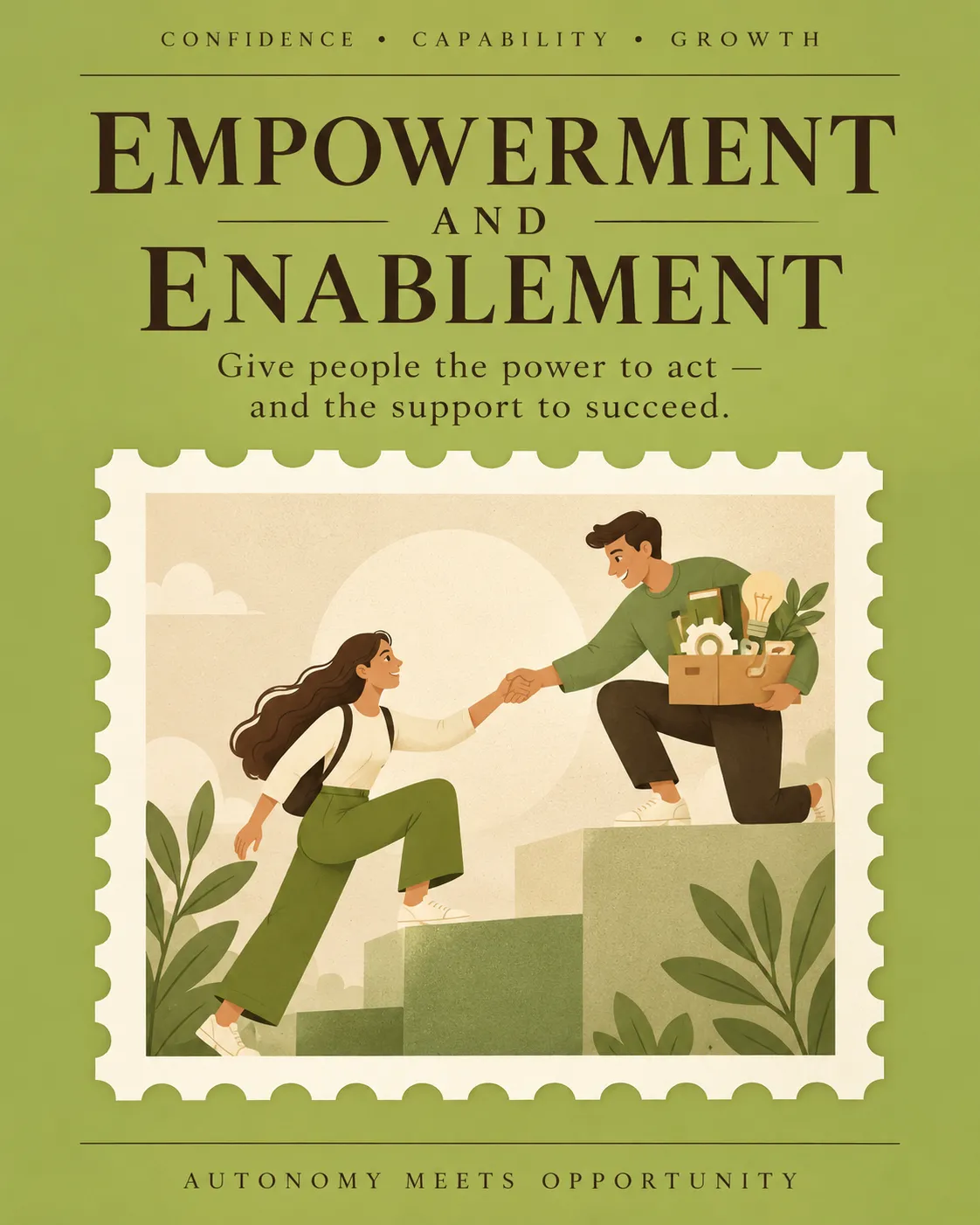
Empowerment vs enablement: the key difference
Many pages about empowerment and enablement treat the second word in only one way. In reality it is used in two very different senses, and mixing them up causes real confusion. Keeping them apart is the key to this whole topic.
- Enablement (helpful sense): giving people resources, training and access, and removing barriers, so that they can act. This is how schools, employers and health services use the word.
- Enabling (harmful sense): in psychotherapy and addiction work, an action, or a deliberate lack of action, that directly or indirectly encourages behaviour in others, especially behaviour that is dysfunctional. Usually it is done with good intentions or out of fear.
- Empowerment: building the person's own capability, choice and confidence, so that the skill and the responsibility end up with them.
Good enablement serves empowerment. Harmful enabling replaces it. To tell them apart, use one question: after my help, is this person more able to do it themselves, or more dependent on me? If the answer is "more able", you are empowering. If the answer is "more dependent", something has gone wrong, however kind it felt.
What is empowerment?
In everyday speech, empowerment means giving someone power over their own life. Psychologists are more precise. In a well-known 1995 paper in the Academy of Management Journal, Gretchen Spreitzer described psychological empowerment at work as having four dimensions:
- Meaning: the task matters to you and fits your values.
- Competence: you believe you have the skill to do it.
- Self-determination: you have a real say in how you do it.
- Impact: what you do makes a difference.
Notice that none of these can be handed over like a parcel. Someone can support them, but the person has to feel them. That is why empowerment is closely tied to self-development: a student who builds skills, sets goals and makes choices is developing exactly these four things.
What is enablement?
Enablement, in the positive sense, is the practical side of help. It answers the question "what does this person need in order to be able to act?" The answer might be training, equipment, information, access to a building, extra time, or a quiet place to work. Removing a barrier is enablement. A ramp enables a wheelchair user to enter a library. A screen reader enables a visually impaired pupil to read.
A real example from the UK health service is reablement. The NHS describes intermediate care, also called reablement, as short-term care that helps you recover and regain independence. It is free and usually lasts a maximum of six weeks, sometimes only one to two weeks. Notice the design: the support is temporary and its aim is to make itself unnecessary. That is enablement working for empowerment.
What is enabling behaviour?
Enabling behaviour is the harmful twin. Here a third person takes responsibility or blame, or makes accommodations, for someone else's harmful conduct. The person is shielded from the damage and from the pressure to change. The motive is often love, fear or exhaustion, not selfishness. Common examples include:
- making excuses for someone to a teacher, employer or relative;
- paying debts that were caused by a harmful habit;
- covering for someone's missed work or school, again and again;
- doing homework or chores for a young person who is perfectly capable of doing them;
- cleaning up messes caused by impaired judgement, such as after heavy drinking;
- letting an addicted adult child live at home with no expectations at all.
The same word can also describe patterns that allow people to develop and grow in a healthy direction. That is why context matters so much. In this article, "enablement" will mean the helpful kind and "enabling" will mean the harmful kind, so you can always tell which is which.
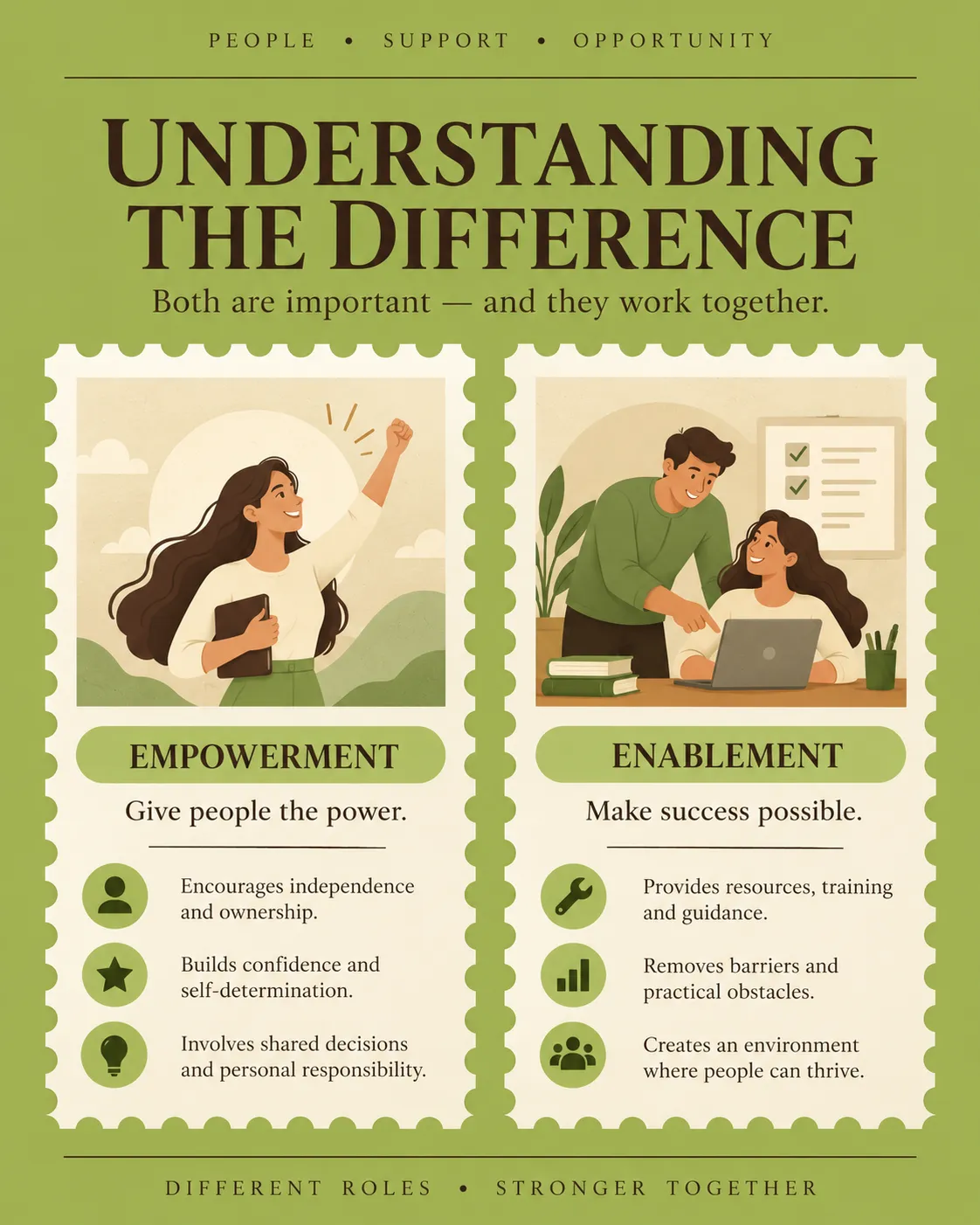
Helping, supporting, enabling and empowering compared
The table below puts four common responses side by side. The most useful column is the third: who ends up building the skill and carrying the responsibility?
| Approach | What it looks like | Who builds the skill or takes responsibility? | Long-term effect |
|---|---|---|---|
| Doing it for them | Tying the laces, finishing the project, sending the email | The helper | Quick today, but the person learns nothing and may come to expect rescue |
| Enabling (harmful) | Excuses, bail-outs, covering up, avoiding the topic | The helper takes the consequences | The harmful pattern continues; the person is shielded from the reason to change |
| Enablement (helpful support) | Providing training, tools, access, information, time | The person, with the barriers removed | Positive, as long as it is paired with real choice |
| Empowerment | Offering choices, asking "what is your plan?", letting the person try | The person | Growing skill, confidence and independence |
Real life is rarely this tidy. One parent might move between all four rows in a single morning. The point of the table is not to make you feel guilty about the shoelaces. It is to give you a quick way to notice which row you are in.
That second point is worth holding onto. The goal is not "less help". It is "the right help, at the right moment, withdrawn at the right speed". For more on what helps people thrive, see our guide to positive psychology facts.


Next we look at the psychology: why doing everything for someone can backfire, and what the research says about autonomy, self-belief and giving up.
The psychology of empowerment: why doing it for someone can backfire
Rescuing people feels good. It is quick, it removes discomfort, and it shows we care. Yet psychology suggests that people grow through their own successes and their own sense of control, and that too much rescue can reduce both opportunities. Five ideas explain why.
Self-determination theory: autonomy, competence and relatedness
In 2000, Richard Ryan and Edward Deci published a landmark paper in American Psychologist on self-determination theory (SDT). It proposes that people have three basic psychological needs, described as universal and innate, and as "essential nutrients" for psychological health:
- Autonomy: acting from your own will and values. It does not mean being independent of other people or being left alone.
- Competence: feeling able to do things and to get better at them.
- Relatedness: feeling connected to, and cared about by, other people.
Apply this to a classroom. A pupil who chooses her own science project meets the need for autonomy. When she gets it to work, she meets competence. When she shares it with a supportive partner, she meets relatedness. Now imagine a well-meaning adult who does the whole project for her. The relationship might feel warm, but two of the three needs have gone unmet.
SDT also warns about a trap in the way we motivate people. In a famous 1973 experiment, Mark Lepper, David Greene and Richard Nisbett studied children at Stanford's Bing Nursery School who already enjoyed drawing with felt-tip markers. The children were split into groups: one expected a reward (a certificate) for drawing, one received an unexpected reward, and one received none. Later, the children who had expected the reward spent less free time drawing, while the other two groups did not differ. An expected reward can undermine interest in something a child already enjoyed. This idea is called overjustification, and it is one reason why extrinsic motivation and study strategies need to be used with care.
Self-efficacy: believing you can
The psychologist Albert Bandura defined self-efficacy as your belief in your ability to succeed at a task. In his 1977 paper in Psychological Review he proposed four sources of this belief:
- Mastery experiences: succeeding yourself, especially at something difficult. This is the most powerful source.
- Vicarious experience: seeing someone similar to you succeed.
- Verbal or social persuasion: being told, believably, that you can do it.
- Physiological and emotional states: how calm or anxious you feel in your body.
This list explains why rescue backfires. If an adult always finishes the hard part, the child never gets a mastery experience. Praise can help, and watching a friend succeed can help, but nothing builds "I can do this" as well as doing it. The same principle drives growth mindset in teamwork: people improve when they are given challenges that stretch them and the chance to succeed at them.
Learned helplessness: the 2016 twist
In 1967, Martin Seligman and Steven Maier reported a famous animal experiment. Dogs that had received shocks they could not control later mostly failed to escape in a shuttle box, even though escape was easy. Dogs that had been able to control the shocks learned to escape. The idea of learned helplessness was born: after experiencing no control, individuals stop trying. (Experiments like this would face strict ethical review today.)
For decades, people explained this as learning to be passive. In 2016 Maier and Seligman reviewed fifty years of evidence in Psychological Review and concluded that "the original theory got it backwards". Passivity, they argued, is the brain's default response to prolonged bad events. What is actually learned is control: the medial prefrontal cortex detects when you have control and inhibits the passive response.
For anyone who helps others, this twist is practical. If control is what is learned, then people need chances to experience control. Every time a helper takes over a task a person could do, one of those chances is lost. That is why a lasting form of help gives room for the person to act, even if they do it more slowly or less well at first.
Test your understanding: which idea is it?
Each card below describes a short scenario. Try to name the psychological idea before you tap to see the answer.
Notice how often the answer points back to the same thing: a feeling of choice, a feeling of "I can", and a sense that someone is on your side. Empowerment tries to protect all three at once. Harmful enabling, however kindly meant, can leave a person with fewer chances to choose and to succeed for themselves, even while the relationship stays warm.
Why this matters for helpers
These studies were not about enabling in the addiction sense, but they share a lesson. Capable people who are repeatedly rescued can lose chances to practise, to decide and to see that their own efforts matter. The effect is rarely dramatic. It builds up in small ways: a task not attempted, a decision handed to someone else, a consequence quietly absorbed by a parent, teacher or partner.
It also helps to remember that dependence can be rewarded by accident. In the care-home studies, staff often responded quickly to dependent behaviour and said nothing when residents managed alone. Researchers argued that, over time, this pattern can reward dependence. The sections on home, school, work and caregiving below show how this appears in practice, and what to do instead.
Empowering vs enabling at home: parents and teenagers
Parents face the shoelace dilemma every day, and it never really ends: it just moves on to homework, money, friendships and phones. The aim of parenting is, in the end, to become unnecessary.
Research on over-controlling parenting gives a warning. In a 2014 survey of 297 US undergraduates, published in the Journal of Child and Family Studies, students who reported "helicopter" parenting also reported more depression and lower life satisfaction. The authors found this was largely explained by those students feeling that their needs for autonomy and competence were not met. This was a self-report survey, so it shows an association, not proof that one thing caused the other. Still, it fits neatly with self-determination theory.
Small swaps can help. Here are everyday examples of moving from rescuing to empowering:
- Instead of "I'll do it", try "What's your plan?"
- Instead of reminding five times about the PE kit, agree one reminder system and let a forgotten kit have its small natural consequence once.
- Instead of choosing a teenager's revision timetable, ask them to draft one and offer to check it.
- Instead of solving a friendship problem, ask "What do you think you could say?"
Teenagers also learn by trying decisions with real, but manageable, stakes. This matters because peers become more influential in these years. Practising choices at home, where mistakes are survivable, helps young people handle the pressures described in our guide to negative and positive peer pressure. Safety comes first: letting natural consequences happen never means letting a child come to serious harm.
Empowering students: scaffolding and the zone of proximal development
Teachers meet the same dilemma with thirty children at once. A useful framework comes from the Soviet psychologist Lev Vygotsky (1896 to 1934). He described the zone of proximal development (ZPD): the range between what a learner can do alone and what they cannot do even with help. In the middle is the zone where a learner can succeed with support from a "more knowledgeable other", such as a teacher, parent or older peer. The idea is best known in English from the 1978 collection Mind in Society.
The metaphor of scaffolding was popularised by David Wood, Jerome Bruner and Gail Ross in a 1976 paper on tutoring. Good scaffolding has three features: it is collaborative, it is pitched inside the learner's ZPD, and it is gradually removed (often called "fading") as the learner becomes able.

A common teaching routine shows the idea well. It is often described as "I do, we do, you do":
- I do: the teacher models the method while thinking aloud.
- We do: teacher and pupils work through an example together.
- You do: pupils try one independently, and the teacher watches and steps in only when needed.
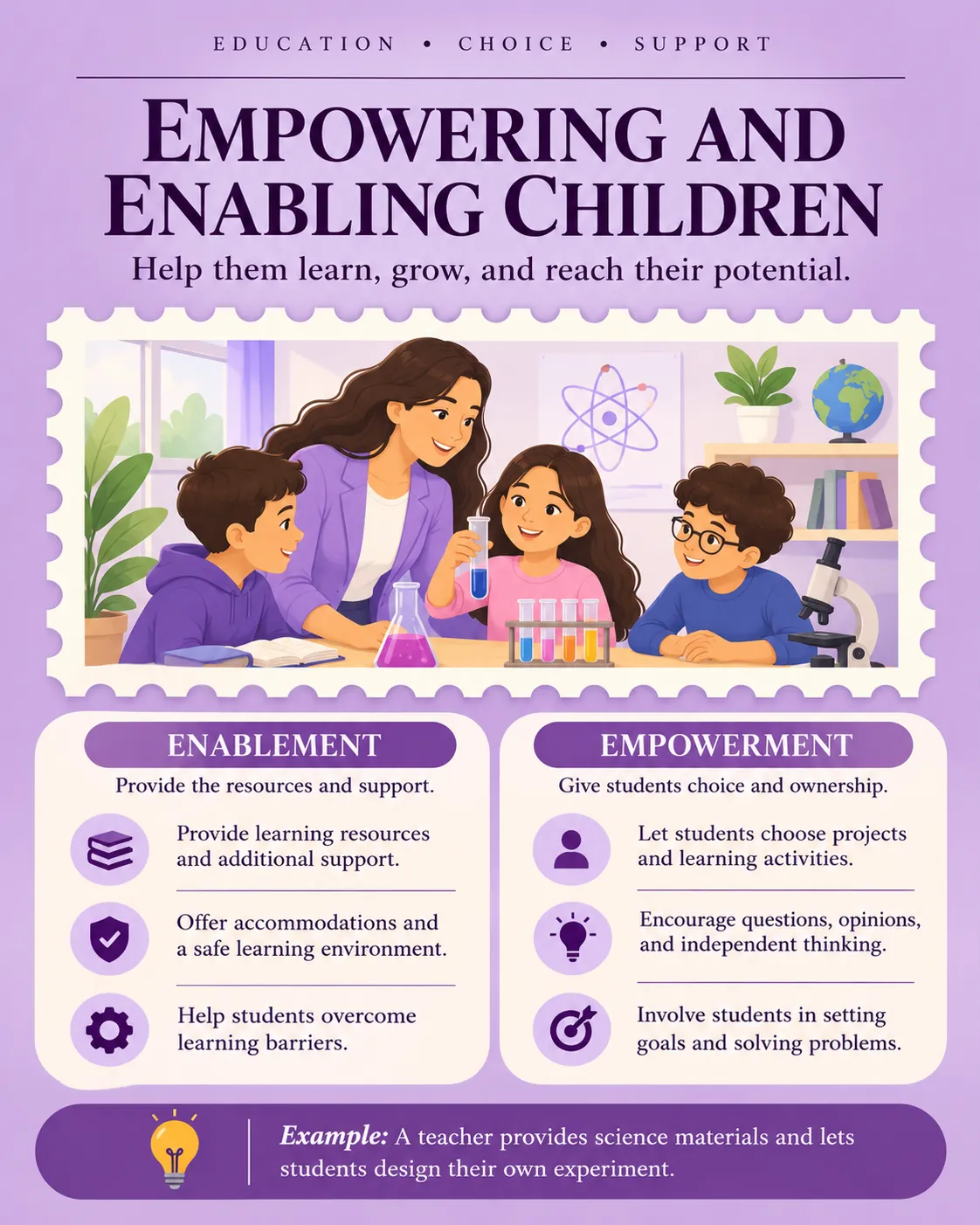
Enablement and empowerment both appear here. Providing the kit, a safe environment and help with learning barriers is enablement. Offering a choice of projects, inviting questions and letting pupils set goals is empowerment. The best classrooms do both. Our guide to what makes an effective teacher explores more of the habits behind this.
A teacher writes the answer on a pupil's sheet whenever she gets stuck. Is this scaffolding? Explain. (3 marks)
No, or not good scaffolding. Scaffolding should be pitched in the zone of proximal development and gradually removed as the learner becomes able. Writing the answer every time removes the pupil's chance to succeed herself, so it is closer to doing the task for her (enabling) than empowering her. A better response would be a hint or a prompt, then fading it.
Use self-determination theory to explain why letting students choose their project might increase effort. (4 marks)
SDT says people have a basic need for autonomy, acting from their own will and values. Choosing the project meets that need, which makes the work feel owned rather than imposed. If students then succeed, they also meet the need for competence, and working with others can meet relatedness. When these needs are met, motivation is more likely to come from within.
Empowering leadership at work
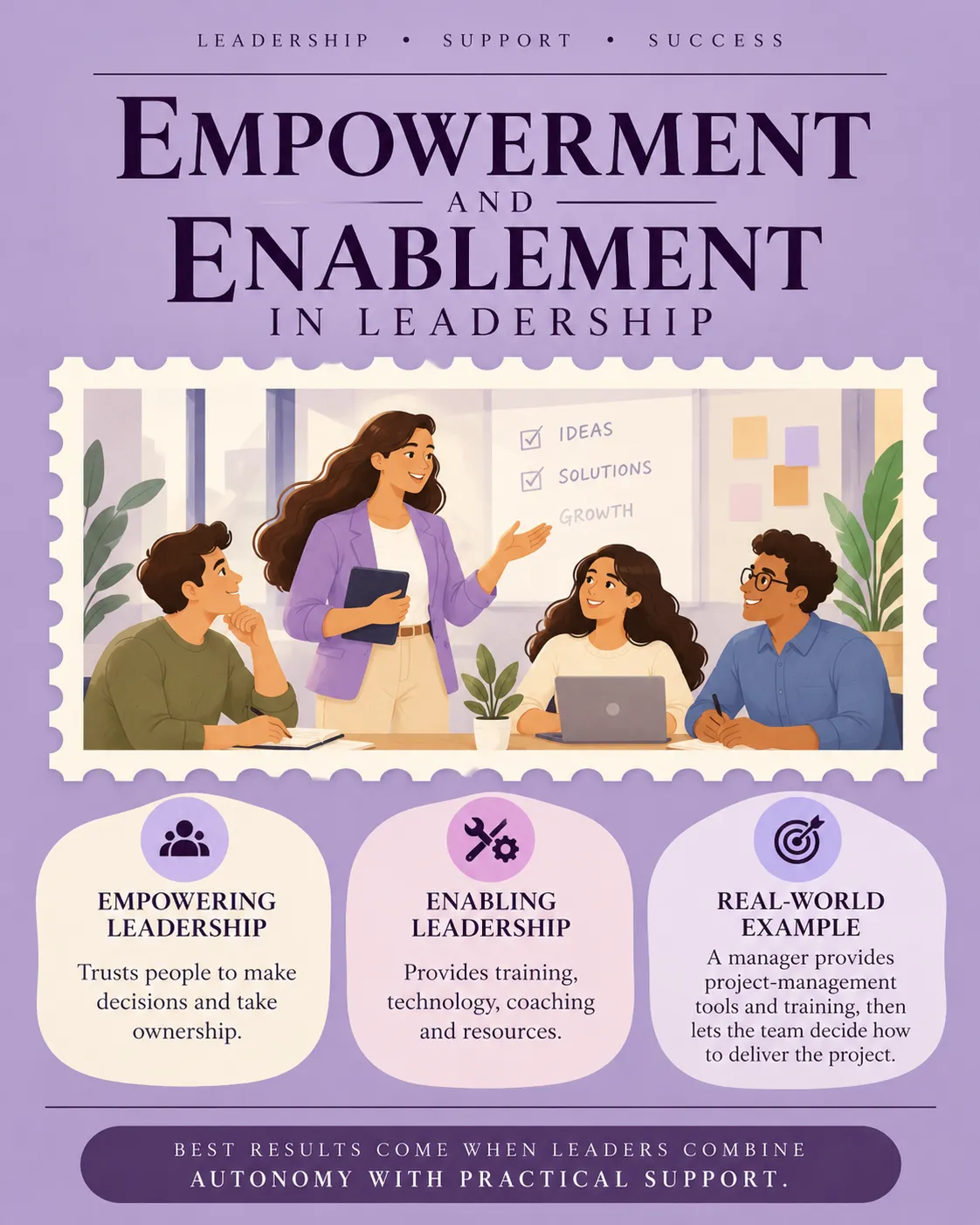
Workplaces face the same question in a different form. Empowering leadership means sharing power with employees: letting them make decisions, trusting their judgement and supporting their development. A 2018 meta-analysis by Allan Lee, Sara Willis and Amy Tian, published in the Journal of Organizational Behavior, combined data from 105 samples. It found that empowering leadership was positively related to performance, to organisational citizenship behaviour (helping beyond the job description) and to creativity, at both individual and team level. These effects worked partly through trust in the leader and through psychological empowerment.
A caution is built in, though. A 2016 study by Cheong and colleagues in The Leadership Quarterly described the "two faces" of empowering leadership. There is an enabling path, which raises self-efficacy and performance. There is also a burdening path: some empowering behaviours raise job-induced tension, weakening the benefit. The lesson is that autonomy without support can overload people.

Here is how that looks in practice. A manager provides tools and training (enablement), then lets the team decide how to do the work (empowerment). The manager stays available to coach, and the team does not feel dropped in at the deep end. If the manager skips the first step, the team is set up to fail. If the manager skips the second, the team learns to wait for instructions. For more on keeping teams engaged, see our article on why motivation is important at work.
Note too that this "enabling" belongs to the helpful sense. In leadership research it describes support that helps people perform. It is not the same as covering up a colleague's harmful behaviour, which would be enabling in the other sense.
Caregiving: supporting independence in older or ill relatives
Caring for an older or ill relative is the setting where kindness and over-help blur most easily. It is quicker and feels safer to do everything. Yet research suggests that independence is worth protecting.
In a 1976 field experiment in a nursing home, Ellen Langer and Judith Rodin told residents on one floor that they were responsible for themselves. They gave them choices and a plant to look after. On a comparison floor, residents were told staff were responsible for them, and staff looked after their plant. The responsibility group improved more in alertness, active participation and general wellbeing. A follow-up published in 1977 suggested lasting benefits, and in that one small study fewer residents in the responsibility group had died after 18 months. It was a small study in one nursing home and not a clinical trial, so it should be read as an intriguing hint, not a proven rule.
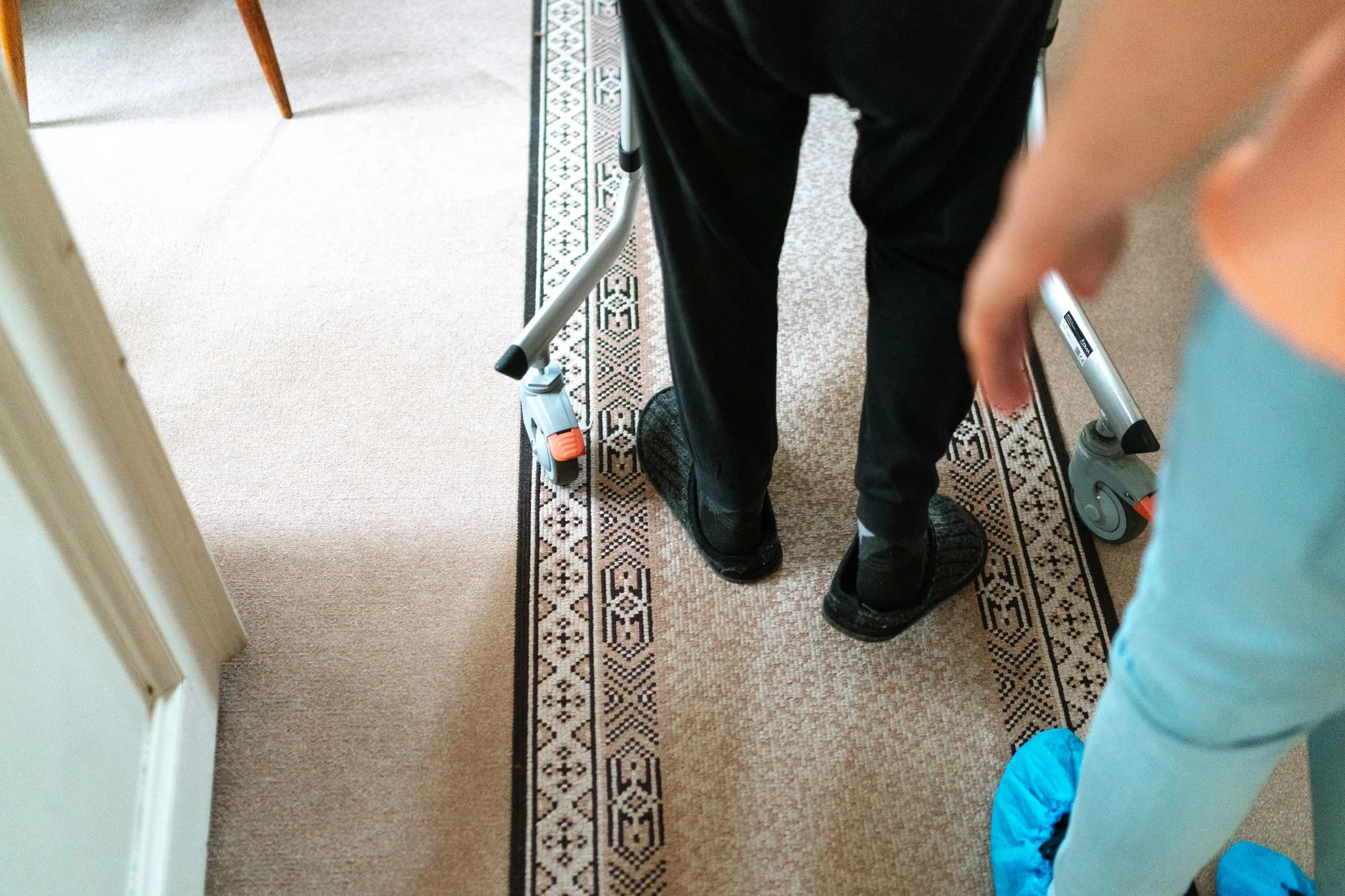
Other researchers have noticed a pattern called the dependency-support script. Observational studies of care homes, led by Margret Baltes and colleagues, found that staff most often responded to residents' dependent behaviour with help and to their independent behaviour with no response. Dependence was accidentally rewarded. This is a good example of how enabling can happen without anyone meaning it.
The NHS reablement model shows the positive alternative. Short-term support after an illness or fall aims to help people regain independence, with the support planned to be temporary.
Whether the setting is a home, a classroom, a workplace or a care home, the same question applies: is this help building ability, or replacing it? Next we look at the hardest case, where enabling keeps an addiction going, and at what actually works instead.
Enabling in addiction: when helping keeps the problem going
The hardest version of this topic is the one families search for in the middle of the night. When someone you love is drinking too much or using drugs, helping can feel like the only thing you can do. Yet in the harmful sense of the word, enabling is an action, or a deliberate lack of action, that encourages dysfunctional behaviour in someone else, usually with good intentions or out of fear.
Typical examples include making excuses to other people, cleaning up the mess left by poor judgement, or letting an addicted adult child live at home without any expectations. Each act is understandable. Together they can shield the person from the harm and from the pressure to change.
Why do loving people do it? Common reasons are love, fear of what might happen, guilt, and a wish to avoid another argument. None of these makes you a bad person. They make you human.

What the research says works instead
The popular idea is "tough love": a dramatic confrontation, or cutting the person off. The evidence points somewhere gentler. In a 1999 randomised trial, Miller, Meyers and Tonigan worked with 130 concerned family members and friends of problem drinkers who refused help. Each group received 12 hours of one of three approaches.
- CRAFT (Community Reinforcement and Family Training) got 64% of drinkers into treatment. It teaches families to reward healthy behaviour, let natural consequences happen, communicate positively and look after themselves.
- A confrontational Johnson Institute-style "intervention" got 30% into treatment. Seventy per cent of families chose not to go through with the confrontation.
- Al-Anon facilitation got 13%.
Family members' own wellbeing improved in all three groups. Later systematic reviews, including one in 2010 covering four trials and 264 family members, found CRAFT engaged roughly twice as many people as the confrontational approach. A 2020 review found it was about twice as effective as comparison groups, though results varied a lot by format.
Teenagers and young people meet these issues too. Our guide to youth and drugs and leading a drug-free life covers prevention from the young person's side.
Signs of enabling: a self-check
Enabling is easiest to spot from the outside, so use this checklist honestly. Tick anything that sounds like you. Your ticks are saved in your browser only.
- I make excuses for their behaviour to other people.
- I pay bills or debts that were caused by the habit.
- I do tasks they could do themselves.
- I avoid mentioning the problem to keep the peace.
- I have put my own needs last for a long time.
- I keep rescuing them after promises are broken.
- I feel resentful but keep helping anyway.
- I feel I am the only one who can handle them.
These ticks are not a diagnosis of you or of them. Think of them as a map that shows where a change might start. The idea of "codependency" is also sometimes used here, but it is a contested theory about imbalanced relationships, not an official diagnosis.
How to move from enabling to empowering: steps and scripts
Change works best in small, calm steps. Here is one route that applies at home, at school, at work and in caring roles.
- Notice. Pick one pattern from the checklist.
- Decide one boundary. Choose what you will and will not do. Keep it small and specific.
- Say it calmly. Use "I" statements and a kind tone.
- Let natural consequences happen, unless someone's safety is at risk.
- Notice and reward positive steps, however small.
- Get support for yourself. You do not have to do this alone.
Scripts can help, because the right words are hard to find when emotions are high. Adapt these to your own voice.
- Home: "I won't write your excuse note, but I'll sit with you while you ring the school."
- School: "I'm not going to hand you the answer. Show me what you've tried so far."
- Work: "I'll cover this shift once. After that we need to talk to your manager about a plan."
- Addiction: "I'm not going to call in sick for you, but I'll drive you to the GP if you want to talk about it."
Good scripts rely on good communication. Our guide to effective oral and written communication skills covers clear, respectful wording, and our article on the importance of listening skills shows how active listening helps the other person feel heard rather than judged.
When to get help (UK)
Families can also be supported when the person they worry about is not ready to change. Looking after yourself is part of the plan, not a distraction from it.
Frequently asked questions about empowerment vs enablement
What is the difference between empowerment and enablement?
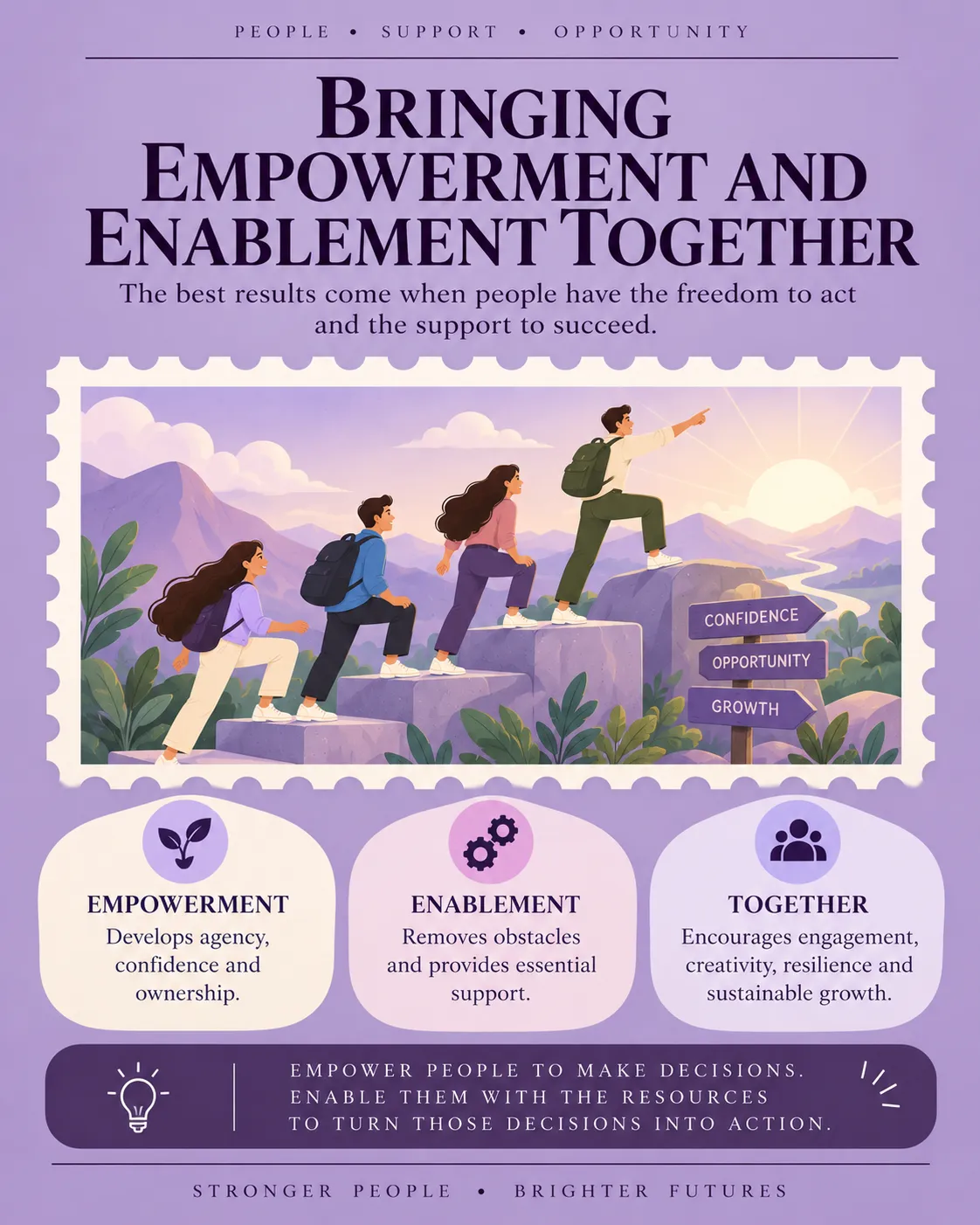
Empowerment builds a person's own ability, confidence and choice so they can act for themselves. Enablement, in the helpful sense, supplies the resources, training and access that make action possible. The two work best together: you empower people to decide and enable them with the means to carry it out.
What is enabling behaviour?
Enabling behaviour is an action, or a deliberate lack of action, that encourages dysfunctional behaviour in someone else. It often comes from love or fear. Examples include making excuses, cleaning up the mess from poor decisions, or letting an adult child live at home without any expectations while a harmful habit continues.
What is the difference between enabling and helping?
Helping leaves the person more able over time. Enabling replaces their effort or shields them from consequences, so the pattern continues. A useful test is to ask whether, after your help, they can do more themselves or less. Helping builds ability and ownership, while enabling quietly builds dependence.
Is enablement always a bad thing?
No. In schools, workplaces and health services, enablement means giving people resources, training and access so they can act. The NHS reablement service, for example, offers free short-term care to help people regain independence. The harmful meaning applies to enabling someone's damaging behaviour, which is a different use of the word.
What is empowering leadership?
Empowering leadership means sharing power with employees: letting them make decisions, trusting their judgement and supporting their development. A 2018 meta-analysis of 105 samples linked it to better performance, helpful behaviour beyond the job description, and creativity. A 2016 study warns autonomy without support can overload people.
How can teachers empower students?
Teachers can offer choices, such as project topics, and use scaffolding: support pitched just beyond what a pupil can do alone, then gradually withdrawn. Teaching routines like "I do, we do, you do" fit this idea. The aim is a pupil who needs less help each time.
What are the signs of enabling an addict or alcoholic?
Common signs include making excuses to others, paying debts caused by the habit, doing tasks they could manage themselves, avoiding the subject to keep the peace, and rescuing after broken promises. Feeling resentful while still helping is another clue. These signs are not a diagnosis, but they can show where to begin changing.
How do I stop enabling someone without cutting them off?
Pick one small boundary, state it calmly, and let natural consequences happen unless safety is at risk. Notice and reward positive steps, and get support for yourself. In a 1999 trial this CRAFT-style approach engaged 64% of resistant drinkers, compared with 30% for confrontation.
Is enabling the same as codependency?
No. Enabling describes specific behaviours that allow harmful patterns to continue. Codependency is a contested theory about imbalanced relationships and is not an official diagnosis. The two ideas overlap in everyday conversation, but you can describe enabling behaviour without labelling anyone codependent.