
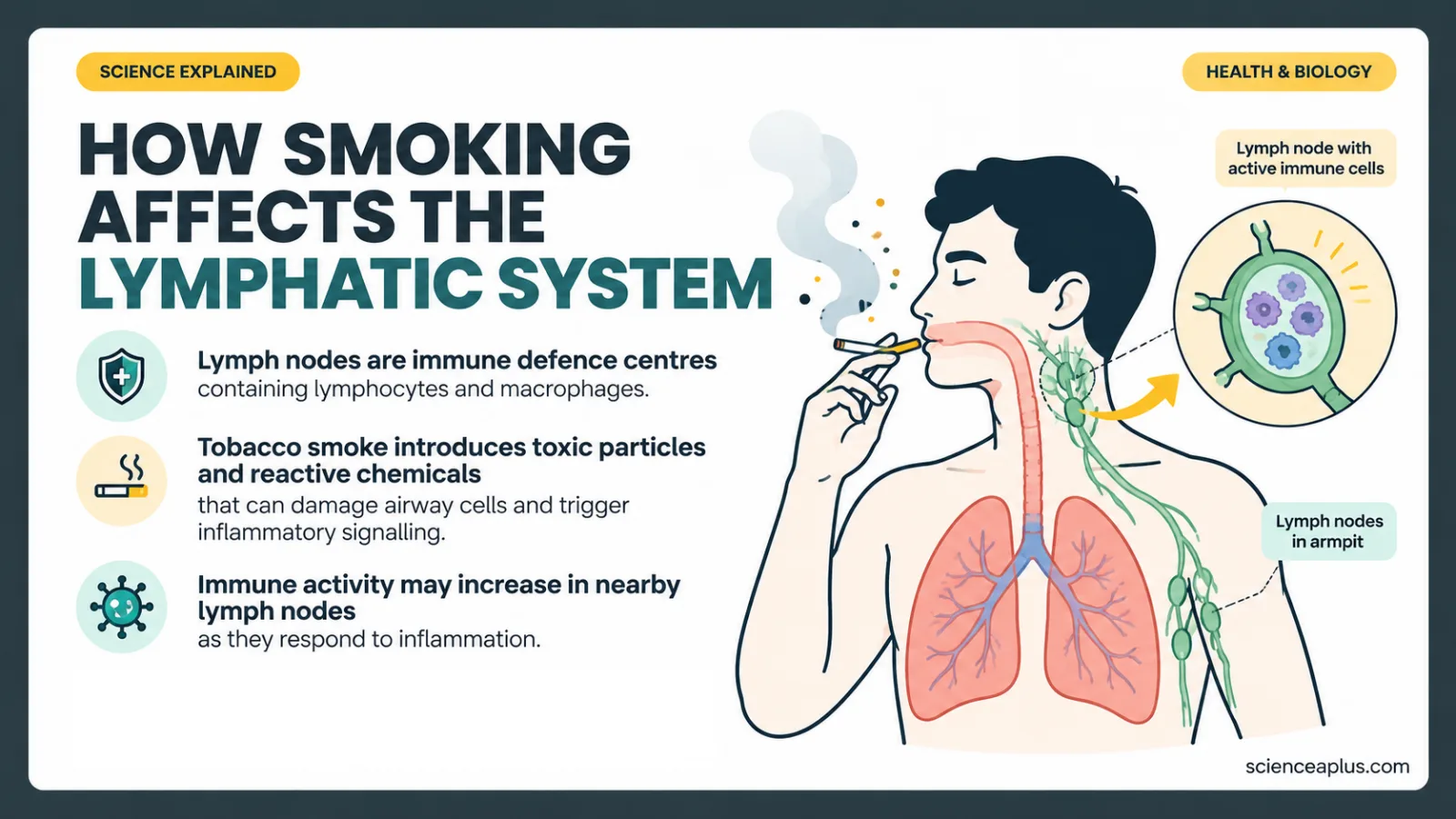
Can smoking cause swollen lymph nodes? Smoking is not on the NHS list of causes of swollen glands, and we could not find a study showing that it directly makes them swell. It does raise the risk of infections and some cancers, which can swell lymph nodes, and one small study found more enlarged chest nodes in heavy smokers.
This article is educational and cannot tell you what a particular lump is. It separates three things that are often muddled together: what official guidance says, what small studies have found, and what nobody has shown. If you have a swollen gland and you are worried, the NHS checklist later in this article tells you when to speak to a GP.
Can smoking cause swollen lymph nodes?
The honest answer has three levels, and it helps to keep them apart.
What guidance says. The NHS page on swollen glands says they are often caused by common illnesses such as colds, tonsillitis, and ear or throat infections. Sometimes the cause is a viral infection such as glandular fever. Rarely, it is something more serious, such as cancer of the blood (leukaemia) or of the lymph system (lymphoma). Smoking is not on that list.
What studies have found. One small scan study from 2011 found enlarged lymph nodes in the chest of more than half of the heavy smokers it examined, compared with about one in ten non-smokers. That is an association in a small group, and the nodes were seen on a CT scan rather than felt as lumps. We look at it properly later in this article.
What has not been shown. In searches of NHS and NICE guidance and of the published research, we found no guidance and no peer-reviewed study showing that smoking directly makes the glands in the neck, armpit or groin swell. That is an absence of evidence. It is not proof that no effect exists, and it is why this article says “not found” rather than “disproved”.
So the useful question is not only “does smoking swell glands?” but “what else could be going on, and when should it be checked?”. The sections below answer both.
What lymph nodes do and why they swell
Your body has a drainage network called the lymphatic system. Thin vessels collect a clear fluid called lymph from the tissues and carry it towards the bloodstream. Along the way the fluid passes through lymph nodes, small bean-shaped filters. A review in the Journal of Clinical Investigation describes how the body depends on the nodes to filter lymph and remove debris and pathogens.
Lymph nodes also hold lymphocytes, the white blood cells that help the body fight infection, together with specialised immune cells called macrophages. That is why nodes are so closely tied to the immune system.
The NHS explains the usual reason for swelling in one sentence: glands (known as lymph glands or lymph nodes) swell near an infection to help your body fight it. When a throat infection starts, for example, the nodes nearby become busy and grow. This is a sign that the body is responding, not a sign that something has gone wrong with the nodes themselves.
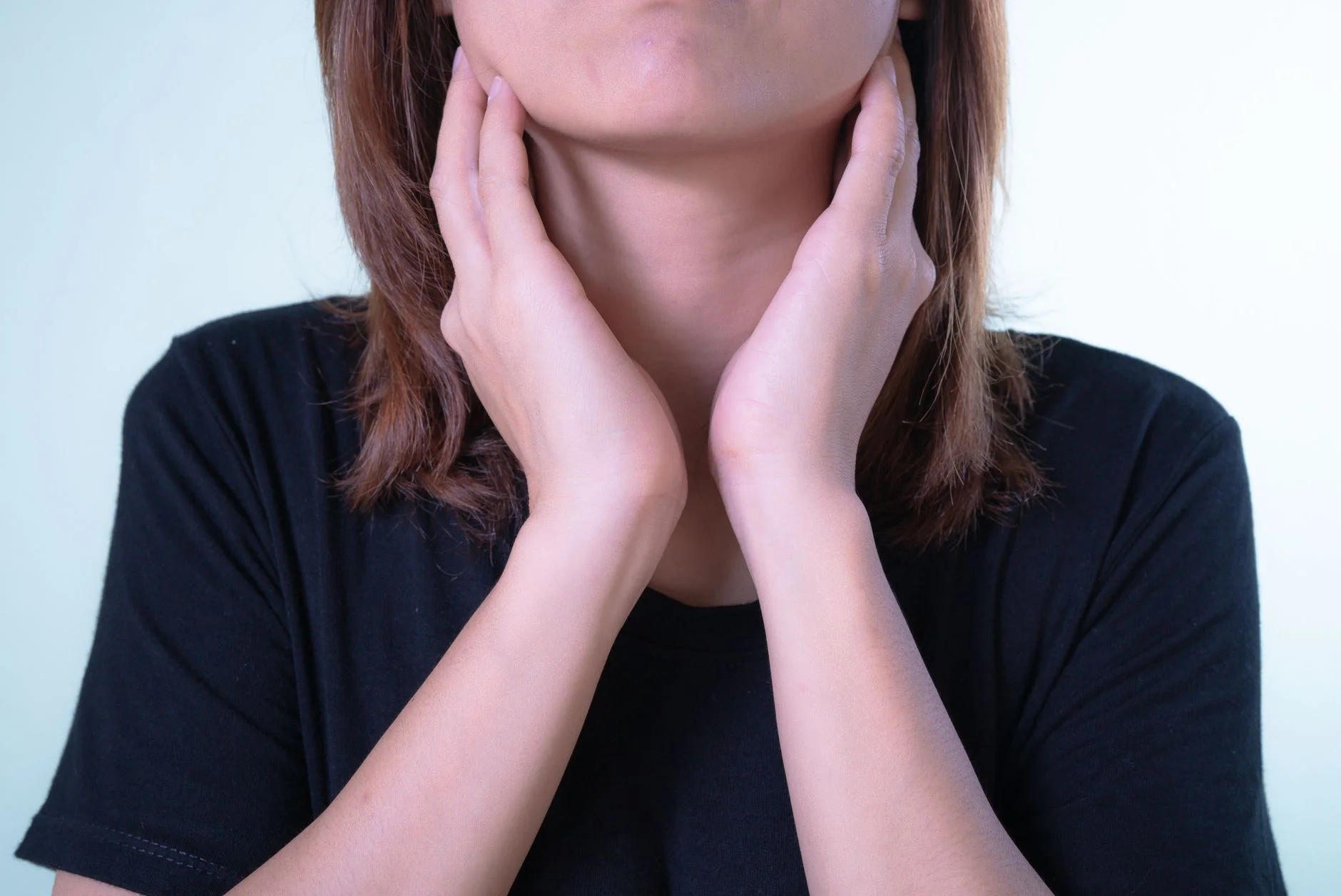
According to the NHS, swollen glands typically feel like tender, painful lumps. They may appear on each side of the neck, under the chin, in the armpits or around the groin. Sometimes only one side swells. There may also be a sore throat, a cough or a high temperature.
Where you can feel lymph nodes
The body has about 600 lymph nodes, according to a 1998 review in American Family Physician. Most are deep inside the chest and abdomen, where you cannot feel them. In healthy people, usually only the nodes under the jaw, in the armpit and in the groin can normally be felt. Nodes up to about 1 cm across are generally considered normal, although the normal size varies from one part of the body to another (nodes in the groin can be larger in healthy adults).
Two points are worth remembering from that. First, finding a small, soft node that you can feel does not by itself mean anything is wrong. Second, a later American Family Physician review (2016) says no specific nodal size is indicative of malignancy, although larger, hard or fixed nodes are more concerning to clinicians, so you cannot judge a lump by measuring it at home. That is a job for a clinician, and the NHS advice is blunt: do not self-diagnose.
The NHS also says that swollen glands should go down within 1 to 2 weeks, depending on the cause. The advice on when a gland should be checked sooner is set out in the GP box later in this article.
Test what you have learned so far
Tap each card to see the answer. These cover the main points above in one place.
Does smoking affect the lymphatic system and the immune system?
Smoking certainly affects the body’s defences. The open question is whether that shows up as swollen nodes you can feel. Tobacco smoke is a toxic and carcinogenic mixture of more than 5,000 chemicals, according to a 2011 paper in the International Journal of Environmental Research and Public Health. The same paper proposed a list of 98 hazardous components.
It is tempting to say that smoking simply “weakens the immune system”, but the research is more mixed than that. A 2012 review in the Journal of Dental Research reports that cigarette smoke impairs innate defences against pathogens, changes how immune cells present antigens, and promotes autoimmunity. It has both pro-inflammatory and suppressive effects. The net effect depends on factors such as the dose and type of tobacco and the route and length of exposure. In other words, smoke can both inflame and suppress the immune system, and which effect wins varies.
Some of the clearest findings about lymph nodes come from animals. In a 2008 mouse study described in that review, smoke exposure reduced the activation of dendritic cells and the multiplication of T cells in lymph nodes in the chest, even though the cells’ journey to those nodes was preserved. This was a mouse study, and it is about how nodes work rather than how big they get. It does not show that smoking makes human nodes swell.
The airways are part of the story too. Your respiratory system is the first place smoke lands, and it is where most smoking-related infections begin.
The most likely link: infections
If glands swell mainly to fight infection, and smoking makes infections more likely, then smoking could be involved indirectly. That is reasoning from two established facts, and it needs to be labelled as such. No study we found measured neck glands in smokers who had an infection, so the step from one fact to the next is a plausible inference, not a measured result.
The first fact is well supported. A 2004 review in the Archives of Internal Medicine reports that smoking raises infection risk through structural changes in the respiratory tract and a reduced immune response. Smokers have a 2- to 4-fold increased risk of invasive pneumococcal disease, and the risk of influenza is described as severalfold higher and more severe. Second-hand smoke in children is linked to meningococcal disease and to middle-ear infection (otitis media).
A 2020 review in Tobacco Induced Diseases adds detail about how. Smoking delays mucociliary clearance, the system of mucus and tiny hair-like cilia that sweeps germs and dirt out of the airways. It impairs the cilia themselves, and it suppresses the ability of macrophages to engulf bacteria (phagocytosis). The review describes smoking as a risk factor for respiratory and other infections, with the risk depending on dose, and says that stopping smoking can reduce the risk of infection. That review does not discuss swollen lymph nodes.


The chain of reasoning, then, runs like this:
- Glands near an infection swell to help the body fight it (NHS).
- Smoking raises the risk of several respiratory and other infections.
- So an infection in a smoker may be the reason a nearby gland has swollen.
Notice what this does not say. It does not say smoking itself is the trigger, and it does not mean a swollen gland in a smoker can be put down to a cold. The point of the NHS checklist later in this article is that the same rules apply to everyone, smoker or not. For a related throat symptom, see our article on whether smoking can cause a sore throat.
Explain why glands swell during a throat infection. (2 marks)
Glands near the infection swell as the body fights it. Lymph nodes filter the lymph and contain lymphocytes, white blood cells that help fight infection, so they become busy and enlarge.
Give two ways smoking makes respiratory infection more likely. (2 marks)
It slows mucociliary clearance, so germs are cleared from the airways more slowly. It also suppresses the ability of macrophages to engulf bacteria (phagocytosis).
Enlarged chest nodes in heavy smokers: what the study found
The only direct study of smokers and lymph node size we found looked at the chest, not the neck. Kirchner and colleagues, writing in European Radiology in 2011, carried out a prospective study of 88 consecutive patients who were having CT scans. Forty-four were heavy smokers and 44 were non-smokers. Patients were excluded if they had a history of thoracic cancer, sarcoidosis, occupational dust exposure or clinical pneumonia.
“Heavy smoker” in this study meant more than 10 pack-years. A pack-year is a way of combining how much and how long someone has smoked:
Pack-years = packs a day × years smoked
One pack-year is 20 cigarettes a day for one year. So more than 10 pack-years could mean 20 a day for over 10 years, or 10 a day for over 20 years.
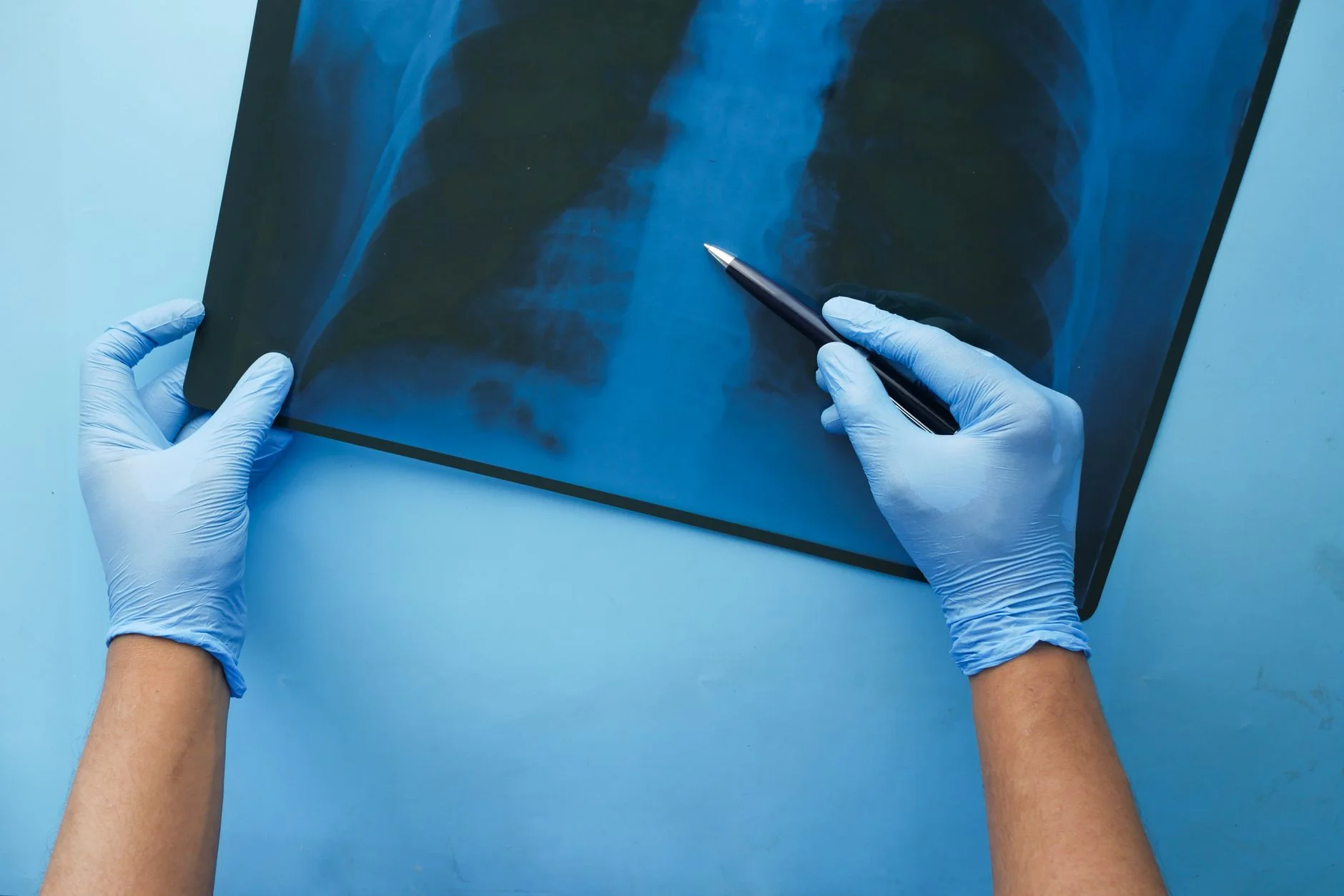
The scans showed enlarged mediastinal lymph nodes (the nodes in the middle of the chest) in 52% of the heavy smokers and in 9% of the non-smokers. The commonest site was the subcarinal region, just below the point where the windpipe divides. Airway wall thickening and emphysema were often associated with more enlarged nodes. The authors concluded that such nodes may occur in a rather high percentage of heavy smokers, especially when severe bronchitis is visible on the CT.
| Group | Patients | Enlarged mediastinal nodes |
|---|---|---|
| Heavy smokers (over 10 pack-years) | 44 | 23 patients (52%) |
| Non-smokers | 44 | 4 patients (9%) |
The same research group looked at 89 people with COPD (chronic obstructive pulmonary disease) in a 2010 retrospective study. Enlarged hilar or mediastinal nodes were found in 49% (44 of 89), and severe airway wall thickening was linked to enlargement. There was no significant difference across the stages of COPD severity. You can read more about this group of conditions in our article on chronic lower respiratory diseases.
Enlarged chest nodes are not unique to smokers, either. A review in Cancer Imaging reports them in 42% (13 of 31) of people in one heart-failure study, and in 36% to 84% across different interstitial lung diseases. So when chest nodes are enlarged on a scan, smoking is one of several possible companions, not a signature.
Can smoking cause swollen lymph nodes in your neck?
This is the form of the question people search for most, because the neck is where swollen glands are easiest to notice. The answer follows from everything above. We found nothing showing that smoking directly swells neck glands. The NHS list of causes does not include it, and the chest-node study does not tell us about the neck.
There are two routes that remain plausible, and neither is proven for the neck in smokers. The first is indirect, through infection: a throat, mouth or ear infection can swell the glands nearby, and smoking raises the risk of several infections. The second is rare, through cancer, which we turn to next. Neither route allows us to say that a swollen neck gland in a smoker is “because of smoking”, and neither allows us to say it is nothing.
The NHS says swollen glands usually go down within 1 to 2 weeks, depending on the cause. It advises easing symptoms by resting, drinking plenty of fluids, and taking painkillers such as paracetamol or ibuprofen (aspirin should not be given to children under 16). That is general advice for ordinary swollen glands, and the full list of reasons to get them checked is in the GP box below.
Smoking, cancer and lymph nodes
Lymph nodes sit on the route cancers often take. A review in the Journal of Clinical Investigation notes that most epithelial cancers, the type that start in the lining of organs, first spread through lymphatic vessels to their draining lymph nodes. That is one way cancer can reach a node, and it is a reason clinicians take unexplained swollen nodes seriously.
Smoking matters here because of what its chemicals do to DNA. A 2002 paper in Oncogene reports that mutations in the p53 gene in lung cancers can be attributed to direct DNA damage from cigarette smoke carcinogens, with similar but less marked trends in laryngeal and head and neck cancers. If you would like to revise how DNA and mutations work, see our guide to DNA, RNA, mitosis and meiosis.
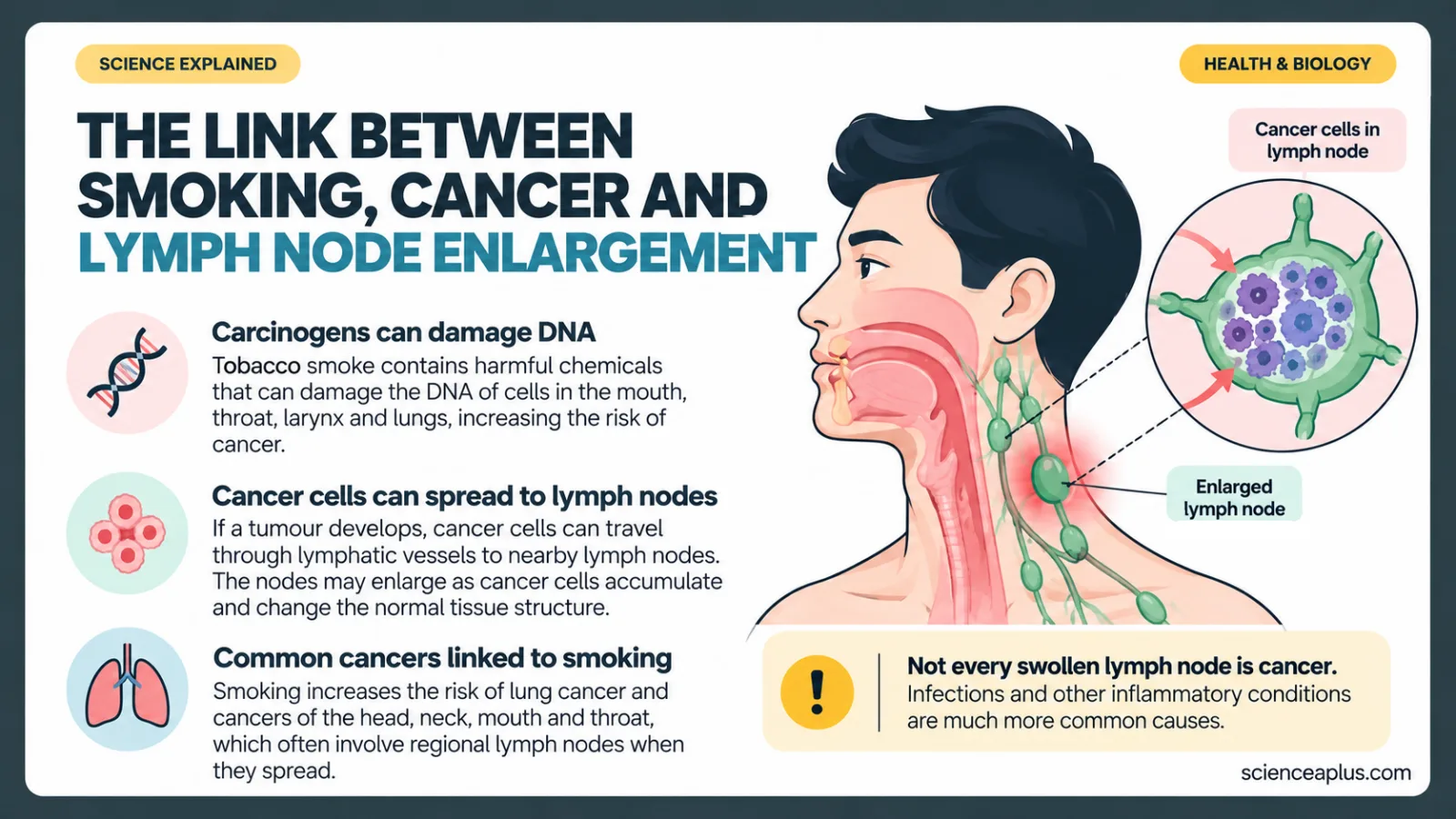
The NHS lists “you smoke” as a factor that may make someone more likely to get lung cancer, mouth cancer and Hodgkin lymphoma. Some of those cancers can affect the neck:
- Mouth cancer. Symptoms include a lump in the neck or throat, and the NHS advises seeing a GP about a lump in the mouth, lip, neck or throat. Our article on common oral health problems covers other mouth conditions.
- Lung cancer. Swelling of the face or neck is listed as a less common symptom. The NHS advises seeing a GP about a cough that has lasted longer than 3 weeks.
- Hodgkin lymphoma. The most common symptom is a painless lump or swelling, usually in the neck, armpit or groin. Others include a high temperature, night sweats, shortness of breath, itchy skin, sudden weight loss and pain in the glands after drinking alcohol. The NHS says these symptoms can be caused by many different conditions and do not definitely mean you have Hodgkin lymphoma.
Does smoking cause lymphoma?
The NHS lists smoking among the factors that may make someone more likely to get Hodgkin lymphoma. That wording is cautious on purpose: a factor that “may make someone more likely” is not a guarantee, and it is not the same as a cause in any individual person. We have not given risk figures because the sources used here do not provide them, and we have not extended the statement to other types of lymphoma.
How common is cancer as a cause of swollen glands?
Rarely, according to the NHS. A review in American Family Physician (2016) gives numbers for unexplained lymphadenopathy, meaning swollen nodes with no obvious cause, seen in primary care: about 1.1% of cases relate to cancer. The figure is 0.4% for people under 40 and 4% for those aged 40 and over.
Speak to your GP: when to get swollen glands checked
This is the most important part of the article. The wording below follows the NHS swollen glands page, which we re-read on 5 November 2026.
Being a smoker neither explains a lump nor diagnoses one. The same checklist applies to everyone, whether you smoke, vape, have stopped or have never smoked.
Notice too that the NHS does not use pain to sort lumps into safe and unsafe. Swollen glands from an infection are usually tender, but the NHS says the most common symptom of Hodgkin lymphoma is a painless lump. A guide in American Family Physician also says the features of a node cannot reliably predict cancer. If a lump is there, the checklist matters more than how it feels.
What happens at a GP appointment
A clinician will usually start with questions and an examination. A US review of unexplained lymphadenopathy says that history and examination identify the cause in most cases. Clinicians ask how long the node has been there and what exposures you have had, including tobacco, and they ask about symptoms such as night sweats and weight loss.

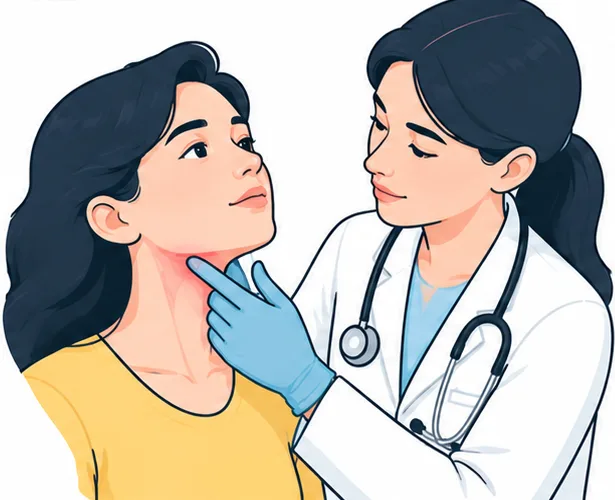
What happens next depends on the picture. The same review says that when cancer seems unlikely, a localised node may be observed for four weeks. Tests are chosen according to the clinical picture and can include blood tests, imaging such as ultrasound or CT, and a biopsy if the cause is still unclear. That review is aimed at US clinicians, so for NHS timings the NHS advice in the GP box takes priority.
UK guidance for GPs, NICE guideline NG12, is the one place where a smoking history changes how a node is handled. It says an urgent chest X-ray should be offered to assess for lung cancer in people aged 40 and over who have two or more of a list of unexplained symptoms, or who have ever smoked and have one or more of them. The list includes supraclavicular lymphadenopathy (swollen nodes just above the collar bone) or persistent cervical lymphadenopathy (swollen nodes in the neck). The guideline also says to consider a suspected cancer pathway referral for:
- laryngeal cancer, in people aged 45 and over with persistent unexplained hoarseness or an unexplained neck lump
- oral cancer, with unexplained mouth ulceration lasting over 3 weeks or a persistent unexplained neck lump
- Hodgkin and non-Hodgkin lymphoma, in adults with unexplained lymphadenopathy, taking other symptoms into account
This is guidance about what to check. It is not evidence that smoking causes the swelling, and a referral does not mean that cancer has been found.
It helps to arrive prepared. The list below is a preparation aid, not a symptom score, and ticks are remembered in your browser.
Things to tell your GP
- When you first noticed it
- Where it is
- Whether it has grown
- Other symptoms, such as a sore throat, night sweats, a high temperature or weight loss
- Whether you smoke, vape or have stopped, and for how long
- Any recent illnesses
- Any medicines you take
Swollen lymph nodes after quitting smoking
Many people search for this after stopping, worried that a lump means something has gone wrong. We found no NHS or NICE guidance and no peer-reviewed study on swollen lymph nodes after quitting smoking, so it should not be described as a withdrawal symptom. The NHS page on what could happen when you quit does not mention glands or lymph nodes at all.
What the NHS does list as short-term effects of quitting is more coughing or phlegm, mouth ulcers, constipation, dizziness, mood changes and cravings. The NHS also gives a timeline of benefits: at 48 hours carbon monoxide levels drop to those of a non-smoker, and between 3 and 9 months coughs, wheezing and breathing problems improve as lung function rises by up to 10%.

Over the longer term, the NHS says the risks of cancer, lung disease, heart disease and stroke are significantly reduced. After 10 years, the risk of death from lung cancer falls to half that of a smoker. Benefits such as easier breathing can be noticed within days or weeks. Those are reasons to carry on, and they are not a reason to assume a new lump is harmless. A swollen gland after quitting follows the same checklist as any other: if it is getting bigger or has not gone down within 1 week, see a GP.
Local stop smoking services are free. The NHS says expert help makes you three times more likely to quit for good. England has its own service, and Wales, Scotland and Northern Ireland have separate ones. Quitting also matters well beyond the lymph nodes: see our articles on smoking and high blood pressure and smoking and gastritis for two other effects.
Can vaping cause swollen lymph nodes?
The NHS says nicotine vaping is not risk-free but is less harmful than smoking, and that the long-term effects are not yet clear. Under-18s and non-smokers should never vape. We found no NHS statement about vaping and swollen glands.
The only peer-reviewed report we found is a single case. A 2020 paper in Pediatrics described one patient who had vaped and used THC cartridges for a year and was diagnosed with acute eosinophilic pneumonia, with enlarged nodes at the root of both lungs (bilateral hilar lymphadenopathy). One case cannot show cause, and these were chest nodes, not neck glands. So for vaping, as for smoking, the answer is “not found”, and the NHS checklist still applies.
Frequently asked questions about smoking and swollen lymph nodes
Can smoking cause swollen lymph nodes?
Smoking is not on the NHS list of causes of swollen glands, and we could not find a study showing it directly swells them. It raises the risk of infections and some cancers that can swell nodes, and one small study found more enlarged chest nodes in heavy smokers.
Can smoking cause swollen lymph nodes in your neck?
We found no guidance or peer-reviewed study showing that smoking directly swells neck nodes. A neck gland may swell with an infection, which smoking makes more likely, or rarely because of cancer. Neither can be assumed, so follow the NHS checklist and see a GP if you are worried.
Does smoking affect the lymphatic system?
Smoke affects the immune cells that work in lymph nodes. Research describes both inflammatory and suppressive effects, and a mouse study found reduced immune-cell activation in chest lymph nodes. Whether this changes the size of nodes you can feel has not been shown in people.
Can you get swollen lymph nodes after quitting smoking?
We found no NHS or NICE guidance or peer-reviewed study on this, and the NHS list of short-term effects of quitting does not mention glands. It should not be called a withdrawal symptom. Swollen glands after quitting follow the same NHS checklist: see a GP if they are not down within 1 week.
Can vaping cause swollen lymph nodes?
Not found. The NHS says vaping is less harmful than smoking but not risk-free, and long-term effects are unclear. The only peer-reviewed report we found is a single patient with a lung condition and enlarged chest nodes, which cannot show cause. The NHS checklist applies.
Does smoking cause lymphoma?
The NHS lists smoking as a factor that may make someone more likely to get Hodgkin lymphoma. That is a risk factor, not a certainty for any individual. A painless lump in the neck, armpit or groin is the most common symptom, so any lump should be checked by a GP.
Is a swollen lymph node in a smoker a sign of cancer?
Cancer is a rare cause of swollen glands, according to the NHS. Neither being a smoker nor the way a lump feels can settle the question. NICE guidance for GPs does treat a smoking history as a reason to check more carefully. Speak to a GP rather than self-diagnosing.
How long should swollen glands last?
The NHS says swollen glands should go down within 1 to 2 weeks, depending on the cause. That is not a reason to wait: see a GP if they are getting bigger or have not gone down within 1 week, or if any other warning sign in the NHS list applies.
When should I see a GP about swollen glands?
The NHS says to see a GP if they are getting bigger or have not gone down within 1 week, feel hard or do not move, come with night sweats or a very high temperature, appear with no other signs of illness, or sit just above or below the collar bone. For difficulty swallowing or breathing, get urgent help.