Keeping bakery products fresh at home is mostly a battle against three slow changes: starch that firms up, water that moves from one place to another, and microbes that move in when conditions suit them. Bread, cakes, biscuits and buns all face the same three enemies, but each one needs a slightly different defence. This guide follows the two storage cards below and explains the science behind every tip, so you can decide what to do with any loaf or cake, not just the ones on the card.
The quick answer: keep most bakery products airtight at room temperature, away from sunshine; freeze what you will not eat within a couple of days; and keep only genuinely perishable fillings, such as fresh cream, in the fridge.
Four tips to keep bakery products fresh at home
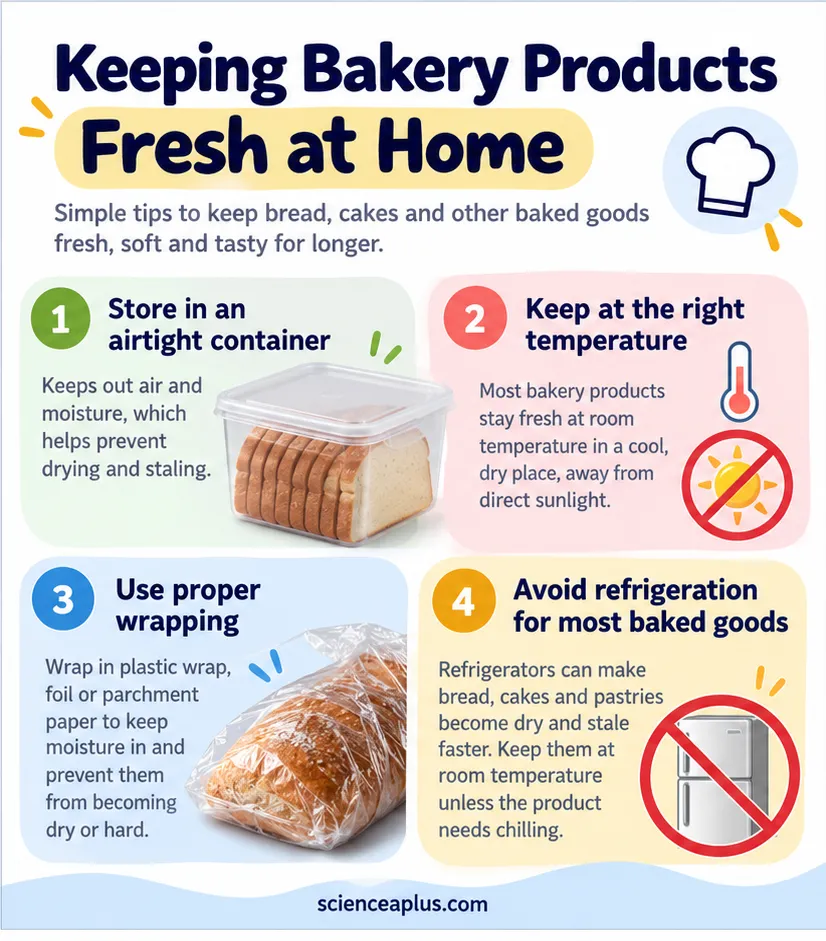
The first card gives four rules. Store in an airtight container, keep at the right temperature, use proper wrapping, and avoid refrigeration for most baked goods. They are sound rules, and the rest of this article explains why each one works. One small nuance: sealing a loaf stops it drying out, but it does not stop it going stale. That second process happens inside the bread, and the next section explains it.
The science behind it: why bakery products go off
A loaf leaves the oven soft, steamy and full of flavour. Within a day or two the crumb feels firmer and the taste is flatter. Three separate processes are at work, and mixing them up is the most common mistake people make about stale bread.
- Staling is a change in the starch itself. It happens even in a sealed bag.
- Drying and moisture migration is water moving from inside the food to the air, or from one part of the food to another.
- Spoilage is mould or bacteria growing on the food, which depends on how much water is available to them.
Staling: starch retrogradation
Flour is mostly starch, and starch is a long-chain carbohydrate made of glucose units. If you want a refresher on the family of molecules, see what carbohydrates are. In raw flour the starch is packed into hard little granules. During baking, water and heat make the granules swell and soften in a process called gelatinisation. The softened starch gives the crumb its tender, springy texture.
As the loaf cools and ages, the starch chains slowly line up and re-form tiny crystals. This is called retrogradation. The chains in a molecule called amylopectin are mainly responsible, and they take hours to days to rebuild their crystals. Crystals are stiff, so the crumb becomes firmer and crumbly. These crystals also hold on to water, which is one reason stale bread can feel dry even when little water has left the loaf.
Scientists who study bread have found that even bread sealed so that no moisture can escape still goes stale. That is strong evidence that staling is not just drying out.
What does the crust have to do with it?
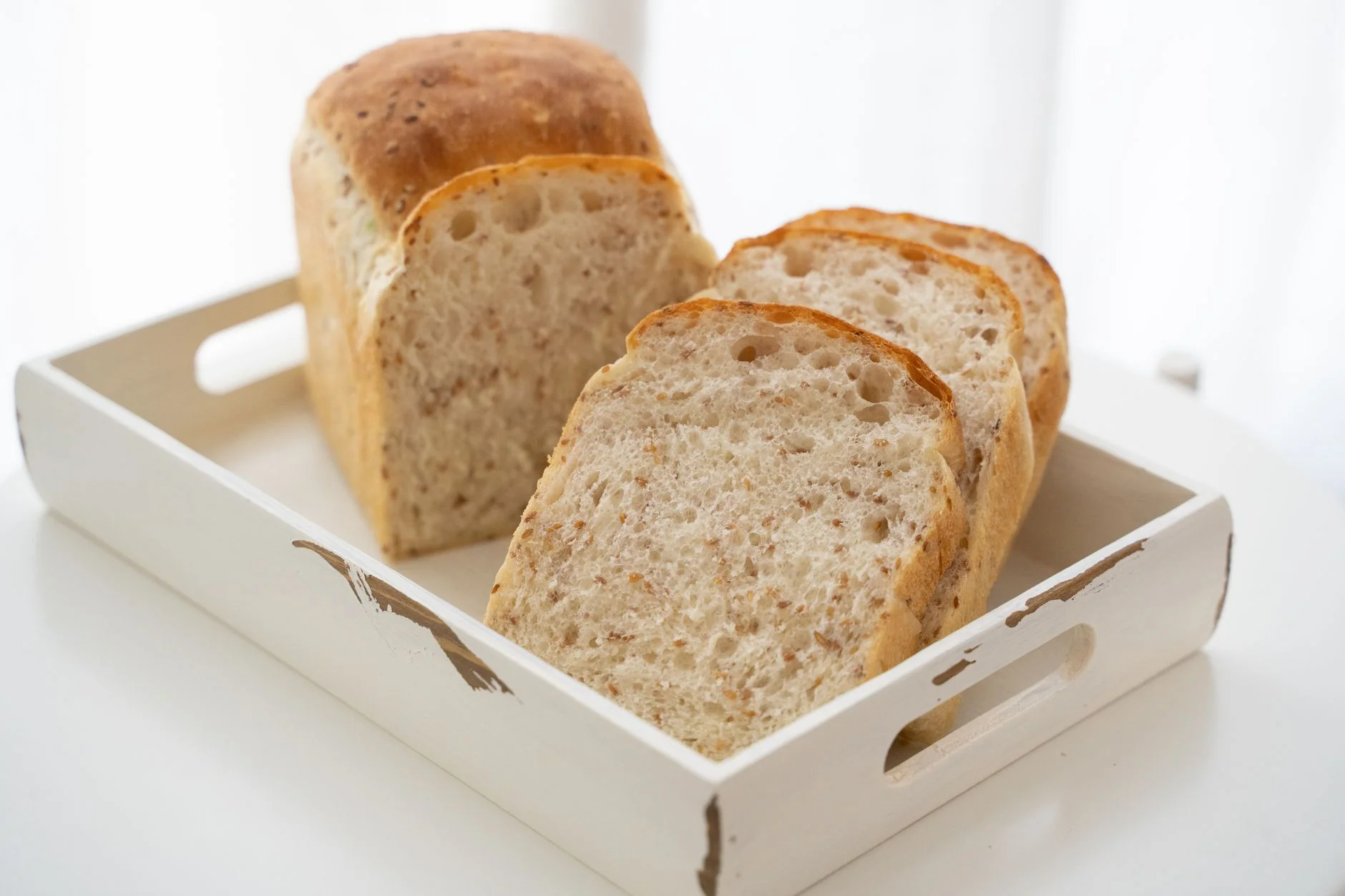
A fresh loaf has a moist crumb and a dry, crisp crust. Water naturally flows from wetter regions to drier ones, a process related to diffusion. Over time some water moves from the crumb towards the crust and out into the air. A study of white sandwich bread found that when the crust was left on, the crumb lost moisture and its water activity fell over two weeks, and after the first week the crumb stored with its crust was firmer, with more starch recrystallisation, than crumb stored without it. Moisture loss and retrogradation feed each other.
That is why a cut loaf goes off faster than a whole one: the cut face is a big window for water to leave. Many bakers recommend storing a loaf cut-side down on a board, or slicing only what you need.
Why the oven makes such a difference
Baking sets the starting point. The hotter and longer the bake, the drier and crispier the crust. Rich mixtures with plenty of sugar and fat usually stay soft for longer than lean ones. A baguette contains only flour, water, yeast and salt, so it has little to slow the changes down and is best eaten the day it is made.
Enzymes and yeast also matter at the baking stage. If you would like the story of how yeast makes the gas that fills the crumb, read what fermentation is. Industrial bakers sometimes add enzymes to their dough that slow the firming of the crumb, which is one reason supermarket sliced bread can stay soft for a few days.
Why a cupboard beats a hot windowsill
The card’s second tip says to keep baked goods in a cool, dry place away from direct sunlight. Heat does two things. It speeds up almost every chemical change, including the loss of water from the surface. It also warms a sealed container, which can cause water vapour to condense on the cooler lid and drip back on to the food. A damp crust then turns soggy and gives moulds a head start.
A bread bin, a cupboard or a cool shelf in the kitchen works well. Avoid placing bread on top of the fridge or next to the oven or kettle, where the temperature swings up and down.
In the next section we look at the biggest surprise on the card: why a fridge, the place most of us store food, is usually the wrong choice for bread and cake.
Should you keep bread in the fridge? Cold storage and staling
Most of us learn that cold slows things down, so the fridge looks like the sensible home for bread. For bakery products the opposite is usually true. The card’s fourth tip says to avoid refrigeration for most baked goods, and starch chemistry explains why.
Retrogradation depends on temperature. Hot, the starch chains move too vigorously to settle into crystals. Frozen solid, they move so little that crystals barely grow. In between, in the cool-but-not-frozen zone, the chains still move freely enough to line up, and conditions favour crystal growth. A laboratory study of bread storage found the rate of starch retrogradation was highest at 4 °C of the conditions tested, and popular science sources put the fastest range at roughly 0–8 °C. A food fridge is meant to run between 0 °C and 5 °C, according to the Food Standards Agency (FSA), so it sits right in the fastest zone.
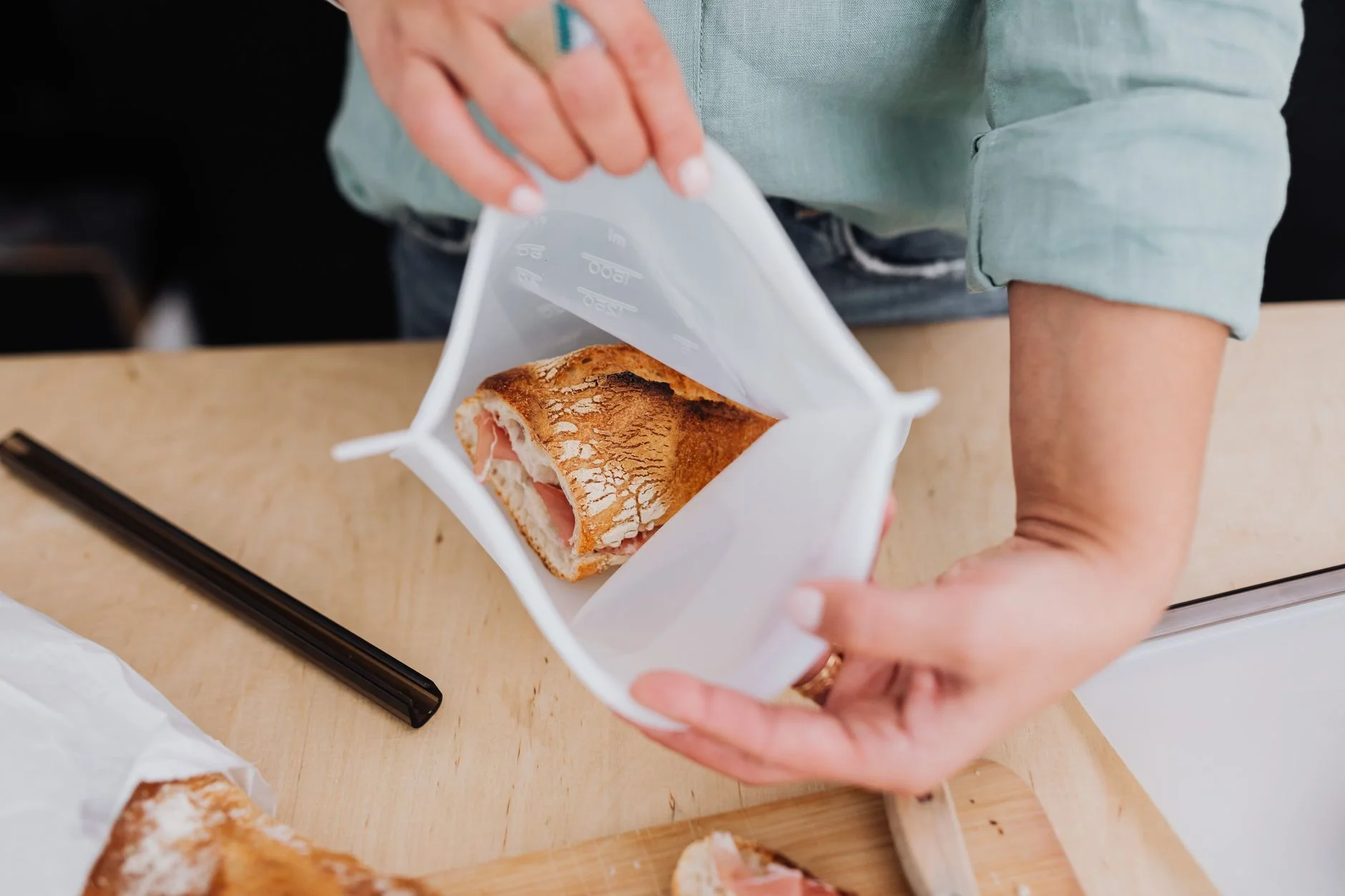
So a loaf kept in the fridge goes stale faster than one kept in a bread bin, even though microbes grow more slowly in the cold. The card describes refrigerated bread, cake and pastries as becoming “dry and stale” faster. Staling is the main reason; the cold, dry air of a fridge also pulls water out of unwrapped food.
Freezing bread: the pause button
The freezer is different. At about −18 °C, which is the temperature the FSA says a freezer should be at, most of the water in bread is ice and the starch chains are locked in place. Retrogradation slows to a crawl. The FSA compares a freezer to a pause button: while food stays frozen it does not spoil, although freezing does not kill bacteria.
That is why the card suggests freezing bread slices in a freezer bag for longer storage and thawing them when needed. Freeze the loaf while it is fresh, ideally sliced, so you can take out one or two slices at a time. Squeeze the air out of the bag to cut down on freezer burn, which is water leaving the surface of the food as ice turns straight to vapour and leaves dry, pale patches.
What the FSA says about freezing safely
- A freezer should be around −18 °C.
- You can freeze food right up to the end of its use-by date. That applies to products with a use-by date, such as fresh-cream cakes.
- Freezing does not kill bacteria. The bacteria have not been killed and may start growing again as food defrosts, so use thawed food promptly.
- For many foods the FSA advises defrosting in the fridge. Bread slices, which are low-risk, are often toasted straight from frozen.
Temperature and bakery products: a quick table
| Where | Typical temperature | Effect on starch staling | Effect on microbes | Best for |
|---|---|---|---|---|
| Cupboard or bread bin | about 15–20 °C | Slow to moderate | Mould can grow within days | Bread, cake, biscuits for a few days |
| Fridge | 0–5 °C (FSA) | Fastest | Growth slowed | Cakes with fresh cream, custard or fruit fillings |
| Freezer | about −18 °C (FSA) | Almost stopped | Growth paused, not killed | Sliced bread, plain cakes, anything for later |
The room-temperature figures in the first row are typical kitchen conditions rather than official limits.
When the fridge is the right place: cakes with cream
The fridge has a different job for cakes with cream, custard or fresh fruit. The card says that if cream or fresh fruit is used, refrigerate and consume sooner. This is a food-safety decision, not a freshness one. Cream and custard are moist, rich in protein and low in acid, which suits bacteria well. Pasteurised cream is sold as a chilled product, and the FSA advises keeping chilled products below 5 °C. Check the label on shop-bought cakes and follow it.
The price of that safety is a slightly firmer sponge. A good compromise is to keep the cake in the fridge in a closed box, then let a slice stand for a short time at room temperature before eating so the fat softens and the flavour returns. Our guide to harmful and beneficial microorganisms explains why the same microbes that spoil cream also give us yoghurt and cheese.
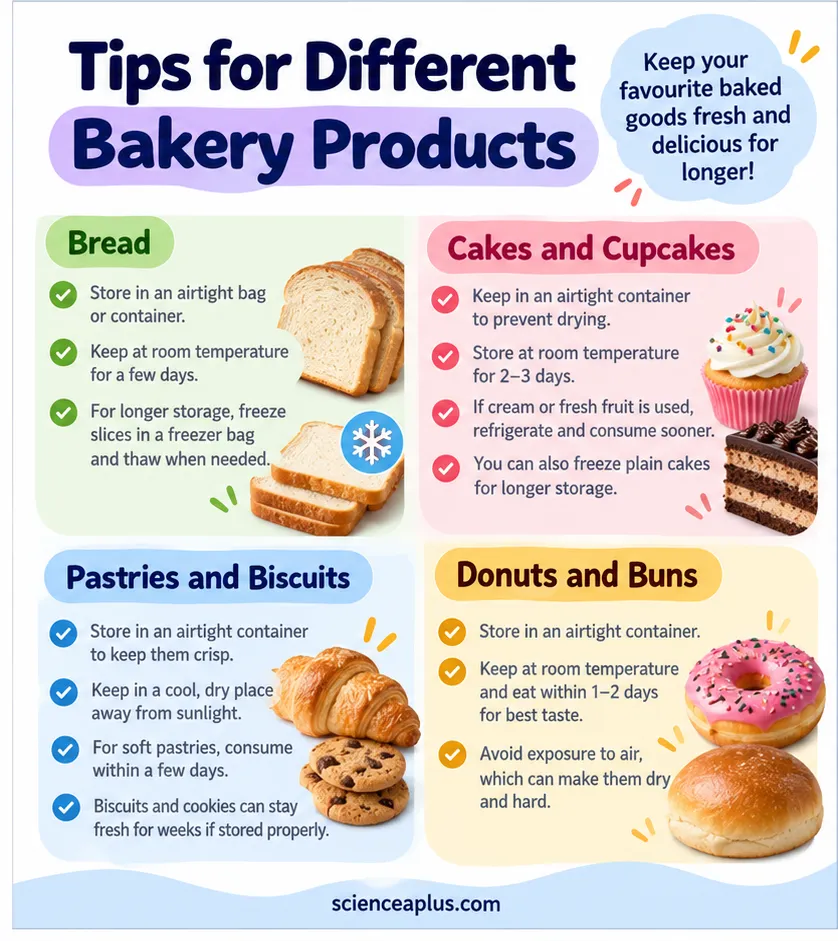
The second card applies these rules product by product. Bread: airtight bag or container, room temperature for a few days, freeze slices for longer. Cakes and cupcakes: airtight container, room temperature for 2–3 days, refrigerate cream or fresh fruit versions and eat them sooner, freeze plain cakes. The “2–3 days” and “1–2 days” figures on the card are rules of thumb, not laws of nature; recipe, kitchen warmth and the filling all change them.
Reheating: can you un-stale bread?
Because staling is a reversible crystal formation, heat can undo part of it. When stale bread is warmed to roughly 60 °C, the starch crystals begin to melt and the crumb softens again. The effect is only partial and temporary: once the bread cools, the chains start re-forming crystals, so the bread goes stale again, often faster than before. That is why “refreshed” bread should be eaten the same day.
A common piece of advice is to wrap bread in foil and warm it in the oven for 10–15 minutes at 300 °F. That is about 149 °C, or gas mark 2 on many UK ovens. Foil traps steam from the bread so the crumb does not dry out, while the oven heat melts the crystals. For a crisp crust, unwrap the loaf for the last couple of minutes. In the microwave, a few seconds on a plate with a damp piece of kitchen paper restores softness, but microwaved bread turns tough quickly as it cools.
Flip cards: temperature and starch
Next we look at the card’s first and third tips, airtight containers and wrapping, and what they do for water inside a loaf.
Airtight containers and wrapping: managing moisture
The first card says an airtight container keeps out air and moisture, which helps prevent drying and staling. The third says to wrap in plastic wrap, foil or parchment paper to keep moisture in and stop products becoming dry or hard. Both tips are about controlling where water goes. The science here is moisture migration, the movement of water from one place to another.
Water always tends to move from where it is more available to where it is less available. Think of a crumb that is about as wet as a damp sponge, a crust that is much drier, and a kitchen whose air is drier still. Water leaves the crumb, passes to the crust and escapes into the air. The loaf loses moisture overall, and the crumb loses it too. Bread has no membrane, so this is not true osmosis: water moves as vapour and through the food itself.
What an airtight container really does
A sealed box or bag slows the escape of water vapour. It also reduces how much fresh air, and therefore how many mould spores, reaches the food. The card’s tip is right, with one extra point: a sealed container does not stop starch staling. It stops drying, which is a separate problem, so a loaf in a bag still firms up over days.
A sealed container can also trap moisture that was still inside the food. If you wrap a loaf while it is still warm, steam condenses and wets the crust and the inside of the bag. Always cool bread and cakes completely before you wrap them.
Why crusts go soft
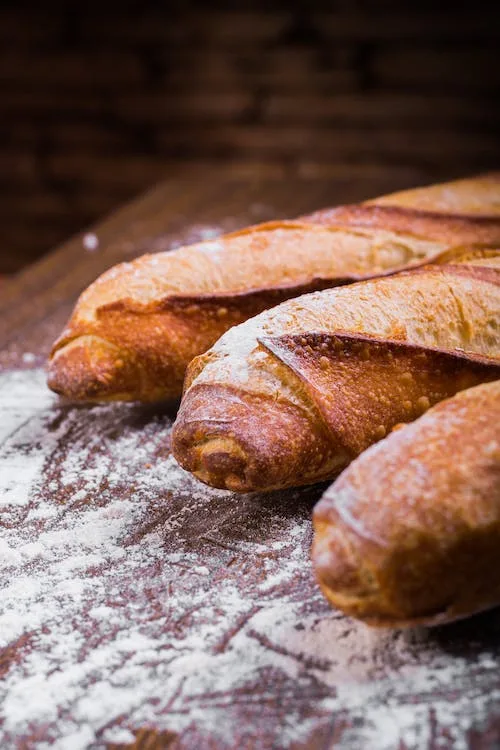
A crisp crust is a dry crust. Baking drives most of the water out of the outer layer and leaves a thin, brittle, brown shell. In a sealed bag, water from the moist crumb moves outwards into this dry shell, and the water has nowhere to go. The crust takes it up and loses its crunch. A baguette in a plastic bag goes leathery within hours for exactly this reason.
It is a trade-off between crispness and softness:
- Crusty bread: a paper bag or a cloth lets some water vapour out, which keeps the crust drier for longer. The crumb will dry and stale sooner. Eat it within a day, or freeze it.
- Soft sandwich bread and rolls: a plastic bag keeps the crumb soft by holding water in. A soft crust is expected.
- Re-crisping: a few minutes in a hot oven drives water out of the crust again, which brings the crispness back.
Biscuits, pastries and cookies: the opposite problem
The second card puts pastries and biscuits in an airtight container “to keep them crisp”, and says biscuits and cookies can stay fresh for weeks if stored properly. Crisp biscuits and pastries are dry and brittle, so their danger is taking in water from the air. A damp kitchen can turn a biscuit soft and chewy overnight. A closed tin keeps the surrounding air dry.

Soft cookies are the other way round. They are meant to hold some water, and their enemy is loss of it. The old tip of putting a slice of bread in the cookie jar is a moisture-sharing trick: the bread, with plenty of water, gives some up to the drier cookies until the air in the jar and the food reach a rough balance. The bread itself goes hard instead. Parchment paper between layers stops cookies sticking together.
Croissants and other soft pastries are best eaten within a few days according to the card.
Donuts, buns and bagels
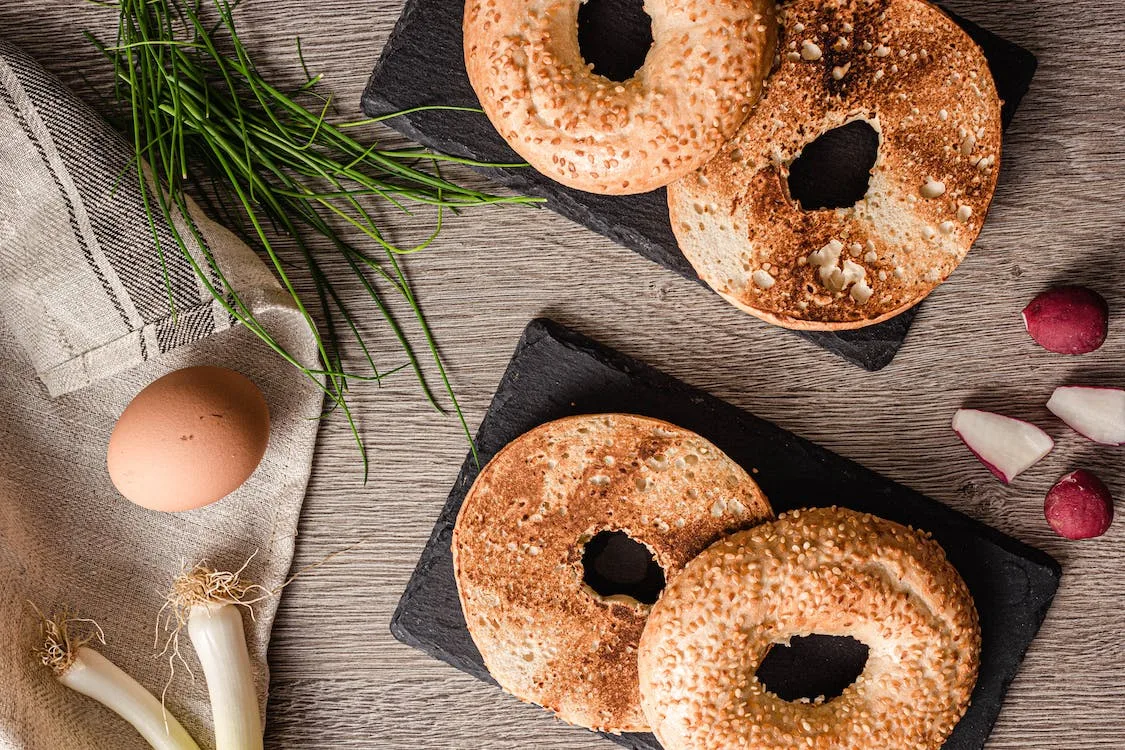
The card’s fourth panel says donuts and buns should be kept in an airtight container at room temperature and eaten within 1–2 days for best taste, and that exposure to air makes them dry and hard. Donuts and buns have a soft, open crumb with little crust to protect it, so they dry out and firm up quickly in the air. A glaze or icing adds a little protection but also a lot of sugar. Bagels follow the same rules: keep them airtight, and freeze any you will not eat soon, ideally sliced in advance so that you can toast them from frozen.
What about brown sugar and other soft foods?
Brown sugar follows the same moisture rules. Brown sugar is white sugar with a coating of molasses. The syrupy coating attracts and holds water, which is why the sugar is soft and clumpy. If it dries out, the coating sets and the sugar hardens into a lump. Airtight storage keeps the water in, and a slice of bread or a damp paper towel in the jar can return some moisture.
To soften a hardened block, microwaving it with a damp paper towel in short bursts works by adding water vapour while warming the molasses. Always handle hot sugar carefully, since it can burn.
Practical checklist: your storage plan
- Cool every bake completely before wrapping or boxing it.
- Keep crusty bread in paper or a bread bin and eat it within a day or two.
- Keep soft bread, buns and cakes in an airtight box or bag at room temperature.
- Put cakes with fresh cream, custard or fruit in the fridge, in a closed box.
- Slice and freeze any bread you will not eat in two or three days.
- Keep biscuits in a tin away from steam, and soft cookies in a jar with a slice of bread.
- Check your fridge is between 0 °C and 5 °C and your freezer is about −18 °C.
So far we have dealt with bread that is going hard. Next comes the other side of the coin: bread that is going mouldy, and how you can stay safe.
Mould, water activity and food safety
Staling makes bread unpleasant but harmless. Mould is a different matter. Moulds are fungi, and their spores float in kitchen air all the time. When a spore lands on food with the right conditions, it grows into the fuzzy patches you see on old bread. For more on these organisms, see our microorganisms biology lesson.
Water activity: how much water is available to microbes
Microbes cannot use all the water in food, only the water that is free rather than tied up by sugar, salt or starch. Scientists measure this as water activity, written aw. Pure water has an aw of 1.0. Most breads have a water activity of about 0.95, which is high enough for mould to grow. As a rule of thumb, most moulds cannot grow below roughly 0.80, and no microbial growth is possible below about 0.60. Sources differ a little on the exact cut-offs, so treat these as guidelines.
This explains the card’s advice on biscuits. A dry biscuit has a low water activity, so it can stay fresh for weeks and does not go mouldy in a tin. If it absorbs water from damp air, the activity rises and the biscuit goes soft and, eventually, mouldy. The same idea explains why jam, honey and dried fruit keep for so long: sugar ties up the water. If you want to see how water vapour in the air behaves, our page on water vapour is a good start.
Moulds and microbes grow faster when it is warm and damp, which is why the card says to keep bakery products cool and dry. A bread bin kept in a steamy kitchen, or a warm cupboard next to the dishwasher, speeds up mould. A plastic bag that traps water on the crust does the same. Fridge temperatures slow mould growth, but the faster staling you meet in the fridge usually costs you more than you gain.
Mouldy bread: what the FSA says
The FSA’s home food fact checker says that food that is obviously rotten or contains mould should not be eaten, and that this matters especially for vulnerable groups. It also points out that cutting off the mould and a good amount of the surrounding food might remove toxins you cannot see, but there is no guarantee that it removes them all.
Bread is soft and porous, so the thread-like parts of the mould, which you cannot see, can spread through the slices well beyond the visible spots. The safe rule is to bin mouldy bread, including slices that look clean in the same bag.
Maths practice questions
Try these, then tap to reveal the worked answers. They use the facts above and some simple storage numbers. The loaf figures are made-up examples, to practise the method.
A loaf has a mass of 800 g and is 40% water by mass. How many grams of water does it contain? (1 mark)
40% of 800 g = 0.40 × 800 = 320 g of water.
The same loaf loses 24 g of water on the counter. What is its new percentage of water? (3 marks)
New mass = 800 − 24 = 776 g. Water left = 320 − 24 = 296 g. Percentage = 296 ÷ 776 × 100 ≈ 38.1%. Losing 3% of the loaf’s mass cuts its water content by under 2 percentage points.
Bread has a water activity of about 0.95. A bakery lowers it to 0.80. What is the percentage decrease? (2 marks)
Decrease = 0.95 − 0.80 = 0.15. Percentage decrease = 0.15 ÷ 0.95 × 100 ≈ 15.8%.
An old recipe says to warm bread at 300 °F. Convert to °C using °C = (°F − 32) × 5 ÷ 9. (2 marks)
(300 − 32) × 5 ÷ 9 = 268 × 5 ÷ 9 = 1340 ÷ 9 ≈ 149 °C.
Test yourself
Key points to remember
Frequently asked questions about keeping bakery products fresh
How do you keep bread fresh at home?
Cool it completely, then keep it airtight at room temperature in a bread bin or bag, away from heat and sunlight. Eat it within a few days. If you will not finish it, slice it and freeze it in a freezer bag, then take out slices as you need them.
Why does bread go stale?
Mostly because of starch retrogradation. As bread cools and ages, starch chains re-form crystals, which makes the crumb firmer and crumbly. Moisture moving from the crumb to the crust and out into the air adds to it. Sealed bread still goes stale, so drying alone is not the cause.
Is it bad to keep bread in the fridge?
For freshness, usually yes. Fridge temperatures speed up starch recrystallisation, so bread stales faster than in a cupboard. A fridge only makes sense in hot weather or for foods with perishable fillings. For longer storage, the freezer is a better choice than the fridge.
Can you freeze bread, and does it harm it?
Yes. At about −18 °C staling almost stops, and the FSA says a freezer acts as a pause button. Freeze it fresh, sliced and with the air squeezed out. Thaw slices or toast them from frozen. Freezing does not kill bacteria, so eat thawed food promptly.
Does reheating stale bread work?
Partly. Warming bread to roughly 60 °C melts some of the starch crystals, so the crumb softens. The effect is temporary, because the crystals re-form as it cools, so eat it straight away. Wrapping a loaf in foil keeps steam in, and a final couple of minutes unwrapped crisps the crust.
Why does bread get soft crust in a plastic bag?
A crisp crust is dry, while the crumb holds a lot of water. In a sealed bag, water moves from the crumb into the crust and cannot escape, so the crust goes soft and leathery. A paper bag or bread bin lets moisture out and keeps crusts crisper for longer.
Is it safe to cut the mould off bread?
No. The FSA says food that contains mould should not be eaten, and that cutting it off does not guarantee unseen toxins are removed. Bread is porous, so mould threads can run beyond what you see. Throw the loaf away, and speak to a pharmacist or NHS 111 if you feel unwell.
Do cream cakes need to be kept in the fridge?
Cakes with fresh cream, custard or fresh fruit are perishable, so they should be kept chilled. The FSA advises keeping chilled foods in a fridge between 0 °C and 5 °C. Follow the label on shop-bought cakes, and eat refrigerated ones sooner than plain sponge.
How do you keep cookies soft?
Keep them in an airtight container so the water inside cannot escape. A slice of bread in the jar shares its moisture with the cookies, and parchment between layers stops sticking. Crisp biscuits need the opposite: a dry tin that keeps damp air out.
What is water activity and why does it matter for bread?
Water activity measures how much water in food is free for microbes to use, from 0 to 1. Bread is about 0.95, which supports mould. Most moulds cannot grow below roughly 0.80, which is why dry biscuits keep for weeks while soft bread goes mouldy in days.