Laser hair removal uses short pulses of light to damage the hair follicle, the tiny pocket in the skin that grows each hair. The aim is to slow down or reduce future hair growth, not to cut the hair like a razor does. It is a popular cosmetic treatment, but it is also a good example of real physics and biology working together. This guide explains how laser hair removal works, why it needs several sessions, who it suits, what the risks are and how to find safe treatment in the UK.
Everything here is general education, not medical advice. If you are thinking about treatment, or you are worried about unwanted hair that has appeared suddenly, speak to a qualified practitioner or your GP.
What is laser hair removal?
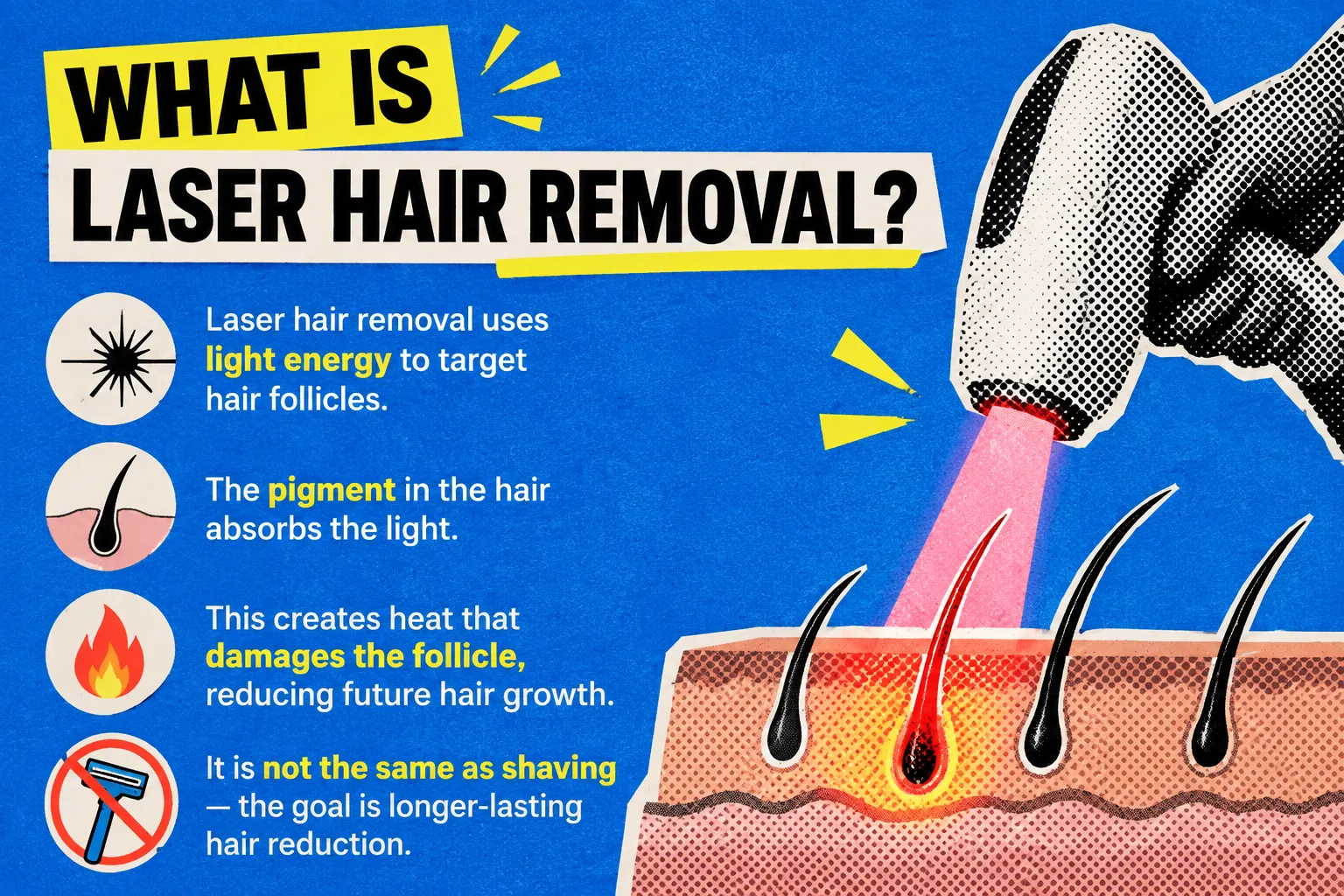
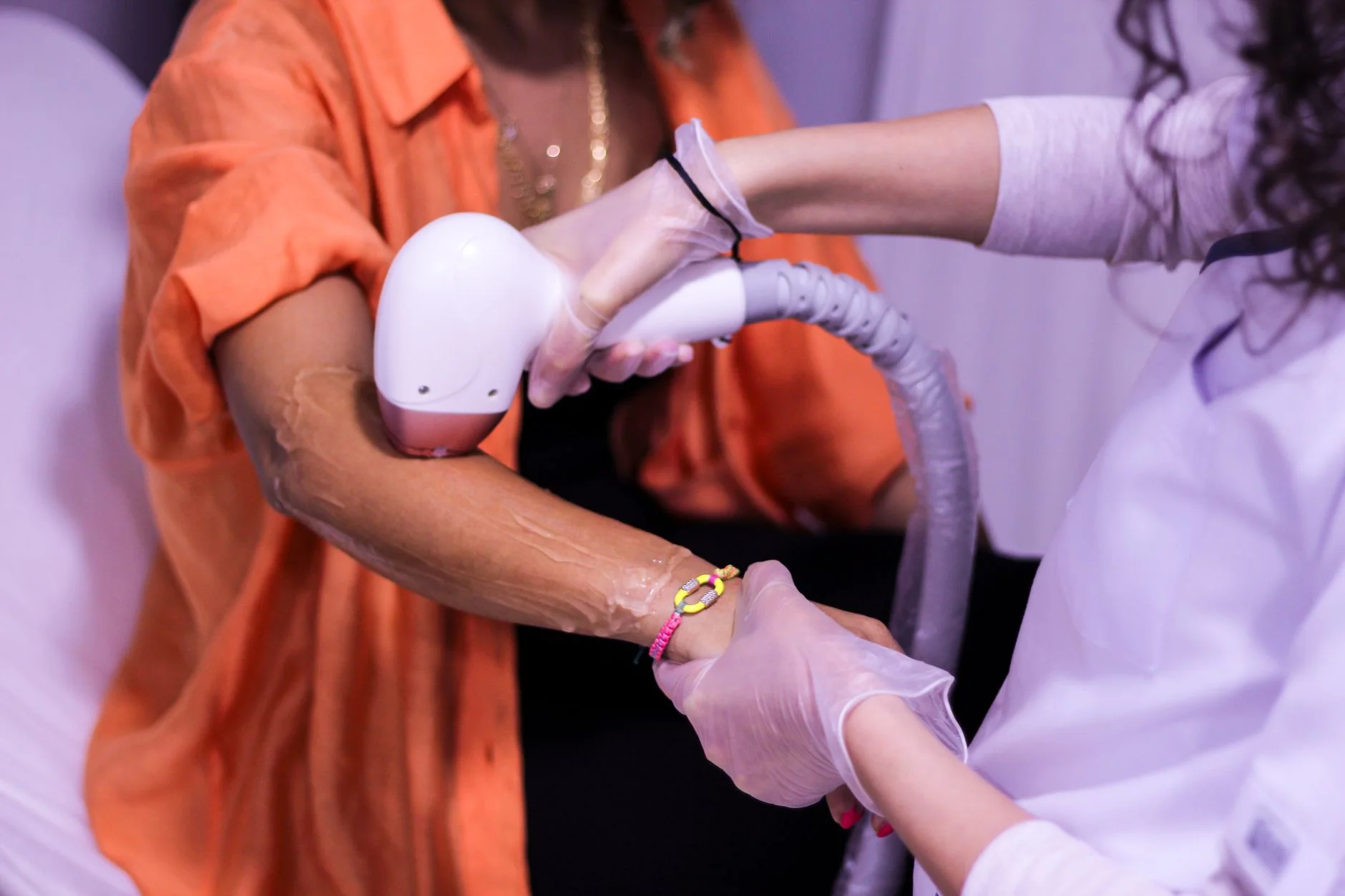
Laser hair removal is a treatment in which a handheld device sends controlled pulses of light into the skin. The light is absorbed by pigment in the hair. The absorbed energy turns into heat, and the heat damages the hair and the base of the follicle (NHS Trust patient information).
Shaving removes the visible hair above the skin. Waxing and plucking pull the hair out, but the follicle stays intact and a new hair grows. Laser treatment is different because it targets the follicle itself. That is why the goal is longer-lasting hair reduction, rather than a few days of smooth skin.
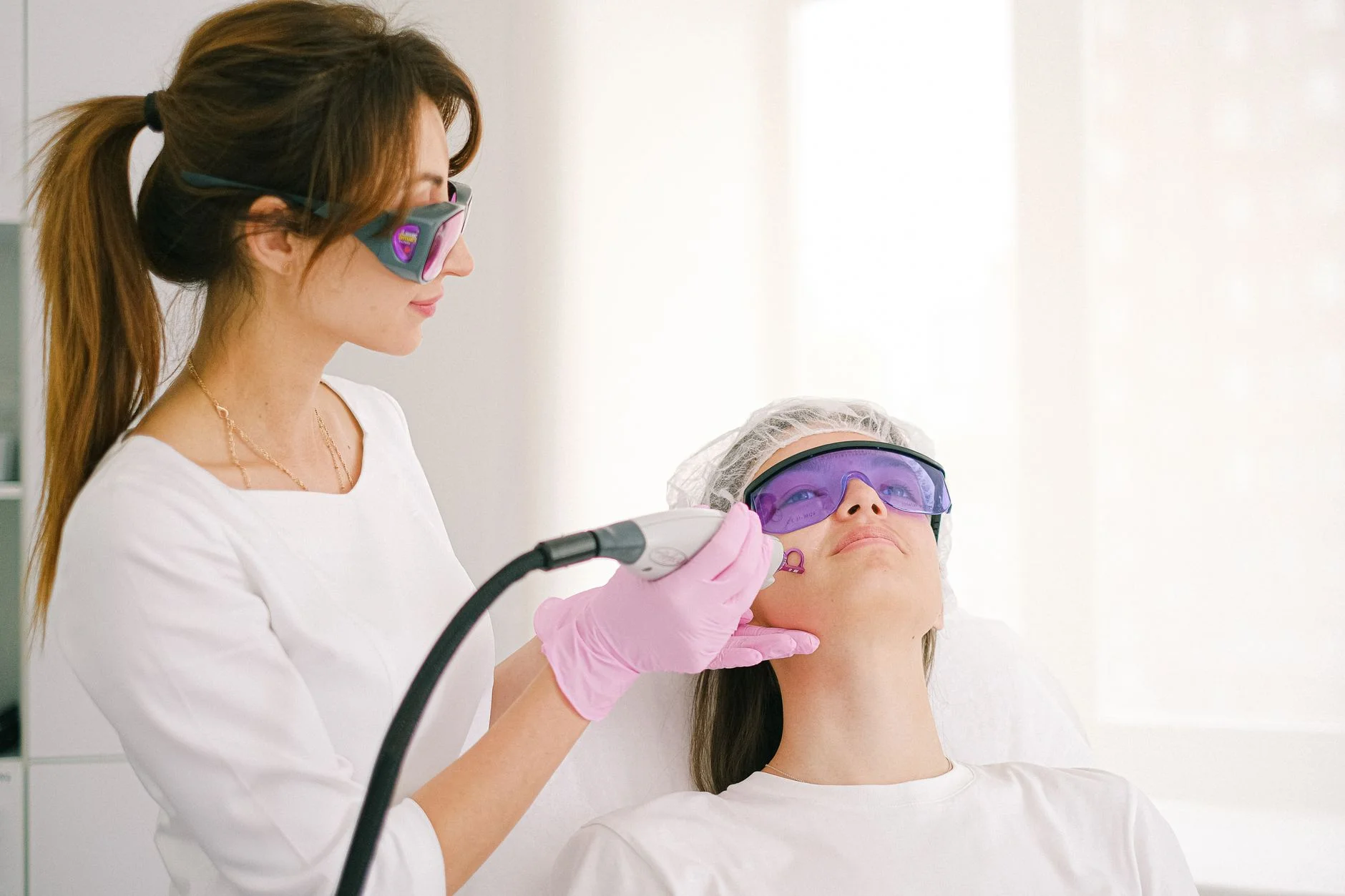
The treatment is used on areas such as the legs, underarms, upper lip, chin and bikini line. A practitioner decides which areas are suitable for you. Some areas, such as around the eyes, need special care because of the risk to the eye.
The science: selective photothermolysis
The idea behind laser hair removal has a name: selective photothermolysis. It was described in 1983 by two dermatologists, R. Rox Anderson and John A. Parrish, in a paper in the journal Science. Break the name into parts and it explains itself.
- Photo means light.
- Thermo means heat.
- Lysis means breaking down or destroying.
- Selective means it only affects the chosen target.
Anderson and Parrish showed that if you choose the right wavelength of light and the right pulse length, you can heat one target in the skin and leave the tissue around it much less affected. In that first paper the targets were tiny blood vessels and pigment-containing structures called melanosomes. Later work applied the same principle to hair, and the 1983 paper is widely cited as the starting point for this approach.
Three ingredients matter for hair removal.
- A target that absorbs light. In hair, the target is melanin, the dark pigment that gives hair and skin their colour. The scientific word for a light-absorbing target is a chromophore.
- A wavelength that melanin absorbs and that reaches the follicle. Red and near-infrared light penetrates the skin deeper than blue light.
- A pulse that is short enough to heat the follicle without overheating the skin around it. The pulse length is chosen so the heat stays mostly where the pigment is.
Step by step: what happens in your skin
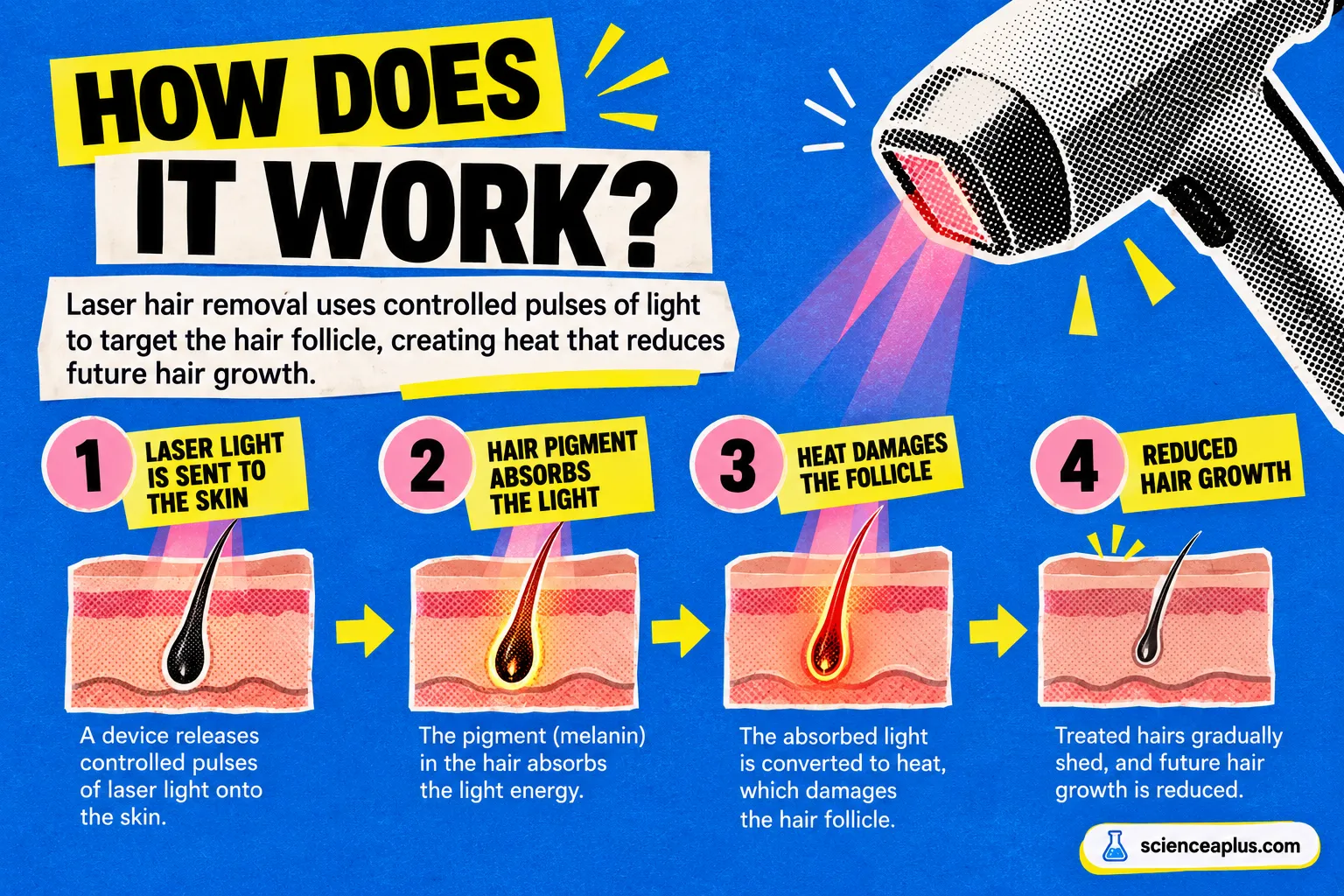
Following the steps in the diagram above, a treatment works like this.
- The device delivers a pulse of laser light to the skin over the hair.
- Melanin in the hair shaft and follicle absorbs the light energy.
- The absorbed light is converted to heat, which damages the follicle.
- Treated hairs gradually shed over the following days to weeks, and the follicle is less able to grow new hair.
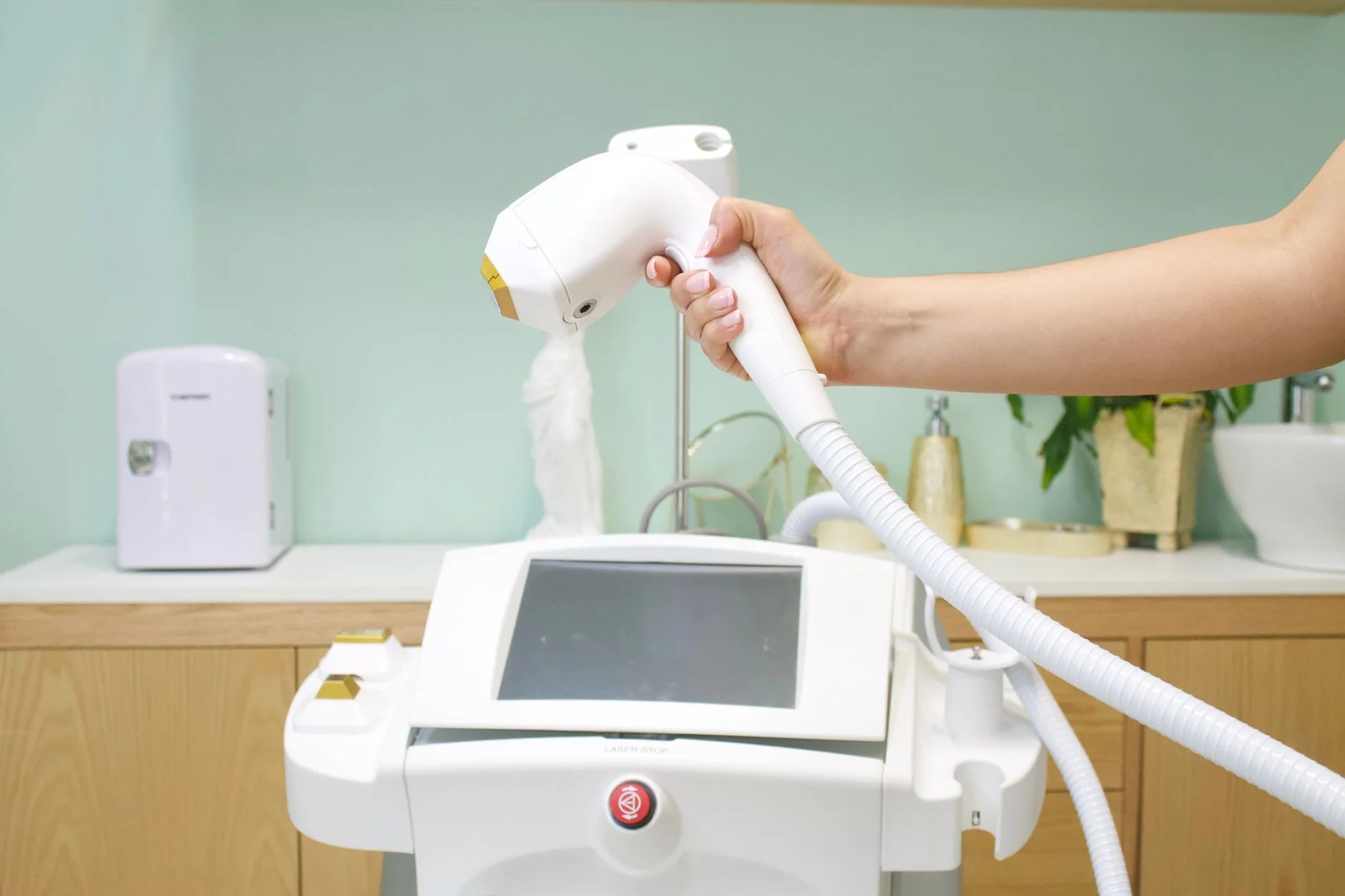
Many devices cool the skin surface during the pulse, using a cooled tip or a burst of cold air. This protects the upper layers of skin, which also contain some melanin. The skin cannot be completely shielded, and this is the reason people with more pigment in their skin have a higher risk of side effects, as you will see later.
Laser wavelengths used for hair removal
Different lasers produce light of different wavelengths, measured in nanometres (nm). A nanometre is one billionth of a metre. Visible light runs from about 400 to 700 nm, so the lasers used for hair removal sit at the red end or just beyond it, in the near-infrared range. The three most common are in the table, with the ruby laser added because it is the oldest.
| Laser type | Typical wavelength | What it is generally used for |
|---|---|---|
| Ruby | 694 nm | An older type, now less common |
| Alexandrite | 755 nm | Dark hair on fair skin (NHS Trust information describes it as very good for this) |
| Diode | about 800–810 nm | Widely used for dark hair; common in clinics |
| Nd:YAG | 1064 nm | Used on darker skin because melanin in the skin surface absorbs it less |
The pattern is a trade-off. Shorter wavelengths such as 755 nm are absorbed strongly by melanin, so they work well on fine, dark hair in pale skin, but they also heat the skin surface more. Longer wavelengths such as 1064 nm are absorbed less by melanin overall, which is safer for darker skin, but they need a different balance of energy and pulse length. This is one reason a good practitioner chooses the device to match your hair and skin, rather than using one machine for everybody.
Why dark hair responds best
Dark, coarse hair contains a lot of melanin, so it absorbs a lot of the light and heats up. Cleveland Clinic explains that the contrast between skin colour and hair colour makes it easier for the hair to absorb heat. This is the reason the textbook ideal is dark hair on light skin: the light is absorbed in the hair, and much less in the skin around it.
Hair that has little pigment gives the laser very little to grab. That includes white, grey and blonde hair, and the NHS trusts that publish patient leaflets on the treatment say it does not work on them. Bleaching works by breaking down pigment (see our article on lightening hair with hydrogen peroxide), so lightened hair has less melanin to absorb light, in the same way that naturally pale hair does. A practitioner can look at your hair and test a small patch before they treat a larger area.
Why does a laser heat dark hair more than pale skin? (2 marks)
Dark hair contains more melanin, which absorbs the laser light and converts it to heat. Pale skin has less melanin, so less of the light is absorbed there and the skin is heated less.
What does the word "selective" mean in selective photothermolysis? (1 mark)
It means the light heats and damages only the chosen target, such as melanin in the hair follicle, while the surrounding tissue is affected much less.
Skin care in general is a fast-changing field, and treatments like this sit alongside creams, sun protection and routines. If you want a broader look at how people think about caring for their skin, see our article on the future of skincare.
Why laser hair removal needs several sessions
If a laser pulse damages the follicle, why not do it once and be finished? The answer is the hair growth cycle. Hairs in one area are not all growing at the same time. Each follicle goes through repeating phases, and the laser works best on hairs that are in the growing phase. At any one moment only some of the hairs in an area are in that phase, so a single session can only reach a share of them.
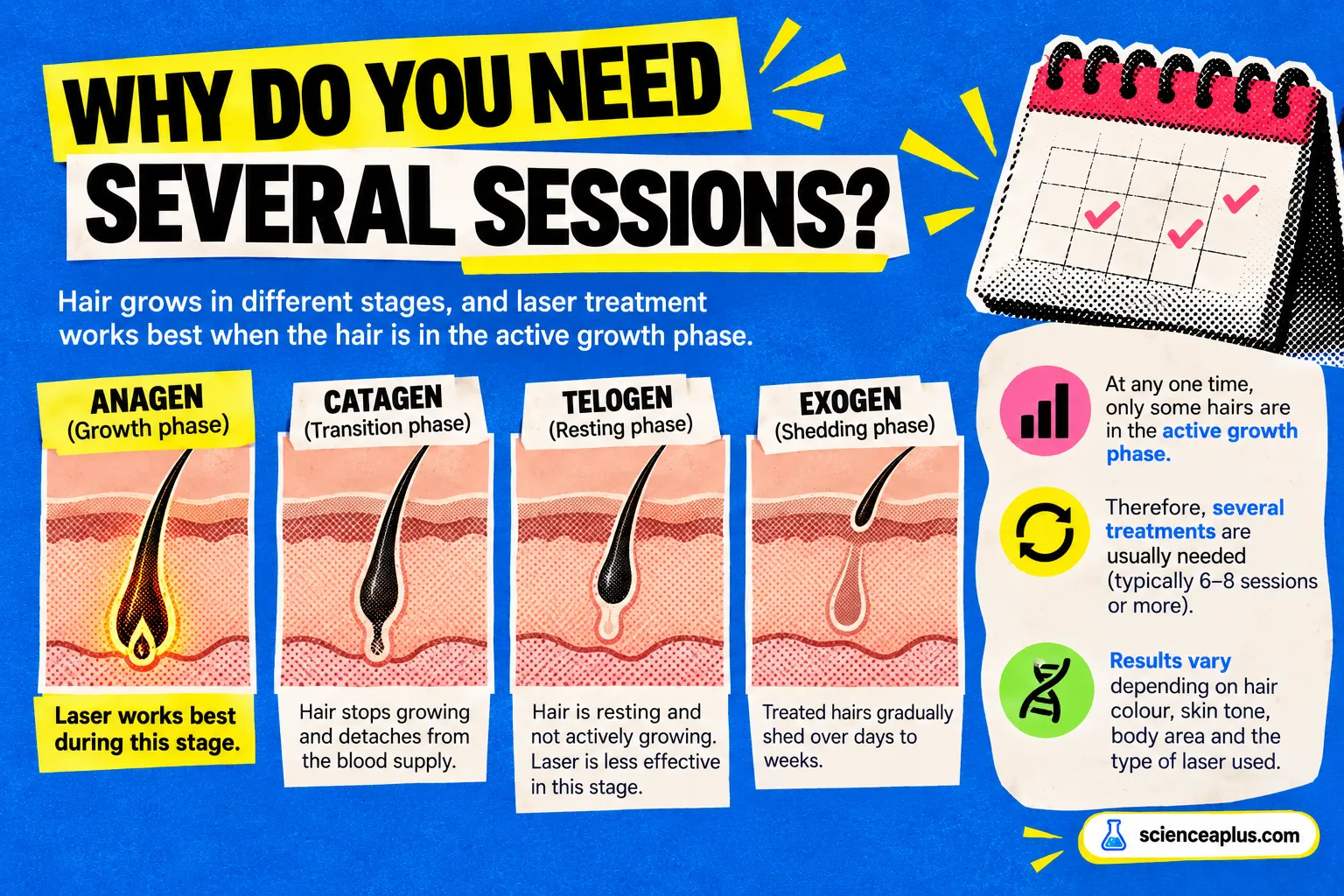
The four phases of the hair cycle
Scientists usually describe the cycle in three main phases, anagen, catagen and telogen, and many sources add a fourth, exogen, for shedding. Tap the cards to check what each one means.
The length of each phase is different on the scalp, face, underarm and legs, which is one reason the number of sessions and the gap between them depends on the body area. Because the hairs that were resting during one session will be growing by the next, the practitioner returns every few weeks to catch a new group.
How many sessions?
Sources do not all agree, because the answer depends on the clinic, the laser, the area and the hair. Sessions vary with the clinic, the laser, the area and the hair, and sources differ. The Bristol Laser Centre (North Bristol NHS Trust) suggests around four to six sessions as an initial course, followed by top-up treatments once or twice a year, while Cleveland Clinic quotes six to eight, about six to eight weeks apart. One NHS trust leaflet recommends a course of three full treatments for the maximum benefit. A reasonable summary is that you should expect several sessions, often around 6 to 8, sometimes fewer or more, and then occasional maintenance. Your practitioner will advise.
Be wary of any clinic that promises a fixed result after a set number of sessions. A reputable practitioner will explain that how your hair responds is hard to predict, and may suggest a test patch first.
Hair colour and skin type
Two features decide how well the light is absorbed: the colour of the hair and the colour of the skin. The treatment works best when there is a strong contrast, with dark hair on lighter skin. As skin gets darker, the risk of side effects rises, because the skin surface also absorbs the light.
Which hair responds best?
| Hair type | How it usually responds |
|---|---|
| Dark, coarse hair | Responds best, because it contains the most melanin |
| Fine, downy hair | Often responds poorly (NHS trust leaflet) |
| Blonde or red hair | Less effective (Cleveland Clinic); NHS trust leaflets say blonde hair does not respond |
| Grey or white hair | Generally does not respond well, because there is almost no pigment (NHS trust leaflets) |
Hair on the same person can change over time. Some people have a mix of dark and pale hairs, and the pale ones are likely to stay behind after treatment. This is one common reason people are disappointed with the results.
Skin tone and the Fitzpatrick scale
Practitioners often describe skin using the Fitzpatrick scale, which sorts skin into six types according to how it reacts to sunlight. Type I is very pale skin that burns easily and rarely tans. Type VI is very dark skin that rarely burns. The higher the number, the more melanin is in the skin, and the more careful the choice of laser and settings must be.
For darker skin, the Bristol Laser Centre says a long-pulsed Nd:YAG laser is safe to use and is most effective on coarse, dark hair, while the alexandrite laser is described as very good for dark hair on fair skin. The same centre warns that the risk of side effects is higher if you have naturally dark skin or if you are treated when you have a suntan.
Hormones and new hair growth
Hair growth is influenced by hormones. Chemical messengers released by glands, such as the ovaries, the adrenal glands and the pituitary gland, affect how thick hair is and where it grows. You can read more about how the brain controls these glands in our overview of hypothalamic and pituitary hormones.
This matters for laser treatment in a practical way. Laser treatment damages the follicles that are there today, but it does not change the hormones that tell new follicles to produce thicker hair. If your hormone levels change, for example during puberty, pregnancy, menopause or because of a medical condition, new hairs can still appear in the treated area after you have finished a course. If you notice rapid or unexpected hair growth, particularly on the face or body, it is sensible to talk to a GP, because a doctor can check whether a medical cause such as a hormone condition is behind it.
Explain why laser hair removal is less effective on grey hair than on dark hair. (2 marks)
Grey hair has little or no melanin. Melanin is the pigment that absorbs the laser light and turns it into heat, so with little melanin there is not enough heat to damage the follicle.
Why is a longer wavelength such as 1064 nm often chosen for darker skin? (2 marks)
Melanin absorbs 1064 nm light less strongly than shorter wavelengths, so less of the energy is absorbed by the skin surface, which lowers the risk of burns and colour changes.
Is laser hair removal permanent?
Not in the sense most people mean. Laser hair removal is better described as long-term hair reduction than guaranteed permanent removal. An NHS trust leaflet puts it plainly: complete removal of hair cannot be achieved, and some people only get a temporary reduction lasting a few weeks or months. The same leaflet says that on average you may expect to see up to two thirds reduction in hair growth.
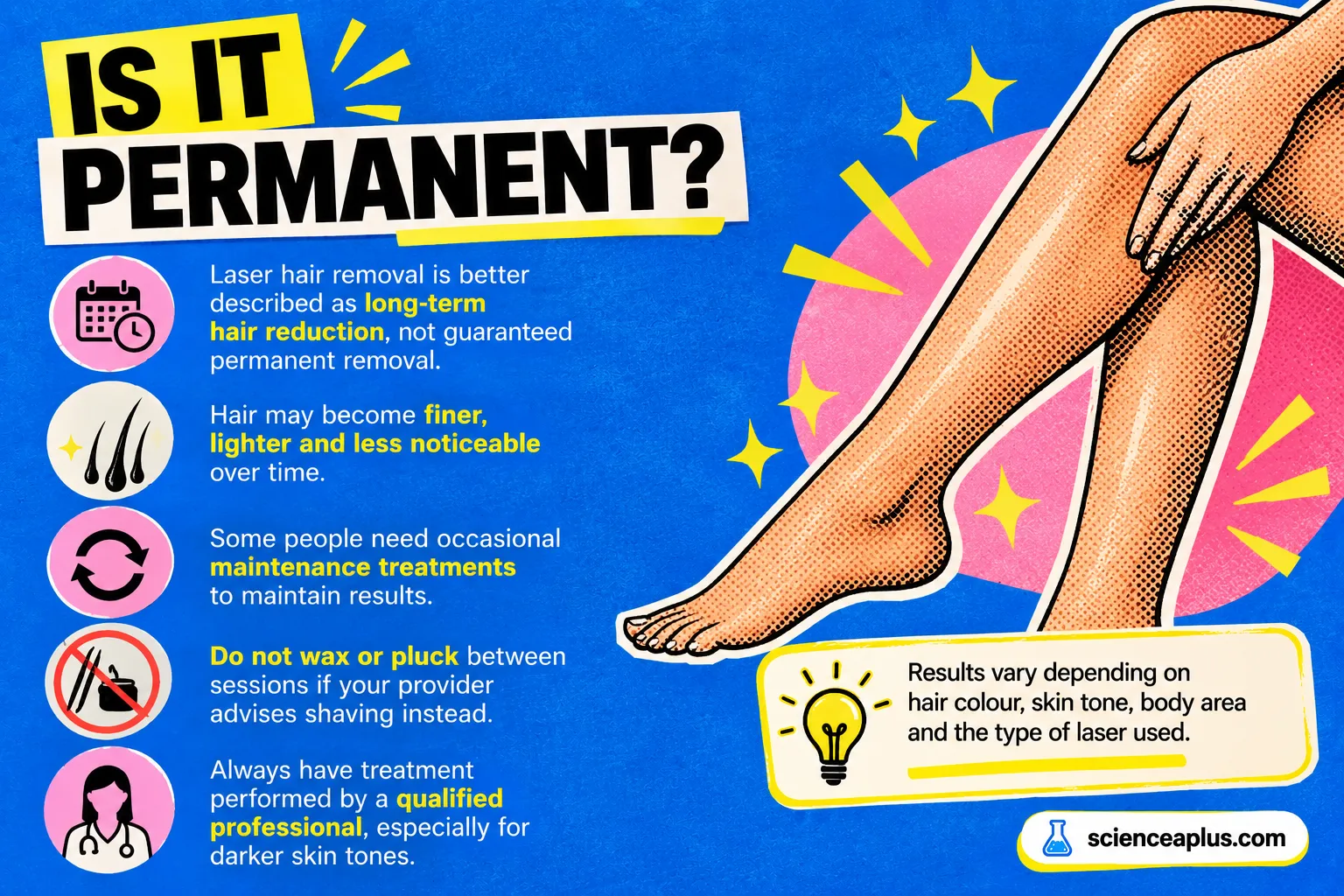
The word "permanent" appears in advertising because of a regulatory definition. In the United States, the Food and Drug Administration (FDA) allows manufacturers of cleared devices to use the phrase "permanent hair reduction". It is defined as a long-term, stable reduction in the number of hairs that regrow after a course of treatment, stable for longer than the complete growth cycle of the hair follicle. The definition says that this does not necessarily imply the elimination of all hairs in the treatment area. So the FDA wording is about a reduction in the number of hairs, not about hair never growing again.
In practice, many people find that the hairs that return are finer, lighter and less noticeable. Others need occasional maintenance sessions. The Bristol Laser Centre, for example, describes top-up treatments once or twice a year for some patients. Results vary with hair colour, skin tone, body area and the laser used.
Side effects and risks
Laser hair removal is a medical-style procedure that uses a powerful device on living skin, so it has risks. Most side effects are mild and short-lived. Serious ones are uncommon, but they do happen, and they are more likely when the wrong laser, the wrong settings or an untrained operator are involved.
Common and temporary effects
- Redness, pinkness and swelling around the hairs, often like mild sunburn. The Bristol Laser Centre says redness usually settles within a day or two.
- Discomfort or tenderness during and after the pulses. People describe it differently, so it is wrong to promise that a treatment is painless.
- Ingrowing hairs and spots. One NHS trust leaflet says an ingrowing hair rash, a bit like acne, can last for several weeks.
Less common effects
- Changes in skin colour. A patch of skin can become lighter or darker. The Bristol Laser Centre says this is a low risk and is usually temporary, but it can occasionally be permanent.
- Blisters, crusting, burns and infection. Cleveland Clinic lists blisters, burns, infections and scars among the possible complications.
- Cold sore (herpes) flare-ups, if you are prone to them, particularly for treatment near the mouth.
- Scarring. The Bristol Laser Centre describes the risk as very low, and an NHS trust leaflet calls it very uncommon.
The Bristol Laser Centre also states that the risk of side effects is higher if you have naturally dark skin or are treated while you have a suntan, which is why the choice of laser matters so much.
Who should be cautious or avoid treatment?
Cleveland Clinic says that people who are pregnant, who take certain medicines, who have genital herpes, who have keloid scars or who have a history of skin cancer should avoid the procedure or discuss it with a doctor first. This is not a complete list. A proper consultation should include questions about your medical history, your medicines (some make skin more sensitive to light), recent sun or tanning and any skin conditions.
Before and after: general aftercare
Your clinic will give you instructions, and those instructions come before anything you read online, because they depend on the device used. As an example of what is typical, one NHS trust leaflet asks patients to avoid tanning, sunbeds and fake tan for six weeks before treatment, to avoid shaving for five days afterwards, to avoid strenuous exercise, swimming, saunas, steam rooms and hot baths or showers for seven days, and to use a high-factor sunscreen with five-star UVA protection for six months after finishing the course. Other clinics give different advice, so treat this as an example and not a rule.
The common threads are sensible ones.
- Keep the skin out of strong sun. Sun exposure raises the amount of melanin in the skin, which increases the risk of burns and colour changes. Use sun protection on treated areas.
- Do not pluck or wax between sessions unless your provider says it is fine. The laser needs the hair root in place to be effective, so providers often advise shaving instead.
- Be gentle with the skin. Cool, soothing care for redness is common, but follow your practitioner's advice about creams and products.
- Do not pick scabs or crusts. Report them to your clinic.
Use the checklist below to prepare for a consultation. Your ticks are saved in your own browser.
- I have checked the clinic is registered or licensed where I live.
- I know the qualifications and training of the person treating me.
- I have asked which laser will be used and why it suits my skin and hair.
- I have asked about a patch test before the full treatment.
- I have told the practitioner about medicines, health conditions and recent sun or tanning.
- I have been told the risks in writing and I have been given aftercare instructions.
- I understand that results are reduction, not a guarantee of permanent removal.
Laser hair removal in the UK: who regulates it?
The rules are different in each part of the UK, and they have been changing, so check the current position for where you live. This section is a summary of what was reported when this article was last updated in October 2026, not legal advice.
England
The Health and Care Act 2022 gave the government powers to set up a licensing scheme for non-surgical cosmetic procedures in England. The Department of Health and Social Care consulted on a licensing scheme in 2023 and published its response on 7 August 2025. The 2023 consultation proposed a three-tier system graded by risk (red, amber and green), with non-ablative laser hair removal proposed for the lowest-risk (green) group. The 2025 response said initial work would prioritise regulations for the highest-risk procedures, with further consultation and Parliamentary debate before the scheme is finalised. We found no GOV.UK publication showing that a licensing scheme covering laser hair removal is in force at the time of writing, so check GOV.UK for the latest position. In other words, do not assume that a clinic in England is licensed just because it advertises itself as professional. Check the practitioner's training and insurance yourself, and look for current information on GOV.UK.

Scotland and Wales
Scotland and Wales have their own regulators. In Scotland, Healthcare Improvement Scotland regulates independent clinics, so check whether your clinic is registered; its website explains which treatments need registration and lists registered services. In Wales, Healthcare Inspectorate Wales registers independent clinics offering non-surgical laser treatments such as hair or tattoo removal. Ask a clinic for its registration details and check them on the regulator's own register, not just on the clinic's website. Northern Ireland has its own arrangements, and you should check these with the relevant authority.
How to choose a practitioner
Because the legal position in parts of the UK is still developing, the checks you make matter. The checklist in the previous section gives practical questions to ask. Good signs include:
- A consultation, with questions about your health, medicines, skin type and recent sun exposure, before any treatment is booked.
- A patch test on a small area, with time to see how your skin reacts.
- A clear explanation of which type of laser is used and why it suits you.
- Written information about risks, aftercare and who to contact if something goes wrong.
- Proof of training on the specific device, insurance and clean, well-run premises.
- Honest language: "reduction", "no guarantee", and no promise that treatment is painless or permanent.
Warning signs include pressure to pay for a large course on the spot, claims of guaranteed or permanent results, no patch test, and an operator who cannot say what training they have had. If you have a medical condition, your GP can advise whether treatment is appropriate or whether you should see a dermatologist.
Home devices or clinic?
Home hair removal devices that use IPL or low-powered lasers are widely sold. The FDA clears some laser hair removal devices for home use, according to Cleveland Clinic, but without supervision from an experienced healthcare provider the risk of misuse or injury goes up.
| Clinic treatment | Home device | |
|---|---|---|
| Who chooses the settings? | A trained practitioner, who can adjust them for your skin and hair | You, following the manual |
| Type of light | Laser (alexandrite, diode or Nd:YAG) or IPL | Often IPL, and some low-power lasers |
| Skin and hair check | Consultation and often a patch test | Only what you do yourself |
| Main risks | Burns and colour changes if the wrong laser or settings are used | Misuse, burns, colour changes and eye injury |
| Suitability for darker skin | Possible with a suitable laser, such as Nd:YAG | Check the manufacturer's skin-tone guidance carefully; many devices are not suitable |
If you do use a home device, read the instructions for skin tone and hair colour, carry out the patch test, use the supplied eye protection if the manufacturer says so, and stop if you get blistering or pain that does not settle. Never aim a device at the eye area, and do not use it on moles or other skin patches. If you are unsure, ask a pharmacist or GP before starting.
How much does it cost?
Prices vary a great deal and depend on the clinic, location, the area treated, the type of laser and the number of sessions. This article does not quote prices because any figure would go out of date and be misleading. When comparing costs, ask for the total for a full course, what is included (consultation, patch test, top-ups), and what happens if the results are not what you expected. A very low price is not automatically a bargain if it means less training or cut corners.
Test yourself
Frequently asked questions about laser hair removal
How does laser hair removal work?
A laser sends pulses of light into the skin. Melanin, the pigment in the hair, absorbs the light and turns it into heat. The heat damages the hair follicle, so treated hairs shed and fewer grow back. This principle is called selective photothermolysis, and it targets the hair while limiting damage to the skin around it.
Is laser hair removal permanent?
Not guaranteed. The more accurate description is long-term hair reduction. An NHS trust leaflet says complete removal cannot be achieved and that, on average, you might expect up to two thirds reduction in hair growth. Some people need top-up sessions, and results vary with hair colour, skin tone and body area.
How many sessions of laser hair removal do you need?
It depends on the clinic, laser, body area and hair. Sources differ, but it is often around 6 to 8, sometimes fewer or more, and your practitioner will advise. Sessions are spaced weeks apart so that new hairs reach the growth phase. Occasional maintenance treatments may follow.
Does laser hair removal hurt?
Many people feel discomfort, tenderness or a stinging sensation during treatment, and the skin can feel sore or look red afterwards. How much it hurts varies with the person, the area and the laser. Any clinic that promises it is completely painless is overclaiming. Ask your practitioner what to expect.
Does laser hair removal work on all skin tones?
It can be used on many skin tones, but the risk of side effects is higher on naturally dark skin and on tanned skin. Practitioners use lasers such as long-pulsed Nd:YAG for darker skin, with careful settings. A consultation and patch test help your practitioner choose a safe approach.
Why doesn't laser hair removal work on white, grey or blonde hair?
The laser targets melanin. White and grey hair has almost none, and blonde hair has little, so the hair absorbs too little light to heat the follicle enough. NHS trust leaflets say the treatment does not work on these hair colours. Red hair is also often described as responding less well.
What are the side effects of laser hair removal?
Common effects are redness, swelling and tenderness, which usually settle within a day or two. Less commonly there can be ingrowing hairs, lighter or darker patches of skin, blisters, burns or infection. Scarring is very uncommon. Contact your clinic or GP if a reaction is severe or not settling.
Is laser hair removal regulated in the UK?
It depends where you live. In Scotland, Healthcare Improvement Scotland regulates independent clinics (check whether your clinic is registered), and Wales registers independent laser clinics. England has legislation allowing a licensing scheme, but we found no GOV.UK publication showing that one covering laser hair removal is in force at the time of writing. Always check training, insurance and registration.
Are home laser hair removal devices as good as a clinic?
Home devices are generally lower in power and often use IPL, and you set them up yourself. Without supervision from a trained practitioner, the risk of misuse or injury goes up, including burns and eye injury. Check the skin tone guidance, use eye protection as instructed and ask a GP or pharmacist if unsure.
Who should not have laser hair removal?
Cleveland Clinic advises that people who are pregnant, take certain medicines, have genital herpes or keloid scars, or have a history of skin cancer should avoid the procedure or speak to a doctor first. Tanned skin is also a problem. Share your full medical history at the consultation.