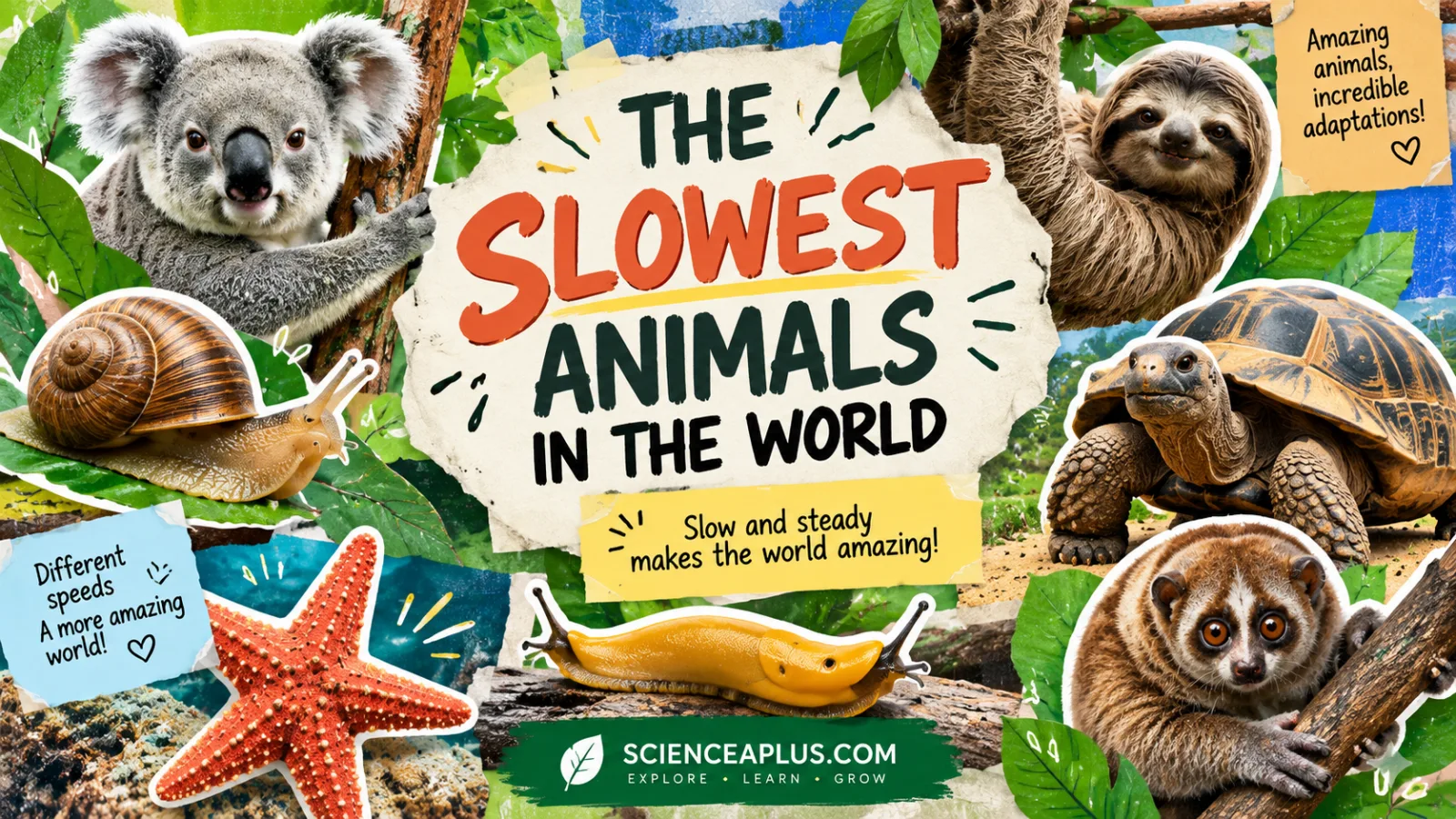
The slowest animal in the world depends on how you measure it. Among fish, the dwarf seahorse wins, creeping along at about 1.5 metres per hour. Among mammals, the three-toed sloth takes the title, averaging roughly 0.24 km/h when it moves at all.
This guide counts down nine of the slowest animals in the world, from a seahorse the size of your thumb to a manatee that cruises like a floating armchair. For each one you will get real speeds, where it lives and the clever reason slow-moving animals survive without racing anywhere.
What makes an animal “slow”?
Speed costs energy. Muscles that sprint need plenty of fuel, and an animal that eats leaves, algae or seagrass simply cannot afford to burn through energy like a cheetah. A slow pace is often a way of balancing the energy budget, not a sign that something has gone wrong.
Slowness also comes with benefits. Many predators hunt by spotting movement, so an animal that barely moves is hard to find. Others swap speed for protection: a shell, a toxin or venom does the job that running would do for a gazelle.
Top speed versus everyday pace
When people quote the speed of an animal, they usually mean one of two things. Top speed is how fast it can go for a few seconds when it has to. Everyday pace is how fast it actually travels while feeding, exploring or climbing.
A three-toed sloth is a good example. Its average speed when moving is about 0.24 km/h (roughly 4 m a minute), and even when threatened it manages only a little more. For the slowest animals, the everyday figure tells you much more about their lives.
Size matters too
A tiny animal has a long way to go to cover even a short distance. A dwarf seahorse is only about 2.5 cm long, so one metre is a journey of about 40 body lengths. Comparing speeds in metres per hour is fair, but comparing them in body lengths can change the ranking.
For scale, a person walks at about 5 km/h, while the fastest land animal, the cheetah, can top 100 km/h. Apart from the manatee, every animal in this list would be left far behind by a gentle stroll.
Try it yourself: pick an animal and see how far it gets.
The slowest animals in the world at a glance
Here is the full line-up, ordered from slowest to fastest. Use it as a quick reference before reading the detail on each animal.
| Rank | Animal | Group | Typical speed | Where it lives |
|---|---|---|---|---|
| 1 | Dwarf seahorse | Fish | About 1.5 m per hour | Seagrass beds of the Gulf of Mexico, Florida and the Bahamas |
| 2 | Garden snail | Mollusc | About 1 mm per second (≈3.6 m per hour) | Gardens and woodland, widely across the world |
| 3 | Banana slug | Mollusc | Up to about 16.5 cm per minute | Damp conifer forests on the Pacific coast of North America |
| 4 | Sea star (starfish) | Echinoderm | Mostly centimetres per minute | Seas and oceans worldwide |
| 5 | Three-toed sloth | Mammal | About 0.24 km/h | Rainforests of Central and South America |
| 6 | Giant tortoise | Reptile | About 0.27 km/h | Galápagos Islands and Aldabra |
| 7 | Slow loris | Mammal (primate) | Slow, deliberate climbing | South and South-East Asia |
| 8 | Koala | Mammal (marsupial) | Mostly resting | Eastern and south-eastern Australia |
| 9 | West Indian manatee | Mammal | Usually 5–8 km/h | Warm coastal waters and rivers |
Speeds are approximate. They vary with age, temperature, terrain and whether the animal is feeding or escaping, and measurements in the wild are hard to make.
1. Dwarf seahorse: the slowest fish
The dwarf seahorse (Hippocampus zosterae) is recognised by Guinness World Records as the slowest-moving fish. Its top speed is about 1.5 metres per hour, which means an hour of effort carries it about the length of a single bed.
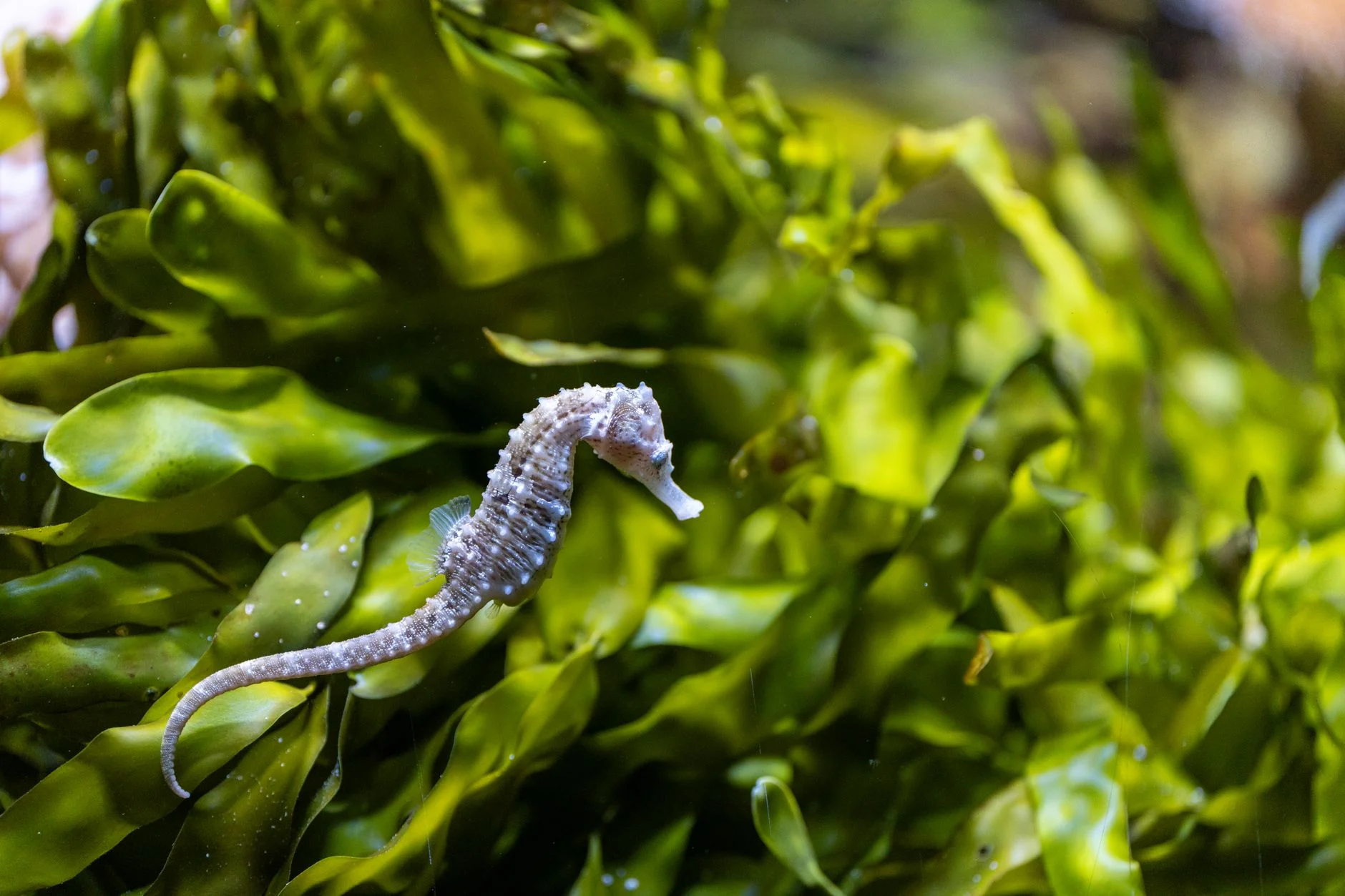
It lives among the seagrass of the Gulf of Mexico, Florida and the Bahamas, and grows to only about 2.5 cm. There is no strong tail fin to push it along. Instead, a small dorsal fin beats up to about 35 times a second, nudging the seahorse forward in tiny steps.
Being slow suits its home. Seagrass beds are a small, crowded corner of the sea, and the seahorse is part of a wider ocean food chain where tiny animals feed on even tinier ones. Hanging on to a blade of grass with its tail, the seahorse stays hidden rather than swimming away.
Seahorses also have an unusual family life. The male carries the eggs and gives birth, so the slowest fish in the world is also one of the best-known fathers in the sea.
2. Garden snail
The garden snail (Cornu aspersum) is the classic slow animal. Measured crawling speed is about 1 millimetre per second, which works out at roughly 3.6 metres per hour. Figures such as 0.03 mph that you may see online are generous top speeds, not a normal pace.
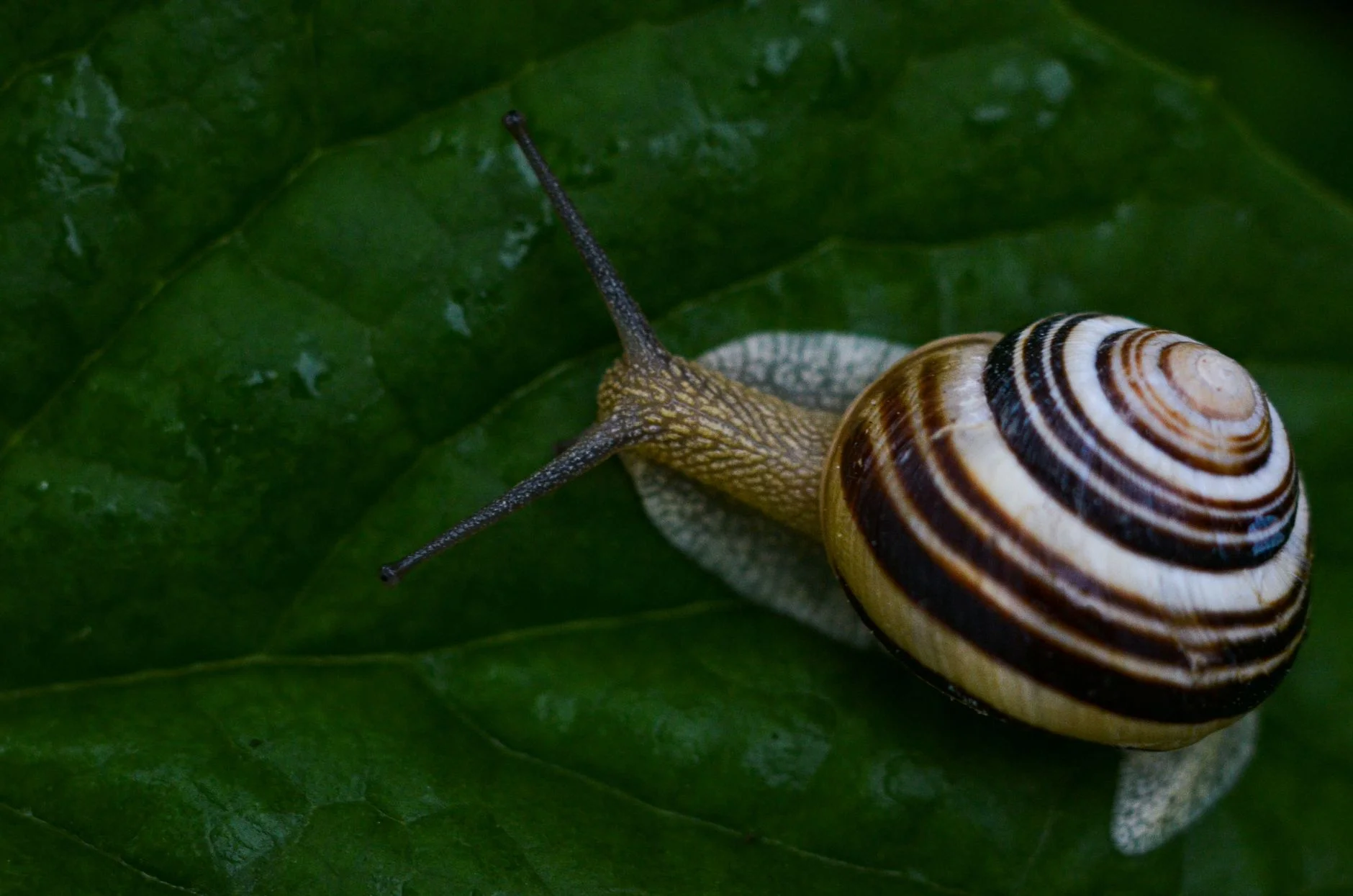
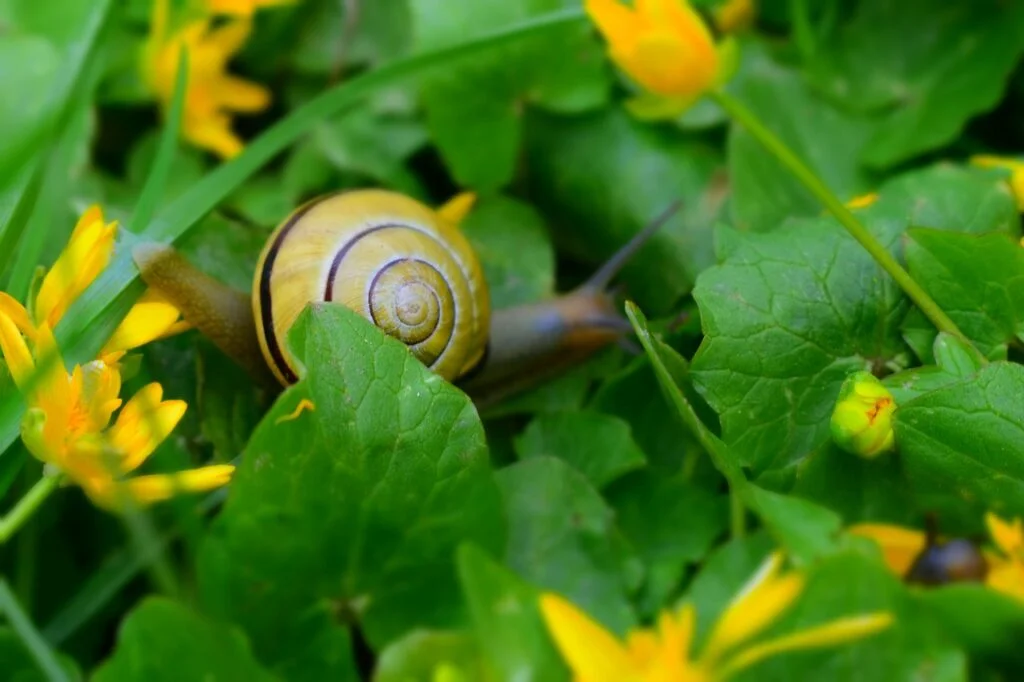
A snail moves by waves of muscle contraction along its single foot, which glides over a layer of mucus. That mucus is costly to make, so crawling uses up a large share of the snail’s energy budget. Slow and steady is the economical choice.
Snails are molluscs, in the class called gastropods, and they carry a coiled shell made of calcium carbonate. If you want to see how snails fit alongside slugs, clams and octopuses, read about the characteristics of the phylum Mollusca.
3. Banana slug: the giant of the leaf litter
The banana slug (Ariolimax) lives in the damp coniferous forests of the Pacific coast of North America. It is one of the largest slugs in the world, reaching about 25 cm long, and it is usually bright yellow, often with dark spots that look a little like an overripe banana.
Its top speed is about 6.5 inches (≈16.5 cm) per minute. That is quick for a slug, but it still puts the banana slug firmly among the slow-moving animals. A person walking at 5 km/h covers 5,000 m in an hour, while the slug at top speed covers about 10 m. Slugs rarely travel at top speed, so everyday progress is slower still.
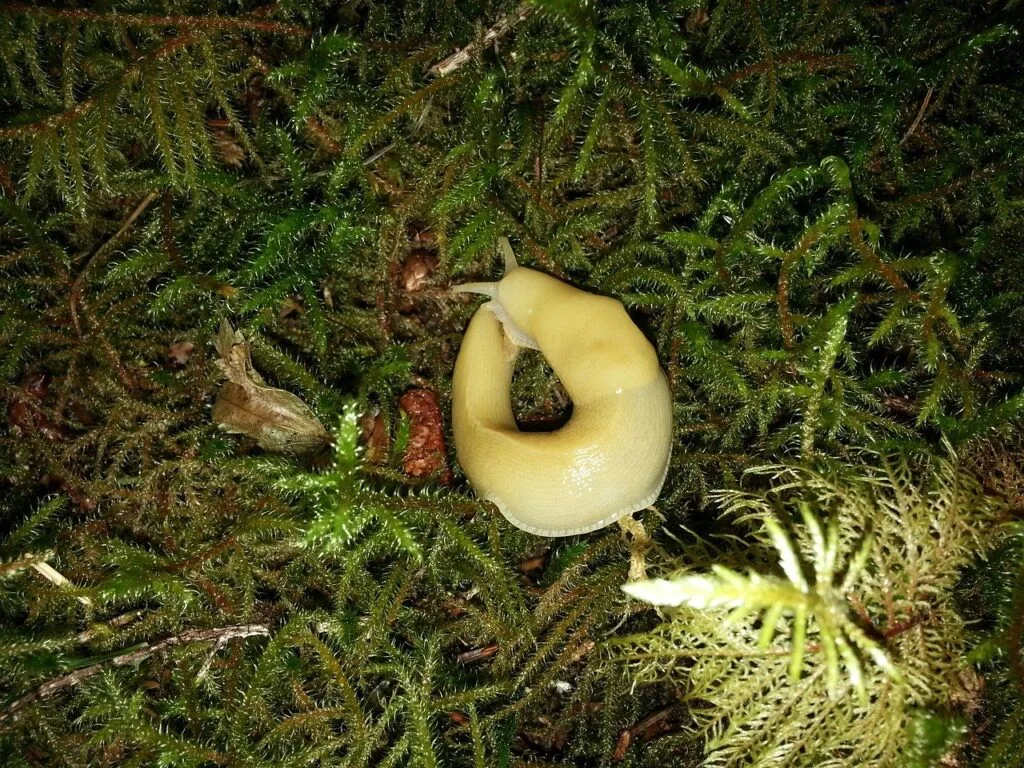
Speed is not what this animal is about. The banana slug is a decomposer. It feeds on dead leaves, fungi and animal droppings, breaking them down and returning nutrients to the soil so that trees and other plants can use them again. Without animals like this, a forest floor would slowly clog up with dead material.
Like the garden snail, it is a mollusc, but it has no shell to carry. It breathes through a pneumostome, a small breathing hole on the side of its body, and it relies on a damp habitat to stop itself drying out.
4. Sea stars (starfish): hydraulic crawlers
Sea stars, often called starfish, move in a way that looks almost impossible. They have no legs and no fins. Instead, hundreds of tiny tube feet along the underside of each arm are powered by a water vascular system, a network of fluid-filled canals that works like a hydraulic machine. Pressure changes push each foot out, grip, and pull the animal forward.
Most sea stars cover only a few centimetres per minute. The sunflower sea star is one of the fastest, at roughly 1 m per minute, which is still only 60 m in an hour. Most species are far slower, so a sea star can spend a whole day moving a very short distance.
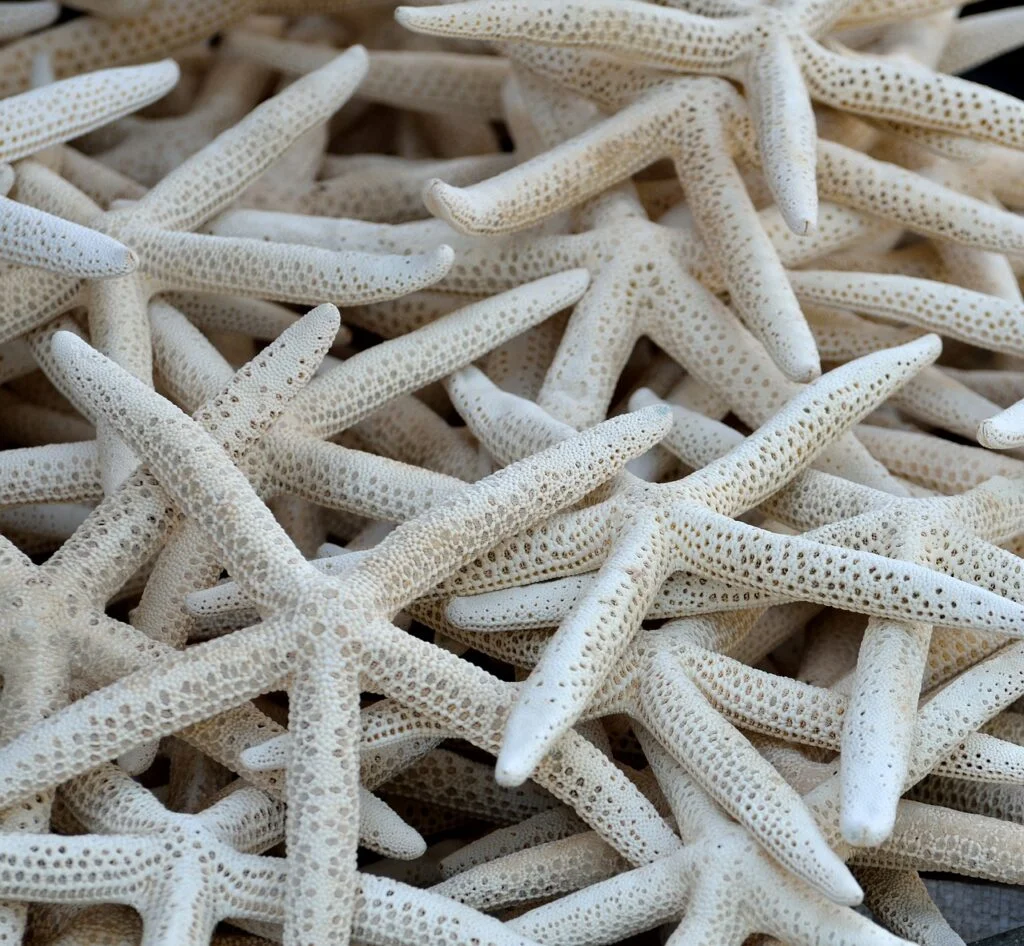
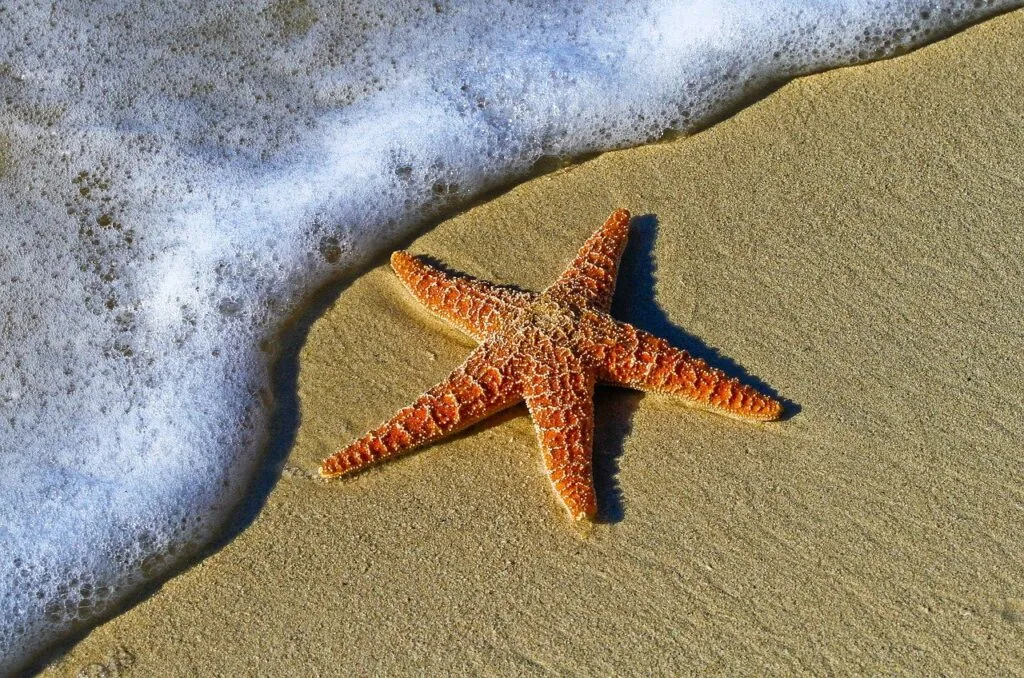
Their bodies are unusual in other ways too. A sea star has no brain, only a nerve ring around its mouth with nerves running into each arm. It also has no blood: sea water circulates through its body instead. Many species can regrow a lost arm, and there are about 1,900 species in total. If you want to see how they fit into the wider animal family tree, our guide to echinoderm examples covers sea urchins, brittle stars and sea cucumbers too.
5. Three-toed sloth: the slowest mammal
If you ask which is the slowest animal among mammals, the answer is the three-toed sloth (Bradypus), such as the brown-throated three-toed sloth. It lives high in the trees of Central and South American rainforests, and its average speed when it does move is about 0.24 km/h. That is around twenty times slower than a person walking.
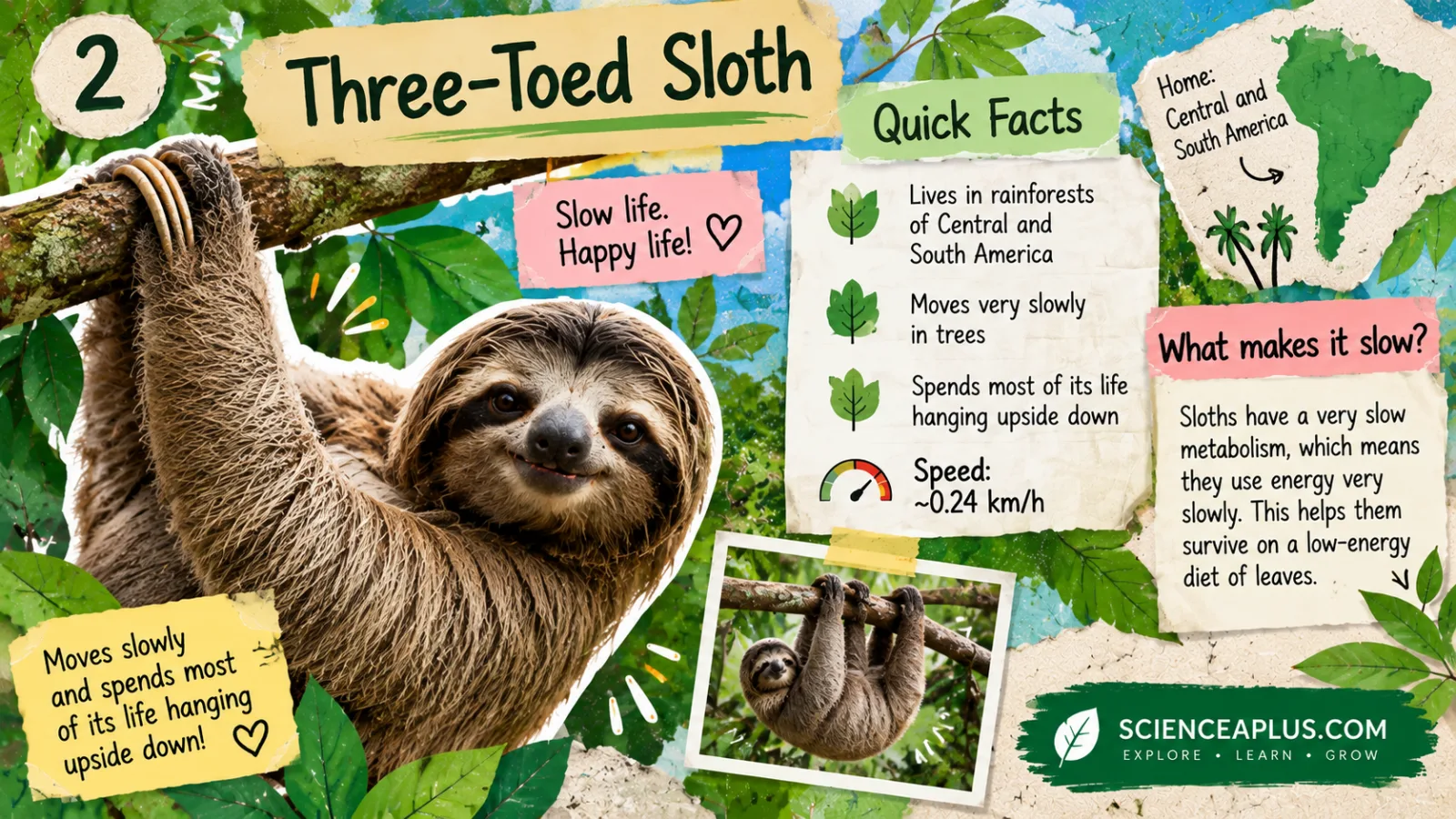
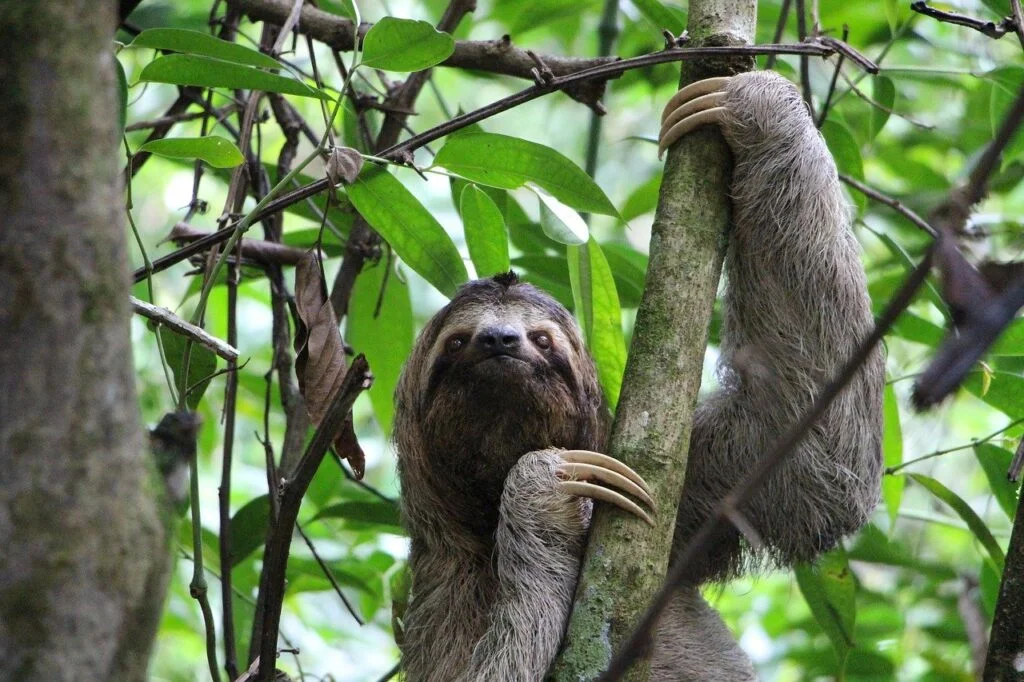
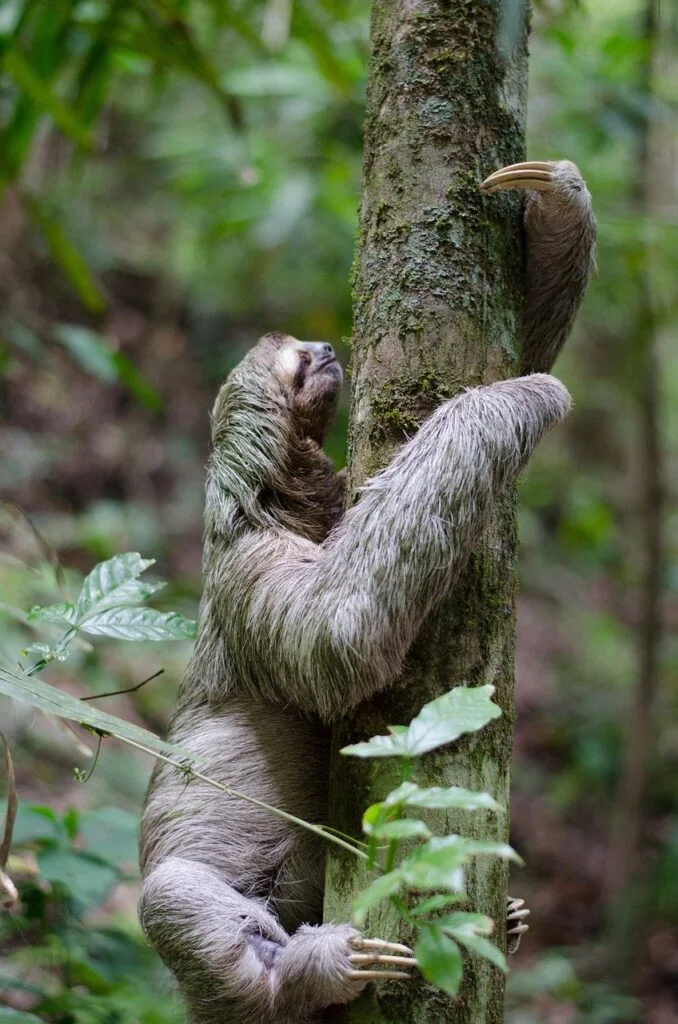
Even when threatened, a sloth speeds up only a little. Even so, it is a surprisingly good swimmer, so water is not the barrier you might expect for such a slow-moving animal.
Why are sloths so slow?
The short answer is energy. A sloth eats leaves, which are low in energy and slow to digest. A single meal can take weeks to pass through its gut. Its metabolic rate is very low, and its body temperature is lower and more variable than ours, at about 30–34 °C.
Moving fast would cost more energy than a leaf diet can supply. So the sloth has evolved to do very little, very carefully. This is a classic trade-off, and it works: a slow animal needs less food.
Slowness also helps it hide. Algae grow in its fur and give it a greenish tint, which blends with the leaves around it. Predators that hunt by spotting movement often miss a creature that barely moves. Read more about this in our guide to camouflage in biology.
How far does a sloth travel in a day?
Typically less than about 38 m. That is less than half the length of a typical 100 m sprint track, spread over a whole day. Most of the time a sloth is feeding, resting or sleeping in the canopy.
It does leave the canopy about once a week, climbing down to the ground to defecate. This weekly trip is a habit worth noticing. Descending to the ground means leaving the tree canopy where its slow pace is hidden among the leaves. The sloth is a primary consumer in the rainforest food chain, turning leaf energy into a very slow-moving meal for any predator that does spot it.
6. Giant tortoise: slow, steady and very long-lived
Giant tortoises from the Galápagos Islands (part of Ecuador) and Aldabra Atoll walk at about 0.27 km/h. A person strolling at 5 km/h covers the same ground nearly twenty times faster. Yet the tortoise is in no hurry, and it has little reason to be.
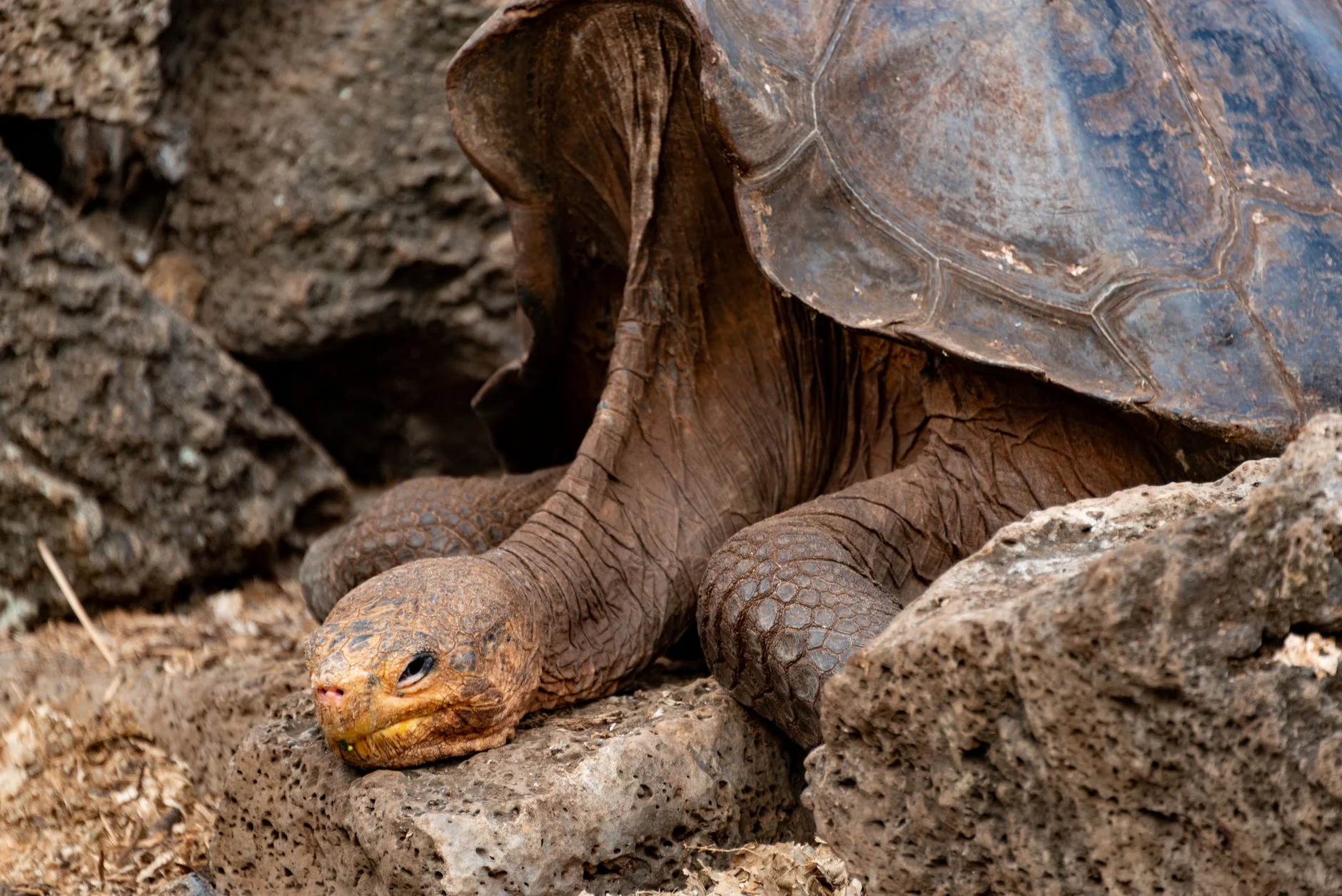
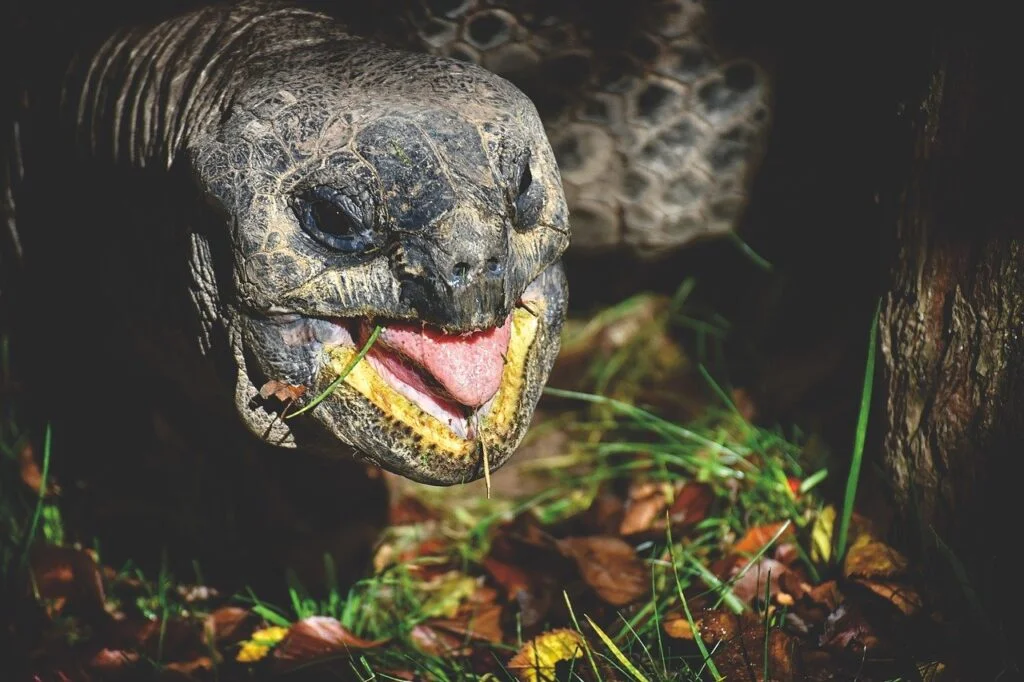
These reptiles are enormous. Many weigh over 250 kg, and the largest Galápagos males reach about 400 kg. Carrying a heavy, domed shell is a poor recipe for speed, but the shell is the tortoise’s defence. Few predators can get through it, so the animal never needed to run.
Tortoises are ectotherms, which means they depend on the outside temperature to warm their bodies. Their metabolism is slow, so they use energy sparingly. A giant tortoise can survive for months without food or water. Slow living also goes with a long life, and giant tortoises can live well over 100 years.
7. Slow loris: the venomous slowcoach
The slow loris is a small, big-eyed, nocturnal primate from South and South-East Asia. Most slow lorises belong to the genus Nycticebus. Its name tells you how it moves: slowly and deliberately, almost silently, one grip at a time.
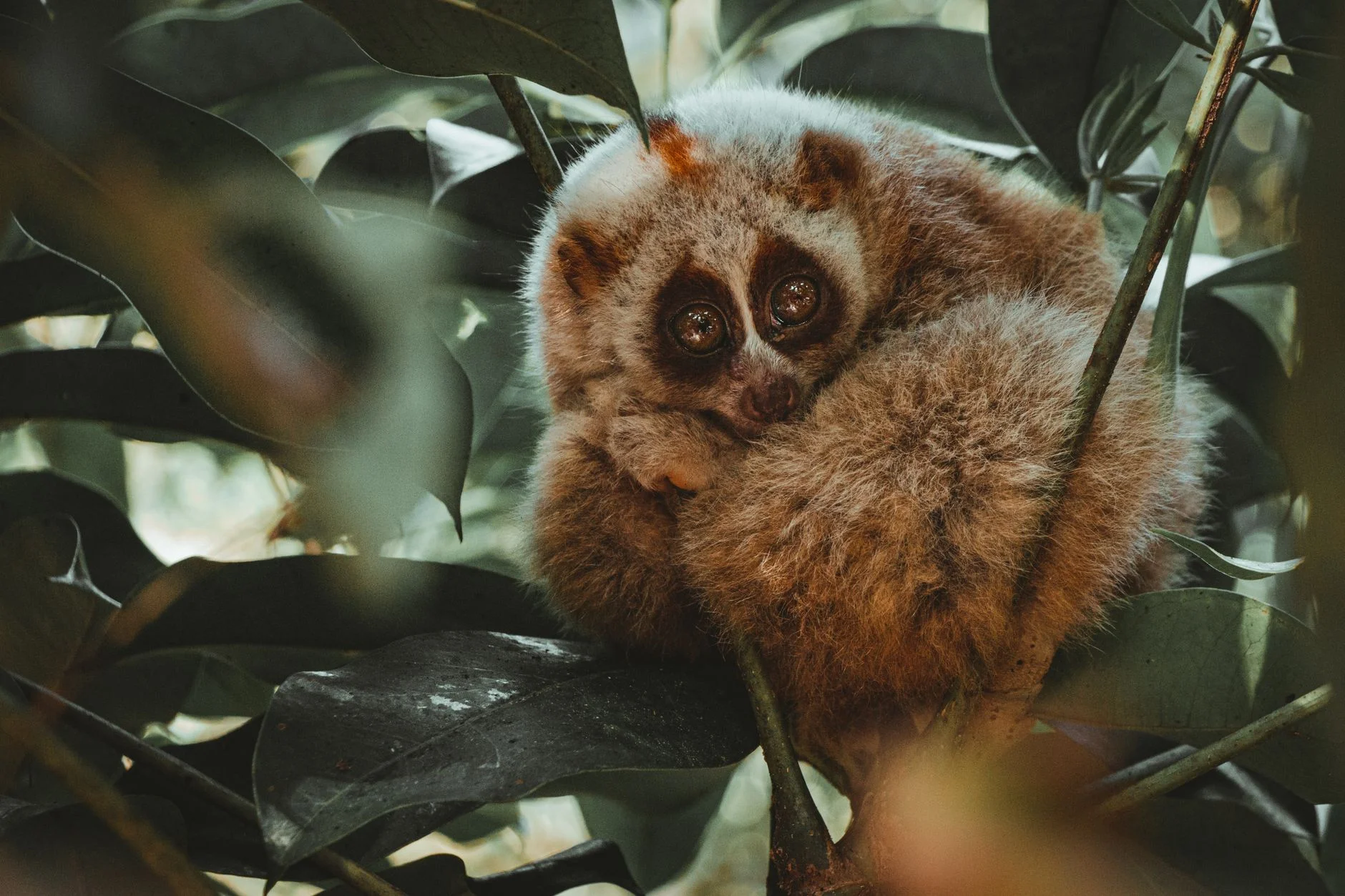
Slow, quiet movement is a hunting and hiding strategy. A loris creeping through branches at night does not attract the attention of predators, and it can approach insects and other food without startling them. A special network of blood vessels in its limbs lets it grip a branch tightly for long periods without tiring.
Slow loris species are also the only venomous primates. A gland on the inner elbow, called the brachial gland, makes a toxin. The loris mixes it with its saliva. The venom is not used for hunting: lorises use it mainly in fights with other lorises and in self-defence, another example of an animal relying on protection instead of speed.
The sad part of this story is conservation. Slow lorises are threatened, with assessed species ranging from Vulnerable to Critically Endangered on the IUCN Red List. The main cause is the illegal pet trade.
8. Koala: the champion of the long nap
If the slowest animals in the world were judged on how little they move, the koala (Phascolarctos cinereus) would be a strong contender. Koalas rest or sleep for about 18 to 22 hours a day. They are not so much slow movers as animals that barely move at all.
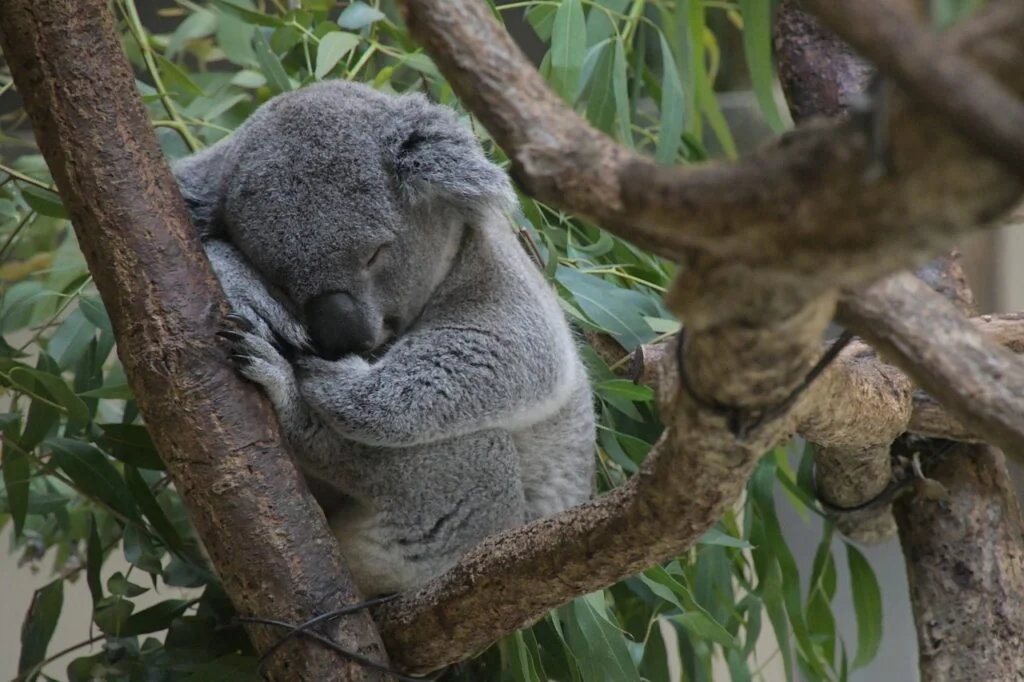
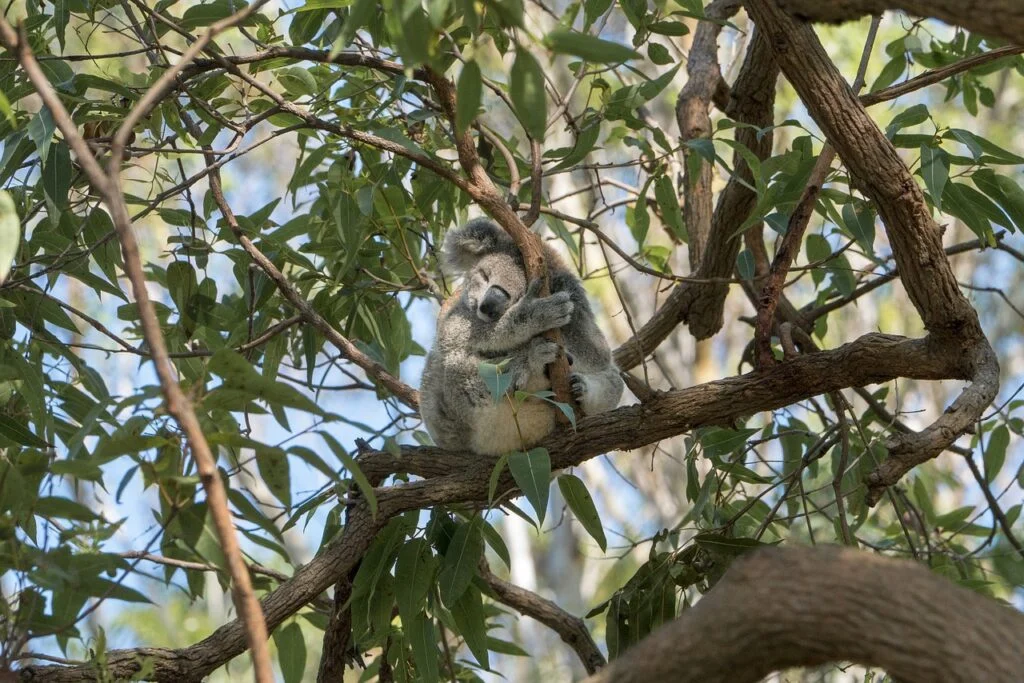
The reason is food. Koalas eat almost nothing but eucalyptus leaves, which are low in nutrients and energy, and high in fibre and toxins. Special gut bacteria and a long caecum help them digest this tough diet. Even so, the leaves give very little energy, so the koala saves it by staying still.
Koalas live in eastern and south-eastern Australia and weigh about 4–15 kg. They are listed as Endangered in Queensland, New South Wales and the ACT (since 2022), and as Vulnerable on the IUCN Red List.
Curious about other pouched mammals? Read about marsupials found in North America, or see how a koala’s homeland compares in our guide to the largest mammals in Australia.
9. Manatee: the gentle sea cow
The West Indian manatee is known as the “sea cow”, and the nickname fits. It is a large herbivore that grazes on seagrass and drifts through warm, shallow water.
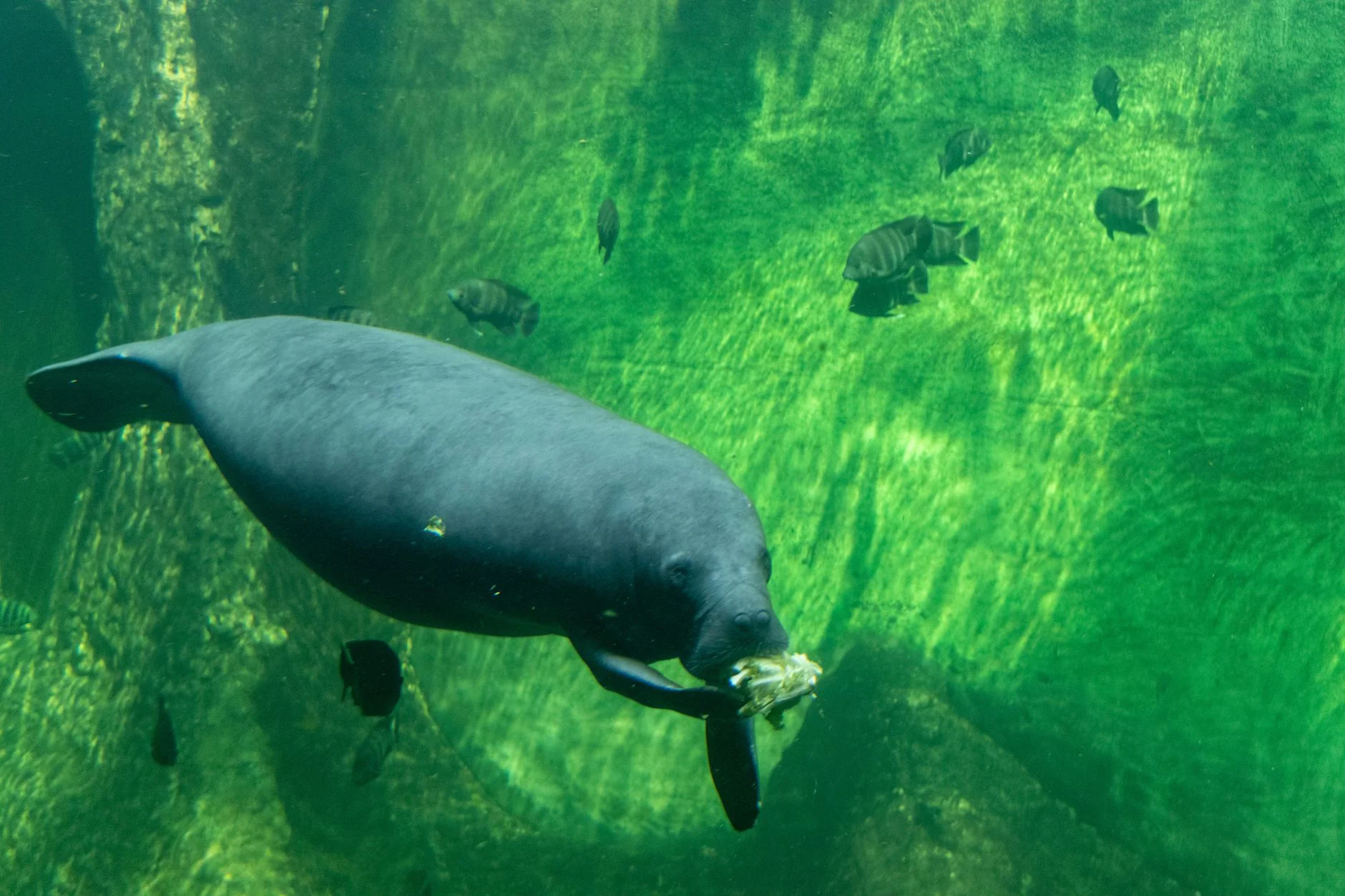
Manatees usually cruise at about 5–8 km/h, roughly the pace of a brisk walk. They can manage short bursts of up to about 25 km/h, so they are not the slowest animal here, but they are leisurely for a mammal. Their metabolic rate is very low for an animal of their size, which is part of the reason they take life at an easy pace.
That low metabolism has a cost. Manatees cannot survive in water much colder than about 20 °C, so cold snaps are dangerous. The biggest threat they face from people is boat strikes, because a slow swimmer has little chance of dodging a fast-moving hull.
Seagrass is the key to the manatee’s lifestyle. It is plentiful, easy to catch and requires no chase, so a slow, steady grazer does very well on it.
Honourable mentions
Plenty of other creatures are slow movers that did not make the main list:
- Sea anemones can glide very slowly along rocks on their base, although most of the time they stay in one place.
- Sea cucumbers creep across the sea floor, feeding as they go.
Looking closer to home? Our guide to the slowest animal in North America covers the continent’s own slow-moving animals.
Why are some animals so slow?
Slowness is rarely a flaw. For many of the slow-moving animals in this list, moving less is a successful survival strategy, shaped by evolutionary trade-offs. Speed costs energy, and not every habitat or diet can pay that bill. These adaptations in plants and animals show how different living things solve the same problem in different ways.
Low-energy diets
Leaves are poor fuel. Sloths and koalas live almost entirely on foliage that is low in energy and slow to digest. A sloth’s meal can take weeks to work through its gut, and koalas rely on special gut bacteria and a long caecum to cope with eucalyptus leaves that are high in fibre and toxins.
An animal on that kind of diet cannot afford to sprint. Its body simply does not receive enough energy to power fast, constant movement.
Saving energy
The answer is a very low metabolic rate. The three-toed sloth moves at about 0.24 km/h and typically travels less than about 38 m a day, while a koala rests for roughly 18–22 hours. Manatees, too, have a very low metabolic rate for a mammal of their size.
Some animals go further and shut down for whole seasons, which is the topic of why animals hibernate.
Hiding in plain sight
Many predators hunt by spotting movement. A sloth that barely moves, with a greenish tint from algae growing in its fur, is very hard to notice against the leaves. Slow loris species also creep along branches almost silently.
For these animals, being slow is part of their camouflage, so speed would actually work against them.
Armour, venom and other defences
Some animals do not need to outrun danger because they carry protection. A garden snail has a coiled calcium carbonate shell, giant tortoises are heavily armoured, and the slow loris is the only venomous primate, with a toxin made in a gland on its inner elbow that it uses mainly in self-defence and fights with rivals. Koalas, meanwhile, eat leaves that most animals find too toxic to digest.
Cold-blooded movers
Tortoises and snails are ectotherms, so their activity depends on the temperature around them. They do not burn food to stay warm, which saves energy but makes them sluggish when it is cold. Size matters too: a 2.5 cm dwarf seahorse has a very short stride, so even constant effort covers little distance.
Compare all this with the opposite extreme in the fastest animals on the planet, where a cheetah can reach over 100 km/h. Humans walk at about 5 km/h, so even a sunflower sea star, one of the fastest sea stars at roughly 1 m per minute, would be left far behind. To see where the sloth, koala and manatee sit among their relatives, explore the families of mammals.
Slow animals: flip-card challenge
Read each clue, guess the animal, then tap the card to check.
Test yourself
Key points to remember
Frequently asked questions about the slowest animals
What is the slowest animal in the world?
It depends on how you measure it. The dwarf seahorse, at about 1.5 m per hour, is the slowest-moving fish, while the three-toed sloth is the slowest mammal. Garden snails and banana slugs are also very slow, so there is no single official winner across all animals.
What is the slowest mammal?
The three-toed sloth is the slowest mammal. It averages about 0.24 km/h when moving and typically travels less than about 38 m a day. Even when threatened it speeds up only slightly. Sloths live in the rainforests of Central and South America.
What is the slowest fish?
The dwarf seahorse, Hippocampus zosterae, is the slowest-moving fish according to Guinness World Records, with a top speed of about 1.5 m per hour. It grows to roughly 2.5 cm and lives in seagrass around the Gulf of Mexico, Florida and the Bahamas.
How fast is a sloth?
A three-toed sloth moves at about 0.24 km/h on average, which is roughly 4 m per minute. Even when threatened it barely speeds up. A human walking at about 5 km/h is far faster than a sloth.
How fast is a snail?
A garden snail crawls at about 1 mm per second, which is roughly 3.6 m per hour. At the World Snail Racing Championship in Congham, Norfolk, the record holder Archie covered 33 cm in 2 minutes in 1995. Snails glide on a layer of mucus.
Is a koala a bear?
No. The koala, Phascolarctos cinereus, is a marsupial, so it raises its young in a pouch like kangaroos do. The name “koala bear” is a misnomer. Koalas live in eastern and south-eastern Australia, weigh about 4–15 kg and eat almost only eucalyptus leaves.
Are starfish fish?
No. Starfish, better called sea stars, are echinoderms, not fish. They have no backbone and no blood. Sea water circulates through their bodies instead, and they move on hundreds of tube feet. There are about 1,900 species of sea star.
Why are sloths so slow?
Sloths eat leaves, which give little energy and take weeks to digest. Their metabolic rate is very low and their body temperature is lower than most mammals, at about 30–34 °C. Moving slowly saves energy and also helps them stay hidden from predators.
Which slow animal lives the longest?
Giant tortoises. They can live well over 100 years. Jonathan, a Seychelles giant tortoise on St Helena, hatched around 1832 and is the oldest known living land animal. Their slow metabolism helps them survive for months without food or water.