What is the fastest animal in the world? The peregrine falcon. In a hunting dive it is estimated to reach about 320 km/h, and one trained falcon was reportedly clocked at 389 km/h. On land, the cheetah is fastest, at up to about 100 km/h in a short sprint. In water, the record-holders are much slower than most websites claim.
Lists of the fastest animals in the world are everywhere online, but many of the numbers have been copied from one site to the next without anyone checking where they came from. This guide uses figures from Guinness World Records, the Smithsonian’s National Zoo, the US National Park Service and peer-reviewed studies. Where a famous number turns out to be a myth, we say so.
The fastest animals in the world at a glance
Speed depends on where an animal moves. Falling through the air with gravity helping is very different from running on the ground or pushing through water, which is about 800 times denser than air. So it makes sense to rank animals in groups: diving, flying level, running and swimming.
| Animal | Record | Top speed (up to about) | How sure are we? |
|---|---|---|---|
| Peregrine falcon | Fastest animal (diving) | 320 km/h; one trained bird reportedly 389 km/h | Estimate plus experimental dives |
| Brazilian free-tailed bat | Fastest recorded level flight | 160 km/h (one bat); most over 100 km/h | Radio-tracked in a 2016 study |
| Common swift | Fastest bird in powered level flight | 111.6 km/h | Filmed with high-speed stereo cameras (2010) |
| Cheetah | Fastest land animal | 104 km/h | Timed over a measured course |
| Pronghorn | Fastest land mammal in North America | 88–97 km/h in short bursts | US National Park Service figures |
| Racehorse | Fastest racehorse on record | 70.76 km/h | Guinness World Records |
| Ostrich | Fastest bird on land | 70 km/h | Zoo and field estimates |
| Usain Bolt | Fastest human sprinter | 44.72 km/h (peak) | Measured in the 2009 world record race |
| Sailfish | Famous “fastest fish” | 30 km/h (bursts of about 25 km/h filmed) | Accelerometers and video (2015–2016) |
The last row surprises most people. For decades, books said the sailfish could swim at around 110 km/h. Modern measurements show its real bursts are only about a quarter of that. You will find the full story in the section on the fastest fish below.
How do scientists measure animal speed?
Every speed in this article comes from the same simple idea. You measure how far an animal travels and how long it takes, then divide.
speed = distance ÷ time
Scientists usually work in metres per second (m/s), while most of us think in kilometres per hour (km/h). To convert, multiply metres per second by 3.6. A cheetah running at 29 m/s is moving at 29 × 3.6 ≈ 104 km/h. Going the other way, 1 km/h is about 16.7 metres every minute.
Measuring a wild animal is much harder than timing a sprinter on a track. Researchers use several methods:
- Timed runs on a measured course. A trained cheetah chases a lure between two marked points, and the time is recorded.
- GPS and motion-sensor collars. These record position and acceleration many times a second during real hunts.
- Radar and stereo cameras. Ornithologists track flying birds with radar, and paired high-speed cameras recorded the swift record.
- Radio tags tracked from an aircraft. This is how the bat record was set.
- High-speed video. Counting tail beats or strides lets scientists work out how fast fish and insects move.
Each method has weak spots. A tailwind can make a bird look faster than its own muscles can push it. A dive gets help from gravity. Even the force behind every sprint follows the same rules you meet in Newton’s laws of motion: a bigger push gives a bigger acceleration, and air or water pushes back harder the faster you go.
That is why the best figures in this guide are written as “up to about”. Animals vary, conditions vary, and a single amazing reading is not the same as a typical top speed. A measured record always beats an exciting guess.
Speed is only half the story of how animals move, of course. Some of the most successful animals on Earth are famously unhurried, as you can see in our guide to the slowest animals of the world.
Race the record-breakers
How far would each champion get if it could hold its top speed for a whole minute? None of them really can. A cheetah keeps its top speed for only about 274 metres, and a falcon’s dive lasts seconds. But the comparison shows how big the gaps are. Pick an animal and a time below.
A pronghorn runs at 25 m/s for 20 seconds. How far does it travel, and what is its speed in km/h? (3 marks)
Distance = speed × time = 25 m/s × 20 s = 500 m. Speed in km/h = 25 × 3.6 = 90 km/h. One mark for the formula, one for 500 m and one for 90 km/h.
Cheetah: the fastest land animal
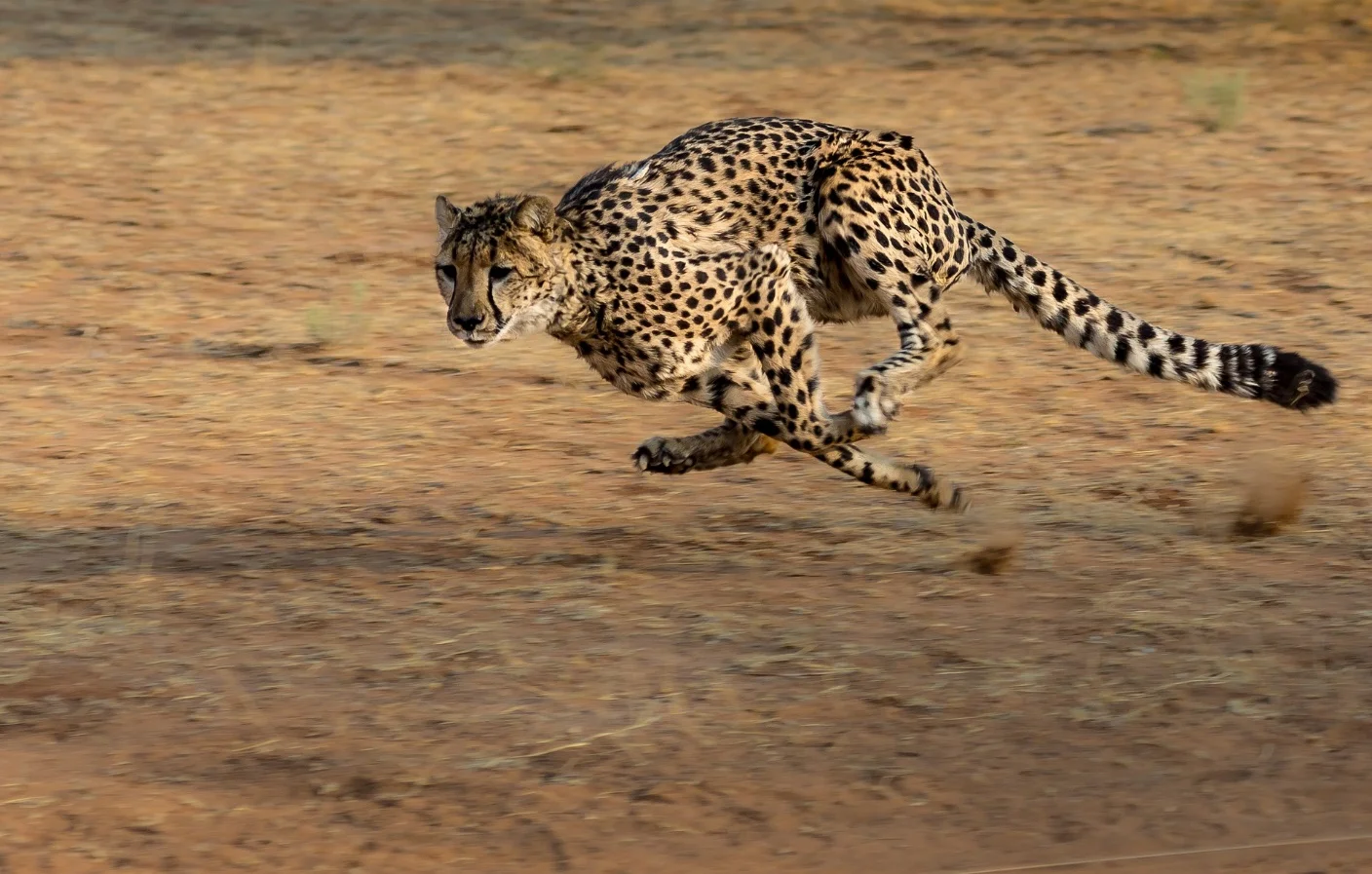
The cheetah is the fastest land animal on Earth. The best measurement comes from a 1997 study in the Journal of Zoology, which timed a cheetah chasing a lure over a 201-metre course. Its average across three runs was 29 m/s, or about 104 km/h. Guinness World Records lists a very similar figure of 103.5 km/h.
So how fast can a cheetah run in the wild? In 2013, scientists fitted wild cheetahs in Botswana with GPS and motion-sensor collars and published the results in Nature. The fastest speed they recorded was 25.9 m/s, about 93 km/h. Most hunts were run at much more moderate speeds. The cats caught prey through power, acceleration and sharp turns, not by flat-out sprinting.
How is a cheetah built for speed?
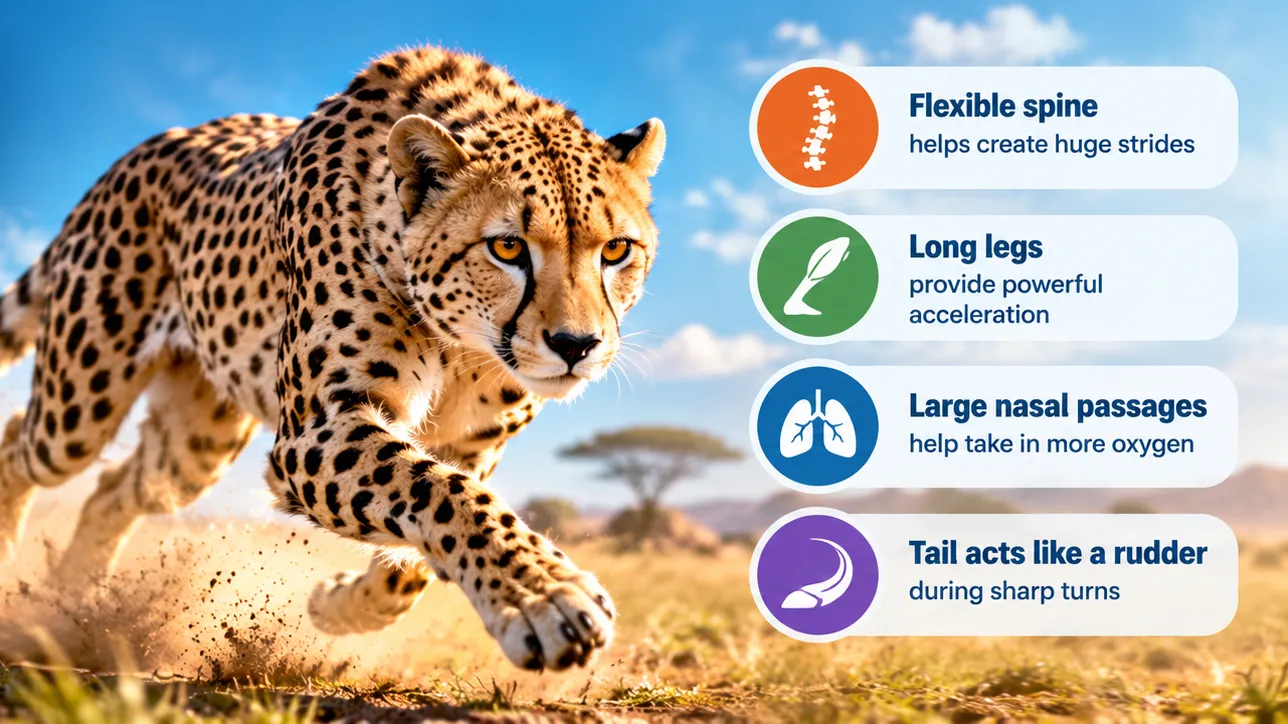
Nearly every part of a cheetah’s body helps it sprint. According to the Smithsonian, a cheetah at top speed covers about 7 metres in a single stride and takes about four strides every second.
- Flexible spine. It bends and stretches like a spring, adding length to each stride.
- Long, slim legs. These give a long stride and a light body for quick acceleration.
- Large nasal passages, heart and lungs. They take in and deliver more oxygen during the chase.
- Long tail. It works like a rudder, helping the cat balance and steer during sharp turns.
- Semi-retractable claws. They grip the ground like running spikes.
The catch is stamina. A cheetah can hold its top speed for only about 274 metres. After that its body is too hot and too tired, so a hunt must be short and well planned. Cheetahs often creep close to their prey before they burst into a run.
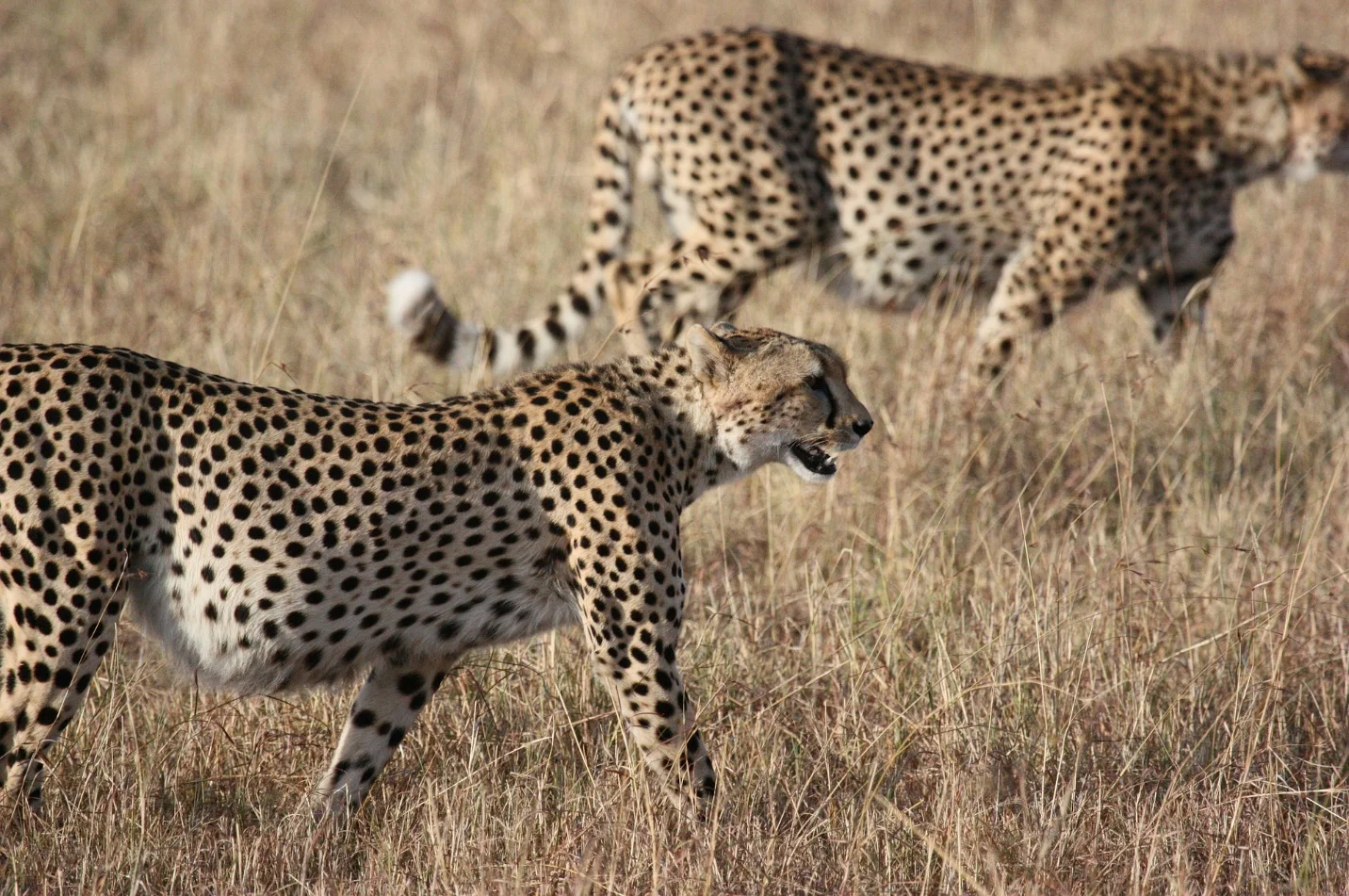
Cheetahs are easy to confuse with other spotted big cats. If you have ever mixed them up with leopards or jaguars, our guide to the differences between a jaguar, leopard, cheetah, panther, puma and cougar will help. The quickest clue: a cheetah has solid round spots and black “tear marks” running from its eyes to its mouth.
Are cheetahs endangered?
Cheetahs are listed as Vulnerable on the IUCN Red List. The IUCN estimates only about 6,500 mature cheetahs (around 7,100 adults and adolescents) remain in the wild, in roughly 9% of the species’ historic range. Being the fastest runner on Earth does not protect it from habitat loss or conflict with farmers.
Pronghorn: North America’s long-distance sprinter
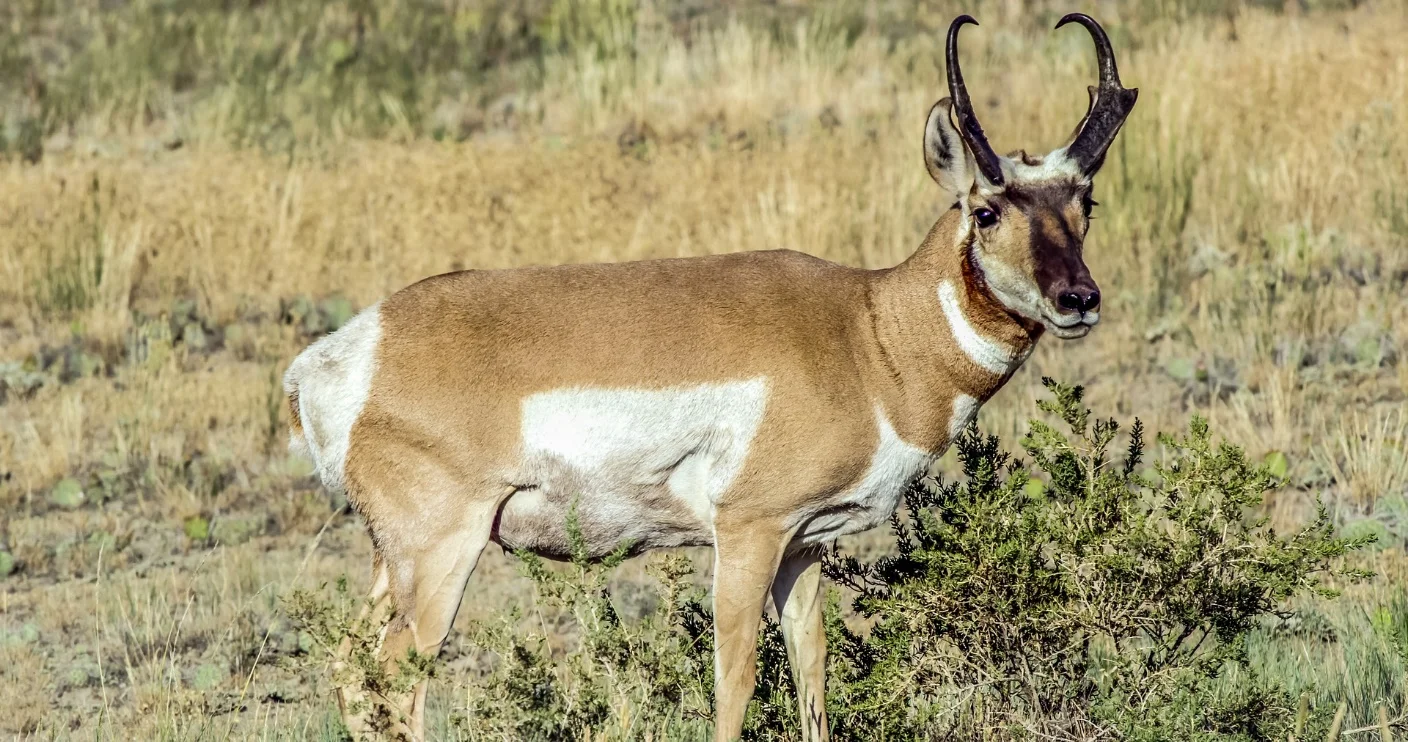
If the cheetah is a sprinter, the pronghorn is a middle-distance champion. It is the fastest land mammal in North America. The US National Park Service says pronghorn can reach about 88–97 km/h (55–60 mph) for around half a mile, and keep up roughly 48–72 km/h (30–45 mph) over much longer distances.
Guinness World Records notes that a pronghorn can hold about 72 km/h for 2 kilometres. No cheetah could do that. Over a long race, the pronghorn would win easily.
People often call pronghorn “antelope”, but they are not closely related to the antelope of Africa. They are the only surviving members of their own family. Pronghorn live on open grassland and sagebrush plains, where they can see danger coming from far away. For a sense of the bigger animals sharing their range, see the largest animal in North America.
Speed has one strange weak spot. Pronghorn prefer not to jump over obstacles, so when they meet a fence they usually try to dive underneath it. Fences across their migration routes can block them from food and shelter.
Other fast runners: ostrich, racehorse and you
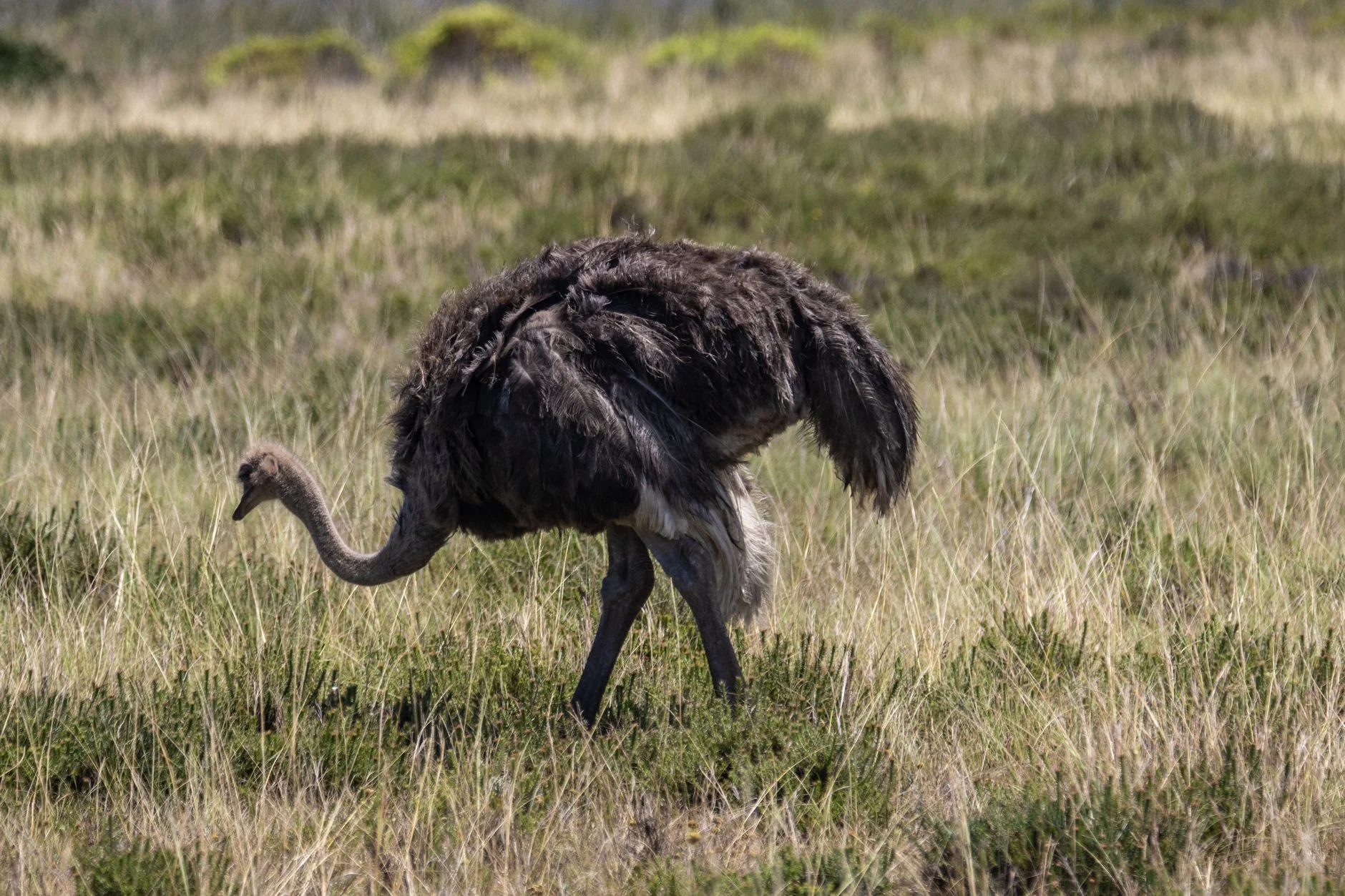
The cheetah and pronghorn are in a league of their own, but several other runners are impressive. The ostrich is the fastest bird on land. San Diego Zoo says it can sprint at up to about 70 km/h in short bursts and keep a steady 50 km/h for longer. Each stride can be 3–5 metres long, and each foot has only two toes.
| Runner | Top speed (up to about) | Source |
|---|---|---|
| Cheetah | 104 km/h | Timed run, Journal of Zoology (1997) |
| Pronghorn | 88–97 km/h | US National Park Service |
| Racehorse (Winning Brew, 2008) | 70.76 km/h | Guinness World Records |
| Ostrich | 70 km/h | San Diego Zoo |
| Racing greyhound | About 61 km/h (17 m/s) | Nature study (2005) |
| Usain Bolt (peak, 2009) | 44.72 km/h | 100 m world record race |
The fastest human ever timed, Usain Bolt, peaked at 44.72 km/h between the 60 and 80 metre marks of his 9.58-second world record in Berlin in 2009. That is less than half the speed of a cheetah. Even a racehorse at full gallop is well behind the big cat.
Peregrine falcon: the fastest animal on Earth
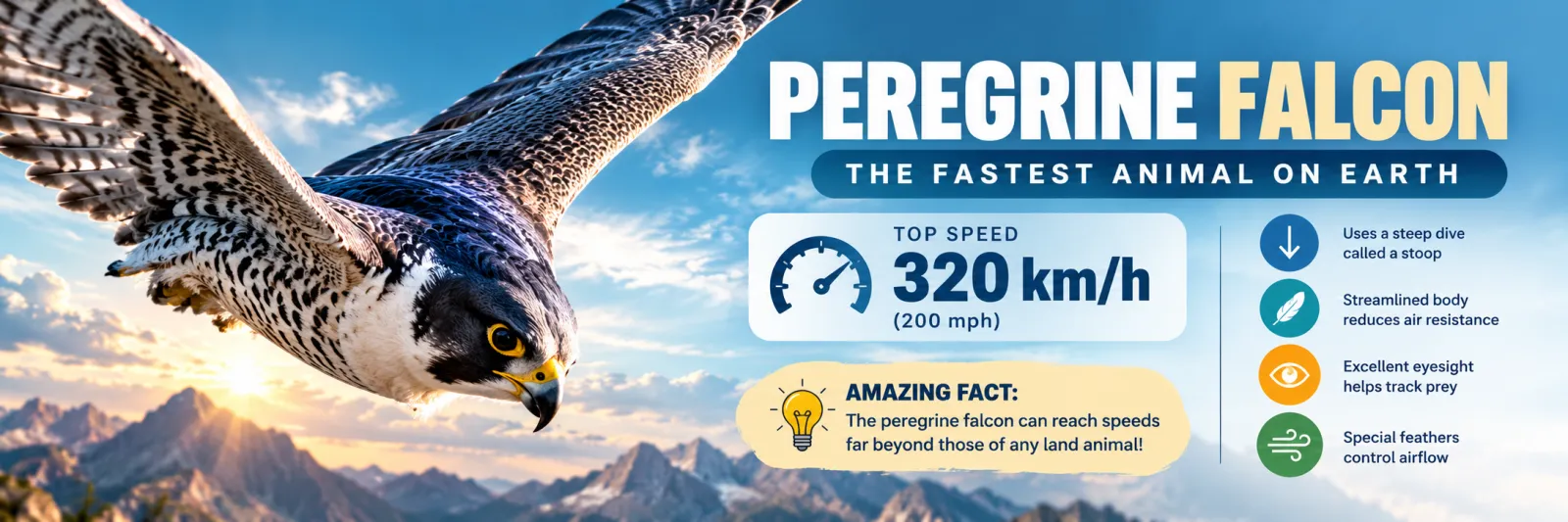
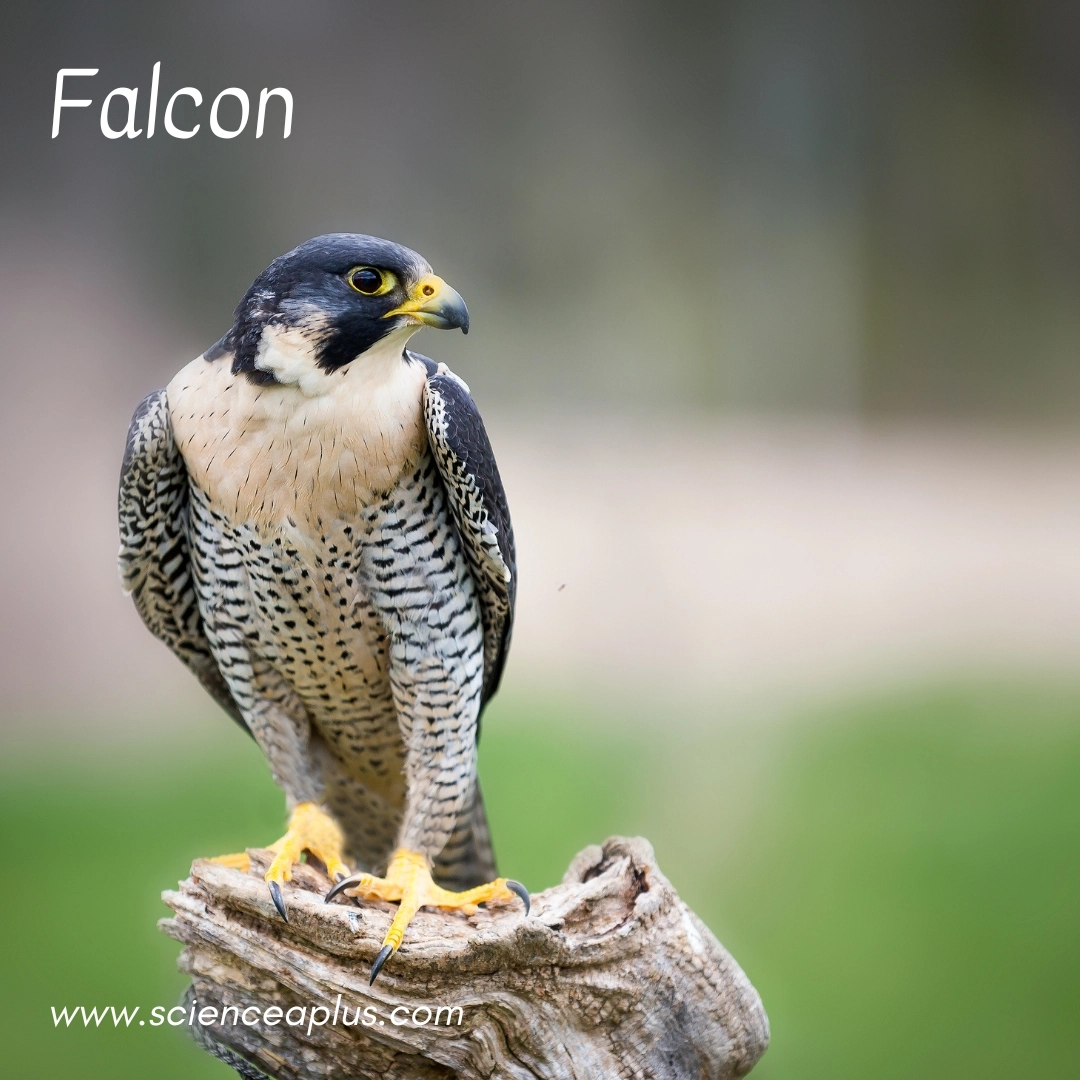
The peregrine falcon is the fastest animal on Earth, but only when it dives. It climbs high above its prey, folds its wings back against its body and drops in a steep hunting dive called a stoop. This dive is commonly estimated to reach about 320 km/h (200 mph) in ideal conditions.
Some experiments suggest it can go even faster. In 1999, a trained peregrine named Frightful, owned by falconer Ken Franklin, was released from a light aircraft and reportedly clocked at 389 km/h (242 mph) while diving from about 5 km up. Some ornithologists doubt these dives match what wild falcons do, because they started far higher than a falcon would normally dive from. So the safest answer to “how fast is a peregrine falcon?” is: up to about 320 km/h, and possibly more.
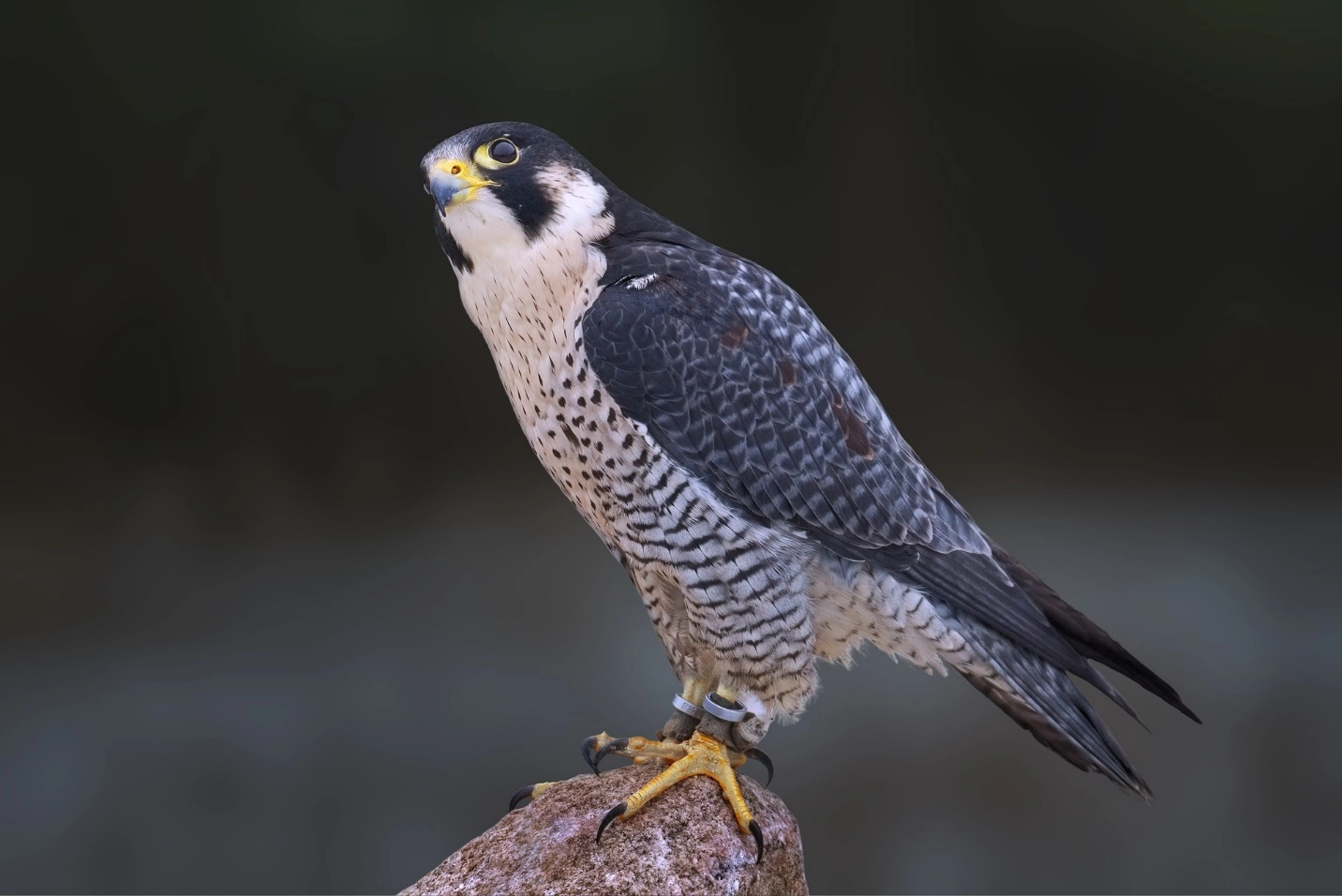
In ordinary level flight the peregrine is much slower, at roughly 64–97 km/h (40–60 mph). Its record speed comes from gravity plus a perfect streamlined shape. A tucked falcon has very little air resistance, so it keeps speeding up for longer during the fall.
Peregrines hunt mainly other birds, which they strike or grab in mid-air. They are the most widespread bird of prey in the world and breed on every continent except Antarctica. Many now nest on cliffs, church towers and city skyscrapers, where pigeons are plentiful. You can meet more record-breaking birds in our list of amazing birds in the world.
Fastest in level flight: swifts, bats and albatrosses
A dive is not the same as flapping flight. So which animal is the fastest flier when it has to power itself along?
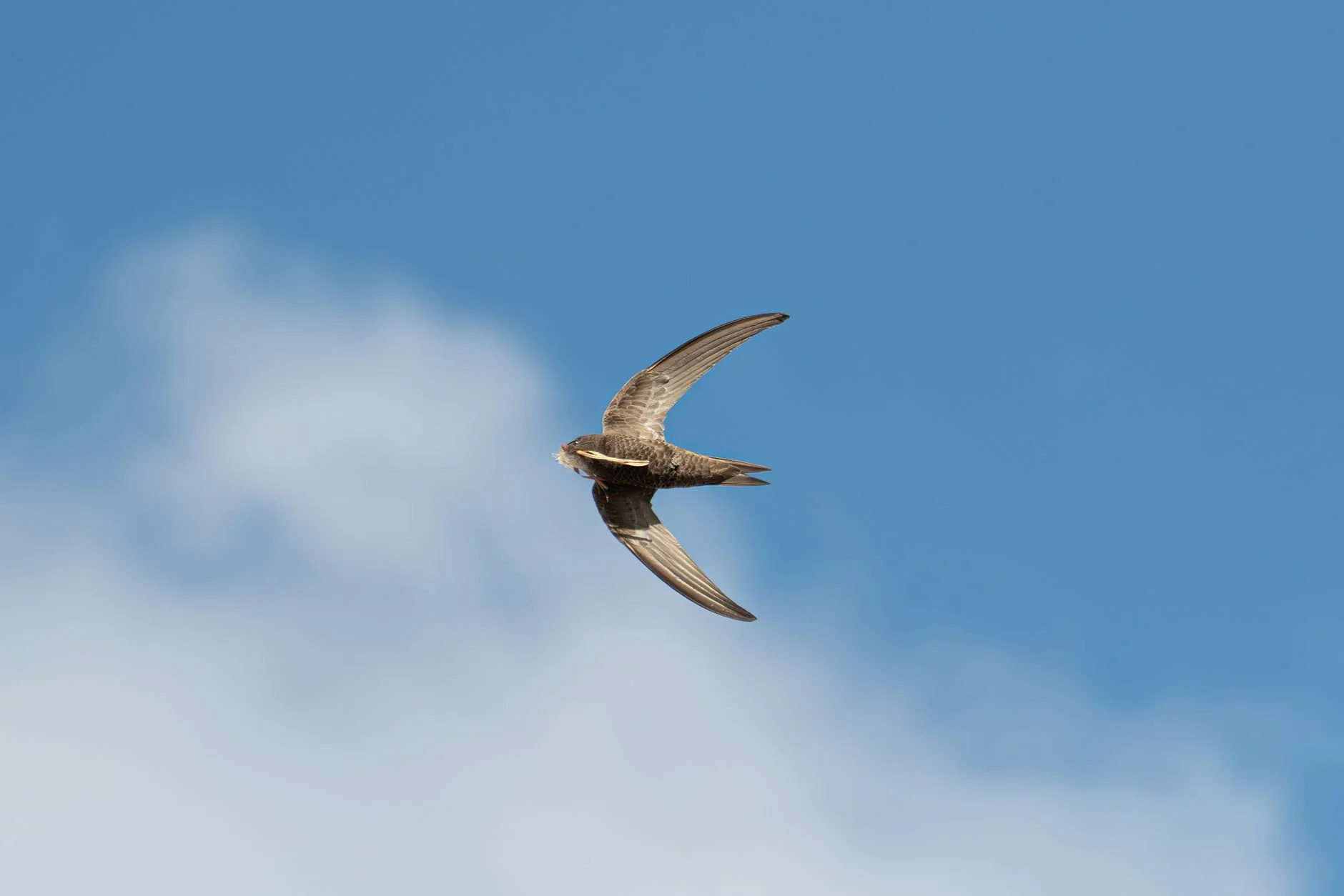
The common swift holds the best-measured bird record. A 2010 study by Lund University in Sweden tracked swifts during their noisy, high-speed chases known as “screaming parties”. The fastest reached 31 m/s, about 111.6 km/h, in self-powered level flight.
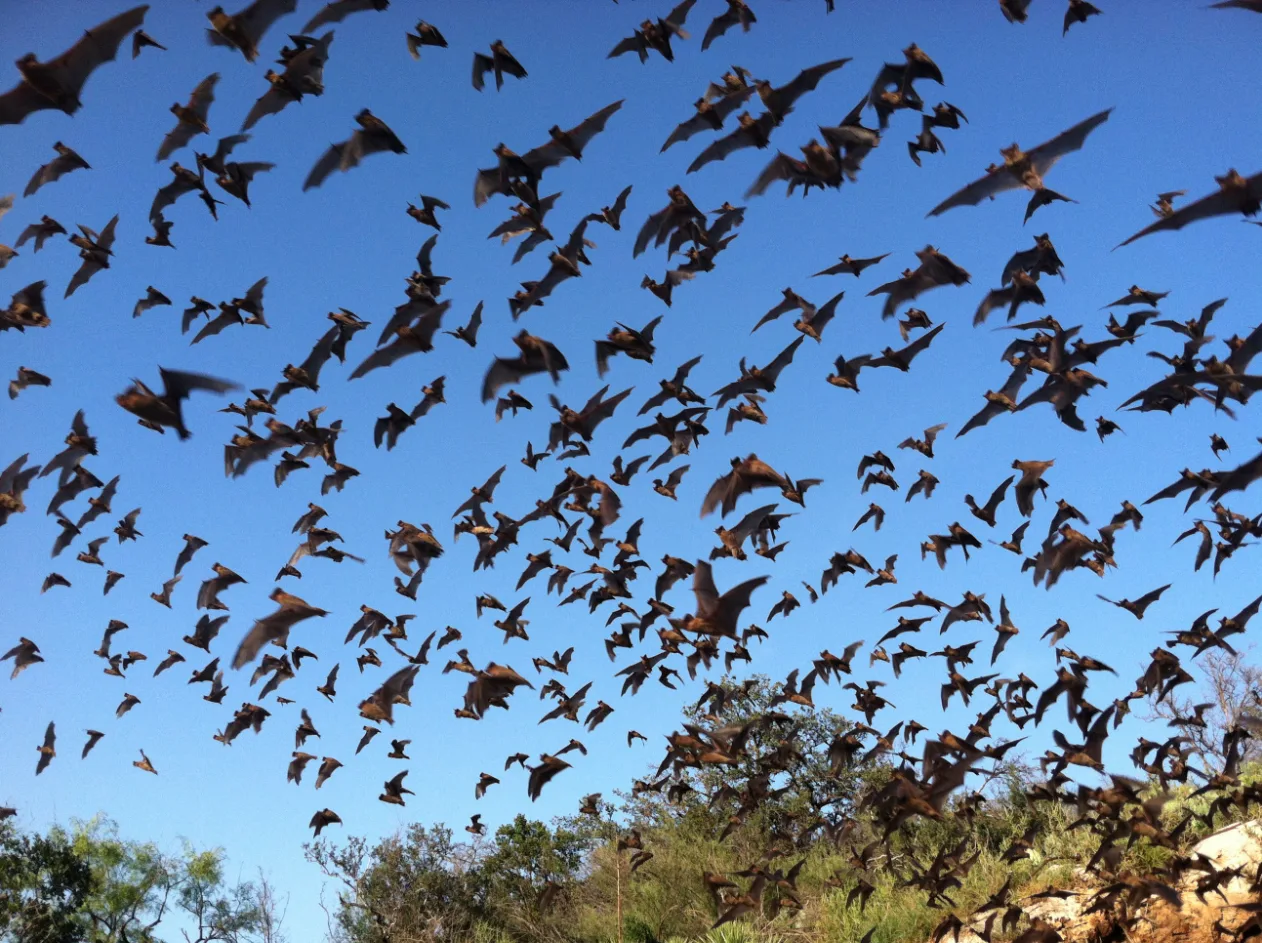
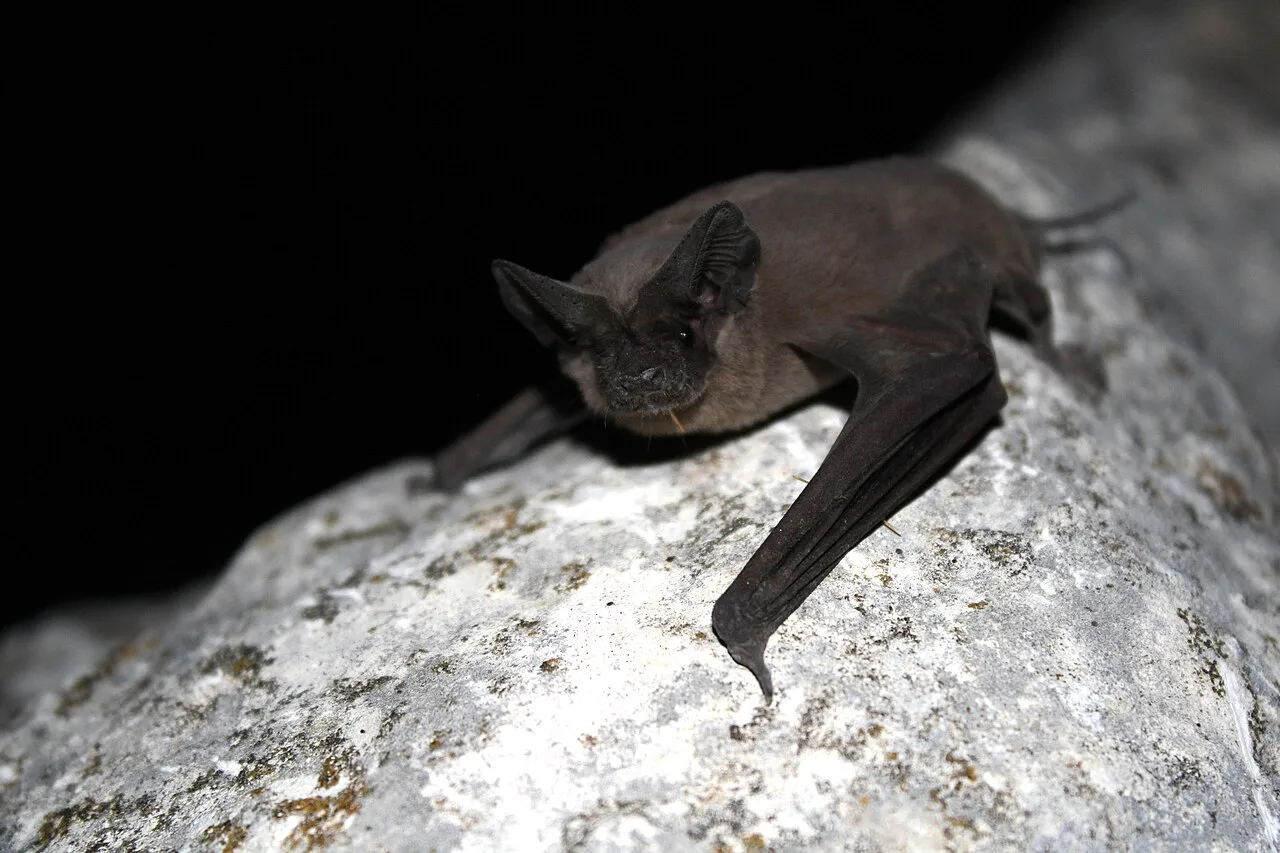
The Brazilian free-tailed bat may beat it. In a 2016 study in Royal Society Open Science, scientists glued tiny radio tags weighing about half a gram to seven bats leaving a cave in Texas, then followed them in a small aircraft. Five of the seven topped 108 km/h in level flight, and one reached a ground speed of about 160 km/h. That is the fastest level flight recorded for any animal, although tracking from a moving aircraft has some uncertainty, so more studies would help confirm it.
Guinness World Records lists the grey-headed albatross as the fastest bird in level flight, with an average ground speed of 127 km/h for more than eight hours during a storm in 2003. The researchers noted that much of that speed came from tailwinds, not the bird’s own muscles. That is why the swift is usually named as the fastest bird in powered flight.
The fastest fish: is the sailfish really that fast?
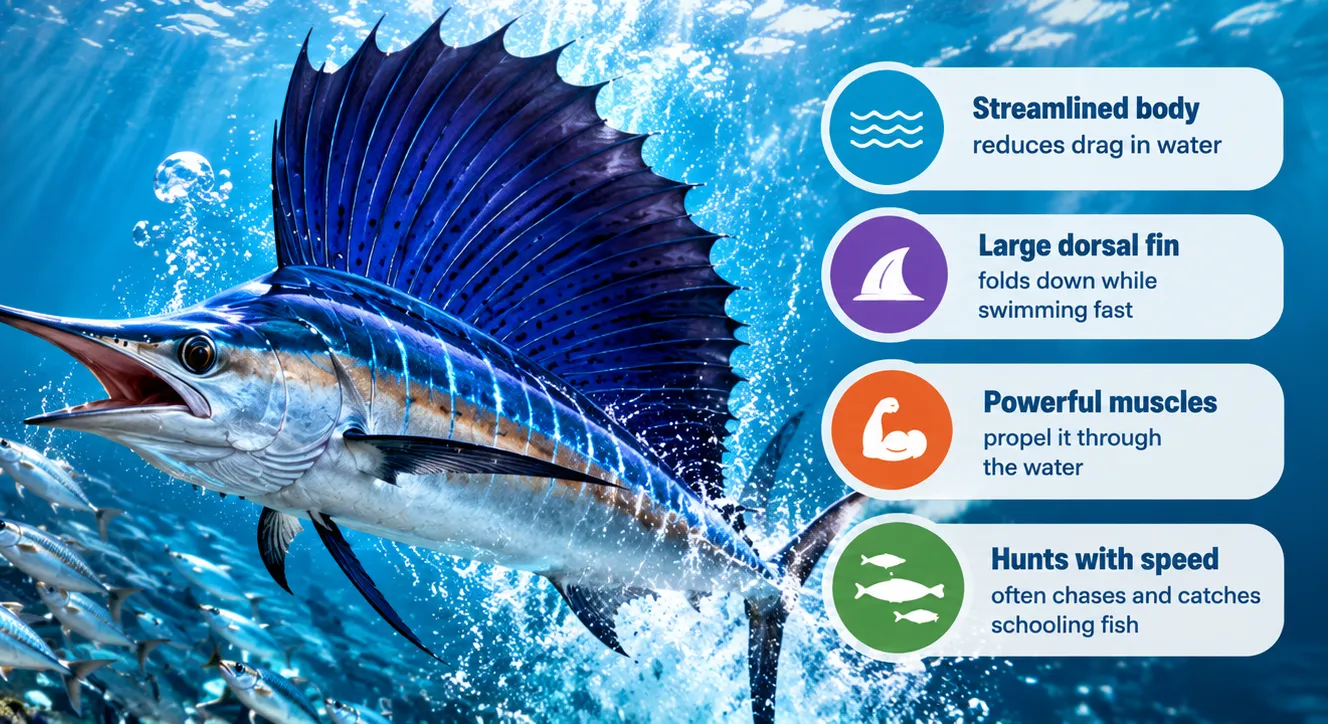
For years, the sailfish was called the fastest fish in the sea, swimming at around 100–110 km/h. Those figures came from early observations of fishing line racing off a reel when a hooked fish ran. They were never direct measurements of the fish.
Modern studies tell a different story. In 2015, a team filmed wild sailfish hunting sardines with high-speed cameras and fitted others with motion sensors. Published under the title “Not so fast”, the study found sailfish bursts of about 7 m/s (around 25 km/h), and never more than 10 m/s during attacks. A 2016 study in Biology Open measured how quickly sailfish muscles contract. It estimated a maximum speed of about 8.3 m/s, or roughly 30 km/h.
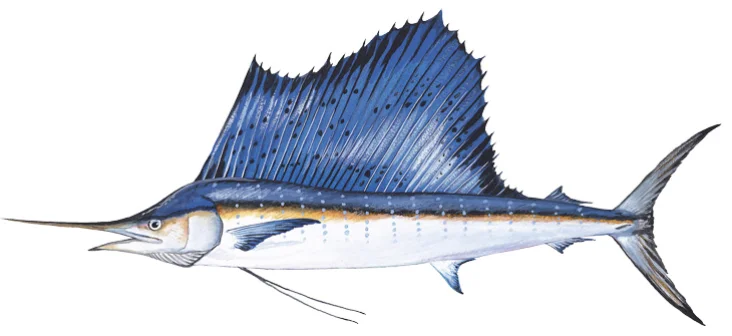
Sailfish are still superb hunters. They fold their tall dorsal fin, the “sail”, flat to swim fast, then raise it as they close in on a school of fish. They slash at the school with their long bill to injure prey. In the same 2016 study, barracuda were estimated at up to about 6.2 m/s, and little tunny at about 5.6 m/s. These fast predators sit near the top of ocean food chains and food webs.
So what is the fastest fish? Honestly, no one has a reliable measured winner yet. Sailfish, marlin, tuna, wahoo and barracuda are all fast, but the old headline numbers were far too high. Explore more speedy and strange swimmers in our guide to amazing marine fish.
The fastest animal for its size
Raw speed favours big animals with long legs. But what happens if you measure speed in body lengths per second? Then the winners are tiny.
In research first reported in 2014 (and published in 2016), scientists filmed a mite called Paratarsotomus macropalpis, only about 0.7 mm long, racing across hot concrete in Southern California. It ran at 322 body lengths every second. The Australian tiger beetle, the previous record-holder, manages about 171 body lengths per second. A cheetah reaches only about 16.
To match the mite, a human would have to run at roughly 2,100 km/h (about 1,300 mph), faster than the speed of sound. Mites are arachnids, relatives of spiders, while tiger beetles belong to the huge insect group. If you are unsure where the line between them falls, read our guide on whether insects are animals.
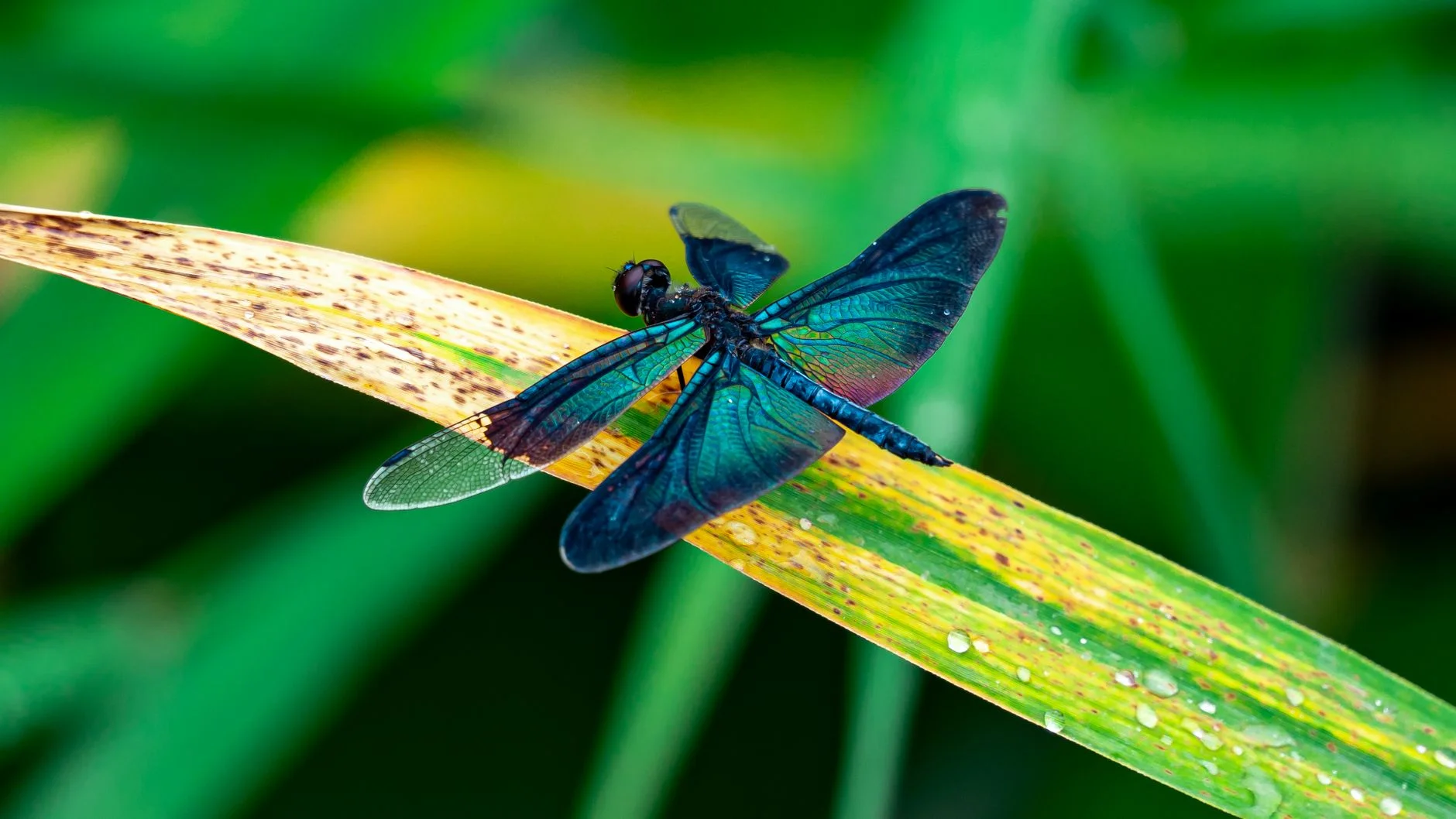
Insects can be fast in the air as well. Guinness World Records quotes about 58 km/h for an Australian dragonfly, which is quicker than many cyclists. Dragonflies are also expert hunters that catch other insects in flight.
What makes an animal fast?
Fast animals look very different, but they share a few key features. Each one is an example of the adaptations seen in plants and animals that help a living thing survive in its habitat.
- Powerful muscles. Muscle pulls on bone to push the body forward. More power means more acceleration.
- A good oxygen supply. Large lungs, a big heart and wide airways feed oxygen to working muscles, where it is used in cellular respiration to release energy.
- A streamlined shape. A falcon tucks its wings, and a sailfish folds its sail. Less drag means less energy wasted.
- Long strides or fast beats. Speed equals stride length × stride rate. A cheetah’s 7-metre stride at four strides a second is about 28 m/s.
- Light body and grip. Slim bones, claws, hooves and two-toed ostrich feet help push against the ground.
speed = stride length × stride frequency
Speed always has a cost. Sprinting burns energy fast and builds up heat, which is why a cheetah stops after a few hundred metres. Size matters too. Very big animals, such as the giants in our guide to the largest animals in the world, are rarely the fastest, because moving a huge mass takes enormous force.
Frequently asked questions about the fastest animals
What is the fastest animal in the world?
The peregrine falcon is the fastest animal in the world. In its hunting dive, called a stoop, it is commonly estimated to reach about 320 km/h. A trained falcon called Frightful was reportedly clocked at 389 km/h in 1999, although some experts doubt such dives match natural conditions.
What is the fastest land animal?
The cheetah is the fastest land animal. A 1997 study timed a cheetah at 29 m/s, about 104 km/h, over a measured course. Wild cheetahs wearing GPS collars reached up to about 93 km/h. Cheetahs can only hold their top speed for roughly 274 metres before they tire.
How fast can a cheetah run?
A cheetah can run at up to about 100 km/h. The fastest reliable timing is about 104 km/h, and the Smithsonian’s National Zoo says it can accelerate from 0 to 72 km/h in about 2.5 seconds. Claims of 120 km/h are not supported by measurements, and most real hunts are slower.
What is the fastest bird?
The peregrine falcon is the fastest bird when diving, at about 320 km/h. In flapping level flight, the common swift holds the best-measured record at about 111.6 km/h. On land, the ostrich is the fastest bird, sprinting at up to about 70 km/h on its long, powerful legs.
What is the fastest flying animal in level flight?
The Brazilian free-tailed bat holds the record from a 2016 study. Five of seven radio-tagged bats in Texas topped 108 km/h, and one reached about 160 km/h. Among birds, the common swift has the best-measured powered record, at about 111.6 km/h without help from wind.
What is the fastest fish in the sea?
No fish has a reliably measured speed record yet. Sailfish and black marlin are often said to swim at over 100 km/h, but those figures came from fishing reels. Modern studies found sailfish bursts of about 25–30 km/h, and physics suggests they cannot exceed about 36–54 km/h.
Is a pronghorn faster than a cheetah?
Not in a short sprint. A cheetah reaches about 104 km/h, while a pronghorn reaches about 88–97 km/h. Over long distances, however, the pronghorn wins easily. It can hold about 72 km/h for 2 kilometres, while a cheetah slows down after only about 274 metres.
How fast is the fastest human compared with animals?
Usain Bolt reached a peak of 44.72 km/h during his 9.58-second 100 m world record in 2009. That is less than half a cheetah’s top speed and slower than a racehorse, a racing greyhound or an ostrich. His average over the whole race was about 37.6 km/h.
What is the fastest animal for its size?
A tiny Southern Californian mite, Paratarsotomus macropalpis, is the fastest land animal relative to its size. In 2014 it was filmed running 322 body lengths per second. A cheetah manages about 16 body lengths per second, so a human matching the mite would need to run around 2,100 km/h.