
What is aromatherapy? A science-first definition
Aromatherapy is the use of plant-derived aromatic oils, called essential oils, for relaxation or wellbeing. The oils are usually inhaled from a diffuser or tissue, or diluted in a carrier oil for massage. It sits in the group of treatments known as complementary therapies, which the NHS describes as treatments that are not part of standard medicine and are not tested in the same way as standard medicines.
That does not make it nonsense, and it does not make it a cure. The honest answer to “does aromatherapy work?” is: a pleasant smell can change how we feel in the moment, but good evidence that essential oils treat medical conditions is limited. This guide keeps the search intent of a beginner’s guide, but explains the chemistry and biology underneath, shows you a safe way to practise smelling, and tells you plainly where the evidence is weak.
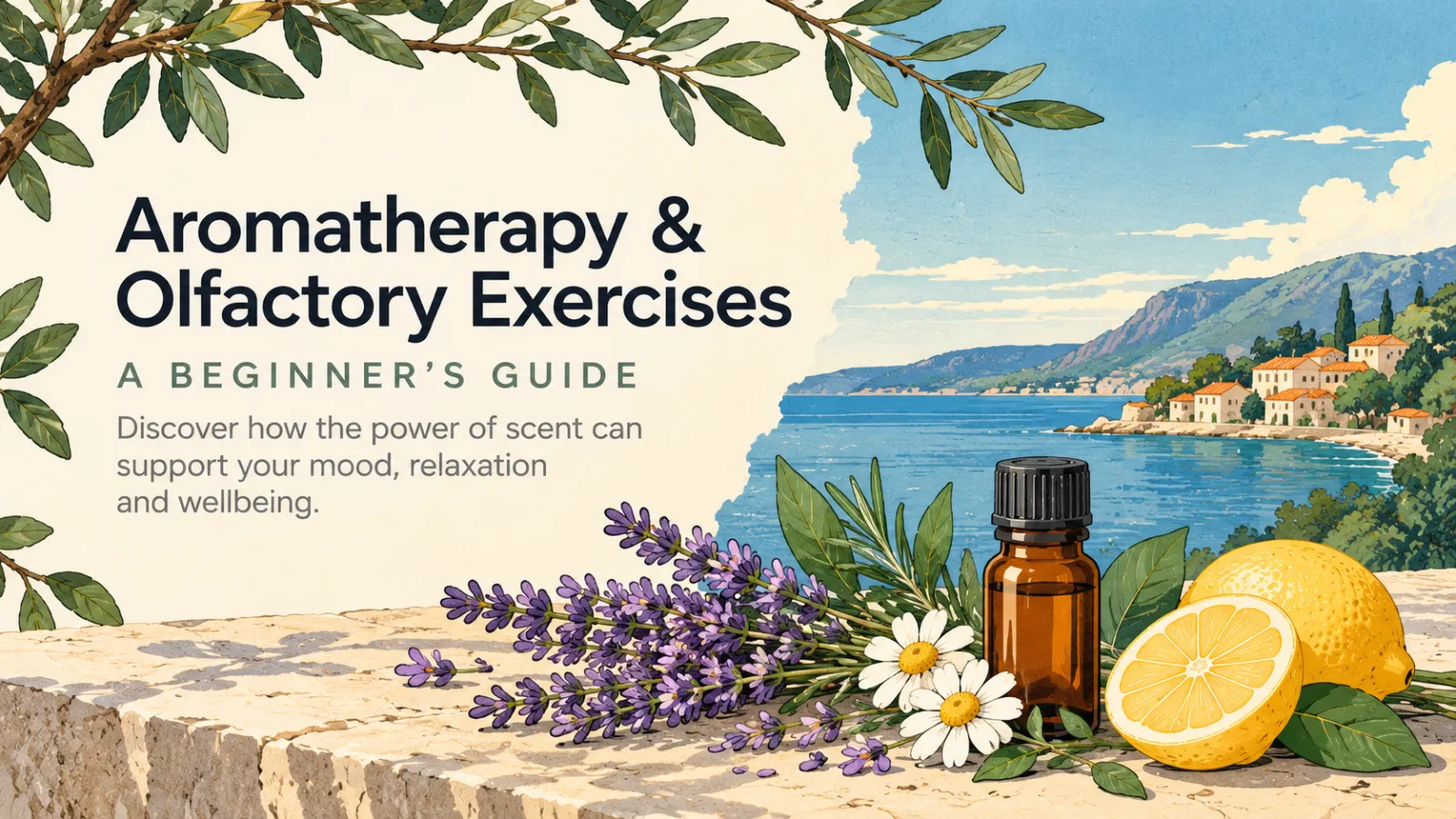
If you searched for “olfactory exercises”, you are in the right place too. Olfactory means “to do with smell”: aromatherapy is about what scents might do to us, while smell training practises noticing and naming them.
What essential oils really are: tiny, volatile molecules
An essential oil is not an “oil” in the cooking sense. It is a concentrated mixture of small, volatile molecules that a plant makes in glands, hairs or oil sacs in its leaves, flowers, peel or wood. Volatile means the molecules escape easily into the air at room temperature, because only weak forces hold them to each other. That is exactly why you can smell them from a distance: molecules have to reach your nose.
Most of the molecules are terpenes or terpenoids, built from five-carbon isoprene units (C₅H₈). Two you will meet again and again:
- Limonene (C₁₀H₁₆) is a hydrocarbon abundant in citrus peel, which is why oranges and lemons smell so strongly when you peel them.
- Linalool (C₁₀H₁₈O) is an alcohol found in lavender, and also in many other plants. It has a floral, slightly woody smell.
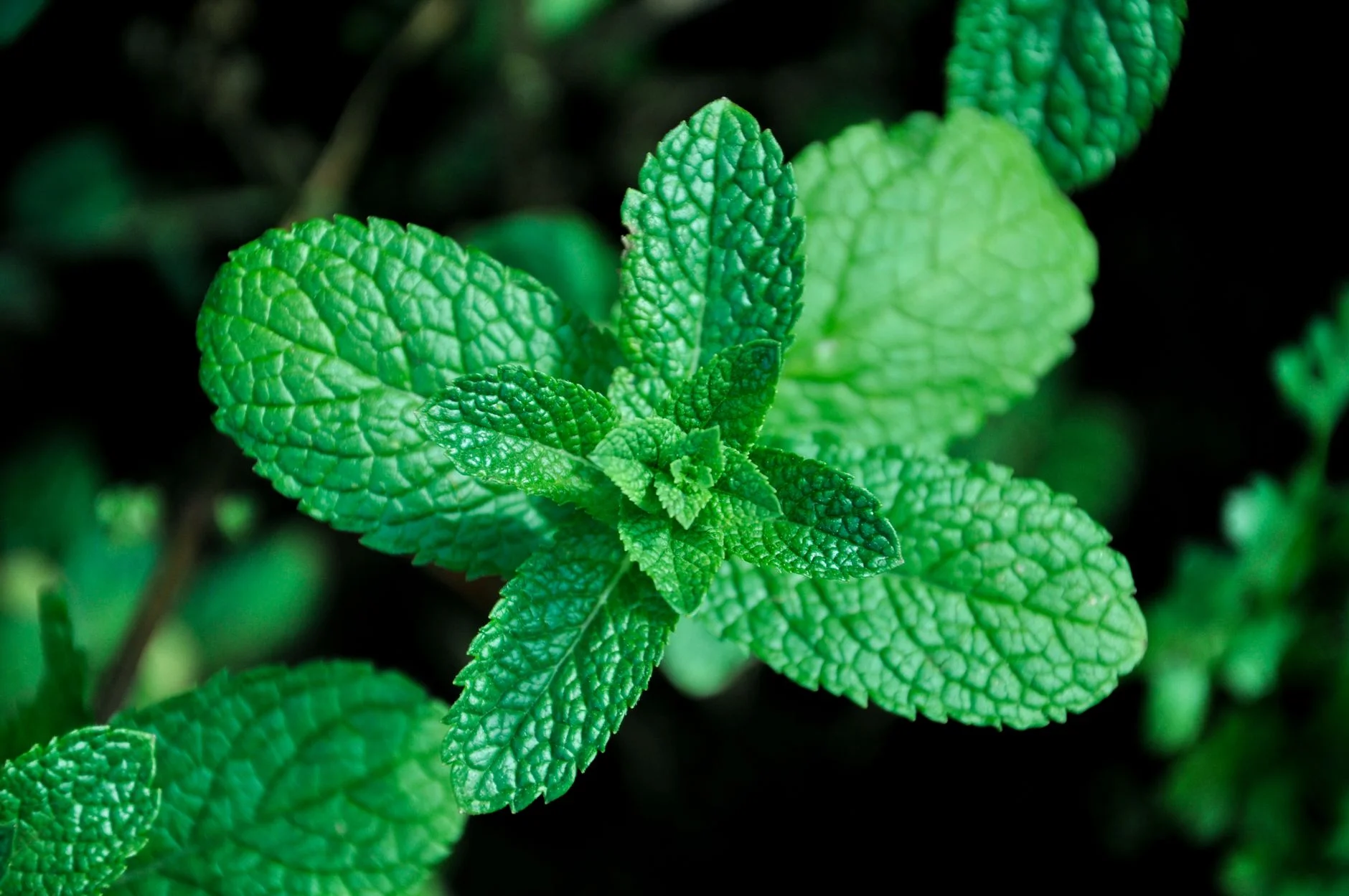
Peppermint’s cool character comes largely from menthol, which also activates cold-sensing nerve endings, so the “freshness” is partly a touch sensation rather than only a smell. A single natural oil may contain dozens or even hundreds of different compounds, and the mix varies with plant variety, growing conditions and harvest. That is one reason two bottles labelled “lavender” are not identical, and why it is hard to run fair, repeatable trials.
Why do smells fade? A volatility link to perfume
The same idea of volatility explains why a citrus top note fades within minutes while a woody base note lingers for hours. Small, light molecules evaporate faster than large, heavy ones. If you want to see how perfumers turn these molecules into products, our guide to fragrance concentrations and perfume types explains the ethanol, oil percentage and evaporation side in detail.
Four popular scents and what they are thought to do
Four scents appear again and again in beginner’s guides: lavender, lemon, peppermint and rose. The card below summarises how they are usually described. Read the wording carefully: “often used to”, “can help” and “may help” are cautious phrases for a good reason. They describe how people use the scents and how some people report feeling, not guaranteed effects.
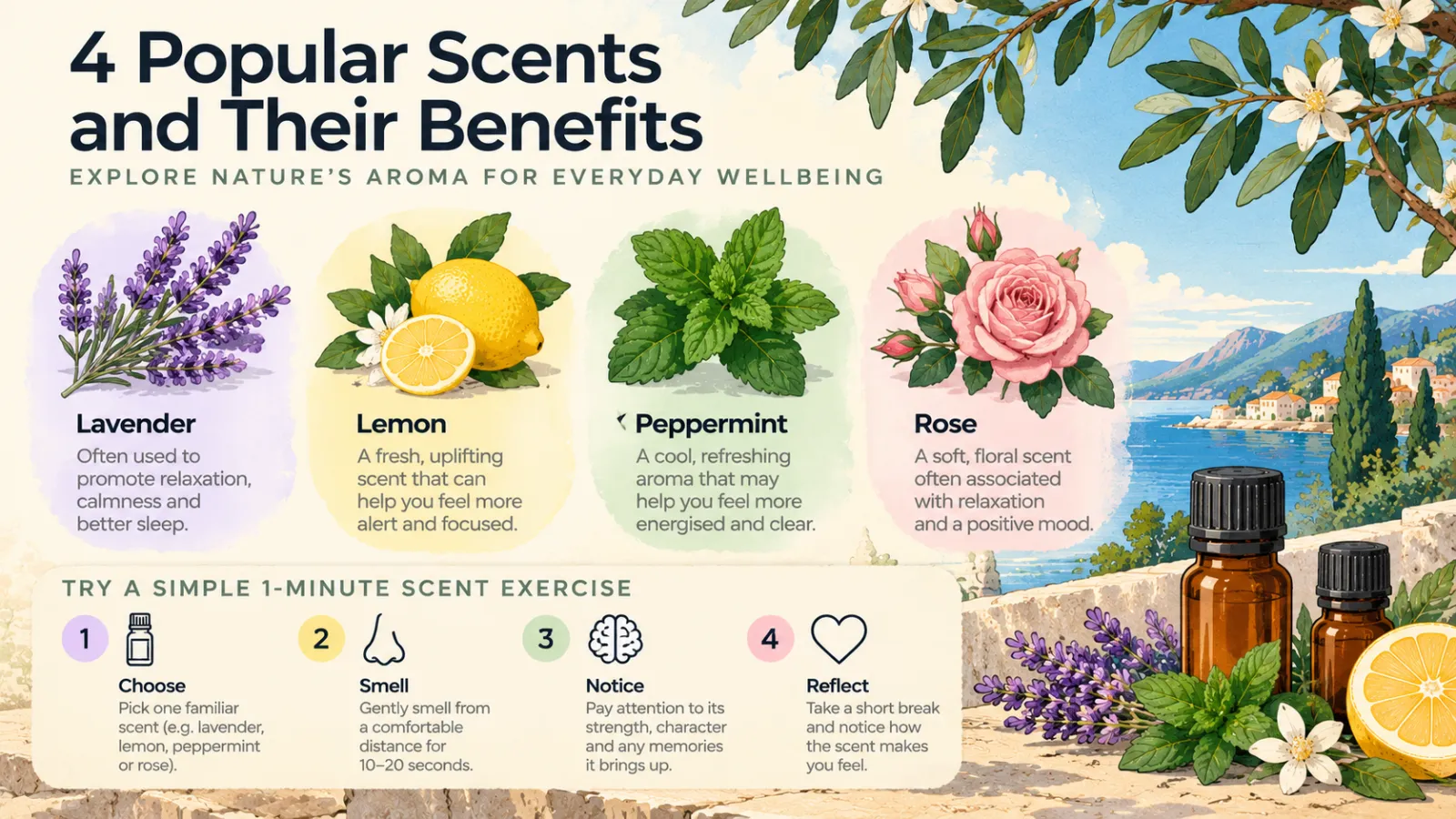
Here is the same information with the chemistry added. Tap each card to flip it.
How essential oils are made: steam distillation and cold pressing
Where do the oils come from? Two main methods are used.
Steam distillation
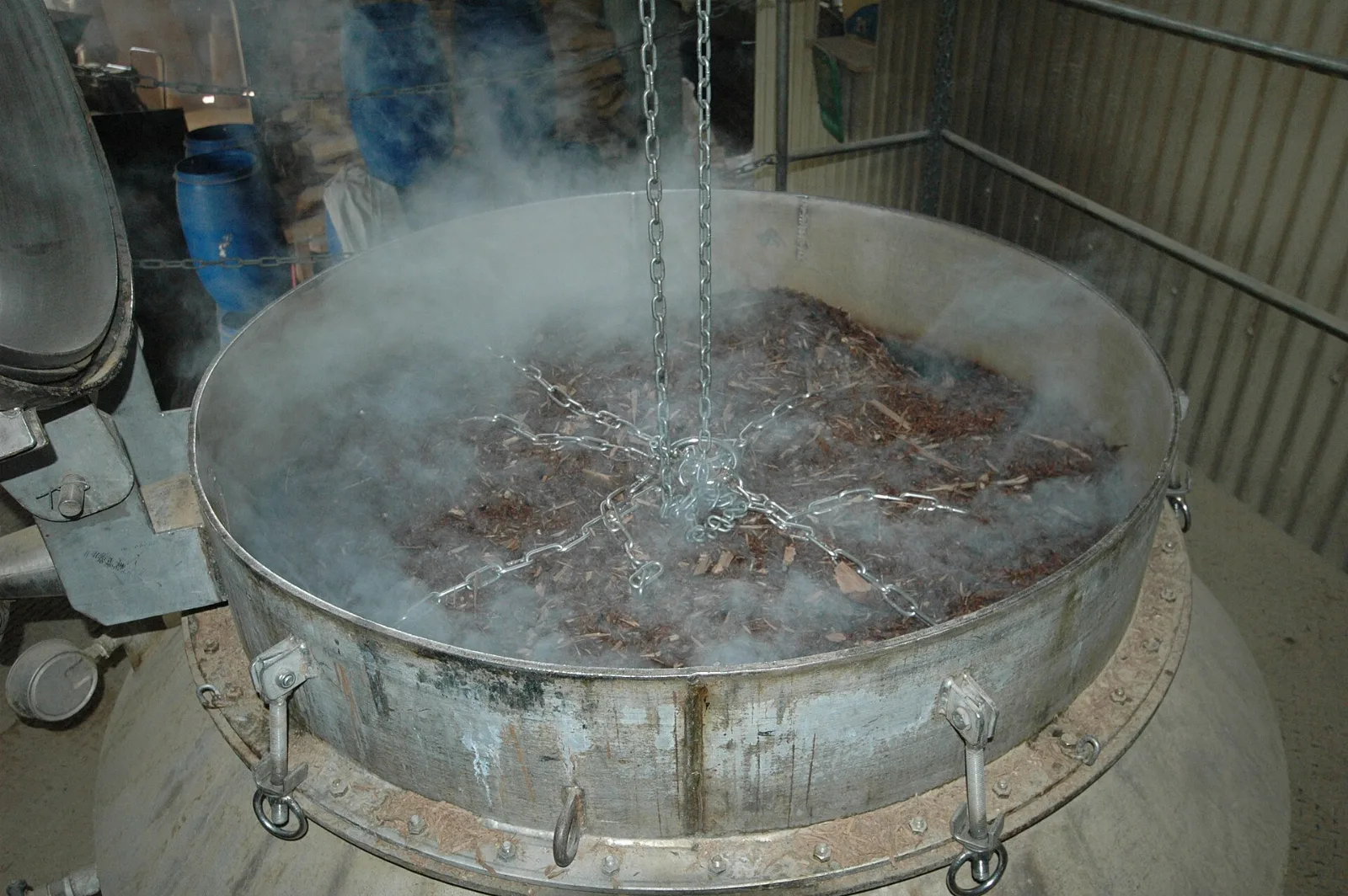
In steam distillation, steam is passed through plant material such as lavender flowers, eucalyptus leaves or sandalwood chips. The steam carries the volatile oils out with it as vapour. Both leave the still, cool in a condenser and turn back to liquid. Because oil and water do not mix, they separate into two layers and the oil can be collected from the top (or bottom, for denser oils).
Why use steam rather than just heating the plants? Many aroma molecules would break down or burn at their own boiling points, which can be well above 100 °C. When two immiscible liquids are heated together, each adds its own vapour pressure, and the mixture boils when the total reaches atmospheric pressure. That happens below 100 °C, so the molecules come off gently.
Cold pressing (expression)
Citrus peel oils such as orange, lemon and bergamot are usually obtained by cold pressing. The peel is mechanically punctured or squeezed to burst the oil sacs, and the oil is separated from the juice and water. No heat is needed, so the delicate top-note molecules are kept. You can see a tiny version of this at home: bend a piece of fresh orange peel and a fine mist of oil sprays from the pores.

The science behind it: how your nose and brain detect a smell
Smell is a chemical sense. Every scent you notice starts as molecules that have left an object, travelled through the air and arrived inside your nose. Understanding the pathway shows why scent can affect mood and memory, and also why it cannot do everything claimed for it.
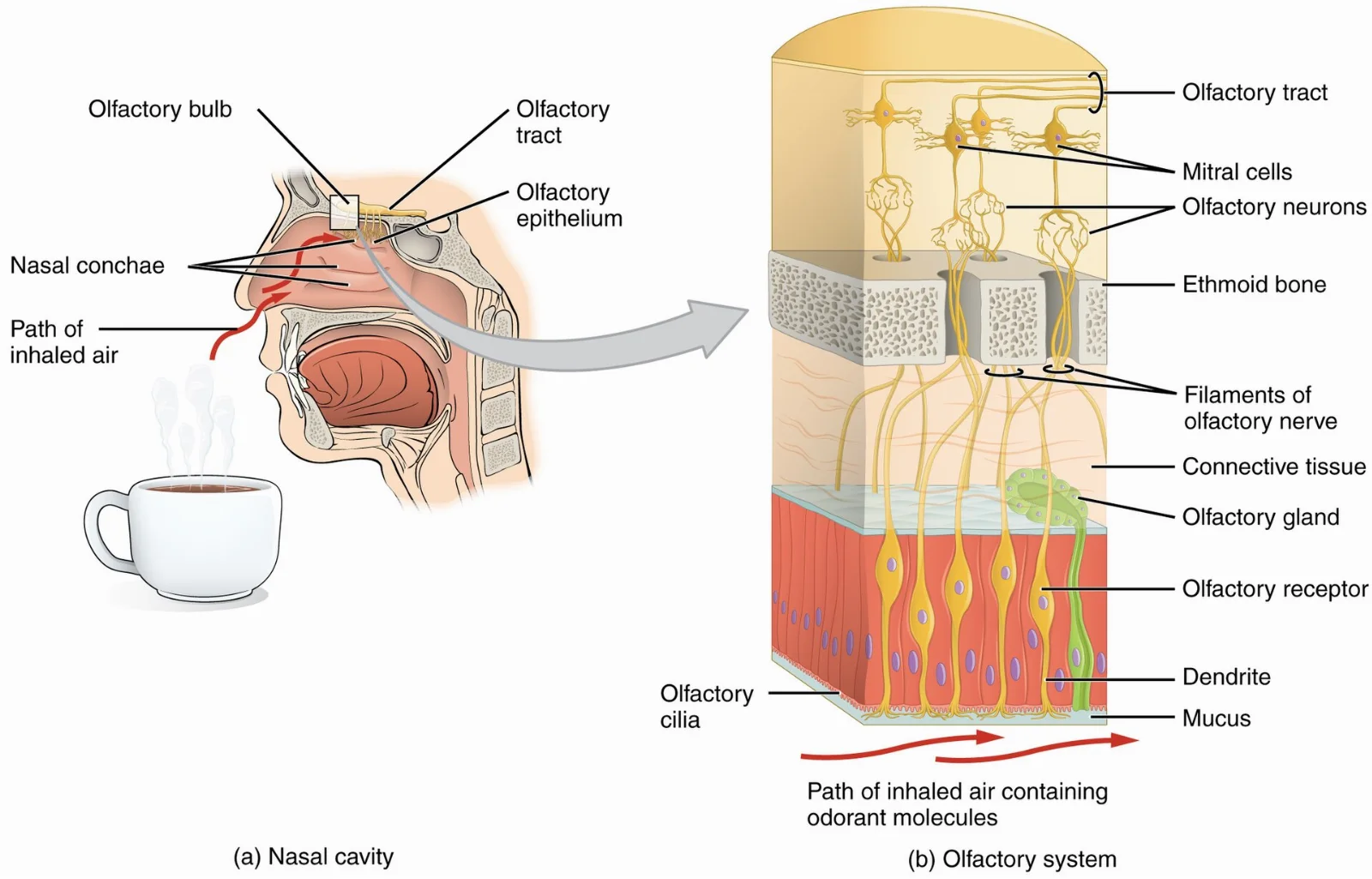
Step by step: from molecule to “lavender!”
- Inhale. Air carries volatile molecules up into the nasal cavity. A sniff pushes more air towards the top of the nose.
- Dissolve. High in the nose is a small patch of tissue called the olfactory epithelium. It is covered in mucus, and odour molecules must dissolve in it.
- Bind. Olfactory sensory neurons have receptor proteins on tiny hair-like endings. Humans have roughly 400 types of working olfactory receptor. Each odour molecule fits some receptor types better than others, so a smell is a pattern of receptors firing, not a single “lavender receptor”.
- Signal. The neurons send electrical signals through tiny holes in the skull bone to the olfactory bulb, just under the front of the brain.
- Interpret. From the bulb, signals travel to areas that include the olfactory cortex and parts of the limbic system, such as the amygdala, which are linked with emotion and memory.
That last link is the scientific reason smell can trigger a vivid memory or a sudden mood change: smell information reaches emotion and memory regions by a comparatively short route. It is a good reason to expect scents to affect feelings. It is not proof that any particular oil treats anxiety, pain or disease. Showing that is a separate question, and we look at the trials in the next section.
Why a smell can feel different from day to day
Your nose adapts. If you stay in a scented room, receptors fire less over time and the smell seems to fade. This is called olfactory adaptation. It is why you stop noticing a diffuser, and why a few seconds of sniffing followed by a break works better in smell practice than breathing in a scent for minutes. Expectations matter too. If you believe a scent is calming, you may feel calmer, a genuine psychological effect that trials must separate from the chemistry using blinded comparison groups.
Olfactory exercises: smell training, step by step
Olfactory exercises, often called smell training, deliberately sniff a small set of distinct scents every day and pay close attention to each. The idea comes from how the olfactory system can change with experience: the nerve cells that detect smell are unusual because they can regenerate, and training may help the brain re-learn patterns after smell loss.
This practice card gives a friendly five-minute version in five simple steps: choose, smell, notice, record, repeat.
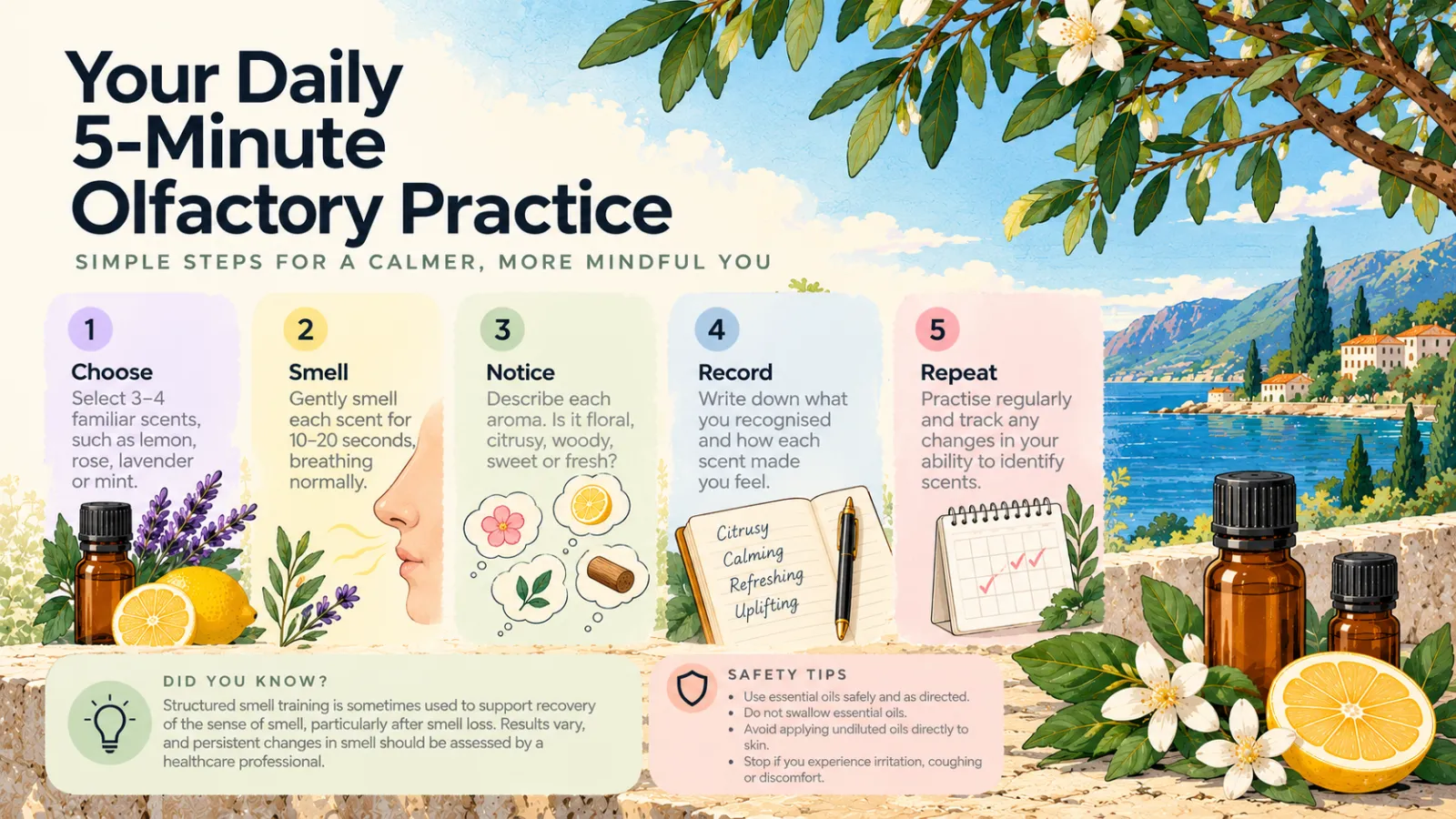
The suggested pattern is easy to follow. Choose three or four familiar scents. Sniff each gently for 10–20 seconds while breathing normally. Describe each one: floral, citrusy, woody, sweet or fresh? Write down what you recognised and how it made you feel, and repeat on most days.
- Pick 3–4 familiar scents, such as lemon, rose, lavender or mint
- Hold each about a thumb’s width from your nose; never press a bottle against your skin
- Sniff gently for 10–20 seconds, breathing normally
- Rest for about 30 seconds between scents to let receptors recover
- Describe each scent in words and write down what it reminds you of
- Repeat daily and look back after a few weeks
What does the evidence say about smell training?
Smell training has more research behind it than most aromatherapy claims. The best-known protocol was published in 2009: 40 patients with smell loss sniffed four strong odours (rose, eucalyptus, lemon and clove) twice a day for 12 weeks, and did better than 16 patients who did not train. It was a small, non-randomised study. Since then, several analyses of trials in people who lost smell after a viral infection have reported that training is associated with better recovery. However, the protocols differ between studies, results vary from person to person, and recovery can take many months.
For a healthy nose, practice is best described as a mindful activity that can make you more attentive to smell. It is not a proven way to “boost the brain”, and there is no good evidence that it prevents dementia.
Quick check: reveal the answers
Why do odour molecules need to be volatile to be smelled? (2 marks)
Volatile molecules evaporate easily, so they travel through the air to the nose (1). They then dissolve in the mucus and bind to olfactory receptors (1).
Why might a scent seem weaker after a few minutes in the same room? (2 marks)
The olfactory receptors and neurons adapt to a constant stimulus (1), so they send fewer signals and the brain notices the scent less (1).
Name the brain structure that receives signals straight from the nose and the region it links to for emotion. (2 marks)
The olfactory bulb receives the signals (1); it connects onward to parts of the limbic system such as the amygdala (1).
For more on memory and the brain, see improving memory for exams and neuroscience and the brain.
Does aromatherapy work? What the evidence actually shows
Good science asks three questions: does the effect happen, is it bigger than chance and expectation, and is it big enough to matter? For aromatherapy the honest summary is that some small studies report short-term benefits, but the evidence is often weak, mixed or low in quality. Here is how that looks in the main areas people ask about.
Dementia and agitation
Cochrane reviews are systematic reviews that pool all the trials that meet strict standards. The Cochrane review “Aromatherapy for dementia” (updated 2020) included 13 studies with 708 participants. Among the five trials where the reviewers had moderate or low confidence in the results, four found no significant effect on agitation and one reported a benefit. For overall behavioural and psychological symptoms, four of the five such trials reported a benefit. Many trials were small or poorly reported, and harms were barely recorded. The reviewers concluded that they had not found any convincing evidence that aromatherapy helps people with dementia.
Pain in labour
A Cochrane review of aromatherapy for pain management in labour (2011) found only two randomised trials, involving 535 women, and concluded there was insufficient evidence to show benefit. That does not prove aromatherapy is useless, only that the trials reviewed were too few to show a benefit.
Anxiety, mood and sleep
This is where aromatherapy is most often promoted, and where results are most mixed. The US National Cancer Institute summarises studies of aromatherapy as mixed: some report improved mood, anxiety, sleep, nausea and pain, and others report no change. The NCI summary describes small studies in people with cancer in which aromatherapy massage or inhaled oils were linked with lower anxiety, but it also reports a larger placebo-controlled trial of 313 people having radiotherapy that found no difference between groups, and a 2000 review concluded that the research was not rigorous or consistent enough to prove aromatherapy treats anxiety. In a placebo-controlled trial of bergamot aroma in 37 children and adolescents having stem cell transplant infusions, aromatherapy did not reduce nausea, anxiety or pain. In short, a lavender scent may help some people feel calmer for a while, but it is not a proven treatment for an anxiety disorder or insomnia. For sleep, simple habits have a far stronger evidence base, as explained in our guide to sleep hygiene and mental health.
Why aromatherapy trials are hard to do well
- Blinding is difficult. A strong smell is obvious, so participants know what they are getting, and expectation can change how they report feeling.
- Oils differ. The chemical mix varies between batches and brands, so “lavender” is not one standard treatment.
- Outcomes are subjective. Anxiety and pain are measured by self-report, which is more open to expectation than a blood test.
Maths practice: dilution, drops and yield
Essential oils are strong, so aromatherapy books talk about dilution percentages. The maths is the same as the percentage and ratio questions you meet in GCSE chemistry and maths. These questions are for practice only. They are not recommended doses; always follow the product label and professional advice, especially for children, pregnancy or medical conditions.
percentage (v/v) = volume of oil ÷ total volume × 100
volume of oil = total volume × percentage ÷ 100
Drops are not a precise unit: the size depends on the dropper and the oil. Many sources use about 20 drops ≈ 1 ml as a rough conversion, and we use it here only so the arithmetic is easy.
Worked question 1: A label says an oil blend is 2% essential oil. How many ml of essential oil are in 30 ml? How many drops, using 20 drops = 1 ml? (3 marks)
Volume of oil = 30 × 2 ÷ 100 = 0.6 ml (1). Drops = 0.6 × 20 = 12 drops (1). The rest, 29.4 ml, is carrier oil (1).
Worked question 2: A student adds 3 drops of oil to 15 ml of carrier oil. Estimate the percentage of essential oil. (3 marks)
3 drops = 3 ÷ 20 = 0.15 ml (1). Total ≈ 15.15 ml, but 15 ml is close enough (1). Percentage ≈ 0.15 ÷ 15 × 100 = 1% (1).
Distillation yield
Essential oils are produced in small amounts from a lot of plant material, so yield is a useful percentage-by-mass idea.
yield (%) = mass of oil ÷ mass of plant material × 100
Worked question 3 (invented numbers for practice): A still is loaded with 40 kg of mint and collects 200 g of oil. What is the yield, and how much plant material is needed for 1 kg of oil? (3 marks)
Convert units: 40 kg = 40,000 g (1). Yield = 200 ÷ 40,000 × 100 = 0.5% (1). For 1 kg of oil you need 1 ÷ 0.005 = 200 kg of plant material (1). Real yields vary widely with plant and method.
Worked question 4: Limonene has the formula C₁₀H₁₆. Calculate its relative formula mass. (C = 12, H = 1) (2 marks)
Carbon: 10 × 12 = 120 (1). Hydrogen: 16 × 1 = 16. Total Mr = 136 (1).
Question 4 links to a skill you already know: writing and using formulae. If you want revision on that, see how to write a chemical formula.
Aromatherapy safety: what the science says to watch for
Because essential oils are concentrated chemicals, safety is not an afterthought. Used gently as a scent, they cause few problems for most healthy adults, but a small bottle can contain far more of a compound than you would ever meet in a plant. These are the main risks.
Skin: irritation, allergy and sunlight
- Irritation. Undiluted oils can burn or inflame skin. Always dilute in a carrier oil and never put neat oil on skin, eyes or inside the nose.
- Sensitisation. Repeated contact can train the immune system to react, producing an allergic contact rash. Once sensitised, a person can react to tiny amounts later. The risk is higher with oxidised, old oil. Our article on allergic contact dermatitis explains how this type of allergy develops.
- Phototoxicity. Cold-pressed bergamot and some other citrus oils contain furocoumarins such as bergapten. On skin exposed to UV light, these can cause painful blistering and long-lasting dark marks. Steam-distilled citrus oils contain far less, and “bergapten-free” (FCF) bergamot exists, but check labels and avoid sun exposure on skin where citrus oils were applied.
- Patch test. Test a small diluted amount on a small patch of skin first and wait for a reaction. Stop if the skin itches, reddens or stings.
Swallowing, children and pets
- Do not swallow essential oils. Swallowed oil can be toxic, and small children are at particular risk from even small amounts. Keep bottles out of reach. If a child or pet swallows oil, get urgent medical or veterinary advice straight away.
- Pets. Tea tree oil is widely reported to poison cats, whether it is licked off fur or absorbed through skin, and signs include drooling, weakness and tremors. Cats groom themselves, so avoid putting oils on or around them, and ask a vet before using a diffuser in a home with animals.
Pregnancy, asthma and other health conditions
Some NHS trust leaflets on aromatherapy in maternity care ask people who are pregnant, or who have epilepsy or asthma, to talk to their midwife or doctor first, and policies vary between trusts. Strong scents can irritate airways in some people with asthma. Diffusers add oil droplets and vapour to the room, so use them for short periods in a ventilated space and stop if you cough, wheeze or get a headache.
A sensible way to enjoy scent
If you like aromatherapy, the evidence-aware way to use it is as a pleasant, low-risk habit. Choose a scent you already like, use a few drops in a diffuser or on a tissue, and treat any calm feeling as a bonus. Pair it with proven habits for stress and sleep. Our article on living a less stressful life covers ideas with a stronger evidence base.
Frequently asked questions about aromatherapy
What is aromatherapy in simple terms?
Aromatherapy is the use of essential oils from plants, usually by smelling them or applying them diluted to skin, to support relaxation and wellbeing. It is a complementary therapy rather than standard medicine, and it should not replace treatment from a doctor.
What are essential oils made of?
They are mixtures of small volatile molecules, mostly terpenes and related compounds such as limonene in citrus peel and linalool in lavender. The exact mix varies between plants, growing conditions and batches, so oils sold under the same name are not identical.
How are essential oils made?
Most are made by steam distillation, where steam carries the volatile oils out of plant material and is then condensed and separated. Citrus oils are usually cold pressed, which bursts the oil sacs in the peel mechanically without using heat.
How does smell affect mood and memory?
Odour molecules bind receptors in the nose, and the signals pass to the olfactory bulb and on to brain areas linked with emotion and memory, including parts of the limbic system. This explains why smells can recall memories vividly, though it does not prove a particular oil treats a condition.
Does aromatherapy really work for anxiety or sleep?
Some small studies report short-term benefits, but results are mixed and often low quality, and people usually know which scent they are receiving. A pleasant scent may help you relax, but it is not a proven treatment for an anxiety disorder or insomnia. See a GP if symptoms persist.
Are olfactory exercises useful?
Smell training, such as sniffing four distinct scents daily for several months, has been studied for loss of smell after viral illness, with analyses suggesting benefit for some people. Protocols vary and recovery can be slow. If your smell has changed, speak to your GP.
Is it safe to put essential oils on skin?
Only when well diluted in a carrier oil and after a small patch test. Undiluted oils can irritate or sensitise skin, and some citrus oils increase sensitivity to sunlight. Stop if you notice redness or itching, and ask a pharmacist if you are unsure.
Are essential oils safe around pets and children?
Not always. Some oils, including tea tree oil, are reported to be toxic to cats, and children can be harmed by swallowing even small amounts. Keep bottles locked away, avoid putting oils on animals and ask a vet or pharmacist before diffusing at home.
Can I use aromatherapy if I am pregnant or have asthma?
Check with your midwife, GP or pharmacist first. Some NHS maternity units ask people who are pregnant, or who have asthma or epilepsy, to seek advice before using essential oils, and strong scents can irritate airways in some people.
How do I calculate a 1% dilution?
Divide the total volume by 100 for 1%. For 10 ml of blend, that is 0.1 ml of essential oil, which is about 2 drops if 20 drops make 1 ml. Drop size varies, so this is only an estimate, and you should follow the product label.