Non-Newtonian fluids are fluids whose viscosity changes depending on how hard, how fast or how long you push, stir or hit them. Water does not do this: it is just as runny whether you stir it gently or briskly. Ketchup and a bowl of cornflour and water (oobleck) behave very differently, and this guide explains why, what the main types are, and how to see them for yourself.
What is viscosity?
Viscosity is a fluid’s resistance to flow. Honey has a high viscosity, so it pours slowly. Water has a low viscosity, so it pours quickly. You can think of it as the “thickness” of a liquid, although scientists measure it with numbers rather than words.
The SI unit of viscosity is the pascal second (Pa·s). Because everyday liquids are usually a small fraction of one pascal second, you will often see millipascal seconds (mPa·s) instead. One mPa·s is the same as one centipoise. Water at 20 °C has a viscosity of about 1.0 mPa·s.
Temperature matters a great deal. Water’s viscosity is about 1.79 mPa·s at 0 °C, about 1.00 mPa·s at 20 °C and only about 0.28 mPa·s at 100 °C. That is roughly a six-fold drop. So when a textbook says water has a “constant” viscosity, it means constant at a fixed temperature, however fast you stir it. It does not mean the same at every temperature.
Viscosity is a kind of internal friction. When a fluid flows, layers slide past each other, and the viscosity tells you how strongly each layer drags on its neighbours.
Newtonian vs non-Newtonian fluids
A Newtonian fluid is one whose viscosity stays constant at a given temperature and pressure, whatever the shear rate. Water, air, alcohol, glycerol and thin motor oil are all Newtonian under everyday conditions. The name comes from Isaac Newton, who first wrote down the relationship (see our guide to Newton’s laws of physics for his better-known work).
For a Newtonian fluid, the shear stress is proportional to the shear rate:
τ = μ × (du/dy)
Here τ is the shear stress, μ is the viscosity and du/dy is the shear rate (how quickly the speed changes from one layer to the next). If you plot shear stress against shear rate for a Newtonian fluid, you get a straight line through the origin. The gradient of that line is the viscosity.
A non-Newtonian fluid does not follow this law. Its viscosity changes with the shear stress or shear rate and, for some fluids, with time as well. One single number cannot describe it. Plot its shear stress against shear rate and you get a curve rather than a straight line.
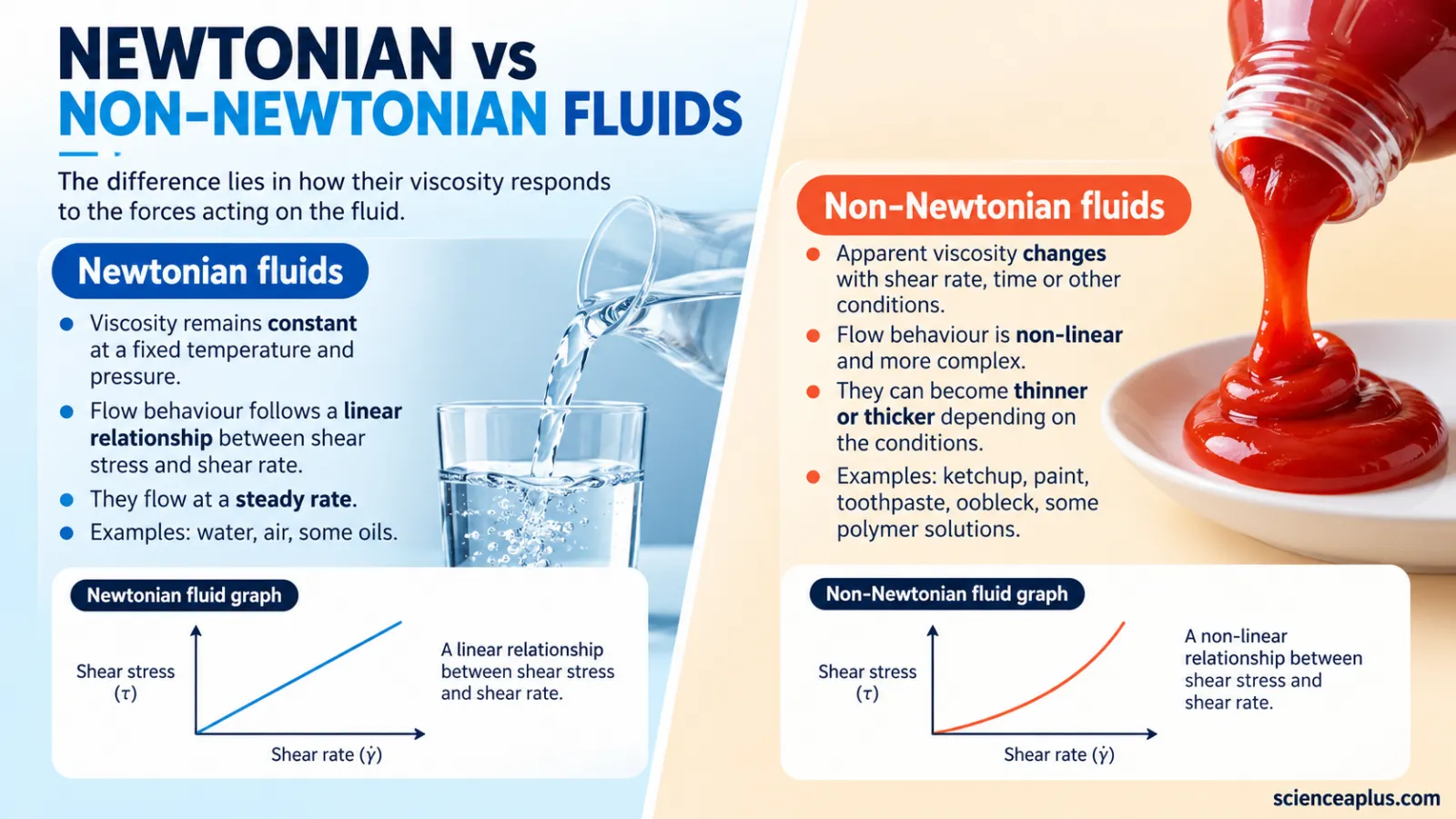
In practice, no real fluid is perfectly Newtonian. Scientists treat many fluids as Newtonian because the model works well enough for water pouring from a tap or air flowing over a wing. The differences become obvious only when a fluid’s behaviour clearly changes as you change how you disturb it.
| Feature | Newtonian fluid | Non-Newtonian fluid |
|---|---|---|
| Viscosity | Constant at a given temperature and pressure | Changes with shear rate, shear stress or time |
| Shear stress against shear rate | Straight line through the origin | Curve (or a line that does not start at the origin) |
| Depends on how hard you stir? | No | Yes (and sometimes on how long) |
| Examples | Water, air, alcohol, glycerol, thin motor oil | Ketchup, blood, oobleck, toothpaste, non-drip paint |
Apparent viscosity: putting a number on it
Because a non-Newtonian fluid has no single viscosity, scientists quote its apparent viscosity at a particular shear rate. It is worked out in the same way as ordinary viscosity:
apparent viscosity η = shear stress τ ÷ shear rate γ̇
Shear stress is measured in pascals (Pa) and shear rate in reciprocal seconds (s⁻¹), so the answer comes out in Pa·s. Try the calculator below. Change the shear stress and shear rate, and see how the apparent viscosity compares with water at 20 °C.
For a Newtonian fluid, doubling the shear stress would double the shear rate, so the apparent viscosity would stay the same. For a non-Newtonian fluid, doubling the shear stress might more than double the shear rate (a shear-thinning fluid) or less than double it (a shear-thickening fluid). That is the whole idea, and the next section sorts the behaviours into types.
The types of non-Newtonian fluids
The types of non-Newtonian fluids fall into two main families. In the first, the apparent viscosity depends on how hard or how fast you shear the fluid: these are the shear-thinning and shear-thickening fluids. In the second, it depends on how long you shear it: these are the thixotropic and rheopectic fluids. Two more groups, yield-stress fluids (Bingham plastics) and viscoelastic materials, do not fit neatly into either family but turn up all the time in everyday life.
Shear-thinning (pseudoplastic) fluids
In a shear-thinning fluid, the apparent viscosity decreases as the shear rate or shear stress increases. Push harder and it becomes runnier. Ketchup, nail polish, many paints, blood and many polymer solutions all behave like this. Whipped cream is shear-thinning too, as well as being springy.
A simple picture explains it. The fluid contains long molecules or particles that are tangled up at rest. When the fluid flows quickly, they line up with the flow and slide past each other more easily, so the fluid gets runnier.
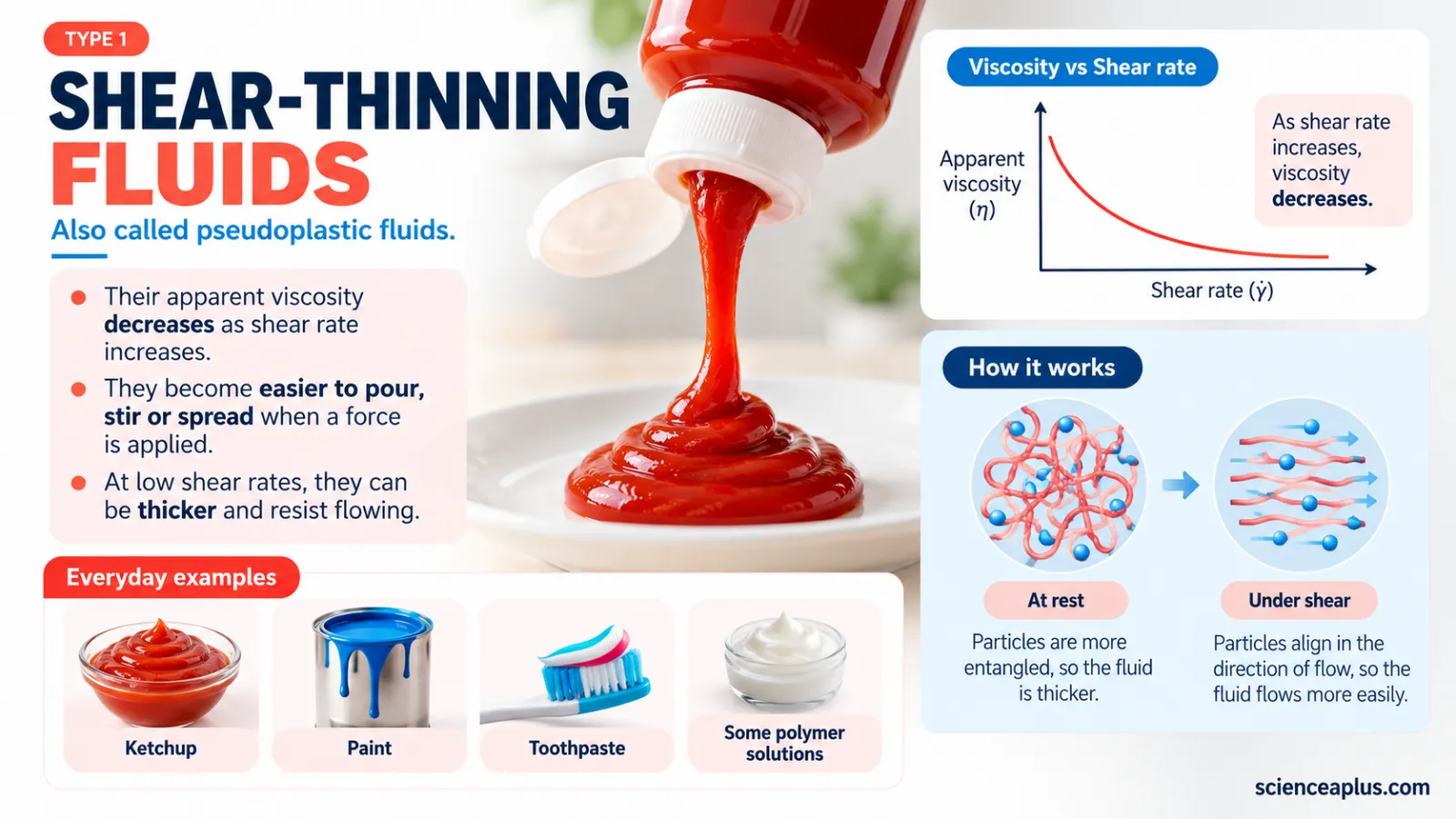
Blood is a useful biological example. At low shear rates, red blood cells stack up in piles called rouleaux, which makes the blood thicker. As the shear increases, the stacks break up. At higher shear the cells deform and line up with the flow, so the viscosity falls further. You can read more in our complete lesson on human blood.
Shear-thickening (dilatant) fluids
A shear-thickening fluid does the opposite: its apparent viscosity increases as the shear rate increases. The classic example is cornflour (cornstarch) in water, known as oobleck. Hit it quickly and it feels firm. Let your hand rest on it and it flows around your fingers.
Sand that is completely soaked with water also behaves as a dilatant material. You may have noticed the patch of sand that looks dry around your foot as you walk on a wet beach: the pressure of your step makes the packed grains spread apart (Reynolds dilatancy), and the extra gaps draw the water down.
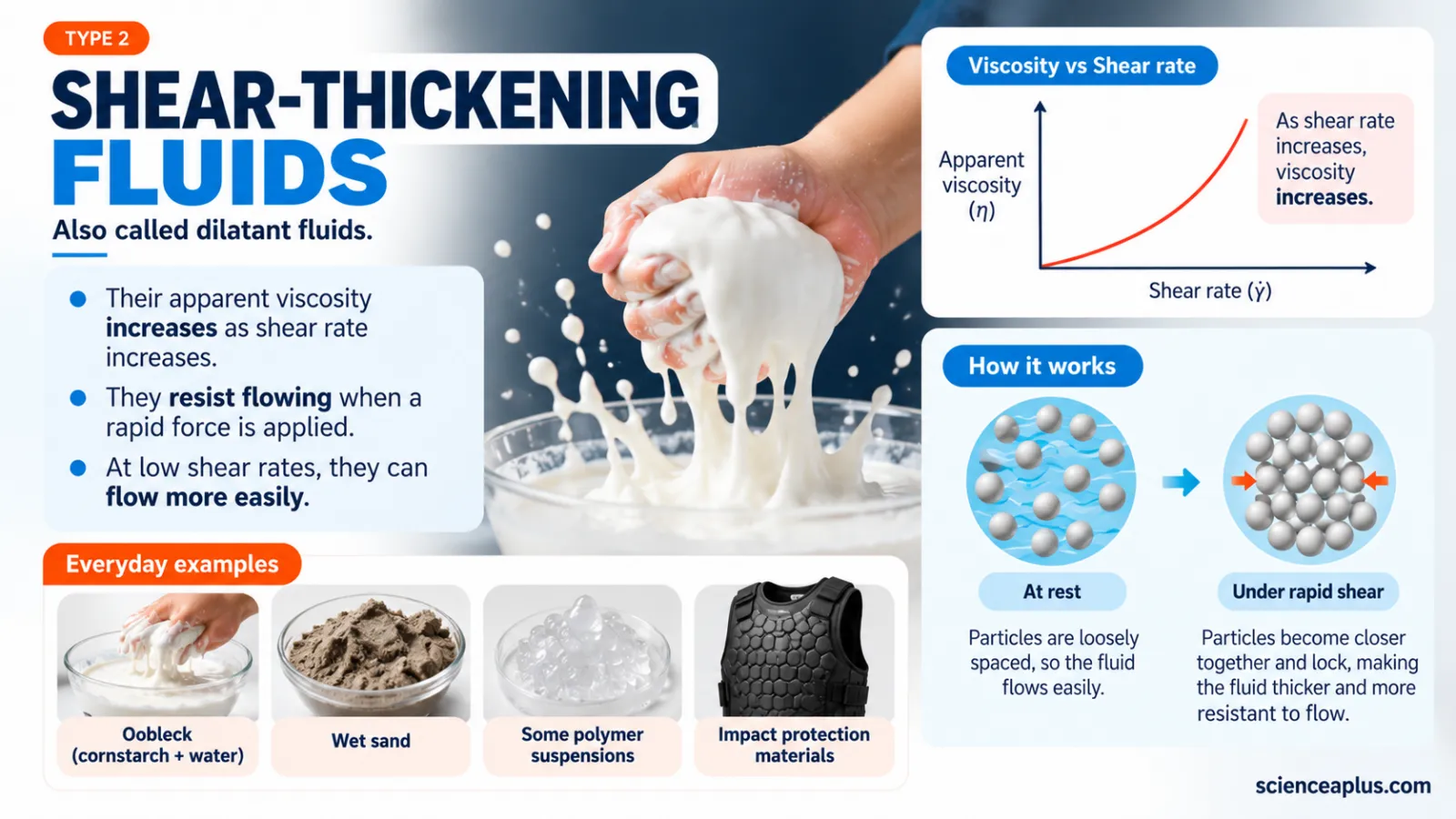
The explanations for shear-thickening are still being refined. One simple version is that particles are pushed into contact and form clusters faster than the liquid between them can flow out of the way. Once the grains are touching, the mixture resists the push. We look at oobleck in much more detail below.
Thixotropic fluids
A thixotropic fluid becomes runnier the longer you shear it, and then recovers its thickness when left to rest. The International Union of Pure and Applied Chemistry (IUPAC) makes the key distinction: if the viscosity recovers after shearing stops it is thixotropy, and if it does not recover it is called work softening.
Yoghurt and some gels are common examples. Thixotropic (non-drip) paints are designed to thin while you brush them, then rebuild their internal structure on the wall, which reduces drips and sagging. Products such as sealants, greases and adhesives are formulated with a similar aim: easy to apply, then reluctant to run once in place.
Rheopectic fluids
A rheopectic fluid (also called anti-thixotropic) is the time-dependent opposite: its viscosity increases the longer it is sheared. These fluids are rare. Examples often given are gypsum pastes and printer inks, and synovial fluid is sometimes listed too.
Bingham plastics and other yield-stress fluids
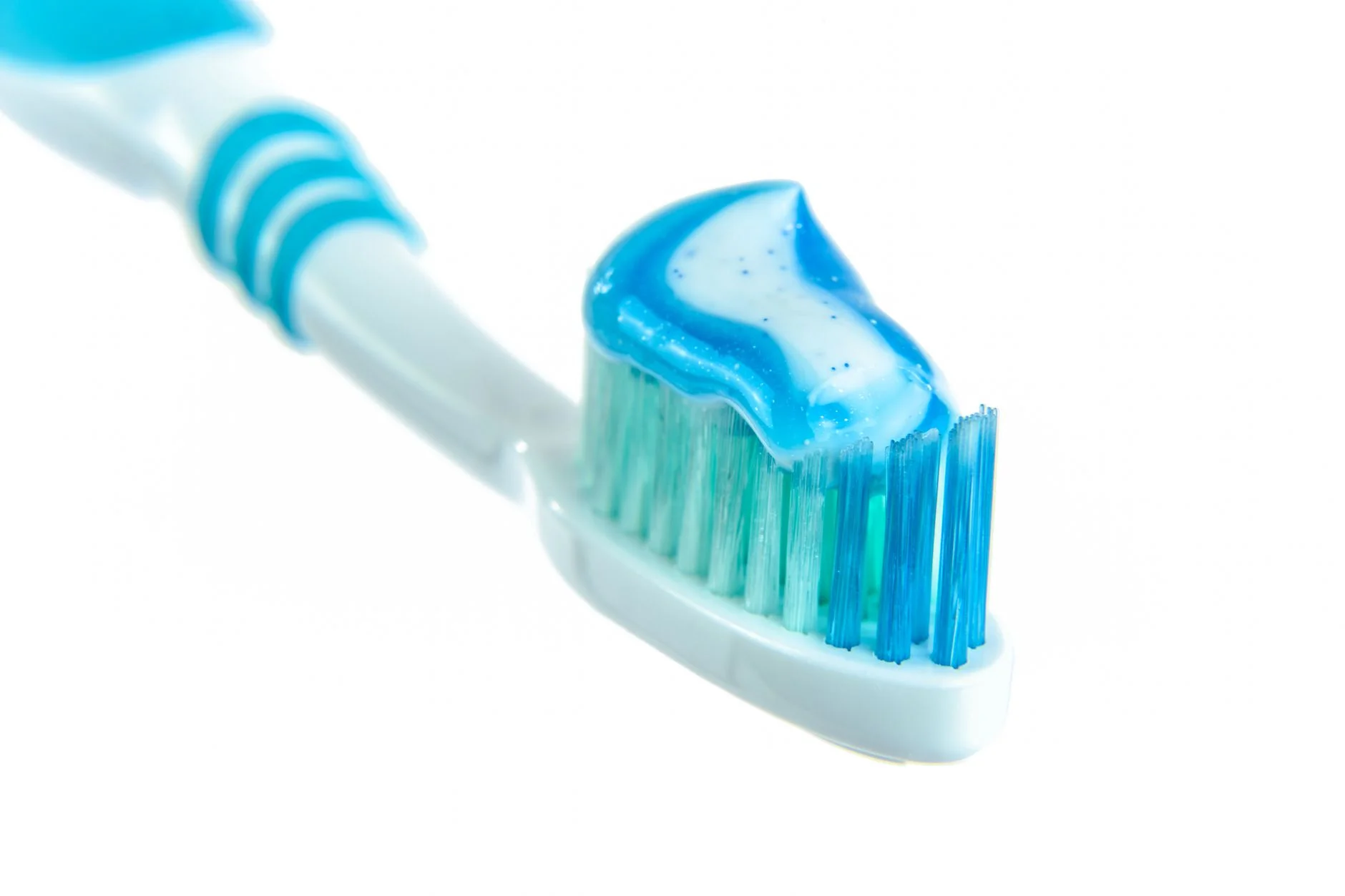
A Bingham plastic (a type of viscoplastic material) behaves like a solid until the stress passes a minimum value called the yield stress. Only then does it flow. Toothpaste, mayonnaise and melted chocolate are examples. Toothpaste stays on your brush without sliding off, yet comes out of the tube as a plug when you squeeze.
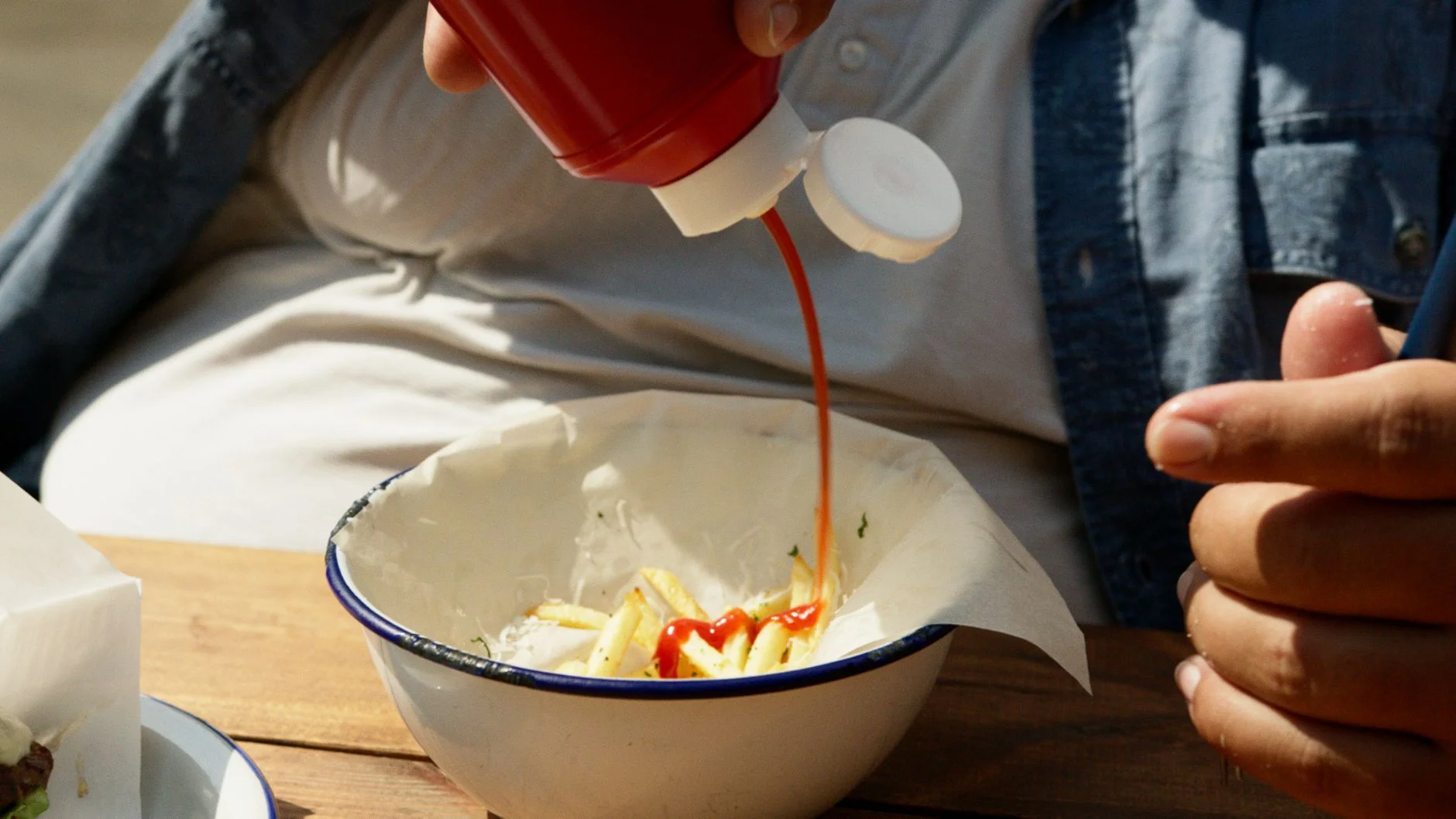
Ketchup also has a yield stress, which is why it will not flow until it is pushed hard enough. It is also a good example for telling the two families apart. Banging the bottle works because ketchup is shear-thinning: the sudden stress makes it runnier. Shaking the bottle up and down for a long time works because ketchup is thixotropic: the longer you shear it, the thinner it becomes.

Viscoelastic materials
Some materials are both runny and springy, depending on the timescale. Bouncing putty is the best-known example. It is a silicone polymer (PDMS cross-linked with boric acid). Drop it and it bounces. Pull it sharply and it snaps. Leave it on a table for hours and it slowly flows into a puddle. It has been sold as a toy since 1950.
The types of non-Newtonian fluids compared
| Type | Viscosity changes with… | What happens | Everyday examples |
|---|---|---|---|
| Shear-thinning (pseudoplastic) | Shear rate | Runnier when sheared faster | Ketchup, nail polish, blood, many paints |
| Shear-thickening (dilatant) | Shear rate | Thicker when sheared faster | Oobleck, wet sand |
| Thixotropic | Time of shearing | Runnier the longer it is sheared; recovers at rest | Yoghurt, some gels, non-drip paint |
| Rheopectic | Time of shearing | Thicker the longer it is sheared (rare) | Gypsum paste, printer ink |
| Bingham plastic | Yield stress | Solid-like until pushed hard enough | Toothpaste, mayonnaise, melted chocolate |
| Viscoelastic | Timescale of the force | Bounces when hit quickly, flows when left | Bouncing putty |
Ketchup gets runnier when you shake the bottle hard. Is that shear-thinning or thixotropic? (2 marks)
It can be both, and the difference is what changes. Shear-thinning means the viscosity falls as the shear rate or stress increases, which is why a hard bang gets ketchup moving. Thixotropic means the viscosity falls with the time it is sheared and recovers when left to rest, which is why long shaking works and the ketchup thickens again afterwards.
Oobleck: the famous shear-thickening fluid
Oobleck is the best-known of all non-Newtonian fluids, and you can make it in a few minutes. It is simply cornflour (cornstarch) mixed with water. The name comes from the 1949 Dr Seuss book Bartholomew and the Oobleck, in which sticky green goo falls from the sky.
The cornflour grains do not dissolve. They are tiny solid particles of starch suspended in the water. When you move slowly, the grains and the water slip past each other and the mixture flows like a thick liquid. When you hit or squeeze it fast, the grains are pushed together and it suddenly feels solid.
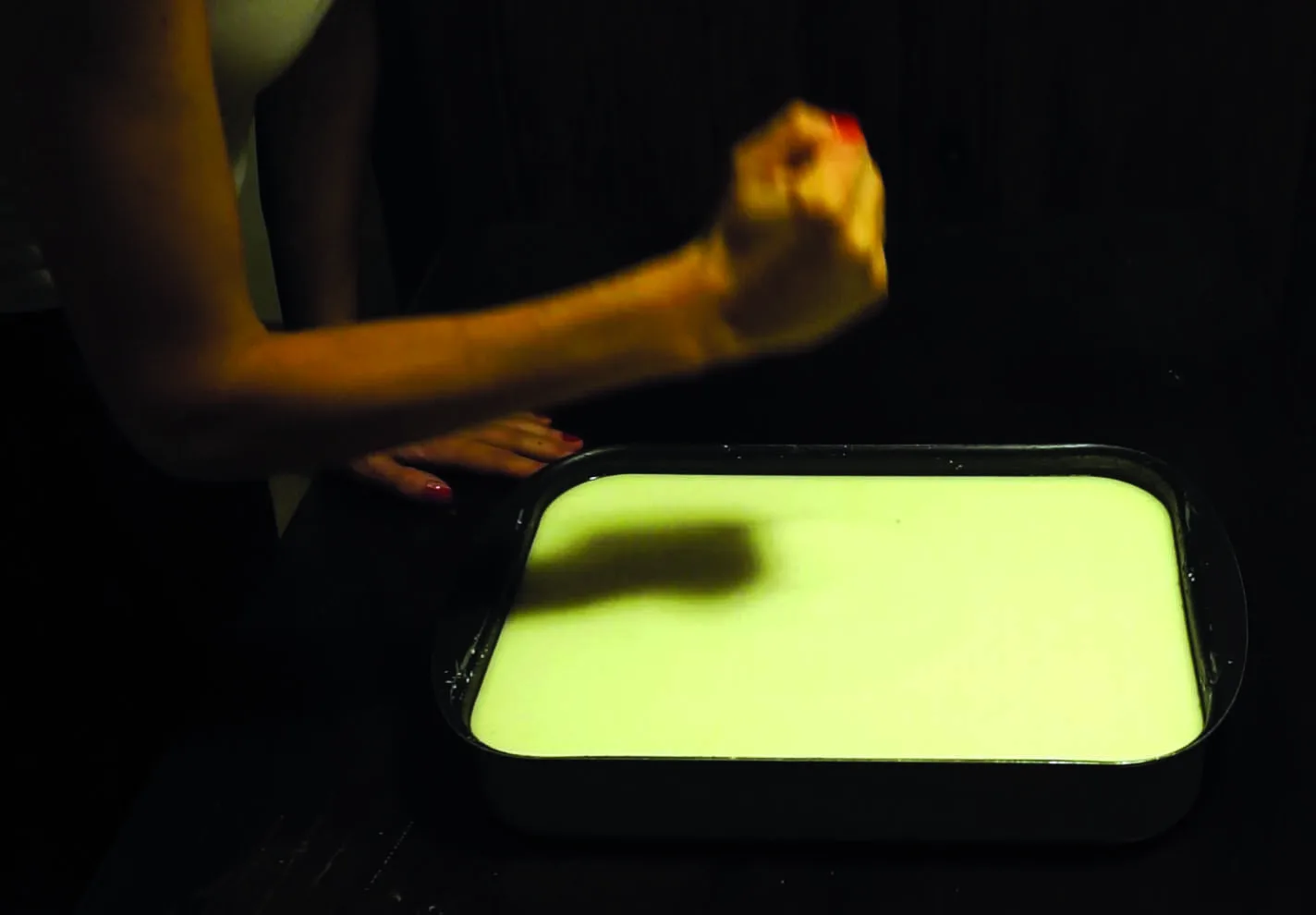
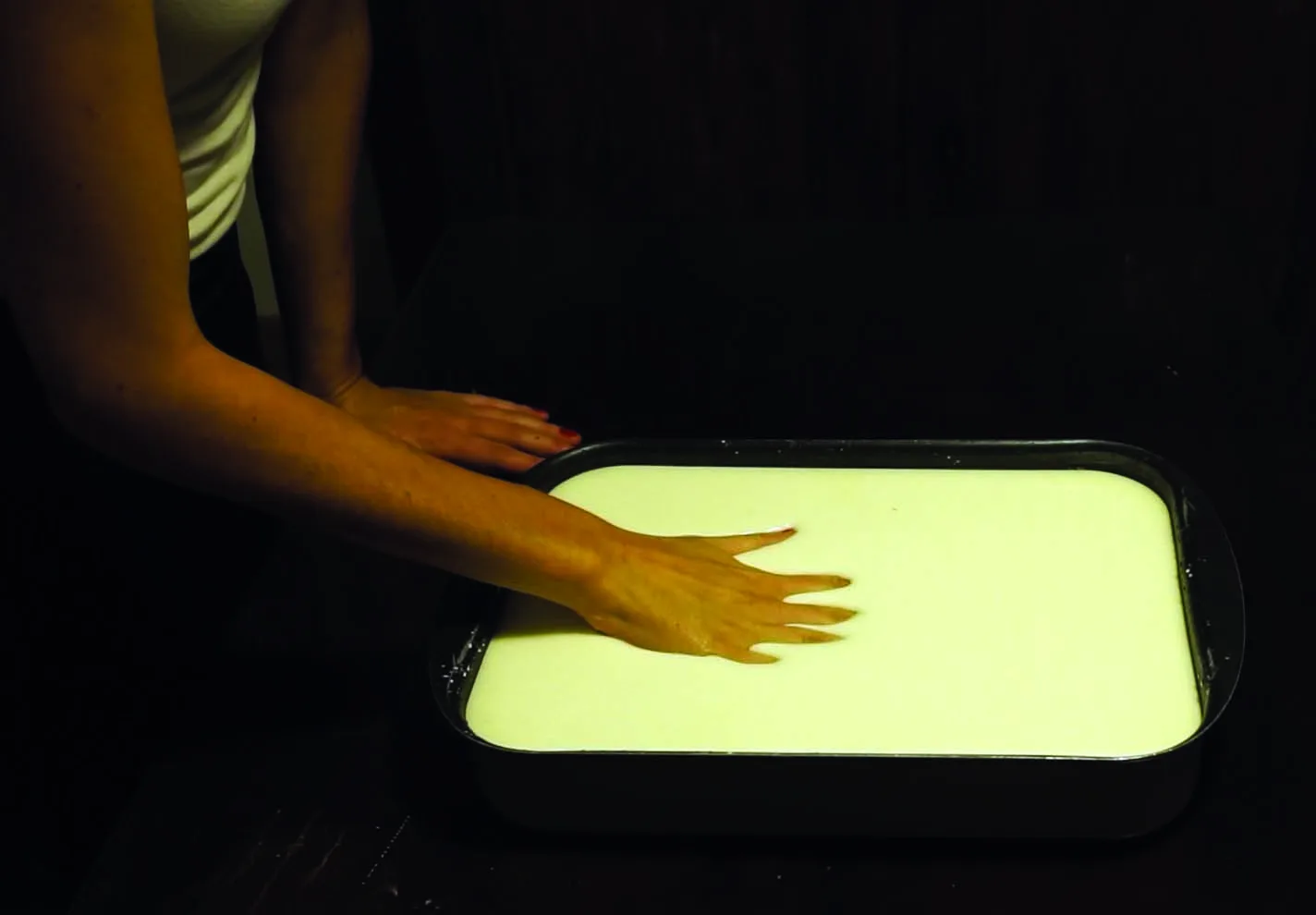
Why can you run on oobleck?
You may have seen videos of people running across a pool of cornflour and water. Adults really can do it. Researchers at the University of Chicago, Scott Waitukaitis and Heinrich Jaeger, published their explanation in Nature on 12 July 2012. They found that a sudden impact creates a solid-like column that grows below the point of impact. They called it impact-activated solidification: a jamming front driven by compression.
They also found that the usual shear-thickening explanations fall far short of the forces needed to support a runner. The solid-like column explains it better. The catch is that it only works while you keep moving. Stand still and you sink.
How to make oobleck (step-by-step)
This is one of the easiest simple experiments to do at home or in class. You need cornflour, water, a bowl, a spoon and, if you like, a few drops of food colouring.
Recipes vary, so treat the amounts as a starting point. Science Buddies suggests about 2 cups of cornflour to 1 cup of water, and the Exploratorium suggests 1 cup of cornflour to ½ cup of water. Both are about two parts cornflour to one part water by volume. The UK Catalyst recipe uses 225 g of cornflour to 230 ml of water, which is roughly equal amounts by mass, stirred to a honey-like consistency.
Work through the checklist below. Your ticks are saved in your browser, so you can come back to it later.
- Cover the table with a tray, an old tablecloth or newspaper.
- Measure the cornflour into a large bowl.
- Add a few drops of food colouring to the water if you want a coloured mixture.
- Pour the water in slowly, a little at a time, while mixing with your hand or a spoon.
- Adjust by feel: add more cornflour if it is too runny, or a little water if it is too powdery.
- Check it is right: it should run when tipped or stirred slowly, but feel firm when you tap it or squeeze it.
- Test it (see the ideas below) and write down what you notice.
- Clear up with the tray or paper first, scraping the leftovers off, and wash your hands and the bowl afterwards.
Things to test
- Poke the surface slowly with a finger, then tap it quickly. What is the difference?
- Squeeze a handful into a ball. What happens when you open your hand?
- Lower a small object into the mixture slowly, then hit the surface with a spoon.
Write the results as a simple table of “slow” against “fast”. Then link them to the idea of shear rate: the faster you shear the mixture, the higher its apparent viscosity.
Non-Newtonian fluids in technology
Engineers have found several uses for the odd behaviour of these fluids. Some are in regular use and some are still at the research stage.
Liquid armour research
Researchers at the University of Delaware and the US Army Research Laboratory (Norman Wagner, Eric Wetzel and colleagues, in the early 2000s) soaked Kevlar fabric in a shear-thickening fluid made of silica nanoparticles in polyethylene glycol. The treated fabric greatly improved resistance to stabs and spike punctures compared with untreated fabric of similar weight, while staying flexible. The same idea underlies research into the silica particles used in these fluids.
This is a research and development technology, not something every police officer or soldier wears. It also is not “oobleck armour”: the protection comes from fabric treated with a specially engineered fluid.
Impact protection and vehicles
Some impact-protection materials are flexible in normal wear but stiffen on strong impact. Some all-wheel-drive viscous couplings use a dilatant fluid that thickens when the wheels slip.
Paints and coatings
Thixotropic paints are easy to brush on, then recover their thickness so they do not drip or sag. This is the same behaviour you met earlier, put to practical use.
Explain why a person can run across a pool of cornflour and water but sinks if they stand still. (3 marks)
A sudden impact creates a solid-like column of jammed particles that grows below the point of impact, so the mixture supports the runner (impact-activated solidification). The column forms only while the force is sudden. If the person stands still, the force is applied slowly, the mixture flows, and they sink.
Non-Newtonian fluids in nature
Lava and magma
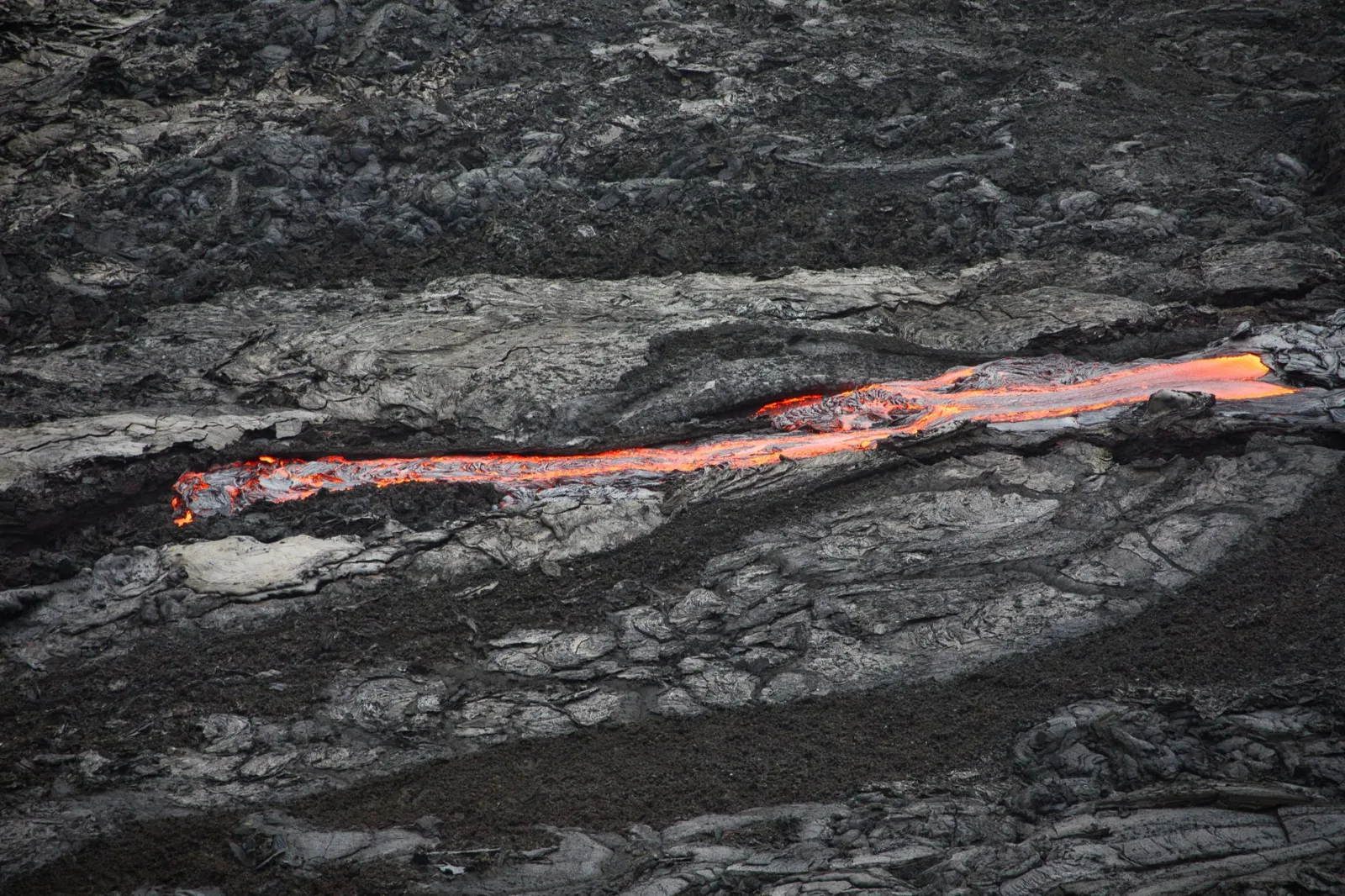
Lava is not a simple liquid. It is a mix of melt, crystals and bubbles, and it can show a yield strength and shear-thinning behaviour. Measurements of lavas from Mount Etna found them to be Newtonian above about 1,120 °C, but thixotropic with a yield strength at lower temperatures. So the same lava can switch from one kind of behaviour to another as it cools.
Quicksand
Quicksand is a mixture of fine sand, clay and salt water. When it is disturbed it liquefies. It has a density of about 2 g/ml, compared with about 1 g/ml for a person, so you cannot be pulled completely under. At most you would sink to about the waist. That finding comes from Daniel Bonn at the University of Amsterdam (Nature, 2005).
If you ever get stuck, the advice is to wriggle your legs slowly to let water work in around them. Pulling someone out hard can injure them. The clay content is one reason soil type matters so much in how a wet ground behaves.
Joints
Synovial fluid, the lubricating fluid in your joints, is sometimes listed as a rheopectic fluid, as you saw earlier, although many biomedical studies describe it as shear-thinning. Blood, as covered above, is shear-thinning.
Myths about non-Newtonian fluids
Plenty of popular “facts” about these fluids are wrong or oversimplified. Here are the ones most worth knowing before an exam or a pub quiz.
Flip cards: Newtonian or not?
Frequently asked questions about non-Newtonian fluids
What is a non-Newtonian fluid?
A non-Newtonian fluid is a fluid that does not follow Newton’s law of viscosity. Its apparent viscosity changes with the shear rate or shear stress and, for some fluids, with time. Ketchup, blood, toothpaste and a mixture of cornflour and water are common examples.
What are the types of non-Newtonian fluids?
The main types are shear-thinning (pseudoplastic), shear-thickening (dilatant), thixotropic and rheopectic fluids. Bingham plastics, which need a yield stress before they flow, and viscoelastic materials such as bouncing putty are also usually included. Thixotropic and rheopectic types depend on time of shearing.
What is the difference between Newtonian and non-Newtonian fluids?
A Newtonian fluid has a constant viscosity at a given temperature, whatever the shear rate, so its graph of shear stress against shear rate is a straight line through the origin. A non-Newtonian fluid’s viscosity changes, so its graph is a curve. Water is Newtonian; ketchup is not.
Is ketchup a non-Newtonian fluid?
Yes. Ketchup is shear-thinning, so it gets runnier when you bang the bottle, and it is thixotropic, so prolonged shaking also helps. It also has a yield stress, which is why it will not flow until it is pushed hard enough.
Is blood a non-Newtonian fluid?
Yes. Blood is shear-thinning. At low shear rates red blood cells stack into piles called rouleaux, which break up as shear increases. At higher shear the cells deform and line up with the flow, so the blood’s viscosity falls.
Is honey a non-Newtonian fluid?
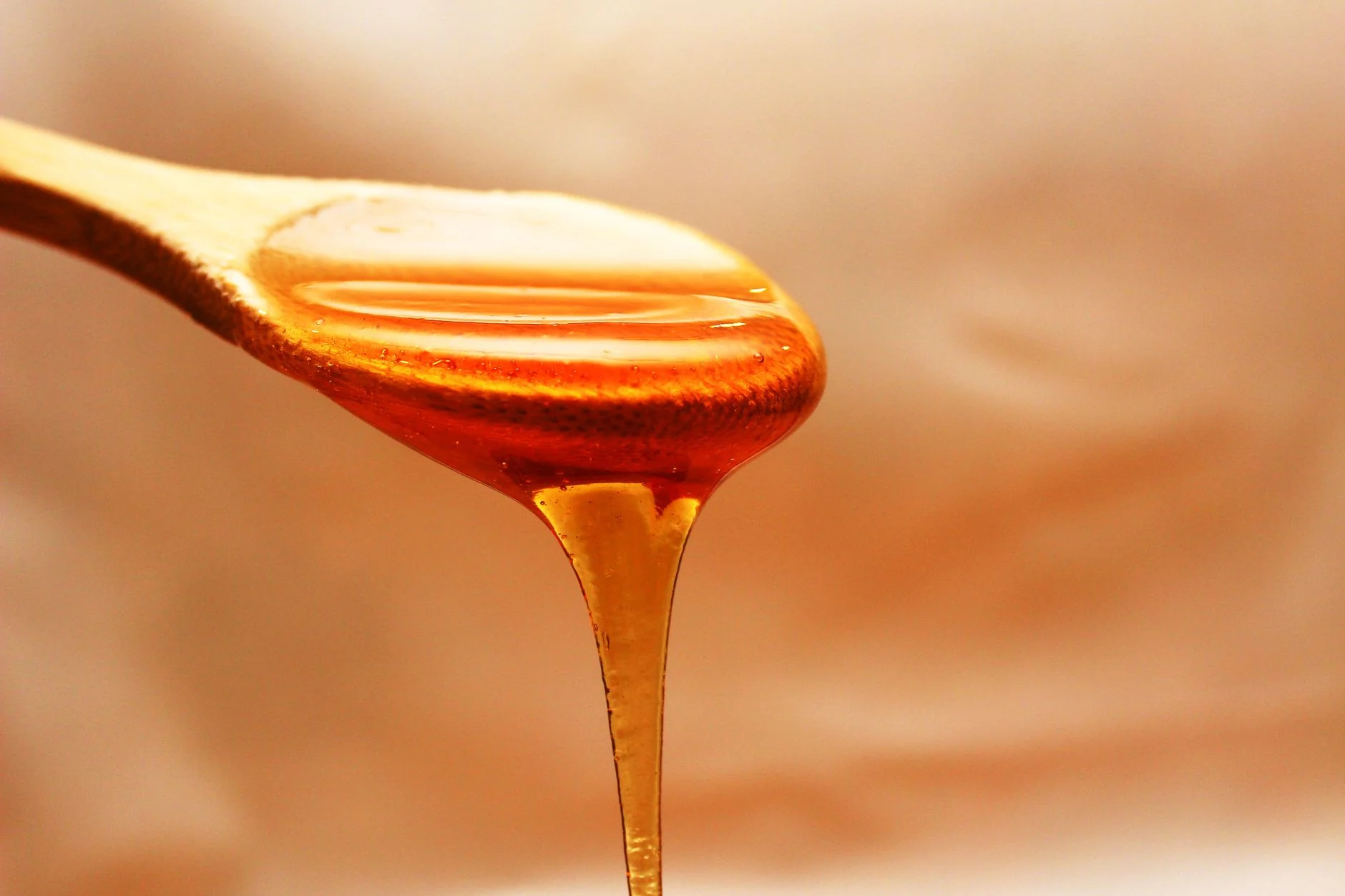
Usually not. Most honeys are Newtonian: thick, but with a viscosity that does not change when stirred. A few types, including heather, New Zealand manuka and buckwheat honeys, are non-Newtonian, showing shear-thinning or thixotropic behaviour. So the answer depends on the type of honey.
Is slime a non-Newtonian fluid?
Yes. Slime is a viscoelastic polymer material. How runny it feels depends on how fast you pull or press it: pull it slowly and it stretches and flows, but tug it sharply and it resists or snaps. That speed-dependent behaviour is typical of non-Newtonian fluids.
How do you make a non-Newtonian fluid at home?
Mix cornflour (cornstarch) and water to make oobleck. A common starting point is about two parts cornflour to one part water by volume. Add the water slowly and mix by hand, then adjust: more cornflour if it is too runny, a little water if it is too powdery.
Can you walk on a non-Newtonian fluid?
You can run across a large pool of cornflour and water, but you must keep moving. A sudden impact creates a solid-like column of jammed particles beneath your foot, which supports you. If you stand still, the force is applied slowly, the mixture flows and you sink.