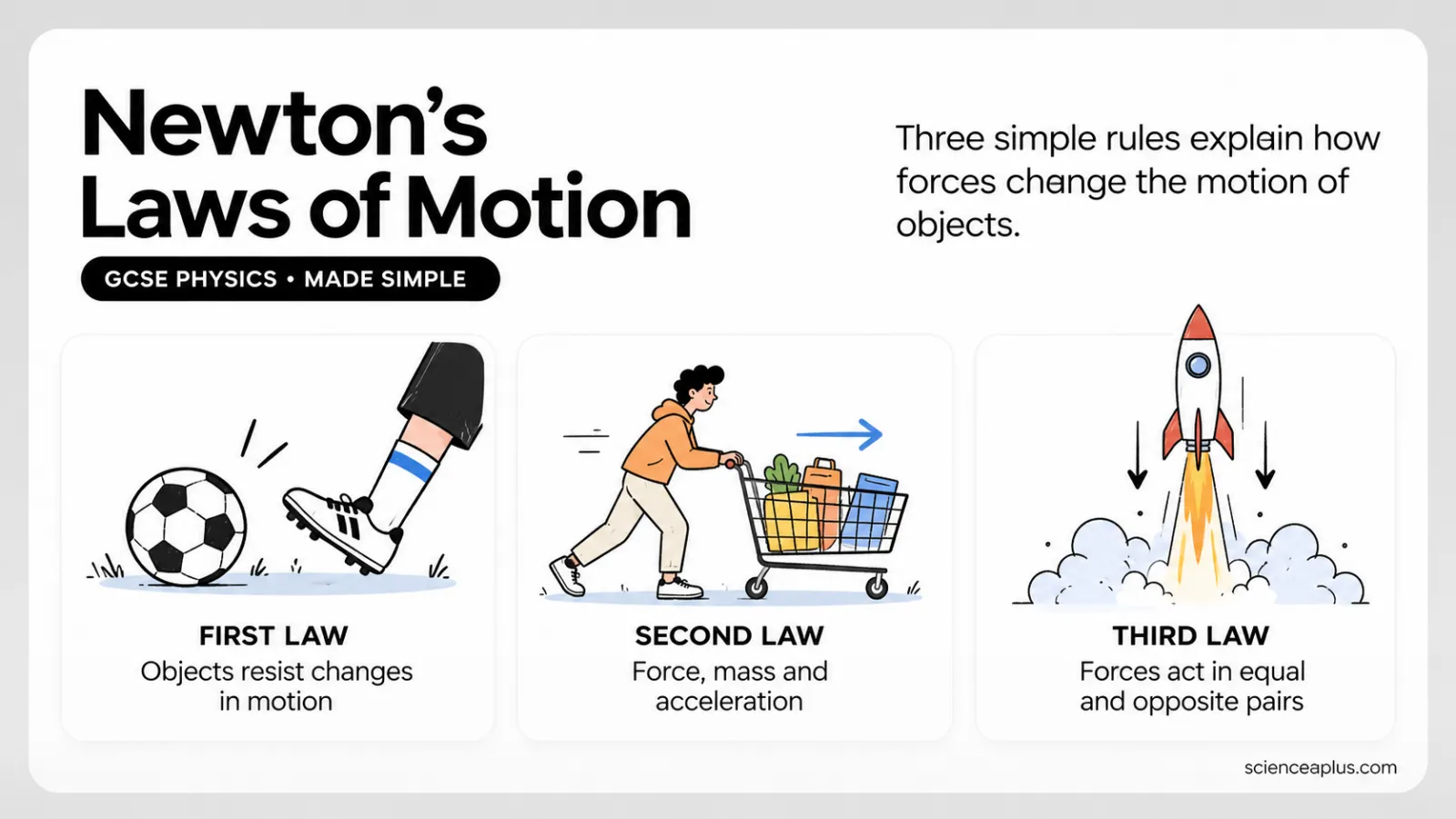
Newton’s laws of motion are three rules that describe how forces change the way objects move. First, an object keeps the same velocity unless a resultant force acts on it. Second, the resultant force equals mass × acceleration (F = ma). Third, when two objects interact, the forces they exert on each other are equal and opposite.
This guide is written for GCSE physics (and Combined Science) students, using the exact exam wording. It has worked examples, a resultant-force calculator, a mass and weight calculator, flip cards and a self-marking quiz, so you can learn each law and then test it.
What are Newton’s three laws of motion?
Here are Newton’s three laws of motion in plain English. Each one gets its own section later in this article, with examples and exam questions.
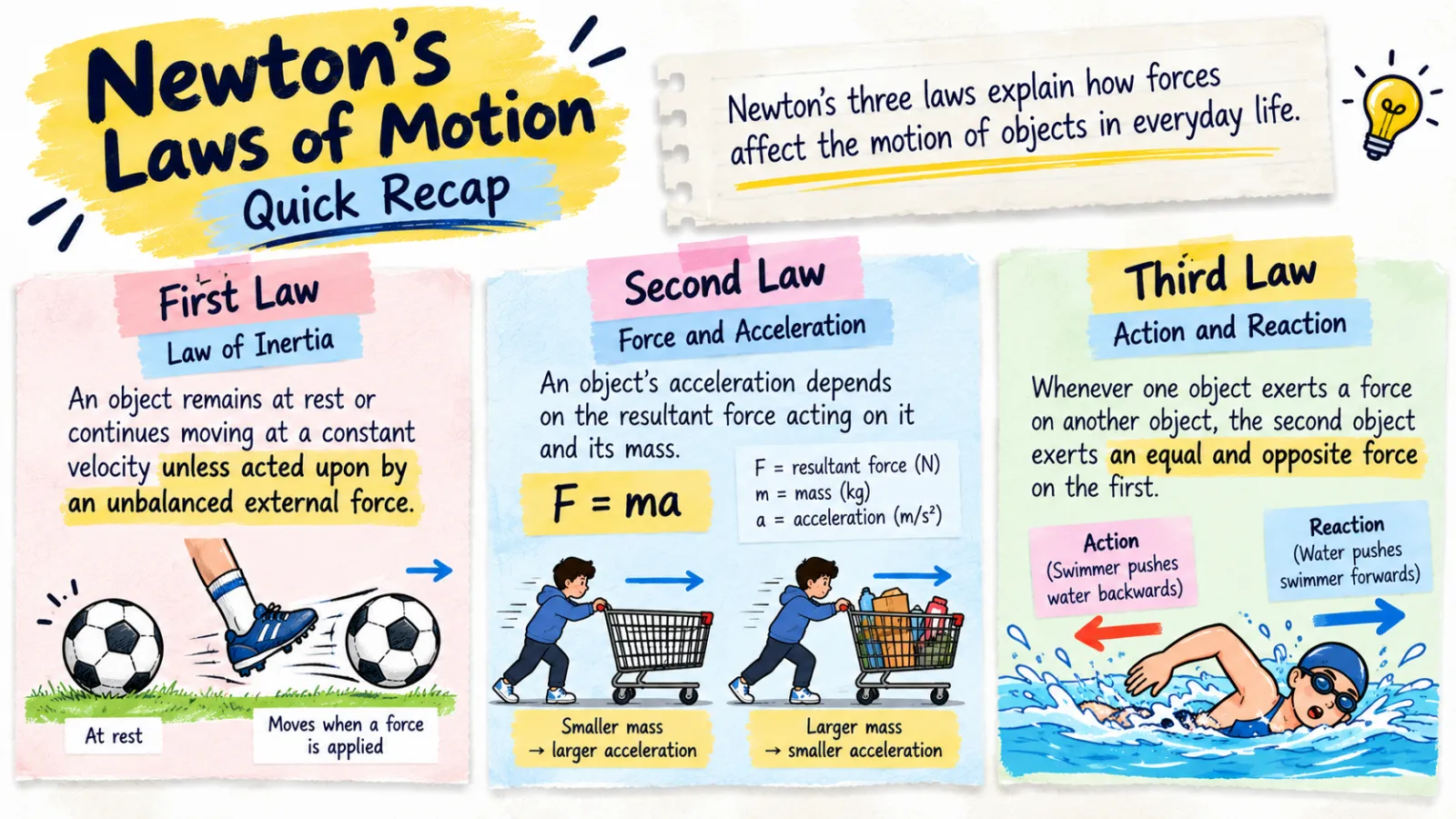
The first law is about objects that have no resultant force on them. If they are still, they stay still. If they are moving, they carry on at the same speed in the same direction. Nothing changes unless an unbalanced force makes it change.
The second law links force, mass and acceleration. The bigger the resultant force, the bigger the acceleration. The bigger the mass, the smaller the acceleration for the same force. In symbols, F = m a.
The third law says forces come in pairs. Whenever two objects interact, the forces they exert on each other are equal and opposite. If you push a wall, the wall pushes you back just as hard.
The table below puts the three laws side by side, using the wording from the AQA GCSE Physics specification (the other exam boards teach the same ideas).
| Law | GCSE wording (short) | Everyday example |
|---|---|---|
| First law (inertia) | Resultant force zero: a stationary object stays stationary; a moving object keeps the same speed and direction | A football rolls on until friction and air resistance slow it; a passenger keeps moving forward when a car brakes |
| Second law | Acceleration is proportional to the resultant force and inversely proportional to the mass; F = m a | A push gives an empty trolley a bigger acceleration than a loaded one |
| Third law | Whenever two objects interact, the forces they exert on each other are equal and opposite | A rocket pushes exhaust gases down and the gases push the rocket up; your foot pushes the ground back and the ground pushes you forwards |
Who was Isaac Newton and where do the laws come from?
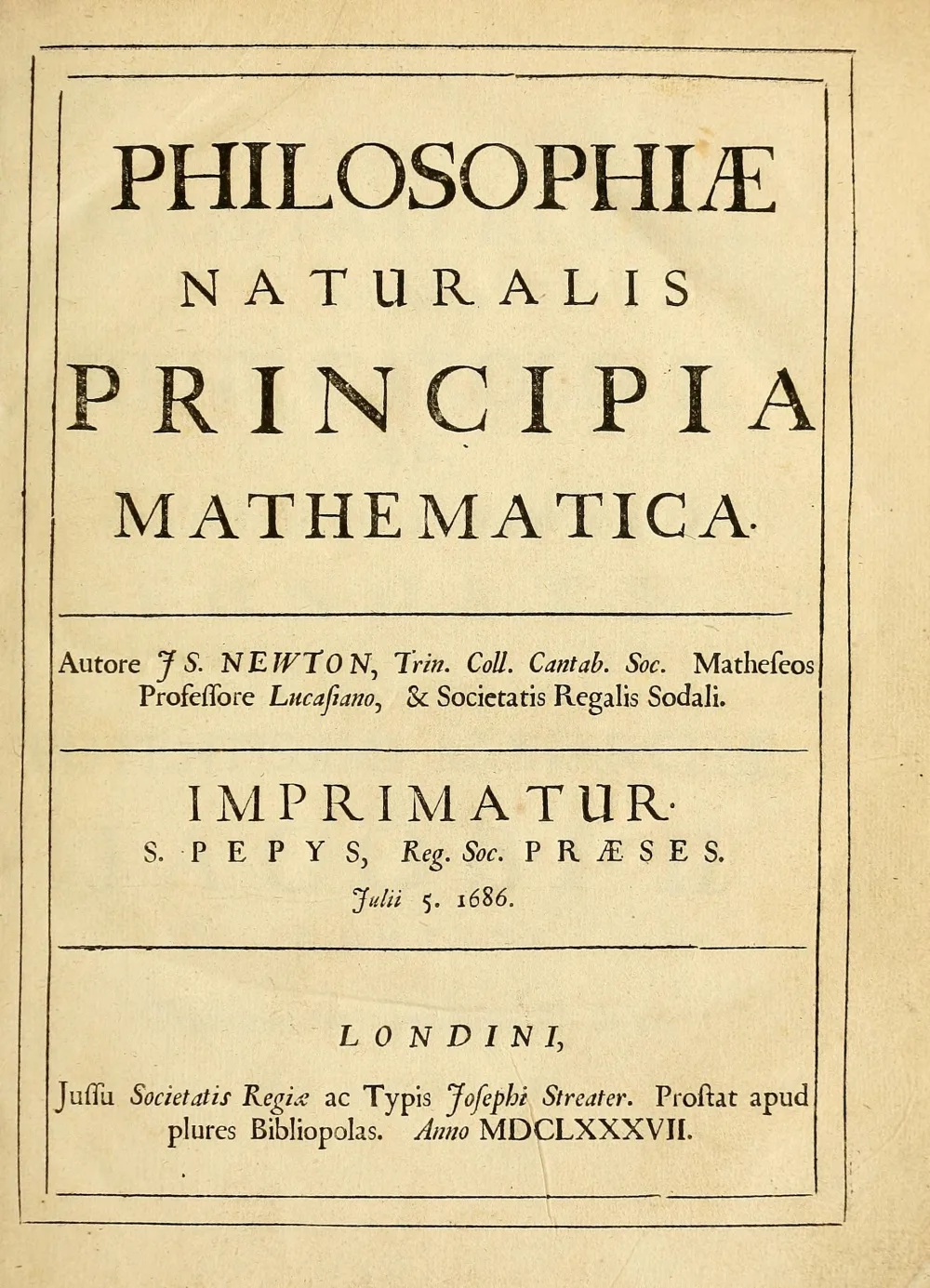
Isaac Newton was born at Woolsthorpe Manor in Lincolnshire in 1642 (4 January 1643 on today’s calendar). He set out the three laws in a Latin book, Philosophiæ Naturalis Principia Mathematica, published in London in 1687. Its title page shows him as Lucasian Professor of Mathematics at Trinity College, Cambridge, and carries the imprimatur of the Royal Society, signed by its President, Samuel Pepys.
The book grew out of a conversation in 1684 between Newton and the astronomer Edmund Halley. The Royal Society agreed to publish it, but it had spent its budget, so Halley paid the printing costs himself.
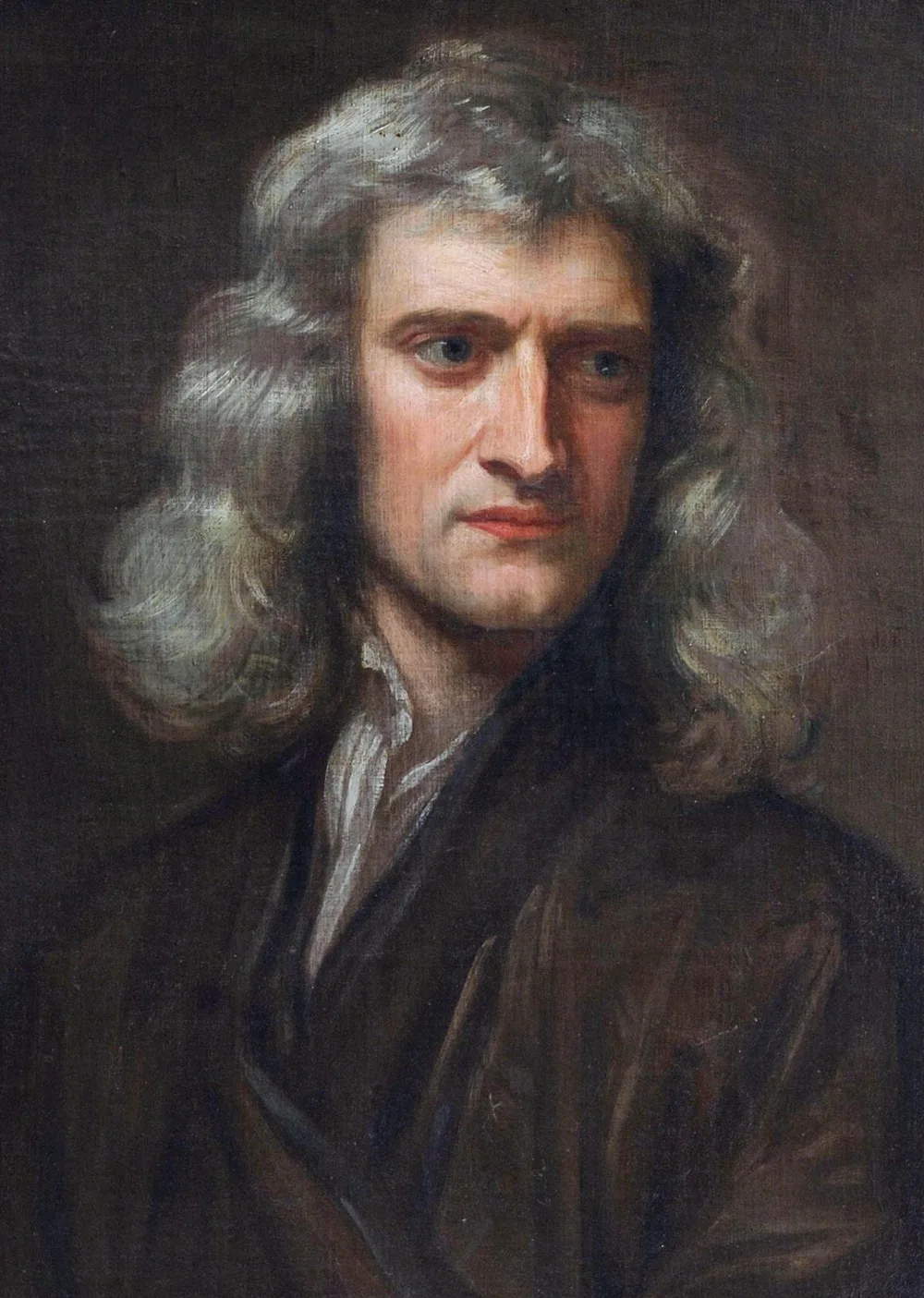
You may have heard that an apple fell on Newton’s head. There is no evidence for that, so we leave it out. What matters is that his three laws still describe motion very well at everyday speeds, from cars to cricket balls. They only need to be replaced by Einstein’s relativity when objects travel close to the speed of light.
Newton’s name also turns up in the science of liquids. If you enjoy unusual physics, see non-Newtonian fluids, which do not flow like ordinary liquids.
Forces first: what is a resultant force?
All three laws are about forces, so let us be clear what a force is. A force is a push or a pull, measured in newtons (N). Some forces need contact, such as friction, air resistance, tension in a rope and the push of a hand. Others act at a distance, such as gravity, magnetism and the force between electric charges.
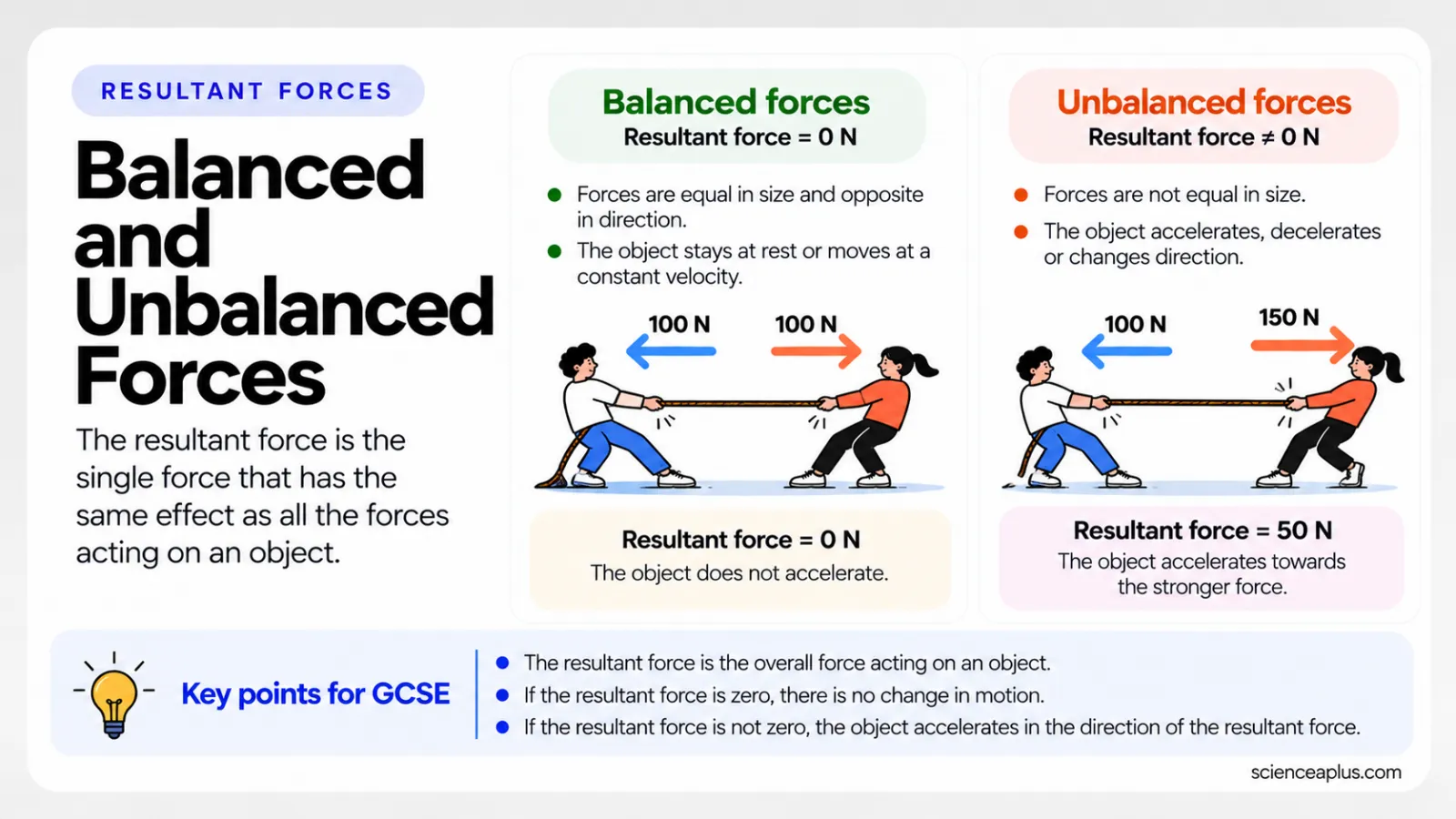
An object usually has several forces acting on it at once. The resultant force is the single force that has the same effect as all of them put together. To find it, add forces that point the same way and subtract forces that point in opposite directions. The sign of the answer tells you which way the resultant points.
Think about physics in everyday life: pushing a door, kicking a ball, braking a bicycle. In every case you can draw the forces as arrows and work out the resultant. That one number decides what happens next.
Balanced forces
Forces are balanced when they cancel out, so the resultant force is 0 N. In a tug of war where both teams pull with 100 N, the rope does not accelerate. Balanced forces mean no change in motion: a still object stays still, and a moving object keeps the same velocity.
Unbalanced forces
Forces are unbalanced when the resultant is not zero. If one team pulls with 150 N and the other with 100 N, the resultant is 150 N − 100 N = 50 N towards the stronger team. The rope accelerates in the direction of the resultant force. “Accelerates” covers speeding up, slowing down and changing direction.
Remember that constant velocity means constant speed and constant direction. A satellite or the Moon moving in a circle at steady speed is still accelerating, because its direction keeps changing. So it must have a resultant force acting on it.
With resultant force sorted, we can look at each law in turn, starting with the one that is most often misunderstood: the first.
Newton’s first law: the law of inertia
Newton’s first law is the simplest of the three to state and the easiest to get wrong. In the words of the AQA specification: if the resultant force acting on an object is zero, and the object is stationary, it remains stationary. If the object is moving, it continues to move at the same speed and in the same direction.
In other words, a resultant force of 0 N means no change in velocity. Velocity includes direction, so “the same speed and direction” is just another way of saying “constant velocity”. Both halves of the sentence matter. Marks are often lost by writing only “it keeps moving” and forgetting that a stationary object stays at rest too.
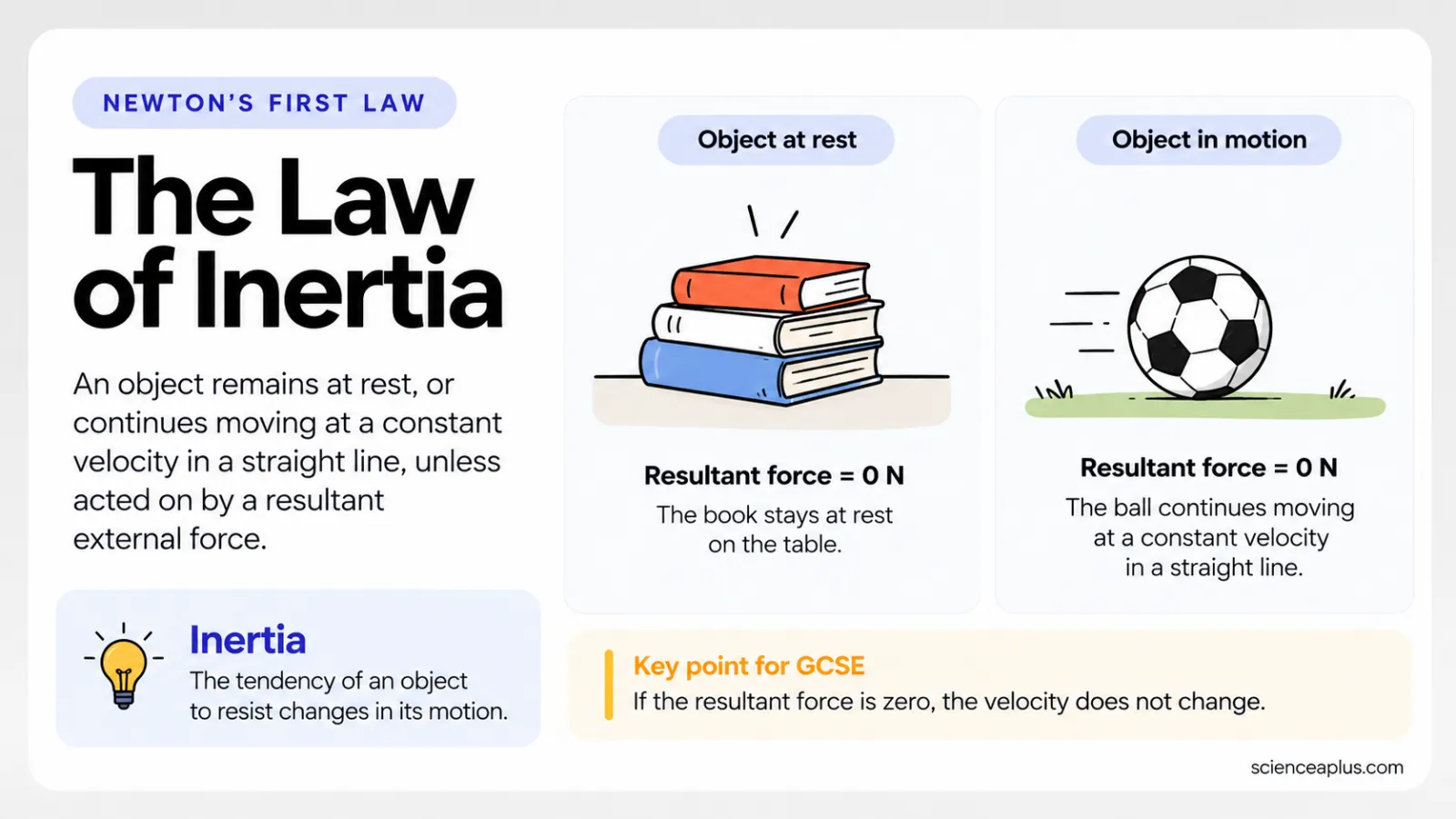
The books in the picture are at rest because the downward pull of gravity is balanced by the upward push of the table. The football is rolling at a steady velocity because no unbalanced force acts on it. Both have a resultant force of 0 N, so neither changes its motion.
What is inertia?
On the Higher tier you also need the idea of inertia. The specification puts it this way: “The tendency of objects to continue in their state of rest or of uniform motion is called inertia.” Newton’s first law is often called the law of inertia for this reason.
Inertia is not a force. It is a property that every object has. A heavy object is harder to get moving, and harder to stop, than a light one. We put a number on that idea with inertial mass, which you will meet in the section on the second law below.
Why moving things seem to “want” to stop
Everyday experience seems to contradict the first law. Roll a ball across the playground and it slows down and stops. Stop pedalling a bicycle and you gradually come to a halt. Surely moving things need a push to keep going?
They do not. The ball and the bicycle stop because of forces you cannot easily see: friction between surfaces and air resistance. These are unbalanced forces acting against the motion, so there is a resultant force, and the object decelerates. Take them away and the object would carry on.

Ice shows the idea beautifully. A curling stone has a mass of no more than 19.96 kg under the rules of the sport, yet once released it glides a long way at almost steady velocity. Ice has very low friction, so the resultant force is tiny. Friction is still there, which is why the stone does eventually stop, and why players sweep in front of it.
The same thinking explains why carrom players dust the board with fine powder. Less friction means a struck disc slides further before it stops. To explore how this force works, read our friction physics lesson.
Friction is not always your enemy, of course. It is what lets your shoes grip the pavement and your brakes slow a car. But it can also waste energy as heat, which is why engineers work hard to reduce it in machines. Our article on the disadvantages of friction covers wear, heat and noise.

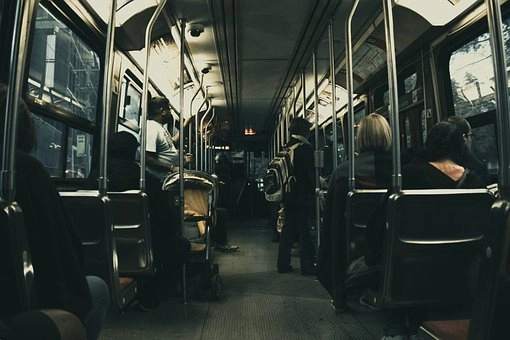
Newton’s first law examples in everyday life
Once you know the rule, you will spot the first law everywhere that something keeps moving after the push has stopped. Here are three of the most common examples, and a way to describe each one correctly in an exam.
Standing on a braking bus
When a bus brakes, your feet are slowed by friction with the floor. Nothing slows your upper body as quickly as your feet, so it tends to keep moving forward at the bus’s original velocity. It feels as if you are being pushed forwards, but no forward force acts on you at all. Your body is simply carrying on while the bus slows beneath you, which is why you grab the handrail.
When the bus pulls away
The reverse happens when the bus accelerates. The floor speeds up your feet, but your upper body tends to stay where it was, so you lurch backwards. Again, it is the tendency to keep the existing motion, not a backwards force.
Why we wear seat belts
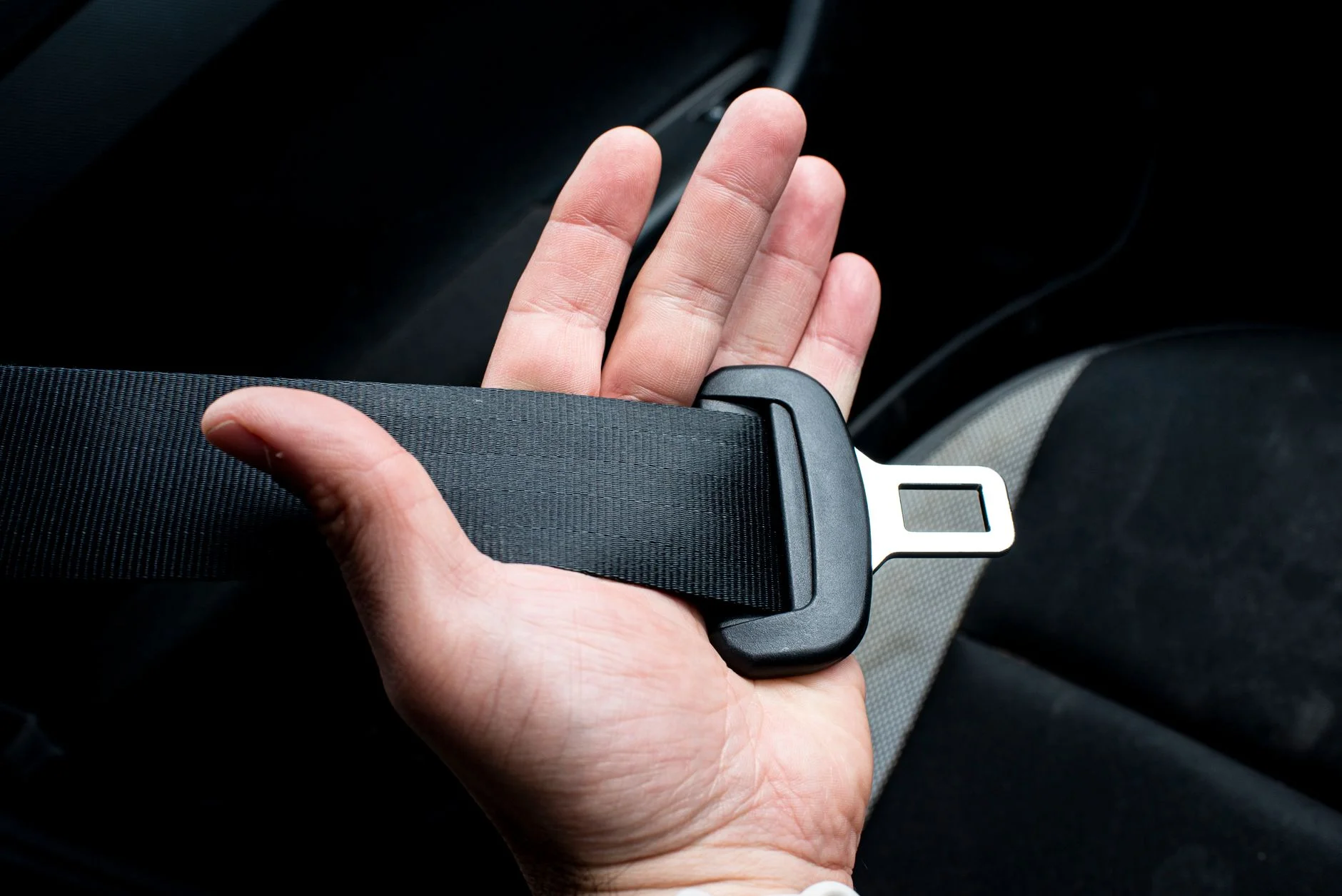
A car crash is the same idea with much higher stakes. When a car stops suddenly, everything inside it tends to keep moving forward at the car’s previous velocity. A seat belt provides the force that slows your body down along with the car, spreading it across the strong parts of your body instead of letting you hit the dashboard or windscreen.
The UK government’s THINK! campaign says that in a crash you are twice as likely to die if you do not wear a seat belt. Wearing a front-seat belt became compulsory in the UK on 31 January 1983. Today the on-the-spot fine is £100 for anyone aged 14 or over, and it can reach £500 if the case goes to court.
Quick tricks that show the law
Pull a smooth tablecloth away quickly and light objects on it may stay almost where they were, because there is too little time for friction to give them a big push. Flick a card out from under a coin on a glass and the coin drops straight down. In both cases the object keeps its state of rest while the support moves away.
Try two exam questions
A car travels at a steady 30 m/s on a straight motorway. The driving force is 2,000 N. What is the total resistive force? Explain your answer. (2 marks)
The resistive force is 2,000 N. The car moves at constant velocity, so the resultant force is 0 N. That means the driving force and the resistive forces are balanced.
Explain, using Newton’s first law, why a passenger without a seat belt moves forwards when a car brakes suddenly. (3 marks)
The car slows down because of the braking force. No resultant force (or not enough of one) acts on the passenger’s body, so it continues to move at the original velocity. The passenger therefore keeps moving forward until something, such as the dashboard or windscreen, exerts a force on them.
If you can answer those two, you have the first law. Next comes the law that lets us calculate exactly how much an object speeds up: the second.
Newton’s second law: F = ma
The first law tells us what happens when the resultant force is zero. The second law tells us what happens when it is not. The AQA wording is: “The acceleration of an object is proportional to the resultant force acting on the object, and inversely proportional to the mass of the object.”
That sentence has two halves. Double the resultant force and the acceleration doubles. Double the mass and, for the same force, the acceleration halves. Put them together and you get the most important equation in GCSE forces:
resultant force (N) = mass (kg) × acceleration (m/s²) → F = m a
Force is measured in newtons (N), mass in kilograms (kg) and acceleration in metres per second squared (m/s²). One newton is the force that gives a mass of 1 kg an acceleration of 1 m/s², so 1 N = 1 kg m/s². Newton himself framed his second law in terms of the change of motion (what we now call momentum), which for a constant mass reduces to F = m a, but for a constant mass it reduces to the F = m a you use at GCSE.
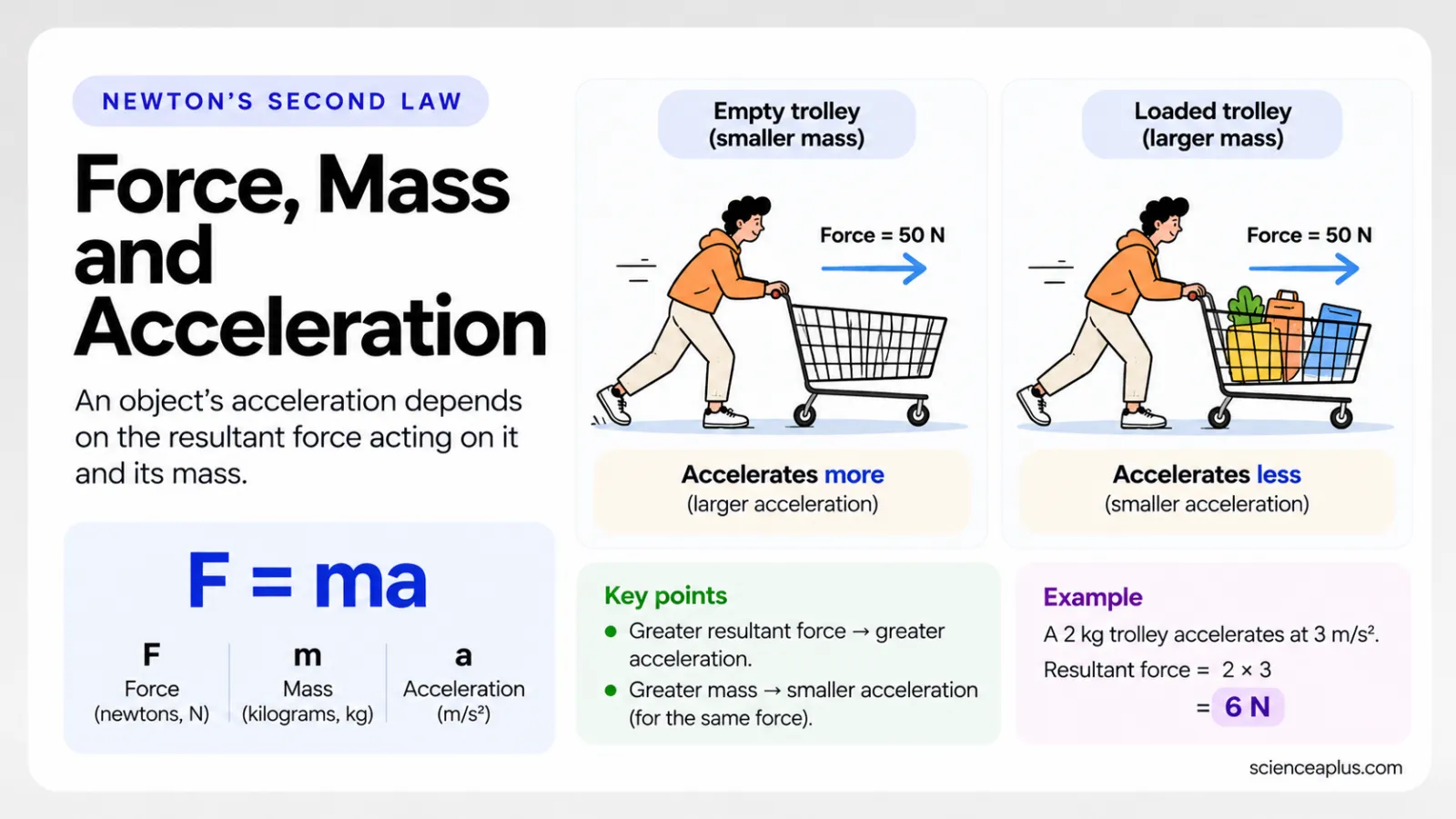
The trolley picture shows the idea. The same 50 N push is applied to an empty trolley and a loaded one. The empty trolley has less mass, so it accelerates more. In the example on the card, a 2 kg object with an acceleration of 3 m/s² needs a resultant force of 2 × 3 = 6 N.
Rearranging F = ma
Exam questions rarely ask for force every time. You may need to find acceleration or mass, so learn all three forms:
- Force: F = m × a
- Acceleration: a = F ÷ m
- Mass: m = F ÷ a
If you like a formula triangle, put F at the top and m and a side by side at the bottom. Cover the quantity you want and read off what is left. Always start from the equation in words, then substitute.
F = ma worked examples
Work through these step by step. The method is the same each time: write the equation, rearrange if needed, substitute with units, then state the answer with its unit.
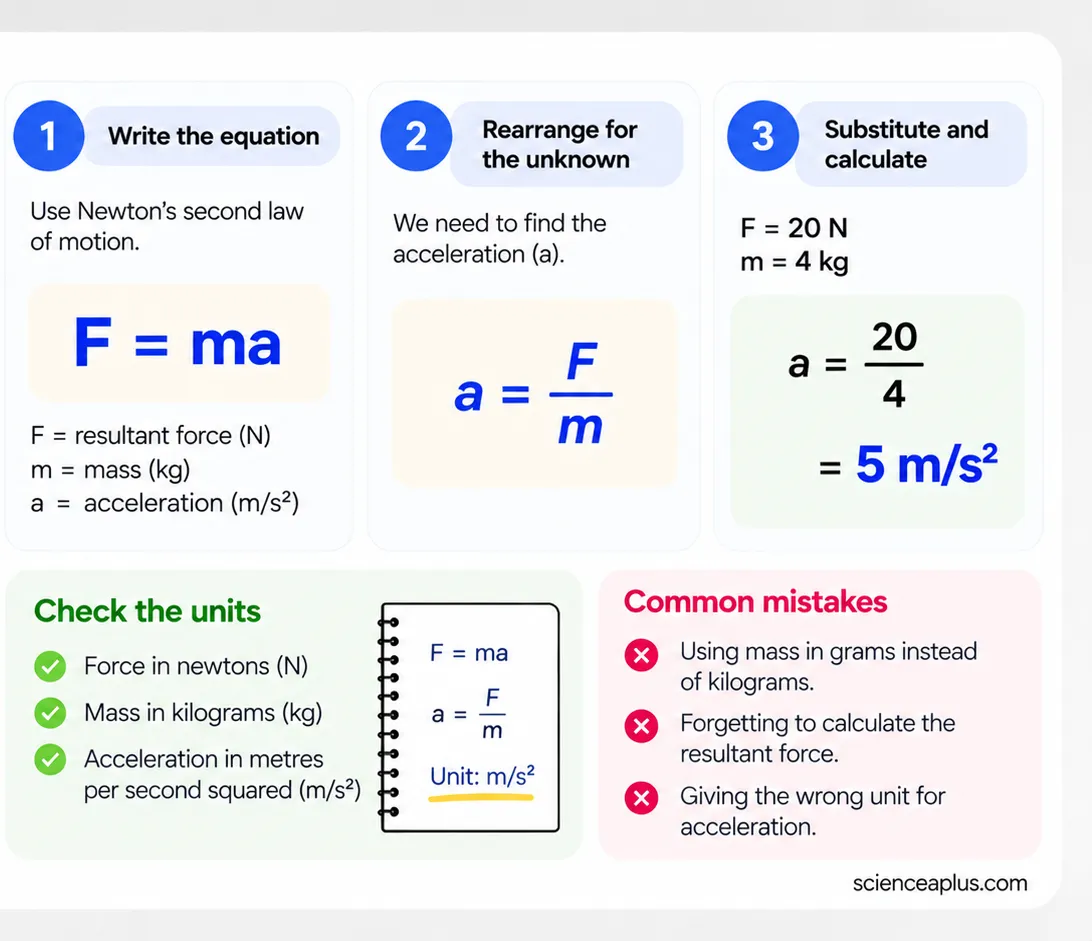
Example 1: a resultant force of 20 N acts on a 4 kg trolley. Find its acceleration.
- Write the equation: F = m a
- Rearrange: a = F ÷ m
- Substitute: a = 20 N ÷ 4 kg = 5 m/s²
Example 2: a 10 N push acts on a 50 kg trolley. Find its acceleration. Using a = F ÷ m, we get 10 ÷ 50 = 0.2 m/s². A heavy trolley accelerates slowly for a small push, which is exactly what the second law predicts.
Example 3: a car of mass 1,000 kg has a driving force of 2,000 N and resistive forces of 500 N. Find its acceleration. The forces are not balanced, so find the resultant first: 2,000 N − 500 N = 1,500 N. Then a = 1,500 ÷ 1,000 = 1.5 m/s². After 5 seconds of that acceleration, the car’s velocity has increased by 1.5 × 5 = 7.5 m/s, which is about 27 km/h.
Electric cars follow the same rule. A heavier battery car needs a bigger resultant force to accelerate as quickly as a lighter one, which is one reason designers care so much about mass. Our article on the physics of electric cars shows more of this in action.
Now try the numbers yourself. Change the driving force, the resistive force, the mass and the time, and watch the acceleration. Try making the two forces equal, and you will see the first law appear: a resultant force of 0 N gives no acceleration. Then make the resistive force bigger than the driving force and the car slows down.
Inertial mass (Higher tier)
On the Higher tier, mass appears in a new light. The specification describes inertial mass as “a measure of how difficult it is to change the velocity of an object”, defined as the ratio of force over acceleration:
inertial mass = force ÷ acceleration → m = F ÷ a
A larger inertial mass means a smaller acceleration for the same force. For example, if a force of 600 N gives an object an acceleration of 2 m/s², its inertial mass is 600 ÷ 2 = 300 kg. This links straight back to inertia: a high-inertia object is hard to start, hard to stop and hard to turn.
Mass vs weight: W = mg
Everyday speech uses “weight” to mean “how heavy something is”, usually in kilograms. Physics is stricter. Mass is the amount of matter in an object, measured in kilograms, and it does not change with location. Weight is the force acting on an object due to gravity, measured in newtons.
weight (N) = mass (kg) × gravitational field strength (N/kg) → W = m g
In AQA exams the value of g is always given; the usual figure is 9.8 N/kg on Earth. The two quantities are easy to mix up, so here is the comparison in one place.
| Mass | Weight | |
|---|---|---|
| What it is | The amount of matter in an object | The force of gravity acting on the object |
| Unit | Kilogram (kg) | Newton (N) |
| Measured with | A balance | A newtonmeter (spring balance) |
| Changes with location? | No | Yes, because g changes |
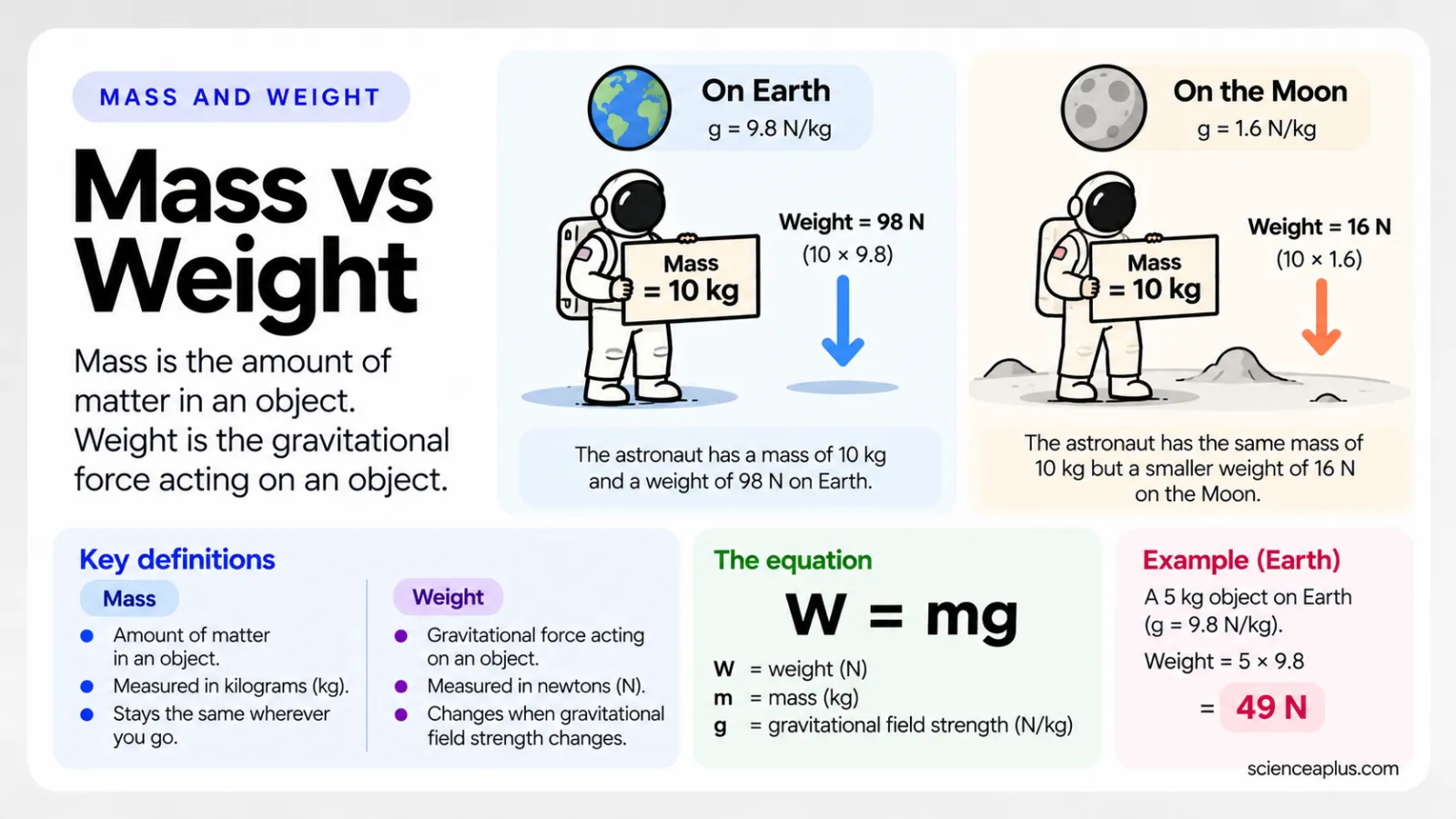
The card shows a 10 kg astronaut. On Earth, with g = 9.8 N/kg, the weight is 10 × 9.8 = 98 N. On the Moon, where gravity is about one-sixth as strong and g is roughly 1.6 N/kg, the weight is 10 × 1.6 = 16 N. The mass is still 10 kg in both places. A 60 kg student would weigh 60 × 9.8 = 588 N on Earth and about 96 N on the Moon.
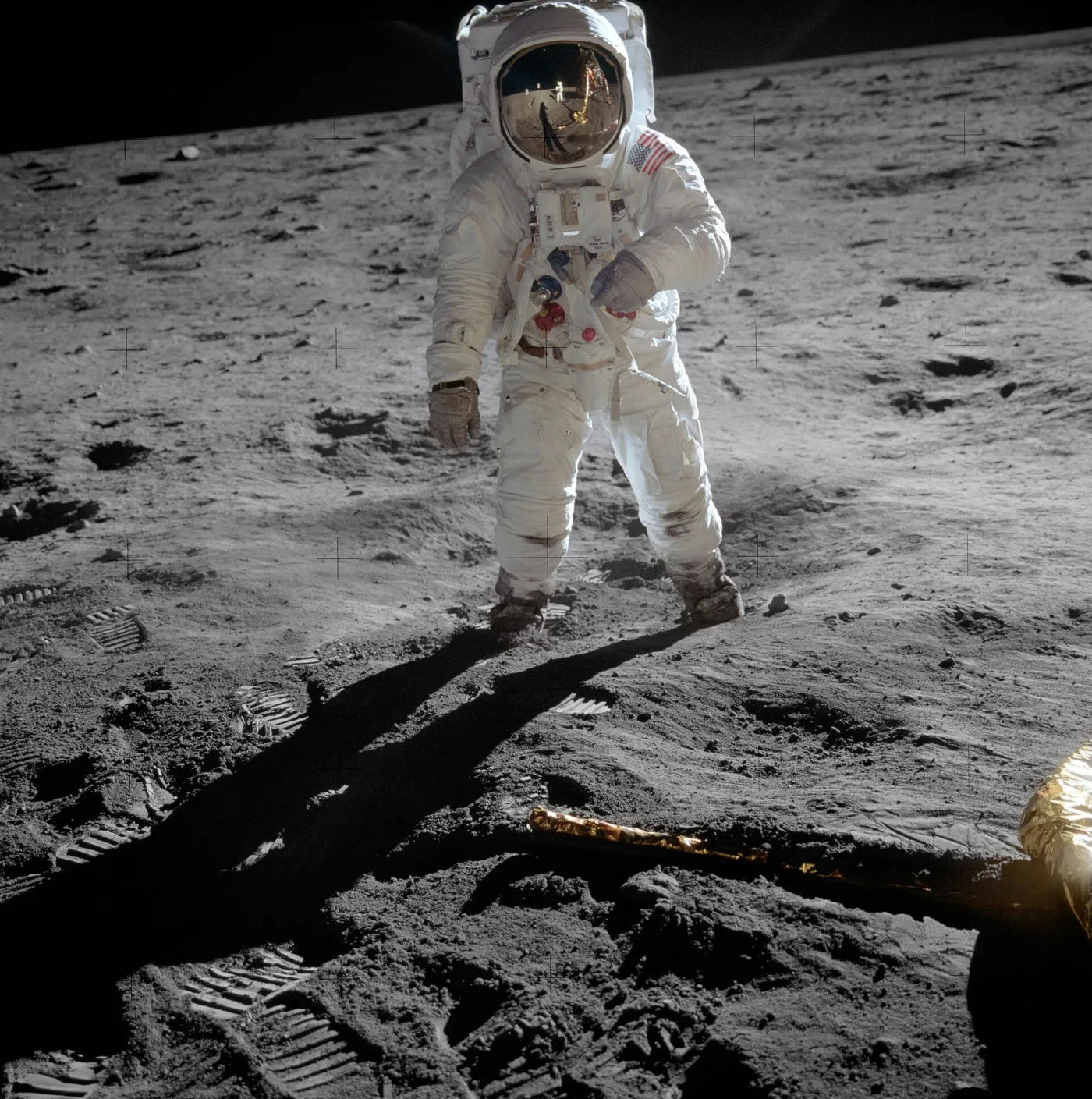
That is why the Apollo astronauts could bounce across the surface in heavy spacesuits. Their mass was unchanged, but the Moon pulled on them with only about one-sixth of the force. NASA gives the Moon’s surface gravity as 1.62 m/s², compared with 9.80 m/s² on Earth. You can compare how different worlds hold on to their surroundings in our article on the atmosphere of the Earth, Moon and Titan, and see more size-and-strength contrasts in common comparisons in physics.
Use the calculator below to find your own weight on other worlds. Your mass stays the same wherever you go; only the number of newtons changes. Remember that exam questions usually give g = 9.8 N/kg, so your answers may differ very slightly.
A 1,200 kg car accelerates at 2.5 m/s². Calculate the resultant force. (2 marks)
F = m a = 1,200 × 2.5 = 3,000 N.
The first two laws deal with a single object. The third law looks at what happens between two objects.
Newton’s third law: action and reaction
The third law is the one most people can quote and few can apply. The specification says: “Whenever two objects interact, the forces they exert on each other are equal and opposite.” You will often see it written as “every action has an equal and opposite reaction”. The word “reaction” is slightly misleading, because the two forces appear at exactly the same moment.
For a pair of forces to count as a third-law pair, all four of these must be true:
- They act on two different objects.
- They are the same type of force (both gravity, both contact, both magnetic and so on).
- They are equal in size.
- They act in opposite directions.
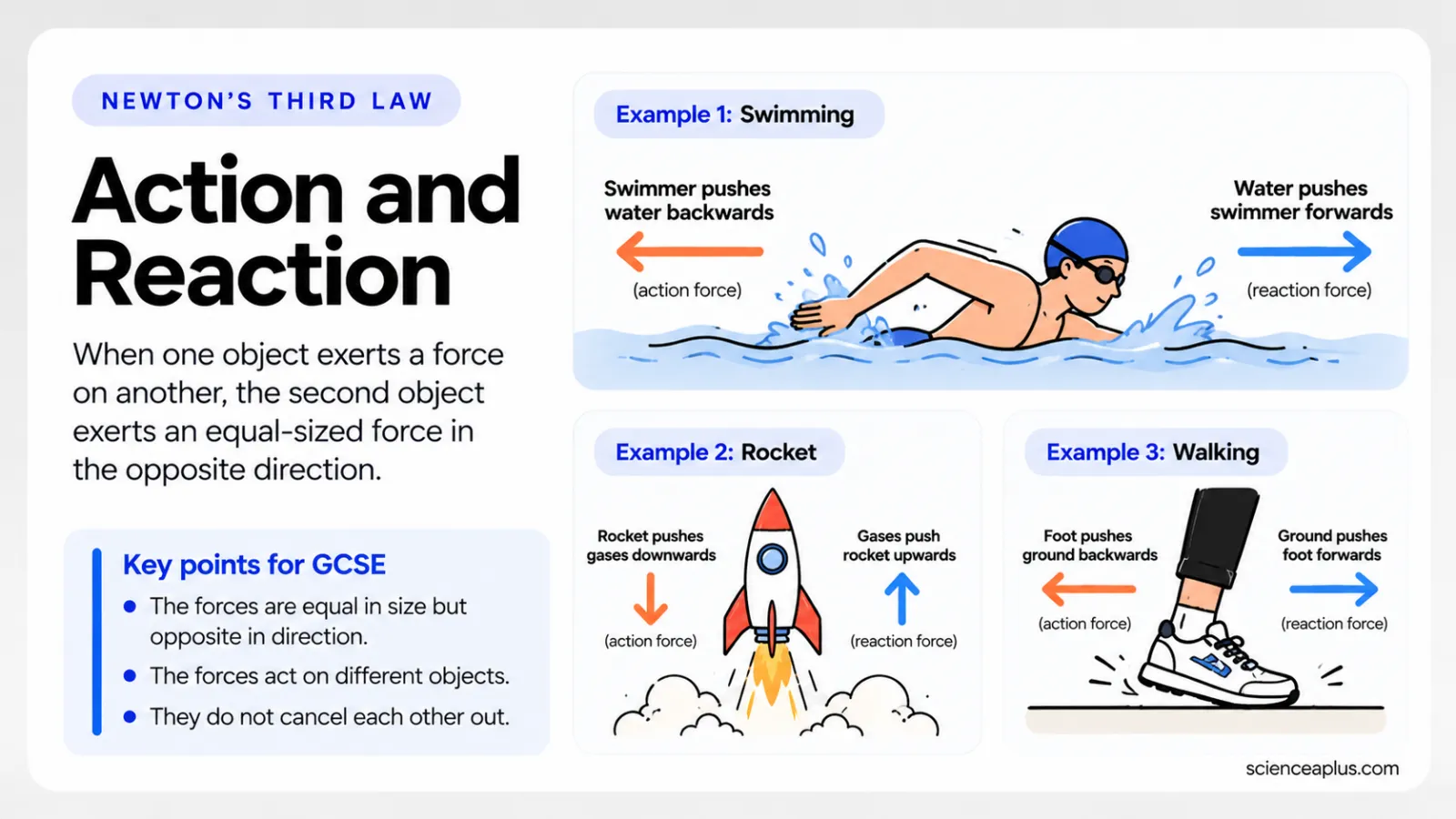
When you lean on a wall, you push the wall and the wall pushes you, both with contact forces of the same size. When the Earth pulls an apple down, the apple pulls the Earth up with an equal gravitational force. We notice the apple moving and not the Earth because the Earth’s mass is enormous, so by the second law its acceleration is tiny.
Newton’s third law examples
Walking
When you walk, your foot pushes backwards on the ground. By the third law, the ground pushes your foot forwards. That forward force, which comes from friction, is what moves you along. On very slippery ice the ground cannot push back, and walking becomes difficult.
Swimming and rowing
A swimmer pushes the water backwards with their hands and arms, and the water pushes the swimmer forwards. A rower does the same thing with an oar: the oar pushes the water back, and the water pushes the oar, and the boat, forwards.
How do rockets work in space?

A common question is how a rocket can push against nothing in space. It does not need to. The engine pushes hot exhaust gases out backwards, and the gases push the rocket in the opposite direction. The two forces act on different objects, the gas and the rocket, so the third law applies.
NASA points out that rockets actually work better in space than in air, because the exhaust gases escape freely. To lift off from the ground, the thrust has to be bigger than the rocket’s weight, so there is a resultant force upwards. Read more about spacecraft in our guide to rockets, telescopes, satellites and the International Space Station.
Pushing off a wall on a skateboard
Stand on a skateboard and push against a wall. You push the wall forwards; the wall pushes you backwards with an equal force, and you roll away. The wall does not move because it is fixed to the Earth, but the force on you is real, and with little friction in the wheels you accelerate according to the second law.
The classic exam trap: third-law pairs vs balanced forces
Here is the mistake that costs the most marks. A book rests on a table. Two forces act on the book: its weight, downwards, and the contact force of the table, upwards. They are equal and opposite, so students call them a third-law pair. They are not.
Both forces act on the same object, the book, so they are simply balanced forces. That is the first law at work: the resultant force is 0 N, so the book stays at rest. The true third-law partner of the book’s weight is the book pulling the Earth upwards.
| Balanced forces (first law) | Third-law pair | |
|---|---|---|
| Objects involved | One object, with two or more forces on it | Two different objects, one force on each |
| Same type of force? | Not necessarily (weight and a contact force) | Always the same type |
| Do they cancel? | Yes, resultant force is 0 N | No, they act on different objects |
Flip cards: which law is it?
Tap each card to check which law explains the situation. Say your answer out loud before you flip it.
Frequently asked questions about Newton’s laws of motion
What are Newton’s three laws of motion?
The first law says that with a resultant force of zero, a stationary object stays still and a moving object keeps its velocity. The second law says that resultant force equals mass times acceleration (F = ma). The third law says that when two objects interact, the forces they exert on each other are equal and opposite.
What is Newton’s first law in simple terms?
Things keep doing what they are already doing unless a resultant force changes it. A still object stays still, and a moving object keeps the same speed in the same direction. Everyday objects slow down only because friction and air resistance act against them. Remove those unbalanced forces and the motion would continue unchanged.
What is inertia?
Inertia is the tendency of objects to continue in their state of rest or of uniform motion. It is not a force. Objects with more mass have more inertia, so they are harder to start moving, stop or turn. Newton’s first law is often called the law of inertia.
What does F = ma mean?
F = ma means the resultant force on an object equals its mass multiplied by its acceleration. Force is in newtons, mass in kilograms and acceleration in metres per second squared. A bigger force gives a bigger acceleration, while a bigger mass gives a smaller acceleration for the same force.
What is the unit of force?
The unit of force is the newton, symbol N. One newton is the force that gives a mass of 1 kg an acceleration of 1 m/s², so 1 N = 1 kg m/s². It is named after Isaac Newton. You measure forces in newtons with a newtonmeter, also called a spring balance.
What is the difference between mass and weight?
Mass is the amount of matter in an object, measured in kilograms, and it stays the same everywhere. Weight is the force of gravity acting on that mass, measured in newtons, and it changes with the gravitational field strength. Weight is calculated with W = mg, so a 10 kg object weighs less on the Moon.
Why don’t action and reaction forces cancel out?
Action and reaction forces act on two different objects, so they cannot cancel. Forces only cancel when they act on the same object. When you push a wall, one force acts on the wall and the other acts on you. Each object’s motion depends on the resultant force acting on that object alone.
How do rockets move in space if there is no air?
A rocket does not push against air. Its engine pushes hot exhaust gases out backwards, and by Newton’s third law the gases push the rocket forwards with an equal force. NASA notes that rockets actually work better in space than in air because the exhaust gases escape freely.
Why do you lurch forward when a bus brakes?
Your feet are slowed by friction with the floor, but nothing slows your upper body as quickly, so it tends to keep moving forward at the bus’s earlier velocity. This is Newton’s first law. No forward force acts on you; you are carrying on as the bus slows beneath you, which is why you should hold the rail.
When did Newton publish his laws of motion?
Newton set out his three laws in the Latin book Philosophiæ Naturalis Principia Mathematica, published in London in 1687. The book grew from a 1684 conversation with Edmund Halley, who paid for the printing. The Royal Society published it, and its President, Samuel Pepys, signed the imprimatur.