The anaconda in the rainforest is the heaviest snake on Earth, a muscular, mostly aquatic hunter that spends its life in the swamps, flooded forests and slow rivers of South America. It is also one of the most exaggerated animals in popular culture. Films and old travellers' tales give it lengths of 10 metres or more, yet the measured record is much smaller, and the true story is more interesting than the myth.
This guide covers the four anaconda species, a 2024 proposal to split the green anaconda, verified size records, how anacondas hunt and eat, where they live, how they give birth, how they differ from pythons and boas, and what threatens them. You will also find a quiz, flip cards and a spotter checklist. If you like animal lists, our animals that start with A page includes the anaconda alongside many other creatures.
What is an anaconda?
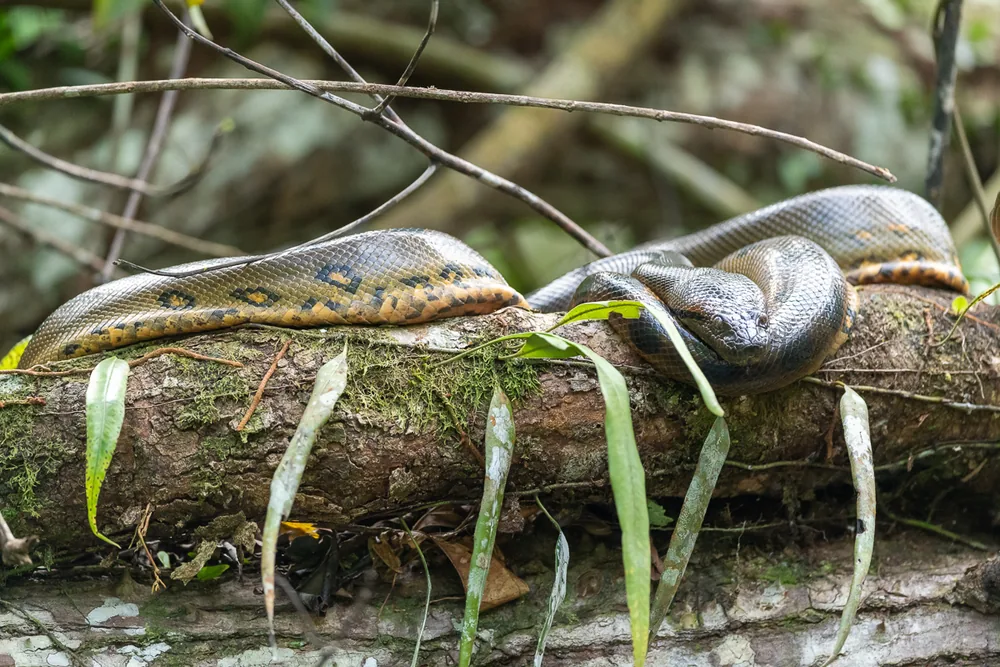
Anacondas are large, non-venomous constrictor snakes in the genus Eunectes. They belong to the boa family (Boidae), not the python family, so an anaconda is a kind of boa. All of them live east of the Andes in tropical South America, in or beside water.
They share a body plan built for life in wetlands. The eyes and nostrils sit high on the head, so the snake can breathe and watch for prey while almost all of its body stays hidden underwater. The body is thick and muscular, and females are far bigger than males. They are most active at night.
The four anaconda species
For years, scientists recognised four species. They differ in size, range and habitat, and the green anaconda is by far the best studied.
| Species | Common name | Where it lives | Size notes |
|---|---|---|---|
| Eunectes murinus | Green anaconda | Amazon and Orinoco basins and other lowlands east of the Andes, from Trinidad south to northern Paraguay | Largest species: females average about 4.6 m, males about 3 m |
| Eunectes notaeus | Yellow anaconda | Paraguay River drainage, including the Pantanal, into northern Argentina | Average about 3.7 m, females reported up to 4.6 m |
| Eunectes deschauenseei | Dark-spotted anaconda | Northern Brazil (Pará and Amapá) and French Guiana | Smaller: adult females up to about 2.3 m, measured nose to vent |
| Eunectes beniensis | Bolivian anaconda | Beni region of northern Bolivia | Often quoted at 3.3–4.4 m, but figures are poorly documented |
Green anaconda: the heavyweight
The green anaconda is the species people mean when they talk about the giant snake of the Amazon. It lives in swamps, marshes, lagoons and slow rivers across the Amazon and Orinoco basins, and in seasonally flooded savannas. Its olive-green skin is marked with dark, rounded blotches that break up its outline in muddy water and shaded vegetation.
Yellow anaconda: the southern specialist
The yellow anaconda is smaller and lives further south, mostly in the Paraguay River drainage. It feeds on apple snails, fish, birds, reptiles and mammals, and large females can take animals as big as a capybara.
Dark-spotted and Bolivian anacondas: the little-known pair
of French Guiana and northern Brazil, and its savanna habitat is under pressure from farming. The Bolivian anaconda is known from a small area of northern Bolivia and is the least studied of the four.
Is there a second green anaconda? The 2024 proposal
In 2024, a team that included Jesús Rivas and Bryan Fry published a paper in the journal Diversity that proposed a new species: the northern green anaconda, Eunectes akayima. They based it on DNA from snakes in the Ecuadorian Amazon (Waorani territory), reporting a difference of about 5.5 per cent from the southern green anaconda and a split roughly 10 million years ago. The authors place the northern species from Ecuador across the Orinoco region to French Guiana.
The same paper proposed merging the dark-spotted and Bolivian anacondas into the yellow anaconda, which would leave three recognised species rather than four.
The proposal is debated. Later critiques in the journal Bionomina (Vásquez-Restrepo and colleagues, and Dubois and colleagues) argued that the evidence is not strong enough and that akayima should be treated as the same species as E. murinus. The IUCN has not yet assessed the northern green anaconda as a separate species, according to Britannica, so most references still list one green anaconda.
Why do scientists argue over whether a snake is one species or two? (2 marks)
Species are defined using several kinds of evidence, such as DNA, body shape and where animals live. Different teams can weigh that evidence differently, so a split that one group proposes may be rejected by another until more data are collected.
In this article, "green anaconda" means the animal described in the long-established scientific literature, and we flag where the northern species might matter.
How big is an anaconda? Verified size records
Size is where anaconda facts go wrong most often. The honest answer depends on what you count: length, weight or girth, and whether the animal was measured alive by a scientist or estimated by a witness.
What has actually been measured
- Typical adults: mature green anaconda females reach about 5 m, with a mean of roughly 4.6 m. Males average only about 3 m. Typical adult weights are reported as 30–80 kg.
- Longest and heaviest in Rivas's own dataset of more than 900 wild snakes: a female measured by anaconda researcher Jesús Rivas was 5.21 m long and weighed 97.5 kg.
- Upper length limit: the maximum is generally given as about 6.3 m. In the 2024 northern green anaconda work, one measured female was 6.3 m.
- Captive record: a female at the Pittsburgh Zoo measured 6.27 m.
Longest versus heaviest
The anaconda is the world's heaviest snake, but it is not the longest. That title belongs to the reticulated python of South and Southeast Asia, which has been scientifically measured at 6.95 m and was 59 kg after almost three months without food. A captive reticulated python called Medusa was reported at 7.67 m and is recognised by Guinness World Records as the longest snake in captivity. Because captive snakes are often overweight, their weights tell us less about wild animals.
| Claim | Verdict |
|---|---|
| "Anacondas grow to 11–12 m" | Unsupported: no specimen, skin or skeleton exists |
| "The anaconda is the longest snake" | No: the reticulated python is longer |
| "The anaconda is the heaviest snake" | Yes: weight and bulk are where it leads |
| "A 5.21 m, 97.5 kg anaconda is the biggest verified" | Yes: the longest and heaviest verified measurement (Rivas) |
| "A 6.3 m northern green anaconda was measured" | Reported in 2024, from one animal; larger claims (about 7.5 m, 500 kg) were stories, not measurements |
Why do the same snake's weight figures differ so much between sources? (2 marks)
A snake's mass changes with sex, age, whether it has recently eaten and whether it is pregnant, and only a handful of wild individuals have ever been weighed. Females are many times heavier than males, so a single average weight hides a huge gap between the sexes, so a single "average weight" hides a huge gap between the sexes.
Where anacondas live: rainforest, wetlands and floodplains
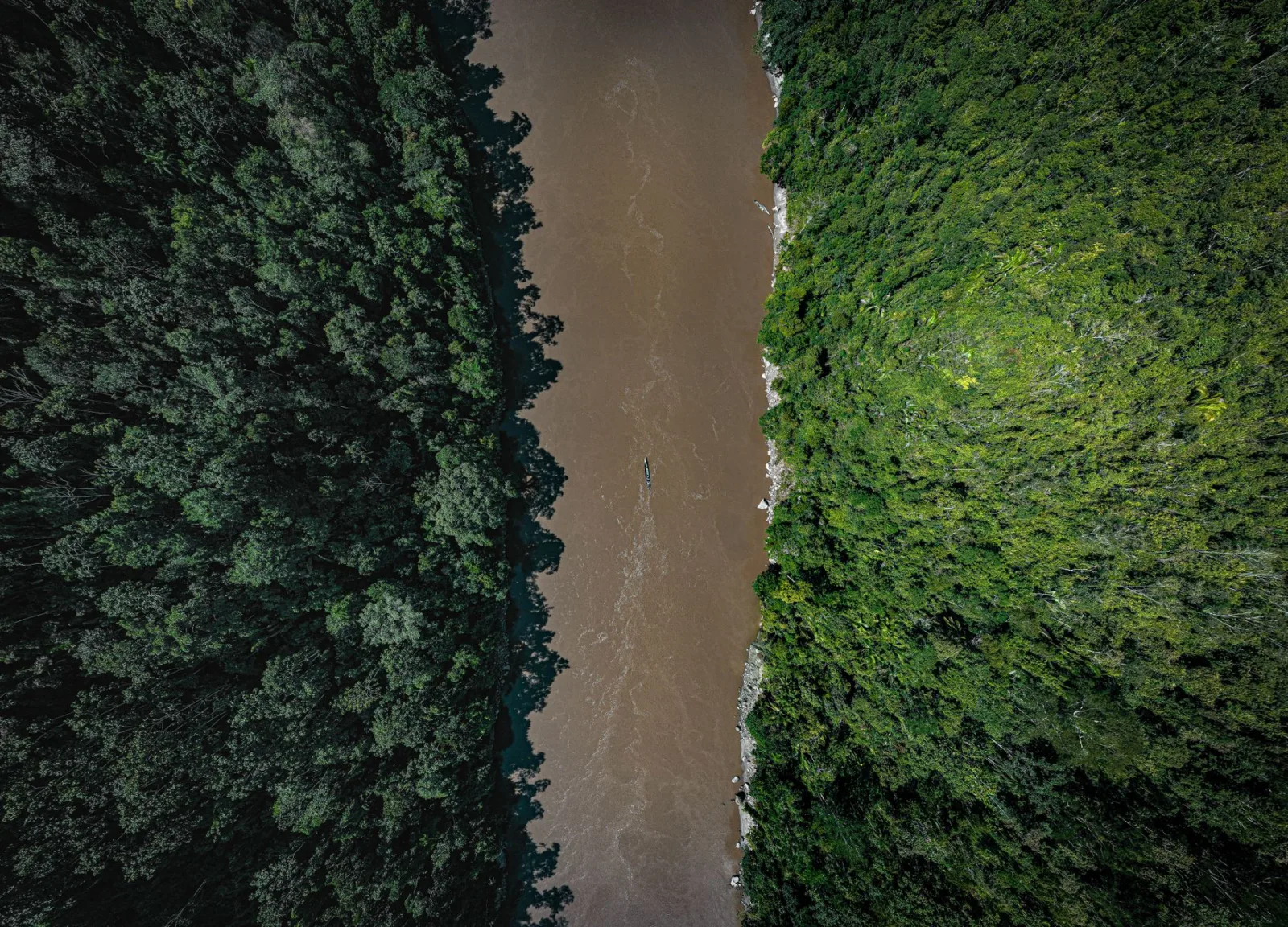
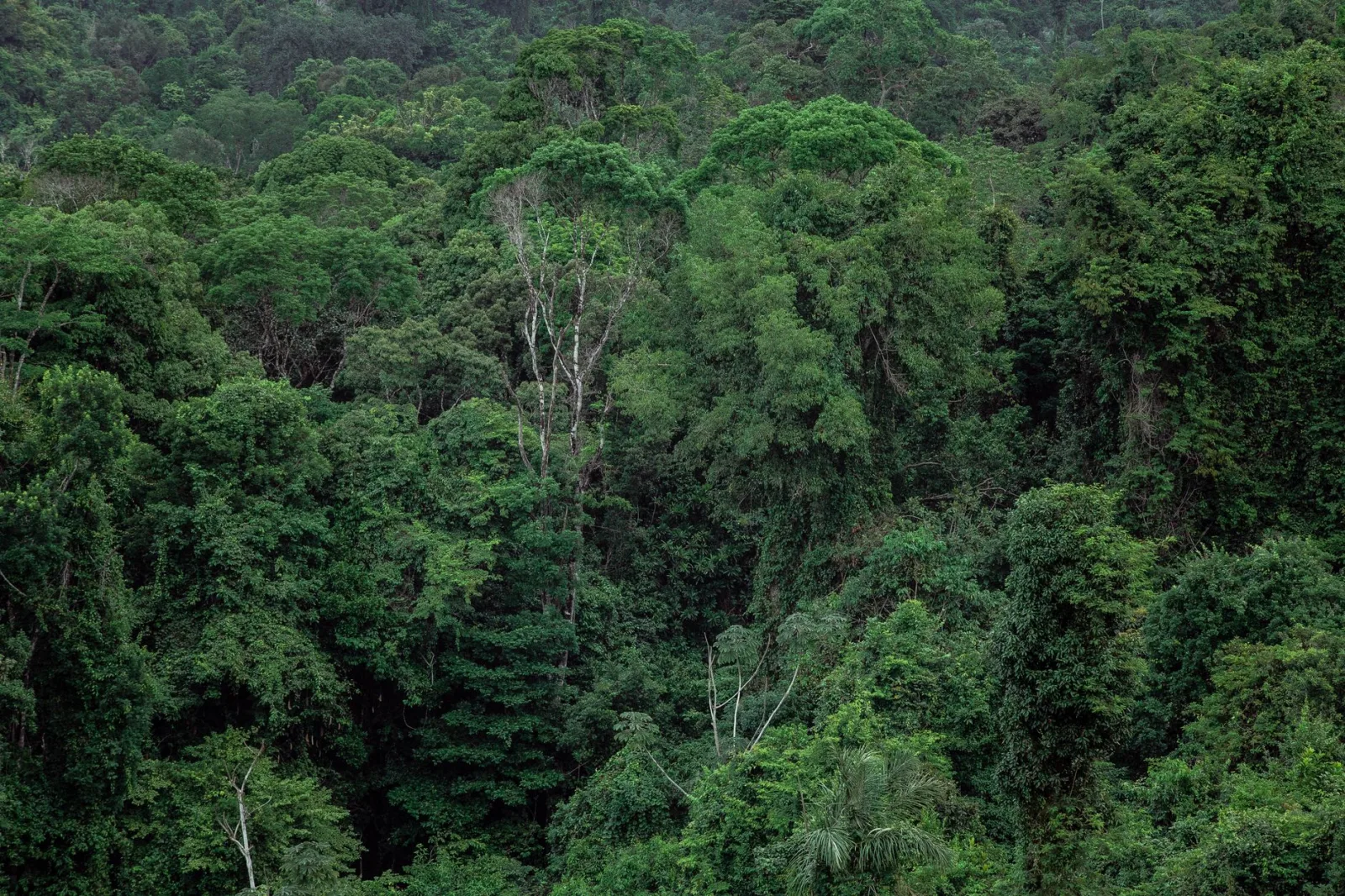
Anacondas are found in South America east of the Andes. The green anaconda ranges from Trinidad south to northern Paraguay, living in swamps, marshes, lagoons and slow-moving rivers in the Amazon and Orinoco basins. It also uses seasonally flooded savannas. So "anaconda in the rainforest" is true, but the snake is really a water's-edge specialist rather than a tree-dweller: it favours the flooded forest and muddy shallows where land and river meet.
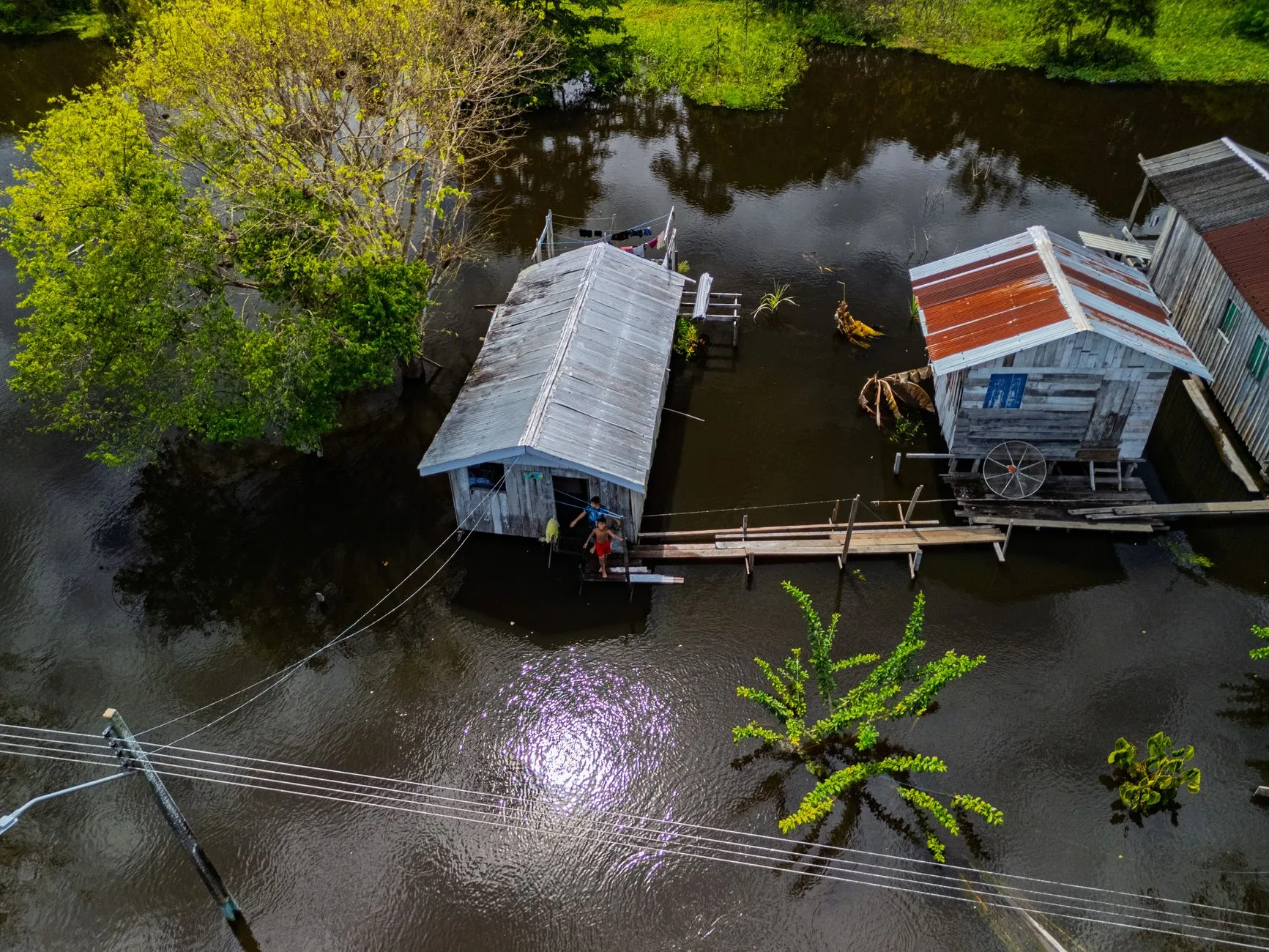
Water is the key. The Amazon basin floods every year as rivers rise, spreading shallow water far into the forest. Those seasonal wetlands give a big ambush hunter cover, warm shallows and a steady supply of animals coming down to drink. An anaconda is one part of a wider ecosystem. To learn how the forest itself works, see our guides to the environmental factors of rainforests and jungle rivers.
Adaptations for a life in water
- Eyes and nostrils on top of the head: the snake can lie almost fully submerged and still see and breathe.
- Dark, blotched skin: the pattern blends with mud, leaf litter and dappled light.
- A heavy body that is supported by water: the buoyancy of water helps a snake this massive to move. On land, anacondas are slower and more vulnerable.
- Cold-blooded biology: as reptiles they take heat from their surroundings, so the warm, humid lowlands suit them. Long gaps between meals are possible because they use little energy.
To see how the anaconda compares with other record-breakers, read the largest animals in the world, and for why such forests matter, read about biodiversity in jungle ecosystems.
Test yourself: guess the anaconda fact
Tap each card to flip it and check your answer.
Why a rainforest suits an anaconda
A rainforest river system provides three things an ambush predator needs: cover, warmth and food. Dense vegetation and murky water hide the snake. The warm, humid climate keeps its body temperature up without effort. And the animals that live and drink at the water's edge, from rodents to reptiles, give a large predator regular meals.
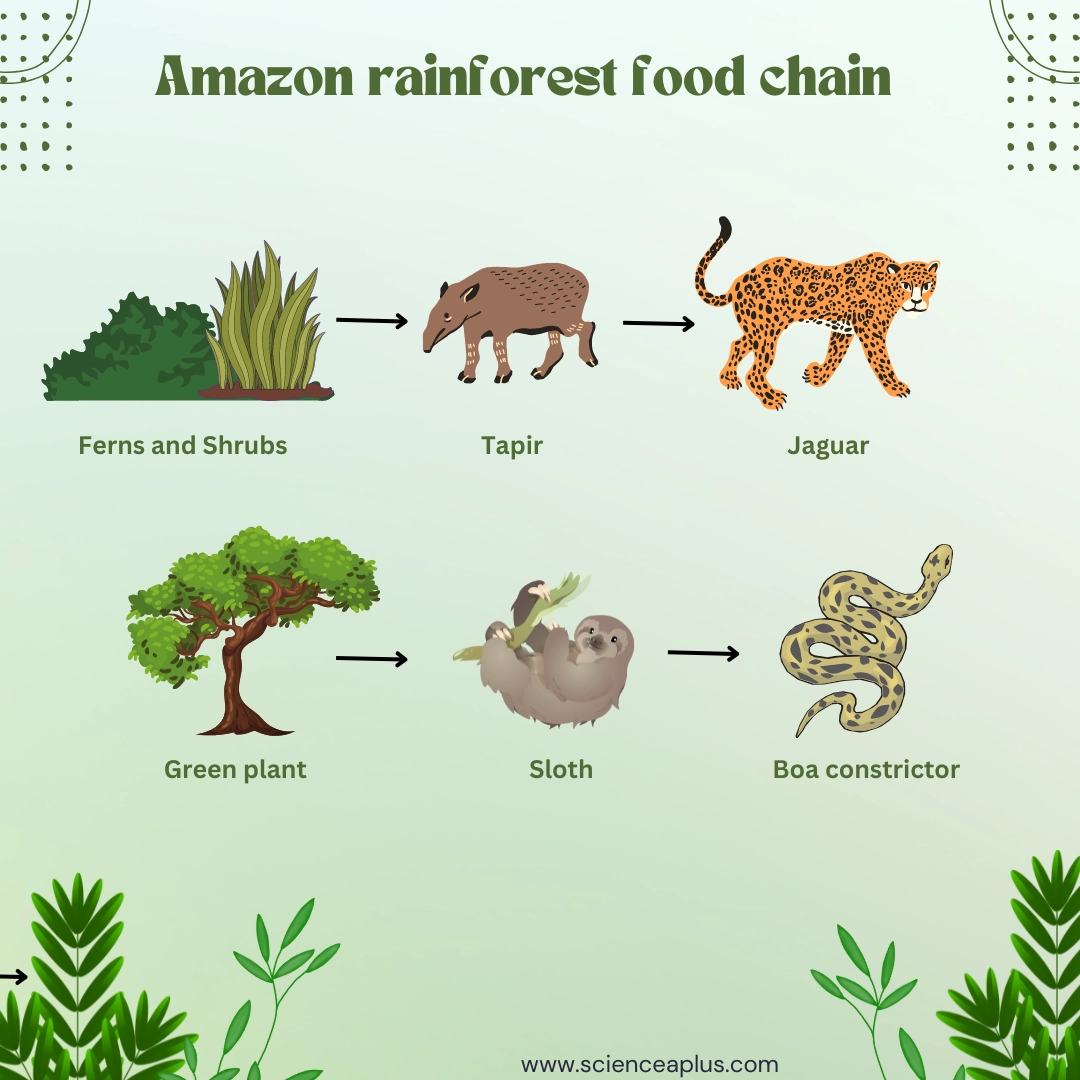
The wetland is also a food web. Plants feed grazers, grazers and fish feed predators, and anacondas sit near the top as a predator of large animals. Our guide to the rainforest food chain and food web shows how those links fit together.
How anacondas hunt: ambush, constriction and swallowing
An anaconda does not chase its meals. It is an ambush predator that waits at the water's edge, often where animals come to drink or cross, and strikes when prey comes within reach. It grabs with its teeth, throws coils around the animal, and squeezes. Then it swallows the prey whole.
The myth of crushing and suffocating
Many people believe constrictors crush bones or suffocate their prey. A 2015 study in the Journal of Experimental Biology tested boas on anaesthetised rats and found that the squeeze quickly stops blood flow: within six seconds the blood pressure in a leg artery halved while pressure in a central vein rose sharply. The researchers concluded that constriction causes circulatory arrest, which can kill much faster than suffocation. The experiment used boa constrictors, not anacondas, but anacondas use the same method.
Can an anaconda drown prey?
Prey seized at the water's edge may be pulled underwater, and drowning may contribute to a kill in some cases. That is a different mechanism from the one measured in the laboratory, and the best-documented killing method remains the squeeze.
What does an anaconda eat?
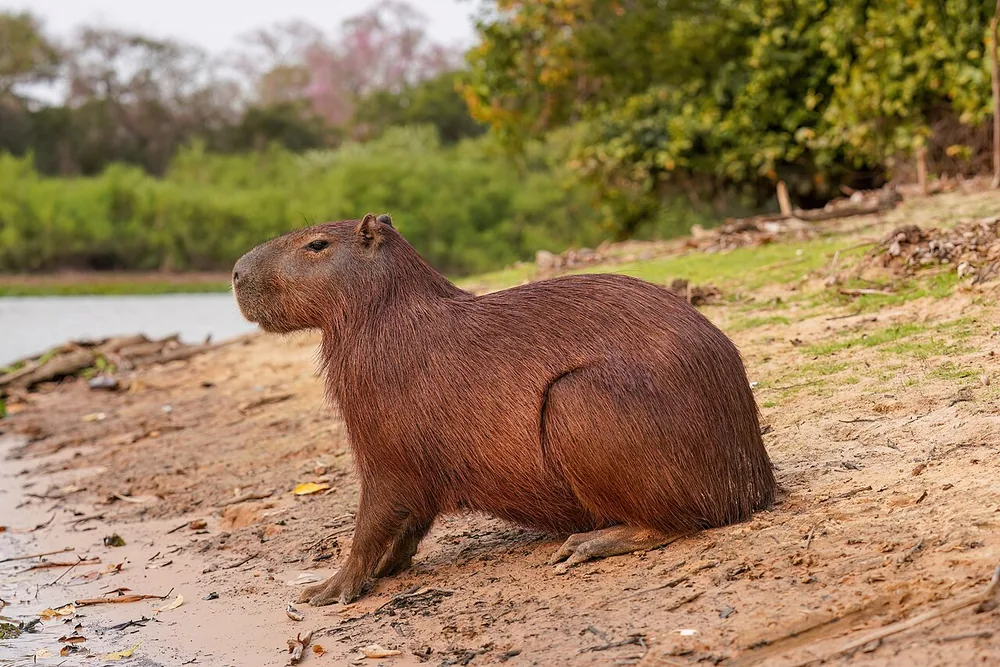
Adult green anacondas take prey that is usually between 14 and 50 per cent of their own body mass. The capybara, the world's largest rodent (see our capybara guide), is a common meal. Tapirs, deer, peccaries, caimans and even jaguars are occasionally taken. Young anacondas start small, with birds and other small animals. Yellow anacondas eat a lot of apple snails, fish and wading birds, while dark-spotted anacondas feed mainly on fish and birds.
A large meal can keep an anaconda going for weeks or months. After feeding, the snake rests in the warmth and digests slowly. Large females sometimes eat smaller males, a rare behaviour called sexual cannibalism.
| Anaconda stage or species | Typical prey |
|---|---|
| Newborn and juvenile green | Small birds, young caimans |
| Adult green | Capybara, deer, peccary, tapir, caiman, occasionally jaguar |
| Yellow | Apple snails, fish, wading birds, mammals, reptiles, eggs, carrion |
| Dark-spotted | Mainly fish and birds, sometimes mammals |
Rainforest food chains with an anaconda
Two chains show where the anaconda fits. In the first, grass is eaten by a capybara, and the capybara is eaten by an anaconda. In the second, fish are eaten by a caiman, and a large anaconda may eat the caiman. Arrows in a food chain point in the direction energy flows, from the food to the animal that eats it. Our guides to the food chain in the rainforest and herbivores, carnivores and omnivores go further.
What would happen to the capybara population if anacondas disappeared from a wetland? (2 marks)
Capybara numbers would probably rise at first because one predator has gone. More capybaras would eat more grass and plants, and other effects would follow through the food web, for example food becoming scarce again. The exact outcome depends on other predators such as jaguars and caimans.
Who hunts the hunter?
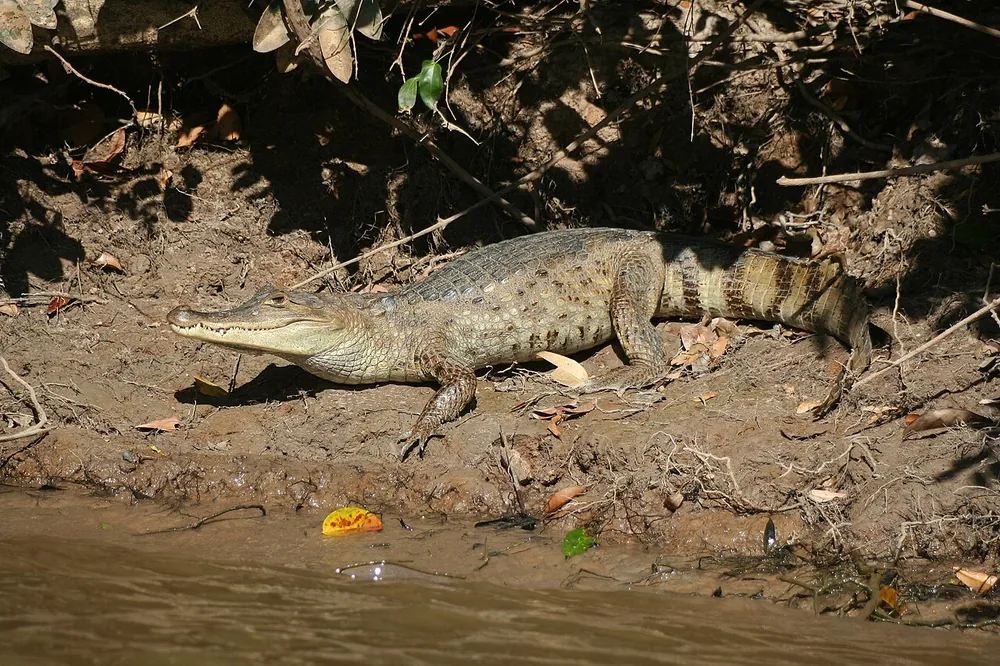
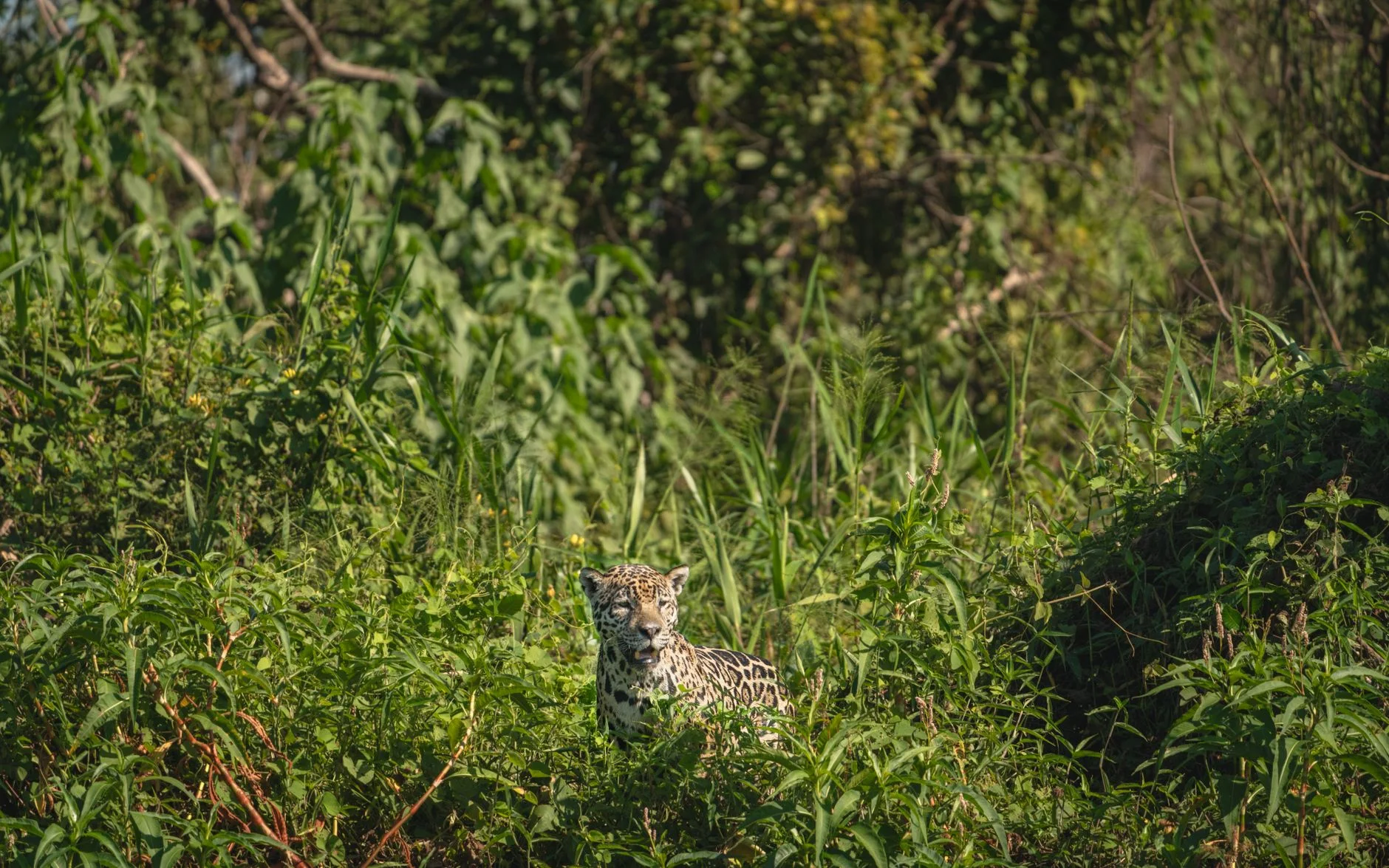
Adult anacondas have few enemies, but they are not untouchable. Adults can fall prey to Orinoco crocodiles, black caimans and jaguars. Young snakes are far more vulnerable, and caimans, larger anacondas and various mammals and birds take juveniles.
The jaguar is both predator and prey to the anaconda, which shows that these animals are part of a web rather than a ladder. The same forests are home to primates too; see monkeys in the Amazon rainforest. Read more in our comparison of the big cats.
Reproduction: do anacondas lay eggs?
No. Anacondas are ovoviviparous: the eggs develop inside the mother's body and the young are born live. This means that the babies come out already able to swim and hunt, with no nest and no parental care.
Breeding balls and the long wait
For green anacondas, mating takes place in the rainy season, usually in April and May. Several males coil around one female in a writhing "breeding ball", and balls of up to 12 or 13 males have been recorded. Pregnancy lasts six to seven months.
Litters and newborns
- Litter size: green anacondas usually have 20–40 young, and up to 100 have been recorded.
- Length at birth: about 70–80 cm.
- Other species: yellow anaconda litters range from 4 to 82, and dark-spotted litters from 3 to 27.
- Parental care: none. The young are independent immediately.
How long do anacondas live?
In the wild, the lifespan is about ten years. In captivity, they can reach 30 years or more. Guinness World Records lists a green anaconda at Montecasino Bird and Reptile Park in Johannesburg, verified at 37 years 317 days in 2021, as the oldest living snake in captivity (Guinness category, 2021).
Anaconda vs python vs boa: what is the difference?
People often mix up these big constrictors. The key point is that an anaconda is a boa. Both anacondas and boa constrictors belong to the family Boidae, while pythons belong to a different family, Pythonidae.
| Feature | Anaconda | Boa constrictor | Python (for example reticulated) |
|---|---|---|---|
| Family | Boidae (boas) | Boidae (boas) | Pythonidae |
| Home | South America, mostly in and near water | Tropical Americas, from rainforest to semi-desert | Old World: Africa, Asia, Australia |
| Young | Live birth; litters usually 20–40 (green) | Live birth; 10–65, average about 25 | Lay eggs (reticulated: 15–80 eggs) |
| Size | Heaviest snakes; green up to about 6.3 m | Adults up to about 3–4 m, up to 27 kg | Reticulated python is the longest: 6.95 m measured |
| Venom? | No | No | No |
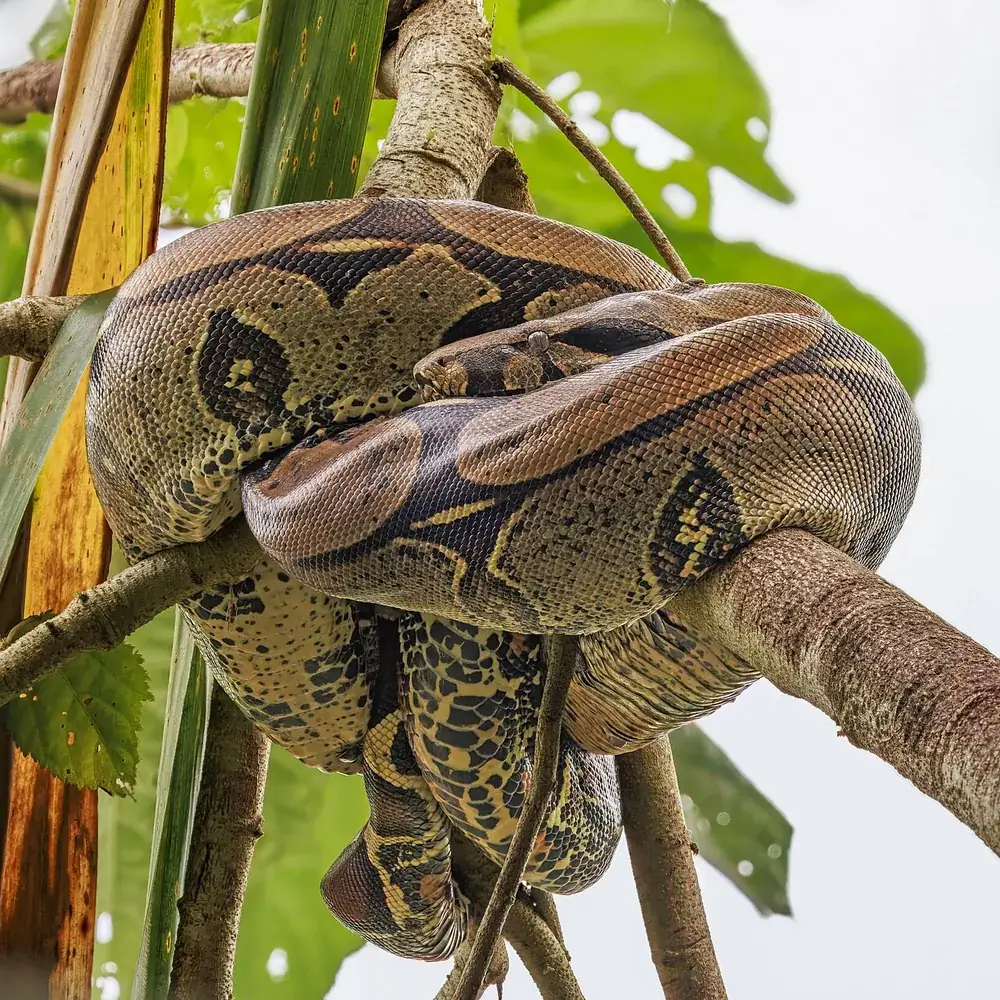
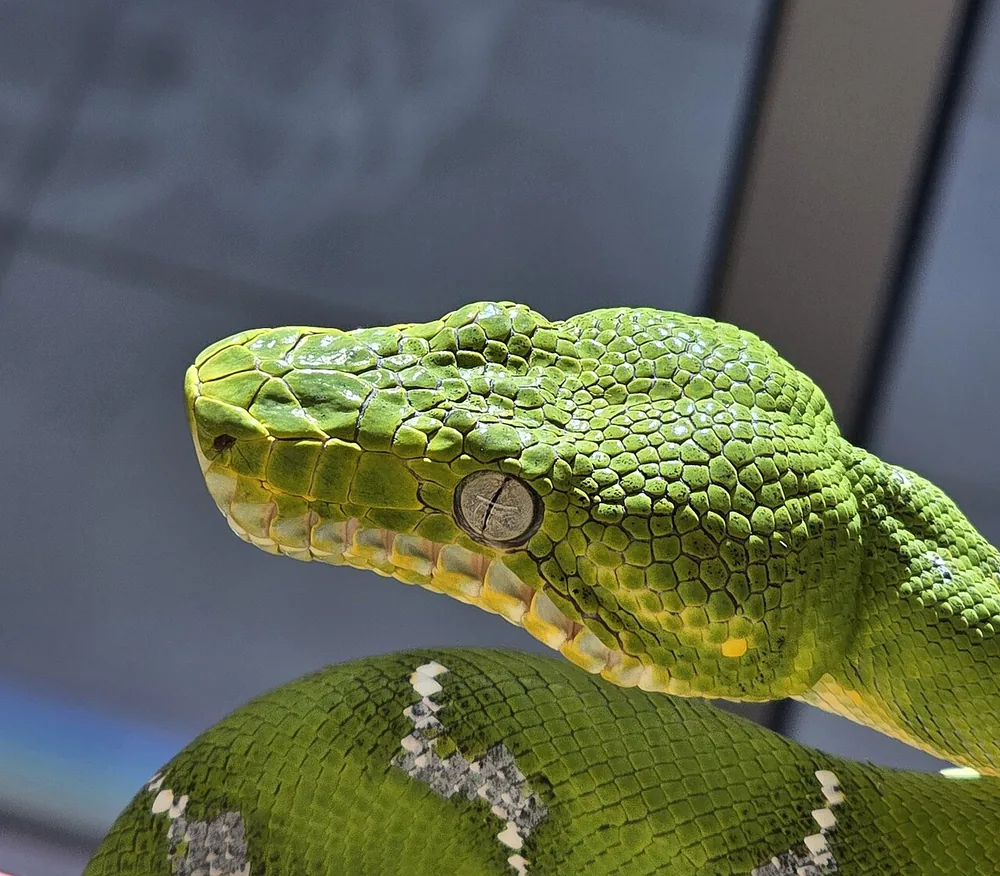
The rule "boas give birth, pythons lay eggs" works for most species but has exceptions: a few boa relatives, such as the Round Island boa of Mauritius (family Bolyeriidae, not true Boidae) and at least one sand boa, lay eggs. Pythons also have an extra bone in the head and extra teeth, a difference scientists use for classification but that is impossible to see in the wild.
Is the anaconda endangered? IUCN status
The IUCN Red List lists the green anaconda as Least Concern (2021 assessment). It is also included in CITES Appendix II, which means that international trade is controlled. Least Concern does not mean the snake is safe everywhere. Population trends are poorly documented, and the northern green anaconda proposed in 2024 has not yet been assessed on its own.
The status of the other species is less clear. Several reference sources list them as Least Concern, but they disagree about the yellow anaconda, so check the IUCN Red List directly if you need an official answer.
Threats to anacondas
- Wetland drainage and habitat loss: draining swamps for agriculture is a main pressure on anaconda habitat. The dark-spotted anaconda's savanna home is threatened by farming.
- Hunting and trade: yellow anacondas were heavily hunted for skins. Between 10,000 and 60,000 skins were exported from Argentina from the 1940s to the 1980s, and Argentina banned hunting and trade in 1986, later running a regulated sustainable-use plan from 2001.
- Persecution: people kill anacondas out of fear or in retaliation for attacks on livestock. Green anacondas seem to suffer most because of their size.
- Pollution and deforestation: researchers in the 2024 northern green anaconda work highlighted deforestation, habitat degradation and heavy-metal pollution linked to oil as threats to watch.
Forest loss matters beyond one species. Read more in our guides on the threat of deforestation and deforestation, afforestation and reforestation.
Anaconda spotter checklist
Use this list to check what you have learned. Ticks are saved in your browser.
- I can name the four traditional anaconda species.
- I know why the 2024 northern green anaconda is described as proposed and debated.
- I can explain why the anaconda is the heaviest but not the longest snake.
- I can describe how constriction kills (circulatory arrest).
- I can give two adaptations for life in water.
- I can explain the difference between a boa and a python.
- I can name two threats to anacondas.
Frequently asked questions about anacondas
How many species of anaconda are there?
Four species were traditionally recognised: the green, yellow, dark-spotted and Bolivian anacondas. A 2024 paper proposed a fifth, the northern green anaconda, while merging two others into the yellow anaconda. Other scientists dispute the new species, so the number is still debated.
How big can a green anaconda get?
Females typically reach about 4.6 m on average, and the maximum is about 6.3 m. The longest and heaviest wild snake verified by a researcher was 5.21 m and 97.5 kg. Reports of 10 m or longer are not backed by any preserved specimen.
Is the anaconda the biggest snake in the world?
It depends on what you measure. The green anaconda is the heaviest snake, but the reticulated python is longer, with a scientifically measured maximum of 6.95 m. A captive reticulated python named Medusa was reported at 7.67 m.
What does an anaconda eat in the rainforest?
Adults eat capybaras, deer, peccaries, caimans and sometimes even jaguars, usually prey that is 14–50 per cent of their own mass. Young snakes eat small birds and young caimans. Yellow and dark-spotted anacondas also eat fish, birds and apple snails.
Do anacondas lay eggs?
No. Anacondas give birth to live young. The eggs develop inside the mother and hatch inside her body, so the babies are born able to swim and hunt. Green anaconda litters are usually 20–40 young, with up to 100 recorded.
Are anacondas venomous?
No. Anacondas are constrictors. They coil around prey and squeeze so that blood stops flowing, then swallow it whole. They can bite, but they do not use venom to hunt or to defend themselves.
What is the difference between an anaconda and a python?
An anaconda is a boa (family Boidae), while pythons are in the family Pythonidae. Most boas give birth to live young and most pythons lay eggs. Anacondas live in South America; pythons live in Africa, Asia and Australia.
Is the anaconda endangered?
The IUCN lists the green anaconda as Least Concern, but numbers are poorly known. Threats include wetland drainage for farming, hunting and killing by people who fear it. The northern green anaconda proposed in 2024 has not yet been assessed.
Do anacondas eat humans?
There are many stories, but no verified case of an anaconda eating a person has been documented. Anacondas hunt animals from the water's edge, and disturbing a large one is dangerous, so keep your distance.
How long do anacondas live?
Wild green anacondas live around ten years. In captivity, they can live 30 years or more. The oldest captive snake on record, according to Guinness World Records, was a green anaconda in Johannesburg verified at 37 years 317 days in 2021.