Jungle rivers are the rivers that flow through tropical rainforest, and they are the main roads, water supplies and fishing grounds for millions of people. The biggest are the Amazon in South America, the Congo in Africa and the Mekong in South-East Asia. Together they carry huge amounts of water, shelter thousands of fish species and connect villages that have no roads.
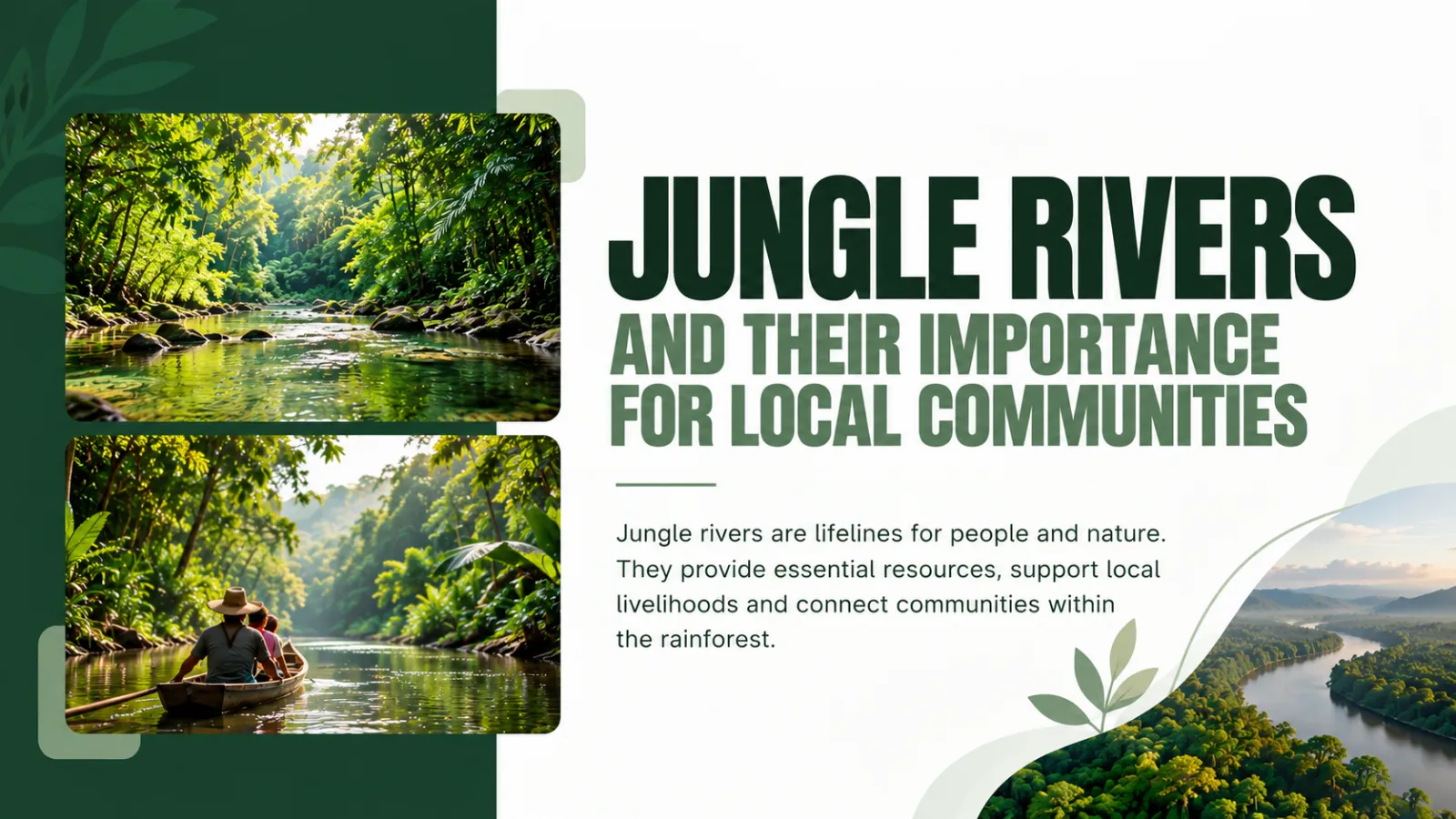
This guide explains how the world's great rainforest rivers work, what lives in and around them, and why local communities depend on them for water, food, transport and culture. It also covers the threats they face today, from dams and mining to record droughts.
What makes a river a jungle river?
A jungle river, or rainforest river, flows through a tropical forest where it rains for much of the year. Heavy rain feeds thousands of streams that join into larger rivers, so the water level can rise and fall dramatically with the seasons. The forest and the river depend on each other: trees shade and feed the river with fallen leaves and fruit, and the river floods the forest and delivers fresh sediment.
This link between land and water is a good example of an ecosystem, where living things and their physical surroundings work as one system. Rivers also move seeds, nutrients and animals across the landscape, which is one reason tropical forests support so much life. If you want the wider picture, our guide to the importance of biodiversity in jungle ecosystems shows how many species a single forest can hold.
The Amazon River: the world's largest river by water volume
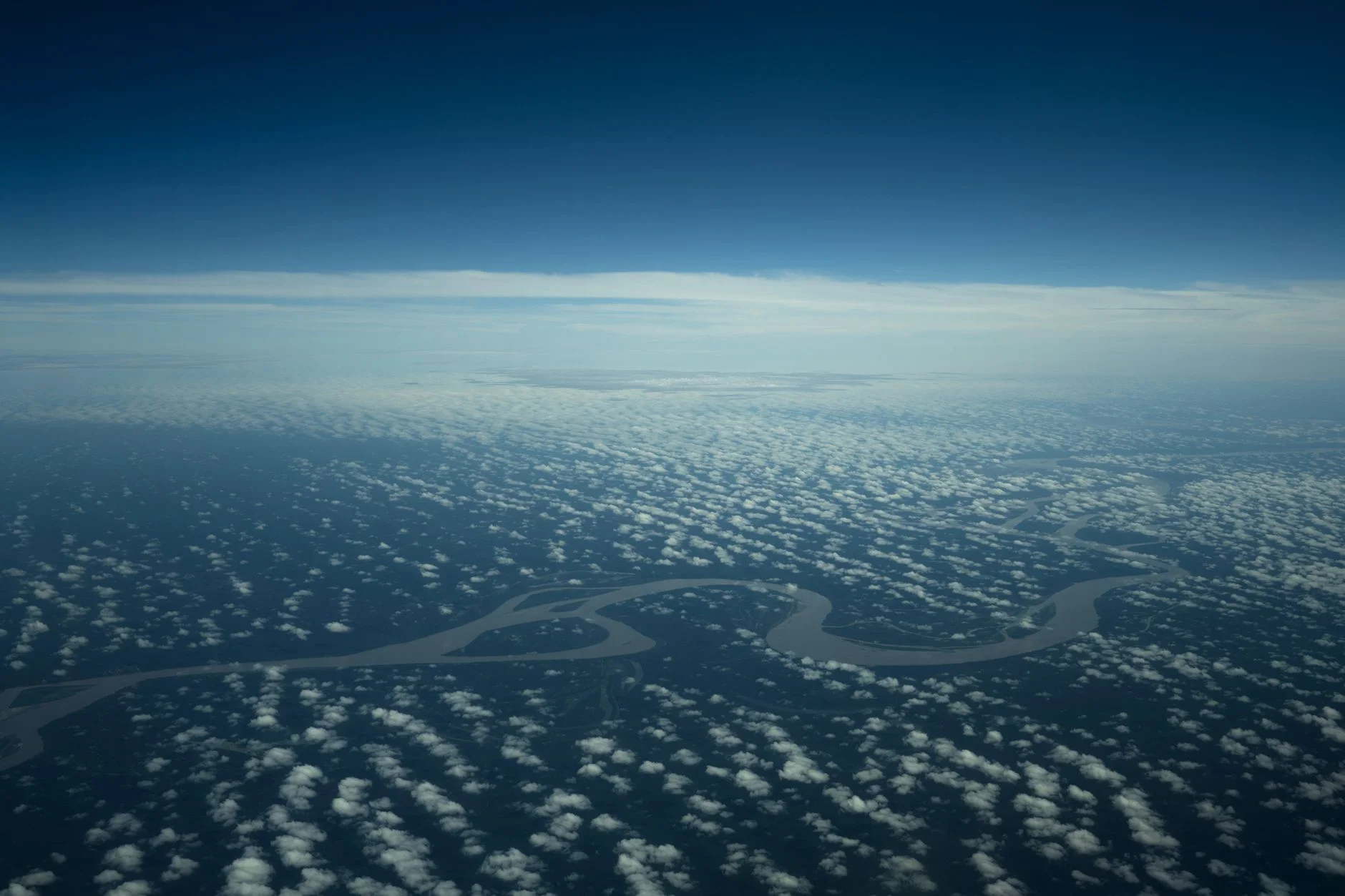
The Amazon flows from the Andes in Peru across Brazil to the Atlantic Ocean. By volume of water it is the largest river on Earth. Its average discharge is roughly 220,000 m³/s, and NASA's Earth Observatory estimates that the Amazon basin delivers about 18 per cent of all the river water that enters the oceans.
The Amazon basin covers about 7 million km², more than twice the area of India. Hundreds of tributaries feed the main river, including the Rio Negro, a dark "black-water" river, and the Madeira, a muddy "white-water" river. Near Manaus in Brazil the dark Rio Negro meets the muddy Solimões (the name of the upper Amazon) at the Meeting of the Waters, and the two flow side by side for several kilometres before mixing. The Madeira joins the Amazon further downstream, well below Manaus.
More than 2,500 fish species have been recorded in the basin. That is roughly 15 per cent of all freshwater fish species documented in the world, packed into one river system.
Is the Amazon longer than the Nile?
This is a famous argument. The Nile has traditionally been listed as the longest river, at about 6,650 km. The Amazon is usually quoted at around 6,400 km, but some recent measurements trace its source to a different stream in the Peruvian Andes and give a length of nearly 7,000 km.
The disagreement is not about the mouth. It is about where a river begins and how you measure its twists and turns. Different atlases therefore give different answers, and both rivers can fairly be called the longest depending on the method.
The Orinoco: a river shared by two countries
North of the Amazon, the Orinoco winds for about 2,140 km through Venezuela and Colombia. Its basin covers roughly 1 million km², with about 65 per cent in Venezuela and 35 per cent in Colombia. The river drains tropical forest in the south and open grassland, the Llanos, in the north.
The Orinoco is also home to its own pink river dolphin population, which scientists classify as a subspecies of the Amazon river dolphin. We meet this animal in the next section.
The Congo River: the deepest river in the world
The Congo is the second-longest river in Africa after the Nile. It holds a remarkable record: measurements have found depths of around 220 m, making it the deepest river recorded anywhere.
The Congo is also unusual because it crosses the equator twice. Different parts of its basin have their rainy seasons at different times of the year, so tributaries from the north and the south keep topping up the flow. This gives the river a steadier flow than many rivers that have a single wet season.
Its basin covers about 4 million km² across ten countries. Nearly 800 fish species have been recorded in it, and the Livingstone Falls rapids hold more than 300 fish species, around 80 of them found nowhere else. Those falls also block ocean-going boats from the sea, so the river is used for local trade above them. Boats carry copper, palm oil, sugar, coffee and cotton. Scientists estimate that the Congo basin holds about 13 per cent of the world's hydropower potential.
The Mekong River: Asia's great fishing river
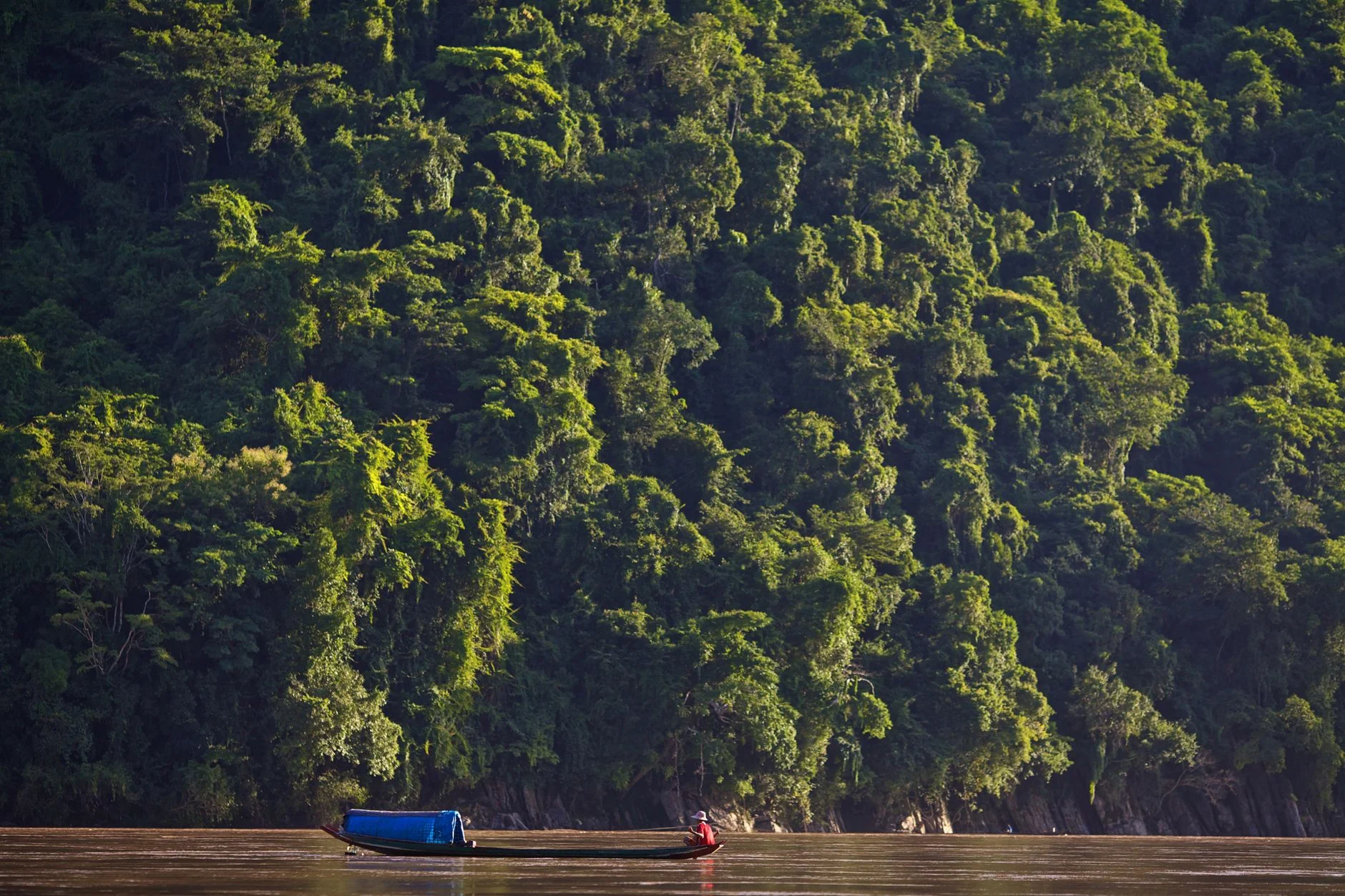
The Mekong begins on the Tibetan Plateau and flows about 4,900 km through six countries: China, Myanmar, Laos, Thailand, Cambodia and Vietnam. It drains a basin of roughly 795,000 km² and holds well over 1,000 fish species (the Mekong River Commission says more than 1,200), among the richest fish faunas of any river.
The Mekong matters most for food. About 60 million people live in the lower basin, and most are involved in fishing in some way. The Mekong River Commission estimates the annual catch at about 2.3 million tonnes, roughly 20 per cent of the world's inland fish catch.
The river is also the home of the Mekong giant catfish, which can grow up to about 3 m long and 300 kg. It is one of the largest freshwater fish ever recorded (a 293 kg fish was caught in 2005), and it is Critically Endangered, with catches down by about 80 per cent in 14 years (IUCN, 2003).
Four jungle rivers compared
| River | Continent | Approx. length | Basin area | Known for |
|---|---|---|---|---|
| Amazon | South America | 6,400 km or more (debated) | ≈7 million km² | Most water of any river; over 2,500 fish species |
| Orinoco | South America | ≈2,140 km | ≈1 million km² | Shared by Venezuela and Colombia; river dolphins |
| Congo | Africa | Second-longest in Africa | ≈4 million km² | Deepest river (≈220 m); crosses the equator twice |
| Mekong | Asia | ≈4,900 km | ≈795,000 km² | Fishing for about 60 million people; giant catfish |
Notice that every river in the table supports a huge number of fish. Fish are the link between the river's ecosystem and the people who live on its banks, a theme that runs through the rest of this guide.
Floodplain forests: when the forest goes under water
In the Amazon basin the water level changes enormously between the dry and wet seasons. In parts of the central Amazon, floodplain forests can see the river rise and fall by about 10 m in a year, and up to about 15 m in places, and the trees may stay flooded for several months. When the river spreads out, it creates a huge seasonal wetland known as a floodplain forest.
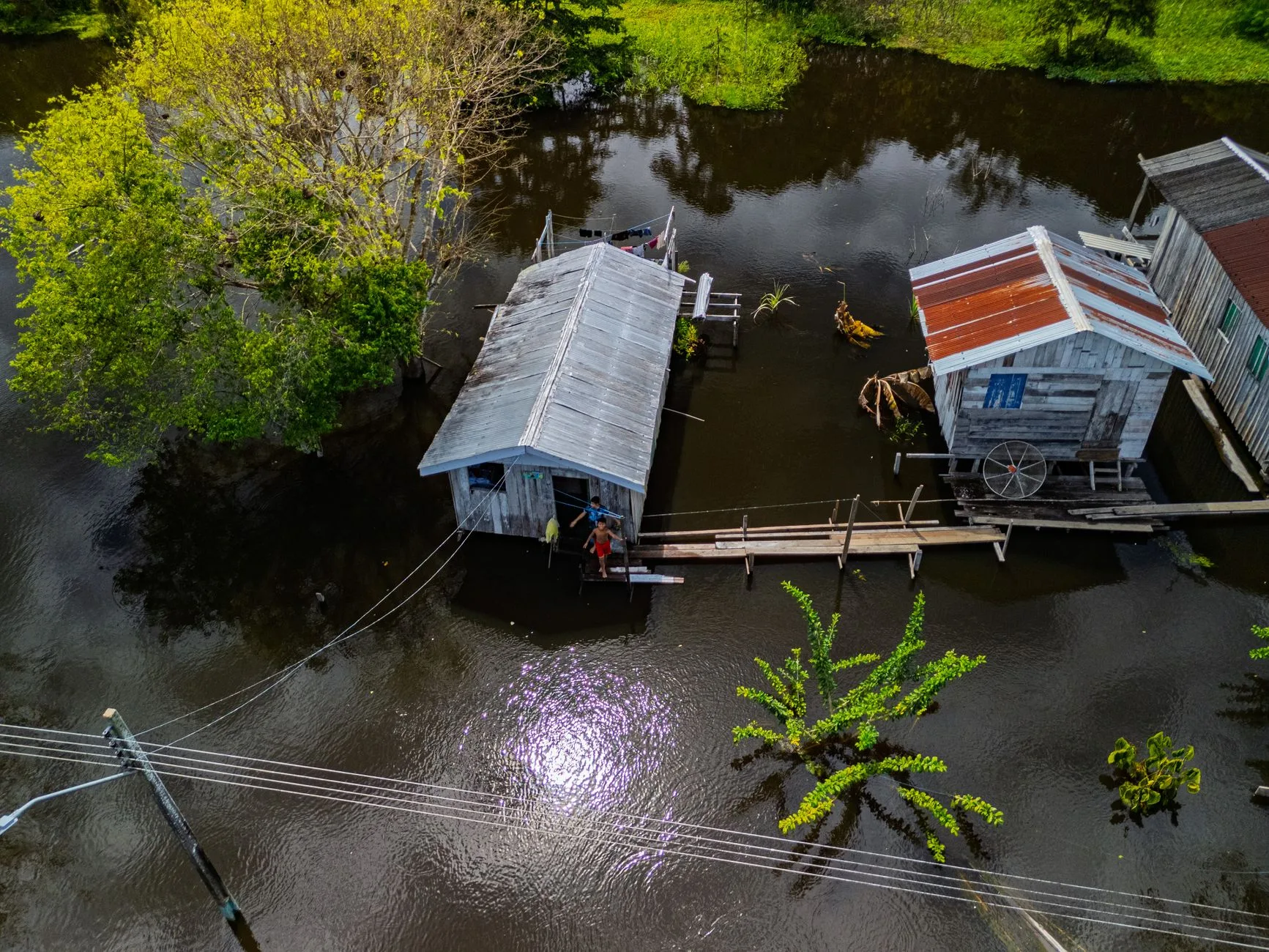
Scientists name two main types, and the difference comes from the colour of the water that floods them.
- Várzea forest is flooded by "white-water" rivers such as the Solimões and Madeira. These carry lots of sediment and nutrients washed down from the Andes, so the soil is rich.
- Igapó forest is flooded by "black-water" or clear-water rivers such as the Rio Negro. These carry very little sediment, so the water and soil are poorer in nutrients. In some places igapó trees can be under water for up to about six months.
Flooded forests may sound like a problem for trees, but many species are adapted to it. Many trees time their fruiting to the high-water season. When the fruit falls into the water, fish eat it and later pass the seeds out, which spreads the trees along the river. Fish act as gardeners of the forest.
For local families the flood is not a disaster but a calendar. The high-water season is when fish move into the flooded forest to feed and breed. When the water falls, fertile silt is left behind on the banks, and people plant crops there. This is why the river is so closely tied to the way of life of riverside communities.
Life in and around jungle rivers
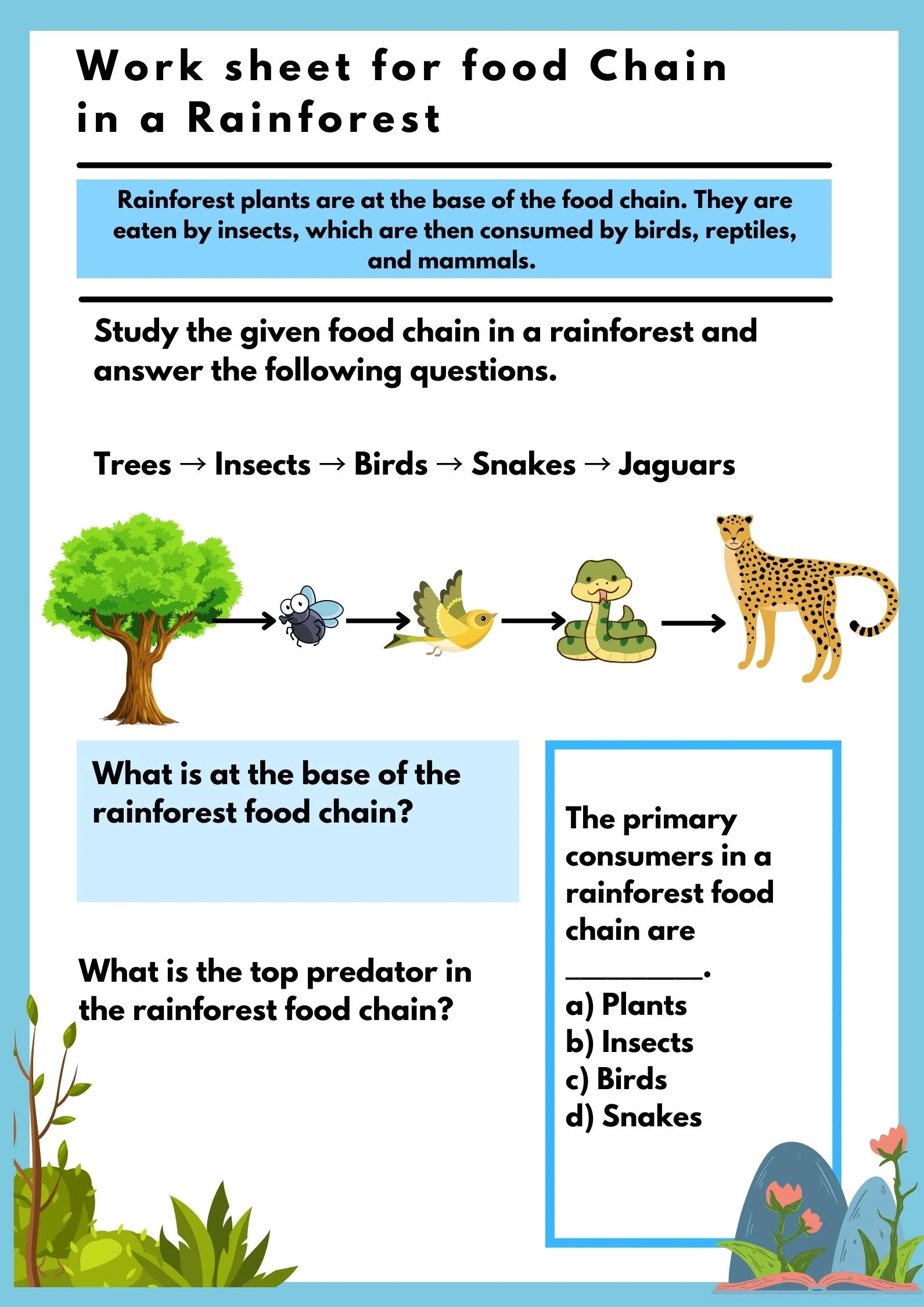
Rainforest rivers are crowded habitats. Fish are the most numerous animals, but they share the water and the banks with reptiles, mammals and birds. If you follow the energy from plants to the top predators, you are tracing a food chain, and our guide to the food chain in the rainforest shows how those links fit together.
- Fish fill almost every role: some eat fruit and seeds, some eat insects or plants, and some hunt other fish. More than 2,500 fish species live in the Amazon basin alone.
- Reptiles include caimans and the giant anaconda, which hunt in slow-moving water and flooded forest.
- Mammals that rely on rivers include river dolphins, otters and many monkeys that live in the trees that overhang the water.
River dolphins: the pink dolphin of the Amazon
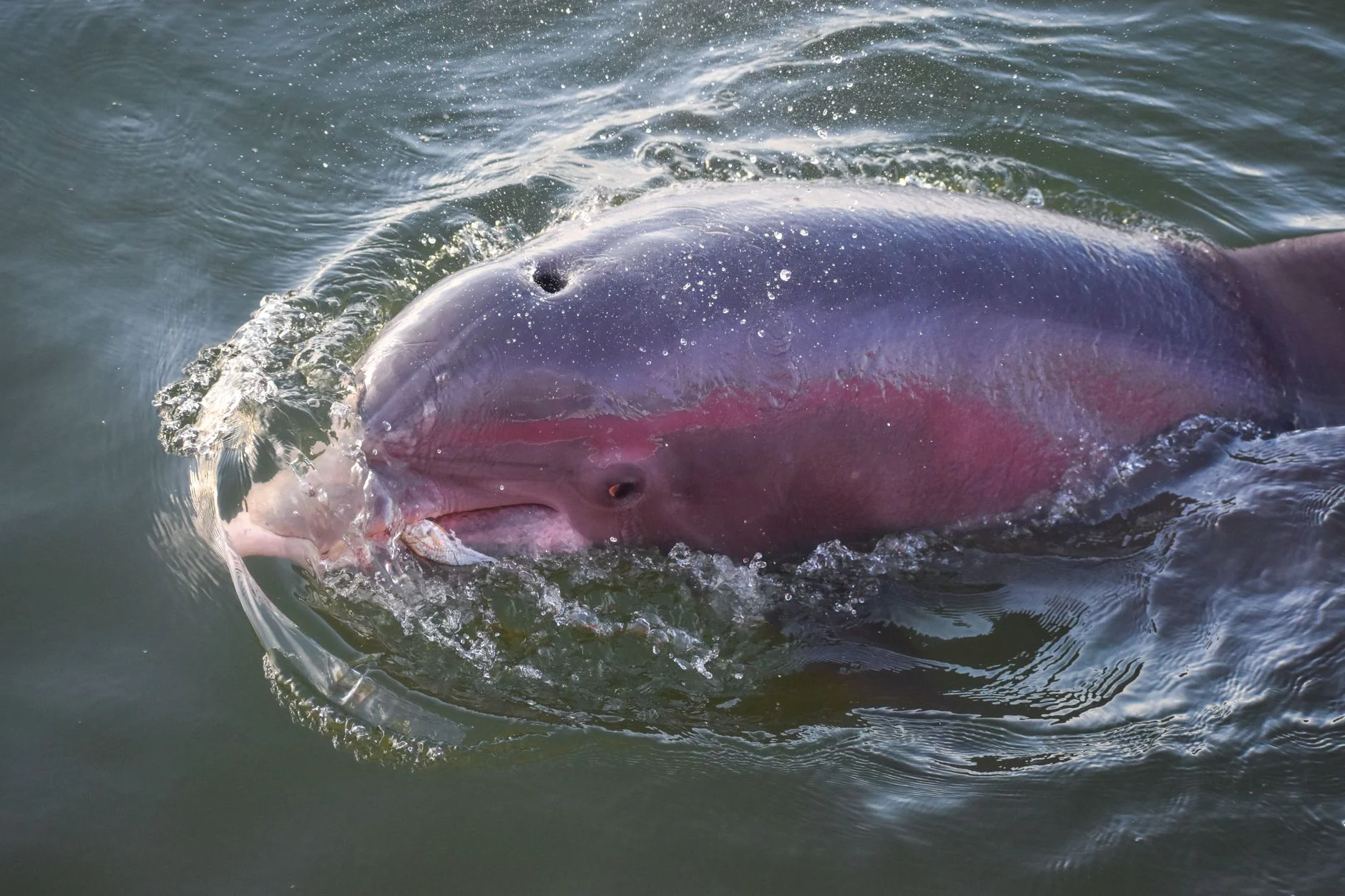
One of the best-known river animals is the Amazon river dolphin, also called the boto or pink river dolphin (Inia geoffrensis). It lives in the Amazon and Orinoco river systems and can swim into flooded forest when the water is high. Its pink colour is easy to see in the photo.
It is also in trouble. The International Union for Conservation of Nature (IUCN) has listed the Amazon river dolphin as Endangered since 2018. The main threats are drowning in fishing nets and being killed for use as fish bait, and a study found populations falling even in well-protected parts of its range.
Flying rivers: the rivers in the sky
The Amazon's biggest river may not be on the ground at all. Scientists use the term flying rivers (coined by climatologist José Marengo) for the huge streams of water vapour that move through the air above the rainforest.
It works like this. Trees take up water through their roots and release it as vapour from their leaves, a process called transpiration. One large Amazon tree can release up to about 1,000 litres a day. This vapour rises, is carried by the wind and falls as rain further away, including on the slopes of the Andes.
The forest therefore recycles its own water and also supplies rain to places far from the river. It is part of the water cycle, with the rainforest acting as a giant pump between the ground and the sky.
- Rain falls on the forest and runs into streams and rivers.
- Roots take up water from the soil.
- Leaves release water vapour (transpiration).
- Winds carry the vapour across the continent.
- The vapour condenses and falls as rain, feeding other rivers.
Quick revision: flip the cards
Why jungle rivers matter to local communities
For people who live in or beside the rainforest, the river is not a scenic extra. It is the supply system for daily life. Four needs stand out: water, food, transport and culture. The next sections take them one at a time, using the infographics prepared for this article.
Water for everyday life
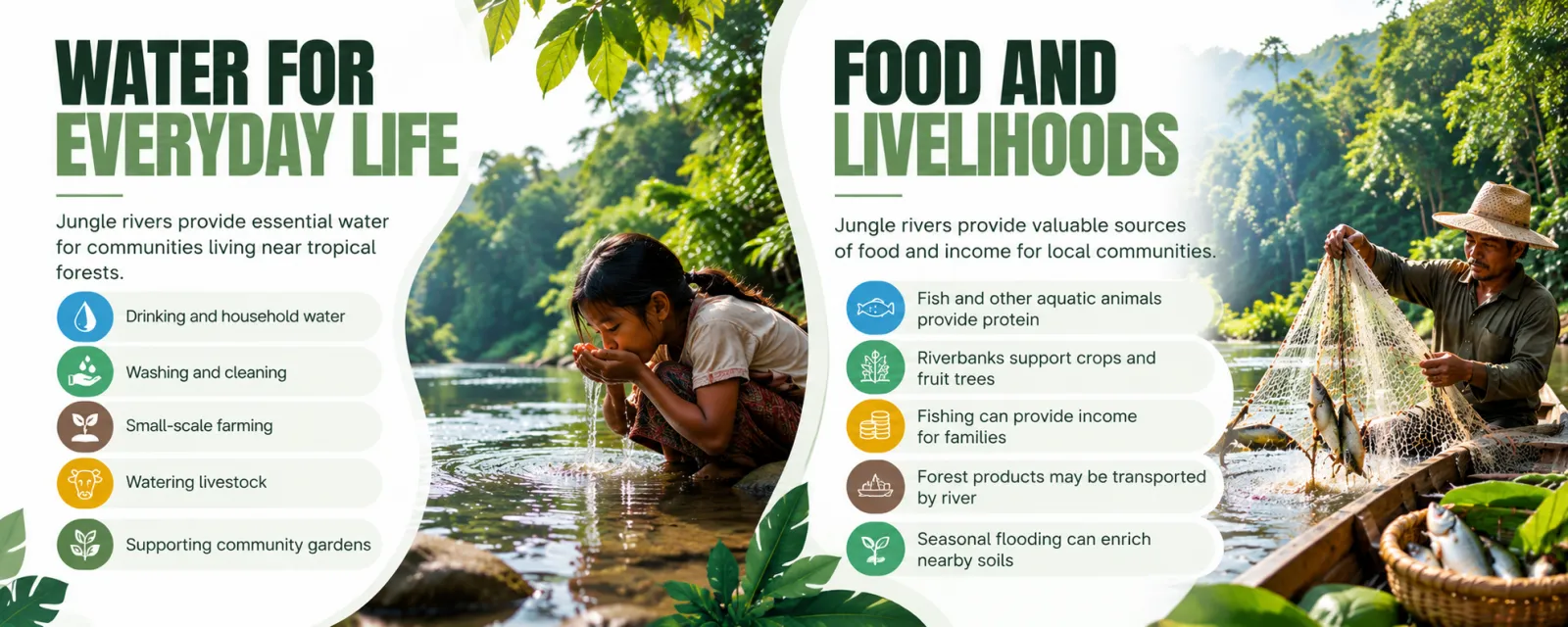
In many villages there are no taps or pipes. People collect drinking and household water straight from the river or from streams that feed it. They also use it for washing clothes and dishes, watering small gardens and giving water to livestock.
That is why water quality matters so much. When mining, farming or waste pollutes the river, the families downstream are the first to feel it. During the 2023 drought, reports said hundreds of riverside communities in the Brazilian Amazon struggled to get drinking water as the rivers shrank.
Food and livelihoods
Fish are the main source of protein for many riverside families, and fishing is also a way to earn money. The Mekong shows how large this can be. About 60 million people live in the lower Mekong basin, most of them involved in fishing in some way, and the Mekong River Commission estimates the yearly catch at about 2.3 million tonnes.
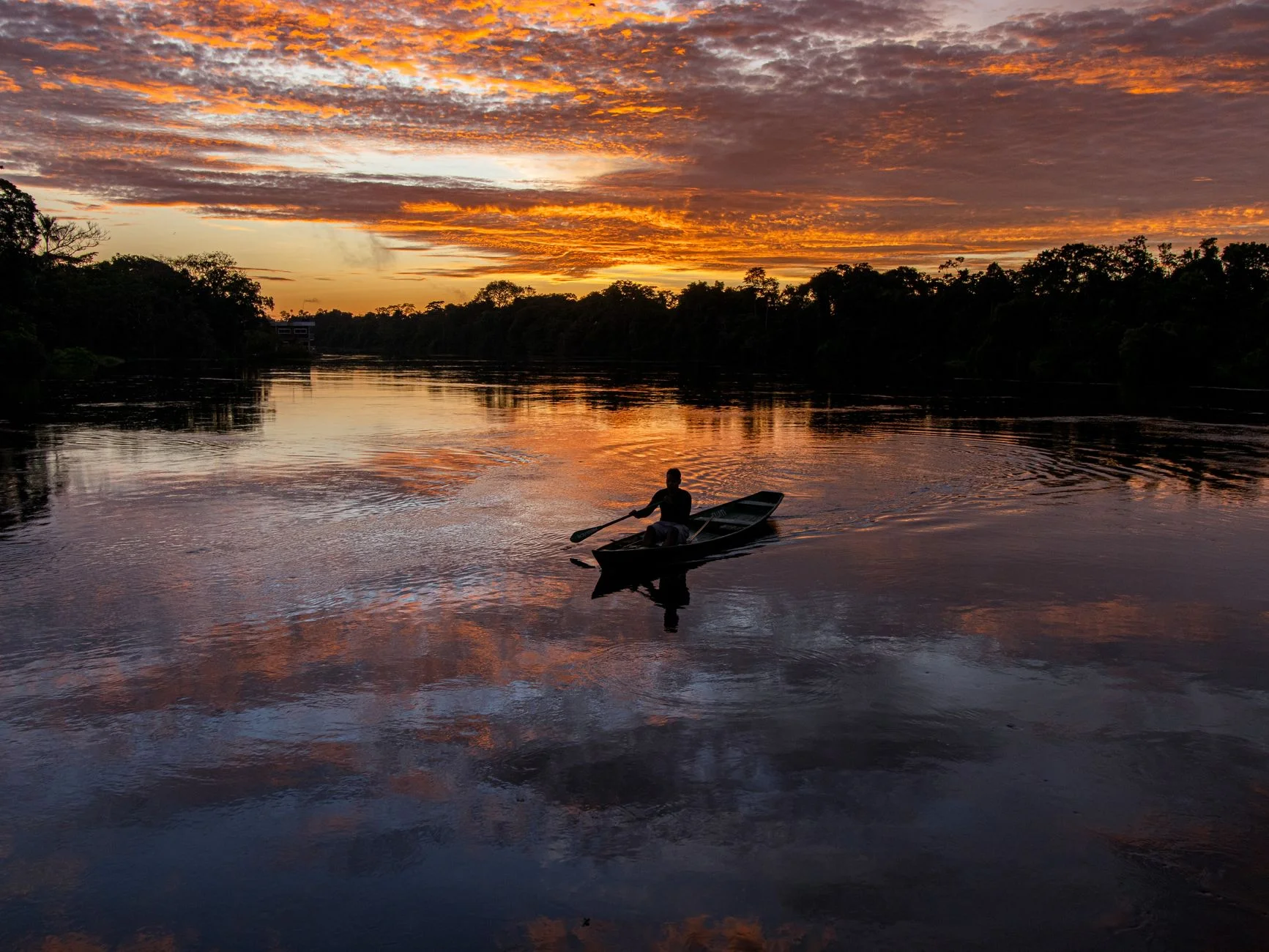
The river feeds the land as well as the people. Seasonal floods leave a layer of fertile silt on riverbanks, so families can grow crops and fruit trees there once the water has fallen. Forest products such as fruit, nuts and timber are often carried to market by boat.
- Protein: fish and other aquatic animals.
- Crops: vegetables, fruit trees and small gardens on enriched riverbanks.
- Income: selling fish and forest products at local markets.
Rivers as natural highways
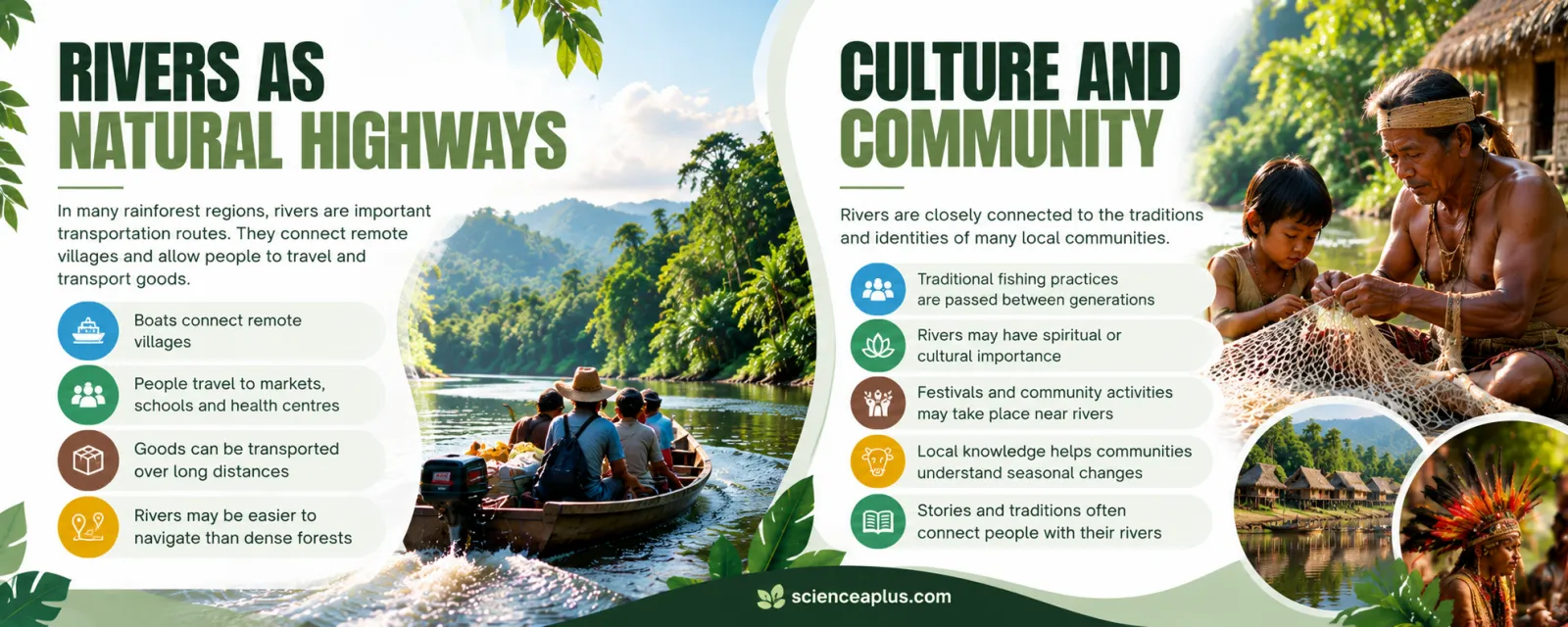
A dense rainforest is hard to cross on foot, and building roads is expensive and can harm the forest. In many regions the river is therefore the easiest route. Small boats and canoes connect remote villages with markets, schools and health centres, and carry goods over long distances.
The Congo is a good example. Boats on the river move copper, palm oil, sugar, coffee and cotton. The Livingstone Falls stop ocean-going ships, so the river is used mainly for trade within the region.
On the Mekong, small boats also carry people and goods between villages and towns along the banks.
Culture and community
Rivers are also part of identity. Fishing methods, such as making and mending nets, are passed from grandparents to children. Many communities hold festivals and ceremonies by the water, and their stories and traditions connect people with their rivers. Local knowledge also helps people read the seasons: they know when the floods will come and where the fish gather.
Threats to jungle rivers
Because so many people and species rely on rainforest rivers, damage to them spreads fast. Five threats matter most.
1. Dams
Dams produce electricity and can store water, but they also block the migration routes of fish and trap sediment that would otherwise fertilise floodplains. The Mekong is the standout case: studies count hundreds of dams across the basin, and dams are one reason the giant catfish population has fallen by about 80 per cent. The Congo basin, by contrast, holds about 13 per cent of the world's hydropower potential, so there is pressure to build more there. Read more about the trade-offs in the good and bad of dams and the advantages of multipurpose river projects.
2. Deforestation
When forest is cleared, rain washes soil into the river, which clouds the water and buries fish habitats. Trees also release the water vapour that feeds flying rivers, so large-scale clearing can reduce rainfall. See our guide to the threat of deforestation for the causes and effects.
3. Mining and pollution
Illegal gold mining uses mercury, which ends up in rivers. Bacteria turn it into methylmercury, which builds up as it passes up the food chain, so large predatory fish carry the most. A Fiocruz study, published in 2024, of Yanomami people in nine villages (hair samples taken in 2022) in the Brazilian Amazon found mercury contamination in all participants tested, and 84 per cent had levels at or above 2 micrograms per gram, a level linked to health problems. Plastic, oil and sewage add further pollution.
4. Overfishing and bycatch
Catching too many fish, or catching them in nets that also trap dolphins, reduces numbers faster than they can recover. The Amazon river dolphin's Endangered status is linked to drowning in nets and hunting for bait.
5. Drought and climate change
In October 2023 the Rio Negro at Manaus dropped to 13.49 m, the lowest level in 121 years of records, during a drought linked to El Niño. Then in October 2024 it fell again to 12.66 m, a new record low, when normal levels at that time are around 21 m. Researchers say climate change made the 2023 drought far more likely, alongside El Niño. Very low rivers make boat travel difficult and leave communities short of water. Read more about climate pressures in our guide to the impact of climate change on ecosystems and food chains.
Test your understanding
Give two reasons why rivers are important to people living in a rainforest. (2 marks)
Any two from: they provide drinking and household water; they provide fish for food and income; they are routes for transport where there are no roads; floods deposit fertile silt for farming; they hold cultural and spiritual importance.
Explain how a dam can harm the fish of a river. (3 marks)
The dam forms a barrier across the river, so migrating fish cannot reach their spawning or feeding areas. It also traps sediment and nutrients upstream, so floodplains downstream receive less. The result is fewer fish, which reduces food and income for people who depend on fishing.
Explain how mercury from gold mining can end up in people. (3 marks)
Mercury enters the river and is changed into methylmercury. Small organisms take it up, and it builds up at each step of the food chain, so predatory fish contain the most. People who eat these fish take in mercury, which can harm health.
Protecting jungle rivers
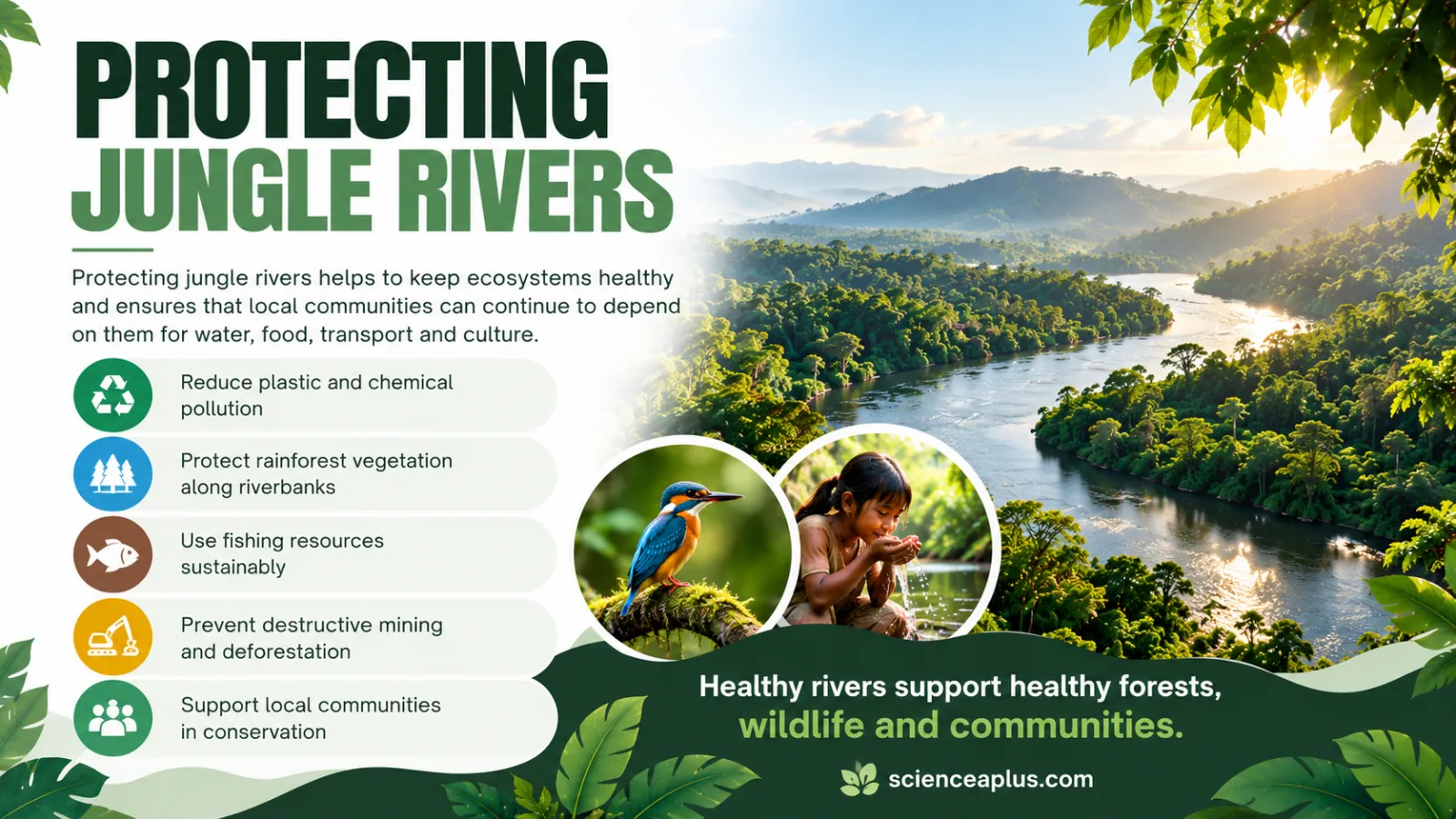
Protecting rivers means protecting the forest, the wildlife and the communities together. The five actions in the infographic above sum it up: reduce pollution, protect riverbank vegetation, fish sustainably, prevent destructive mining and deforestation, and support local communities in conservation.
Keep the trees along the banks
Trees and shrubs on riverbanks hold the soil in place, shade the water and drop fruit and insects that fish eat. Replanting them is one of the cheapest ways to restore a damaged river. The same ideas apply to deforestation, afforestation and reforestation, which explains how forests are cleared and restored.
Fish sustainably
Sustainable fishing means taking fish at a rate the population can replace. Common methods include protecting breeding grounds, avoiding nets that trap dolphins, and letting local communities help to set the rules. Communities that rely on a river tend to have strong reasons to look after it.
Clean up pollution
Cutting plastic, chemical and mercury pollution protects both the fish and the people who eat them. Mercury from gold mining is especially serious because it builds up in the food chain, as described earlier.
The role of Indigenous peoples and local knowledge
Indigenous peoples and local communities have lived beside these rivers for generations, and they know where fish spawn, when floods arrive and which areas should be left alone. Their knowledge helps scientists monitor change, and many conservation projects work with them rather than around them. Our article on the role of Indigenous communities in jungle conservation looks at this in more detail.
Supporting local communities is therefore not separate from protecting nature. When people have a secure right to their land, a fair income and a say in decisions, rivers are more likely to stay healthy.
How a river links to the rainforest food web
A river is the artery of the forest's food web. Plants capture energy from sunlight, fish and insects eat them, and larger animals such as dolphins, caimans and people eat the fish. If one link is damaged, the effect passes along the chain. You can explore the full picture in our guide to the rainforest food chain and food web, and learn which climate and soil factors shape the forest in environmental factors of rainforests.
What can you do?
You do not have to live near a rainforest to help. Tick off the actions you already do and aim to add one more this week. Your ticks are saved in this browser.
- Reuse or recycle plastic so less ends up in rivers and oceans
- Choose products with credible sustainability labels, such as certified wood or paper
- Check whether your gold jewellery or electronics use recycled or responsibly sourced materials
- Eat fish from sustainable sources
- Learn about and share the issues with a friend, teacher or family member
Frequently asked questions about jungle rivers
What is a jungle river?
A jungle river is a river that flows through a tropical rainforest. It is fed by heavy rainfall and many tributaries, and it supports a huge range of fish and wildlife. Local communities rely on it for water, food, transport and cultural life, which is why these rivers are so important.
Why are rainforest rivers important to local communities?
They give people drinking and household water, fish for food and income, fertile land beside the banks, and transport routes where there are no roads. Many traditions, festivals and stories are also tied to the river, so it supports both daily life and cultural identity.
Which is the biggest river in the world?
The Amazon is the largest river by volume of water, carrying about 18 per cent of the river water that enters the oceans. Length is more debated: the Nile has traditionally been listed as longest, but some measurements of the Amazon give a similar or longer length.
Which river is the deepest in the world?
The Congo River, in Africa, is the deepest river recorded. Depths of around 220 m have been measured in places. The Congo also crosses the equator twice, which helps keep its flow fairly steady through the year.
What are várzea and igapó forests?
They are floodplain forests in the Amazon that are flooded for part of each year. Várzea is flooded by muddy, nutrient-rich white-water rivers, while igapó is flooded by nutrient-poor black-water or clear-water rivers. Many trees are adapted to survive months under water.
Are Amazon river dolphins endangered?
Yes. The IUCN has listed the Amazon river dolphin, or boto, as Endangered since 2018. Main threats are drowning in fishing nets and being killed for fish bait. The dolphins live in the Amazon and Orinoco river systems.
What are flying rivers?
Flying rivers are streams of water vapour carried through the air above the Amazon. Trees release vapour from their leaves by transpiration, winds carry it across South America, and it falls as rain far from the forest, including on the Andes. Cutting down forest can weaken this supply.
What is the Mekong giant catfish?
It is one of the largest freshwater fish recorded, growing up to about 3 m long and nearly 300 kg. It lives only in the Mekong River and is Critically Endangered. Its numbers have fallen by about 80 per cent because of overfishing and dams that block its migration.
What are the biggest threats to jungle rivers?
The main threats are dams, deforestation, mining and mercury pollution, overfishing, and drought linked to climate change. In October 2024 the Rio Negro at Manaus fell to a record low of 12.66 m. Protecting riverbank forest and supporting local communities helps reduce the damage.