Animals that start with E range from the African bush elephant, the largest animal on land, to the tiny earwig in your garden. This guide lists 78 animals that start with E, each with a scientific name, a habitat and an IUCN Red List status, and 48 of them have their own photo.
Quick answer: the best-known animals beginning with E are the elephant, eagle, emu, eel, elk, echidna, emperor penguin and earthworm. Before this one comes animals that start with D, and after it comes animals that start with F.
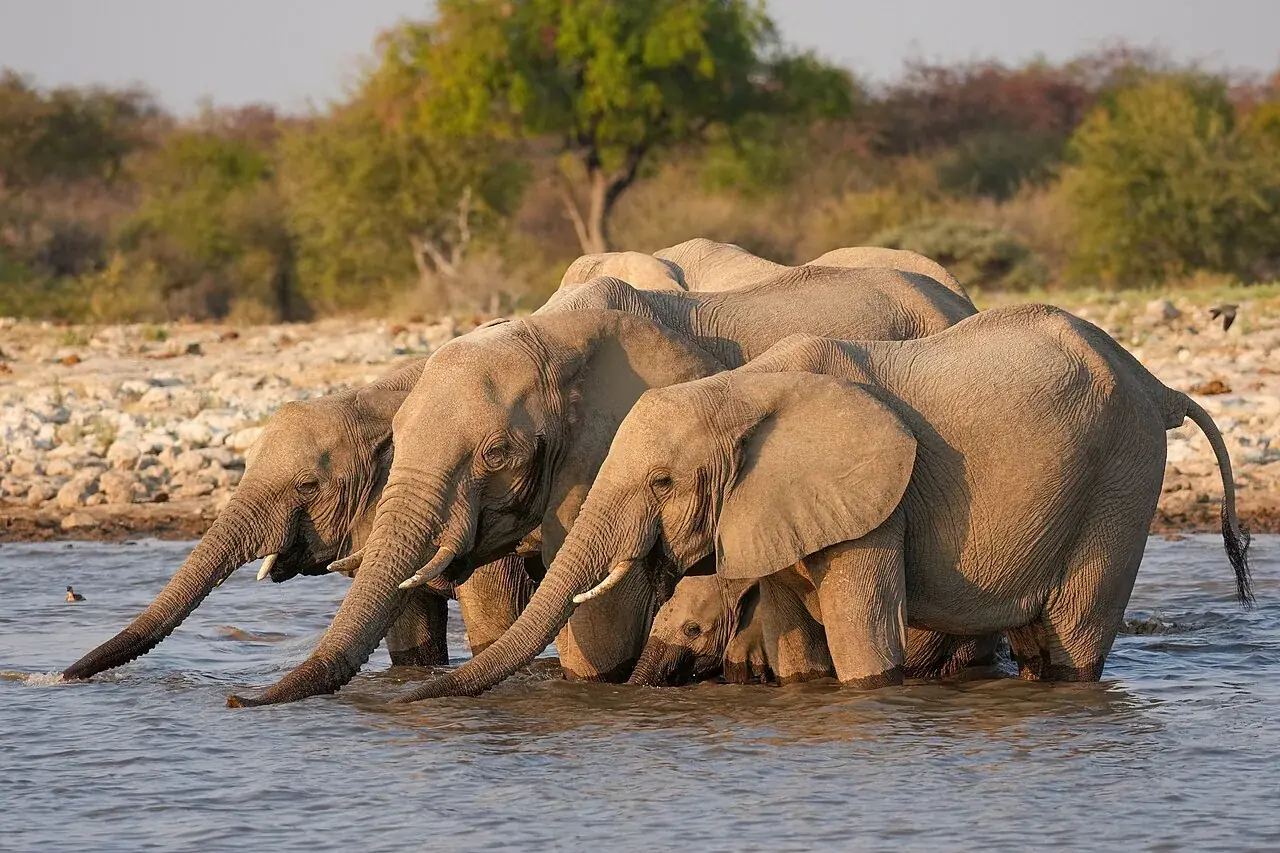
Animals that start with E: the full list of 78
Here is every animal in this guide. Statuses come from the IUCN Red List, the global register of how close species are to extinction, and we flag three recent changes: the emperor penguin (Endangered, April 2026), the southern elephant seal (Vulnerable, 2026 reassessment) and the European hedgehog (Near Threatened since 2024). “Not assessed” means the IUCN has no global assessment for it.
| # | Animal | Scientific name | Group | Habitat | IUCN status |
|---|---|---|---|---|---|
| 1 | Elephant (African bush) | Loxodonta africana | Mammal | Sub-Saharan savannas and woodlands | Endangered |
| 2 | Elephant (Asian) | Elephas maximus | Mammal | South and South-East Asian forests | Endangered |
| 3 | Elephant seal (southern) | Mirounga leonina | Mammal | Southern Ocean and sub-Antarctic islands | Vulnerable (2026 reassessment) |
| 4 | Eland (common) | Taurotragus oryx | Mammal | East and southern African savannah | Least Concern |
| 5 | Elk (wapiti) | Cervus canadensis | Mammal | Forests of North America and Asia | Least Concern |
| 6 | Ermine (stoat) | Mustela erminea | Mammal | Woods and grassland of the north | Least Concern |
| 7 | Echidna (short-beaked) | Tachyglossus aculeatus | Mammal | Australia and New Guinea | Least Concern |
| 8 | Ethiopian wolf | Canis simensis | Mammal | Ethiopian highland grassland | Endangered |
| 9 | Eurasian lynx | Lynx lynx | Mammal | Forests from Europe to Siberia | Least Concern |
| 10 | Eurasian otter | Lutra lutra | Mammal | Rivers, lakes and coasts of Eurasia | Near Threatened |
| 11 | European badger | Meles meles | Mammal | Woods and fields of Europe | Least Concern |
| 12 | Eurasian beaver | Castor fiber | Mammal | Rivers and wetlands of Eurasia | Least Concern |
| 13 | European hedgehog | Erinaceus europaeus | Mammal | Gardens, hedgerows and woodland edges | Near Threatened |
| 14 | Eastern grey kangaroo | Macropus giganteus | Mammal | Eastern Australian grassland and forest | Least Concern |
| 15 | Eastern gorilla | Gorilla beringei | Mammal | Eastern Congo, Rwanda and Uganda forests | Critically Endangered |
| 16 | Emperor tamarin | Saguinus imperator | Mammal | South-western Amazon rainforest | Least Concern |
| 17 | African forest elephant | Loxodonta cyclotis | Mammal | Central and West African rainforest | Critically Endangered |
| 18 | Elephant shrew (sengi) | Family Macroscelididae | Mammal | Africa | Varies by species |
| 19 | European hare | Lepus europaeus | Mammal | Farmland and grassland of Europe | Least Concern |
| 20 | European bison | Bison bonasus | Mammal | European forests | Near Threatened |
| 21 | Eastern cottontail | Sylvilagus floridanus | Mammal | Fields and scrub, eastern North America | Least Concern |
| 22 | Egyptian fruit bat | Rousettus aegyptiacus | Mammal | Africa and the Middle East | Least Concern |
| 23 | Eurasian red squirrel | Sciurus vulgaris | Mammal | Conifer and mixed forest | Least Concern |
| 24 | Edible dormouse | Glis glis | Mammal | Deciduous woods of Europe | Least Concern |
| 25 | European mink | Mustela lutreola | Mammal | Rivers and wetlands of Europe | Critically Endangered |
| 26 | Emu | Dromaius novaehollandiae | Bird | Mainland Australia | Least Concern |
| 27 | Emperor penguin | Aptenodytes forsteri | Bird | Antarctic sea ice and ocean | Endangered (April 2026, BirdLife) |
| 28 | Eagle (golden eagle) | Aquila chrysaetos | Bird | Mountains and open country | Least Concern |
| 29 | Eurasian eagle-owl | Bubo bubo | Bird | Rocky and wooded country | Least Concern |
| 30 | Egret (little egret) | Egretta garzetta | Bird | Wetlands, estuaries and coasts | Least Concern |
| 31 | Eider (common eider) | Somateria mollissima | Bird | Northern coasts | Near Threatened |
| 32 | European robin | Erithacus rubecula | Bird | Gardens and woods of Europe | Least Concern |
| 33 | Egyptian vulture | Neophron percnopterus | Bird | Dry open country | Endangered |
| 34 | Eclectus parrot | Eclectus polychloros | Bird | New Guinea and Cape York | Least Concern |
| 35 | Eurasian hoopoe | Upupa epops | Bird | Open country with trees | Least Concern |
| 36 | Eastern bluebird | Sialia sialis | Bird | Open woodland, eastern North America | Least Concern |
| 37 | European bee-eater | Merops apiaster | Bird | Warm open country | Least Concern |
| 38 | Eurasian jay | Garrulus glandarius | Bird | Woodland of Europe and Asia | Least Concern |
| 39 | Eurasian wren | Troglodytes troglodytes | Bird | Woods and gardens | Least Concern |
| 40 | Eastern screech owl | Megascops asio | Bird | Woods and suburbs, eastern North America | Least Concern |
| 41 | Eurasian spoonbill | Platalea leucorodia | Bird | Wetlands of Europe, Asia and Africa | Least Concern |
| 42 | Emerald toucanet | Aulacorhynchus prasinus | Bird | Mountain forest, Mexico to Central America | Least Concern |
| 43 | Eastern imperial eagle | Aquila heliaca | Bird | Steppe and woodland, SE Europe to Central Asia | Vulnerable |
| 44 | Elegant tern | Thalasseus elegans | Bird | Pacific coasts of the Americas | Near Threatened |
| 45 | Eastern diamondback rattlesnake | Crotalus adamanteus | Reptile | Pine woods and scrub, south-eastern USA | Least Concern |
| 46 | Eyelash viper | Bothriechis schlegelii (complex) | Reptile | Rainforests of Central and South America | Least Concern (older assessment) |
| 47 | Emerald tree boa | Corallus caninus | Reptile | Rainforests of northern South America | Least Concern |
| 48 | Eastern box turtle | Terrapene carolina carolina | Reptile | Woods and meadows, eastern USA | Vulnerable (common box turtle) |
| 49 | Eastern brown snake | Pseudonaja textilis | Reptile | Eastern and central Australia | Least Concern |
| 50 | Eastern hellbender | Cryptobranchus alleganiensis | Amphibian | Rocky streams, eastern USA | Vulnerable |
| 51 | Eastern newt | Notophthalmus viridescens | Amphibian | Ponds and woods, eastern North America | Least Concern |
| 52 | Edible frog | Pelophylax kl. esculentus | Amphibian | Ponds and lakes of Europe | Not assessed here (hybrid) |
| 53 | Egyptian cobra | Naja haje | Reptile | Dry savannah, North Africa to Arabia | Least Concern |
| 54 | European pond turtle | Emys orbicularis | Reptile | Ponds and marshes | Near Threatened |
| 55 | Eastern indigo snake | Drymarchon couperi | Reptile | Pine woods, south-eastern USA | Least Concern |
| 56 | European green lizard | Lacerta viridis | Reptile | Sunny scrub, central and south-eastern Europe | Least Concern |
| 57 | European fire-bellied toad | Bombina bombina | Amphibian | Ponds of central and eastern Europe | Least Concern |
| 58 | European eel | Anguilla anguilla | Fish | Rivers and coasts; spawns in the Sargasso Sea | Critically Endangered |
| 59 | Electric eel | Electrophorus electricus | Fish | Amazon rivers and swamps | Least Concern (E. electricus) |
| 60 | Emperor angelfish | Pomacanthus imperator | Fish | Indo-Pacific coral reefs | Least Concern |
| 61 | Epaulette shark | Hemiscyllium ocellatum | Fish | Shallow reefs of northern Australia | Least Concern |
| 62 | Eagle ray (spotted) | Aetobatus narinari | Fish | Warm Atlantic waters | Endangered |
| 63 | Elephantnose fish | Gnathonemus petersii | Fish | Muddy rivers of West and Central Africa | Least Concern |
| 64 | European lobster | Homarus gammarus | Crustacean | Rocky seabed of the north-east Atlantic | Least Concern |
| 65 | Emperor shrimp | Zenopontonia rex | Crustacean | Indo-Pacific reefs | Not assessed |
| 66 | Earthworm | Lumbricus terrestris | Worm | Soil, Europe and introduced worldwide | Not assessed |
| 67 | Earwig | Forficula auricularia | Insect | Gardens and homes | Not assessed |
| 68 | Emperor dragonfly | Anax imperator | Insect | Ponds and lakes | Least Concern |
| 69 | Elephant hawk-moth | Deilephila elpenor | Insect | Gardens, woods and wasteland | Least Concern |
| 70 | Emperor scorpion | Pandinus imperator | Arachnid | West African rainforest and savanna | Not assessed |
| 71 | Emperor moth | Saturnia pavonia | Insect | Heaths and moors | Not assessed |
| 72 | Emerald ash borer | Agrilus planipennis | Insect | Ash trees; invasive outside Asia | Not assessed |
| 73 | Elephant beetle | Megasoma elephas | Insect | Rainforests, Mexico to South America | Not assessed |
| 74 | Elephant bird | Aepyornis maximus | Extinct bird | Madagascar | Extinct (IUCN Red List); known from fossils |
| 75 | Elasmosaurus | Elasmosaurus platyurus | Extinct marine reptile | Late Cretaceous seas | Extinct; known from fossils; not assessed by the IUCN |
| 76 | Edmontosaurus | Edmontosaurus annectens | Extinct dinosaur | Western North America | Extinct; known from fossils; not assessed by the IUCN |
| 77 | Elasmotherium | Elasmotherium sibiricum | Extinct rhinoceros | Steppes of Europe and Central Asia | Extinct; known from fossils; not assessed by the IUCN |
| 78 | Euoplocephalus | Euoplocephalus tutus | Extinct dinosaur | Late Cretaceous Alberta | Extinct; known from fossils; not assessed by the IUCN |
Animals that start with E by group
The 78 animals fall into six groups.
Mammals that start with E (25)
Elephants, elk, echidna, ermine, eland, lynx, otter, badger, beaver and hedgehog, plus the kangaroo, gorilla and tamarin.
Birds that start with E (19)
Emu, emperor penguin, golden eagle, eagle-owl, egret, eider, robin and hoopoe, plus eleven more.
Reptiles and amphibians that start with E (13)
Snakes, the eastern box turtle, and amphibians such as the hellbender and eastern newt.
Fish and sea life that start with E (8)
Eels, an angelfish, a shark, an eagle ray, a lobster and a shrimp.
Insects and other invertebrates that start with E (8)
Earthworm, earwig, dragonfly, hawk-moth, scorpion and three more.
Extinct animals that start with E (5)
Elephant bird, Elasmosaurus, Edmontosaurus and two more, all known from fossils.
Biggest, fastest, cutest and most dangerous animals that start with E
Biggest animals that start with E
The African bush elephant is the largest living land animal, with bulls reaching 5.2–6.9 tonnes. Among the world’s largest animals it is the clear E winner. The southern elephant seal is the largest seal and the largest living carnivore, and the eastern gorilla is the largest living primate. Among extinct animals, the elephant bird was possibly the largest bird that ever lived.
Fastest animals that start with E
On this list the golden eagle is fastest: it can dive at 240–320 km/h when stooping on prey. The common eider flies at up to 113 km/h, and the emu sprints at 48 km/h. Compare them with the fastest animals on the planet.
Most dangerous animals that start with E
Several E animals can be dangerous if they are disturbed. The eastern brown snake ranks as the world’s second-most venomous land snake in laboratory tests, and the eastern diamondback rattlesnake is the largest rattlesnake. The Egyptian cobra is also venomous. Wild elephants should be given plenty of space. The electric eel can shock with up to 860 volts.
Rarest and most threatened animals that start with E
Four animals on the list are Critically Endangered: the eastern gorilla, African forest elephant, European mink and European eel. The Ethiopian wolf, Endangered, is the world’s rarest canid, with about 360–440 adults in a 2011 estimate.
Mammals that start with E
Mammals are warm-blooded animals that feed their young on milk, and there are many families of mammals. Here are sixteen.
Elephant (African bush)
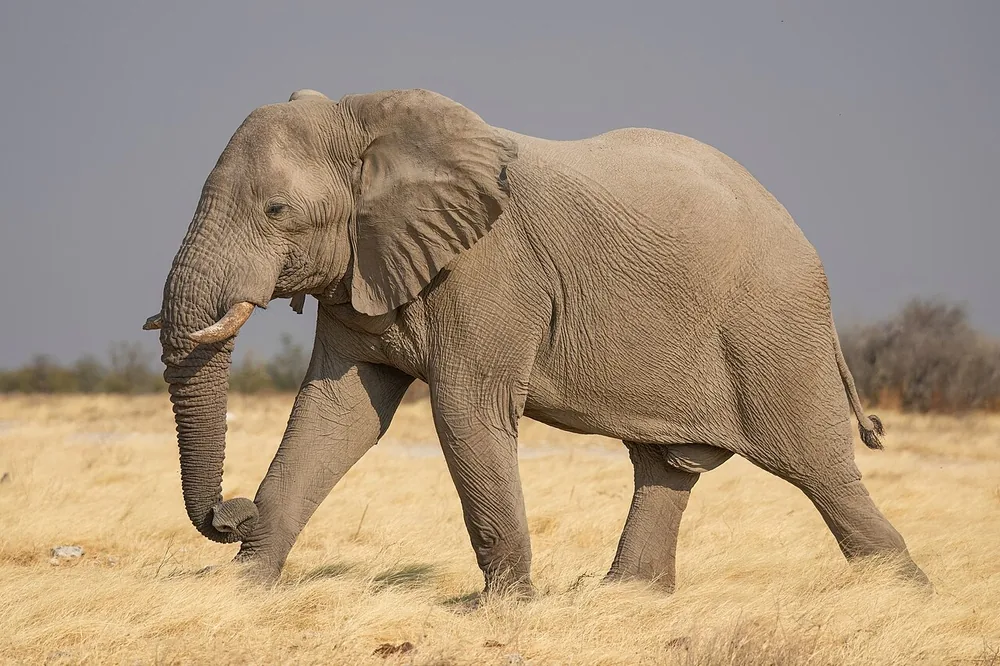
Scientific name: Loxodonta africana · Group: mammal · Lives: savannas, grasslands, woodlands and wetlands of sub-Saharan Africa · Size: bulls average 3.04–3.36 m at the shoulder and 5.2–6.9 tonnes · Eats: grasses, leaves, bark and herbs · IUCN status: Endangered (2021)
The largest living land animal. A mother is pregnant for about 22 months, the longest pregnancy of any mammal. Each day an adult eats about 150 kg of plants and drinks about 230 litres of water.
Elephant (Asian)
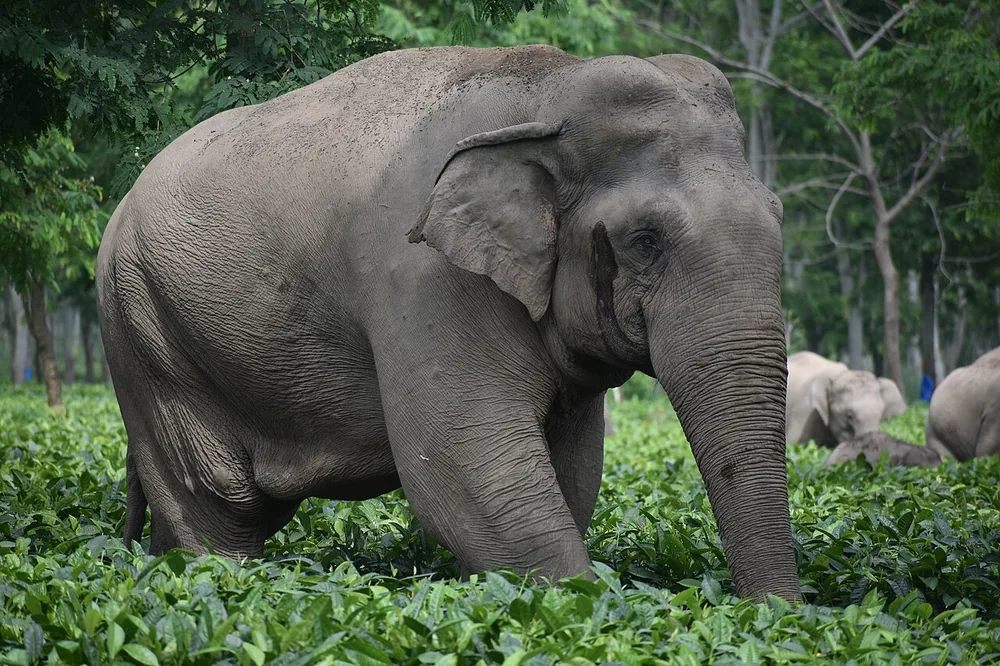
Scientific name: Elephas maximus · Group: mammal · Lives: forests and grasslands from India and Nepal to Borneo and Sumatra · Size: males average about 4 tonnes, females about 2.7 tonnes · Eats: plants, about 150 kg a day · IUCN status: Endangered
Its trunk ends in one finger-like tip, where an African elephant has two, and most females have no visible tusks. See how to tell African and Asian elephants apart. It is the closest living relative of the extinct mammoths.
Elephant seal (southern)
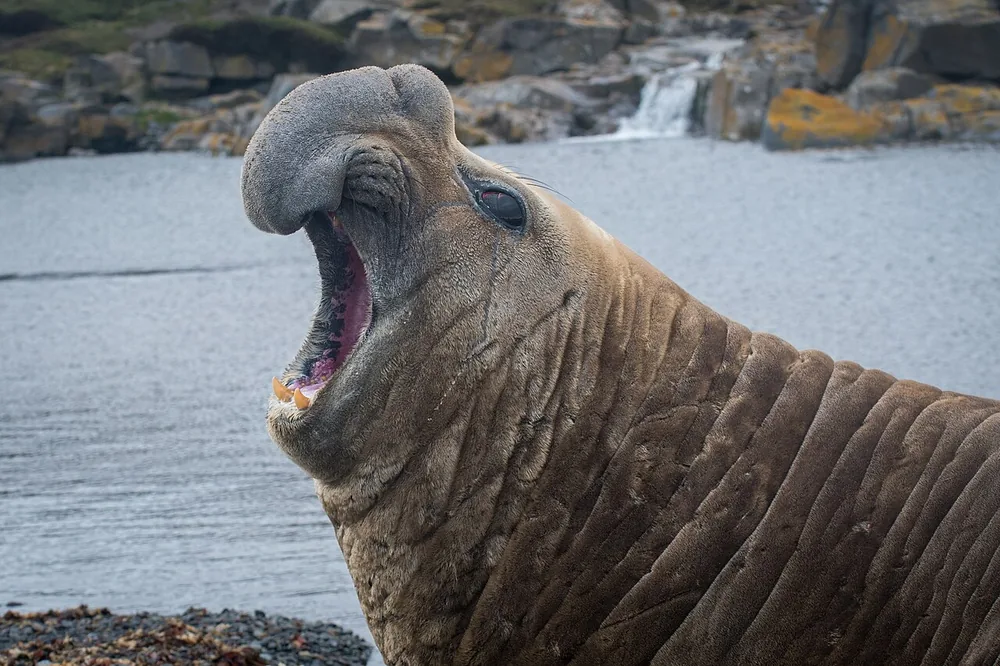
Scientific name: Mirounga leonina · Group: mammal (seal) · Lives: sub-Antarctic islands and the Southern Ocean · Size: bulls 3,000–3,700 kg; females 350–900 kg · Eats: fish and squid · IUCN status: Vulnerable (2026 reassessment)
The largest seal and the largest carnivore alive. A male’s trunk-like nose amplifies his roar, and there were about 700,000 animals in a 2025 estimate.
Eland (common)
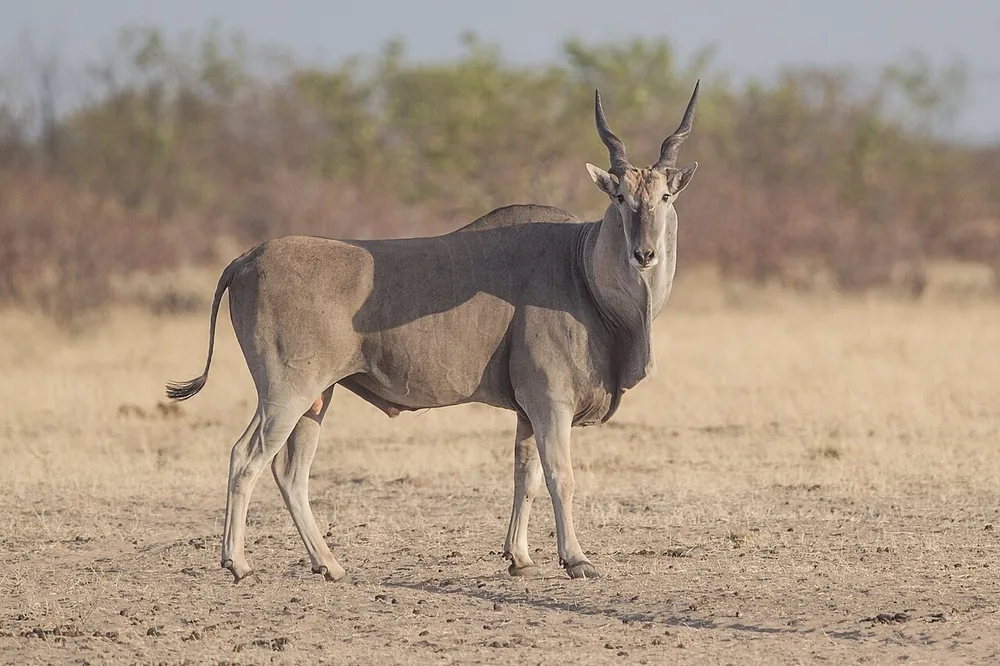
Scientific name: Taurotragus oryx · Group: mammal (antelope) · Lives: savannah, woodland and grassland of East and southern Africa · Size: bulls 400–942 kg and up to 1.83 m at the shoulder · Eats: grasses and leaves · IUCN status: Least Concern
One of the world’s largest antelopes. It is also one of the slowest antelopes, with a top speed of about 40 km/h, but it can trot at 22 km/h almost indefinitely. Herds can reach 500.
Elk (wapiti)
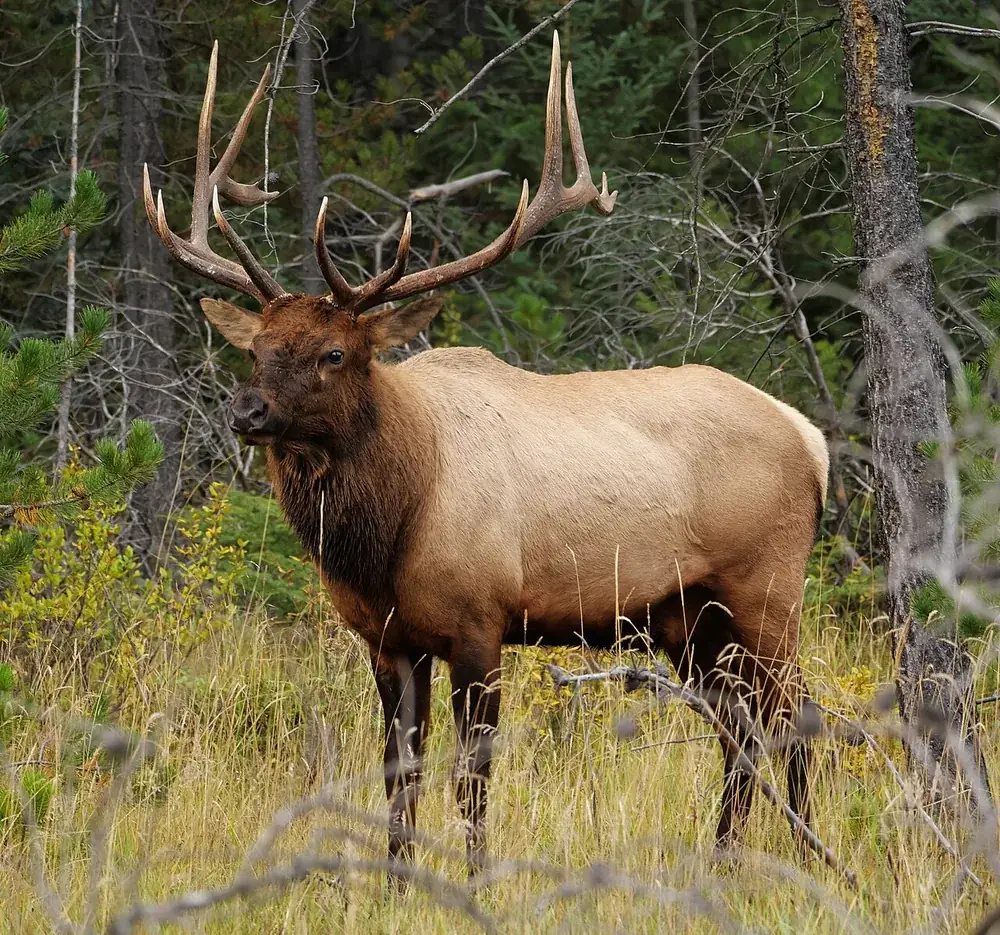
Scientific name: Cervus canadensis · Group: mammal (deer) · Lives: forests and forest edges in North America and Central and East Asia · Size: males 178–497 kg · Eats: grasses, sedges, leaves and bark · IUCN status: Least Concern
The second-largest deer after the moose, and males shed their antlers every year. “Wapiti” comes from Shawnee and Cree words for “white rump”.
Ermine (stoat)
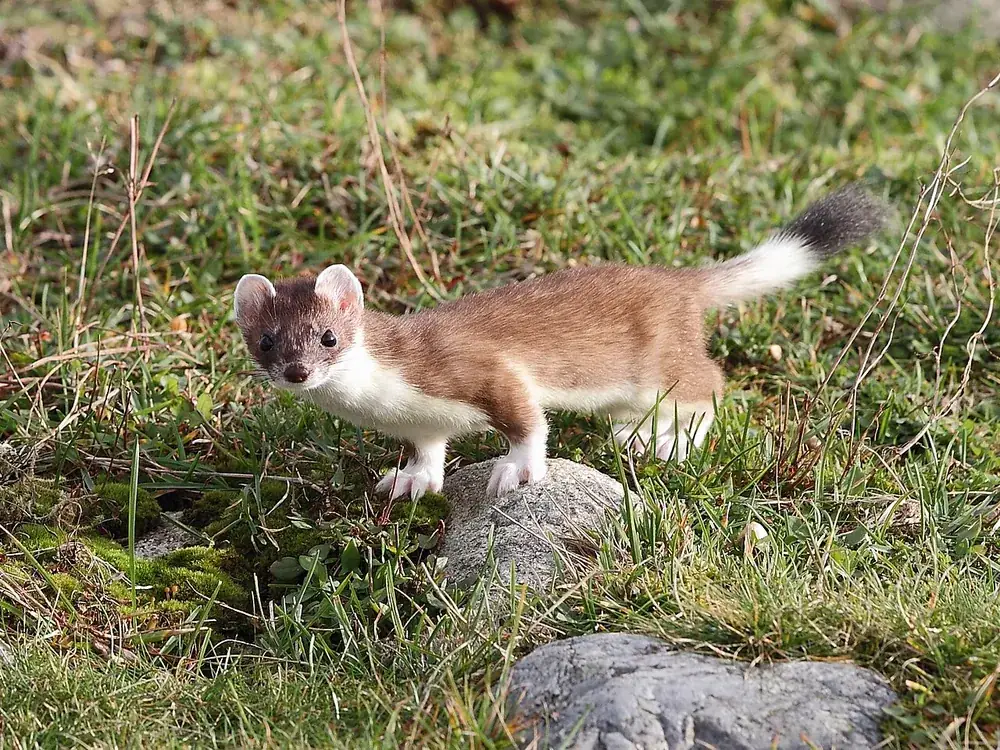
Scientific name: Mustela erminea · Group: mammal (weasel family) · Lives: Europe, Asia and northern North America, including Britain · Size: a small, slim carnivore · Eats: rabbits, voles and birds · IUCN status: Least Concern
In the far north the coat turns pure white in winter, except for a black tail-tip. That white fur is called ermine and once trimmed royal robes.
Echidna (short-beaked)
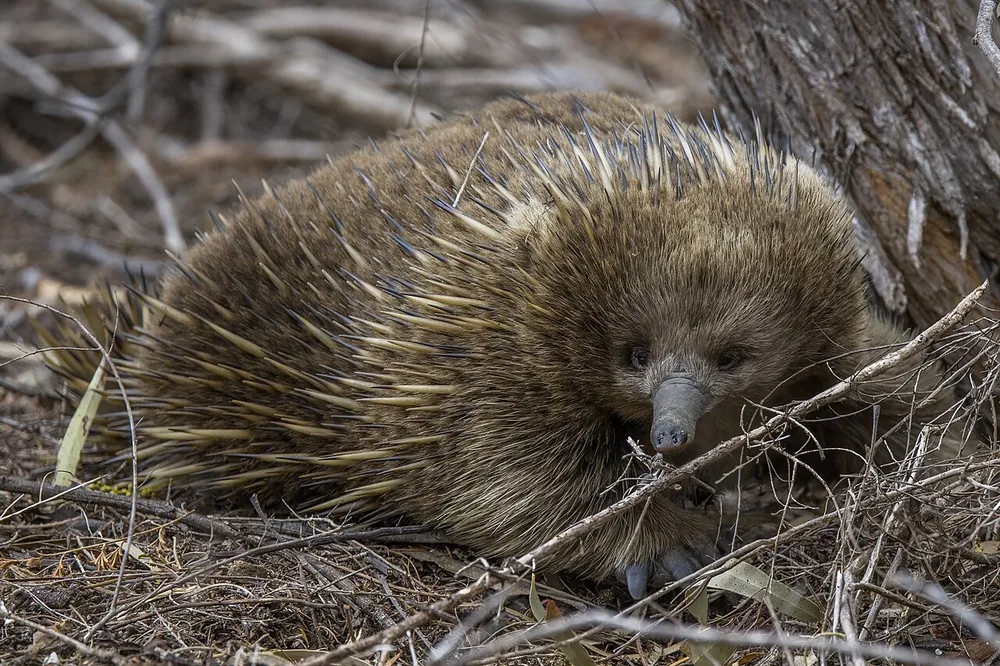
Scientific name: Tachyglossus aculeatus · Group: mammal (monotreme) · Lives: almost all of Australia and New Guinea · Size: 30–45 cm long; 2–7 kg · Eats: ants and termites · IUCN status: Least Concern
One of the only mammals that lay eggs: the female lays a single egg each year. It has no teeth and catches insects with a fast, sticky tongue. Read more about egg-laying animals.
Ethiopian wolf
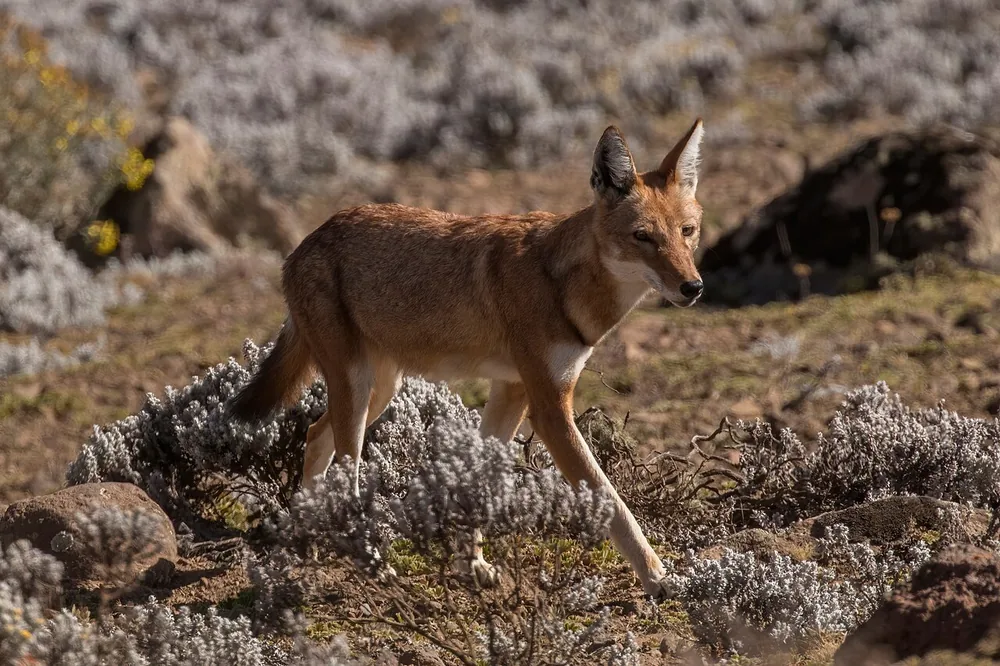
Scientific name: Canis simensis · Group: mammal (dog family) · Lives: Afroalpine grasslands of the Ethiopian Highlands, 3,000–4,500 m up · Size: about the size of a coyote · Eats: mostly mole-rats and other rodents · IUCN status: Endangered
The world’s rarest canid and Africa’s most endangered carnivore. An estimate from 2011 put it at about 360–440 adults, spread across seven isolated mountain ranges.
Eurasian lynx
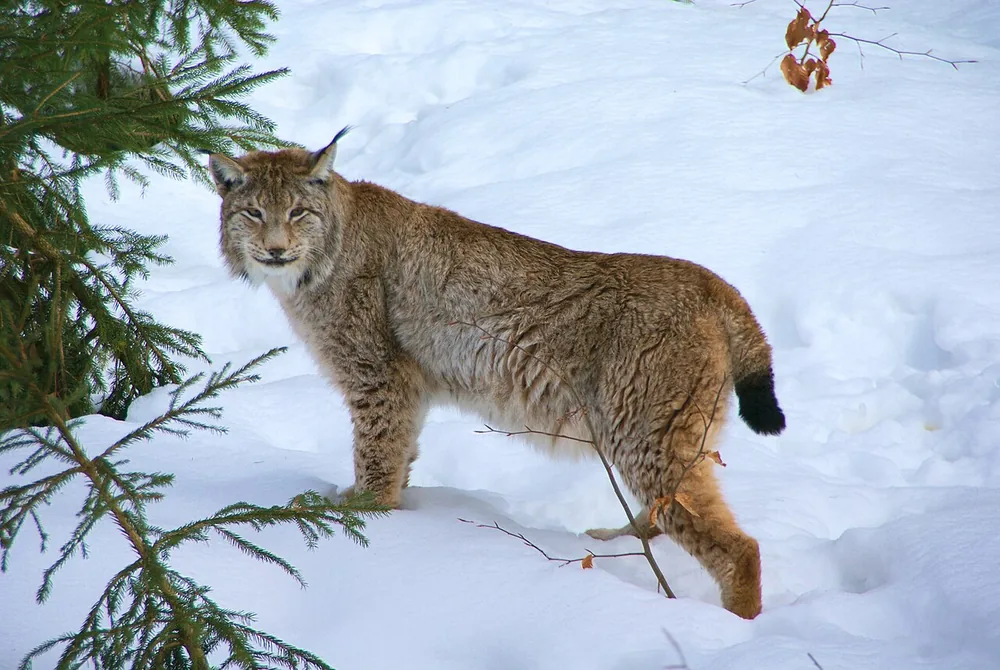
Scientific name: Lynx lynx · Group: mammal (wild cat) · Lives: forests from Europe to Siberia, Central Asia and the Himalayas · Size: males 76–106 cm long; mostly 12–32 kg in Russia, smaller in western Europe · Eats: roe deer, hares and other mammals · IUCN status: Least Concern
The largest of the four lynx species, with black tufts on its ears. It was wiped out from the lowlands of western Europe but is now back in parts of the continent.
Eurasian otter
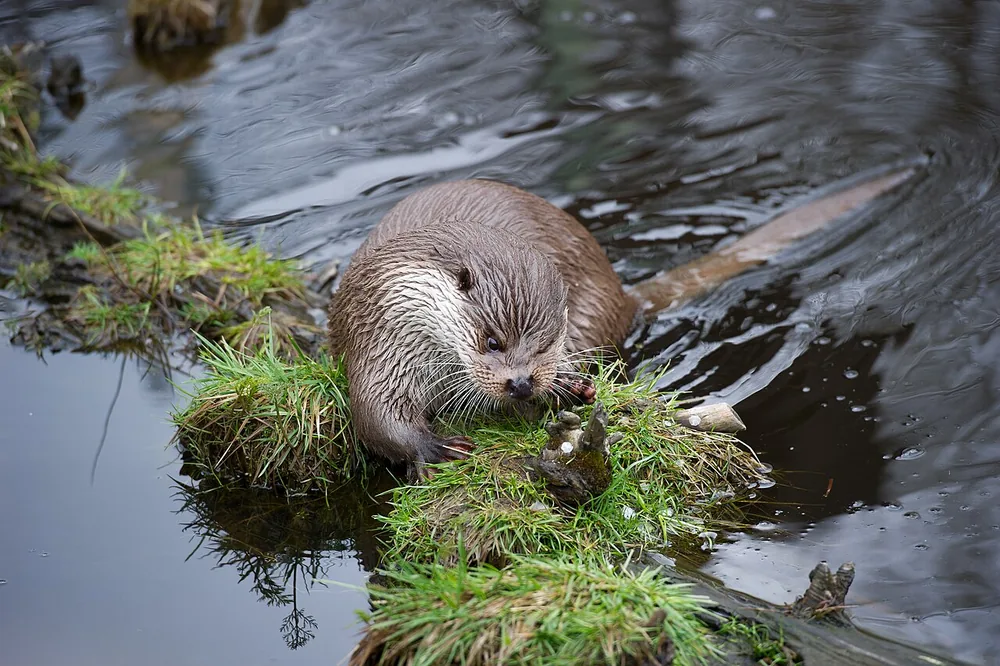
Scientific name: Lutra lutra · Group: mammal (weasel family) · Lives: rivers, lakes and coasts of Europe, Asia and North Africa · Size: 57–95 cm plus a 35–45 cm tail; 7–12 kg · Eats: mainly fish · IUCN status: Near Threatened (2022)
The most widely distributed otter. Dense bones help it stay underwater, and it is now common again across Great Britain and Ireland.
European badger
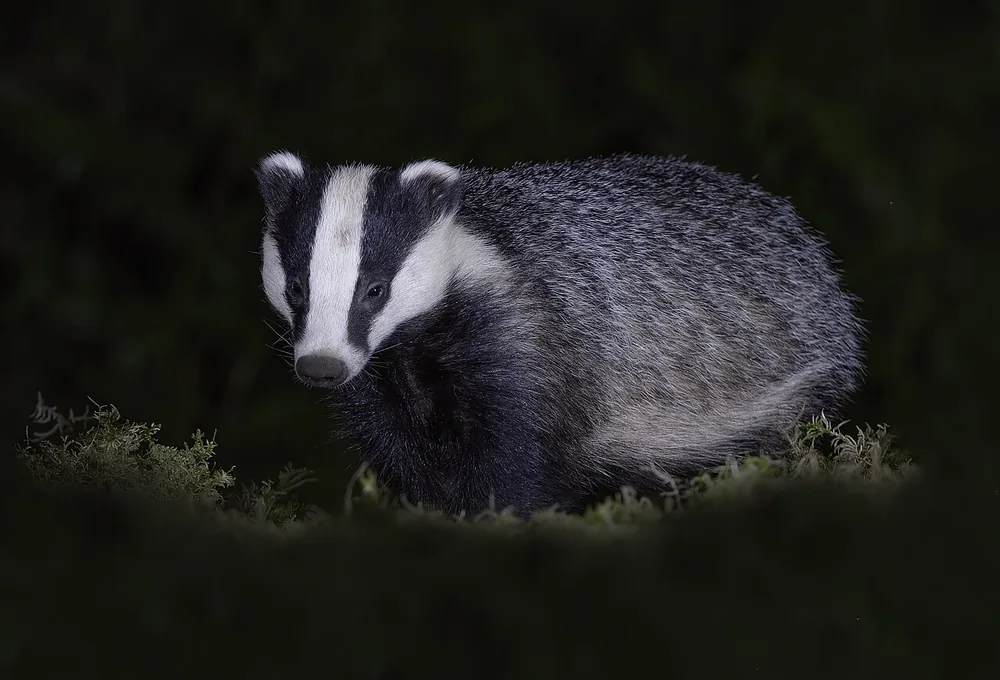
Scientific name: Meles meles · Group: mammal (weasel family) · Lives: woods, fields and gardens across Europe, including Britain · Size: 60–90 cm long; 7–13 kg in spring and 15–17 kg in autumn · Eats: earthworms, insects, fruit and roots · IUCN status: Least Concern
A nocturnal animal that lives in family groups in burrow systems called setts. In the UK it is simply “the badger”.
Eurasian beaver
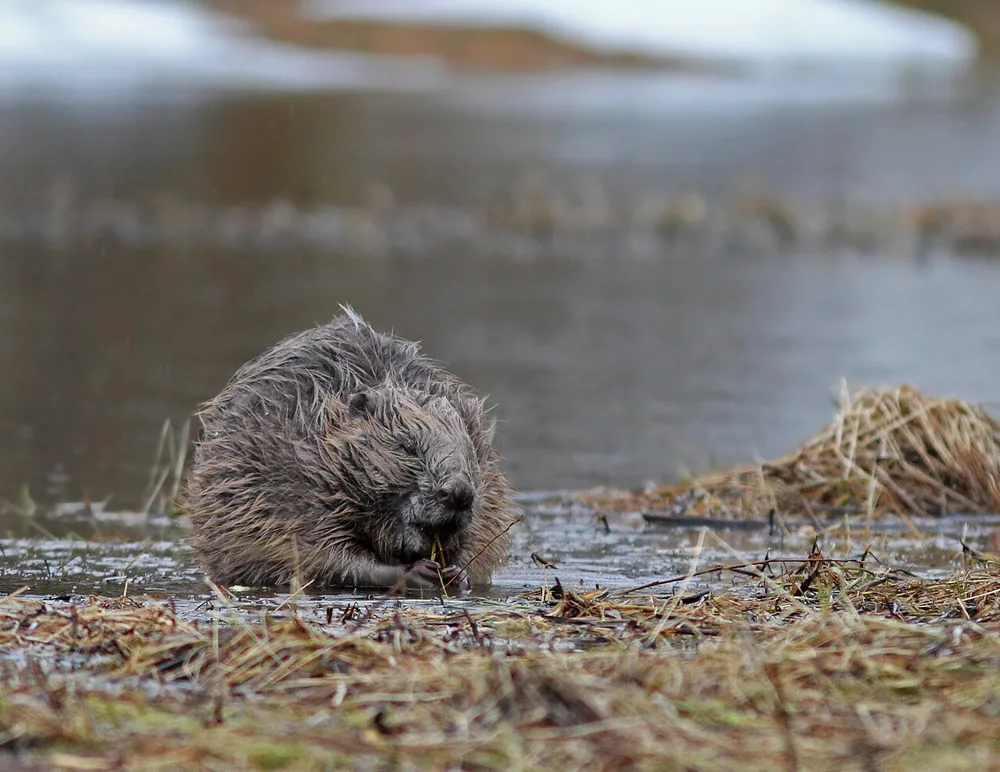
Scientific name: Castor fiber · Group: mammal (rodent) · Lives: rivers and wetlands from western Europe to Mongolia and China · Size: 80–100 cm plus a tail; 11–30 kg · Eats: bark, twigs and water plants · IUCN status: Least Concern
Hunted down to about 1,200 animals in the early 1900s, it now numbers about 1.5 million (2020). It was the UK's first officially licensed mammal reintroduction, with releases in Scotland from 2009.
European hedgehog
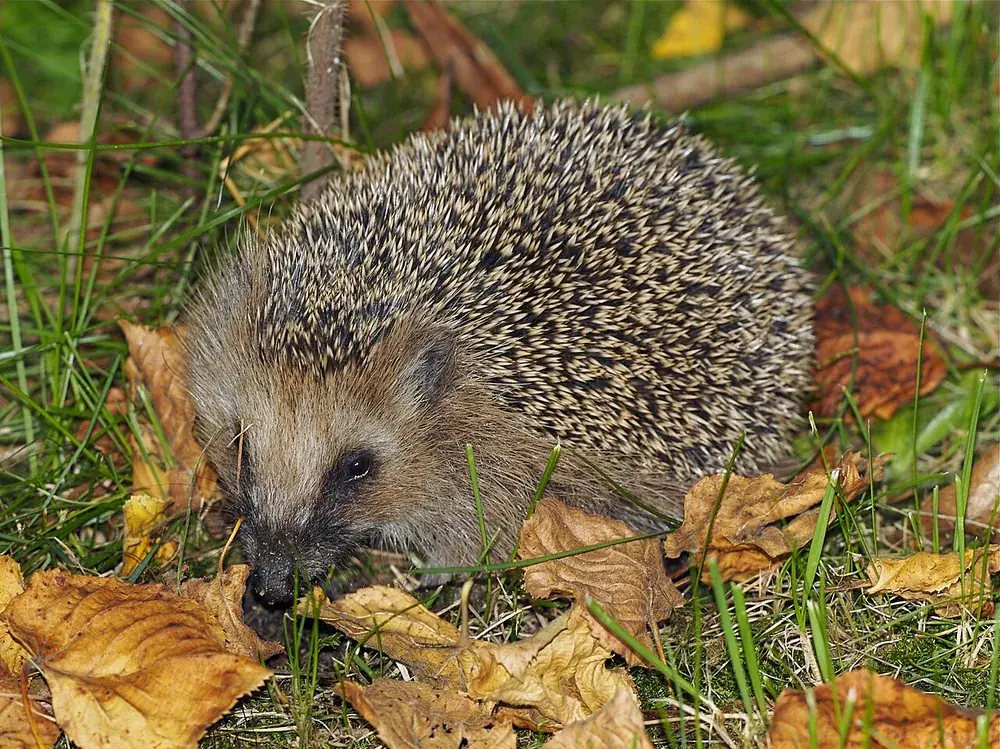
Scientific name: Erinaceus europaeus · Group: mammal · Lives: gardens, hedgerows and woodland edges of western and northern Europe · Size: about 800 g in summer · Eats: insects, worms and slugs · IUCN status: Near Threatened (raised from Least Concern in October 2024)
It hibernates in winter and is declining fast in Great Britain. The global listing moved to Near Threatened in 2024.
Eastern grey kangaroo
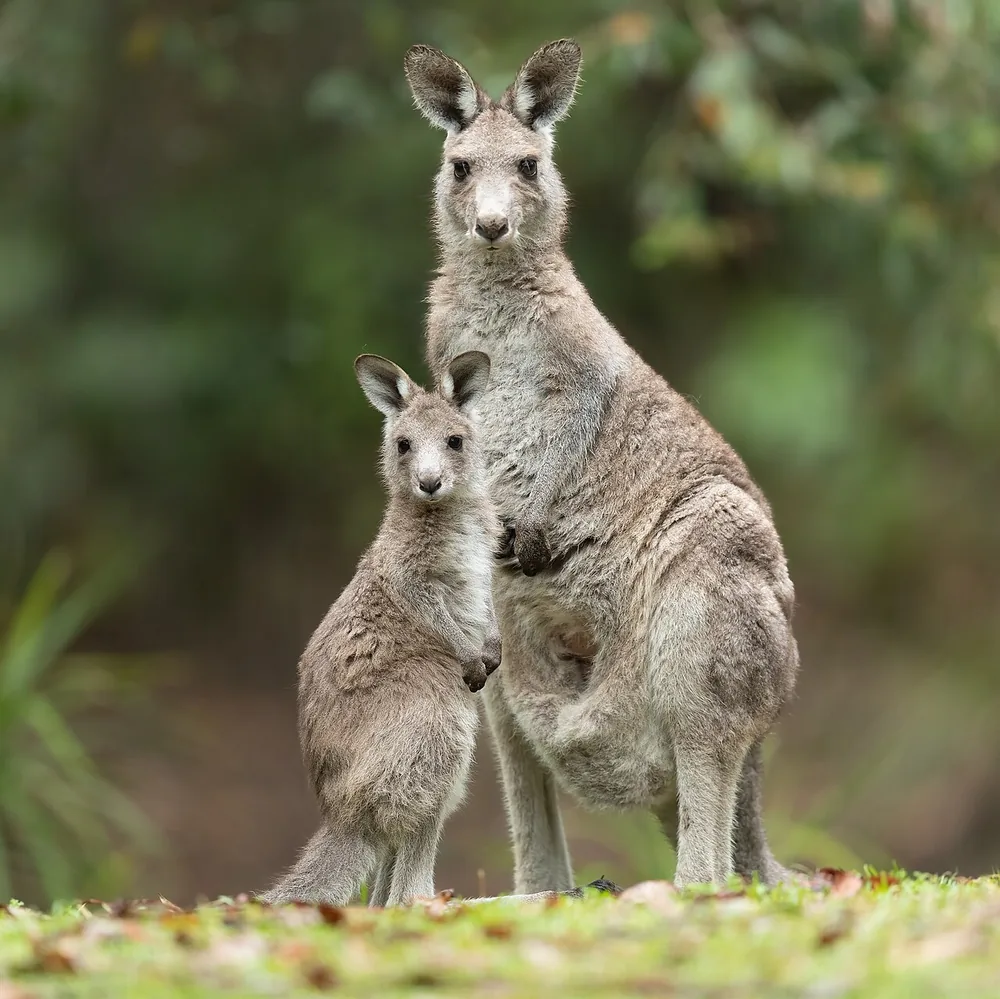
Scientific name: Macropus giganteus · Group: mammal (marsupial) · Lives: grassland and open forest in the eastern third of Australia, and Tasmania · Size: males usually 50–66 kg · Eats: grasses · IUCN status: Least Concern
The second-largest living marsupial; the red kangaroo is bigger. There are several million, and a joey grows in its mother’s pouch.
Eastern gorilla
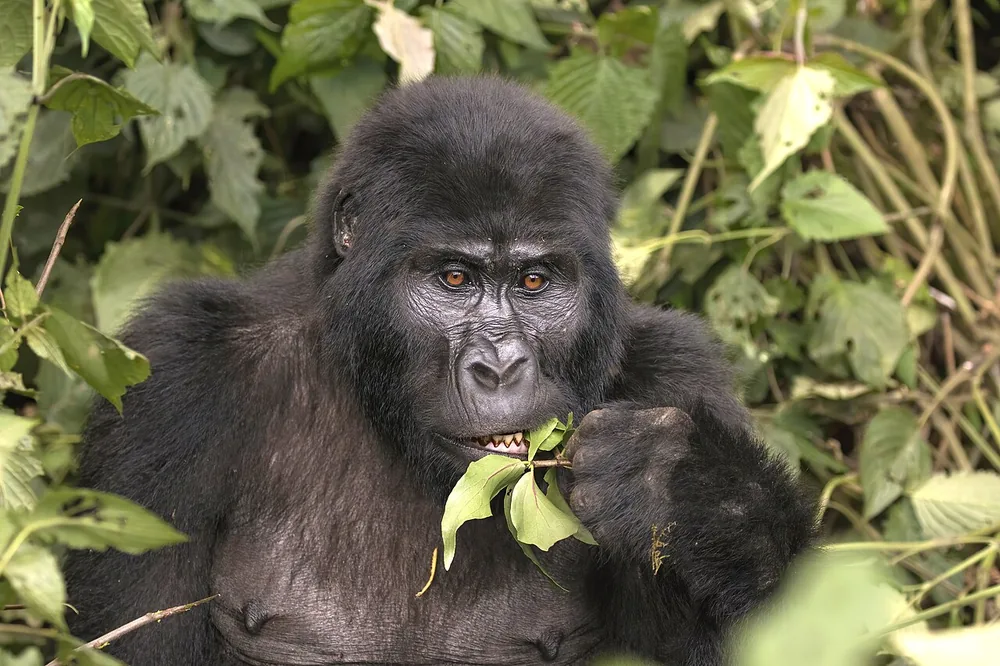
Scientific name: Gorilla beringei · Group: great ape · Lives: mountain and lowland rainforest of eastern DR Congo, Rwanda and Uganda · Size: adult males up to about 200 kg; females 90–100 kg · Eats: leaves, stems, roots and fruit · IUCN status: Critically Endangered
The largest living primate. There are about 6,800 eastern lowland (Grauer’s) gorillas and about 1,000 mountain gorillas.
Emperor tamarin
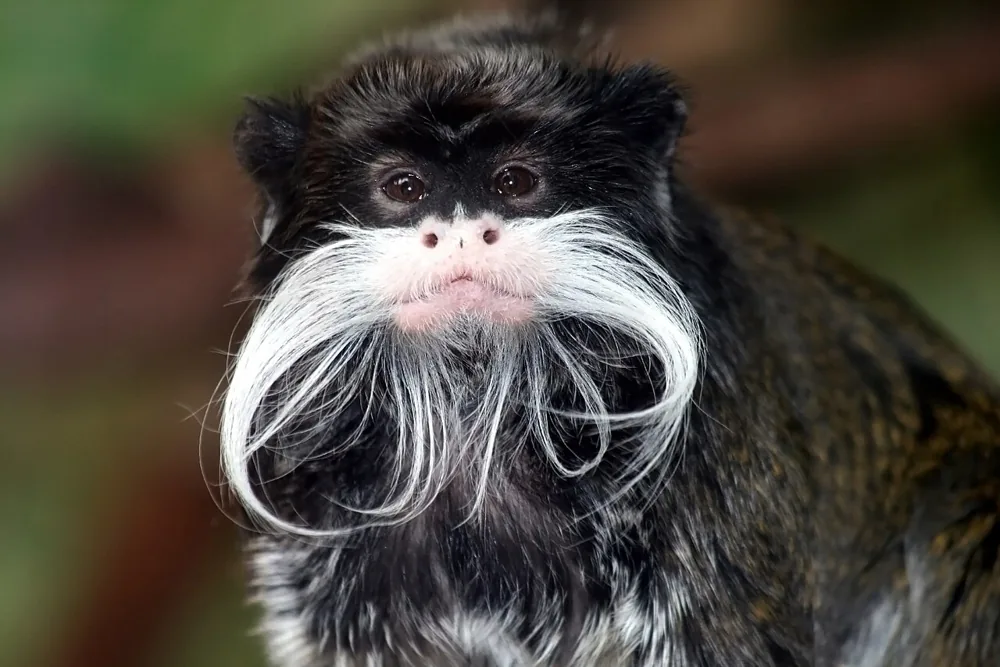
Scientific name: Saguinus imperator · Group: mammal (monkey) · Lives: rainforest of the south-western Amazon in Brazil, Peru and Bolivia · Size: body 23–26 cm plus a 35–41.5 cm tail; about 500 g · Eats: fruit, flowers, nectar and insects · IUCN status: Least Concern
The story goes that it is named after the long white moustache of German Emperor Wilhelm II. It lives in family groups, usually with one breeding female.
Nine more mammals appear in the table. The elephant shrew, or sengi, is more closely related to elephants than to true shrews. The edible dormouse got its name because the Romans ate it, and it nearly doubles its weight before it hibernates. The European mink is Critically Endangered and the European bison is Near Threatened.
Birds that start with E
Birds are the animals with feathers, and there are many kinds, from flightless runners to sea ducks; for ideas on what they eat, see what birds eat. For more favourites, read about 9 amazing birds. Ten follow.
Emu
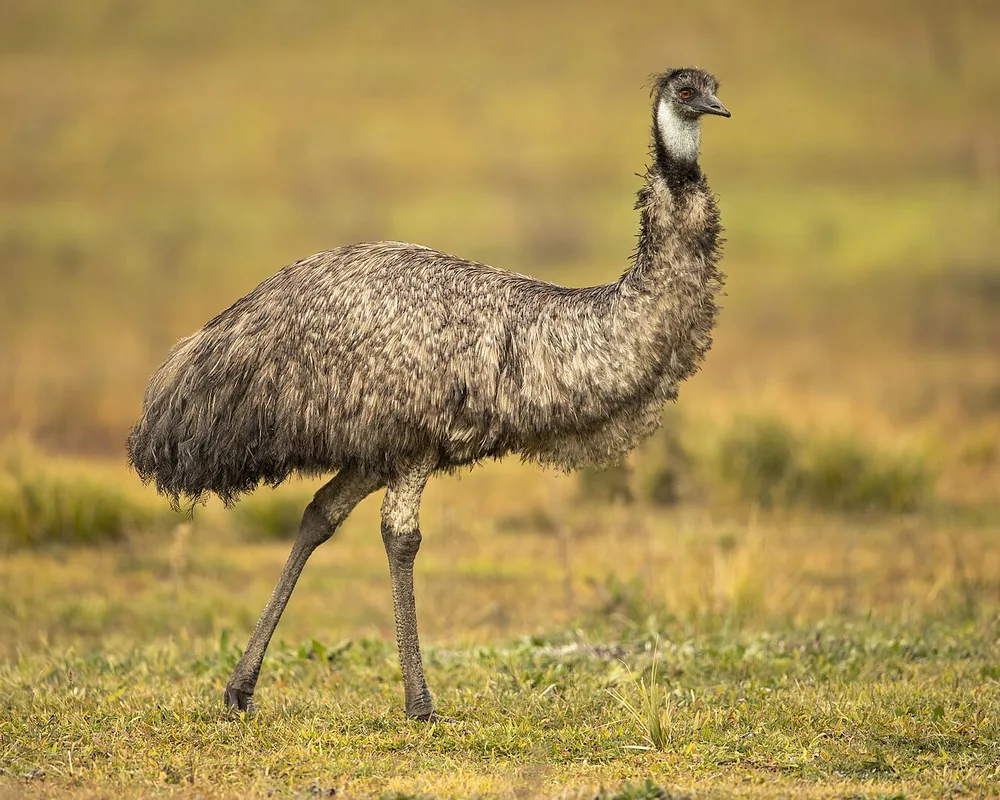
Scientific name: Dromaius novaehollandiae · Group: bird (flightless) · Lives: most of mainland Australia · Size: up to 1.5–1.9 m tall · Eats: plants and insects · IUCN status: Least Concern
The tallest native bird in Australia and the world’s second-tallest bird after the ostrich. It can sprint at 48 km/h.
Emperor penguin
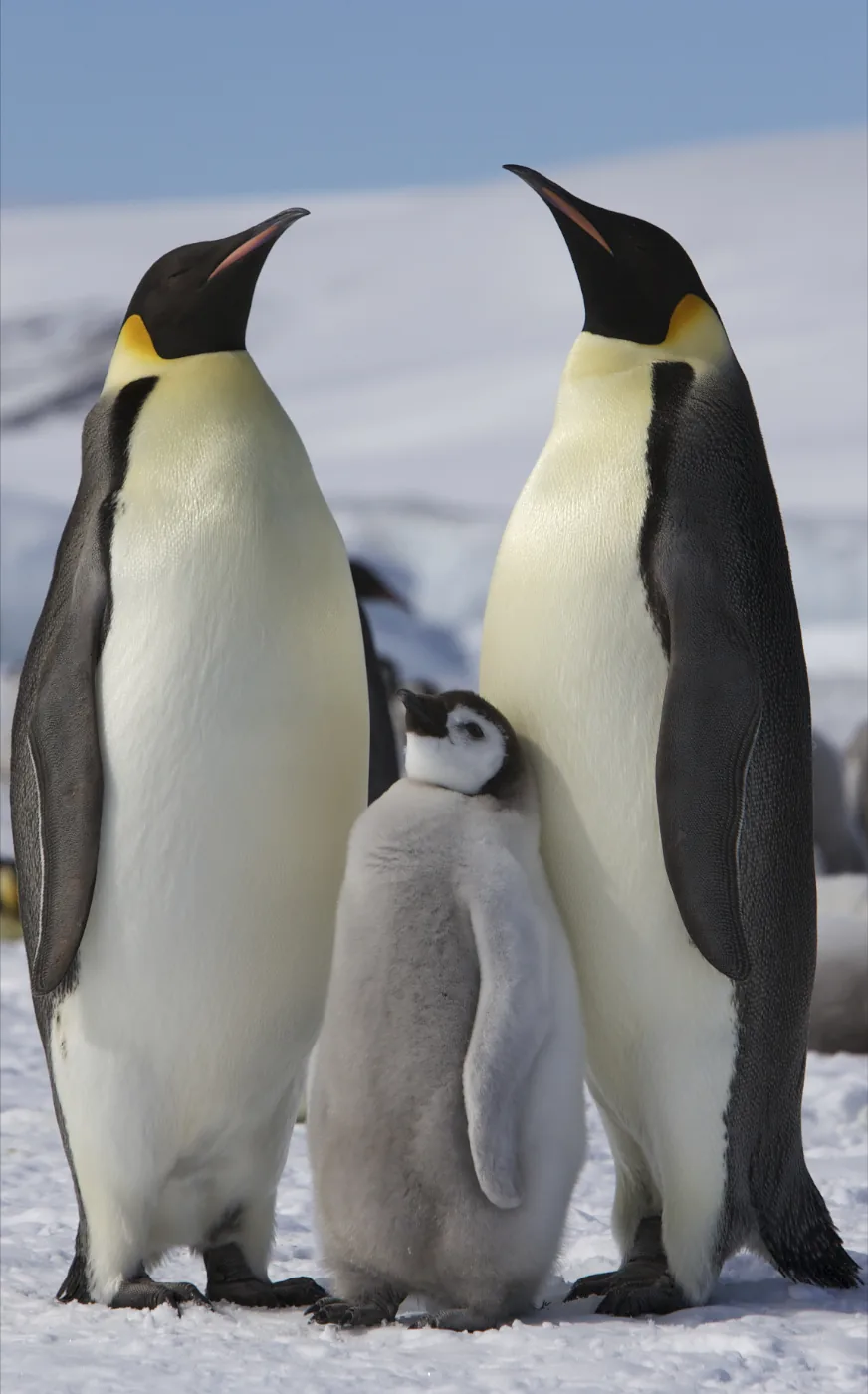
Scientific name: Aptenodytes forsteri · Group: bird (penguin) · Lives: Antarctic sea ice and the surrounding ocean · Size: about 1.1–1.2 m long; 22–45 kg · Eats: fish, krill and squid · IUCN status: Endangered (April 2026, BirdLife)
The tallest and heaviest penguin, and the only one that breeds in the Antarctic winter, walking 50–120 km over the ice to its colony. It can dive to 535 m.
Eagle (golden eagle)
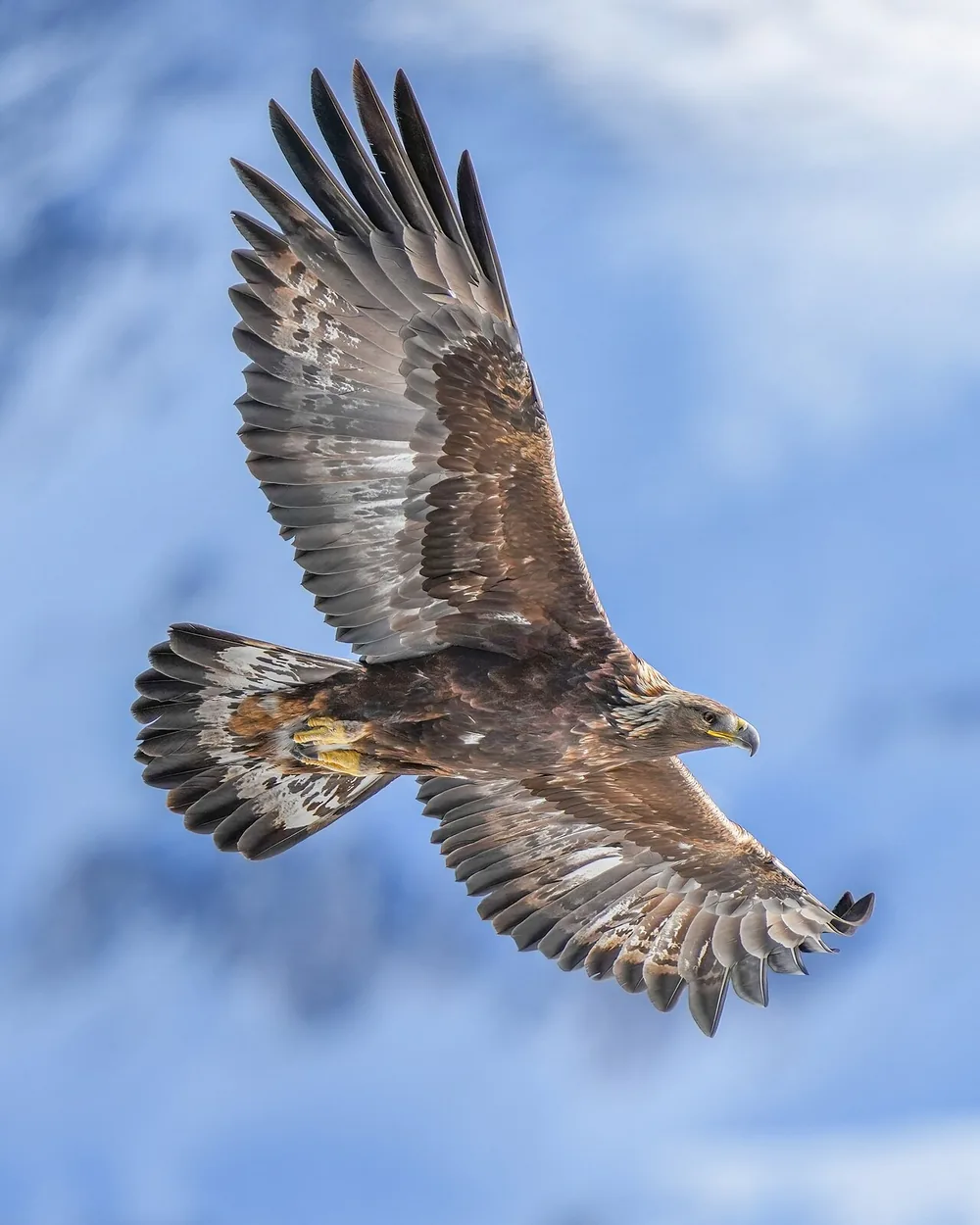
Scientific name: Aquila chrysaetos · Group: bird of prey · Lives: mountains and open country across the Northern Hemisphere, including the Scottish Highlands · Size: home ranges of up to 200 km² · Eats: hares, rabbits, marmots and ground squirrels · IUCN status: Least Concern
The most widely distributed eagle. When it stoops on prey it can dive at 240–320 km/h.
Eurasian eagle-owl
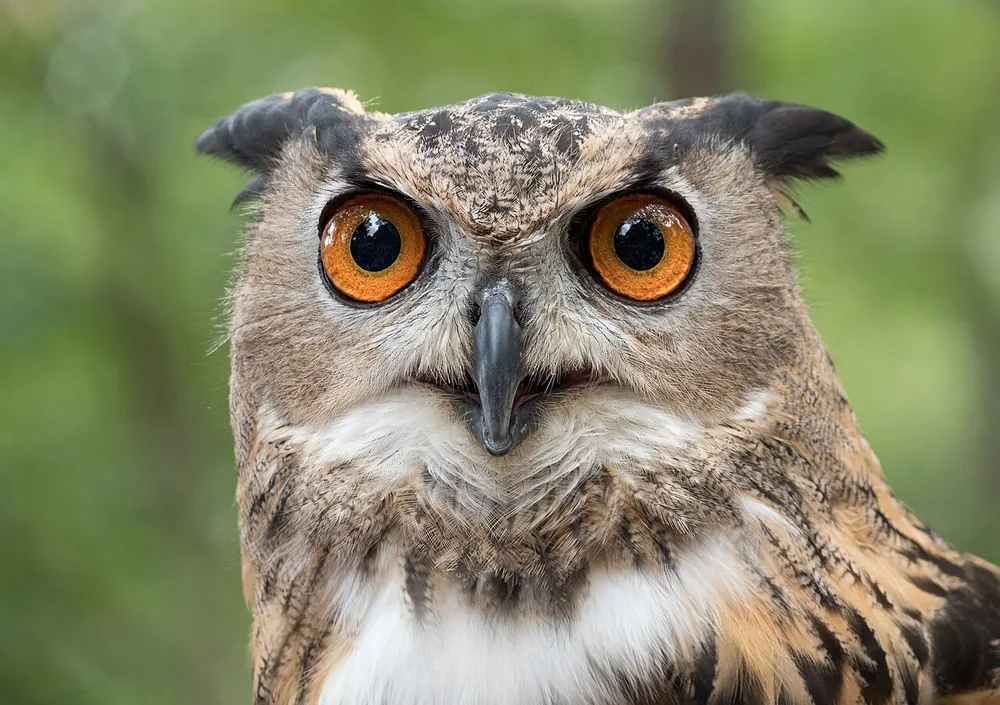
Scientific name: Bubo bubo · Group: bird (owl) · Lives: rocky, mountainous and wooded country across Europe and Asia · Size: females up to 75 cm long with a 188 cm wingspan · Eats: mammals and birds, including hedgehogs · IUCN status: Least Concern
One of the largest owls in the world, with orange eyes and ear tufts.
Egret (little egret)
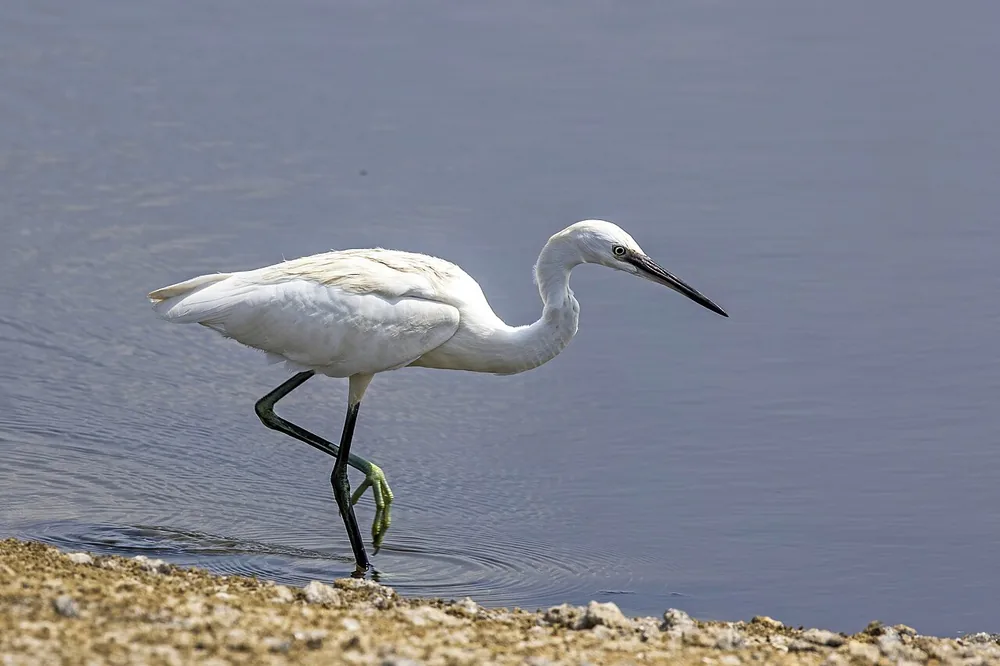
Scientific name: Egretta garzetta · Group: bird (heron family) · Lives: wetlands, estuaries and coasts of Europe, Asia, Africa and Australia · Size: 55–65 cm long; 350–550 g · Eats: small fish, frogs and insects · IUCN status: Least Concern
Its breeding plumes were so prized for hats that hunting nearly wiped it out, and that helped start the RSPB in 1889. It now breeds in Britain again.
Eider (common eider)
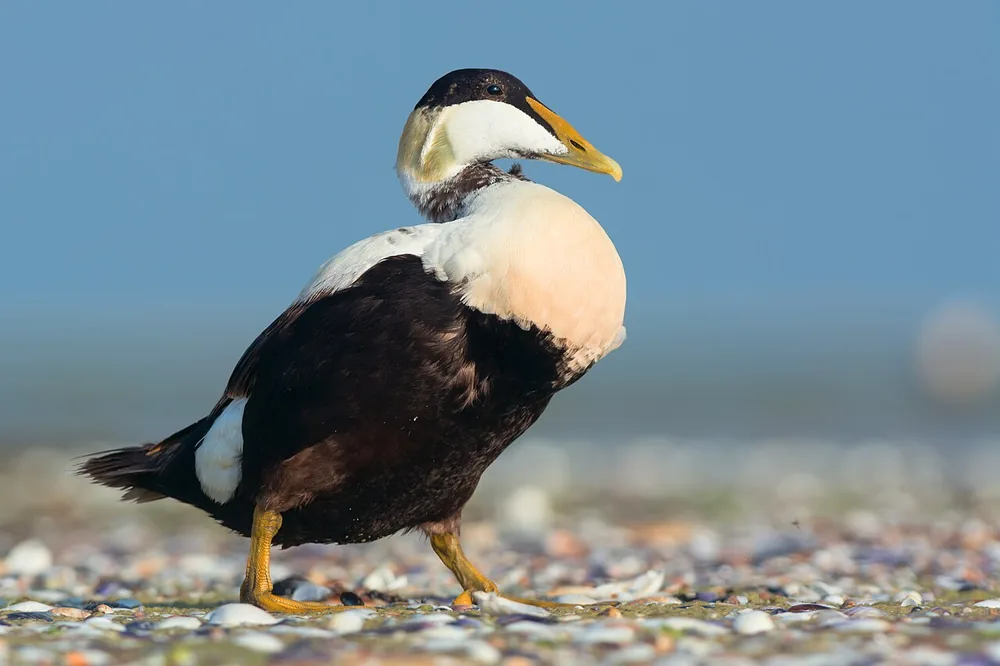
Scientific name: Somateria mollissima · Group: bird (sea duck) · Lives: northern coasts of Europe, North America and eastern Siberia · Size: 50–71 cm long · Eats: mussels, crabs and other shellfish · IUCN status: Near Threatened (2018)
The largest eider. The female lines her nest with soft down plucked from her breast, which gives us “eiderdown”. It can fly at up to 113 km/h.
European robin
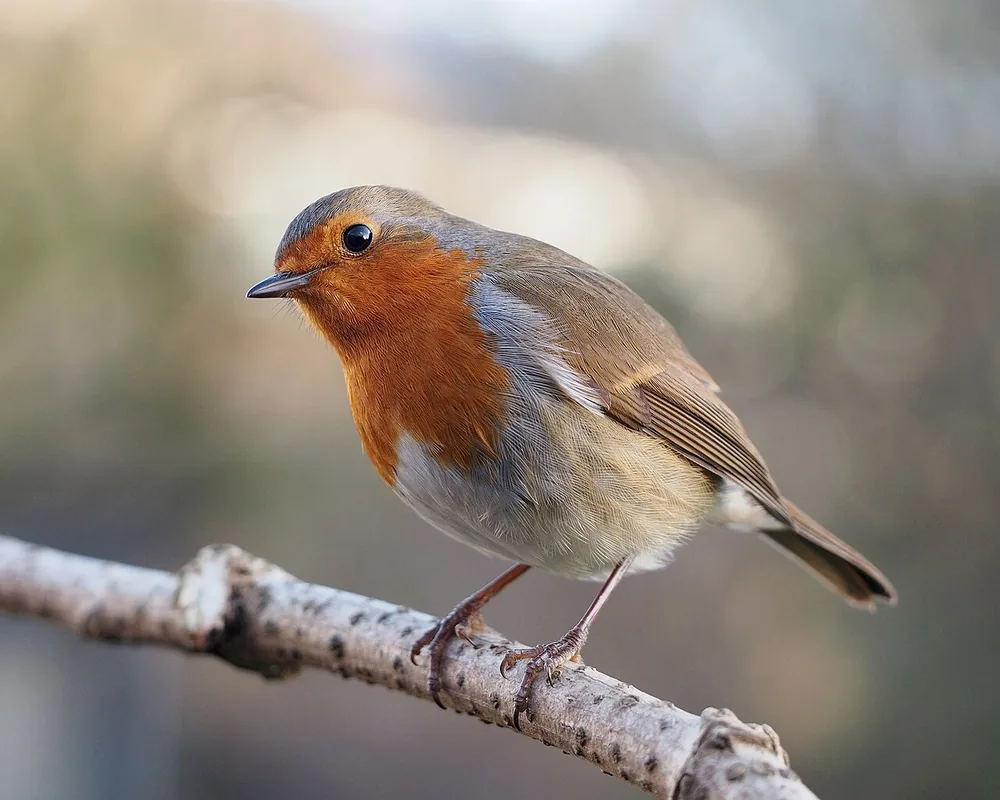
Scientific name: Erithacus rubecula · Group: bird (Old World flycatcher) · Lives: gardens and woods across Europe, to western Siberia and North Africa · Size: 12.5–14 cm long · Eats: insects, worms and berries · IUCN status: Least Concern
Males and females look alike, with an orange-red breast. Young birds are speckled brown with no red, and adults are strongly territorial.
Egyptian vulture
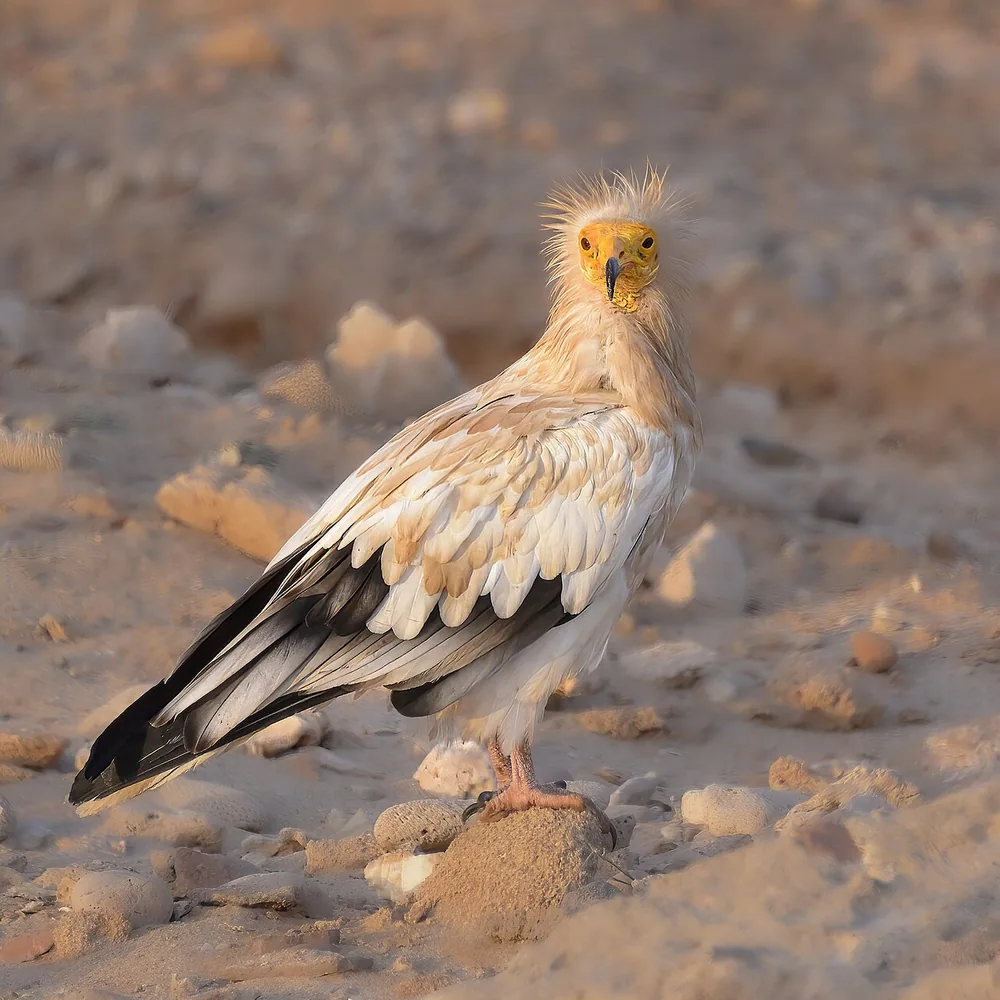
Scientific name: Neophron percnopterus · Group: bird of prey · Lives: dry open country from Spain and North Africa to India · Size: a medium-sized vulture · Eats: carrion, eggs and small animals · IUCN status: Endangered (2021)
One of very few tool-using birds: it throws pebbles to crack open ostrich and other large eggs. It is nicknamed the “pharaoh’s chicken”.
Eclectus parrot
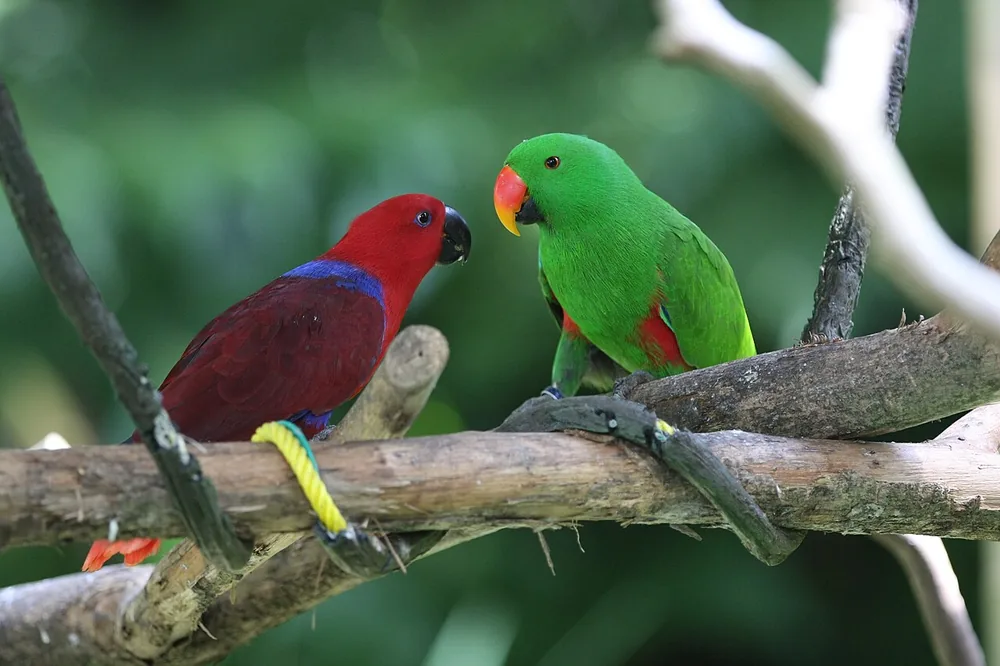
Scientific name: Eclectus polychloros · Group: bird (parrot) · Lives: New Guinea, nearby islands and the tip of Cape York, Australia · Size: a large, stocky parrot · Eats: fruit, seeds and nuts · IUCN status: Least Concern
The two sexes look different: males are bright green and females are red and blue, so a pair is easy to tell apart. The photo shows both.
Eurasian hoopoe
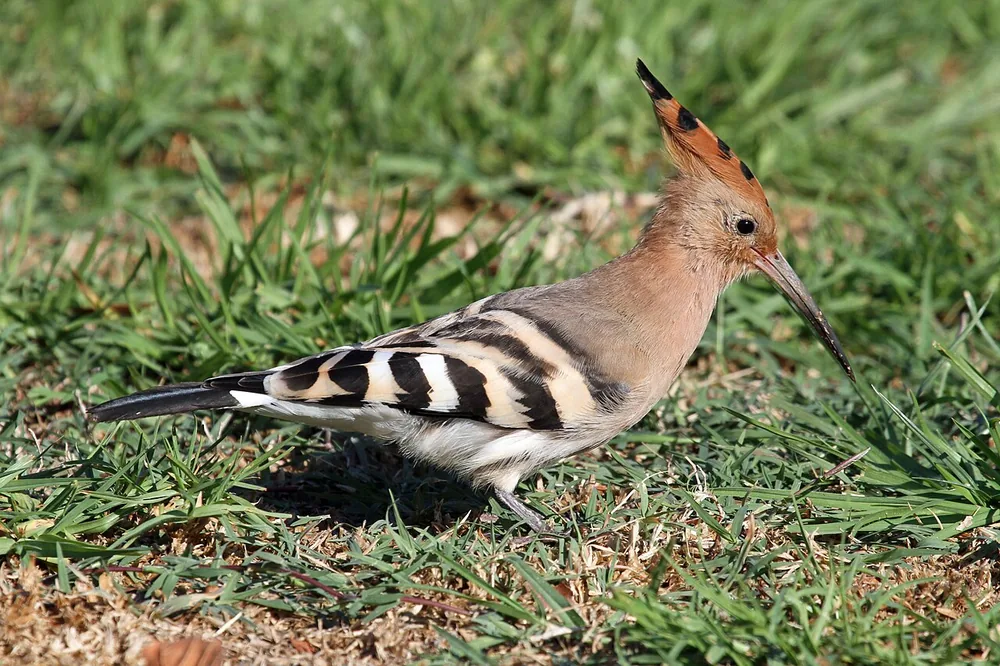
Scientific name: Upupa epops · Group: bird · Lives: open country with trees across Europe, Asia and Africa · Size: 25–32 cm long; 44–48 cm wingspan · Eats: insects and grubs probed from the ground · IUCN status: Least Concern
It has a tall, fan-like crest, and its “oop-oop-oop” call gives the bird its name. It is the national bird of Israel and only a rare visitor to Britain.
Nine more birds are in the table, from the Eurasian jay and wren to the eastern imperial eagle (Vulnerable) and elegant tern (Near Threatened).
Reptiles and amphibians that start with E
Reptiles have dry, scaly skin, while amphibians have moist skin and start life in water. To see how snake venom works in other parts of the world, read about venomous snakes in Sri Lanka. Eight follow.
Eastern diamondback rattlesnake
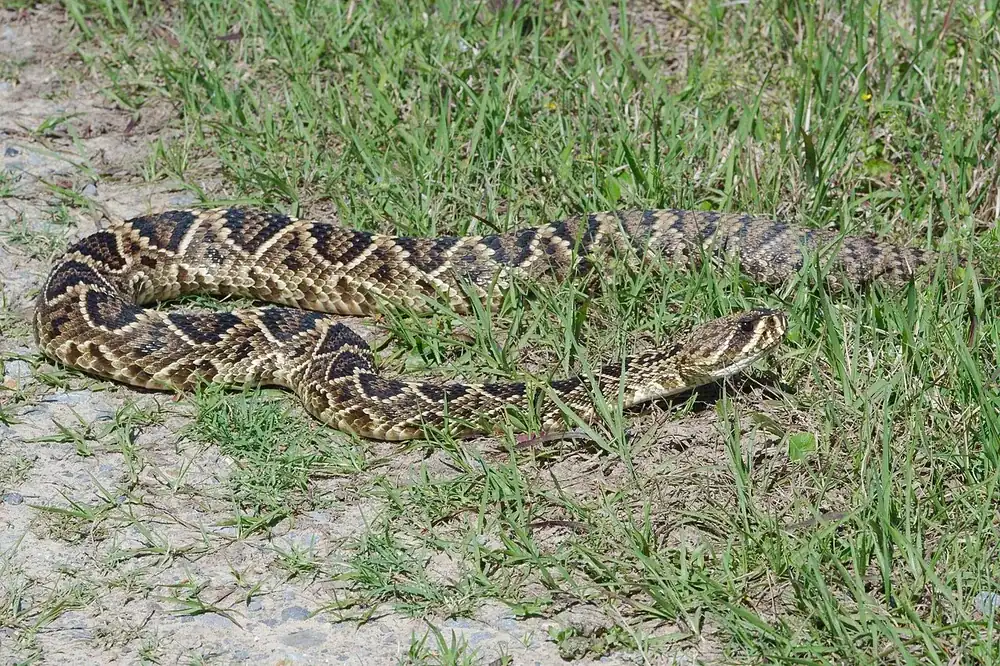
Scientific name: Crotalus adamanteus · Group: reptile (pit viper) · Lives: pine woods and scrub of the south-eastern USA · Size: the record is 2.4 m and 15.4 kg (1946) · Eats: rabbits, rodents and birds · IUCN status: Least Concern
The largest rattlesnake and one of the heaviest venomous snakes in the Americas, with dark diamonds edged in pale scales. It is venomous, so keep away.
Eyelash viper
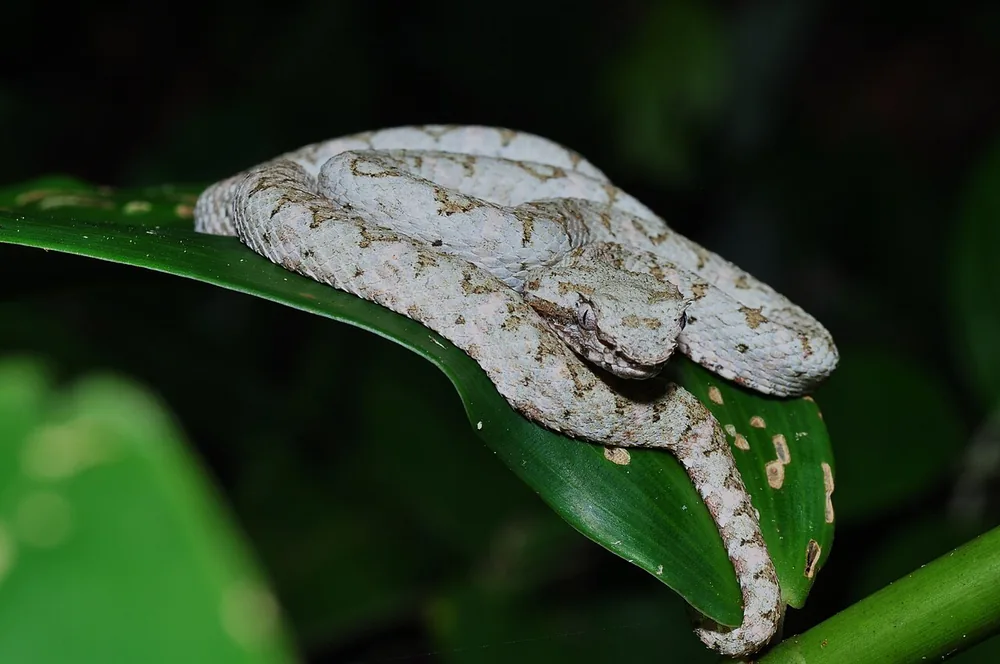
Scientific name: Bothriechis schlegelii · Group: reptile (pit viper) · Lives: rainforests of Central and northern South America · Size: a small, tree-dwelling snake · Eats: frogs, lizards, small birds and mammals · IUCN status: Least Concern (older assessment of the broad species)
Named for the spiky scales above its eyes, it comes in yellow, green, brown and pink forms. DNA work in 2024 split the old species, so the name B. schlegelii now covers a much narrower range.
Emerald tree boa
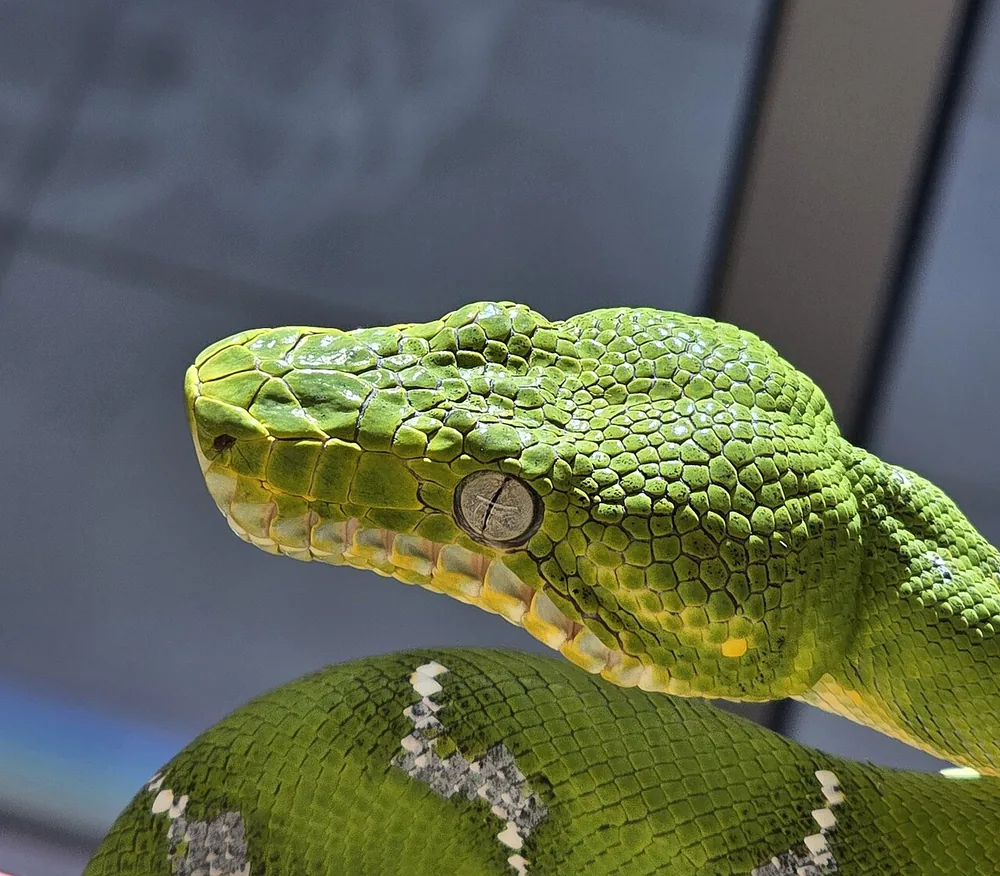
Scientific name: Corallus caninus · Group: reptile (boa, non-venomous) · Lives: rainforests of northern South America · Size: adults about 1.8 m · Eats: birds and small mammals, ambushed from branches · IUCN status: Least Concern
Bright green with white “lightning-bolt” marks. Its front teeth are proportionally among the largest of any non-venomous snake.
Eastern box turtle
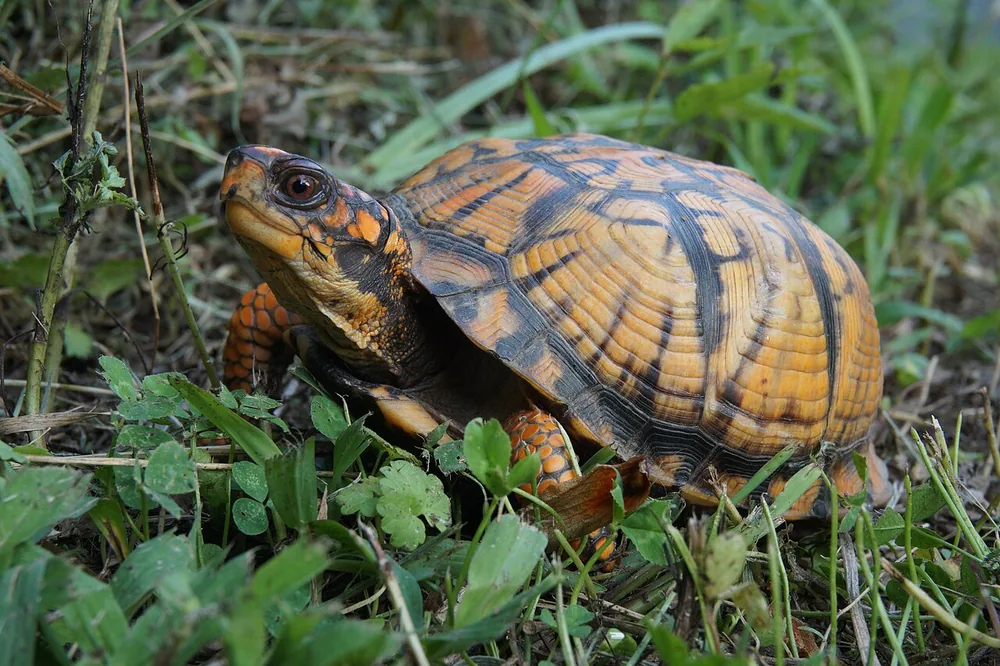
Scientific name: Terrapene carolina carolina · Group: reptile (turtle) · Lives: woods and meadows of the eastern USA · Size: a small, domed turtle · Eats: plants, fruit, insects, worms and fungi · IUCN status: Vulnerable (the common box turtle, 2011)
The hinged lower shell shuts the turtle in like a box. One common box turtle lived to at least 138, and females can store sperm for up to four years.
Eastern brown snake
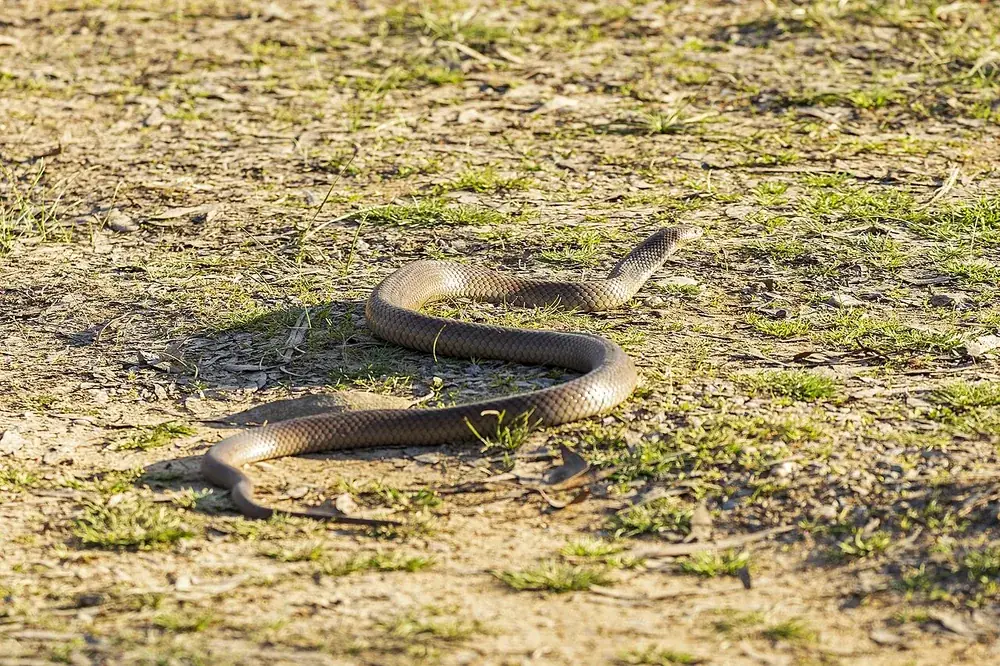
Scientific name: Pseudonaja textilis · Group: reptile (elapid) · Lives: eastern and central Australia and southern New Guinea, including farmland and city edges · Size: up to 2 m long · Eats: mainly house mice · IUCN status: Least Concern (2018)
In laboratory tests it ranks as the world’s second-most venomous land snake, after the inland taipan. Give any wild snake plenty of space.
Eastern hellbender
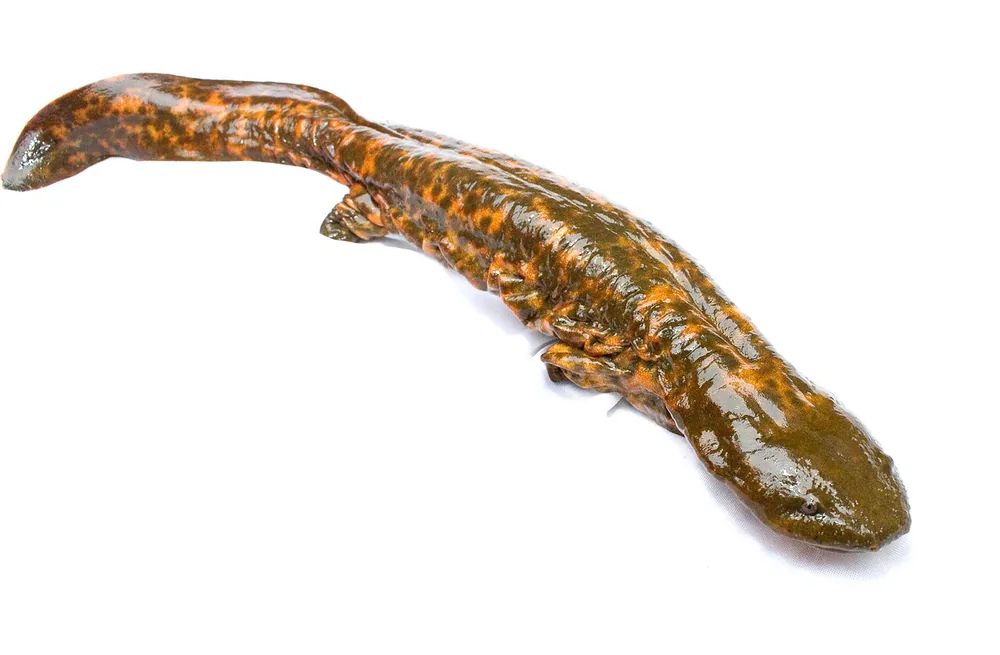
Scientific name: Cryptobranchus alleganiensis · Group: amphibian (giant salamander) · Lives: fast, clean, rocky streams of the eastern and central USA · Size: North America’s largest salamander · Eats: crayfish and small fish · IUCN status: Vulnerable (2022)
It breathes mostly through its wrinkly, frilly skin, and its family goes back about 160 million years.
Eastern newt
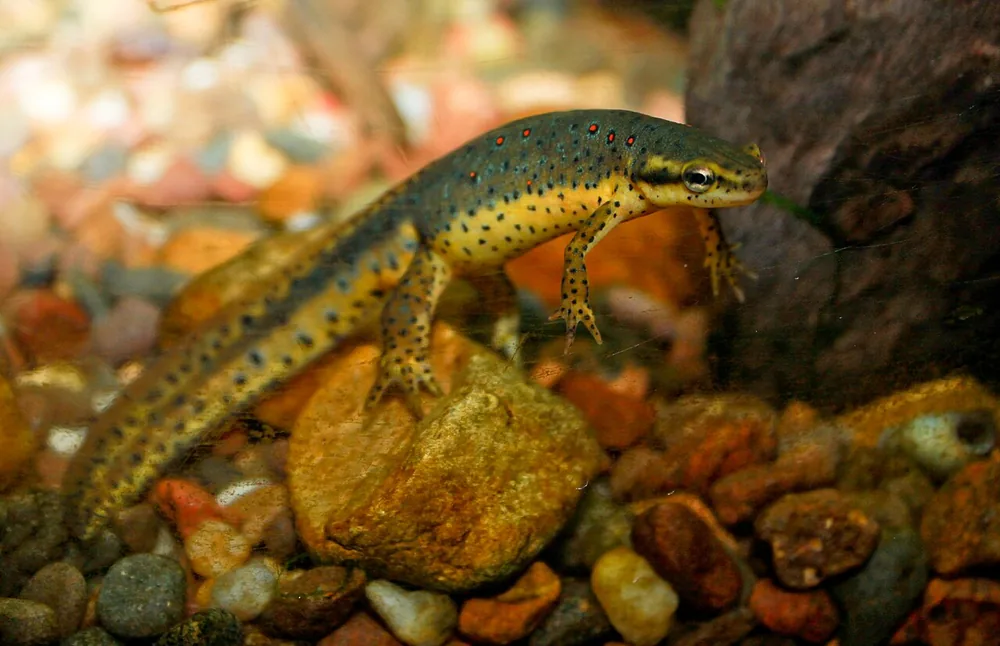
Scientific name: Notophthalmus viridescens · Group: amphibian (newt) · Lives: ponds, lakes and nearby woods of eastern North America · Size: up to 13 cm long · Eats: insects, worms, snails and tadpoles · IUCN status: Least Concern
It has three life stages: an aquatic larva, a bright orange land-living “red eft”, then an aquatic adult. Its skin makes a toxin, so fish avoid it.
Edible frog
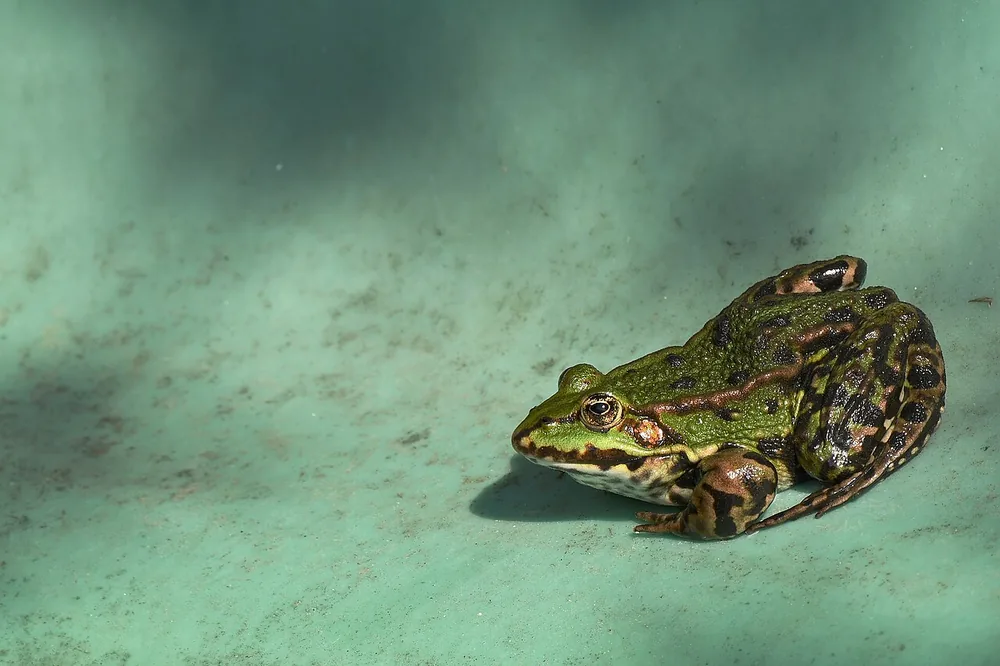
Scientific name: Pelophylax kl. esculentus · Group: amphibian (frog) · Lives: ponds and lakes from northern France to western Russia · Size: 5–11 cm long · Eats: insects and other small animals · IUCN status: Common and widespread in Europe; not assessed here as a hybrid
A fertile hybrid of the pool frog and the marsh frog that needs one of its parent species to breed. Its legs are eaten in France, Germany and Italy.
Five more species are in the table: the Egyptian cobra, European pond turtle, eastern indigo snake, European green lizard and European fire-bellied toad.
Fish and sea animals that start with E
Fish breathe through gills and live in water, and many sea animals start with E. For more, meet 10 amazing marine fish. Six follow.
Eel (European eel)
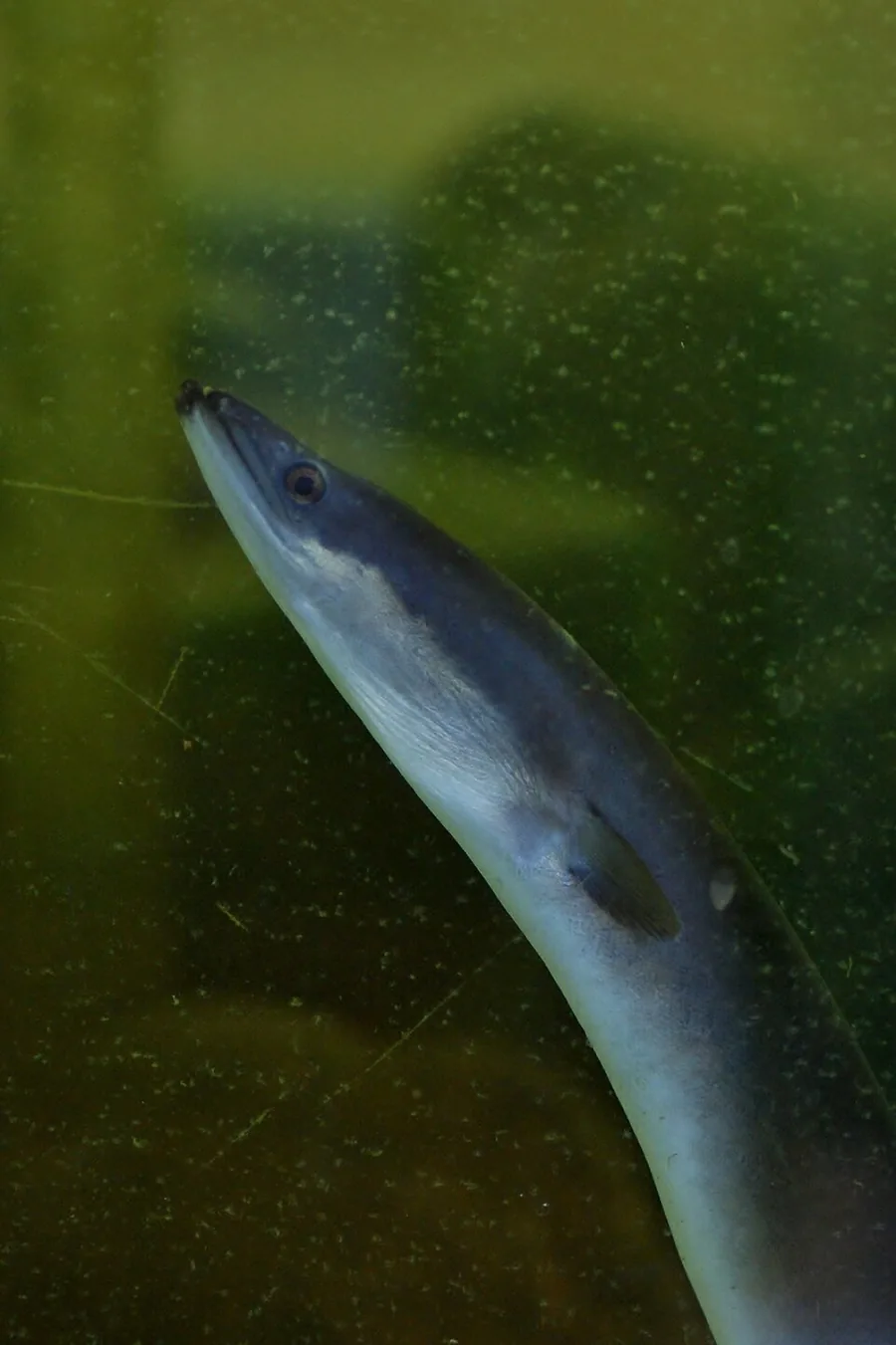
Scientific name: Anguilla anguilla · Group: fish (true eel) · Lives: rivers and coasts of Europe and North Africa, spawning in the Sargasso Sea · Size: usually 45–65 cm, rarely over 1 m · Eats: small fish, crustaceans and worms · IUCN status: Critically Endangered (2020)
Adults swim about 6,000 km back to the Sargasso Sea to breed, and nobody has yet seen them mate in the wild. One captive eel reportedly lived 155 years.
Electric eel
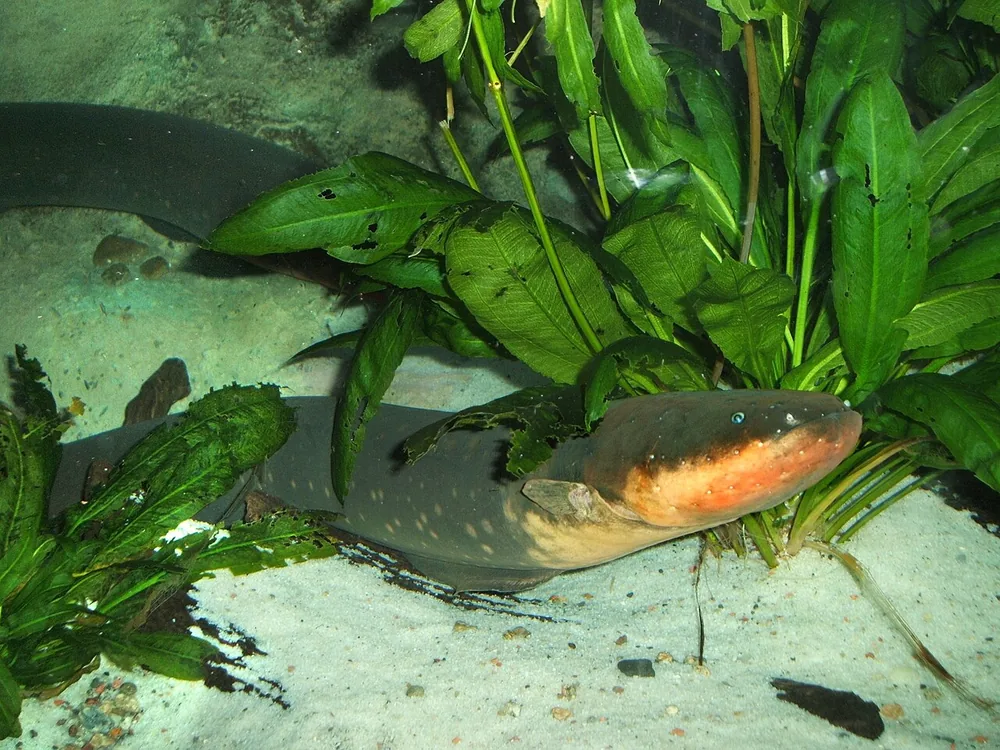
Scientific name: Electrophorus electricus · Group: fish (knifefish, not a true eel) · Lives: rivers and swamps of the Amazon and northern South America · Size: grows throughout its life · Eats: fish and invertebrates · IUCN status: Least Concern (E. electricus)
It can shock with up to 860 volts, a record measured in E. voltai. Studied in 1775, its electricity helped inspire the first electric battery in 1800.
Emperor angelfish
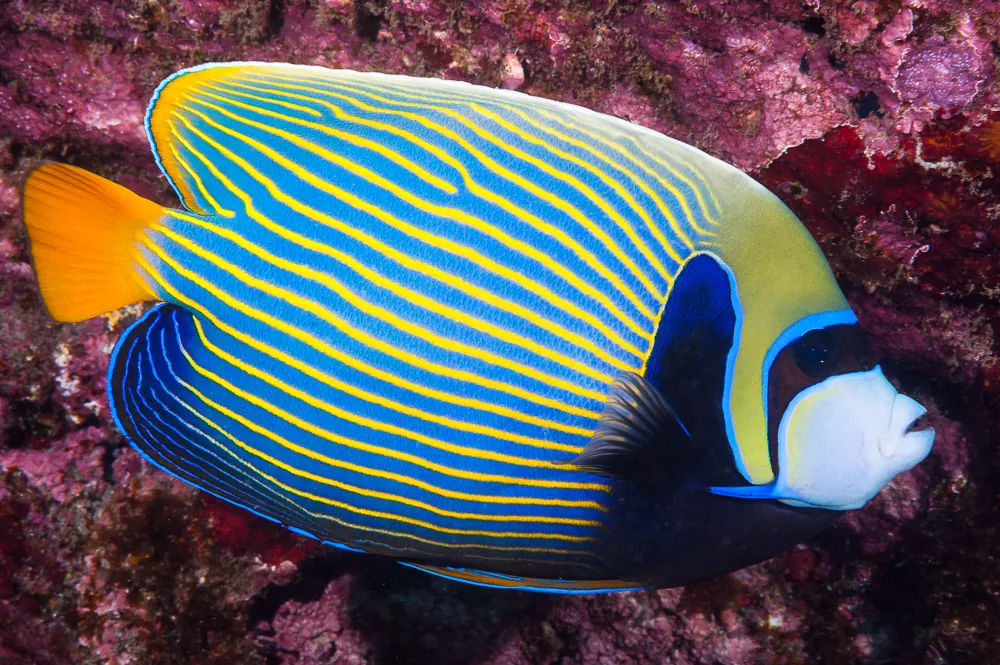
Scientific name: Pomacanthus imperator · Group: fish · Lives: coral reefs of the Indian and Pacific Oceans, from the Red Sea to Hawaii, 1–100 m deep · Size: up to 40 cm long · Eats: sponges and other invertebrates · IUCN status: Least Concern
Its brilliant blue-and-yellow stripes make it a favourite of divers, artists and aquarists.
Epaulette shark
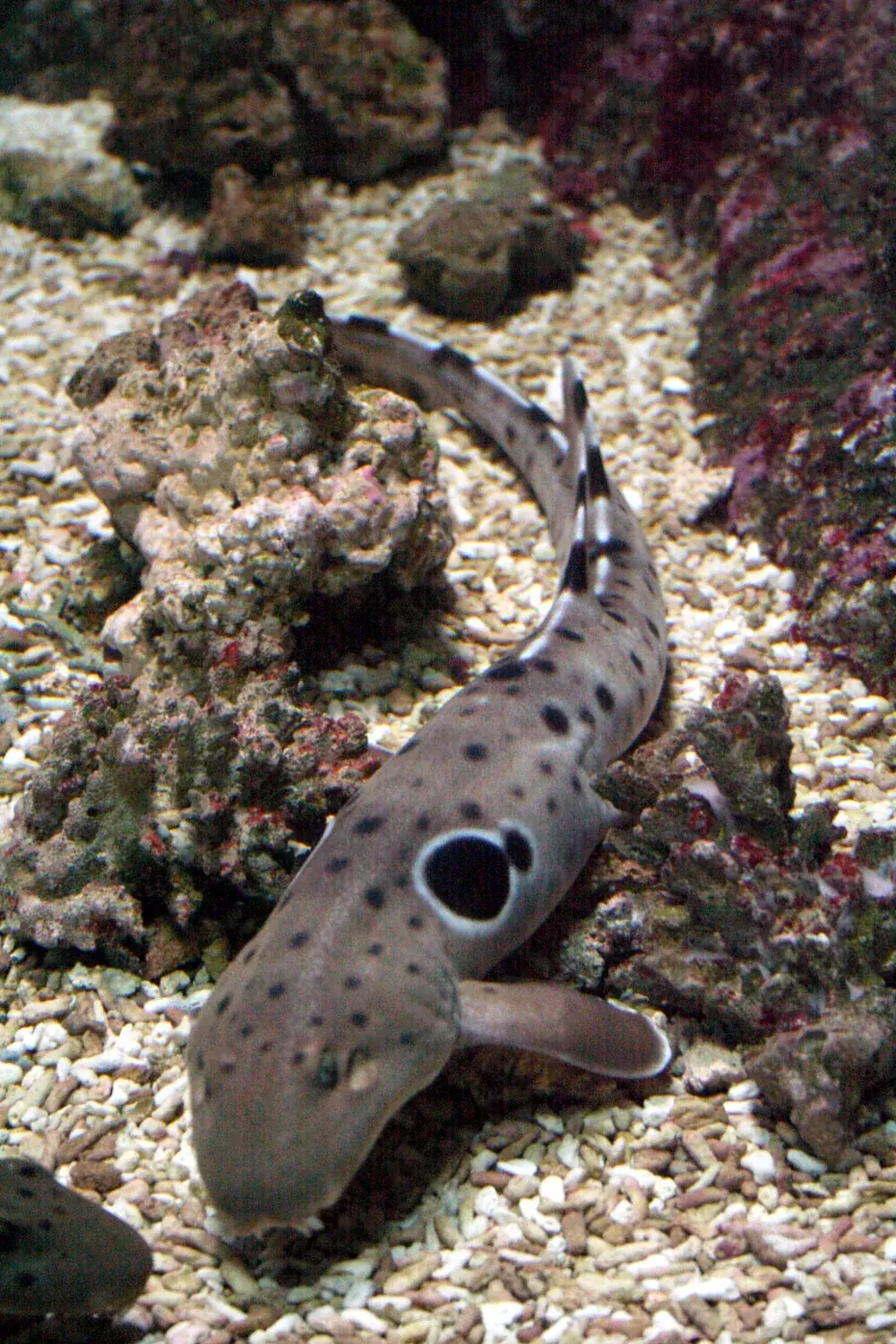
Scientific name: Hemiscyllium ocellatum · Group: fish (carpet shark) · Lives: shallow reefs and tide pools of northern Australia and New Guinea · Size: usually 70–90 cm; at most 107 cm · Eats: worms, crabs and small fish · IUCN status: Least Concern
It “walks” over the reef on paddle-shaped fins and survives hours of low oxygen in tide pools. It is named for the big black “epaulette” spot behind each fin.
Eagle ray (spotted)
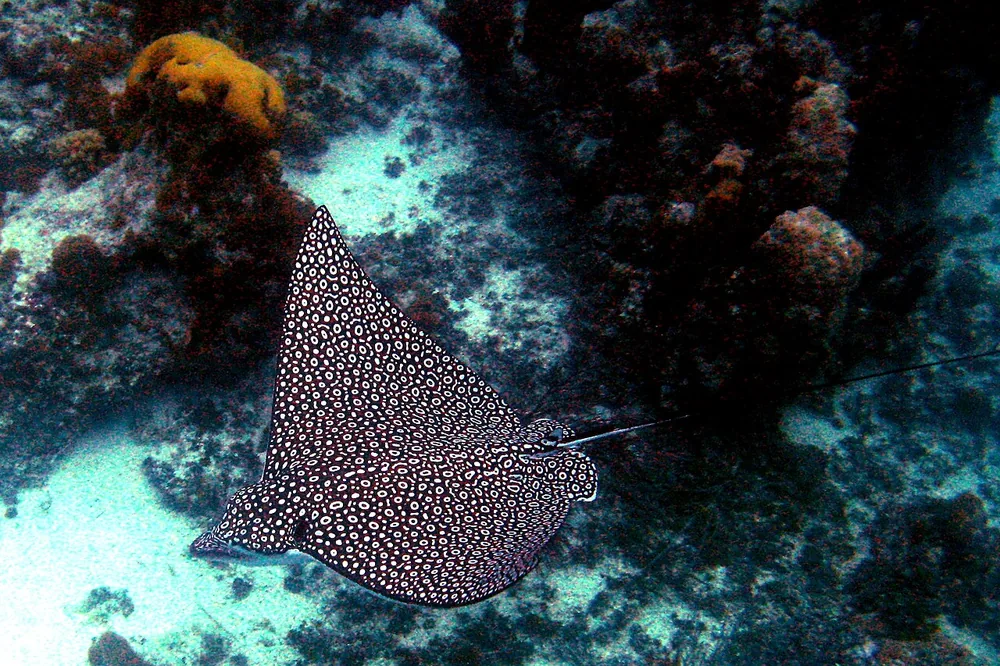
Scientific name: Aetobatus narinari · Group: fish (ray) · Lives: the warm Atlantic, including the Caribbean and Gulf of Mexico · Size: wingspan up to 3 m; up to 230 kg · Eats: clams, crustaceans and small fish dug from sand · IUCN status: Endangered
It often leaps out of the water and digs for prey with its duck-bill snout. Other ocean populations have been split off as separate species.
Elephantnose fish
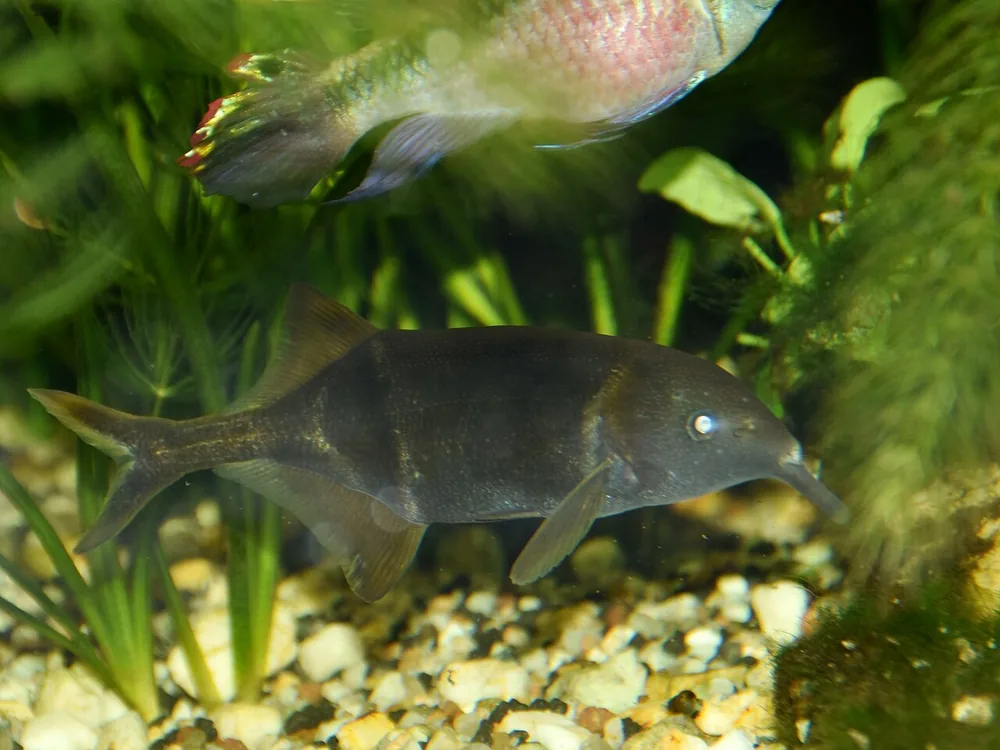
Scientific name: Gnathonemus petersii · Group: fish (elephantfish) · Lives: muddy rivers of West and Central Africa · Size: about 23–25 cm long · Eats: worms and insect larvae found in mud · IUCN status: Least Concern
Its “trunk” is an extended chin, and it senses prey with a weak electric field. Its brain uses about 60% of its oxygen, the highest of any known vertebrate.
Two more sea animals are in the table: the European lobster, found on British coasts, and the emperor shrimp, which rides on sea cucumbers and sea slugs.
Insects and other invertebrates that start with E
Invertebrates have no backbone. Many are not insects at all, and it helps to know whether insects are animals. Five E invertebrates are featured here.
Earthworm
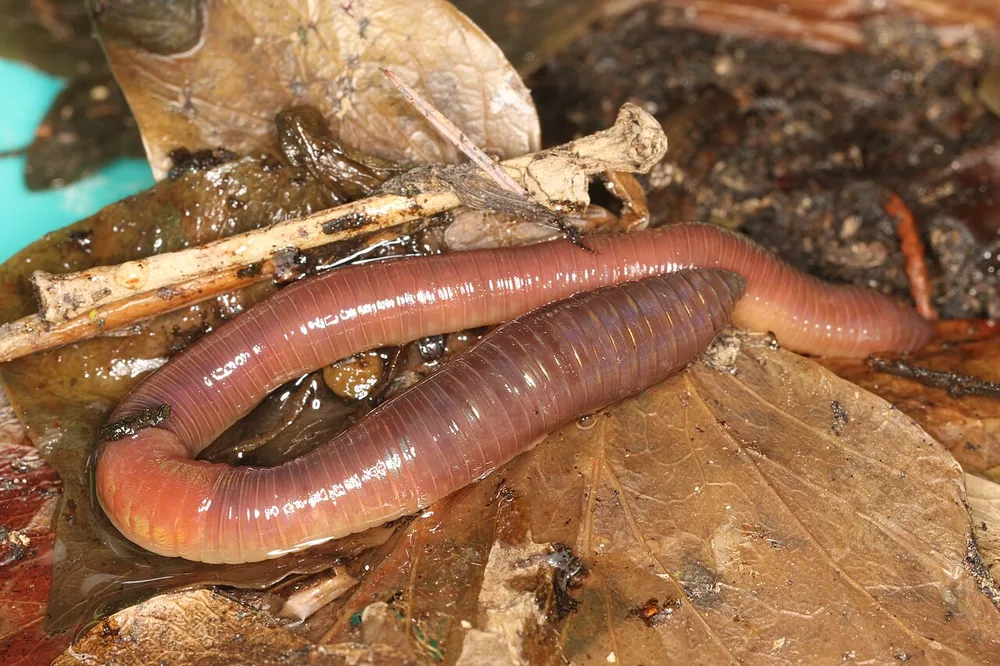
Scientific name: Lumbricus terrestris · Group: annelid worm (not an insect) · Lives: soil in Europe, introduced worldwide · Size: usually 11–20 cm; 120–170 segments · Eats: dead leaves and soil · IUCN status: Not assessed
Each worm is both male and female but still needs a partner. It drags leaves down into vertical burrows.
Earwig
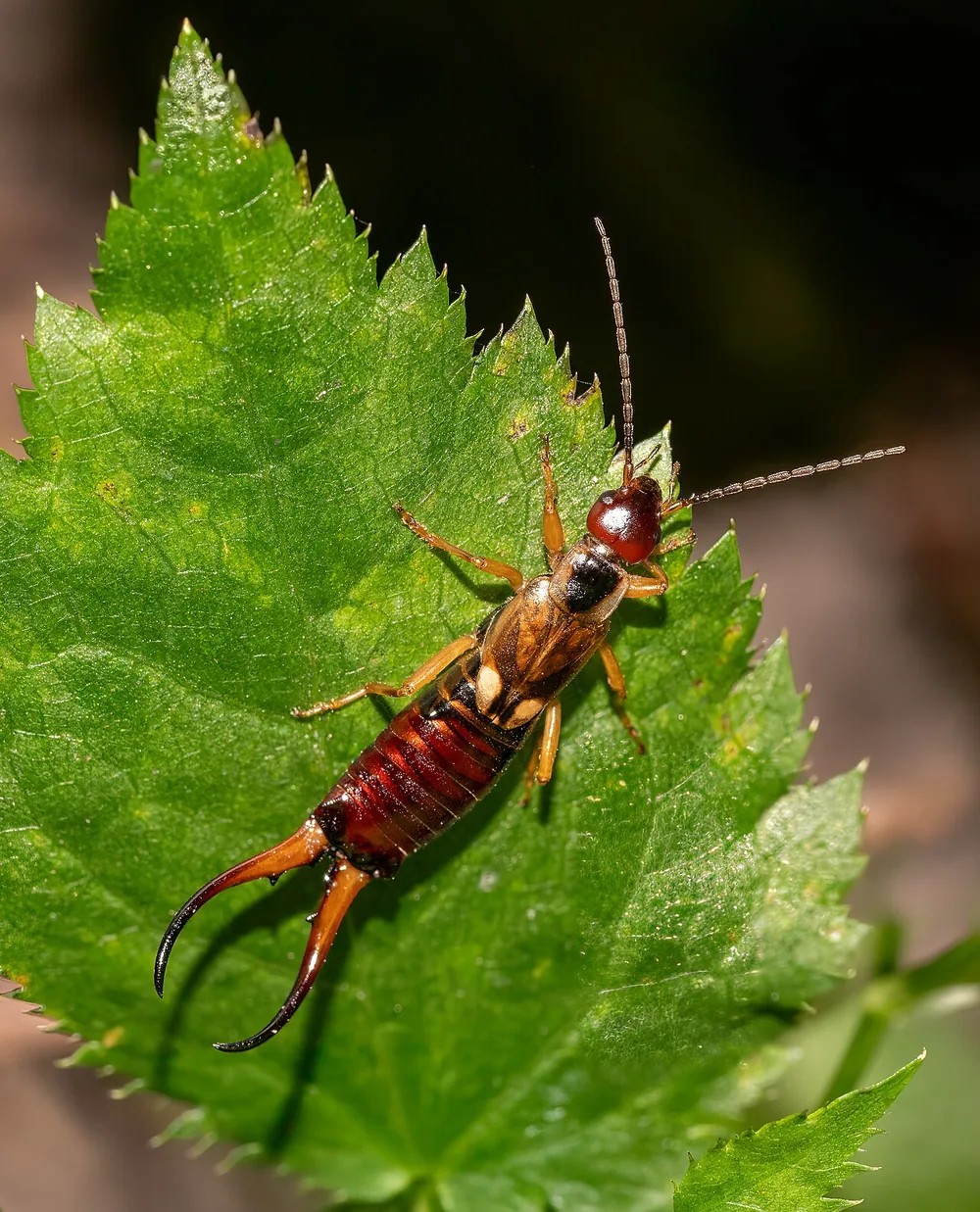
Scientific name: Forficula auricularia · Group: insect · Lives: gardens and homes across Europe, introduced to North America · Size: a small, flat insect · Eats: aphids, insect eggs and plants · IUCN status: Not assessed
The name is linked to the ear-shaped hindwings when unfolded. Mothers guard and care for their eggs and young.
Emperor dragonfly
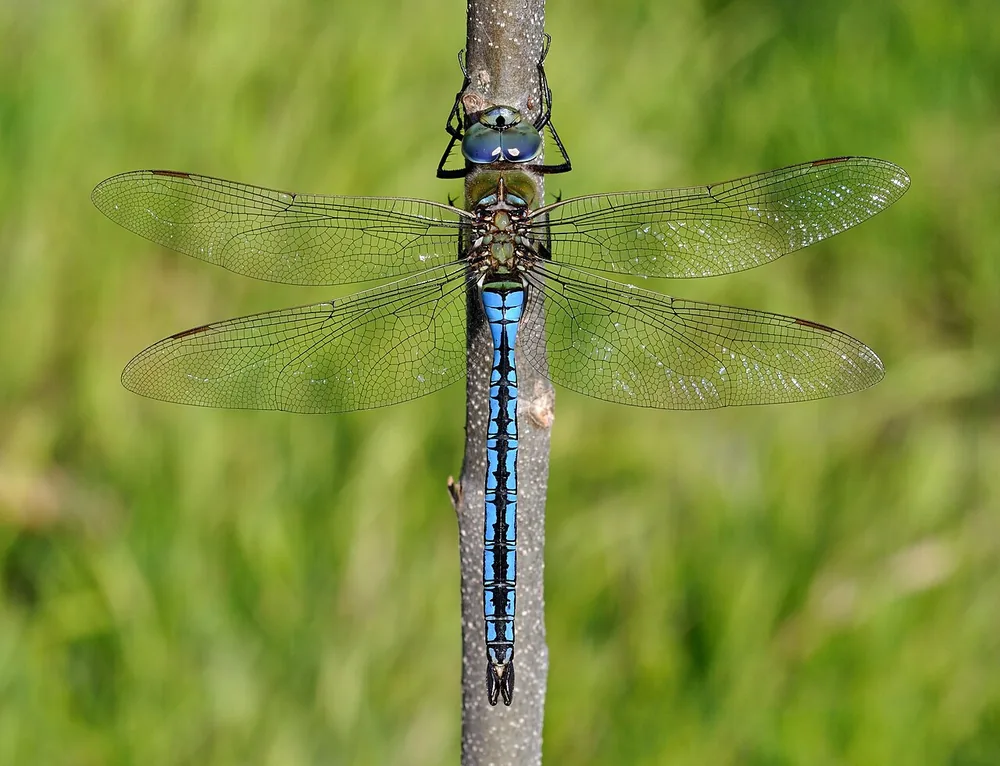
Scientific name: Anax imperator · Group: insect · Lives: ponds and lakes across Europe, Africa, the Middle East and Central Asia · Size: the largest dragonfly in most of Europe, including the UK · Eats: small water creatures as larvae; flying insects as adults · IUCN status: Least Concern (2016)
Its range has been spreading north since the 1990s.
Elephant hawk-moth
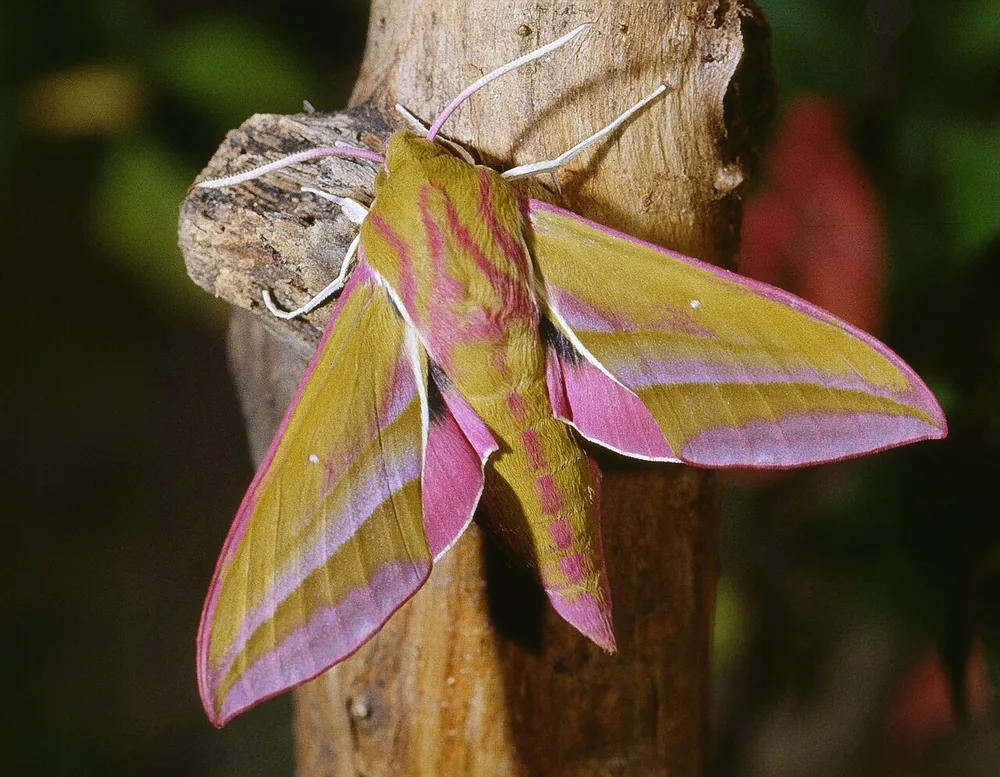
Scientific name: Deilephila elpenor · Group: insect (moth) · Lives: gardens, woods and wasteland across Europe and Asia, including Britain · Size: a large, pink-and-olive moth · Eats: nectar at night as an adult; willowherb and fuchsia as a caterpillar · IUCN status: Least Concern
The caterpillar looks like an elephant’s trunk, which gave the moth its name. The adults were among the first animals shown to see colour at night.
Emperor scorpion
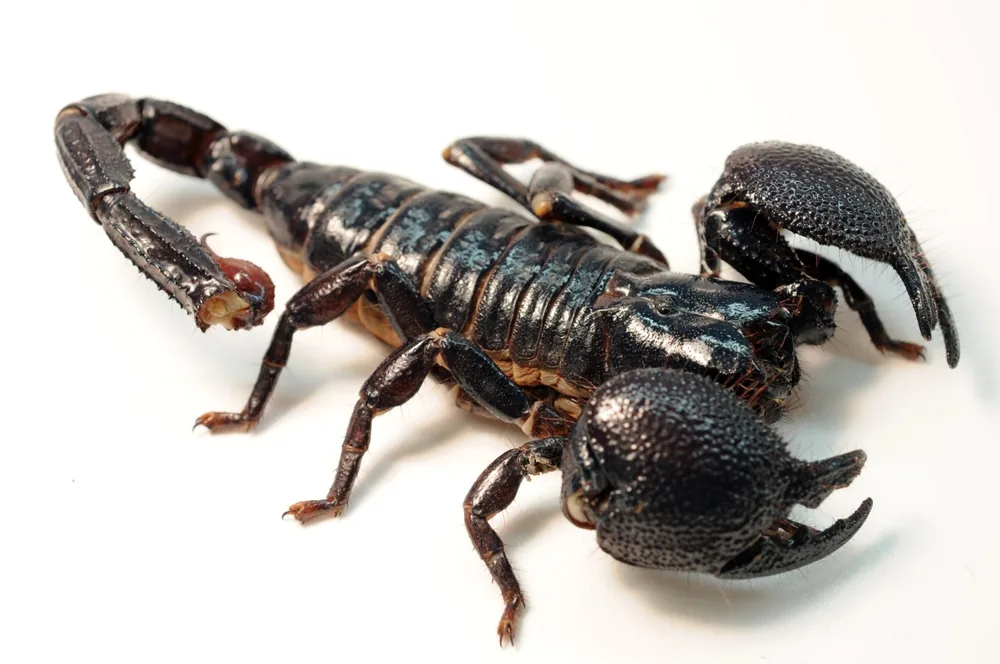
Scientific name: Pandinus imperator · Group: arachnid (not an insect) · Lives: rainforests and savannas of West Africa · Size: adults about 20 cm long; 30 g · Eats: insects and other invertebrates · IUCN status: Not assessed by the IUCN (trade is controlled under CITES)
One of the largest scorpions, though not the largest. It glows blue-green under ultraviolet light and lives six to eight years.
Three more are in the table: the emperor moth, the emerald ash borer (an invasive beetle that kills ash trees) and the elephant beetle.
Extinct animals that start with E
Extinct animals have died out for good, and the extinction crisis continues today. These E animals are known from fossils.
Elephant bird
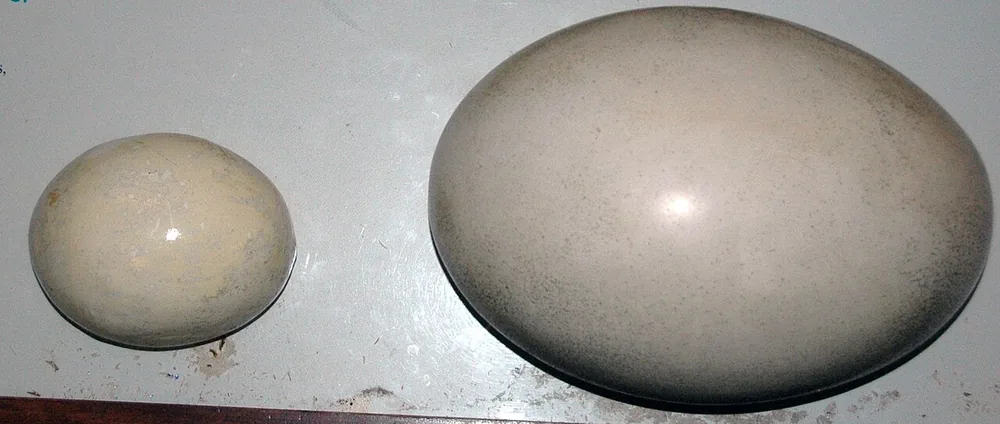
Scientific name: Aepyornis maximus · Group: extinct flightless bird · Lives: Madagascar · Size: up to about 3 m tall; possibly the largest bird that ever lived (estimates vary) · Eats: plants · IUCN status: Extinct (IUCN Red List); known from fossils and eggshell
It died out about AD 1000, probably because of human activity. Its closest living relative is New Zealand’s kiwi, and its eggs are the largest known for any amniote (any reptile, bird or mammal).
Elasmosaurus
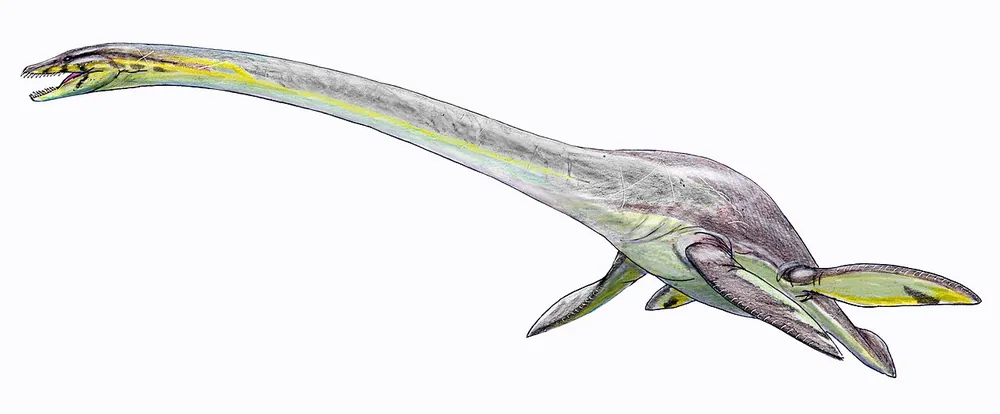
Scientific name: Elasmosaurus platyurus · Group: extinct marine reptile (a plesiosaur, not a dinosaur) · Lives: seas that covered North America 80.6–77 million years ago (Late Cretaceous) · Size: about 10.3 m long, with a neck of about 7.1 m and 72 neck vertebrae · Eats: probably fish and other small sea animals · IUCN status: Extinct; known from fossils; not assessed by the IUCN
The 19th-century palaeontologist Edward Cope first reconstructed it with the head on the wrong end, at the tail, a mix-up that fed into the “Bone Wars”.
Edmontosaurus
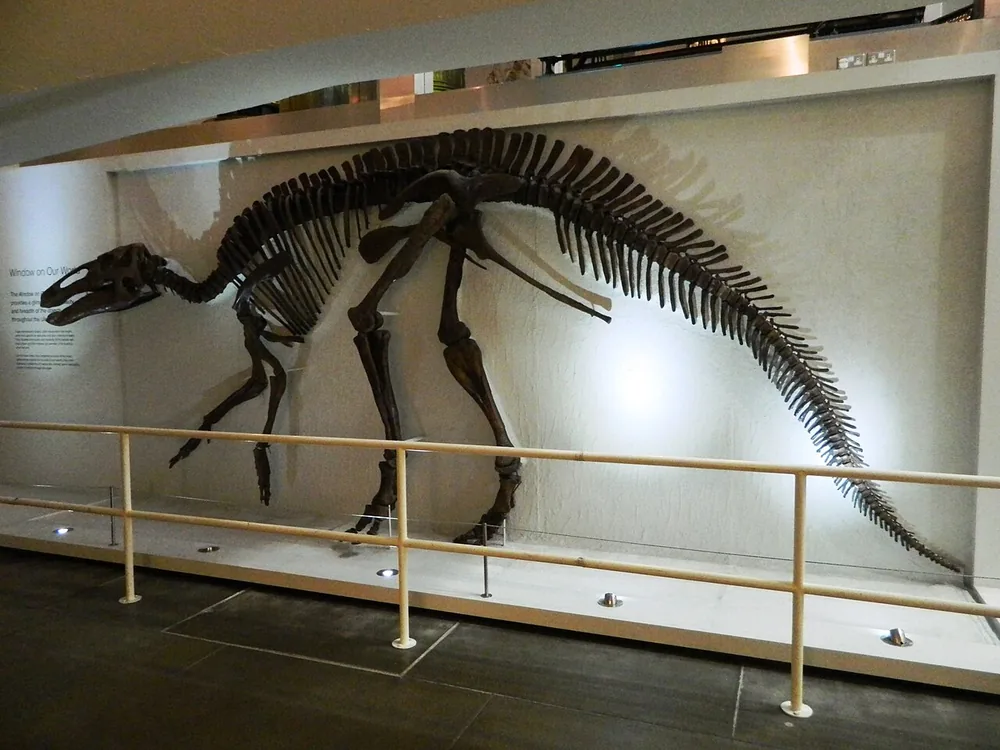
Scientific name: Edmontosaurus annectens · Group: extinct dinosaur (duck-billed hadrosaur) · Lives: western North America, about 68–66 million years ago · Size: E. annectens up to 12 m long and about 5.6 tonnes · Eats: plants · IUCN status: Extinct; known from fossils; not assessed by the IUCN
It lived until the end-Cretaceous extinction, one of the five mass extinctions, and some fossils include skin impressions.
The table also lists Elasmotherium, a giant rhinoceros nicknamed the “Siberian unicorn” that survived until at least 39,000 years ago, and Euoplocephalus, an armoured dinosaur of about 5.3 m with a heavy tail club. For more prehistoric giants, see a list of all the dinosaurs.
Animals that start with E for kids
Read one line each to preschool and primary children. If you are working through the alphabet, start with animals that start with A or go back to animals that start with C.
- Elephant. It is the biggest animal that lives on land.
- Eagle. It flies high and has very sharp eyes.
- Emu. It is a big bird that cannot fly but can run fast.
- Eel. It is a long, snake-shaped fish.
- Elk. A big deer; the males grow antlers.
- Echidna. A spiny animal that lays eggs.
- Emperor penguin. It is the tallest penguin and lives in Antarctica.
- Earthworm. A soft worm that lives in the soil.
- Egret. A white bird with long legs that wades in water.
- Eagle-owl. One of the largest owls, with orange eyes.
Can you guess the animal from the clue? Tap a card to flip it.
E animal spotting challenge
Go outdoors and tick the E animals you spot; your ticks are remembered in your browser. The habitats worksheet helps you record where each one lives.
- European robin
- Earthworm
- Earwig
- Little egret
- Eider (on the coast)
- Elephant hawk-moth
- Emperor dragonfly
- European badger (look for signs and setts)
Fun facts about animals that start with E
- The short-beaked echidna is one of the only mammals that lay eggs.
- The Egyptian vulture throws stones to crack open ostrich eggs.
- The elephantnose fish uses about 60% of its body’s oxygen on its brain, the highest known in any vertebrate.
- European eels swim about 6,000 km to breed in the Sargasso Sea. \n
- The elephant hawk-moth was among the first animals shown to see colour at night.
Key points
- This guide lists 78 animals that start with E, 48 of them with photos.
- The African bush elephant is the largest living land animal.
- The electric eel is a knifefish, not a true eel, and can shock with up to 860 volts.
- Four animals on the list are Critically Endangered: the eastern gorilla, African forest elephant, European mink and European eel.
Frequently asked questions about animals that start with E
What animal starts with E?
Many animals start with E, including the elephant, eagle, emu, eel, elk, echidna, emperor penguin and earthworm. This guide lists 78, from mammals and birds to fish, insects and extinct species, with photographs for 48 of them.
What is the biggest animal that starts with E?
The African bush elephant is the biggest animal that starts with E and the largest living land animal, with bulls weighing 5.2–6.9 tonnes. The southern elephant seal is the biggest seal, and the extinct elephant bird was possibly the largest bird ever.
What is the fastest animal that starts with E?
On this list the golden eagle is fastest, diving at 240–320 km/h when it stoops on prey. The common eider flies at up to 113 km/h, and the emu, the fastest E runner we can verify, sprints at 48 km/h.
What sea animals start with E?
Sea animals that start with E include the European eel, emperor angelfish, epaulette shark, spotted eagle ray, southern elephant seal, emperor penguin, European lobster and emperor shrimp. The common eider is a sea duck that dives for shellfish.
What birds start with E?
Birds that start with E include the emu, emperor penguin, golden eagle, Eurasian eagle-owl, little egret, common eider, European robin, Egyptian vulture, eclectus parrot and Eurasian hoopoe, plus nine more in the table.
What is the rarest animal that starts with E?
The Ethiopian wolf is among the rarest, with about 360–440 adults in a 2011 estimate. Four animals here are Critically Endangered, the IUCN’s highest threat category for living species: the eastern gorilla, African forest elephant, European mink and European eel.
Is an electric eel really an eel?
No. The electric eel is a knifefish, not a true eel. It can shock with up to 860 volts, and since 2019 scientists have recognised three species in the genus Electrophorus.
What is the most dangerous animal that starts with E?
Several E animals can be dangerous if disturbed, including the eastern brown snake, the eastern diamondback rattlesnake and the Egyptian cobra. Elephants are huge, so keep a good distance. Never handle wild snakes.
What pets start with E?
Pets that start with E include the eclectus parrot, emperor scorpion, English Springer Spaniel, English Bulldog, Egyptian Mau and Exotic Shorthair. Wild animals such as box turtles should not be taken from the wild.
What three-letter animals start with E?
Three-letter animals that start with E include the eel, the emu and the elk. A fourth, the eft, is the name for a young newt on land, such as the red eft stage of the eastern newt.