Animals that start with G range from the giraffe, the tallest animal on land, to the Goliath beetle, one of the largest insects. This guide lists 67 animals that start with G, each with a scientific name, a habitat and an IUCN Red List status, and 48 of them have their own photo.
Quick answer: the best-known animals beginning with G are the giraffe, gorilla, goat, goose, giant panda, gecko, grasshopper, goldfish and great white shark. Before this one comes animals that start with F, and before that animals that start with E.
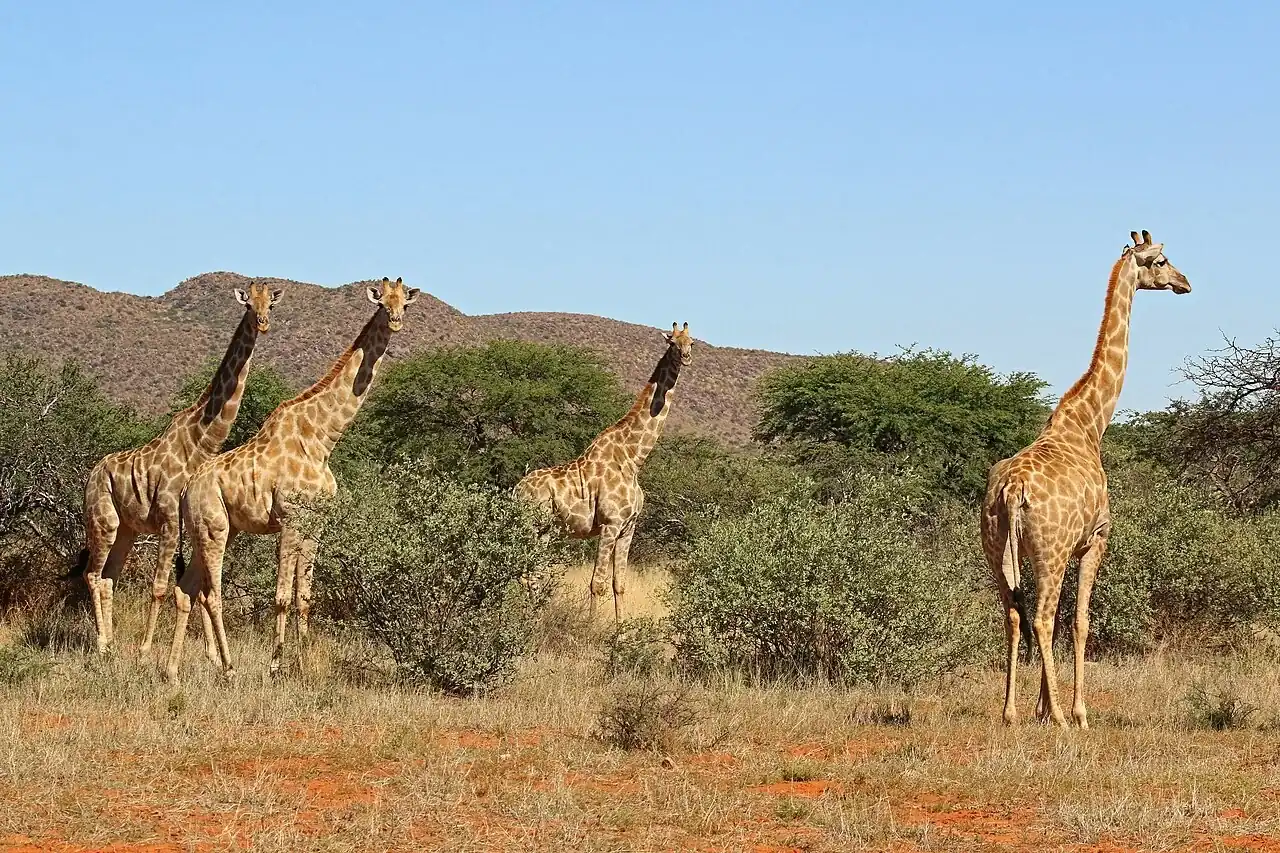
Animals that start with G: the full list of 67
Here is every animal in this guide. Statuses come from the IUCN Red List, the global register of how close species are to extinction. Two 2025 changes are worth knowing: the green sea turtle moved to Least Concern, and the IUCN accepted four giraffe species. “Not assessed” means the IUCN has no global assessment for the animal.
| # | Animal | Scientific name | Group | Habitat | IUCN status |
|---|---|---|---|---|---|
| 1 | Giraffe (southern) | Giraffa giraffa | Mammal | Southern African savanna | Vulnerable (2016, all giraffes) |
| 2 | Gorilla (western) | Gorilla gorilla | Mammal | West-central African rainforest | Critically Endangered (2018) |
| 3 | Giant panda | Ailuropoda melanoleuca | Mammal | Bamboo forests, China | Vulnerable (2016) |
| 4 | Grey wolf | Canis lupus | Mammal | Forest, tundra, mountains | Least Concern (2026) |
| 5 | Giant anteater | Myrmecophaga tridactyla | Mammal | Central/South American grassland | Vulnerable (2014) |
| 6 | Gaur | Bos gaurus | Mammal | Forests of South/Southeast Asia | Vulnerable (2016) |
| 7 | Gibbon (lar) | Hylobates lar | Mammal | Southeast Asian rainforest | Endangered (2020) |
| 8 | Gazelle (Thomson’s) | Eudorcas thomsonii | Mammal | East African grassland | Least Concern (2018) |
| 9 | Guanaco | Lama guanicoe | Mammal | Andes and Patagonia | Least Concern (2016) |
| 10 | Golden lion tamarin | Leontopithecus rosalia | Mammal | Brazilian Atlantic forest | Endangered (2021) |
| 11 | Galago (Mohol bushbaby) | Galago moholi | Mammal | Southern African woodland | Least Concern |
| 12 | Giant otter | Pteronura brasiliensis | Mammal | Amazon rivers and swamps | Endangered (2022) |
| 13 | Grey seal | Halichoerus grypus | Mammal | North Atlantic coasts | Least Concern (2016) |
| 14 | Goat | Capra hircus | Mammal | Farms worldwide | Domesticated (not assessed) |
| 15 | Gnu (blue wildebeest) | Connochaetes taurinus | Mammal | East and southern African savanna | Least Concern (2016) |
| 16 | Grévy’s zebra | Equus grevyi | Mammal | Dry grassland, Kenya and Ethiopia | Endangered |
| 17 | Gelada | Theropithecus gelada | Mammal | Ethiopian Highlands | Least Concern |
| 18 | Grey squirrel (eastern) | Sciurus carolinensis | Mammal | Woods and parks, North America | Least Concern |
| 19 | Guinea pig | Cavia porcellus | Mammal | Domestic (Andean origin) | Domesticated (not assessed) |
| 20 | Golden eagle | Aquila chrysaetos | Bird | Mountains, Northern Hemisphere | Least Concern (2021) |
| 21 | Gentoo penguin | Pygoscelis papua | Bird | Antarctic and sub-Antarctic | Least Concern (2020) |
| 22 | Goose (greylag) | Anser anser | Bird | Wetlands, Europe and Asia | Least Concern (2018) |
| 23 | Great horned owl | Bubo virginianus | Bird | Forests across the Americas | Least Concern (2018) |
| 24 | Grey heron | Ardea cinerea | Bird | Wetlands, Europe/Asia/Africa | Least Concern (2019) |
| 25 | Golden pheasant | Chrysolophus pictus | Bird | Mountain forests, China | Least Concern (2018) |
| 26 | Greater roadrunner | Geococcyx californianus | Bird | South-western US deserts | Least Concern (2016) |
| 27 | Grey crowned crane | Balearica regulorum | Bird | East/southern African wetlands | Endangered (2024) |
| 28 | Gannet (northern) | Morus bassanus | Bird | North Atlantic coasts | Least Concern (2018) |
| 29 | Great hornbill | Buceros bicornis | Bird | Indian and Southeast Asian forest | Vulnerable (2018) |
| 30 | Great tit | Parus major | Bird | Woods and gardens, Eurasia | Least Concern |
| 31 | Gyrfalcon | Falco rusticolus | Bird | Arctic tundra and coasts | Least Concern (2021) |
| 32 | Great bustard | Otis tarda | Bird | Grassland, Spain to East Asia | Endangered (2023) |
| 33 | Guineafowl (helmeted) | Numida meleagris | Bird | African savanna | Least Concern |
| 34 | Griffon vulture | Gyps fulvus | Bird | Mountains, southern Europe to Asia | Least Concern (2021) |
| 35 | Gila monster | Heloderma suspectum | Reptile | South-western US deserts | Near Threatened (2007) |
| 36 | Green anaconda | Eunectes murinus | Reptile | South American swamps and rivers | Least Concern |
| 37 | Gharial | Gavialis gangeticus | Reptile | Rivers, northern India | Critically Endangered (2019) |
| 38 | Galápagos giant tortoise | Chelonoidis niger | Reptile | Galápagos Islands | Varies by island (6 forms Critically Endangered) |
| 39 | Green sea turtle | Chelonia mydas | Reptile | Tropical and subtropical seas | Least Concern (2025) |
| 40 | Green iguana | Iguana iguana | Reptile | Central/South American forest | Least Concern |
| 41 | Gecko (tokay) | Gekko gecko | Reptile | Asian forest and buildings | Least Concern (2019) |
| 42 | Gaboon viper | Bitis gabonica | Reptile | African rainforest and savanna | Vulnerable (2021) |
| 43 | Glass frog (Taylor’s) | Hyalinobatrachium taylori | Amphibian | Guianan rainforest | Least Concern (2020) |
| 44 | Golden poison frog | Phyllobates terribilis | Amphibian | Colombian Pacific rainforest | Endangered (2017) |
| 45 | Goliath frog | Conraua goliath | Amphibian | Rivers, Cameroon, Equatorial Guinea | Endangered (2019) |
| 46 | Grass snake | Natrix natrix | Reptile | Near ponds and rivers, Europe | Least Concern (1996 listing) |
| 47 | Great crested newt | Triturus cristatus | Amphibian | Ponds and woods, Europe | Least Concern |
| 48 | Great white shark | Carcharodon carcharias | Fish | Coastal and open seas | Vulnerable (2022) |
| 49 | Greenland shark | Somniosus microcephalus | Fish | Deep Arctic/North Atlantic | Vulnerable (2020) |
| 50 | Goldfish | Carassius auratus | Fish | Fresh water, native to China | Least Concern (2013) |
| 51 | Giant manta ray | Mobula birostris | Fish | Tropical to temperate oceans | Endangered (2022) |
| 52 | Goliath grouper (Atlantic) | Epinephelus itajara | Fish | West Atlantic reefs | Vulnerable (2018) |
| 53 | Giant Pacific octopus | Enteroctopus dofleini | Mollusc | North Pacific coasts | Least Concern (2018) |
| 54 | Guppy | Poecilia reticulata | Fish | Fresh water, north-east South America | Least Concern (2020) |
| 55 | Grayling | Thymallus thymallus | Fish | Clear rivers, Europe | Least Concern (2024) |
| 56 | Ghost crab | Ocypode (genus) | Crustacean | Sandy tropical beaches | Not assessed |
| 57 | Grasshopper (common field) | Chorthippus brunneus | Insect | Dry grassland, Europe | Least Concern |
| 58 | Glow-worm (common) | Lampyris noctiluca | Insect | Grassland and hedgerows, Europe | Near Threatened (2024) |
| 59 | Goliath beetle | Goliathus goliatus | Insect | African tropical forest | Not assessed |
| 60 | Goliath birdeater | Theraphosa blondi | Arachnid | Northern South American rainforest | Not assessed |
| 61 | Garden snail | Cornu aspersum | Mollusc | Gardens and hedges, Europe | Least Concern (Europe, 2026) |
| 62 | Gatekeeper (butterfly) | Pyronia tithonus | Insect | Hedgerows and meadows, Europe | Least Concern |
| 63 | Great auk | Pinguinus impennis | Extinct bird | Rocky North Atlantic islands | Extinct (IUCN Red List) |
| 64 | Golden toad | Incilius periglenes | Extinct amphibian | Costa Rican cloud forest | Extinct (IUCN Red List) |
| 65 | Giganotosaurus | Giganotosaurus carolinii | Extinct dinosaur | Patagonia (fossil) | Extinct; known from fossils; not assessed by the IUCN |
| 66 | Glyptodon | Glyptodon (genus) | Extinct mammal | South American plains (fossil) | Extinct; known from fossils; not assessed by the IUCN |
| 67 | Gigantopithecus | Gigantopithecus blacki | Extinct ape | Southern China (fossil) | Extinct; known from fossils; not assessed by the IUCN |
Animals that start with G by group
The 67 animals fall into six groups.
Mammals that start with G (19)
Giraffe, gorilla, giant panda, grey wolf, gaur, gibbon, gazelle, goat and 11 more.
Birds that start with G (15)
Golden eagle, gentoo penguin, greylag goose, gannet, great tit and 10 more.
Reptiles and amphibians that start with G (13)
Gila monster, green anaconda, gharial, gecko, Gaboon viper, glass frog and seven more.
Fish and sea life that start with G (9)
Great white shark, Greenland shark, goldfish, giant manta ray and five more.
Insects and other invertebrates that start with G (6)
Grasshopper, glow-worm, Goliath beetle, Goliath birdeater, garden snail and gatekeeper.
Extinct animals that start with G (5)
Great auk, golden toad, Giganotosaurus, glyptodon and Gigantopithecus.
Biggest, fastest, cutest and most dangerous animals that start with G
Biggest animals that start with G
The giraffe is the tallest living land animal, at 4.3–5.7 m. Among the world’s largest animals, the gaur is the largest wild cattle species, the Galápagos giant tortoise is the largest living tortoise (up to 417 kg), the giant manta ray is the largest ray and the giant Pacific octopus the largest octopus. The extinct Giganotosaurus reached an estimated 12–13 m.
Fastest animals that start with G
The golden eagle is fastest, with reported dives of 240–320 km/h. The northern gannet plunge-dives at up to about 100 km/h, and Thomson’s gazelle can run an estimated 80 km/h on land. The gentoo penguin is the fastest-swimming penguin, at up to 36 km/h. Compare them with the fastest animals on the planet.
Most dangerous animals that start with G
Some G animals can be dangerous if disturbed. The golden poison frog is often described as one of the most poisonous animals on Earth, and the Gaboon viper has the longest fangs of any venomous snake. The great white shark deserves respect, and the Gila monster’s bite is painful. Give wild animals space.
Rarest and most threatened animals that start with G
The western gorilla (only 250–300 Cross River gorillas remain), the gharial and six Galápagos tortoise forms are Critically Endangered. Endangered animals include the lar gibbon, golden lion tamarin, giant otter, Grévy’s zebra and giant manta ray. The great auk and golden toad are extinct.
Cutest animals that start with G
Cuteness is opinion, but our picks are the golden lion tamarin, Mohol bushbaby, grey seal pup, giant panda, gentoo penguin and guinea pig.
Mammals that start with G
Mammals are warm-blooded animals that feed their young on milk, and there are many families of mammals. Here are fourteen.
Giraffe (southern)
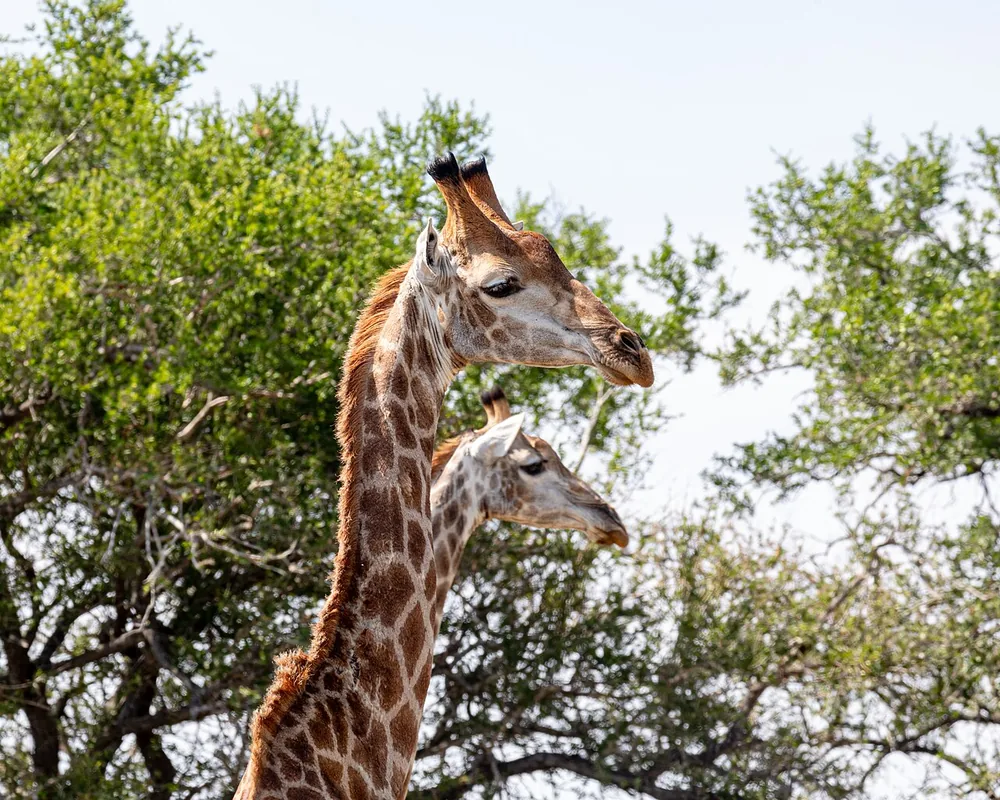
Scientific name: Giraffa giraffa · Group: mammal · Lives: savannas and woodlands of southern Africa · Size: fully grown giraffes are 4.3–5.7 m tall; males average 1,192 kg · Eats: leaves, fruit and flowers of trees, mainly acacias · IUCN status: Vulnerable (2016, all giraffes)
The tallest living land animal and the largest ruminant. In 2025 the IUCN accepted four giraffe species (northern, reticulated, Masai and southern), and new assessments for the four are under way.
Gorilla (western)
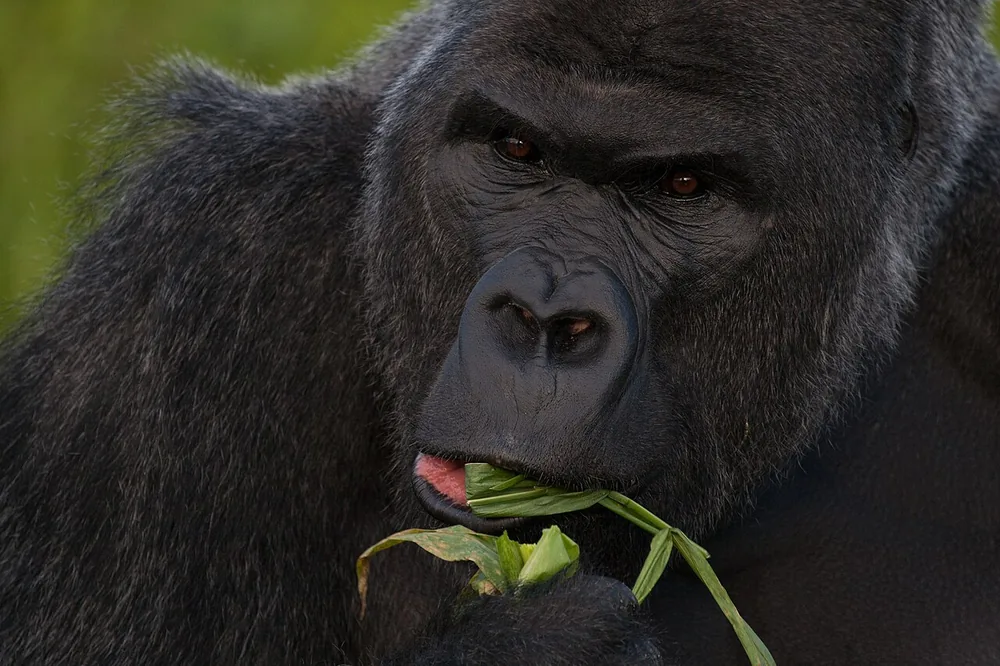
Scientific name: Gorilla gorilla · Group: great ape · Lives: rainforests of west-central Africa · Size: wild males 145–191 kg and about 1.67 m · Eats: mostly plants: leaves, stems and fruit · IUCN status: Critically Endangered (2018)
The second-largest living primate, after the eastern gorilla. About 276,000 western lowland gorillas survive, but only 250–300 Cross River gorillas.
Giant panda
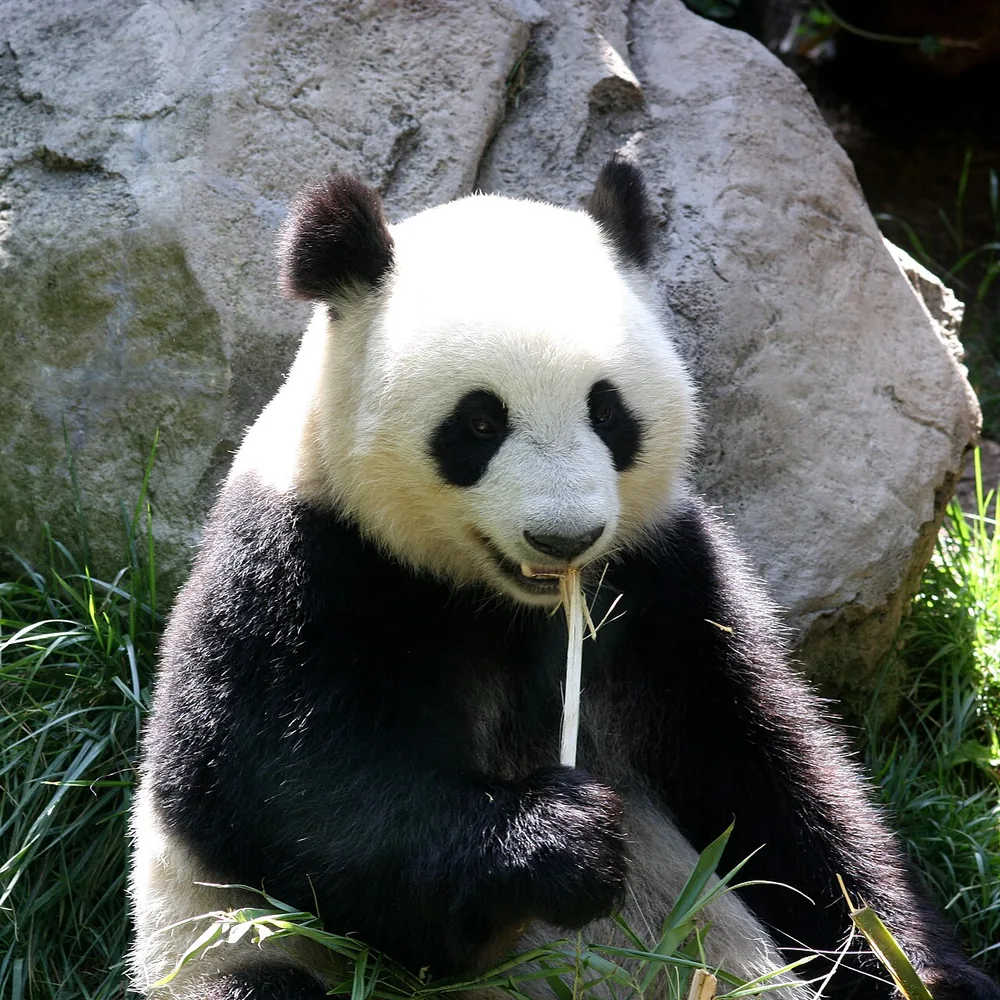
Scientific name: Ailuropoda melanoleuca · Group: bear · Lives: mountain bamboo forests of central China, up to 3,000 m · Size: 100–115 kg and 1.2–1.9 m · Eats: almost only bamboo · IUCN status: Vulnerable (since 2016; was Endangered)
A “thumb” on each forepaw helps it hold bamboo. A survey published in 2015 counted about 1,864 wild pandas over 1.5 years old.
Grey wolf
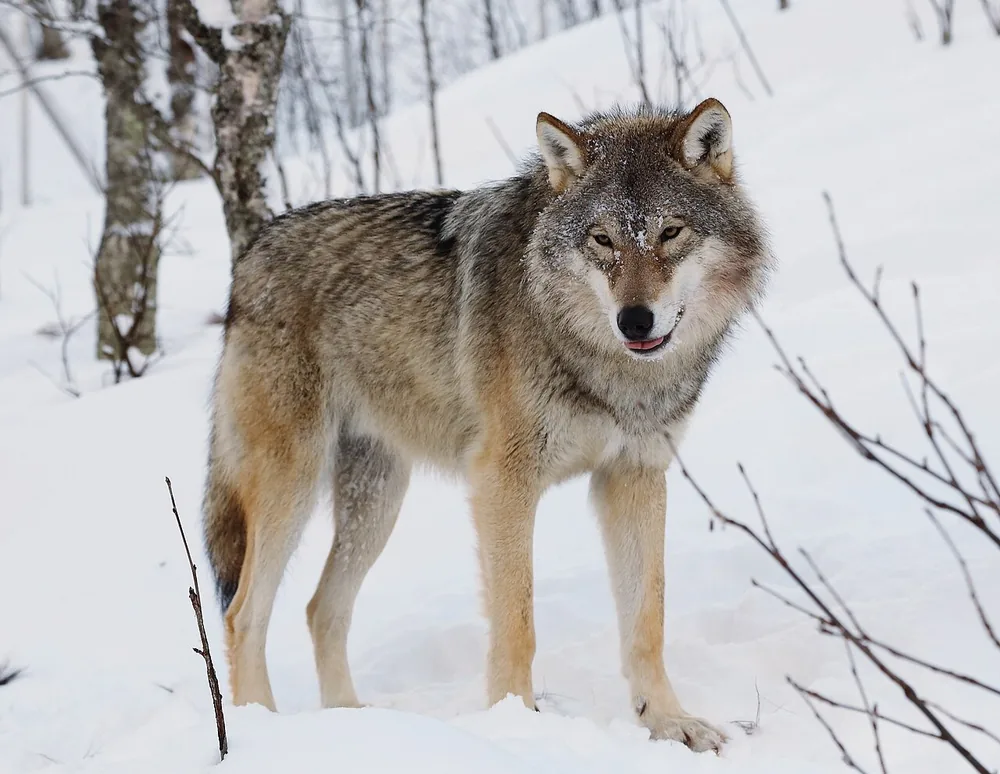
Scientific name: Canis lupus · Group: mammal (dog family) · Lives: forests, tundra, mountains and grasslands of Eurasia and North America · Size: mean 40 kg; record 79.4 kg · Eats: large hoofed mammals, smaller animals and carrion · IUCN status: Least Concern (2026)
The largest wild member of the dog family lives in family packs, and 200,000–250,000 wild grey wolves exist worldwide. See the biggest wolf in the world.
Giant anteater
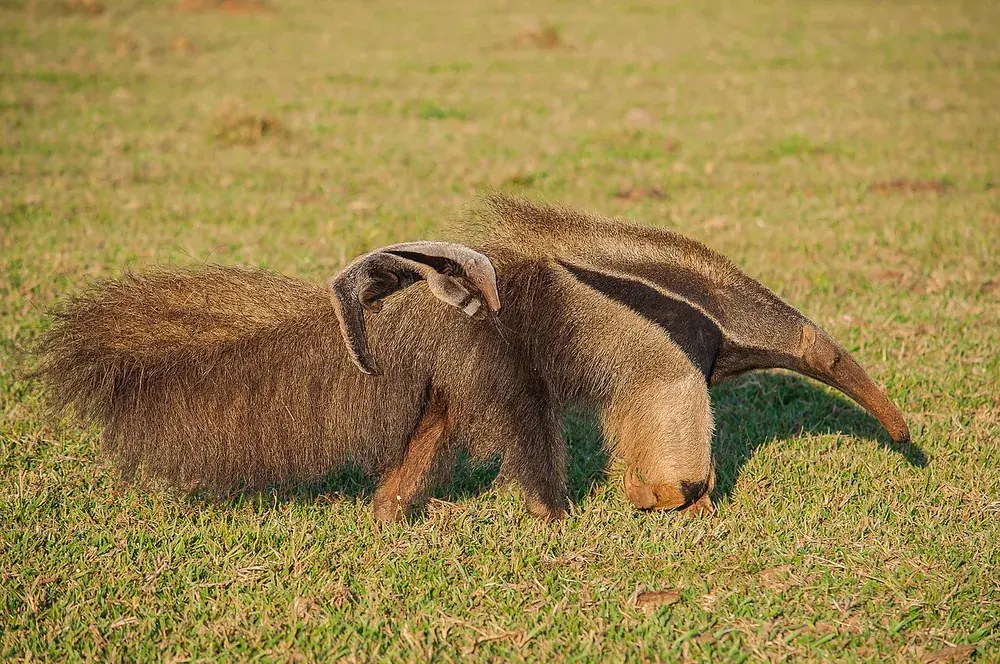
Scientific name: Myrmecophaga tridactyla · Group: mammal (sloth and anteater order) · Lives: grasslands and forests of Central and South America · Size: 182–217 cm long and 27–50 kg · Eats: ants and termites · IUCN status: Vulnerable (2014)
It has no teeth: it digs with long front claws and licks insects up with a long sticky tongue. Mothers carry the baby on their back, as in the photo.
Gaur
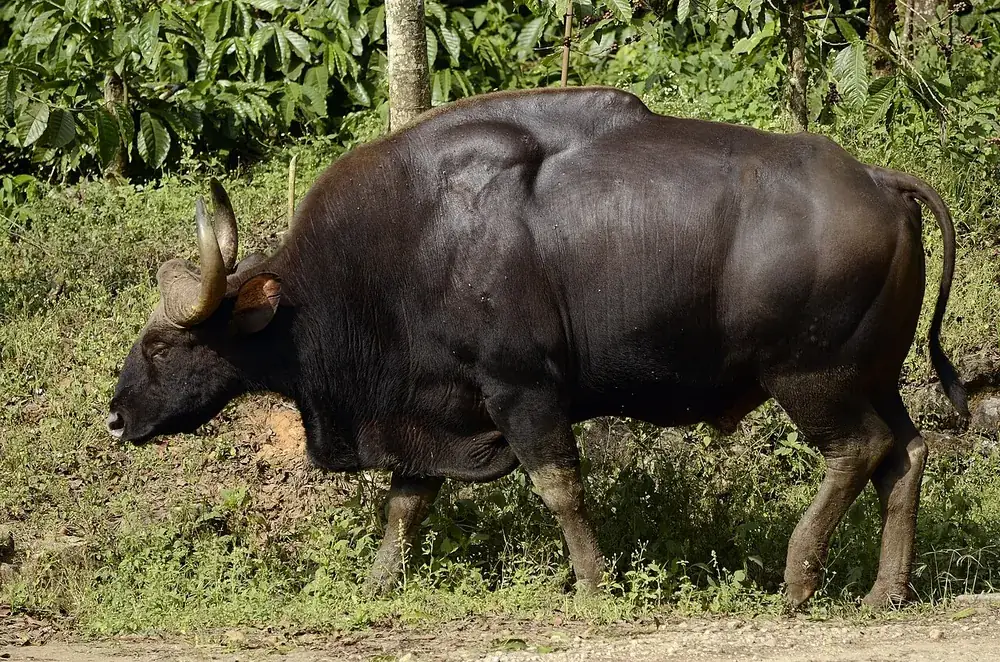
Scientific name: Bos gaurus · Group: wild cattle · Lives: forests and grassy clearings of India and Southeast Asia · Size: 165–220 cm at the shoulder; bulls up to about 1,500 kg · Eats: grasses, leaves and shoots · IUCN status: Vulnerable (2016)
The largest wild cattle species, also called the “Indian bison”. At most about 21,000 mature animals remained in 2016, mostly in India.
Gibbon (lar)
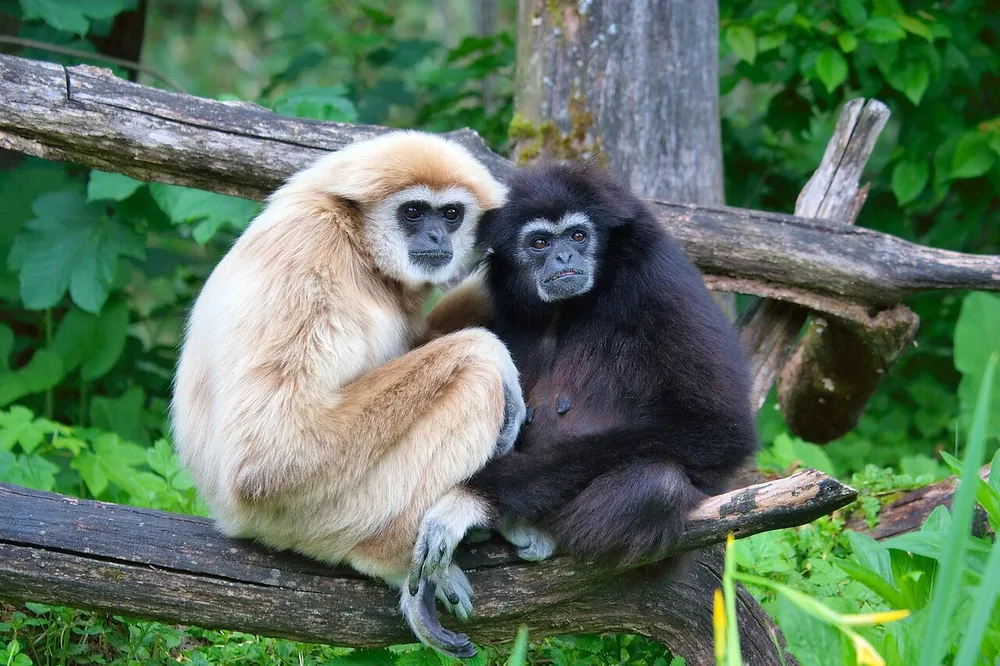
Scientific name: Hylobates lar · Group: small ape · Lives: tropical forests of Southeast Asia · Eats: fruit, leaves and insects · IUCN status: Endangered (2020)
The white-handed gibbon swings arm over arm through the trees (brachiation) and rarely comes to the ground. Mated pairs sing a morning “great call” duet to defend their territory. Fur can be pale or black in either sex.
Gazelle (Thomson’s)
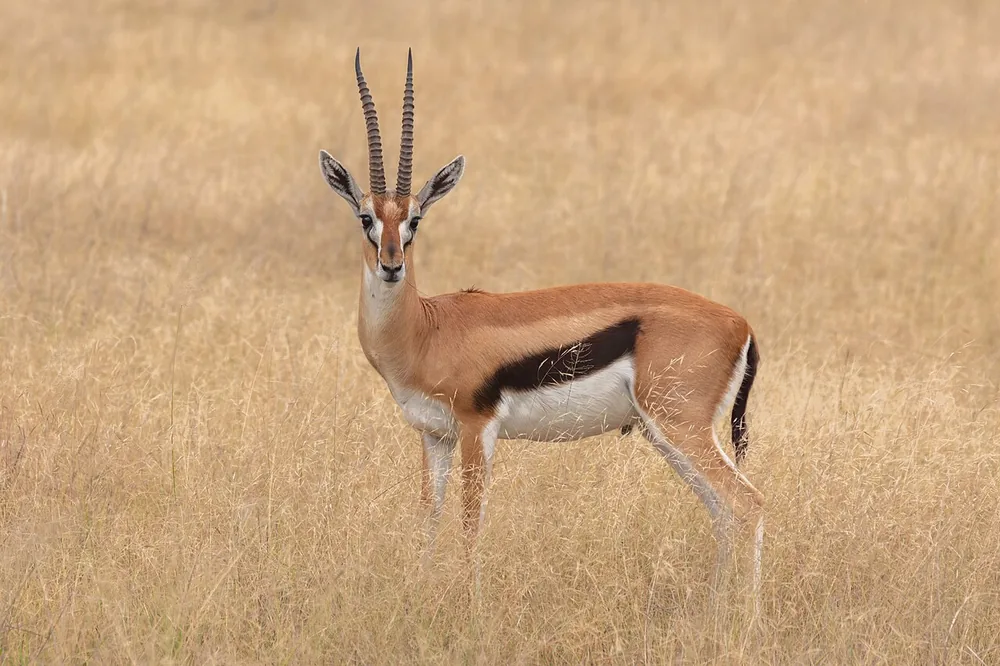
Scientific name: Eudorcas thomsonii · Group: antelope · Lives: open grasslands of East Africa · Size: 60–70 cm at the shoulder; males 20–35 kg · Eats: grasses · IUCN status: Least Concern (2018)
The most common gazelle in East Africa (over 200,000), nicknamed the “tommie”. It can run an estimated 80 km/h, and its main predator is the cheetah.
Guanaco
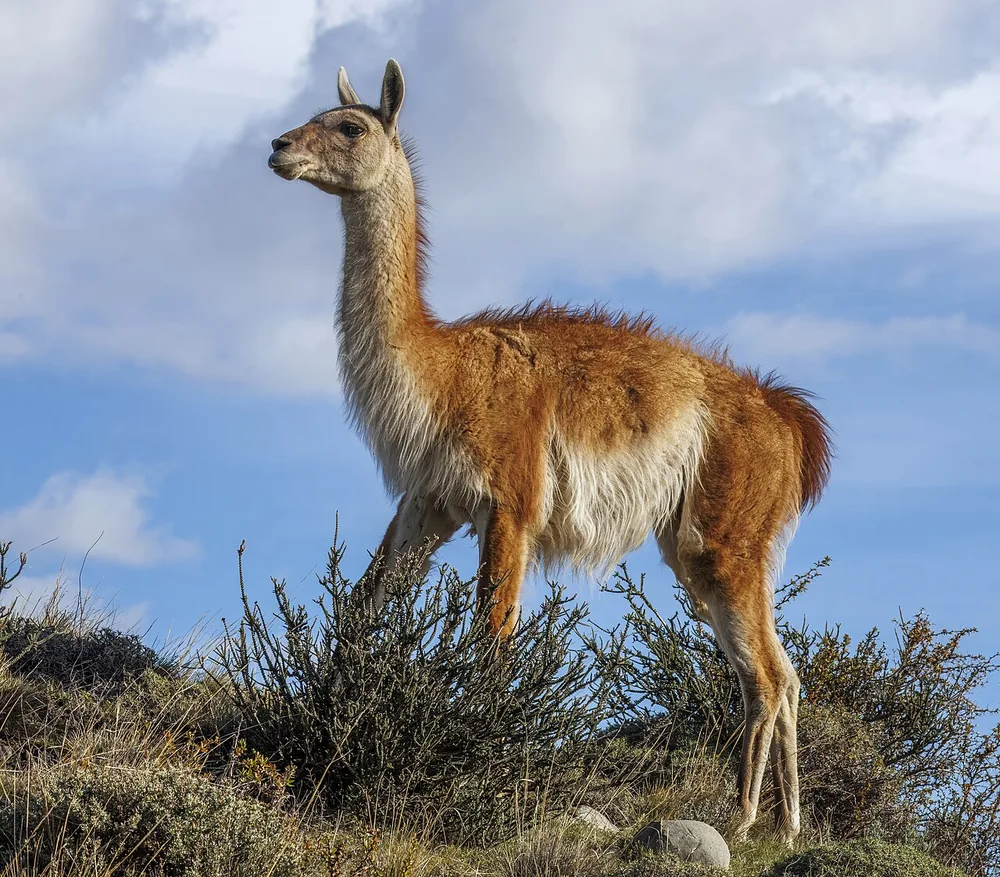
Scientific name: Lama guanicoe · Group: camelid (camel family) · Lives: deserts, grasslands and mountains of western South America, up to 4,000 m · Size: 1.0–1.3 m at the shoulder; 90–140 kg · Eats: grasses and shrubs · IUCN status: Least Concern (2016)
The wild relative of the domestic llama. With the vicuña, it is one of two wild South American camelids.
Golden lion tamarin
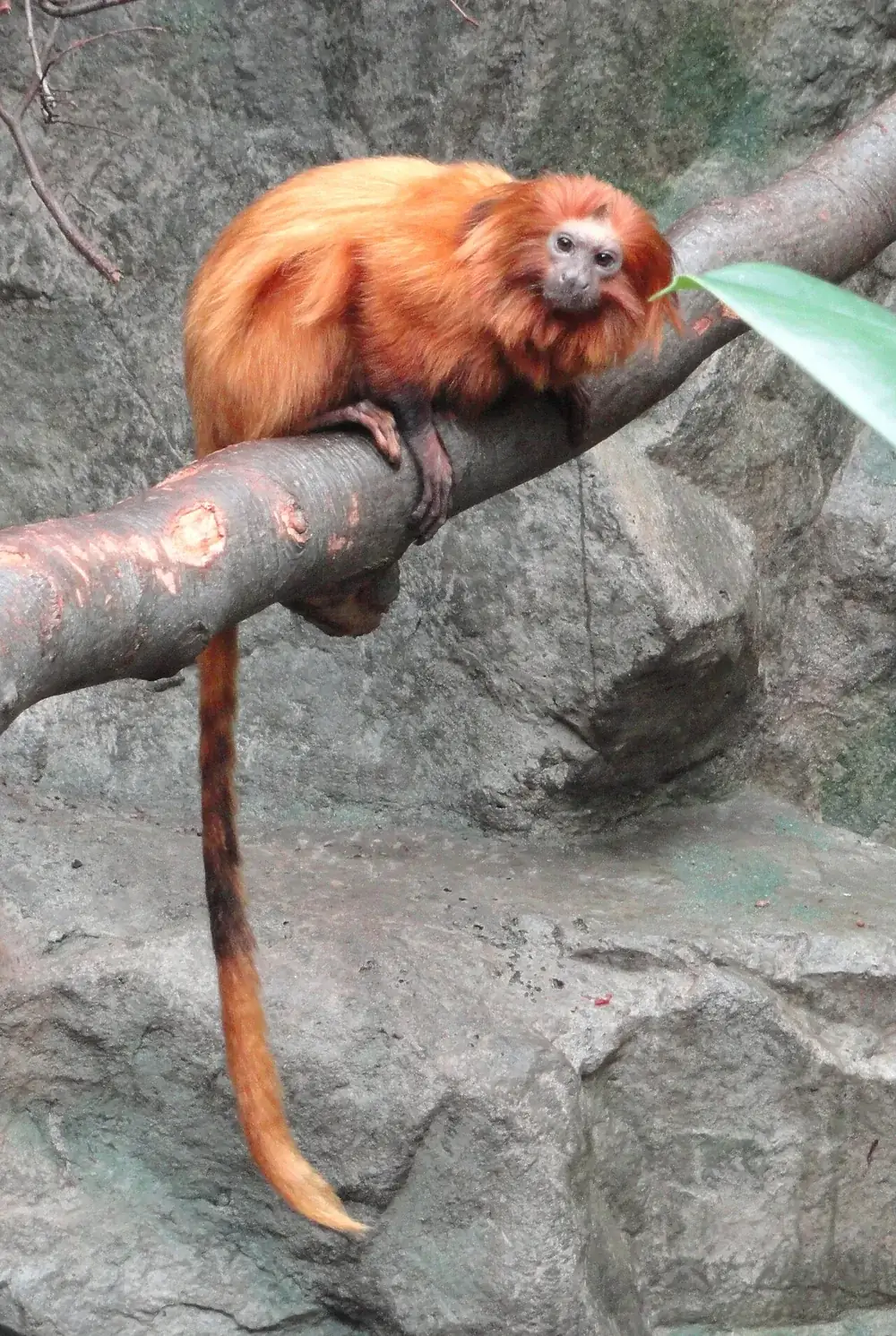
Scientific name: Leontopithecus rosalia · Group: New World monkey · Lives: Atlantic coastal forest of Rio de Janeiro state, Brazil · Size: about 26 cm; 620 g · Eats: fruit, insects and small animals · IUCN status: Endangered (2021)
Only about 100–600 were thought to remain in the 1960s–70s. Zoo-born reintroductions helped raise the wild count to about 4,800 (2022/23 census). Compare other New World monkeys.
Galago (Mohol bushbaby)
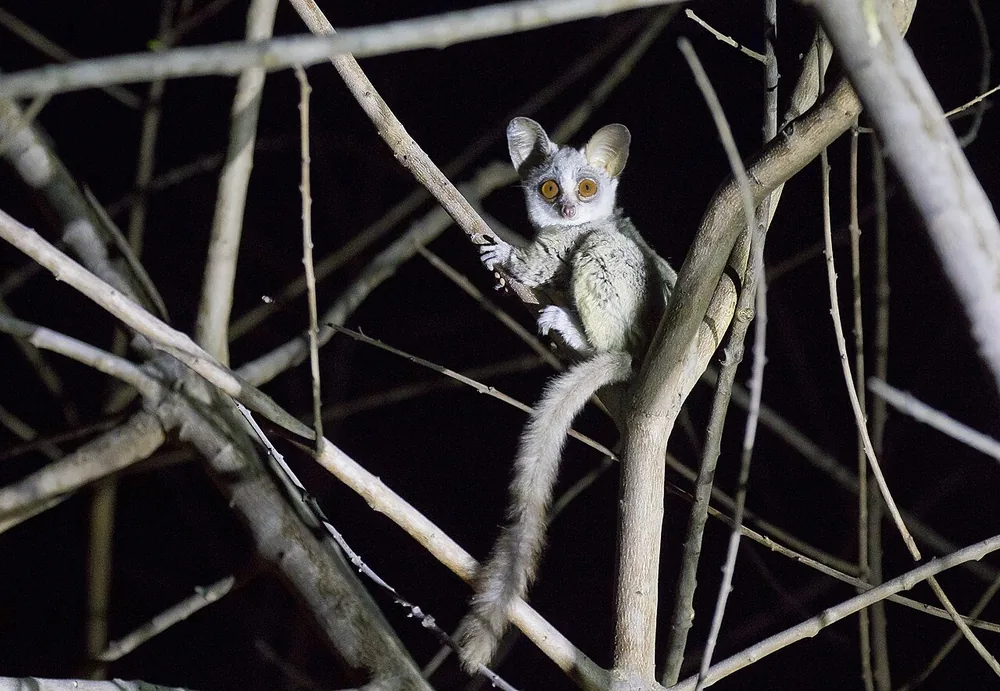
Scientific name: Galago moholi · Group: small primate · Lives: dry woodland and savanna of southern Africa · Size: head and body about 15 cm, plus a 23 cm tail · Eats: insects and other small food · IUCN status: Least Concern
Also called the southern lesser galago, it is nocturnal and has huge eyes for seeing at night, as in the photo.
Giant otter
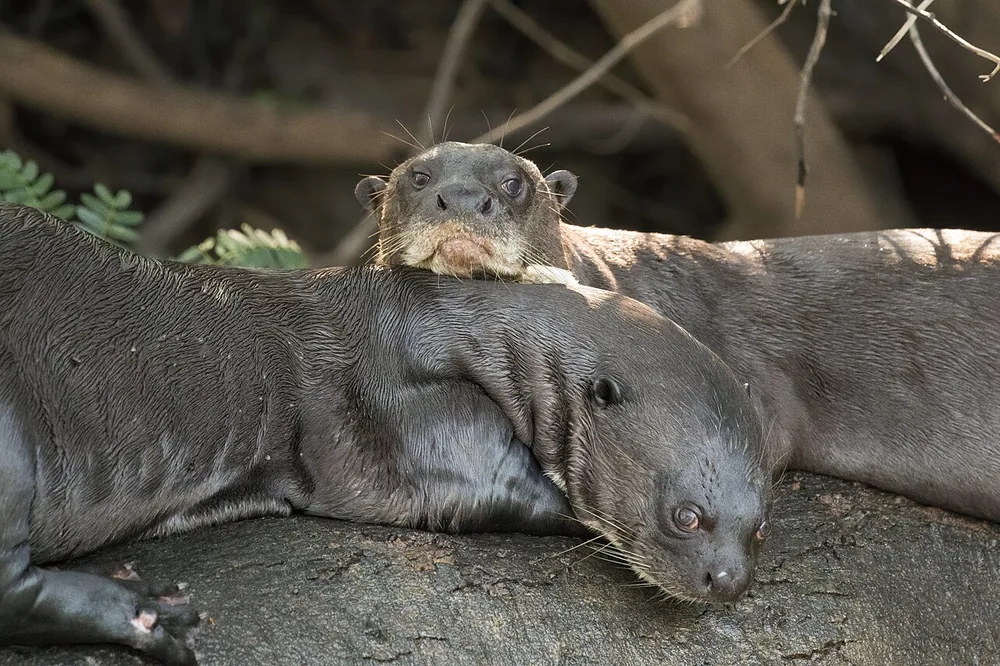
Scientific name: Pteronura brasiliensis · Group: mammal (weasel family) · Lives: rivers and swamps of the Amazon, the Pantanal and the Guianas · Size: up to 1.8 m long · Eats: mainly fish, about 3 kg a day · IUCN status: Endangered (2022)
The longest member of the weasel family. It lives in noisy family groups of 3–8, and the wild population is usually estimated at below 5,000.
Grey seal
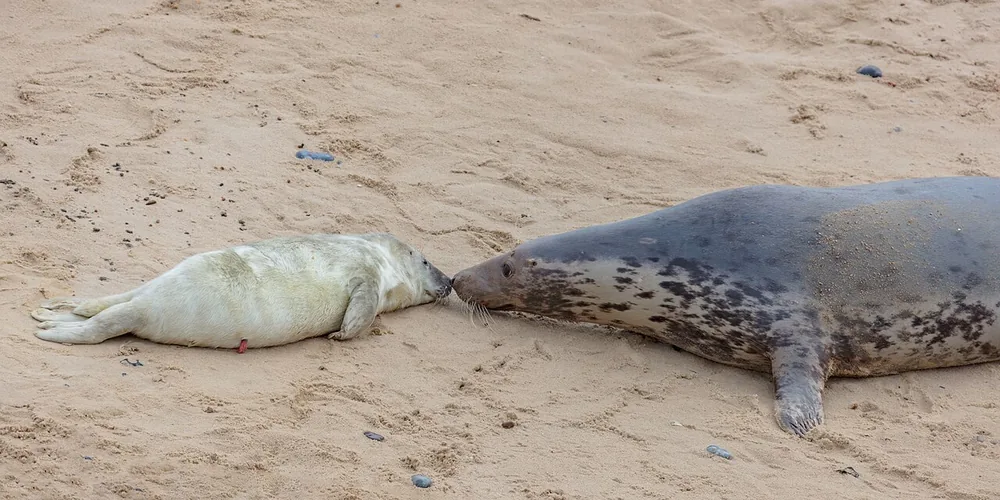
Scientific name: Halichoerus grypus · Group: seal · Lives: North Atlantic coasts, including Britain · Size: eastern Atlantic adults 1.6–2.3 m and 100–310 kg · Eats: mostly fish · IUCN status: Least Concern (2016)
Its scientific name means “hook-nosed sea pig”, and it is also called the horsehead seal. Pups are born with a white coat, as in the photo.
Goat
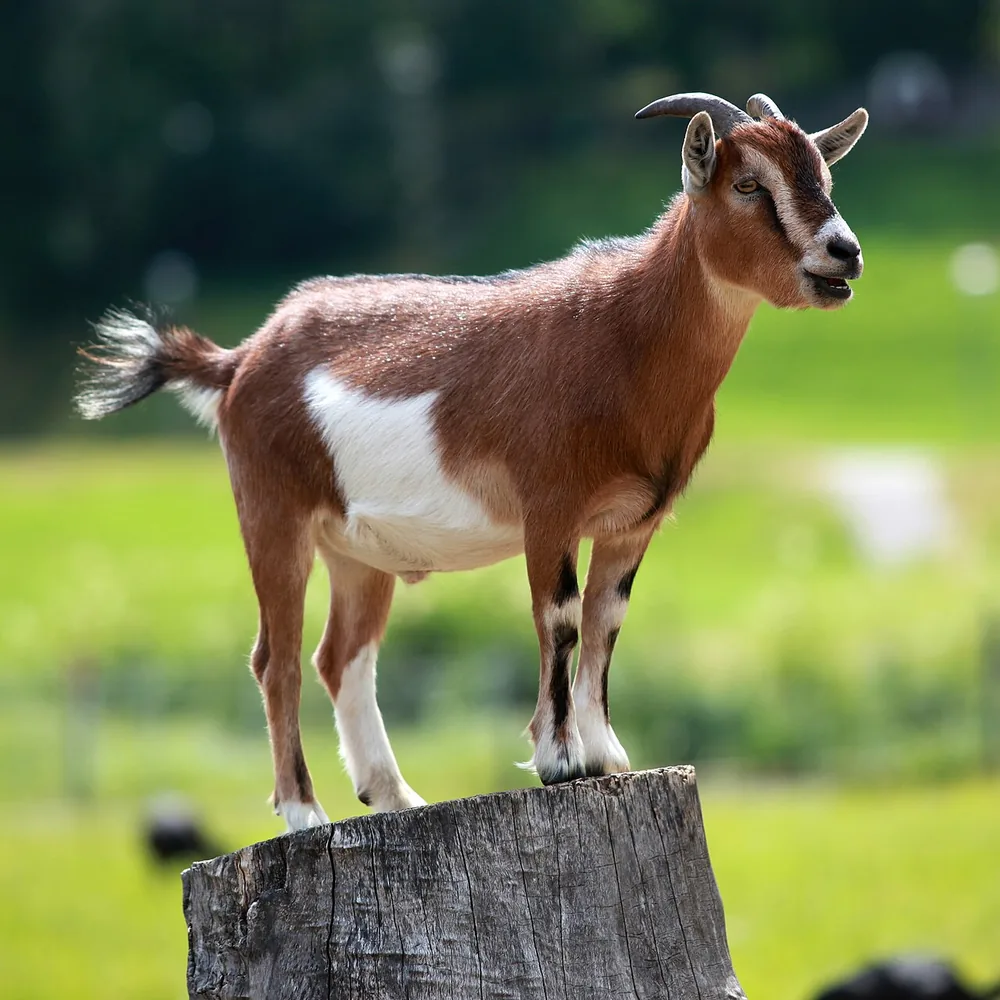
Scientific name: Capra hircus · Group: domestic mammal (cattle family) · Lives: farms worldwide, kept for milk, cheese, meat and wool · Eats: plants: grass, leaves and shrubs · IUCN status: Domesticated (not assessed)
Goats were domesticated from the wild goat about 10,000 years ago in Iran, one of the first animals tamed. There were over 1.1 billion in 2022, and their horizontal slit-shaped pupils give a wide field of view.
Five more mammals are in the table. The gnu is another name for the blue wildebeest. Grévy’s zebra is the largest wild equid, has the narrowest stripes of any zebra and has only about 2,250 left (see animals with stripes). The gelada of the Ethiopian Highlands eats grass for up to 90% of its diet and has a red “bleeding-heart” chest patch. The eastern grey squirrel is native to North America and has been on the EU list of invasive species since 2016. The guinea pig was first kept for meat in the Andes and has been a pet in Europe since the 16th century.
Birds that start with G
Birds are the only animals with feathers, and these amazing birds show how varied they are. Here are eleven.
Golden eagle
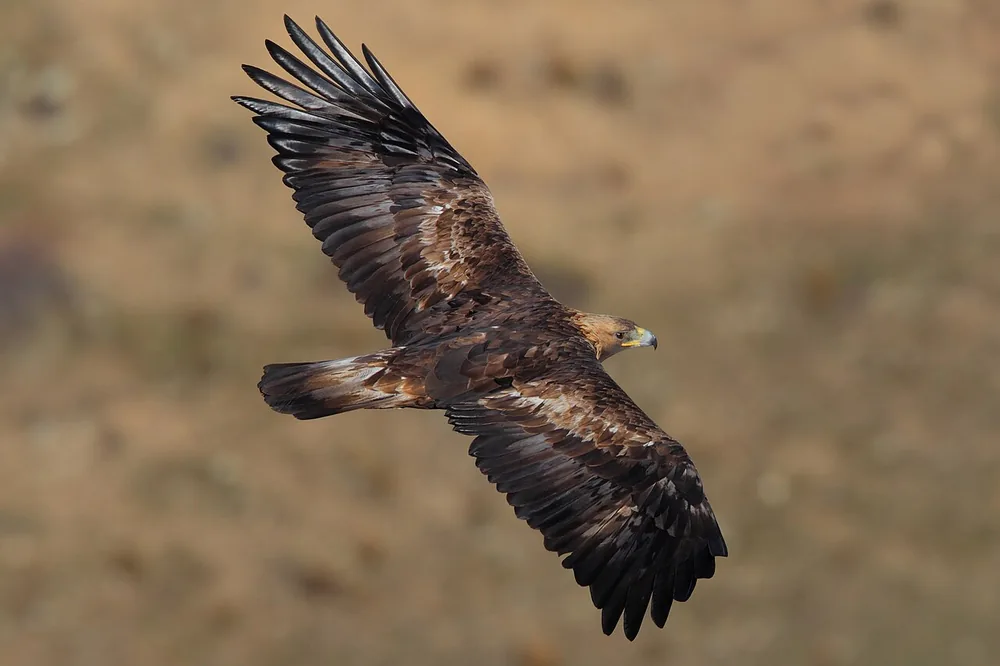
Scientific name: Aquila chrysaetos · Group: bird of prey · Lives: mountains and open country across the Northern Hemisphere · Size: males 2.8–4.6 kg · Eats: hares, rabbits, marmots and ground squirrels · IUCN status: Least Concern (2021)
The most widely distributed eagle. It is reported to dive at 240–320 km/h when stooping on prey (measured speeds are nearer 190 km/h), the fastest speed on this list, and a home range can reach 200 km².
Gentoo penguin
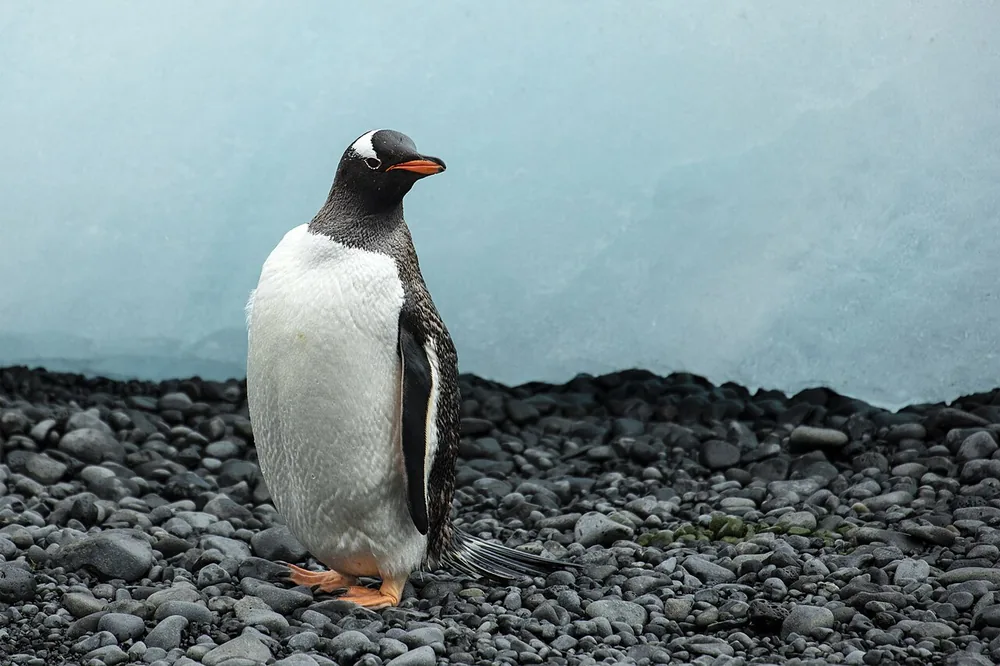
Scientific name: Pygoscelis papua · Group: penguin · Lives: Antarctic Peninsula, the Falklands, South Georgia and other sub-Antarctic islands · Size: 70–90 cm; up to about 8.5 kg · IUCN status: Least Concern (2020)
The fastest underwater swimmer of all penguins, at up to 36 km/h, and the third-largest penguin after the emperor and king.
Goose (greylag)
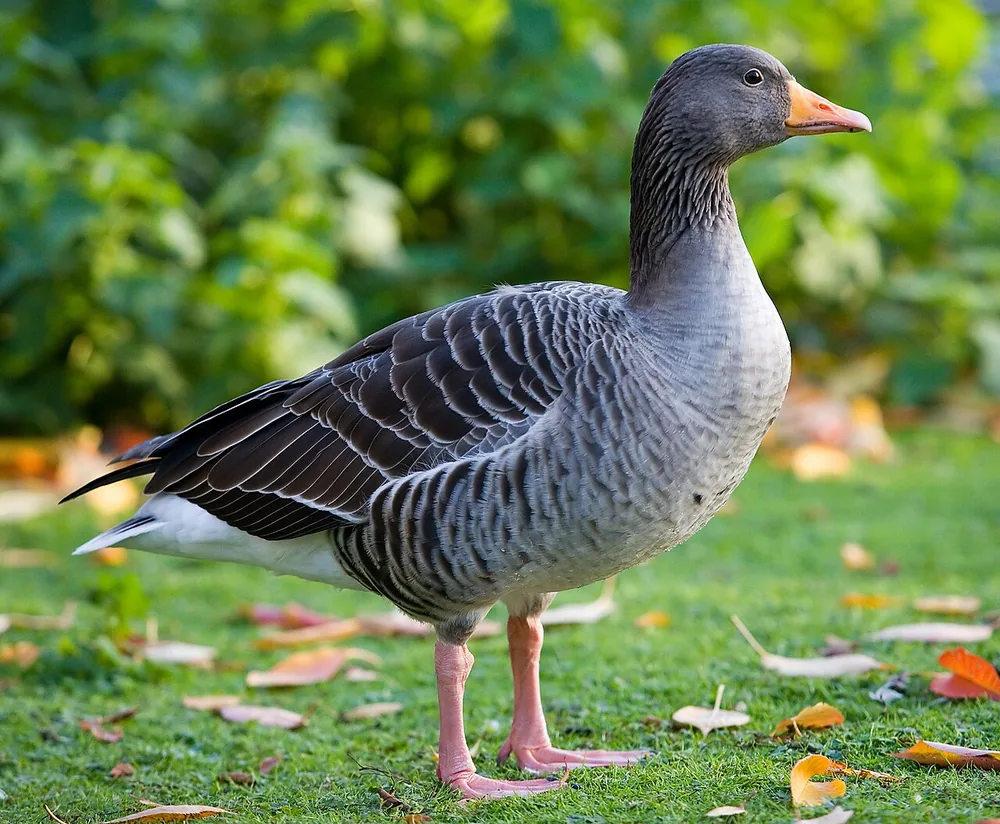
Scientific name: Anser anser · Group: waterfowl · Lives: wetlands, lakes and farmland across Europe and Asia, including Britain · Size: 74–91 cm; average 3.3 kg · Eats: grass, crops and other plants · IUCN status: Least Concern (2018)
The ancestor of most domestic geese, which were domesticated by at least 1360 BCE. It usually mates for life, and Konrad Lorenz studied imprinting in greylag goslings.
Great horned owl
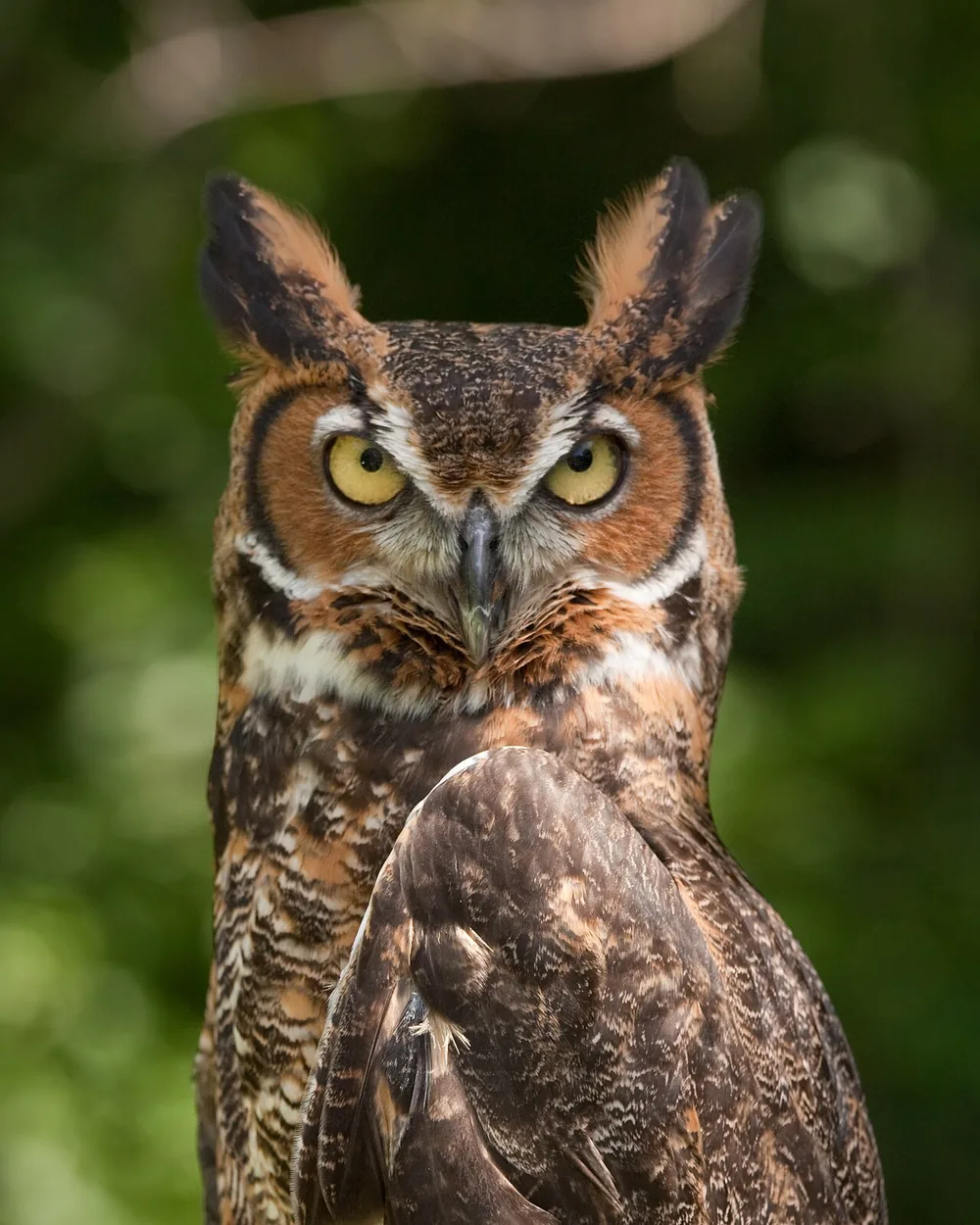
Scientific name: Bubo virginianus · Group: owl · Lives: forests, deserts and cities across the Americas · Size: 43–64 cm long; wingspan 91–153 cm · Eats: rabbits, hares, rats, mice and voles, and one of few regular predators of skunks · IUCN status: Least Concern (2018)
The most widely distributed true owl in the Americas, nicknamed the “tiger owl”. Its talons span about 20 cm. Read about the the largest owl in North America.
Grey heron
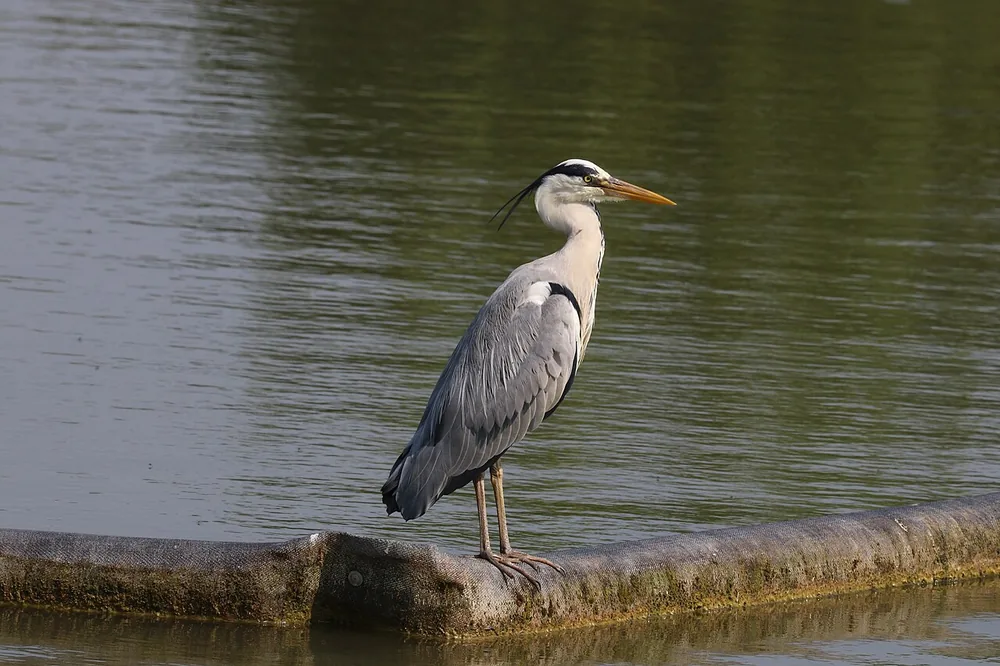
Scientific name: Ardea cinerea · Group: heron · Lives: lakes, rivers, ponds, marshes and coasts of Europe (including Britain), Asia and Africa · Size: up to 1 m tall; 1–2 kg · Eats: fish and other water animals · IUCN status: Least Concern (2019)
It stands still in water to ambush prey and nests in colonies called heronries, usually high in trees. An archbishop’s feast in 1465 served 400 herons.
Golden pheasant
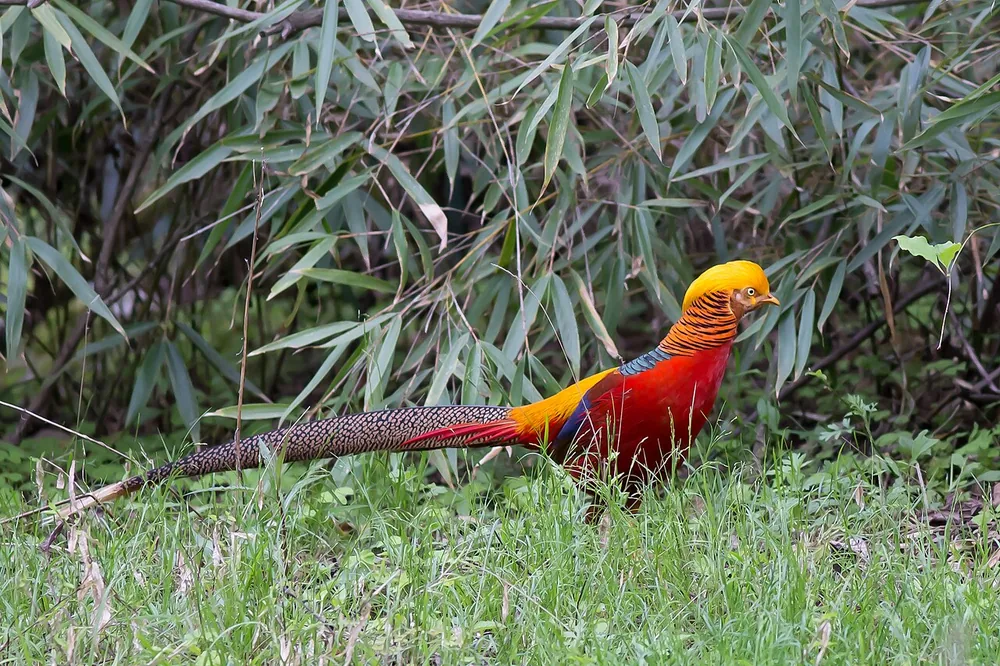
Scientific name: Chrysolophus pictus · Group: pheasant · Lives: mountain forests of central China · Size: males about 100 cm, two-thirds of it tail; 500–700 g · IUCN status: Least Concern (2018)
The male has a golden crest and rump, a red body and an orange-and-black “cape” that it spreads in display. It is also called the Chinese or rainbow pheasant.
Greater roadrunner
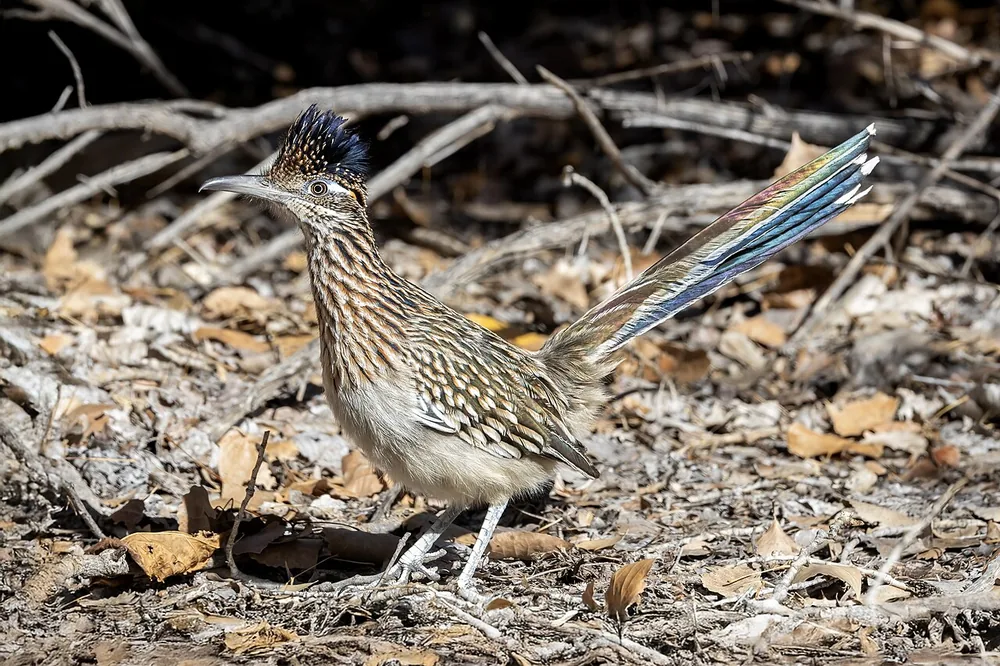
Scientific name: Geococcyx californianus · Group: bird (cuckoo family) · Lives: deserts and scrub of the south-western USA and Mexico · Size: 52–62 cm; 221–538 g · Eats: insects, spiders, scorpions, lizards, mice and young rattlesnakes · IUCN status: Least Concern (2016)
It can keep up about 29–32 km/h over long distances, using its tail as a rudder. It is also called the “snake killer”.
Grey crowned crane
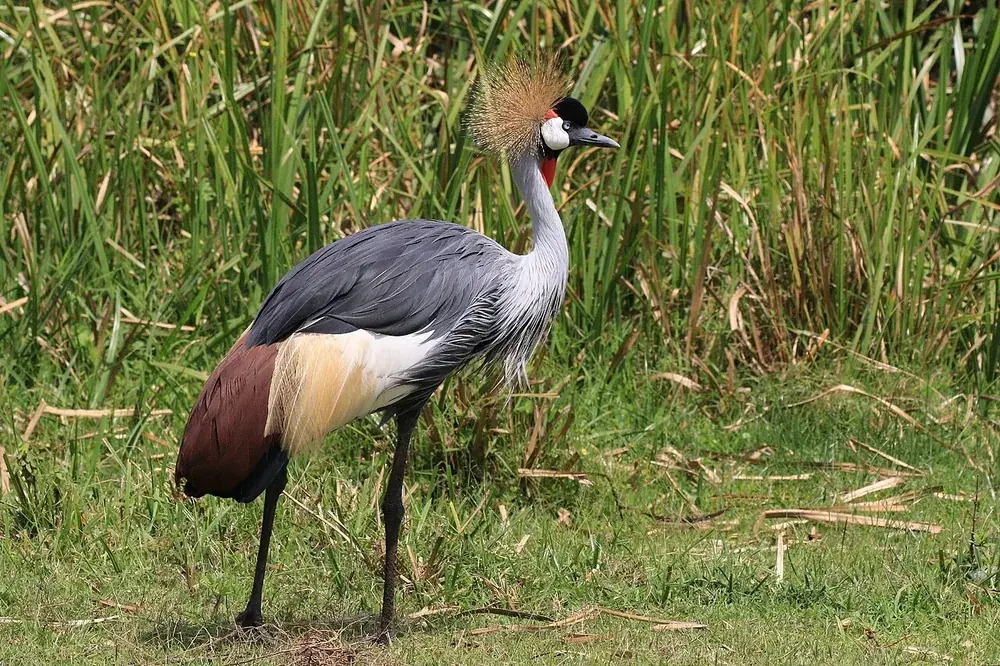
Scientific name: Balearica regulorum · Group: crane · Lives: savannah and wetlands of eastern and southern Africa · Size: about 1 m tall; 3.5 kg; wingspan 2 m · Eats: seeds, grain, insects, frogs and small fish · IUCN status: Endangered (2024)
It wears a stiff crown of golden feathers, and it is an omnivore that feeds in both wetlands and fields.
Gannet (northern)
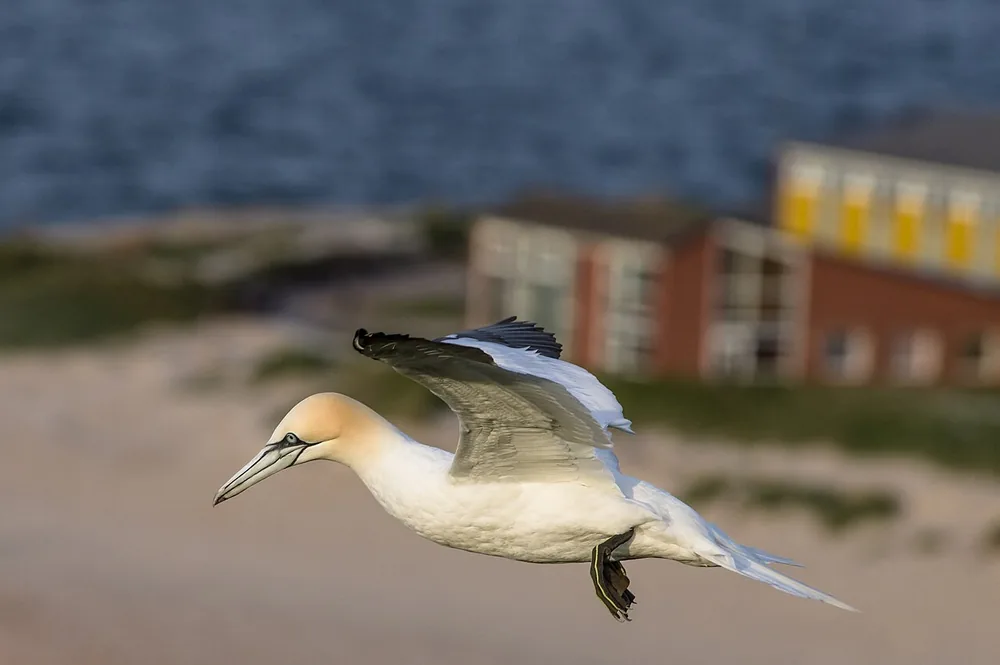
Scientific name: Morus bassanus · Group: seabird · Lives: North Atlantic coasts · Size: 87–100 cm; wingspan 170–180 cm · Eats: fish · IUCN status: Least Concern (2018)
The largest seabird of the North Atlantic. It plunge-dives at up to about 100 km/h, with air sacs under the skin cushioning the impact. Bass Rock, Scotland, holds the biggest colony: 75,000 pairs in 2014.
Great hornbill
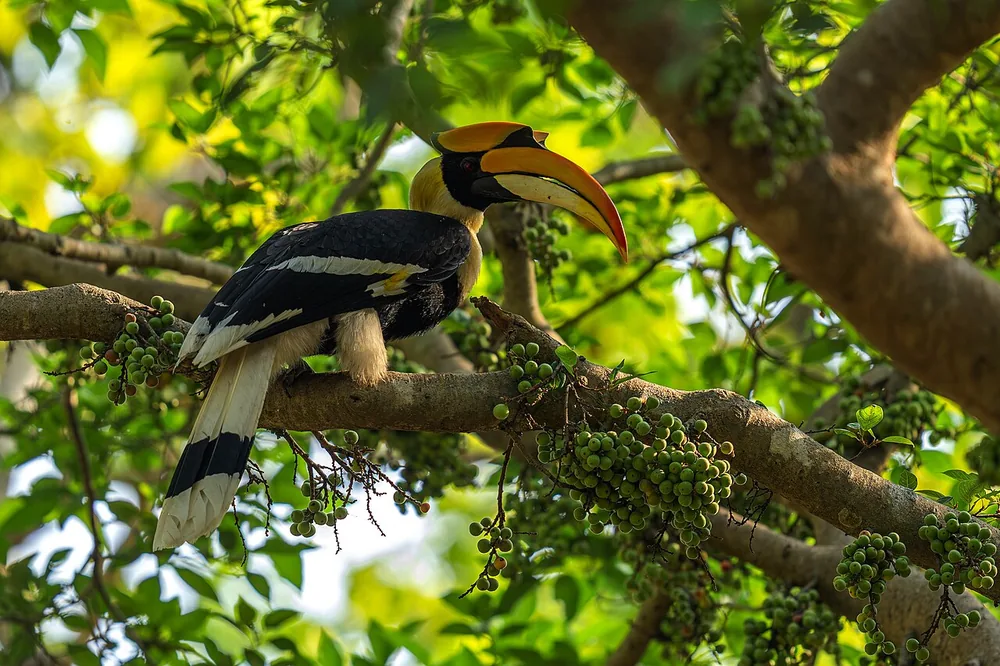
Scientific name: Buceros bicornis · Group: hornbill · Lives: forests of India and Southeast Asia · Size: 95–130 cm; 2–4 kg; wingspan 152 cm · Eats: mostly fruit, plus small mammals, reptiles and birds · IUCN status: Vulnerable (since 2018)
A big yellow-and-black casque sits on top of its bill. It is the state bird of Kerala and Arunachal Pradesh, and one lived nearly 50 years in captivity.
Great tit
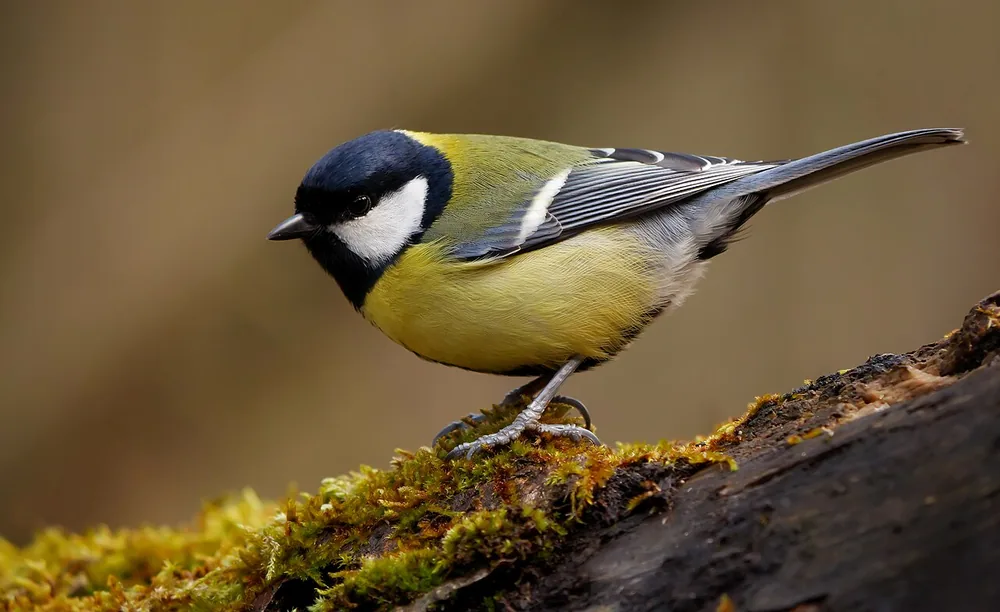
Scientific name: Parus major · Group: bird (tit family) · Lives: woods, parks and gardens of Europe (including Britain), the Middle East and Central Asia · Eats: insects in summer; seeds and other food in winter · IUCN status: Least Concern
A common garden bird that nests in tree holes and nest boxes. It has up to 40 types of calls and songs, and in winter it has even eaten hibernating bats.
Four more birds are in the table. The gyrfalcon is the largest falcon in the world. The great bustard is among the heaviest flying birds, with males weighing 5.8–18 kg. The helmeted guineafowl lives on African savanna and is domesticated worldwide. The griffon vulture lives in mountains and open country from southern Europe to Asia. To see what birds eat, read what birds eat.
Reptiles and amphibians that start with G
Reptiles have dry scaly skin, while amphibians have moist skin and start life in water. For more venomous snakes, see venomous snakes in Sri Lanka. Here are ten.
Gila monster
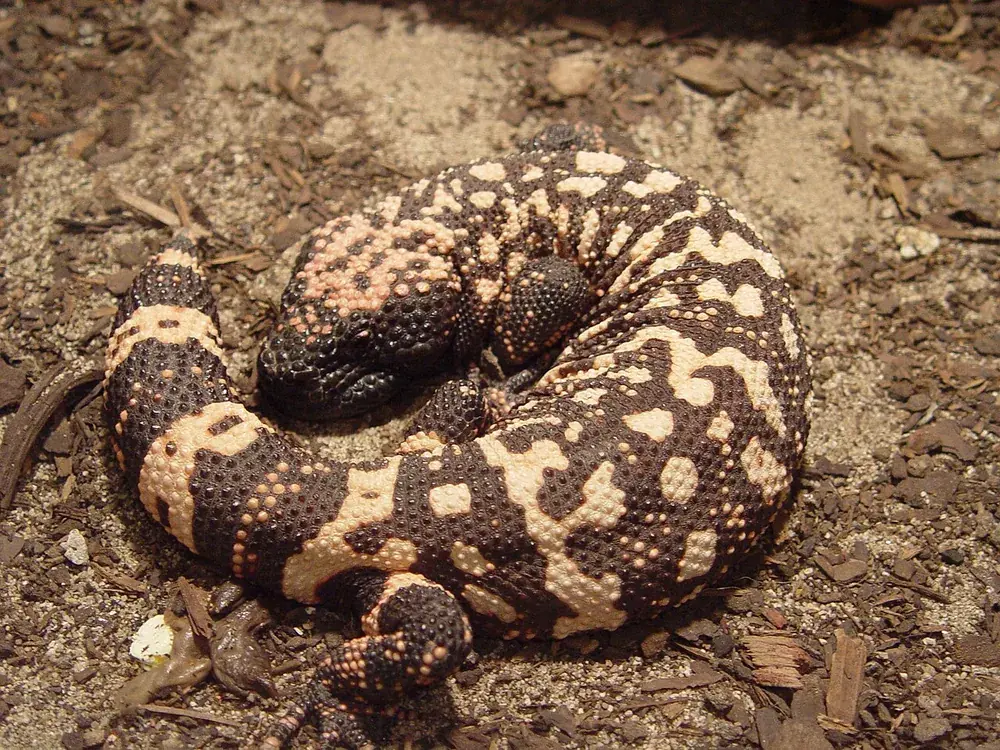
Scientific name: Heloderma suspectum · Group: reptile (venomous lizard) · Lives: deserts of the south-western USA and Sonora, Mexico · Size: up to 56 cm · Eats: small animals · IUCN status: Near Threatened (2007)
The only venomous lizard native to the United States. It is slow and rarely dangerous, though its bite is painful. A peptide in its venom, exendin-4, led to GLP-1 medicines for type 2 diabetes and obesity.
Green anaconda
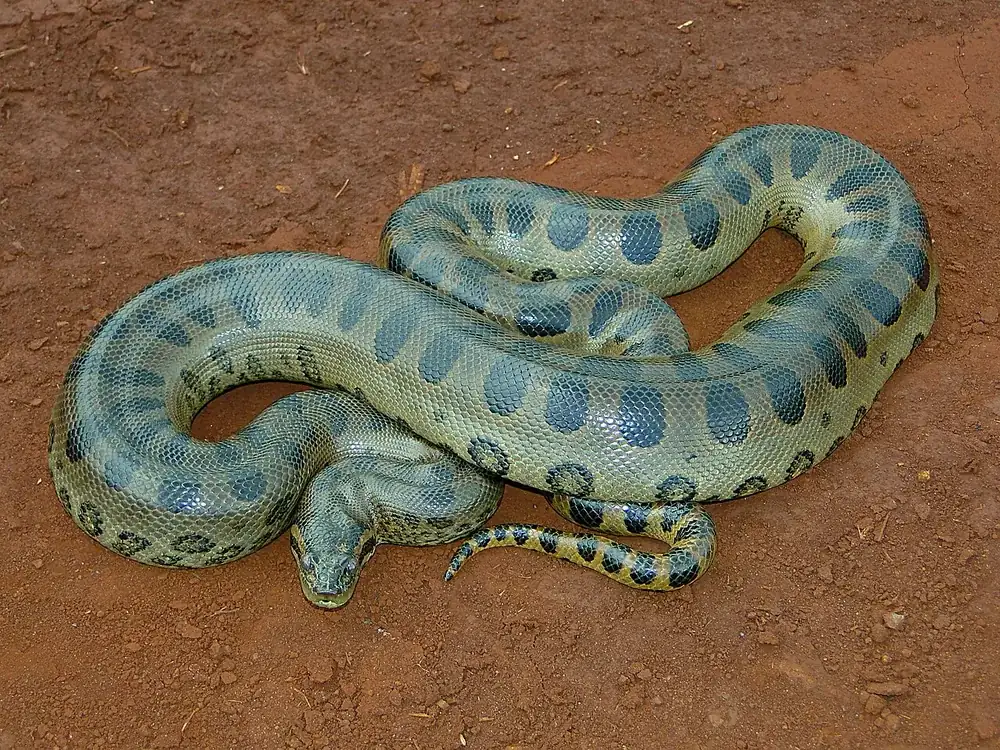
Scientific name: Eunectes murinus · Group: reptile (boa) · Lives: swamps, rivers and flooded grassland of northern South America · Size: one of the longest and heaviest snakes alive · Eats: animals it squeezes (non-venomous constrictor) · IUCN status: Least Concern
It spends most of its life in slow, shallow water. A 2024 study named a northern population as a separate species, Eunectes akayima, but not all experts accept it. Read about anacondas in the rainforest.
Gharial
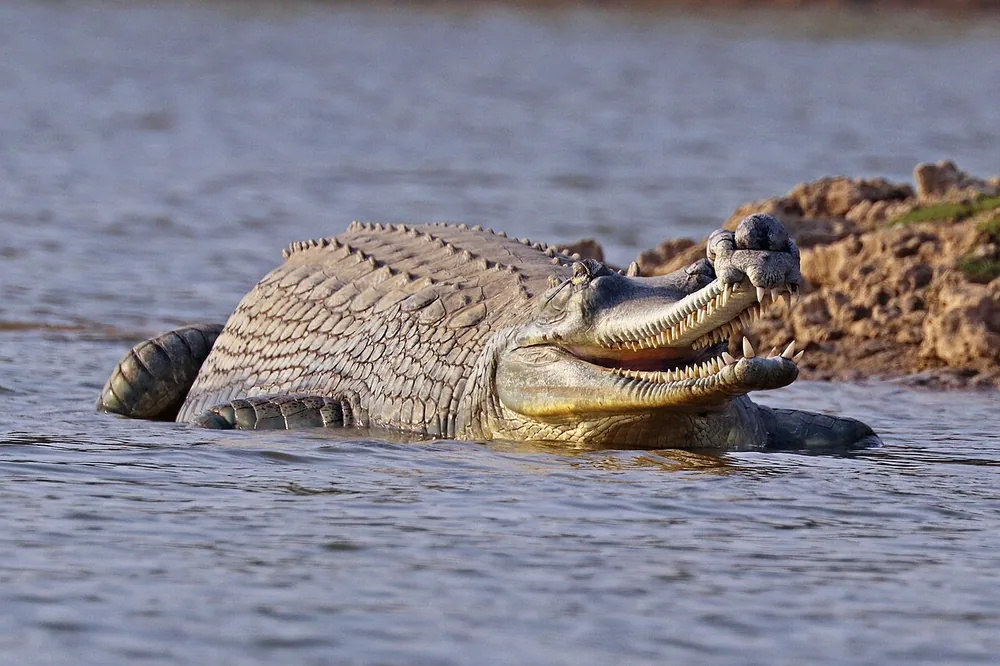
Scientific name: Gavialis gangeticus · Group: reptile (crocodilian) · Lives: rivers of the plains of northern India and Nepal · Size: females 2.6–4.5 m; males 3–6 m · Eats: fish · IUCN status: Critically Endangered (since 2007; reassessed 2019)
Its long, thin snout has 110 sharp teeth for catching fish. Adult males have a pot-shaped knob, the “ghara”, on the snout, which gave the animal its name. It survives in only 2% of its historical range.
Galápagos giant tortoise
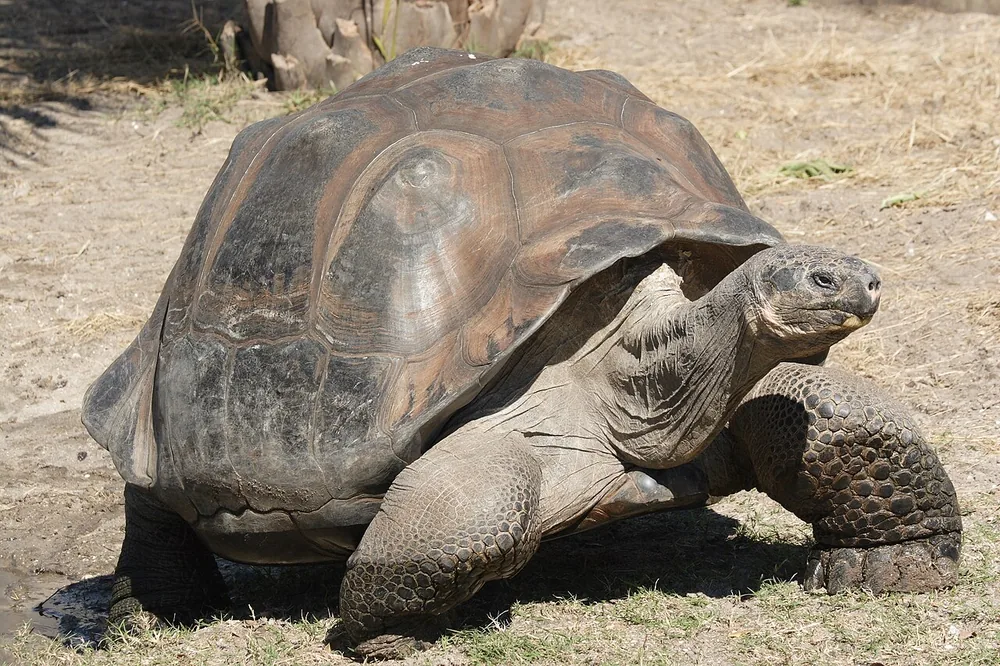
Scientific name: Chelonoidis niger (species complex) · Group: reptile (tortoise) · Lives: seven of the Galápagos Islands, Ecuador · Size: up to 417 kg · Eats: plants · IUCN status: Varies by island (6 forms Critically Endangered, 3 Endangered, 3 Vulnerable)
The largest living tortoise. Wild tortoises live over 100 years, and Harriet lived in captivity for about 170 years (reports of 175 are disputed). Numbers fell from over 250,000 to about 15,000 by the 1970s.
Green sea turtle
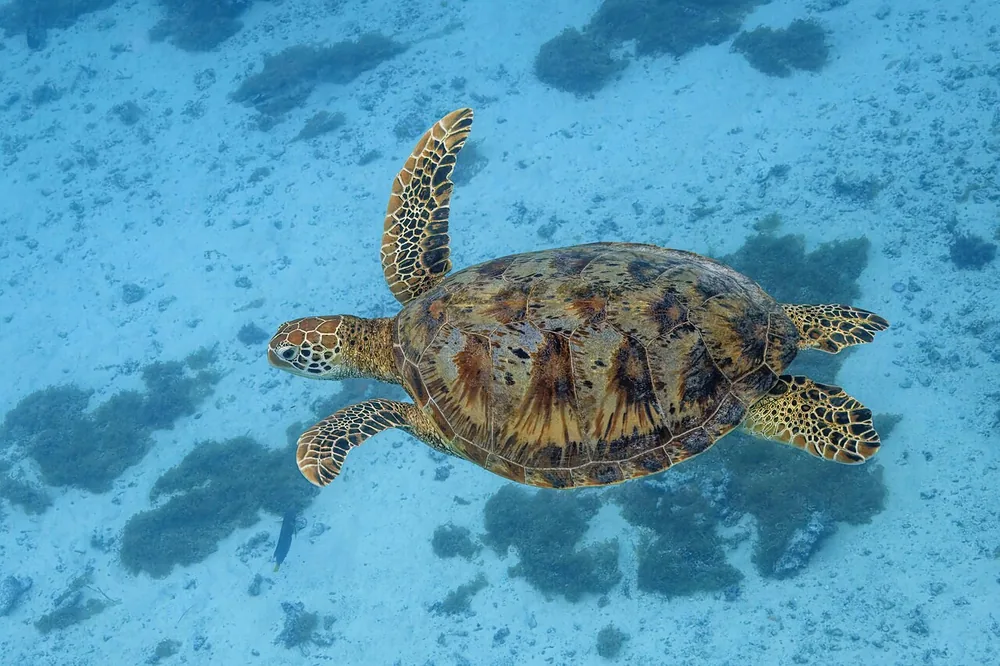
Scientific name: Chelonia mydas · Group: reptile (sea turtle) · Lives: tropical and subtropical seas worldwide · Size: up to 1.5 m; mature adults 68–190 kg · Eats: seagrass (adults) · IUCN status: Least Concern (October 2025; Endangered until then)
Named for the green fat under its shell, not its shell colour, it is the only aquatic turtle that is herbivorous as an adult. It may live to 90. Find out how to protect marine life.
Green iguana
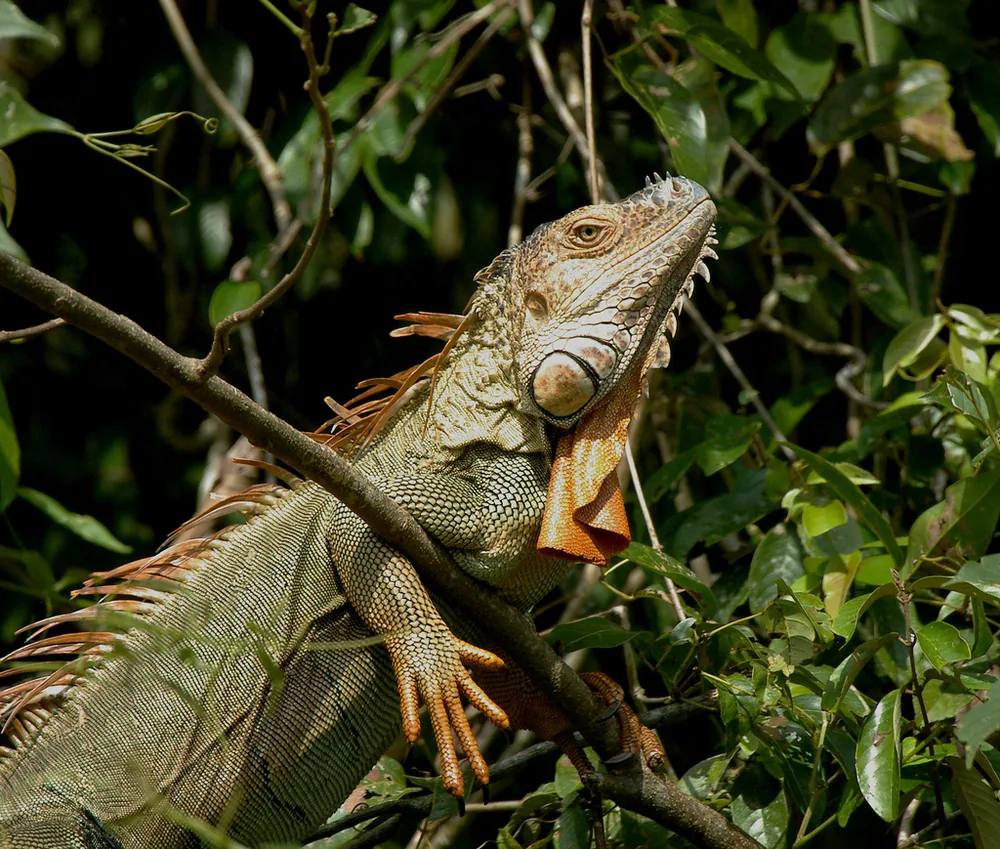
Scientific name: Iguana iguana · Group: reptile (lizard) · Lives: forests from Mexico to southern Brazil and Paraguay · Size: up to 1.7 m head to tail · Eats: mostly plants · IUCN status: Least Concern
A spiny crest runs along its back and tail, and it defends itself with a whip-like tail. It is invasive in many warm places where released pets have escaped.
Gecko (tokay)
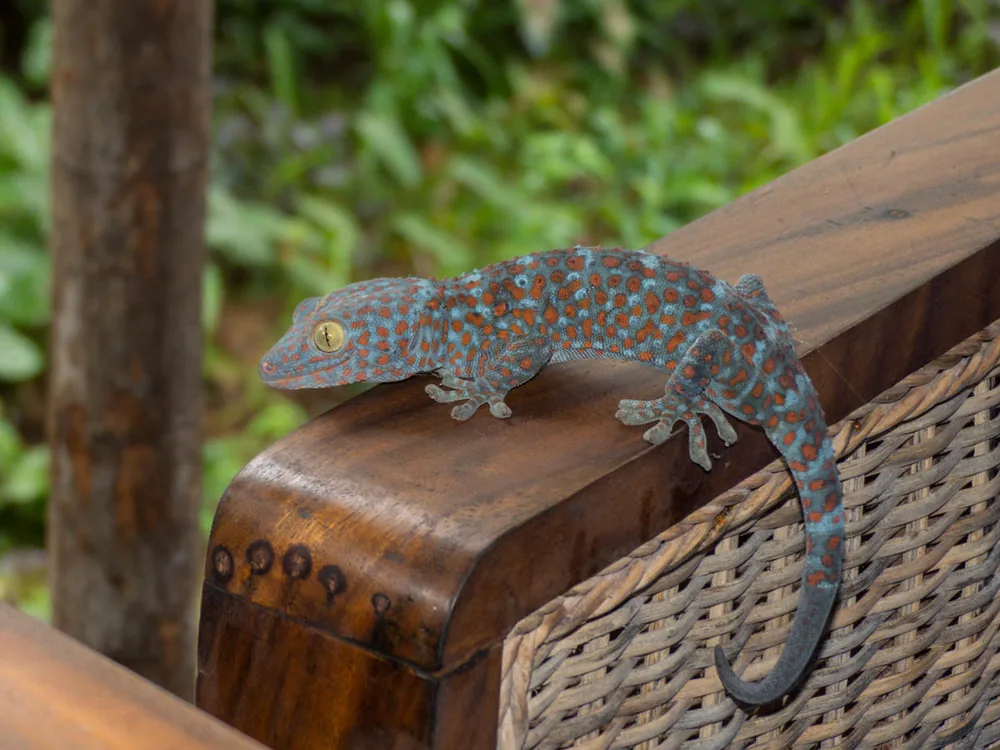
Scientific name: Gekko gecko · Group: reptile (lizard) · Lives: forests and buildings of Asia and some Pacific islands · Size: usually 25–30 cm; some 40 cm · Eats: insects and other small animals · IUCN status: Least Concern (2019)
“Tokay” copies the male’s loud call, and the word “gecko” itself comes from this species’ call (Malay gekok). About 60% of gecko species have sticky toe pads that grip with tiny hairs.
Gaboon viper
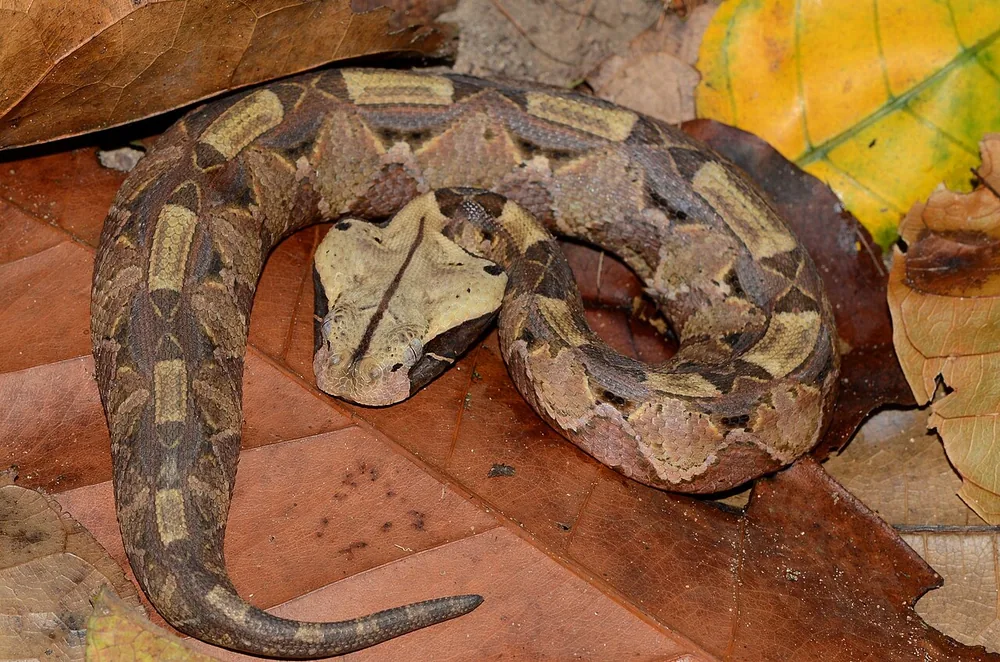
Scientific name: Bitis gabonica · Group: reptile (venomous viper) · Lives: rainforests and savannas of sub-Saharan Africa · Size: usually 125–155 cm · Eats: small animals it ambushes · IUCN status: Vulnerable (2021)
It has the longest fangs of any venomous snake, up to 5 cm, and the highest venom yield of any snake. Its camouflage in the leaf litter is clear in the photo.
Glass frog (Taylor’s)
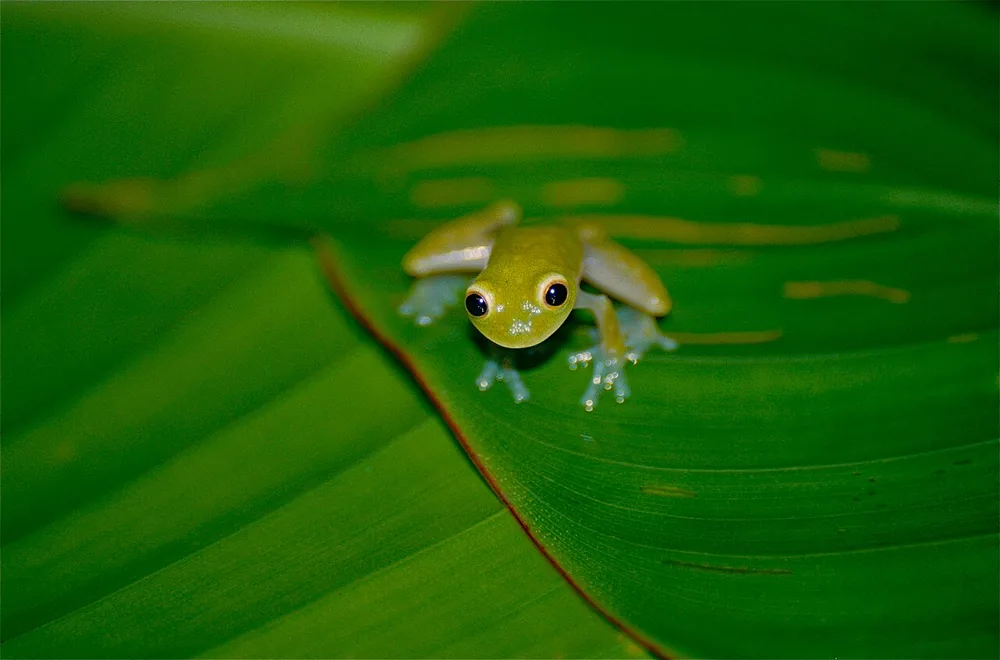
Scientific name: Hyalinobatrachium taylori · Group: amphibian (glass frog family) · Lives: rainforest of the Guianas and northern South America · Eats: insects · IUCN status: Least Concern (2020)
Many glass frogs have see-through belly skin, so the heart, liver and gut show from below. A sleeping glass frog hides most of its blood in its liver.
Golden poison frog
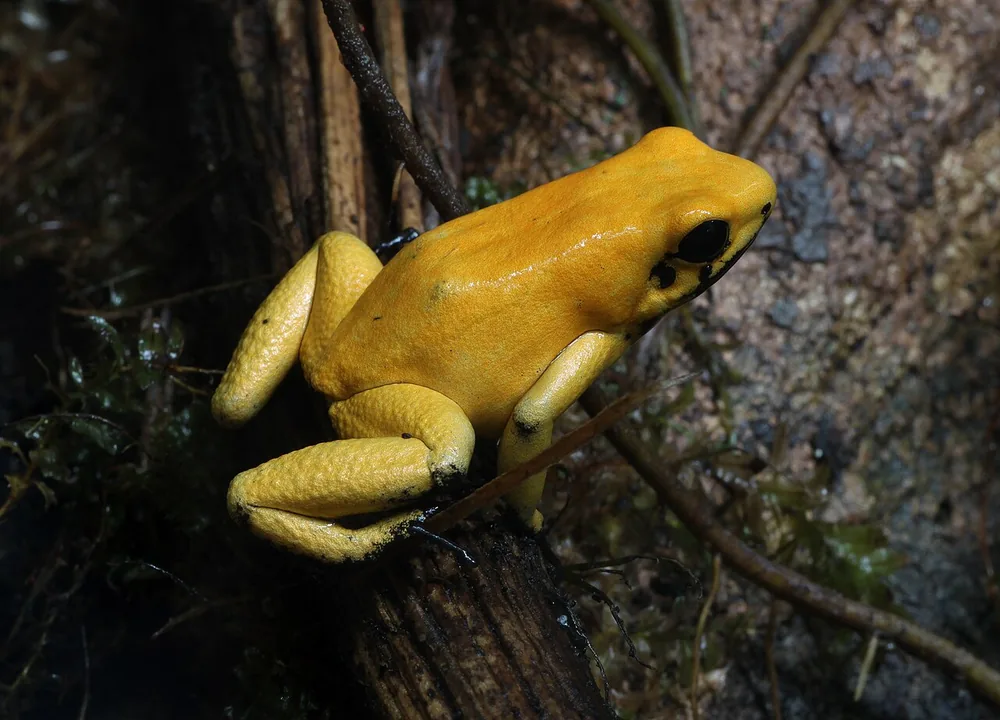
Scientific name: Phyllobates terribilis · Group: amphibian (poison dart frog) · Lives: rainforest on Colombia’s Pacific coast · Size: up to 6 cm; nearly 30 g · IUCN status: Endangered (2017)
Often described as one of the most poisonous animals on Earth, thanks to batrachotoxins in its skin. It is the largest poison dart frog, and its bright yellow warns predators away.
Three more are in the table. The Goliath frog is the largest living frog. The grass snake lives near ponds and rivers across Europe. The great crested newt is a European Protected Species in Britain.
Fish and sea animals that start with G
Many sea animals begin with G, and several are among the biggest. See also amazing marine fish. Here are six.
Great white shark
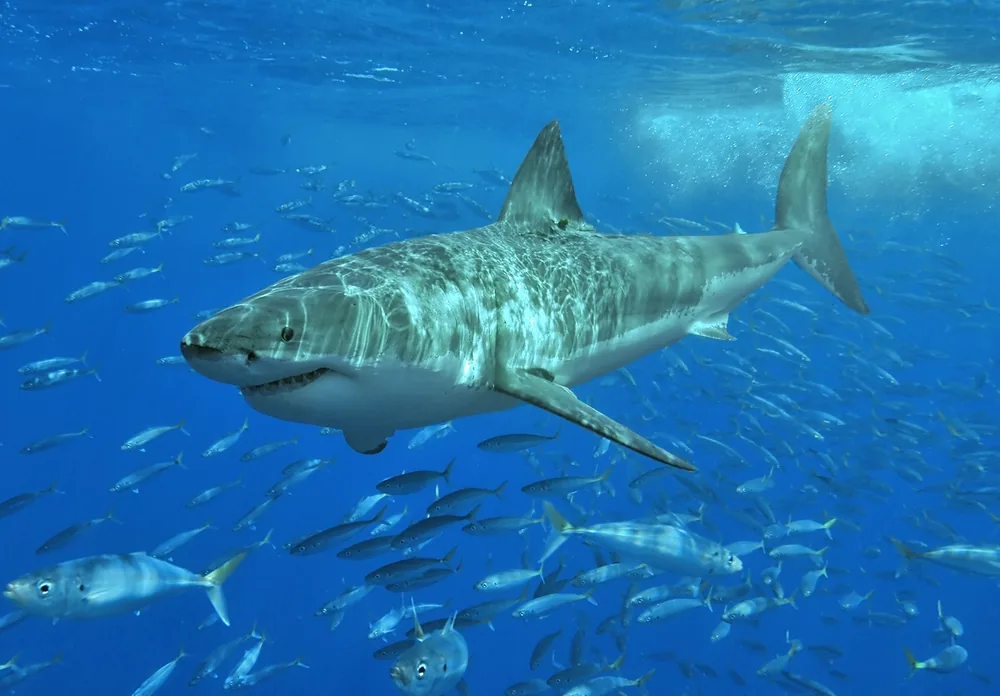
Scientific name: Carcharodon carcharias · Group: fish (shark) · Lives: cool and warm coastal and open seas worldwide · Size: females 1,000–1,900 kg; males 680–1,000 kg · Eats: seals, dolphins, fish, squid and whale carcasses · IUCN status: Vulnerable (2022)
It has about 300 serrated teeth, continuously replaced, and is partly warm-blooded. Orcas sometimes hunt it.
Greenland shark
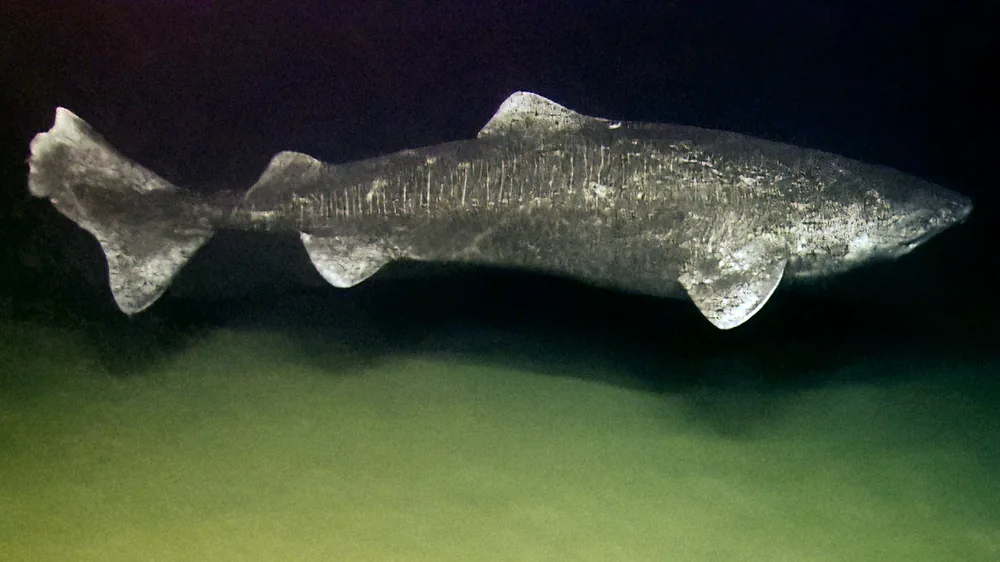
Scientific name: Somniosus microcephalus · Group: fish (sleeper shark) · Lives: deep, cold North Atlantic and Arctic Ocean · Size: up to 6.4 m; over 1,000 kg · Eats: a generalist feeder, including carrion · IUCN status: Vulnerable (2020)
The longest-lived known vertebrate, with an estimated lifespan of 272–510 years. It matures at about 150 years old.
Goldfish
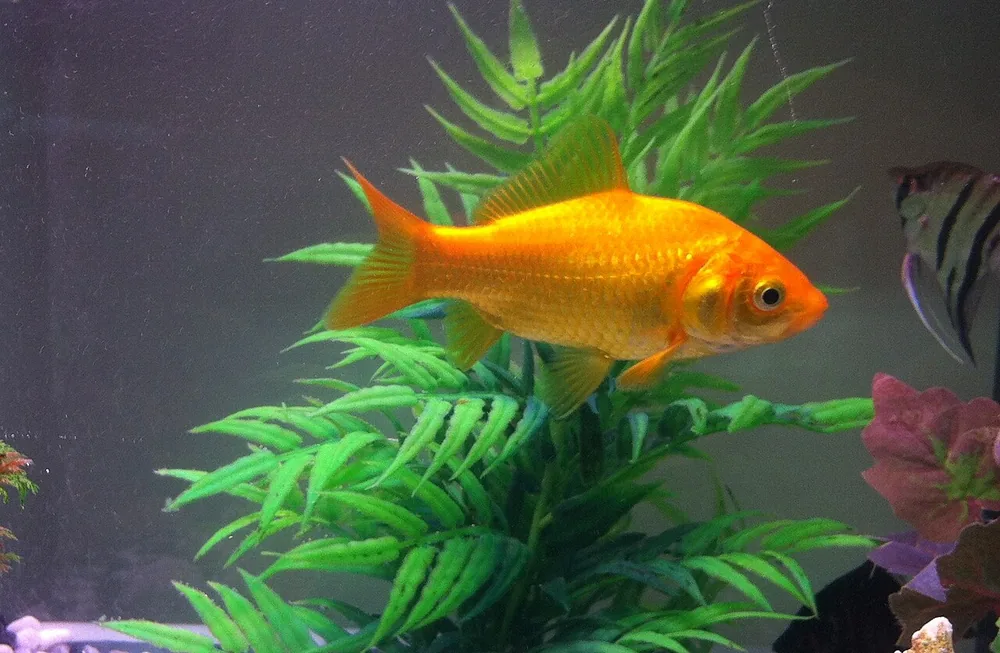
Scientific name: Carassius auratus · Group: fish (carp family) · Lives: native to China; kept in ponds and aquariums worldwide · Size: wild fish 12–22 cm; up to 41 cm · IUCN status: Least Concern (2013)
First bred for colour in China over 1,000 years ago. Its memory lasts at least three months, so the “three-second memory” is a myth. Released goldfish are invasive in parts of North America and Australia.
Giant manta ray
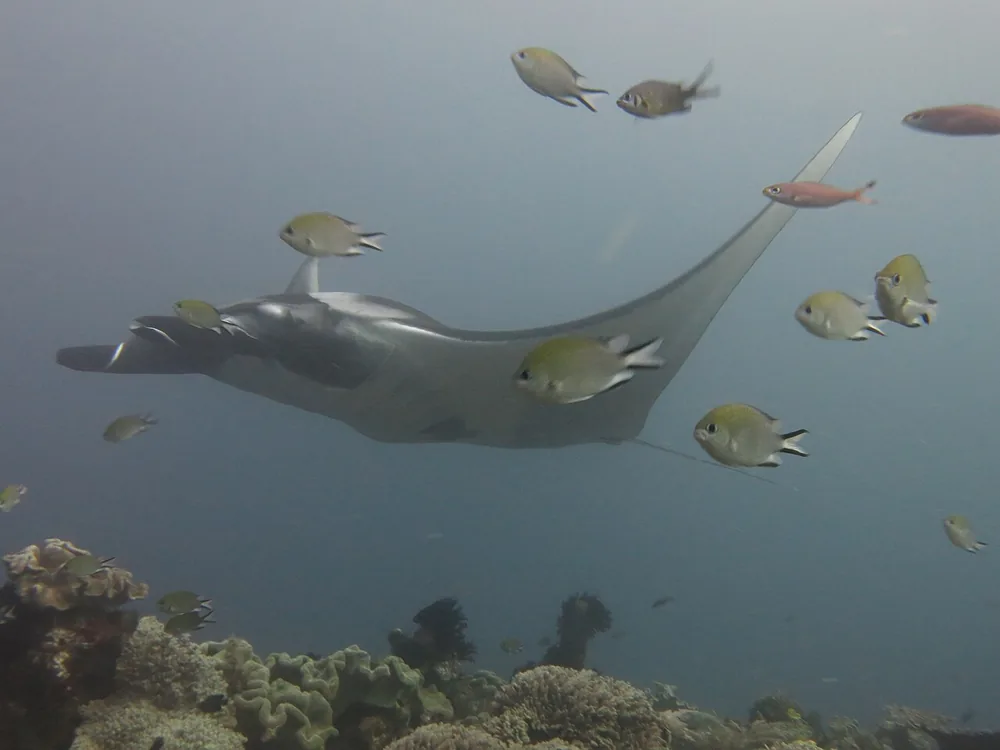
Scientific name: Mobula birostris · Group: fish (ray) · Lives: tropical, subtropical and temperate oceans worldwide · Size: disc up to 7 m across; around 3,000 kg · IUCN status: Endangered (2022)
The largest ray in the world, with the largest brain of any fish, up to 200 g. It was placed in the genus Manta until 2017.
Goliath grouper (Atlantic)
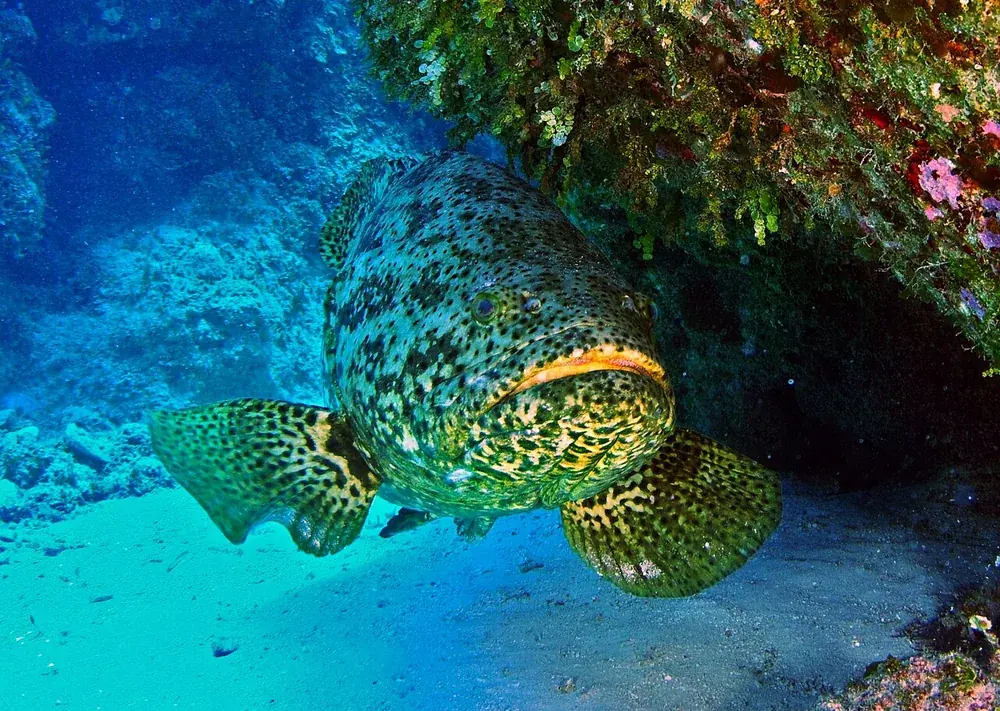
Scientific name: Epinephelus itajara · Group: fish (grouper) · Lives: reefs and coasts of the West Atlantic and West Africa, 1–100 m deep · Size: up to 2.5 m and 363 kg · IUCN status: Vulnerable (2018)
One of the largest bony fish. Young fish under 1 m long have faint vertical bars.
Giant Pacific octopus
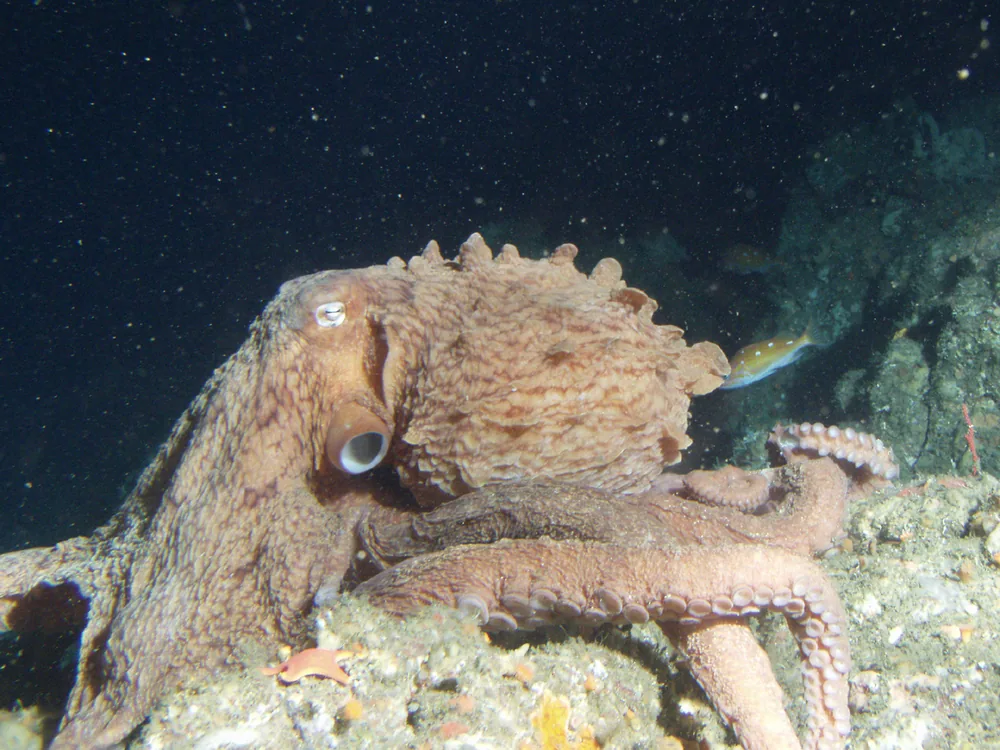
Scientific name: Enteroctopus dofleini · Group: mollusc (cephalopod, not a fish) · Lives: coastal North Pacific from California and Japan to Alaska, down to 2,000 m · Size: adults usually about 15 kg; arm span up to 4.3 m · IUCN status: Least Concern (2018)
The largest octopus species. Like a squid, it is a cephalopod, not a fish.
Three more are in the table. The guppy is a small freshwater livebearer from north-east South America. The grayling lives in clear European rivers. The ghost crab lives on sandy tropical beaches, is nocturnal and is named for its pale colour.
Insects and other invertebrates that start with G
Invertebrates have no backbone. Spiders and snails are not insects, as insects and other animals explains. Here are four.
Grasshopper (common field)
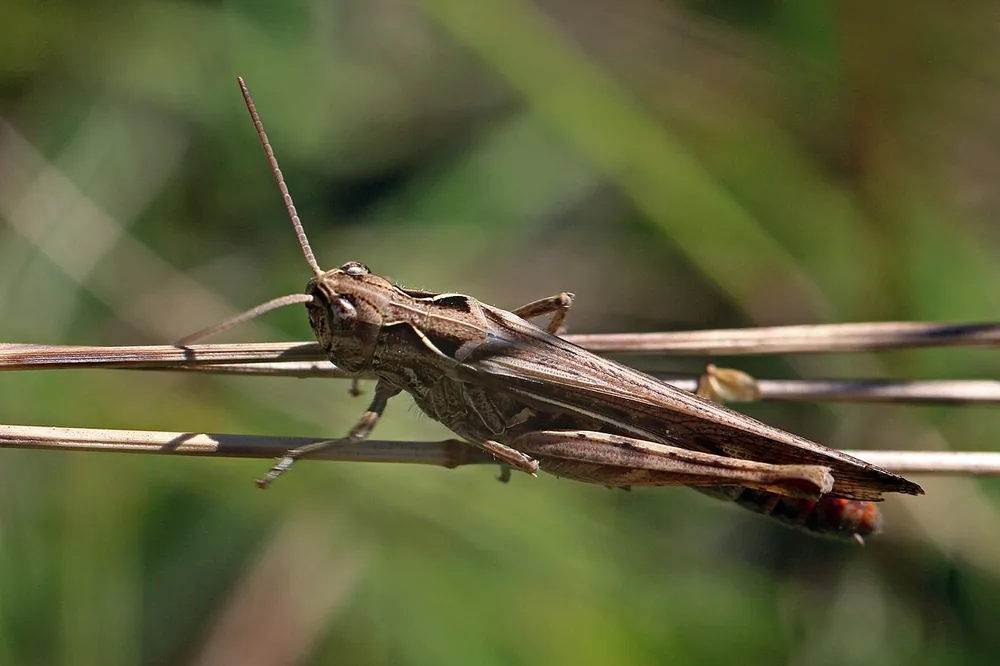
Scientific name: Chorthippus brunneus · Group: insect · Lives: dry grassland, meadows and verges across Europe, including Britain · Eats: grasses, preferring fine-leaved ones · IUCN status: Least Concern
Common and widespread, it prefers grass 10–20 cm tall.
Glow-worm (common)
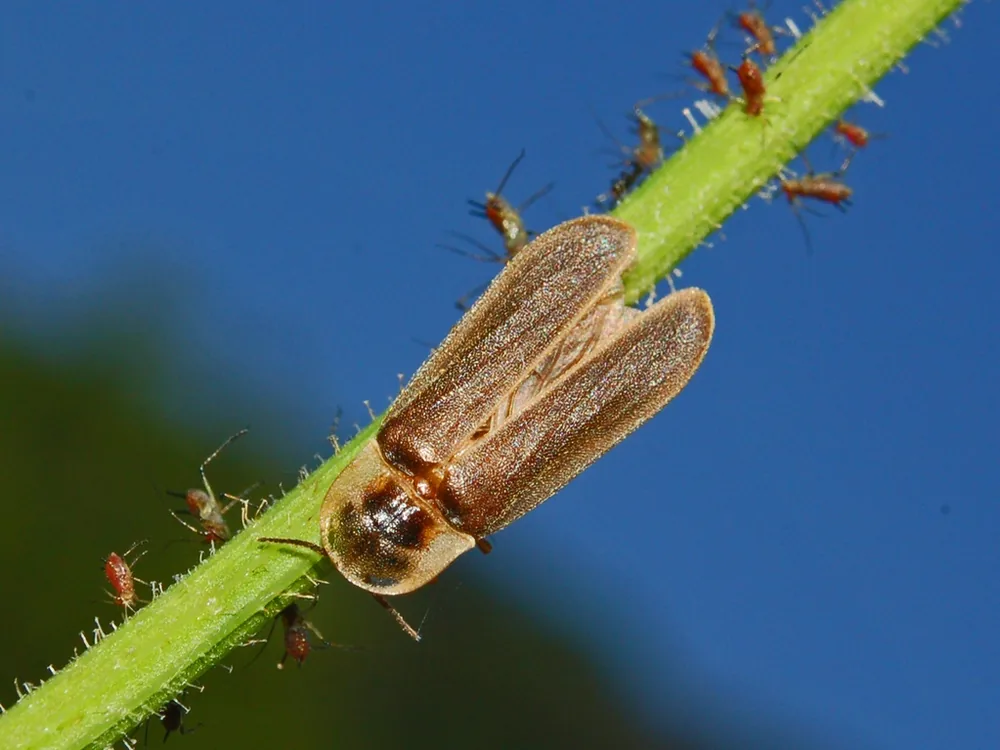
Scientific name: Lampyris noctiluca · Group: insect (a beetle, not a worm) · Lives: grassland, hedgerows and woodland edges across Europe, including Britain · Size: females wingless, up to 25 mm; males winged · Eats: the larvae are predators · IUCN status: Near Threatened (2024)
Wingless females glow to attract flying males and stop glowing after mating. All life stages can glow.
Goliath beetle
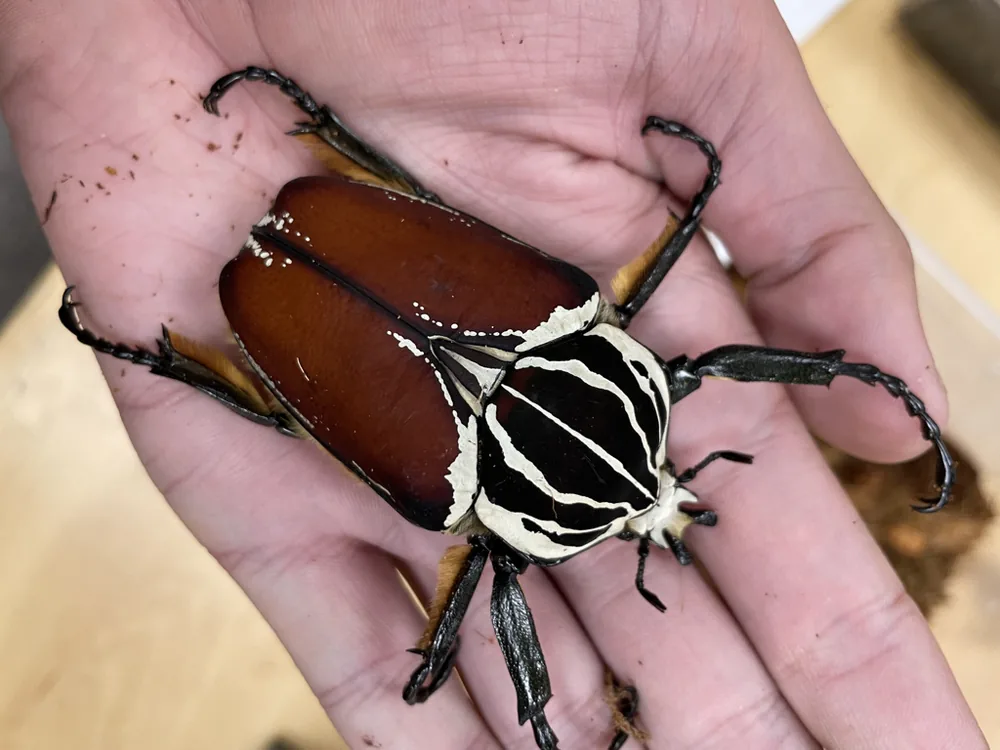
Scientific name: Goliathus goliatus · Group: insect (scarab beetle) · Lives: tropical forests of Africa · Size: males 50–110 mm; females 54–80 mm · IUCN status: Not assessed
One of the largest insects. It has a large hidden second pair of wings, and these are the wings it really flies with.
Goliath birdeater
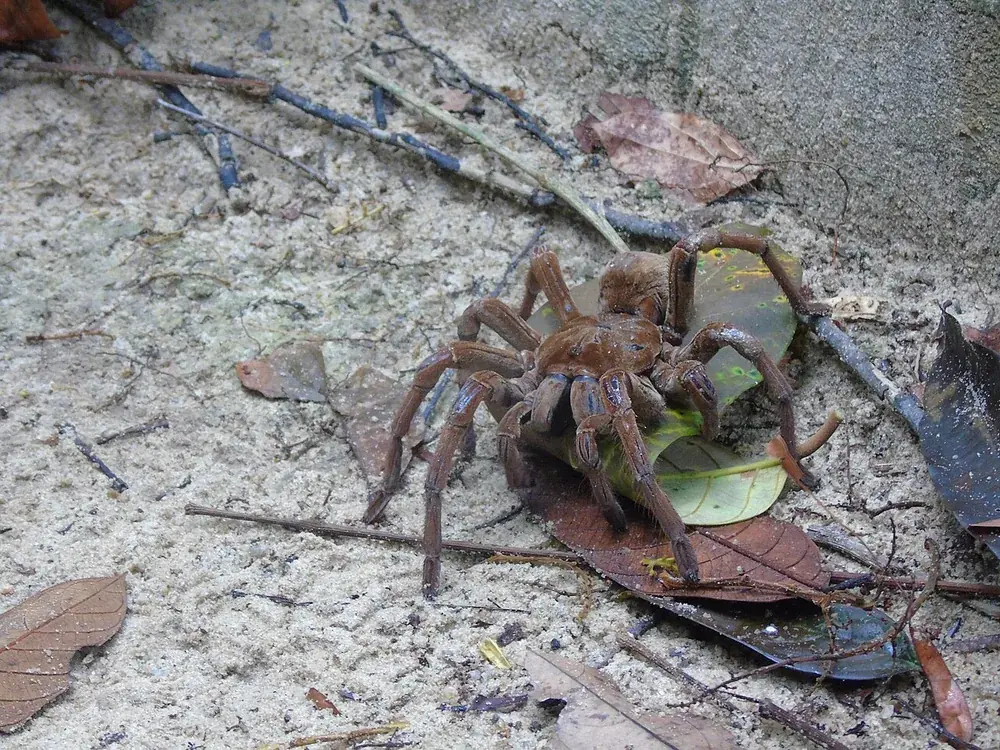
Scientific name: Theraphosa blondi · Group: arachnid (tarantula, not an insect) · Lives: rainforests of northern South America · Size: body up to 13 cm; the heaviest spider at 175 g · Eats: despite its name, it rarely eats birds · IUCN status: Not assessed
The giant huntsman spider has a longer leg span. When threatened, the birdeater flicks irritating hairs and hisses. The name comes from an 18th-century engraving by Maria Sibylla Merian.
Two more are in the table. The garden snail is common in gardens and hedges across Europe. The gatekeeper butterfly is named for patrolling hedges and gateways.
Extinct animals that start with G
Extinct animals have died out for good, and the extinction crisis continues today. Here are three.
Great auk
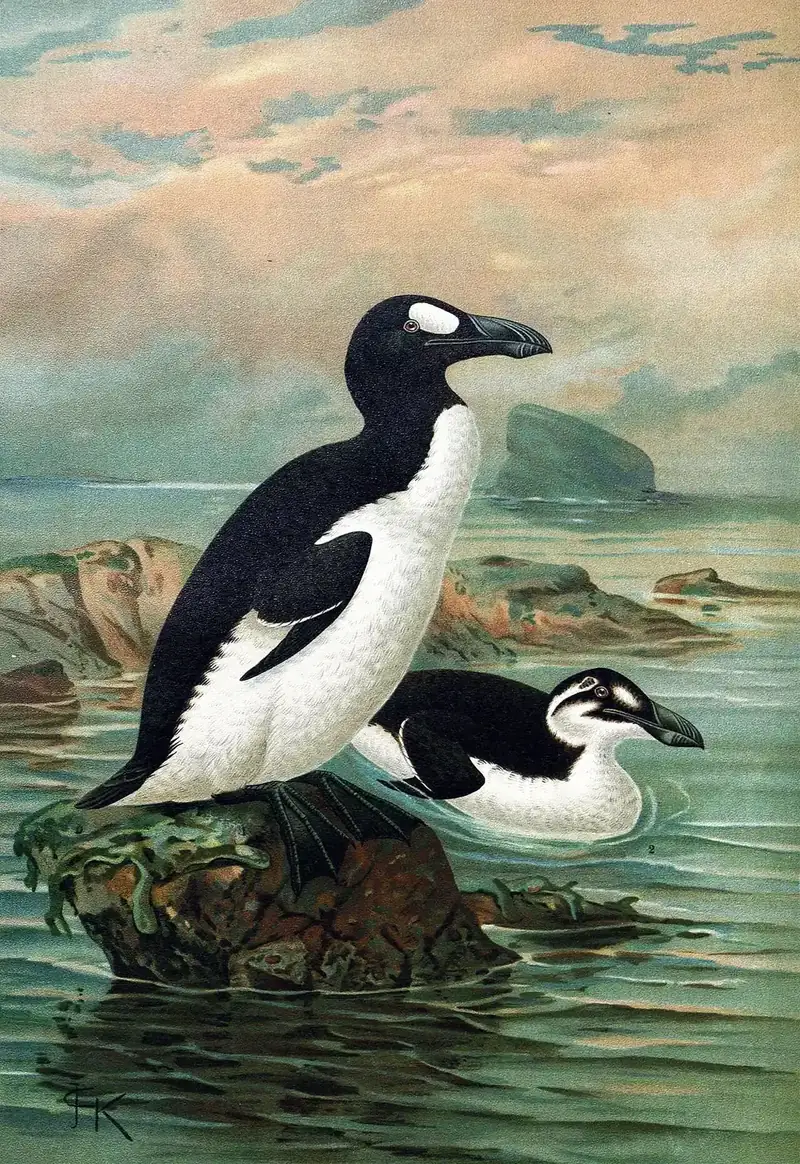
Scientific name: Pinguinus impennis · Group: extinct flightless seabird (auk family) · Lives: rocky North Atlantic islands · Size: about 75 cm tall; 5 kg · Eats: fish and crustaceans · IUCN status: Extinct (IUCN Red List)
The original “penguin”: southern penguins were named after it but are not close relatives. The last two confirmed birds were killed on Eldey, off Iceland, on 3 June 1844.
Golden toad
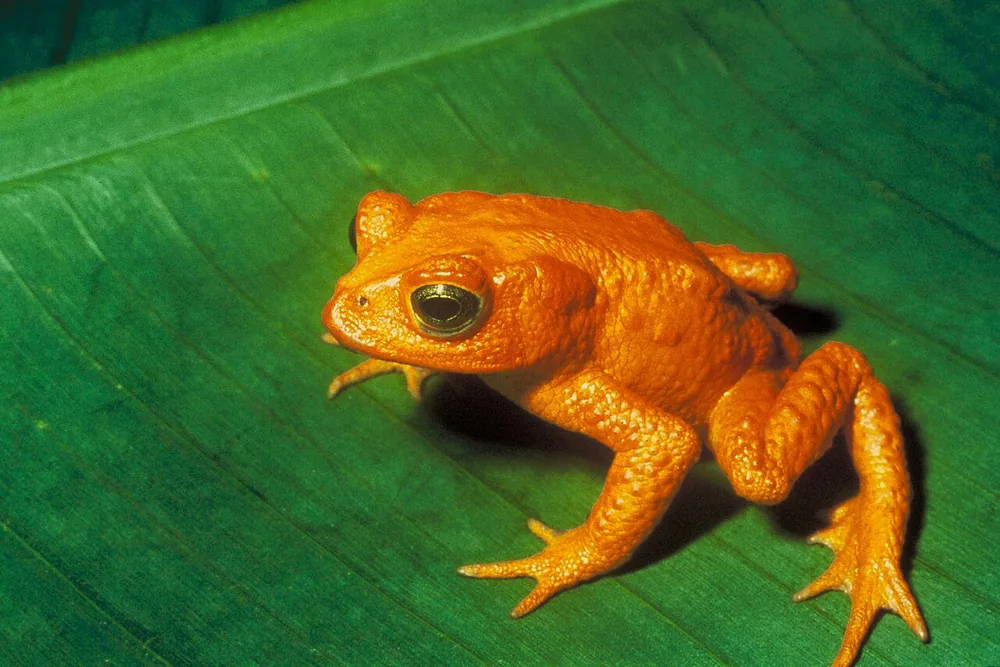
Scientific name: Incilius periglenes · Group: extinct amphibian (true toad) · Lives: about 4 km² of elfin cloud forest near Monteverde, Costa Rica · IUCN status: Extinct (IUCN Red List)
Males were bright orange; females were dark with yellow lines. Last seen on 15 May 1989 and declared extinct in 2004, it became the “poster child” of the global amphibian decline.
Giganotosaurus
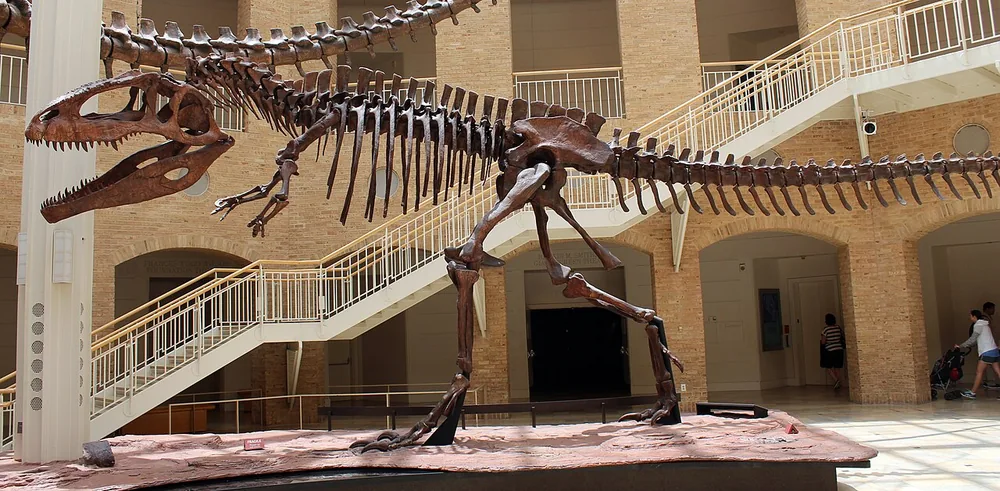
Scientific name: Giganotosaurus carolinii · Group: extinct meat-eating dinosaur (theropod) · Lives: Patagonia, Argentina, about 111–106 million years ago (Early Cretaceous) · Size: an estimated 12–13 m long (estimates vary) · Eats: meat · IUCN status: Extinct; known from fossils; not assessed by the IUCN
One of the largest known land carnivores: some studies find it bigger than T. rex, others about equal. Its name means “giant southern lizard”. See all the dinosaurs.
Two more are in the table. The glyptodon was a giant armoured relative of the armadillo that lived in South America from 3.2 million years ago until about 11,000 years ago. Gigantopithecus was a giant ape of southern China that lived from about 2 million years ago until roughly 215,000–295,000 years ago. It is known only from teeth and four jaws, so its size is speculative.
Animals that start with G for kids
Read one line each to preschool and primary children. If you are working through the alphabet, start with animals that start with A or try animals that start with C.
- Giraffe. It is the tallest animal on land.
- Gorilla. A big, strong ape that eats plants.
- Goat. A farm animal that gives milk.
- Goose. A bird that honks and swims.
- Giant panda. A black-and-white bear that eats bamboo.
- Gecko. A small lizard.
- Goldfish. An orange fish that lives in a bowl or pond.
- Grasshopper. An insect that lives in the grass.
- Gentoo penguin. A penguin that swims very fast.
- Guinea pig. A small, furry pet.
Can you guess the animal from the clue? Tap a card to flip it.
G animal spotting challenge
Go outdoors and tick the G animals you spot; your ticks are remembered in your browser. The habitats worksheet helps you record where each one lives.
- Great tit
- Grey heron
- Grey squirrel
- Greylag goose
- Garden snail
- Common field grasshopper
- Gatekeeper butterfly
- Glow-worm (on a summer night)
- Grey seal or gannet (on the coast)
Fun facts about animals that start with G
- The word “gecko” comes from the call of the tokay gecko.
- A goat’s horizontal slit-shaped pupils give it a wide field of view.
- The great auk was the original “penguin”.
- A peptide in Gila monster venom led to medicines for type 2 diabetes and obesity.
- The giant manta ray has the largest brain of any fish.
- A goldfish remembers things for at least three months.
- Konrad Lorenz studied imprinting in greylag goslings.
- A sleeping glass frog hides most of its blood in its liver.
Key points
- This guide lists 67 animals that start with G, 48 of them with photos.
- The giraffe is the tallest living land animal, at up to 5.7 m.
- A glow-worm is a beetle, and the Goliath birdeater rarely eats birds.
- The Greenland shark may live 272–510 years, the longest of any known vertebrate.
- The green sea turtle improved to Least Concern in 2025, while the great auk and golden toad are extinct.
- Never touch wild animals such as the Gaboon viper, Gila monster or golden poison frog.
Frequently asked questions about animals that start with G
What animal starts with G?
Many animals start with G, including the giraffe, gorilla, goat, goose, giant panda, gecko, goldfish and grasshopper. This guide lists 67, from mammals and birds to fish, insects and extinct species, with photographs for 48 of them.
What is the biggest animal that starts with G?
The giraffe is the tallest living land animal, at 4.3–5.7 m. The gaur is the largest wild cattle species, the giant manta ray is the largest ray, and the extinct Giganotosaurus reached an estimated 12–13 m.
What is the fastest animal that starts with G?
The golden eagle is the fastest, with reported dives of 240–320 km/h. The northern gannet plunge-dives at up to about 100 km/h, and Thomson’s gazelle can run an estimated 80 km/h, the fastest G land animal we can verify.
What sea animals start with G?
Sea animals that start with G include the great white shark, Greenland shark, giant manta ray, Goliath grouper, giant Pacific octopus, green sea turtle, grey seal, gentoo penguin, gannet and ghost crab.
What birds start with G?
Birds that start with G include the golden eagle, gentoo penguin, greylag goose, great horned owl, grey heron, golden pheasant, greater roadrunner, grey crowned crane, gannet, great hornbill and great tit, plus the gyrfalcon and guineafowl.
What is the rarest animal that starts with G?
Rarest depends on the measure. Only 250–300 Cross River gorillas survive, and the gharial and six Galápagos tortoise forms are Critically Endangered. The great auk and golden toad are extinct. Statuses come from the IUCN Red List.
What is the most dangerous animal that starts with G?
The golden poison frog is often described as one of the most poisonous animals on Earth, and the Gaboon viper has the longest fangs of any venomous snake. Give all wild animals space and never touch them.
What pets start with G?
Pets that start with G include the guinea pig, goldfish and guppy, and some geckos. Popular dog breeds include the Golden Retriever, German Shepherd, Great Dane and Greyhound.
What farm animals start with G?
The goat, goose and guineafowl are farm animals. Most domestic geese descend from the greylag goose, and in the Andes the guinea pig is also kept for meat.
What 3-letter animal starts with G?
The gnu is a three-letter animal that starts with G. It is another name for the wildebeest. Four-letter examples include the goat and the gaur.