Animals that start with D range from the dolphin, which talks in clicks and whistles, to the dodo, a flightless bird last widely seen in 1662. This guide lists 77 animals that start with D, with photographs, scientific names and IUCN Red List status, sorted by group for homework, quiz nights and alphabet games.
Quick answer: animals that start with D include the dolphin, dog, duck, deer, donkey, dingo, dugong and dragonfly, plus the extinct dodo. Fifty-five of the 77 have their own entry with a licensed photo, from the dhole and the dik-dik to the diving bell spider.
Working through the alphabet? Start with the animals that start with C, then come back here.
All 77 animals that start with D (quick table)
Scan for a habitat or conservation status. The IUCN Red List is the world’s main register of extinction risk. LC means Least Concern, NT Near Threatened, VU Vulnerable, EN Endangered and CR Critically Endangered.
| # | Animal | Group | Habitat | IUCN status |
|---|---|---|---|---|
| 1 | Dolphin (bottlenose) | Mammal | Oceans worldwide | Least Concern |
| 2 | Dugong | Mammal | Coastal seagrass, Indo-West Pacific | Vulnerable |
| 3 | Dingo | Mammal | Australia | Not assessed |
| 4 | Dhole | Mammal | Forests of South and South-East Asia | Endangered |
| 5 | Dik-dik (Kirk’s) | Mammal | Dry bush, eastern Africa | Least Concern |
| 6 | Donkey | Mammal | Farms worldwide | Domesticated (not assessed) |
| 7 | Dromedary | Mammal | Deserts of Africa and Arabia | Domesticated (not assessed) |
| 8 | Deer (red deer) | Mammal | Woods and moors, Europe | Least Concern |
| 9 | Dormouse (hazel) | Mammal | Woods and hedges, Europe | Least Concern |
| 10 | Degu | Mammal | Scrub, central Chile | Least Concern |
| 11 | Desman (Pyrenean) | Mammal | Mountain streams, Pyrenees | Endangered |
| 12 | Drill | Mammal | Rainforest, West-Central Africa | Endangered |
| 13 | Duiker (common) | Mammal | Savanna and bush, Africa | Least Concern |
| 14 | Dassie (rock hyrax) | Mammal | Rocky outcrops, Africa | Least Concern |
| 15 | Douc (red-shanked) | Mammal | Forests of Vietnam, Laos, Cambodia | Critically Endangered |
| 16 | Dall sheep | Mammal | Mountains of Alaska and Yukon | Least Concern |
| 17 | Dama gazelle | Mammal | Sahara and Sahel | Critically Endangered |
| 18 | Dwarf mongoose | Mammal | Savanna, eastern and southern Africa | Least Concern |
| 19 | Dall’s porpoise | Mammal | North Pacific | Least Concern |
| 20 | Dorcas gazelle | Mammal | Deserts of North Africa and Arabia | Vulnerable |
| 21 | Dunnart (fat-tailed) | Mammal | Australia | Least Concern |
| 22 | Duck (mallard) | Bird | Wetlands, Northern Hemisphere | Least Concern |
| 23 | Dove (Eurasian collared) | Bird | Towns and farmland, Eurasia | Least Concern |
| 24 | Drongo (fork-tailed) | Bird | Savanna and woodland, Africa | Least Concern |
| 25 | Dipper | Bird | Fast rivers, Europe and Asia | Least Concern |
| 26 | Dunnock | Bird | Gardens and hedges, Europe | Least Concern |
| 27 | Dunlin | Bird | Arctic breeder, coastal winterer | Near Threatened |
| 28 | Darter (Oriental) | Bird | Lakes and rivers, South Asia | Least Concern |
| 29 | Dartford warbler | Bird | Heathland, western Europe | Near Threatened |
| 30 | Dark-eyed junco | Bird | Woodland, North America | Least Concern |
| 31 | Demoiselle crane | Bird | Steppe, Black Sea to Mongolia | Least Concern |
| 32 | Dalmatian pelican | Bird | Wetlands, south-east Europe to China | Near Threatened |
| 33 | Dotterel (Eurasian) | Bird | Mountains and tundra, Eurasia | Least Concern |
| 34 | Diamond dove | Bird | Inland Australia | Least Concern |
| 35 | Downy woodpecker | Bird | Forests, North America | Least Concern |
| 36 | Desert tortoise | Reptile | Mojave and Colorado deserts | Critically Endangered |
| 37 | Death adder (common) | Reptile | Eastern and southern Australia | Least Concern |
| 38 | Diamondback rattlesnake (eastern) | Reptile | Pine woods, south-eastern USA | Least Concern |
| 39 | Draco lizard (flying dragon) | Reptile | Rainforest, South-East Asia | Least Concern |
| 40 | Dwarf crocodile | Reptile | Swamps, West and Central Africa | Vulnerable |
| 41 | Desert iguana | Reptile | Sonoran and Mojave deserts | Least Concern |
| 42 | Dice snake | Reptile | Waterside, Europe to Central Asia | Least Concern |
| 43 | Darwin’s frog | Amphibian | Forests, Chile and Argentina | Endangered |
| 44 | Dyeing poison dart frog | Amphibian | Rainforest, Guiana Shield | Least Concern |
| 45 | Dusky salamander (northern) | Amphibian | Streams, eastern North America | Least Concern |
| 46 | Desert rain frog | Amphibian | Sandy coast, Namibia and South Africa | Vulnerable |
| 47 | Dogfish (small-spotted catshark) | Fish | Seabed, north-east Atlantic | Least Concern |
| 48 | Discus | Fish | Amazon basin | Not assessed |
| 49 | Dusky shark | Fish | Warm coastal seas worldwide | Endangered |
| 50 | Dwarf seahorse | Fish | Seagrass, Bahamas and south-eastern USA | Least Concern |
| 51 | Danio (zebrafish) | Fish | Fresh water, South Asia | Least Concern |
| 52 | Dumbo octopus | Mollusc | Deep sea | Not assessed |
| 53 | Dungeness crab | Crustacean | Pacific coast, North America | Not assessed |
| 54 | Dorado (mahi-mahi, dolphinfish) | Fish | Warm open oceans | Least Concern |
| 55 | Dragonet (common) | Fish | Sandy seabed, north-east Atlantic | Least Concern |
| 56 | Dace (common) | Fish | Rivers, Europe | Least Concern |
| 57 | Dragonfly (emperor) | Insect | Ponds and lakes, Europe, Africa and Asia | Least Concern |
| 58 | Damselfly (azure) | Insect | Ponds and lakes, Europe | Least Concern (Europe) |
| 59 | Dung beetle | Insect | Worldwide | Not assessed |
| 60 | Devil’s coach horse | Insect | Gardens, Europe | Not assessed |
| 61 | Desert locust | Insect | Dry lands, Africa to Asia | Not assessed |
| 62 | Diving bell spider | Arachnid | Ponds, Europe and Asia | Near Threatened |
| 63 | Death’s-head hawkmoth | Insect | Africa and Europe | Not assessed |
| 64 | Deathwatch beetle | Insect | Old oak timber | Not assessed |
| 65 | Dobsonfly (eastern) | Insect | Streams, eastern North America | Not assessed |
| 66 | Dodo | Extinct bird | Mauritius | Extinct |
| 67 | Dire wolf | Extinct mammal | Americas | Known from fossils (not assessed) |
| 68 | Diplodocus | Extinct dinosaur | Western North America | Known from fossils (not assessed) |
| 69 | Dimetrodon | Extinct synapsid | Texas and Oklahoma | Known from fossils (not assessed) |
| 70 | Dunkleosteus | Extinct fish | Devonian seas | Known from fossils (not assessed) |
| 71 | Deinosuchus | Extinct reptile | North America | Known from fossils (not assessed) |
| 72 | Deinotherium | Extinct mammal | Africa and Eurasia | Known from fossils (not assessed) |
| 73 | Dog | Mammal | Homes worldwide | Domesticated (not assessed) |
| 74 | Dalmatian | Dog breed | Homes worldwide | Domesticated (not assessed) |
| 75 | Dachshund | Dog breed | Homes worldwide | Domesticated (not assessed) |
| 76 | Dobermann | Dog breed | Homes worldwide | Domesticated (not assessed) |
| 77 | Devon Rex | Cat breed | Homes worldwide | Domesticated (not assessed) |
“Not assessed” means no global IUCN category exists, and “Known from fossils” marks prehistoric animals the IUCN does not assess. The dodo is the one extinct species here with an IUCN category (Extinct). The azure damselfly shows its European Red List category instead.
Animals that start with D by group
Each featured animal has a photo and a quick fact file. Smaller ones follow in a short list at the end of each group.
Mammals that start with D
Mammals that start with D include marine giants and some of the smallest antelopes on Earth. See the families of mammals.
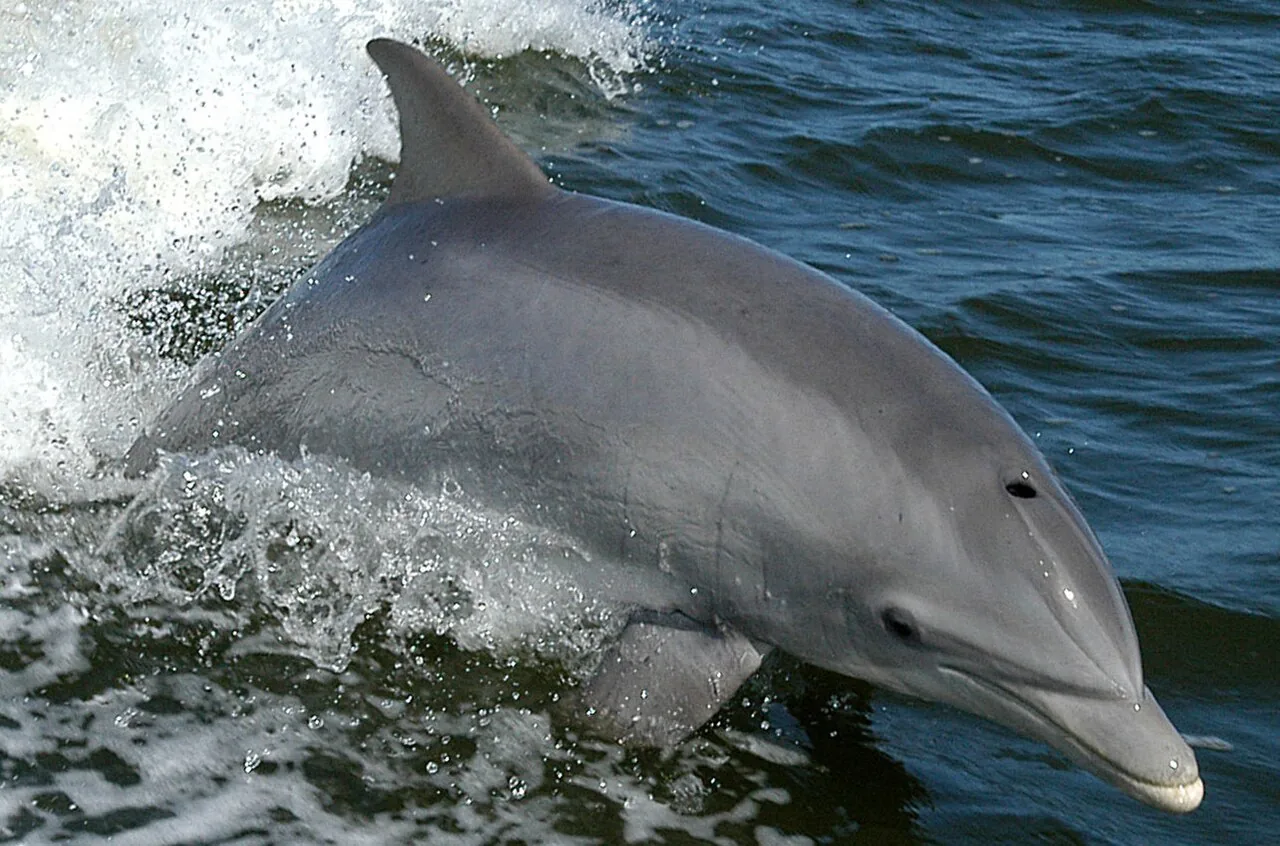
Dolphin (common bottlenose dolphin)
Scientific name: Tursiops truncatus
Group: mammal
Lives: oceans worldwide, except polar waters
Size: 2–4 m, 150–650 kg
Diet: fish and squid
IUCN status: Least Concern
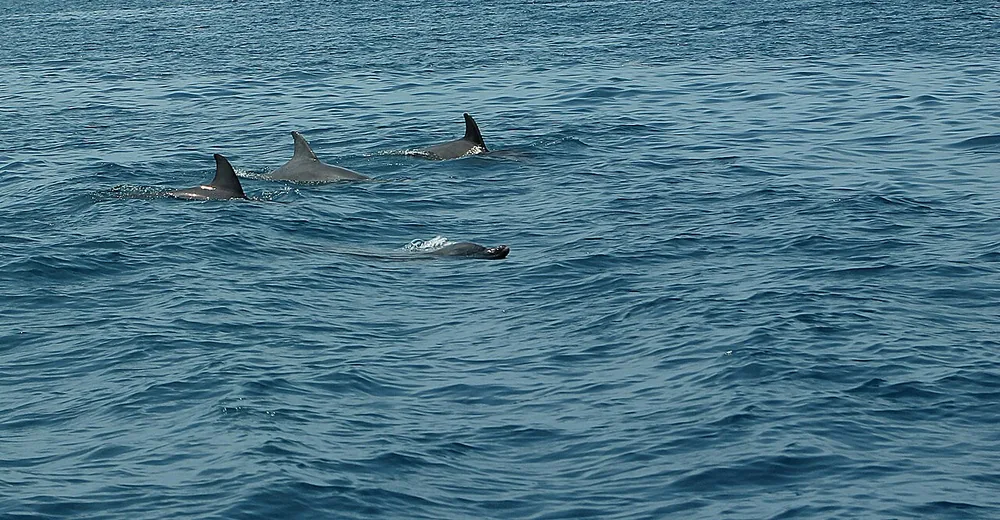
Dolphins use clicks for echolocation and whistles to communicate. This wild pod is seen at sea.
Dugong
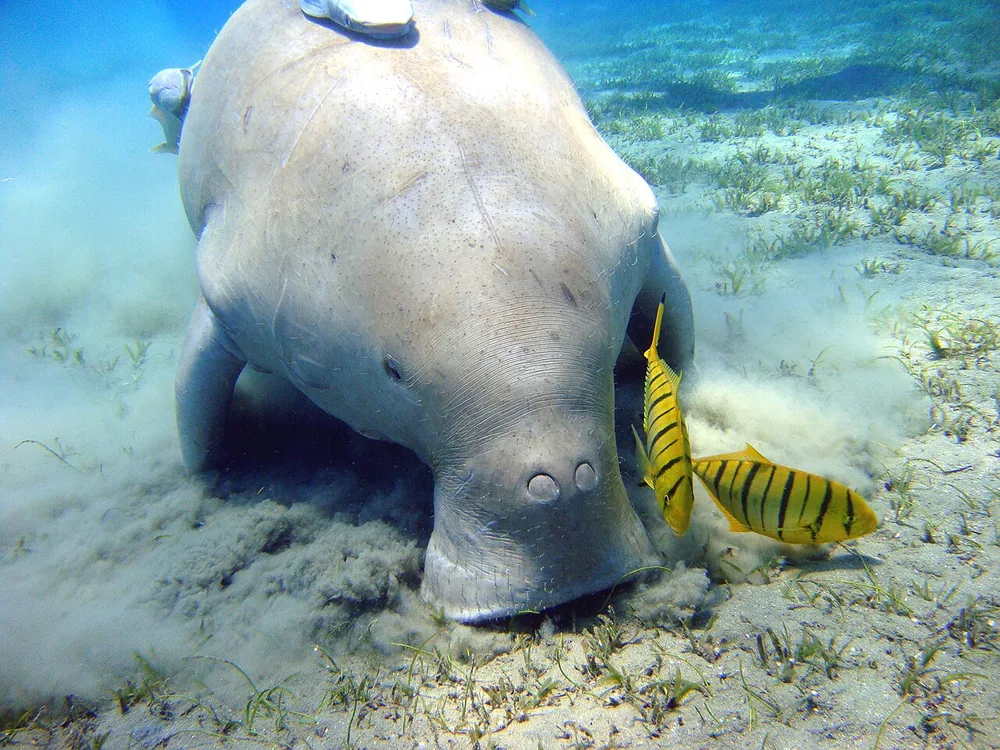
Scientific name: Dugong dugon
Group: mammal
Lives: coastal seagrass, Indo-West Pacific
Size: adults rarely over 3 m; record 4.06 m and 1,016 kg
Diet: seagrass
IUCN status: Vulnerable
One of four living sirenians, with three manatees, the dugong has a fluked, dolphin-like tail. It can live for more than 70 years. Its closest modern relative, Steller’s sea cow, was hunted to extinction in the 18th century.
Dingo
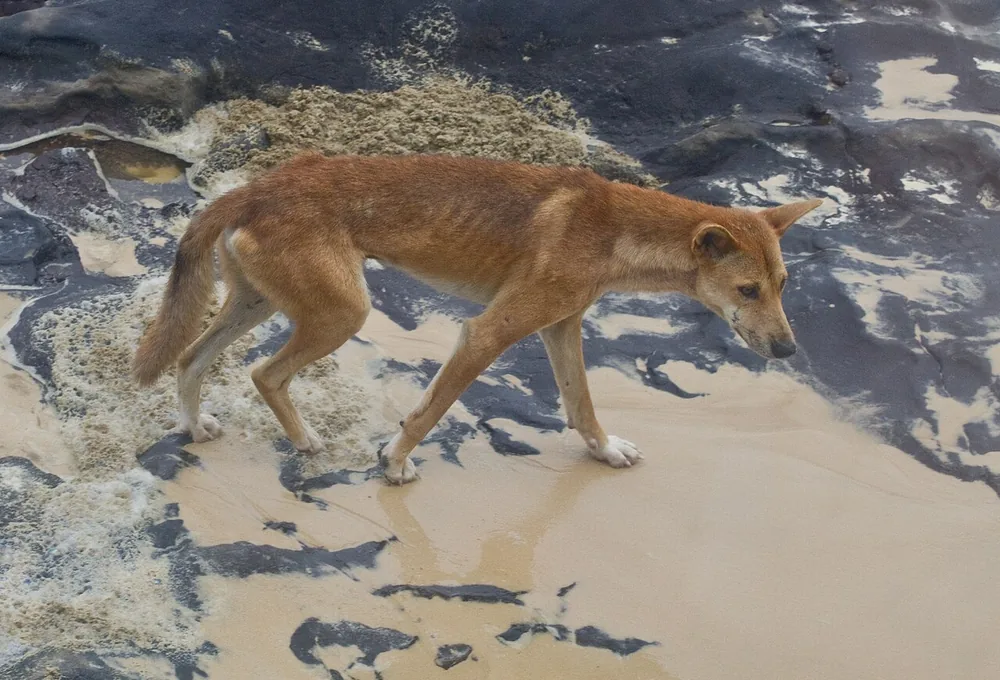
Scientific name: Canis familiaris (often written Canis dingo)
Group: mammal
Lives: Australia
Size: wild males average about 15.8 kg and 125 cm long
Diet: carnivore, mainly mammals
IUCN status: Not assessed
The oldest Australian remains are about 3,500 years old. Dingoes howl and whimper more, and bark less, than domestic dogs. Read about Australia’s largest land predator.
Dhole (Asiatic wild dog)
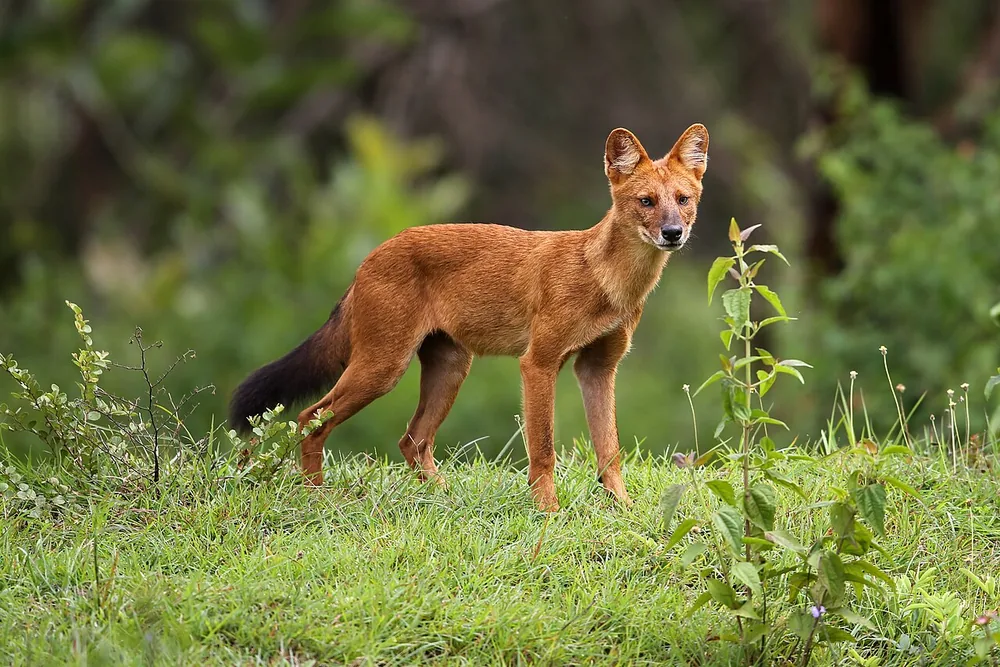
Scientific name: Cuon alpinus
Group: mammal
Lives: forests of South and South-East Asia
Size: 88–113 cm plus tail, 10–21 kg
Diet: deer and other hoofed mammals
IUCN status: Endangered
Dholes hunt in clans of about 12, sometimes more than 40, and whistle to keep a scattered pack in touch. Fewer than 2,500 mature individuals remain.
Dik-dik (Kirk’s dik-dik)
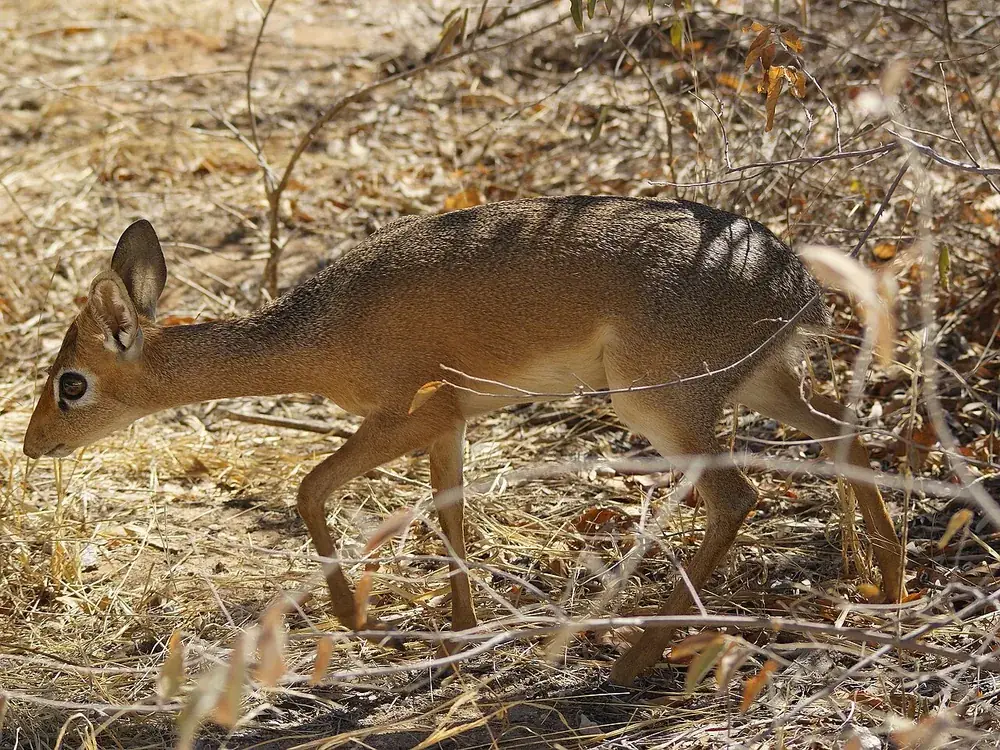
Scientific name: Madoqua kirkii
Group: mammal
Lives: dry bush, eastern and south-western Africa
Size: 35–45 cm tall, 3.8–7.2 kg
Diet: leaves and shoots
IUCN status: Least Concern
One of the world’s smallest antelopes, it is named after the female’s alarm call, “dik-dik”. It can reach 42 km/h and lives in monogamous pairs.
Donkey
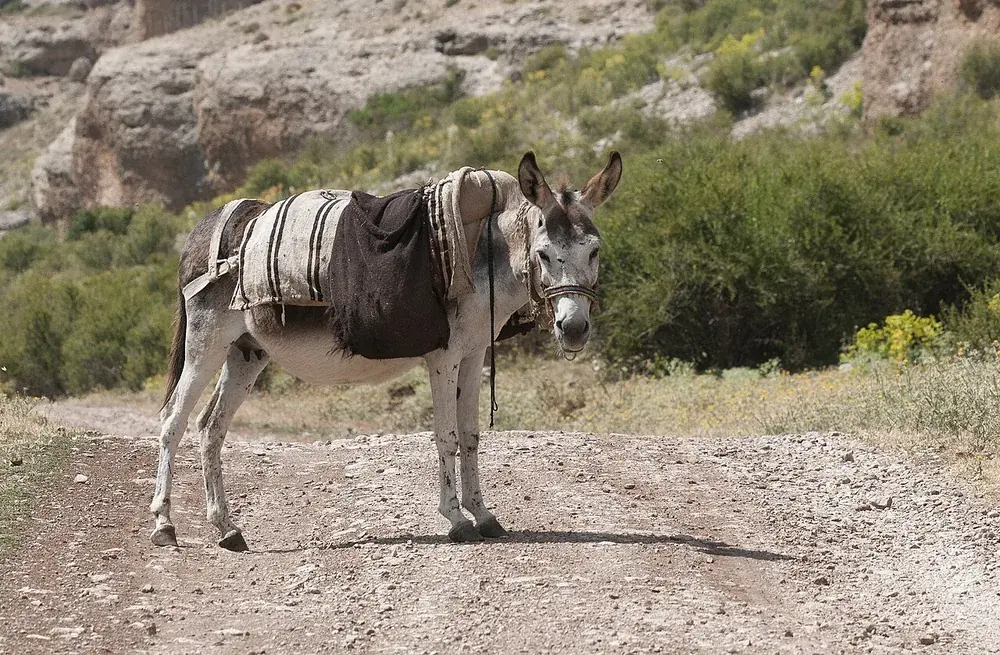
Scientific name: Equus asinus
Group: mammal
Lives: domesticated worldwide
Size: 90–150 cm at the withers
Diet: grasses and shrubs
IUCN status: Domesticated (not assessed)
Donkeys descend from the African wild ass and were domesticated about 5,000–7,000 years ago. More than 40 million exist today. A male is a jack, a female a jenny, and a donkey crossed with a horse gives a mule.
Dromedary (one-humped camel)
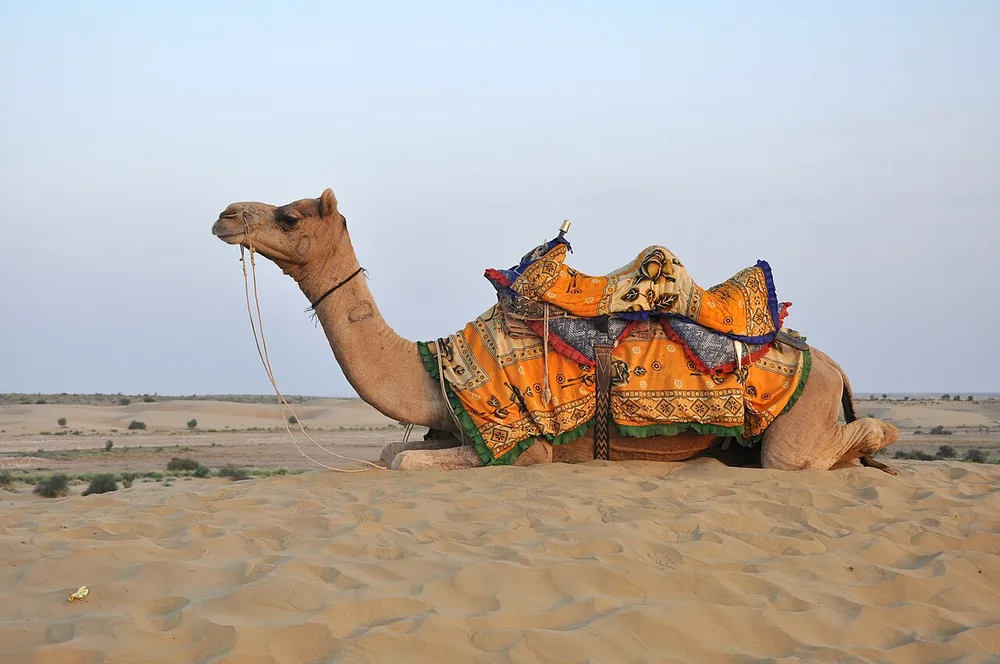
Scientific name: Camelus dromedarius
Group: mammal
Lives: domesticated; feral in Australia
Size: males 1.8–2.4 m at the shoulder, 400–690 kg
Diet: desert plants
IUCN status: Domesticated (not assessed)
The tallest of the three camel species, the dromedary stores fat, not water, in its hump. Camels in general are credited with up to about 65 km/h in short bursts.
Deer (red deer)
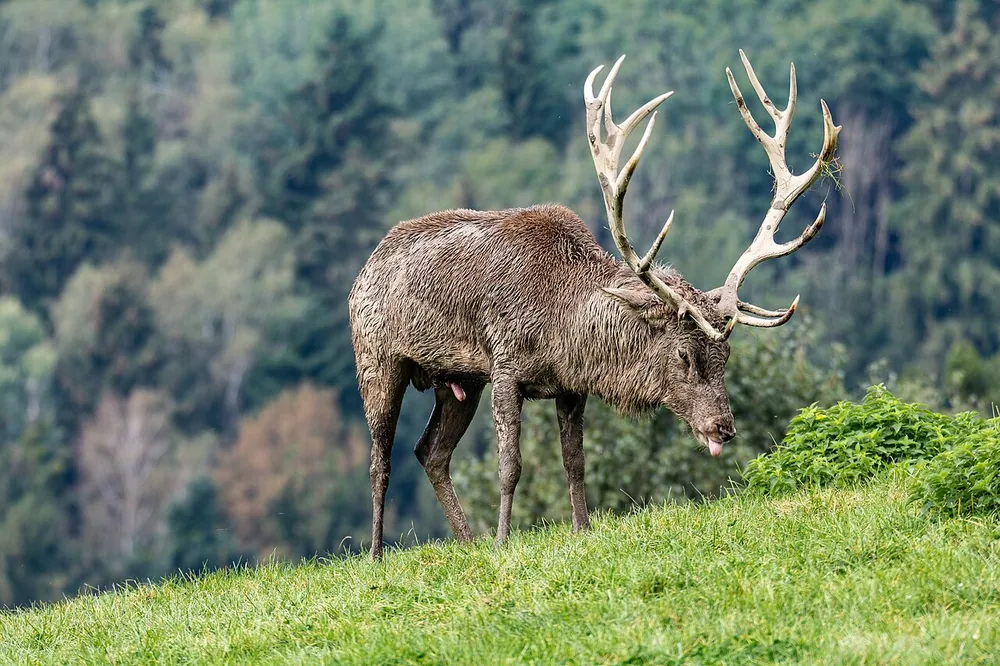
Scientific name: Cervus elaphus
Group: mammal
Lives: Europe, Caucasus, Anatolia, Iran, Atlas Mountains
Size: stags 175–250 cm long, 160–240 kg
Diet: grass and browse
IUCN status: Least Concern
The red deer is the largest native land mammal in the UK and the only deer native to Africa. A male is a stag and a female is a hind.
Dormouse (hazel dormouse)
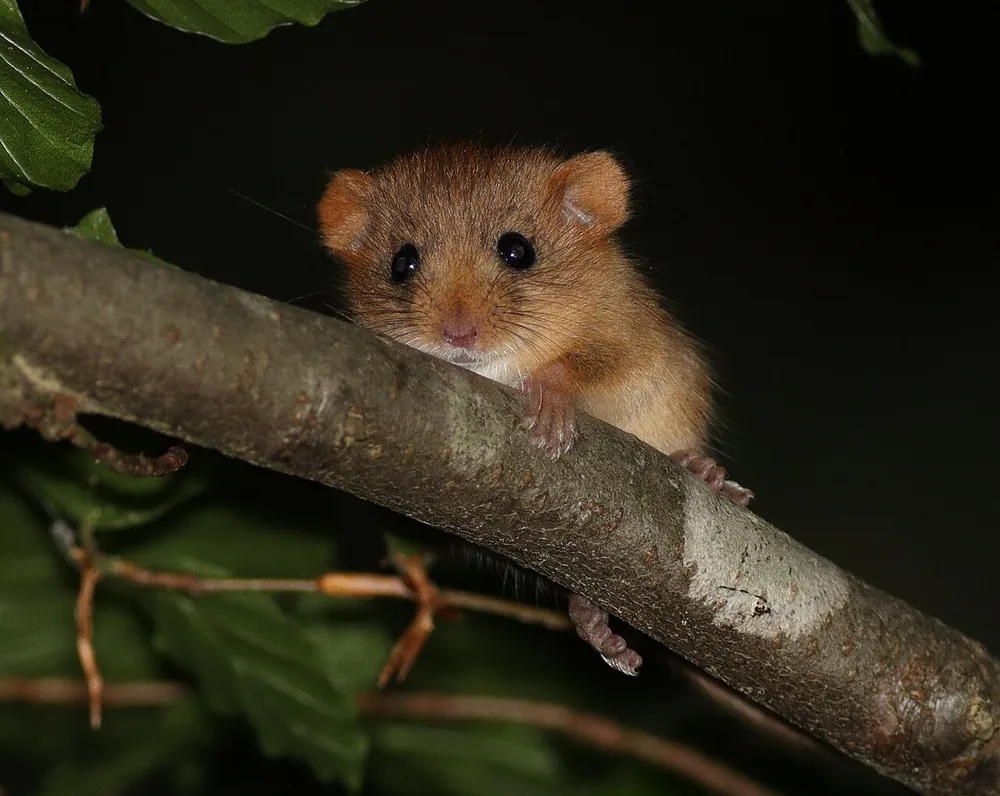
Scientific name: Muscardinus avellanarius
Group: mammal
Lives: woods and hedgerows in Europe
Size: 6–9 cm plus a 5.7–7.5 cm tail, 17–20 g
Diet: flowers, fruit, hazelnuts, insects
IUCN status: Least Concern
In the UK it hibernates from roughly October to April or May, in a ground nest, after fattening up to 30–40 g. Find out why animals hibernate.
Degu (common degu)
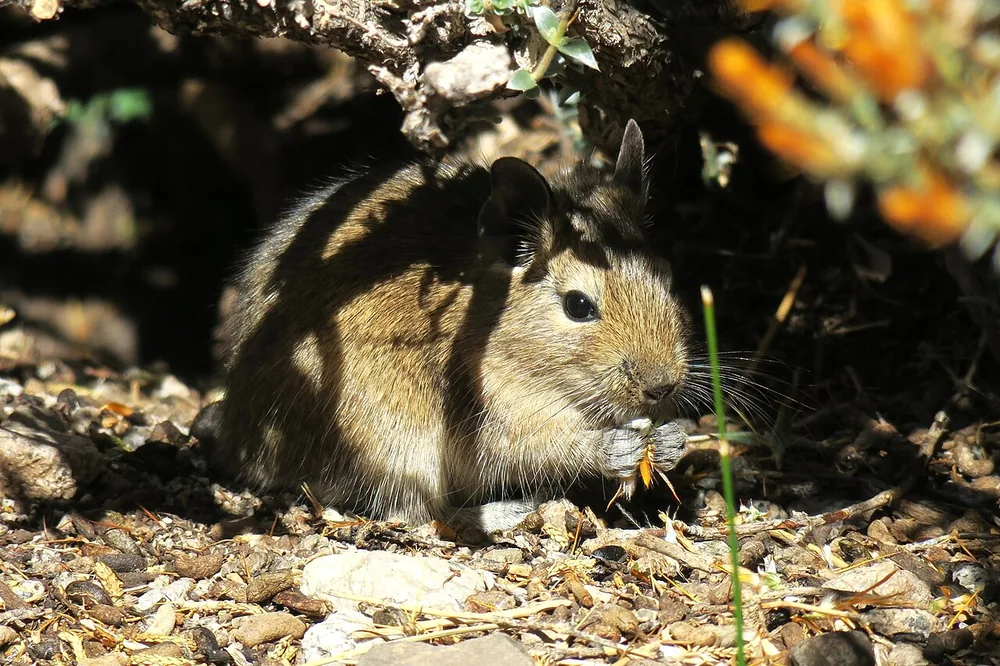
Scientific name: Octodon degus
Group: mammal
Lives: scrub in central Chile
Size: 25–31 cm, 170–400 g
Diet: plants and seeds
IUCN status: Least Concern
Degus are active by day and can see ultraviolet light. The name comes from the Mapuche dewü, “mouse” or “rat”.
Desman (Pyrenean desman)
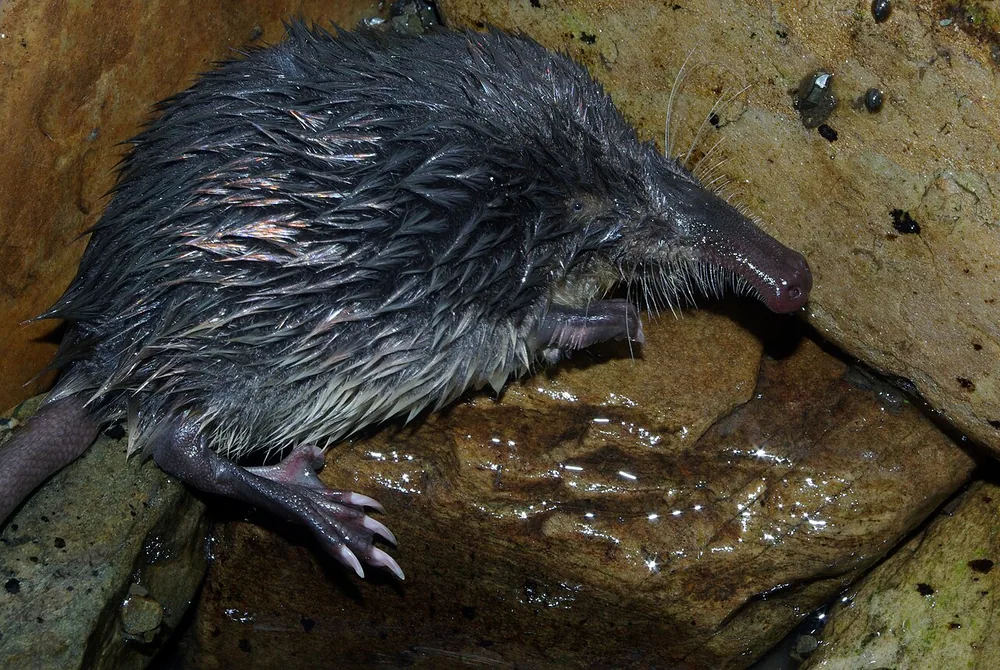
Scientific name: Galemys pyrenaicus
Group: mammal
Lives: mountain streams, Pyrenees and Iberia
Size: about 25 cm in total, over half of it tail; 50–60 g
Diet: aquatic insect larvae
IUCN status: Endangered
Its trunk-like snout earns it the nickname “trumpet rat”. Nearly blind, it hunts by touch and eats a third to a half of its body mass daily.
Drill
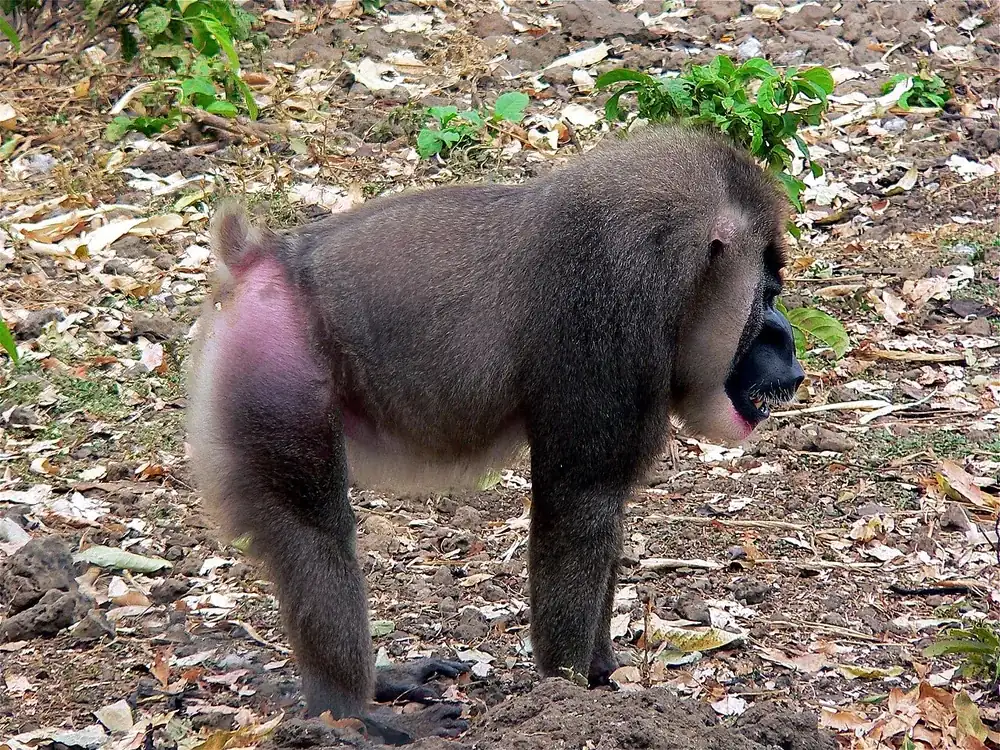
Scientific name: Mandrillus leucophaeus
Group: mammal
Lives: rainforest in Nigeria, Cameroon, Equatorial Guinea
Size: males about 32 kg, females about 12 kg
Diet: fruit, seeds and insects
IUCN status: Endangered
The drill is a close relative of the mandrill. Males are almost three times heavier than females.
Duiker (common duiker)
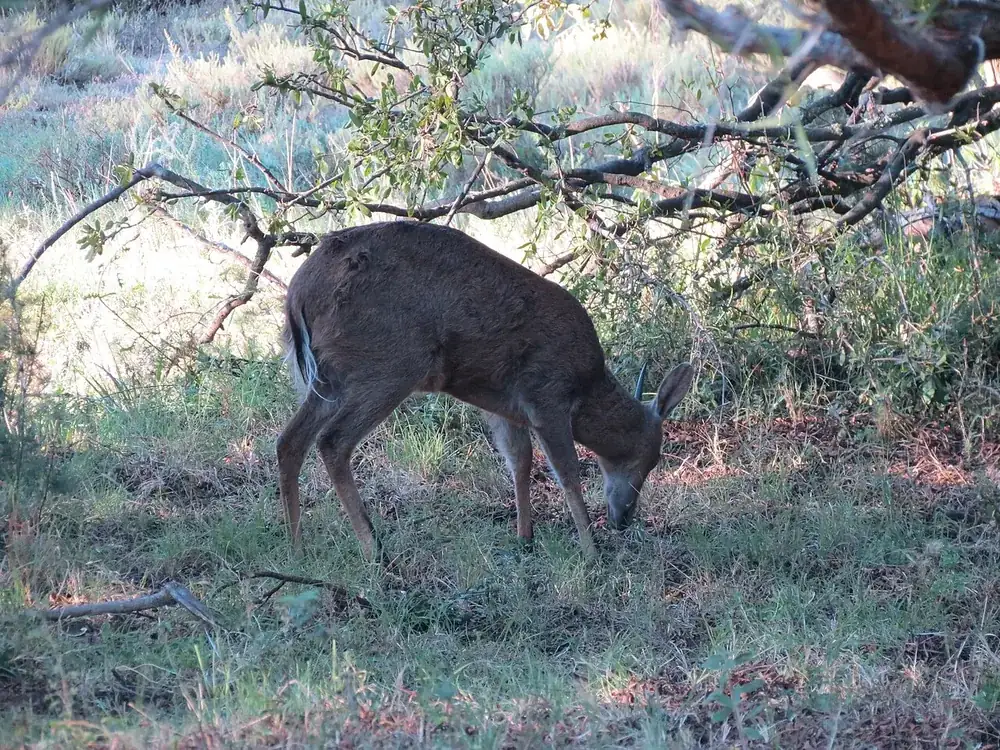
Scientific name: Sylvicapra grimmia
Group: mammal
Lives: Africa south of the Sahara
Size: about 50 cm tall, 12–25 kg
Diet: leaves, fruit, sometimes small animals
IUCN status: Least Concern
Females are larger than males, but only males have horns, up to 11 cm long.
Dassie (rock hyrax)
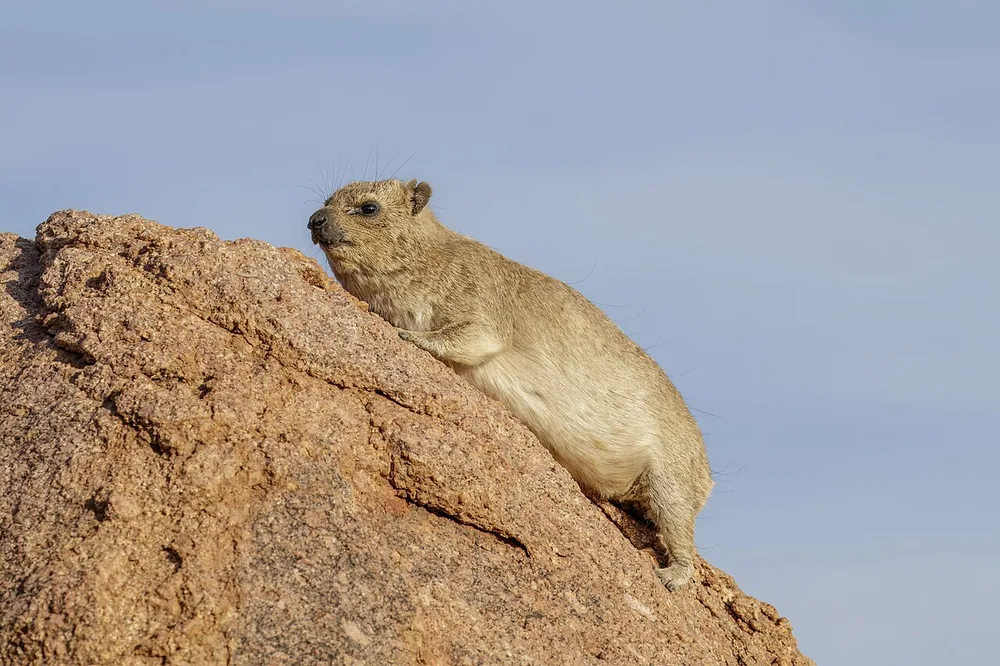
Scientific name: Procavia capensis
Group: mammal
Lives: rocky places in Africa and the Middle East
Size: 4–5 kg
Diet: plants
IUCN status: Least Concern
Dassies live in groups of 10–80 with sentries on watch, and are distant relatives of elephants and dugongs.
Douc (red-shanked douc)
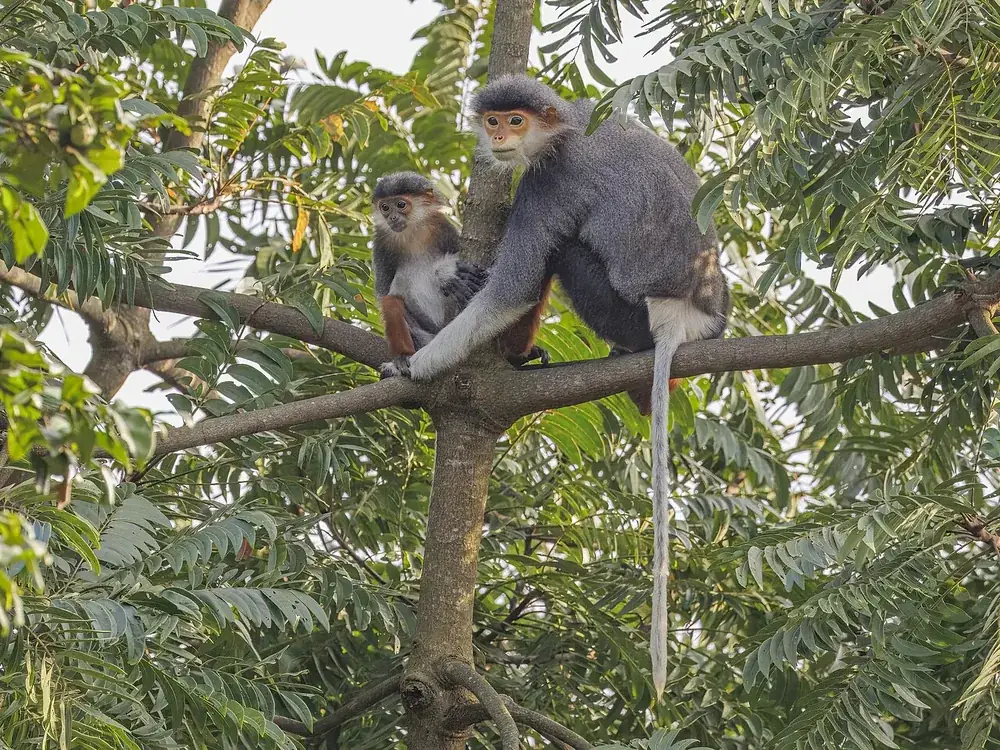
Scientific name: Pygathrix nemaeus
Group: mammal
Lives: forests of Vietnam, Laos and Cambodia
Diet: mostly leaves
IUCN status: Critically Endangered
Among the most colourful primates, it has red “stockings” and white whiskers about 12 cm long in adult males.
Dall sheep
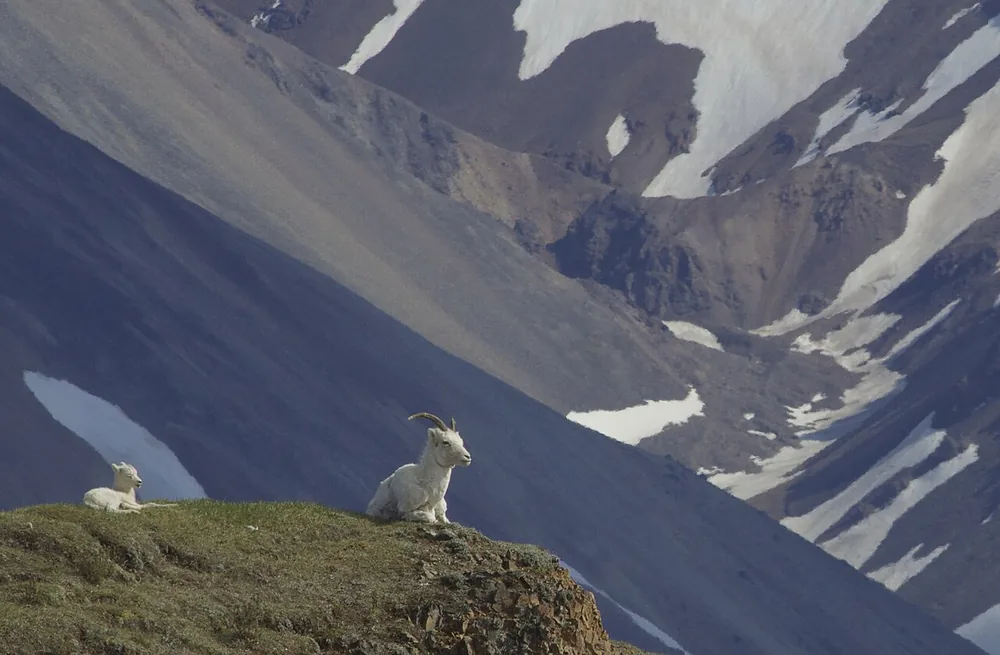
Scientific name: Ovis dalli
Group: mammal
Lives: mountains of Alaska, Yukon and north-west Canada
Size: rams 70–80 kg, ewes 45–50 kg
Diet: grasses, sedges and willow
IUCN status: Least Concern
The white or off-white coat is made of hollow guard hairs. Rams clash horns in contests for status.
Dama gazelle
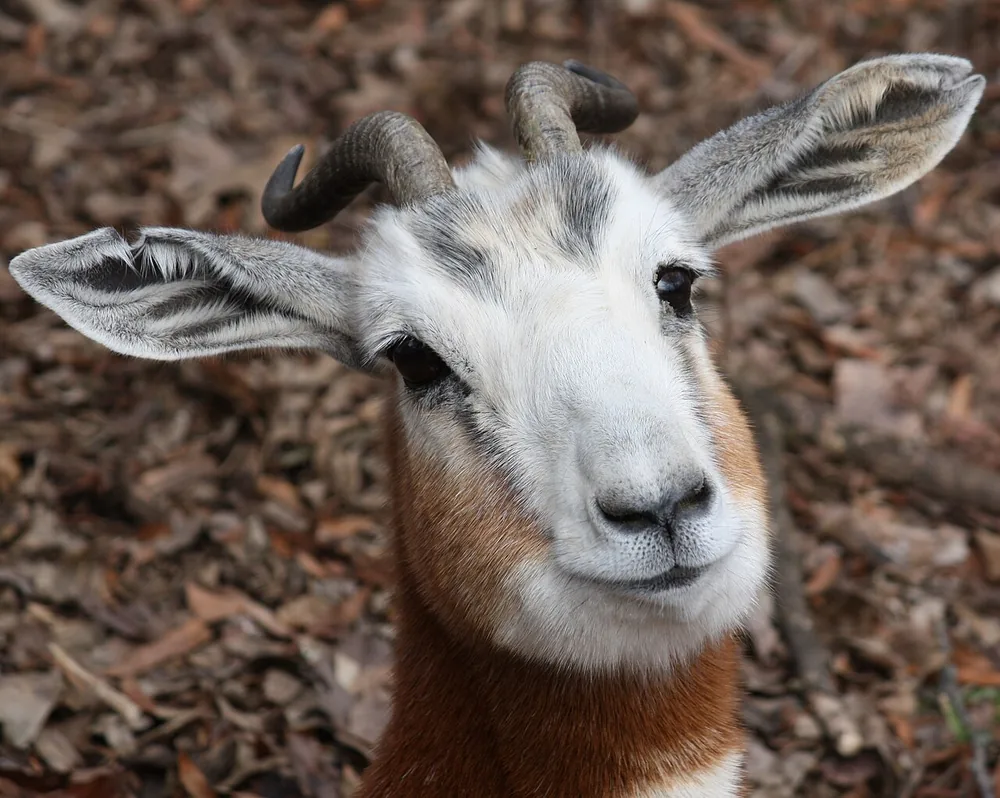
Scientific name: Nanger dama
Group: mammal
Lives: Sahara and Sahel (wild only in Chad, Mali, Niger)
Size: 90–95 cm tall, 35–75 kg
Diet: shrubs and acacia leaves
IUCN status: Critically Endangered
The largest gazelle, with fewer than 250 mature individuals left according to the IUCN. It is a national symbol of Niger.
Dwarf mongoose (common dwarf mongoose)
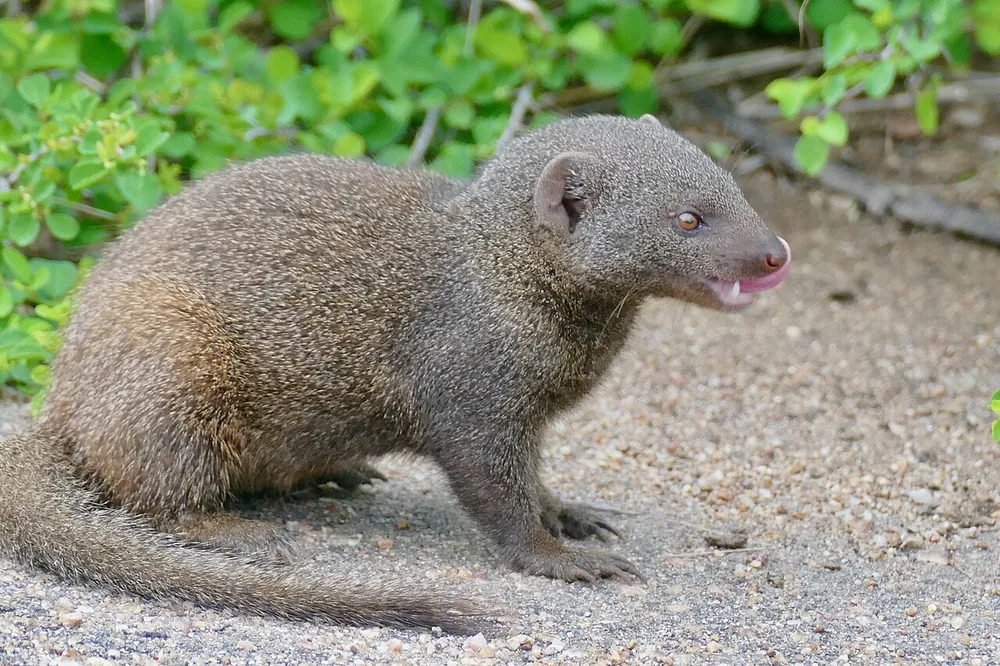
Scientific name: Helogale parvula
Group: mammal
Lives: East and southern African savanna
Size: 16–23 cm, about 210–340 g
Diet: mainly insects
IUCN status: Least Concern
It is Africa’s smallest carnivore, and it feeds mainly on insects.
More mammals that start with D
- Dall’s porpoise (Phocoenoides dalli) — North Pacific; the largest porpoise and the fastest small cetacean, reaching about 55 km/h (34 mph) in short bursts, according to NOAA Fisheries. IUCN status: Least Concern.
- Dorcas gazelle (Gazella dorcas) — Deserts and semi-deserts of North Africa and Arabia; about 35,000–40,000 survive in the wild. IUCN status: Vulnerable.
- Dunnart (fat-tailed) (Sminthopsis crassicaudata) — Australia; a mouse-sized marsupial (body 6–9 cm) that stores fat in its tail. IUCN status: Least Concern.
Birds that start with D
Birds that start with D live from garden hedges to Arctic tundra. See what birds eat.
Duck (mallard)
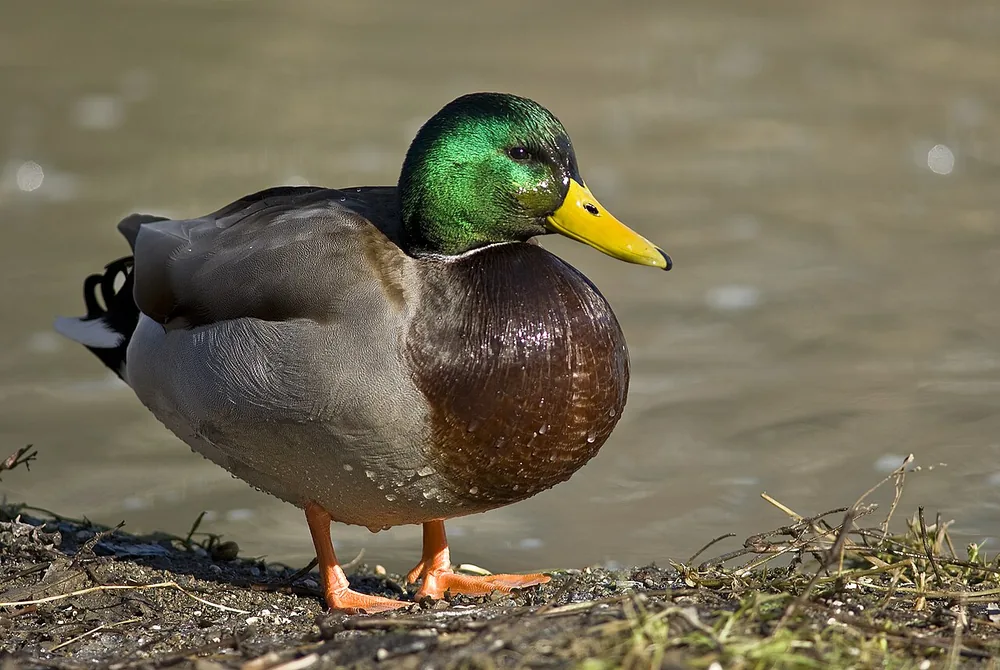
Scientific name: Anas platyrhynchos
Group: bird
Lives: wetlands across the Northern Hemisphere
Size: 50–65 cm, 0.7–1.6 kg
Diet: water plants, small animals
IUCN status: Least Concern
Drakes have green heads. The mallard is the main ancestor of most domestic ducks, and ducklings swim as soon as they hatch.
Dove (Eurasian collared dove)
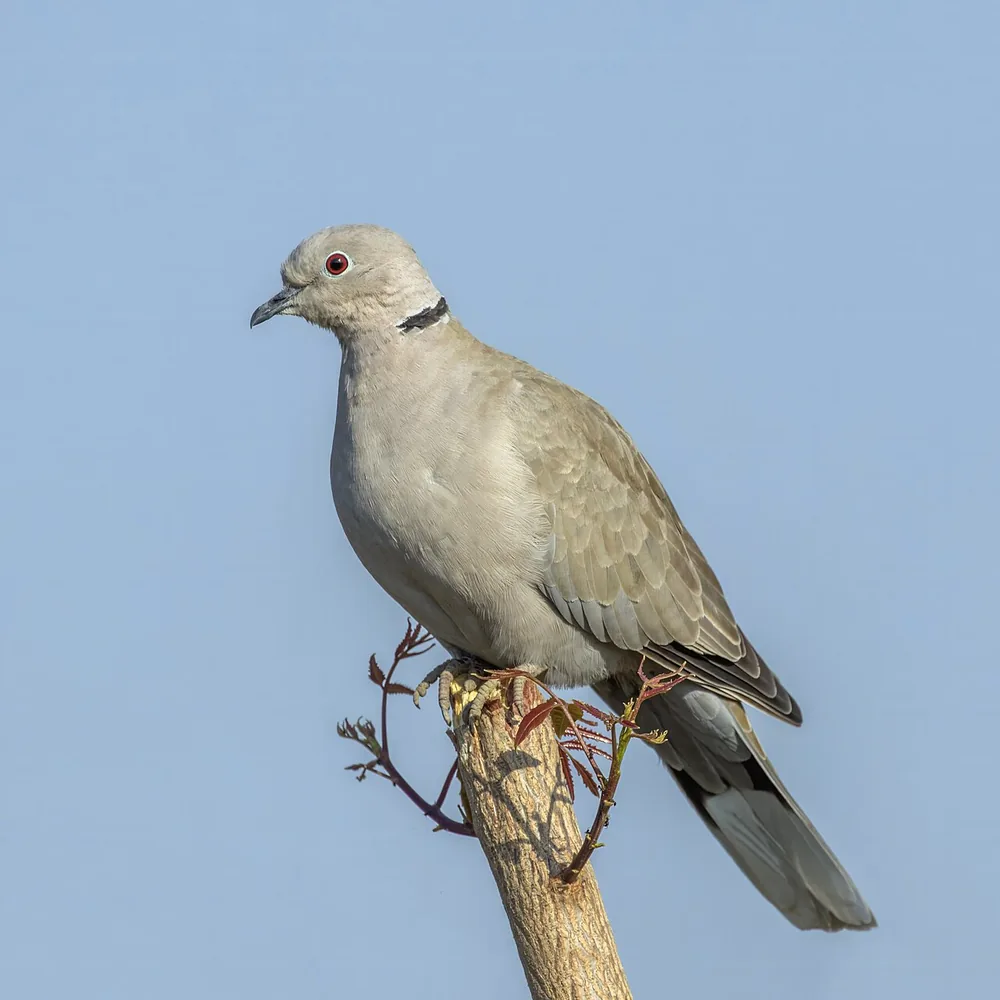
Scientific name: Streptopelia decaocto
Group: bird
Lives: Europe, Asia and North Africa
Diet: seeds and grain
IUCN status: Least Concern
The black half-collar gives it its name. It spread across Europe in the 20th century and first bred in Britain, in Norfolk, in 1955.
Drongo (fork-tailed drongo)
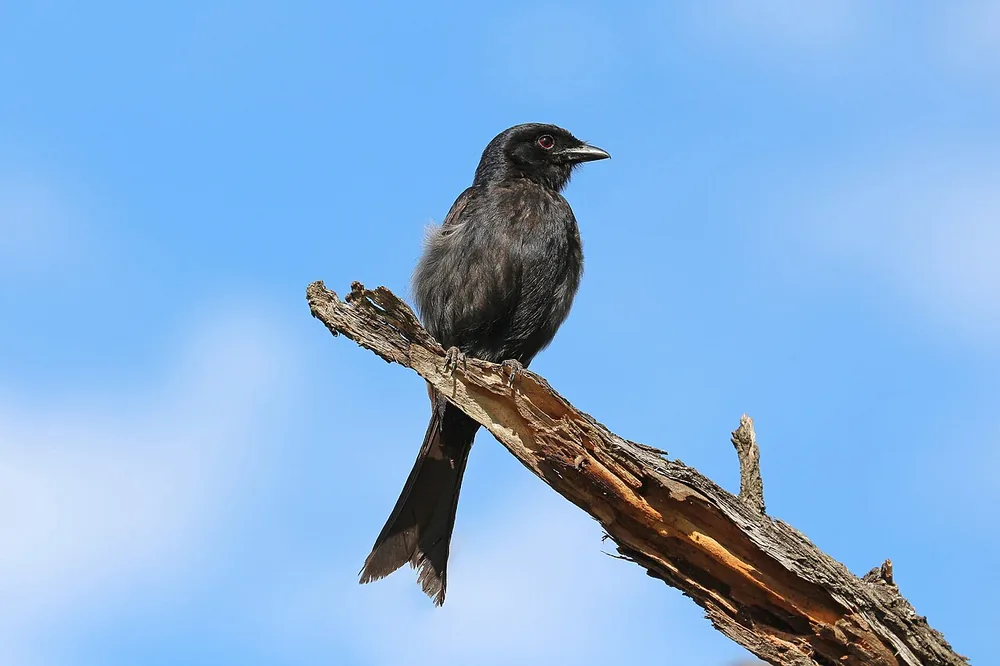
Scientific name: Dicrurus adsimilis
Group: bird
Lives: African savanna and woodland
Diet: insects
IUCN status: Least Concern
A glossy black trickster, it gives false alarm calls, including mimicked calls of other species, so that meerkats and pied babblers drop their food, then steals it.
Dipper (white-throated dipper)
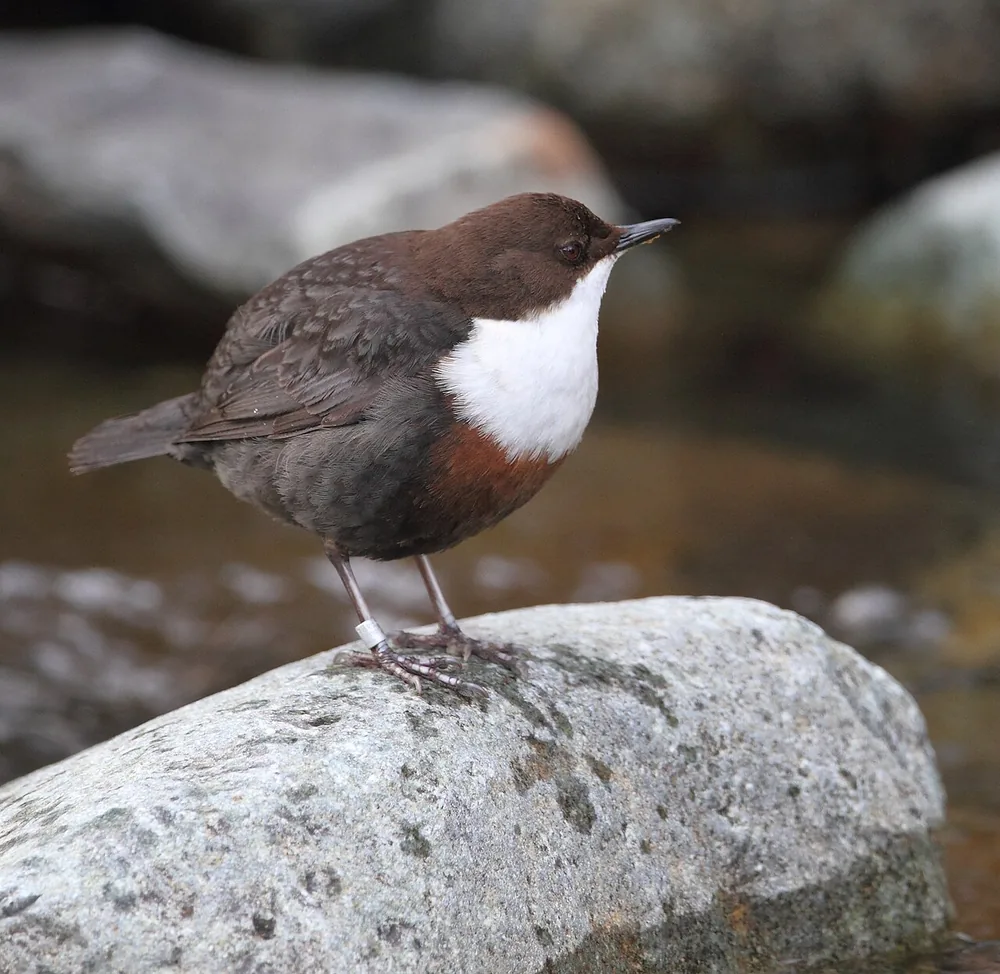
Scientific name: Cinclus cinclus
Group: bird
Lives: fast rivers of Europe and Asia
Size: about 18 cm
Diet: aquatic insect larvae
IUCN status: Least Concern
The dipper walks and swims underwater along the riverbed. Seeing one is a sign of a clean, well-oxygenated river.
Dunnock
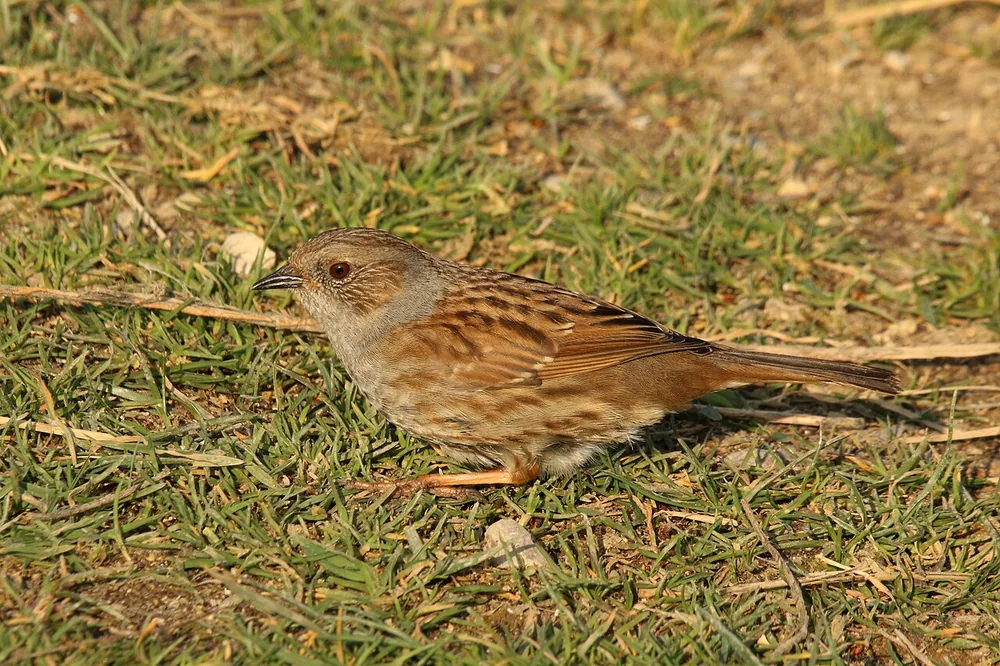
Scientific name: Prunella modularis
Group: bird
Lives: gardens and hedges across Europe
Size: 13–14.5 cm
Diet: insects and seeds
IUCN status: Least Concern
The old name “hedge sparrow” misleads, as it is an accentor. Females often pair with more than one male.
Dunlin
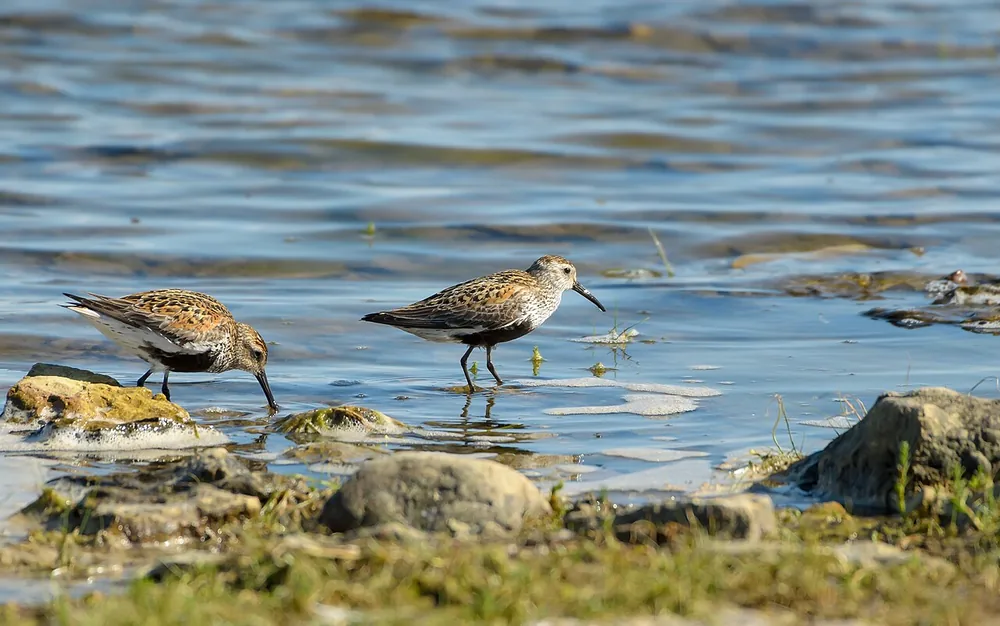
Scientific name: Calidris alpina
Group: bird
Lives: breeds in the Arctic and subarctic, winters on coasts
Size: 16–20 cm, 34–77 g
Diet: invertebrates from mud
IUCN status: Near Threatened
Breeding adults have a black belly patch. The name comes from “dun”, a dull brown, plus “-ling”.
Darter (Oriental darter)
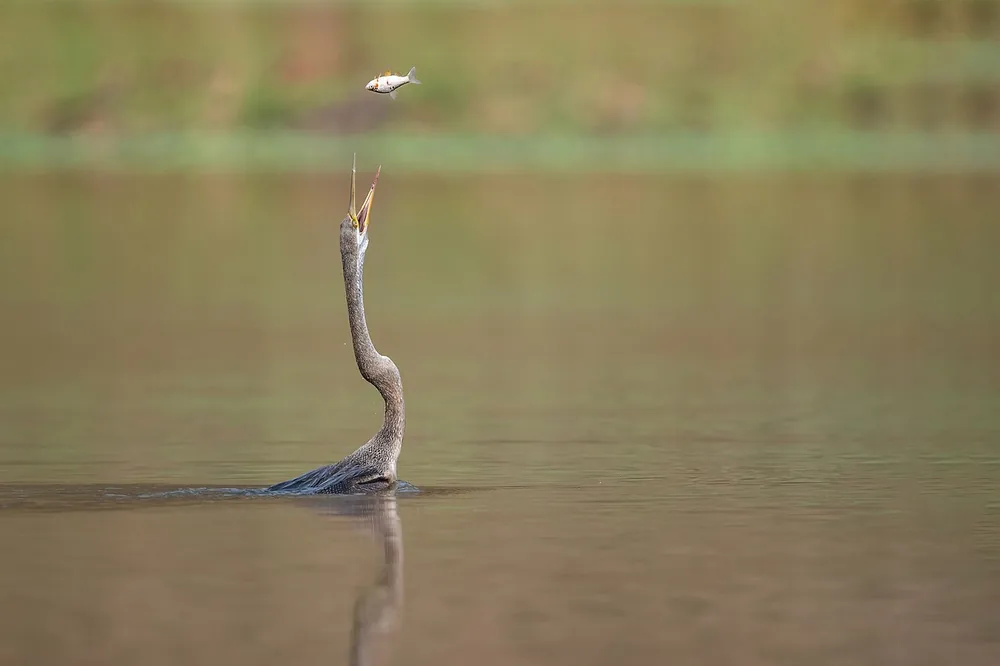
Scientific name: Anhinga melanogaster
Group: bird
Lives: lakes and rivers of South and South-East Asia
Diet: fish
IUCN status: Least Concern
It swims with only its thin neck showing, hence “snakebird”, spears fish and swallows them head first, then dries its open wings like a cormorant.
Dartford warbler
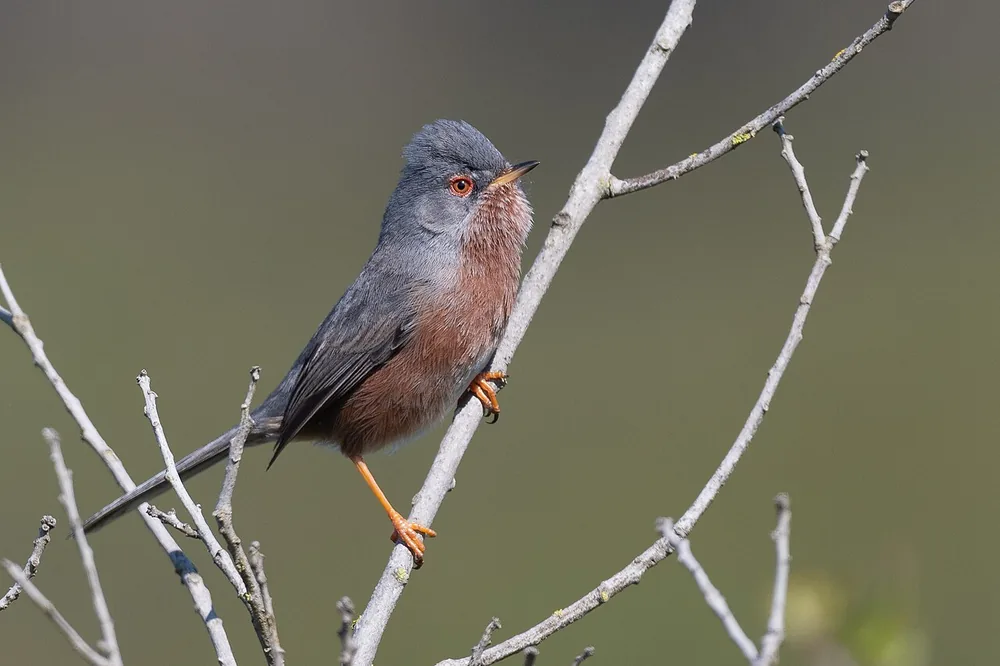
Scientific name: Curruca undata
Group: bird
Lives: heathland in western Europe and north-west Africa
Size: about 13 cm
Diet: insects and spiders
IUCN status: Near Threatened
It is named after Dartford, Kent, where the first specimens were shot on Bexley Heath in 1773.
Dark-eyed junco
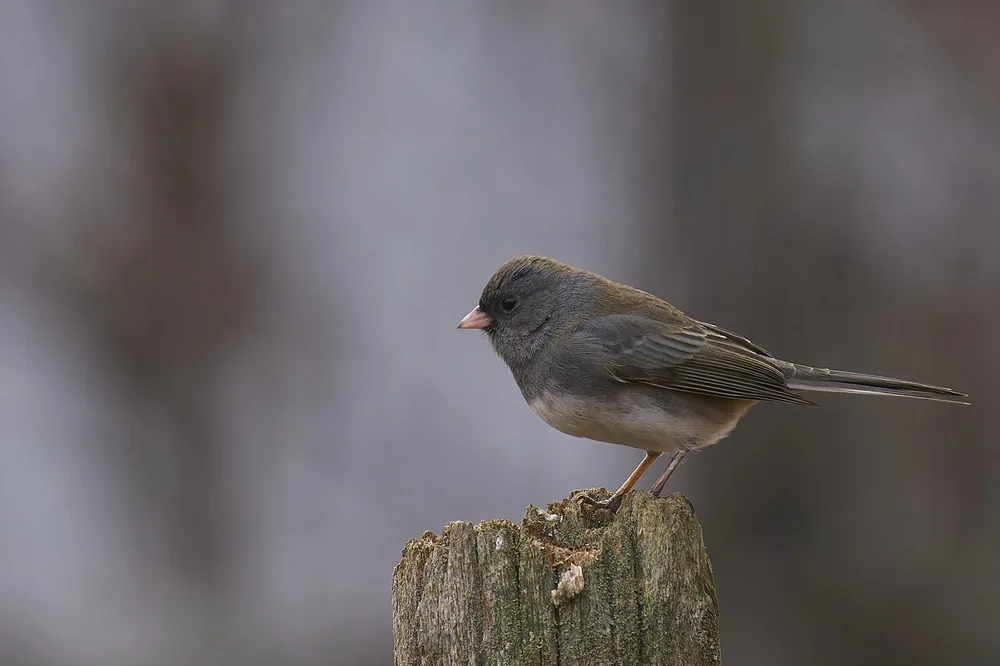
Scientific name: Junco hyemalis
Group: bird (New World sparrow)
Lives: temperate North America
Size: 13–17.5 cm, 18–30 g
Diet: seeds and insects
IUCN status: Least Concern
This small sparrow is common across temperate North America.
Demoiselle crane
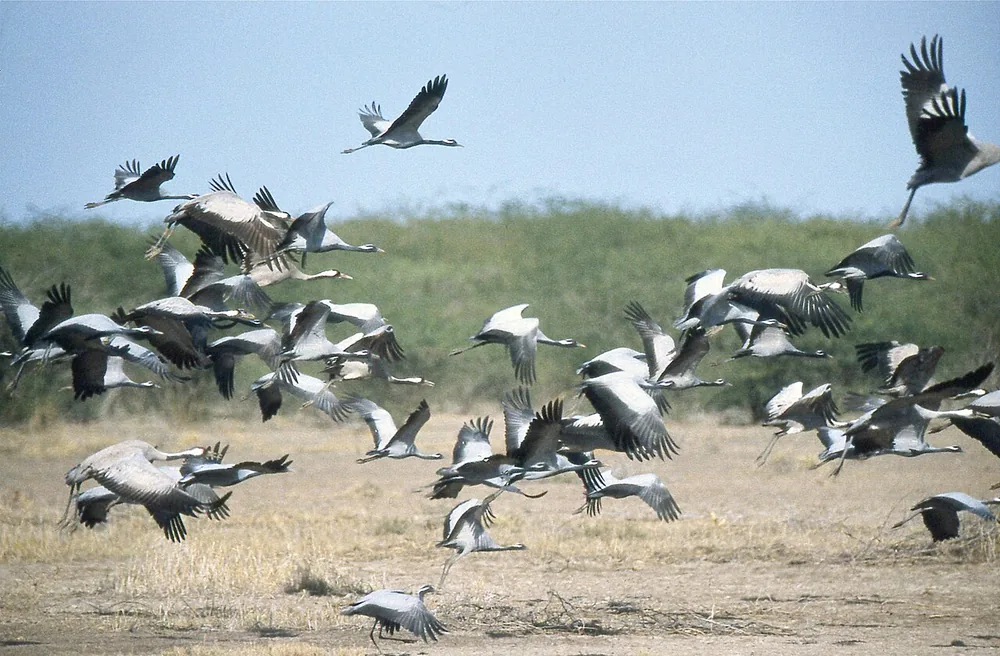
Scientific name: Grus virgo
Group: bird
Lives: breeds Black Sea to Mongolia; winters in Africa or India
Size: 85–100 cm long, 2–3 kg
Diet: seeds and insects
IUCN status: Least Concern
It is the smallest species of crane. In India it is called koonj or kurjaa.
Dalmatian pelican
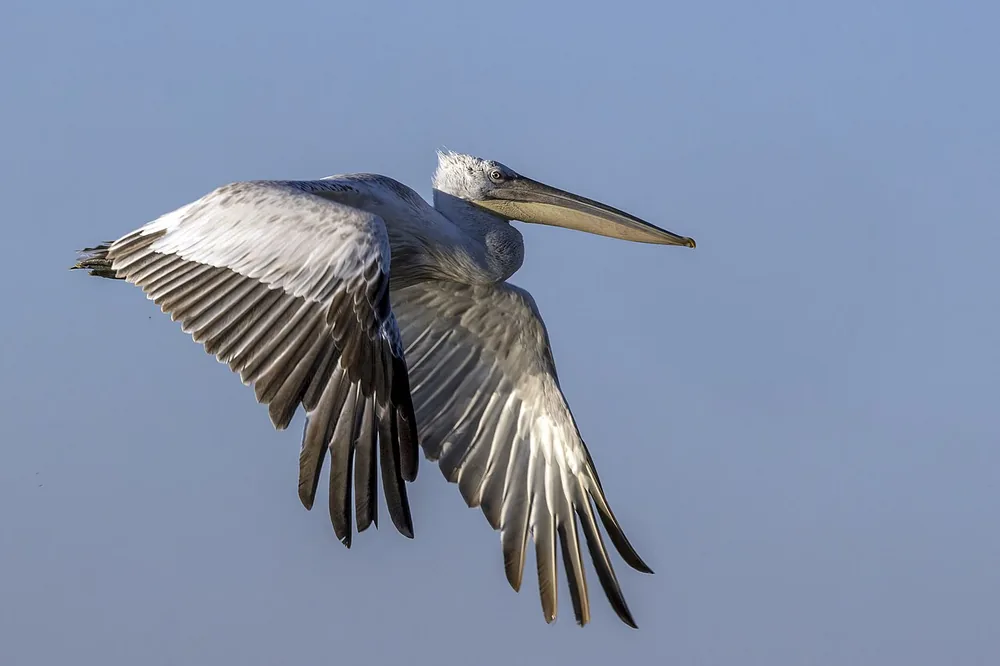
Scientific name: Pelecanus crispus
Group: bird
Lives: wetlands, south-east Europe to China
Size: 1.6–1.8 m long, wingspan 2.7–3.2 m, about 9.5 kg on average
Diet: fish
IUCN status: Near Threatened
This is the largest pelican and one of the heaviest flying birds. Its bill measures 37–45 cm, the second longest of any bird.
More birds that start with D
- Dotterel (Eurasian) (Eudromias morinellus) — Breeds in northern Europe and Siberia, including Scotland. The female is brighter, and the male raises the chicks. IUCN status: Least Concern.
- Diamond dove (Geopelia cuneata) — Inland Australia, near water; one of Australia’s smallest pigeons. IUCN status: Least Concern.
- Downy woodpecker (Dryobates pubescens) — Forests of the USA and Canada; at 14–18 cm, the smallest woodpecker in North America. IUCN status: Least Concern.
Reptiles and amphibians that start with D
Reptiles and amphibians that start with D include a gliding lizard and a frog whose father raises the tadpoles in his throat.
Desert tortoise (Mojave desert tortoise)
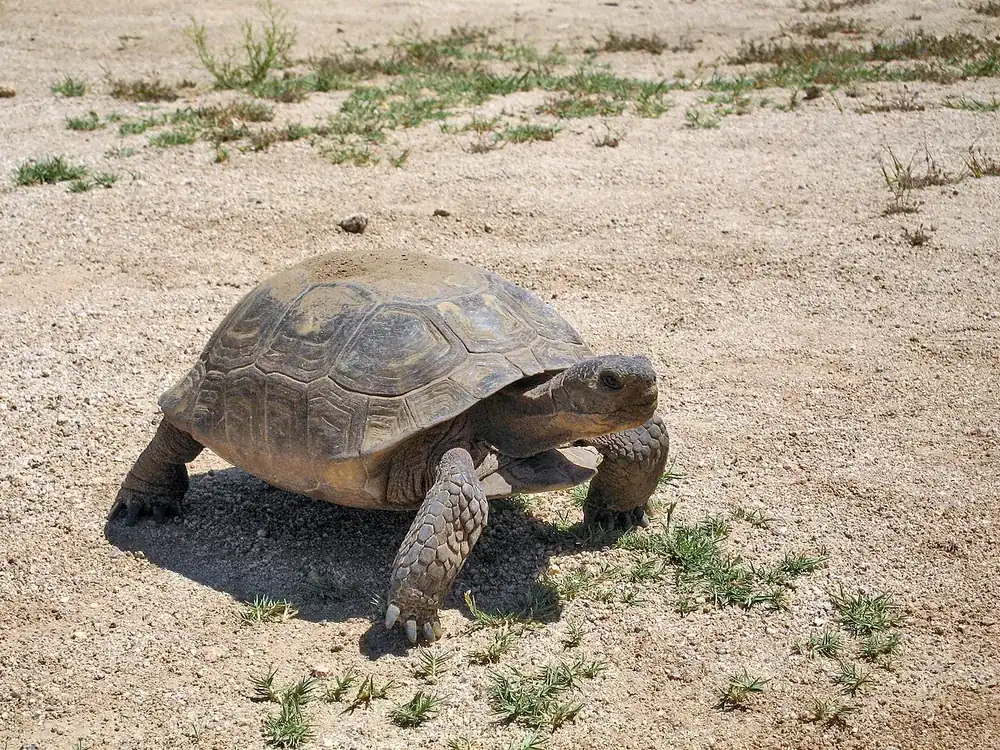
Scientific name: Gopherus agassizii
Group: reptile
Lives: Mojave and Colorado deserts, south-western USA
Size: shell 25–36 cm, 3.5–7 kg
Diet: grasses, wildflowers, cacti
IUCN status: Critically Endangered
It spends about 95 % of its life in burrows and takes 16 years or more to reach about 20 cm. See how it fits into a desert food web.
Death adder (common death adder)
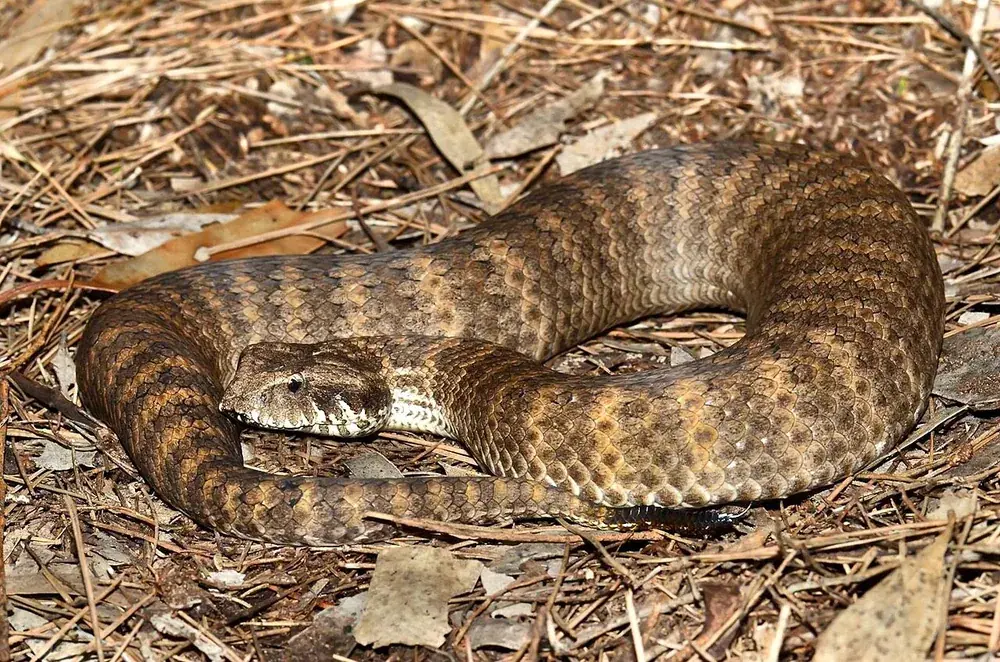
Scientific name: Acanthophis antarcticus
Group: reptile
Lives: eastern and southern Australia
Size: 70–100 cm snout-to-vent
Diet: lizards, frogs, small mammals, birds
IUCN status: Least Concern
One of Australia’s most venomous land snakes, it lures prey by wriggling its worm-like tail tip. Despite the name, it is an elapid, not a true adder.
Diamondback rattlesnake (eastern)
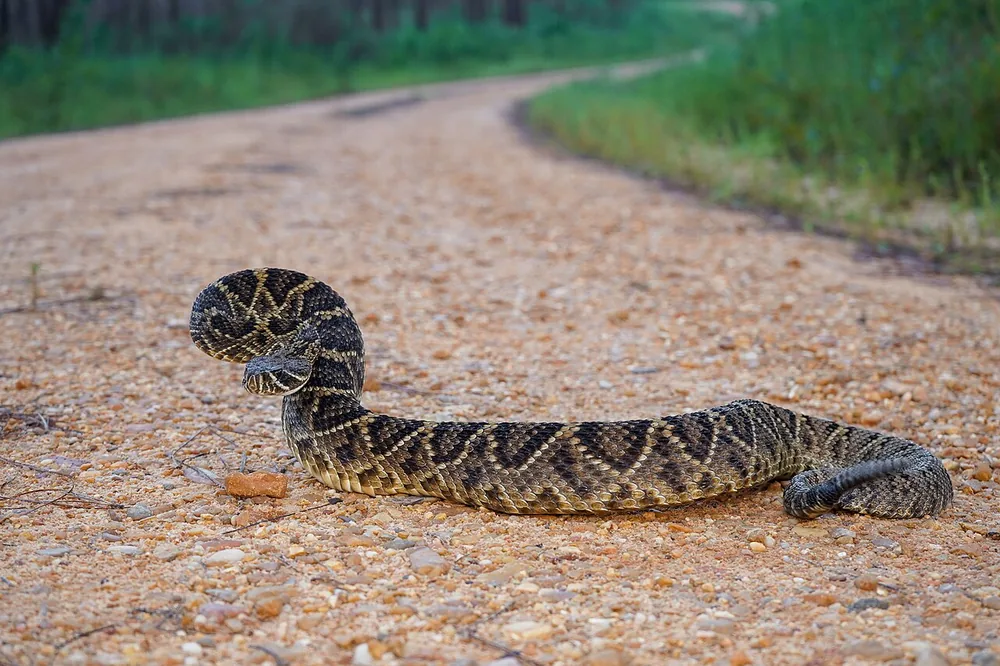
Scientific name: Crotalus adamanteus
Group: reptile
Lives: pine woods and scrub, south-eastern USA
Size: usually 1.5–1.8 m, 5.5–6.8 kg
Diet: small mammals
IUCN status: Least Concern
This is the largest rattlesnake and one of the heaviest venomous snakes in the Americas. Read more about the eastern diamondback rattlesnake.
Draco lizard (common flying dragon)
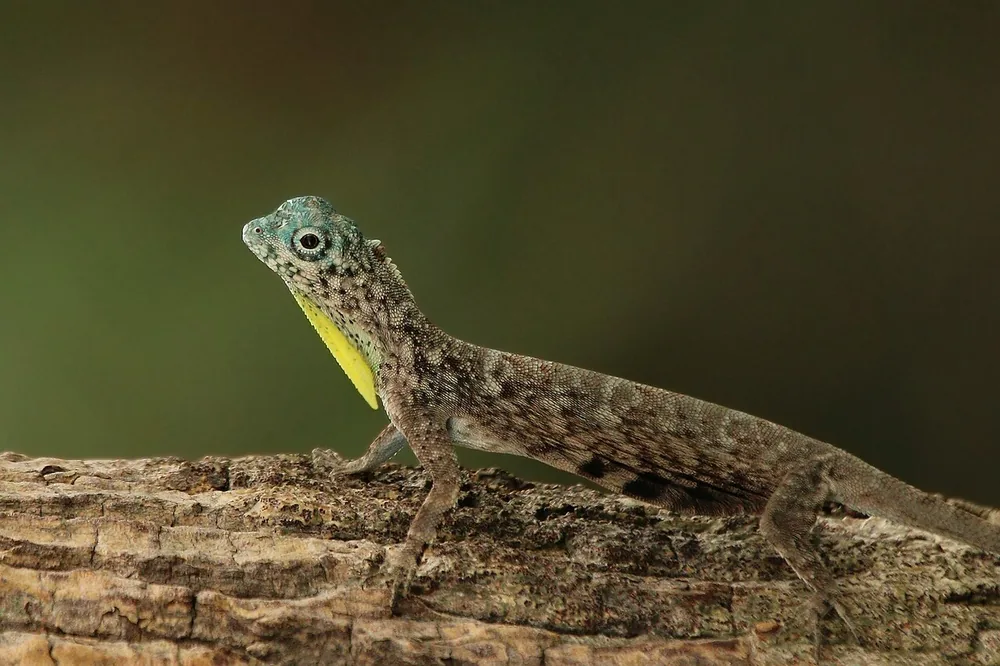
Scientific name: Draco volans
Group: reptile
Lives: rainforest trees of South-East Asia
Size: up to 22 cm including the tail
Diet: ants and termites
IUCN status: Least Concern
It glides on skin “wings” stretched over elongated ribs. Draco lizards have been recorded gliding up to about 60 m while losing only about 10 m in height.
Dwarf crocodile
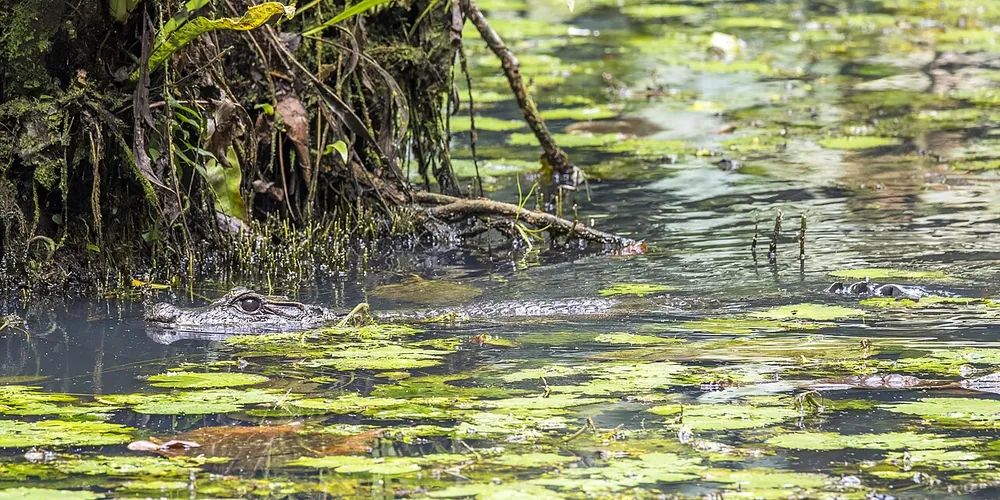
Scientific name: Osteolaemus tetraspis
Group: reptile
Lives: swamps and streams of West and Central Africa
Size: average about 1.5 m (maximum about 1.9 m), 18–32 kg
Diet: fish, frogs and crustaceans
IUCN status: Vulnerable
The smallest living crocodile species. See the difference between crocodiles and alligators.
Darwin’s frog
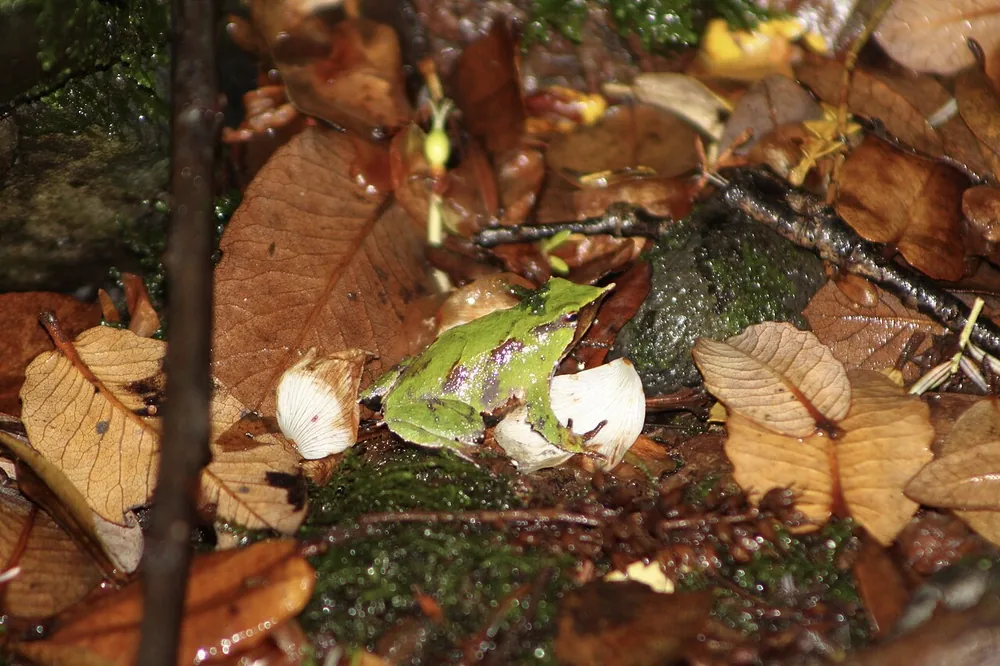
Scientific name: Rhinoderma darwinii
Group: amphibian
Lives: forests of southern Chile and Argentina
Size: 2.2–3.1 cm
Diet: invertebrates
IUCN status: Endangered
Charles Darwin found it on the Beagle voyage. The male raises the tadpoles inside his vocal sac until they emerge as tiny froglets.
Dyeing poison dart frog
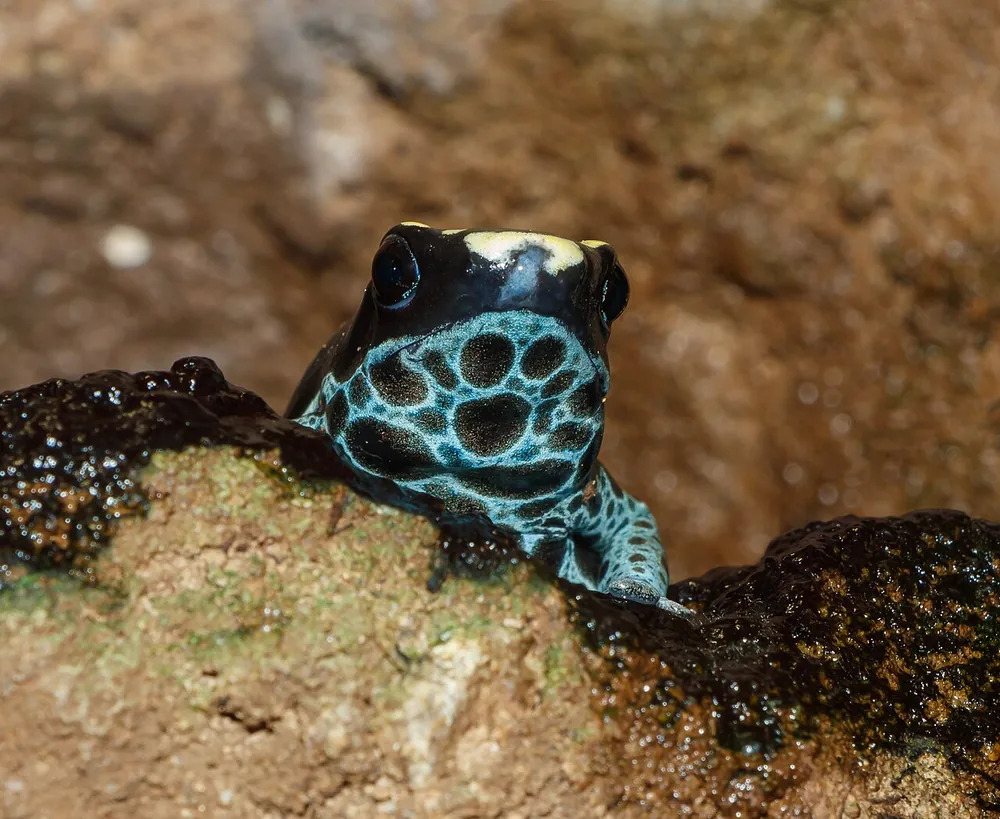
Scientific name: Dendrobates tinctorius
Group: amphibian
Lives: rainforest, eastern Guiana Shield
Size: about 50 mm
Diet: ants, termites, small invertebrates
IUCN status: Least Concern
One of the largest poison frogs. Tinctorius comes from a legend that tribes used its poison to change parrot feathers’ colour.
More reptiles and amphibians that start with D
- Desert iguana (Dipsosaurus dorsalis) — Sonoran and Mojave deserts of the south-western USA; a lizard of hot desert country. IUCN status: Least Concern.
- Dice snake (Natrix tessellata) — Europe to Central Asia, near water; harmless and non-venomous, 1.0–1.3 m long, with belly spots that look like dice. IUCN status: Least Concern.
- Dusky salamander (northern) (Desmognathus fuscus) — Streams of eastern North America; a lungless salamander that breathes through its skin. IUCN status: Least Concern.
- Desert rain frog (Breviceps macrops) — Sandy coast of Namibia and South Africa; a burrower that eats insects, squeaks in a high pitch and absorbs water from fog through its skin. IUCN status: Vulnerable.
Fish and sea animals that start with D
Sea animals that start with D include a slow seahorse, a shark pregnant for almost two years and a deep-sea octopus. See ocean food chains and food webs.
Dogfish (small-spotted catshark)
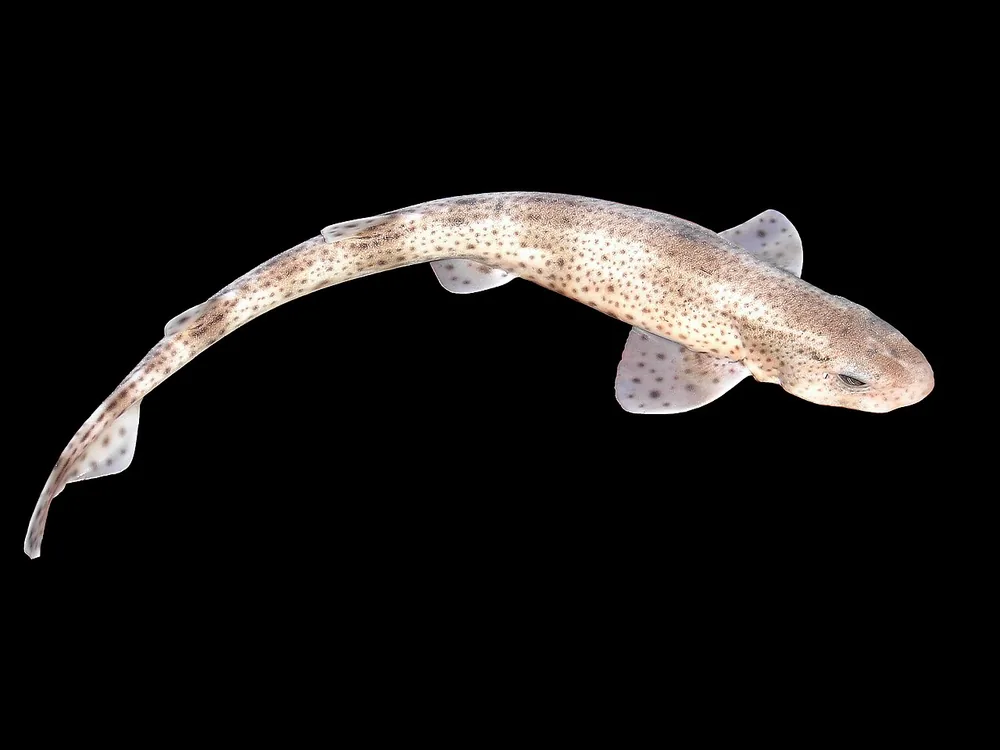
Scientific name: Scyliorhinus canicula
Group: fish
Lives: seabed of the north-east Atlantic and Mediterranean
Size: up to 1 m
Diet: crustaceans, molluscs, small fish
IUCN status: Least Concern
Its eggs come in horny cases about 4 × 2 cm. Empty ones wash up on UK beaches as “mermaid’s purses”.
Discus
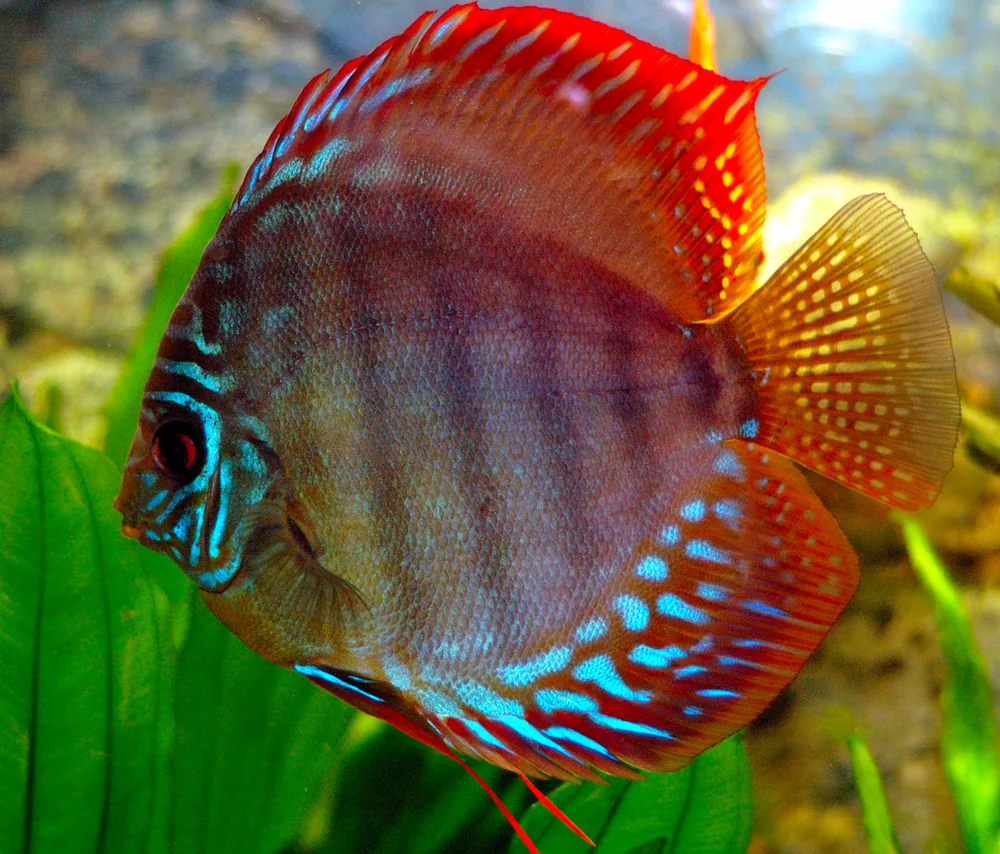
Scientific name: Symphysodon (genus; S. discus)
Group: fish
Lives: Amazon basin
Size: 12–15 cm
Diet: small invertebrates and plant matter
IUCN status: Not assessed
Discus parents feed their young on a skin secretion nicknamed “discus milk” for about the first four weeks.
Dusky shark
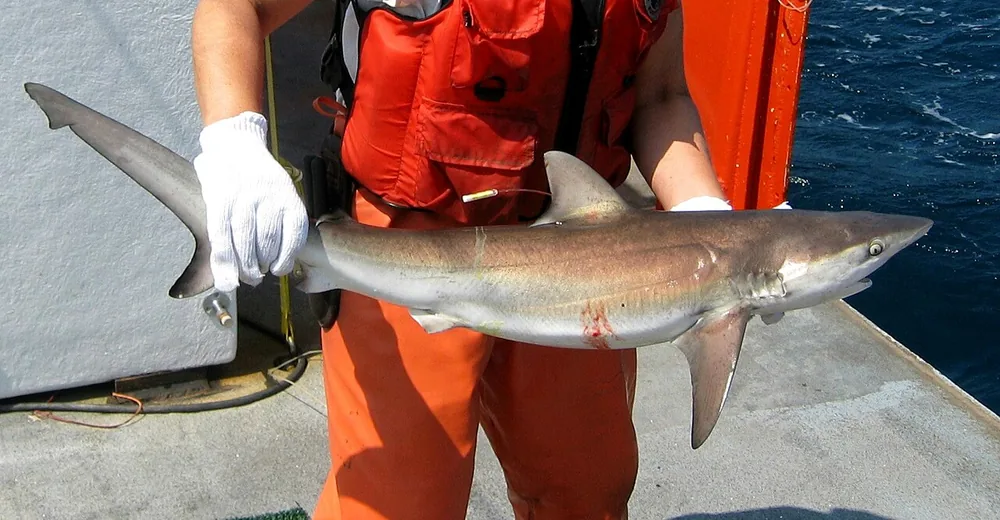
Scientific name: Carcharhinus obscurus
Group: fish
Lives: warm seas worldwide
Size: over 4 m, 350 kg
Diet: bony fish, sharks, rays
IUCN status: Endangered
Pregnancy lasts 22–24 months, one of the longest of any animal.
Dwarf seahorse
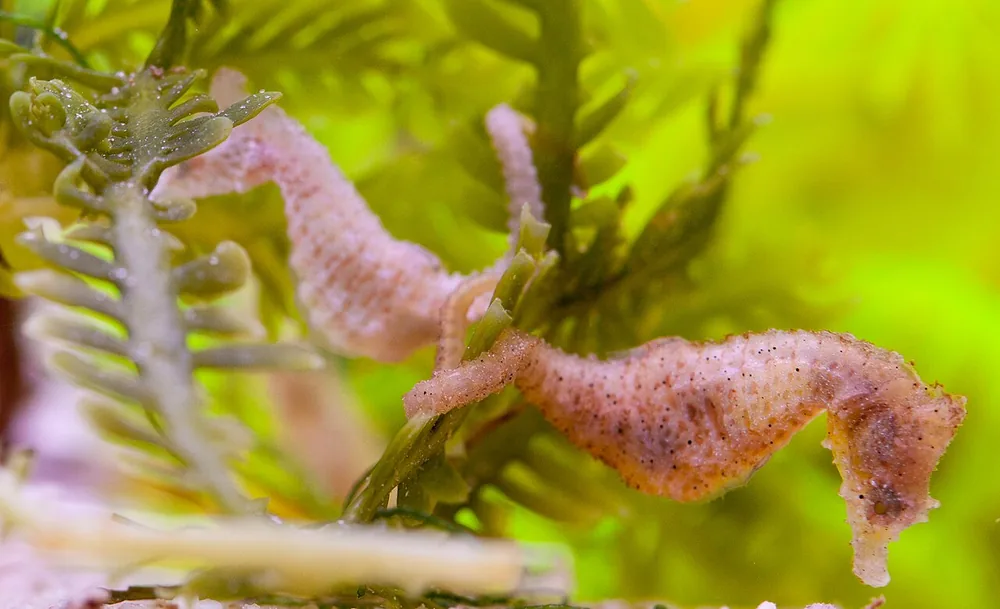
Scientific name: Hippocampus zosterae
Group: fish
Lives: seagrass beds, Bahamas and south-eastern USA
Size: usually 2–2.5 cm (maximum 5 cm)
Diet: tiny crustaceans
IUCN status: Least Concern
According to Guinness World Records it is the slowest-moving fish, at about 1.5 m per hour.
Danio (zebrafish)
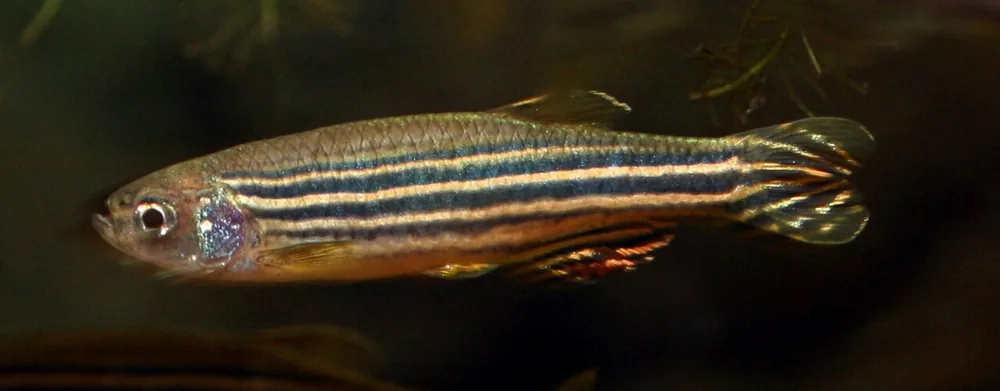
Scientific name: Danio rerio
Group: fish
Lives: South Asian fresh water
Size: 1.8–3.7 cm in the wild
Diet: zooplankton and insects
IUCN status: Least Concern
A model animal in science labs, the zebrafish can regenerate its heart after injury.
Dumbo octopus
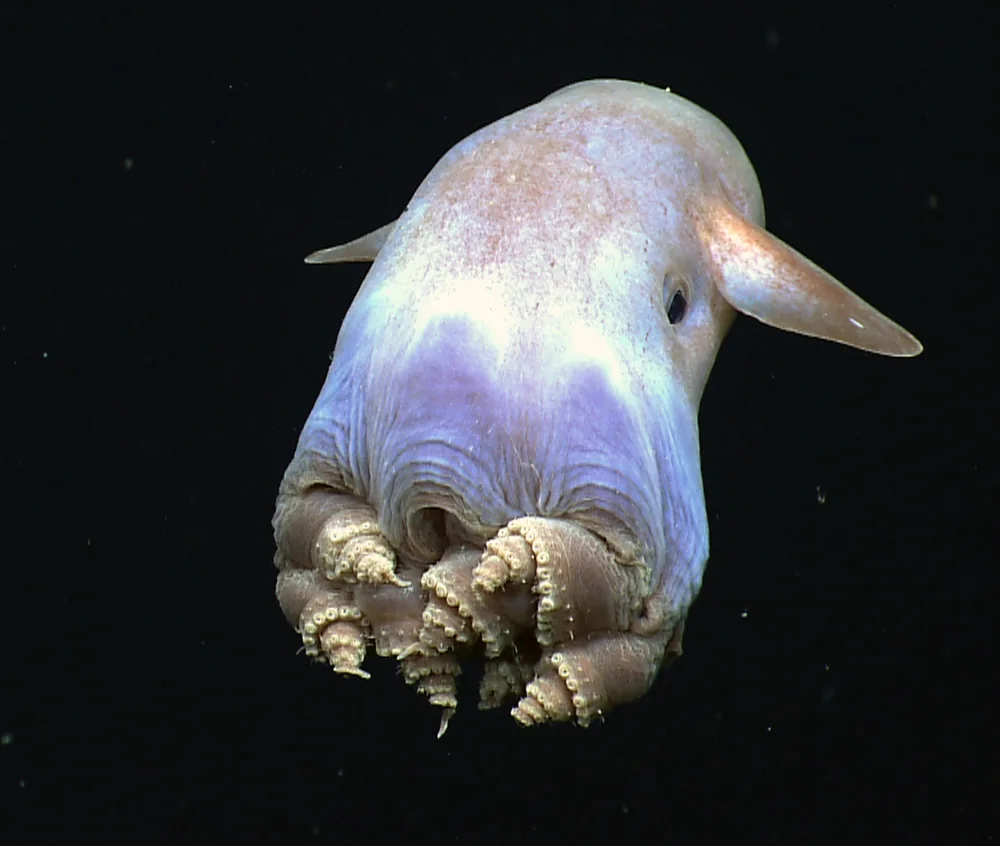
Scientific name: Grimpoteuthis (genus, 17 species)
Group: mollusc
Lives: the deep sea
Diet: crustaceans, bivalves, worms
IUCN status: Not assessed
Its ear-like fins are named after Disney’s Dumbo. One filmed at 6,957 m in the Java Trench, in a 2020 study, is the deepest-living octopus known.
Dungeness crab
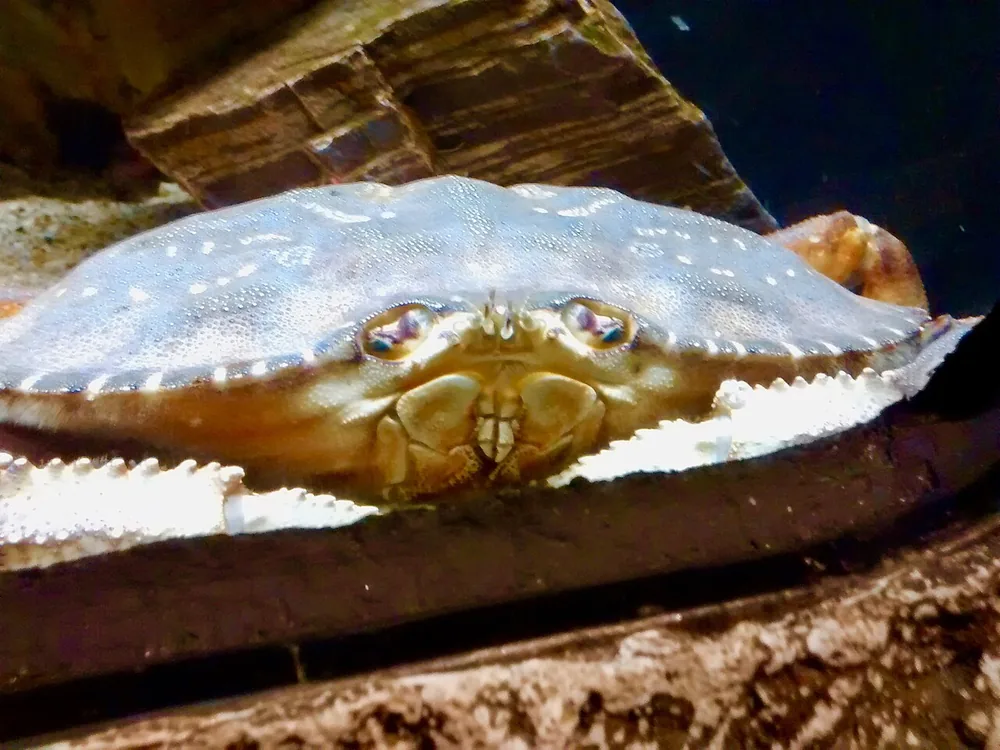
Scientific name: Metacarcinus magister
Group: crustacean
Lives: Pacific coast of North America
Size: about 15–18 cm across
Diet: clams, small crustaceans, fish
IUCN status: Not assessed
It is named after Dungeness Spit in Washington state. To grow it moults, and it can regrow lost legs.
More fish that start with D
- Dorado (mahi-mahi, dolphinfish) (Coryphaena hippurus) — Warm open oceans worldwide; typical catches are about 1 m and 7–13 kg. “Dorado” is Spanish for “golden”. IUCN status: Least Concern.
- Dragonet (common) (Callionymus lyra) — Sandy seabed of the north-east Atlantic. IUCN status: Least Concern.
- Dace (common) (Leuciscus leuciscus) — Rivers of Europe. IUCN status: Least Concern.
Insects and bugs that start with D
Insects that start with D live in ponds, gardens and deserts. One entry is a spider, not an insect; see whether insects are animals.
Dragonfly (emperor dragonfly)
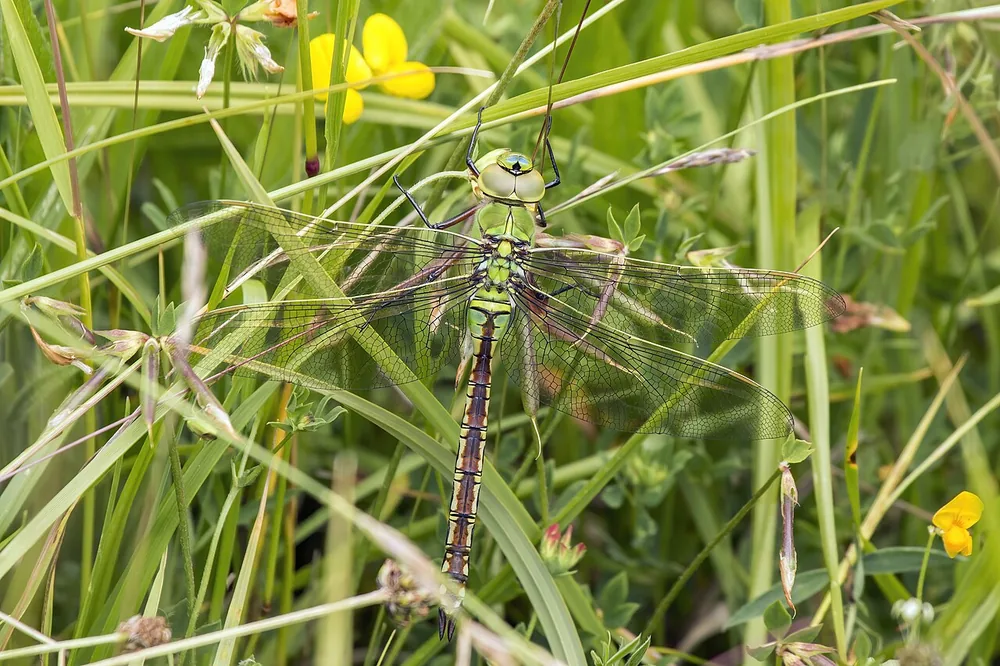
Scientific name: Anax imperator
Group: insect
Lives: Europe, Africa and Asia
Size: 73–82 mm long, wingspan about 104 mm
Diet: flying insects
IUCN status: Least Concern
The largest dragonfly in most of Europe, including the UK. In a study using a netted outdoor enclosure, dragonflies caught up to 95 % of the fruit flies they pursued.
Damselfly (azure damselfly)
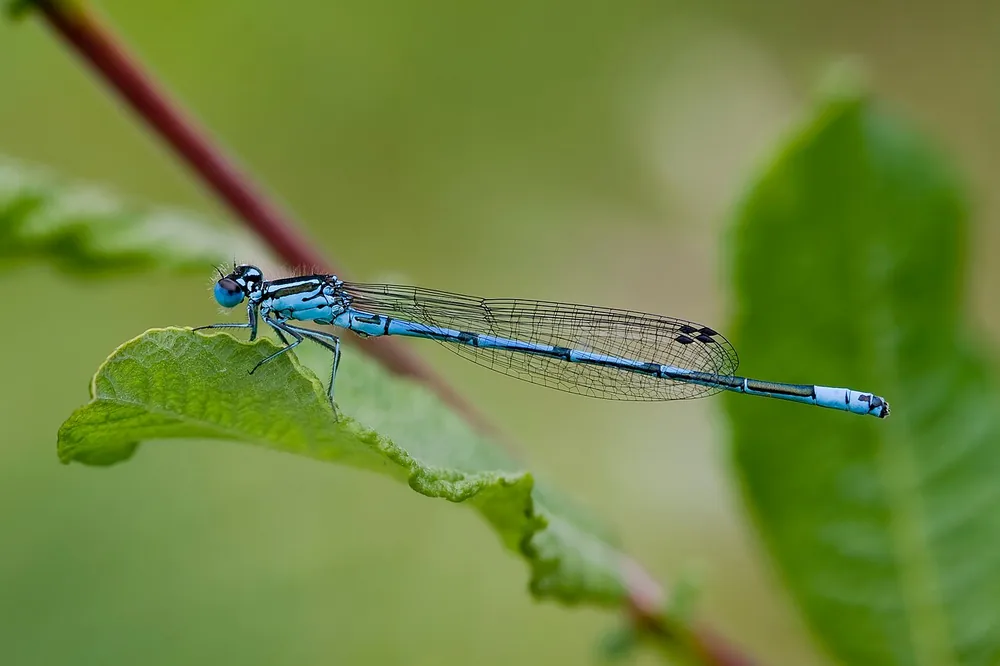
Scientific name: Coenagrion puella
Group: insect
Lives: ponds and lakes across Europe
Diet: small flying insects
IUCN status: Least Concern (Europe)
A slim black-and-blue insect common at ponds. Its status is from the European Red List.
Dung beetle
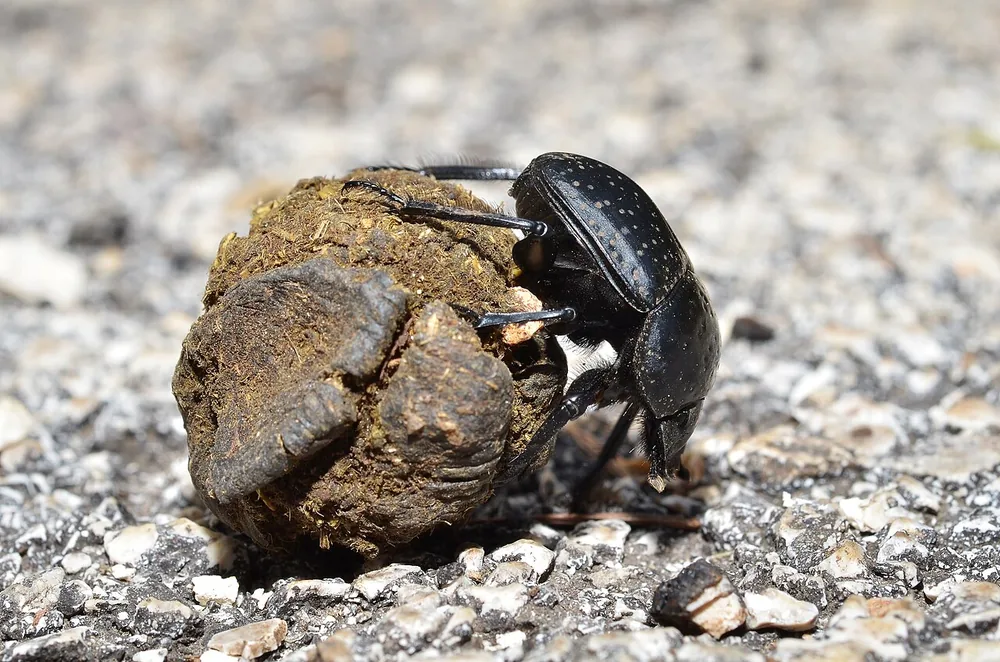
Scientific name: Scarabaeoidea (photo shows the genus Scarabaeus)
Group: insect
Lives: worldwide
Diet: dung
IUCN status: Not assessed
Over 5,000 species exist. Some navigate at night using the Milky Way, and a male Onthophagus taurus can pull 1,141 times its own body weight. Ancient Egyptians linked the scarab to the god Khepri.
Devil’s coach horse
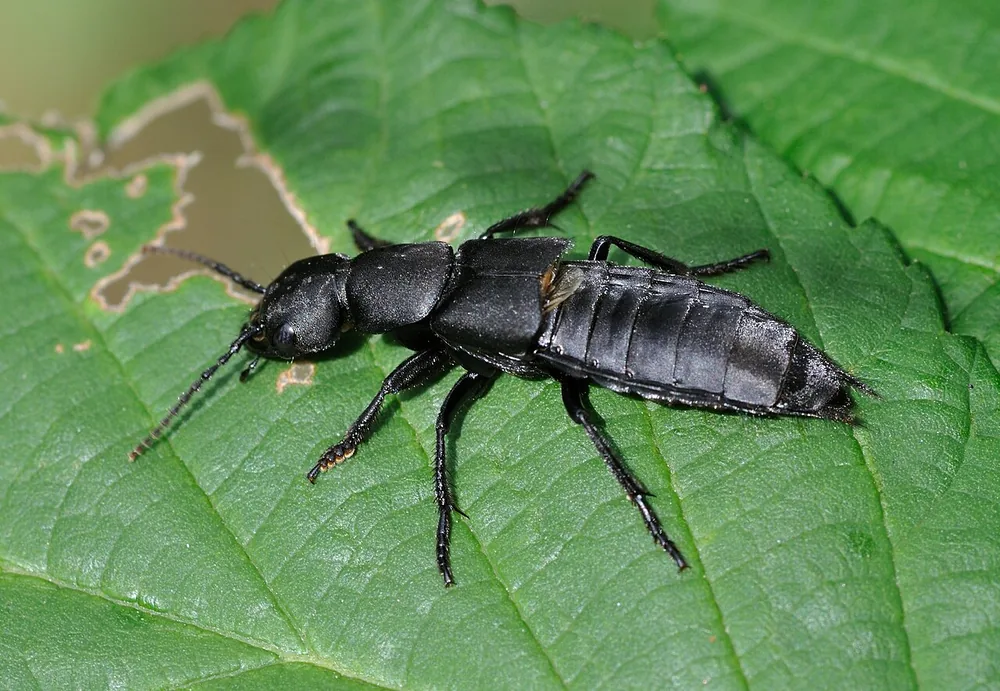
Scientific name: Ocypus olens
Group: insect
Lives: Europe, common in UK gardens
Diet: slugs, worms and insects
IUCN status: Not assessed
When threatened it raises its tail like a scorpion and opens its jaws. The species name olens means “smelling”, because it has two stink glands.
Desert locust
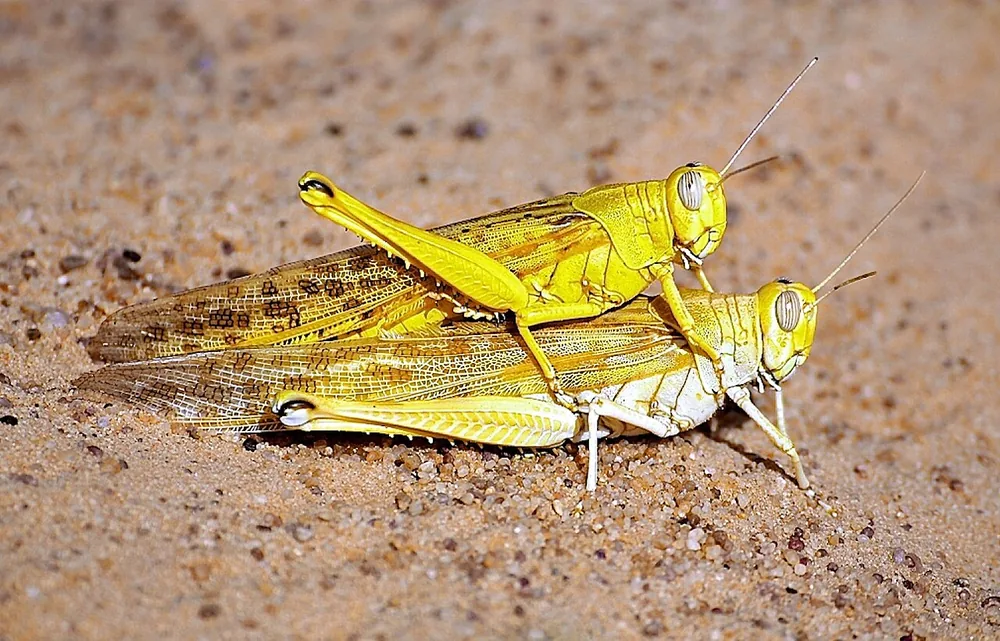
Scientific name: Schistocerca gregaria
Group: insect
Lives: dry lands, North and East Africa to south-west Asia
Diet: any green plants
IUCN status: Not assessed
It switches from a solitary form to a swarming one. A 1 km² swarm can hold up to 80 million adults and eat as much in a day as about 35,000 people, according to the FAO.
Diving bell spider
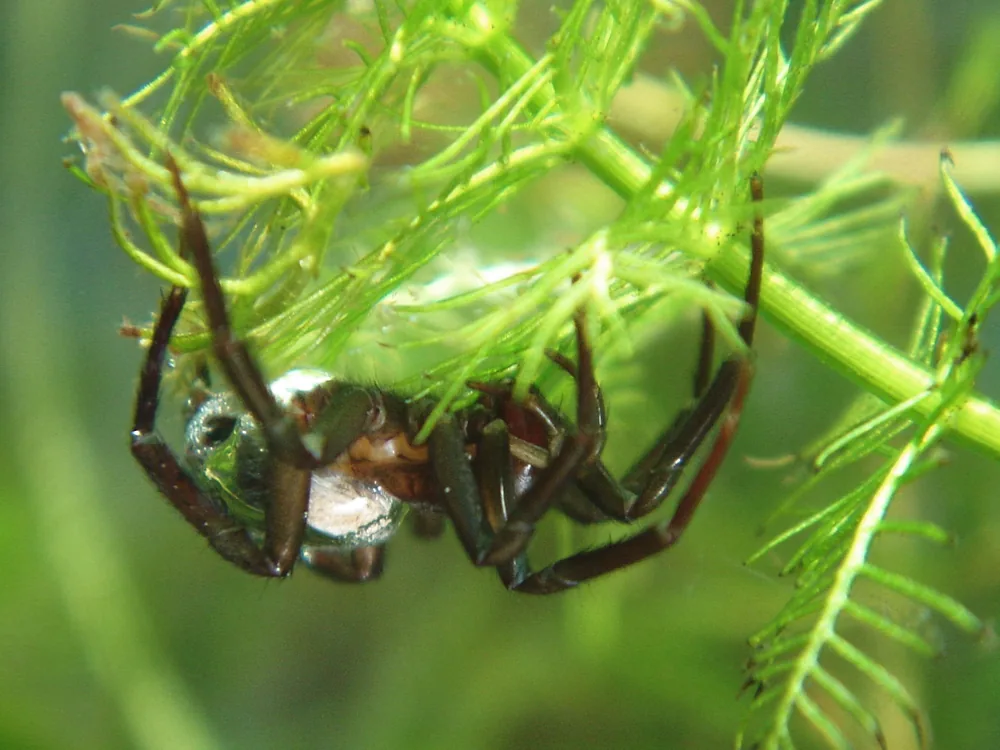
Scientific name: Argyroneta aquatica
Group: arachnid
Lives: ponds and slow water, Europe and Asia
Size: 8–15 mm, males larger
Diet: aquatic invertebrates
IUCN status: Near Threatened
The only spider known to live almost entirely underwater, it uses a silk “diving bell” of air that works like a gill, topped up about once a day. Spiders are arachnids, not insects.
Death’s-head hawkmoth
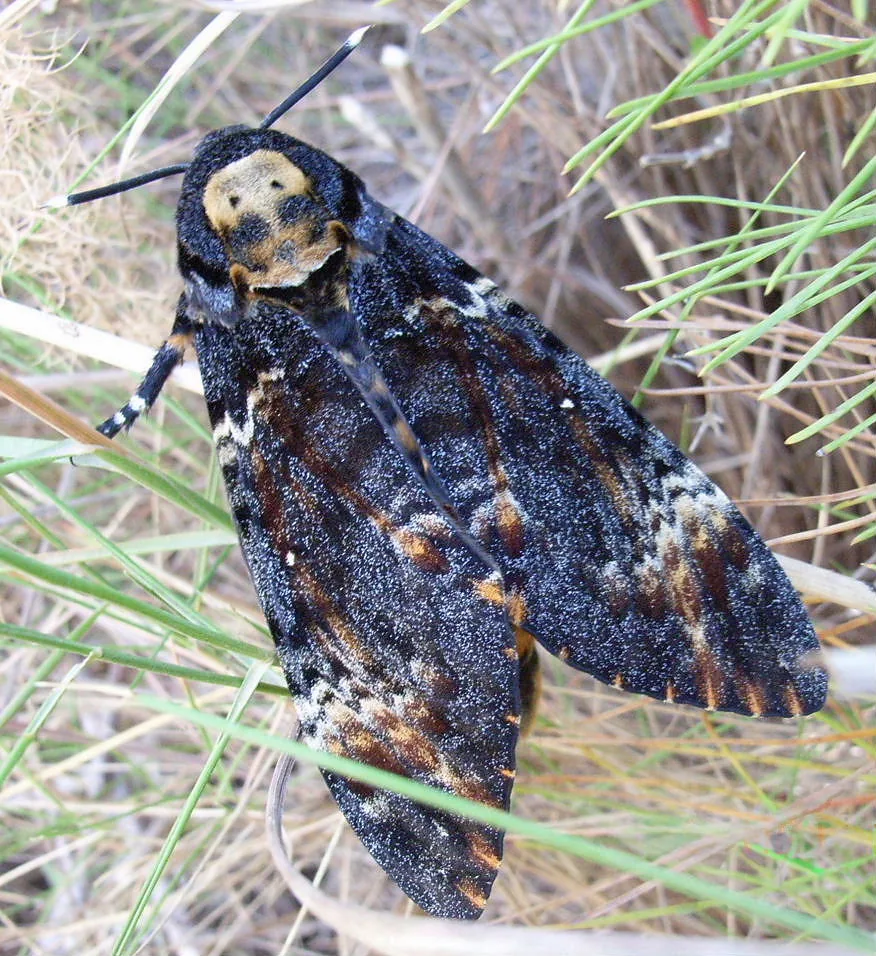
Scientific name: Acherontia atropos
Group: insect
Lives: Africa and Europe; migrates to Britain
Size: wingspan 80–120 mm
Diet: adults: honey and sap; caterpillars: potato-family leaves
IUCN status: Not assessed
The largest moth in the British Isles, it has a skull-shaped mark on its thorax. It squeaks when disturbed and raids beehives for honey.
More insects that start with D
- Deathwatch beetle (Xestobium rufovillosum) — Old oak timbers; about 7 mm, with larvae feeding for up to 10 years. Its tapping is a mating call, once taken as an omen of death. IUCN status: Not assessed.
- Dobsonfly (eastern) (Corydalus cornutus) — Eastern North American streams; males have sickle-shaped jaws up to 40 mm long. The larvae are hellgrammites. IUCN status: Not assessed.
Extinct animals that start with D
These extinct animals that start with D vanished from the Devonian seas to the 17th century. See the five mass extinctions.
Dodo
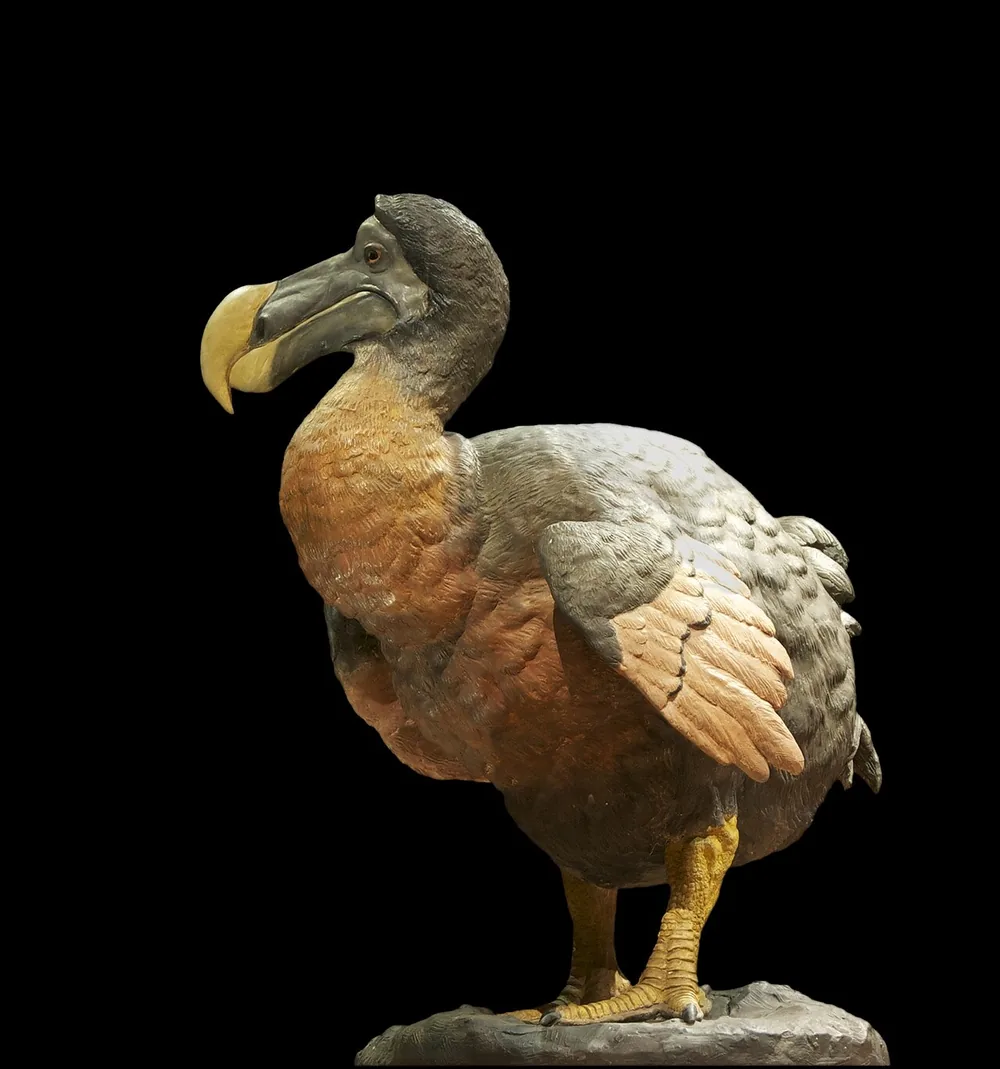
Scientific name: Raphus cucullatus
Group: extinct bird
Lives: Mauritius
Size: 62–75 cm tall, 10.6–17.5 kg
Diet: probably fruit
IUCN status: Extinct
A flightless relative of pigeons, first recorded by Dutch sailors in 1598. The last widely accepted sighting was in 1662, though one study estimated it may have lasted to about 1690. Hunting, introduced animals and habitat loss killed it off. Read about the extinction crisis.
Dire wolf
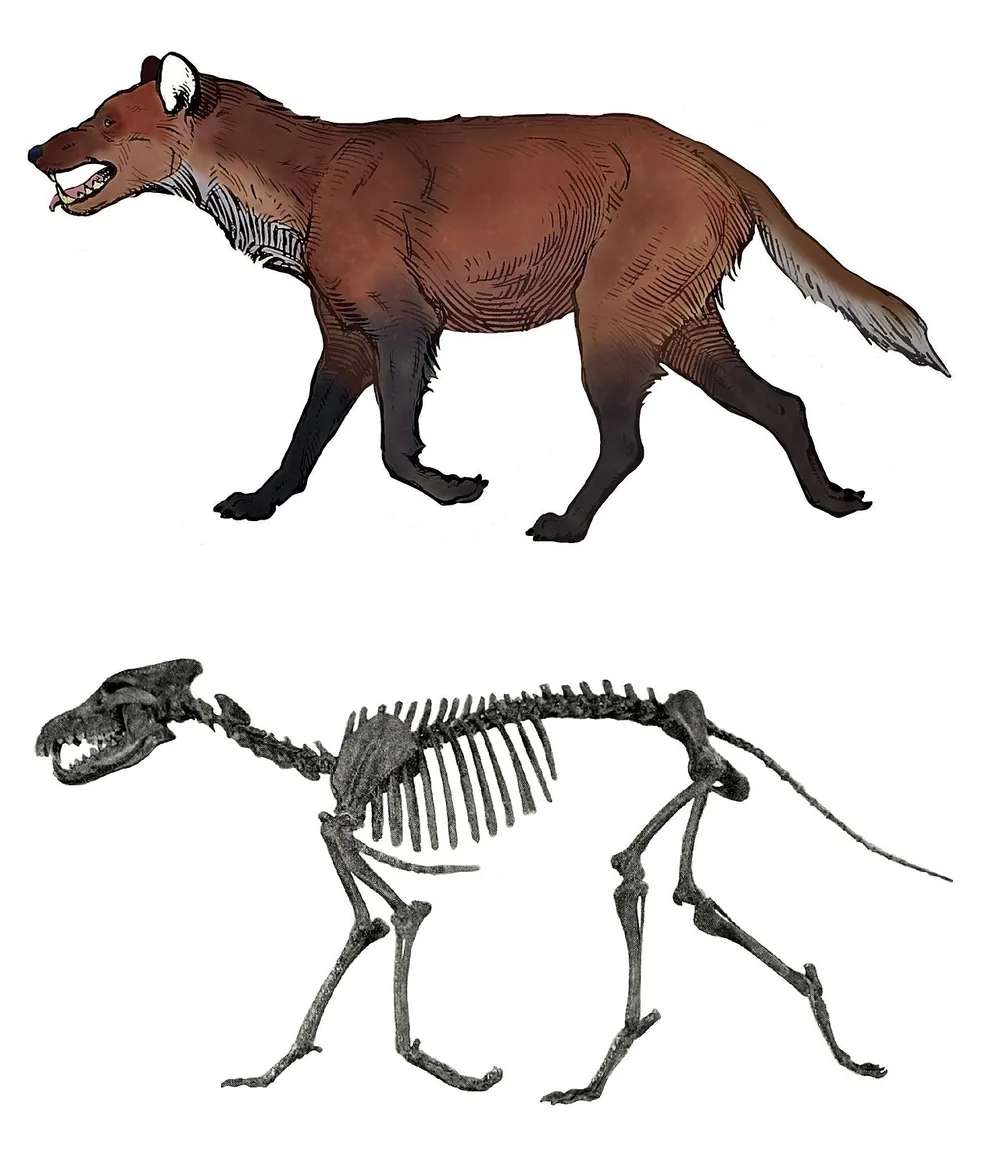
Scientific name: Aenocyon dirus
Group: extinct mammal
Lives: the Americas, 125,000–10,000 years ago
Size: about 60–68 kg, as big as the largest grey wolves
Diet: Ice Age megafauna
IUCN status: known from fossils; not assessed by the IUCN
Most fossils come from the La Brea Tar Pits in Los Angeles. In April 2025 Colossal Biosciences announced gene-edited grey wolf pups it called “dire wolves”, but the IUCN SSC and many scientists said they are modified grey wolves.
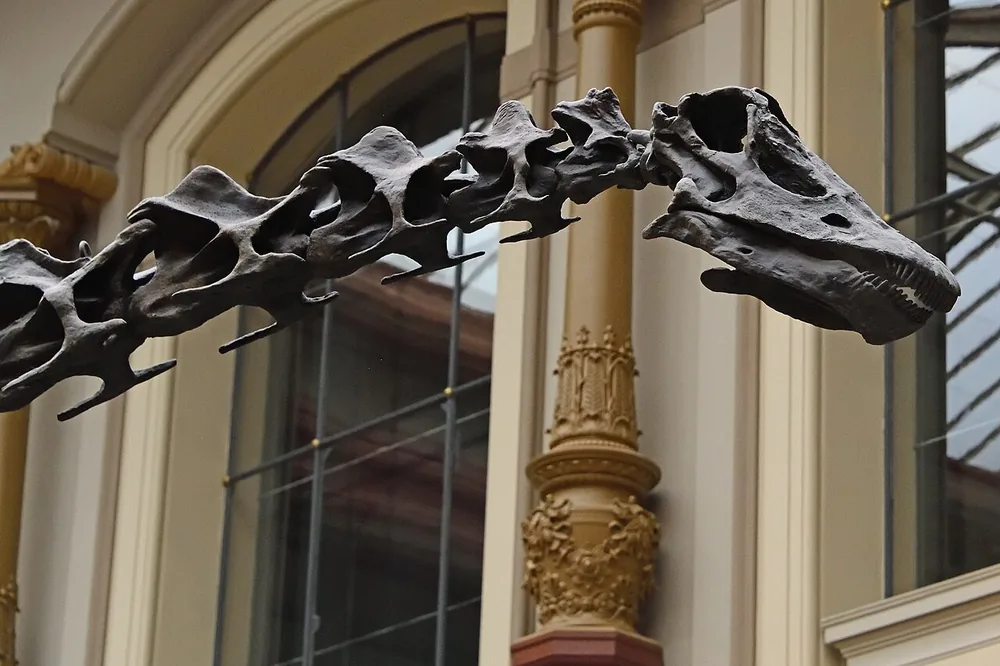
Diplodocus
Scientific name: Diplodocus carnegii
Group: extinct dinosaur
Lives: western North America, Late Jurassic (about 152–149 million years ago)
Size: 24–26 m long
Diet: plants
IUCN status: known from fossils; not assessed by the IUCN
D. carnegii is one of the longest dinosaurs known from a complete skeleton. Find it in a list of all the dinosaurs.
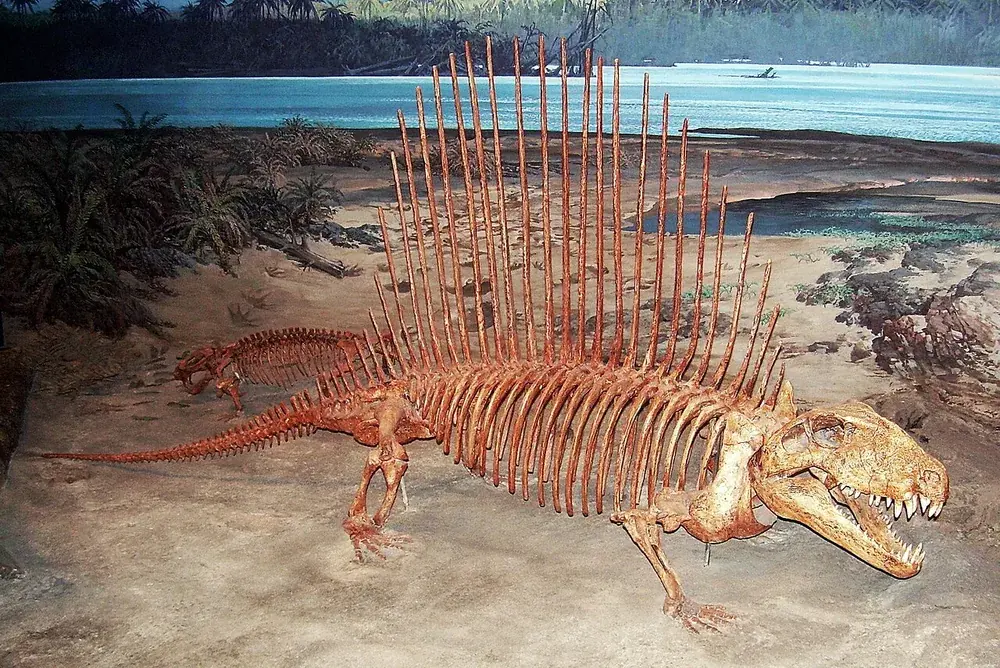
Dimetrodon
Scientific name: Dimetrodon
Group: extinct synapsid
Lives: mainly Texas and Oklahoma, Permian (about 294–271 million years ago)
Size: 1.7–4.6 m
Diet: predator
IUCN status: known from fossils; not assessed by the IUCN
Dimetrodon had a sail on its back. It was not a dinosaur but a synapsid, more closely related to mammals, and it died out about 40 million years before the first dinosaurs.
Dunkleosteus
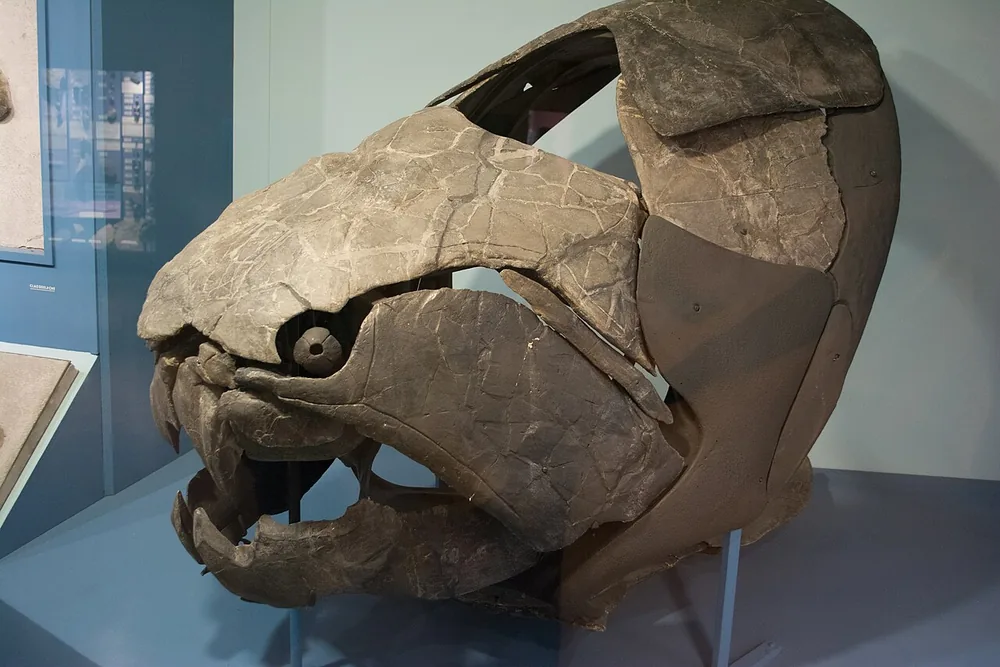
Scientific name: Dunkleosteus terrelli
Group: extinct fish
Lives: Late Devonian seas, about 382–358 million years ago
Size: typical adults about 3.4 m, largest about 4.1 m
Diet: predator
IUCN status: known from fossils; not assessed by the IUCN
This armoured fish was one of the first vertebrate apex predators. A 2023 study found it was much smaller than the old 6–10 m claims.
More extinct animals that start with D
- Deinosuchus (Deinosuchus) — A giant alligatoroid of Late Cretaceous North America, 82–73 million years ago; the largest passed 9 m and could probably eat dinosaurs. Known from fossils; not assessed by the IUCN.
- Deinotherium (Deinotherium) — An elephant relative with downward-curving lower tusks, up to 4 m at the shoulder and about 12 t, among the largest land mammals ever. It died out about a million years ago. Known from fossils; not assessed by the IUCN.
Farm animals, pets and breeds that start with D
The donkey, dromedary and duck appear earlier. Breeds are not species, so only a few are listed.
Domestic animals and breeds that start with D
- Dog (Canis familiaris) — The first domesticated animal, over 14,000 years ago. An estimated 700 million to 1 billion dogs live worldwide.
- Dalmatian (dog breed) — A white breed with dark spots from Dalmatia in Croatia, once used as carriage dogs alongside horse-drawn fire carts.
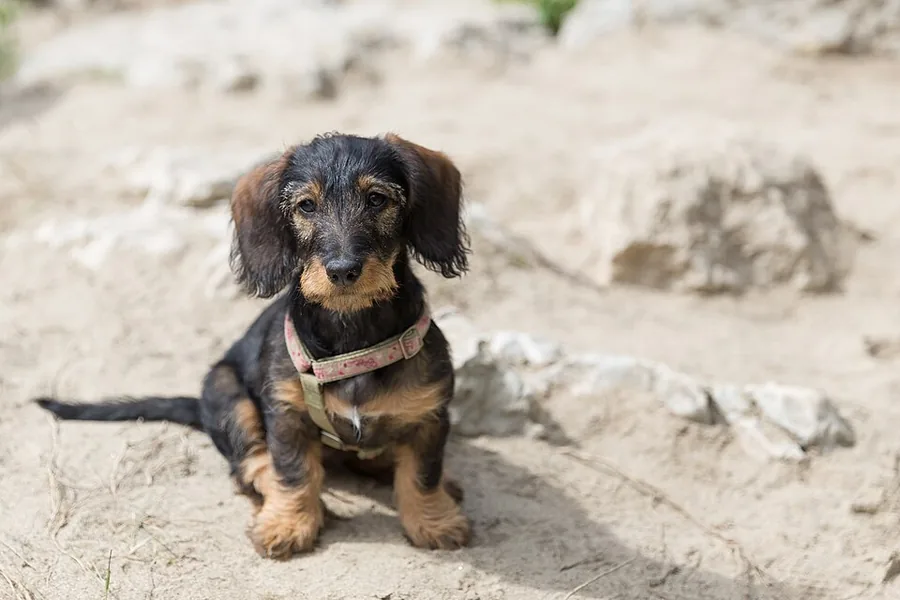
- Dachshund (dog breed) — A German “badger dog”, bred to scent and flush badgers and other burrowing animals, with short legs and a long body.
- Dobermann (dog breed) — A German breed created around 1890 by tax collector Louis Dobermann in Thuringia.
- Devon Rex (cat breed) — A curly-coated cat breed with big ears and eyes that appeared in England in the late 1950s.
Biggest, smallest, fastest, rarest and most dangerous animals that start with D
These records come from the fact files earlier in this guide.
Biggest animals that start with D
The dromedary is the tallest and heaviest typical living D animal: males reach up to 2.4 m at the shoulder and about 690 kg. The heaviest single record is a 1,016 kg dugong, and the orca is the biggest dolphin. The biggest D animal ever is Diplodocus, at 24–26 m long. See the largest animals in the world.
Smallest animals that start with D
The smallest are the deathwatch beetle (about 7 mm), the dwarf seahorse (usually 2–2.5 cm) and Darwin’s frog (2.2–3.1 cm). The dwarf crocodile is the smallest crocodile species, the demoiselle crane the smallest crane and the dwarf mongoose Africa’s smallest carnivore.
Fastest and slowest animals that start with D
Dall’s porpoise is quickest, at about 55 km/h in short bursts (NOAA Fisheries), then Kirk’s dik-dik (42 km/h). Camels as a group are credited with up to about 65 km/h in short bursts. The dwarf seahorse is slowest, at about 1.5 m per hour. Compare more in the fastest animals in the world and the slowest animals of the world.
Most dangerous animals that start with D
The common death adder is one of Australia’s most venomous land snakes, and the eastern diamondback is the largest rattlesnake. The desert locust is dangerous differently: its swarms destroy crops. Leave wild snakes alone.
Rarest and endangered animals that start with D
The dama gazelle has fewer than 250 mature individuals, and the red-shanked douc and Mojave desert tortoise are also Critically Endangered. Endangered species include the dhole, Darwin’s frog, the drill, the Pyrenean desman and the dusky shark. The dodo and dire wolf are extinct.
Cutest animals that start with D (our picks)
Cuteness is opinion, so these are our picks. Swipe through the photos.
Animals that start with D for kids and preschool
Ten easy D animals, each with one sentence to read aloud.
- D is for dog. Dogs were the first animals that people tamed.
- D is for duck. Ducklings can swim as soon as they hatch.
- D is for deer. A male red deer is called a stag.
- D is for dolphin. Dolphins live in the sea and talk with clicks and whistles.
- D is for donkey. A male donkey is a jack and a female is a jenny.
- D is for dragonfly. A dragonfly catches other flying insects.
- D is for dodo. The dodo lived on Mauritius and is now extinct.
- D is for dormouse. A hazel dormouse sleeps through the winter.
- D is for dugong. Dugongs swim in shallow water and eat seagrass.
- D is for Dalmatian. A Dalmatian is a white dog with dark spots.
Fun facts about animals that start with D
- Dimetrodon lived about 40 million years before the first dinosaurs, and it was not a dinosaur.
- A male dung beetle of one species can pull 1,141 times its own body weight.
- A dumbo octopus was filmed at 6,957 m deep in the Java Trench.
D animals you can spot in the UK
Tick off the D animals you have seen.
- Red deer
- Mallard duck
- Eurasian collared dove
- Dunnock
- Dipper
- Dunlin
- Dartford warbler
- Emperor dragonfly
- Azure damselfly
- Devil’s coach horse
- Dogfish egg case on the beach
- Hazel dormouse (rare)
More animal alphabet lists: try the animals that start with E, or go back to the animals that start with A and the animals that start with B.
Frequently asked questions about animals that start with D
What animal starts with D?
Many animals start with D, including the dolphin, dog, duck, deer, donkey, dingo, dugong, dragonfly, dormouse and dromedary. This guide lists 77, from the living dhole and dik-dik to the extinct dodo and Diplodocus.
What is the biggest animal that starts with D?
The biggest D animal ever is Diplodocus, a dinosaur 24–26 m long. Among living animals, the dromedary is the tallest and heaviest typical one, at up to 2.4 m at the shoulder and about 690 kg, while a record dugong weighed 1,016 kg.
What is the smallest animal that starts with D?
The smallest on our list is the deathwatch beetle, at about 7 mm. The dwarf seahorse (2–2.5 cm) and Darwin’s frog (2.2–3.1 cm) are also tiny.
What is the fastest animal that starts with D?
Of the D animals with a verified speed, Dall’s porpoise is the fastest, at about 55 km/h in short bursts. Kirk’s dik-dik can run at 42 km/h, and camels as a group are credited with up to about 65 km/h.
What is the rarest animal that starts with D?
The dama gazelle is among the rarest living D animals, with fewer than 250 mature individuals according to the IUCN. The red-shanked douc and Mojave desert tortoise are also Critically Endangered.
What sea animals start with D?
Sea animals that start with D include the dolphin, dugong, dusky shark, dogfish, dwarf seahorse, dumbo octopus, Dungeness crab and dorado. The dugong and dolphin are mammals, the others are fish or invertebrates.
What farm animals start with D?
Farm animals that start with D include the donkey, the duck and the dog. The dromedary, or one-humped camel, is domesticated in North Africa, Arabia and South Asia, and the Dalmatian and dachshund are well-known dog breeds.
What extinct animals start with D?
Extinct animals that start with D include the dodo, the dire wolf, Diplodocus, Dimetrodon, Dunkleosteus, Deinosuchus and Deinotherium. They lived at very different times, from the Devonian period to the 17th century.
Is Dimetrodon a dinosaur?
No. Dimetrodon was a synapsid, more closely related to mammals than to dinosaurs. It lived in the Permian period, about 294–271 million years ago, roughly 40 million years before the first dinosaurs appeared.
What are some cute animals that start with D?
Our picks for the cutest D animals are the dik-dik, hazel dormouse, degu, dwarf mongoose, dassie and ducklings. Cuteness is a matter of opinion.