Animals that start with B range from the tiny bumblebee bat to the blue whale, the largest animal ever known to have lived. This guide covers 75 animals that start with B, with real photographs, scientific names, where each one lives and its IUCN Red List status. It works for homework, quiz nights and alphabet games. If you are working through the alphabet, the animals that start with A and animals that start with C lists come either side of this one.
What animal starts with B? The best-known B animals are the bear, bee, butterfly, bat, beaver, badger and blue whale. Sixty of the 75 have their own entry with a photo, sorted into mammals, birds, reptiles and amphibians, sea life, insects and extinct animals. The rest appear in short lists and in the full table below.
Every photo is credited to its photographer, with the licence linked. Conservation statuses come from the IUCN Red List, the global register of how close species are to extinction. Sizes and records are given only where we could check them.
Full list of 75 animals that start with B (with IUCN status)
This table lists every animal in the guide in alphabetical order. It is a quick way to find a B animal by group, home or conservation status. Scroll down for the photo entries.
| Animal | Group | Where it lives | IUCN status |
|---|---|---|---|
| Babirusa (North Sulawesi) | Mammal | Sulawesi, Indonesia | Vulnerable |
| Baboon (olive) | Mammal | African savanna and woodland | Least Concern |
| Bactrian camel | Mammal | Central Asian steppes | Domestic (wild Bactrian camel: Endangered) |
| Badger (European) | Mammal | Europe and West Asia | Least Concern |
| Baiji (Yangtze river dolphin) | Extinct mammal | Yangtze River, China | Critically Endangered (possibly extinct) |
| Bald eagle | Bird | North America | Least Concern |
| Ball python | Reptile | West and Central Africa | Near Threatened |
| Banded mongoose | Mammal | Sahel to southern Africa | Least Concern |
| Bar-tailed godwit | Bird | Arctic to Australasia | Near Threatened |
| Barn owl | Bird | Europe, Africa, South-West Asia | Least Concern |
| Barn swallow | Bird | Almost worldwide | Least Concern |
| Barracuda (great) | Fish | Tropical and subtropical seas | Least Concern |
| Basilisk (common) | Reptile | Central and South American rainforests | Least Concern |
| Basking shark | Fish | Temperate oceans | Endangered |
| Bat-eared fox | Mammal | Southern and East Africa | Least Concern |
| Beagle | Dog breed | Britain (bred) | Domestic |
| Bearded dragon (central) | Reptile | Eastern and central Australia | Least Concern |
| Bearded vulture | Bird | Mountains of Europe, Africa, Asia | Near Threatened |
| Beaver (Eurasian) | Mammal | Europe and Asia | Least Concern |
| Bed bug | Insect | Worldwide, in homes and hotels | Not assessed |
| Bee hummingbird | Bird | Cuba | Near Threatened |
| Beluga whale | Mammal | Arctic and sub-Arctic seas | Least Concern |
| Bengal cat | Cat breed | Domestic (hybrid origin) | Domestic |
| Bengal tiger | Mammal | India, Nepal, Bangladesh, Bhutan | Endangered (tiger species) |
| Betta (Siamese fighting fish) | Fish | Thailand and South-East Asia | Vulnerable (wild) |
| Bilby (greater) | Mammal | Central and north-western Australia | Vulnerable |
| Binturong | Mammal | South and South-East Asian forests | Vulnerable |
| Bison (American) | Mammal | North America | Near Threatened |
| Black bear (American) | Mammal | North America | Least Concern |
| Black caiman | Reptile | Amazon basin | Least Concern |
| Black mamba | Reptile | Sub-Saharan Africa | Least Concern |
| Black rhinoceros | Mammal | East and southern Africa | Critically Endangered |
| Black swan | Bird | Australia | Least Concern |
| Black widow (southern) | Spider | North America | Not assessed |
| Black-footed ferret | Mammal | North American prairies | Endangered |
| Blackbird (common) | Bird | Europe, West Asia, North Africa | Least Concern |
| Blue jay | Bird | Eastern and central North America | Least Concern |
| Blue morpho | Insect | Central and South American rainforests | Not assessed |
| Blue poison dart frog | Amphibian | Suriname and northern Brazil | Least Concern (species) |
| Blue shark | Fish | Temperate and tropical oceans | Near Threatened |
| Blue tang | Fish | Indo-Pacific coral reefs | Least Concern |
| Blue tit | Bird | Europe and West Asia | Least Concern |
| Blue whale | Mammal | All oceans | Endangered |
| Blue-footed booby | Bird | Eastern Pacific coasts | Least Concern |
| Blue-ringed octopus (greater) | Sea life | Indo-Pacific reefs | Least Concern |
| Bluebuck | Extinct mammal | South Africa | Extinct |
| Bluefin tuna (Atlantic) | Fish | Atlantic Ocean and Mediterranean Sea | Least Concern |
| Boa constrictor | Reptile | Mexico to South America | Least Concern |
| Bobcat | Mammal | Southern Canada to Mexico | Least Concern |
| Bombardier beetle | Insect | Worldwide (many species) | Not assessed |
| Bongo | Mammal | Sub-Saharan African forests | Near Threatened |
| Bonobo | Mammal | Congo Basin, DR Congo | Endangered |
| Border Collie | Dog breed | Anglo-Scottish border | Domestic |
| Bottlenose dolphin (common) | Mammal | Temperate and tropical seas | Least Concern |
| Bowhead whale | Mammal | Arctic seas | Least Concern |
| Box jellyfish | Sea life | Northern Australia, South-East Asia | Not assessed |
| Box turtle (eastern) | Reptile | Eastern USA and Mexico | Vulnerable |
| Boxer | Dog breed | Germany (bred) | Domestic |
| Bramble Cay melomys | Extinct mammal | Torres Strait, Australia | Extinct |
| Brazilian free-tailed bat | Mammal | The Americas | Least Concern |
| Brazilian wandering spider | Spider | Brazil and neighbouring countries | Not assessed |
| Brimstone (butterfly) | Insect | Europe, Asia, North Africa | Least Concern |
| Brontosaurus | Extinct dinosaur | Utah and Wyoming, USA | Extinct (known from fossils; not assessed by the IUCN) |
| Brown bear | Mammal | Eurasia and North America | Least Concern |
| Brown pelican | Bird | Coasts of the Americas | Least Concern |
| Budgerigar | Bird | Inland Australia | Least Concern |
| Buffalo (African) | Mammal | Sub-Saharan Africa | Near Threatened |
| Bull shark | Fish | Warm coasts and rivers | Vulnerable |
| Bullet ant | Insect | Central and South American rainforests | Not assessed |
| Bullfrog (American) | Amphibian | Eastern North America | Least Concern |
| Bumblebee (buff-tailed) | Insect | Europe | Least Concern |
| Bumblebee bat (Kitti’s hog-nosed) | Mammal | Thailand and Myanmar caves | Near Threatened |
| Burmese python | Reptile | South-East Asia | Vulnerable |
| Bush baby (Senegal) | Mammal | Africa south of the Sahara | Least Concern |
| Buzzard (common) | Bird | Europe to West Asia | Least Concern |
IUCN key: Least Concern means not at risk for now, and Near Threatened means possibly soon. Vulnerable, Endangered and Critically Endangered are the threatened categories, in rising order of risk. “Not assessed” and “Domestic” mean the Red List has no rating.
Mammals that start with B
Mammals are warm-blooded animals that feed their young on milk. B gives us big cats, whales, bears and the smallest bat in the world. Read more in our guide to the families of mammals.
1. Baboon (olive baboon)
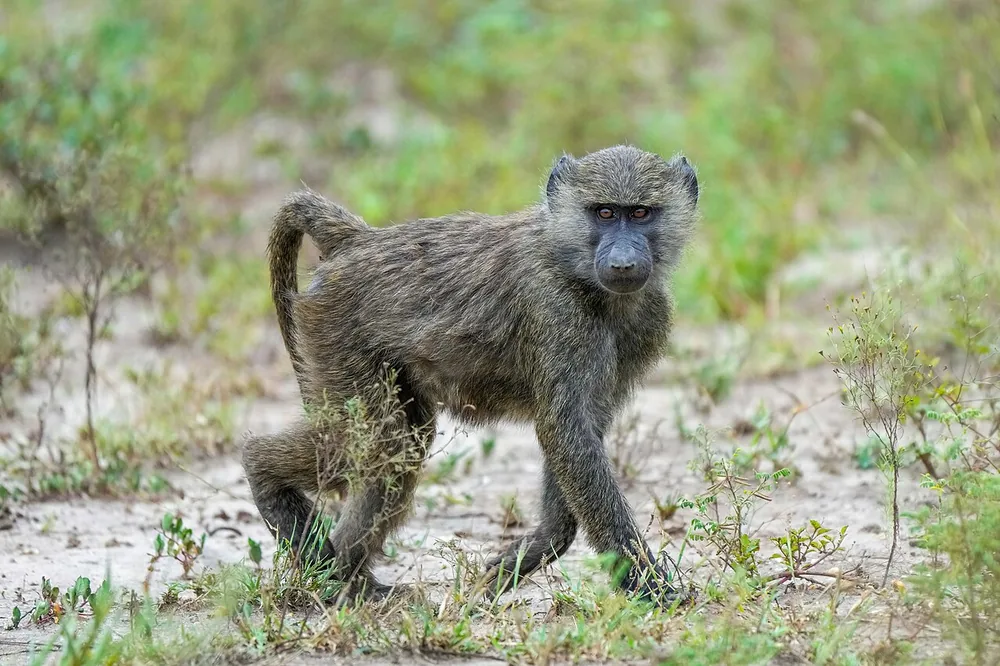
Scientific name: Papio anubis · Group: mammal (primate) · Lives in: African savanna and open woodland · Diet: omnivore · IUCN status: Least Concern
Olive baboons live in large troops. The baboon found in Arabia is a different species, the hamadryas baboon.
2. Babirusa (North Sulawesi babirusa)
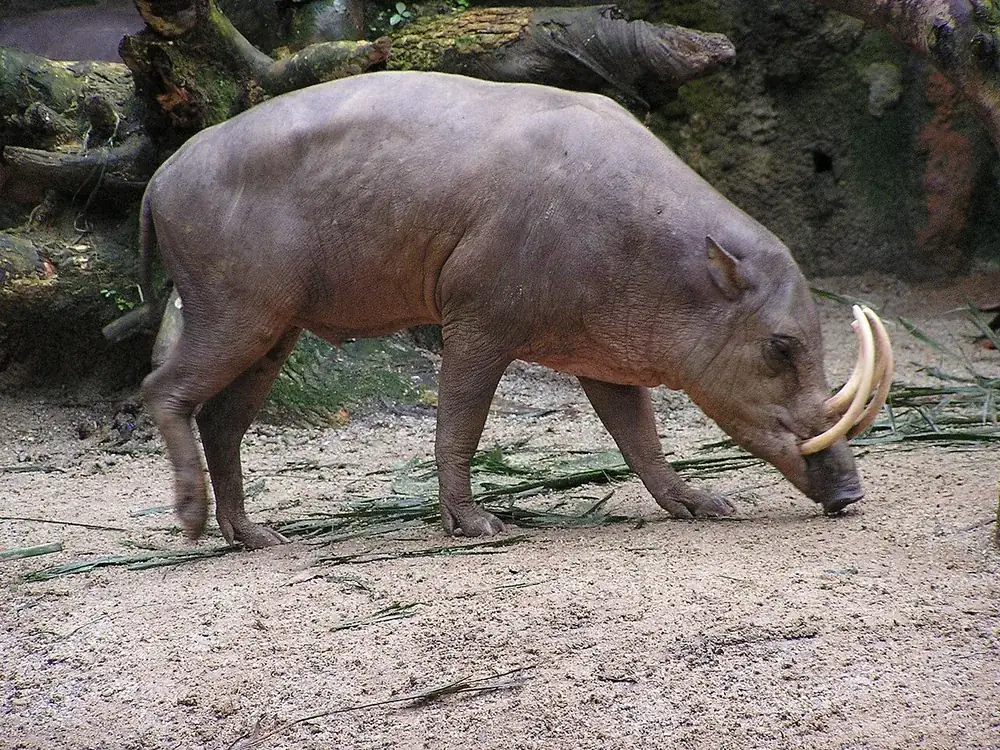
Scientific name: Babyrousa celebensis · Group: mammal · Lives in: Sulawesi and nearby islands, Indonesia · IUCN status: Vulnerable
The male’s upper canine teeth grow up through the top of the snout and curve back towards the forehead. The name means roughly “pig-deer” in Indonesian. Hunting and deforestation threaten it.
3. Bactrian camel
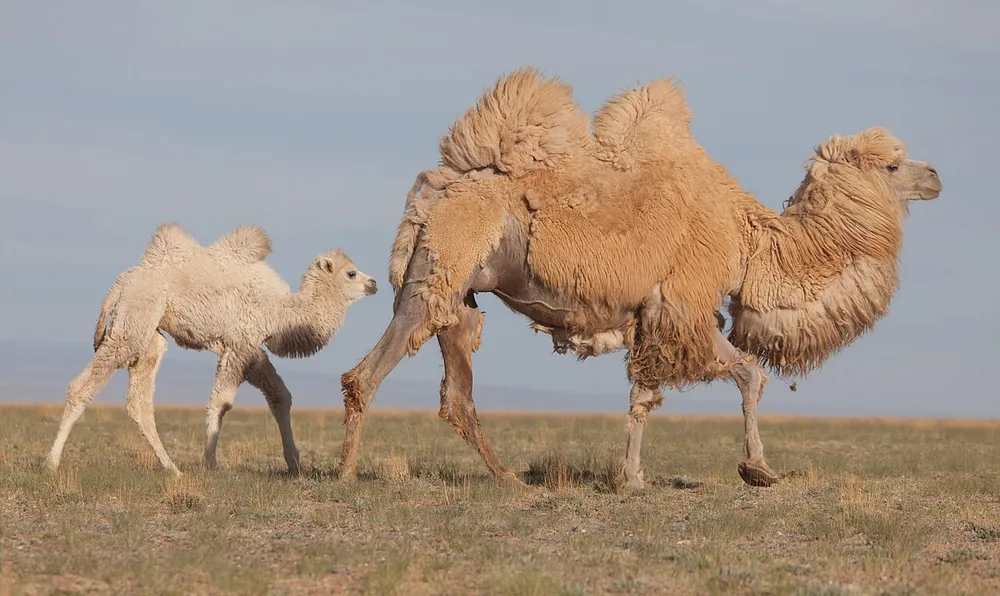
Scientific name: Camelus bactrianus · Group: mammal · Lives in: steppes of Central Asia · IUCN status: domesticated, so not assessed
The two humps store fat, not water. A thirsty camel can drink around 100 litres in one visit. It carried Silk Road caravans. The separate wild Bactrian camel (Camelus ferus) is Endangered.
4. Badger (European badger)
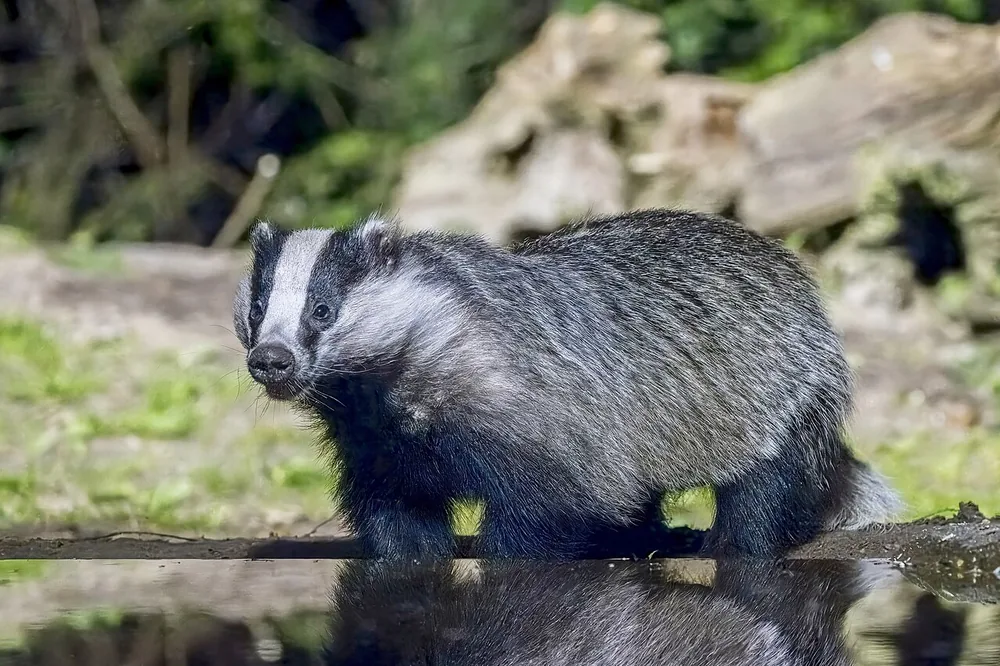
Scientific name: Meles meles · Group: mammal · Lives in: Europe and West Asia · Size: 7–13 kg in spring, 15–17 kg in autumn · Diet: omnivore; earthworms are a major food · IUCN status: Least Concern
Badgers are nocturnal and social. They live in setts whose tunnels can be 35–81 m long and used for decades. In the UK, it is simply called “the badger”.
5. Bat-eared fox
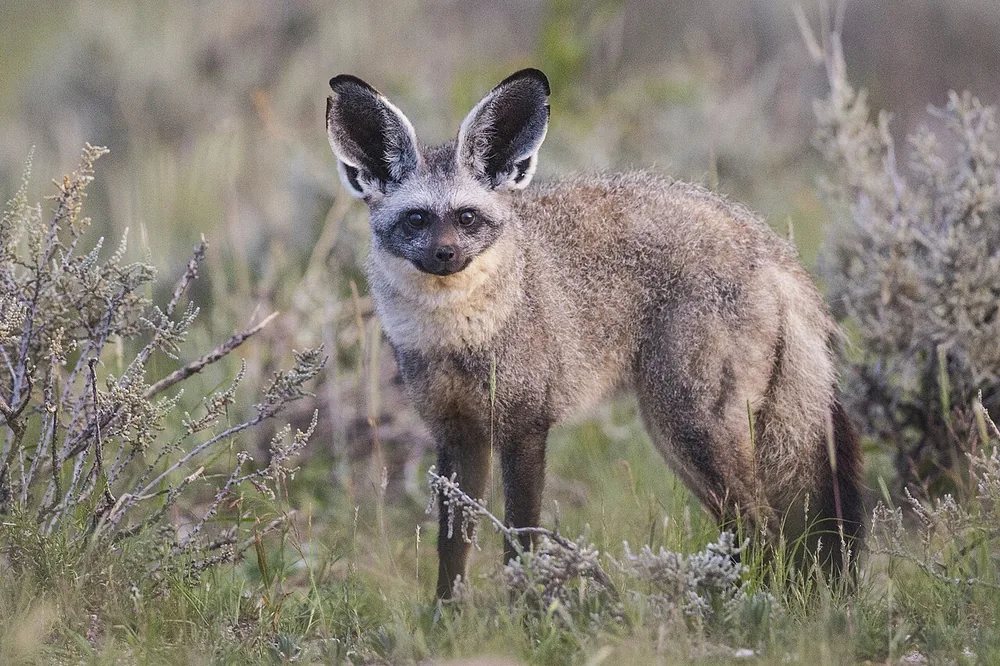
Scientific name: Otocyon megalotis · Group: mammal · Lives in: savannas of southern and East Africa · Diet: mainly insects, especially harvester termites · IUCN status: Least Concern
Its huge ears help it hear insects and lose heat. It gets much of its water from its food, and its termite diet is unusual among members of the dog family.
6. Beaver (Eurasian beaver)
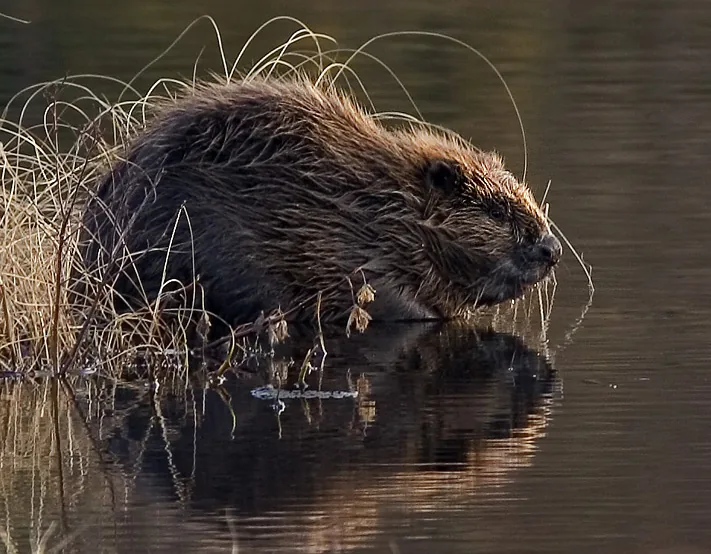
Scientific name: Castor fiber · Group: mammal (rodent) · Lives in: Europe and Asia · Size: typically about 11–30 kg · IUCN status: Least Concern
It is the second-heaviest rodent after the capybara. Beavers build dams and lodges, which makes them “ecosystem engineers”. Learn more in our guide to what an ecosystem is.
7. Beluga whale
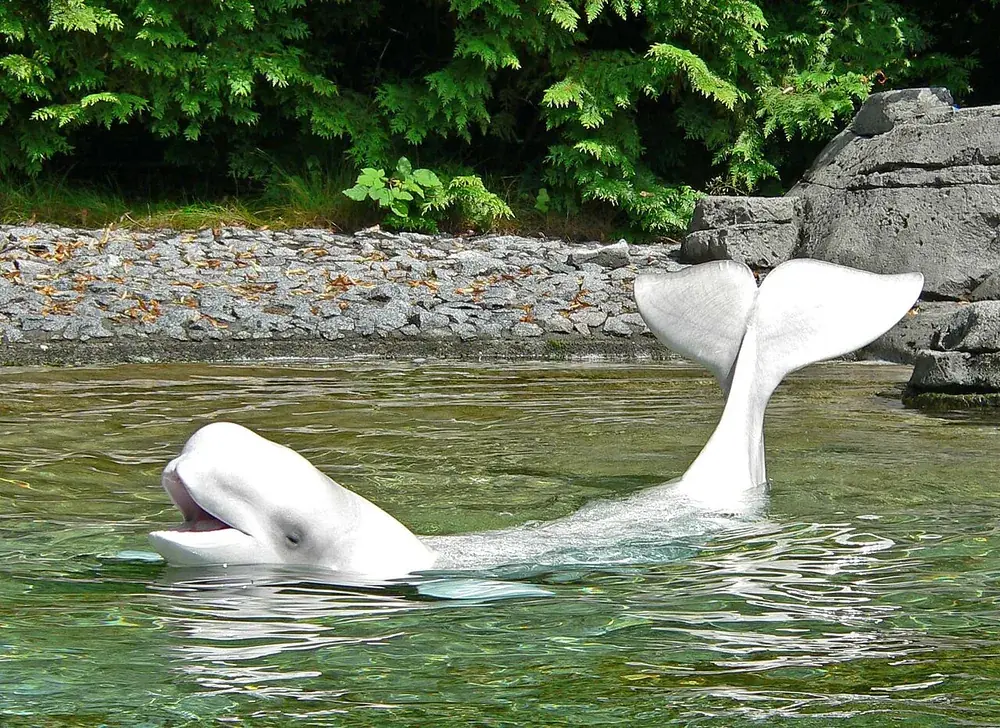
Scientific name: Delphinapterus leucas · Group: mammal (whale) · Lives in: Arctic and sub-Arctic seas · Size: males up to 5.5 m and 1,600 kg · IUCN status: Least Concern
Adults are all white and have no dorsal fin, which helps under sea ice. Their high-pitched calls earned the nickname “sea canary”. Belugas can dive to 700 m, and the wild population is about 200,000.
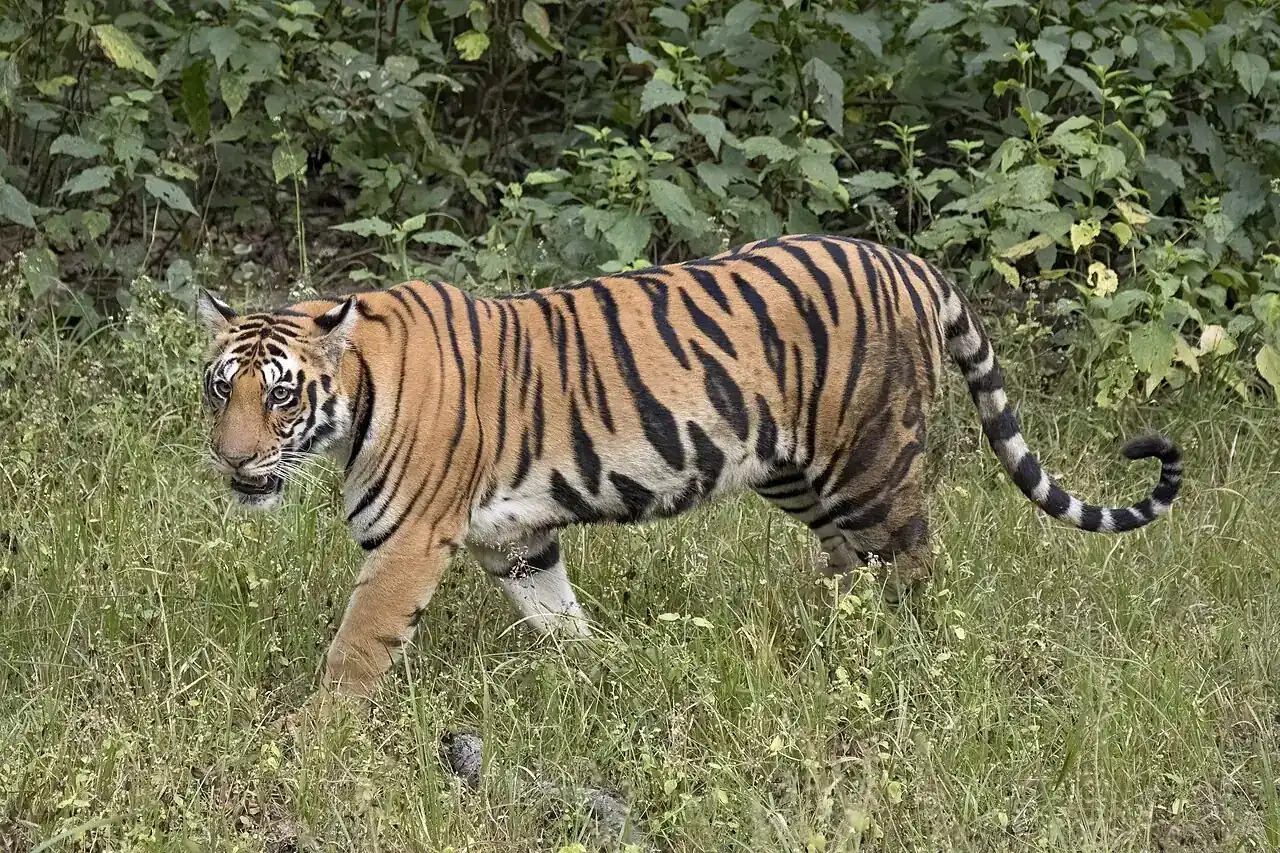
8. Bengal tiger
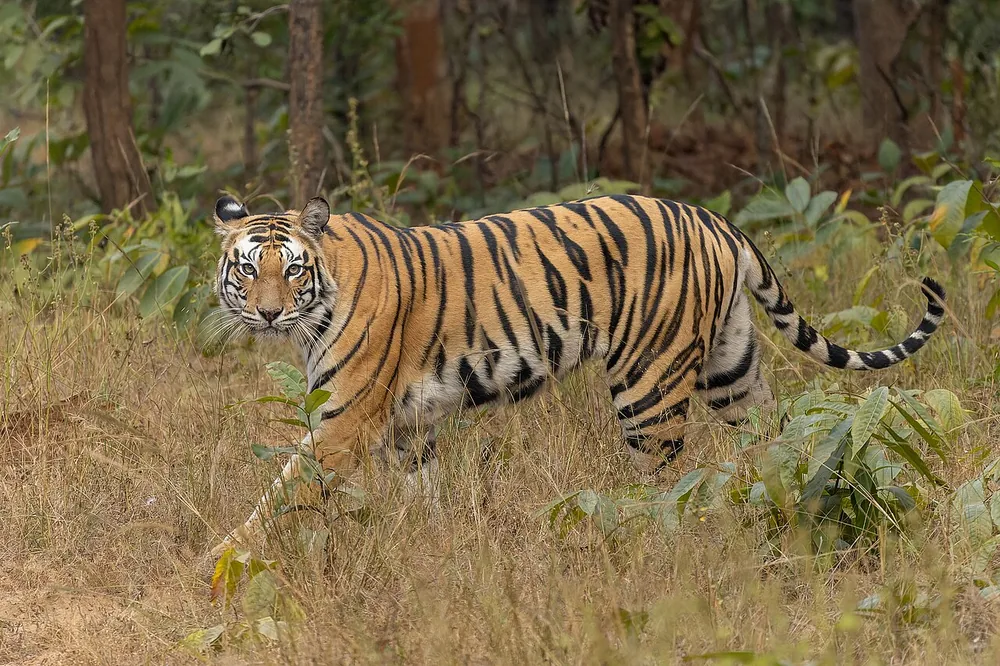
Scientific name: Panthera tigris tigris · Group: mammal (big cat) · Lives in: India, Nepal, Bangladesh and Bhutan · Diet: carnivore; deer and wild boar · IUCN status: Endangered (the tiger species)
It is the national animal of India and Bangladesh. India’s 2022 survey estimated 3,682 tigers (range 3,167–3,925), about 75 % of the world’s wild tigers.
9. Bilby (greater bilby)
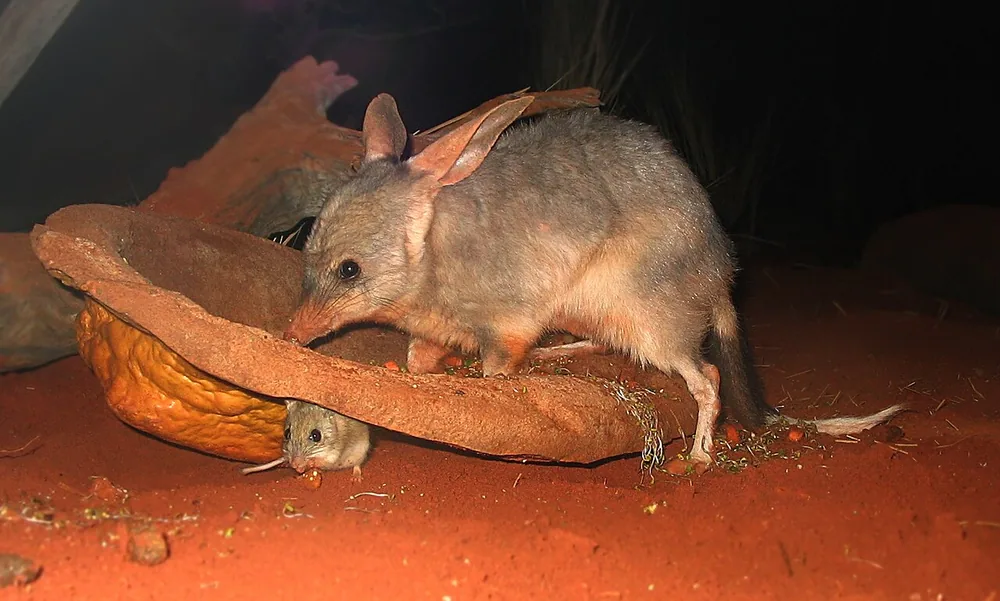
Scientific name: Macrotis lagotis · Group: mammal (marsupial) · Lives in: parts of north-western and central Australia · Diet: insects, fruit and fungi · IUCN status: Vulnerable
This nocturnal burrower is threatened by habitat loss and introduced predators such as foxes. Its relative, the lesser bilby, has been extinct since the 1950s.
10. Binturong
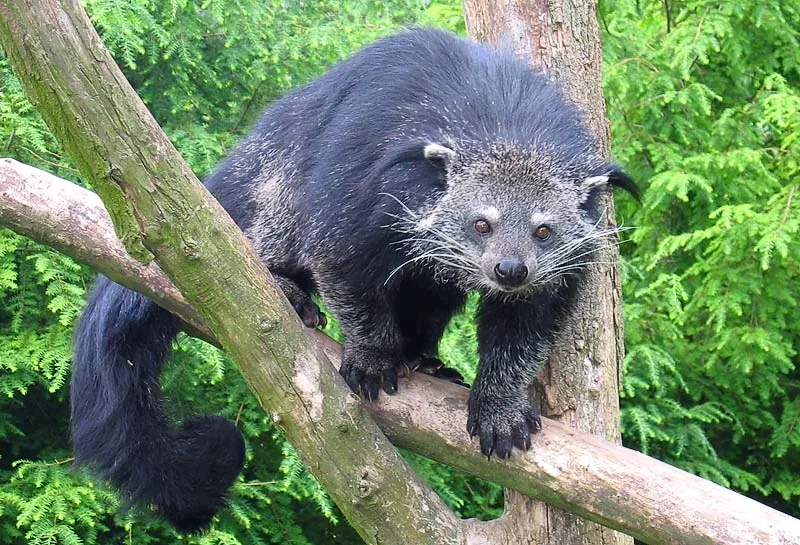
Scientific name: Arctictis binturong · Group: mammal · Lives in: forests of South and South-East Asia · IUCN status: Vulnerable
Also called the “bearcat”, it is neither a bear nor a cat. A 2016 Duke University study found 2-acetyl-1-pyrroline, the compound that gives popcorn its smell, in its urine, so it smells like buttered popcorn.
11. Bison (American bison)
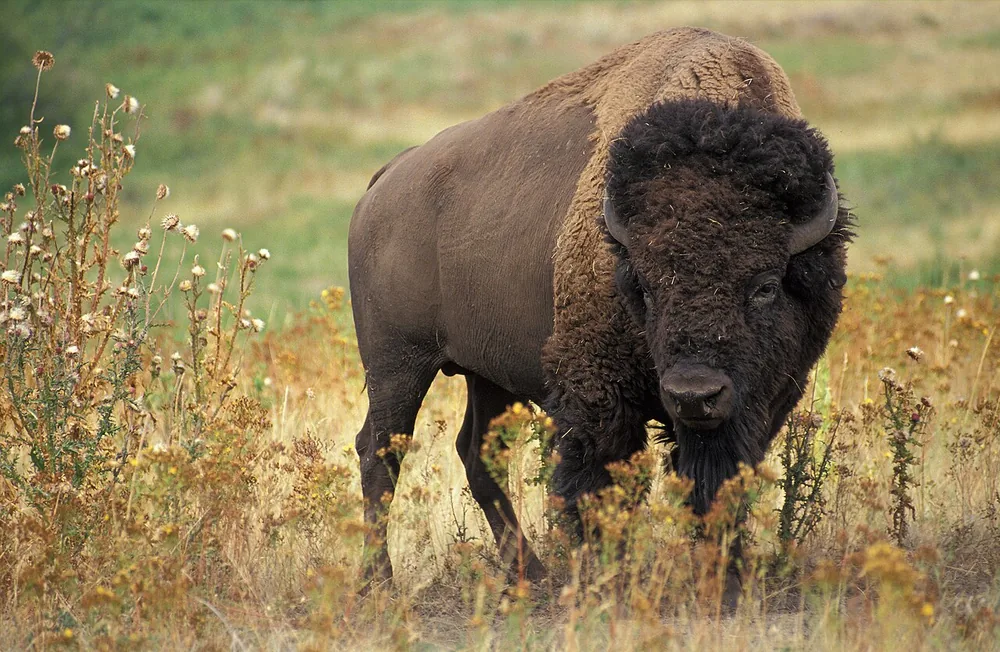
Scientific name: Bison bison · Group: mammal · Lives in: North America · Size: wild animals up to about 1,270 kg · Diet: grass · IUCN status: Near Threatened
It is the heaviest land animal in North America. Numbers fell from tens of millions to a few hundred in the late 1800s. About 31,000 wild bison were counted in 2019, and the bison became the US national mammal in 2016.
12. Black bear (American black bear)
Scientific name: Ursus americanus · Group: mammal · Lives in: North America · Diet: omnivore · IUCN status: Least Concern
It is North America’s smallest and most widespread bear. It is not always black, because its fur can be brown, cinnamon or blond. Its population is estimated at twice that of all other bear species combined. You can compare it with the brown bear in the photo pair below.
13. Black rhinoceros
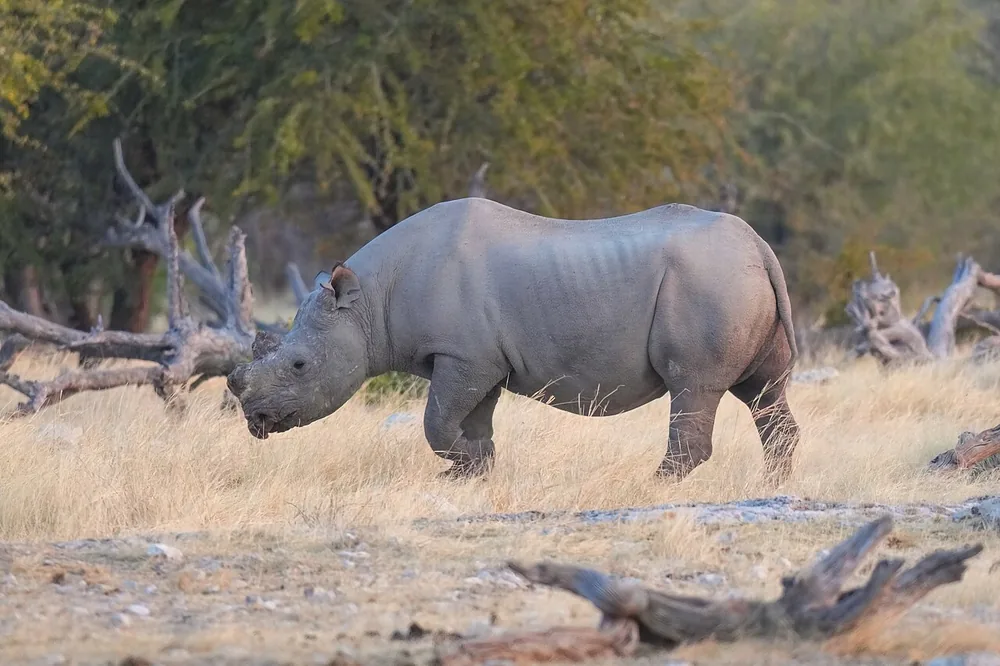
Scientific name: Diceros bicornis · Group: mammal · Lives in: East and southern Africa · Diet: leaves and twigs · IUCN status: Critically Endangered
A hooked upper lip lets it browse leaves, unlike the square-lipped white rhino. There were 6,788 black rhinos at the end of 2024, up more than 5 % in 2024. The western black rhino was declared extinct in 2011.
14. Blue whale
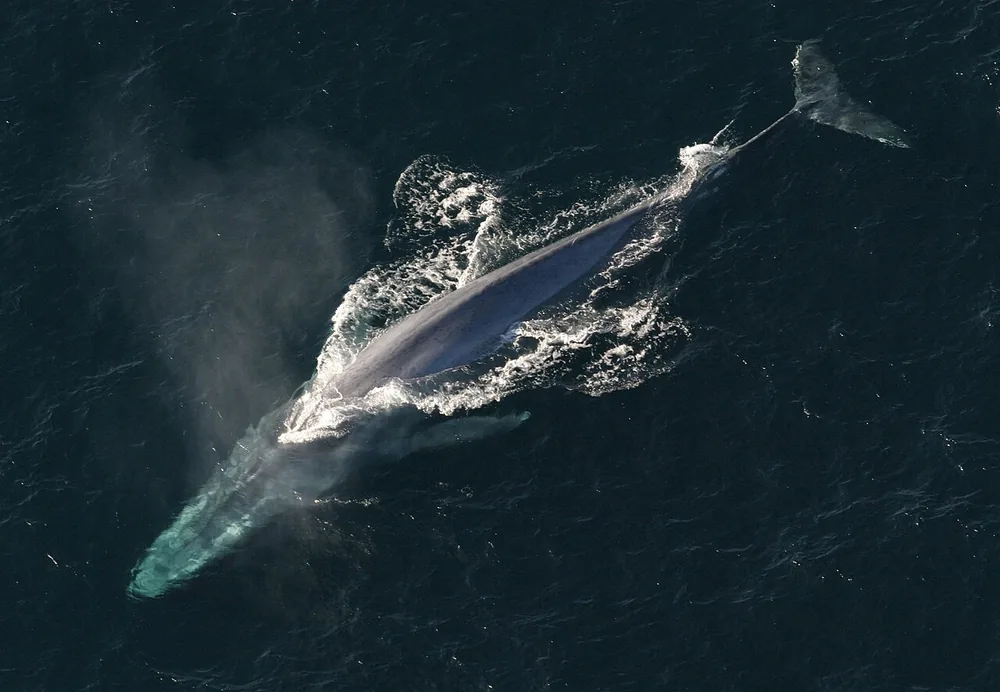
Scientific name: Balaenoptera musculus · Group: mammal (whale) · Lives in: all oceans · Size: up to about 30 m and 150 tonnes · Diet: almost only krill · IUCN status: Endangered
It is the largest animal known to have lived. In the North Pacific, a blue whale can eat about 16 tonnes of krill a day, according to a 2021 study. See how it compares in our list of the largest animals in the world.
15. Bobcat
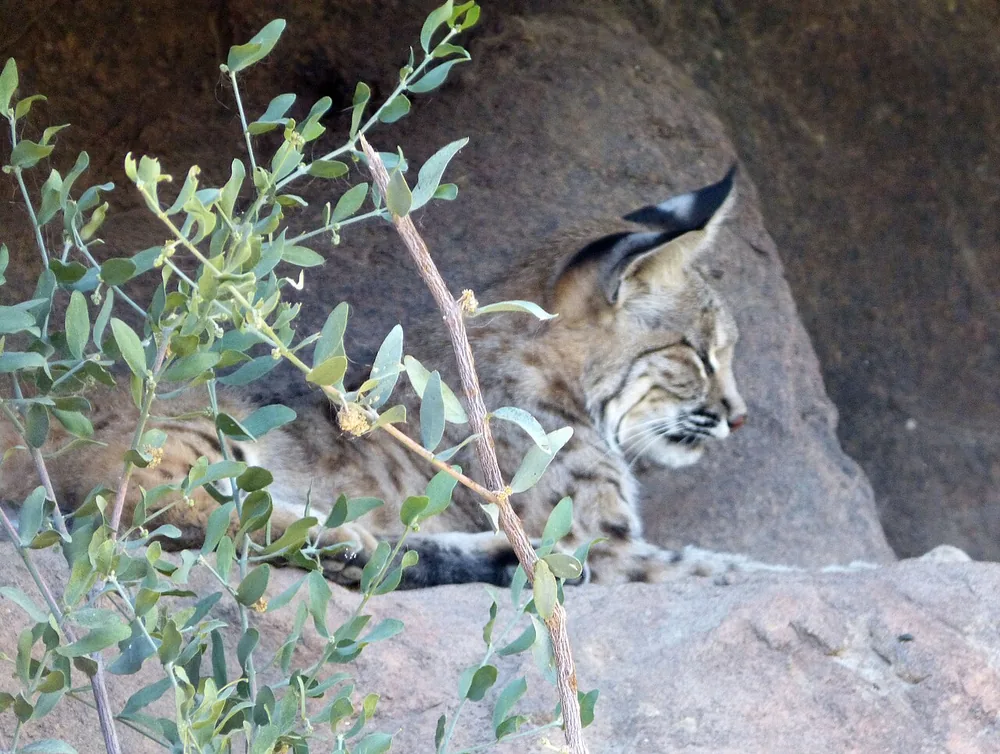
Scientific name: Lynx rufus · Group: mammal (wild cat) · Lives in: southern Canada to Mexico · Size: up to 125 cm long including the tail · Diet: prefers rabbits and hares · IUCN status: Least Concern
Its short, “bobbed” tail with a black tip gives the cat its name.
16. Bongo
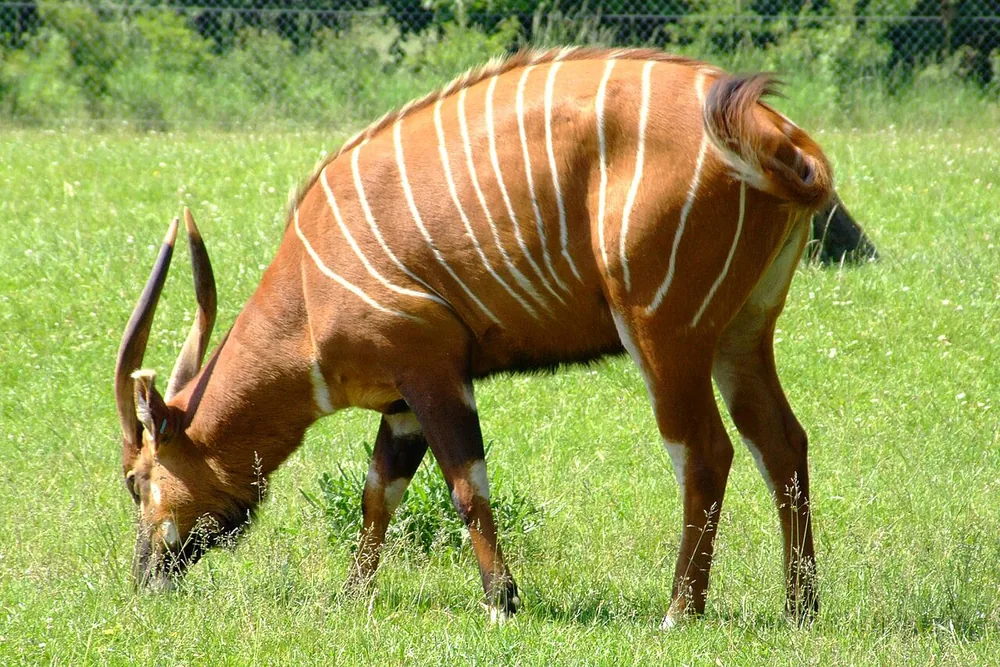
Scientific name: Tragelaphus eurycerus · Group: mammal (antelope) · Lives in: dense forests of sub-Saharan Africa · Diet: leaves (a browser) · IUCN status: Near Threatened
The bongo has a reddish-brown coat with white-yellow stripes and spiral horns. It is mostly active at night and is the third-largest antelope. In 2013, only around 100 Kenyan mountain bongos were thought to remain in the wild.
17. Bonobo
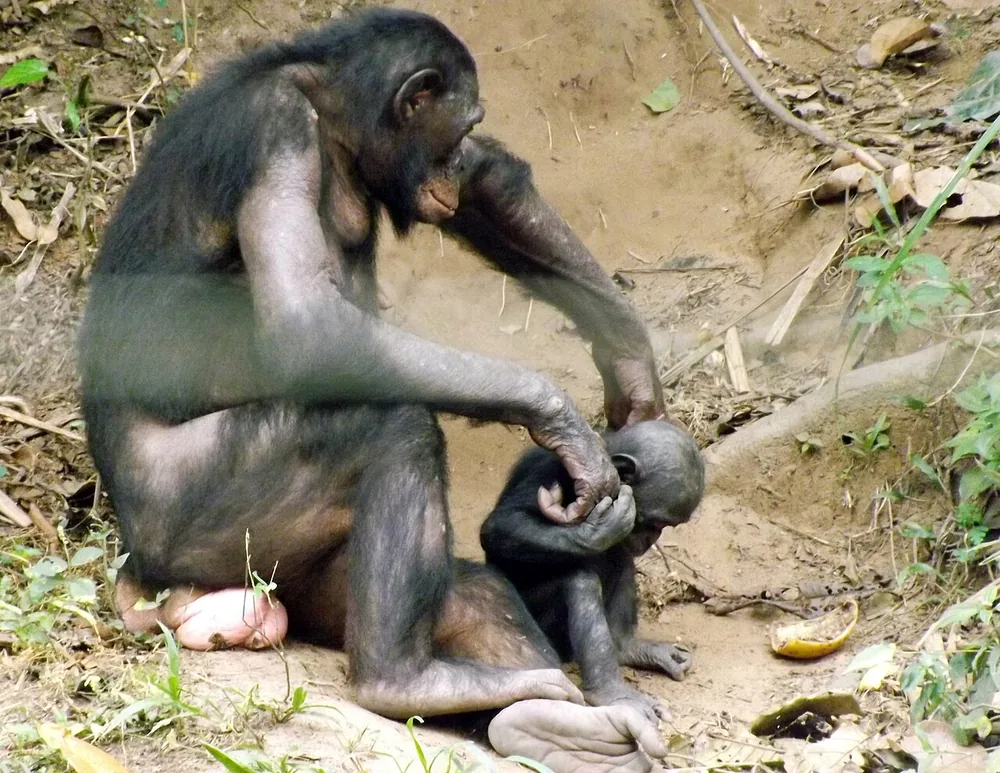
Scientific name: Pan paniscus · Group: mammal (great ape) · Lives in: the Congo Basin, south of the Congo River, in the Democratic Republic of the Congo · Diet: mainly fruit · IUCN status: Endangered
The bonobo shares about 98.7 % of its DNA with humans, the same as the chimpanzee. The population is estimated at 29,500–50,000.
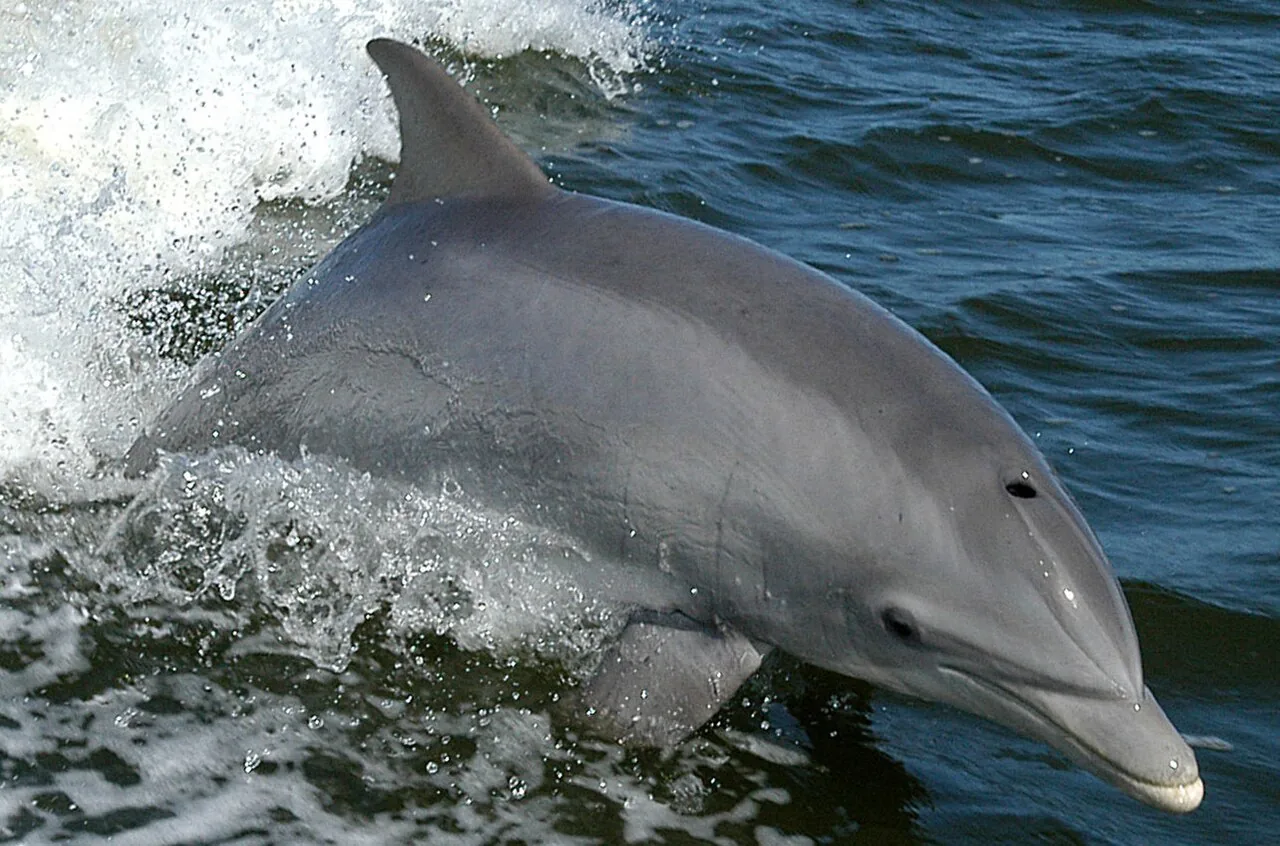
18. Bottlenose dolphin (common bottlenose dolphin)
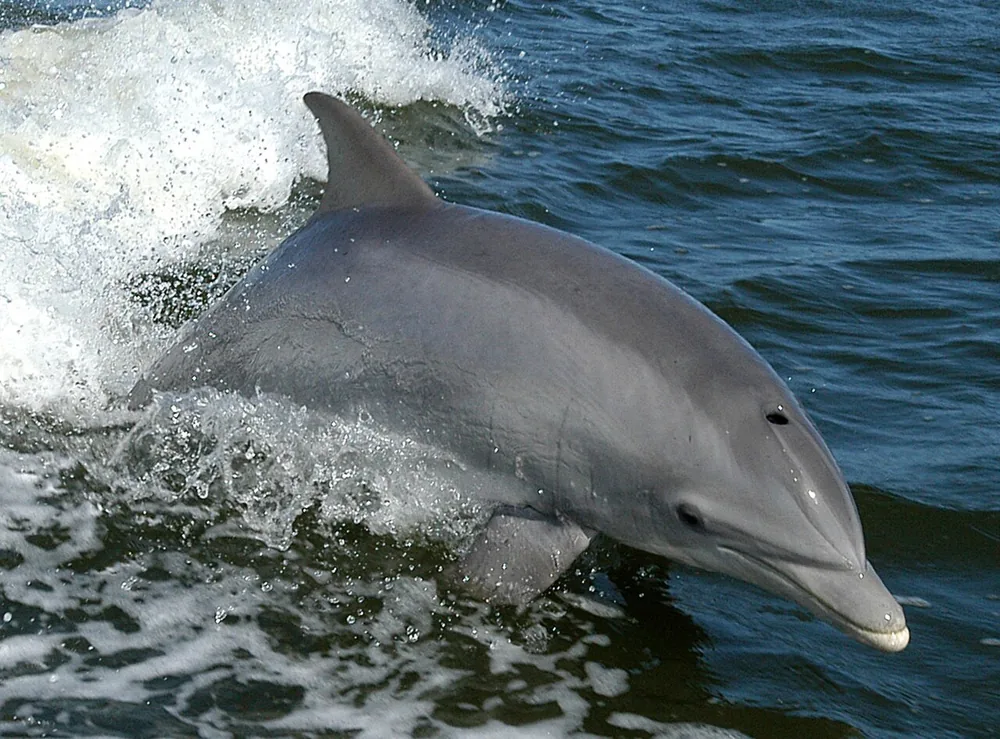
Scientific name: Tursiops truncatus · Group: mammal (dolphin) · Lives in: temperate and tropical seas worldwide · IUCN status: Least Concern
Each dolphin has its own “signature whistle”. A 2013 study of wild dolphins off Scotland found that they respond to a recording of their own whistle, rather like answering to a name.
19. Brazilian free-tailed bat
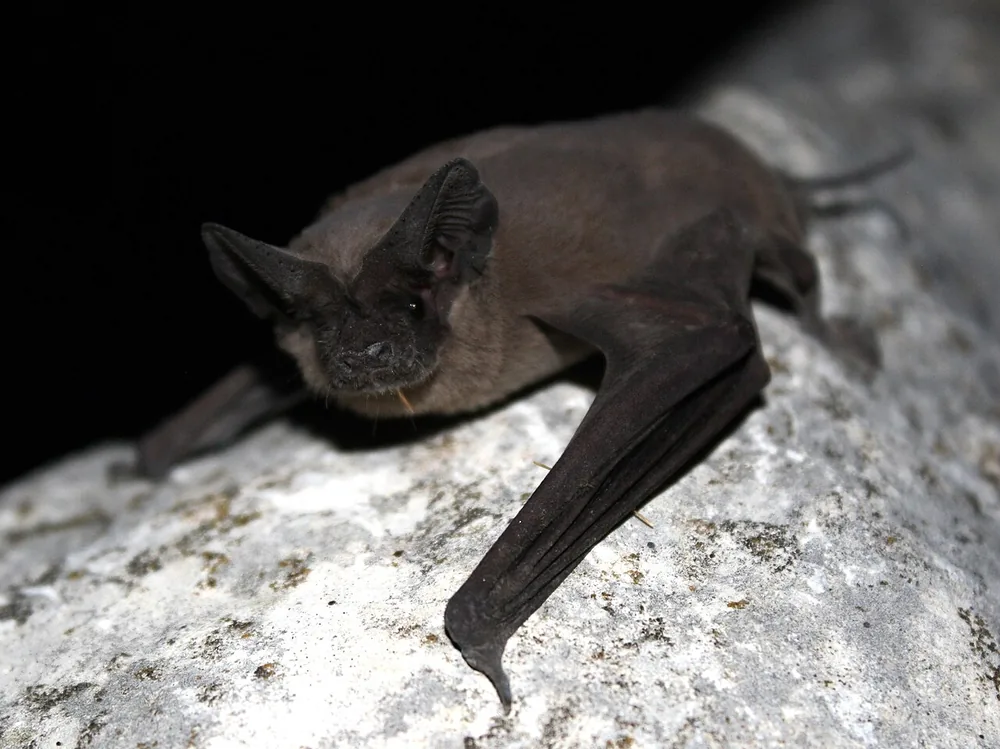
Scientific name: Tadarida brasiliensis · Group: mammal (bat) · Lives in: the Americas · Diet: insects · IUCN status: Least Concern
A 2016 study tracked this bat in level flight at up to 160 km/h, the fastest level flight speed recorded for any animal. Up to 1.5 million roost under one bridge in Austin, Texas. See more in our guide to the fastest animals on the planet.
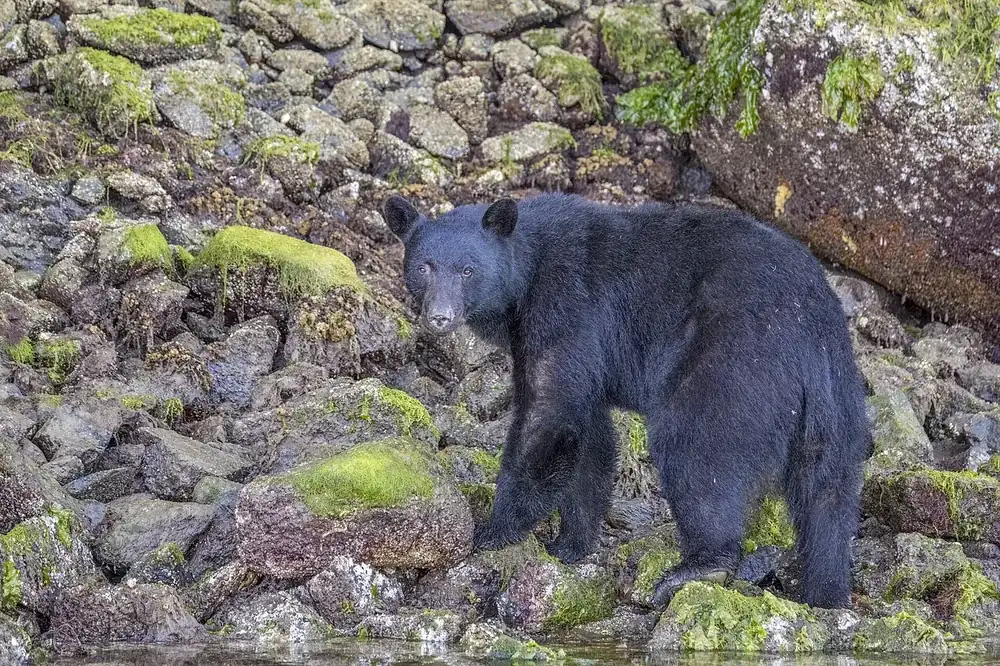
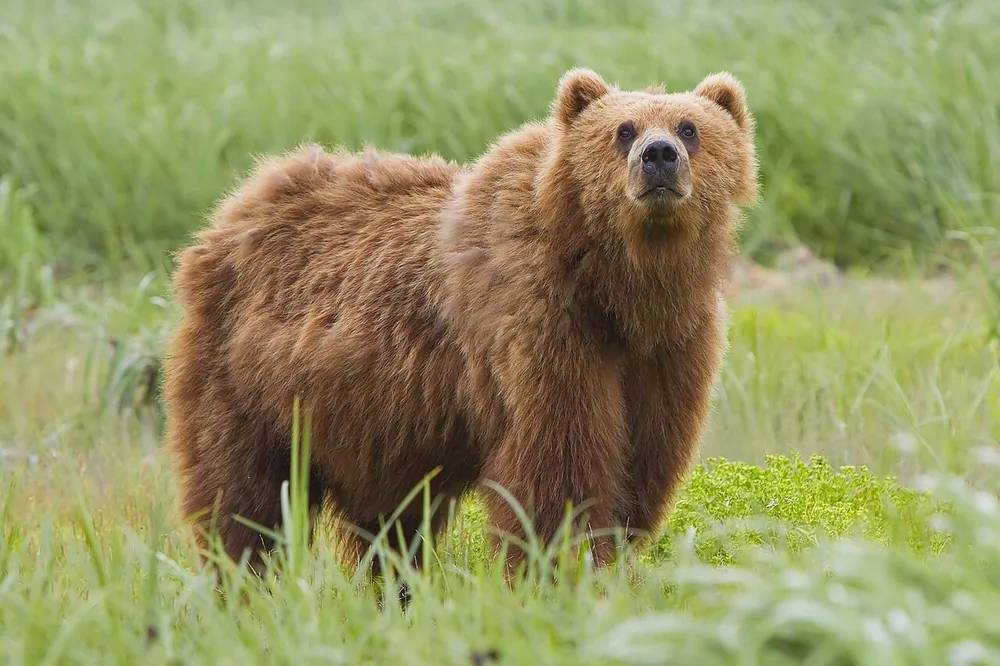
20. Brown bear
Scientific name: Ursus arctos · Group: mammal · Lives in: Eurasia and North America · Diet: about 90 % plants; salmon for coastal Alaskan bears · IUCN status: Least Concern
Among land carnivores, only the polar bear rivals its size. A large hump of shoulder muscle is a clue to its identity. Brown bears spend part of winter in dens, so read why animals hibernate. The photo below shows a Kodiak bear, a brown-bear subspecies.
21. Buffalo (African buffalo)
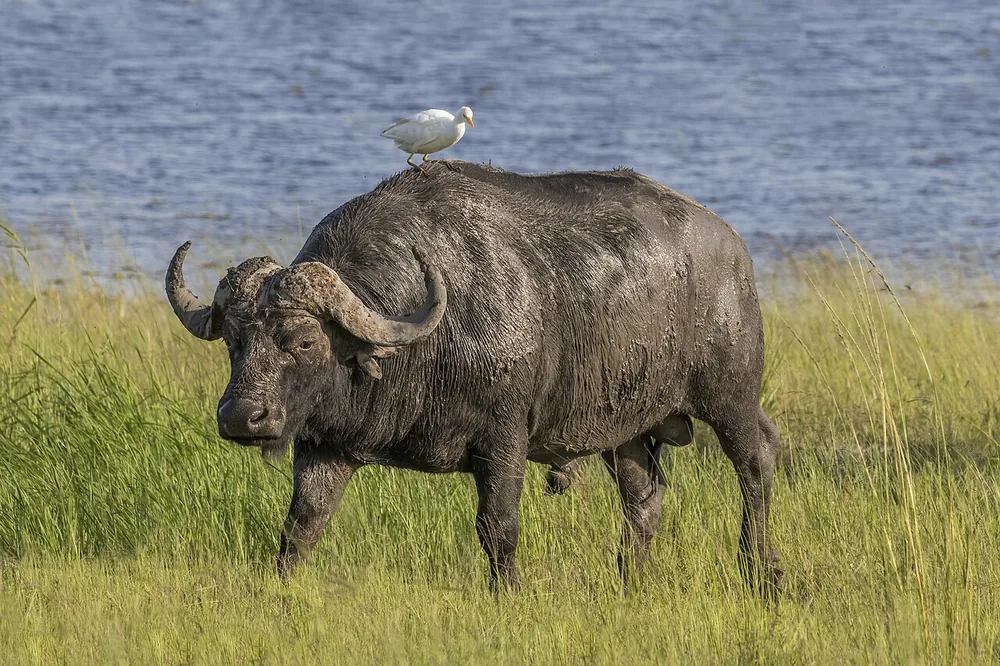
Scientific name: Syncerus caffer · Group: mammal · Lives in: sub-Saharan Africa · Diet: grass (a grazer) · IUCN status: Near Threatened
Herds can exceed 1,000 animals, and there are about 398,000–401,000 mature adults. It is one of Africa’s “Big Five” and is known to seriously injure or kill people.
22. Bumblebee bat (Kitti’s hog-nosed bat)
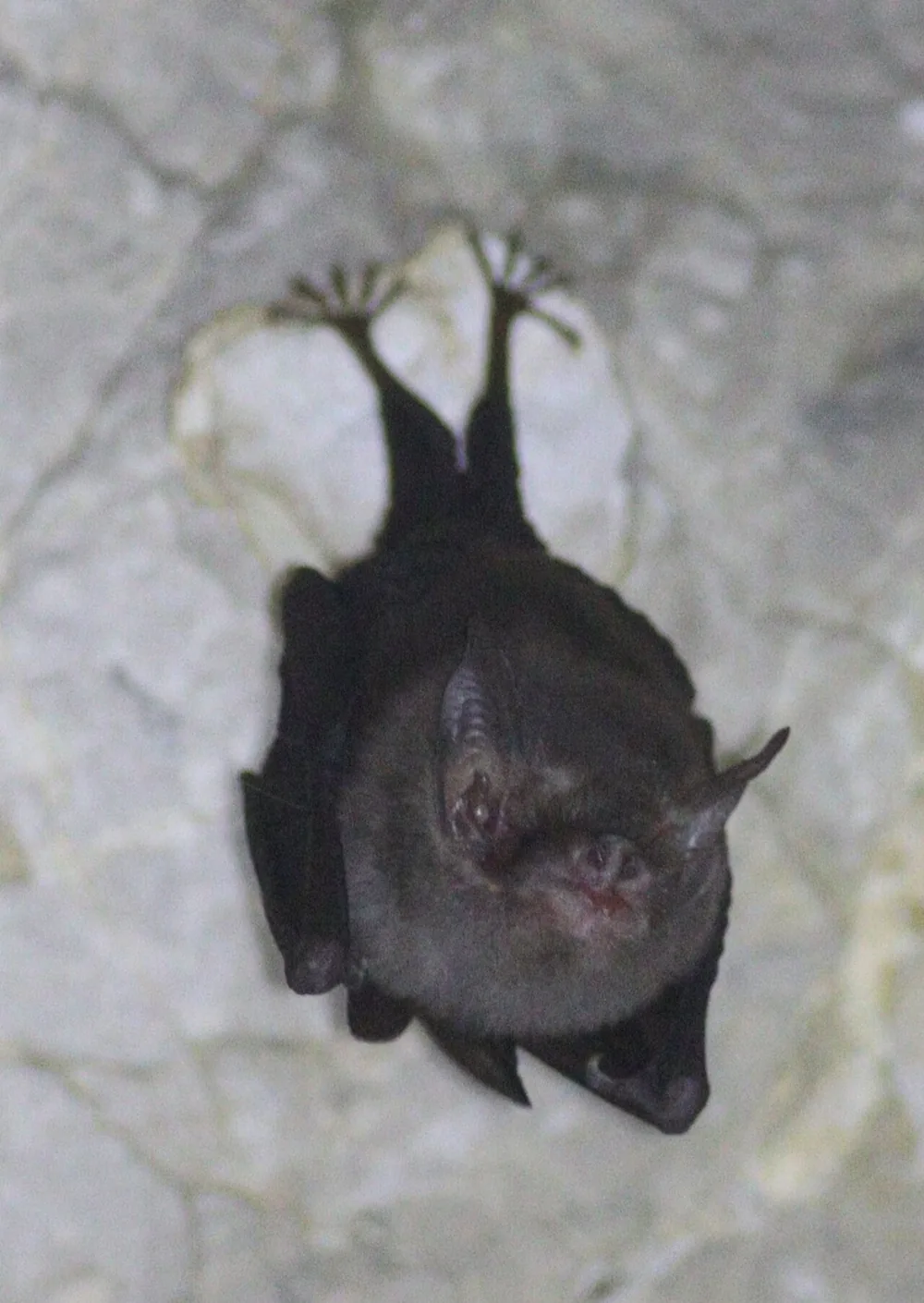
Scientific name: Craseonycteris thonglongyai · Group: mammal (bat) · Lives in: limestone caves in western Thailand and south-east Myanmar · Size: 29–33 mm long; 1.7–2 g · Diet: insects · IUCN status: Near Threatened
This is the smallest bat, and arguably the smallest mammal by body length, although the Etruscan shrew is lighter. It was discovered in 1974 by Kitti Thonglongya.
23. Bush baby (Senegal bushbaby)
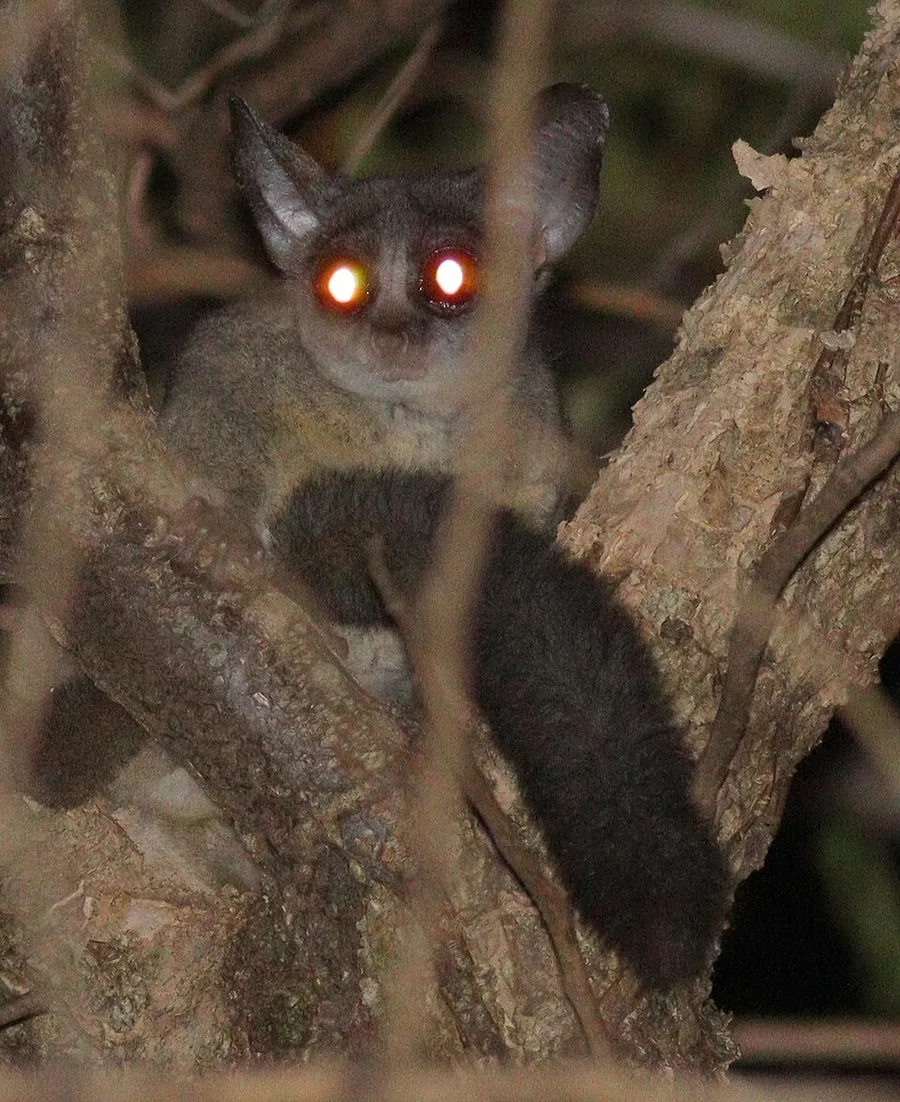
Scientific name: Galago senegalensis · Group: mammal (primate) · Lives in: dry woodland and savanna south of the Sahara · Size: about 95–300 g · Diet: omnivore: insects, gum and fruit · IUCN status: Least Concern
Huge eyes give it excellent night vision, and strong hind legs make it an agile leaper. The name may come from its cries or its appearance.
More mammals that start with B
- Banded mongoose (Mungos mungo): lives in colonies from the Sahel to southern Africa, eats mainly beetles and millipedes, and dens in termite mounds. Least Concern.
- Black-footed ferret (Mustela nigripes): a North American prairie hunter that gets up to 90 % of its diet from prairie dogs. It was declared extinct in 1979 and rediscovered in Wyoming in 1981. Endangered.
- Bowhead whale (Balaena mysticetus): an Arctic whale that may live more than 200 years, with one estimated at 211 years. It breaks ice with its massive skull. Least Concern.
Birds that start with B
Birds are warm-blooded animals with feathers. Among the birds that start with B are the smallest bird in the world, a record-breaking long-distance flier and one of the most popular pets on Earth.
24. Bald eagle
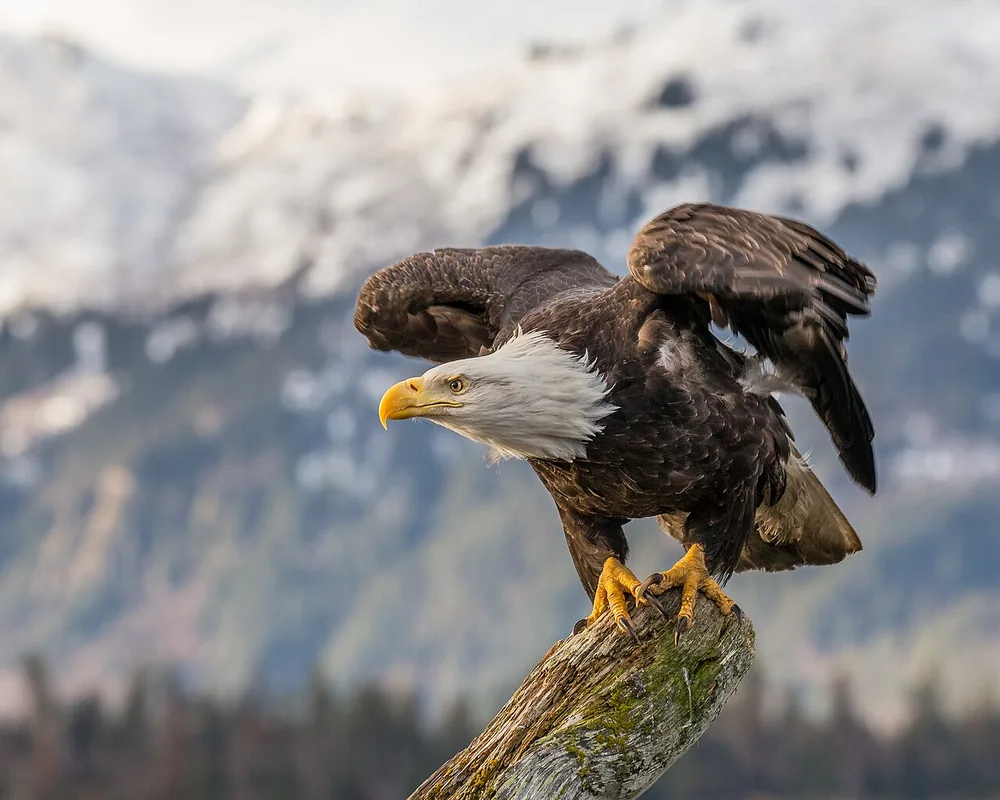
Scientific name: Haliaeetus leucocephalus · Group: bird of prey · Lives in: North America · Diet: mainly fish · IUCN status: Least Concern
It builds the largest tree nests recorded, up to 4 m deep and 2.5 m wide, weighing about a tonne. Banning DDT helped it recover, and it left the US endangered list in 2007. A law signed on 24 December 2024 made it the official US national bird.
25. Barn owl (western barn owl)
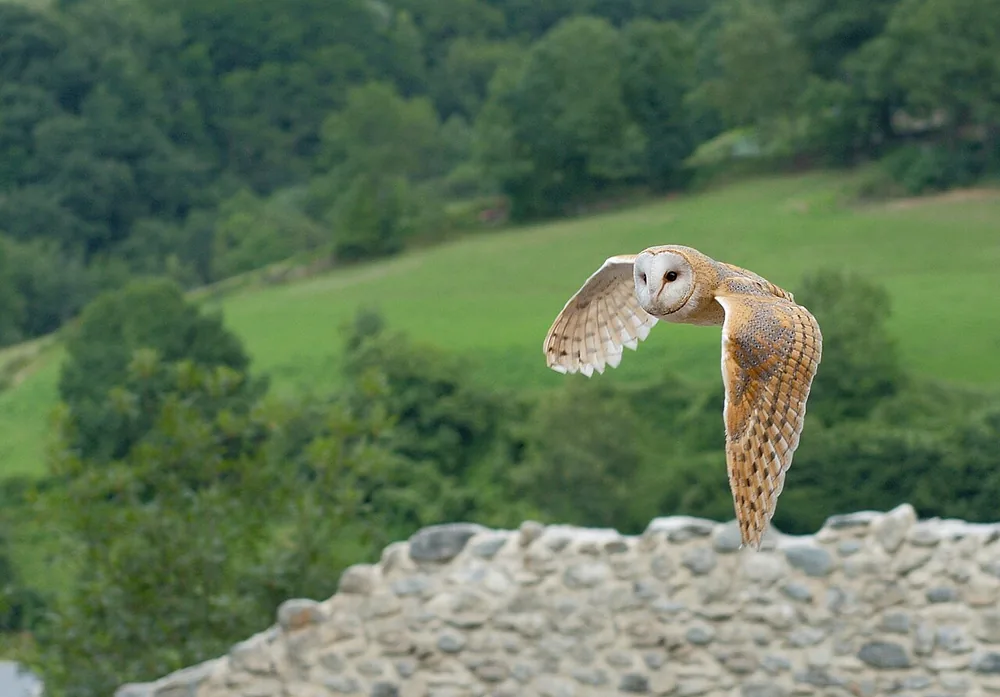
Scientific name: Tyto alba · Group: bird of prey (owl) · Lives in: Europe, Africa and South-West Asia · Diet: small mammals · IUCN status: Least Concern
It has a heart-shaped white face and screeches rather than hoots. Laboratory experiments showed that barn owls can catch prey in total darkness using hearing alone, helped by asymmetrical ear openings. In Britain it also hunts by day. For owls elsewhere, see the largest owl in North America.
26. Barn swallow
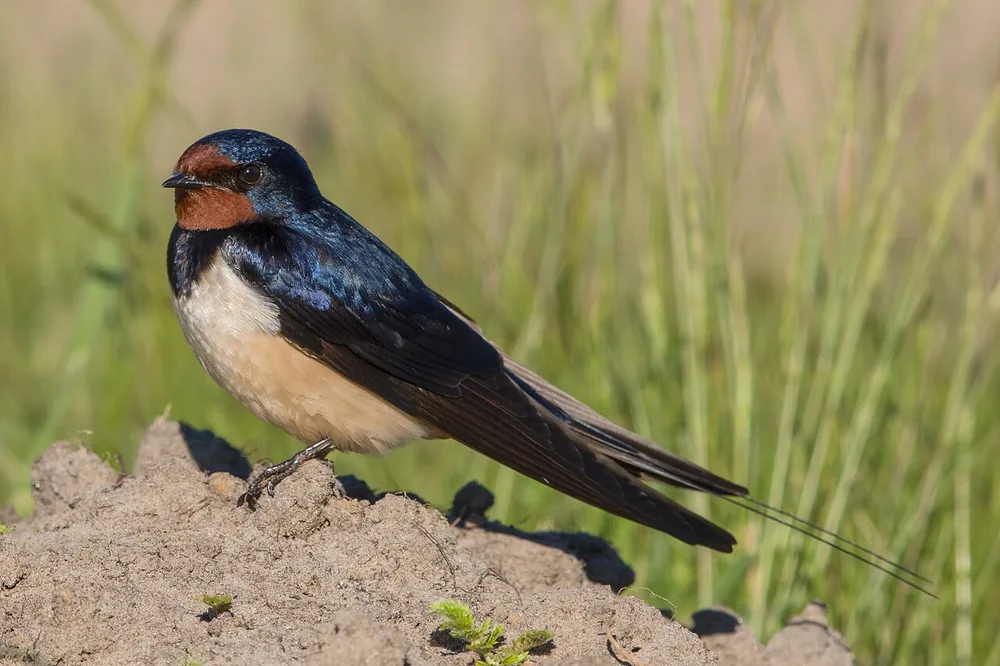
Scientific name: Hirundo rustica · Group: bird · Lives in: every continent except Antarctica, as the most widespread swallow in the world · Diet: insects caught in flight · IUCN status: Least Concern
It builds mud-cup nests in barns and has a long, forked tail. It is the national bird of Austria and Estonia. UK birds spend the winter in southern Africa.
27. Bar-tailed godwit
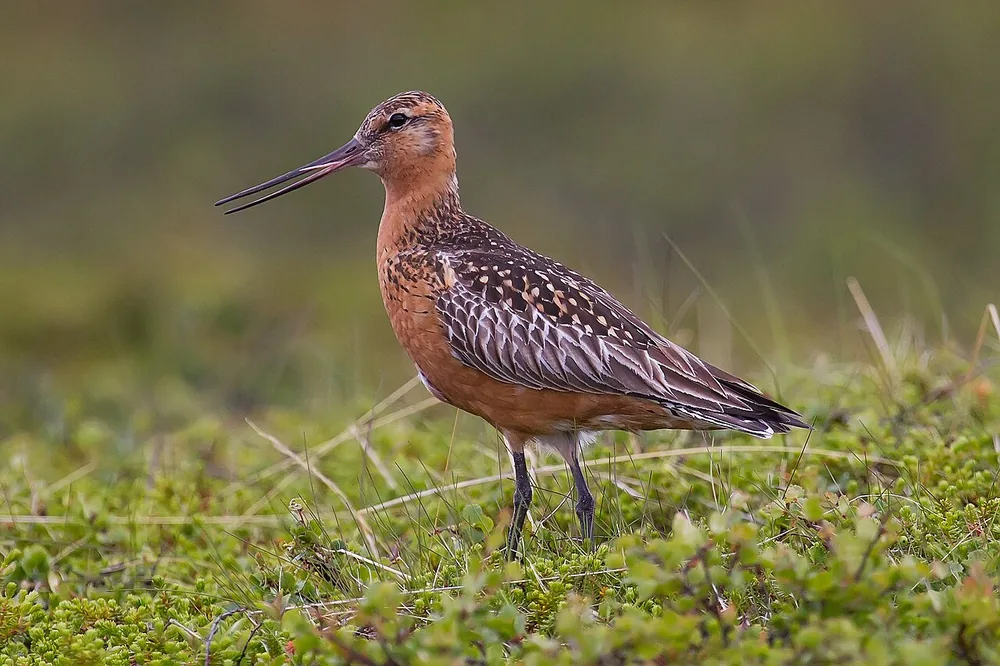
Scientific name: Limosa lapponica · Group: bird (wader) · Lives in: breeds in the Arctic and winters in Australia and New Zealand · IUCN status: Near Threatened
A tagged juvenile flew at least 13,560 km non-stop from Alaska to Tasmania in about 11 days in October 2022. This is the longest non-stop bird flight recorded by tracking.
28. Bearded vulture (lammergeier)
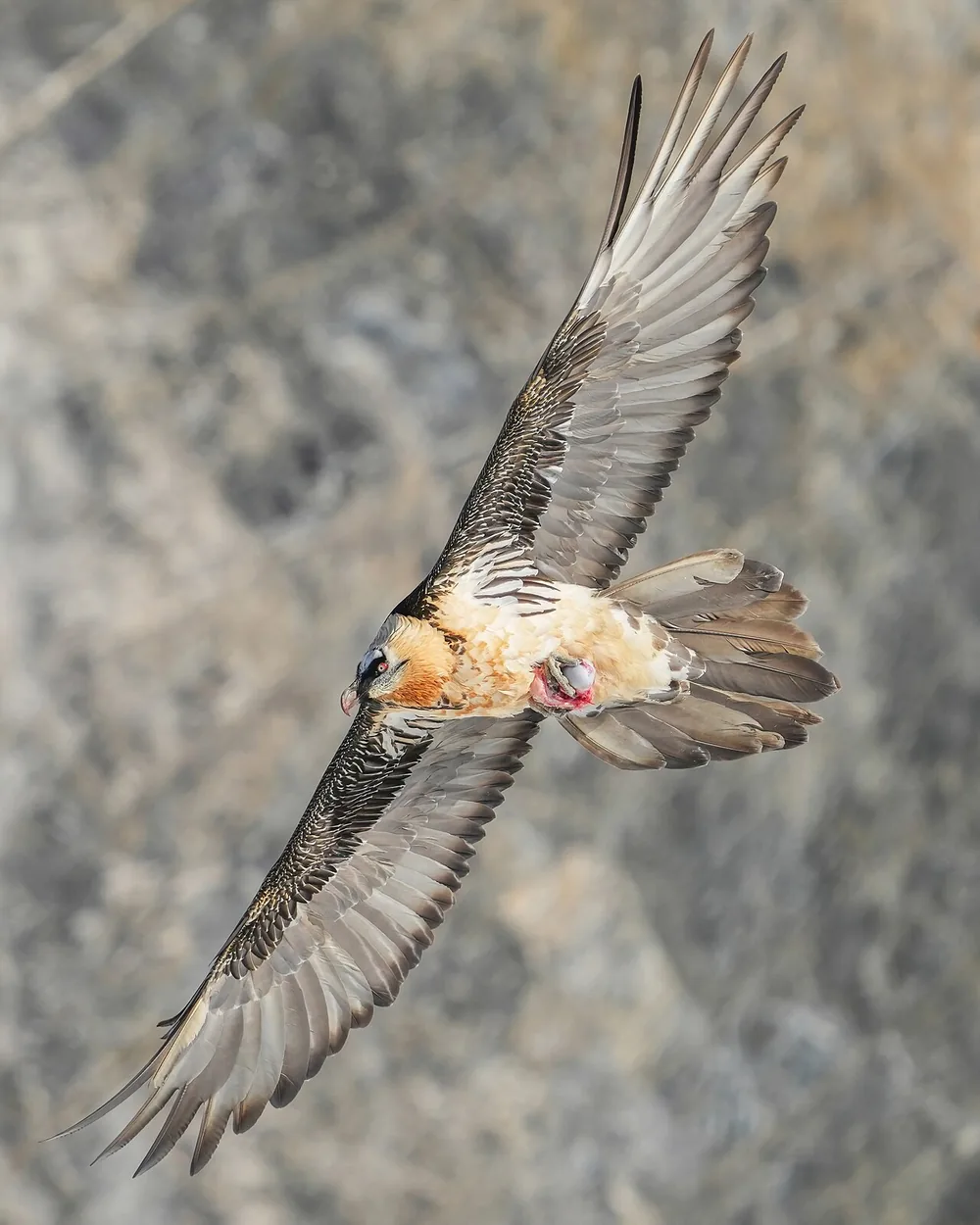
Scientific name: Gypaetus barbatus · Group: bird of prey · Lives in: high mountains of southern Europe, Africa and Asia · Diet: bone makes up 70–90 % · IUCN status: Near Threatened
It is the only vertebrate known to live mainly on bone. It drops large bones from a height to smash them on rocks.
29. Bee hummingbird
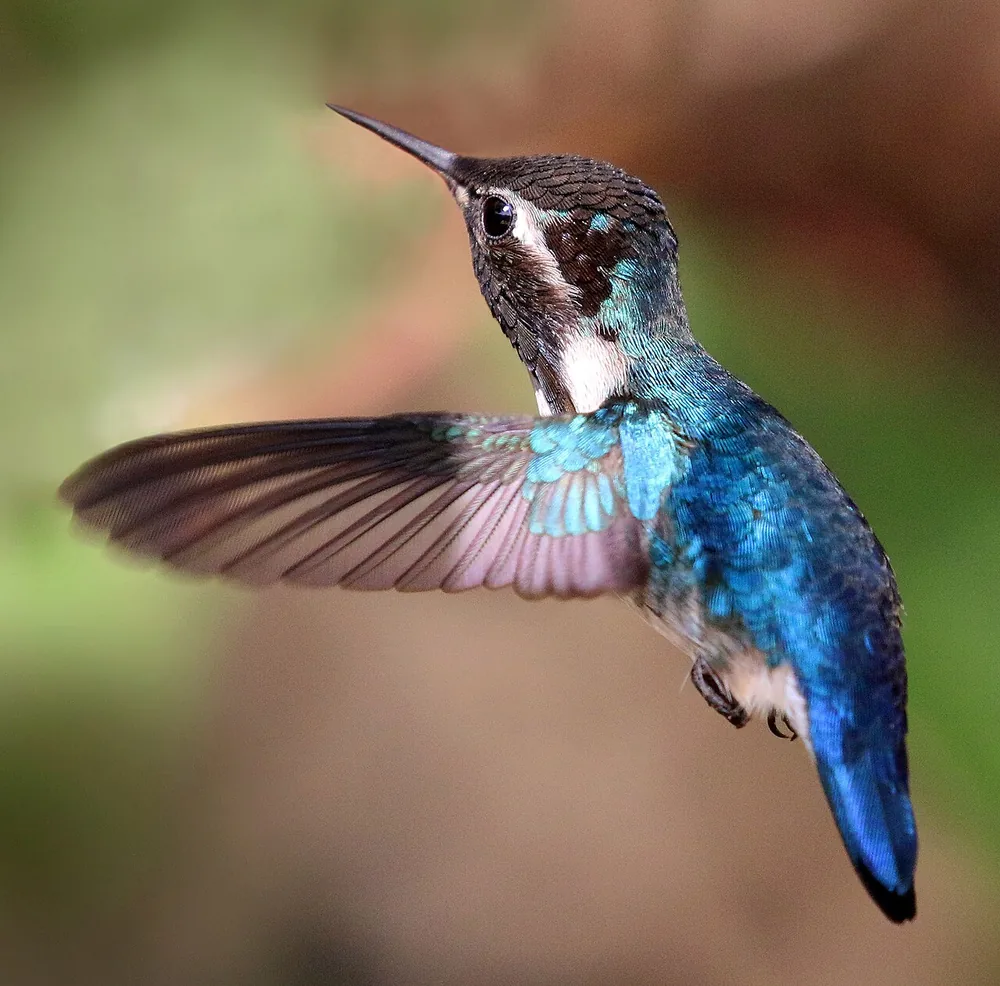
Scientific name: Mellisuga helenae · Group: bird · Lives in: Cuba only · Size: males about 57 mm long and 1.6 g · Diet: nectar and insects · IUCN status: Near Threatened
It is the smallest bird in the world.
30. Blue jay
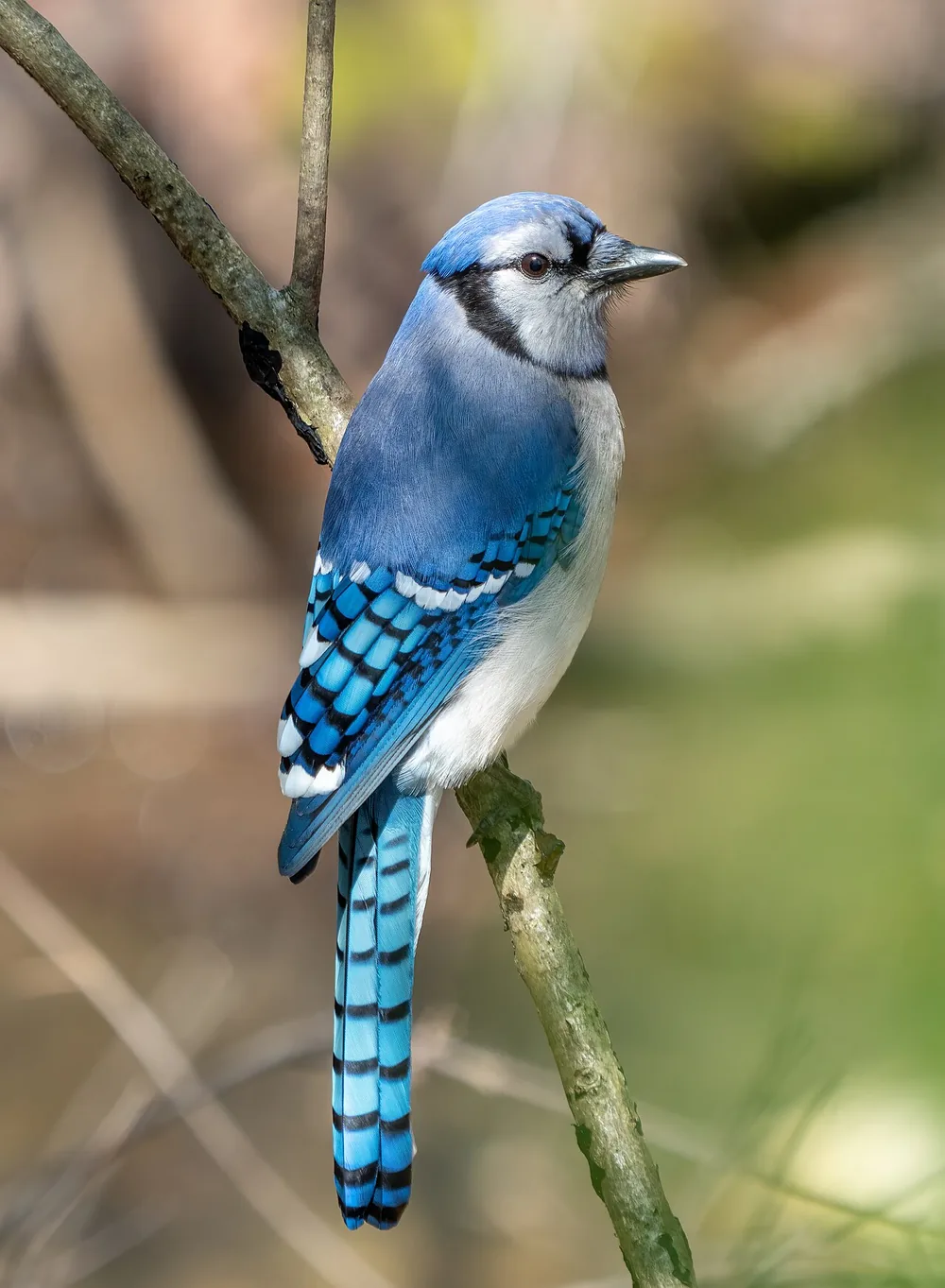
Scientific name: Cyanocitta cristata · Group: bird · Lives in: eastern and central North America · IUCN status: Least Concern
The blue jay has a blue crest and a black collar. It buries acorns to eat later and can mimic hawk calls, especially those of the red-shouldered hawk.
31. Blue tit
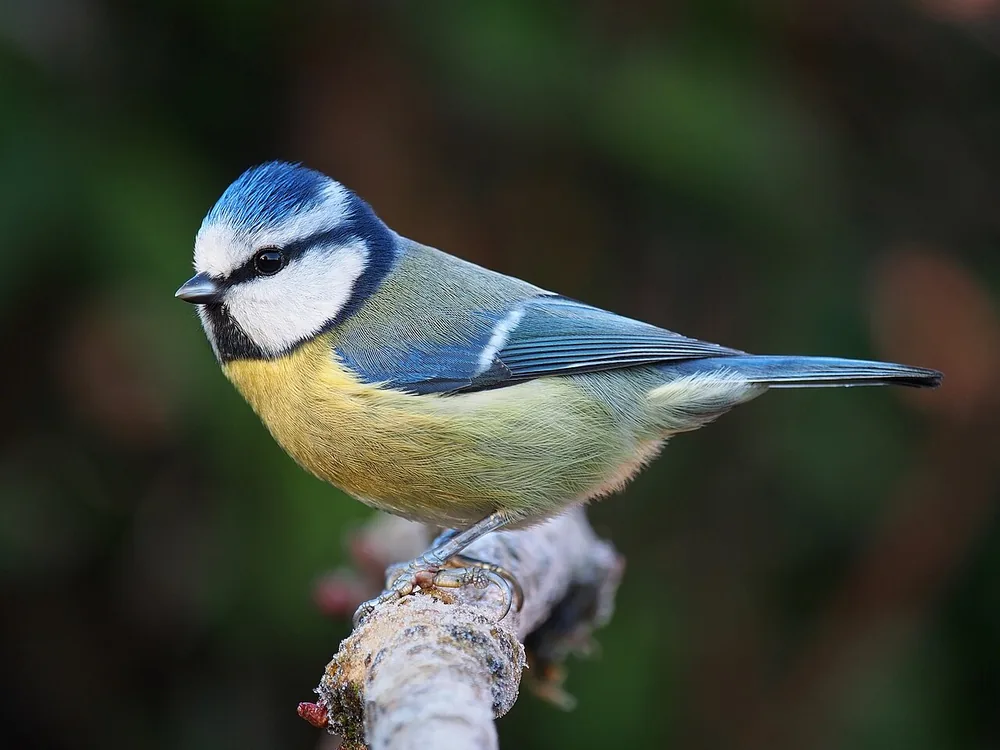
Scientific name: Cyanistes caeruleus · Group: bird · Lives in: Europe and West Asia · Diet: insects and spiders, plus seeds in winter · IUCN status: Least Concern
This blue-and-yellow garden bird readily uses nest boxes and hangs upside-down to feed.
32. Blue-footed booby
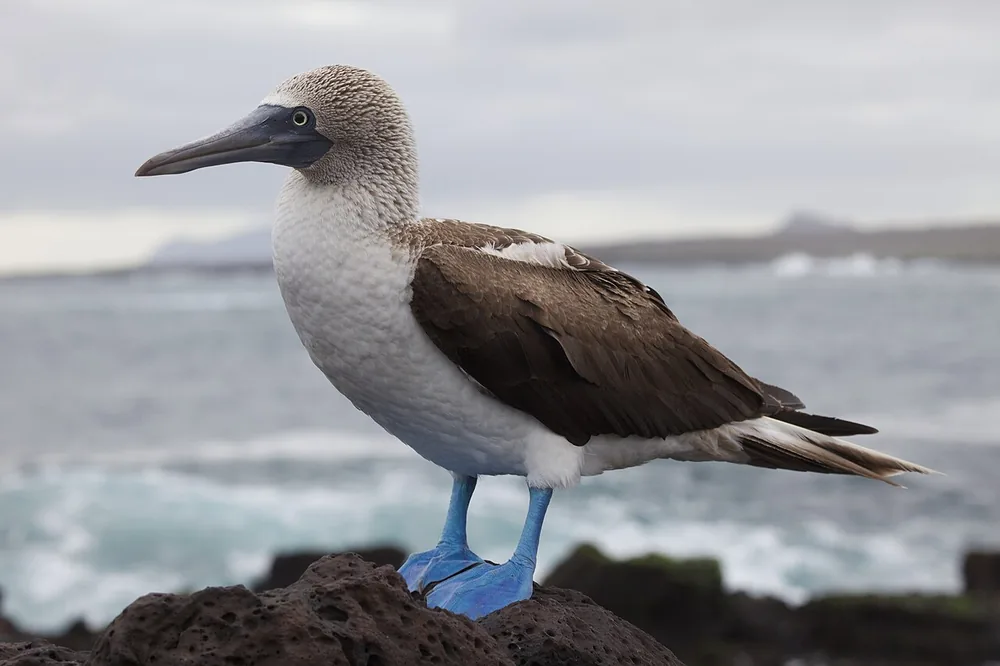
Scientific name: Sula nebouxii · Group: seabird · Lives in: the eastern Pacific · Diet: fish, caught by diving into the sea · IUCN status: Least Concern
About half of the breeding pairs nest on the Galápagos. The bright blue feet come from its fish diet, and the male shows them off in a strutting courtship dance.
33. Brown pelican
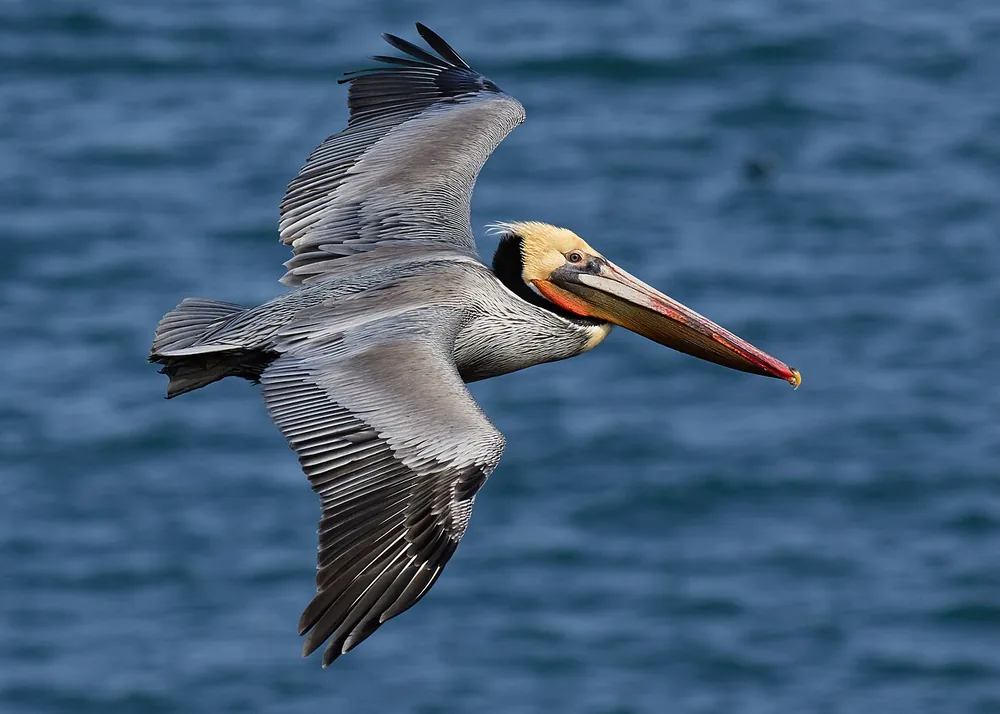
Scientific name: Pelecanus occidentalis · Group: seabird · Lives in: coasts of the Americas · Diet: fish · IUCN status: Least Concern
It is one of only two pelicans that plunge-dive for fish. DDT put it on the US endangered list from 1970 to 2009, and it is the state bird of Louisiana. Read about pelicans in Florida.
34. Budgerigar
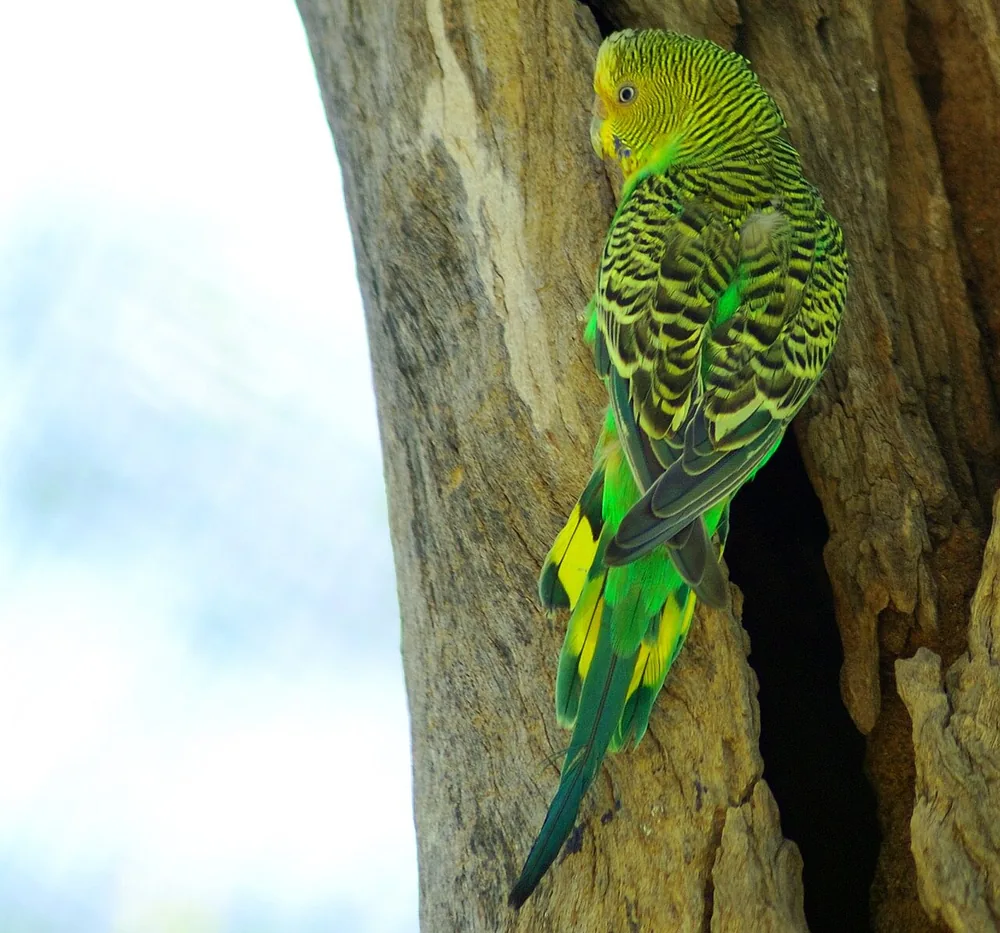
Scientific name: Melopsittacus undulatus · Group: bird (parrot) · Lives in: dry inland Australia · Diet: seeds · IUCN status: Least Concern
Wild budgerigars are green and yellow, and live in nomadic flocks. The blue and white colours are bred in captivity. Budgies can mimic human speech and are among the most popular pets in the world.
35. Buzzard (common buzzard)
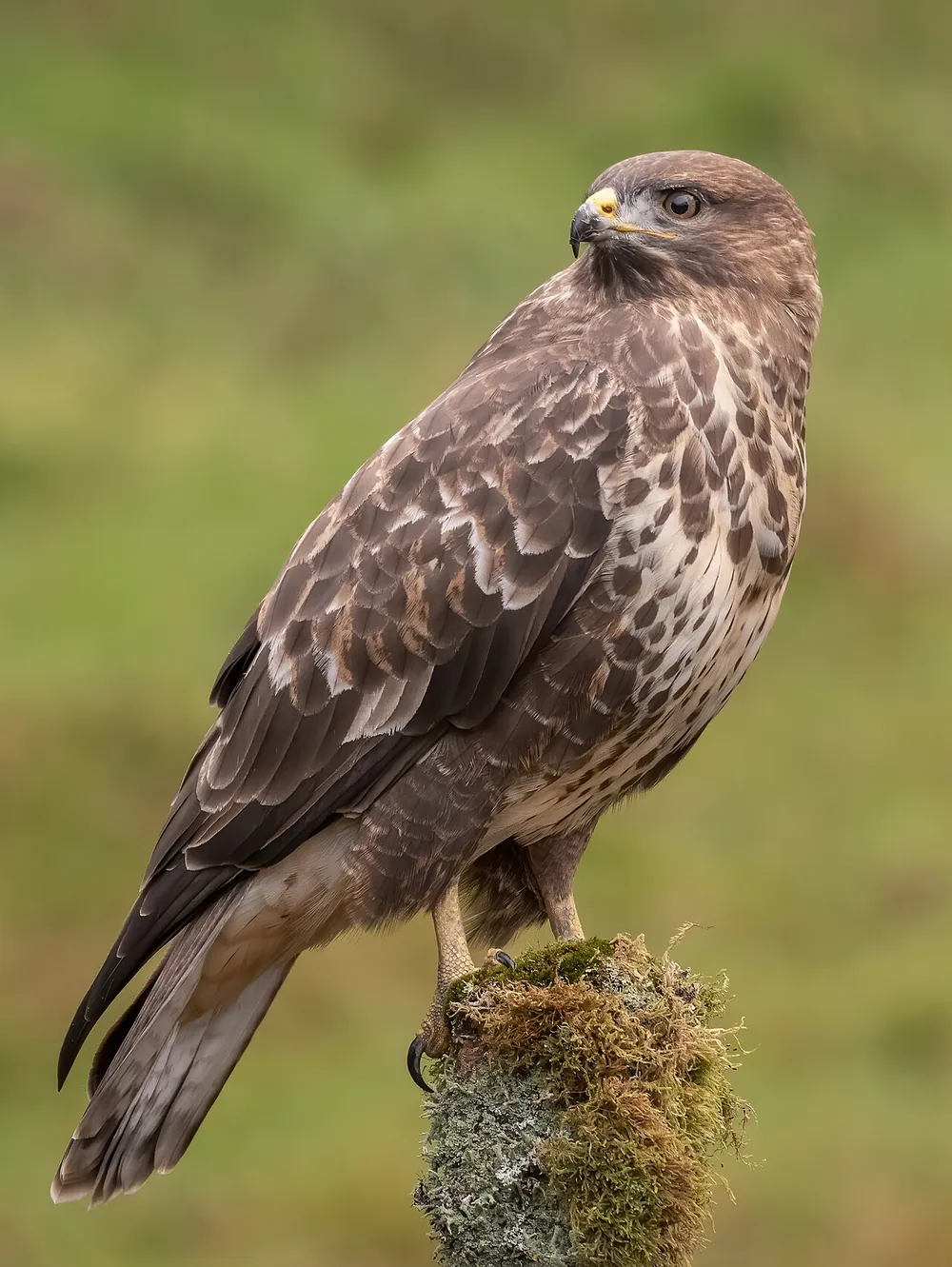
Scientific name: Buteo buteo · Group: bird of prey · Lives in: Europe to West Asia · Diet: mainly voles and other small mammals · IUCN status: Least Concern
It is probably the most common daytime bird of prey in Europe. It often hunts from a perch.
More birds that start with B
- Common blackbird (Turdus merula): the male is black with a yellow bill and eye-ring, and the female is brown. It is famous for its song. Least Concern.
- Black swan (Cygnus atratus): an Australian swan with black plumage and a red bill. It is a symbol of Western Australia. Least Concern.
Reptiles and amphibians that start with B
Reptiles have dry, scaly skin, while amphibians have moist skin and begin life in water. Here are the reptiles that start with B, including snakes that start with B, along with two B frogs.
36. Bearded dragon (central bearded dragon)
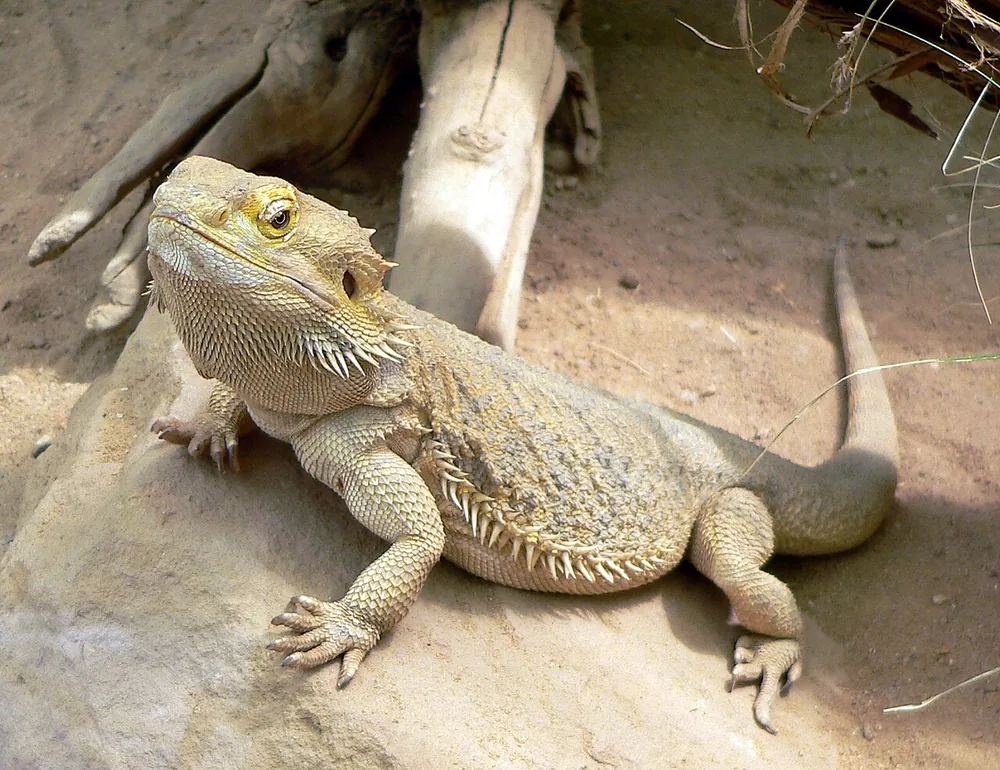
Scientific name: Pogona vitticeps · Group: reptile (lizard) · Lives in: eastern and central Australia · Size: up to about 60 cm head to tail · Diet: insects and plants · IUCN status: Least Concern
It inflates and darkens its spiny chin pouch, the “beard”, to look bigger. It is also a popular pet.
37. Black mamba
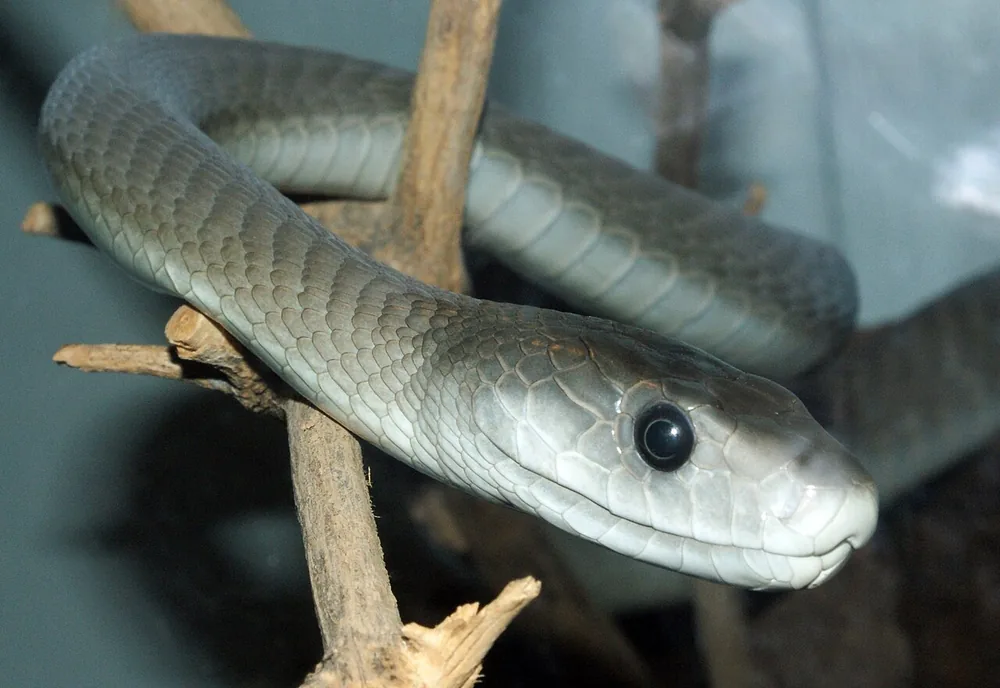
Scientific name: Dendroaspis polylepis · Group: reptile (snake) · Lives in: savanna and woodland of sub-Saharan Africa · Size: usually 2–3 m, rarely 4.3–4.5 m · IUCN status: Least Concern
It is the second-longest venomous snake after the king cobra. Over short distances it can move at up to about 16–19 km/h. Its neurotoxic venom is often fatal without antivenom, but it bites only when threatened or cornered.
38. Boa constrictor
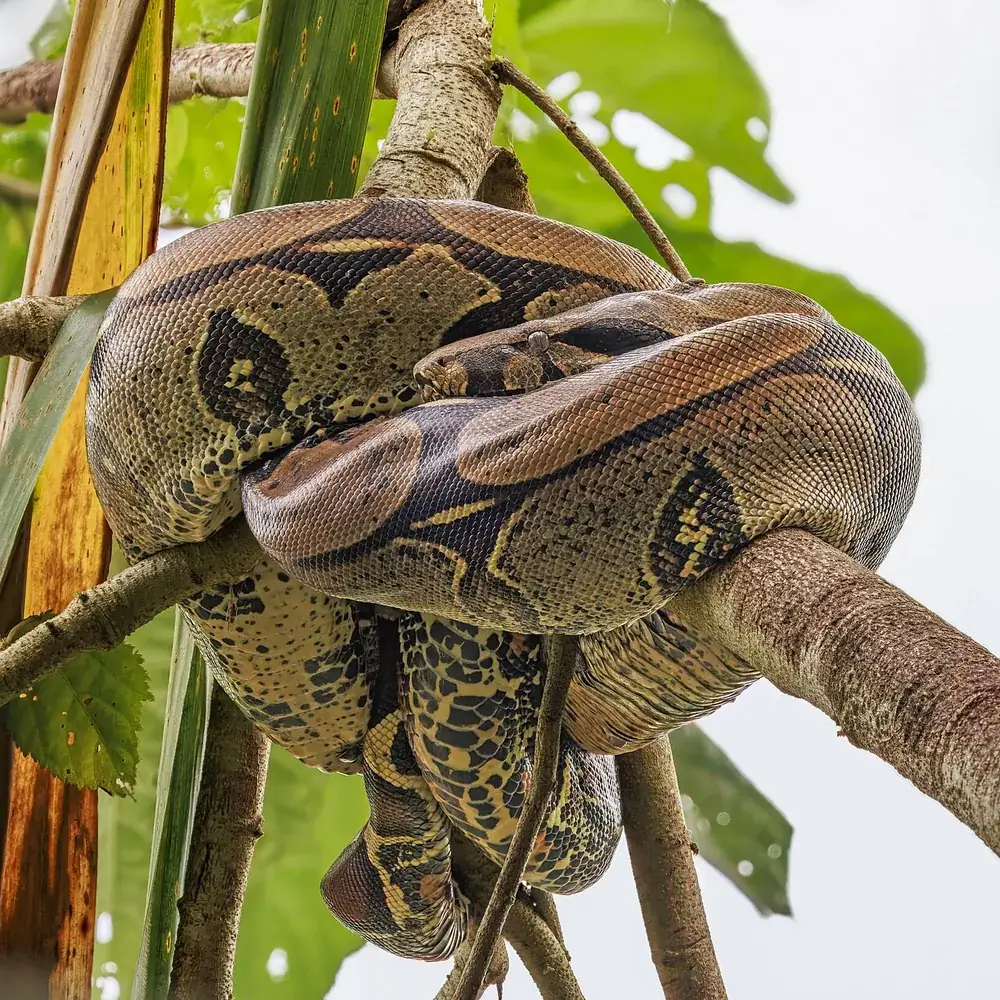
Scientific name: Boa constrictor · Group: reptile (snake) · Lives in: Mexico, Central America and South America · IUCN status: Least Concern
This large, non-venomous snake kills prey by constriction. It gives birth to live young. The photo shows a red-tailed boa from Ecuador.
39. Box turtle (eastern box turtle)
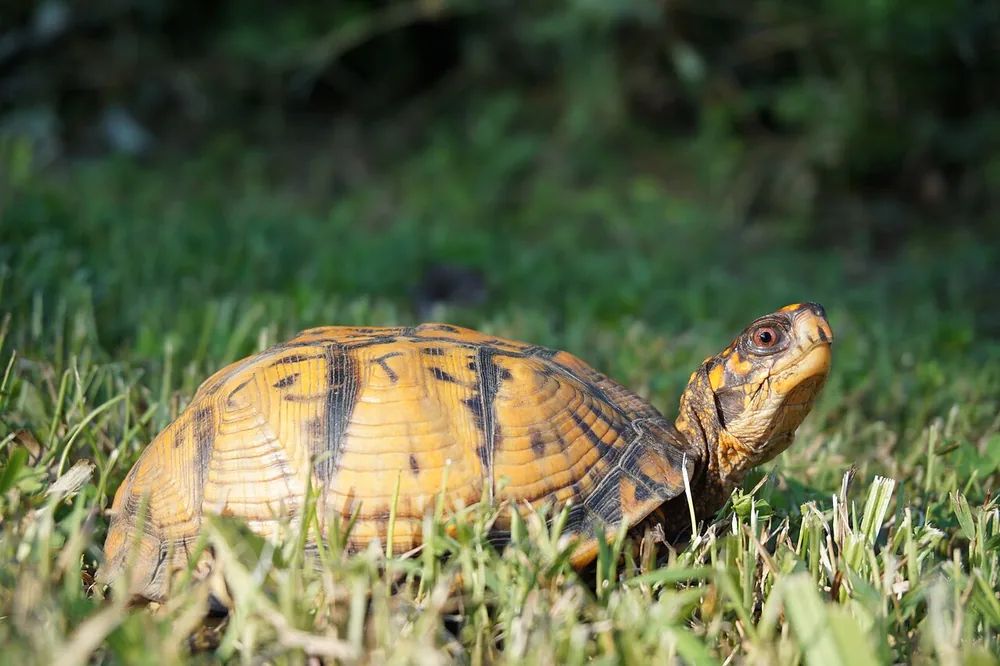
Scientific name: Terrapene carolina · Group: reptile (turtle) · Lives in: eastern USA and Mexico · Diet: plants and small animals · IUCN status: Vulnerable
A hinged lower shell lets it close up completely, like a box. Northern turtles hibernate. Habitat loss, road deaths and the pet trade threaten it.
40. Basilisk (common basilisk)
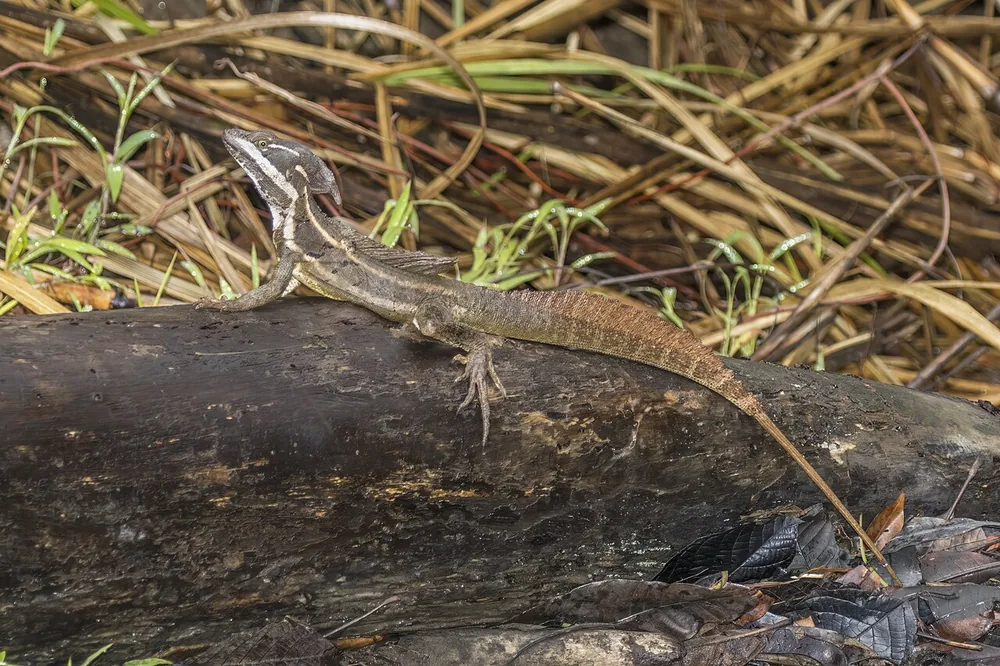
Scientific name: Basiliscus basiliscus · Group: reptile (lizard) · Lives in: rainforest rivers of Central and South America · IUCN status: Least Concern
Nicknamed the “Jesus Christ lizard”, it can run across water on its hind legs by slapping the surface. Young basilisks manage 10–20 m, while adults sink after only a few metres.
41. Bullfrog (American bullfrog)
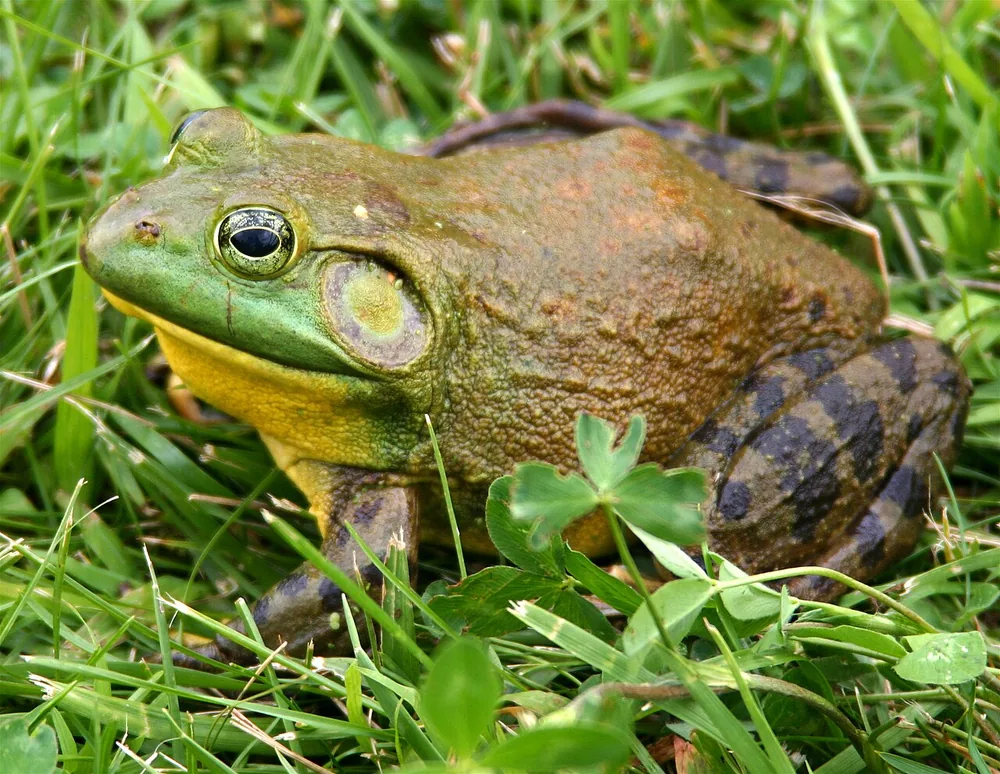
Scientific name: Lithobates catesbeianus · Group: amphibian (frog) · Lives in: eastern North America · Size: body about 9–15 cm; up to about 500 g · Diet: almost anything it can swallow · IUCN status: Least Concern
It is the largest frog in North America and has a deep, bull-like call. It has become invasive in more than 40 countries.
42. Blue poison dart frog
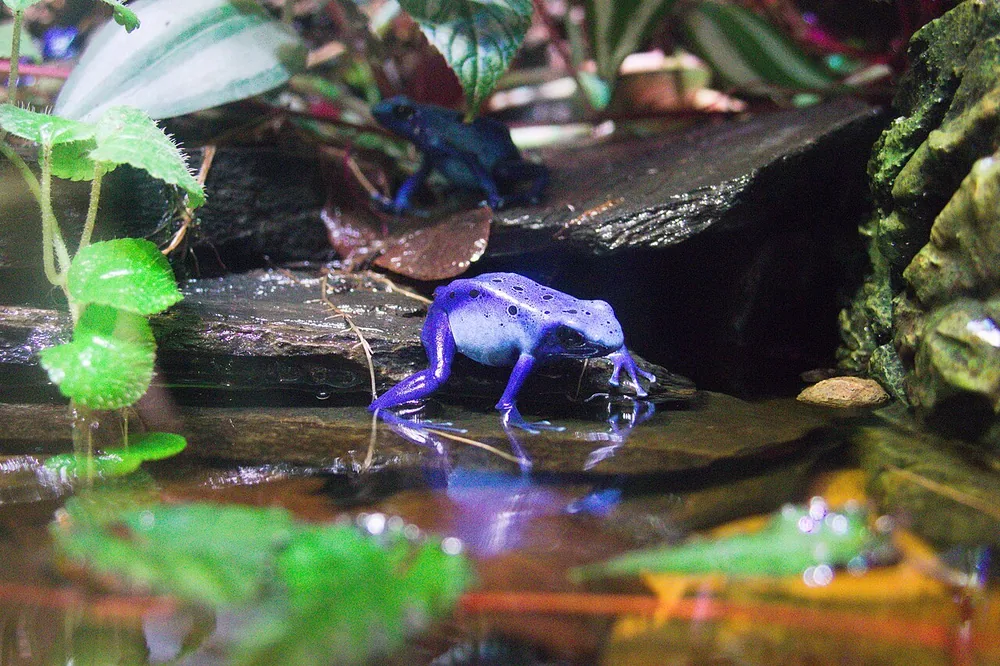
Scientific name: Dendrobates tinctorius (“azureus” form) · Group: amphibian (frog) · Lives in: a small area of southern Suriname and northern Brazil · Size: about 50 mm · IUCN status: Least Concern (the species)
This is the blue form of the dyeing poison dart frog. Its bright colours warn predators. Its poison comes from the ants and mites it eats, so captive-bred frogs fed ordinary insects are not toxic.
More reptiles that start with B
- Ball python (Python regius): the smallest African python, up to about 182 cm, which curls into a ball when scared. Near Threatened.
- Black caiman (Melanosuchus niger): the largest member of the alligator family, up to 5–6.5 m, and an apex predator of the Amazon basin. Least Concern.
- Burmese python (Python bivittatus): one of the largest snakes, from South-East Asia. It is invasive in the Florida Everglades, after escaping from the pet trade. Vulnerable.
Fish and sea animals that start with B
Sea animals that start with B include sharks, an octopus, a jellyfish and some famous coral reef fish. Here are the fish that start with B, together with two sea animals that are not fish.
43. Barracuda (great barracuda)
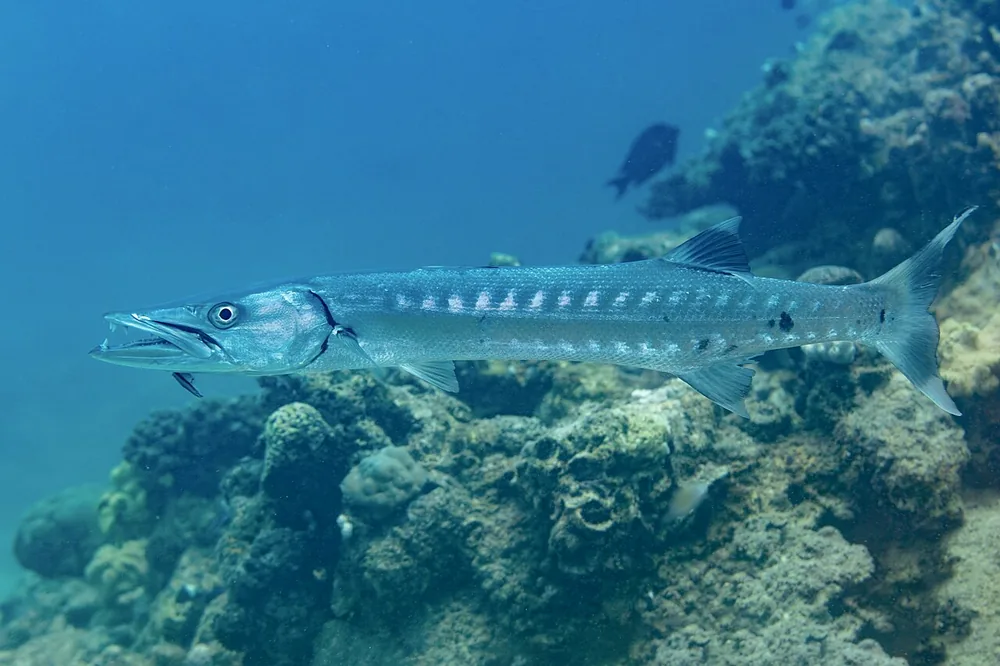
Scientific name: Sphyraena barracuda · Group: fish · Lives in: tropical and subtropical seas worldwide · Diet: fish · IUCN status: Least Concern
The great barracuda has a long, torpedo-shaped body and fang-like teeth. It hunts fish with fast bursts of speed.
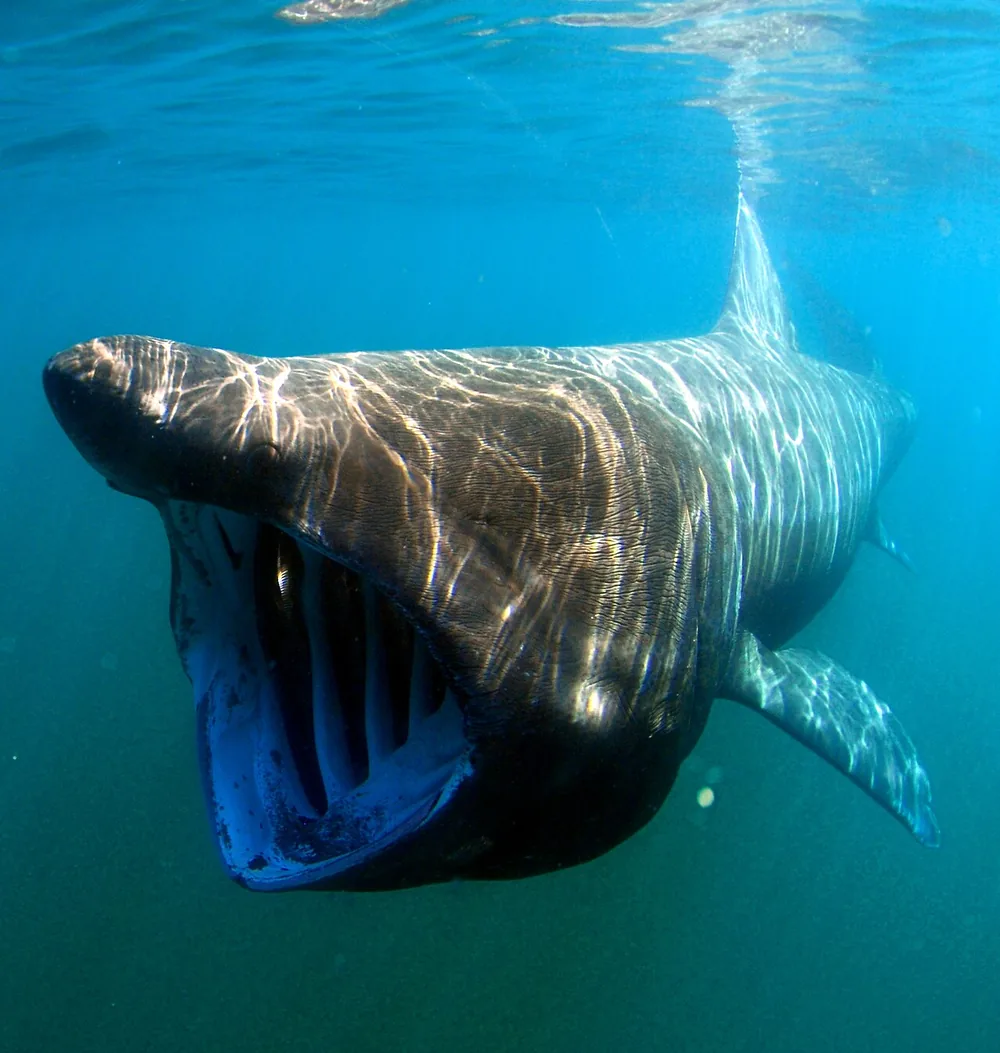
44. Basking shark
Scientific name: Cetorhinus maximus · Group: fish (shark) · Lives in: temperate oceans worldwide · Size: usually about 7.9 m; some over 10 m · Diet: plankton · IUCN status: Endangered
It is the second-largest living fish after the whale shark, yet it is a harmless filter-feeder. It is named for feeding at the surface, and you can see it around British coasts in summer. Its food chain is explained in our guide to ocean food chains and food webs.
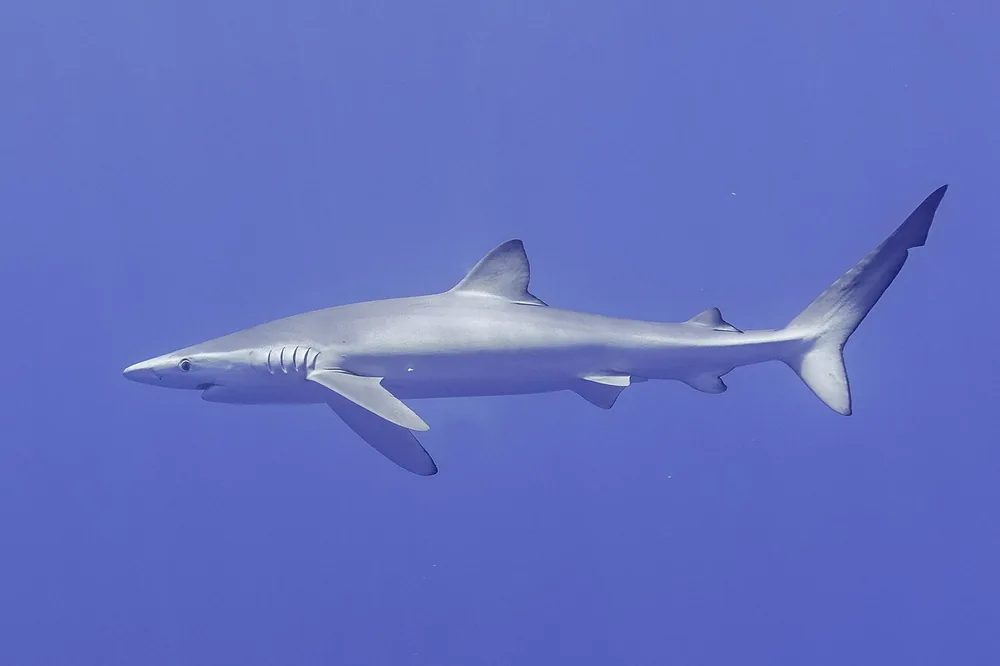
45. Blue shark
Scientific name: Prionace glauca · Group: fish (shark) · Lives in: temperate and tropical oceans · Size: about 3.1 m on average · IUCN status: Near Threatened
It migrates long distances and is seen off south-west England and Wales in summer, usually well offshore. Litters range from 25 to over 100 pups. Many are caught by accident as bycatch.
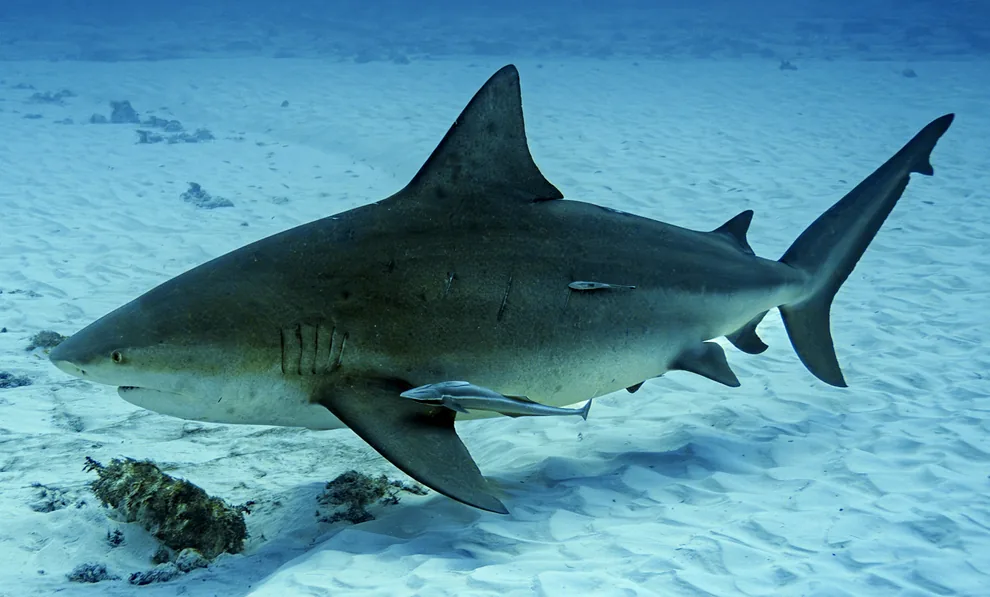
46. Bull shark
Scientific name: Carcharhinus leucas · Group: fish (shark) · Lives in: warm coasts worldwide, and some rivers · IUCN status: Vulnerable
It can live in fresh water. One was recorded about 4,000 km up the Amazon at Iquitos, Peru, and others as far up the Mississippi as Alton, Illinois. It is one of the three shark species most often involved in unprovoked bites.
47. Betta (Siamese fighting fish)
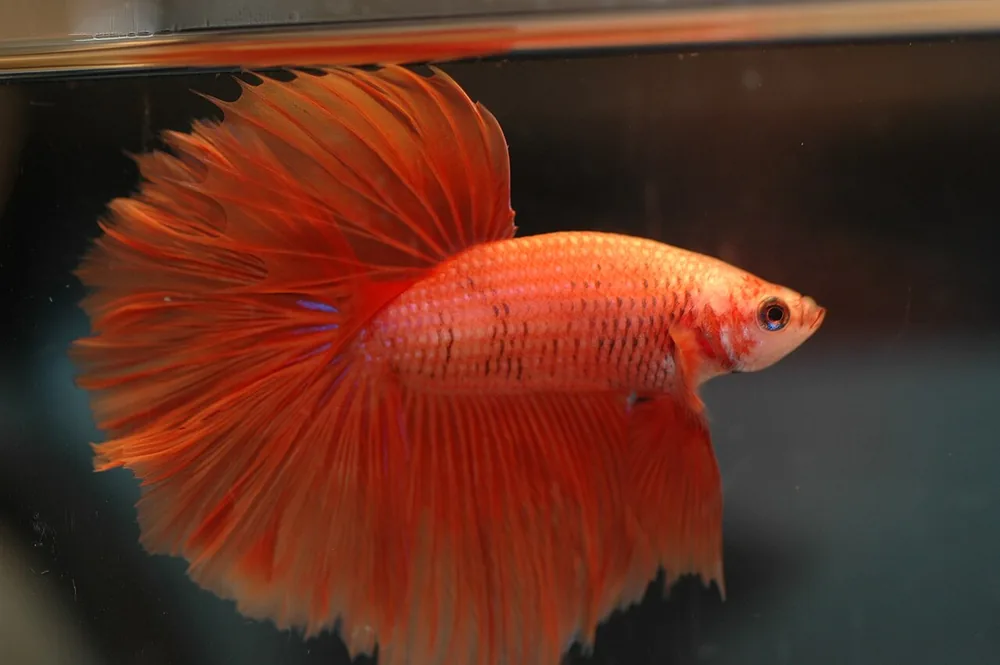
Scientific name: Betta splendens · Group: fish · Lives in: Thailand and mainland South-East Asia · IUCN status: Vulnerable (in the wild)
People domesticated it over 1,000 years ago. Males are very territorial. A labyrinth organ lets it gulp air at the surface, and it is the national aquatic animal of Thailand.
48. Blue tang
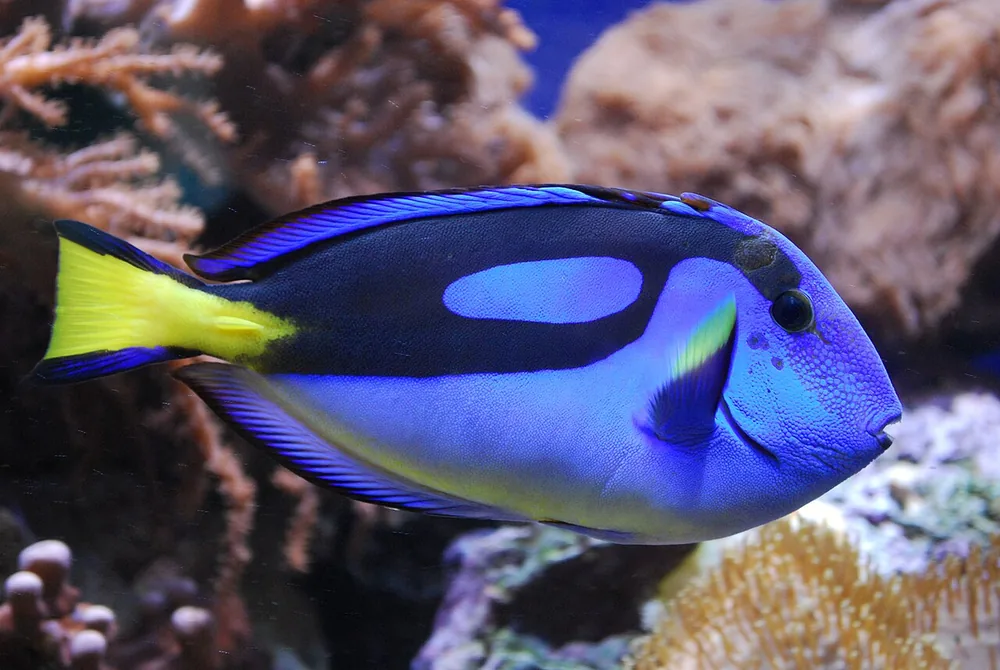
Scientific name: Paracanthurus hepatus · Group: fish (surgeonfish) · Lives in: Indo-Pacific coral reefs · IUCN status: Least Concern
Surgeonfish get their name from the scalpel-like spine on each side of the tail. Dory, the fish in Pixar’s Finding Nemo, is a blue tang.
49. Blue-ringed octopus (greater blue-ringed octopus)
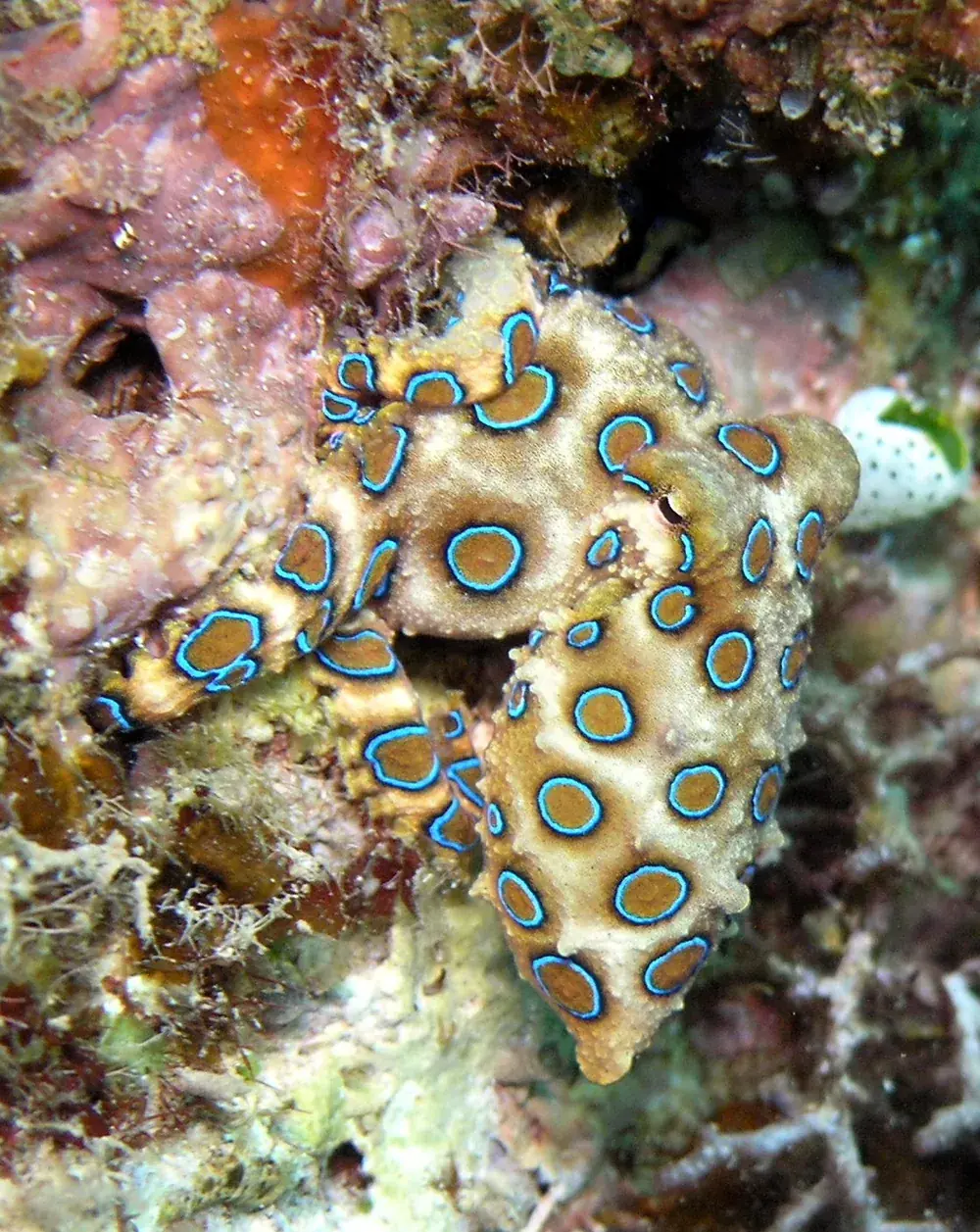
Scientific name: Hapalochlaena lunulata · Group: sea life (mollusc) · Lives in: Indo-Pacific reefs and rock pools · IUCN status: Least Concern
This small octopus flashes blue rings as a warning. It is one of the most venomous marine animals, because its tetrodotoxin can paralyse the breathing muscles. There is no antivenom.
50. Box jellyfish (sea wasp)
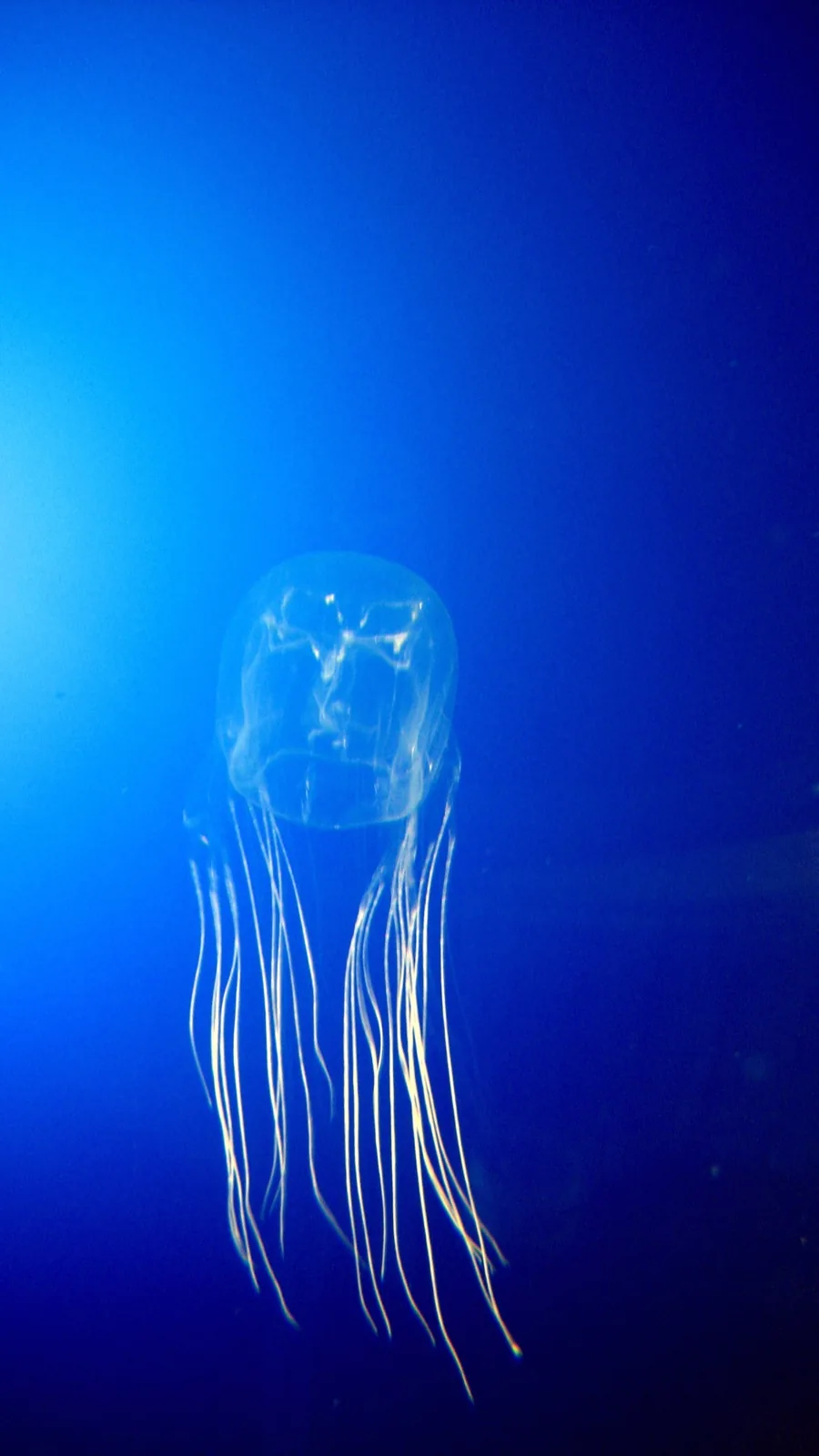
Scientific name: Chironex fleckeri · Group: sea life (cnidarian, not a fish) · Lives in: coasts of northern Australia and South-East Asia · Size: tentacles up to 3 m · IUCN status: not assessed
It is described as the most lethal jellyfish in the world, with at least 64 known deaths in Australia between 1884 and 2021. It is not the same animal as the bluebottle jellyfish.
More sea life that start with B
- Atlantic bluefin tuna (Thunnus thynnus): grows up to 680 kg. It moved from Endangered to Least Concern in September 2021 after catch limits, although some regional stocks are still depleted.
Insects, spiders and bugs that start with B
Insects have six legs and three body parts. Spiders have eight legs, so they are arachnids rather than insects. Our guide to whether insects are animals explains the difference. The insects that start with B below come with two spiders and one bumblebee that pollinates our crops.
51. Black widow (southern black widow)
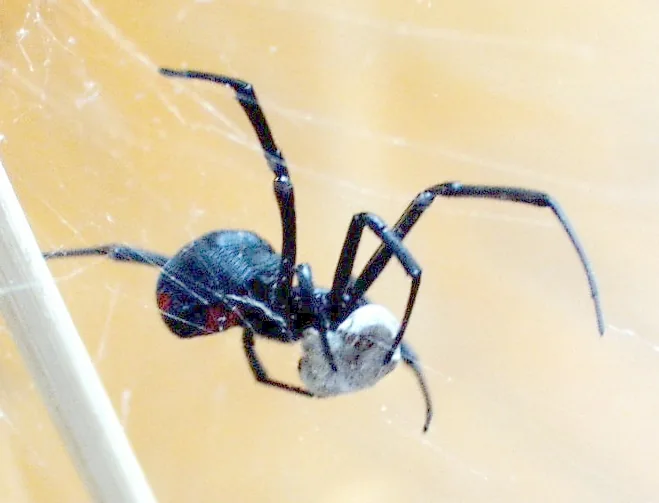
Scientific name: Latrodectus mactans · Group: spider · Lives in: North America · IUCN status: not assessed
The female is shiny black with a red hourglass under her abdomen, and sometimes eats the male after mating. The venom can cause pain but is rarely fatal to healthy people.
52. Blue morpho
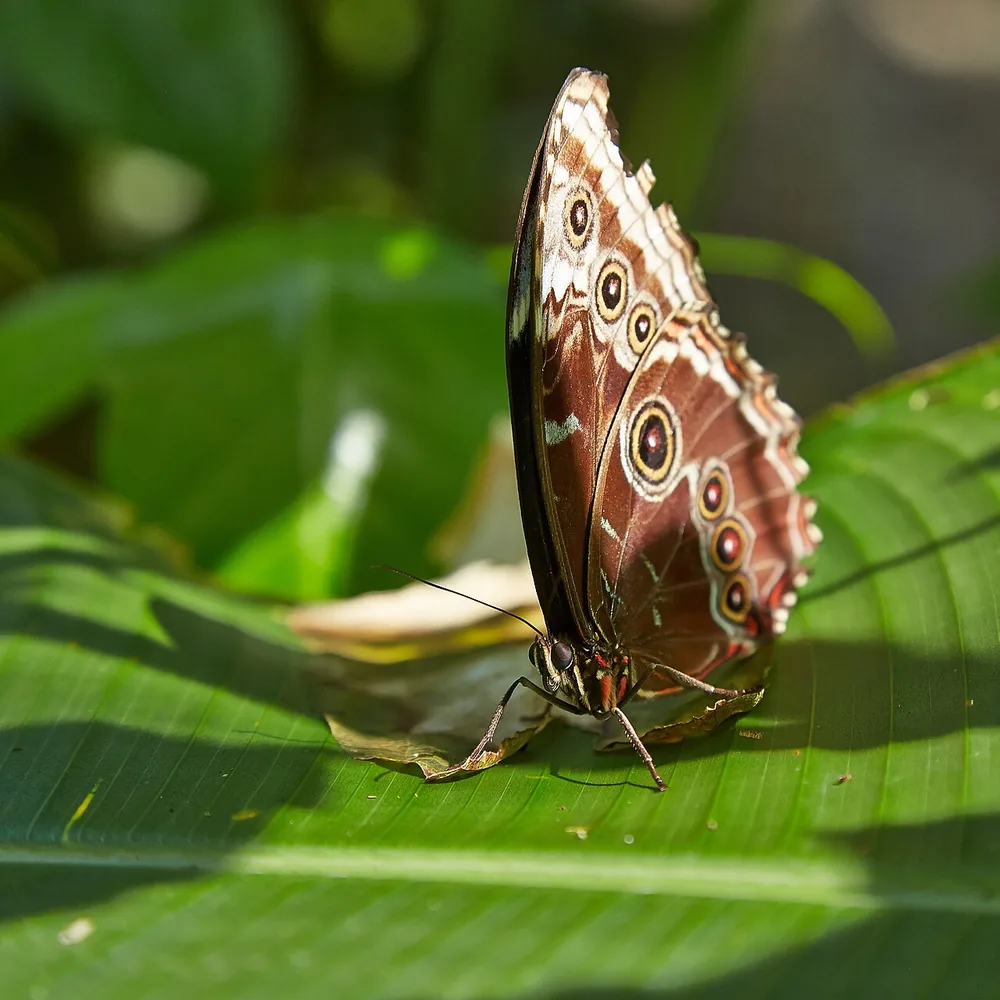
Scientific name: Morpho menelaus · Group: insect (butterfly) · Lives in: rainforests of Central and South America · IUCN status: not assessed
The bright blue on the upper wings has no blue pigment. Microscopic ridges on the wing scales reflect blue light, which is called structural colour. The undersides are brown with eyespots, as in our photo.
53. Bombardier beetle
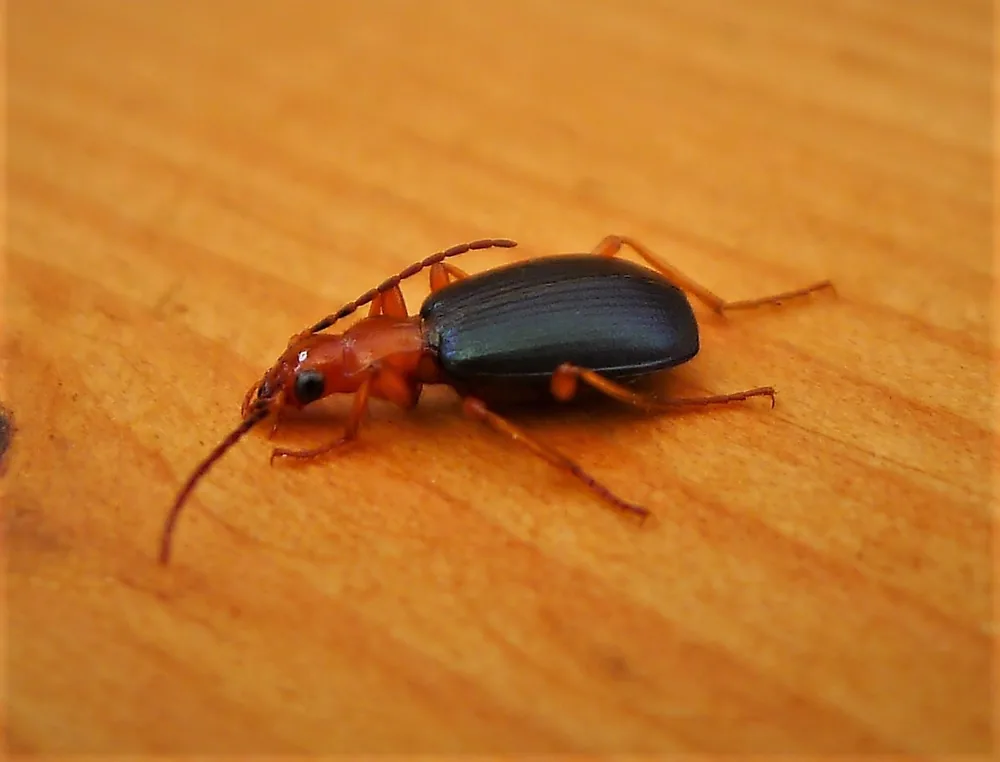
Scientific name: Brachinus species · Group: insect (beetle) · Lives in: worldwide, with many species · IUCN status: not assessed
It mixes hydroquinone and hydrogen peroxide with enzymes in a chamber in its abdomen. It then fires a spray at close to 100 °C, the boiling point of water, at attackers.
54. Brazilian wandering spider
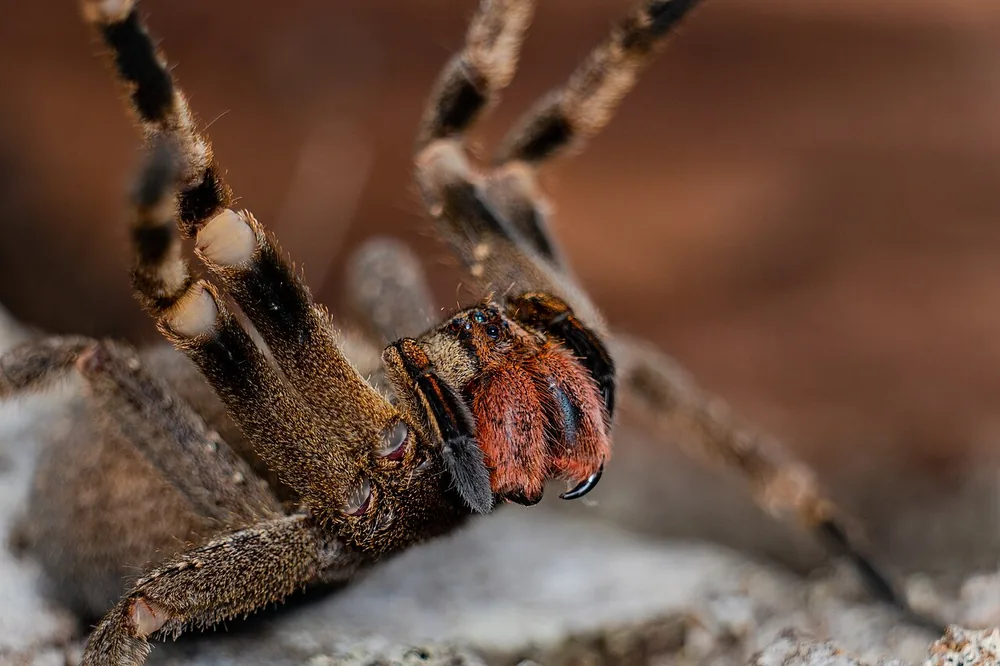
Scientific name: Phoneutria nigriventer · Group: spider · Lives in: Brazil, Uruguay, Paraguay and Argentina · IUCN status: not assessed
Guinness World Records often lists it as the most venomous spider. It wanders the forest floor at night rather than living in a web. Bites can be serious, but deaths are rare and antivenom exists.
55. Brimstone (common brimstone butterfly)
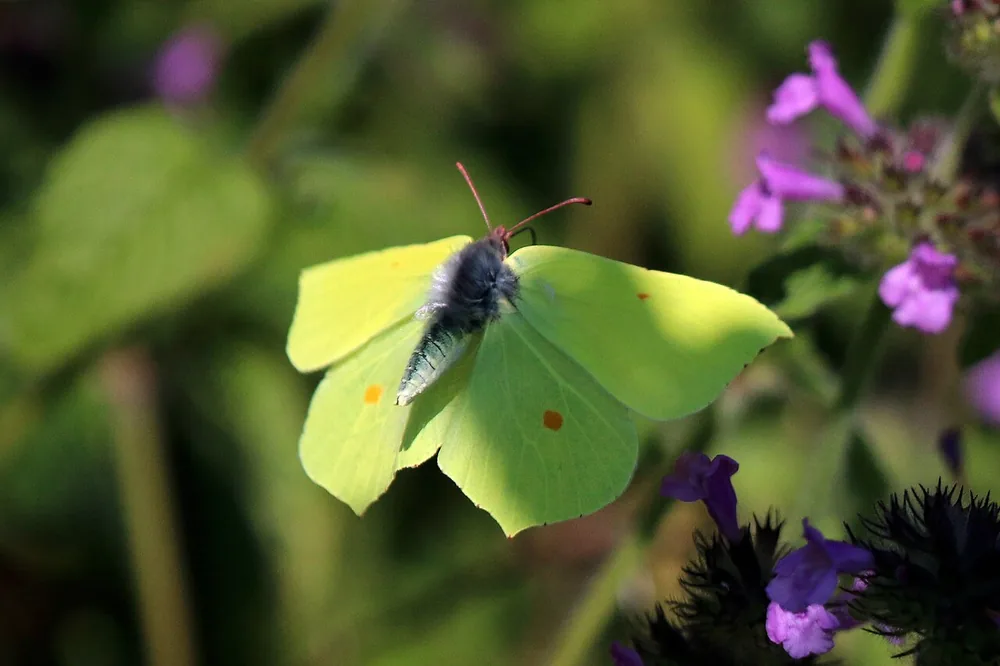
Scientific name: Gonepteryx rhamni · Group: insect (butterfly) · Lives in: Europe, Asia and North Africa, including the UK · Size: wingspan 60–74 mm · IUCN status: Least Concern
Males are yellow and females greenish-white. Adults hibernate, so this is often one of the first butterflies seen in spring, sometimes on warm days in February. The word “butterfly” may come from this butter-coloured fly.
56. Bumblebee (buff-tailed bumblebee)
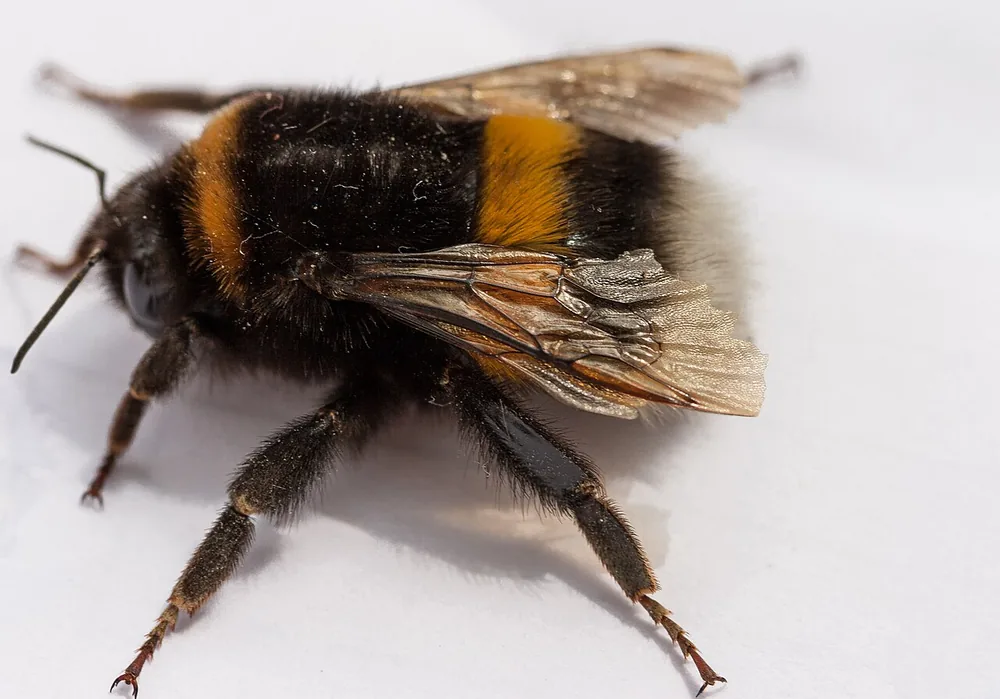
Scientific name: Bombus terrestris · Group: insect (bee) · Lives in: Europe, and introduced elsewhere · IUCN status: Least Concern
It is one of Europe’s commonest bumblebees and lives in social colonies with one queen. It is widely used to pollinate greenhouse crops such as tomatoes, so it has been introduced outside Europe, for example in Tasmania. Read more in our pollination notes.
57. Bullet ant
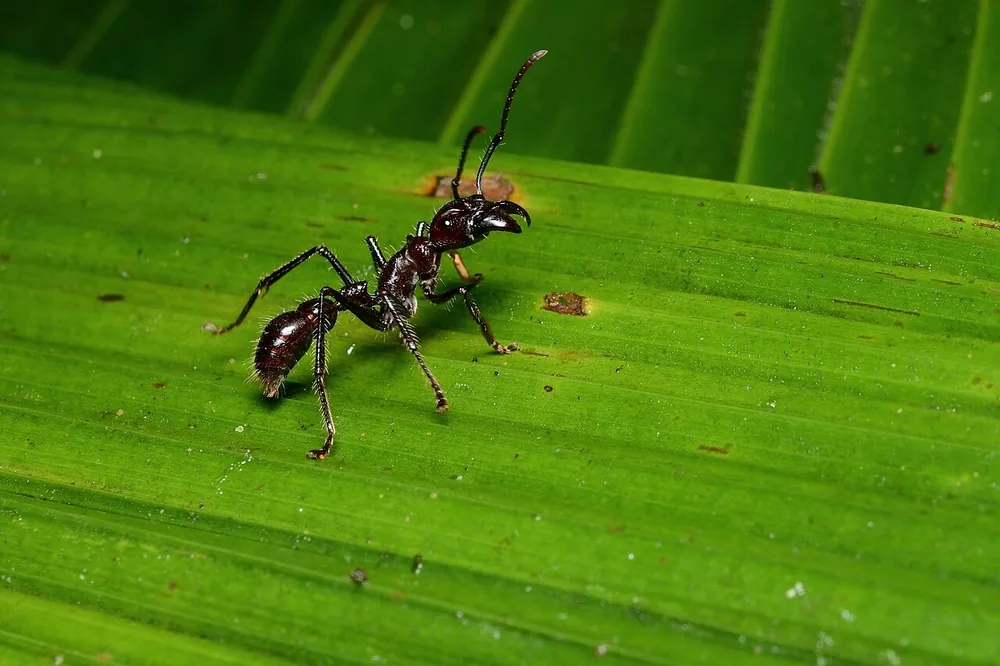
Scientific name: Paraponera clavata · Group: insect (ant) · Lives in: rainforests of Central and South America · IUCN status: not assessed
It was the only insect originally given the top level, 4+, on Justin Schmidt’s sting pain index. The pain can last for hours. Its venom contains a substance called poneratoxin.
More bugs that start with B
- Bed bug (Cimex lectularius): a blood-feeding insect, 1–7 mm long, that feeds at night. It can survive up to about 300 days without feeding, and its bites are not known to spread disease. Not assessed.
Extinct animals that start with B
Extinct animals that start with B include a dolphin, a dinosaur and a tiny rodent. Their stories show why conservation matters, and our guide to the extinction crisis explains the bigger picture.
58. Baiji (Yangtze river dolphin)
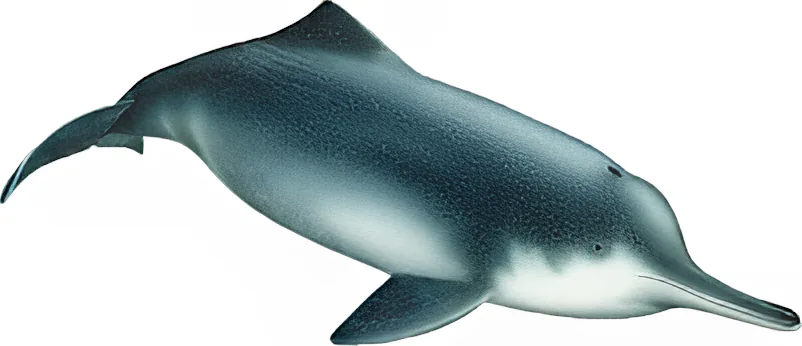
Scientific name: Lipotes vexillifer · Group: mammal (river dolphin) · Lived in: the Yangtze River, China · IUCN status: Critically Endangered (Possibly Extinct)
A six-week survey in late 2006 found none, and the baiji was declared “functionally extinct”. Fishing bycatch, pollution, dams and boat traffic all played a part. It is probably the first dolphin species driven to extinction by humans. This picture is an illustration, as no free live photo exists.
59. Brontosaurus
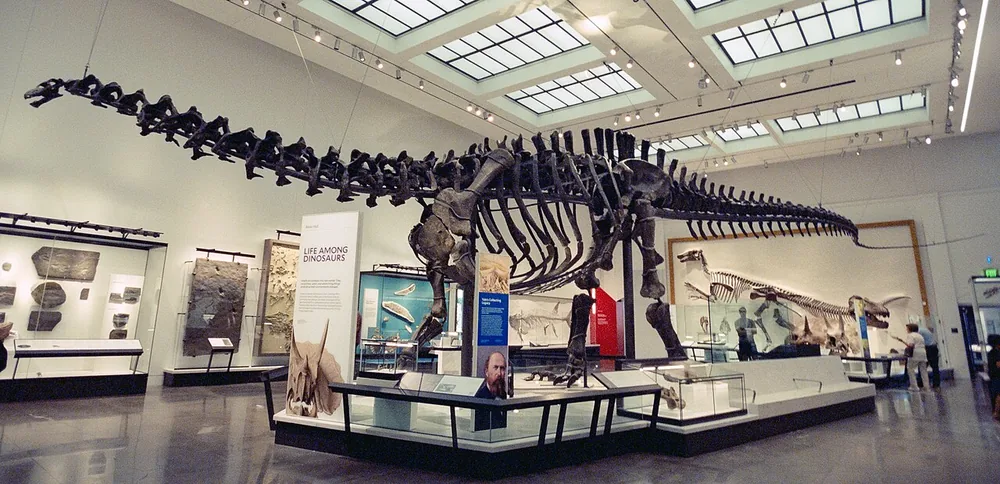
Scientific name: Brontosaurus excelsus · Group: dinosaur (sauropod) · Lived in: what is now Utah and Wyoming, about 156–146 million years ago · Size: 21–23 m long; about 15–20 tonnes · Diet: plants · Status: extinct (known from fossils; not assessed by the IUCN)
For decades it was treated as the same animal as Apatosaurus. A 2015 study re-established it as a separate genus. See more in our list of all the dinosaurs.
60. Bramble Cay melomys
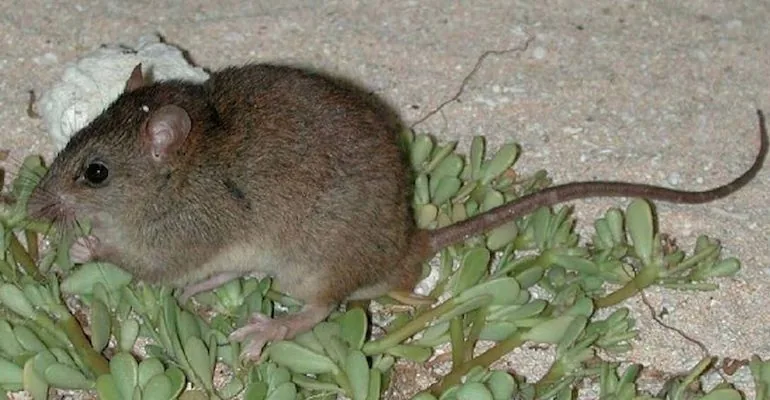
Scientific name: Melomys rubicola · Group: mammal (rodent) · Lived in: one tiny coral cay in the Torres Strait, Australia · IUCN status: Extinct
It was last seen in 2009. Repeated sea flooding and storm surges destroyed about 97 % of its plant food. Queensland declared it extinct in 2016, and the Australian government did so in February 2019. It is widely reported as the first mammal extinction linked to human-caused climate change.
More extinct animals that start with B
- Bluebuck (Hippotragus leucophaeus): a South African antelope hunted by European settlers and extinct by about 1800. It was the first large African mammal to go extinct in historical times. Extinct.
Dog and cat breeds that start with B
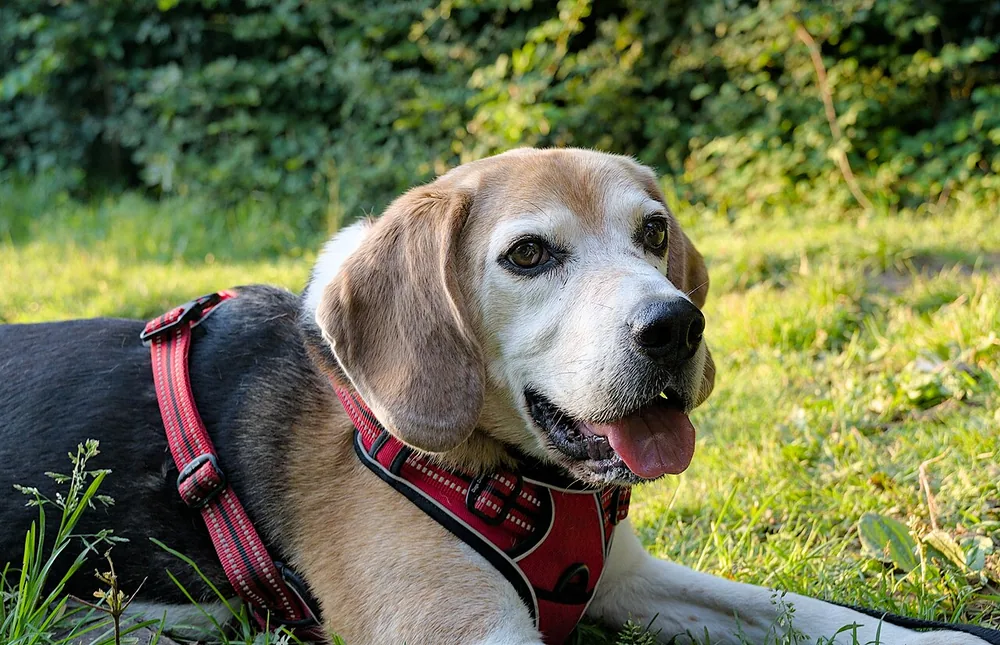
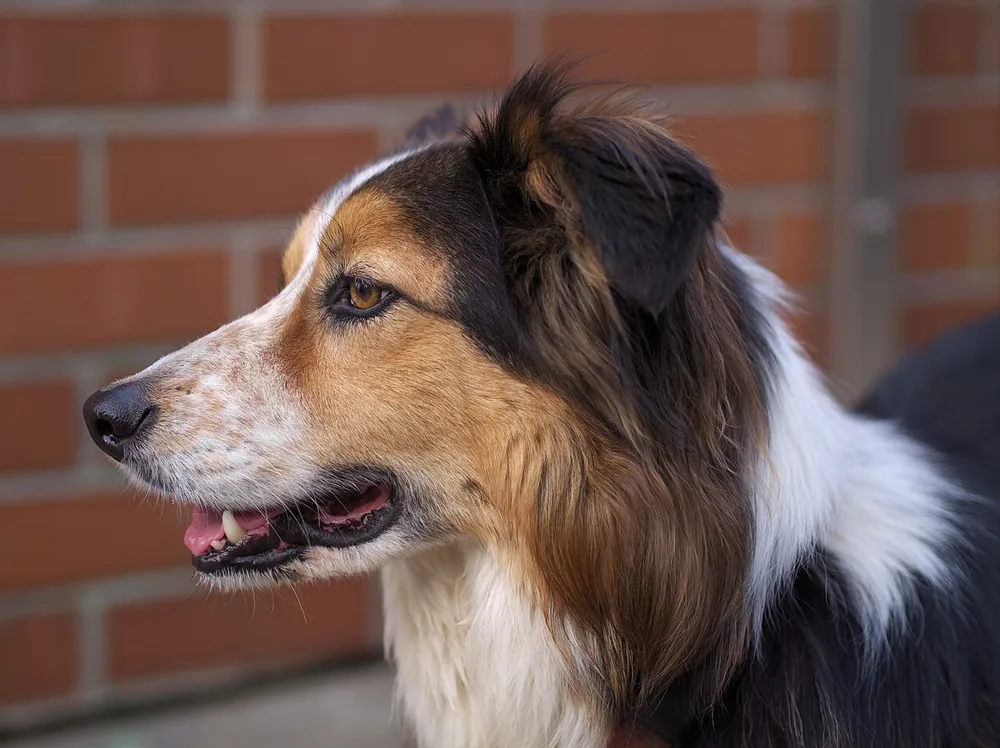
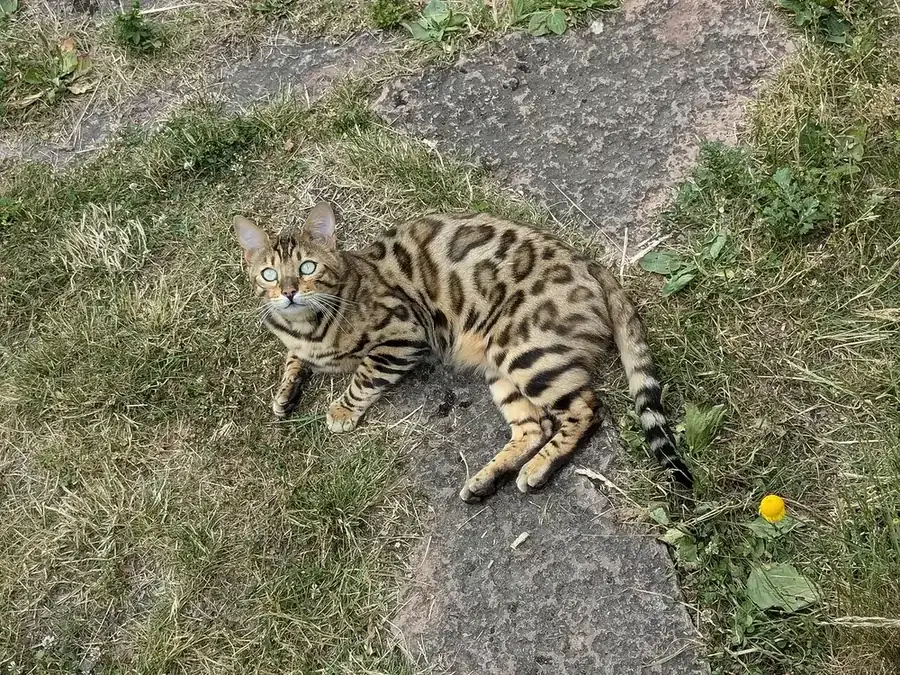
These are breeds, not wild species, so the IUCN does not rate them. Swipe through the photos.
- Beagle: a British scent hound developed in the 1830s to hunt hares and rabbits. Its nose also makes it a good detection dog for banned food at borders.
- Border Collie: a herding dog from the Anglo-Scottish border. It ranked first for working and obedience intelligence in Stanley Coren’s 1994 book The Intelligence of Dogs.
- Boxer: a medium to large German breed of the mastiff type, with its first club founded in 1895.
- Bengal cat: a spotted breed created by crossing domestic cats with the wild Asian leopard cat.
Biggest, smallest, fastest and most dangerous animals that start with B
Which is the biggest animal that starts with B, and which is the fastest?
Biggest animal that starts with B
The blue whale is the biggest, and the largest animal ever known to have lived. The basking shark is the biggest fish, and the American bison is the heaviest land animal in North America. The biggest extinct B animal is Brontosaurus, at 21–23 m.
Smallest animal that starts with B
The bee hummingbird is the smallest bird in the world. Kitti’s hog-nosed (bumblebee) bat is the smallest bat and arguably the smallest mammal by body length.
Fastest animal that starts with B
The Brazilian free-tailed bat has been clocked at up to 160 km/h in level flight. The black mamba is among the fastest snakes, at about 16–19 km/h in short bursts. The bar-tailed godwit holds the longest recorded non-stop flight, 13,560 km.
Most dangerous animals that start with B
The box jellyfish, black mamba, Brazilian wandering spider, blue-ringed octopus and bull shark are the best-known risks to people. African buffalo are known to seriously injure or kill people, and attacks by brown bears are rare. Most of these animals are dangerous only if provoked or cornered.
Cutest animals that start with B
This is opinion, not a record. Popular picks include the bush baby, budgerigar, bilby, blue tit, bat-eared fox and a baby bonobo.
Animals that start with B for kids and preschool
These are easy B animals for young children. B is for:
- Bear: a big, furry animal that lives in forests.
- Bumblebee: a fuzzy bee that buzzes from flower to flower.
- Butterfly: an insect with colourful wings.
- Bat: a small animal that flies at night.
- Beaver: an animal that builds dams in rivers.
- Budgie: a small, colourful pet bird that can copy words.
- Blue whale: the biggest animal ever.
- Bison: a huge, shaggy animal that eats grass.
- Badger: a stripy-faced animal that digs tunnels.
- Barn owl: a white owl with a heart-shaped face.
Now try to spot some B animals in real life. Your ticks are remembered in your browser.
B animals you might spot in the UK
- Bumblebee
- Blue tit
- Blackbird
- Badger
- Buzzard
- Brimstone butterfly
- Barn owl
- Bat
Fun facts about animals that start with B
Can you guess the animal from the clue? Tap a card to flip it.
Here are some more facts about animals that start with B:
- The bison became the US national mammal in 2016, and the bald eagle the national bird in 2024.
- A blue morpho’s wings are blue because of tiny structures, not blue pigment.
- The American bullfrog is invasive in more than 40 countries.
Key points to remember
Frequently asked questions about animals that start with B
What animal starts with B?
Many animals start with B, including the bear, bee, butterfly, bat, beaver, badger, bison, bobcat and blue whale. This guide lists 75 of them with photos, sorted into mammals, birds, reptiles, sea life, insects and extinct animals, each with its scientific name and conservation status.
What is the biggest animal that starts with B?
The blue whale is the biggest animal that starts with B, and the largest animal ever known to have lived. It reaches about 30 m long and about 150 tonnes. The biggest B fish is the basking shark, and the heaviest land animal in North America is the American bison.
What is the smallest animal that starts with B?
The smallest B animals include the bee hummingbird, the smallest bird in the world at about 57 mm long, and Kitti’s hog-nosed or bumblebee bat, the smallest bat at 29–33 mm long. Many insects that start with B are smaller still.
What is the fastest animal that starts with B?
The Brazilian free-tailed bat has been clocked at up to 160 km/h in level flight, the fastest level flight recorded for any animal. Among snakes, the black mamba can reach about 16–19 km/h over short distances.
What is the most dangerous animal that starts with B?
The box jellyfish is described as the most lethal jellyfish in the world, with at least 64 known deaths in Australia from 1884 to 2021. Black mambas, blue-ringed octopuses, Brazilian wandering spiders and bull sharks are also dangerous, usually when provoked or cornered.
What endangered animals start with B?
Endangered B animals include the black rhinoceros (Critically Endangered), the blue whale, bonobo, basking shark and Bengal tiger (all Endangered) and the wild Bactrian camel. The baiji, a Yangtze river dolphin, is listed as Critically Endangered (Possibly Extinct).
What sea animals start with B?
Sea animals that start with B include the blue whale, beluga whale, bottlenose dolphin, bowhead whale, basking shark, blue shark, bull shark, great barracuda, blue tang, Atlantic bluefin tuna, blue-ringed octopus and box jellyfish. Not all of them are fish.
What are some cute animals that start with B for kids?
Popular cute B animals for kids include the bush baby, budgerigar, bilby, blue tit, bat-eared fox, baby bonobo and bumblebee. Other easy B animals for preschool are the bear, butterfly, bat, beaver, bison, badger and barn owl.
What extinct animals start with B?
Extinct animals that start with B include the bluebuck, an African antelope gone by about 1800, the Bramble Cay melomys, last seen in 2009, and Brontosaurus, a dinosaur known from fossils. The baiji, or Yangtze river dolphin, is possibly extinct.