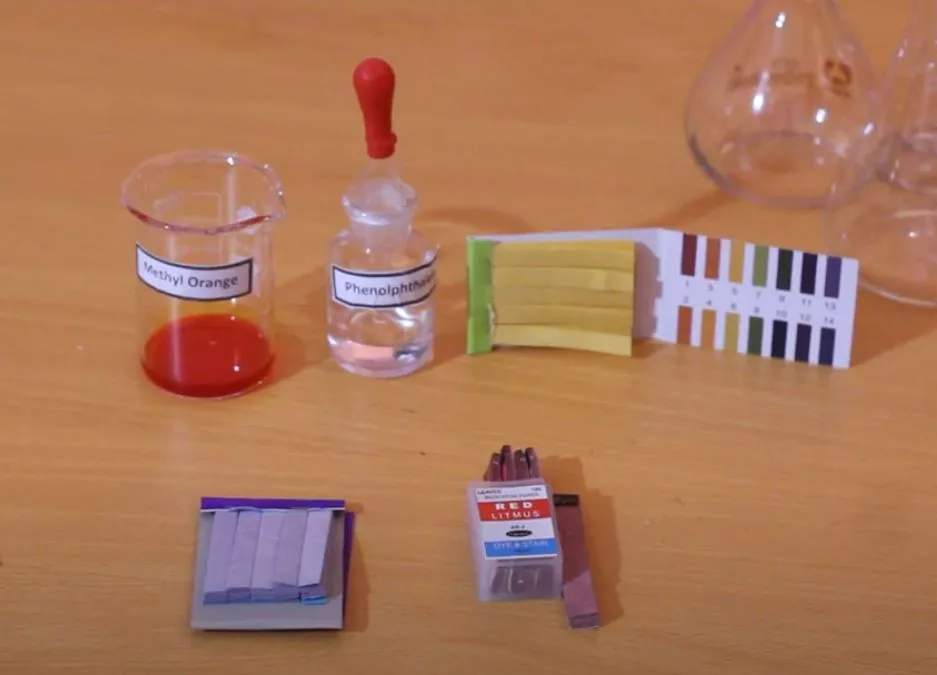
What are chemical indicators? Chemical indicators are substances that change colour depending on whether a solution is acidic, neutral or alkaline. They matter because dilute hydrochloric acid, dilute sodium hydroxide and pure water all look the same: clear and colourless. This article covers the five acid-base indicators you meet most often in a school laboratory: litmus, methyl orange, phenolphthalein, universal indicator (pH paper) and natural dyes from red cabbage and hibiscus. The lab photos come from a real school test in which the same dilute acid and alkali were tried with every indicator.
What are chemical indicators?
An acid-base indicator has one colour in acidic solution and a different colour in alkaline solution. That is the whole idea. You add a few drops (or dip a paper strip), look at the colour, and you know which side of neutral you are on.
The pH scale runs from 0 to 14. Solutions below pH 7 are acidic, pure water at 25 °C is neutral at pH 7, and solutions above pH 7 are alkaline. If you want a refresher on what makes a substance an acid or a base, start with our guide to acids and bases.
Not every indicator tells you the same amount. Simple indicators such as litmus, methyl orange and phenolphthalein show only whether a solution is acidic, neutral or alkaline, not its exact pH. Universal indicator is different: it is a mixture that gives a range of colours, so you can estimate a pH value. Neither type replaces a pH meter when you need a precise reading.
How an indicator works
Most indicators are weak acids. The un-ionised molecule and its ion have different colours, and the balance between them shifts as the solution changes. Chemists write the un-ionised form as HIn and the ion as In⁻. Litmus is the classic case: HIn is red and In⁻ is blue.
This also explains something students often miss. The colour change is reversible. Add acid to a pink phenolphthalein solution and it goes colourless again, because you are only shifting a balance, not making a permanent new substance. That is quite different from the permanent changes described in our article on what a chemical reaction is.
Natural indicators: red cabbage and hibiscus
You do not need a chemical supplier to make an indicator. Many brightly coloured plants contain pigments called anthocyanins, and these change colour with pH. Red cabbage is the favourite for classroom work because it gives a wide rainbow of colours.
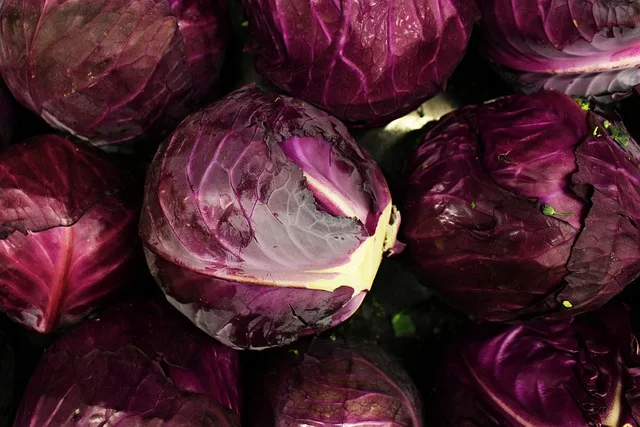
Red cabbage extract is red in strongly acidic solutions, purple or blue in the middle of the range, and green or yellow in strongly alkaline solutions. As a rough guide, very acidic solutions (about pH 1 to 3) turn it red, neutral solutions (about pH 7 to 8) dark blue or purple, and very alkaline solutions (about pH 10 to 12) green or yellow.
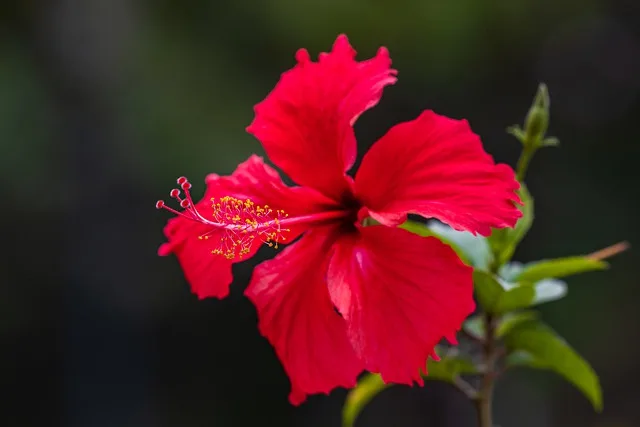
The China rose, Hibiscus rosa-sinensis, works in a similar way. In the NCERT Class 7 science course, a petal extract turns acidic solutions dark pink (magenta) and basic solutions green. Its colour also comes from anthocyanins, and published studies report sharp acid and base colour contrasts with titration end points close to those of phenolphthalein and methyl orange.
Other kitchen and garden materials can be used too: beetroot, blackberries, raspberries, copper beech leaves and onion skins. Natural extracts spoil quickly, so make a fresh batch for each lesson.
Practical 1: making and testing a red cabbage indicator
This is a safe, low-cost way to see a full range of indicator colours. The method below follows the Royal Society of Chemistry class practical. You can swap the cabbage for a handful of hibiscus petals and use the same steps.
Aim
To make a natural indicator from red cabbage and use it to identify an acid, an alkali and a neutral liquid.
Apparatus and chemicals
- 250 cm³ beaker and a heat source (Bunsen burner with tripod and gauze, or a kettle and a heatproof container)
- Chopped red cabbage (3 to 4 small pieces, about 5 cm across)
- About 50 cm³ of water
- 3 test tubes and a test-tube rack
- 0.01 mol/dm³ hydrochloric acid
- 0.01 mol/dm³ sodium hydroxide solution
- Pure (distilled or deionised) water
- Dropping pipette, tongs or a heatproof glove, eye protection
- Optional: filter paper for making test strips
Risk assessment
| Hazard | Risk | Control |
|---|---|---|
| Boiling water and hot beaker | Scalds and burns | Use tongs or a heatproof glove; let the beaker cool before pouring; keep long hair tied back |
| Sharp knife (chopping cabbage) | Cuts | Cut on a board away from your hand, or have a teacher prepare the pieces |
| 0.01 mol/dm³ hydrochloric acid | Mild irritation to eyes and skin | Wear eye protection; wipe up spills at once |
| 0.01 mol/dm³ sodium hydroxide | Irritation; alkali in the eye is especially harmful | Wear eye protection; if any gets in the eye, rinse with running water for a long time and get help |
| Ethanol (only if used as the solvent) | Flammable | Keep away from flames and heat it only in a water bath |
Wear eye protection throughout. Never drink the indicator or any of the test solutions.
Method
Tick each step as you complete it. Your ticks are remembered in your browser.
- Put on eye protection and tie back long hair.
- Pour about 50 cm³ of water into the 250 cm³ beaker and bring it to the boil.
- Add 3 or 4 small pieces of red cabbage (each about 5 cm across).
- Keep the water boiling for about 5 minutes. The water turns blue or green as the pigment comes out.
- Turn off the heat and leave the beaker to cool for about 15 minutes.
- Half-fill three test tubes: one with 0.01 mol/dm³ hydrochloric acid, one with 0.01 mol/dm³ sodium hydroxide and one with pure water.
- Add a few drops of the cabbage extract to each tube and swirl gently.
- Record the colour in each tube straight away, ideally in front of a white background.
- Optional: test household liquids (see the tip below) and compare their colours with your three reference tubes.
If you do not want to boil anything, blending the cabbage with water, or soaking it overnight, also works.
Expected results
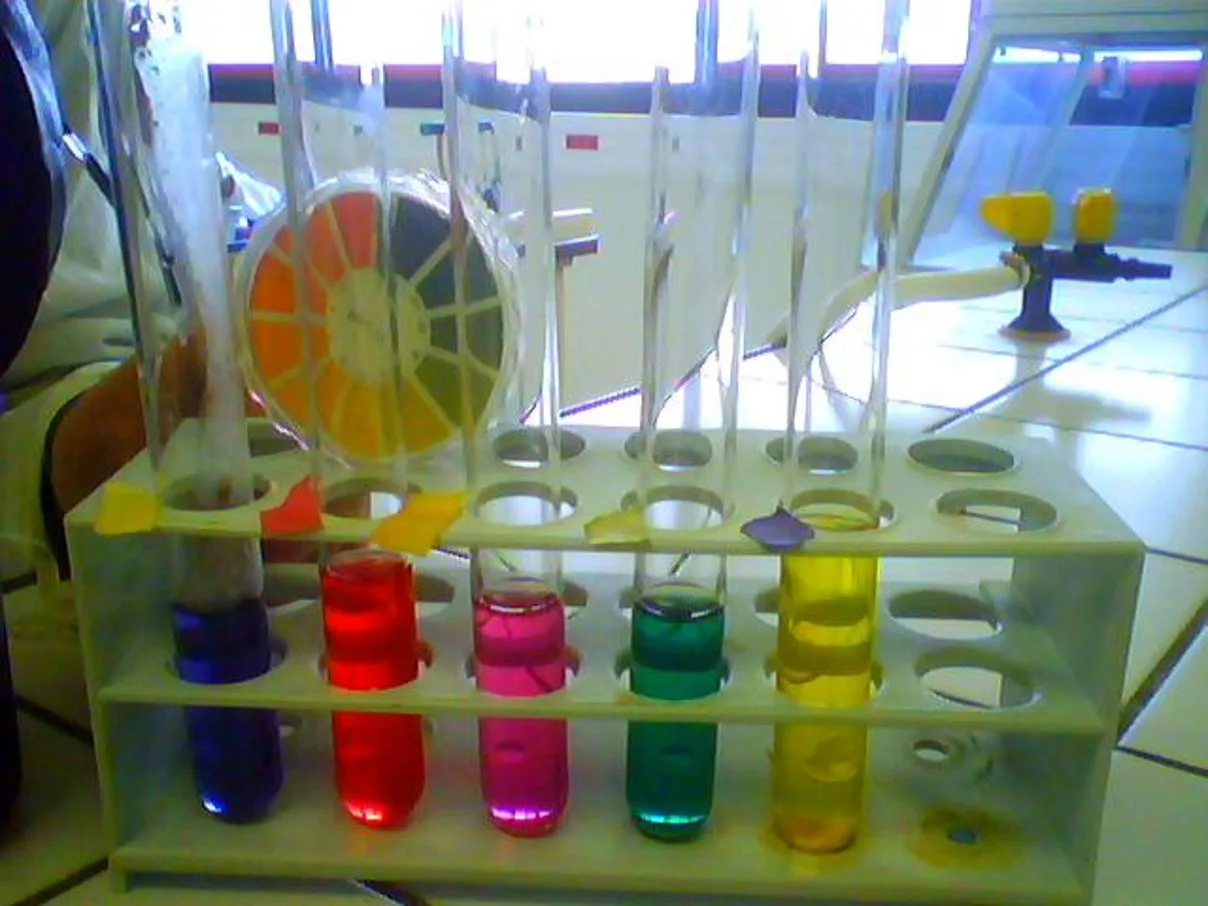
The photo above shows the same cabbage extract in five solutions of different pH. Use the table to match your own colours to approximate pH values. The pH figures come from a published Science Buddies chart for red cabbage.
| pH of solution | Red cabbage colour |
|---|---|
| 2 | Red |
| 4 | Purple |
| 6 | Violet |
| 8 | Blue |
| 10 | Blue-green |
| 12 | Greenish-yellow |
Hibiscus is simpler: acidic solutions turn the petal extract dark pink (magenta) and alkaline solutions turn it green. In your results, the 0.01 mol/dm³ hydrochloric acid tube should sit at the red end, the sodium hydroxide tube at the green or yellow end, and the pure water tube in between.
Making indicator paper strips
Once you have a strong extract, you can turn it into test paper. Soak strips of filter paper in the cooled extract, then lay them out to dry. Dip a dry strip into an unknown liquid and compare its colour with your table. Store the strips in a clean, dry container and remember that they will not last forever, so make them fresh for each practical.
Why start with a natural indicator?
Beginning with cabbage has a practical advantage: it makes the idea of a colour scale obvious. With litmus you only see two colours, red or blue. With cabbage you see a whole sequence of colours, so you can immediately see that pH is a scale and not an on-off switch. It also lets you discuss fair testing. If one tube holds more extract than another, the colours will not match, so use the same number of drops in each tube. That habit pays off in the laboratory practical in the next section, where you will test the same dilute acid and alkali with four different indicators.
Practical 2: testing dilute acid and alkali with laboratory indicators
The second practical uses the standard laboratory indicators. Everything is tested against the same two solutions, dilute hydrochloric acid and dilute sodium hydroxide, so any difference you see comes from the indicator and not from the sample. This is the practical shown in the photographs throughout this section.
Aim
To find the colour of litmus, methyl orange, phenolphthalein and pH paper in an acid, in an alkali and in pure water.
Apparatus and chemicals
- Test tubes and a test-tube rack, plus a few conical flasks for larger volumes
- Labelled dropping bottles of dilute hydrochloric acid and dilute sodium hydroxide (about 0.1 mol/dm³ is plenty)
- Pure (distilled or deionised) water
- Red litmus paper and blue litmus paper
- Methyl orange indicator and phenolphthalein indicator, each in a dropping bottle
- Universal indicator (pH) paper and the colour chart supplied with it
- Glass rod, white tile or sheet of white paper, paper towel
- Eye protection
Risk assessment
| Hazard | Risk | Control |
|---|---|---|
| Sodium hydroxide solution | CLEAPSS Hazcard 91 bands: corrosive at 0.5 mol/dm³ and above; irritant from 0.05 up to 0.5 mol/dm³. Alkali in the eye is especially dangerous | Use the most dilute solution that works; wear eye protection; rinse eyes with running water for a long time and get help |
| Dilute hydrochloric acid | Safety data sheets for 0.1 mol/dm³ list it as corrosive to metals and some add skin and eye irritation | Treat as an irritant; wear goggles; wipe spills straight away |
| Phenolphthalein indicator | The solid is classed as a suspected carcinogen and mutagen; the indicator is usually a solution in alcohol, so it is flammable | Keep away from flames; avoid skin contact; wash hands afterwards |
| Methyl orange | The solid is toxic if swallowed | Never taste anything; never pipette by mouth |
Method
- Put on eye protection. Label three clean test tubes: acid, alkali and water.
- Half-fill the first tube with dilute hydrochloric acid, the second with dilute sodium hydroxide and the third with pure water.
- Dip one end of a blue litmus paper into each liquid in turn, using a fresh paper each time. Record the colour straight away.
- Repeat with red litmus paper.
- Put clean samples of acid, alkali and water into new test tubes. Add two or three drops of methyl orange to each and swirl. Record the colours.
- Repeat with fresh tubes and two or three drops of phenolphthalein.
- Place a strip of universal indicator paper on the white tile. Touch a drop of each liquid to it with a glass rod and compare the colour with the chart straight away.
- Rinse all the tubes, put the used paper in the bin and wash your hands.
Use a fresh test tube for every indicator, add only a few drops, and read each colour against a white background. Always record the colour immediately and before you start the next test. The formulae for the chemicals in this practical, HCl and NaOH, follow the rules in how to write a chemical formula.
Litmus paper: red and blue
Litmus is a dye extracted from lichens such as Roccella and Lecanora. It changes colour over a range of roughly pH 5 to 8: red below the range, blue above it, and in between you see the purple of the neutral solution. Different data books quote slightly different limits, so say "about pH 5 to 8" in an answer.
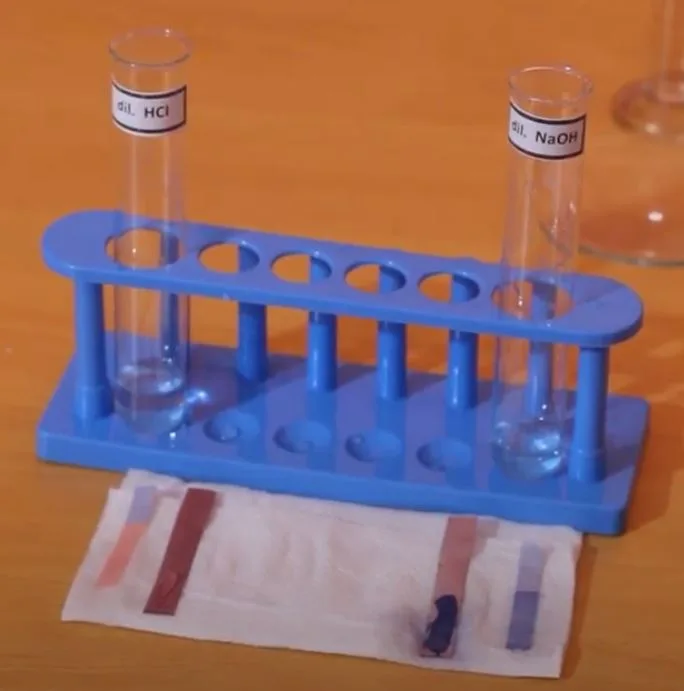
In school you use paper strips in two colours, and there are four possible outcomes:
- Blue litmus in acid turns red.
- Blue litmus in alkali stays blue.
- Red litmus in alkali turns blue.
- Red litmus in acid stays red.
That is why you need both colours. A blue strip that stays blue could mean alkaline or neutral, and a red strip that stays red could mean acidic or neutral. Only the combination tells you the full story. A neutral solution changes neither strip.
The photo shows exactly this test: in dilute hydrochloric acid both strips are red, and in dilute sodium hydroxide both strips are blue where they were wetted.
Testing gases with damp litmus
Litmus paper is also used to identify gases, but only when it is damp. Dry paper does not respond because the gas must dissolve in the water on the paper. Chlorine turns damp blue litmus red and then bleaches it white. Ammonia turns damp red litmus blue, which is one step in the test for ammonium ions: warm the sample with sodium hydroxide and hold damp red litmus in the gas given off.
Methyl orange: red in acid, yellow in alkali
Methyl orange is red in acidic solution and yellow in alkaline solution, with orange in between. It changes colour over the range pH 3.1 to 4.4.
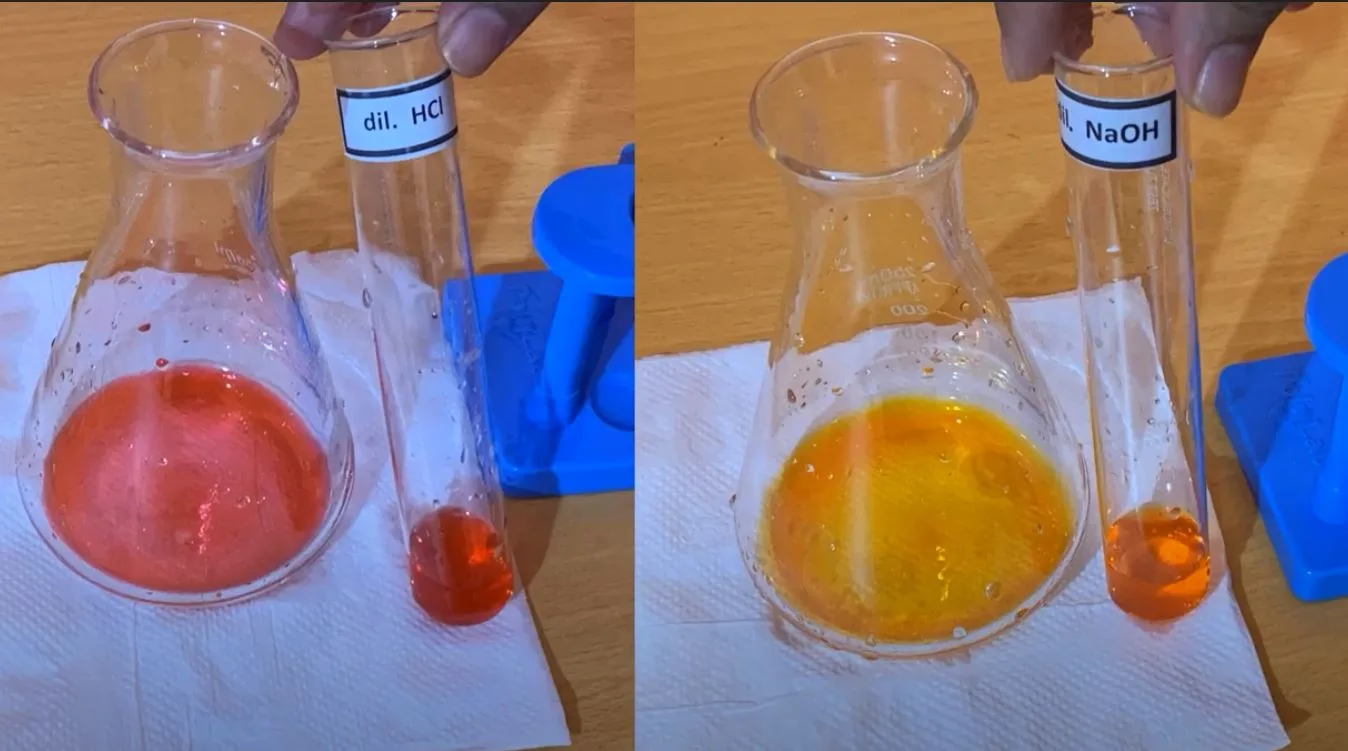
In the photo, the left flask holds methyl orange in dilute hydrochloric acid (red) and the right flask holds it in dilute sodium hydroxide (yellow). A deep layer of the yellow solution can look golden or yellow-orange, but in dilute alkali the indicator is yellow.
The range matters more than most students realise. Because the change happens between pH 3.1 and 4.4, methyl orange is already yellow in a weak acid at pH 5. That makes it a poor choice for telling acids from alkalis in general, and a good choice for titrations that finish on the acid side. In a titration of a strong acid with a strong base, you stop at the very first trace of orange.
Phenolphthalein: colourless in acid, pink in alkali
Phenolphthalein is colourless in acid and in neutral solution, and pink in alkali. Its change range is about pH 8.2 to 10.0, though some sources give 8.3 as the lower limit. Halfway through the change it is just a paler pink.
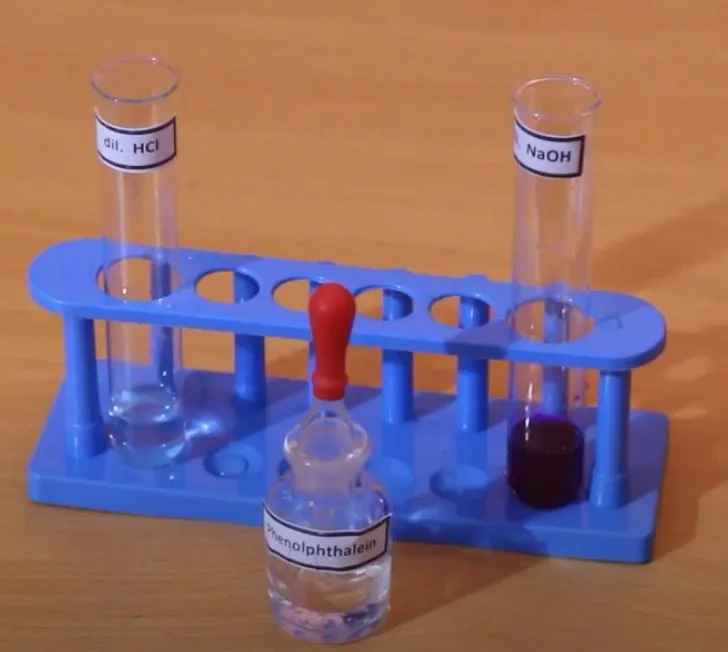
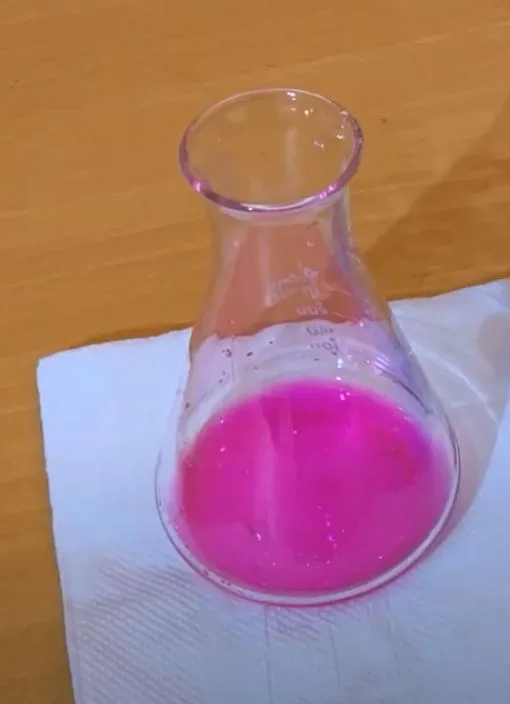
Notice what that means: phenolphthalein is colourless in pure water as well as in acid. A colourless result does not prove the solution is acidic. It only tells you the pH is below about 8. This is a common trap in exam questions about unknown solutions.
History and uses of phenolphthalein
The German chemist Adolf von Baeyer first made phenolphthalein in 1871 from phenol and phthalic anhydride. It was also used as a laxative, for example in Ex-Lax from 1906. In the late 1990s it was withdrawn from over-the-counter laxatives in the United States after studies in rodents raised cancer concerns, and it is now classed by the International Agency for Research on Cancer as Group 2B, "possibly carcinogenic to humans".
It still has a use outside the school lab. Builders and engineers can spray it on concrete to check carbonation: pink means the concrete is still alkaline, and unstained means it has been carbonated. For other everyday applications of alkalis, acids and salts, see uses of acids, bases and salts.
Results table for the laboratory indicators
Here is the summary of what the photographs show. Compare it with your own results, and record any differences in your lab book.
| Indicator | In dilute HCl (acid) | In dilute NaOH (alkali) | In pure water |
|---|---|---|---|
| Blue litmus paper | Turns red | Stays blue | Stays blue |
| Red litmus paper | Stays red | Turns blue | Stays red |
| Methyl orange | Red | Yellow | Yellow (water is above pH 4.4) |
| Phenolphthalein | Colourless | Pink | Colourless |
| Universal indicator paper | Red (about pH 1 to 2) | Dark purple (about pH 13 to 14) | Compare with the chart (green at pH 7 on many charts) |
The litmus and methyl orange results for pure water follow from the ranges above: pure water is pH 7, which is above the methyl orange range and within the litmus range, so neutral water changes neither litmus paper. The tests on water are included because a good practical always includes a neutral control.
Reading a result like a scientist
For each test, write a sentence in the form "Indicator X turned from colour A to colour B when I added solution Y". Then add the conclusion, such as "so Y is alkaline". Doing this for every row of the table builds the habit examiners reward. If a colour does not match the table, do not copy the table: record what you actually saw and suggest a reason, for example a contaminated dropper or a different brand of indicator. Real data with an honest explanation scores better than a perfect-looking result that you did not observe.
Universal indicator and pH paper
Universal indicator is a mixture of several indicators, for example thymol blue, methyl red, bromothymol blue and phenolphthalein. Mixing them means the colour keeps changing across most of the pH scale, so you can estimate a pH value instead of just deciding "acid or alkali". Most commercial versions are variations of a formula patented by Yamada in 1933. pH paper is simply paper soaked in a mixture of indicators.
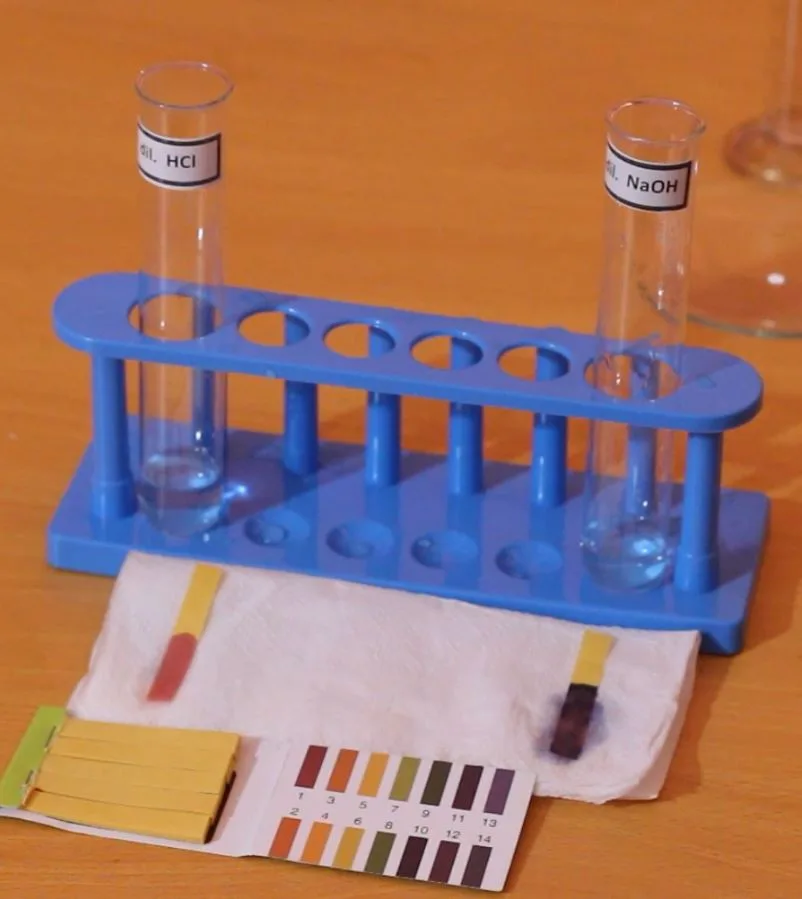
To use it, touch a drop of the solution to the paper with a glass rod, or dip the strip in, and compare the colour with the chart straight away. In the photographed test, the strip touched with dilute hydrochloric acid turned red, which on the chart means about pH 1 to 2. The strip touched with dilute sodium hydroxide turned dark purple, about pH 13 to 14.
Typical universal indicator colours are red at pH 3 and below, orange to yellow at pH 4 to 6, green at pH 7, blue at pH 8 to 10, and indigo or violet at pH 11 and above. Treat this as a general guide. Each brand prints its own chart, so always compare your paper with the chart supplied with it.
Why your colour chart may not match your textbook
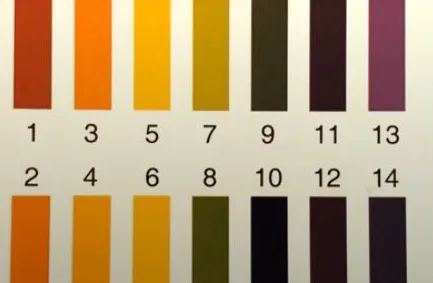
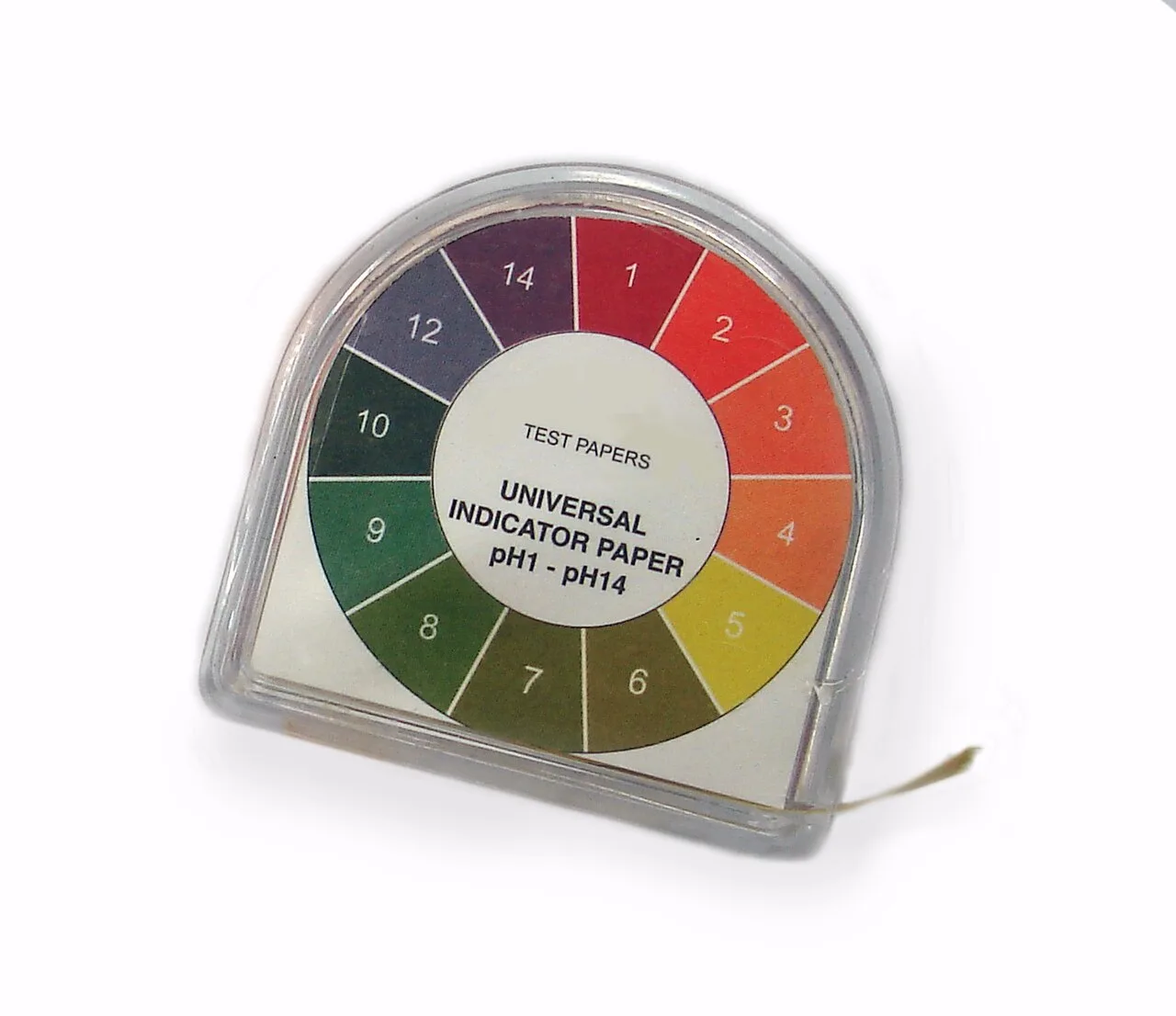
The two charts below are from different brands. One pack runs from red through orange and yellow to an olive-green at pH 7, a dark green at 9, and then very dark brown or navy at pH 10 to 12 before purple at 13 and 14. The other brand’s paper shows green across pH 7 to 9. Neither is wrong; they use different indicator mixtures.
pH paper is useful well beyond the classroom. One example is checking the acidity of rainfall, which links to the topic of rain water and acid rain facts. Remember that the paper gives an approximate value only; if you need a precise figure, use a pH meter.
Acid-base indicators list: colours and pH ranges
This table collects the indicators from the article in one place. Use the ranges as approximate guides, because data books differ by a few tenths of a pH unit.
| Indicator | Colour in acid | Colour in alkali | Changes around pH | Best used for |
|---|---|---|---|---|
| Litmus | Red | Blue | About 5 to 8 | Quick acid or alkali test on paper; testing gases when damp |
| Methyl orange | Red | Yellow (orange in between) | 3.1 to 4.4 | Titrations that finish on the acid side |
| Methyl red | Red | Yellow | About 4.4 to 6.2 | Strong acid with weak base titrations |
| Bromothymol blue | Yellow | Blue | About 6.0 to 7.6 | Changes close to neutral |
| Phenolphthalein | Colourless | Pink | About 8.2 to 10.0 | Titrations that finish on the alkaline side |
| Universal indicator | Red to yellow | Blue to violet | Gradual change across the scale | Estimating a pH; not for titrations |
| Red cabbage extract | Red | Green to yellow | Gradual change across the scale | Classroom demonstration of a pH rainbow |
| Hibiscus (China rose) | Dark pink (magenta) | Green | Not quoted here | Natural indicator for acid versus base |
One detail to notice in the table: the three indicators used for exact end points, methyl orange, methyl red and phenolphthalein, each change over a narrow range of about two pH units or less. That narrow range is what produces a sharp colour change when a single drop tips the solution across it.
Which indicator for which titration?
In a titration you add one solution from a burette to another until the reaction is exactly complete. The indicator shows you the end point. For the end point to be sharp, the indicator must change colour inside the steep jump in pH that happens at the equivalence point. Different acid and alkali combinations have jumps in different places, so the right indicator depends on the pair.
| Titration type | Example | Steep pH jump | Suitable indicator | Unsuitable |
|---|---|---|---|---|
| Strong acid and strong base | HCl with NaOH | About pH 4 to 10 | Methyl orange or phenolphthalein (also methyl red or bromothymol blue) | None of the common ones |
| Strong acid and weak base | HCl with ammonia | About pH 4 to 7 | Methyl orange or methyl red | Phenolphthalein |
| Weak acid and strong base | Ethanoic acid with NaOH | About pH 7 to 10 | Phenolphthalein | Methyl orange |
| Weak acid and weak base | Ethanoic acid with ammonia | No sharp jump | None; use a pH meter | All simple indicators |
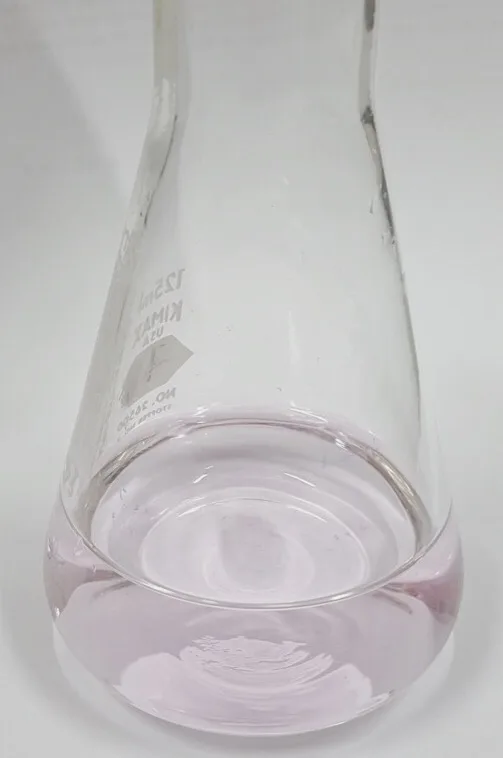
At the end point, phenolphthalein shows the first faint pink that stays when alkali is added to acid. If you add acid to alkali instead, the end point is the moment the pink disappears and the solution is just colourless. The full titration method is in our acid-base titration guide, and the solution you titrate against is made as in how to make a standard solution.
The reason is worth understanding. Methyl orange changes colour far too early for a weak acid with a strong base: it would be fully yellow before the equivalence point is anywhere near. Phenolphthalein is the mirror image for a strong acid with a weak base, where it is described as completely useless because the pH never gets as high as its range.
Why universal indicator is not used in titrations
Universal indicator changes colour gradually through many colours, so there is no sharp end point at a single drop. You could not say "stop now" with confidence. That is the reason titrations use a single indicator with a narrow range instead.
Evaluating the practicals
Evaluation questions ask you to think about whether your results are reliable. Use this checklist of ideas.
Variables
- Independent variable: the solution being tested (its pH).
- Dependent variable: the colour of the indicator.
- Control variables: the number of drops of indicator, the volume of solution, the concentration of the acid and alkali, clean test tubes, the white background and the lighting.
Sources of error
- A contaminated dropper carries acid into the alkali, or the other way round, and gives a muddled colour.
- Too much indicator hides the true colour and can change the pH slightly.
- Judging colour under yellow or dim light. Look at the tubes in front of a white background and in the same light each time.
- Colour-blindness. If you find it hard to tell red from green, ask a partner to record the colour, or use a pH meter.
- An old natural extract. Cabbage and hibiscus extracts spoil quickly, so make them fresh for each lesson.
Improvements
- Use a pH meter when you need an exact value rather than a colour.
- Place each tube on a white tile so you can compare colours properly.
- Prepare fresh extract for each lesson.
- Compare each result with a reference tube of a known solution tested at the same time.
Common mistakes
- Saying "colourless means acid" for phenolphthalein. Pure water and neutral solutions are colourless too.
- Forgetting that litmus needs two colours of paper to give a complete answer.
- Using universal indicator in a titration.
- Using methyl orange to show a solution is "alkaline": it is already yellow at pH 5, which is acidic.
- Writing "the paper turns acid" instead of "the paper turns red".
Maths practice questions
Indicator practicals come with calculations: finding pH, converting back to hydrogen ion concentration, diluting solutions and working out concentrations from titrations. The twelve questions below get harder as you go. Try each one on paper first, then tap the question to reveal a fully worked solution with units and significant figures. Questions 10 and 11 are A-level stretch, and question 12 is a stretch for confident GCSE students.
These are the formulae you need:
pH = −log₁₀[H⁺]
[H⁺] = 10−pH mol/dm³
c = n ÷ V (V in dm³)
c₁V₁ = c₂V₂
Remember that each change of one pH unit means a tenfold change in [H⁺], and that volumes in cm³ must be divided by 1000 to give dm³.
Q1. Calculate the pH of 0.010 mol/dm³ hydrochloric acid, which is fully ionised. (1 mark)
[H⁺] = 0.010 mol/dm³.
pH = −log₁₀(0.010) = −(−2.00) = 2.00.
Check: 10⁻² = 0.01.
Q2. Calculate the pH of 0.0050 mol/dm³ hydrochloric acid. (2 marks)
[H⁺] = 0.0050 mol/dm³.
log₁₀(0.0050) = −2.301, so pH = 2.30 (to 2 decimal places).
Check: 10⁻²·³⁰ = 0.00501.
Q3. A rainwater sample has a pH of 3.5. Find the hydrogen ion concentration. (2 marks)
[H⁺] = 10⁻³·⁵ = 3.16 × 10⁻⁴ mol/dm³ (0.000316 mol/dm³).
Check: −log₁₀(3.162 × 10⁻⁴) = 3.500.
Q4. Solution A has pH 2 and solution B has pH 5. How many times greater is [H⁺] in A than in B? (2 marks)
[H⁺] in A = 10⁻² and in B = 10⁻⁵.
10⁻² ÷ 10⁻⁵ = 10³ = 1,000 times.
Each pH unit is a factor of 10, and there are 3 units between them: 10 × 10 × 10.
Want to check your pH answers? Use the calculator. Choose whether you know [H⁺] or the pH, enter the number and it gives the other value, plus the colours you would expect from three indicators.
Q5. 10.0 cm³ of 0.10 mol/dm³ hydrochloric acid is made up to 100 cm³ with water. State the new concentration and the change in pH. (2 marks)
c₂ = c₁V₁ ÷ V₂ = 0.10 × 10.0 ÷ 100 = 0.010 mol/dm³.
pH changes from 1.00 to 2.00.
A tenfold dilution of a strong acid raises the pH by exactly 1.
Q6. 25.0 cm³ of 0.200 mol/dm³ hydrochloric acid is diluted to 250 cm³. Find the new concentration and pH. What colour is methyl orange in the diluted acid? (3 marks)
c₂ = 0.200 × 25.0 ÷ 250 = 0.0200 mol/dm³.
pH = −log₁₀(0.0200) = 1.699, so pH = 1.70.
pH 1.70 is below 3.1, so methyl orange is red.
The dilution calculator below applies c₁V₁ = c₂V₂ for you. Change the three numbers to check Q5, Q6 or your own examples.
Q7. 25.0 cm³ of 0.100 mol/dm³ sodium hydroxide needs 21.30 cm³ of hydrochloric acid to neutralise it, using phenolphthalein (pink to colourless). Find the concentration of the acid. NaOH + HCl → NaCl + H₂O. (3 marks)
n(NaOH) = 0.100 × 25.0 ÷ 1000 = 0.00250 mol.
The ratio is 1 : 1, so n(HCl) = 0.00250 mol.
c(HCl) = 0.00250 ÷ 0.02130 = 0.11737, so 0.117 mol/dm³ (3 significant figures).
Q8. Four titrations of 25.0 cm³ of 0.100 mol/dm³ NaOH with sulfuric acid gave titres of 22.45, 22.10, 22.15 and 22.05 cm³. (a) Identify the concordant titres and find the mean. (b) Calculate the concentration of the sulfuric acid. H₂SO₄ + 2NaOH → Na₂SO₄ + 2H₂O. (4 marks)
(a) 22.45 cm³ is the outlier (the first, rough titration). The concordant titres, within 0.10 cm³ of each other, are 22.10, 22.15 and 22.05. Mean = 66.30 ÷ 3 = 22.10 cm³.
(b) n(NaOH) = 0.100 × 25.0 ÷ 1000 = 0.00250 mol.
The ratio is 1 H₂SO₄ : 2 NaOH, so n(H₂SO₄) = 0.00250 ÷ 2 = 0.00125 mol.
c(H₂SO₄) = 0.00125 ÷ 0.02210 = 0.05656, so 0.0566 mol/dm³.
Q9. What mass of sodium hydroxide (Mr = 40.0, from 23.0 + 16.0 + 1.0) is needed to make 250 cm³ of 0.100 mol/dm³ solution? (2 marks)
n = c × V = 0.100 × 0.250 = 0.0250 mol.
m = n × Mr = 0.0250 × 40.0 = 1.00 g.
Q10 (A-level stretch). Methyl orange changes colour between pH 3.1 and pH 4.4. Find [H⁺] at each end of the range and the ratio between them. (2 marks)
At pH 3.1: [H⁺] = 10⁻³·¹ = 7.94 × 10⁻⁴ mol/dm³.
At pH 4.4: [H⁺] = 10⁻⁴·⁴ = 3.98 × 10⁻⁵ mol/dm³.
Ratio = 10¹·³ = about 20 (19.95).
So the colour change spans roughly a 20-fold change in [H⁺].
Q11 (A-level stretch). Calculate the pH of 0.0100 mol/dm³ sodium hydroxide at 25 °C. Kw = 1.00 × 10⁻¹⁴ mol² dm⁻⁶. What colour is phenolphthalein in it? (3 marks)
NaOH is fully ionised, so [OH⁻] = 0.0100 mol/dm³.
[H⁺] = Kw ÷ [OH⁻] = 1.00 × 10⁻¹⁴ ÷ 0.0100 = 1.00 × 10⁻¹² mol/dm³.
pH = −log₁₀(1.00 × 10⁻¹²) = 12.00.
Phenolphthalein is pink.
Q12 (stretch). 20.0 cm³ of 0.100 mol/dm³ hydrochloric acid is mixed with 15.0 cm³ of 0.100 mol/dm³ sodium hydroxide. Find the pH of the mixture and the colours of methyl orange and phenolphthalein in it. (4 marks)
n(H⁺) = 0.100 × 0.0200 = 0.00200 mol.
n(OH⁻) = 0.100 × 0.0150 = 0.00150 mol.
Excess H⁺ = 0.00200 − 0.00150 = 0.00050 mol, in a total volume of 35.0 cm³ = 0.0350 dm³.
[H⁺] = 0.00050 ÷ 0.0350 = 0.01429 mol/dm³.
pH = −log₁₀(0.01429) = 1.845, so pH = 1.85.
Methyl orange is red (pH below 3.1) and phenolphthalein is colourless (pH below about 8).
Test yourself on chemical indicators
More chemistry practicals
If you enjoyed these practicals, try the others in the series: electrolysis and electroplating, the simple cell practical and electricity generation from a lime.
Frequently asked questions about chemical indicators
What are the most common indicators used in the laboratory?
The five most common are litmus, methyl orange, phenolphthalein, universal indicator (often as pH paper) and natural indicators such as red cabbage. Litmus and universal indicator are used for quick tests, while methyl orange and phenolphthalein are the usual choices for the end point of a titration.
What colour is methyl orange in acid and alkali?
Methyl orange is red in acidic solution and yellow in alkaline solution, with orange at the half-way point. It changes colour over the range pH 3.1 to 4.4, so it is already yellow in a weak acid at around pH 5.
What colour is phenolphthalein in acid and alkali?
Phenolphthalein is colourless in acid and in neutral solutions, and pink in alkaline solutions. The half-way colour is a pale pink. Because it is colourless in pure water too, a colourless result does not prove that a solution is acidic.
What is the pH range of phenolphthalein?
Phenolphthalein changes from colourless to pink at about pH 8.2 to 10.0. Some data books give the lower limit as 8.3. Below about pH 8 it is colourless, and above about pH 10 it is fully pink.
Which indicator is used for titrating a weak acid with a strong base?
Use phenolphthalein. The steep pH jump at the equivalence point for a weak acid and a strong base is about pH 7 to 10, which matches phenolphthalein’s range. Methyl orange changes colour far too early, so it would give an end point that is much too soon.
Why is universal indicator not used in titrations?
Universal indicator changes colour gradually through many colours as the pH changes, so there is no sharp end point at a single drop. A titration needs one clear colour change, which is why an indicator with a narrow range, such as phenolphthalein or methyl orange, is used instead.
How do you make a red cabbage indicator?
Boil about 50 cm³ of water, add three or four small pieces of red cabbage and keep it boiling for about five minutes until the water turns blue or green. Cool it, then pour off the coloured liquid. Blending or soaking overnight also works. Never drink the extract.
What colour does hibiscus indicator turn in acid and alkali?
A hibiscus (China rose) petal extract turns dark pink (magenta) in acidic solutions and green in basic solutions. Its colour comes from anthocyanins. Natural extracts spoil quickly, so make a fresh one for each lesson rather than keeping it.
What colour is litmus in a neutral solution?
Litmus solution is purple when neutral. Litmus paper in a neutral liquid changes neither colour: blue paper stays blue and red paper stays red. Litmus changes over about pH 5 to 8, so a neutral pH 7 solution sits inside that change range.