Key points at a glance
- Electrons are arranged in shells (energy levels) around the nucleus, filling from the shell nearest the nucleus outwards.
- For the first twenty elements the shells fill in the pattern 2, 8, 8, 2.
- The atomic number tells you how many electrons a neutral atom has, so it is all you need to write the configuration.
- The number of shells used equals the period the element is in; the number of outer-shell electrons tells you its group.
- Ions have different configurations from their atoms: Na is 2,8,1 but Na+ is 2,8.
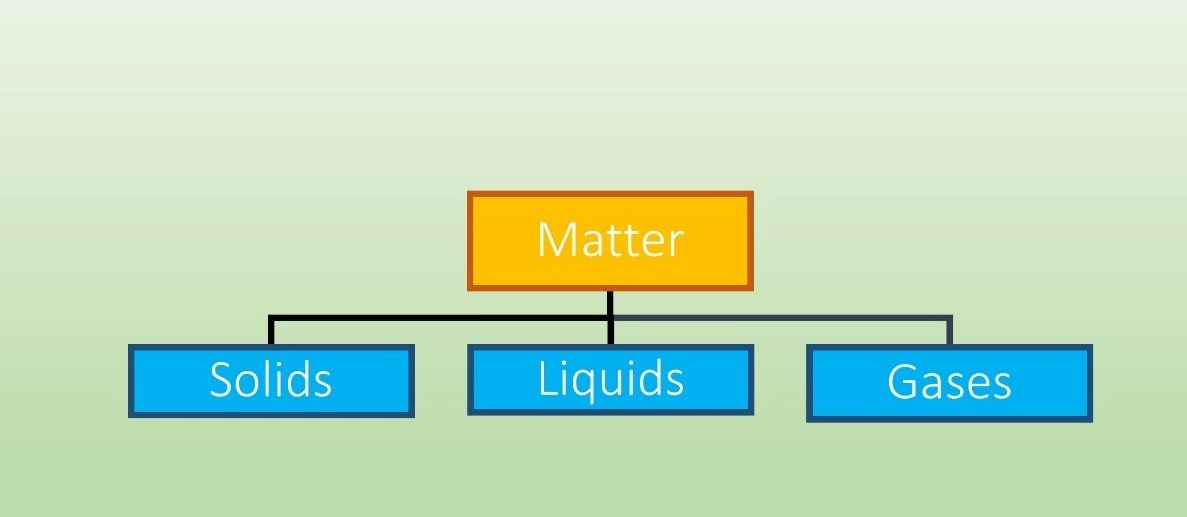
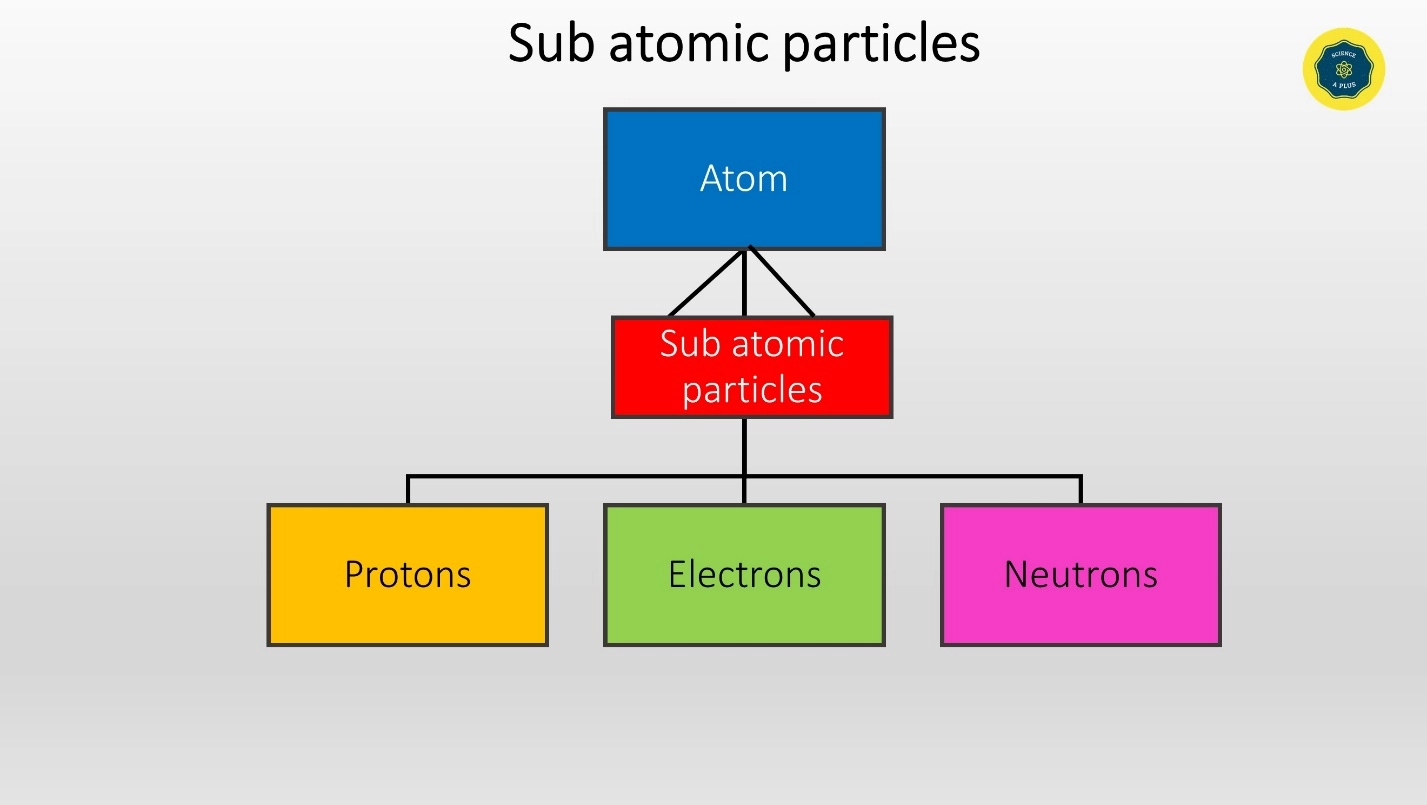
Atom is the building unit of matter. Atoms are made of sub atomic particles. The sub atomic particles are
- Protons
- Electrons
- Neutrons
Elaboration of Rutherford's model by Niels Bohr
Detailed history is in this article on atomic structure.
Around the positively charged nucleus, electrons flow in distinct routes or shells. These shells or paths are known as energy levels.
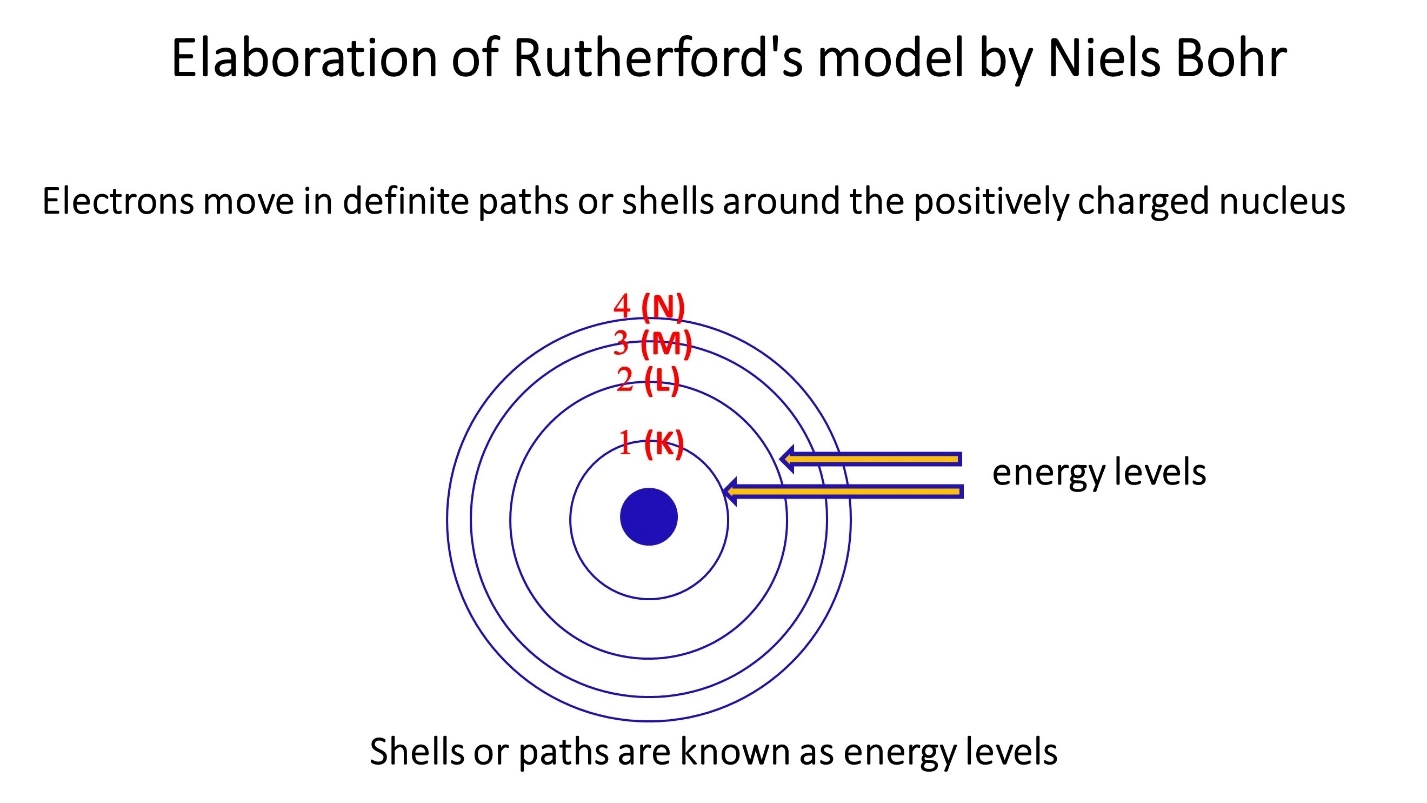
- Each of the energy levels have their own specific energy.
- When moving away from the nucleus this energy increases
- When moving away from the nucleus difference between the energy levels decreases
Maximum number of electrons in each energy level
The largest number of electrons a shell can theoretically hold is given by 2n2, where n is the shell number counting outwards from the nucleus.
| Shell (energy level), n | 2n2 | Maximum number of electrons |
|---|---|---|
| 1st | 2 × 12 | 2 |
| 2nd | 2 × 22 | 8 |
| 3rd | 2 × 32 | 18 |
| 4th | 2 × 42 | 32 |
Why the third shell seems to stop at 8
This is the point that confuses almost everyone. The third shell can eventually hold 18 electrons, but it does not fill straight to 18. Once the third shell contains 8 electrons, the next two electrons go into the fourth shell, because at that stage the fourth shell is at a lower energy than the remaining part of the third. Only after that does the third shell carry on filling up to 18.
That is why potassium is 2,8,8,1 and calcium is 2,8,8,2 rather than 2,8,9 and 2,8,10. For the first twenty elements, which is all you normally need at this level, you can safely use the simple filling pattern 2, 8, 8, 2.
Mass Number and Atomic Number
Mass number is written in upper left corner of an element and Atomic number is written in lower left corner of an element.
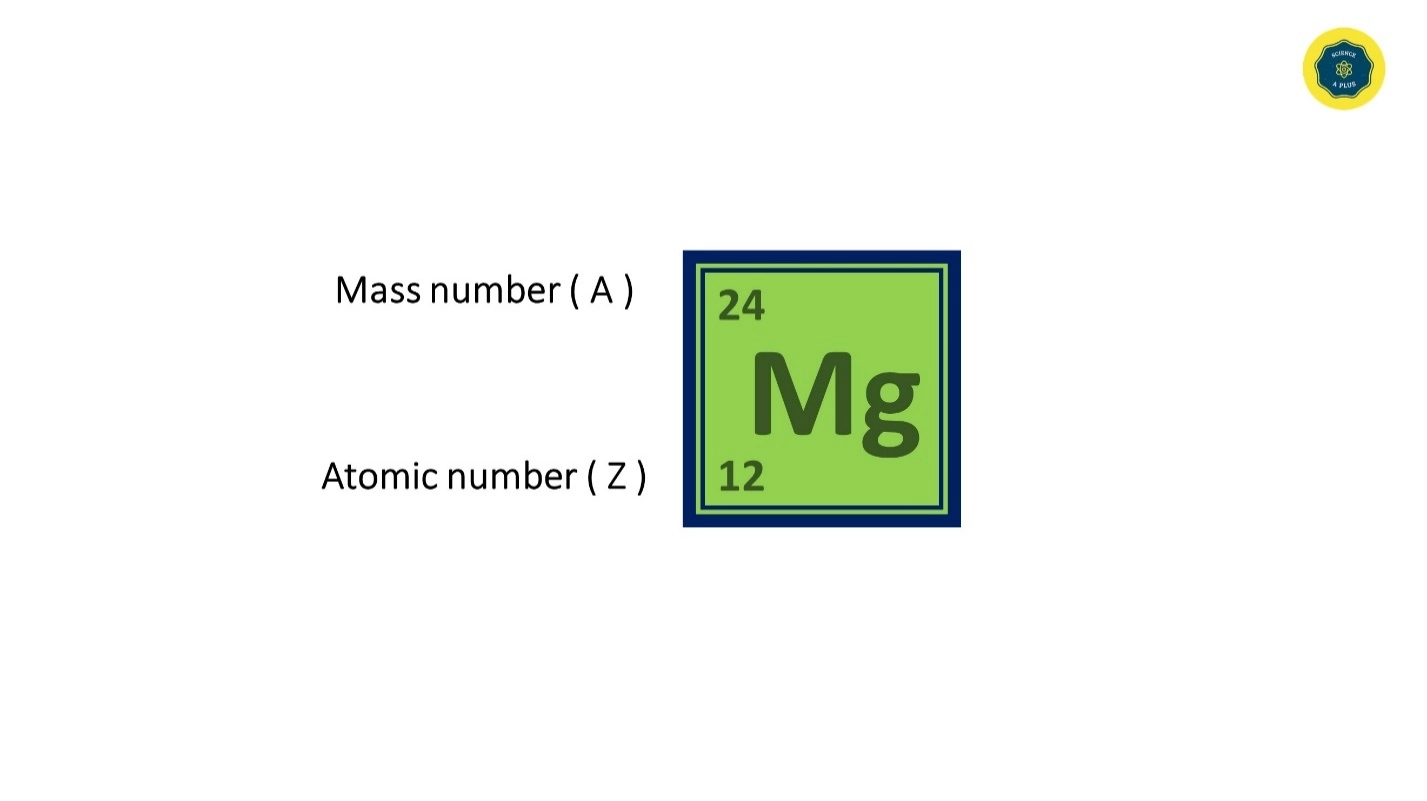
Atomic number is equal to the number of electrons as well as the number of protons in an uncharged atom.
The mass number is equal to the sum of the number of protons and neutrons.
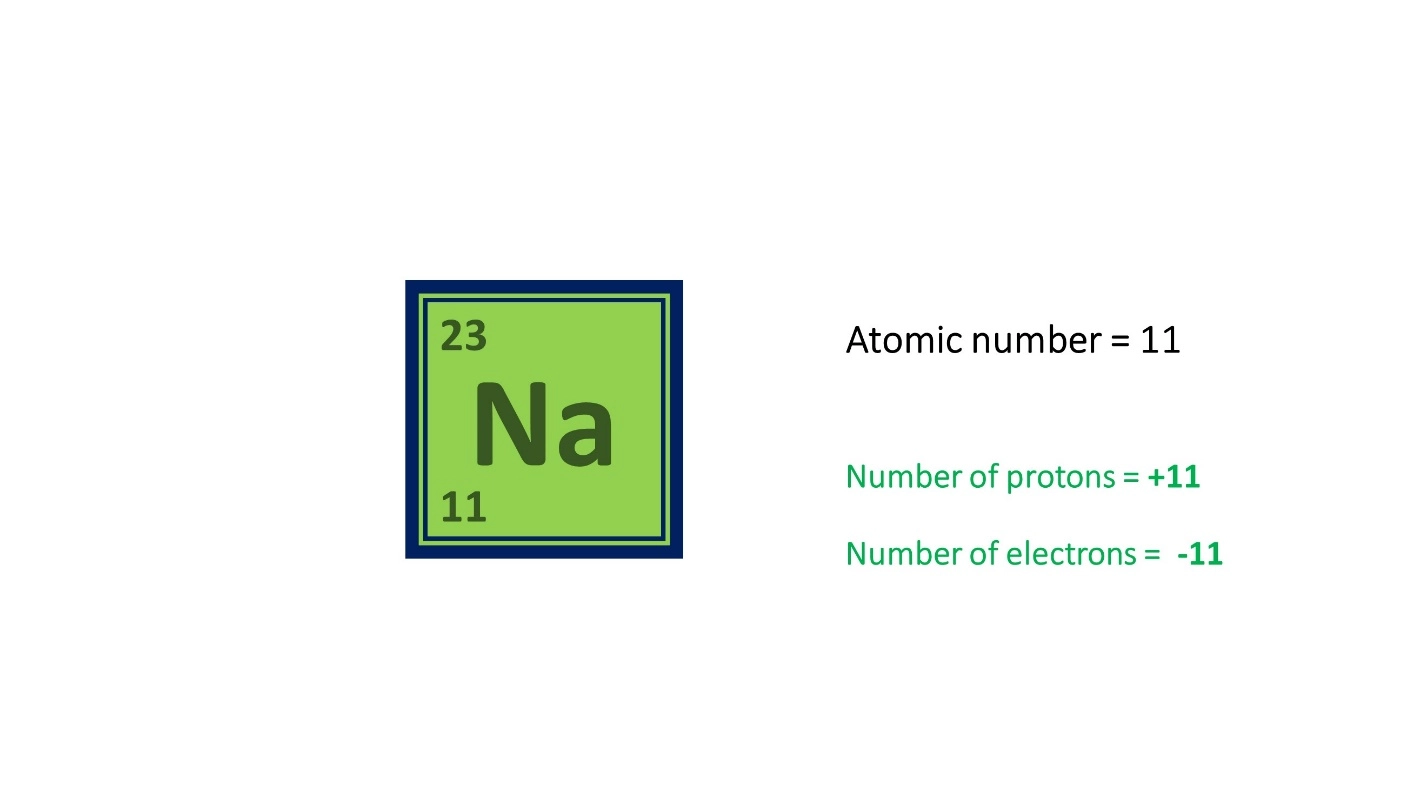
Here, Sodium (Na) has 11 protons and 11 electrons. Its atomic number is 11.
Since it has 11 protons and 12 neutrons its mass number is 23, which is the sum of 11 and 12.
Number of neutrons = mass number − atomic number. For this sodium atom that is 23 − 11 = 12.
What is electronic configuration of an atom?
Representing how electrons are filled in the respective energy levels from the one nearest to the nucleus of an atom to outwards.
Let’s see an example – Sodium
Electronic configuration of Sodium is 2,8,1
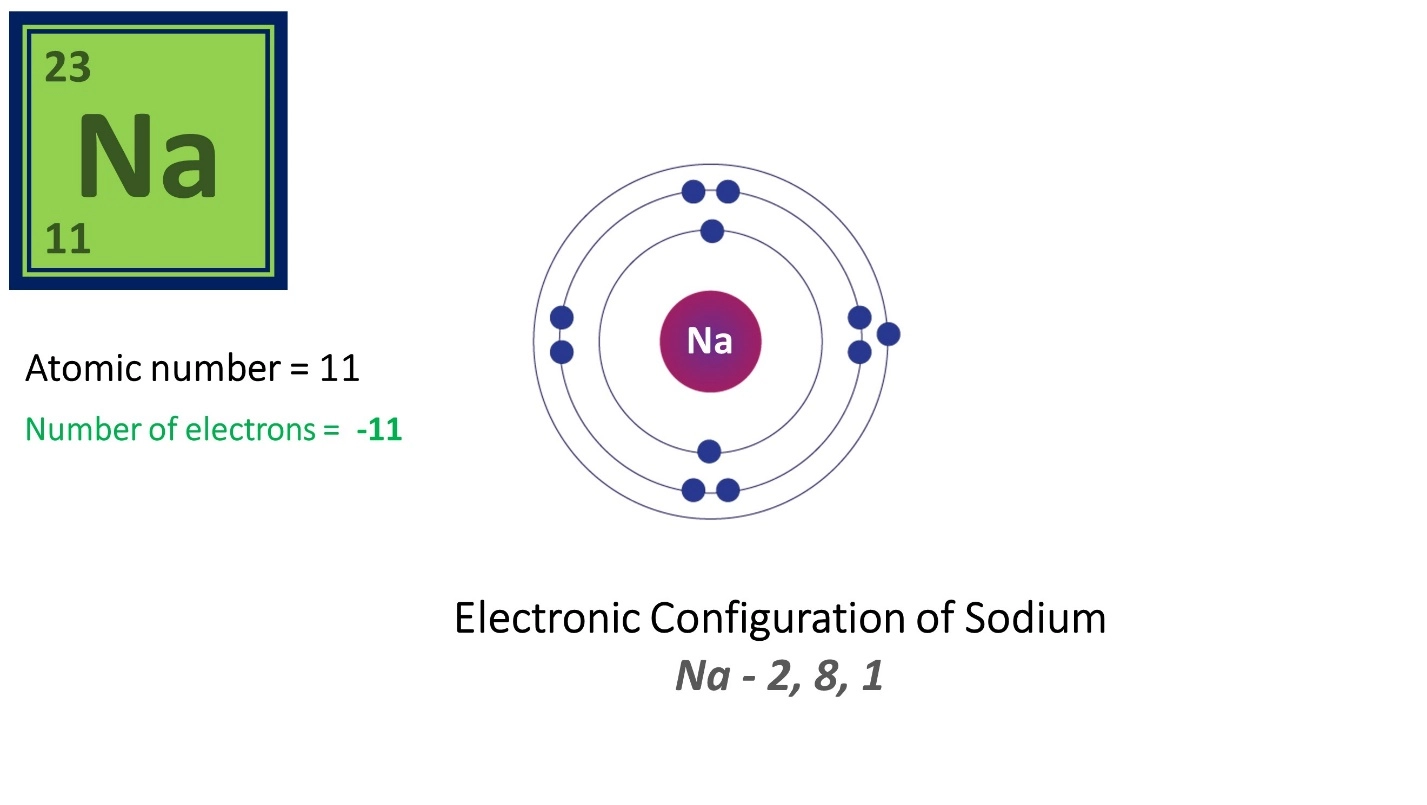
How to write the electronic configuration of an atom?
- Atomic number is the sum of electrons in an atom. For Sodium it is 11.
- Fill each energy level from inwards.
- First energy level gets 2 electrons, so 9 electrons are remaining.
- Let’s fill the second energy level. It can contain maximum 8 electrons.
- Keep 8 electrons in the second energy level and now we have 1 electron remaining.
- Put the remaining electron in the next (third) energy level.
- Now it is complete. Let’s look back at the energy levels.
- First energy level has 2 electrons and it is full. Second energy level is full with 8 electrons and the third energy level has only one electron.
- So, the electronic configuration is 2,8,1
Here some easy examples for writing electronic configuration.
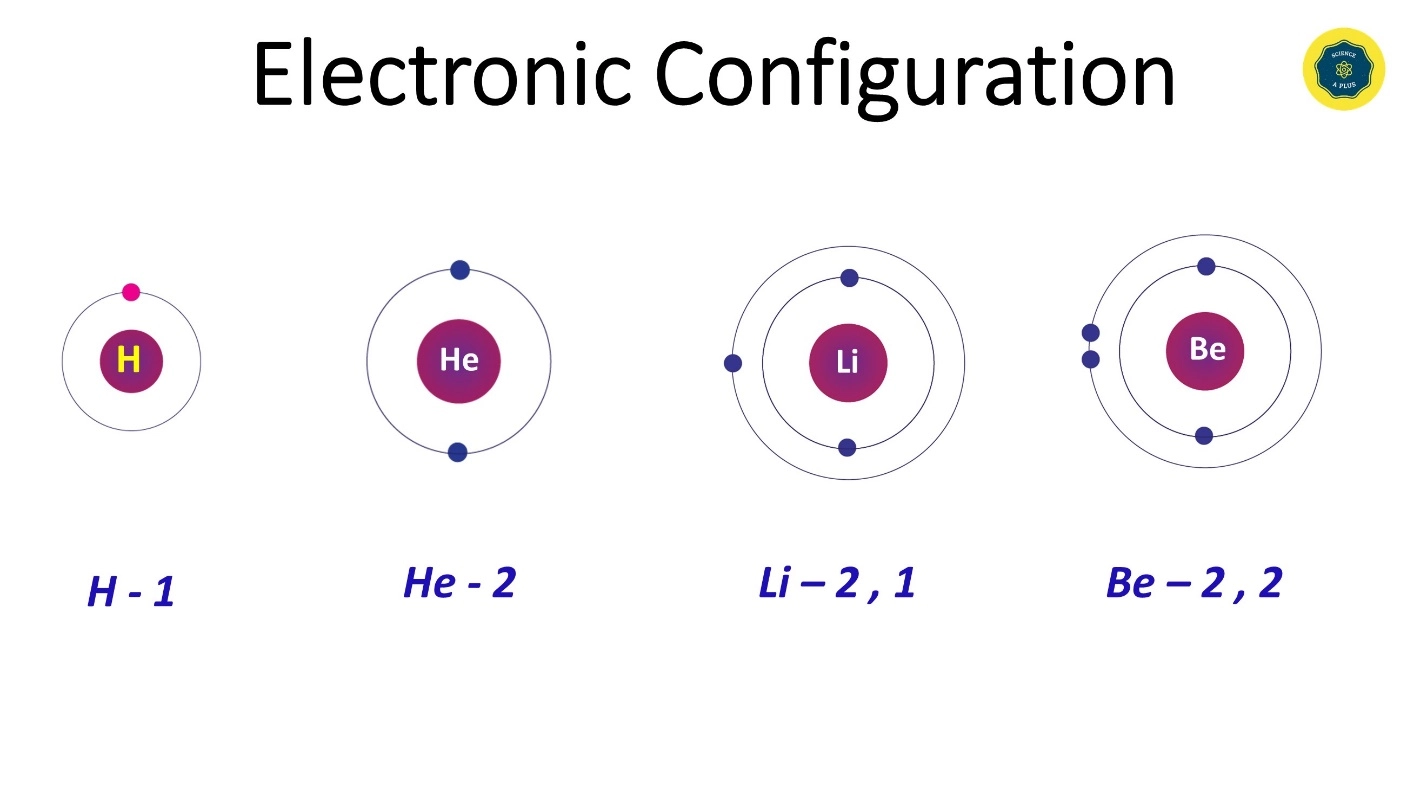
- Hydrogen has one electron. So, its electronic configuration is simply 1.
- Helium has 2 electrons. Its electronic configuration is 2.
- Lithium has 3 electrons. 2 electrons fill the first energy level and the remaining electron stays in the next (second) energy level. The electronic configuration is 2,1.
- Beryllium with its 4 electrons has an electronic configuration of 2,2.
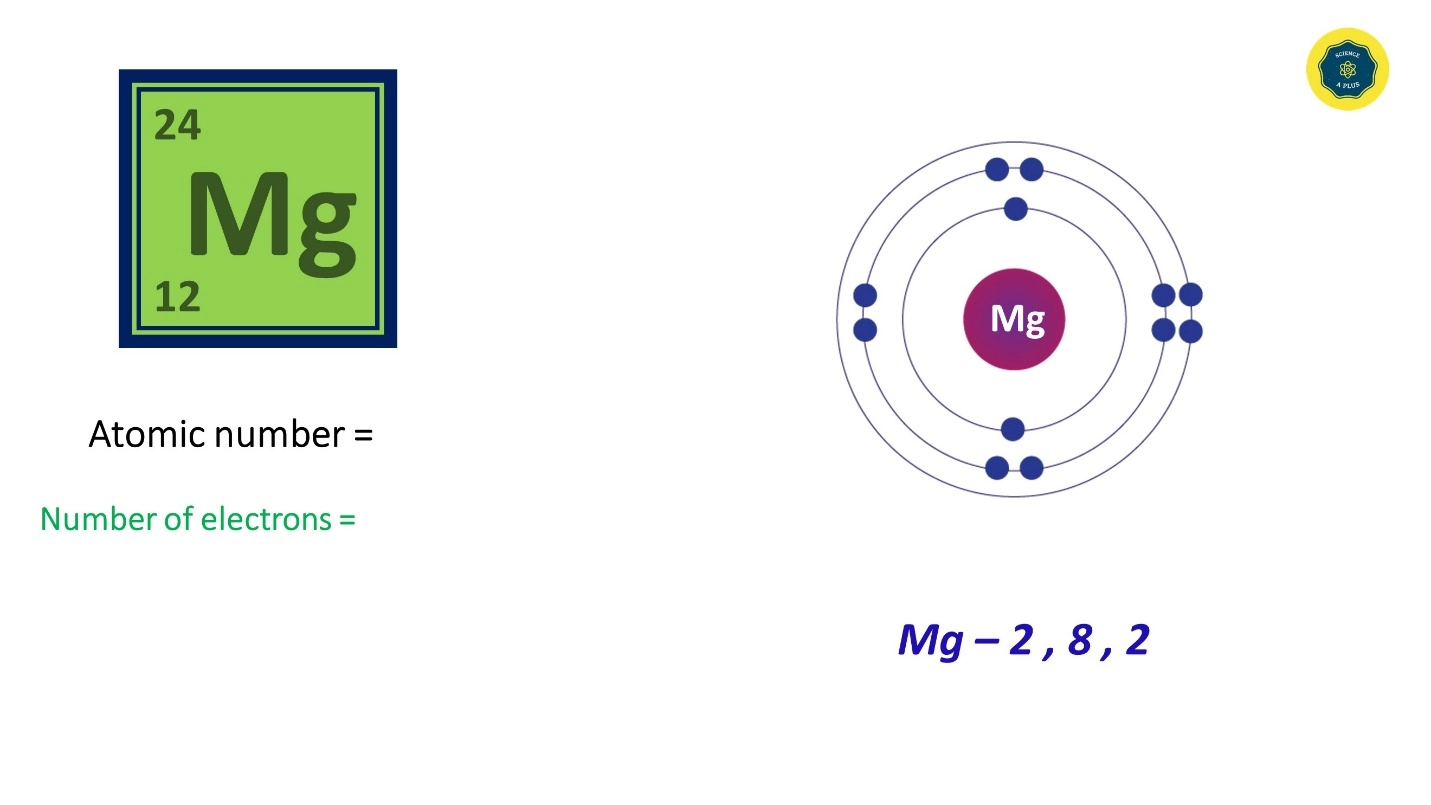
- Magnesium has 12 electrons and the electron configuration is 2,8,2. It has 12 electrons and the atomic number is also 12.
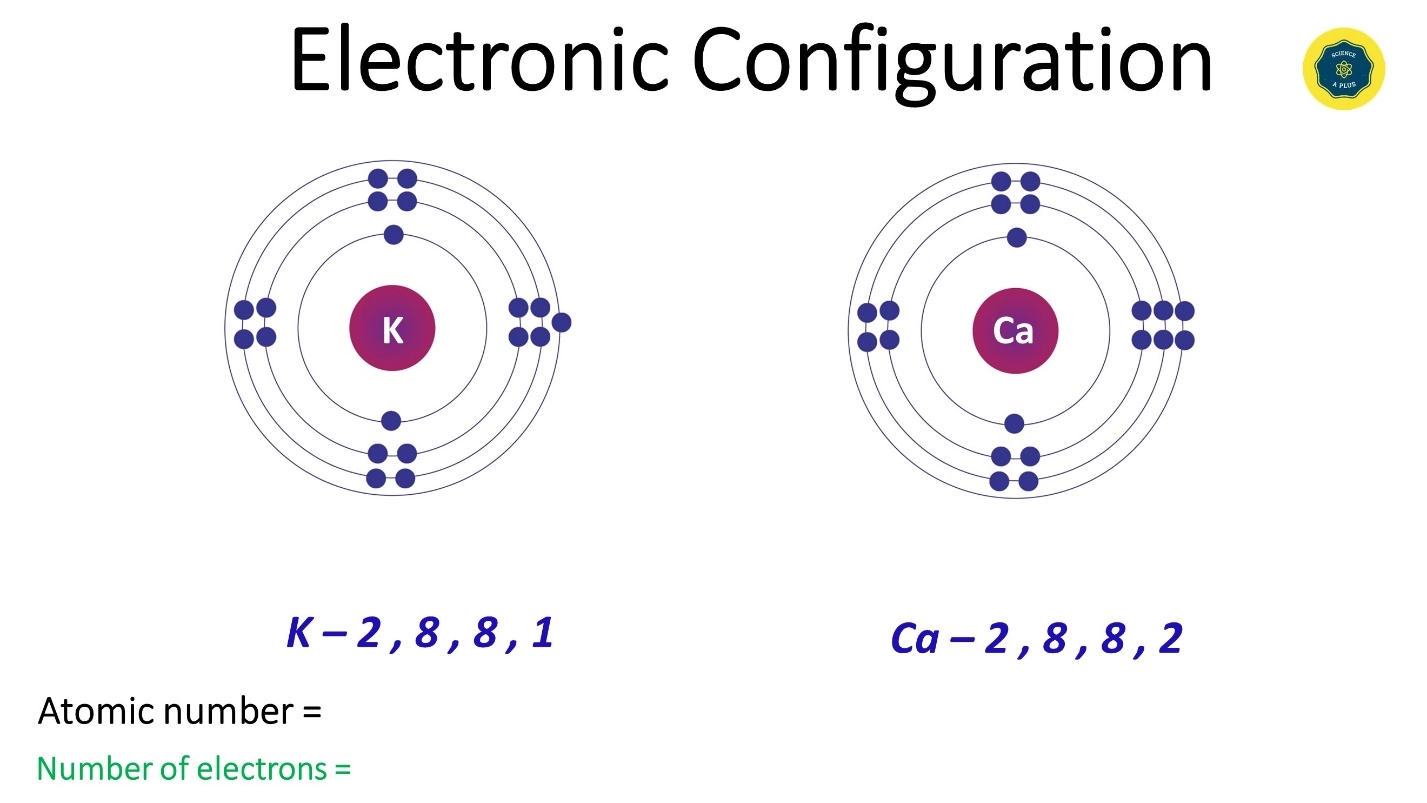
- The above two examples show that first energy level is filled with 2 electrons, second energy level is filled with 8 electrons and the third energy level is filled with 8 electrons.
- This results in pushing the remaining electrons to the fourth energy level.
- Potassium (K) has an electron configuration as 2,8,8,1. Atomic number 19. No of electrons 19.
- Calcium (Ca) has its electronic configuration as 2,8,8,2. Atomic number 20. No of electrons 20.
The below table shows the electronic configuration of the first twenty elements.
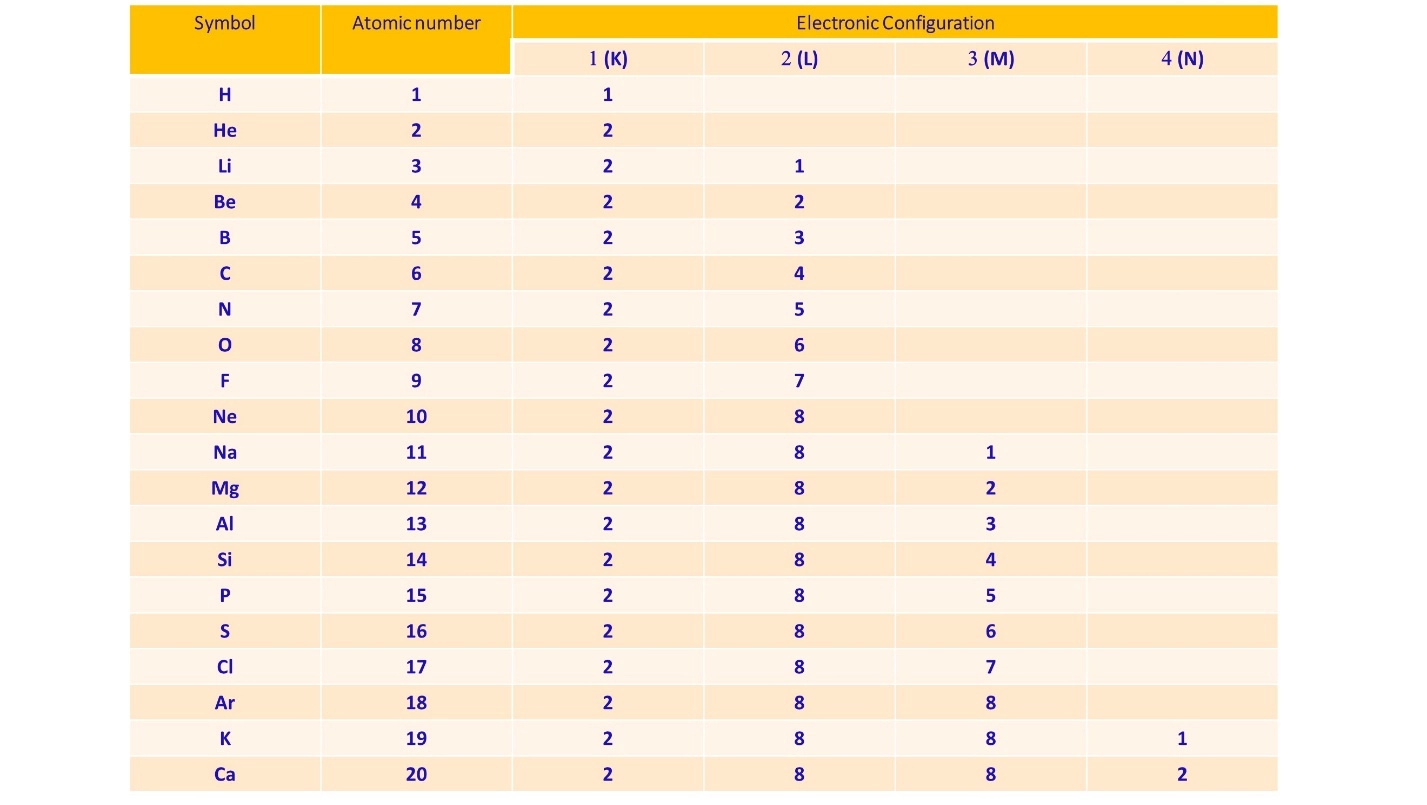
Electronic configuration of the first 20 elements
Here is the same information as text, so you can copy it into your notes and check your own answers.
| Atomic number | Element | Symbol | Electronic configuration |
|---|---|---|---|
| 1 | Hydrogen | H | 1 |
| 2 | Helium | He | 2 |
| 3 | Lithium | Li | 2,1 |
| 4 | Beryllium | Be | 2,2 |
| 5 | Boron | B | 2,3 |
| 6 | Carbon | C | 2,4 |
| 7 | Nitrogen | N | 2,5 |
| 8 | Oxygen | O | 2,6 |
| 9 | Fluorine | F | 2,7 |
| 10 | Neon | Ne | 2,8 |
| 11 | Sodium | Na | 2,8,1 |
| 12 | Magnesium | Mg | 2,8,2 |
| 13 | Aluminium | Al | 2,8,3 |
| 14 | Silicon | Si | 2,8,4 |
| 15 | Phosphorus | P | 2,8,5 |
| 16 | Sulfur | S | 2,8,6 |
| 17 | Chlorine | Cl | 2,8,7 |
| 18 | Argon | Ar | 2,8,8 |
| 19 | Potassium | K | 2,8,8,1 |
| 20 | Calcium | Ca | 2,8,8,2 |
How electronic configuration links to the periodic table
This is the reason the topic is worth learning properly – the configuration tells you where an element sits in the periodic table and how it will behave.
- The number of shells that contain electrons is the period (row). Sodium uses three shells, so sodium is in period 3.
- The number of electrons in the outer shell gives the group for the main-group elements. Sodium has 1 outer electron and is in group 1; chlorine has 7 and is in group 7; argon has a full outer shell and sits in group 0, the noble gases.
- Elements in the same group have the same number of outer electrons, which is why they react in similar ways. All group 1 metals lose their single outer electron easily.
Some periodic tables number the groups 1 to 18 instead of 1 to 7 plus 0. In that numbering, group 7 becomes group 17 and group 0 becomes group 18, but the outer electron count is exactly the same. Our notes on patterns seen in the periodic table follow this idea further, and you can find a full list of metals on the periodic table here.
Electronic configuration of ions
When atoms form ions they gain or lose electrons, so the configuration changes. The nucleus, and therefore the atomic number, does not change.
| Ion | Atom configuration | Change | Ion configuration |
|---|---|---|---|
| Na+ | 2,8,1 | loses 1 electron | 2,8 |
| Mg2+ | 2,8,2 | loses 2 electrons | 2,8 |
| Ca2+ | 2,8,8,2 | loses 2 electrons | 2,8,8 |
| O2− | 2,6 | gains 2 electrons | 2,8 |
| F− | 2,7 | gains 1 electron | 2,8 |
| Cl− | 2,8,7 | gains 1 electron | 2,8,8 |
Notice that every one of these ions ends up with a full outer shell, matching the nearest noble gas. That is the driving idea behind ionic and covalent bonding.
Worked examples
Example 1 – Sulfur, atomic number 16
- A neutral sulfur atom has 16 electrons.
- Fill the first shell: 2 electrons used, 14 left.
- Fill the second shell: 8 electrons used, 6 left.
- Place the remaining 6 in the third shell.
- Configuration: 2,8,6. Three shells are used, so sulfur is in period 3; it has 6 outer electrons, so it is in group 6.
Example 2 – Potassium, atomic number 19
- 19 electrons in total.
- First shell takes 2, leaving 17.
- Second shell takes 8, leaving 9.
- The third shell takes 8 and then stops, leaving 1.
- That last electron starts the fourth shell.
- Configuration: 2,8,8,1. Four shells, so period 4; one outer electron, so group 1.
Example 3 – The chloride ion, Cl−
- A chlorine atom has atomic number 17, so 17 electrons: 2,8,7.
- The 1− charge means one extra electron has been gained, giving 18 electrons.
- That electron completes the third shell.
- Configuration of the ion: 2,8,8, the same as argon.
Practice questions
Try these before you look back at the table above.
- Write the electronic configuration of nitrogen (atomic number 7).
- Write the electronic configuration of aluminium (atomic number 13) and state its group and period.
- An element has the configuration 2,8,2. Which element is it, and what charge will its ion carry?
- Write the electronic configuration of the magnesium ion, Mg2+.
- Why do lithium, sodium and potassium all react in a similar way?
Answers: 1. 2,5. 2. 2,8,3; group 3, period 3. 3. Magnesium; it forms a 2+ ion. 4. 2,8. 5. Because each of them has a single electron in its outer shell, so they all lose one electron to form a 1+ ion.
Common mistakes and exam tips
- Use the atomic number, not the mass number, to count electrons. Mass number includes the neutrons.
- Do not put 9 or 10 electrons in the third shell for the first 20 elements. After 8, move on to the fourth shell.
- Write the configuration with commas, from the inside out: 2,8,1 – not 1,8,2.
- Check that your numbers add up to the atomic number before you move on.
- For ions, adjust the total number of electrons first, then fill the shells.
- Draw shell diagrams as circles with dots or crosses, spaced evenly, and label the nucleus with the symbol.
Frequently asked questions
What is the electronic configuration of an atom?
It is the arrangement of an atom's electrons in its shells, written from the shell nearest the nucleus outwards. Sodium, for example, is written 2,8,1.
How do you work out an electronic configuration?
Take the atomic number to get the number of electrons, then fill the shells from the inside out: 2 in the first, 8 in the second, 8 in the third, then 2 in the fourth for the first twenty elements.
Why can the first shell only hold two electrons?
The maximum number of electrons a shell can hold is 2n2. For the first shell n = 1, so the maximum is 2 × 12 = 2.
Does the third shell hold 8 or 18 electrons?
Its full capacity is 18, but it takes on only 8 before the fourth shell starts to fill. That is why potassium is 2,8,8,1. The third shell finishes filling to 18 later, across the transition metals.
How does electronic configuration tell you the group and period?
The number of occupied shells gives the period, and the number of outer-shell electrons gives the group for main-group elements. Chlorine, 2,8,7, is therefore in period 3 and group 7.
What is the electronic configuration of a sodium ion?
A sodium atom is 2,8,1. It loses its single outer electron to become Na+, whose configuration is 2,8 – the same as neon.
Is electron configuration the same as electronic configuration?
Yes, the two terms mean the same thing and both are accepted in answers.