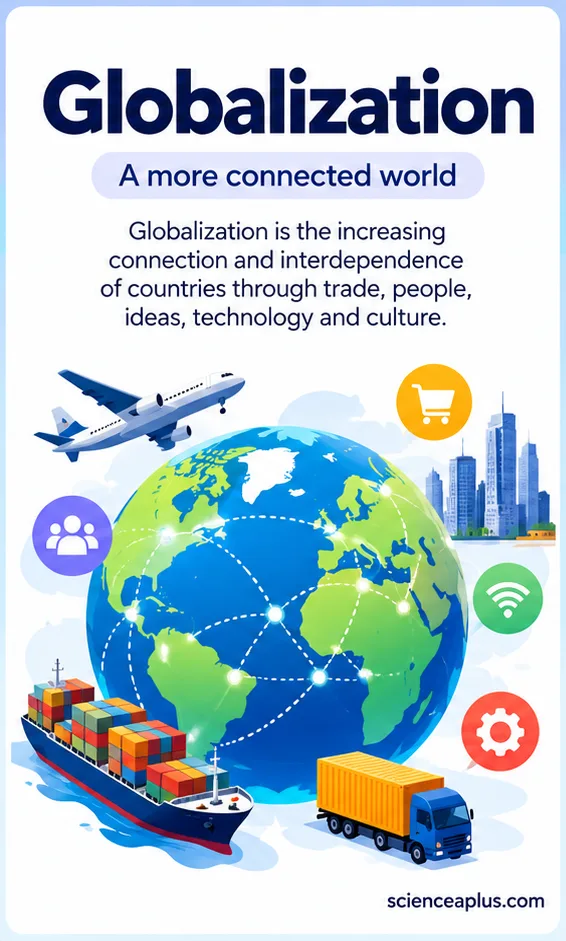
Globalization is the increasing connection and interdependence of countries through trade, people, ideas, technology and culture. When you wear a T-shirt stitched in one country from cotton grown in another, watch a video recorded on a different continent, or take a vaccine developed by scientists in several nations, you are using globalization. This guide covers the main advantages and disadvantages of globalization, with real-world examples, and then goes one step further than most articles: it looks at the science and the data behind it.
Every figure below comes from a named source, such as the World Bank, the World Trade Organization (WTO), the United Nations Conference on Trade and Development (UNCTAD) or the International Maritime Organization (IMO), and each has its year beside it. That matters, because globalization is a topic where opinions are loud and numbers are often quoted without a date.
What is globalization? A simple definition
Think of globalization as a web. Each strand is a link between places: a cargo ship carrying goods, an aeroplane carrying people, a fibre-optic cable carrying data, a researcher sharing a result. The more strands there are, and the thicker they get, the more a change in one place is felt in another.
Geographers and economists usually split globalization into four kinds of flow:
- Trade: goods and services crossing borders, from oil and microchips to films and software.
- Capital: money moving between countries as investment, loans and wages sent home.
- People: travel, migration, study abroad and tourism.
- Ideas and technology: science, medicine, languages, music, and the internet that carries them.
It is not a new idea. Traders carried silk, spices and ideas along land and sea routes for thousands of years. What changed in the last 70 years is the speed and the cost. Two inventions in particular, the standard shipping container and the World Wide Web, made it cheap and quick to move goods and information. We meet both in the science section later in this article.
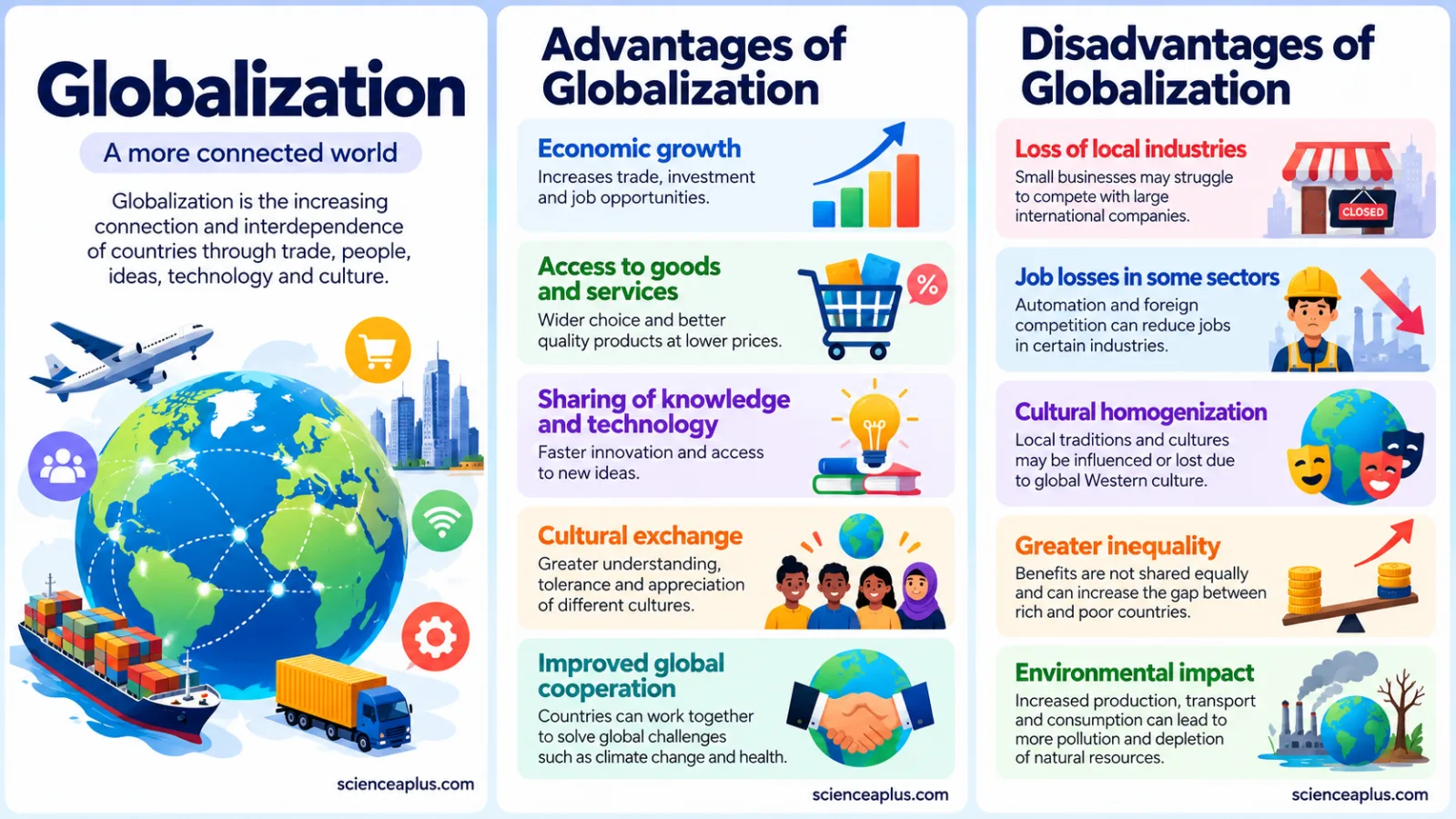
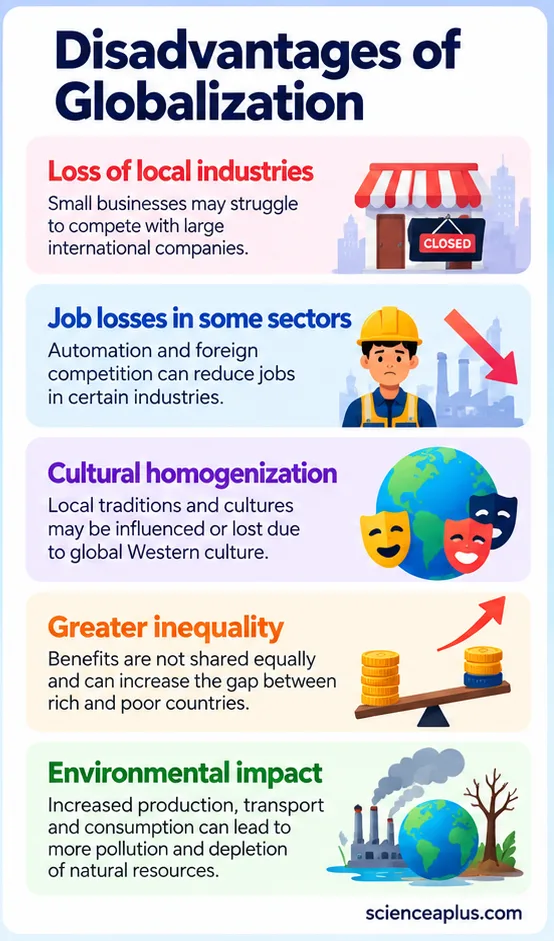
The four-minute summary: what the slide says
The infographic above sums up the debate on one page. Five advantages are on the left and five disadvantages on the right. In this article each one is checked against evidence.
How big is globalization? Trade as a share of GDP
To measure globalization, economists often use trade as a share of GDP. GDP (gross domestic product) is the value of everything a country, or the whole world, produces in a year. Trade is the value of exports plus imports. If the share rises, the world is trading more relative to what it makes.
World Bank data for the whole world show the long-term trend:
| Year | World trade (exports + imports) as % of world GDP |
|---|---|
| 1970 | 25.8% |
| 1990 | 38.1% |
| 2000 | 50.1% |
| 2008 | 60.3% |
| 2009 | 51.9% |
| 2019 | 55.8% |
| 2020 | 51.9% |
| 2024 | 56.7% |
The source is the World Bank’s World Development Indicators (series NE.TRD.GNFS.ZS, checked in October 2026). Two things stand out. First, trade more than doubled as a share of the world economy between 1970 and 2008. Second, it is not a one-way street. The share dropped after the 2008 financial crisis and again in 2020, when the COVID-19 pandemic disrupted travel and factories.
Some commentators call the period since 2008 “slowbalisation”, because the share has levelled off rather than kept climbing. The data above are consistent with that: 60.3% in 2008 and 56.7% in 2024. Remember that a share can fall even when trade grows, if the rest of the economy grows faster. The World Bank database already lists a much higher figure for 2025 (68.5%), but it is very recent and may be revised, so this article uses 2024.
Maths practice: percentage change from real data
Percentage change = (new value − old value) ÷ old value × 100. A percentage-point change is just the difference between two percentages. Do not mix the two up.
percentage change = (new − old) ÷ old × 100
World trade was 25.75% of world GDP in 1970 and 56.72% in 2024. What is the percentage change? (3 marks)
Difference = 56.72 − 25.75 = 30.97 percentage points. Percentage change = 30.97 ÷ 25.75 × 100 ≈ 120%. So trade’s share of the world economy more than doubled (about 2.2 times larger).
The share was 60.32% in 2008 and 51.89% in 2009. By what percentage did it fall? (3 marks)
Fall = 60.32 − 51.89 = 8.43 percentage points. Percentage fall = 8.43 ÷ 60.32 × 100 ≈ 14.0%.
The science behind it: how technology made the world smaller
Globalization is not only a political or economic story. It runs on engineering and physics. Three technologies did most of the work: standard containers for moving things, the internet for moving information, and satellites for navigation, weather and observation. A fourth ingredient, shared research, kept all of them improving.
Shipping containers: standard boxes, cheaper trade
On 26 April 1956 a converted tanker called the Ideal X sailed from Port Newark in New Jersey to Houston, Texas, carrying 58 metal containers (Guinness World Records). That voyage is usually seen as the start of modern container shipping. The idea was simple: pack goods once into a standard-size steel box that locks to others, then move the box between ship, train and lorry without ever unpacking it.
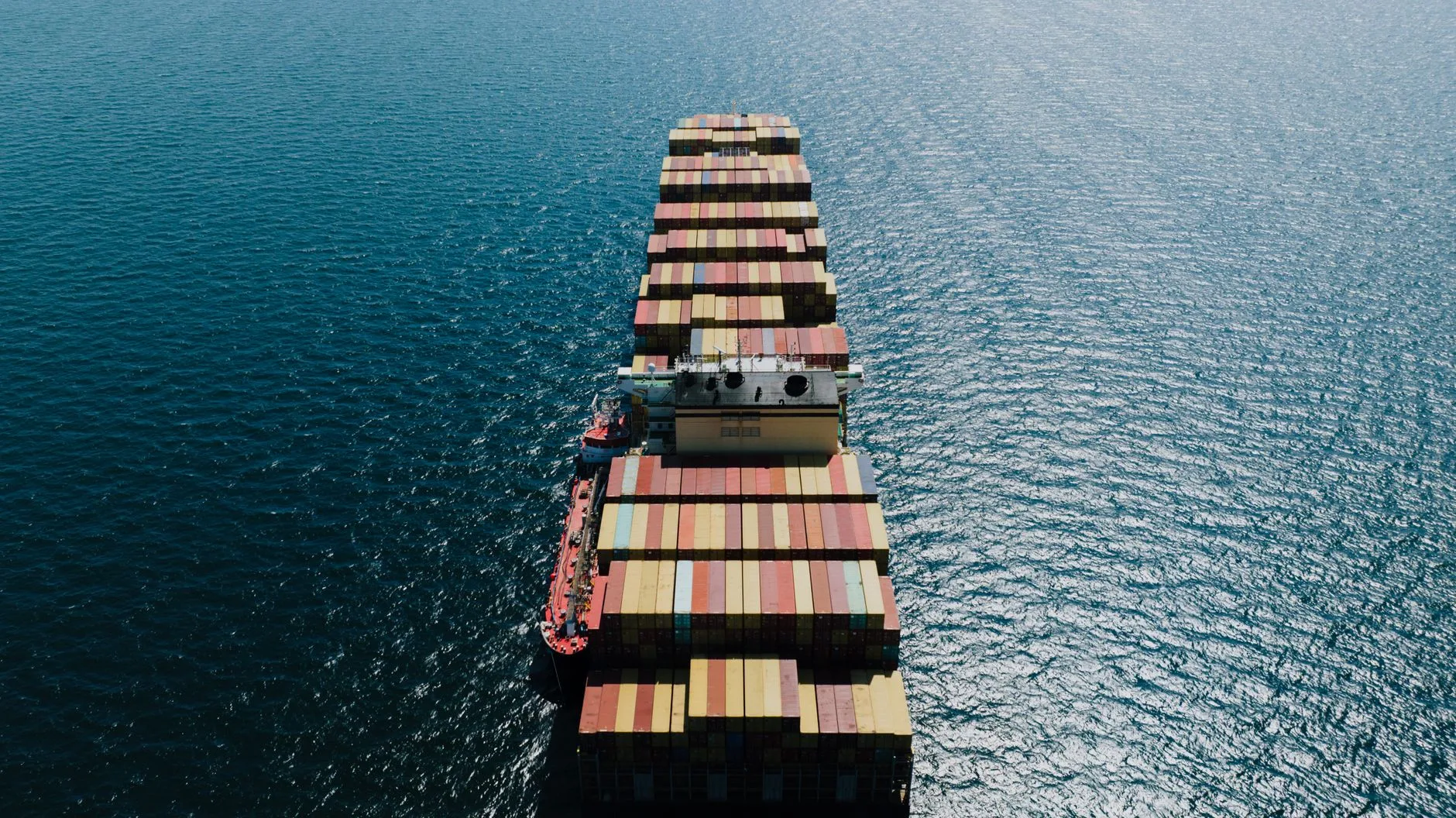
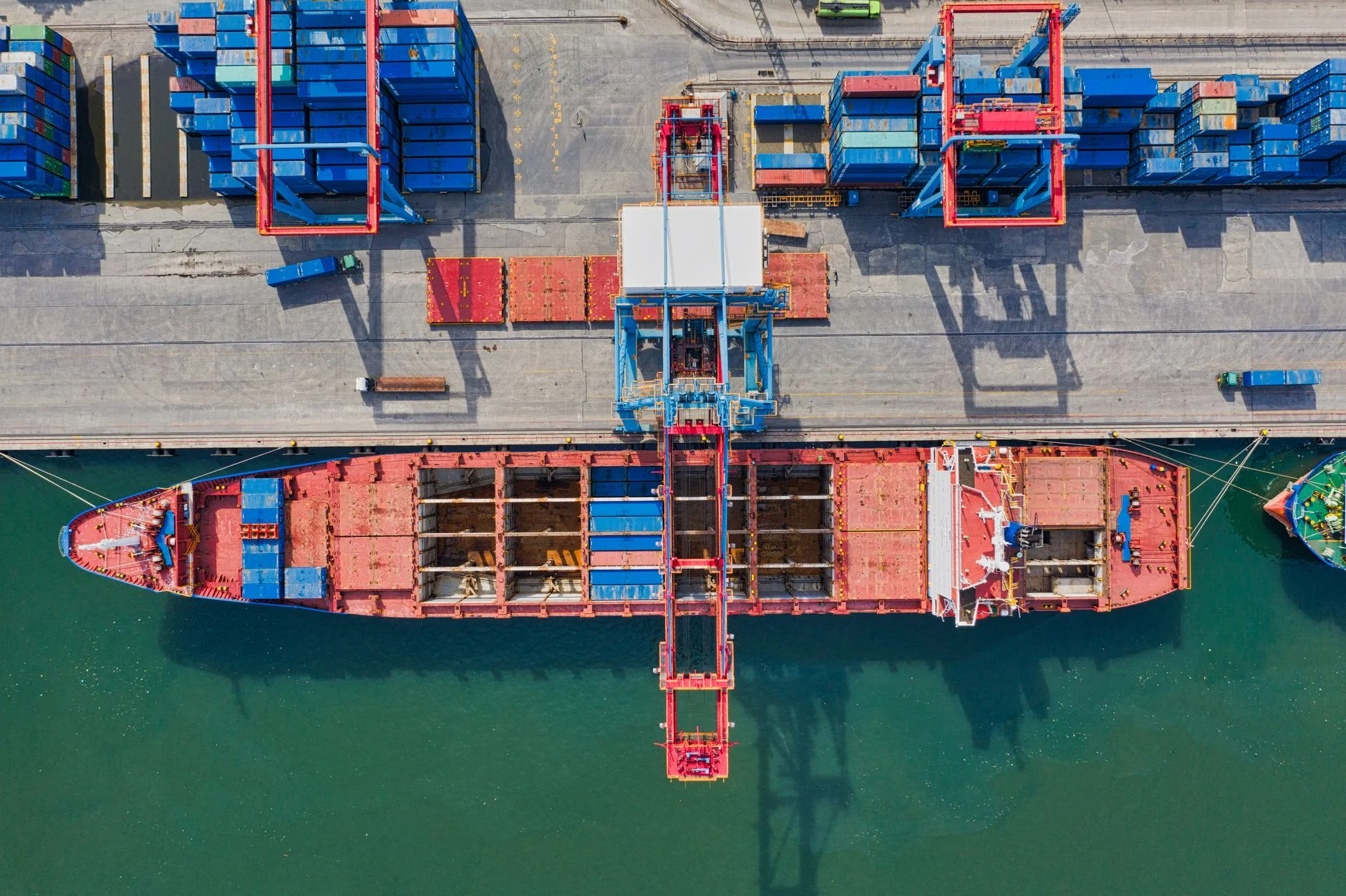
The science is about efficiency. Before containers, dockworkers handled each sack and crate by hand, so ships sat in port for days. Standard boxes let cranes lift thousands of tonnes quickly, and ships spend more time at sea. Shipping is also an energy-efficient way to move heavy goods: a large ship moves a tonne of cargo using much less fuel than a lorry or a plane. We come back to this trade-off, because the sheer volume now moved by sea produces large total emissions.
The numbers are big. According to UNCTAD’s Review of Maritime Transport, more than 80% of world merchandise trade by volume travels by sea. Seaborne trade grew by 2.2% in 2024, to more than 12 billion tonnes. Because of rerouting, the distance goods travelled grew even faster: tonne-miles rose by about 6% in 2024, a record (UNCTAD, 2025).
The internet: information at the speed of light
The World Wide Web was proposed by Tim Berners-Lee at CERN in March 1989. On 30 April 1993 CERN put the web software in the public domain, so anyone could use it freely. That decision let the web spread without licence fees.
The physics underneath is light pulses in glass. Fibre-optic cables carry data as flashes of light, which travel through glass fibres at roughly two-thirds of the speed of light in a vacuum. TeleGeography counted 570 submarine cable systems in service in 2025. The claim that submarine cables carry more than 99% of intercontinental data is widely quoted, although TeleGeography points out that nobody can calculate the exact figure. The safe conclusion is that most international internet traffic goes under the sea, not through space.
How many people are connected? The International Telecommunication Union (ITU) estimated that about 6 billion people, 74% of the world’s population, used the internet in 2025, up from a revised 5.8 billion in 2024. About 2.2 billion remained offline, and 96% of them live in low- and middle-income countries. If you want the networking science, see our guide to computer networks.
Satellites: eyes and clocks in orbit
Satellites give globalization its sense of place and time. Navigation satellites give ships, aircraft and delivery lorries their position. Weather satellites feed the forecasts that help ships avoid storms. Earth-observation satellites measure crops, forests and city growth.
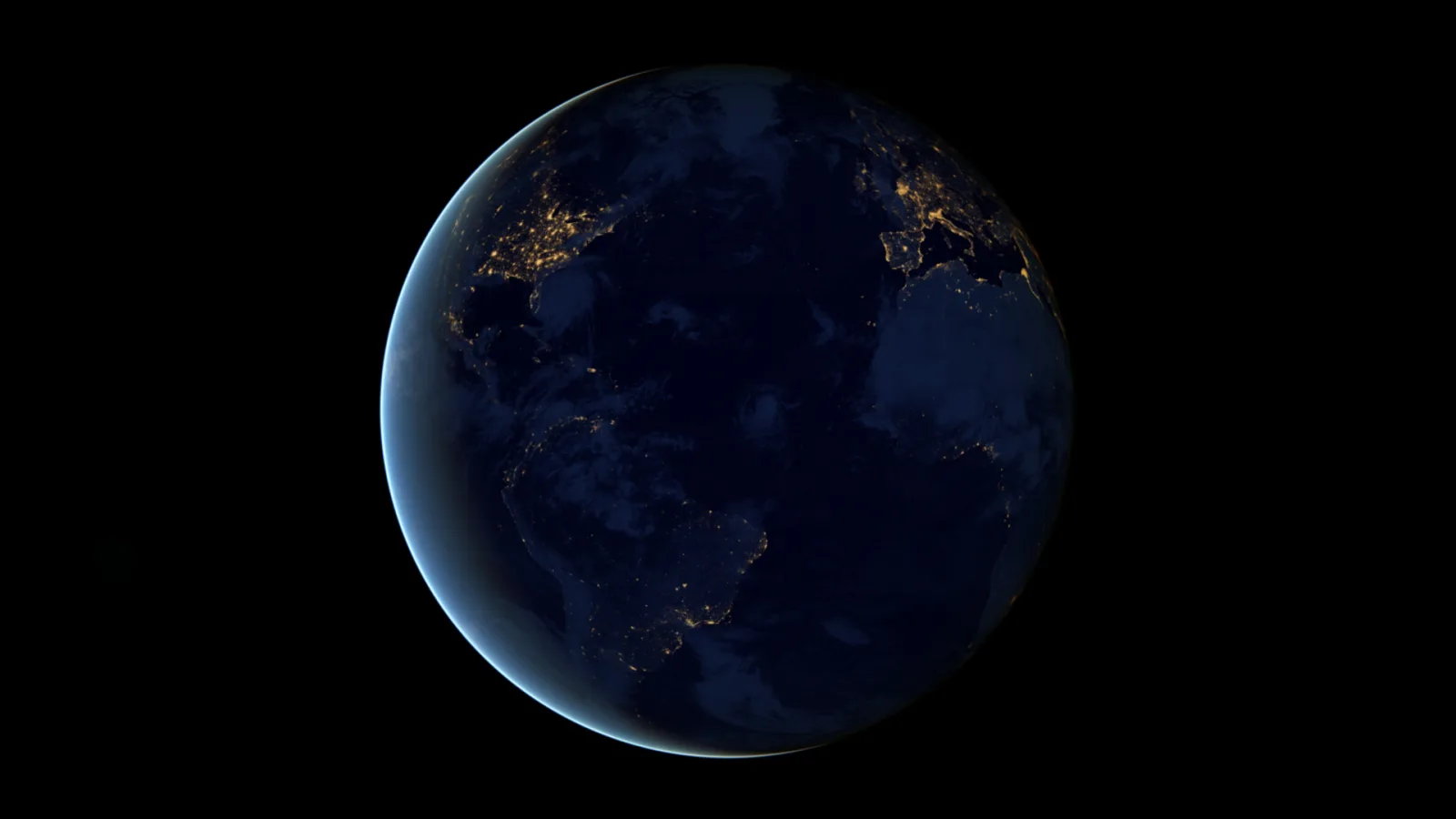
One famous example is the night-time composite below, built by NASA and NOAA from data collected by the Suomi NPP satellite over nine days in April 2012 and thirteen days in October 2012. The bright patches show where people live and where electricity is used, a picture of human activity from space.
Global science: the world working together
One of the five advantages on the slide is improved global cooperation. Science is the clearest example, because the biggest projects are too expensive or too complex for one country.
The International Space Station
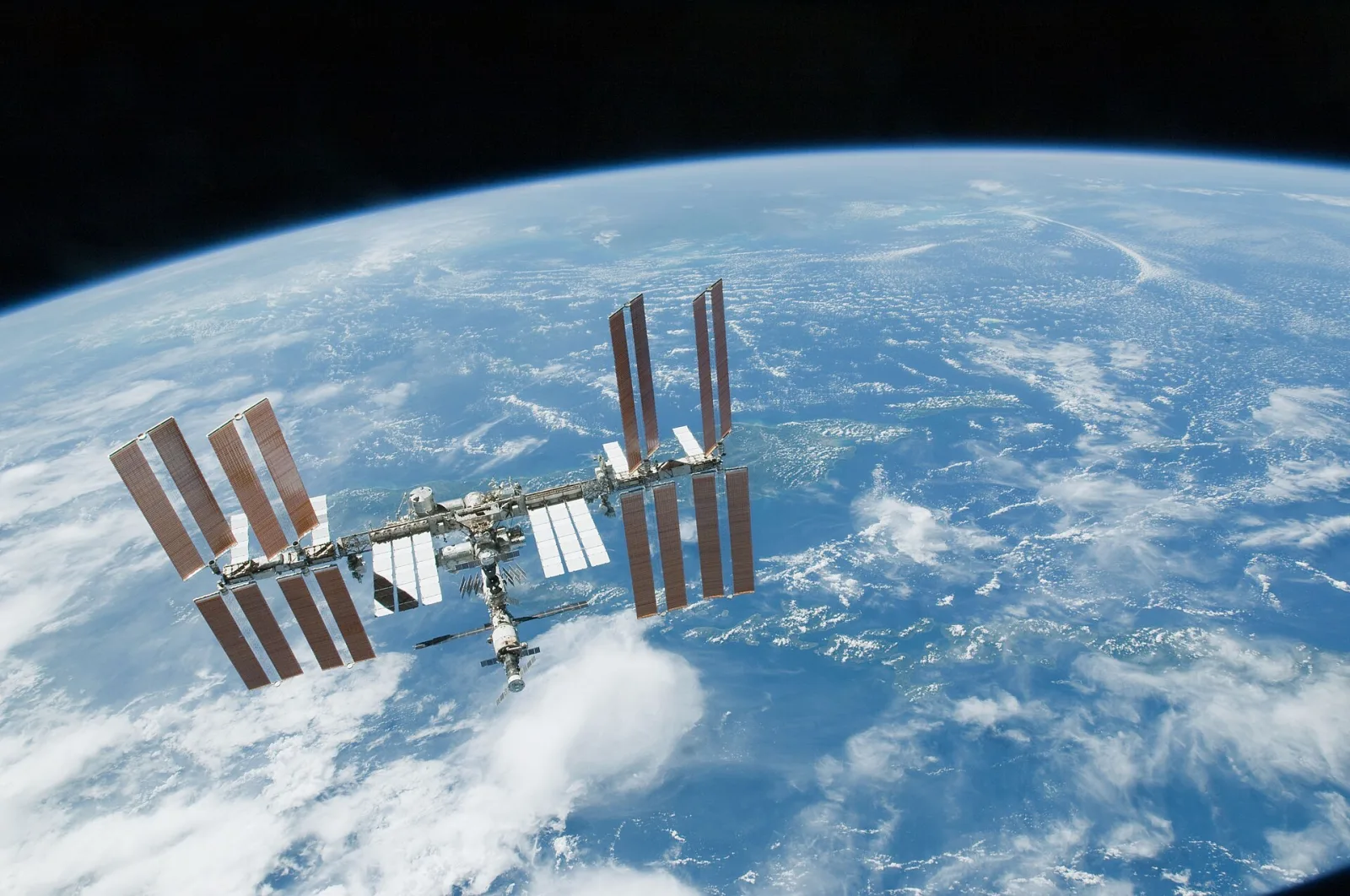
The ISS is run by five space agencies: NASA (United States), Roscosmos (Russia), ESA (Europe), JAXA (Japan) and CSA (Canada). It has been continuously occupied since 2 November 2000, and by 2025 about 290 people from 26 countries had visited it (NASA). Experiments on the station study how bodies, materials and flames behave in microgravity, and the results are shared with researchers everywhere. For more on the station and other missions, read our guide to space exploration and the ISS.
CERN and the search for the Higgs boson
CERN, the European laboratory near Geneva, was founded in 1954 with 12 European member states. By 2026 it had 25 member states, plus associate members, and its experiments involve thousands of scientists from around the world. In July 2012 the ATLAS and CMS experiments at the Large Hadron Collider announced the discovery of the Higgs boson. No single country built that machine alone.
Vaccines: shared data, shared trials
COVID-19 was declared a pandemic by the World Health Organization on 11 March 2020. By 2 December 2020 the UK had become the first country to authorise a COVID-19 vaccine, made by the US firm Pfizer and the German firm BioNTech. That speed was possible because scientists shared genetic data openly, tested the vaccine in volunteers in several countries, and used mRNA technology that had been in development for years.
Flip cards: test the technology
Advantages of globalization, checked against the evidence
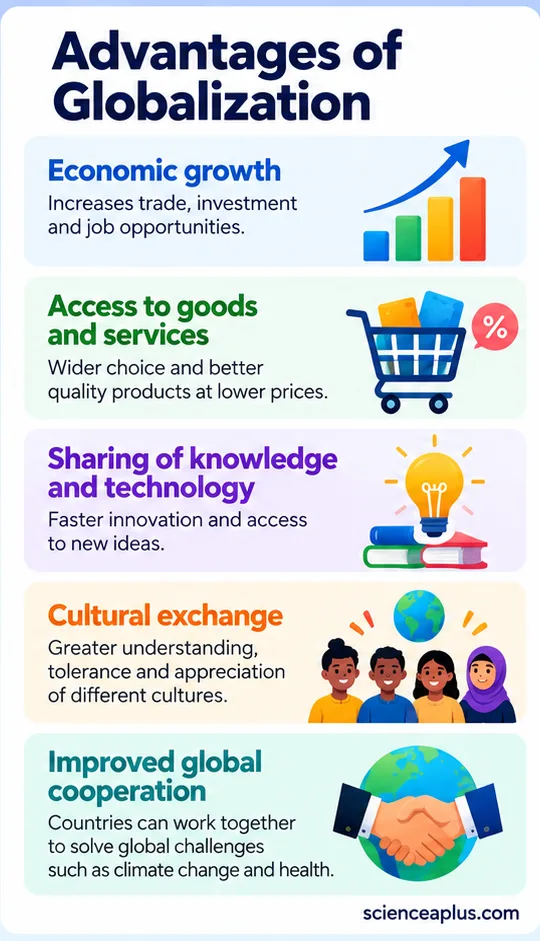
The slide lists five advantages. Here is what the data and science say about each one.
1. Economic growth and falling poverty
Trade, investment and new jobs are the slide’s first advantage. The strongest evidence is the fall in extreme poverty. The World Bank’s international poverty line is now $3.00 a day (at 2021 prices). Its figures, updated in October 2026, show that 43.4% of the world’s people lived below that line in 1990. By 2024 the share was 10.1%.
| Year | Share of world population living on less than $3.00 a day (World Bank) |
|---|---|
| 1990 | 43.4% |
| 2000 | 36.2% |
| 2010 | 21.0% |
| 2020 | 11.4% |
| 2024 | 10.1% |
The World Bank’s poverty overview puts the number of people in extreme poverty at more than 800 million. That is still a very large number, and progress has slowed since 2020.
Be careful with causes. Globalization is one of several factors. Economic growth in countries such as China and India, better farming, education and health care, and government choices all played a part. Researchers argue about how much credit trade deserves, so a careful answer says “globalization is associated with” rather than “globalization caused”.
2. Access to goods and services at lower prices
The second advantage is wider choice and lower prices. The science here is economies of scale: a factory making millions of items spreads its fixed costs, such as machines and research, over many more units, so each one costs less. Cheap, efficient transport by container ship then lets the product reach shoppers far away. Many everyday items, from clothes to phones, now contain parts made in several countries.
3. Sharing of knowledge and technology
Ideas move faster than goods. The web, open-access journals and international conferences mean a discovery published in one country can be tested in another within days. The vaccine, CERN and ISS examples in the previous section are all knowledge sharing at work.
4. Cultural exchange
Travel, film, music, food and social media introduce people to other ways of life. Researchers in social science study this with surveys and experiments, and the slide’s claim, greater understanding and tolerance, is plausible but depends on how contact happens. Meeting people as equals tends to build understanding; stereotypes spread online can do the opposite.
5. Improved global cooperation
Problems such as climate change and disease do not stop at borders. Agreements such as the IMO’s ballast water rules, and bodies such as the WHO, only work because countries cooperate. Our guide to the climate crisis and the greenhouse effect explains why shared action is needed.
Disadvantages of globalization, checked against the evidence
1. Loss of local industries
Small firms may struggle to compete with large international companies that benefit from economies of scale. A local clothing factory, farm or shop can lose customers to cheaper imports. The shift can be painful for the people and towns involved.
2. Job losses in some sectors
The slide names both automation and foreign competition. Economists find that trade creates jobs in some industries and removes them in others, and that technology change also matters. It is hard to separate the two effects, so be wary of claims that blame only one cause. Workers who lose jobs often need retraining, and the gains from trade do not automatically reach them.
3. Cultural homogenization
The slide warns that local traditions may be influenced or lost. This is a real concern for small languages and crafts. But culture is not only lost; it also mixes into new forms. Food, music and fashion are often blended, not simply replaced. The slide’s phrase “global Western culture” is a simplification, since influence flows in many directions.
4. Greater inequality
Benefits are not shared equally. The internet figures show the pattern: 94% of people in high-income countries were online in 2025, against 23% in low-income countries (ITU). Within countries, people with skills that are in demand worldwide can gain more than others. The same World Bank data that show poverty falling also show that more than 800 million people remain very poor.
5. Environmental impact
More production, transport and consumption mean more energy use and more pollution. The next section puts numbers on it.
The science of the downsides: emissions, disease and invasive species
CO₂ from shipping and aviation
Fossil fuels burned by ships and planes release carbon dioxide, which adds to the greenhouse effect. The IMO’s Fourth Greenhouse Gas Study estimated that shipping emitted 1,056 million tonnes of CO₂ in 2018, which was 2.89% of global human-caused CO₂ that year, up from 962 million tonnes (2.76%) in 2012. Our World in Data reports that aviation produced about 2.5% of global CO₂ in 2019, around 1 billion tonnes, roughly double the 1990 amount.
These shares look modest, but they cover only two forms of transport. Shipping is efficient per tonne moved, so the total is large because so much cargo moves. Aeroplanes emit far more CO₂ per tonne of cargo carried over the same distance, so air freight is mostly used for light, valuable or urgent goods. The IMO’s 2023 strategy aims for net-zero greenhouse gas emissions from international shipping by or around 2050. A proposed global fuel standard and pricing system, the Net-Zero Framework, was adjourned for a year at the IMO in October 2025 and had still not been adopted by late October 2026, with talks due to resume in December 2026. Read about the wider effects in our guide to the impact of climate change on ecosystems.
Spread of disease
People who travel can carry pathogens with them. The COVID-19 pandemic is the clearest recent case: the WHO declared a pandemic on 11 March 2020, and in 2020, as travel and factories were disrupted, world trade fell to 51.9% of world GDP, from 55.8% in 2019. Globalization has also helped fight disease, because the same links carry vaccines, data and expertise.
Invasive species hitch a ride
Ships and cargo move living things as well. Ships take on ballast water for stability, and it can carry organisms to new seas. The IMO’s Ballast Water Management Convention entered into force on 8 September 2017 to reduce this. In 2023 the IPBES assessment reported more than 37,000 alien species introduced by human activities worldwide, with over 3,500 of them harmful invasive species. About 37% of the records date from since 1970, mostly because of rising trade and travel. The global cost was over $423 billion a year in 2019.
Globalization, localization or protectionism?
Because globalization has both gains and costs, governments choose different mixes of openness and protection. Here is how the three main approaches compare.
| Topic | Globalization | Localization | Protectionism |
|---|---|---|---|
| Meaning | Closer links between countries through trade, people, ideas and technology | Focusing on local production and local markets | Policies such as tariffs or quotas that shield home industries from imports |
| Possible benefits | Bigger markets, lower prices, shared knowledge | Fewer transport emissions, stronger local firms, local culture protected | Protects some jobs in the short term, reduces dependence on imports |
| Possible costs | Pressure on local firms, inequality, emissions, shared risks | Less choice, higher prices, less access to new ideas | Higher prices, retaliation and trade disputes, less competition |
Most countries sit somewhere in between. Trade is also not guaranteed to keep growing. The WTO’s October 2026 Global Trade Outlook, as reported in press coverage, raised its forecast for world merchandise trade volume growth in 2026 to 3.9%, from 1.9% in its March forecast, and expects 4.1% in 2027. It said these forecasts depend on events such as conflict in the Middle East, so they may be revised.
How can the downsides be reduced?
Engineers and policymakers have several tools. Cleaner fuels and more efficient engines cut emissions per tonne moved. International agreements set rules for ships, such as ballast water treatment. Governments can help workers retrain and help small firms compete. Expanding electricity from wind and solar also helps, as discussed in our guide to renewable energy, expectations and reality. For students, the key habit is to look for evidence on both sides before deciding.
More maths practice
Extreme poverty was 43.4% of the world’s population in 1990 and 10.1% in 2024. Work out the fall in percentage points and the percentage change. (4 marks)
Fall = 43.4 − 10.1 = 33.3 percentage points. Percentage change = 33.3 ÷ 43.4 × 100 ≈ 76.7%, so the share fell by about three-quarters.
10.1% of a world population of 8.1 billion is how many people? (2 marks)
0.101 × 8,100,000,000 ≈ 818 million. This is consistent with the World Bank’s figure of more than 800 million people, a useful check that the share and the headcount fit together.
Shipping emitted 962 million tonnes of CO₂ in 2012 and 1,056 million tonnes in 2018 (IMO). What was the percentage increase? (3 marks)
Increase = 1,056 − 962 = 94 million tonnes. Percentage increase = 94 ÷ 962 × 100 ≈ 9.8%.
Suppose seaborne trade was 12,000 million tonnes in one year and then grew by 2.2%. What would the new total be? (3 marks)
Increase = 12,000 × 0.022 = 264 million tonnes. New total = 12,000 + 264 = 12,264 million tonnes. This is a worked example using UNCTAD’s 2024 growth rate with round numbers, not a published total.
Frequently asked questions about globalization
What is globalization in simple words?
Globalization is the process by which countries become more connected and dependent on one another through trade, travel, communication, technology and culture. A product made in several countries, or a video watched across the world, are everyday examples. It speeds up as transport and communication get cheaper and faster.
What are the main advantages of globalization?
The main advantages are economic growth, wider choice and lower prices, faster sharing of knowledge and technology, cultural exchange and better cooperation on shared problems. For example, the World Bank shows extreme poverty falling from 43.4% in 1990 to 10.1% in 2024, although globalization is only one of the causes.
What are the main disadvantages of globalization?
The main disadvantages are pressure on local businesses, job losses in some industries, the risk of cultural homogenization, greater inequality and environmental harm such as emissions and invasive species. Shared dependence also means problems like pandemics or financial crises spread quickly from one country to another.
How does science and technology drive globalization?
Standard shipping containers cut the cost and time of moving goods, fibre-optic cables and the web move information at the speed of light, and satellites provide navigation and weather forecasts. Shared research, such as the ISS, CERN and COVID-19 vaccine development, adds international collaboration. Together they made long-distance links cheap and reliable.
Does globalization reduce poverty?
Evidence suggests it can help, but it is not the only factor. World Bank data show the share of people below $3.00 a day fell from 43.4% in 1990 to 10.1% in 2024. Researchers also note that gains are uneven and that more than 800 million people are still very poor, so the picture is mixed.
How much CO₂ comes from shipping and aviation?
The IMO estimated that shipping emitted 1,056 million tonnes of CO₂ in 2018, about 2.89% of the global total. Our World in Data reports that aviation produced about 2.5% of global CO₂ in 2019. Both are small shares of the total, but they are growing areas that are hard to decarbonise.
How does globalization spread disease and invasive species?
Travellers and cargo move pathogens and living organisms quickly between regions. The WHO declared COVID-19 a pandemic on 11 March 2020, and ships’ ballast water can carry organisms into new seas. IPBES reported more than 37,000 alien species worldwide in 2023, with over 3,500 harmful invasive species.
What is the difference between globalization and protectionism?
Globalization encourages open trade and links between countries. Protectionism uses tariffs, quotas or other rules to shield home industries from foreign competition. Protectionism may save some jobs for a time, but it can raise prices and cause trade disputes. Most countries use a mix of both approaches.
How does globalization affect developing countries?
Developing countries can gain from new markets, investment and technology, and many have seen poverty fall. They can also face competition, dependence on a few exports and unequal access to technology. The ITU reports that 23% of people in low-income countries used the internet in 2025, compared with 94% in high-income countries.