The Sun is the biggest power station we have, and its light is free, although the equipment to capture it is not. The uses of solar energy range from a calculator on your desk to the huge solar arrays on the International Space Station, and from a hot shower to a field of crops growing under panels.
In short: solar energy is energy from the Sun’s light and heat. We capture it in two main ways: photovoltaic (PV) cells turn light directly into electricity, and solar thermal systems use the Sun’s heat to warm water, dry crops or make steam. This guide covers 12 everyday and industrial solar energy uses, starting with the science you need to understand them.
What is solar energy?
Solar energy is the energy that comes from the Sun in the form of light and heat. It is made in the Sun’s core, where nuclear fusion joins hydrogen nuclei to form helium and releases huge amounts of energy.
That energy travels to Earth as electromagnetic radiation, mostly visible light and infrared, with some ultraviolet. The journey takes about 8 minutes 20 seconds. Solar energy is renewable, because the Sun will keep shining for billions of years. If you want to know how the Sun’s surface activity affects us, see our guide on how sunspots affect the Earth.
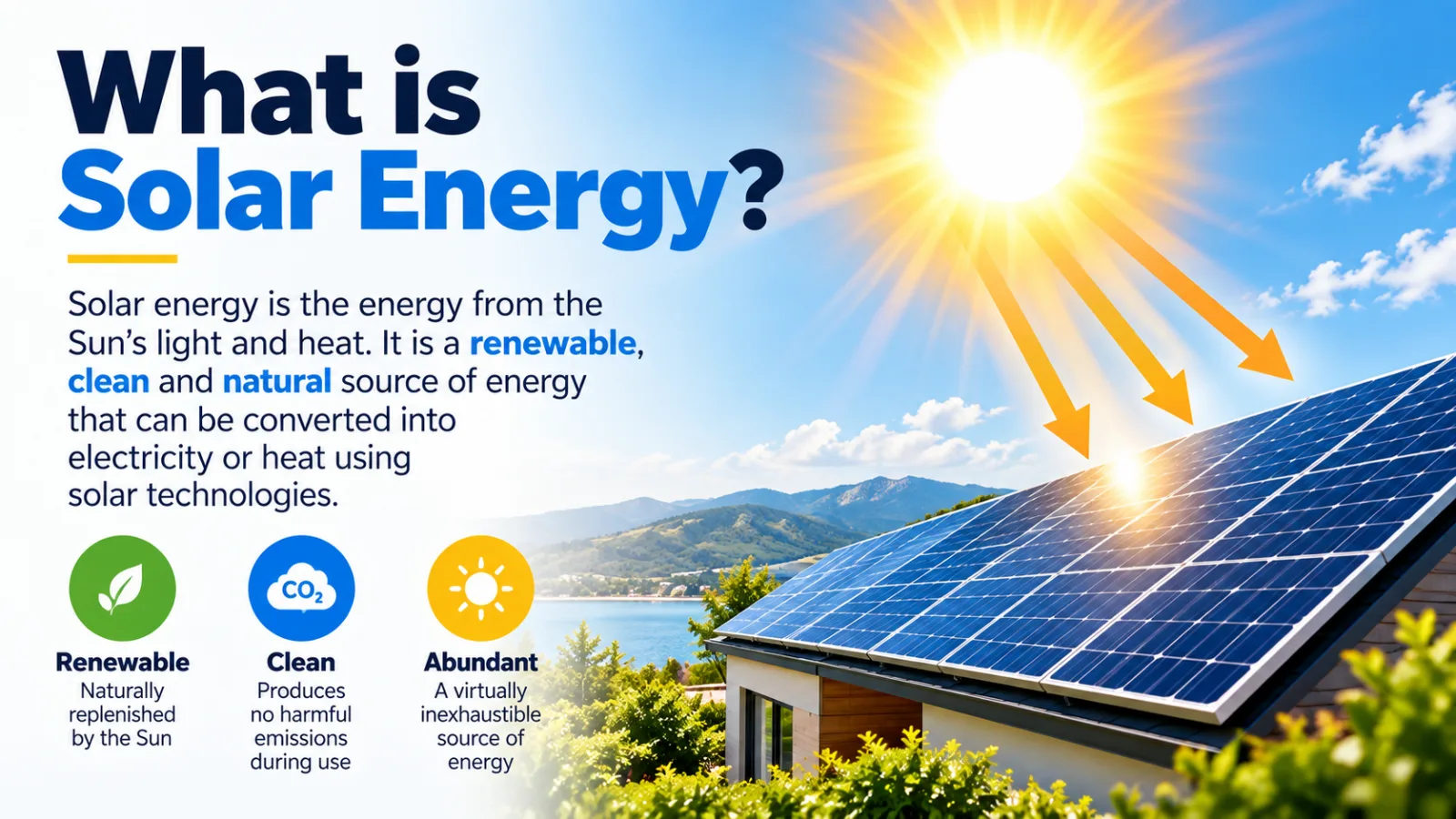
On a clear day around noon, sunlight delivers roughly 1,000 W of power to every square metre facing the Sun. This is the standard figure used to rate solar panels. Less reaches us in the morning, in the evening, in winter or under cloud.
How we capture solar energy: PV vs solar thermal
There are two main applications of solar energy technology, and they work in very different ways. Photovoltaic cells make electricity directly from light. Solar thermal systems collect heat. The table below compares them.
| Feature | Photovoltaic (PV) | Solar thermal |
|---|---|---|
| What it uses | Light (photons) | Heat from the Sun |
| What it makes | Electricity (DC, then AC) | Hot water, hot air or steam |
| Energy transfer | Light → electrical | Light → thermal |
| Typical uses | Rooftop panels, calculators, satellites, solar farms | Water heating, space heating, cooking, drying, concentrated solar power |
| Key part | Semiconductor cell, usually silicon | Collector, or mirrors and a receiver |
Photovoltaic cells: light straight to electricity
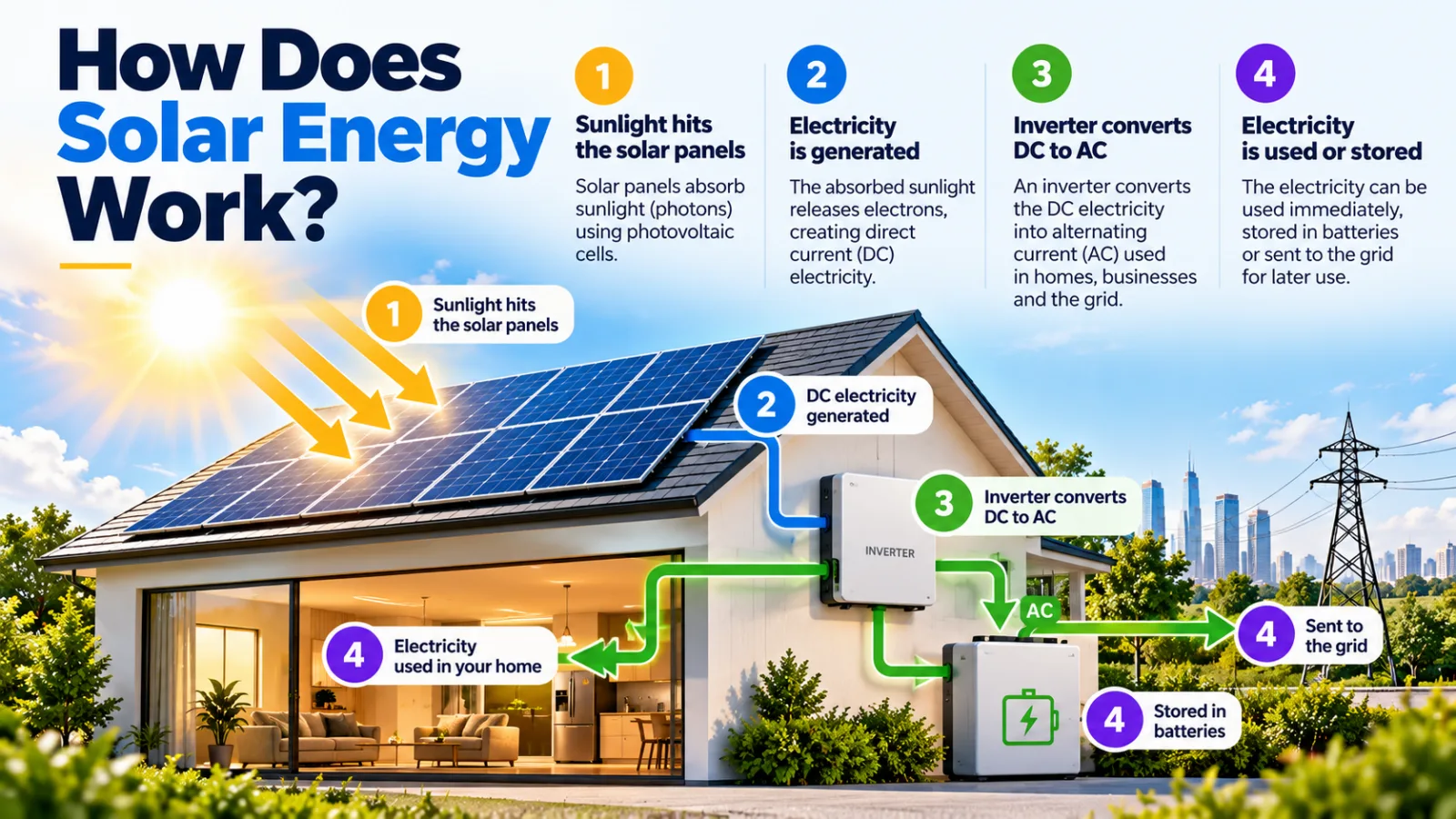
A PV cell is made from a semiconductor, usually silicon. When photons of light hit the cell, they free electrons, and these electrons flow as an electric current. This current is direct current (DC). An inverter then converts it to alternating current (AC), which is what our homes and the grid use.
Edmond Becquerel discovered the photovoltaic effect in 1839. Bell Labs made the first practical silicon solar cell in 1954, and it was about 6 % efficient. A typical modern panel is about 20–23 % efficient, and the best lab cells do much better. Panels usually last 25–30 years and lose roughly 0.5 % of their output each year. For a step-by-step explanation of the cell itself, read how solar panels work.
Solar thermal: using the Sun’s heat
Solar thermal systems skip electricity altogether. A dark collector absorbs sunlight and passes the heat to water or air. This is the idea behind solar water heating, space heating, solar cookers and crop drying, and it is often a simple, low-cost way to use the Sun’s energy.
The energy transfer is light → thermal, so no inverter or semiconductor is needed. That is why solar thermal is so common in sunny countries for heating water.
Concentrated solar power (CSP)
Concentrated solar power works on a much bigger scale. Mirrors, either heliostats or parabolic troughs, focus sunlight onto a receiver. The receiver heats a fluid, the fluid makes steam, and the steam drives a turbine to generate electricity.
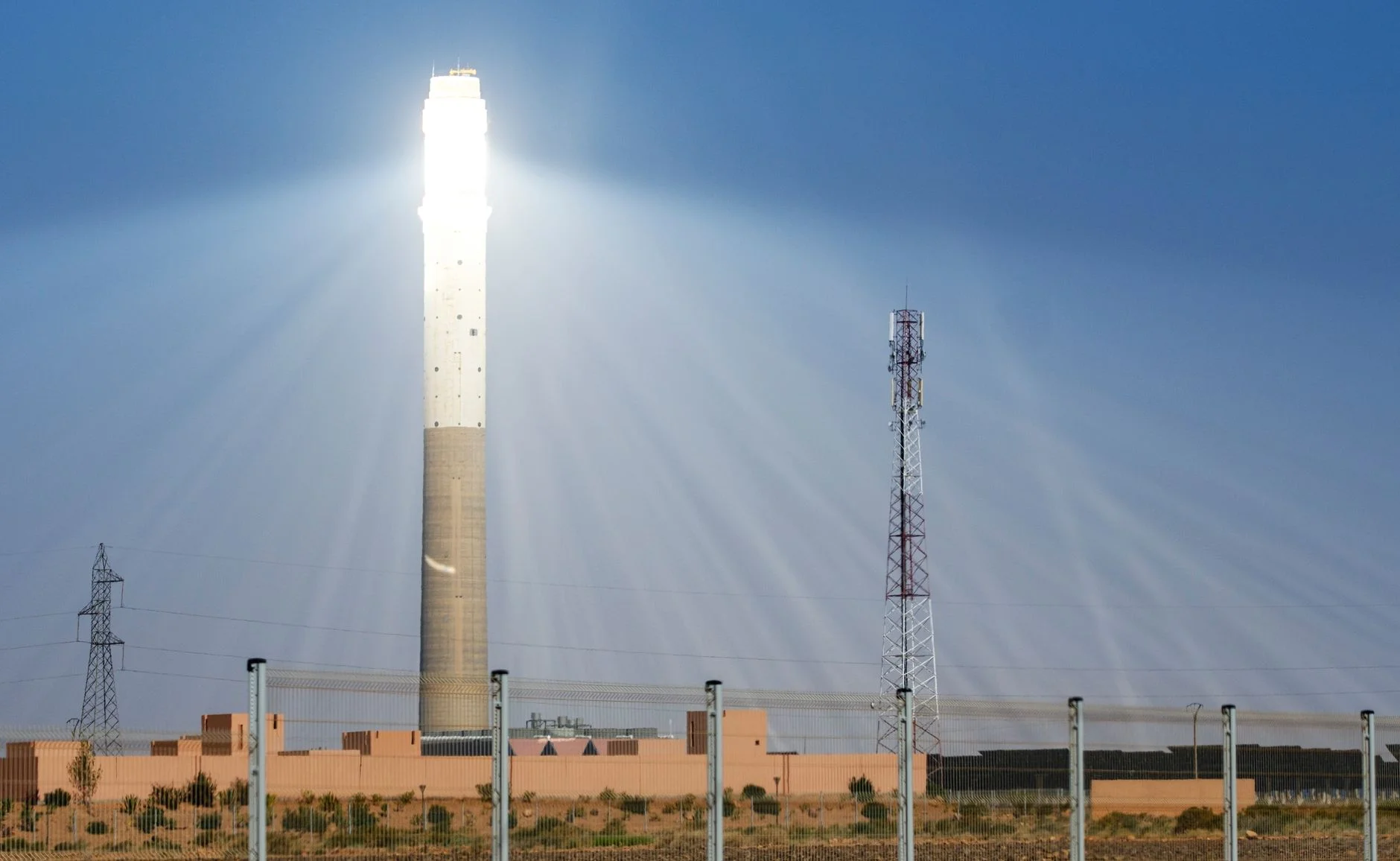
Molten salt can store the heat, so a CSP plant can keep generating electricity after sunset. One example is the Noor Ouarzazate solar complex in Morocco, one of the world’s largest CSP sites. CSP works best in very sunny, dry regions, which is why you see it in deserts rather than in the UK.
Now that you know the two technologies, the next sections look at where they are used, starting with the home.
Uses of solar energy at home
For most people, the most familiar uses of solar energy are on the roof of an ordinary house. Sunlight arrives at the ground at roughly 1,000 W per m² on a clear day around noon, and a home has a lot of roof facing the sky. Two different technologies turn that sunlight into something useful: panels that make electricity, and collectors that make hot water.
Rooftop solar panels for electricity
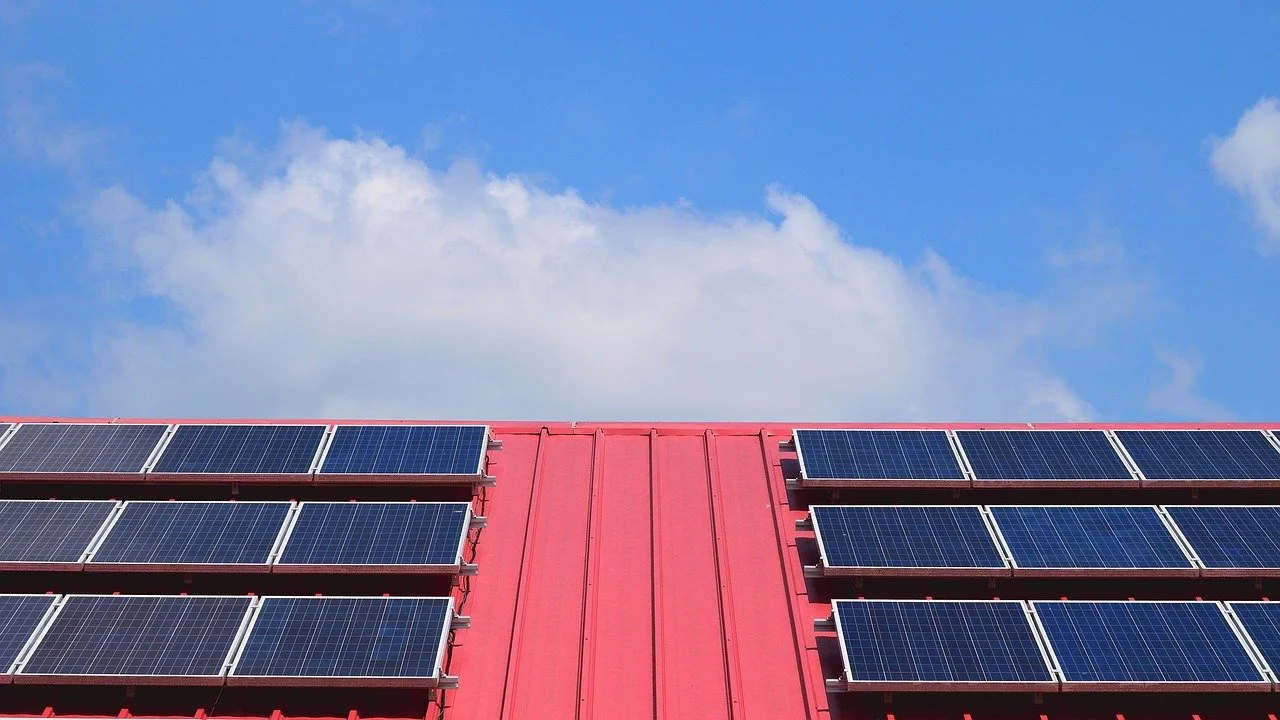
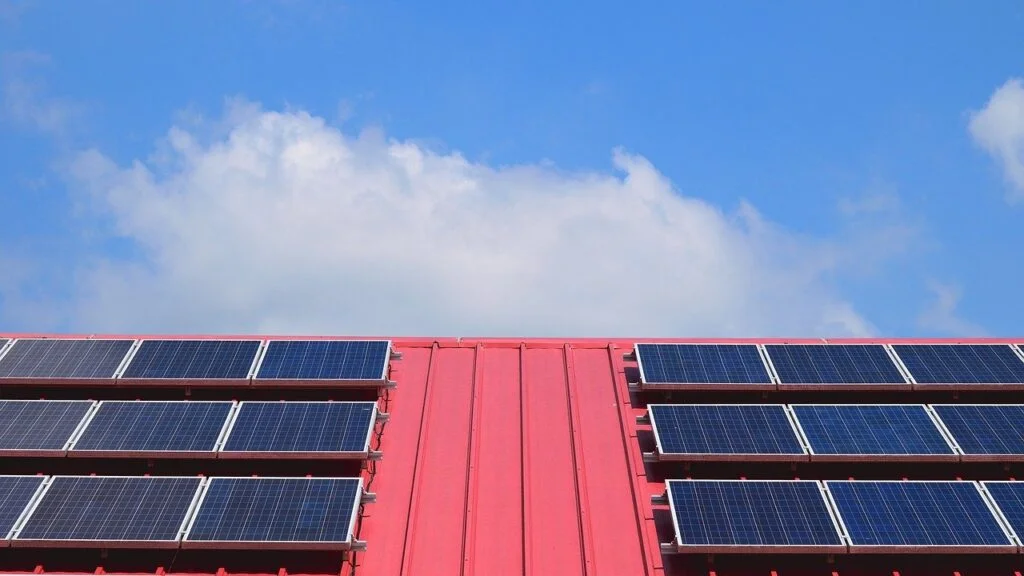
Rooftop photovoltaic (PV) panels are the best-known example of solar energy uses in daily life. Photons of light free electrons in a silicon semiconductor, producing direct current (DC). An inverter then converts the DC into alternating current (AC), which is what your sockets, kettle and television need.
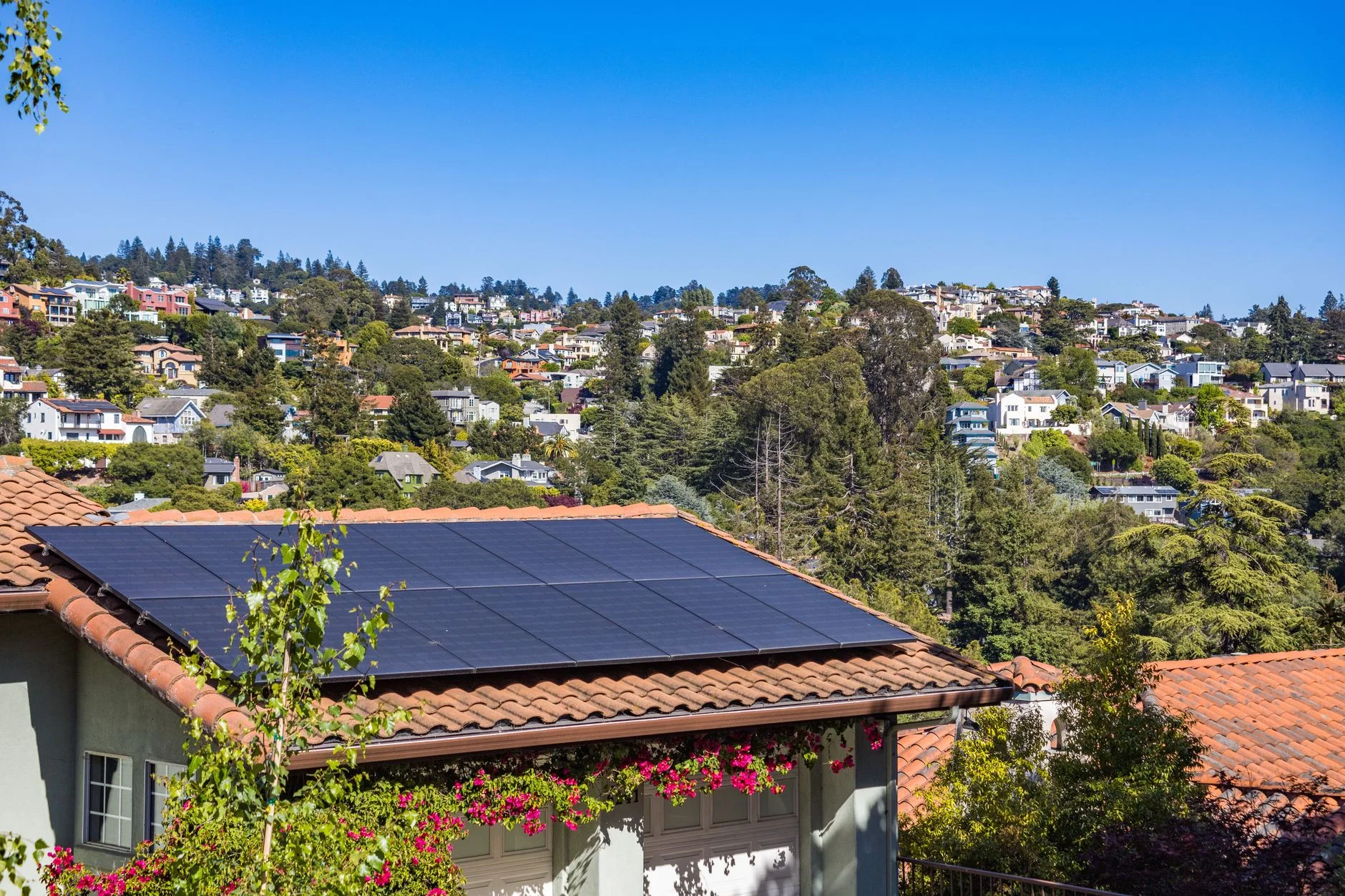
A typical modern panel is about 20–23 % efficient, so most of the sunlight that lands on it is not turned into electricity. Even so, panels usually last 25–30 years and lose only about 0.5 % of their output each year. Electricity you do not use straight away can be sent to the grid or stored in a battery for the evening.
If you want the full detail of the cell itself, our guide to solar energy and solar panels in detail goes through it step by step.
Solar water heating
Solar water heating is simpler than PV and uses the Sun’s heat directly, rather than its light. A flat plate or a set of glass tubes on the roof absorbs infrared and visible radiation and warms water or a fluid flowing through it. That hot water is then piped to a storage cylinder for showers and taps.
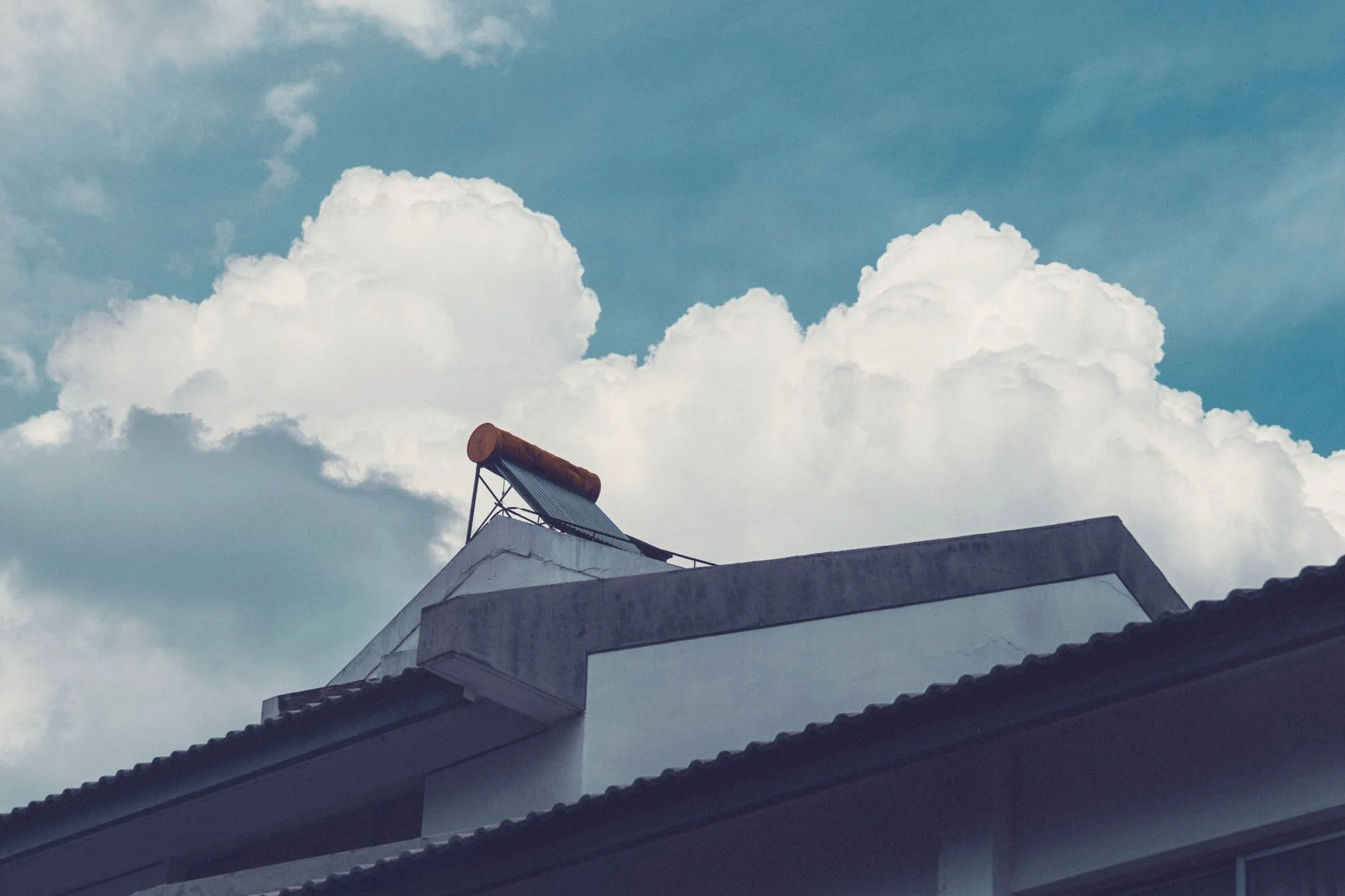
This is a light → thermal energy transfer, so it needs no semiconductor and no inverter. In a sunny climate, a solar water heater can cover much of a household’s hot-water needs. In a cloudier country such as the UK, it usually works alongside a boiler or immersion heater to top up the temperature.
Lighting and small gadgets
Some of the smallest applications of solar energy are also the oldest. A pocket calculator with a small strip of solar cells has no battery to replace. Garden lights use a little panel and a rechargeable cell to store energy by day and glow after dark. Solar chargers for phones and torches do the same job on a camping trip.
Street lights follow the same idea on a bigger scale. A panel on top of the pole charges a battery in daylight, and the lamp runs from the battery at night. No trench has to be dug to bring a cable to the lamp, which is useful on remote roads and paths.
How much electricity could your roof produce?
A common question is how much electricity a solar panel produces. You can make a sensible estimate with a simple formula that uses three numbers: the size of the system, the peak sun hours, and a performance ratio that allows for real-world losses.
daily energy (kWh) ≈ system size (kWp) × peak sun hours × performance ratio
The performance ratio is typically about 0.75–0.85. Peak sun hours depend on where you live. The UK annual average is low, roughly 2.4–2.8 hours a day, while sunny desert regions get 5–7. Try the calculator below to compare different systems and places.
As a worked example, a 4 kWp system in the UK with 2.8 peak sun hours and a ratio of 0.8 gives about 4 × 2.8 × 0.8 ≈ 9 kWh a day on average. The same system with 6 peak sun hours in a desert gives about 19 kWh. The panels are identical; the difference is the sunshine.
Commercial and industrial uses of solar energy
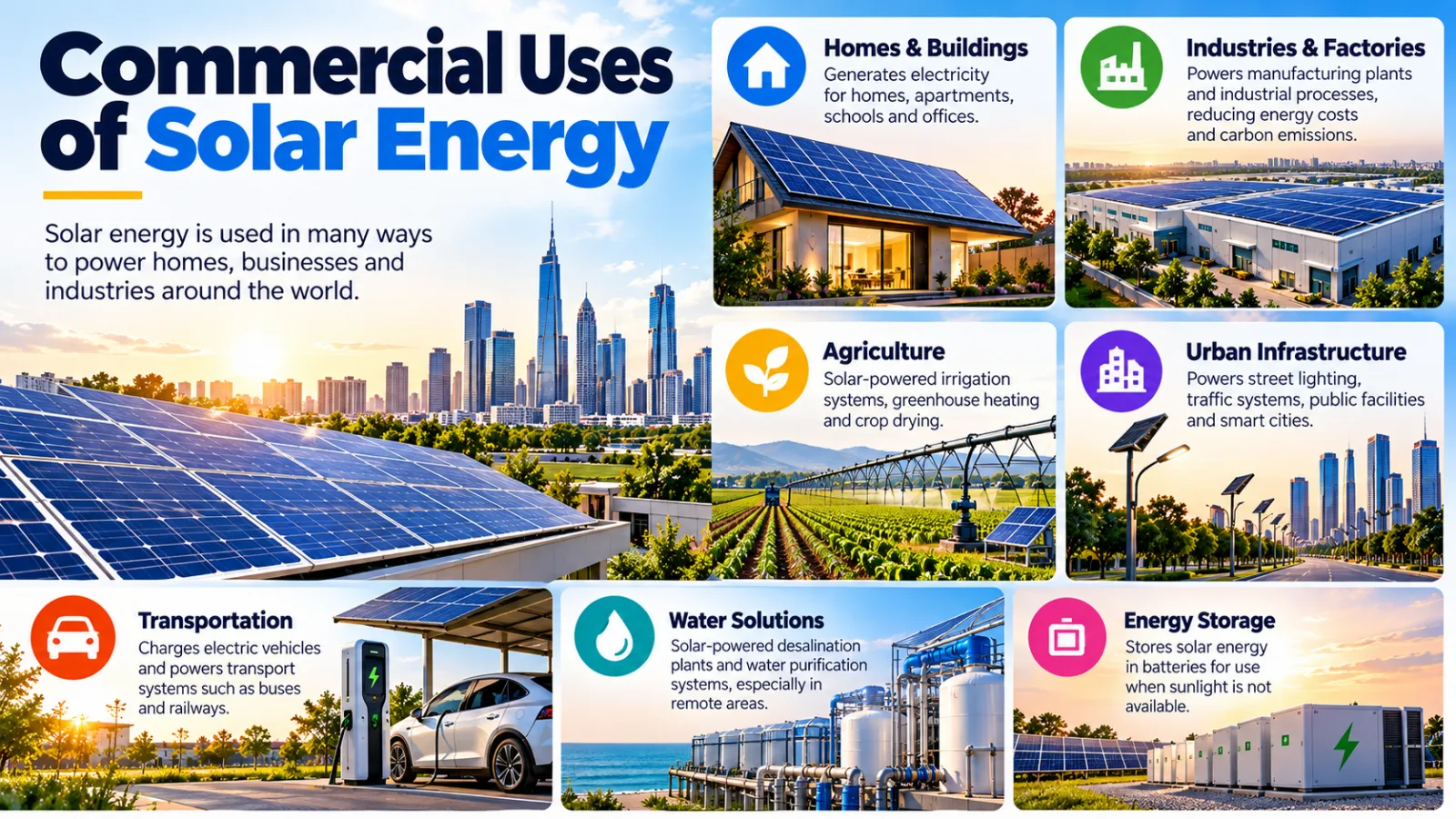
Homes are only part of the picture. The commercial uses of solar energy are growing because businesses have large, flat roofs, use most of their electricity in the daytime, and can plan their costs over many years. Industry has an extra reason to look at the Sun: many factories need heat as well as electricity.
Offices, shops and schools
Offices, shops, warehouses and schools often have broad roofs with little shading. Because their buildings are busiest while the Sun is up, much of the electricity from their panels is used on site, rather than exported. Car-park canopies are another popular choice: they make power and also shelter the cars underneath.
Schools make a good example for learning, too. A display showing live output from the roof panels lets pupils see how cloud, season and time of day change the energy transferred.
Factories and industrial process heat
Many industrial jobs need heat: washing, drying, cooking food, sterilising and heating liquids. Solar thermal collectors can supply this process heat directly, so less gas or oil is burned. Concentrated solar power (CSP) can reach the higher temperatures that some processes need, using mirrors to focus sunlight onto a receiver.
Factories can also fit PV panels on their roofs to cut the electricity they buy from the grid. Solar is not a complete answer for heavy industry, because output stops at night and varies with the weather. It works best as one part of a mix of energy sources.
Solar farms feeding the grid
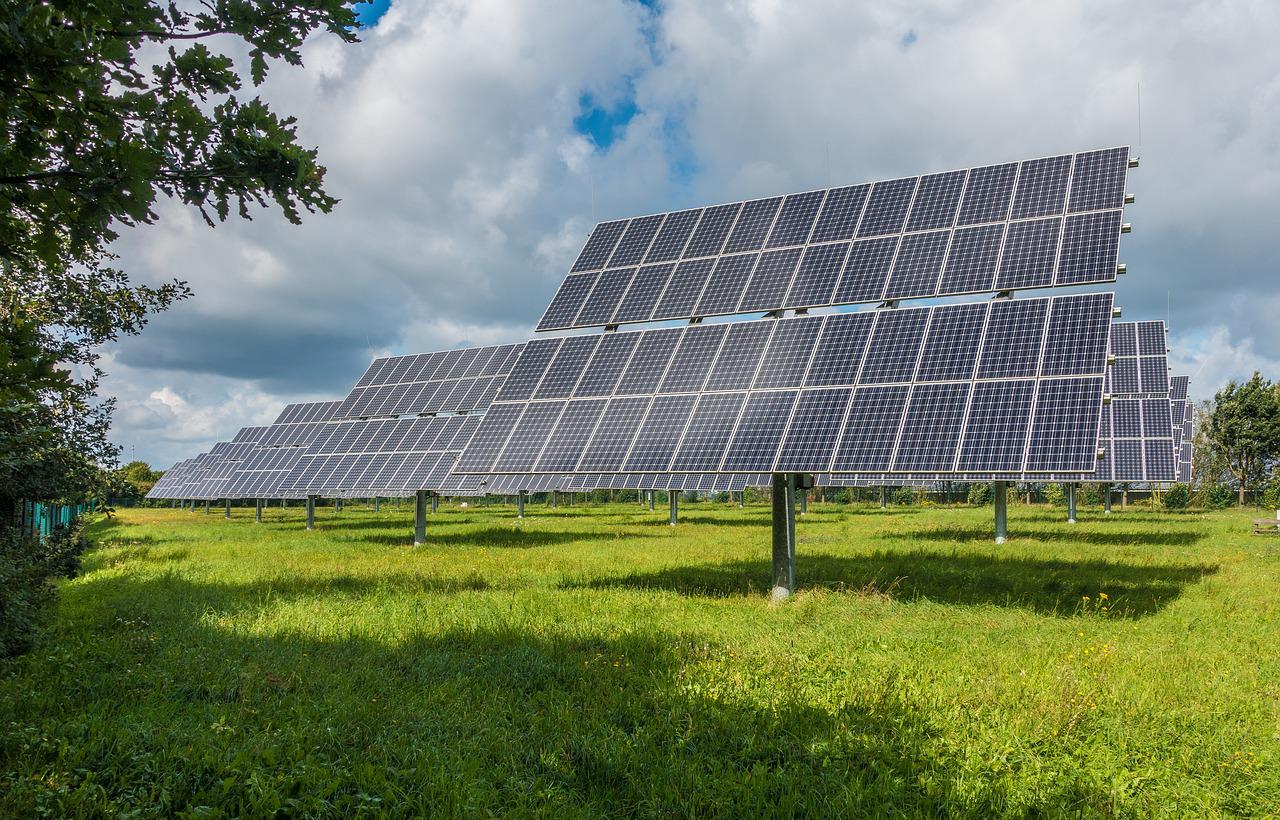
A solar farm is a large field of PV panels, arranged in rows and angled towards the Sun, that sends electricity into the national grid. Developers choose open, gently sloping land with few shadows and good access to power lines. Solar is now one of the fastest-growing sources of electricity worldwide, according to the International Energy Agency (IEA).
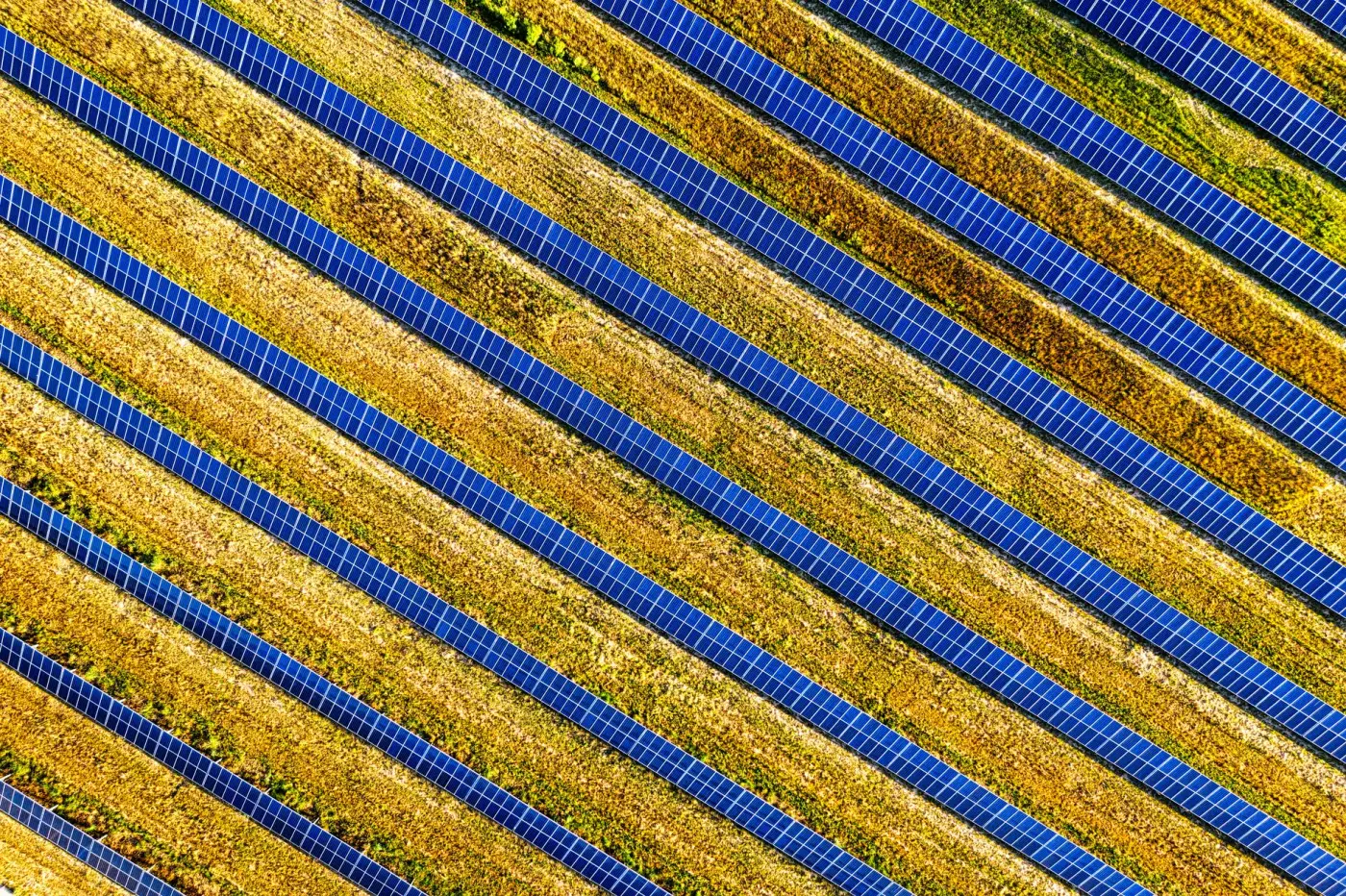
Solar farms do have trade-offs. They take up land, and their output is zero at night and lower in winter or under thick cloud. Grid operators therefore balance them with batteries, wind, hydroelectric power and other sources. The same is true for every use in this article: solar works best as part of a wider energy mix.
Solar energy in farming and water
Farms need two things in large amounts: energy and water. They also tend to have lots of open land and sunshine, which is why agriculture is one of the most practical applications of solar energy. The uses range from a single pump in a field to whole solar farms shared with crops.
Agrivoltaics: crops, grazing and panels on the same land
Agrivoltaics means using the same piece of land for solar panels and for farming. Panels are raised on frames so that crops can grow beneath them, or so that animals such as sheep can graze between the rows. Land is limited, so this approach lets a field produce electricity and food together instead of one or the other.
It also tackles one of the main limitations of large solar farms: the amount of land they use. The panels give some shade, and the farmer gets a second income from the electricity.
Solar water pumps for irrigation
In many rural areas there is no connection to the electricity grid, and diesel pumps are noisy, costly to run and polluting. A solar water pump solves this. Photovoltaic panels power an electric motor, which lifts water from a well, borehole or river into a tank or onto the fields.
There is a useful match here. Crops need the most water on hot, sunny days, which is exactly when the panels produce the most electricity. Many systems store water in a tank rather than storing electricity in batteries, which keeps them simpler and cheaper.
Crop drying and greenhouses
Drying is one of the oldest solar thermal uses. Grain, fruit, fish and spices have been laid out in the sun for centuries. Modern solar dryers improve on this by using an enclosed box or tunnel with a transparent cover. The Sun’s heat warms the air inside, and the warm air carries moisture away. Covering the food also protects it from dust, insects and rain.
Greenhouses work in a similar way. Sunlight passes through the glass or plastic and warms the plants and soil, and the covering traps much of that heat. Some greenhouses also have panels on the roof to run fans, lights or water pumps.
Solar water heating, desalination and purification
Water is also one of the main reasons people use the Sun’s heat. Solar water heaters warm water for washing and for farm or dairy use, and they are common in sunny countries. In remote areas, solar energy can also make water safe to drink.
- Solar desalination: a shallow, covered basin (a solar still) is heated by the Sun. Water evaporates, leaving the salt behind, then condenses on the cool cover and drips into a clean collecting channel.
- Solar purification: the same evaporate-and-condense idea removes salts, dirt and germs from dirty water. Solar-powered pumps and filters can also run in places with no mains supply.
The physics is the same as the water cycle in miniature: the Sun’s heat causes evaporation, and cooling causes condensation. This is a good example to use in an exam answer about energy transfers.
Solar in transport and space
Transport is a harder fit for solar power, because a vehicle has a small roof and needs a lot of energy to move. Even so, the Sun already plays a part on the road, on the water, on rails and above the atmosphere.
Solar and electric vehicles
The most useful link between solar and road transport is charging. Carports and car park canopies covered in panels generate electricity while the cars underneath are parked, and the electricity can charge them directly or feed the grid. Pairing panels with a home battery lets a driver store daytime solar energy and charge the car in the evening. If you want to know what happens inside the vehicle, see our guide on how electric cars work.
Solar power is also used on a smaller scale. Some trains and boats use solar panels to supply part of their power, and solar-powered road signs and warning lights work without any cables. Fully solar-powered cars exist, but they are mostly built for racing and research rather than everyday driving.
Satellites and the International Space Station
Space is where solar power has the longest track record. Vanguard 1, launched in 1958, was the first solar-powered satellite, and it is still in orbit. Today, satellites commonly use panels to produce electricity, because above the atmosphere there are no clouds and no night for many orbits.
The International Space Station is powered by very large solar arrays. They turn sunlight into electricity for the crew and the experiments, and batteries keep things running while the station is in Earth’s shadow. For more on how satellites and the station work, read our post on rockets, telescopes, satellites and the ISS.
Mars rovers: which ones are solar?
The rovers Spirit and Opportunity were solar-powered. Their panels charged batteries that kept the electronics warm and powered through the cold Martian night. The rovers Curiosity and Perseverance, however, are powered by a nuclear generator called a radioisotope thermoelectric generator (RTG), not by solar panels. This is a common mistake, so check which rover a question is about.
Solar energy around the world
Solar is now one of the fastest-growing sources of electricity worldwide, according to the International Energy Agency (IEA). That growth comes from many different uses of solar energy at once: rooftop systems on houses, large solar farms feeding the grid, small off-grid kits and industrial plants.
The best use depends on the place. Very sunny, dry regions suit concentrated solar power. Remote villages benefit from solar pumps, lights and phone chargers because building power lines is expensive. In the UK, where sunlight is weaker, rooftop panels and solar water heating still work, but they produce less energy per day, so the savings are smaller.
Because the Sun is the original source of most energy on Earth, this is also a GCSE theme. Light is transferred to electrical energy in a solar cell and to thermal energy in a solar heater. Efficiency is useful output ÷ total input, and modern panels are about 20–23 % efficient.
Which use is it? Flip the cards
Try to answer each question in your head before you tap the card.
Benefits and limitations of solar energy uses
The uses of solar energy keep growing because the Sun is a free, renewable source of energy that reaches the whole Earth, although some places get far more than others. But sunlight is not a perfect fuel. Knowing both sides helps you judge which applications of solar energy make sense and where another source is needed.
The table pairs each main benefit with the limitation that goes with it. For a longer debate, see our full guide to the pros and cons of solar energy.
| Benefit | Limitation |
|---|---|
| Renewable: the Sun will keep shining for billions of years. | Output varies with time of day, season, cloud and shading, and there is none at night. |
| Works at any scale, from a calculator to a solar farm feeding the grid. | Large solar farms need a lot of land (agrivoltaics can share it with crops or grazing). |
| Suits remote places: off-grid clinics, telecom masts, water pumps. | Batteries or other sources are needed to cover the hours without sunlight. |
| Panels last 25–30 years and lose only about 0.5 % of output per year. | Making panels uses energy and materials, though they usually pay this back within a few years. |
| Cuts the use of fossil fuels when it replaces them. | Recycling of old panels is a growing issue. |
Wind has a similar profile: clean and renewable but variable. Compare the two in our post on the advantages and disadvantages of wind energy, and see where solar fits among all the options in energy sources and their uses.
Replacing fossil fuels matters because burning them adds carbon dioxide to the atmosphere. If you want the science behind that, read about the climate crisis and the greenhouse effect.
Limitations are easier to manage than they sound. Good siting reduces shading, and regular checks keep panels working. Our guide to solar panel function and maintenance covers cleaning, inspection and what to expect over the system’s life.
A short history of solar power
Using sunlight is old, but turning it into electricity is more recent. These are the milestones worth knowing:
- 1839: Edmond Becquerel discovers the photovoltaic effect, where light produces an electric current in certain materials.
- 1954: Bell Labs makes the first practical silicon solar cell. It is about 6 % efficient.
- 1958: Vanguard 1 becomes the first solar-powered satellite. It is still in orbit today.
- Today: typical modern panels reach about 20–23 % efficiency, and the IEA describes solar as one of the fastest-growing sources of electricity worldwide.
From 6 % to over 20 % in a few decades is a big improvement, and it explains why so many solar energy uses are now practical.
Test yourself: uses of solar energy
Key points to remember
Frequently asked questions about solar energy uses
What are the main uses of solar energy?
The main uses of solar energy are generating electricity with photovoltaic panels, heating water and buildings with solar thermal collectors, and supplying industrial process heat. It also powers satellites, street lights, calculators, irrigation pumps, solar cookers, desalination units, electric vehicle charging and remote telecom masts.
What are the commercial uses of solar energy?
Commercial uses of solar energy include rooftop panels on offices, schools and shops that reduce electricity bills, solar farms that feed the grid, and process heat for factories. Businesses also build solar carports for electric vehicle charging, and some add batteries so daytime solar power can be used later.
What is solar energy and is it renewable?
Solar energy is energy from the Sun’s light and heat, produced by nuclear fusion of hydrogen into helium in its core. It is renewable because the Sun will keep shining for billions of years. Sunlight reaches Earth as electromagnetic radiation in about 8 minutes 20 seconds.
How does solar energy work?
Photovoltaic cells use semiconductors, usually silicon. Photons of light free electrons, creating direct current, and an inverter converts it to alternating current for homes and the grid. Solar thermal systems work differently: they absorb the Sun’s heat to warm water or, in concentrated solar power, to make steam for a turbine.
What is the difference between solar thermal and photovoltaic?
Photovoltaic (PV) systems turn light directly into electricity. Solar thermal systems use the Sun’s heat instead, for water heating, space heating, cooking, drying or, with mirrors in concentrated solar power, steam-driven electricity generation. PV suits most roofs, while concentrated solar power works best in very sunny, dry regions.
What are examples of solar energy in daily life?
Everyday examples include solar calculators, garden lights, street lights, rooftop panels, solar water heaters, portable phone chargers and solar cookers. Beyond the home, the International Space Station and many satellites run on solar arrays. Even without panels, the Sun is the original source of most energy on Earth.
How is solar energy used in agriculture?
Farmers use solar water pumps for irrigation, solar dryers for crops and solar-heated greenhouses. Agrivoltaics goes further by placing panels and crops or grazing animals on the same land, so one field produces both food and electricity. These uses suit remote areas, where power from the grid may be limited.
How much electricity does a solar panel produce?
Daily energy in kWh is roughly system size (kWp) × peak sun hours × a performance ratio of about 0.75–0.85. The UK gets roughly 2.4–2.8 peak sun hours a day, so a 4 kWp system makes about 7–10 kWh. Sunny deserts with 5–7 hours produce far more.
What are the advantages and disadvantages of solar energy?
Advantages: solar is renewable, does not burn fuel, and suits homes, businesses and remote places. Disadvantages: output varies with time, season and cloud, drops to zero at night, large farms need land, and old panels need recycling. Batteries and other energy sources help fill the gaps.