Using mathematics is essential when studying biology. Let’s see this bite size math problems in cell biology lesson to understand cell biology for GCSE better. Grab a pen and a paper and let’s solve this with me.
GCSE – Cell Biology
- A cell 6 μm wide was magnified 2000 times. Calculate the size of the image.
- A cell that is 8 μm in diameter appeared to be 1.2 cm in diameter when observed by a microscope. Calculate the magnification.
- A bacterial colony of 20,000 bacteria divides every 6 minutes. How many bacteria will there be after 1 hour?
- Calculate the cross-sectional area of a bacterial colony that is 1.2 mm in diameter.
- The magnification of the eye piece was x10 and the magnification of the objective lens was x 40 in a particular microscopic observation. What is the magnification of the microscope?
- Assume that an animal cell is 2.5 mm in width as seen through the microscope, at a magnification of x 400. Calculate the actual size of the cell.
Check Your Answers!
Calculating size of the image of a microscope
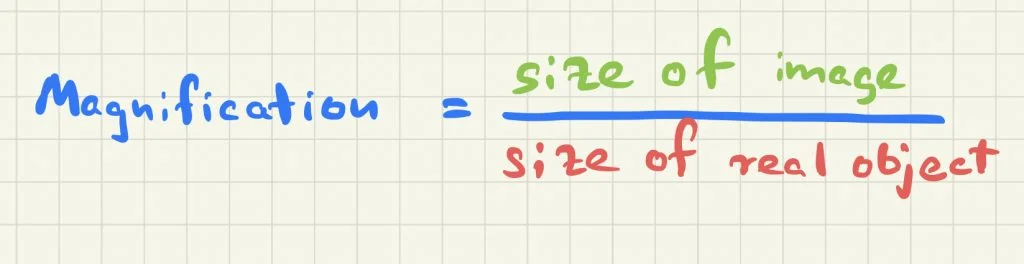
size of the image = magnification x real size of the real object
= 2000 x 6 μm
= 12000 μm
Calculating the magnification power of the microscope compared to the object and the image
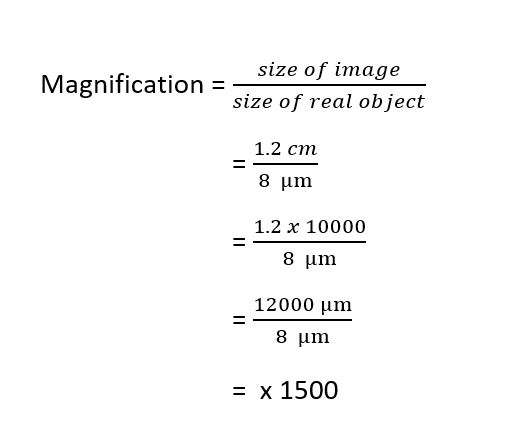
Calculating the size of a bacterial colony after it has multiplied
1 hour = 60 minutes
Divisions = 60 / 6
= 10
Number of bacteria after 1 hour = 20,000 x 2 10
= 2 x 104 x 1024
= 2048 x 104
cross-sectional area = πr2
= 3.142 x 1.2 2 mm
= 3.142 x 1.44
= 4.52 mm2
Calculate the magnification power of a microscope with the magnification power of the eye piece and the objective lens
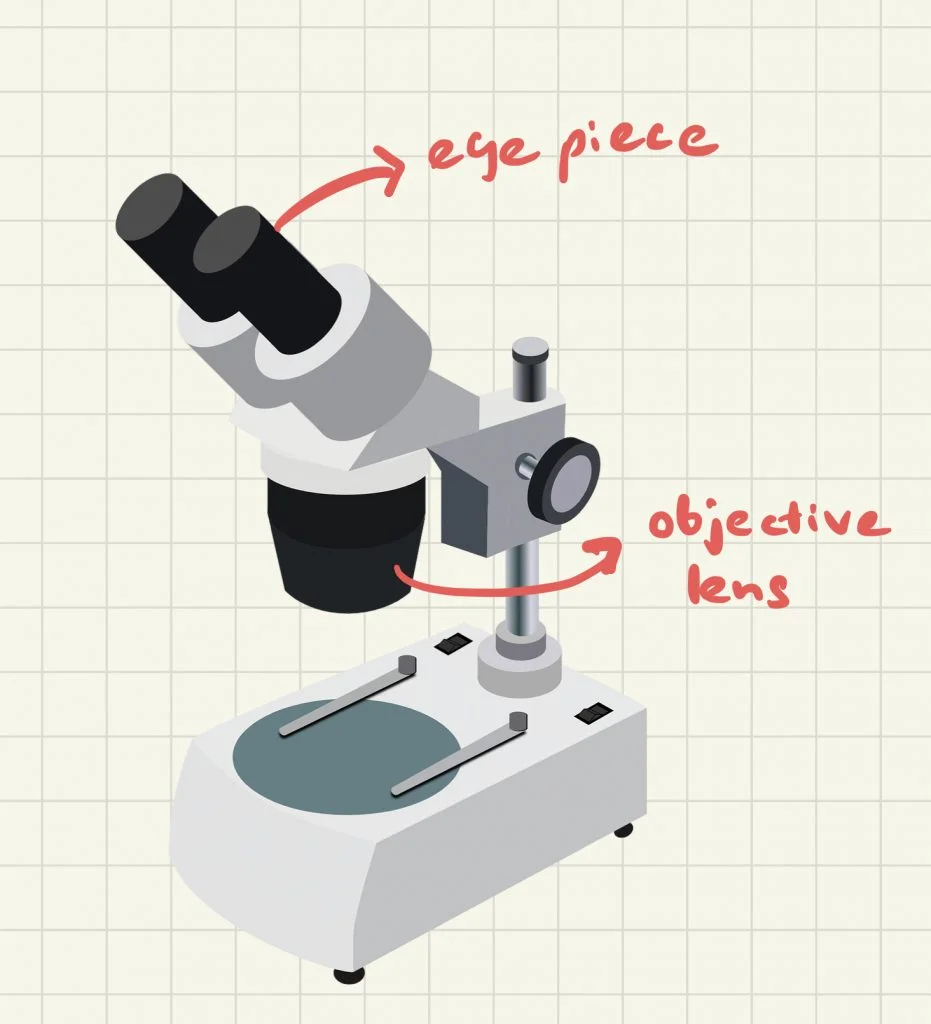
Magnification of the microscope = Magnification of the eye piece x Magnification of the objective lens
= 10 x 40
= x 400
Calculate the size of the object using magnification power of the microscope and the size of the image
Actual size of the cell = 2.5 mm / 400
= 0.00625 x 1000 mm
= 6.25 μm