If you want to know how to reduce plastic waste, the short answer is to refuse and reuse first, then recycle properly. Prevention beats recycling because only about 9% of the world’s plastic waste is ever recycled, so the plastic you never use is the plastic that never has to be dealt with. Small habits at home, at school and when you are out and about all add up.
This guide gives you 12 practical ways to cut plastic waste, and the science behind them: what plastic is made of, why it lasts so long, what microplastics are, what the numbers on packaging mean and which UK rules are changing. There is a bag calculator, a quiz and a school plastic-audit checklist to try along the way.
Why reducing plastic waste matters
Plastic is cheap, light and tough, which is why it is everywhere. The problem is what happens when we throw it away. The OECD’s Global Plastics Outlook, using 2019 figures, estimated that the world used about 460 million tonnes of plastic in that year and produced about 353 million tonnes of plastic waste. That is more than double the amount of waste in 2000.
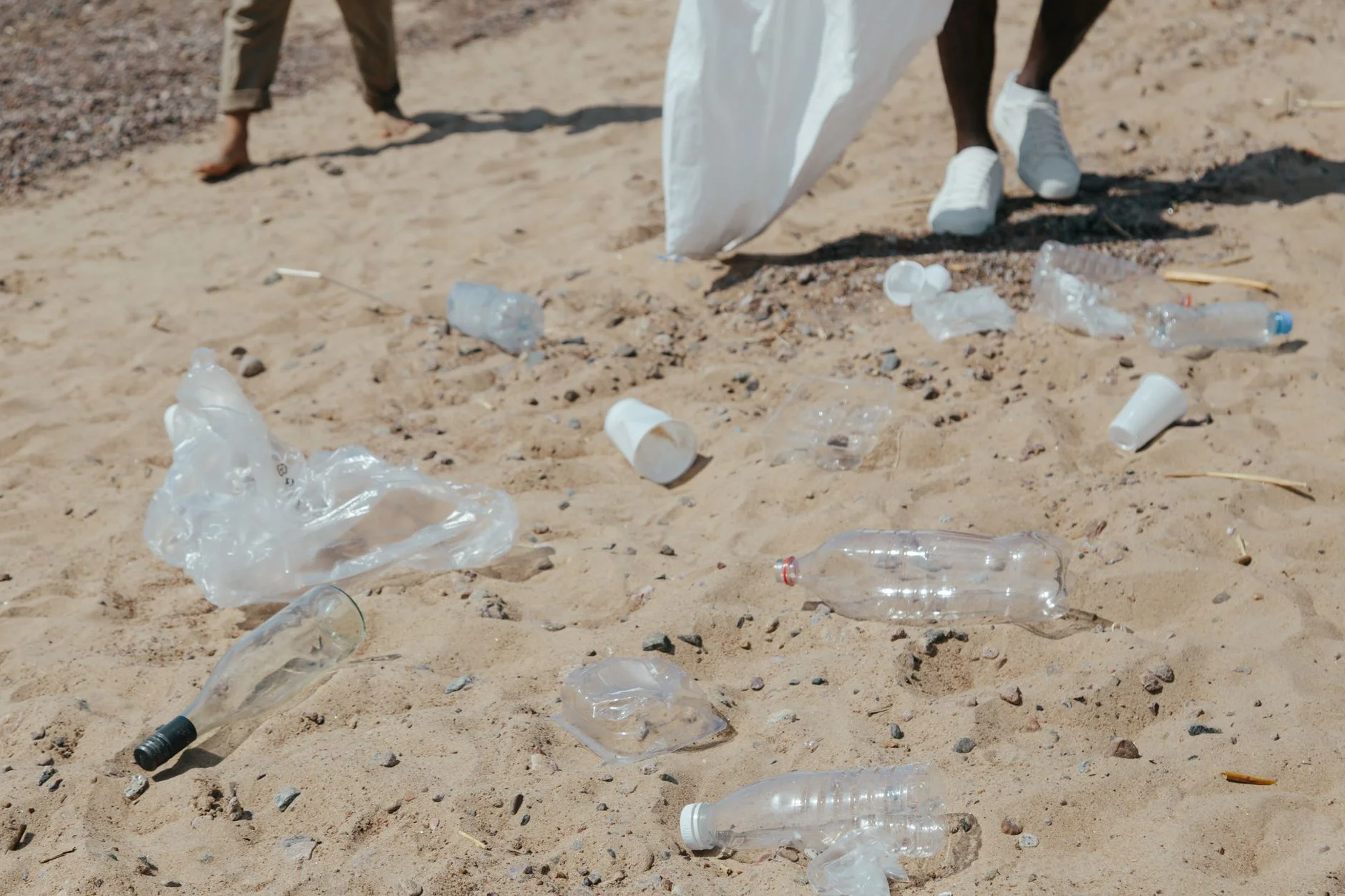
So where did all that waste go? The OECD estimated that:
- only about 9% was ultimately recycled;
- about 19% was incinerated;
- almost 50% went to sanitary landfill;
- about 22% ended up in uncontrolled dumpsites, was burned in the open or leaked into the environment.
That last group is the one that ends up on beaches and in rivers. The United Nations Environment Programme (UNEP) says that every year between 19 and 23 million tonnes of plastic waste leaks into lakes, rivers and seas. Aquatic life and birds can mistake plastic pieces for food. You can read more about the disadvantages of plastics in a separate guide.
The trend matters too. If nothing changes, the OECD’s baseline projection is that global plastics use will almost triple to about 1,231 million tonnes a year by 2060. Reducing plastic waste now means a smaller problem to manage later.
What is plastic? A quick polymer lesson
To understand why plastic waste is such a puzzle, it helps to know what plastic actually is. Plastics are polymers: very long molecules made from many small repeating units called monomers. Think of a paper-clip chain, where each clip is a monomer and the whole chain is the polymer.
The plastic in carrier bags and many bottles is poly(ethene), also called polythene. It is an addition polymer. Its monomer is ethene, a small molecule with a carbon–carbon double bond (C=C). When ethene molecules join up, the double bond opens and each carbon links to the next molecule. The result is a long chain of C–C single bonds. Only one product forms, which is the polymer itself.
n CH₂=CH₂ → –(CH₂–CH₂)ₙ–
The “n” stands for a very large number of ethene molecules. Notice the naming pattern: poly plus the monomer in brackets, so ethene gives poly(ethene). This chemistry is part of how the chemistry of the environment links to everyday materials, because the strong bonds that make plastic useful are the same bonds that make it hard to get rid of.
Plastic’s strong, flexible chains are why it is so useful. They are also the reason that plastic does not simply rot away, as the next section explains.
Why plastic lasts so long
When a leaf falls on the ground, bacteria and fungi break it down. They do this with enzymes, which are biological catalysts that fit specific bonds in natural materials. Many plastics are different. The enzymes in these microorganisms do not recognise the bonds that hold most plastic polymers together.
A 2022 scientific review explains one reason: plastics with a backbone made only of carbon atoms (C–C bonds) lack the chemical groups that are easiest for water and enzymes to attack. So the chain stays intact for a very long time.
The US National Oceanic and Atmospheric Administration (NOAA) describes what happens instead. Plastic does not break down like other materials. Sunlight, salt water and the movement of waves make it fragment into smaller and smaller pieces, and it may never fully go away. Even plastics labelled biodegradable or compostable could stay in the ocean for an indefinite time.
This is the key idea behind the whole article. If plastic does not vanish, then the best way to reduce its harm is to use less of it in the first place.
Microplastics: plastic you can hardly see
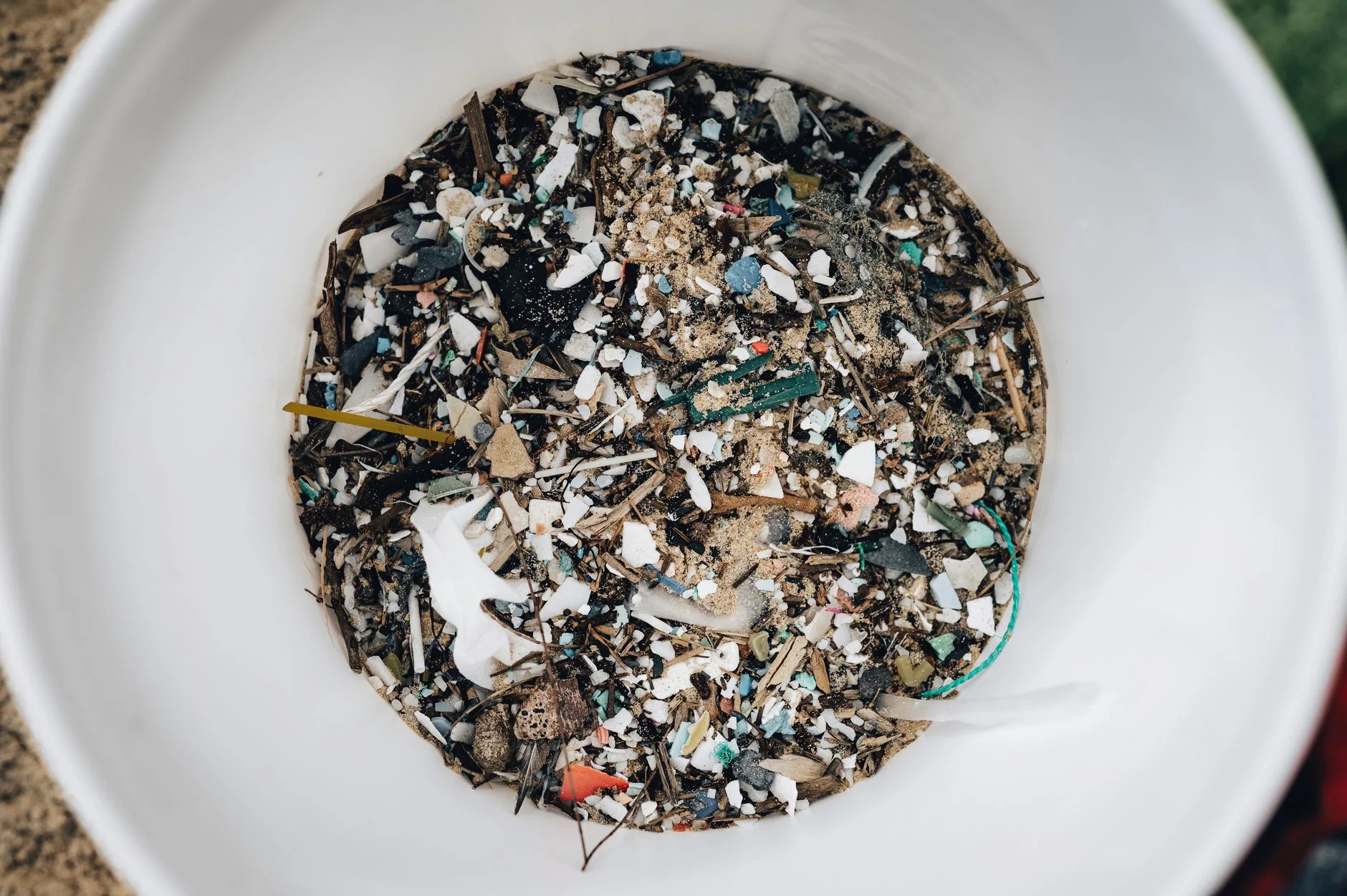
NOAA defines microplastics as pieces of plastic less than 5 mm long, about the size of a pencil eraser. They come from three main sources:
- Breakdown of larger debris. Bottles, bags and other litter fragment over time.
- Resin pellets. These tiny pellets are the raw material used to make plastic products, and some are spilt.
- Microbeads. These were tiny polyethylene particles once added to some cleansers and toothpastes as exfoliants. The UK has banned microbeads in rinse-off cosmetics.
Microplastics matter because aquatic animals and birds can mistake them for food. Small creatures at the bottom of a food chain can swallow them, and then larger animals eat the small creatures. If you are curious about how this fits together, see how ocean food chains and food webs work.
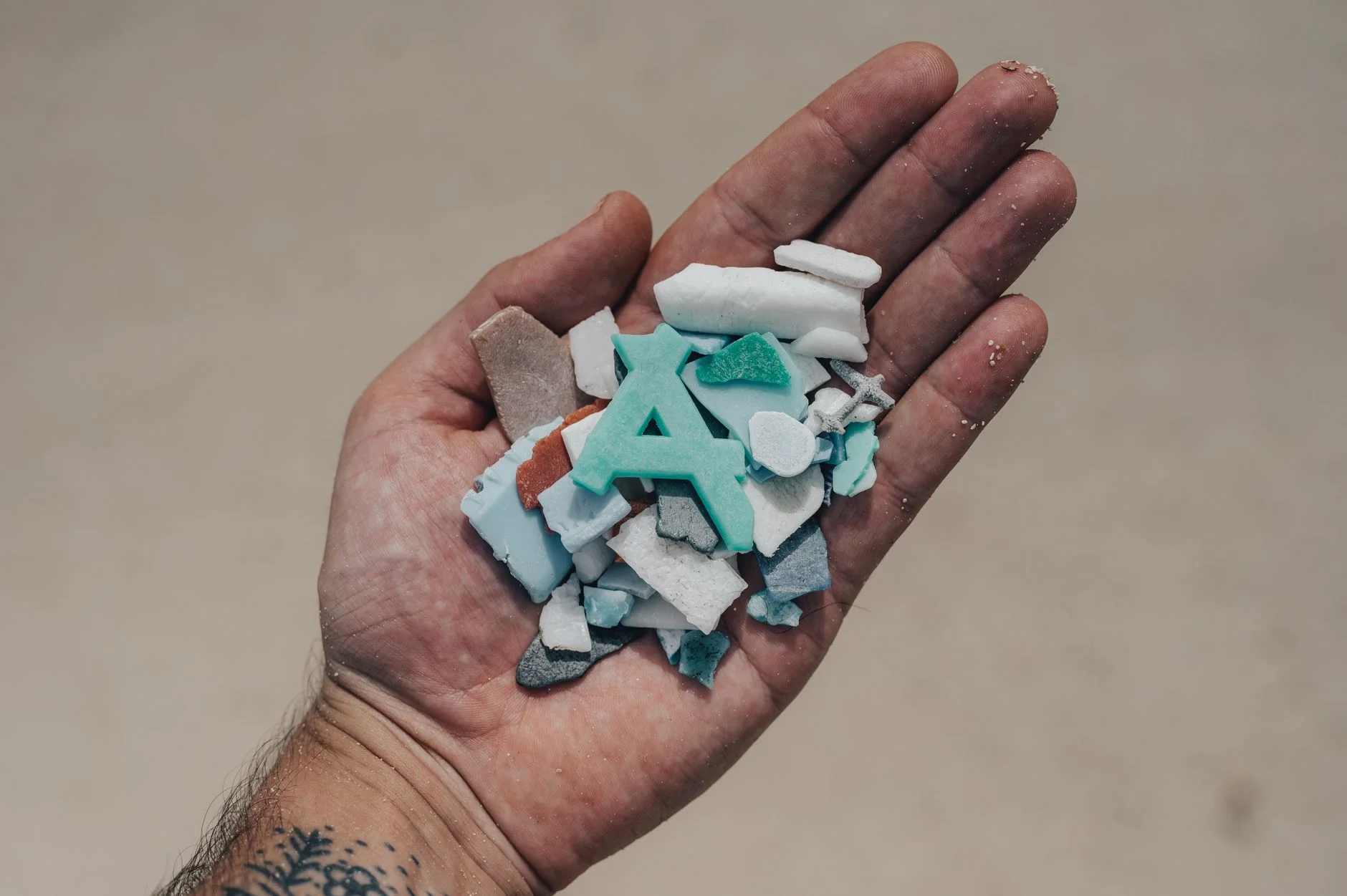
What about people? In 2022 the World Health Organization reviewed the studies available at the time on how we are exposed to micro- and nanoplastics through food, drink and the air. It concluded that the data were not adequate to make a firm assessment of the risk to human health, and that more research is needed. In plain terms, scientists do not yet know how harmful microplastics are to people. That is not the same as saying they are safe. It means the evidence is still being gathered.
Now that you know why plastic is such a lasting problem, the next step is to look at what you can actually do about it, starting with the order in which to tackle waste.
The waste hierarchy: reduce first, recycle last
Governments and waste experts rank ways of dealing with waste from best to worst for the environment. This ranking is called the waste hierarchy. In England it is set out in guidance from Defra, based on the EU Waste Framework Directive. It has five steps:
- Prevention – not creating the waste in the first place.
- Preparing for re-use – checking, cleaning or repairing items so they can be used again.
- Recycling – turning waste into new materials.
- Other recovery – for example, recovering energy from waste.
- Disposal – for example, landfill.
For plastics, Defra’s guidance says that closed-loop recycling, where a material is made back into the same kind of product, ranks above other types of recycling and energy recovery.
Why does prevention sit at the top? Because making things takes materials and energy. In the Environment Agency’s 2011 life cycle assessment of carrier bags, the production stage dominated the environmental impacts. Not making a bag you do not need avoids all of that, while recycling only recovers part of the value afterwards.
With that order in mind, here are the first six of our 12 ways to cut plastic waste in everyday life.
How to reduce plastic waste at home: ways 1–6
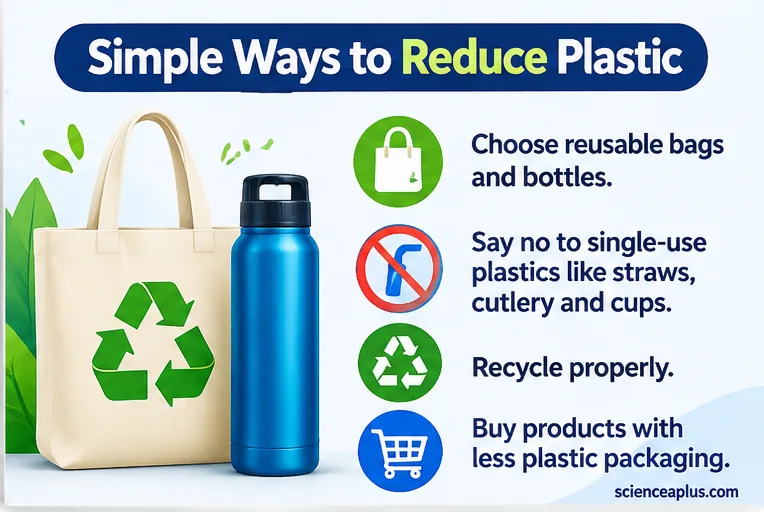
Home is the easiest place to start, because you control what comes through the door. These six ways cost little, and several of them save money too.
1. Refuse what you do not need
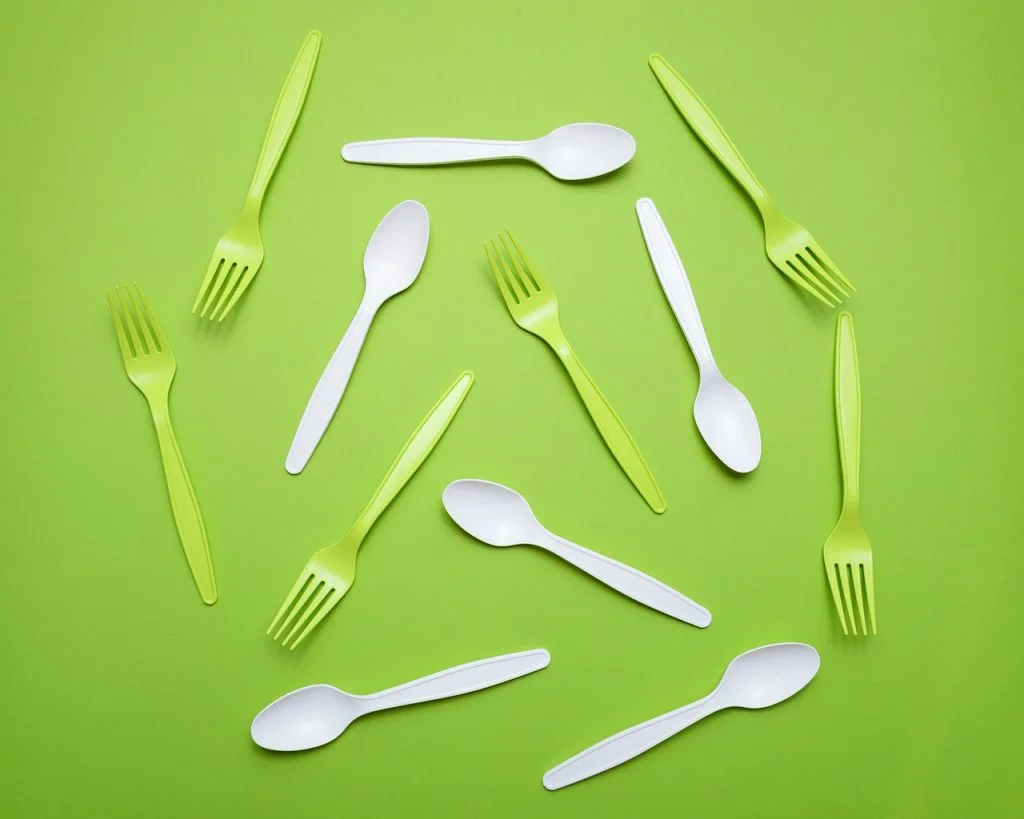
The cheapest plastic to deal with is the plastic you say no to. Turn down straws, extra bags, free promotional gadgets and plastic cutlery you will not use. Take your own bag when you shop, and ask for drinks without a straw.
Some of this is now the law in England. Single-use plastic cutlery, balloon sticks and polystyrene food and drink containers are banned, and single-use plastic plates, trays and bowls are banned, with some exemptions. Saying no on your own initiative puts you ahead of the rules. Cutting waste at the source also protects wildlife, as explained in our guide to how to protect marine life.
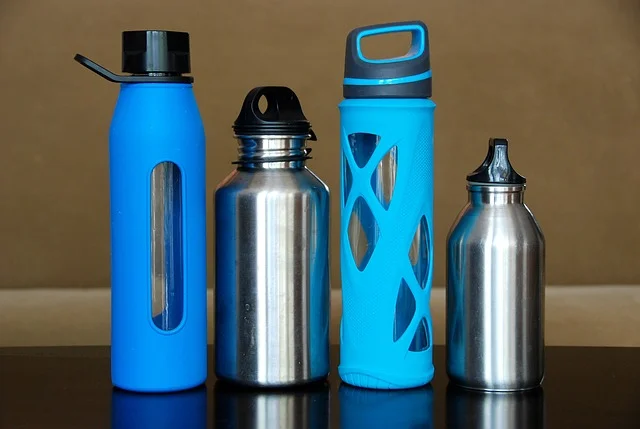
2. Carry a refillable bottle and cup
A reusable bottle is probably the single easiest swap. Steel and glass bottles can be used for years, and you can refill them from a tap. Many cafés will fill a reusable cup too.
Do not buy a new bottle every time you are thirsty. If you already own a bottle, the greenest option is to keep using it. A new reusable bottle only makes sense once your old one is worn out.
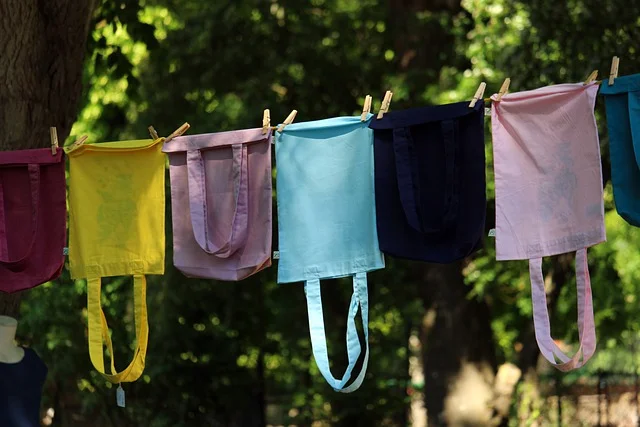
3. Reuse your shopping bags, and keep reusing them
Bags are a good example of why “reusable” only helps if you actually reuse the item. The Environment Agency studied the life cycle of carrier bags available in 2006 and compared their global warming potential with a conventional HDPE (high-density poly(ethene)) carrier bag used once. To do better than that single-use bag, each of these had to be used a minimum number of times:
- a paper bag: at least 3 times;
- an LDPE “bag for life” (thicker plastic): at least 4 times;
- a non-woven polypropylene bag: at least 11 times;
- a cotton bag: at least 131 times.
The study also found that if about 40% of HDPE bags were reused as bin liners (as the study found), the numbers rise to 4, 5, 14 and 173. Climate change is linked to the greenhouse gases released when materials are produced, so “global warming potential” is a measure of that climate impact. For the background, see our guide to global warming and the greenhouse effect.
Try the calculator below to see how many more uses your bag needs.
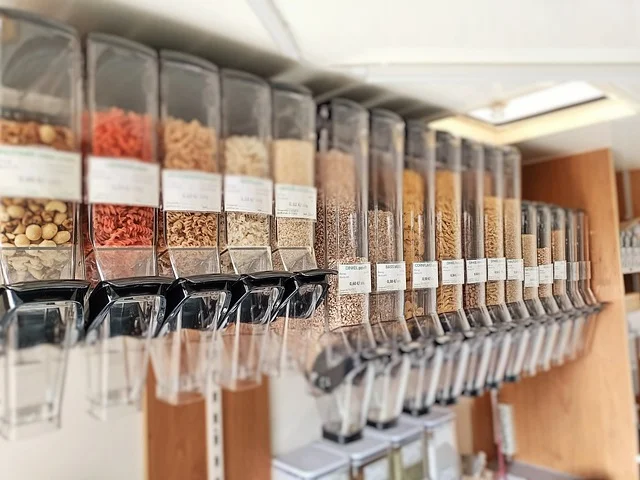
4. Buy loose fruit and veg, and try refill shops
Many fruits and vegetables come in their own natural wrapping. Bananas, oranges and onions need no plastic tray or film. Choose loose items where you can and put them straight into your reusable bag.
Refill shops go a step further. You bring your own tubs and fill them from dispensers with items such as nuts, grains, cereals or cleaning liquids. You buy only the amount you need.
5. Choose card, paper or glass packaging wisely
Swapping plastic packaging for card or paper can help, but it is not automatic. Egg boxes made of moulded card and bakery loaves wrapped in paper are good examples where plastic is not needed at all.
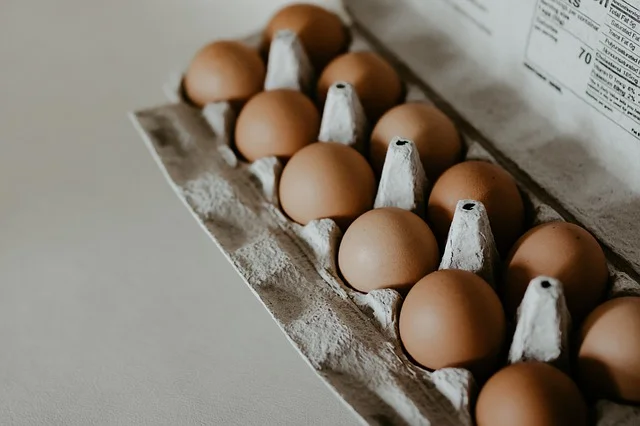
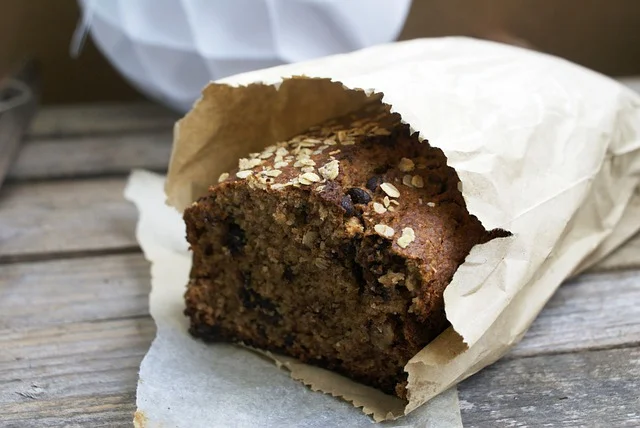
Remember the bag study, though. A paper bag only beats a single-use plastic carrier on climate impact if it is used at least three times. So “paper” is not a magic word. The best option is to reuse any packaging you already have, such as a paper bag, a jar or a tub, before you recycle it.
6. Pack a low-plastic lunch
Lunchboxes are a major source of small plastic items: sandwich bags, cling film, single-serve pots and wrappers. Swap them for a reusable tub, a cloth or beeswax wrap, and a refillable bottle.
Buy bigger packs and portion them out yourself rather than buying lots of tiny individually wrapped items. Pack a metal or reusable spoon so that you do not need a disposable one. A week of low-plastic lunches can remove a surprising number of wrappers from the bin.
Those six ways cover the kitchen, the shopping trip and the lunchbox. The next six reach into the bathroom, the bin and the wider community.
More ways to reduce plastic waste: ways 7–12
The second half of our list moves from the kitchen to the bathroom, the recycling bin and your wider community.
7. Switch to plastic-free wipes or washable cloths
Many wet wipes contain plastic. In England, a ban on selling or supplying single-use wet wipes that contain plastic comes into force on 19 May 2027. It covers baby wipes, make-up wipes, moist toilet tissue and cleaning wipes. Plastic-free and reusable wipes are not banned, and there are exemptions for medical uses.
You do not need to wait. Check the packaging for a “plastic-free” label, or use a washable cloth and a bowl of water for cleaning and make-up removal.
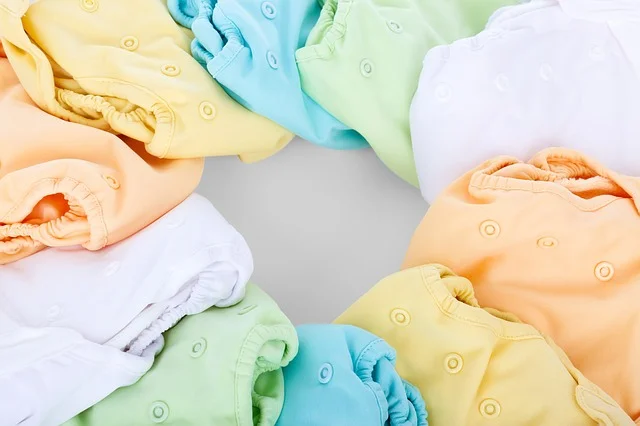
8. Try reusable nappies and other washables
The same idea applies to other disposable items. Reusable cloth nappies are washed and used again instead of being thrown away after one use. Washable cloths, rags and flannels can replace disposable wipes and kitchen rolls in many jobs.
As with bags, the benefit comes from reuse. A washable item you actually use again and again does more good than one that sits in a drawer.
9. Avoid products with added microplastics
As you saw earlier, microplastics can be tiny plastic particles added on purpose. Microbeads in rinse-off cosmetics are now banned in the UK, but other products can still contain tiny plastic particles, such as some glitter. Check ingredient lists, and choose loose, plastic-free alternatives where you can.
This is one of the quieter ways to reduce plastic waste, because you cannot see the particles.
10. Recycle right
Recycling is still worth doing, as long as you do it properly. Contamination can spoil a whole batch. A simple routine helps:
- Empty the container.
- Rinse it quickly, so food does not spoil other materials.
- Squash bottles to save space, if your council allows it.
- Check your council’s list. Collection rules differ by area, and a recycling symbol on a pack does not mean your council collects it.
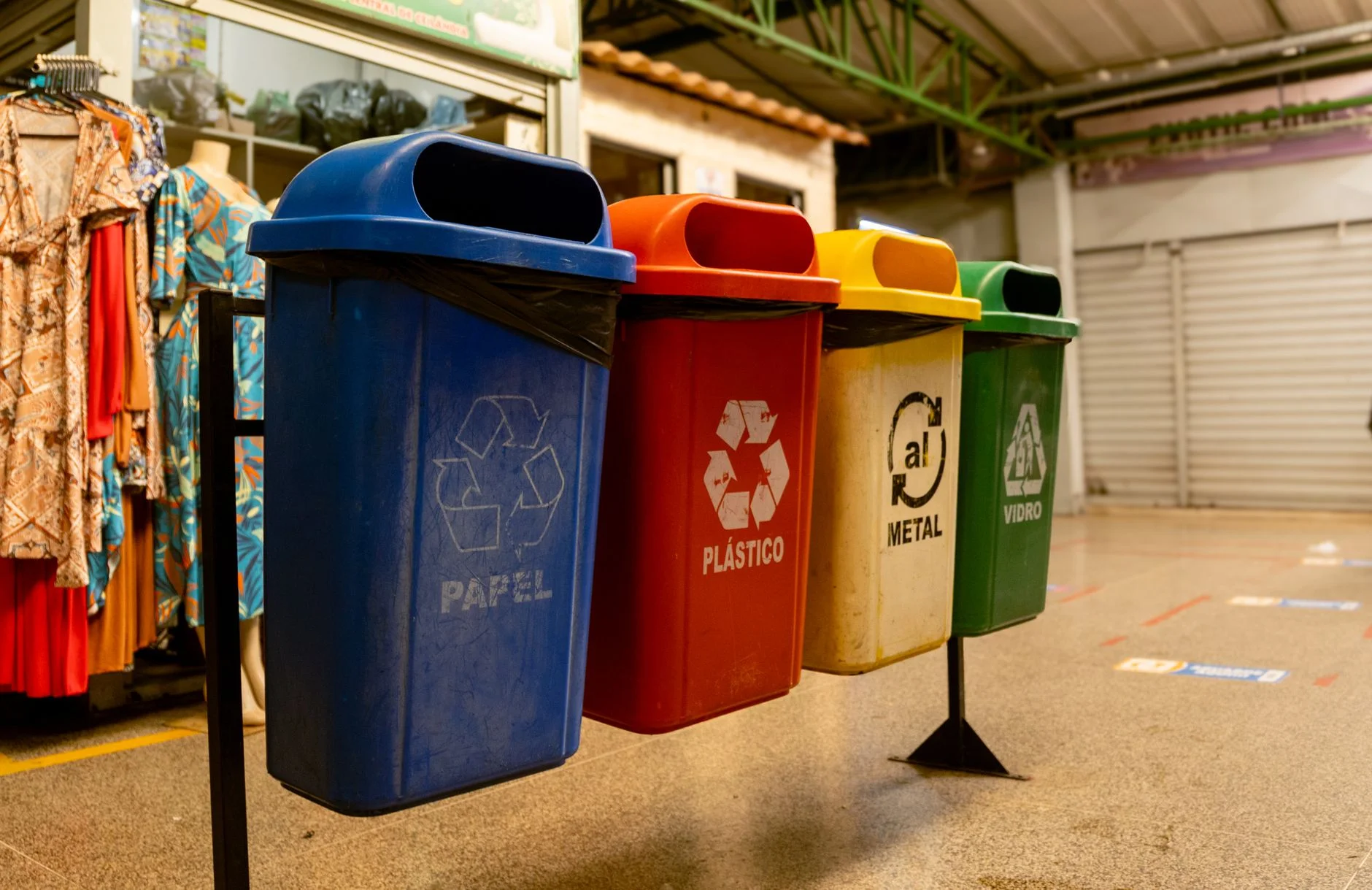
Rules are also changing in England under the Simpler Recycling reforms. Workplaces have had to separate dry recyclables (plastic, metal, glass, and paper and card), food waste and general waste since 31 March 2025, with micro-firms following by 31 March 2027. Councils must collect the same core recyclables, including plastics, and food waste from households by 31 March 2026, and plastic film by 31 March 2027. Some councils have agreed delays, so check what your own council says.
Putting the wrong thing in the bin can cause problems, so when in doubt, follow your council’s guidance rather than guessing. Metals are another material that recycles well. See how that compares in our article on why recycling metal is important.
11. Return bottles and cans to the deposit return scheme
A deposit return scheme (DRS) launches in October 2027 in England, Northern Ireland and Scotland. Single-use drinks containers between 150 ml and 3 litres, made of PET plastic, steel or aluminium, will carry a refundable deposit. You will be able to return them to shops or collection points, and you will not need a receipt. Glass bottles are not included, and Wales is developing its own scheme.
Until it starts, you can still do your part by choosing refillable bottles and recycling the containers you do buy.
12. Join a litter pick or beach clean, and speak up
Picking up litter stops it from breaking into microplastics. Local litter picks and beach cleans are a good way to see the problem for yourself, and many are friendly and family-friendly.
You can also speak up. Write to a shop about excess packaging, ask your council about recycling, or start an eco-club at school. Individuals matter, but so do shops and governments, which is why the UK rules later in this article are part of the story.
Plastic recycling codes 1–7: what the numbers mean
Look at the bottom of a plastic tub or bottle and you will often see a number inside a triangle. This is a resin identification code. It tells you which type of plastic the item is made from, which helps with sorting.
| Code | Plastic | Everyday examples |
|---|---|---|
| 1 | PET (polyethylene terephthalate) | Drinks bottles |
| 2 | HDPE (high-density polyethylene) | Milk bottles |
| 3 | PVC (polyvinyl chloride) | Pipes, window frames |
| 4 | LDPE (low-density polyethylene) | Film and bags |
| 5 | PP (polypropylene) | Food tubs |
| 6 | PS (polystyrene) | Foam packaging and cups |
| 7 | Other | Plastics not covered by 1–6 |
Knowing the code is useful when you check your council’s list. A council might collect “plastic bottles” but not “plastic film”, so the type and the shape both matter.
Are biodegradable plastics the answer?
It sounds like an easy fix: if plastic broke down by itself, litter would not last. Biodegradable plastics are designed to do this. They can be broken down by microorganisms such as bacteria and fungi, but only under suitable conditions.
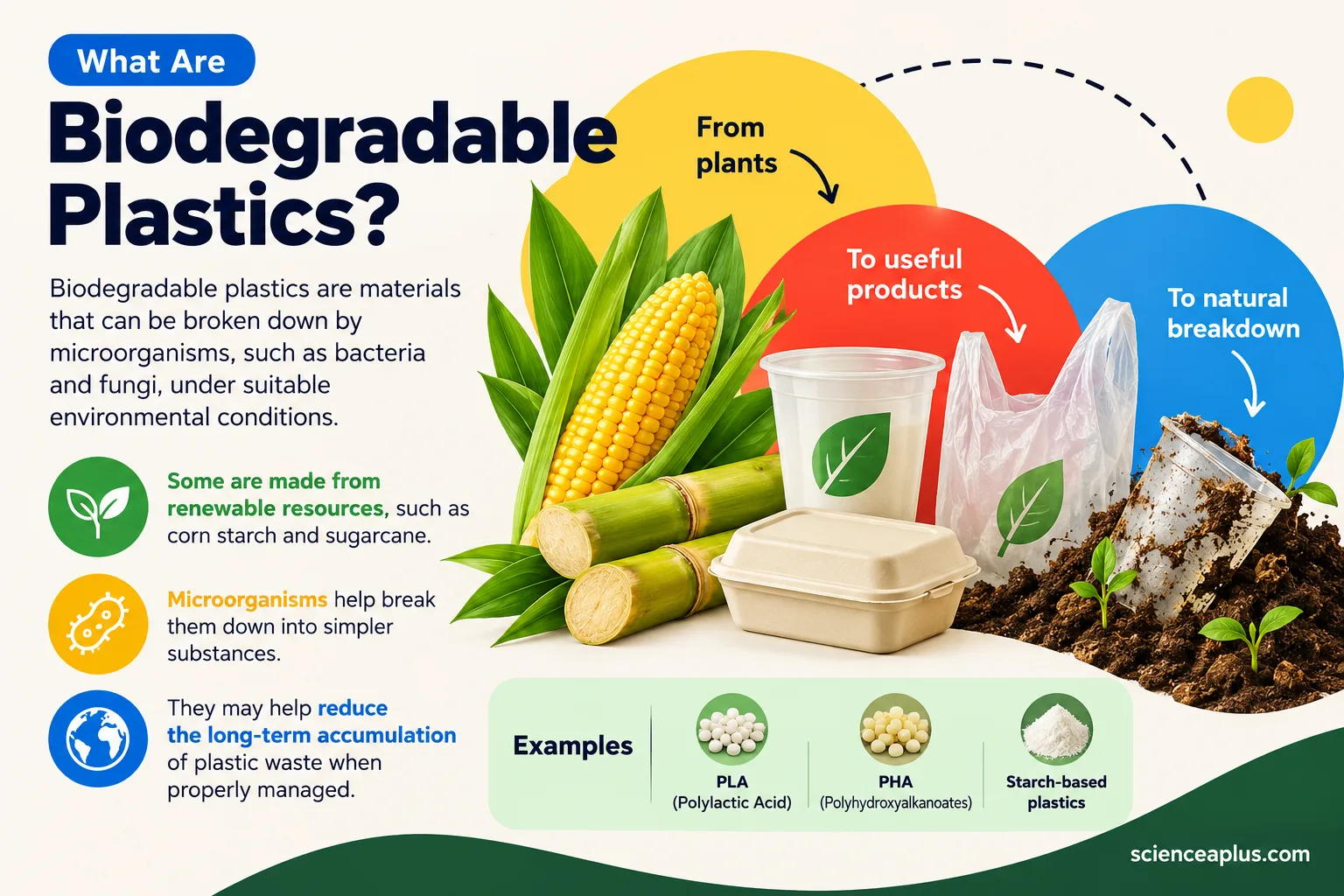
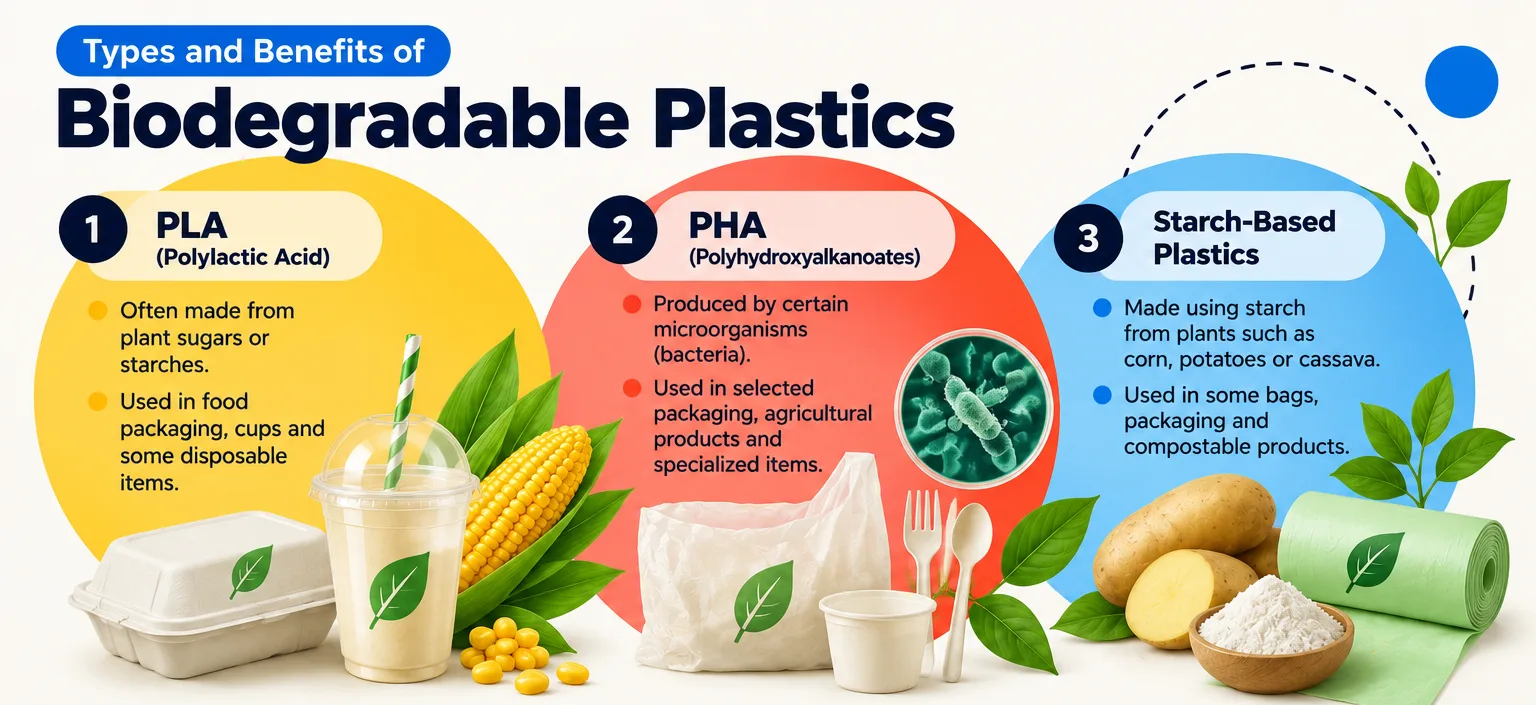
Common examples include PLA (polylactic acid, made from plant sugars or starch such as corn), PHA (polyhydroxyalkanoates, made by bacteria) and starch-based plastics (made from corn, potato or cassava starch).
Biodegradable or compostable?
The two words are not the same. “Compostable” has a precise meaning. Under the European standard EN 13432 for industrial composting, conditions are around 55–60 °C with about 60% water and plenty of oxygen. A material must disintegrate by at least 90% within 12 weeks and biodegrade by at least 90% to carbon dioxide within six months.
There is no widely recognised international standard for home composting, though one certification scheme, TÜV’s “OK compost HOME”, requires at least 90% degradation within 12 months at ambient temperature. PLA generally needs industrial composting rather than a garden heap.
The problems with biodegradable plastics
- Wrong bin, wrong result. Biodegradable plastics can contaminate normal plastic recycling if they are put in the wrong bin.
- Not a licence to litter. NOAA says that even plastics labelled biodegradable or compostable could stay in the ocean for an indefinite time.
- Still covered by the ban. England’s October 2023 ban on certain single-use plastics applies to items made of all single-use plastic, including biodegradable and compostable types.
- Not automatically greener. In the Environment Agency’s 2011 study, starch-blend bags had a higher global warming potential than conventional HDPE bags.
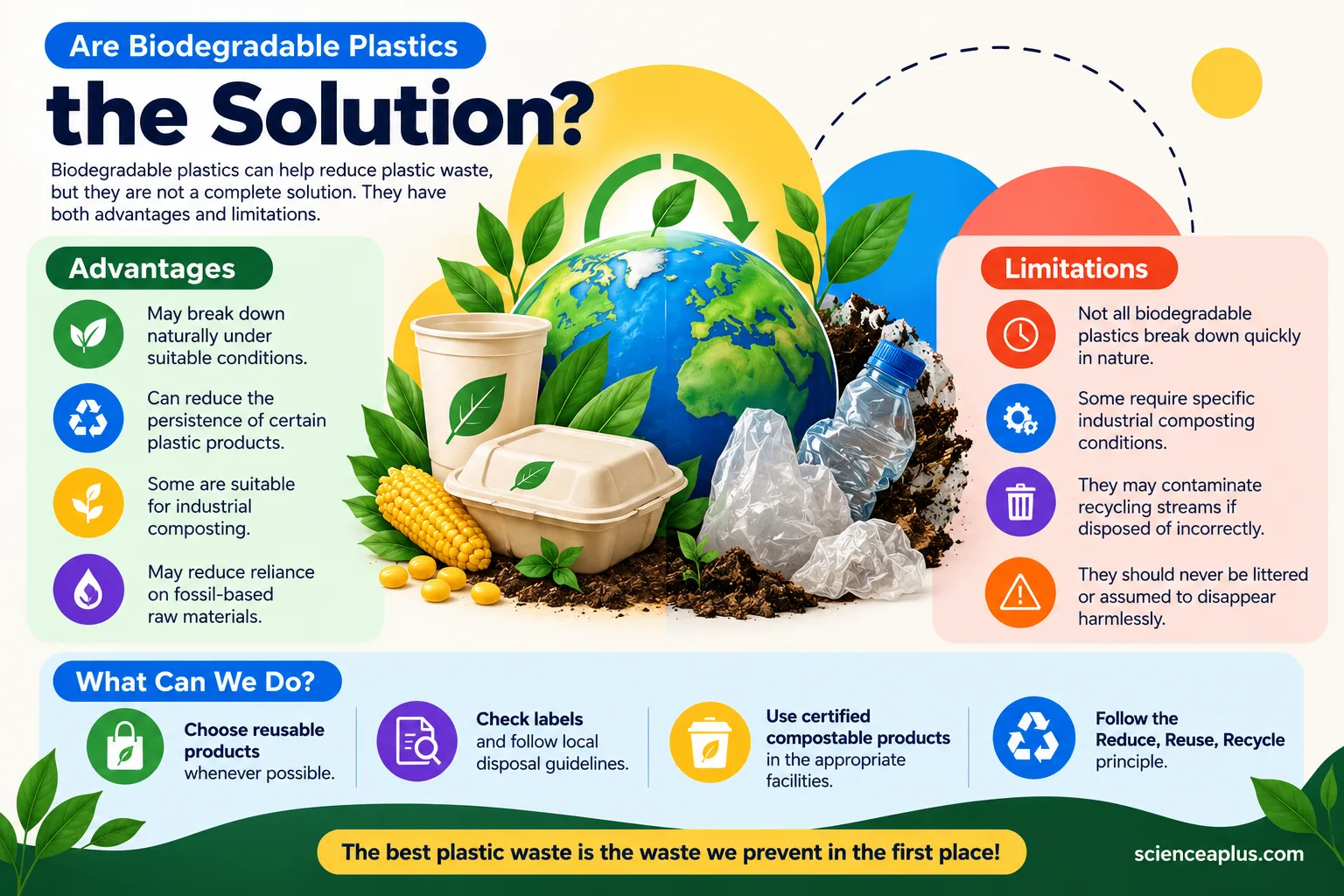
So biodegradable plastics can help in specific cases, but they do not replace the first rule: use less. The final section looks at the laws that are pushing in that direction.
UK plastic rules: what has changed and what is next
Personal choices matter, but rules and prices can change habits faster. Here is how the rules in England, with some UK-wide measures, have developed. Other UK nations have their own dates, so check the government site for your area.
- 5 October 2015: large retailers in England must charge 5p for a single-use carrier bag.
- 21 May 2021: the charge rises to 10p and applies to all businesses.
- 1 April 2022: the UK Plastic Packaging Tax starts. It applies to plastic packaging with less than 30% recycled plastic, and the rate is £228.82 per tonne from 1 April 2026. It affects businesses that make or import 10 tonnes or more.
- 1 October 2023: England bans single-use plastic cutlery, balloon sticks and expanded polystyrene food and drink containers, including cups, and bans supplying single-use plastic plates, trays and bowls to consumers (with exemptions, for example when used as packaging).
- 31 March 2025: workplaces in England must separate dry recyclables, food waste and general waste under Simpler Recycling (micro-firms by 31 March 2027).
- 31 March 2026: councils must collect the same core recyclables and food waste from households, though some have agreed delays.
- 31 March 2027: household plastic film collections are due.
- 19 May 2027: the ban on plastic wet wipes starts in England.
- October 2027: the deposit return scheme launches in England, Northern Ireland and Scotland.
The carrier bag charge shows that rules can work. Government data for 2025–26 show that the 94 reporting retailers sold about 399 million single-use bags, which is 81% fewer than in 2016–17. The seven main retailers sold 126 million, roughly two bags per person. WRAP reported that the main retailers issued 7.6 billion bags in 2014, so the fall since then is 98%, or over 7.5 billion fewer bags. More than £234 million has been donated to good causes since the charge began.
The global plastics treaty
Plastic crosses borders. Waste dropped in one country can be carried by ocean currents to another, which is why many countries want shared rules. On 2 March 2022, the UN Environment Assembly adopted resolution 5/14 in Nairobi. It launched work on an international, legally binding agreement to end plastic pollution, covering the full life cycle of plastic. The aim was to finish negotiations by the end of 2024.
That did not happen. Talks in Busan (late 2024) and Geneva (5–15 August 2025) ended without an agreement. In February 2026 Ambassador Julio Cordano of Chile was elected chair at a procedural session in Geneva, and no further formal negotiating session is expected before March 2027 at the earliest. As of October 2026 there is no treaty.
How to reduce plastic waste at school
Schools are ideal places to put these ideas to the test. An eco-club can run a plastic audit, which means measuring the problem before trying to fix it. Tick off each step as you complete it (your ticks are saved in your browser).
- Agree a safe plan with your teacher, and wear gloves when handling rubbish.
- Collect one day’s plastic waste from a bin or canteen.
- Sort it by type, using the resin codes from the table above.
- Count the items in each group, then weigh each group.
- Pick one or two swaps, such as refillable bottles or reusable lunch tubs.
- Repeat the audit after four weeks.
- Compare your results and share them in an assembly or on a poster.
Presenting your results is good practice for a science project. If you need help structuring a report or essay on this theme, see our guide to the water pollution essay.
Exam-style questions
Explain why poly(ethene) persists in the environment. (2 marks)
Poly(ethene) has a backbone of strong C–C bonds. The enzymes in microorganisms do not recognise these bonds, so the polymer is not broken down quickly. It breaks into smaller pieces instead.
A cotton bag has a much bigger climate impact to make than a plastic carrier bag. Suggest why it can still be the better choice. (2 marks)
It can be used many times, so its impact is spread over many trips. After about 131 uses it beats a single-use plastic bag on global warming potential, and it also avoids creating a new plastic bag each time.
Frequently asked questions about how to reduce plastic waste
What are the best ways to reduce plastic waste?
Refuse single-use items you do not need, carry a refillable bottle, reuse your shopping bags many times, buy loose or refillable products, and recycle properly using your council’s list. Prevention ranks above recycling in the waste hierarchy, so using less plastic is always the strongest step.
Why is it important to reduce plastic waste?
The OECD estimated 353 million tonnes of plastic waste in 2019, with only about 9% ultimately recycled. UNEP says 19–23 million tonnes leak into lakes, rivers and seas each year. Plastic breaks into smaller pieces rather than disappearing, so using less is the most effective way to cut the harm.
How long does plastic take to break down?
Nobody knows exactly. Plastic does not rot like natural materials. Sunlight, salt water and waves break it into smaller and smaller pieces, and NOAA says it may never fully go away. Precise figures for a particular item are estimates rather than measurements.
What are microplastics and where do they come from?
Microplastics are plastic pieces less than 5 mm long. They come from larger plastic items breaking down, from resin pellets used to make plastic products, and from microbeads once added to some cleansers and toothpastes. Animals can mistake them for food, and scientists do not yet know how harmful they are to people.
What do the numbers on plastic packaging mean?
The numbers 1 to 7 inside a triangle are resin identification codes. They name the type of plastic: 1 is PET, 2 is HDPE, 3 is PVC, 4 is LDPE, 5 is PP, 6 is PS and 7 is other. They help with sorting, but they do not promise that an item can be recycled.
Are biodegradable plastics better for the environment?
Not automatically. Biodegradable plastics need suitable conditions, and many such as PLA need industrial composting. They can contaminate recycling if put in the wrong bin, and NOAA says they could persist in the ocean. In an Environment Agency study, starch-blend bags had a higher global warming potential than ordinary plastic bags.
Are paper or cotton bags better than plastic bags?
Only if you reuse them enough. An Environment Agency study found a paper bag must be used at least three times, and a cotton bag at least 131 times, to beat a single-use plastic carrier bag on global warming potential. The study did not measure litter, so reuse whichever bag you already own.
Which single-use plastics are banned in England?
Since 1 October 2023, England bans single-use plastic cutlery, balloon sticks, and expanded polystyrene food and drink containers including cups, and bans supplying single-use plastic plates, trays and bowls to consumers (with exemptions, for example when used as packaging). Microbeads are also banned, straws, stirrers and cotton buds are restricted, and plastic wet wipes are due to be banned on 19 May 2027.
When does the UK deposit return scheme start?
The deposit return scheme for drinks containers is due to launch in October 2027 in England, Northern Ireland and Scotland. It covers single-use PET plastic, steel and aluminium containers from 150 ml to 3 litres, but not glass. Wales is developing its own scheme.