Key points at a glance
- Cellular respiration is the process that releases energy from glucose inside every living cell. It is not the same thing as breathing.
- Aerobic respiration needs oxygen, breaks glucose down completely and releases a large amount of energy. Word equation: glucose + oxygen → carbon dioxide + water.
- Anaerobic respiration happens without oxygen, breaks glucose down only partly and releases much less energy.
- In animal muscle, anaerobic respiration produces lactic acid. In yeast and plant cells it produces ethanol and carbon dioxide (fermentation).
- The energy released is transferred to ATP, the molecule cells use to pay for active transport, muscle contraction and protein synthesis.
What is Cellular respiration?
Cellular respiration is the process in which simple food molecules, mainly glucose, are oxidised inside living cells so that the energy stored in them is released and made available for biological activities.
Organisms gain food from the digestive system and oxygen from the respiratory system by inspiration.
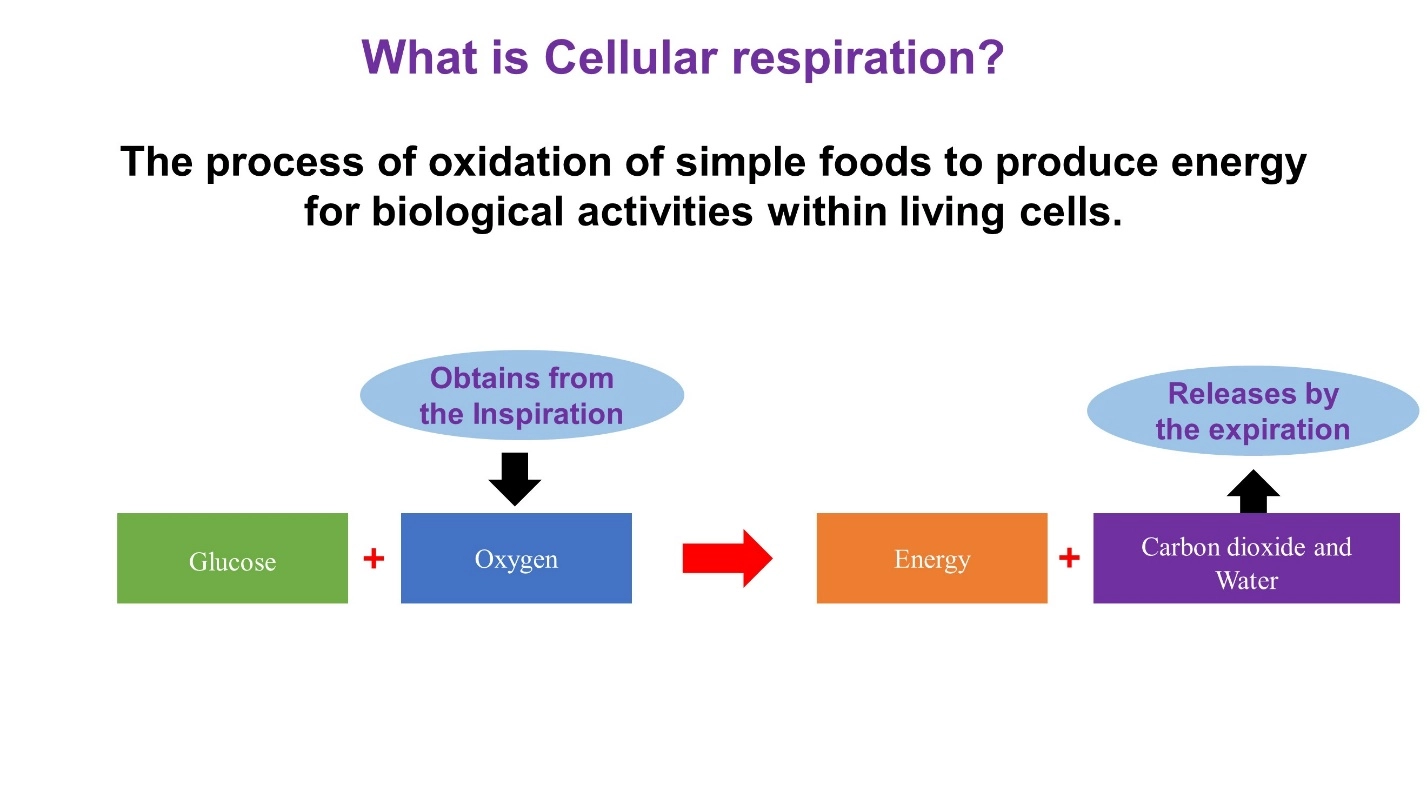
These two components react with each other and give energy as the main product and carbon dioxide, and water as by-products.
This is the balanced chemical equation for cellular respiration.
Balanced chemical equation for respiration
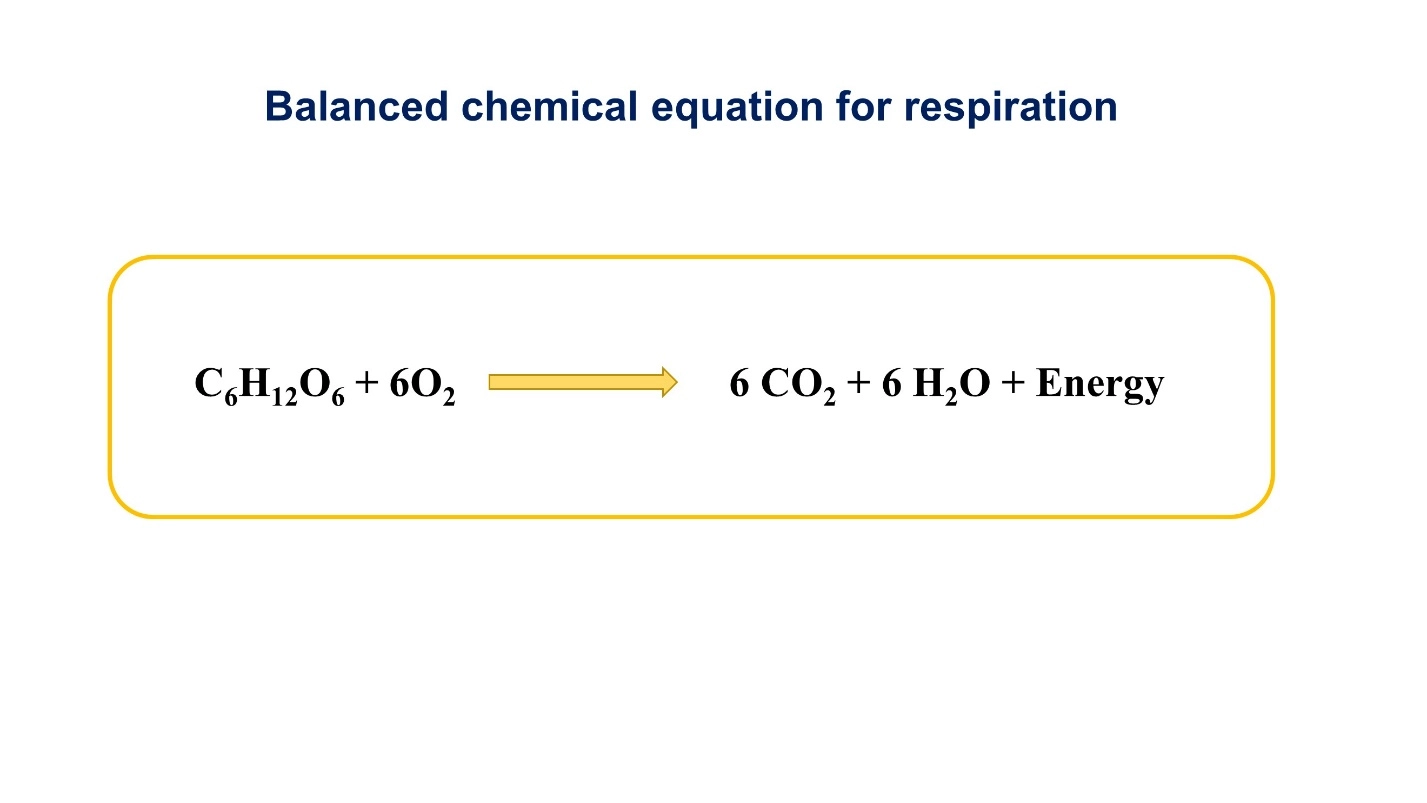
The word equation for aerobic respiration is:
glucose + oxygen → carbon dioxide + water (energy is released)
The balanced symbol equation is:
C6H12O6 + 6O2 → 6CO2 + 6H2O
Notice that the equation balances: 6 carbon atoms, 12 hydrogen atoms and 18 oxygen atoms appear on each side. Energy is not written as a product in the symbol equation, because energy is not a substance – it is released by the reaction.
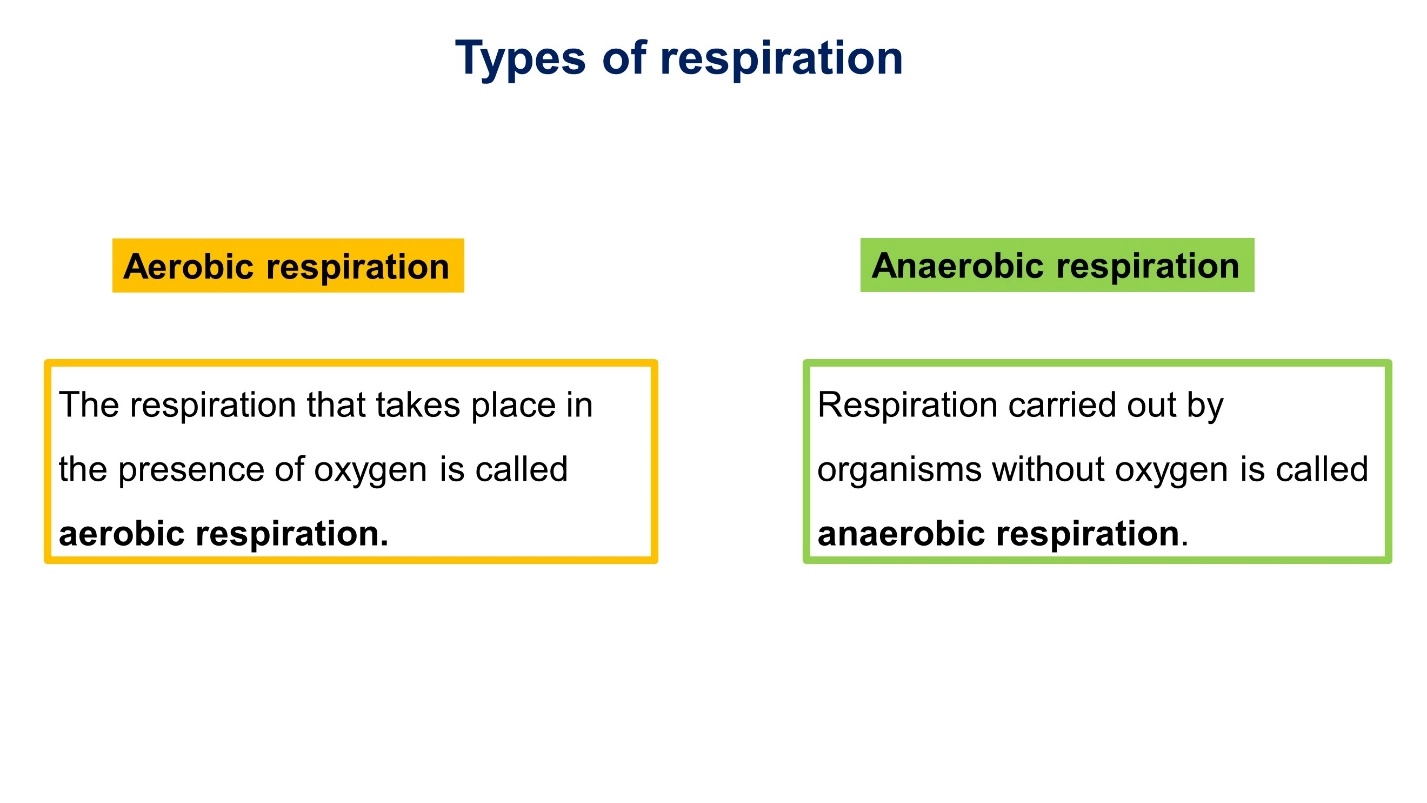
There are two forms of respiration based on the requirement for oxygen.
- Aerobic respiration and Anaerobic respiration.
Aerobic respiration refers to respiration that occurs in the presence of oxygen.
Respiration carried out by organisms without oxygen is known as anaerobic respiration.
Types of cellular respiration
Where does cellular respiration happen in the cell?
Respiration begins in the cytoplasm, where glucose is split in a series of reactions called glycolysis. This first stage does not need oxygen.
If oxygen is available, the products of that first stage pass into the mitochondria, where the rest of aerobic respiration takes place. This is why mitochondria are often described as the site of aerobic respiration, and why cells that need a lot of energy – muscle cells, liver cells, sperm cells – contain very large numbers of them.
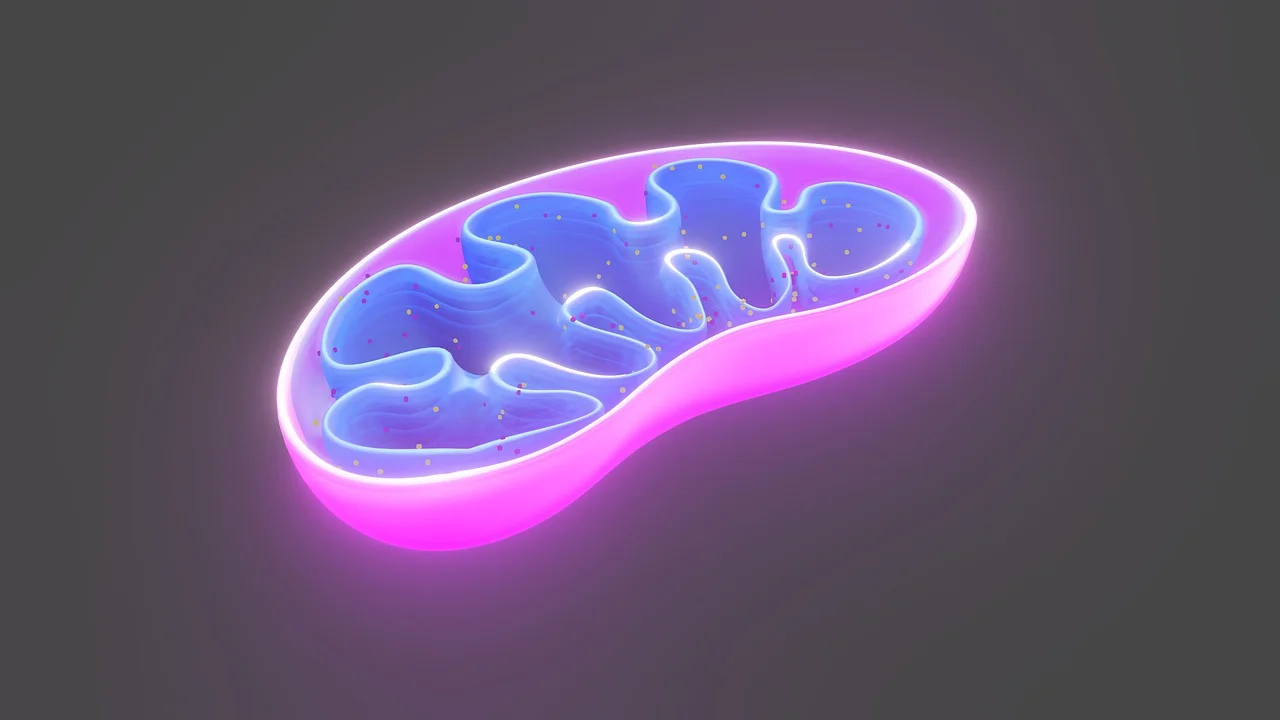
The folded inner membrane of a mitochondrion (the cristae) gives a very large surface area for the reactions of aerobic respiration. Both eukaryotic and prokaryotic cells respire, but only eukaryotic cells have mitochondria; bacteria carry out the equivalent reactions at their cell membrane.
Aerobic respiration
The energy produced by aerobic respiration is greater than the energy produced by anaerobic respiration.
This is because glucose is completely broken down during aerobic respiration.
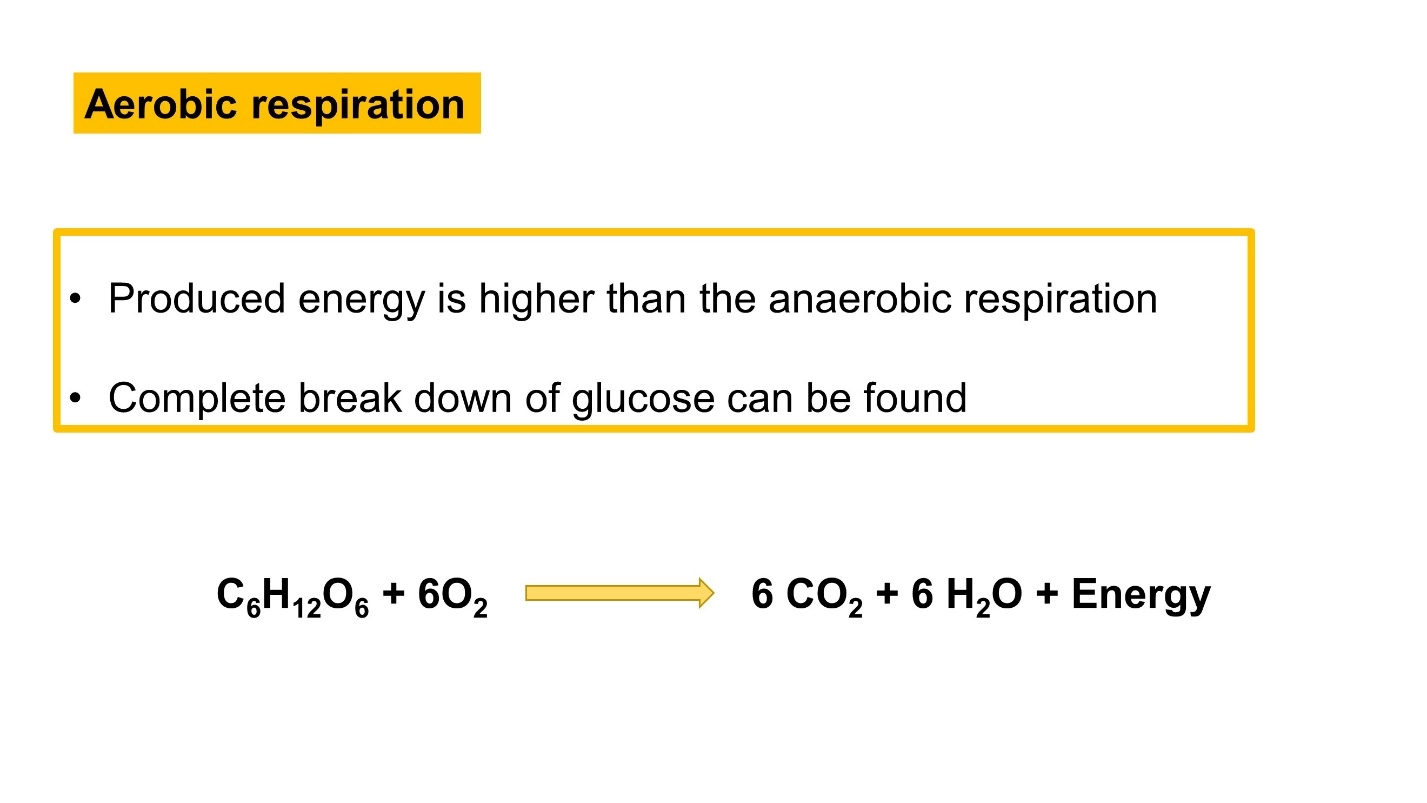
Because the glucose molecule is broken down all the way to carbon dioxide and water, far more of the chemical energy stored in it can be transferred to ATP. Textbooks commonly quote a yield of roughly 30 to 32 molecules of ATP per glucose molecule for aerobic respiration, compared with only 2 from the anaerobic pathway. The exact figure varies between cell types, which is why different books quote slightly different numbers.
Anaerobic respiration
The energy produced by anaerobic respiration is lower than the energy produced by aerobic respiration. This is because of the incomplete breakdown of glucose anaerobic respiration.
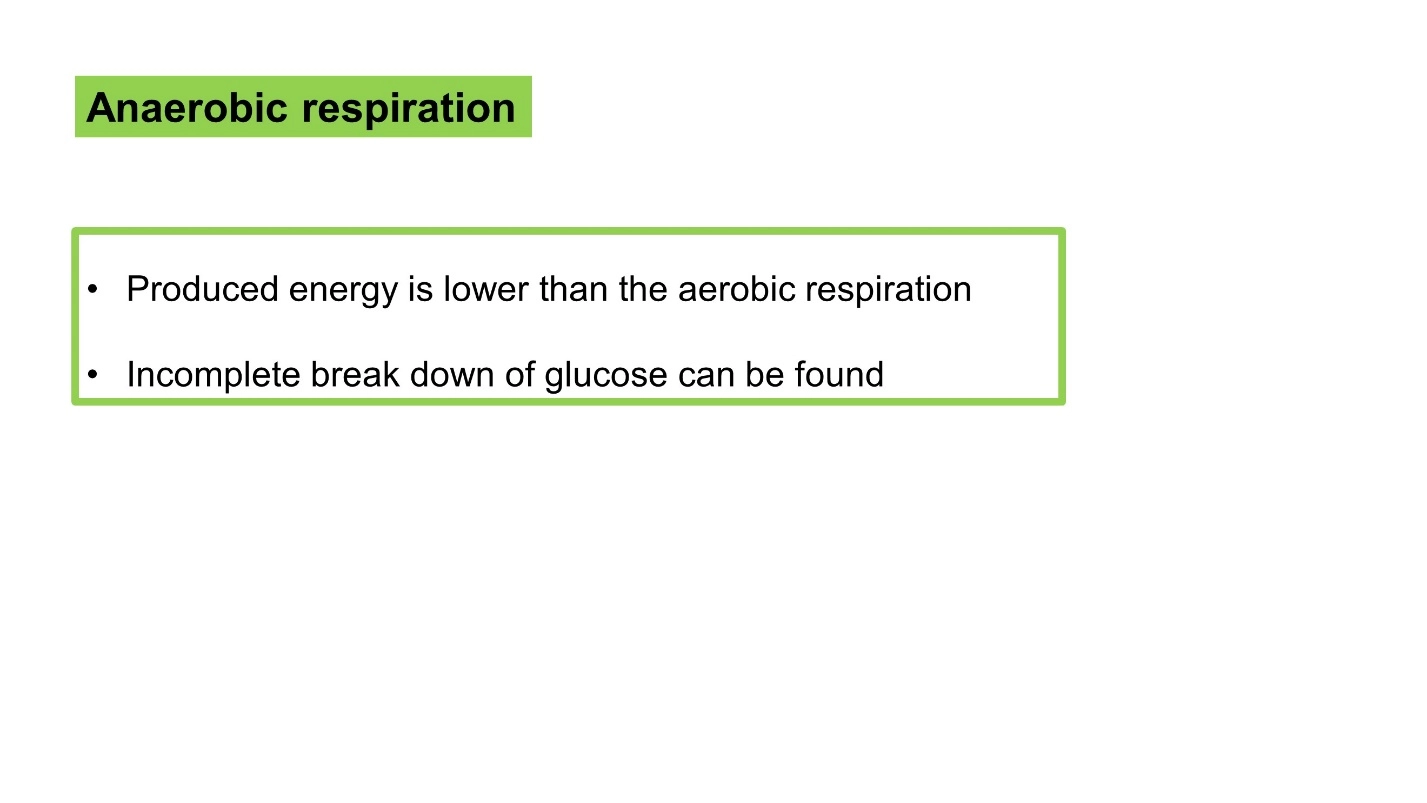
When Anaerobic respiration takes place in plants and yeast cells, it is called alcohol fermentation.
It turns glucose into carbon dioxide and Ethyl alcohol other than energy.
The word equation is:
glucose → ethanol + carbon dioxide (energy is released)
When anaerobic respiration takes place within animal cells, it is called lactic acid fermentation.
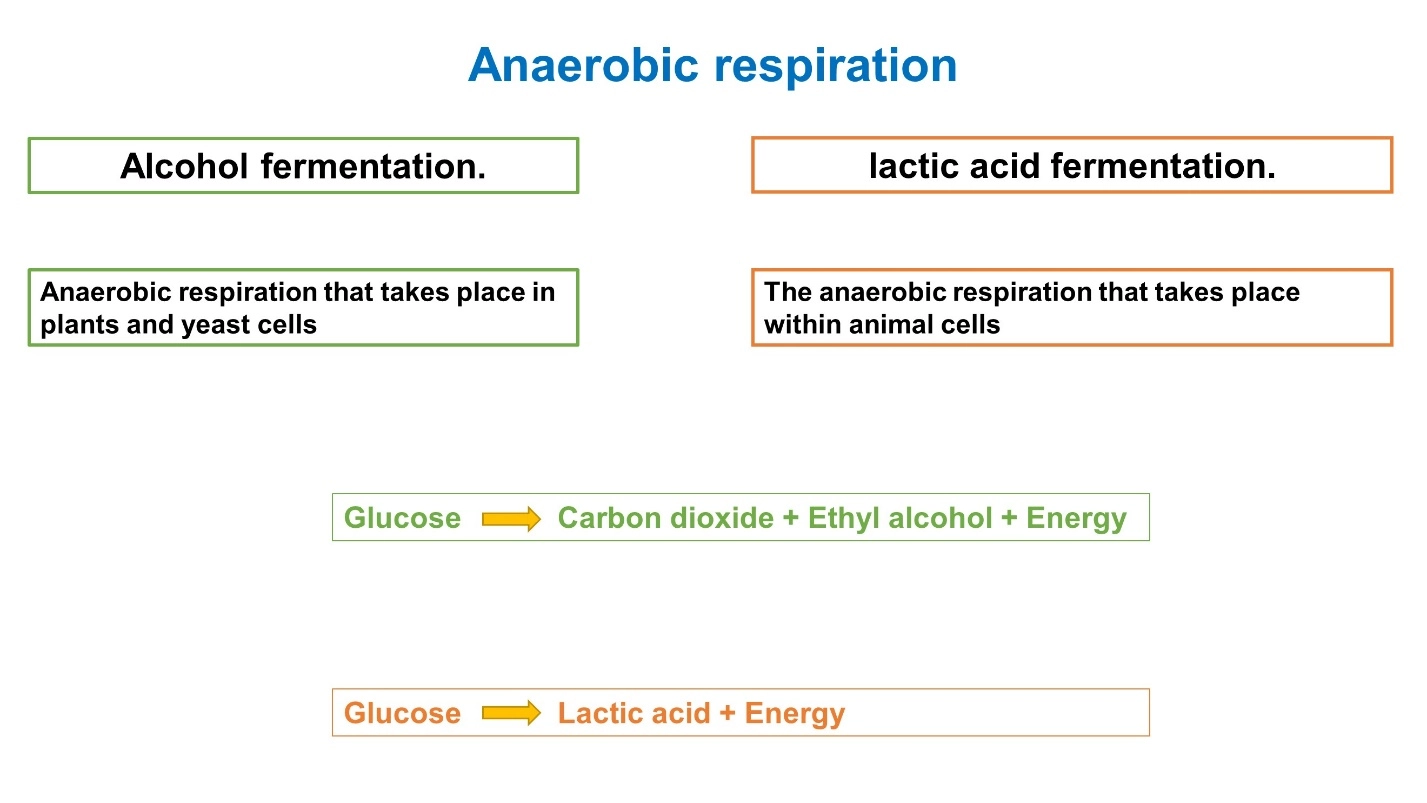
It turns glucose into lactic acid and energy.
The word equation is:
glucose → lactic acid (energy is released)
Athletes who participate in short distance races sometimes suffer from muscle pain and cramping, due to the accumulation of lactic acid, in muscles.
This happens due to anaerobic respiration in muscle cells.
Aerobic and anaerobic respiration compared
| Feature | Aerobic respiration | Anaerobic respiration |
|---|---|---|
| Oxygen needed? | Yes | No |
| Where in the cell | Starts in the cytoplasm, completed in the mitochondria | Cytoplasm only |
| Breakdown of glucose | Complete | Incomplete |
| Products in animal cells | Carbon dioxide and water | Lactic acid |
| Products in yeast and plant cells | Carbon dioxide and water | Ethanol and carbon dioxide |
| Relative energy released per glucose | Much higher (about 30–32 ATP) | Much lower (about 2 ATP) |
| Typical use in the body | Everyday activity and endurance exercise | Short bursts of very hard exercise |
Fermentation in yeast and why it matters
Anaerobic respiration in yeast is the reaction behind two very old human technologies. In brewing and winemaking the useful product is the ethanol; in baking the useful product is the carbon dioxide, which forms bubbles that make bread dough rise.

Yeast will respire aerobically when oxygen is plentiful and switch to fermentation when it is not, so brewers deliberately keep the vessel sealed. You can read more in our separate lesson on what fermentation is.
Oxygen debt after hard exercise
During a sprint the muscles cannot get oxygen fast enough, so they respire anaerobically and lactic acid builds up. The extra oxygen the body then needs, after the exercise has stopped, to deal with that lactic acid is called the oxygen debt.
This is why you keep breathing hard and your heart keeps beating quickly for several minutes after a race. Blood carries the lactic acid to the liver, where it is converted back into glucose, and the continued deep breathing supplies the oxygen needed to complete the process. Sustained exercise such as jogging is mostly aerobic, which is why it can be continued for much longer without the same build-up.
Respiration is not the same as breathing
This is one of the most common mix-ups in biology. Breathing (ventilation) is the movement of air into and out of the lungs – it is a physical process carried out by the human respiratory system. Cellular respiration is a chemical reaction that happens inside cells. Breathing supplies the oxygen that aerobic respiration needs and removes the carbon dioxide it makes, but the two are different processes.
Plants respire too, all the time, day and night. They also photosynthesise during the day, which often makes students think plants only photosynthesise and never respire.
ATP energy
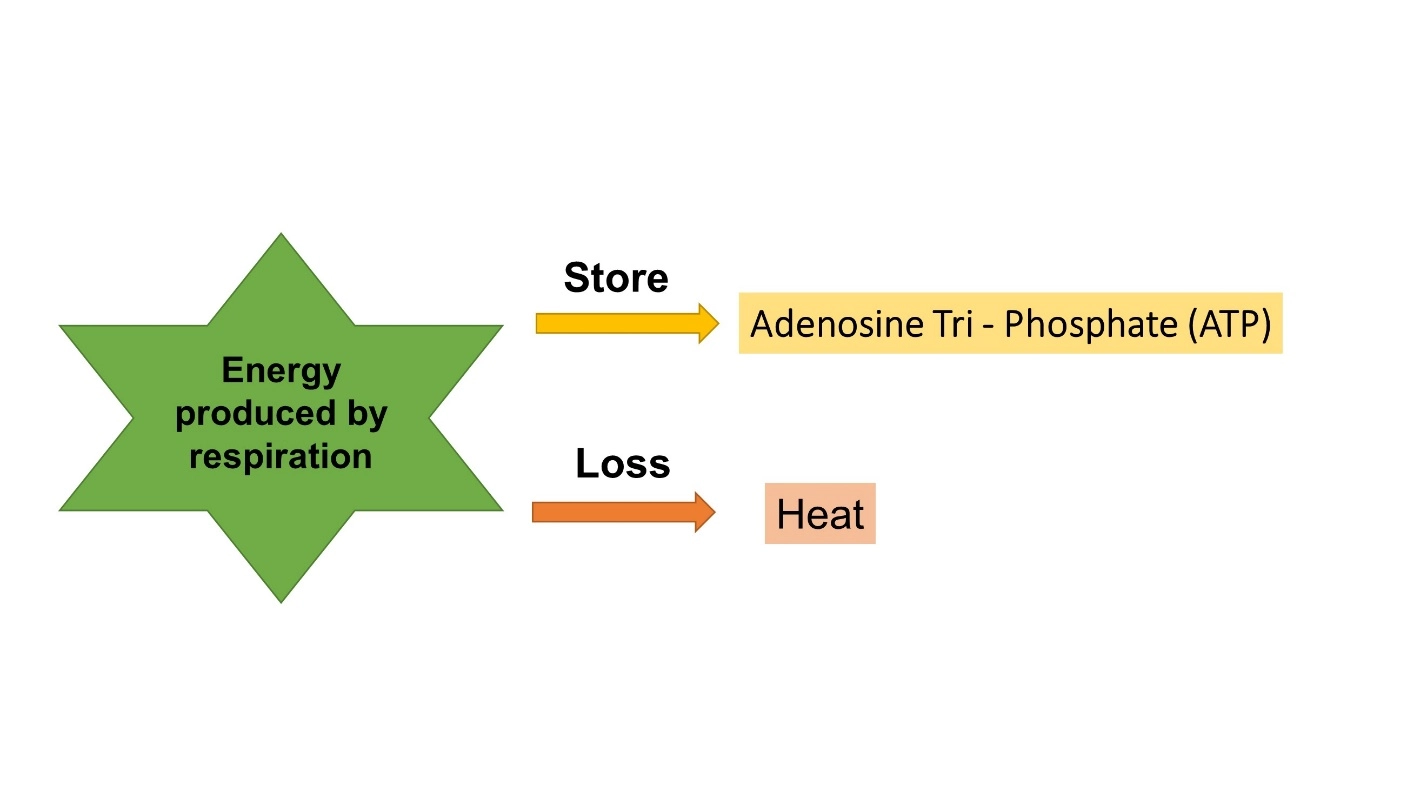
What happens to the energy produced by the process of cellular respiration?
Part of this energy is lost as heat, and the rest is stored in ATP (Adenosine Tri - Phosphate) as chemical energy.
When the body needs energy for its biological processes, energy is released by the breakdown of ATP.
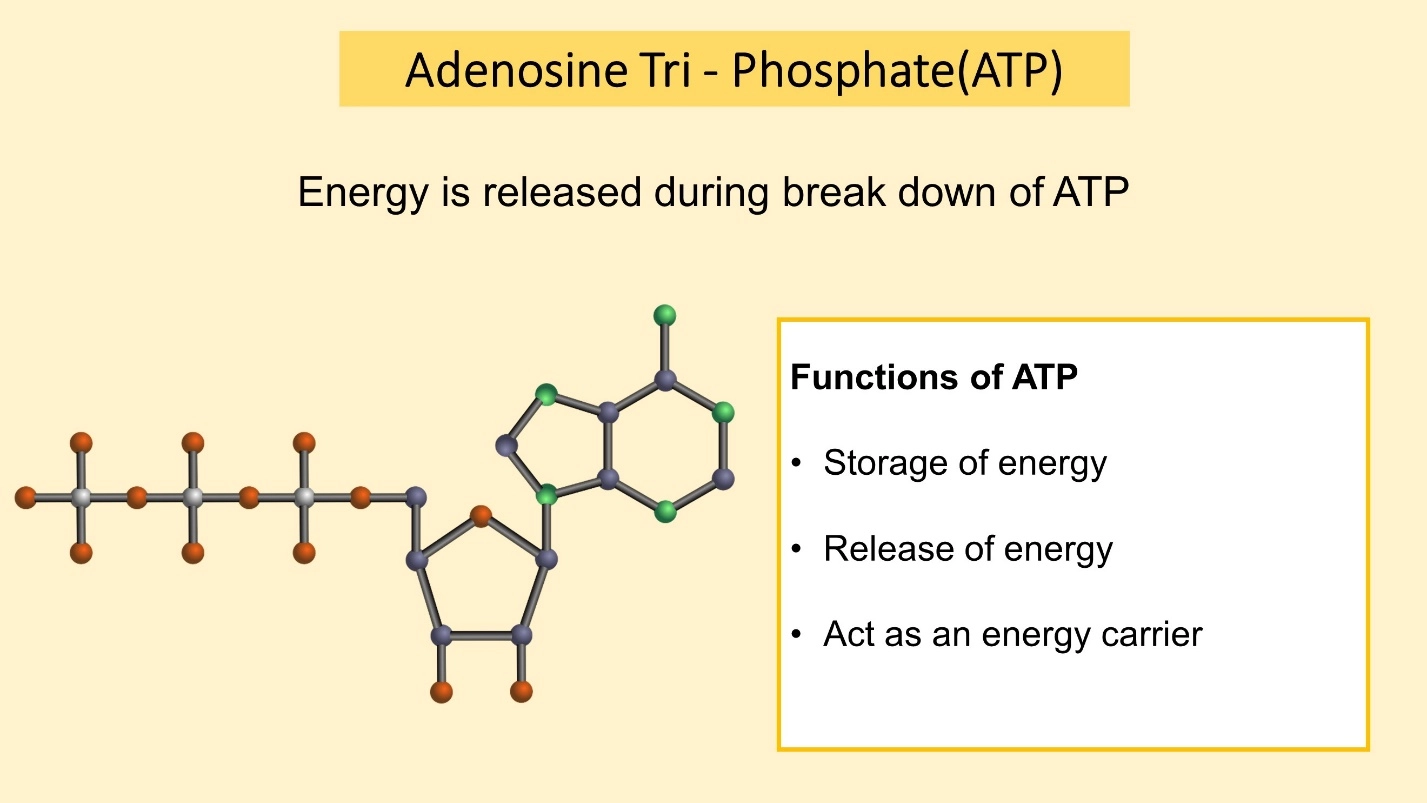
The functions of ATP
Storing energy after production, releasing energy when needed, and acting as an energy carrier.
The energy stored in ATP is used for lots of our activities and biological processes.
Examples are, For active transportation, For muscle contractions.
for protein synthesis, for the Illumination of some organisms, and the generation of electricity in some organisms (like in electric eel)
Our separate notes on ATP and ADP go through the structure of the molecule and the ATP–ADP cycle in more detail.
Exam tips for respiration questions
- Write that energy is released or transferred, never that energy is "created", "produced" or "made". Examiners regularly take marks off for this.
- Do not write energy as a product inside a symbol equation.
- If a question asks for the site of aerobic respiration, "mitochondria" is the expected answer; if it asks where anaerobic respiration happens, the answer is the cytoplasm.
- When you are asked to compare, answer in matched pairs – state the aerobic point and the anaerobic point for the same feature.
- Remember which organism makes which product: animals → lactic acid; yeast and plants → ethanol + carbon dioxide.
Frequently asked questions about cellular respiration
What is the word equation for aerobic respiration?
Glucose + oxygen → carbon dioxide + water, with energy released. The balanced symbol equation is C6H12O6 + 6O2 → 6CO2 + 6H2O.
Is cellular respiration the same as breathing?
No. Breathing moves air in and out of the lungs. Cellular respiration is a chemical reaction inside cells that releases energy from glucose. Breathing simply supplies the oxygen that aerobic respiration uses.
Why does anaerobic respiration release less energy than aerobic respiration?
Because glucose is only partly broken down. The products, lactic acid or ethanol, still contain a lot of unreleased chemical energy, whereas aerobic respiration breaks glucose all the way down to carbon dioxide and water.
What causes muscle cramp and aching after a sprint?
Lactic acid produced by anaerobic respiration builds up in the muscle. After exercise, extra oxygen (the oxygen debt) is used to remove it, and the liver converts lactic acid back into glucose.
Do plants carry out respiration?
Yes. Plant cells respire continuously, day and night, to release the energy they need. During daylight they also photosynthesise, and in bright light photosynthesis usually happens faster than respiration.
Where exactly does respiration take place in a cell?
The first stage, glycolysis, happens in the cytoplasm. If oxygen is present, the remaining aerobic stages happen inside the mitochondria. Anaerobic respiration is confined to the cytoplasm.
Which cells contain the most mitochondria?
Cells with high energy demands, such as muscle cells, liver cells and sperm cells, contain the largest numbers of mitochondria.