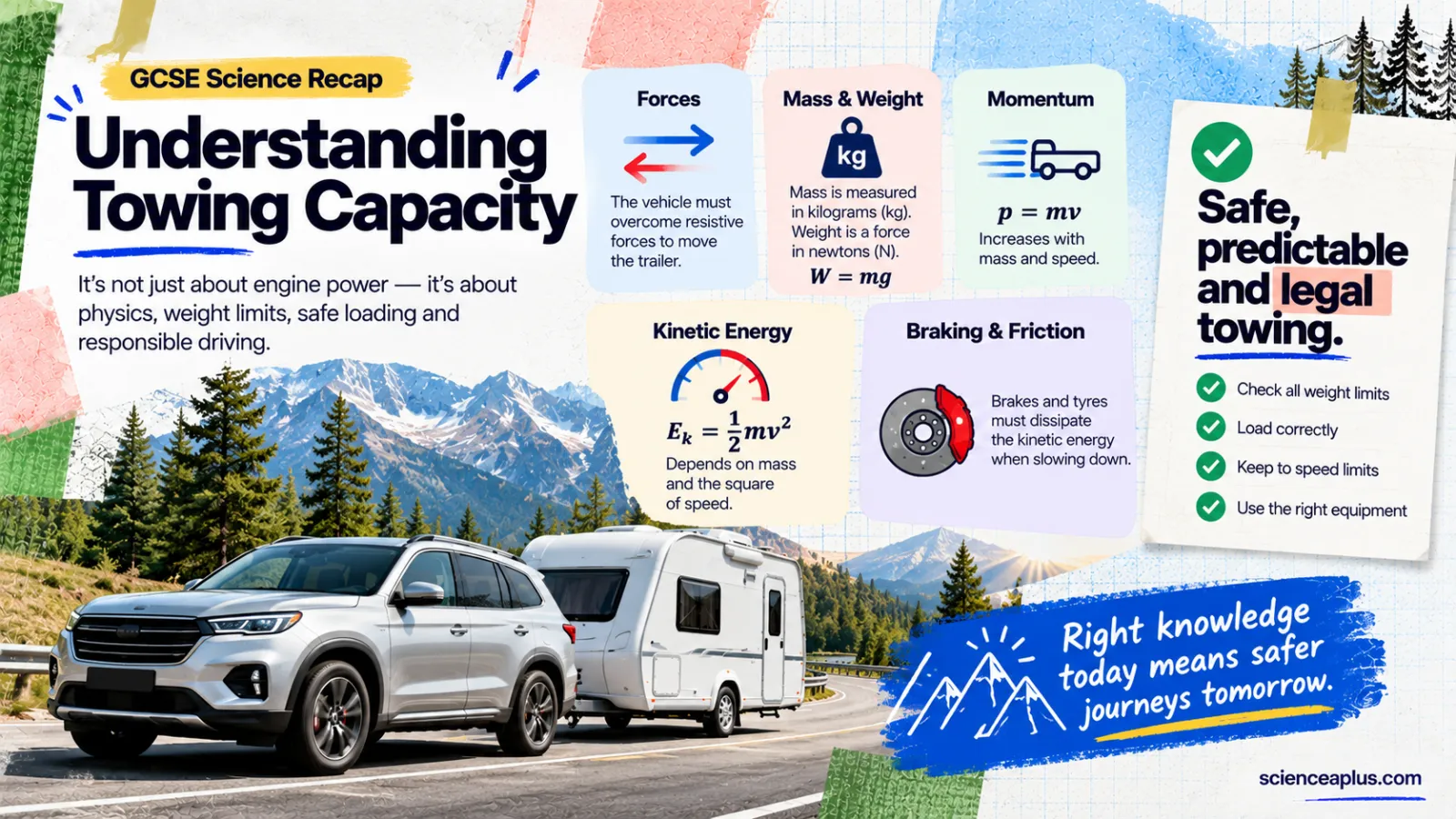
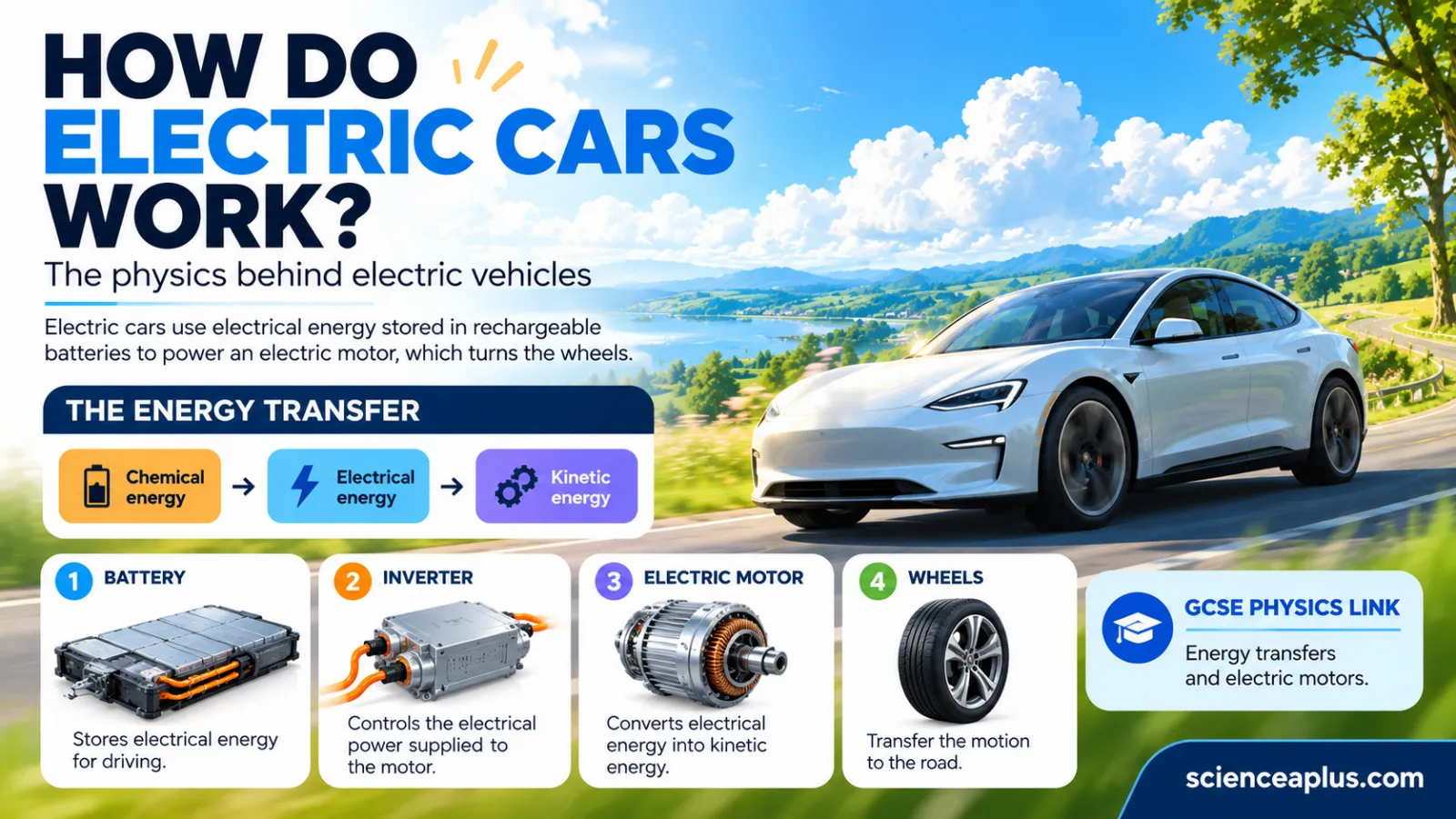
How do electric cars work? A battery pack stores energy, an inverter turns the battery’s direct current into alternating current, and an electric motor uses it to turn the wheels through a single gear. Plug in to refill the battery; lift off the pedal and the motor can put some energy back.
It is no longer a niche idea. More than a quarter of the new cars registered in the UK in September 2026 were fully electric, according to the Society of Motor Manufacturers and Traders (SMMT). This guide explains the parts, the journey from pedal to wheels, charging, costs and range in plain English. If you want the equations behind it, there is a separate guide to the physics of electric cars.
How do electric cars work? The main parts
A petrol car burns fuel in an engine, and the engine turns the wheels. An all-electric car replaces that whole chain with a few electrical parts. It “emits no exhaust from a tailpipe” and has none of the usual liquid-fuel components, such as a fuel pump, fuel line or fuel tank. The table below matches each electric part to the job it does and to the part it replaces in a petrol car.
| Part | What it does | Petrol-car equivalent |
|---|---|---|
| Traction battery pack | Stores energy for the motor | Fuel tank |
| Charge port and onboard charger | Lets power in and turns incoming AC into DC for the battery | Fuel filler |
| Inverter (power electronics controller) | Turns battery DC into AC and controls the motor’s speed and torque | Throttle and engine management |
| Electric traction motor | Drives the wheels using power from the battery | Engine |
| Single-speed reduction gear (transmission) | Passes the motor’s turning effect to the wheels | Gearbox |
| DC/DC converter and 12 V auxiliary battery | Steps the voltage down to power lights, screens and wipers | Alternator and car battery |
| Thermal system | Keeps the battery, motor and electronics in their working temperature range | Radiator and cooling |
The battery: a big pack of small cells
The traction battery is not one giant cell. It is made of many lithium-ion cells, each with a nominal voltage of about 3.6–3.7 V. Joining lots of them in series adds their voltages together, which is how a pack reaches the high voltage the motor system needs. Most electric cars use roughly 400 V, and a growing number use 800 V. To learn more about how cells differ, see our guide to the technology in different types of batteries, and for the metal itself, the chemical properties of lithium.
Battery size is measured in kilowatt-hours (kWh), which is a unit of energy. It plays the same role as litres of fuel. According to EV Database, the average useable battery across the electric cars it lists for the UK is 73.4 kWh, with the smallest at 21.3 kWh and the largest at 141 kWh. The same source gives an average real-world use of 303 watt-hours per mile, which is about 3.3 miles per kWh. Multiply the two and an average car can go roughly 240 miles on a full battery.
A car averages 3.3 miles per kWh. Roughly how far could it go on 50 kWh? (2 marks)
Distance = energy × miles per kWh = 50 × 3.3 = 165, so about 165 miles.
The motor and inverter
The battery supplies direct current (DC), but most electric-car motors need three-phase alternating current (AC). The inverter switches the DC on and off very rapidly to build up AC. Inside the motor, coils of wire in the stator become electromagnets, and the changing pattern of current makes them pull the rotor round with them. Switching faster means a higher AC frequency, and a higher frequency means a faster-spinning motor.
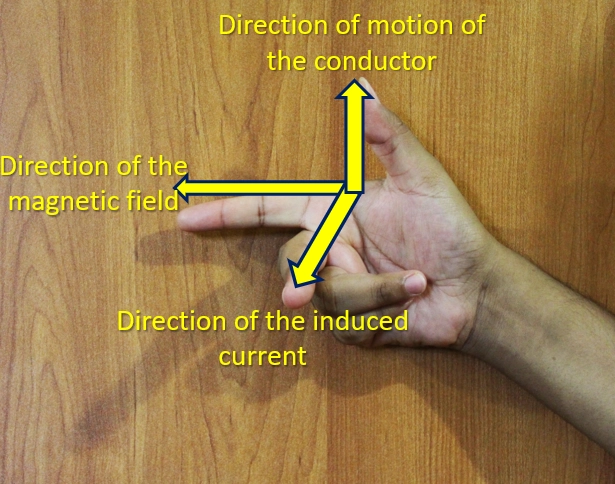
The type most used by electric-car makers is the permanent-magnet synchronous motor, which has strong magnets in the rotor (for more on powerful magnets, see the strongest magnets). Induction motors, which have no magnets in the rotor, are also used. The full explanation, including Fleming’s left-hand rule, is in the physics guide linked earlier.
BEV, hybrid or plug-in hybrid?
This guide is about battery electric vehicles (BEVs), which run only on a battery and a motor. A plug-in hybrid has a battery that you can plug in as well as a petrol engine, so it works differently. If you are comparing the two, read plug-in hybrid cars explained.
What happens when you press the pedal?
Here is the chain of events in a typical electric car, from your foot to the road.
- You press the accelerator. The pedal sends a signal to the controller, not to a fuel valve.
- The inverter draws more current. The harder you press, the more electrical power it takes from the battery.
- Alternating current reaches the motor. The inverter has already turned the battery’s DC into AC of the right frequency.
- The motor turns the reduction gear and the wheels. An electric motor gives its maximum torque from standstill up to what engineers call its base speed, which is why electric cars feel quick away from the lights.
- You lift off the pedal. The car can switch to regenerative braking, so the motor works as a generator, slows the car and returns some energy to the battery.
- You press the brake pedal. Regenerative braking does the first part of the work, and the friction brakes take over for harder stops.
Because the motor can run in either direction, reverse needs no extra gears. The motor simply turns the other way.
One more number is worth knowing. The US Department of Energy says a typical electric vehicle is 87–91% efficient once regenerative braking is counted, compared with about 30% for a conventional petrol vehicle. Much less energy is wasted as heat, so more of it ends up moving the car. Charging, the next big question for new owners, is covered below.
How do you charge an electric car?
Electricity from the UK grid arrives as alternating current at 230 V and 50 Hz. A battery can only store direct current, so something has to convert it. On a slower AC chargepoint, the car’s own onboard charger does the conversion and feeds the battery. At a rapid public charger, the conversion happens inside the charger and DC goes straight to the battery, bypassing the onboard charger.
Charging power is measured in kilowatts (kW), and the energy delivered is measured in kilowatt-hours. If the idea of a kWh is new, our guide to different kinds of energy and the uses of them explains it. As a rule, time = energy ÷ power.
charging time (h) = energy added (kWh) ÷ charger power (kW)
Charging at home
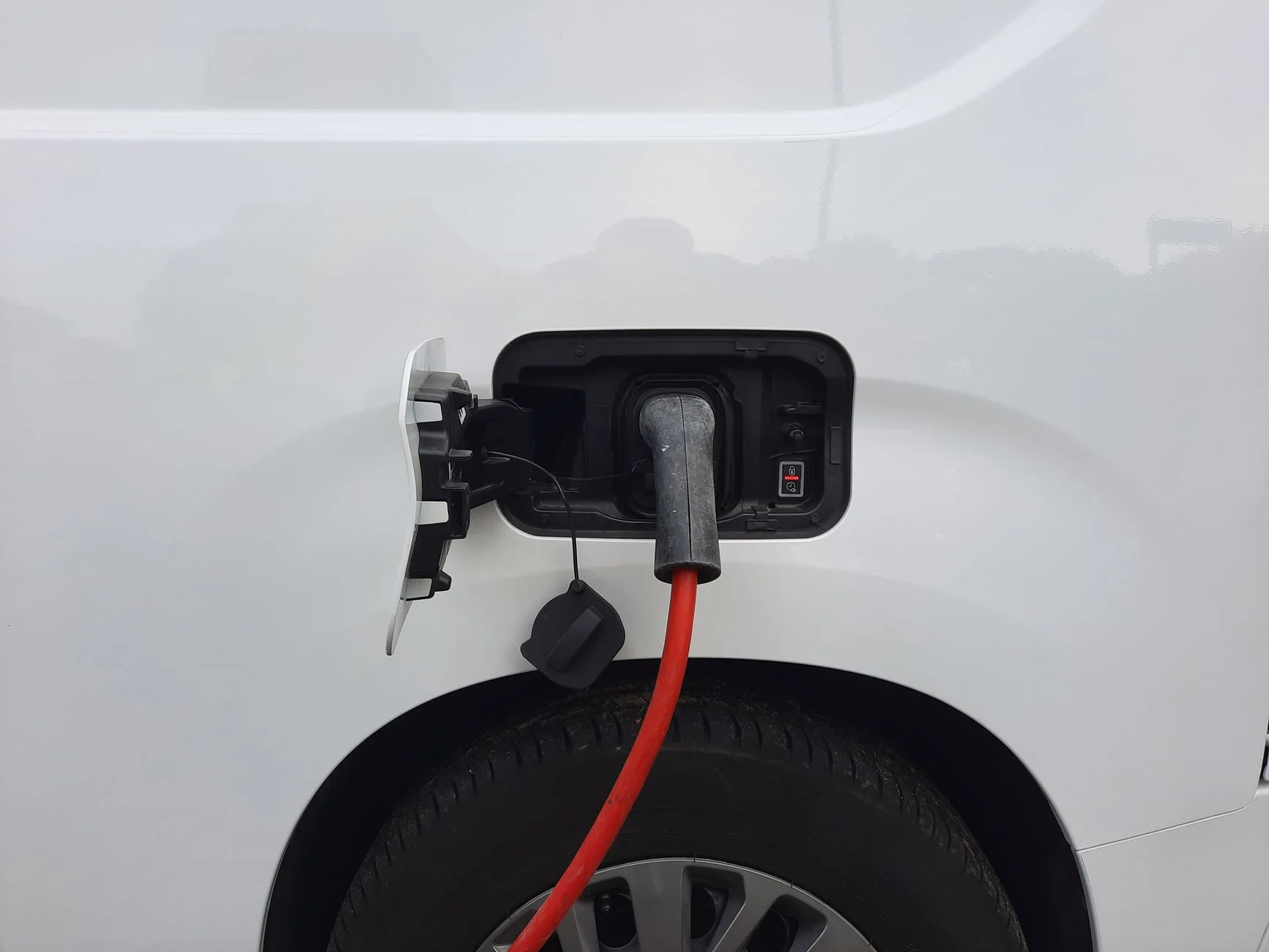
Most charging happens at home, often overnight. You have two main options.
- A normal 3-pin socket delivers approximately 2.3 kW. Zapmap says a full charge of a large battery can take over 24 hours and describes this as not recommended, because it is slow.
- A home chargepoint (wallbox) on a single-phase supply gives about 7 kW. That comes from 230 V × 32 A ≈ 7.4 kW, using the formula P = I × V.
Home chargers can be tethered, with the cable permanently attached, or untethered, where you plug in your own cable. Many drivers also choose an off-peak electricity tariff for electric cars, which can make overnight charging much cheaper (costs are covered below). Some drivers charge from their own solar panels, too; see how solar panels work if you are curious.
Public charging
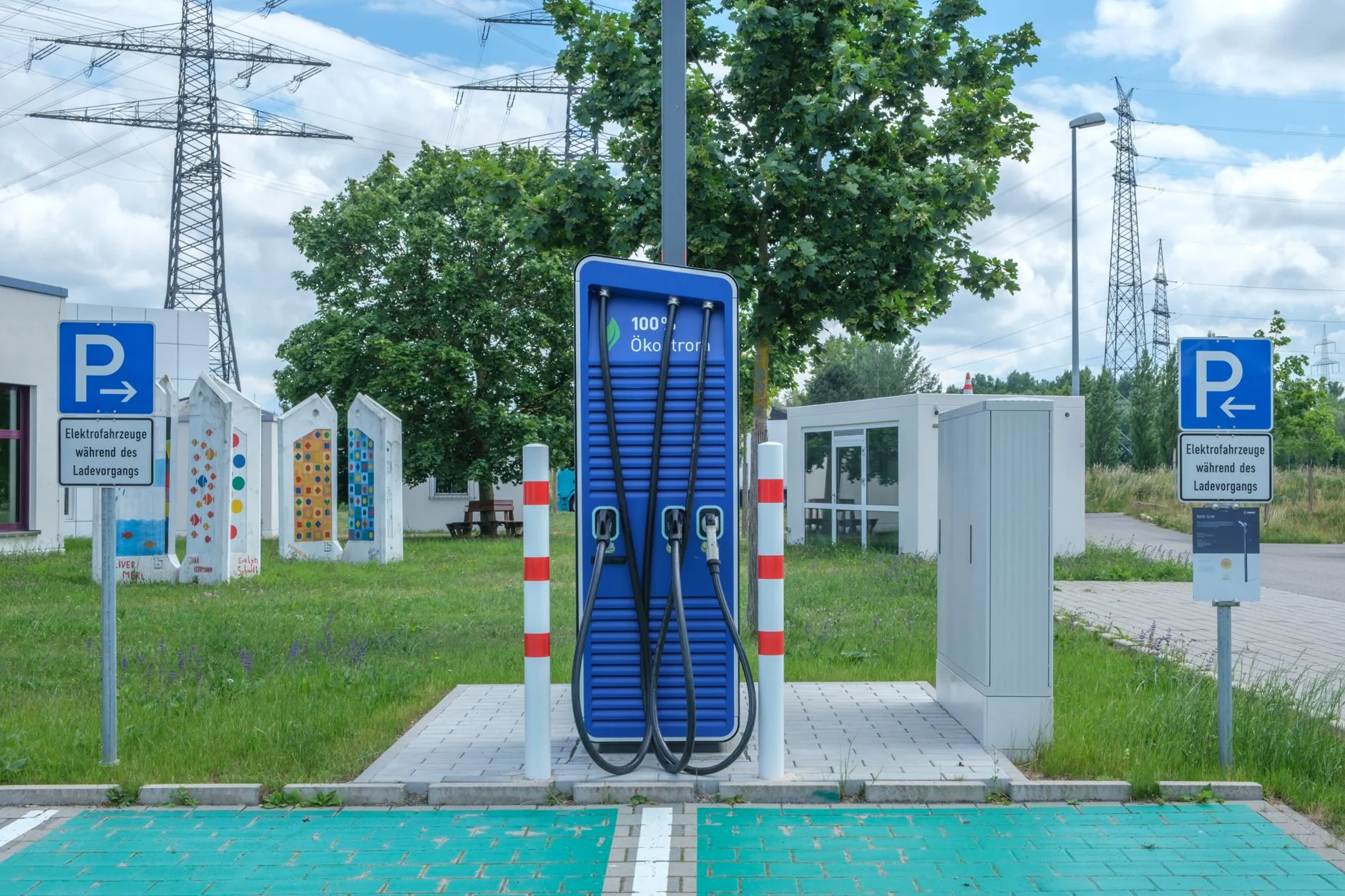
The UK public network is growing quickly. Official Department for Transport (DfT) statistics show 121,171 public EV chargers in the UK on 1 July 2026, which is 174.9 per 100,000 people. Of those, 28,887 were rated at 50 kW or more. London had the most chargers per head (345.1 per 100,000), and Northern Ireland the fewest (60.0).
The DfT also breaks chargers down by speed. About 49% are rated 3 to under 8 kW, 27% are 8 to under 50 kW, 12% are 50 to under 150 kW and 12% are 150 kW or more. Zapmap sorts them into four bands.
| Band | Power | Current | Typical use |
|---|---|---|---|
| Standard | 3–7 kW | AC | On-street and destination charging |
| Standard Plus | 8–49 kW | AC | Car parks, including 22 kW posts |
| Rapid | 50–149 kW | DC | Top-ups on longer journeys |
| Ultra-rapid | 150 kW and above | DC | Motorway stops |
These counts are of “EV chargers”, meaning separate connectable points. From January 2026 the DfT counts points rather than devices, so avoid comparing them with older figures.
Plugs: Type 2 and CCS
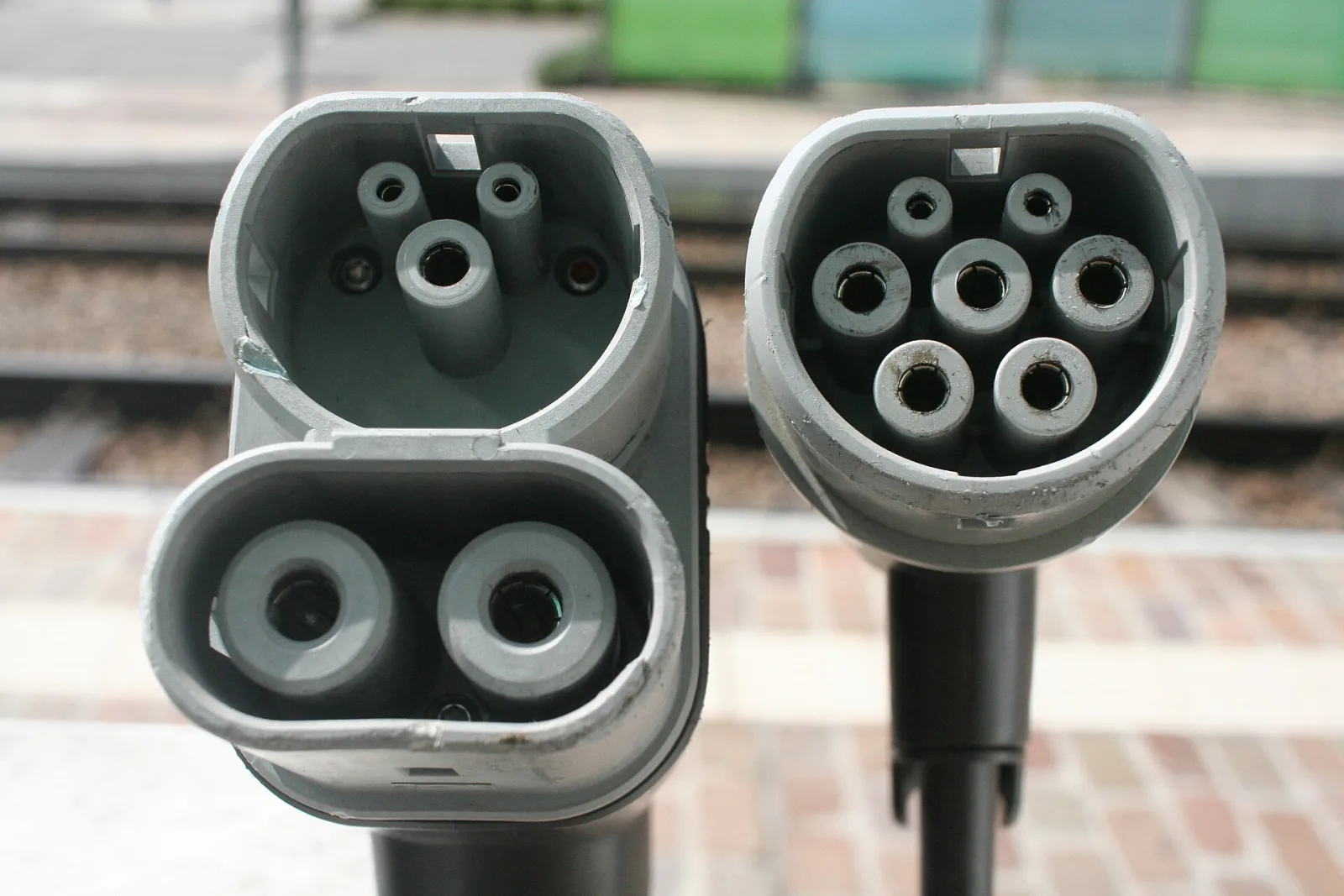
Two connectors matter most in the UK. Type 2 is the standard AC plug. It handles roughly 3.7–7.4 kW on a single-phase supply and 22 kW on three-phase (and, less commonly, 43 kW). CCS (Combined Charging System) looks like a Type 2 plug with two extra DC pins underneath. It supports rapid and ultra-rapid charging from 25 kW to 400 kW or more, and the same port on the car accepts both kinds of plug.
Cables on public rapid and ultra-rapid chargers are always attached, but most public AC posts are untethered, so you need to carry your own Type 2 cable. A legacy connector called CHAdeMO is mainly found on some older models of Japanese cars.
How long does it take to charge an electric car?
It depends on the charger and the car. Motability publishes averages for 60 and 69 kWh batteries, quoted from 0% to 80%, and the pattern is clear: the more powerful the charger, the shorter the stop.
| Charger | Roughly how long, 0–80% (60–69 kWh battery) |
|---|---|
| Standard (under 8 kW) | About 10 hours |
| Standard Plus (8–49 kW) | About 7 hours |
| Rapid (50 kW and above) | About 1 hour |
| Ultra-rapid, 100 kW | Under 30 minutes |
| Ultra-rapid, 150 kW | Under 20 minutes |
Treat these as guides. Your own car sets a limit on how much power it will accept. On AC, the onboard charger decides the top rate, so a car may take less than the chargepoint offers.
Why charging slows down after 80%
Lithium-ion batteries are charged at a constant current at first, then at a constant voltage. During the second stage the current, and so the charging power, tapers off. It is like filling a glass from a tap: you can pour quickly at first, but you slow down near the top. That is why rapid-charge times are usually quoted to 80%.
How much does it cost to charge an electric car in the UK?
Prices change, so these are dated. Ofgem’s price cap from 1 October to 31 December 2026 sets electricity at 26.32p per kWh for a typical English, Scottish or Welsh household paying by Direct Debit, plus a standing charge of 54.83p a day that you pay whether or not you own an electric car. VAT has been removed from electricity bills from 1 October 2026 to 31 March 2027, and that is already reflected in the 26.32p figure.
Away from home, Zapmap’s Charging Price Index (September 2026 data, updated 7 October 2026) gave pay-as-you-go averages of 54p per kWh on slow and fast public chargers (3–49 kW) and 79p per kWh on rapid and ultra-rapid chargers (50 kW and above). For an average electric car, Zapmap works out the cost per mile at 16p on slow and fast chargers and 24p on rapid ones. Many drivers pay less through deals or subscriptions. At home, Zapmap puts the cost at around 26p per kWh on the price cap and around 8.9p per kWh on an off-peak EV tariff.
Using the average of 303 Wh per mile and allowing about 10% charging losses, that is roughly 8.9p per mile at home on the price cap and about 3p per mile on an off-peak tariff. These are estimates, not guarantees.
Now try it yourself. The default values are a 60 kWh battery charged from 20% to 80% at home. Change the price to 8.9p to see an off-peak tariff (about £3.56). Change the power to 2.3 kW for a 3-pin plug (about 17 h 23 min). Then set 50 kW and 79p for a public rapid charger (about 48 minutes and £31.60).
The times are ideal. A car takes less power when the battery is cold or nearly full, so real charging can take longer.
Your car adds 30 kWh at home at 26.32p per kWh. Ignoring losses, what does it cost? (2 marks)
Cost = energy × price = 30 × 26.32p = 789.6p, which is about £7.90.
Regenerative braking and long trips
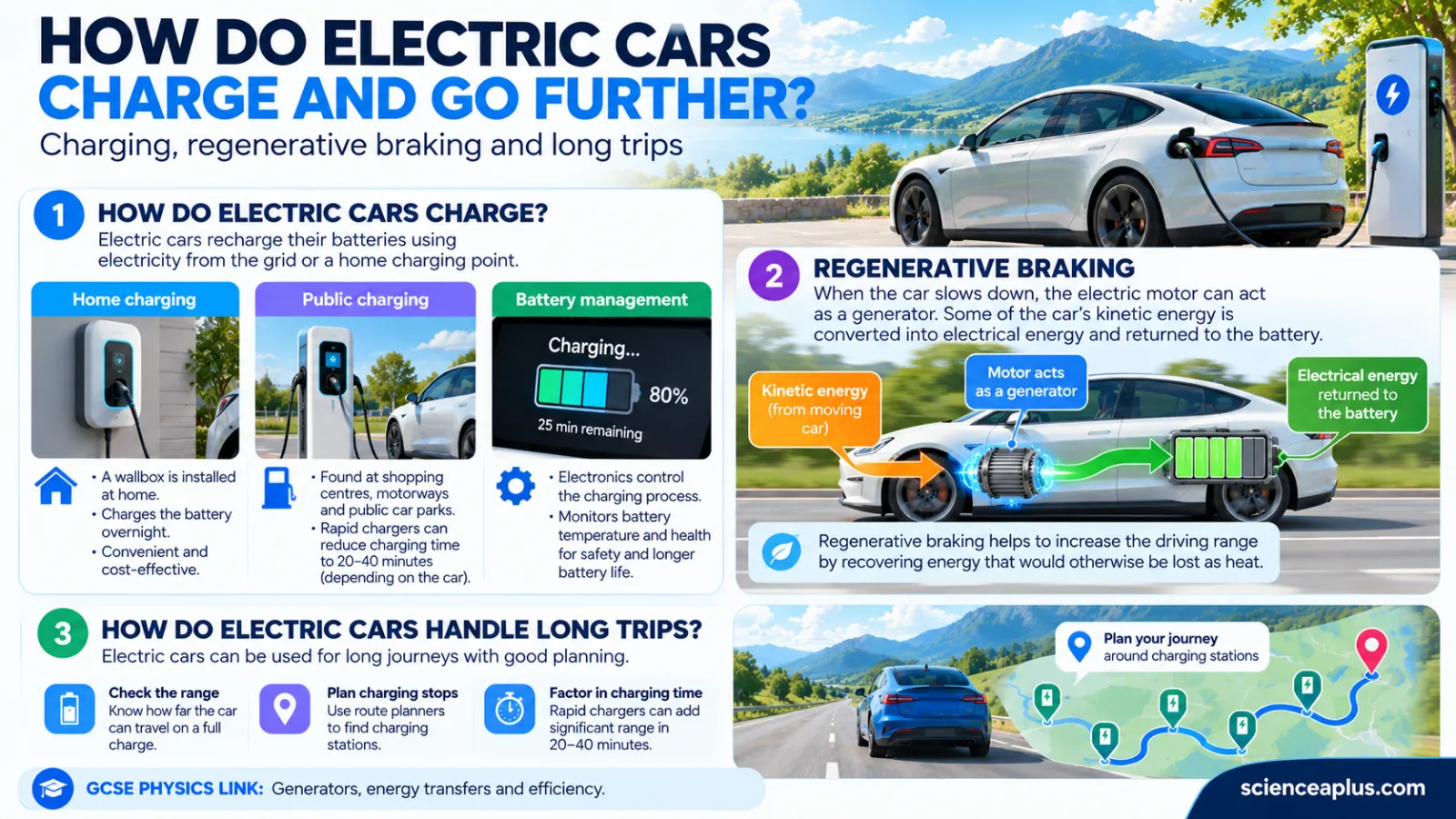
When you lift your foot off the pedal in an electric car, the motor can work in reverse. Instead of using electricity to turn the wheels, the wheels turn the motor, which acts as a generator. That slows the car down and puts some of its kinetic energy back into the battery. The idea is the same as in a power-station generator, and our guide to how generators work explains the principle.
Regenerative braking helps most in stop-start town driving. The US Environmental Protection Agency (EPA) reports net regeneration of about 32% in city driving compared with about 6% in steady motorway-style driving (the EPA's "highway" test cycle). Friction brakes are still fitted for hard stops, and they waste kinetic energy as heat, as described in the disadvantages of friction. Because regeneration does part of the work, brake wear is significantly reduced. The physics guide linked earlier has a calculator for how much energy one stop can give back.
Planning a long journey
Long trips need a little planning rather than a lot of worry. Check your range, use a route planner to choose charging stops, and remember that motorway services often have rapid or ultra-rapid chargers. Short 20–80% stops are usually the quickest. Tick off the list below as you go; the ticks are saved in your browser.
- Check your tyre pressures before you leave.
- Pre-heat or pre-cool the car while it is still plugged in.
- Plan two possible charging stops, in case one is busy or broken.
- Download the charger app or payment method you will need.
- Carry your Type 2 cable for AC chargepoints.
- Arrive at a rapid charger with about 10–20% left and leave at about 80%.
What affects an electric car’s range?
What is range?
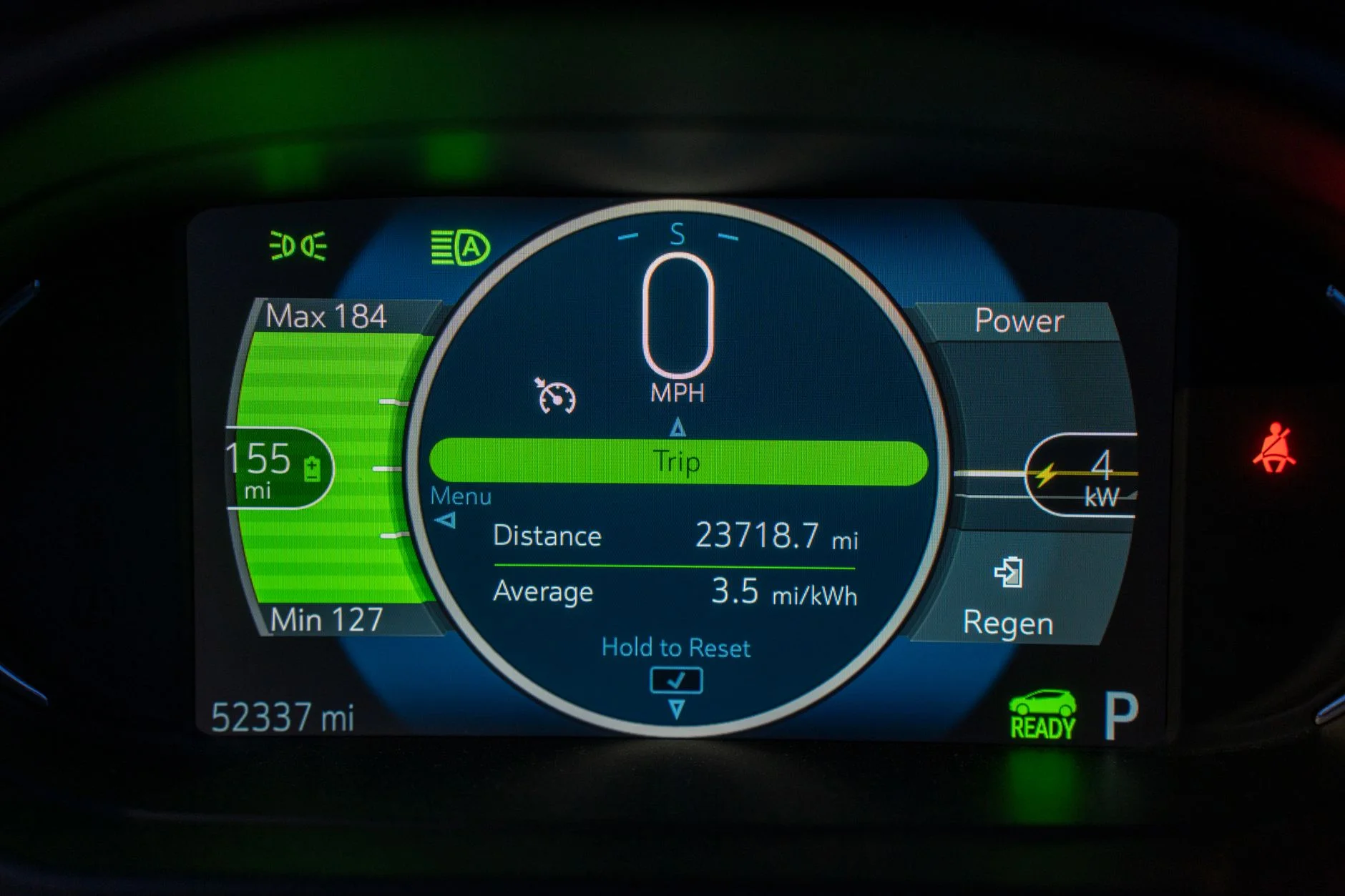
Range is how far a car can travel on a full battery. You can estimate it yourself: battery size in kWh multiplied by miles per kWh. The EV Database average of 303 Wh per mile works out at about 3.3 miles per kWh. Many dashboards show efficiency as miles per kWh, and the one in the photo reads 3.5, which is close to the average. A higher number means the car is using energy more efficiently, just as a higher miles-per-gallon figure does for a petrol car.
Here is a worked example. A car with a 60 kWh useable battery averaging 3.3 miles per kWh can cover about 60 × 3.3 = 198 miles. If conditions push it down to 2.5 miles per kWh, the same battery gives 60 × 2.5 = 150 miles. The battery has not shrunk; the car is simply using more energy for every mile. That is why a quoted range is a guide, not a promise.
Range also changes how you think about charging. Because the best charging is usually between about 20% and 80%, a long journey is better planned as several shorter legs than as one dash from full to empty. For shorter trips, topping up at home overnight may be all you need.
Cold weather
Cold weather shortens range. One US test, carried out by the American Automobile Association in 2019, found that at about −7 °C (20°F) with the cabin heater on, average driving range fell by 41% compared with about 24 °C (75°F). At about 35 °C (95°F) with the air conditioning on, it fell by 17%. Heating the cabin is the big drain, because the heater uses energy from the same battery that drives the car.
A few habits help. Pre-heat the car while it is plugged in, so the warming comes from the mains rather than from the battery. Use the seat heaters, which usually use less energy than heating all the air in the cabin.
Speed and motorways
Air resistance rises steeply with speed, so motorway driving uses more energy per mile than town driving. Because the drag force grows with the square of speed, driving at 70 mph needs far more energy per mile to push through the air than driving at 50 mph (the drag part is roughly double). The drag calculator in the physics guide shows the numbers. Tyres matter too: rolling resistance is a friction force, and our friction physics lesson shows how it arises.
Load, hills, tyres and driving style
Heavy loads and long climbs use more energy, although some comes back on the way down through regeneration. Under-inflated tyres increase rolling resistance, and smooth driving, with gentle acceleration and early lifting off, uses less energy than sudden bursts.


A car gets 3.3 miles per kWh in summer. If cold weather cut its range by 41%, roughly what would it get? (2 marks)
The car keeps 59% of its range, so 3.3 × 0.59 ≈ 1.9 miles per kWh.
Do electric cars use oil, have gears or have an exhaust? Quick answers
These are the questions people ask most often once they understand the basic idea. The short answers are below.
Do electric cars use oil?
There is no engine oil to change, because there is no combustion engine. Other fluids remain: brake fluid, coolant in the thermal system, and lubricant inside the gearbox. The US Department of Energy’s Alternative Fuels Data Center notes that there are fewer fluids, such as engine oil, that need regular maintenance.
Do electric cars have transmissions?
Yes, but a very simple one. Most electric cars have a single-speed reduction gear that passes the motor’s turning effect to the wheels. There is no clutch and there are no gear changes.
Do electric cars have exhausts or catalytic converters?
No. Nothing is burned, so there is no exhaust gas, no tailpipe and no catalytic converter. In a petrol car, a catalytic converter treats poisonous engine gases such as carbon monoxide; see our guide to carbon monoxide.
Do electric cars have alternators?
No. A petrol car uses an alternator to charge its 12 V battery. An electric car uses a DC/DC converter, which steps down the high voltage from the traction battery to recharge the small 12 V auxiliary battery and run accessories such as lights and screens.
What maintenance does an electric car need?
Less than a petrol car, but not none. The Alternative Fuels Data Center says electric vehicles have far fewer moving parts than a conventional fuel engine, and that brake wear is significantly reduced thanks to regenerative braking. The battery, motor and electronics need little to no regular maintenance, although some battery systems use liquid coolant that may need regular checks. Tyres, brake fluid and wipers still need attention. Many makers offer battery warranties of around 8 years or 100,000 miles, so check the terms for your car.
Are electric cars better for the environment?
Mostly yes, but the full answer has two sides.
At the roadside, an electric car has no tailpipe, so there is no exhaust to breathe in, which helps local air quality. However, particles still come from brakes, tyres and the road surface. The UK Air Quality Expert Group reported in 2019 that these non-exhaust sources made up 60% (PM2.5) and 73% (PM10) by mass of primary particle emissions from road transport, and they remain when cars are electric. Our air pollution essay explains why particles matter.
Over a whole lifetime, a global study by the International Council on Clean Transportation (ICCT) in 2021 found that battery electric cars registered that year already had lower lifetime greenhouse-gas emissions than comparable petrol cars in every region it studied: Europe, the US, China and India. Making the battery has a bigger footprint up front, and the benefit depends on how the electricity is generated. The cleaner the grid, the bigger the saving. For where electricity comes from, see energy sources and their uses, and for the bigger picture, the climate crisis, global warming and the greenhouse effect.
UK rules: the 2030 and 2035 dates
Under current UK government policy, new petrol and diesel cars are phased out from 2030. Hybrids, both full and plug-in, are allowed until 2035, and all new cars and vans must be fully zero emission by 2035. The government opened a review of the zero-emission vehicle mandate targets in August 2026, so the details may change.
Test yourself: electric car words
Frequently asked questions about how electric cars work
How do electric cars work?
An electric car stores energy in a battery pack. When you press the pedal, an inverter turns the battery’s direct current into alternating current, and an electric motor uses it to turn the wheels through a single reduction gear. You recharge the battery by plugging in, and braking can return some energy.
What are the main parts of an electric car?
The main parts are the traction battery pack, the charge port and onboard charger, the inverter (power electronics controller), the electric motor, a single-speed reduction gear, a DC/DC converter with a 12 V auxiliary battery, and a thermal system that keeps the battery, motor and electronics at the right temperature.
How long does it take to charge an electric car?
It depends on the charger and the car. Motability’s averages for 60 and 69 kWh batteries from 0% to 80% are about 10 hours on a standard charger under 8 kW, about 7 hours on 8–49 kW, about an hour at 50 kW or more, and under 20 minutes at 150 kW.
How much does it cost to charge an electric car in the UK?
At home, the Ofgem price cap from October to December 2026 is 26.32p per kWh, and an off-peak EV tariff is around 8.9p. Public pay-as-you-go averaged 54p per kWh on slow and fast chargers and 79p on rapid ones in September 2026. Prices change, so check current rates.
Can you charge an electric car from a normal plug?
Yes, but it is slow. A 3-pin socket delivers approximately 2.3 kW, and Zapmap says a full charge of a large battery can take over 24 hours and is not recommended. A home chargepoint at about 7 kW is much quicker and designed for regular use.
Why does charging slow down after 80%?
Lithium-ion batteries charge at a constant current first and then at a constant voltage, so the current and power taper off as the battery fills. It is like filling a glass: fast at first, slower near the top. That is why rapid-charge times are usually quoted to 80%.
Do electric cars use oil?
Not engine oil, because there is no combustion engine to lubricate. Other fluids remain, including brake fluid, coolant and the lubricant in the reduction gearbox. Electric cars have fewer fluids that need regular maintenance than petrol cars, but the tyres, brakes and coolant still need checking.
Do electric cars have gears?
Most have one fixed reduction gear and no gear changes. The motor gives its maximum torque from standstill up to what engineers call its base speed, so it does not need several gears. There is also no clutch, and reverse simply makes the motor turn the other way.
Do electric cars lose range in cold weather?
Yes. In a 2019 US test by the American Automobile Association, average range fell by 41% at about −7 °C with the heater on, compared with about 24 °C. Heating the cabin is the biggest drain. Pre-heating while the car is plugged in and using seat heaters can help.
Are electric cars better for the environment?
Mostly yes. They have no tailpipe emissions, and a 2021 ICCT study found lower lifetime greenhouse-gas emissions than petrol cars in every region studied. But brake, tyre and road wear still make particles, and making a battery has a larger footprint up front.