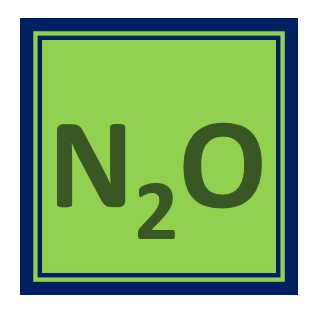
Nitrous oxide (N2O), also known as laughing gas, is a colorless, odorless, and slightly sweet-tasting gas.
It is a relatively stable gas that is non-flammable and non-toxic at normal atmospheric concentrations.
Nitrous oxide has a boiling point of -88.5°C (-127.3°F) and a melting point of -102°C (-151.6°F).
Chemical Properties of Nitrous oxide gas:
Nitrous oxide is a chemical compound made up of two nitrogen atoms and one oxygen atom, and it is a strong oxidizer.
It can react with some metals and organic compounds, particularly in the presence of heat or a catalyst.
Uses of Nitrous oxide gas:
Nitrous oxide has a variety of uses, particularly in medical and dental settings as an anesthetic and analgesic.
It is also used as a propellant in some types of aerosol cans, such as whipped cream dispensers.
Nitrous oxide has some uses in the food industry, particularly in the production of packaged foods and baked goods.
It is also used in the racing industry as a performance-enhancing agent, as it can increase engine power by providing additional oxygen to the combustion process.
Reactions of Nitrous oxide gas:
Nitrous oxide can react with some metals and organic compounds, particularly in the presence of heat or a catalyst, to form new compounds or undergo chemical changes.
For example, nitrous oxide can react with some metals, such as copper or aluminum, to form metal oxides and nitrogen gas.
It can also react with some organic compounds, such as hydrocarbons, to form nitro compounds.
Production of Nitrous oxide gas:
Nitrous oxide can be produced through several different methods, including the reaction of ammonium nitrate with a metal, the thermal decomposition of ammonium nitrate or ammonium dichromate, or through the reaction of nitric oxide with oxygen.