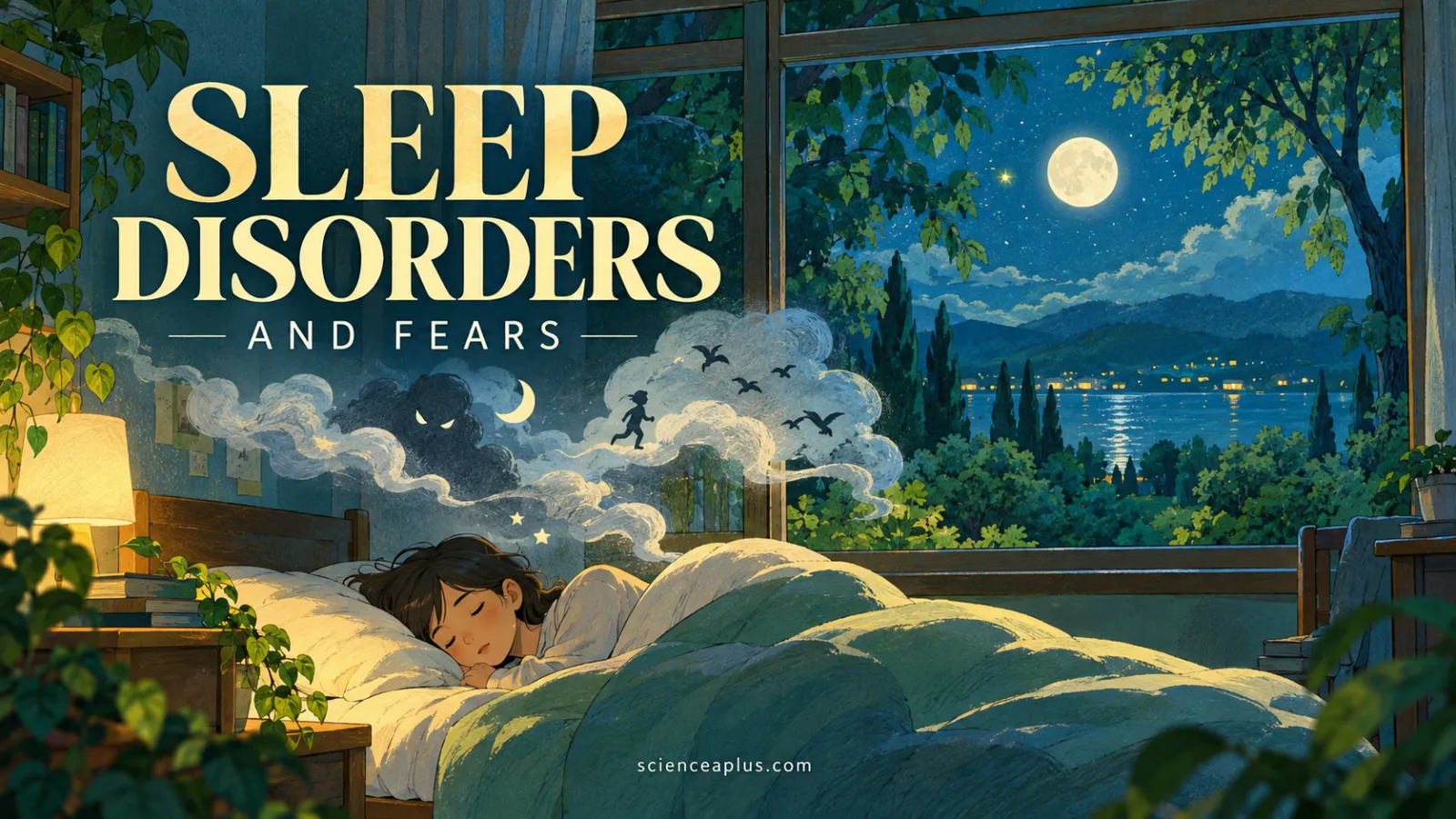
Sleep disorders are conditions that disturb how well, how long or how safely you sleep. Insomnia is one of the most common sleep problems, but others include sleep apnoea, narcolepsy and night terrors. The good news is that most sleep problems are common, understood and treatable.
What are sleep disorders?
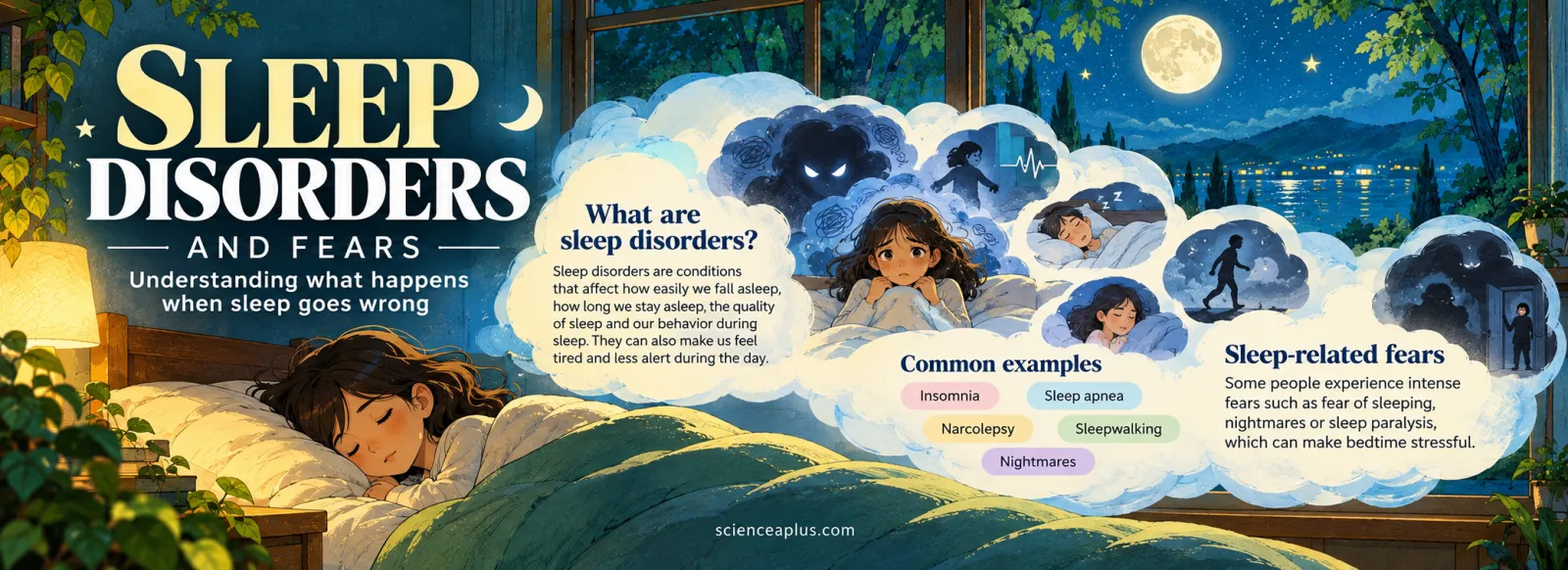
Sleep disorders are ongoing problems that stop you getting the sleep you need. They can make it hard to fall asleep, cause you to wake often, or lead to strange events during the night such as sleepwalking or screaming. Some are linked to fears about sleep itself, which is why sleep disorders and fears often turn up together.
Everyone has the odd bad night. A sleep problem becomes worth taking seriously when it keeps happening and starts to affect your days: your mood, your concentration and how tired you feel.
How much sleep do we need?
The amount of sleep you need changes with age. These are the NHS guide figures.
| Age | Sleep needed |
|---|---|
| Babies and toddlers | 12–17 hours |
| Children | 9–13 hours |
| Adults | 7–9 hours |
Why sleep matters
Sleep is not wasted time. When you are short of it, concentration, mood and safety all suffer. Our guide to the effects of sleep deprivation explains what happens to the body and brain when sleep runs short.
Regularly getting too little sleep can leave you feeling tired and unrefreshed, struggling to concentrate and moodier than usual. Those are exactly the signs that doctors look for when someone mentions a sleep problem.
It matters for school too. If you are juggling revision and a part-time job, read about balancing sleep and work for better GCSE results.
Types of sleep disorders at a glance
There are many types of sleep disorders. This table covers the main ones in this guide, and each is explained in more detail later.
| Disorder | What happens | Key sign |
|---|---|---|
| Insomnia | Regular problems sleeping | Trouble falling asleep or staying asleep, and feeling unrefreshed |
| Obstructive sleep apnoea | Breathing stops and starts during sleep | Loud snoring, gasping or snorting |
| Narcolepsy | A rare condition causing sleepiness you cannot control | Sudden sleep attacks, sometimes with cataplexy |
| Sleepwalking | Moving about during deep non-REM sleep | Little or no memory afterwards |
| Night terrors | The person stays asleep but appears terrified | Screaming or thrashing, with no memory of it |
| Nightmares | Frightening dreams | You wake up and remember the dream |
| Sleep paralysis | Being unable to move or speak while waking or falling asleep | Feeling a presence or pressure on the body |
If you notice any of these signs regularly, it is worth talking to a GP. This article is for education only and cannot diagnose a condition.
Insomnia: a very common sleep problem
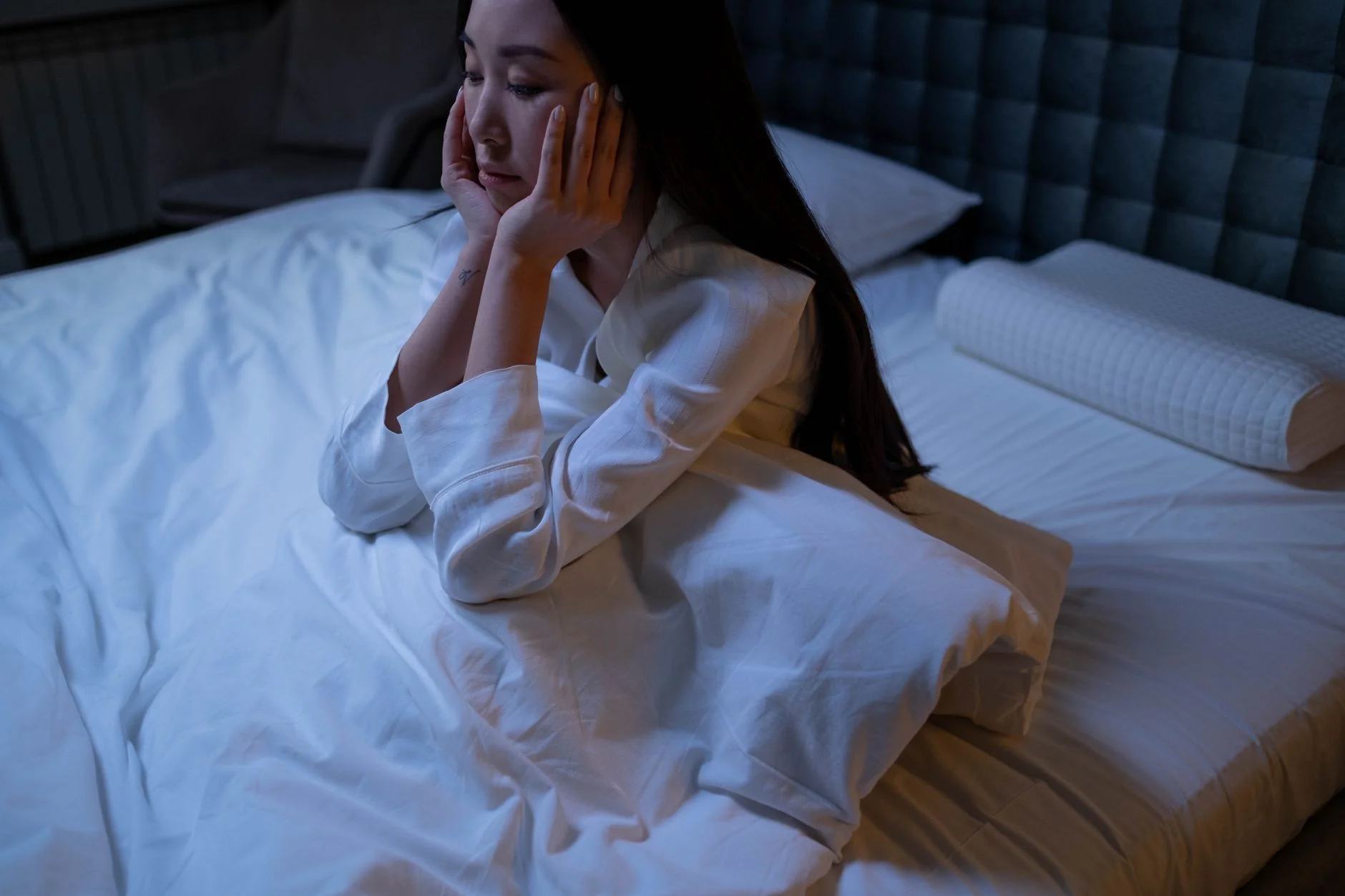
Insomnia means regularly having problems sleeping. It is the one of the most common sleep problems, so if you have it, you are far from alone.
Many people think insomnia only means lying awake all night. In reality it covers several patterns, and you may notice one or a mix of them from week to week. What they share is that they happen regularly and leave you feeling worse the next day.
Symptoms of insomnia
- Trouble falling asleep
- Waking during the night
- Waking up early
- Feeling tired and unrefreshed
- Poor concentration
What causes insomnia?
Common causes include stress, anxiety and depression, as well as noise and a room that is too hot or too cold. Caffeine, alcohol and nicotine can also get in the way, as can jet lag, shift work and some medical conditions.
Often several causes overlap. Worry about school or work can keep your mind busy, a late coffee can make it harder to switch off, and a warm, noisy room can stop you drifting into deeper sleep. Spotting your own triggers is a useful first step.
Self-help for insomnia
Simple changes to your routine are where the NHS suggests starting. Try these for a few weeks and see whether your nights improve.
- Go to bed and get up at regular times.
- Keep your bedroom dark and quiet.
- Take regular exercise.
- Avoid screens before bed.
- Avoid caffeine, alcohol and big meals before bed.
- Avoid napping during the day.
When to see a GP about insomnia
See a GP if changing your habits has not helped, or if the problem has lasted for months and affects your daily life. For urgent advice you can call NHS 111. Insomnia is very treatable, and asking for help is a sensible first step.
Sleep apnoea
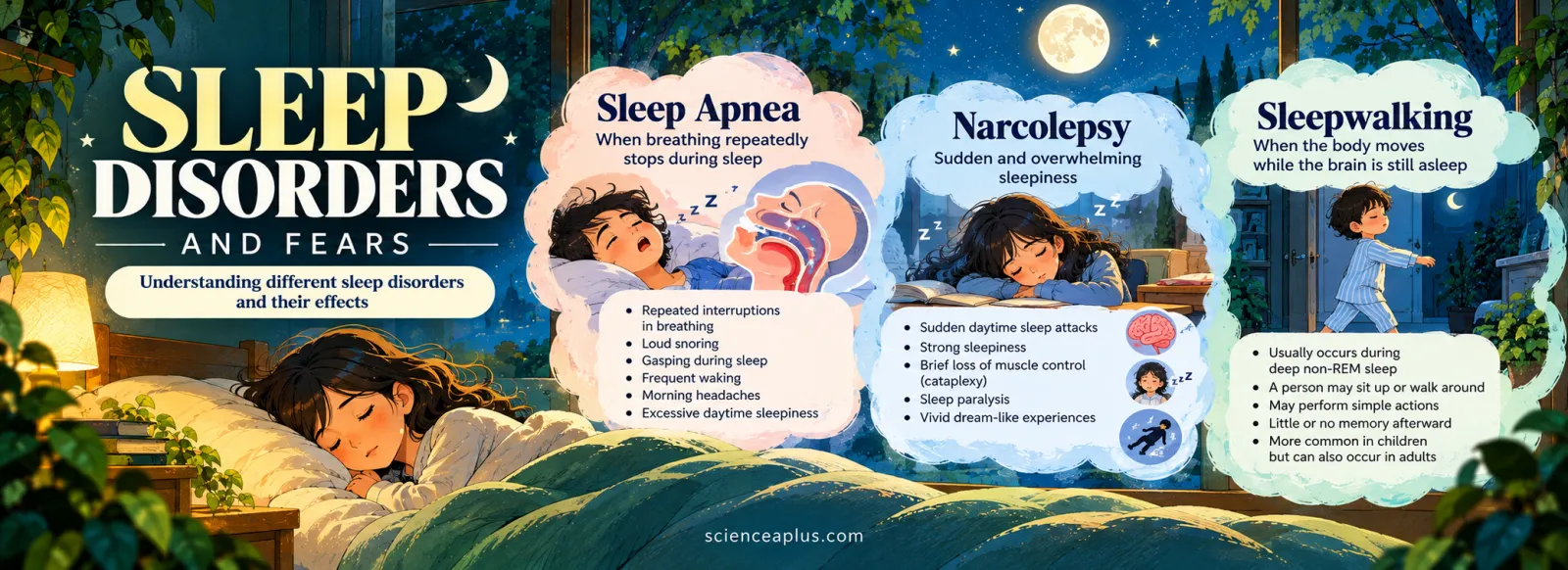
Obstructive sleep apnoea (OSA) is one of the more serious types of sleep disorders. During sleep, breathing stops and starts again, which repeatedly disturbs the night even though the person often does not remember waking. Because the sleep is broken, the day that follows can feel exhausting.
What are the symptoms of sleep apnoea?
Many signs are noticed by someone else, such as a parent or partner, because the sleeper is unaware of them. Typical night-time signs include:
- breathing that stops and starts
- gasping or snorting sounds
- loud snoring
- waking up frequently
During the day, people may notice tiredness, poor concentration, mood changes and morning headaches. Having one of these on its own does not mean someone has sleep apnoea, but a combination is worth mentioning to a doctor.
Who is more likely to have it?
Several things raise the risk of sleep apnoea:
- being overweight
- having a large neck
- older age
- a family history of it
- drinking alcohol
- smoking
- enlarged tonsils or adenoids
- sleeping on your back
Treatment and why it matters
Lifestyle changes such as losing weight, stopping smoking and cutting down alcohol may help mild cases. Many people need a CPAP machine, which is free on the NHS. It gently pumps air through a mask so that the airway stays open during sleep.
Treating it matters. Left untreated, sleep apnoea raises the risk of high blood pressure, stroke, type 2 diabetes, heart disease and accidents. Drivers may need to tell the DVLA, and must not drive while they feel excessively sleepy.
When to see a GP: sleep apnoea is serious if it is not treated, so see a GP if you or someone else notices these signs. If you need urgent advice, NHS 111 can help.
Narcolepsy
Narcolepsy is a rare condition. It causes sleepiness and muscle weakness that a person cannot control. Someone with narcolepsy may have sleep attacks, where they fall asleep suddenly, even in the middle of an activity.
Other symptoms can include:
- cataplexy: sudden muscle weakness, often triggered by strong emotions such as laughter
- sleep paralysis, where you cannot move or speak when waking up or falling asleep
- vivid dreams or hallucinations
- disturbed sleep at night
There is no cure for narcolepsy, but treatments and lifestyle changes can help people manage it. Drivers must tell the DVLA.
When to see a GP: if you are very sleepy during the day, or you have sudden muscle weakness or sleep attacks, make an appointment with your GP.
Sleepwalking
Sleepwalking happens during deep non-REM sleep. It is more common in children, and the person usually has little or no memory of it afterwards. A sleepwalker may sit up, walk around or do simple tasks while still asleep.
If you find someone sleepwalking:
- keep them safe, for example by moving objects they could trip over
- gently guide them back to bed
- try not to wake them suddenly
When to see a GP: if sleepwalking is frequent or dangerous, speak to a GP.
Body clock problems
Sleep can also be disrupted when daily routines clash with the body’s natural rhythm. Shift work and jet lag are both known causes of insomnia. If your hours are irregular, our guide to sleep hygiene tips for shift workers explains how to protect your rest. If changing your habits has not helped and problems have lasted for months, see a GP.
Quick revision: sleep terms
Nightmares and night terrors
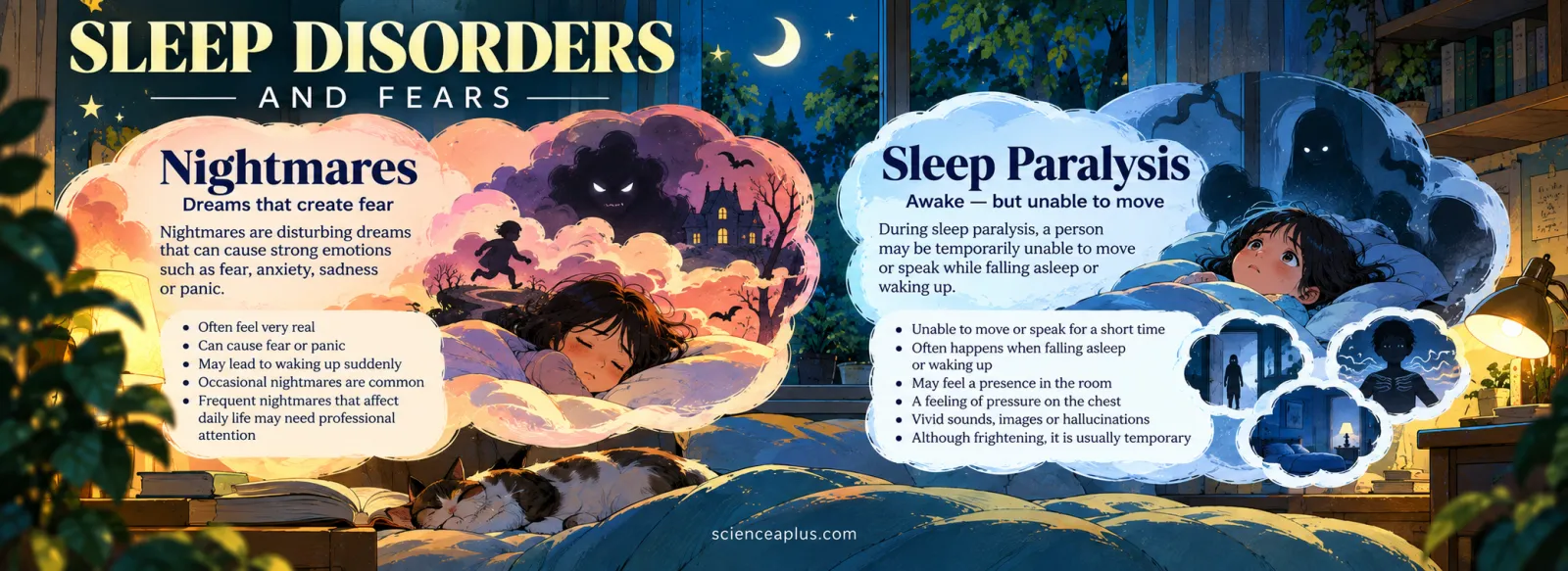
Nightmares and night terrors sound similar, but they are different things, and they happen at different stages of sleep. Telling them apart is one of the most common questions people ask about sleep disorders, because what helps with one is not what helps with the other.
A nightmare is a frightening dream that wakes you up. You remember it, sometimes in great detail, and it can leave you anxious or unable to get back to sleep. Nightmares tend to happen later in the night, and they affect both children and adults.
A night terror is quite different. The person stays asleep the whole time. They may scream, thrash about or look terrified, yet they are not awake and usually will not remember it in the morning. Night terrors usually happen early in the night, can last up to 15 minutes, and mostly affect children aged 3 to 8.
| Feature | Nightmares | Night terrors |
|---|---|---|
| When in the night | Later in the night | Early in the night |
| Is the person awake? | Yes, they wake up from the dream | No, they stay asleep |
| Remembered? | Yes | Rarely |
| Who gets them? | Children and adults | Mostly children aged 3–8 |
| How long? | Varies | Up to 15 minutes |
| What to do | Comfort and reassurance; keep a calm routine | Stay calm, do not try to wake them, keep them safe |
What to do during a night terror
If you are watching a night terror, the hardest part is doing very little. Stay calm, keep the person safe by moving anything hard or sharp out of the way, and wait for it to pass. Do not try to wake them. They are not conscious of you, and waking them can leave them confused.
Living with nightmares
An occasional bad dream is a normal part of life. It becomes a problem when nightmares keep coming back and start to affect how well you sleep or how you feel during the day. Cognitive behavioural therapy (CBT), a talking therapy, helps many people with this.
When to see a GP
See a GP if night terrors continue after the age of 12, or if they start after the age of 5. Also see a GP if nightmares regularly disrupt your sleep and your daily life. If you need advice quickly, NHS 111 can help.
Sleep paralysis
Imagine waking up and finding that you cannot move or speak. That is sleep paralysis. It happens while you are waking up or falling asleep, and it can last up to several minutes. Some people feel a presence in the room or a pressure on their body, and many people feel frightened.
It feels awful, but sleep paralysis is harmless. It does not cause physical damage, and it passes by itself. Knowing that can take much of the fear out of an episode. If you want to separate fact from folklore, our article on common misconceptions about sleep paralysis goes through the myths one by one.
What is linked with sleep paralysis?
Sleep paralysis is linked with several things, and having one of them does not mean something is wrong with you:
- Insomnia
- Irregular sleep patterns
- Narcolepsy
- Post-traumatic stress disorder (PTSD)
- Anxiety or panic disorders
- A family history of sleep paralysis
Tips that may help prevent it
- Aim for 7–9 hours of sleep a night if you are an adult.
- Go to bed and get up at regular times.
- Exercise regularly, but not just before bed.
- Avoid big meals, smoking, alcohol and caffeine before bed.
- Try not to sleep on your back.
When to see a GP
See a GP if sleep paralysis happens often and makes you anxious about going to sleep, or if it leaves you very tired during the day.
Somniphobia: when sleep itself feels scary
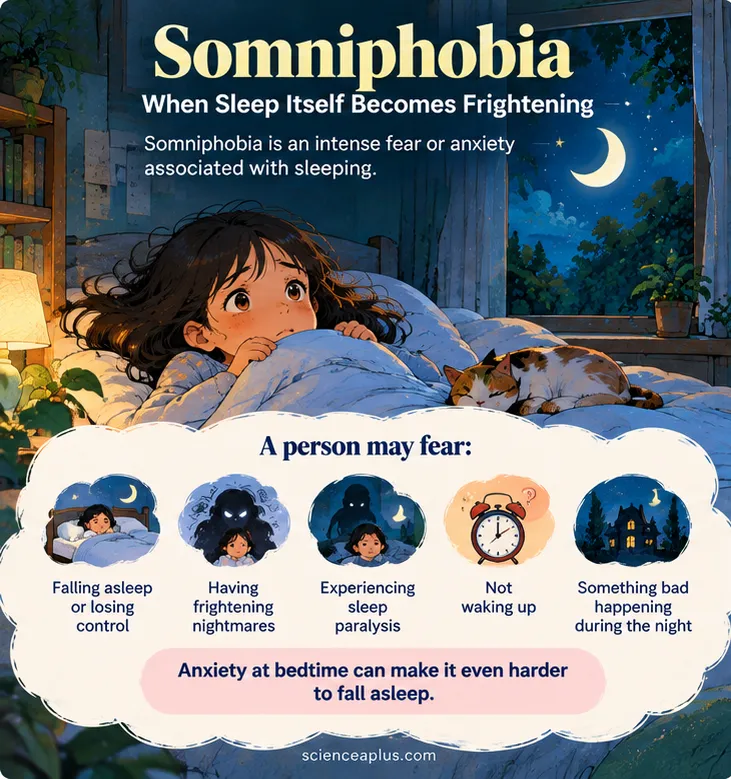
Somniphobia is the fear of sleep. It is not a formal diagnosis on its own. The word describes an intense fear or anxiety about going to sleep, and it can look different from person to person.
People describe being afraid of different things. These include:
- Having nightmares
- Sleep paralysis
- Losing control
- Not waking up
- Something bad happening while they are asleep
The fear–sleep cycle
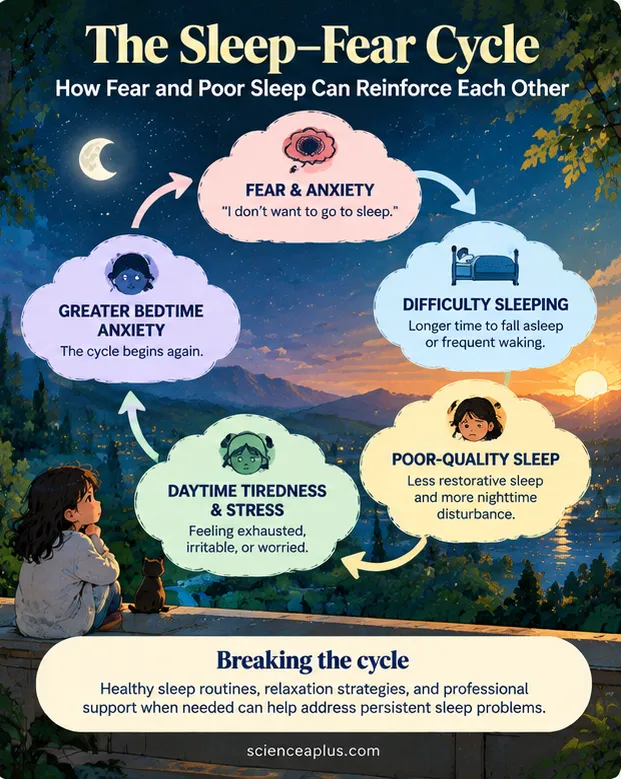
Fear of sleep can trap you in a loop. You feel afraid of bedtime, so you find it hard to fall asleep. The sleep you do get is poor quality, so you feel tired and stressed the next day. That makes you more anxious at the next bedtime, and the cycle starts again.
- Fear of sleep
- Difficulty sleeping
- Poor-quality sleep
- Daytime tiredness and stress
- More bedtime anxiety
The good news is that cycles can be broken. Specific phobias are common anxiety disorders, and they are very treatable. Talking therapies such as CBT can help people feel safe again.
What can help
A steady sleep routine, relaxation and CBT can all help. Worry that builds up over the day often shows up at bedtime, so looking after your stress levels in general matters too. Our guide to a stress-free life for everyone has practical ideas for that.
For extra support, Every Mind Matters has self-help advice on sleep and anxiety, and charities such as Mind and Young Minds offer mental health support.
When to see a GP
Talk to a GP if your fear of sleep is persistent or distressing. If you need urgent advice, call NHS 111.
How to sleep better: healthy sleep habits

Many everyday sleep problems, including mild insomnia, improve when you change your habits. The NHS suggests that most adults need 7–9 hours of sleep, children aged 9–13 need about 9–13 hours, and babies and toddlers need 12–17 hours. Good habits help you reach those numbers more often, and they are the first thing a GP will ask about too.
Think of a sleep routine as training for your body clock. The more regular your day is, the easier it is for your brain to know when to switch off. Here are the habits with the strongest backing.
Habits that help
- Keep regular times. Go to bed and wake up at about the same time every day, including weekends, so your body clock stays steady.
- Make your bedroom dark and quiet. Noise and a room that is too hot or too cold are common causes of poor sleep.
- Move during the day. Regular exercise supports better sleep, but avoid it just before bed.
- Put screens away before bed. Give yourself a screen-free wind-down instead of scrolling until you fall asleep.
Habits to avoid close to bedtime
- Caffeine, which is in tea, coffee, cola and energy drinks.
- Alcohol, which may help you nod off but often leads to waking in the night.
- Nicotine and smoking.
- Big meals late in the evening.
- Napping during the day, which can make it harder to fall asleep at night.
Sleep and mood are closely linked, so these habits help your mind as well as your body. Our guide to sleep hygiene and mental health explains how the two feed into each other. Sleep also affects how well you think and learn, which is covered in lifestyle choices that improve brain function.
Build your own sleep plan
Tick off the steps you want to try this week. Your ticks are remembered in your browser.
- Choose a regular bedtime and wake-up time
- Stop caffeine well before bed
- Switch off screens before bed
- Make the bedroom dark, quiet and a comfortable temperature
- Avoid exercising just before bed
- Skip big meals, alcohol and nicotine in the evening
Calming bedtime fears
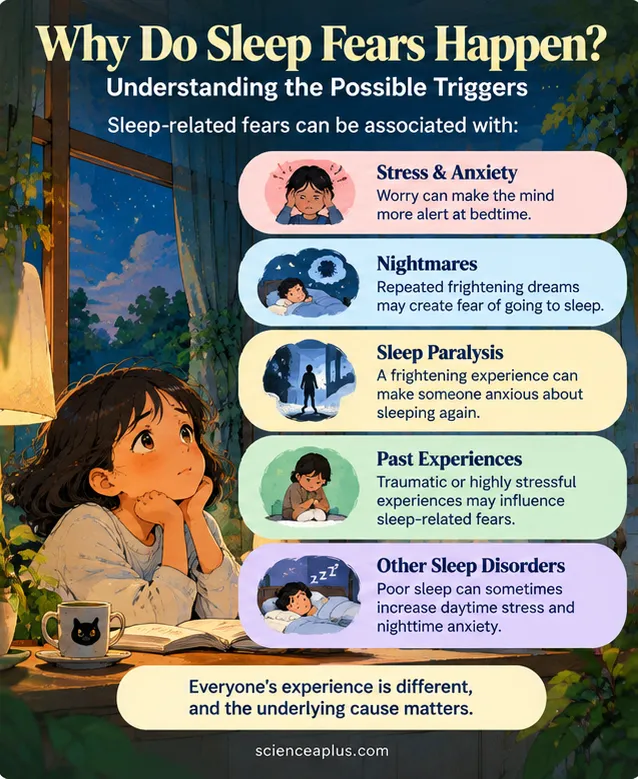
Sometimes the problem is not the bedroom but what is going on in your head. Worries about tomorrow, nightmares or a scary experience such as sleep paralysis can make bedtime feel stressful. The more anxious you feel, the harder sleep becomes, and that can turn into a cycle of fear, poor sleep and daytime tiredness.
The good news is that you can break the cycle. The ideas below are gentle, practical and safe to try at home.
- Slow your breathing. Breathe in gently through your nose, then breathe out for longer than you breathed in. Repeat for a few minutes to help your body relax.
- Write a worry list earlier in the evening. Put your worries and tomorrow’s to-do list on paper, then close the notebook. Your brain does not have to hold on to them overnight.
- Follow the same routine each night. A repeated pattern, such as a wash, a book and lights out, tells your body that sleep is coming.
- Look after the light. Keep the room dark, or use a very dim night light if total darkness feels frightening. Feeling safe matters more than being perfect.
- Do not lie awake watching the clock. If you cannot sleep, get up, do something quiet and calm in low light, and go back to bed when you feel sleepy.
- Talk to someone. Telling a parent, carer, friend or teacher about a fear often makes it feel smaller.
Learning to cope with worries is a skill, like any other. Setting small goals works well here, and our article on achieving goals with minimum stress shows how to break big tasks into manageable steps so they weigh less on your mind at night.
If a fear of sleep is persistent or distressing, speak to a GP. Support is also available from Every Mind Matters for sleep and anxiety self-help, and from the charities Mind and Young Minds for mental health support.
When to see a GP about sleep
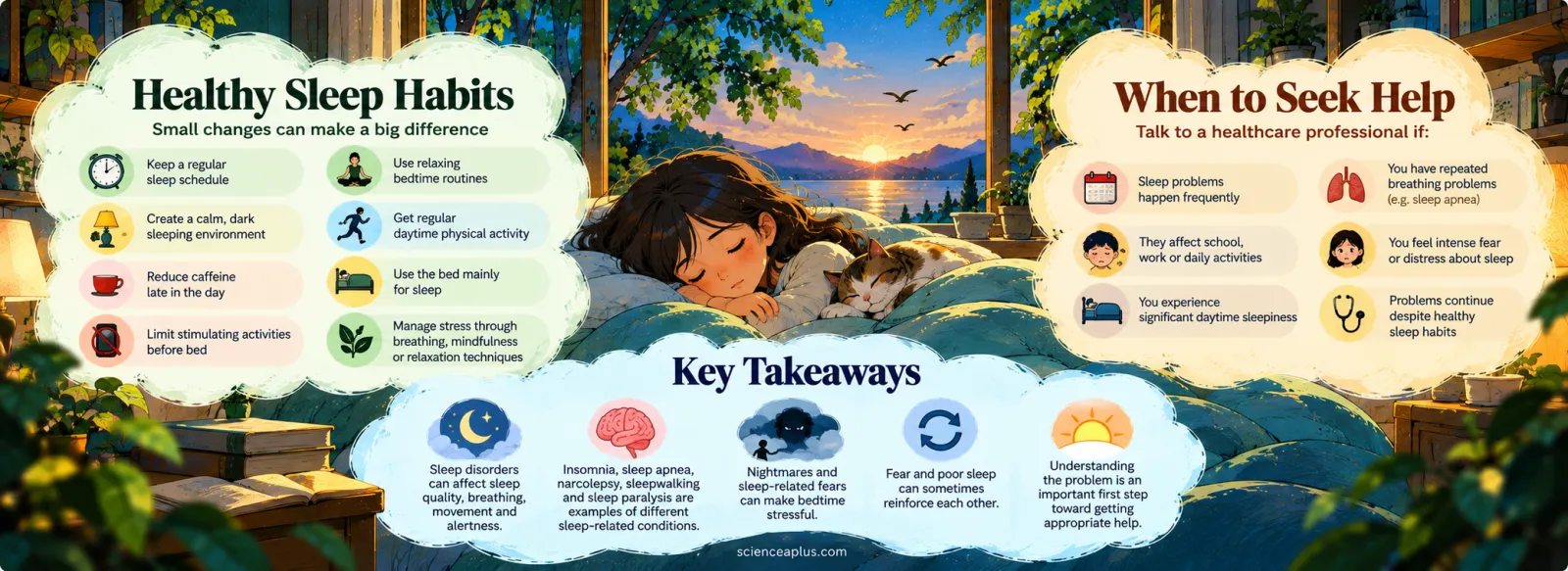
Most sleep problems are common and treatable, and a short bad patch is usually nothing to worry about. It is sensible to get advice when a problem sticks around or starts to affect your life. Consider booking a GP appointment if:
- changing your habits has not helped, or sleep problems have lasted for months and affect your daily life;
- you or someone else notices signs of sleep apnoea, such as loud snoring, gasping or snorting, or breathing that stops and starts;
- you feel extremely sleepy during the day or have sudden muscle weakness triggered by emotions such as laughter;
- sleep paralysis happens often and makes you anxious about sleep or very tired;
- night terrors continue after the age of 12 or start after the age of 5, or nightmares regularly disrupt sleep and daily life;
- sleepwalking happens often or is dangerous;
- fear of sleep is persistent or distressing.
A GP will usually look at your habits first. For insomnia, they usually offer CBT for insomnia (CBT-I) first, and sleeping pills are rarely prescribed, and then only for a few days or weeks at most. If you drive, you must tell the DVLA about narcolepsy, and you may need to tell them about sleep apnoea.
Frequently asked questions about sleep disorders
What is the most common sleep disorder?
Insomnia is one of the most common sleep problems. It means regularly having trouble falling asleep, waking in the night, waking too early, or feeling tired and unrefreshed. Causes include stress, anxiety, noise, caffeine and alcohol. Changing your habits often helps, and a GP can offer CBT for insomnia.
What are the symptoms of sleep apnoea?
Obstructive sleep apnoea means breathing stops and starts during sleep. Signs include gasping or snorting, loud snoring and frequent waking. During the day you may feel very tired, struggle to concentrate, have mood changes or get morning headaches. See a GP if you or someone else notices these signs.
Is sleep paralysis dangerous?
No. Sleep paralysis is scary but harmless. You cannot move or speak while waking up or falling asleep, and it can last up to several minutes. Regular sleep times and enough sleep can help. See a GP if it happens often and makes you anxious about sleep or very tired.
What is the difference between nightmares and night terrors?
Nightmares are frightening dreams that you wake from and remember, usually later in the night. Night terrors happen earlier in the night, last up to 15 minutes, and the person stays asleep and does not remember them. They mostly affect children aged 3–8. They are different problems.
What is somniphobia?
Somniphobia describes an intense fear or anxiety about sleeping, such as fear of nightmares, sleep paralysis or not waking up. It is not a formal diagnosis on its own. It can create a cycle of fear, poor sleep and more bedtime anxiety. Routine, relaxation and CBT can help, so speak to a GP.
What is narcolepsy?
Narcolepsy is a rare condition causing sleepiness and muscle weakness you cannot control. People may have sleep attacks, cataplexy (sudden weakness triggered by emotions such as laughter), sleep paralysis, vivid dreams and disturbed night sleep. There is no cure, but treatments and lifestyle changes help. Drivers must tell the DVLA.
Why do I wake up at 3am?
Waking in the night is a common insomnia symptom. Everyday causes include stress, anxiety, alcohol, noise, and a room that is too hot or too cold. Keeping regular sleep times and a dark, quiet bedroom can help. If it keeps happening for months and affects daily life, see a GP.
How can I stop being scared to sleep?
Try a calming, regular bedtime routine, slow breathing and a worry list earlier in the evening. Keep the room as dark as feels comfortable, and talk to someone you trust about your fears. CBT helps many people. If the fear is persistent or distressing, speak to a GP.
When should I see a doctor about sleep problems?
See a GP if changing your habits has not helped, or if problems have lasted months and affect daily life. Also get advice if you notice signs of sleep apnoea, have extreme daytime sleepiness, or have frequent sleepwalking, night terrors or sleep paralysis. For urgent advice, use NHS 111.