The most common language in the world is English if you count everyone who speaks it: about 1.49 billion people, according to Ethnologue 2026. Count only native speakers and Mandarin Chinese comes first, with about 988 million. So there are two correct answers, and each depends on one question: who counts as a speaker?
That question is where the science comes in. Linguists separate people who grew up with a language from people who learned it later, and they argue about where one language ends and another begins. Once you understand those two ideas, every “most spoken languages” list makes sense, including why different lists disagree.
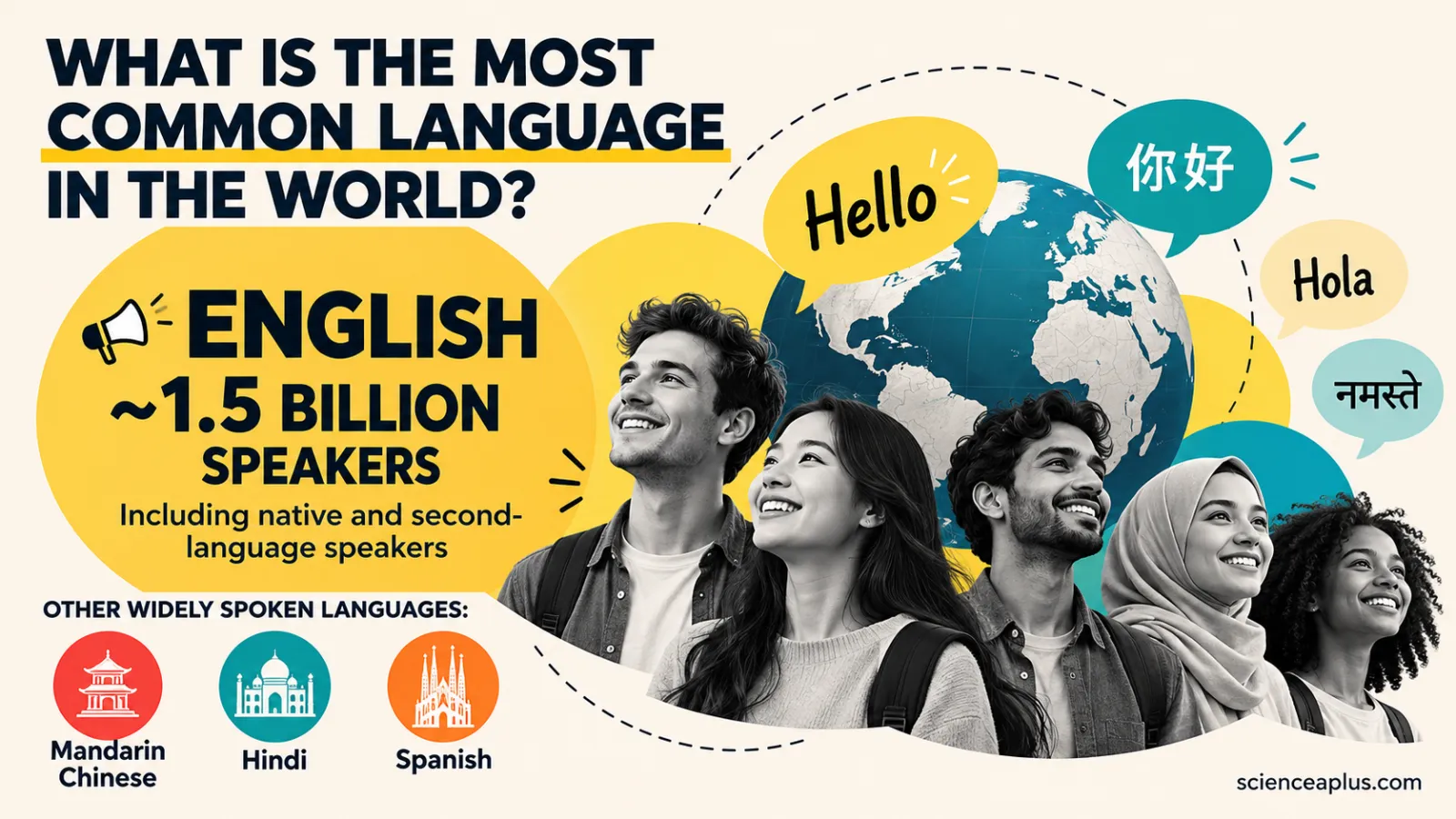
The most common language in the world depends on how you count

Two terms do most of the work in this topic. Your first language, also called your native language or L1, is the one you learned from your family as a young child. A second language, or L2, is any language you learn after that, usually at school, at work or by moving to a new country.
Add the two groups together and you get the total number of speakers:
total speakers = L1 speakers + L2 speakers
English has a modest number of native speakers but a huge number of second-language speakers, so it wins on the total. Mandarin Chinese is the opposite: nearly everyone who speaks it learned it as a child, so it wins on the native count.
There is a catch. Nobody stands at the border and tests everyone. A language researcher has to decide how well someone must speak a language to be counted, and different surveys set the bar in different places. We return to that problem later in this article.
Spoken language and written language are related but separate skills too. Many people understand a language they cannot read, and some can write a language they hardly speak. If you want to explore how the two differ, see our guide to oral and written communication.
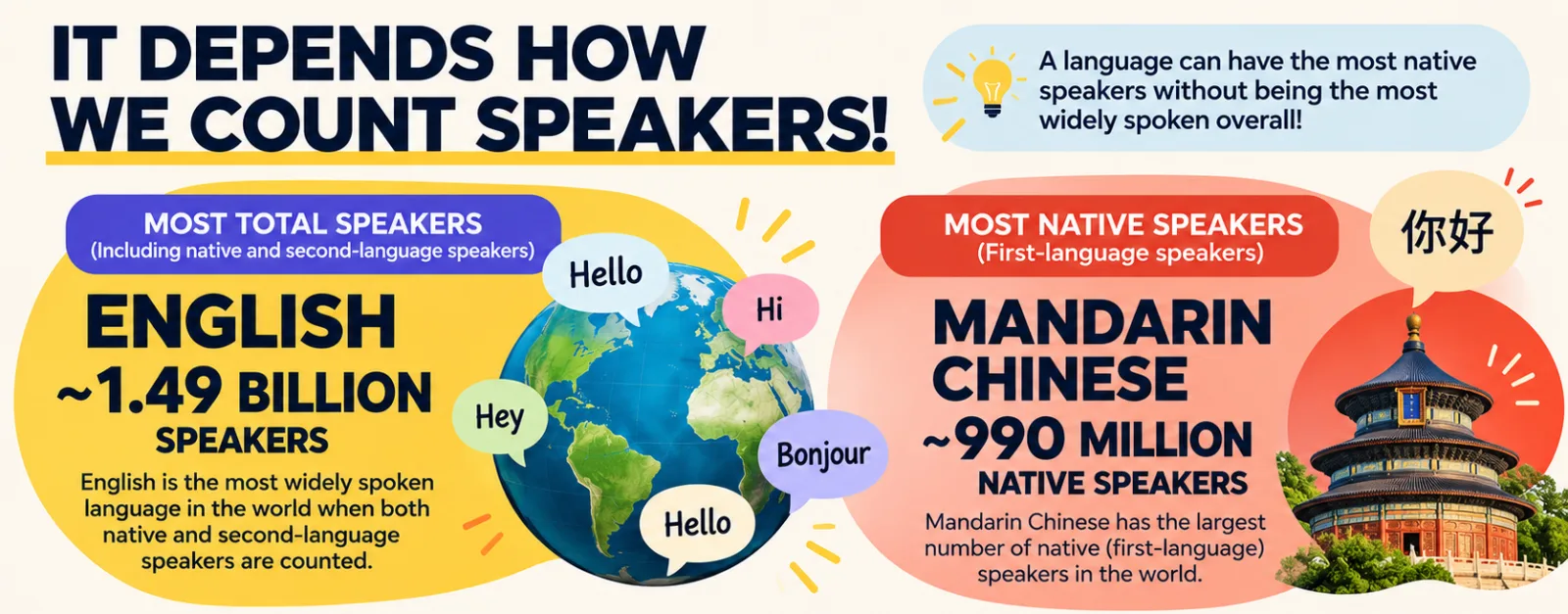
The graphic above shows the whole story at a glance. English towers over every other language when native and second-language speakers are added together, while Mandarin Chinese leads when only native speakers are counted. The exact figures come from Ethnologue 2026, explained next.
Most spoken languages in the world: the 2026 top 10
The best-known source of language statistics is Ethnologue, a reference catalogue published by SIL Global. The 2026 edition is its 29th. The table below uses Ethnologue 2026 figures, in millions of speakers. The first ten rows are the top ten by total speakers, and Russian and German are added as the next two.
| Language | Family (branch) | Native (L1), millions | Second language (L2), millions | Total, millions |
|---|---|---|---|---|
| English | Indo-European (Germanic) | 372 | 1,121 | 1,493 |
| Mandarin Chinese | Sino-Tibetan (Sinitic) | 988 | 194 | 1,183 |
| Hindi | Indo-European (Indo-Aryan) | 347 | 264 | 611 |
| Spanish | Indo-European (Romance) | 487 | 75 | 561 |
| Modern Standard Arabic | Afro-Asiatic (Semitic) | 0 | 335 | 335 |
| French | Indo-European (Romance) | 75 | 258 | 334 |
| Bengali | Indo-European (Indo-Aryan) | 234 | 43 | 274 |
| Portuguese | Indo-European (Romance) | 252 | 18 | 269 |
| Indonesian | Austronesian (Malayo-Polynesian) | 78 | 177 | 255 |
| Urdu | Indo-European (Indo-Aryan) | 78 | 168 | 246 |
| Russian | Indo-European (Balto-Slavic) | 133 | 77 | 210 |
| Standard German | Indo-European (Germanic) | 76 | 57 | 133 |
Figures are Ethnologue estimates, rounded separately, so L1 + L2 does not always equal the total exactly (Bengali’s parts add up to 277). Source: Ethnologue 2026.
Read the table by columns and the pattern is clear. By total speakers, the order is English, Mandarin Chinese, Hindi, Spanish and Modern Standard Arabic. By native speakers alone, the order changes to Mandarin Chinese (988 million), Spanish (487 million), English (372 million) and Hindi (347 million). Ethnologue describes this chart in the same way: Spanish is second, English third and Hindi fourth.
About three in four English speakers (1,121 million of 1,493 million) use it as a second language. In contrast, about 84% of Mandarin speakers (988 million of 1,183 million) are native speakers. Modern Standard Arabic is a special case, with no native speakers at all in this table. We explain why in the section on Arabic.
Like other “most common” questions, such as the most common colours worldwide, the answer depends on what you measure and who you ask. A good scientist reports the method along with the result.
What do the family names mean?
The second column shows the language family of each language, meaning the group of languages that descend from a common ancestor. English, Hindi, Spanish and Russian all belong to the Indo-European family, so they are distant cousins. Mandarin Chinese belongs to the Sino-Tibetan family, and Modern Standard Arabic belongs to the Afro-Asiatic family. Language families get their own section later in this article.
The next section looks at why English has so many second-language speakers, and at what makes Mandarin Chinese the largest native language.
Why English is the most spoken language overall
English has about 1.49 billion speakers in total, and about 1,121 million of them (roughly 75%) use it as a second language. Put another way, for every native English speaker there are about three people who learned it later. That is an unusual balance, and it is the reason English tops the total count while ranking only third by native speakers.
Why did it spread so far? Ethnologue gives a clear answer. English’s lead is “due first to the colonial influence of the British Empire, and later to the spread of American culture.” The language is now used in far more countries than Mandarin Chinese. A language that is used in many countries gives people a practical reason to learn it, because it connects them with others who do not share their first language.
Try it yourself: the native vs second-language calculator
Use the calculator below to see how the mix of native and second-language speakers changes the total. It starts with the Ethnologue 2026 figures for English. Change the numbers to test other languages.
Notice what happens when you try Modern Standard Arabic. With 0 native speakers and 335 million second-language speakers, every one of its speakers learned it as a second language. The calculator reports the share of second-language speakers as 100%.
Which language has the most native speakers? Mandarin Chinese
The language with the most native speakers is Mandarin Chinese, with about 988 million. Ethnologue states it plainly: “Mandarin Chinese is the largest language in the world, if you count only native speakers. If you count both native and non-native speakers, English is the largest.”
The reason for Mandarin’s lead is simple. Ethnologue says it is “due to the significant population of China”. Nearly all Mandarin speakers (about 84%) learned it as children, and only about 194 million people speak it as a second language. Its total of about 1,183 million is the second highest in the world, behind English.
Is “Chinese” one language?
This is where the science gets interesting. Ethnologue treats Chinese as a macrolanguage, a group of related varieties that are counted together, in this case 19 languages. They are grouped as “Chinese” because they share a writing system and a long literary tradition. Mandarin is the largest of the 19, while Wu and Cantonese (Yue) are separate languages in the same group.
Spoken, many Chinese varieties are not mutually intelligible. A Mandarin speaker and a Cantonese speaker would not usually understand each other without learning the other variety. When they write, however, they can share the same characters. That is why the figure for Mandarin Chinese (988 million native speakers) is smaller than you would get if every Chinese variety were counted together.

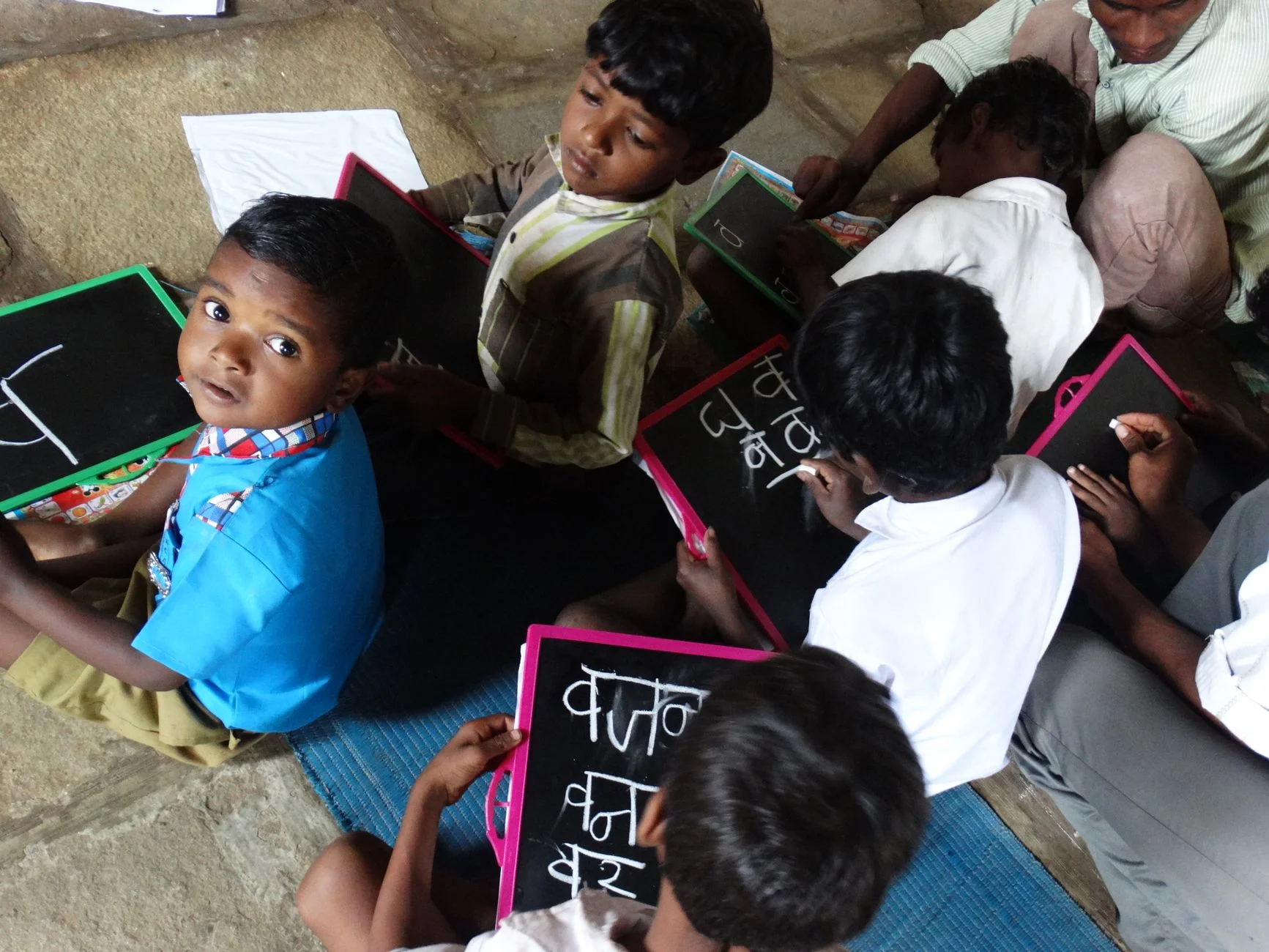
Spanish, Hindi, Arabic and the rest of the top 10
Spanish: second by native speakers
Spanish has about 487 million native speakers, more than English (372 million) and second only to Mandarin Chinese. It has just 75 million second-language speakers, giving a total of 561 million. Spanish is a good example of a language that is large mainly because of its native community.
Hindi: 611 million in total
Hindi has about 347 million native speakers and 264 million second-language speakers, making 611 million in total and third place overall. Hindi and Urdu raise one of the most interesting questions in linguistics, because spoken Hindi and spoken Urdu are very close. We look at that question in detail later in this article.
Arabic: a language with no native speakers?
In Ethnologue’s table, Modern Standard Arabic has 0 native speakers and 335 million second-language speakers. That looks odd until you know how Arabic works. People grow up speaking a local variety such as Egyptian, Levantine or Sudanese Arabic. Those are counted separately. They then learn Modern Standard Arabic mainly through school, so it counts as a second language for everyone.
French, Bengali, Portuguese, Indonesian and Urdu
The remaining top-ten languages follow patterns you can read straight from the table.
- French has 75 million native speakers but 258 million second-language speakers, so most of its 334 million speakers learned it later.
- Bengali has 234 million native and 43 million second-language speakers (274 million total, as published).
- Portuguese is mostly native: 252 million native speakers and only 18 million second-language speakers.
- Indonesian has 78 million native speakers and 177 million second-language speakers, so it is mainly a second language.
- Urdu also has 78 million native speakers and 168 million second-language speakers.
Compare the two groups. Spanish, Portuguese, Bengali and Mandarin are large because of their native communities. English, French, Indonesian, Urdu and Arabic are large because many people learned them as a second language. When you read a ranking, ask which kind of language it is describing.
With the top ten explained, the next question is more fundamental: how do researchers get these numbers in the first place?
How do linguists count speakers of a language?
Nobody knows exactly how many people speak each language, so the figures in every ranking are estimates. The numbers in this article come from Ethnologue, which has published since 1951. A new edition appears every year on 21 February, and the 2026 edition is the 29th. It is produced by SIL Global (formerly SIL International) and sold by subscription.
Ethnologue builds its user figures from many sources collected over many years. Where it can, it uses national census data. Where there is no census figure, it uses United Nations or other estimates. It also tries to separate L1 and L2 users. When a source combines the two groups, Ethnologue labels the figure “all users” instead of guessing the split.
Three details in the method are worth remembering:
- Ethnologue states that “all figures are only estimates; this is true even for census figures.”
- It does not extrapolate figures to bring them up to date. A number from an older census stays as it was reported.
- Some sources leave out dialects, count two languages as one, or count members of an ethnic group, who may not all speak the language.
A language has 50 million native speakers and 150 million second-language speakers. What is its total, and what fraction learned it as a second language? (2 marks)
The total is 50 + 150 = 200 million speakers. The fraction who learned it as a second language is 150 ÷ 200 = three-quarters (75%).
Why do sources give different numbers?
If you compare two websites, you may see different speaker numbers for the same language. That does not mean one of them made a mistake. There are at least four reasons, and each is a real scientific problem.
Language or dialect? The mutual intelligibility test
Ethnologue follows the ISO 639 criteria to decide whether two varieties are one language or two. Two varieties are normally the same language if speakers understand each other without having to learn the other variety. This is called mutual intelligibility.
Where intelligibility is only marginal, a shared literature or a common ethnolinguistic identity points to one language. In the other direction, varieties that are mutually intelligible can still be counted as separate languages if they have long-standing distinct identities, standards and literatures. Scholars do not all agree where the line falls, so two experts can draw it differently and get different totals.
Macrolanguages: Chinese and Arabic
Some groupings are so large that they have their own label. Ethnologue counts 19 languages inside the “Chinese” macrolanguage. Counting “Chinese” as one language gives a very large number, while counting Mandarin, Wu and Cantonese separately gives smaller ones.
Hindi and Urdu: one spoken language, two scripts?

Hindi and Urdu are the best-known example of the language-or-dialect problem. At the spoken level they are considered registers of a single language, called Hindustani, and are mutually intelligible in everyday speech. Friends chatting over tea can follow each other without any trouble.
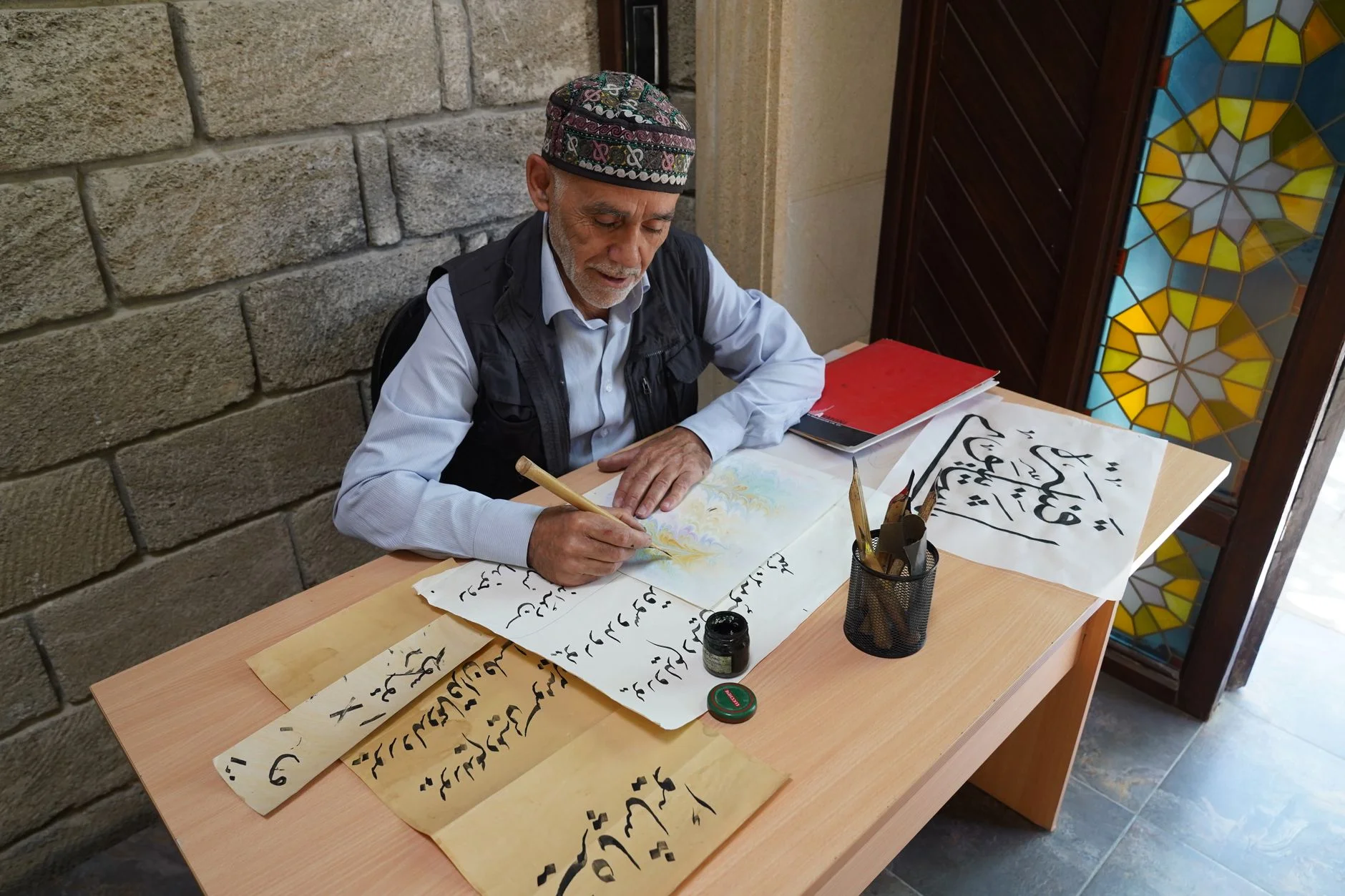
The difference is mostly in writing. Hindi is usually written in the Devanagari script, while Urdu is written in the Perso-Arabic Nastaliq style. Ethnologue counts them separately, giving Hindi 611 million total speakers and Urdu 246 million. If you merged them, the combined total would be larger than either figure alone, so how you classify them changes the table.
Scripts are a reminder that writing and speaking are different systems. Handwriting is one part of that story, and our article on why handwriting still matters looks at the skill of putting words on paper.
How well must you speak to count?
For second-language speakers the bar is even harder to set. Does “speaks English” mean you can order a meal, read a news article, or write a report? Different surveys use different thresholds. Wikipedia notes that estimates of English speakers reach about 2 billion, depending on the criterion chosen, which is well above Ethnologue’s 1.49 billion.
Old data
The last reason is age. Because Ethnologue does not extrapolate, a figure can be several years old. Critics have said that Ethnologue’s data are sometimes old, and Ethnologue itself admitted in 2014 that some data were out of date. Other researchers disagree: Simon Greenhill called its figures “sufficiently accurate reflections of speaker population size”. Both views can be reasonable. A rough number is useful for comparing large languages, but it should not be quoted as exact.
Whether a variety counts as a “language” also depends on identity and politics, not only on grammar. Our article on science versus culture explores how social ideas shape what people count and name.
Explain why two reference books might give different speaker numbers for the same language. (3 marks)
They may use data from different years or sources, such as a census in one and an estimate in the other. They may set the bar for a second-language speaker in different places. They may also draw the line between language and dialect differently, for example by counting “Chinese” or “Arabic” as one language or as many.
How to read a speaker statistic
You can now put the ideas together. When you meet a number about speakers, ask the following questions:
- Does it count native speakers (L1), second-language speakers (L2) or both?
- Which source and which year does it come from?
- Does it count a macrolanguage (such as Chinese) or an individual language (such as Mandarin)?
- How well must a person speak the language to be counted?
- Is it an estimate, and does the source say how old the data are?
The next section widens the view from single languages to the families they belong to, and to the whole world.
Language families: the family trees of the world’s languages
A language family is a group of languages that descend from a common ancestor, a bit like a family tree. Ethnologue recognises more than 140 language families. The six largest by number of languages are Niger-Congo, Austronesian, Trans-New Guinea, Sino-Tibetan, Indo-European and Afro-Asiatic. Each has at least 5% of the world’s languages, and together they hold nearly two-thirds of all languages and five-sixths of the world’s population.
Niger-Congo and Austronesian each have over 1,000 languages. Counted by speakers instead, the two biggest families are Indo-European and Sino-Tibetan, with billions of speakers between them.
The family column in the table earlier in this article shows how this works. English is Indo-European, in the Germanic branch. Hindi, Spanish, Bengali, Portuguese, Urdu and Russian are Indo-European too, so they are distant cousins of English. Mandarin Chinese belongs to the Sino-Tibetan family, Modern Standard Arabic to Afro-Asiatic and Indonesian to Austronesian.
Children learn the language or languages spoken around them. How the brain manages this is a big question in science, and our overview of neuroscience and the brain is a good place to start.
How many languages are there in the world?
According to Ethnologue, there are 7,170 languages in use today. That is far more than most people expect, and it is spread very unevenly. The 20 largest languages are the native tongue of billions of people. That means just 0.3% of the world’s languages serve nearly half its population.
The country with the most living languages is Papua New Guinea, with about 840 (a figure from the 2019 edition of Ethnologue). The great majority of languages are small, and many are fragile.
The word “endangered” is borrowed from conservation, and the comparison is useful. A species is in danger when fewer individuals survive, and a language is in danger when fewer children learn it. If you are curious about how species are assessed, see our article on the IUCN Red Data List. The two systems are separate, but the idea of tracking what is at risk is the same.
Sign languages count too

Language is not only spoken. Ethnologue lists more than 150 living sign languages. These are natural languages created and used by deaf communities, with their own grammar, and they are not the same as manual codes such as “Signed English”, which simply put spoken-language words into hand signs.
Human language is only one kind of communication. Birds sing, bees dance and whales call, and our article on how different species communicate and interact compares them.
What is the most common language in the UK?
In the UK, the answer is English, and the 2021 Census gives figures for England and Wales. (Scotland and Northern Ireland count separately and are not covered here.) The Office for National Statistics (ONS) reported that 91.1% of usual residents aged 3 or over, about 52.6 million people, had English as a main language (English or Welsh in Wales). That compares with 92.3% in 2011.
A further 7.1% (4.1 million people) were proficient in English but had another main language. The most common other main languages were:
- Polish: 1.1% (612,000 people)
- Romanian: 0.8% (472,000 people)
- Panjabi: 0.5% (291,000 people)
- Urdu: 0.5% (270,000 people)
Romanian showed the largest increase, from 68,000 speakers in 2011 to 472,000 in 2021. The census counts the language people use as their main language, so, as in the world rankings, it is an estimate of one kind of speaker, not of everyone who can use a language.
Language detective: flip the cards
Frequently asked questions about the most common language in the world
What is the most common language in the world?
English is the most common language in the world by total speakers, with about 1.49 billion people using it as a first or second language (Ethnologue 2026). Mandarin Chinese is second overall with about 1.18 billion, but it has the most native speakers, about 988 million.
Which language has the most native speakers?
Mandarin Chinese has the most native speakers, about 988 million according to Ethnologue 2026. Spanish is second with about 487 million, then English with about 372 million and Hindi with about 347 million. Mandarin’s lead is due to the large population of China.
How many people speak English in the world?
Ethnologue 2026 estimates about 1.49 billion English speakers: roughly 372 million native speakers and 1,121 million second-language speakers. Other estimates reach about 2 billion, because the total depends on how well someone must speak English to be counted as a speaker.
Is Mandarin or English more widely spoken?
It depends on the count. English is more widely spoken in total, with about 1.49 billion speakers against about 1.18 billion for Mandarin Chinese. Mandarin has far more native speakers, about 988 million against about 372 million for English. English is also used in far more countries.
Is Chinese one language?
Not in the way Ethnologue counts. “Chinese” is a macrolanguage that groups 19 languages, mainly because they share a writing system and literature. Mandarin is the largest, and Wu and Cantonese are separate languages. Many Chinese varieties are not mutually intelligible when spoken, so Mandarin is counted on its own.
Are Hindi and Urdu the same language?
In everyday speech they are very close and are mutually intelligible, so they are often considered registers of one language, Hindustani. Hindi is usually written in Devanagari and Urdu in the Perso-Arabic Nastaliq script. Ethnologue counts them separately: Hindi has 611 million total speakers and Urdu 246 million.
How many languages are there in the world?
Ethnologue 2026 lists 7,170 languages in use today. About 44% of them (3,226) are endangered, often with fewer than 1,000 users left. The 20 largest languages are the native tongue of billions of people. Papua New Guinea has the most languages of any country, about 840 (a figure from Ethnologue’s 2019 edition).
What is the largest language family?
It depends on what you count. By number of languages, Niger-Congo and Austronesian are the largest, each with over 1,000 languages. By number of speakers, Indo-European and Sino-Tibetan are the biggest, with billions of speakers between them. English is Indo-European and Mandarin Chinese is Sino-Tibetan.
Why do different sources give different numbers of speakers?
Sources use different years and data, such as censuses or estimates. They set different thresholds for what counts as speaking a second language, and they draw the line between a language and a dialect in different places. Ethnologue itself says that all its figures are estimates, even those based on census data.