
Why start revising for GCSE early? Because memory works better when you learn something, leave it, and come back to it several times than when you meet it once in a long, late-night session. Research on the spacing effect and on testing yourself shows that spread-out revision usually leads to better long-term recall than cramming, and it gives you time to find and fix weak spots before the exams.
That is the short version. The rest of this guide explains the evidence in plain English, shows what it means for your timetable, and keeps the focus on why and when to begin. If you want subject-specific methods once you have started, the sister guides on how to start revising for GCSE science and GCSE maths revision tips pick up where this one stops.
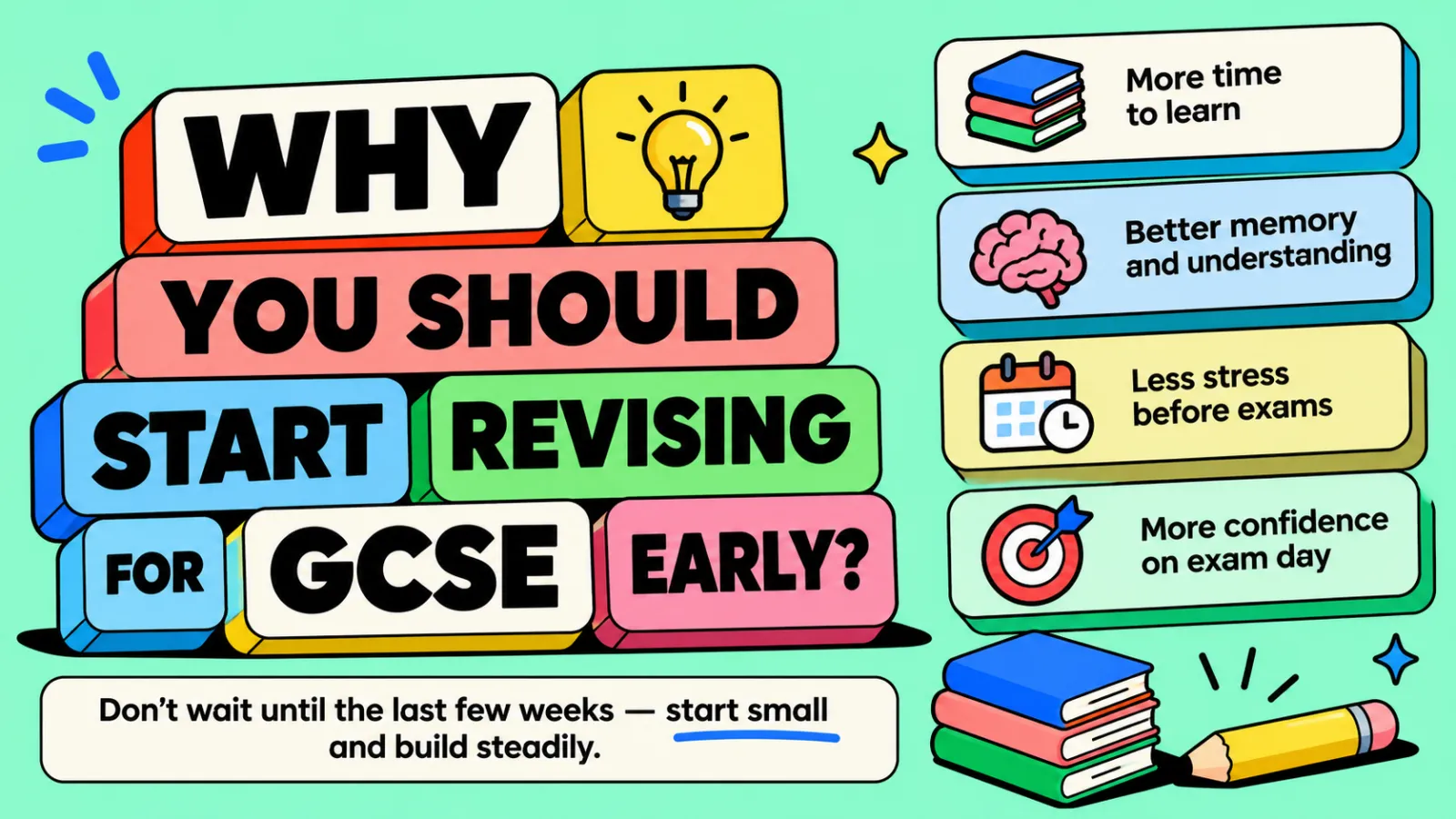
The short answer: time is the one thing you cannot revise later
Every revision method you have heard of needs time to work. You can borrow energy from caffeine and focus from a good playlist, but you cannot borrow weeks. Starting early gives you four things that a late start removes.
- Repetition with gaps. You can see each topic several times, with days or weeks between visits.
- Time to practise recall. You can test yourself, not just re-read.
- Time to fix gaps. A weak topic found in October can be sorted by Easter. The same topic found the week before the exam cannot.
- A calmer routine. Short, regular sessions feel lighter than a mountain of work.
“Early” does not mean “all day, every day”. It means small, regular sessions over many months. Twenty or thirty minutes a few times a week, started early, adds up to far more useful hours than a panic in the final fortnight.
What the research says about spacing
Psychologists call it the spacing effect (or distributed practice): learning that is split into several sessions is remembered longer than the same amount of learning crammed into one go.
The biggest check of this idea was a 2006 review by Nicholas Cepeda and colleagues in the journal Psychological Bulletin. They pulled together 839 assessments of distributed practice from 317 experiments in 184 articles. Across that large body of work, spaced learning beat massed learning (the same material studied back to back). The review also found that the best gap between study sessions depends on how long you need to remember: the further away the final test, the longer the best gap.
For a GCSE student that second point matters. Your “final test” is months away, so you are not trying to remember a fact for tomorrow’s quiz. Gaps of days and weeks between reviews suit exams in May or June far better than gaps of minutes.
The studies behind spacing are mostly lab experiments with word lists, facts and short passages, so the exact numbers will not match a Year 11 biology topic. Even so, later work points the same way for richer material. In a 2008 study by Nate Kornell and Robert Bjork, people who saw paintings by an artist spread out among paintings by other artists were better at spotting new paintings by that artist, even though they felt that grouping them together had worked better. Feeling like it is working is not the same as it working.
Which revision techniques actually work?
In 2013, John Dunlosky and colleagues reviewed ten popular learning techniques in Psychological Science in the Public Interest. Only two earned the top “high utility” rating: practice testing and distributed practice. Highlighting, underlining and re-reading were rated “low utility”, even though they are what many students do most.
| Technique | Dunlosky et al. (2013) rating | What it looks like |
|---|---|---|
| Practice testing | High utility | Flashcards, past-paper questions, quizzing yourself |
| Distributed practice | High utility | Returning to a topic over weeks, not in one block |
| Interleaved practice, self-explanation, elaborative questions | Moderate utility | Mixing topics; explaining why a step is right |
| Highlighting, re-reading | Low utility | Colouring a textbook, reading notes again and again |
Both top-rated techniques share one need: time. You cannot space your revision without a long runway, and you cannot practise recall on a topic you have not yet learned. That is the strongest evidence-based case for starting early. If you want practical ways to apply this, see our guides on how to improve memory for exams and how to practise and remember what you study.
The forgetting curve: why “I learned it in Year 10” is not enough
The German psychologist Hermann Ebbinghaus studied forgetting in the 1880s and published his results in 1885 in Über das Gedächtnis (“On Memory”). He used himself as the only subject and learned lists of meaningless syllables, so that earlier knowledge would not interfere. To measure forgetting he used a savings method: after a delay, he relearned a list and measured how much less effort it took than the first time.
His results gave the famous forgetting curve. Forgetting is fastest soon after learning, then slows down. Without any review, a lot of the new material fades quickly, and what remains fades more slowly.
A 2015 replication by Jaap Murre and Joeri Dros in PLOS ONE repeated the experiment with one volunteer. They spent about 70 hours learning lists and relearning them after 20 minutes, 1 hour, 9 hours, 1 day, 2 days and 31 days. Their results were similar to Ebbinghaus’s originals. They also found the curve was not perfectly smooth, with a small rise in what was retained from the 24-hour point.
Ebbinghaus also found that the more times he repeated a list, the less time he needed to relearn it later. That is the logic behind spaced revision: reviewing a topic just as it starts to slip is efficient, and research on spacing suggests the gaps between reviews can grow as you get closer to the exam.
Quick check: in your own words, why does reviewing a topic a week after learning it help? (2 marks)
Forgetting is fastest soon after learning, so material starts to fade without review (1). Revisiting it after a gap makes you retrieve it again, which strengthens the memory and slows later forgetting (1).

Cramming versus distributed practice
Cramming means squeezing most of your study into a short burst just before a test. It is not useless. If a test is tomorrow, last-minute review can help you remember something for a few hours. The problem is that GCSE content has to last for months, and it has to be understood, not just recognised.
The Roediger and Karpicke study described in the next section shows the trade-off neatly: methods that look best for a test five minutes away can look worst for a test a week away. GCSEs are a week-away test, then a month-away test, then a year-away foundation for A-levels, apprenticeships or college courses.
| Cramming | Spread-out (distributed) revision | |
|---|---|---|
| When | One long session close to the exam | Short sessions over weeks and months |
| Memory | Good for hours, weaker over weeks | Built to last until the exam and beyond |
| Weak spots | Found too late to fix | Found early, with time for help |
| Sleep | Often cut short | Easier to protect |
| Feeling | Panic and overload | Steady and manageable |
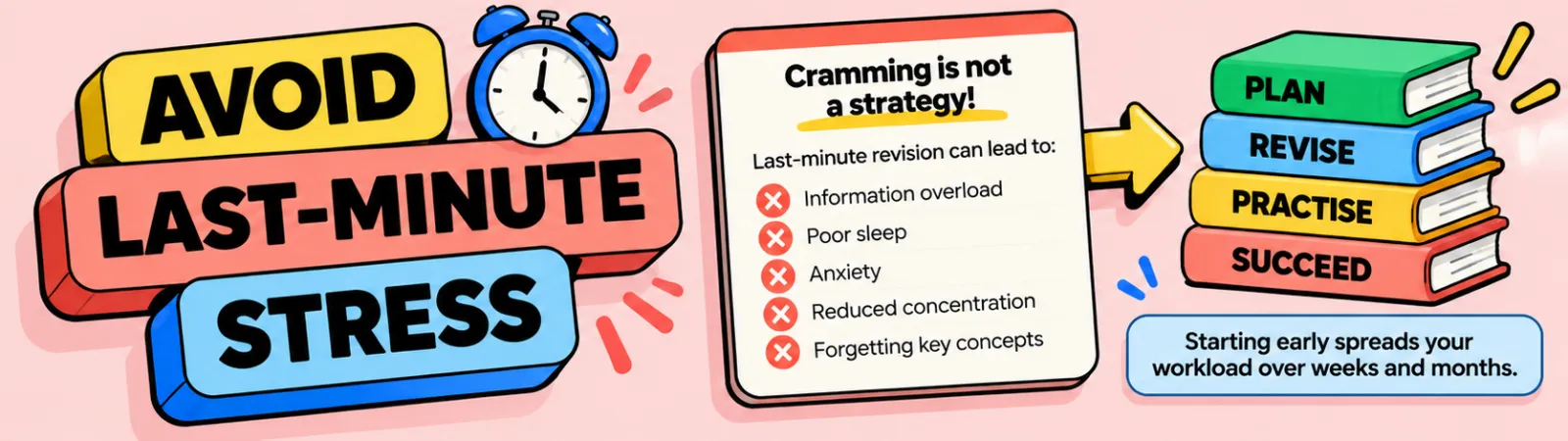
Spaced revision also protects you from the biggest cramming problem: running out of time. If you have 30 topics and only one week, you can give each one a quick skim. If you have 30 topics and several months, you can learn each one, test it, and return to it twice.
Retrieval practice: why testing yourself beats re-reading
In 2006, Henry Roediger and Jeffrey Karpicke published a well-known study called “Test-enhanced learning” in Psychological Science. Students studied short prose passages. Some then re-read the passage; others took recall tests (writing down what they remembered, without being shown the answers). The final test came 5 minutes, 2 days or 1 week later.
After 5 minutes, re-reading did better. After 2 days and 1 week, the students who had practised recalling the material remembered substantially more. Re-reading also made the students feel more confident that they would remember, even though they did worse later.
Researchers call this retrieval practice or the testing effect. The act of pulling information out of memory strengthens it more than putting the same information in again.
For GCSE revision, retrieval practice can be any of these:
- Closing the book and writing everything you remember about a topic, then checking.
- Flashcards with the question on one side and the answer on the other (our tips for making flashcards explain how to write good ones).
- Past-paper questions, marked against the mark scheme.
- Explaining a process aloud as if teaching a friend, such as how the heart pumps blood around the body.
Retrieval needs something to retrieve, so it follows learning. That is another reason to begin early: first understand a topic, then leave a gap, then test yourself. Doing all three in one evening, before the exam, squeezes out the gap that gives the technique its power.
Understanding first, memorising second
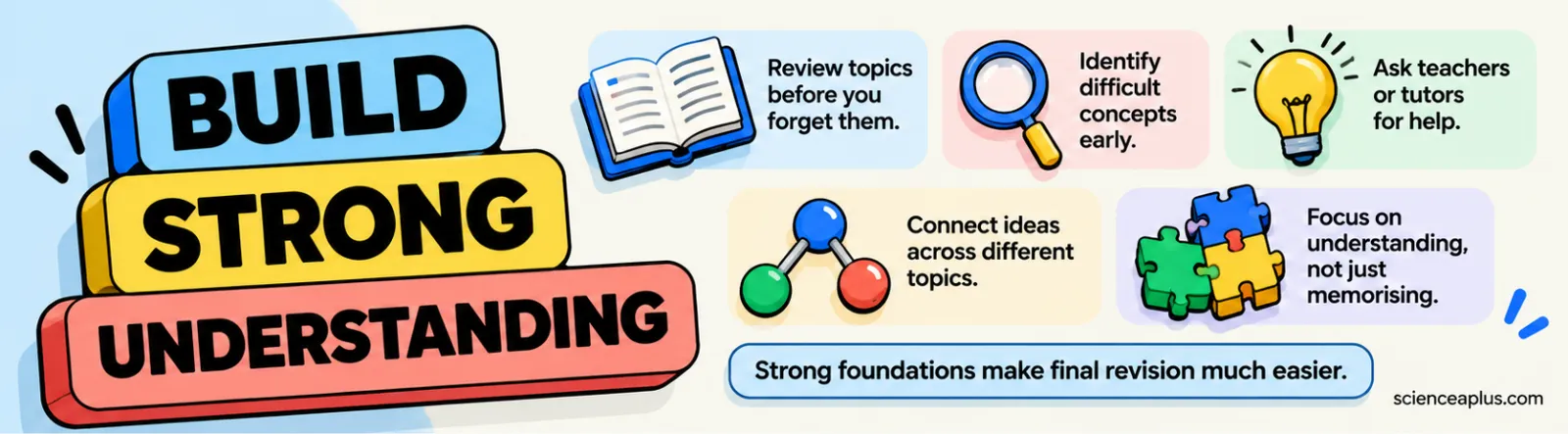
Exams do not reward memorised lists alone. GCSE science questions often ask you to apply an idea to an unfamiliar situation, and maths questions change the numbers and the context. Understanding takes time, questions and sometimes several explanations before it clicks. Starting early lets you ask your teacher about a confusing idea in October instead of discovering it in May.
Sleep and memory: the part of revision that happens in bed
Sleep is not time off from learning. A 2010 review in Nature Reviews Neuroscience by Susanne Diekelmann and Jan Born, “The memory function of sleep”, describes evidence that sleep helps the brain consolidate new memories, turning fragile recent learning into more stable long-term storage. Researchers are still working out the details, but the broad message is consistent: learning, then sleeping, helps.
The NHS says most teenagers need 8 to 10 hours of sleep a night, and that good sleep improves thinking and concentration. It also points out that rest is worth more than panicked studying the night before an exam. It suggests leaving about half an hour to unwind before bed.
This is where early revision and sleep connect. A student who crams must choose between more hours awake and enough sleep. A student who spreads revision over months rarely has to make that trade. If you want more on this, see our guides on balancing sleep and work around GCSEs and the effects of sleep deprivation.

Practical sleep habits for revision season are simple: keep a regular bedtime, put screens away before sleep, avoid caffeinated drinks late in the day, and stop revising when you start making the same mistake repeatedly. That last sign usually means tired, not stupid.
Early revision and exam stress
Some pressure before exams is normal. Stress becomes a problem when the amount of work left feels bigger than the time left. Starting early cuts that gap down before it opens.
The NHS advice on exam stress is practical rather than dramatic: break revision into small chunks, make a plan, take short breaks when concentration slips, eat regularly, stay active and sleep. A common idea is to work for 25 minutes and then rest for 5 (the Pomodoro method), but any pattern you can keep up is fine. NHS guidance for parents also suggests simple practical help such as a revision schedule and past papers.
These tips are far easier to follow in November than in the final week. In the final week, every spare minute feels like it should go on content, so breaks, meals and bedtime become the first things to go. A long runway keeps them in your day.
If procrastination is what stops you starting, our guides on how to stop procrastinating and what to do when you have no motivation to study offer ways to take the first small step.
Early revision shows you what you do not know
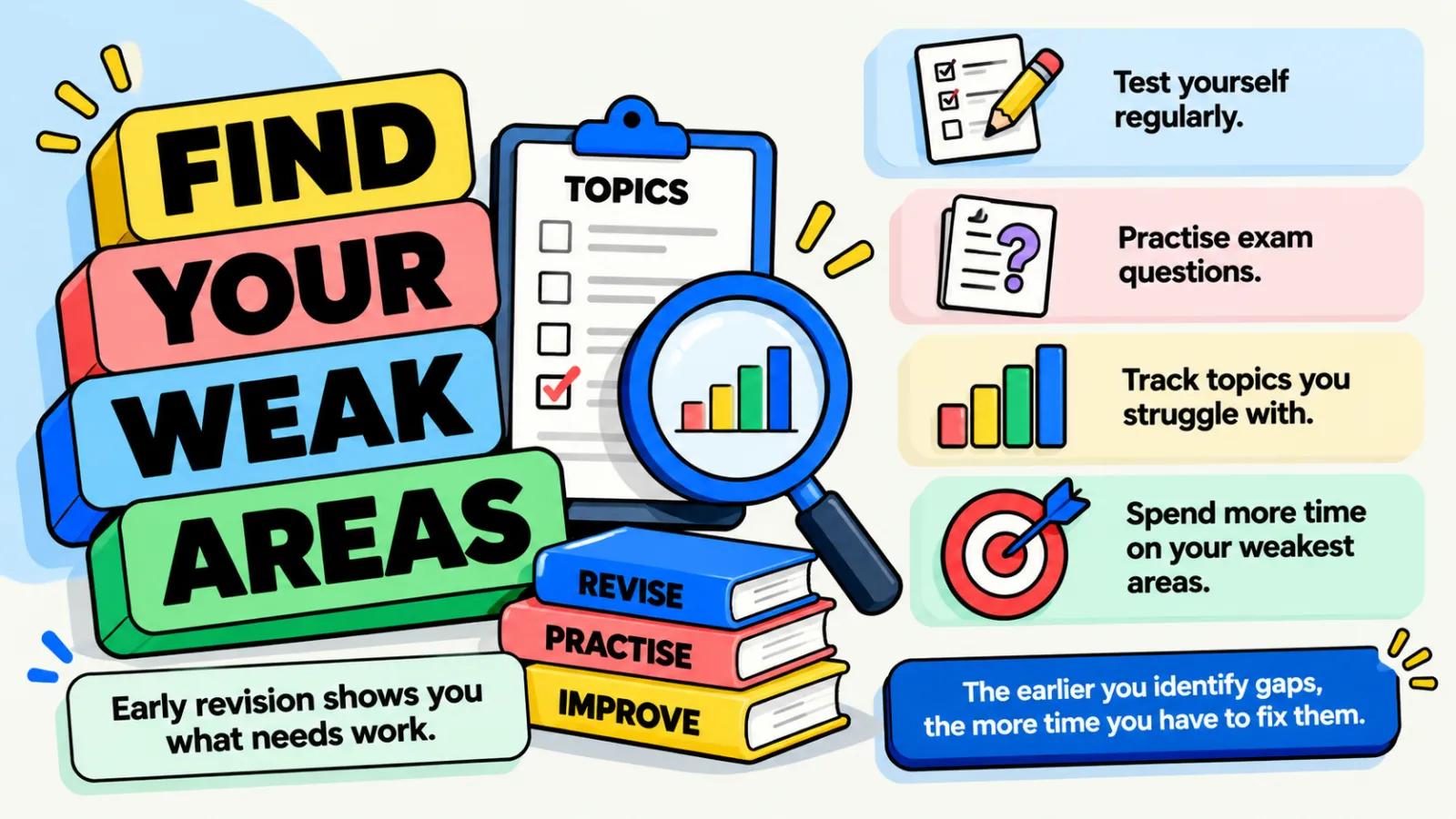
One of the most practical benefits of starting early is that revision doubles as a diagnosis. You may feel confident about a topic until you try to explain it or answer exam questions on it. Retrieval practice exposes the gaps while you still have time to repair them.
A simple method:
- List every topic in your specification (your exam board publishes it, and your teacher can show you where).
- Rate each topic red, amber or green after a short quiz, not by gut feeling.
- Spend more time on red topics, but keep touching the green ones so they stay green.
- Ask your teacher about anything that stays red after two honest attempts.
That last step matters. Teachers can usually give you more help in autumn or spring than in the few days before exams, when everyone is asking at once. An early start also leaves room to use comparison tables for GCSE science or to try a different method if your first choice is not working.
Practise exam skills, not just content
Knowing the content and writing a good exam answer are related but different skills. Exams ask you to read command words such as “describe”, “explain” and “evaluate”, manage time, show working and use the marks available as a guide to how much to write. Those skills improve with practice, not with reading.
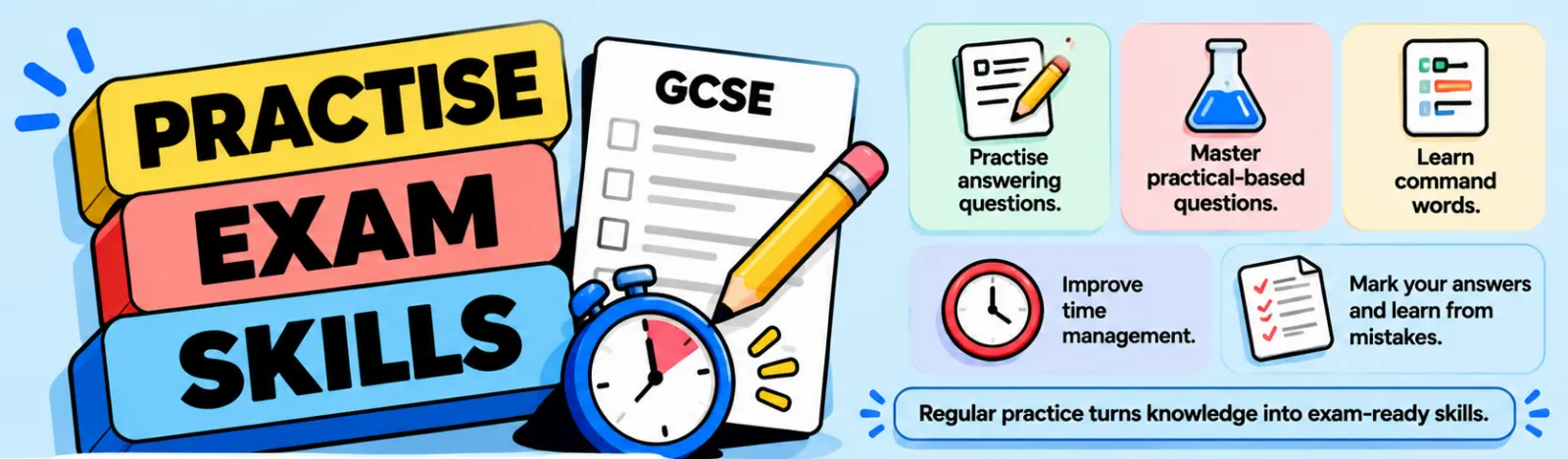
Past papers are the obvious tool. Used well, they do three jobs: they test recall, they show you the style of question your board uses, and they train you to finish on time. Used badly (ticking them off without marking carefully), they just burn hours. The useful part is the marking: compare each answer with the mark scheme, note the exact words that earned or missed marks, and add those gaps to your next revision session.
The timing also matters. Using every paper in the last two weeks leaves you with nothing left to practise on, and no time to act on what the marking tells you. Using a few earlier, topic by topic, and keeping others for full mock conditions later is a better plan.
The GCSE timeline: what you are actually working towards
It helps to know the shape of the finish line. This section describes GCSEs in England; Wales and Northern Ireland have some differences, so check with your school.
9–1 grading
GCSEs in England are graded 9 to 1, with 9 the highest and U meaning ungraded. The scale was introduced in 2017. The Department for Education calls grade 4 a “standard pass” and grade 5 a “strong pass” (used in school performance measures for English and maths), and the bottom of grade 4 lines up with the bottom of the old grade C. Sixth forms and colleges set their own entry requirements, so check what the courses you want ask for.
Exam season
Most GCSE exams are taken in May and June. For summer 2027, the Joint Council for Qualifications’ key dates show exams running from 10 May 2027 to 18 June 2027, with a contingency day on 23 June 2027, and results are due on 19 August 2027. Dates for later years will be published by the exam boards ahead of time. Always check your exam board (AQA, Pearson Edexcel, OCR, WJEC or Eduqas) and your school’s timetable, because the board’s timetable for your subjects and papers is the one that counts.
If you are sitting exams in a later year, the pattern (exams across May and June, results in August) is similar, but do not rely on a blog for the exact dates.
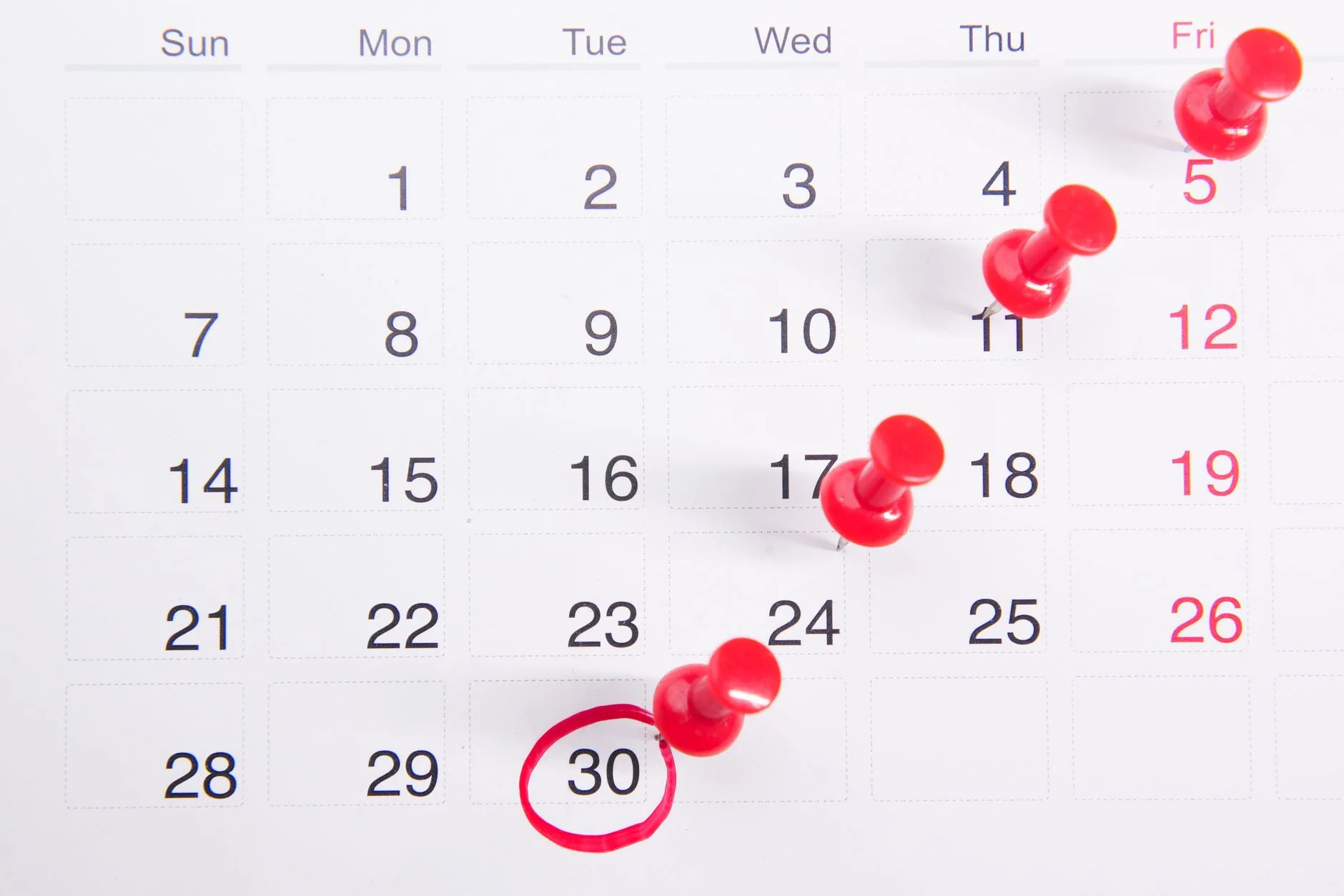


Counting backwards from the first exams shows how much time you really have. A student who starts on 1 January has about 18 weeks before 10 May; a student who starts in early October has about 30. Those extra weeks are what make spacing possible.
How to build a long-term revision timetable
A good early-start timetable is boring on purpose. It is realistic, repeatable and flexible. Here is a simple way to build one.
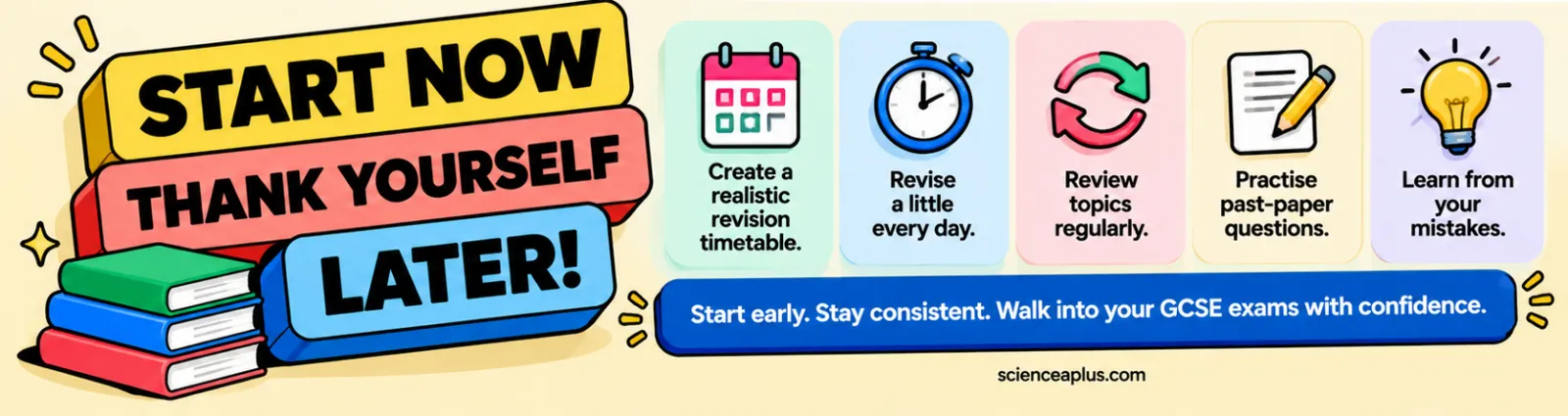
- Work backwards from your exam dates. Once your school or exam board gives you the timetable, mark the first exam and count the weeks.
- Split the year into phases. Use a learning phase (understand each topic as it is taught), a build phase (regular recall and past-paper questions) and a final phase (full papers and weak-spot repair).
- Give every subject a weekly slot. Aim for several short sessions rather than one marathon. Twenty to thirty minutes is enough to start.
- Plan reviews, not just first visits. Write “review” sessions into the calendar for topics you did one week, three weeks and six weeks earlier. These dates are an example, not a rule from the research; adjust them to your own timetable.
- Leave spare slots. Plans slip. One or two empty sessions each week stop a missed day from ruining the whole schedule.
- Protect sleep, meals and time off. The plan fails if you do.

The Dunlosky review is clear that the best-rated techniques are the ones that need planning. A timetable that includes “quiz myself on last month’s topics” is doing exactly that.
Your starter checklist
- I have found my exam boards and subject specifications.
- I have counted the weeks to my first exam.
- I have blocked out short weekly revision slots for each subject.
- I have scheduled review sessions for topics I learned weeks ago.
- I have made a red, amber, green list of topics.
- I have a bedtime I can keep on school nights.
- I know who I will ask for help (teacher, tutor, friend or family).
When is the best time to start revising for GCSE?
There is no magic date, and nobody has shown that a particular week gives the best grades. The research says the more spaced practice and recall you fit in before the exam, the better, so the honest answer is: as soon as you can, in a form you can keep up.
- Year 10 (or the start of the course): Not full “revision”, but keep tidy notes, test yourself after each topic and review it a few weeks later. That is spaced practice with almost no extra effort.
- Start of Year 11: Begin regular, short sessions across all subjects, add past-paper questions by topic and build your red, amber, green list.
- After winter mocks (if your school runs them): Use the results to decide where extra time goes.
- Spring term: Increase practice with timed papers and mark them carefully.
- Final weeks: Review, rest and keep sleeping. Do not add large new topics unless you must.
If you are reading this late, do not give up. Starting now still beats starting next week. Concentrate on the highest-value topics first, use retrieval practice rather than re-reading, and spread what time you have across several sessions. Our guides to the GCSE science revision guide and the GCSE maths revision tips show how to do it by subject. If you are choosing between science routes, double versus triple science explains the difference.
Test your memory of the evidence
Frequently asked questions about starting GCSE revision early
When should I start revising for my GCSEs?
As early as you can keep going. Many students begin regular, short sessions at the start of Year 11, but reviewing topics a few weeks after learning them in Year 10 also counts. Nobody has proved a perfect date, but more spaced practice before the exams generally helps.
Is it too early to revise in October?
No, if you keep it light. Short sessions, flashcards and topic quizzes in October are low-pressure and give you time to spot weak areas. Long, exhausting sessions that make you dread revision are the thing to avoid.
Is cramming ever useful?
Cramming can help you recall facts for a test later the same day, but studies of spacing suggest it is worse for lasting memory. For exams months away, spreading practice across weeks and testing yourself is the more reliable strategy.
What is the spacing effect?
The spacing effect means information is remembered better when learning is split into separate sessions with gaps than when the same amount is studied in one block. Cepeda and colleagues reviewed 839 assessments of this effect in 2006 and found spaced learning came out ahead.
What is the forgetting curve?
It is a graph from Hermann Ebbinghaus’s 1885 memory experiments showing that forgetting is fastest soon after learning and then slows. A 2015 replication found similar results. Reviewing material before it fades helps you keep it for longer.
How many hours a day should I revise for GCSEs?
There is no official number, and it depends on your timetable and energy. Start with short sessions, such as 20 to 30 minutes per subject on a few days a week, and build gradually. Keep breaks, meals and sleep in your day.
Does sleep really help with revision?
Research suggests sleep helps consolidate new memories, and the NHS says good sleep improves thinking and concentration. Most teenagers need 8 to 10 hours a night, so protecting bedtime during exam season is part of revising well, not a break from it.
Can starting early reduce exam stress?
It can help with ordinary exam nerves because the workload is spread over more time and you have fewer unknowns near the exams. It does not replace support, so talk to a teacher, parent, carer or GP if stress feels overwhelming.
When are GCSE exams in 2027?
The common timetable for summer 2027 runs from 10 May to 18 June, with results on 19 August. Your own paper dates come from your exam board and school, so check your exam board for the official timetable.
What if I have left it late?
Start now and be selective. List your weakest topics, use recall and past-paper questions instead of re-reading, spread sessions across several days and ask your teachers where to focus. A late start is better than none.