Evening primrose oil is pressed from the seeds of the evening primrose plant and contains GLA, an omega-6 fat. It is sold as a food supplement and promoted for skin, breast pain, PMS and menopause. This article checks each of those evening primrose oil benefits against the evidence. The US National Center for Complementary and Integrative Health (NCCIH) says there is not enough evidence to support it for any health condition, and a Cochrane review found no benefit for eczema. It is educational reading, not medical advice.
What is evening primrose oil?
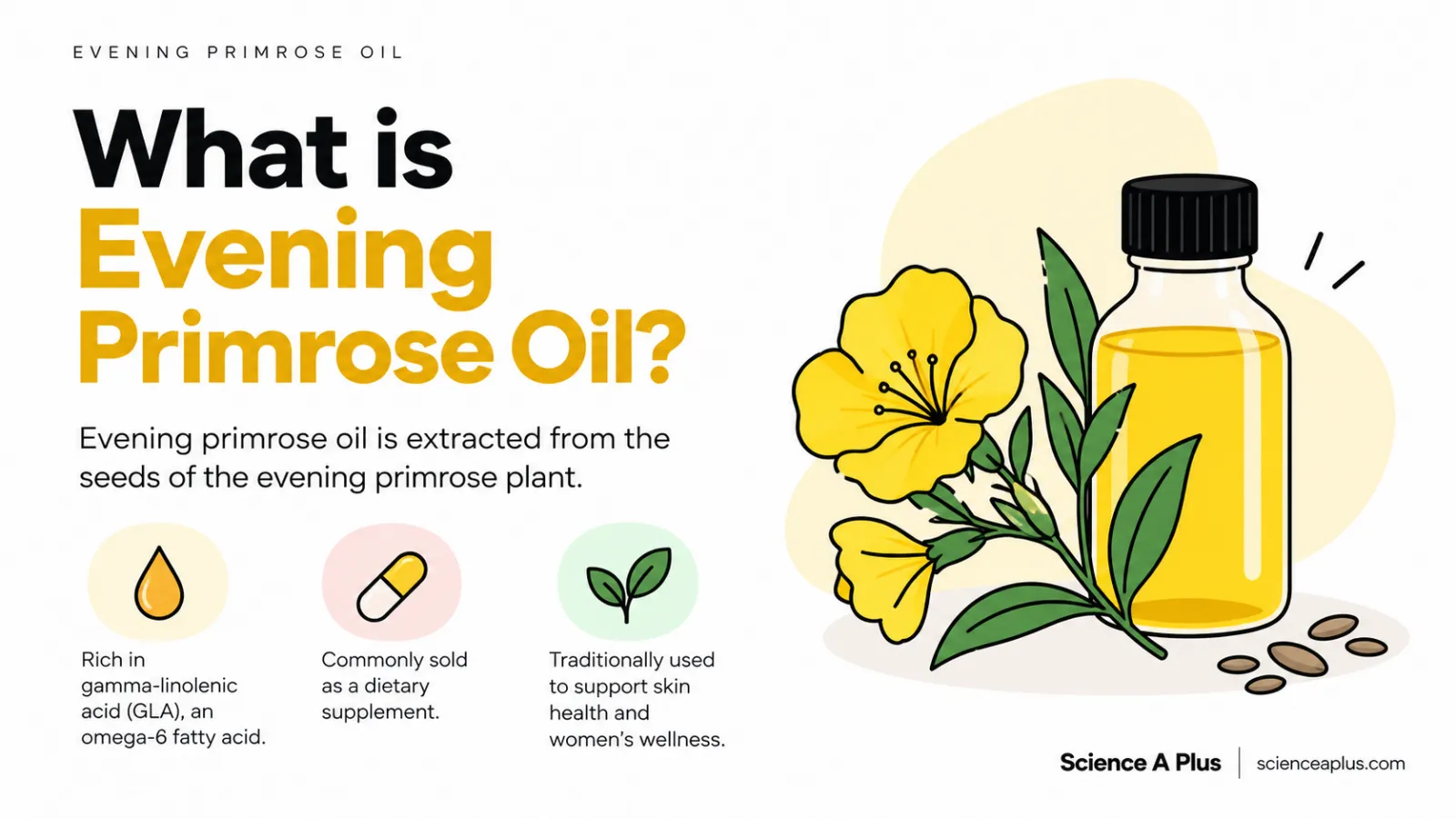
Evening primrose oil is a pale oil taken from the seeds of the evening primrose plant. People swallow it in capsules, and some use it on the skin. The oil is a mixture of fats, mainly linoleic acid plus a smaller amount of gamma-linolenic acid, better known as GLA. Both are omega-6 fatty acids, and the next section of chemistry explains what that label means.
In the UK it is sold as a food supplement, which is a different category from a medicine. That difference matters, and we return to it near the end. Below, we test each popular evening primrose oil benefit one at a time, so you can see which claims have evidence behind them and which do not.
First, though, the plant itself. It is far more interesting than the capsules suggest.
Meet the evening primrose plant
The common evening-primrose, Oenothera biennis, is native to North and South America, and it also grows across Europe and parts of Asia. In Britain it was introduced in the 1600s. Today it has naturalised, which means it grows wild without anyone planting it. You can spot it on waste ground, roadside verges, railway cuttings and sand dunes.
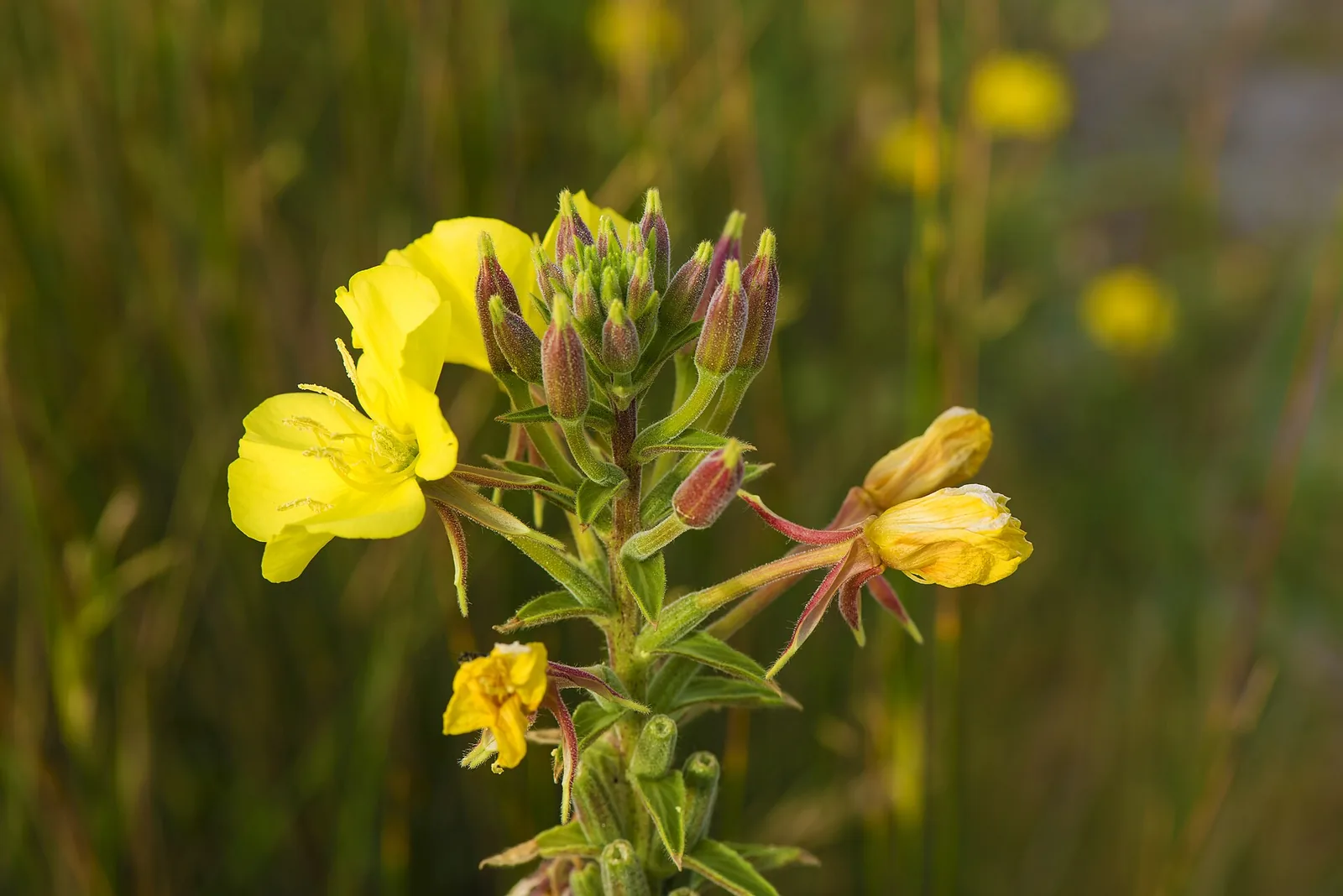
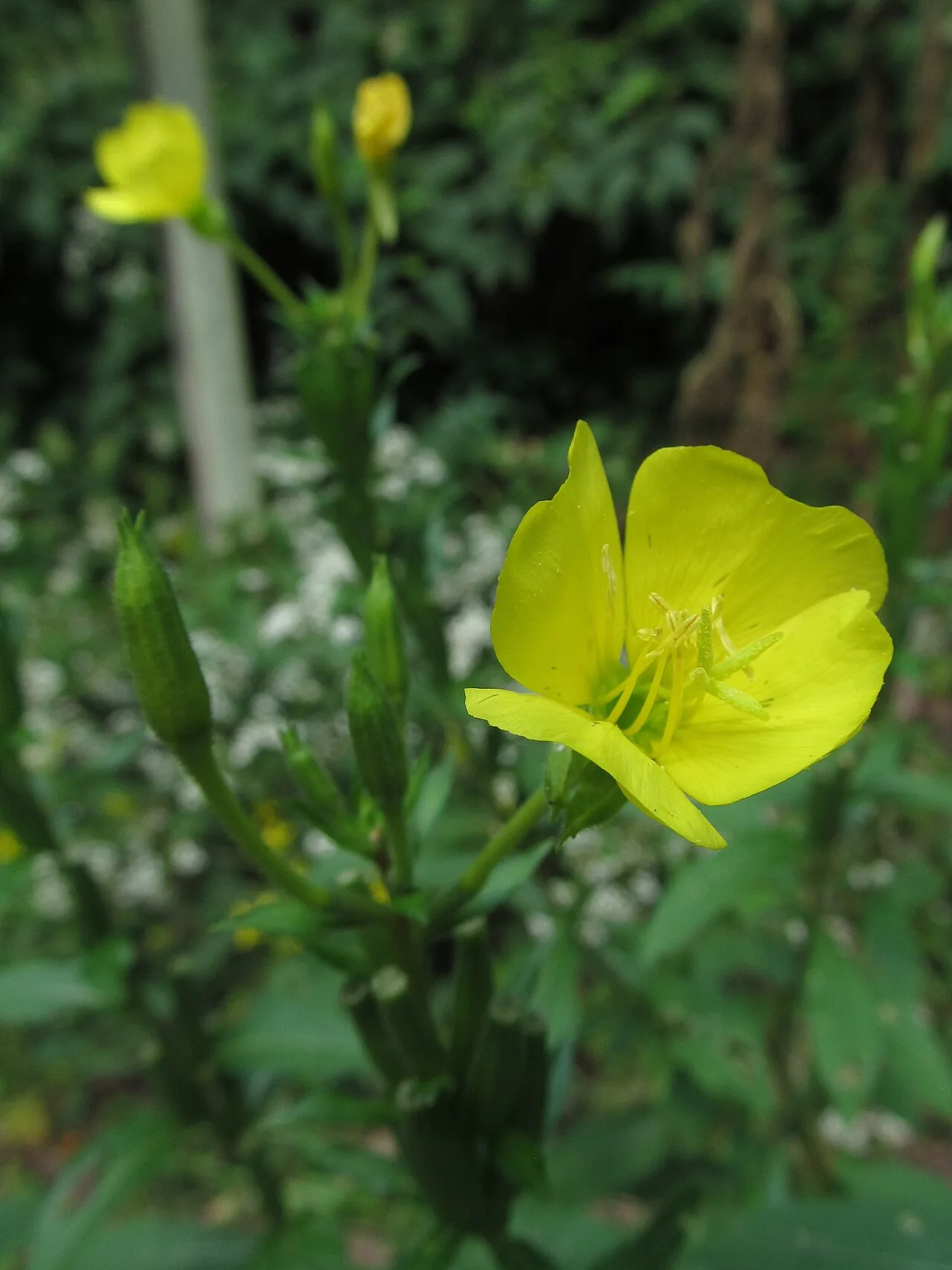
It is a tall plant, growing up to 1.5 m. The large yellow flowers have four petals and appear from June to September. The leaves are narrow and lance-shaped, with red veins. Once the flowers fade, the plant makes seed capsules, and those seeds are where evening primrose oil comes from.
Why is it called evening primrose?
The name describes what the flowers do. They open in the evening, as the light fades, and most have four yellow petals. A flower that opens at dusk is aimed at a different audience from a daytime flower. Bees and butterflies visit the plant, and so do moths, all looking for nectar.
Visitors carry pollen from flower to flower, which is how many plants make seeds. If you would like to know how that transfer works, our notes on pollination biology explain it step by step. Night-flying insects are part of this story too, and our guide to some of the largest moths in North America shows how varied those night visitors can be.
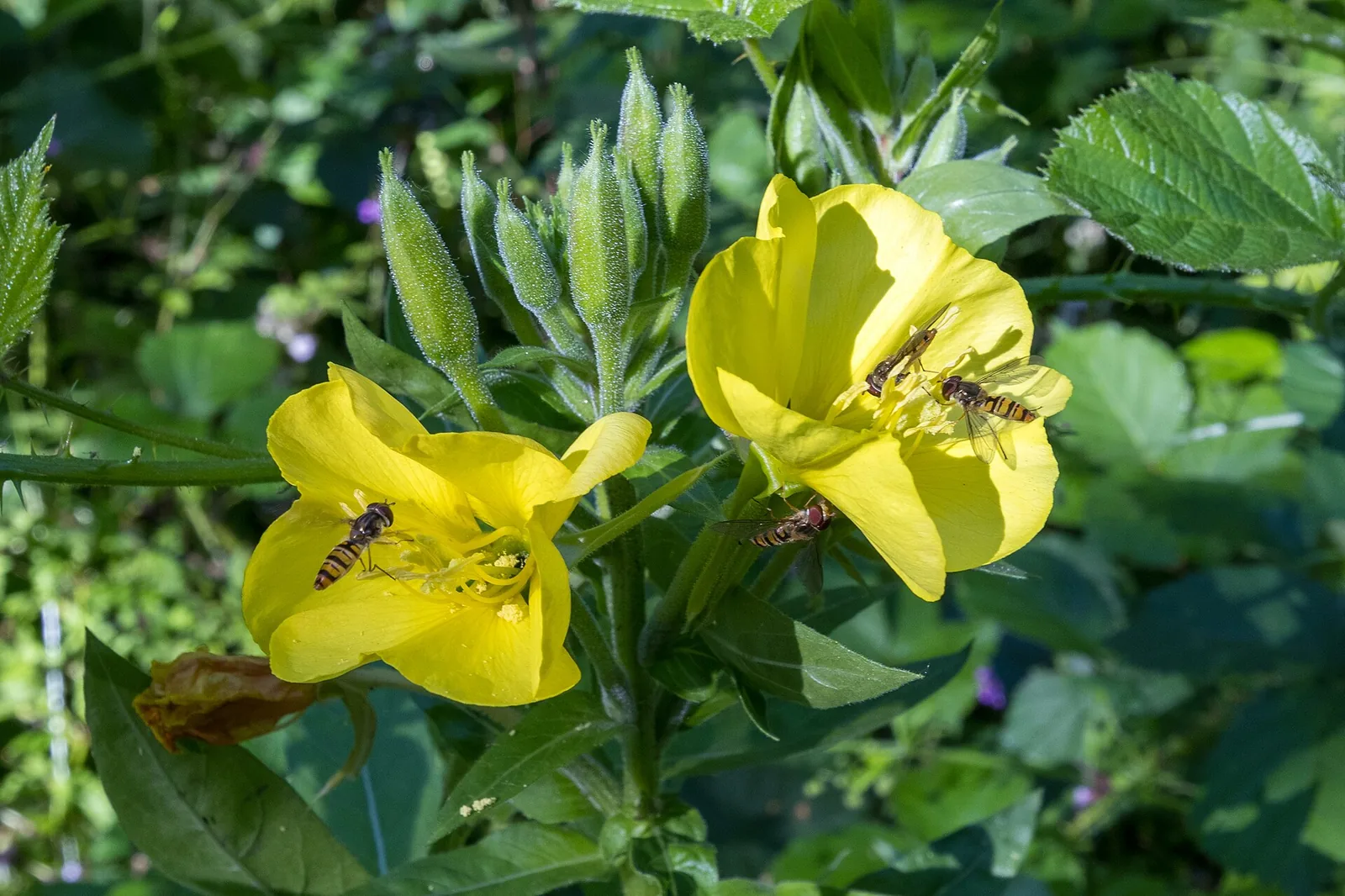
Moths are among the visitors rather than the only ones. The photographs above show daytime hoverflies feeding on the same flowers, which makes the point neatly.
A two-year life cycle
The evening primrose is a biennial, a plant that takes two years to complete its life cycle. In the first year it forms a rosette, which is a flat circle of leaves close to the ground. In the second year it sends up an upright, leafy stalk, flowers, makes seeds and then dies. It reproduces by seeds, and it belongs to a plant family called Onagraceae.

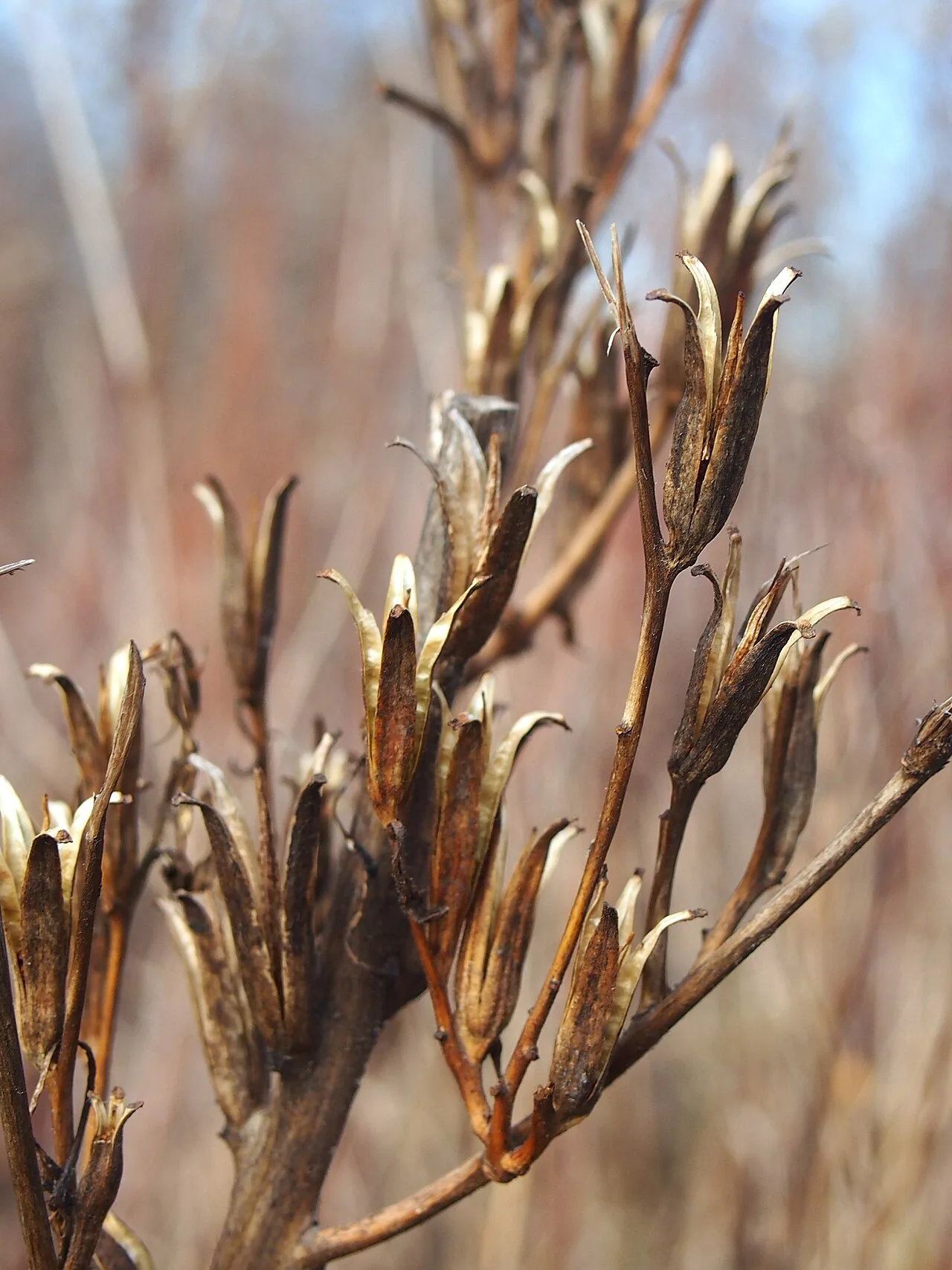

Biennials are a useful reminder that a plant can look very different at different stages. A first-year rosette looks nothing like a second-year flowering spike, and a winter seed capsule looks like a different plant again.
The seeds matter for two reasons. They let the plant spread, and they are the raw material for the oil. In the photograph above, a goldfinch is feeding at the seed pods, which shows that people are not the only ones interested in them.
How people have used the plant
People used the plant long before capsules existed. According to the NCCIH, Native Americans applied juice from the stems and leaves to the skin for inflammation, bruises and minor wounds. That is traditional use, which means it records what people did, not what was tested.
Today the oil is taken for a long list of reasons. The most common are eczema and other skin problems, breast pain, premenstrual syndrome (PMS), menopause symptoms and rheumatoid arthritis. Some people also take it to try to start labour. We examine these uses one by one in the section on the evidence.
This is a good habit to carry into any science topic. A claim such as “it has been used for centuries” is a starting point for a question, not an answer. The questions worth asking are simple. What exactly is the claim? Who tested it? How many people were in the test? What happened to the people who received a dummy capsule?
Before we reach those tests, we need a little chemistry, because the main ingredient of the oil has a name that looks harder than it is.
What is GLA (gamma-linolenic acid)?
The oil contains omega-6 fatty acids, mainly linoleic acid plus gamma-linolenic acid (GLA). A typical 1 g capsule described in one medical review contained about 0.62 g of linoleic acid and 0.08 g of GLA, and labels often describe products as “70% linoleic acid, 9% GLA”. So GLA is the minor ingredient by amount, but it is the one that gives evening primrose oil its reputation.
GLA is a fatty acid, which means a long chain of carbon atoms with an acid group at one end. Chemists describe fatty acids with a short code, and GLA’s code is 18:3n-6. Here is how to read it.
GLA = 18:3 n-6 → 18 carbons · 3 C=C double bonds · first double bond at carbon 6
- The 18 is the number of carbon atoms in the chain.
- The 3 is the number of carbon–carbon double bonds in the chain.
- The n-6 says where the first double bond sits, counting from the far end of the chain, called the methyl end.
Evening primrose oil is not the only source. Borage seed oil and blackcurrant seed oil are also rich in GLA.
Is evening primrose oil omega-3 or omega-6?
Evening primrose oil is an omega-6 oil. The “omega number” is just a position marker. In an omega-6 fatty acid, the first double bond falls between carbons 6 and 7, counting from the methyl end. In an omega-3 fatty acid, it falls between carbons 3 and 4. Same idea, different position.
That small difference in structure is why nutrition guides sort fats into families. If you want more on how the fats in everyday food are built, see our guide to the chemistry of everyday foods.
Essential fatty acids: what your body can and can’t make
A fatty acid is called essential when the body cannot make it and so must get it from food. Humans have two: linoleic acid (omega-6) and alpha-linolenic acid, or ALA (omega-3). Because the body cannot build them from scratch, they have to come in through the diet.
GLA is different. It is not essential, because the body can make it. Here is the path, step by step.
- You eat linoleic acid, an essential omega-6 fatty acid.
- An enzyme called delta-6 desaturase turns linoleic acid into GLA.
- GLA can then be turned into a longer omega-6 fat called DGLA.
- DGLA can be turned into another omega-6 fat, arachidonic acid.
- From these longer omega-6 fats, the body makes signalling molecules called eicosanoids.
The first step in that list is controlled by an enzyme. Enzymes are biological catalysts, and our article on enzymes explains how they speed up reactions in living cells.
Fats in general are part of a balanced diet, and that is true of both omega-6 and omega-3 families. For the bigger picture of what a diet needs, read why we require a balanced diet.
The idea behind the supplement
Why would anyone think evening primrose oil might help? The proposed mechanism goes like this. Its fatty acids act on immune cells and on the production of eicosanoids. Eicosanoids are signalling molecules, so changing them might change things such as inflammation. That is the theory.
A theory is a reason to run a test. It is not the result of one. Plenty of ideas that sound sensible in biochemistry fail when they are tested in people, because the body is far more complicated than a diagram of arrows. The rest of this article is about what happened when the tests were done.
Notice what the mechanism does and does not tell us. It tells us why the idea was reasonable. It does not tell us whether swallowing the oil changes anything in a person’s skin, breasts or blood vessels. Only a fair trial can answer that.
The science behind it: from seed to softgel
How does a tiny seed become a capsule of oil? Evening primrose oil is generally obtained by mechanically pressing the seeds. Some producers then use a solvent such as hexane to recover more oil from what is left, while others sell “cold-pressed” oil, pressed without added heat or solvent, or use supercritical carbon dioxide instead. We found no good measurements showing that one method leaves more GLA than another, so treat “cold-pressed” on a label as a description of the method, not a guarantee of a better product.
The chemistry of the fats explains two everyday facts. First, the double bonds in the chains put kinks in them, so the molecules cannot pack tightly and the oil stays liquid at room temperature. Second, fats with several double bonds react with oxygen more easily than saturated fats, which is why oils like this are usually sold in sealed capsules and are best kept cool and dark. The same ideas apply to cooking oils in your kitchen.
Put the whole chain together and you have a good example of how science separates three questions. What is in it? Chemistry answers that: linoleic acid and GLA. How might it work? Biochemistry offers a mechanism through the pathway above. Does it actually help people? Only fair clinical trials can answer that, and as the next section shows, they mostly say no or not proven.
Check your understanding
Try these two questions before moving on. Tap each one to reveal a model answer.
Explain why GLA is called an omega-6 fatty acid. (2 marks)
Its first carbon–carbon double bond is at carbon 6, counting from the methyl end of the chain. Its chain has 18 carbons and 3 double bonds, written 18:3 n-6.
Why is linoleic acid described as an essential fatty acid but GLA is not? (2 marks)
The body cannot make linoleic acid, so it must be eaten in food. The body can make GLA from linoleic acid, so GLA does not have to be eaten.
If you could answer both, you already know more fatty-acid chemistry than most supplement labels explain. Next comes the part everyone really wants to know: does the oil work?
Evening primrose oil benefits: what the evidence says
Here is the headline verdict from the US National Center for Complementary and Integrative Health (NCCIH, page updated November 2024): “There’s not enough evidence to support the use of evening primrose oil for any health condition.” That is a carefully worded sentence. It does not say the oil is useless in every possible case. It says the tests so far have not shown a benefit that we can rely on.
To judge a claim like that, you need to know how evidence is graded. The strongest everyday tools are these.
- Placebo: a dummy treatment that looks like the real one but contains no active ingredient.
- Randomised: people are put into groups by chance, so the groups start off alike.
- Double-blind: neither the patients nor the researchers know who got which treatment until the end.
- Systematic review: researchers collect all the suitable trials on a question and combine the results, so that one odd study cannot mislead.
Why bother with a placebo? Because people often improve even when they receive a dummy capsule. The trial below shows exactly how much. This is the logic of a fair test, which we cover in our guide on how to use the scientific method. If you are curious how researchers apply it to people, see the scientific method in psychology.
Evening primrose oil for eczema
Eczema has a large Cochrane review behind it, and the answer is clear. A Cochrane review published in 2013 (Bamford and colleagues) pooled 27 studies with 1,596 adults and children. Nineteen of the studies tested evening primrose oil and eight tested borage oil, which is another source of GLA.
The authors found no statistically significant advantage over placebo. In their words, there was no evidence that either oil is effective in treating eczema. Side effects were mild, temporary and mostly in the gut, and they appeared in the placebo groups as well as the oil groups. The authors added that more studies on eczema would be hard to justify.
The NCCIH agrees: taking the oil by mouth for eczema “has not been shown to be helpful”. What about acne and other skin problems? We found no good evidence for those either, so there is nothing reliable to report.
Why the UK prescription licences were withdrawn
There is a piece of UK history here. In October 2002, the marketing authorisations for two prescription medicines containing gamolenic acid (GLA) from evening primrose oil were withdrawn. One, Epogam, was for eczema. The other, Efamast, was for breast pain. A review by the Committee on Safety of Medicines and the Medicines Commission found that they did not meet the current standard of effectiveness required.
Evening primrose oil for breast pain
The NHS says: “There’s little evidence that vitamin E tablets or evening primrose oil help with breast pain.” The NCCIH goes slightly further and says the oil is probably no more effective than a placebo for it.
The NHS suggests simple self-care instead: paracetamol or ibuprofen (or a painkilling gel), a properly fitted bra by day and a soft bra at night. See a GP if the pain is not improving, painkillers are not helping, or you have a family history of breast cancer. Get urgent advice if part of the breast is red, hot or swollen, or if there is a hard lump that does not move.
Evening primrose oil for PMS
For premenstrual syndrome (PMS), the NHS says complementary therapies and dietary supplements “may help with PMS, but there’s not much evidence that they work”. A medical review in 2009 judged evening primrose oil likely to be ineffective for PMS, noting that most trials had flaws in their methods.
The NHS self-help list is practical: regular exercise, a balanced diet, enough sleep, and a symptom diary kept for at least two cycles. If you take other medicines, check with a GP or pharmacist before starting any regular supplement.
Evening primrose oil for menopause and hot flushes
Menopause is where the evidence is most mixed, so it is worth looking at the numbers. Three pieces of research stand out.
- A 1994 BMJ trial gave 56 women the oil or a placebo for six months. It was randomised, double-blind and placebo-controlled, and it concluded that gamolenic acid “offers no benefit over placebo in treating menopausal flushing”.
- A 2013 trial followed 56 women aged 45–59 for six weeks. Hot-flush frequency, severity and duration improved by 39%, 42% and 19% with evening primrose oil, against 32%, 32% and 18% with placebo. Only severity was significantly better than placebo.
- A 2024 systematic review and meta-analysis found lower severity compared with placebo in studies shorter than six months, but no significant difference in frequency or duration. It concluded that the current evidence is insufficient to draw firm conclusions.
Look at the 2013 figures again. Severity improved by 42% with the oil, but by 32% with a dummy capsule. Use the calculator to see how much of the improvement the placebo group explains.
The calculator shows the key lesson. With the default numbers, most of the improvement also happened in the placebo group. Only the gap is a candidate for a real effect, and with only 56 women in the trial, even a statistically significant gap from one small trial needs larger trials to confirm it. Try changing the numbers to see what a convincing result would look like.
The NHS advice on the menopause is to talk to a doctor before taking herbal supplements or complementary medicines.
Other claims: arthritis, heart, cancer and hormones
For rheumatoid arthritis and nerve pain from diabetes, the evidence is too thin to judge either way. For heart disease, cholesterol, cancer, fertility and weight loss, we found no good evidence at all, so we make no claim. Be wary of any page that lists these as proven benefits.
On starting labour, studies of the oil taken by mouth or vaginally gave inconsistent results, according to the NCCIH. We return to pregnancy in the safety section.
Claim versus evidence: flip the cards
The pattern across every claim is the same. A believable idea, a few small or flawed studies, and then larger fair tests that found little or nothing. That pattern is common in science, and spotting it is a skill worth practising. Next, safety.
Evening primrose oil side effects
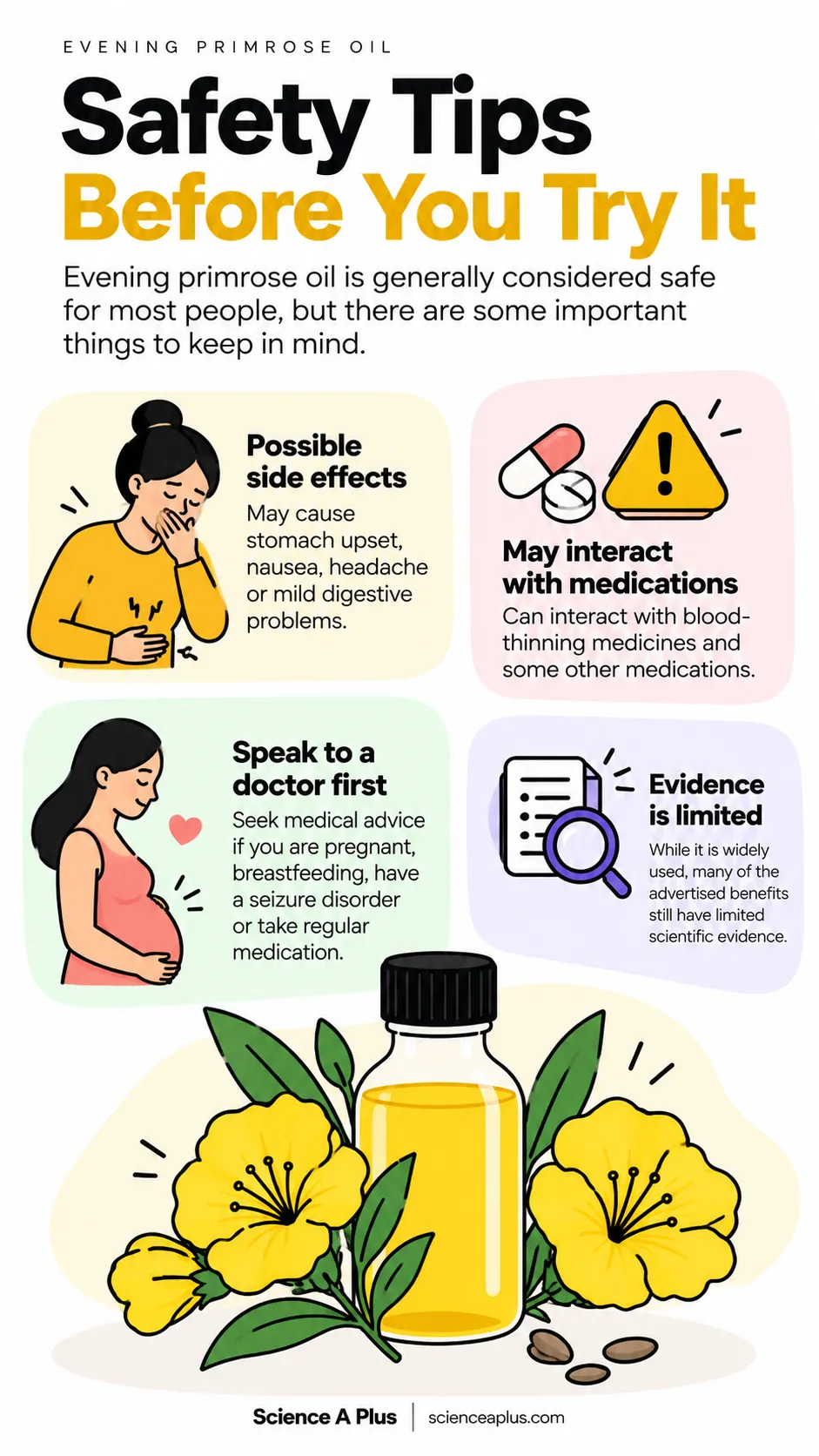
According to the NCCIH, taking evening primrose oil by mouth is probably safe for most adults, and less is known about children. It is generally well tolerated. The common side effects are gut-related: abdominal pain, nausea and diarrhoea. A medical review also reported headaches. That review described it as safe in recommended doses for up to six months, and the Linus Pauling Institute notes that high doses may upset the gut.
“Probably safe for most adults” is not the same as “safe for everyone”. The NCCIH also warns that some herbs and medicines interact in harmful ways, so anyone who takes a medicine should talk to a health care provider first. The next three sections cover the groups who most need to ask.
Medicines, epilepsy and pregnancy
Blood thinners
The Linus Pauling Institute says that high doses of GLA-rich oils, including evening primrose oil, may inhibit platelet aggregation. Platelets are the cell fragments that help blood to clot. For that reason the oils should be used with caution by people taking anticoagulant (blood-thinning) medicines.
The evidence is not settled. A medical review found it insufficient either way, and the Cochrane eczema review itself noted a report that the oil may increase bleeding in people taking warfarin, while its short trials could not show long-term safety. So the sensible reading is “may” and “caution”, not “will”. If you take a blood thinner, ask first.
Epilepsy and seizures
A caution about seizures comes from case reports in the early 1980s: two reports covering five patients, most of whom were taking phenothiazine antipsychotic medicines. The Linus Pauling Institute says people with a history of seizures are generally advised to avoid the oil, and that it may increase seizure risk in people taking phenothiazines.
Experts disagree. A 2007 review argued that the link is spurious. Because the disagreement has not been settled, the practical advice is simple. If you have epilepsy, ask your GP or pharmacist before taking it.
Pregnancy, labour and breastfeeding
Sources do not agree here either. The NCCIH says the oil may be safe in pregnancy but that the evidence is not conclusive. When it is used to try to start labour, side effects have mostly been mild, but long-term safety has not been established. A 2009 medical review said use in pregnancy is not supported in the literature and should be avoided, and the Linus Pauling Institute says safety has not been established in pregnant or breastfeeding women.
In breastfeeding, the NCCIH says the oil raises GLA in breast milk and has not been linked to harm in infants. Given the disagreement, talk to your midwife, GP or pharmacist, and do not use it to try to start labour without your midwife’s advice.

A pharmacist can check a supplement against your medicines, which makes the pharmacy counter a sensible first stop if you are unsure whether a particular combination needs a second look.
Supplements are food, not medicine
In the UK, food supplements are regulated as food, not as medicines. Labels and adverts cannot claim or imply that a food can treat, prevent or cure any disease or medical condition. So if a product label promises to treat or cure a disease, that is a red flag.
Many plant products sold as supplements come with big health claims. Our article on the Jerusalem artichoke plant is another plant story where it pays to separate what the plant is from what sellers say about it.
Use this checklist before buying any supplement. Ticks are remembered in your browser.
- What claim is the supplement making?
- Is there a placebo-controlled trial or a systematic review behind the claim?
- Could it interact with my medicines? (Ask a pharmacist.)
- Am I pregnant, breastfeeding or do I have epilepsy?
- Is the label promising to treat or cure a disease? (UK supplements cannot.)
- Have I told my GP or pharmacist?
Maths practice questions
Numbers turn a vague claim into something you can check. Questions 1 to 3 use figures like those on product labels. Question 3 uses a made-up price, so it is practice only and not a real product. Work each one out, then tap to check.
1. A 1,000 mg capsule of oil is labelled “9% GLA”. How many milligrams of GLA does it contain? (2 marks)
9% of 1,000 mg = 0.09 × 1,000 = 90 mg of GLA. In grams, that is 0.09 g.
2. The same capsule is 70% linoleic acid and 9% GLA by mass. What percentage is neither, and how many milligrams is that? (3 marks)
70 + 9 = 79%, so 100 − 79 = 21% is other fats and minor ingredients. 21% of 1,000 mg = 210 mg. As a check, 700 + 90 + 210 = 1,000 mg.
3. A made-up bottle costs £6.00 for 90 capsules, each with 90 mg of GLA. What is the cost per capsule, and per gram of GLA? (4 marks)
Per capsule: £6.00 ÷ 90 = about 6.7p. Total GLA: 90 × 90 mg = 8,100 mg = 8.1 g. Cost per gram of GLA: £6.00 ÷ 8.1 = about £0.74. Remember that a cheap price per gram of GLA says nothing about whether the oil works.
4. In the Cochrane eczema review, 19 of the 27 studies tested evening primrose oil, and 1,596 people took part in total. What percentage of the studies tested evening primrose oil, and what is the mean number of people per study? (3 marks)
19 ÷ 27 × 100 = about 70% of the studies. Mean people per study = 1,596 ÷ 27 = about 59. Studies of that size are small, which is one reason scientists pool them in a systematic review.
5. In the 2013 hot-flush trial, severity improved by 42% with the oil and 32% with placebo. Give the difference in percentage points, and explain why it is not 10%. (3 marks)
42 − 32 = 10 percentage points. A percentage point is the gap between two percentages. “10%” would mean 10% of something, such as 10% of 32, which is a different number (3.2). Use the calculator above to try other values.
Test yourself
Frequently asked questions about evening primrose oil
What is evening primrose oil good for?
People take it for eczema, breast pain, PMS and menopause symptoms, but reviews have found little or no good evidence that it works for any of them. The NCCIH says there is not enough evidence to support its use for any health condition. Traditional use is not proof.
Does evening primrose oil help eczema?
Probably not. A 2013 Cochrane review pooled 27 studies with 1,596 adults and children and found no statistically significant advantage over placebo. Side effects were mild and similar in both groups. The authors said more studies would be hard to justify, so speak to a GP about proven eczema care.
Does evening primrose oil help with menopause hot flushes?
The results are mixed and weak. A 1994 trial found no benefit over placebo, a 2013 trial found only severity was significantly better, and a 2024 review said the evidence is insufficient for firm conclusions. The NHS advises talking to a doctor before taking herbal supplements for menopause symptoms.
Does evening primrose oil help breast pain?
The NHS says there is little evidence that evening primrose oil helps with breast pain, and the NCCIH says it is probably no more effective than a placebo. The NHS suggests painkillers and a well-fitted bra instead. See a GP if the pain persists or you have a family history of breast cancer.
Is evening primrose oil omega-3 or omega-6?
It is omega-6. The oil contains mainly linoleic acid plus gamma-linolenic acid (GLA), and both are omega-6 fatty acids. In an omega-6 fat, the first double bond sits between carbons 6 and 7, counted from the methyl end. Omega-3 fats, such as ALA, have it between carbons 3 and 4.
What are the side effects of evening primrose oil?
The NCCIH lists abdominal pain, nausea and diarrhoea as the common side effects, and a medical review also reported headaches. It is generally well tolerated and probably safe for most adults, but less is known about children. If you take any medicine, ask a GP or pharmacist first.
Can I take evening primrose oil with blood thinners?
Take advice first. The Linus Pauling Institute says high doses of GLA-rich oils may inhibit platelet aggregation, so they should be used with caution by people on anticoagulant medicines. Evidence is limited either way. Ask your GP or pharmacist before combining the oil with any blood-thinning medicine.
Is evening primrose oil safe in pregnancy?
Sources disagree. The NCCIH says it may be safe but the evidence is not conclusive, while a 2009 medical review says use in pregnancy should be avoided. Long-term safety has not been established. Talk to your midwife, GP or pharmacist, and do not use it to try to start labour without your midwife’s advice.
Why is it called evening primrose?
The plant’s large yellow flowers, which have four petals, open in the evening. They attract moths, bees and butterflies looking for nectar. The plant, Oenothera biennis, is a biennial: it grows a rosette of leaves in its first year and flowers in its second.