To keep pipes from freezing, lag any pipe that runs through a cold place such as the loft or garage, keep the heating on low during a cold spell, isolate and cover outside taps, and know where your stopcock is before you need it. The science explains why each step matters: water expands by about 9% as it freezes, and that squeeze is what splits pipes.
This guide is written for the weeks before the first hard frost. It covers the physics of a burst pipe, practical prevention, what to do in an emergency and some worked maths questions for GCSE and KS3 students.
Why do frozen pipes burst? The science
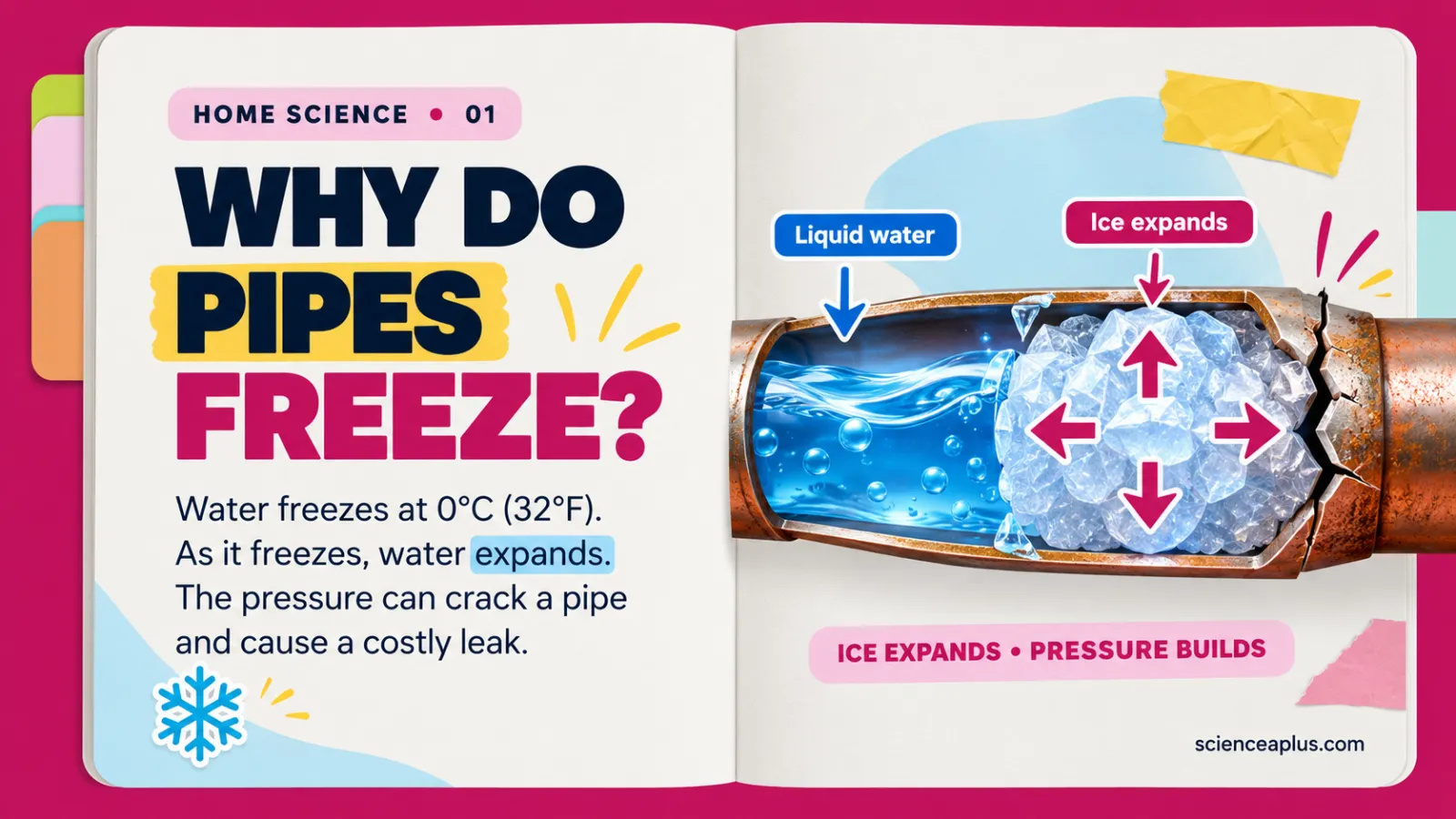
Almost every liquid shrinks as it gets colder and then shrinks again when it solidifies. Water is the famous exception. It is densest at about 4 °C, and below that it begins to expand. When it freezes at 0 °C, its molecules lock into an open, six-sided (hexagonal) lattice that holds more space between them than the liquid does.
That is why ice is less dense than liquid water and floats. Liquid water has a density of about 1.000 g/cm³, and ice at 0 °C is about 0.917 g/cm³. Because volume equals mass divided by density, 1,000 cm³ of water becomes about 1,090 cm³ of ice. That is an increase of about 9% in volume. If you want the bigger picture of how matter changes between liquid water, ice and water vapour, that article sets it out step by step.
Water in a pipe can also supercool. This means it stays liquid several degrees below 0 °C before ice starts to form, so the freeze can arrive suddenly rather than gradually.
The real reason a pipe splits
Most people picture ice swelling and pushing outwards on the pipe wall, like a balloon being blown up. Careful research says something different. Jeffrey Gordon’s 1996 report for the Building Research Council at the University of Illinois, An Investigation into Freezing and Bursting Water Pipes in Residential Construction, found that this common view is not correct. Bursting happens in two stages:
- Freezing creates an ice blockage in the pipe.
- As more ice grows, it squeezes the trapped liquid water between the blockage and a closed tap (or another closed outlet). Water is almost impossible to compress, so the pressure rises to dangerously high levels. The report says it can build to thousands of pounds per square inch.
On the other side of the ice plug, the water can be pushed back towards the mains, so no pressure builds there. The pipe usually fails at the weakest point of the trapped section, which is often a joint or a thin patch where there is little or no ice at all. As the report puts it, a pipe that is open on one end cannot be pressurised, and so will not burst.
The same expansion breaks rock. Water seeps into cracks, freezes, expands and levers the stone apart, which is how freeze–thaw weathering shapes mountains and cliffs. A pipe is simply a very tight crack with a tap on the end.
Why this tells you how to prevent it
Gordon’s research also concluded that putting water pipes in heated, conditioned spaces is the main strategy for preventing bursts. Everything that follows in this guide comes back to the same three ideas: keep pipes warm, stop ice forming in a closed-off section, and be ready to shut off the water if something goes wrong. Understanding the mechanism makes the advice easy to remember, because each tip either keeps the pipe above freezing or stops pressure from being trapped.
Which pipes are most at risk of freezing?
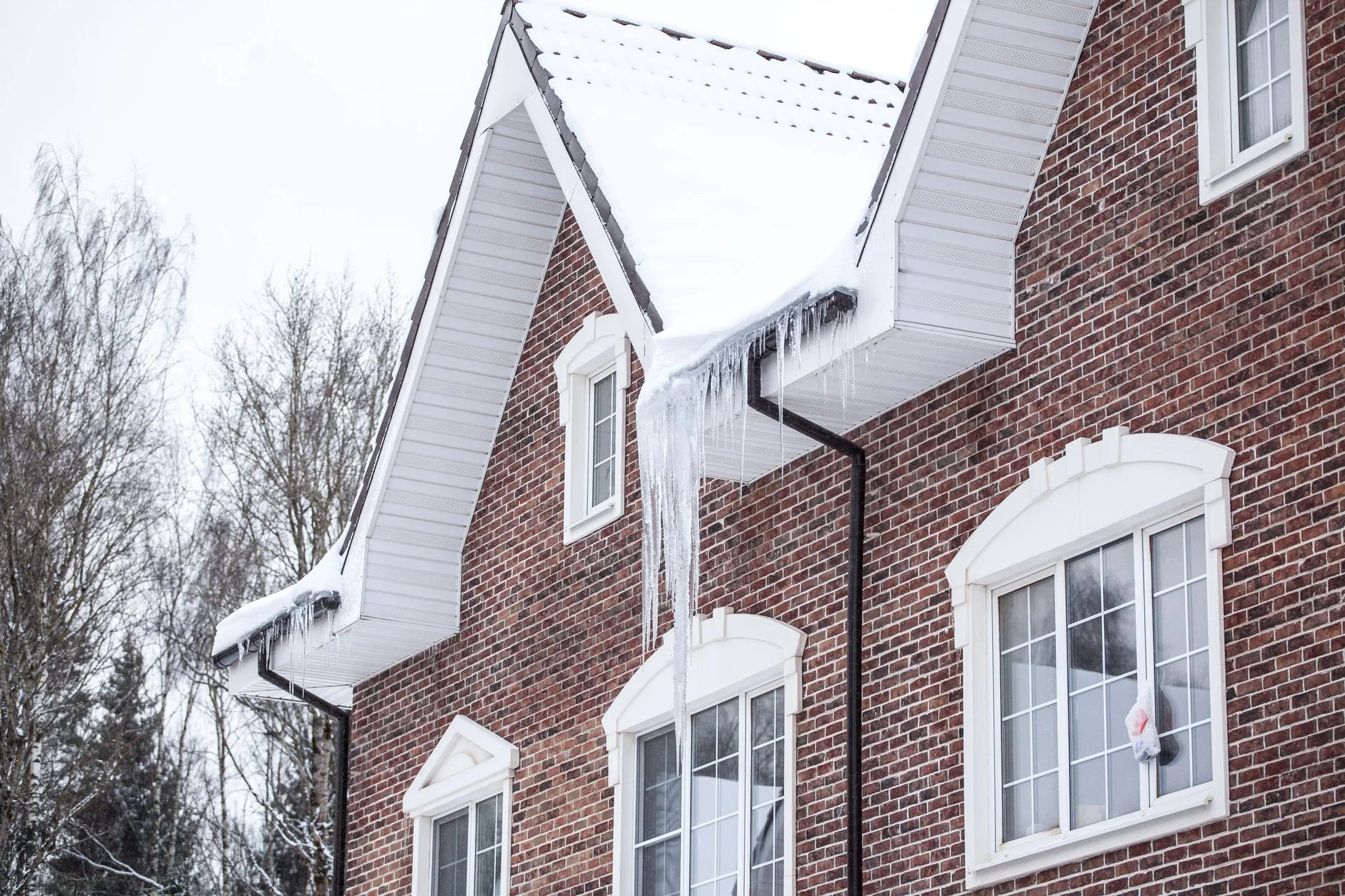
Pipes are at risk when the temperature drops below 0 °C, and the Chartered Institute of Plumbing and Heating Engineering (CIPHE) says pipes can freeze in as little as six hours. The rooms you heat stay comfortable, but a hard frost can make lofts, garages and outside walls far colder than the rest of the house.
As a rule of thumb from US research, field tests by the University of Illinois found that uninsulated pipes in an unheated attic began to freeze when it was about −6 °C (20 °F) or colder outside. That is a rule of thumb from US research, not a safe threshold for UK homes. Unheated spaces stay a few degrees warmer than the air outdoors, but wind and draughts can cause freezing at milder temperatures than you might expect.
The pipes at greatest risk are those:
- in the loft or roof space (called the attic in the US);
- in garages, outbuildings and cellars (basements and crawl spaces in the US);
- under suspended wooden ground floors;
- running against cold external walls, including those under sinks;
- feeding outside taps (faucets, in US English);
- and the white plastic condensate pipe from a condensing boiler, which often runs outside.
Frozen pipes are a real cost to households and water companies. Scottish Water recorded 3,100 bursts across its network in winter 2023/24, and more than 30% of them were on customers’ own property. The Association of British Insurers reported that weather-related damage to homes and possessions cost a record £585 million in 2024, a figure that combines windstorms, flooding and frozen pipes.
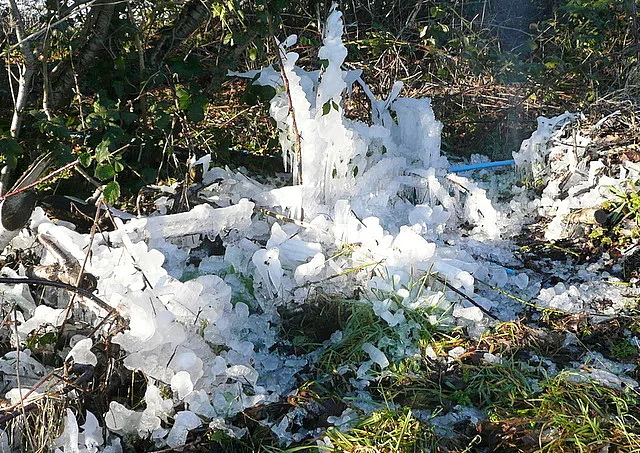
Even a small leak can create ice outdoors. The photo shows a mound of ice that has built up around a leaking pipe in a hedge, which shows what happens to water that is left standing in freezing air. It is worth checking exposed pipes before winter rather than after.
Keep it in proportion
Not every cold night means a burst pipe. The aim of this guide is to take away the avoidable risks: the bare pipe in a draughty loft, the outside tap with a hose still attached, the holiday home with no heating on. A few hours of preparation before the cold arrives is far easier than clearing up after a burst.
It also helps to know which parts of your home are the coldest. Walk round with a notebook before winter and note where pipes pass through the loft, the garage, under the kitchen sink on an outside wall, or along an external wall. Those are the places to protect first.
Explain why a pipe that is open at one end does not burst when it freezes. (2 marks)
As the water freezes and expands, the ice can push liquid water out through the open end, so no pressure builds up. For dangerous pressure to rise, the liquid section has to be trapped (closed off) between the ice and a closed tap.
Lagging: how to insulate pipes to keep them from freezing
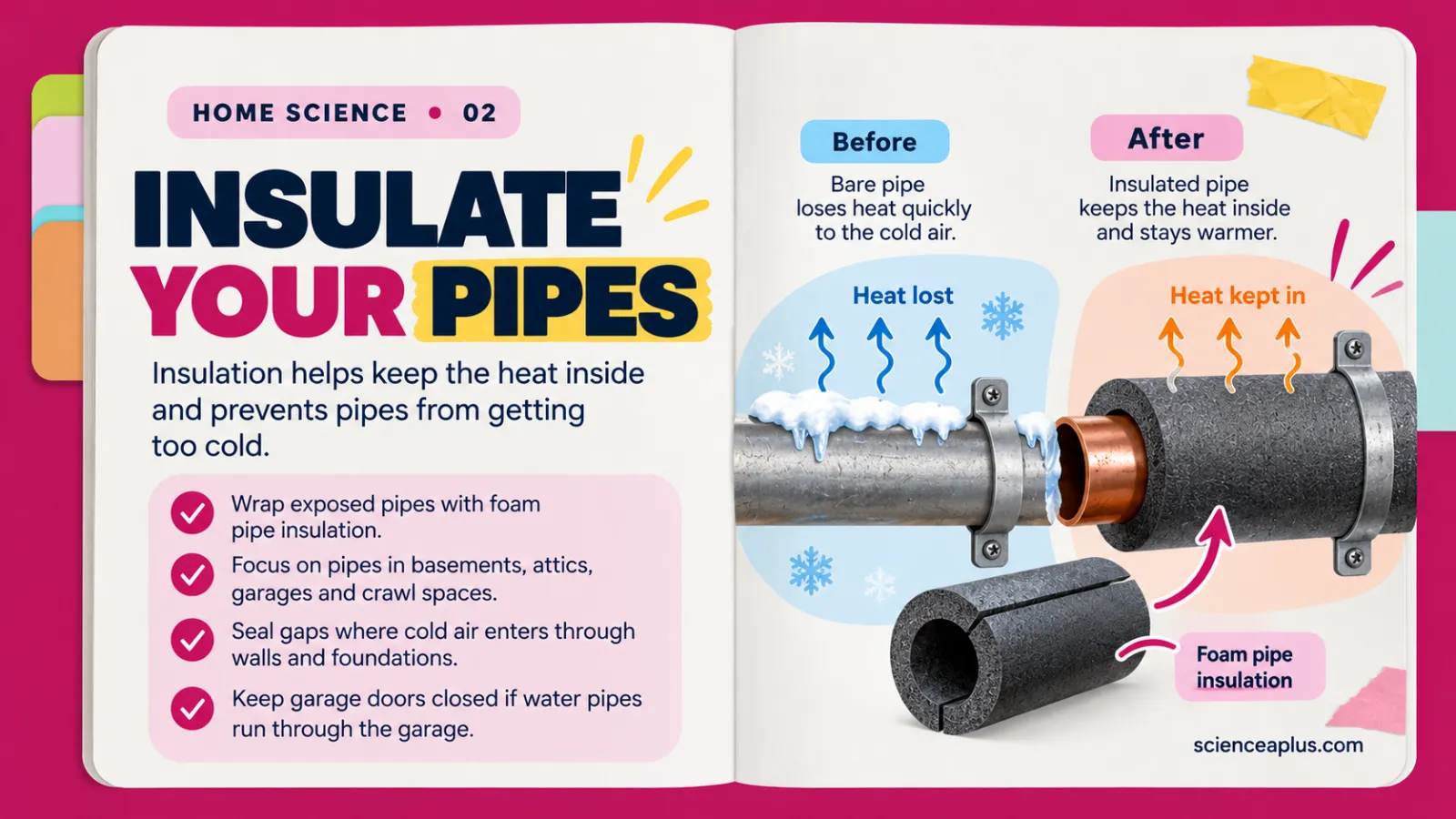
Pipe lagging is the foam or rubber sleeve you slide over a pipe. It is the cheapest way to stop pipes freezing, and Thames Water puts the cost of insulating typical indoor household pipework at about £1 per metre. Water companies, plumbers’ bodies and the Energy Saving Trust all advise lagging pipes and water tanks in unheated places such as lofts, garages and outbuildings.
How lagging works
Heat always flows from warmer to cooler places by conduction, and a pipe full of water loses heat to cold air around it. Lagging works because it is made of materials that conduct heat very poorly. Polyethylene foam lagging has a thermal conductivity of about 0.034–0.036 W/m °C, while copper is about 385 W/m °C, more than 10,000 times higher. Almost all the resistance to heat flow therefore comes from the lagging, not the pipe wall.
Foam lagging is commonly sold with 9, 13, 19 or 25 mm walls for 15 mm pipe. The thicker the wall, the slower the heat loss. This is the same idea behind insulating walls: trap a poor conductor between the warm and cold sides and the heat leaks away more slowly.
Insulation slows heat flow in both directions. It keeps heat in a hot pipe, and it also slows heat arriving from outside. That is exactly why insulation can keep a drink cold as well as keep tea hot.
Fitting lagging properly
Fitting it is a simple DIY job, and good technique matters as much as the material.
- Measure the pipe. Typical household pipes are 15 mm or 22 mm across, so buy lagging with a matching bore.
- Turn off the heating and hot water before you insulate hot pipes, as the Energy Saving Trust advises.
- Slit the tube along its length and press it round the pipe, or slide it on from an open end.
- Seal each end and joint with tape so cold air cannot get in. Gaps are where lagging fails.
- Cover bends, valves and fittings, as these are often forgotten and are often the coldest bits.
- Lag tanks and cisterns in the loft, and fit a hot water cylinder jacket at least 80 mm thick.
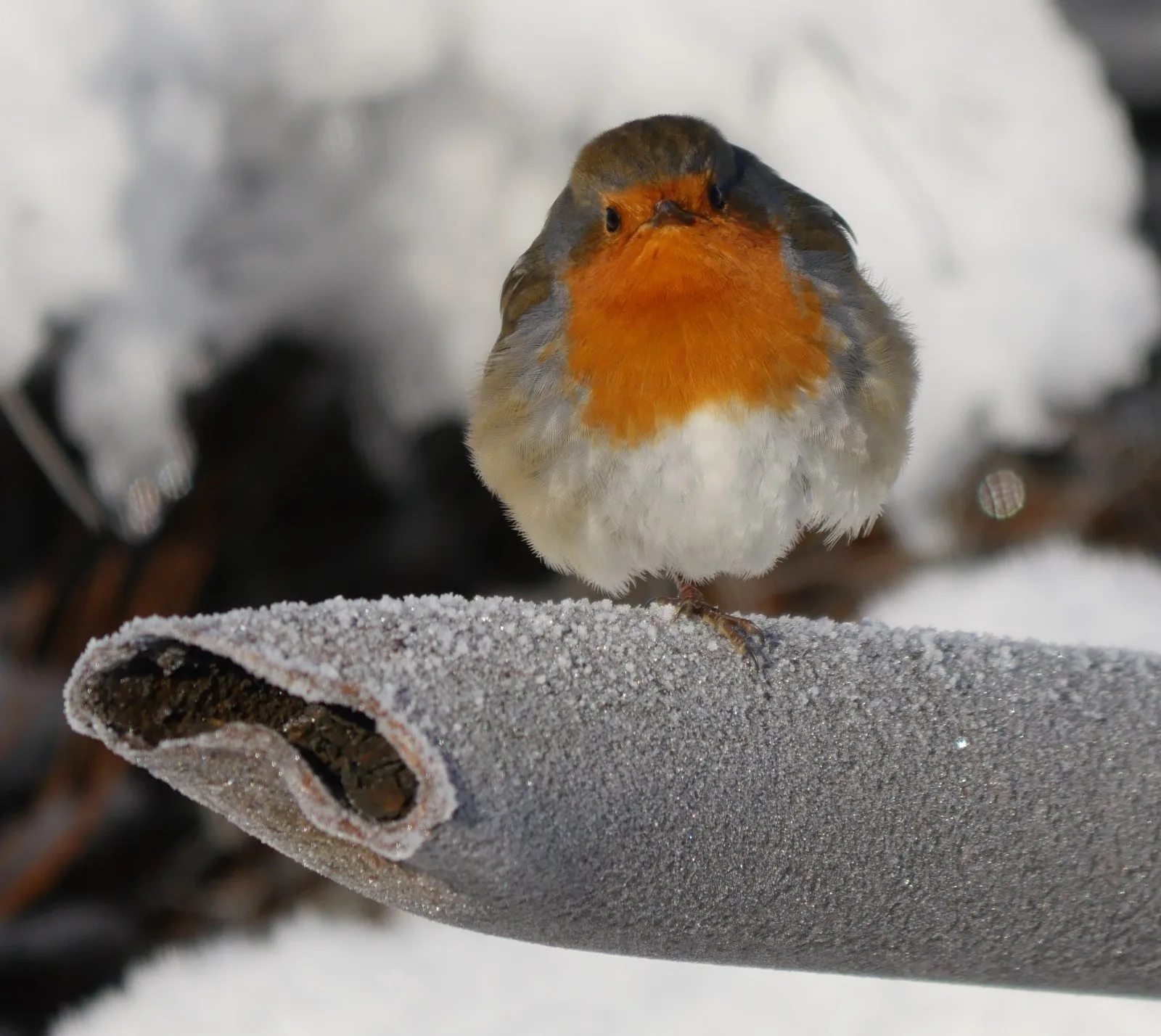
The photo of a frost-covered lagged pipe shows a frost-covered lagged pipe with an open, unsealed end. Cold air can get inside an open sleeve like this, so tape the ends. Taping the ends costs pennies and keeps the lagging working properly.
The Energy Saving Trust notes that pipe insulation saves only about £6 a year on bills (January 2024 prices), so its main value is frost protection rather than saving money. The US Department of Energy adds that insulating hot-water pipes can deliver water 2–4 °F hotter than uninsulated pipes do, a small bonus. The real reward is not coming home to a burst pipe.
Check the lagging you already have
Old lagging can be crushed, torn, damp or missing in places where someone has worked on the pipes. In the loft, check that the lagging has not slipped away from the pipe at a bend or a tap. Make sure that the lagging does not stop at the wall: pipes often pass through a gap in a wall or floor and become most exposed just there. If the gap lets draughts blow around the pipe, seal it as well, since moving cold air can freeze a pipe faster than still air.
Outside taps and garden pipes
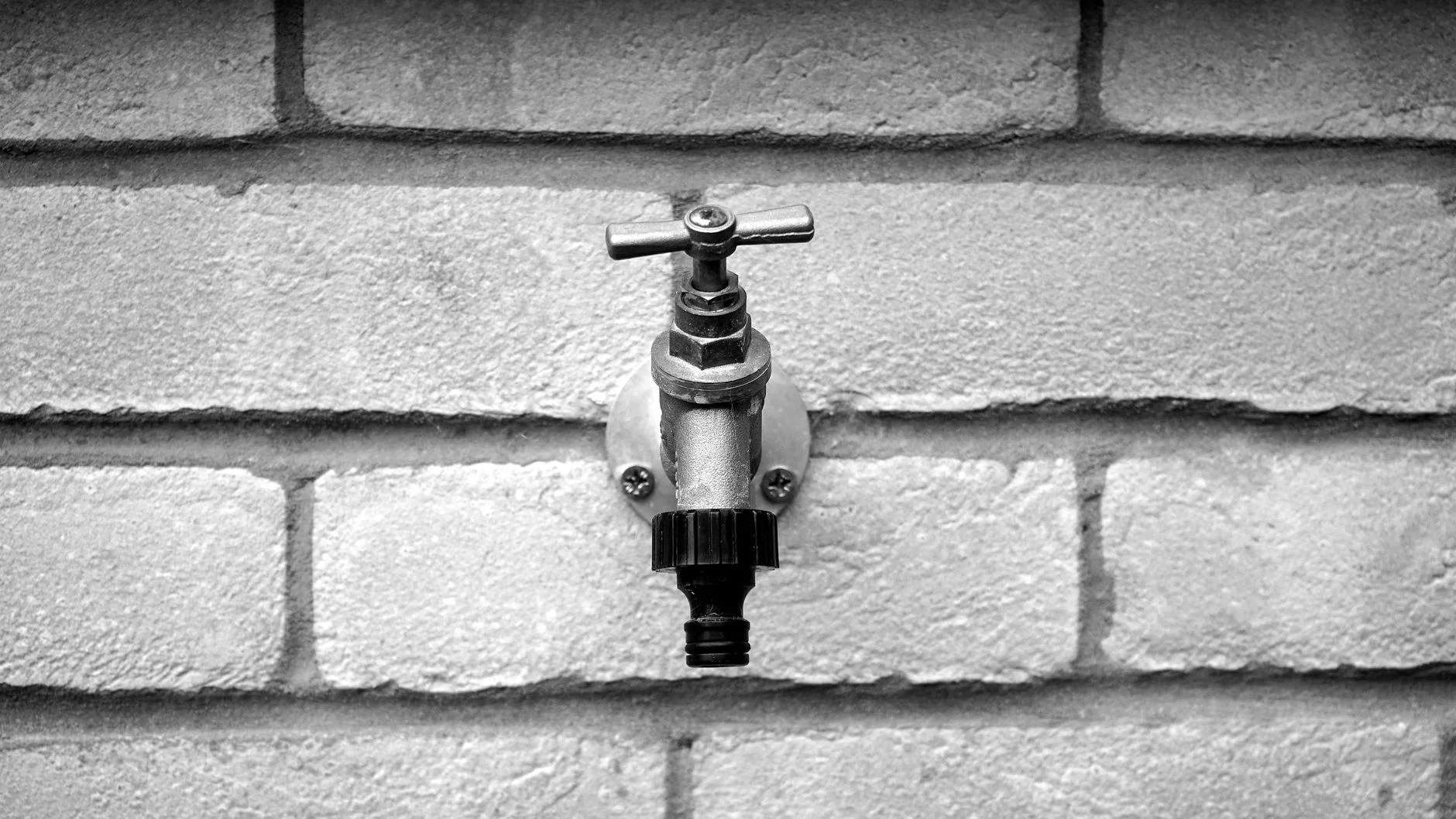

Outside taps are the classic casualty, because the pipe through the wall is thin, exposed and full of water. Fixing them takes a few minutes, and the plan has four steps:
- Isolate. If the supply to your outside tap has an isolating valve, turn it off for the winter.
- Drain. After isolating, open the outside tap and leave it open. Co-op Insurance advises this so that any water left in the pipe has room to expand. It fits the rule from the first section: a pipe that is open at one end cannot be pressurised.
- Cover. Fit an insulated tap cover. Water companies including Northumbrian Water advise draining outside taps and protecting them with a cover.
- Disconnect hoses. A hose left on keeps water trapped against the tap, and that trapped water is exactly what freezes and splits the fitting.
Lag any visible pipework in the garden or on the outside wall too. As a quick note on ownership, the pipe from your boundary into the house is usually yours to look after; the stopcock section below explains who owns what in England and Wales.
A winter checklist for your pipes
Tick these off as you go. Your ticks are saved in this browser, so you can come back to the list.
- Lag the pipes in the loft, garage and any outbuilding
- Lag the loft tank and cistern
- Tape the ends and joints of all lagging
- Isolate, drain and cover outside taps
- Disconnect garden hoses
- Find your stopcock and check it turns without forcing it
- Save a WaterSafe-registered plumber’s number in your phone
- Check that the boiler has been serviced and fix draughts where pipes enter the house
Doing the list in October, rather than during the first cold snap, means you can work outside in daylight. If you rent your home, tell your landlord or letting agent about bare pipes or uncovered taps.
Why a stopcock matters as much as lagging
Prevention reduces the chance of a freeze, but nobody can promise a pipe will never freeze. This is why the plan in this guide has two halves: stop the pipes freezing, and be able to cut the water off fast if one fails. Lagging is the first half, and knowing your stopcock is the second.
Heating settings to keep pipes from freezing
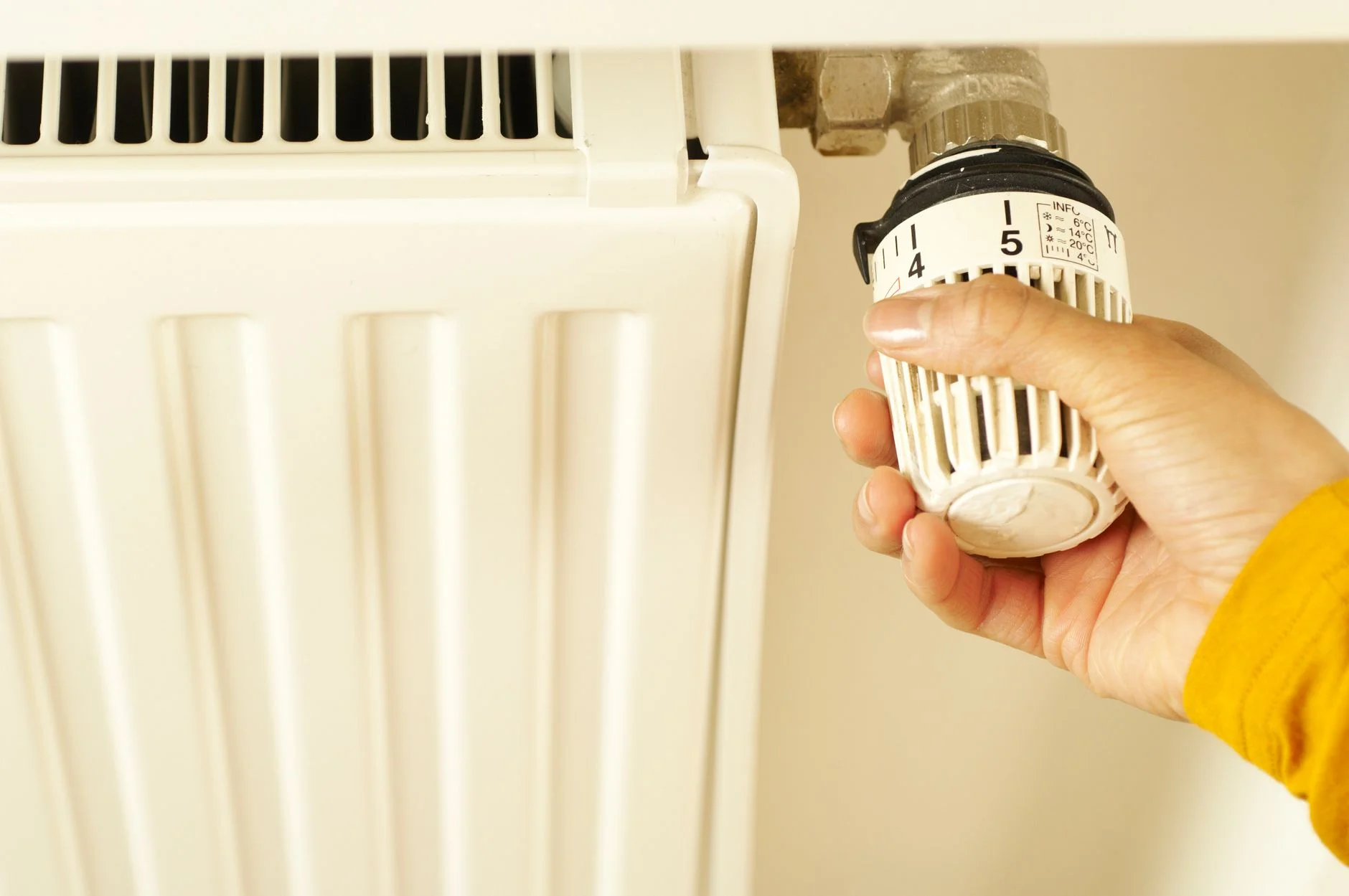
The simplest way to keep pipes from freezing is to keep the building warm enough. UK water companies, including Northumbrian Water and Thames Water, say to keep your home heated at a low level during cold spells, and that includes when you are out. They do not give a single temperature.
For a figure, the American Red Cross says that if you will be away in cold weather you should leave the heat on and set it no lower than 55 °F, which is about 13 °C (55 °F is 12.8 °C). Treat that as a US guideline and a sensible starting point, not an official UK rule.
Other practical points from water companies and plumbing bodies:
- Use a timed, low setting. The Association of Plumbing and Heating Contractors (APHC) suggests that for short absences you consider leaving the heating on a timed setting at the lowest thermostat temperature.
- Use anti-frost mode. CIPHE recommends a smart thermostat’s anti-frost setting if you have one, and says the running cost is worth it compared with frozen pipes.
- Open cupboard doors. Leave kitchen and bathroom cupboard doors open so warmer air can reach pipes under sinks on outside walls.
- Fix draughts where pipes enter the house, and have your boiler serviced before winter.
- For long absences, turn off the stop tap and drain the system, as Thames Water and CIPHE advise.
Should you leave a tap dripping? UK and US advice compared
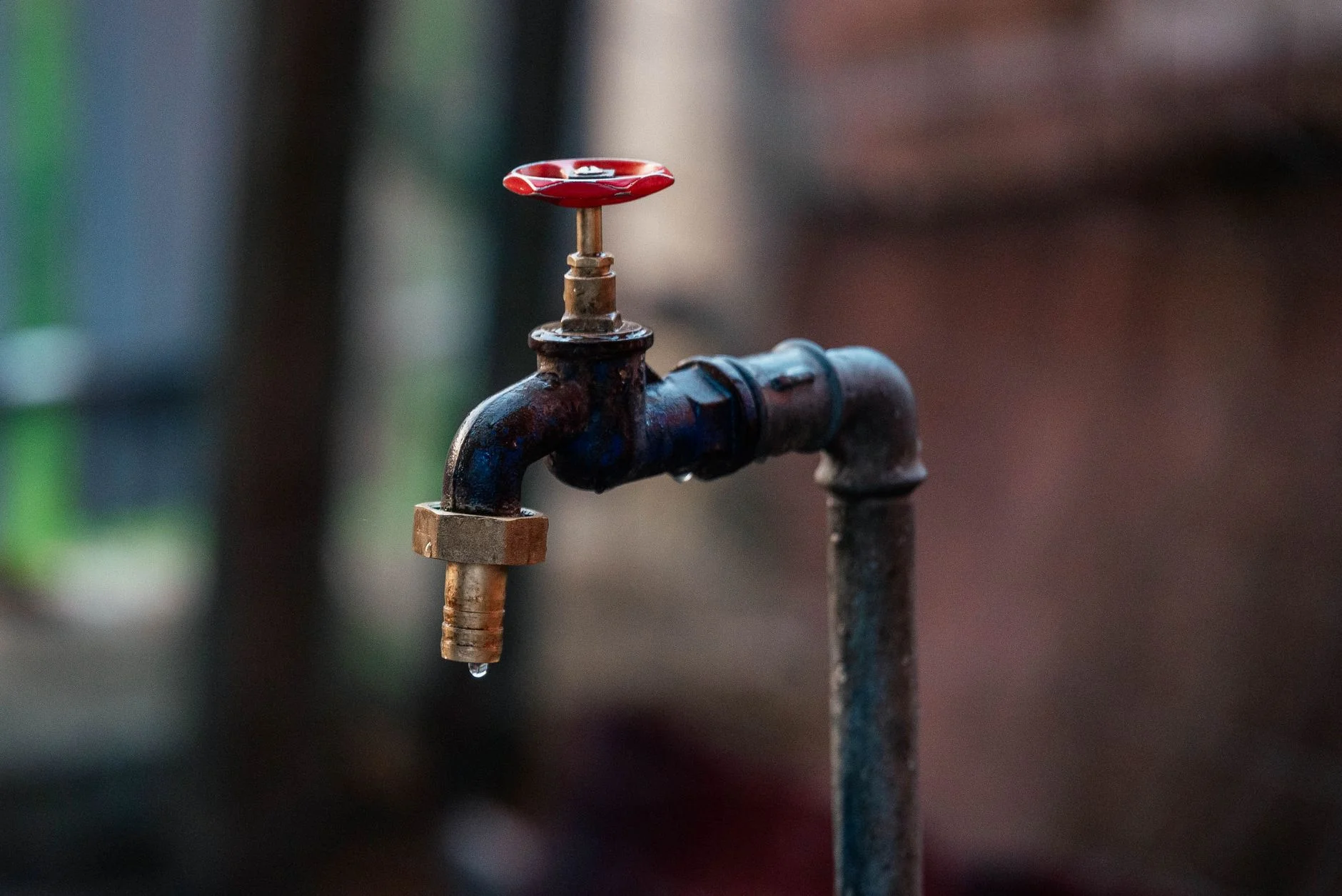
This is where the advice differs most. Search for “how to keep pipes from freezing” and you will find American pages telling you to let a tap drip, and British water companies telling you to fix any drips. Both are sincere, and they are written for different conditions.
| UK water companies | US (American Red Cross) | |
|---|---|---|
| Advice | Fix dripping taps. Do not leave taps running. | In very cold weather, let cold water drip from a tap (faucet) served by exposed pipes. |
| Reason given | A small drip can freeze and block pipes. Running taps waste significant amounts of water and do not guarantee protection against bursts. | Running water through the pipe, even at a trickle, helps prevent pipes from freezing. |
| Sources | Northumbrian Water (Nov 2025), Consumer Council for Water, Scottish Water (Jan 2026) | American Red Cross frozen-pipes advice |
What the physics says
The US advice can work for a reason that is easy to misunderstand. The old explanation that “moving water keeps the pipe warm” is not the main point, because a trickle does not warm the pipe. What a slightly open tap does is make the section of pipe open at one end. As Gordon’s research showed, a pipe that is open on one end cannot be pressurised, so even if some ice forms, the dangerous pressure cannot build. Flowing water is also slower to freeze than still water.
The UK position has its own logic. Northumbrian Water warns that even a small drip can freeze and block pipes, CIPHE says fixing drips will prevent ice forming, and Scottish Water (January 2026) asks people not to leave taps running because it wastes significant amounts of water and does not guarantee protection. Running a tap through a long cold spell is also a lot of water, which is worth thinking about if you care about saving water.
Much US guidance is written for very hard freezes, in places where pipes often run through cold attics and crawl spaces and temperatures can fall far below anything most of the UK sees. In the UK, the advice is to insulate pipes and keep the heating on low.
Find your stopcock before you need it
When a pipe bursts, every minute counts, and the first job is to shut off the water. Your stopcock (also called a stop tap or stop valve; in the US it is the main shut-off valve) is the tap that controls all the water coming into your home.
The internal stopcock is usually under the kitchen sink, or wherever the water supply enters the home, but it can be somewhere else, such as a cupboard, the garage or even outside. To close it, turn it clockwise. Do these things now, while there is no emergency:
- Find it and tell everyone in the household where it is.
- Test it. Check regularly that it works, and never force it. If it is stiff, ask a registered plumber to look at it.
- Label it with a tag so a visitor or a tenant can find it quickly.
- Keep a registered plumber’s number handy. WaterSafe is the UK register of approved plumbers.
Your kitchen tap gives only a trickle on a −5 °C morning. Give two things you should do first. (2 marks)
Any two of: turn off the stopcock; open the cold tap so thawed water can escape; switch off the heating or immersion heater; thaw the pipe slowly without a flame (for example with a hot water bottle or warm towels).
Signs that a pipe has frozen
The Consumer Council for Water (CCW) lists these signs: no water, or only a trickle, from a tap; frost on a visible pipe; unusual smells from taps or drains; and a boiler or central heating system that will not switch on or gurgles. If you notice any of them, move straight on to the thawing steps below rather than waiting for the weather to warm up, because a frozen pipe may already be split.
How to thaw a frozen pipe safely
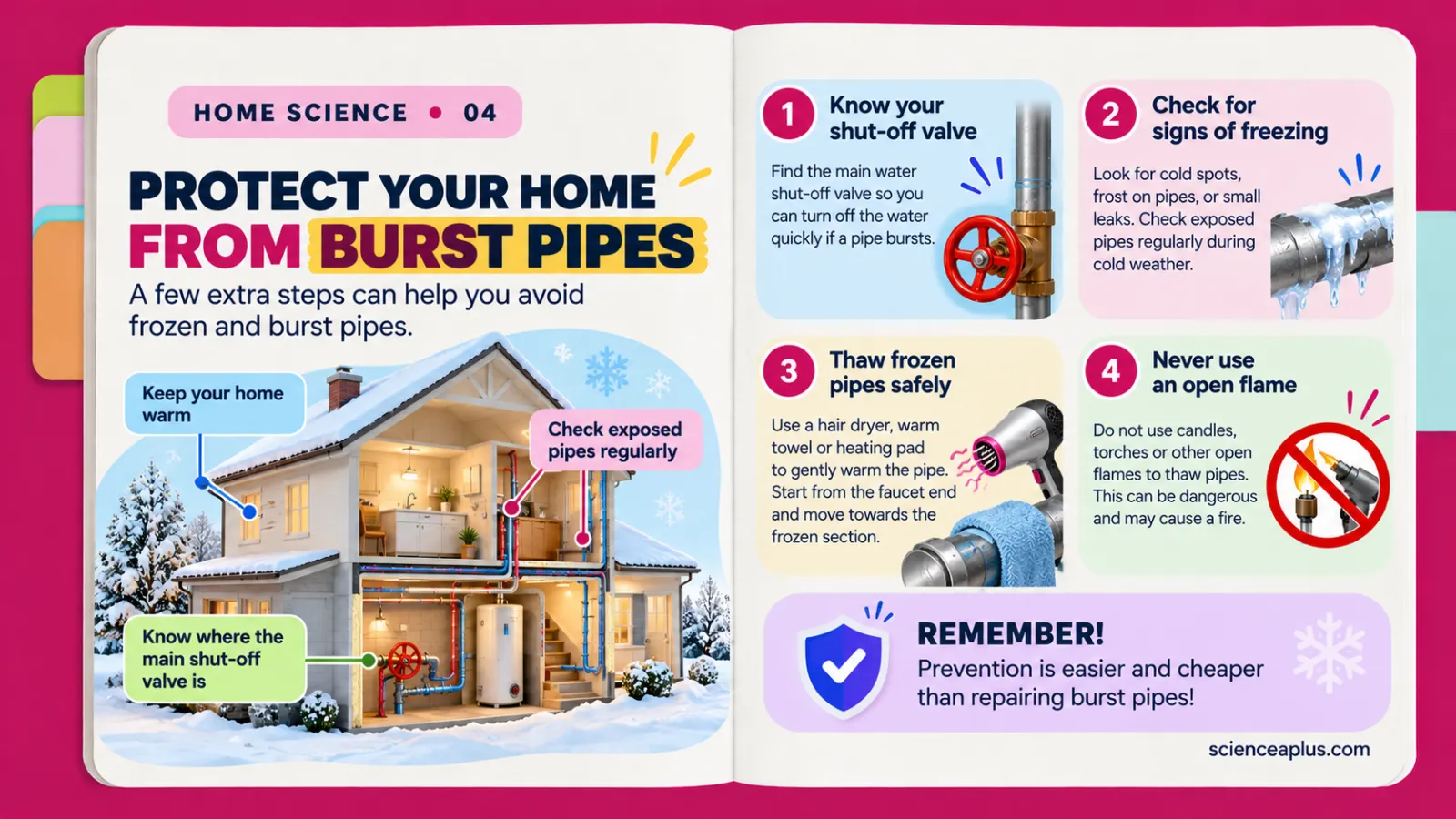
If you turn on a tap and get only a trickle, a pipe may have frozen. Do not panic, and do not reach for a flame. Work through these steps in order.
- Turn off the water at the stopcock (stop tap). Switch off the immersion heater, if you have one, and the central heating.
- Open the cold tap fed by the frozen pipe so that thawed water can escape.
- Take off any lagging from the frozen section, and move things you want to keep dry.
- Thaw it slowly. Use a hot water bottle, towels soaked in hot water, or a hairdryer on a warm setting. US guidance (American Red Cross, State Farm) says to start nearest the tap and work towards the coldest section.
- Check for leaks. Run a dry cloth along the pipe. If it leaks, keep the water off until it is fixed.
- Call a registered plumber if you cannot find or reach the frozen section.
Keep a hairdryer away from water, and switch off the electrics at the mains if water is near any sockets.
Frozen boiler condensate pipe
Condensing boilers drain waste water through a white plastic pipe that often runs outside. In a long cold spell it can freeze. The boiler may gurgle, lock out or show a fault code. If it is safe, at ground level and not icy underfoot, pour warm (not boiling) water along the outside pipe, or hold a hot water bottle or heat pad on it, then reset the boiler as the manufacturer describes. If it keeps locking out, call a Gas Safe engineer.
What to do if a pipe bursts
- Turn off the water at the stopcock.
- Turn off the central heating boiler and the immersion heater.
- If water is near electrics, switch them off at the mains (the consumer unit).
- Open all the taps to drain the system quickly.
- Soak up water with towels and catch drips in buckets. Saving some water in a bucket is handy for flushing and hand washing.
- Call a registered plumber. The CCW says you must call in a professional plumber to sort out any burst pipes.
- Photograph or film the damage and contact your home insurer. In UK insurance terms, this is an “escape of water” claim.
- Turn the taps back off before you turn the stopcock back on.
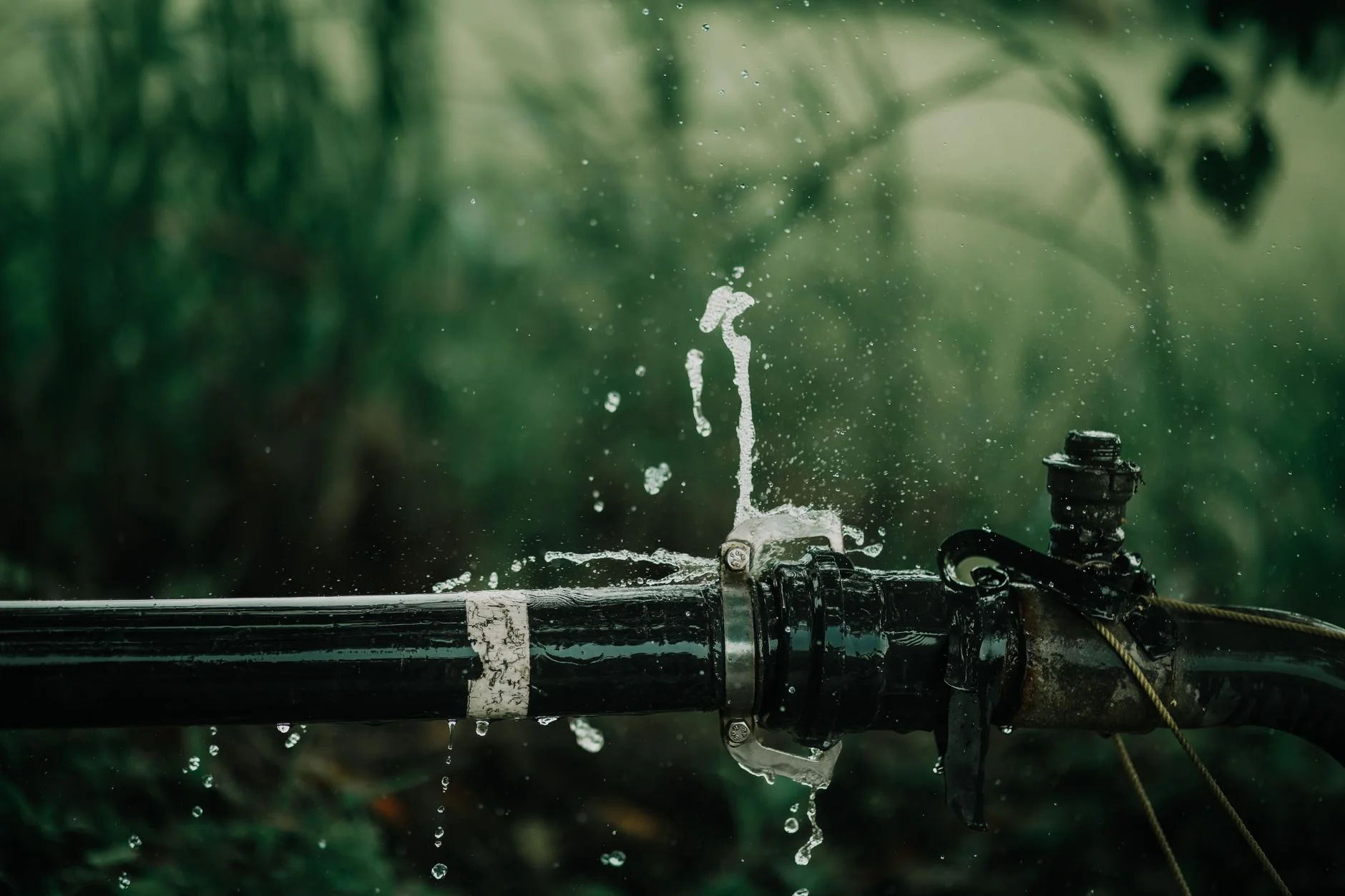
Maths practice questions
Tap each question to reveal the worked answer. Use 1.000 g/cm³ for water, 0.917 g/cm³ for ice, a specific heat capacity of 4,200 J/kg °C for liquid water, about 2,100 J/kg °C for ice and a specific latent heat of fusion of 334,000 J/kg.
1. Density and expansion. 1,000 g of water at 0 °C (density 1.000 g/cm³) freezes into ice of density 0.917 g/cm³. Find the volume of ice and the percentage increase. (3 marks)
V = m ÷ ρ = 1,000 ÷ 0.917 = 1,090.5 cm³. The increase is 90.5 cm³, which is 9.05%, so about 9%.
2. Trapped water. A section of pipe holds 150 cm³ (150 g) of water. How much extra space would the ice need if it all froze? (2 marks)
150 ÷ 0.917 = 163.6 cm³, so about 13.6 cm³ extra. A sealed copper pipe can’t stretch that much, which is why pressure builds.
3. Finding density. A 50.0 cm³ block of ice has a mass of 45.85 g. Calculate its density and say whether it floats in water. (2 marks)
45.85 ÷ 50.0 = 0.917 g/cm³. This is less than 1.000 g/cm³, so it floats.
4. Converting temperatures. Convert 55 °F (the Red Cross minimum) and 20 °F (the US rule of thumb) to °C. (2 marks)
(55 − 32) × 5/9 = 12.8 °C (about 13 °C). (20 − 32) × 5/9 = −6.7 °C.
5. Energy to thaw. A frozen section holds 0.30 kg of ice at −5 °C. Calculate the energy to warm it to 0 °C (c of ice = 2,100 J/kg °C) and then melt it (L = 334,000 J/kg). (4 marks)
Warming: 0.30 × 2,100 × 5 = 3,150 J. Melting: 0.30 × 334,000 = 100,200 J. Total = 103,350 J ≈ 103 kJ. Note that melting needs about 32 times more energy than warming.
6. Efficiency of a hairdryer. A 1,200 W hairdryer on warm runs for 10 minutes to thaw the pipe in Q5. What energy is supplied, and what percentage went into the ice? (3 marks)
Energy supplied = 1,200 × 600 = 720,000 J. Percentage = 103,350 ÷ 720,000 × 100 = about 14%. Most of the energy heats the air around the pipe.
7. Heat loss through lagging (simplified, stretch). Treat 1 m of lagging as a flat sheet: area 0.20 m², thickness 0.020 m, k = 0.035 W/m °C, temperature difference 10 °C. Rate = k × A × ΔT ÷ d. Repeat with 9 mm lagging. (3 marks)
20 mm: 0.035 × 0.20 × 10 ÷ 0.020 = 3.5 W. With 0.009 m: 7.8 W, which is about 2.2 times faster. Thicker lagging (20 mm instead of 9 mm) cuts the heat loss by a little more than half (3.5 W against 7.8 W). This formula is beyond GCSE; it shows the idea that thicker and lower-k insulation means a lower rate.
8. Pressure and force. Suppose the trapped water reaches 20 MPa (20,000,000 Pa). What force acts on each 1 cm² (0.0001 m²) of the pipe wall? Compare with 0.3 MPa. (2 marks)
F = p × A = 20,000,000 × 0.0001 = 2,000 N, compared with 0.3 MPa × 0.0001 = 30 N. The 20 MPa is a made-up exam value, not a measurement.
Now try your own numbers. Change the mass of ice or the heater power and see how the time changes.
Frequently asked questions about how to keep pipes from freezing
How do you keep pipes from freezing?
Lag pipes in lofts, garages and outbuildings, tape the ends and joints, keep the heating on low in cold spells, and drain and cover outside taps. Disconnect hoses, open cupboard doors under sinks on outside walls, and know where your stopcock is. These steps reduce the risk, but nothing guarantees a pipe will not freeze.
At what temperature do pipes freeze?
Pipes are at risk when temperatures fall below 0 °C, and the CIPHE says they can freeze in as little as six hours. As a US rule of thumb, uninsulated attic pipes began to freeze at about −6 °C (20 °F) or colder outside. Wind and draughts can cause freezing at milder temperatures.
Why do pipes burst when water freezes?
Water expands by about 9% as it freezes. Research from the University of Illinois found that bursts usually happen when an ice blockage traps liquid water between the ice and a closed tap, and further freezing pressurises it. The pipe splits at its weakest point, often where there is little ice.
Should I leave a tap dripping to stop pipes freezing?
It depends on where you live. The American Red Cross says to let cold water drip in very cold weather. UK water companies, including Northumbrian Water and Scottish Water, say to fix dripping taps and not to leave taps running. In the UK, insulate pipes and keep the heating on low instead.
What temperature should I leave my heating on to stop pipes freezing?
UK water companies say to keep the heating on at a low level during cold spells, but give no single temperature. The American Red Cross suggests no lower than 55 °F (about 13 °C) if you are away. A timed setting at the lowest thermostat temperature, or a smart thermostat’s anti-frost mode, are other options.
Does lagging stop pipes freezing?
Lagging slows heat loss, so it delays freezing, but it cannot create heat and may not prevent a freeze in a very cold space. It works best on pipes in lofts, garages and outbuildings, with the ends and joints taped. Thames Water says foam lagging still works even if a pipe is already freezing.
How do I thaw a frozen pipe safely?
Turn off the water at the stopcock, switch off the heating and immersion heater, and open the cold tap. Then warm the pipe slowly with a hot water bottle, warm towels or a hairdryer on a warm setting. Never use a naked flame or blowtorch, and avoid boiling water.
What should I do if a pipe bursts?
Turn off the water at the stopcock first, then switch off the boiler and immersion heater. If water is near electrics, turn them off at the mains. Open the taps to drain the system, soak up water, and call a registered plumber. Photograph the damage and contact your home insurer.
Where is my stopcock?
The internal stopcock is usually under the kitchen sink or wherever the water supply enters your home, but it can be elsewhere, even outside. Turn it clockwise to shut off the water. Check regularly that it works, never force it, and ask a registered plumber for help if it is stiff.