
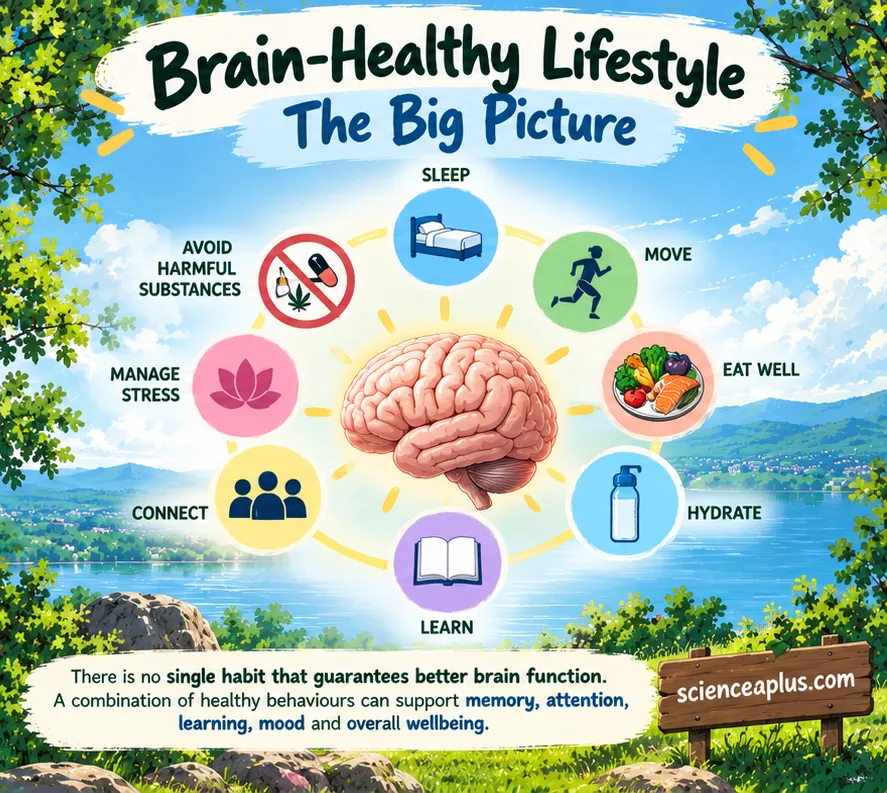
The lifestyle choices that improve brain function are mostly everyday ones: moving your body, sleeping enough, eating a varied diet, drinking enough fluid, learning new things, managing stress, staying connected with people, using screens mindfully and avoiding tobacco, alcohol and drugs. None is a magic fix, but together they support long-term brain health.
Why lifestyle matters for your brain
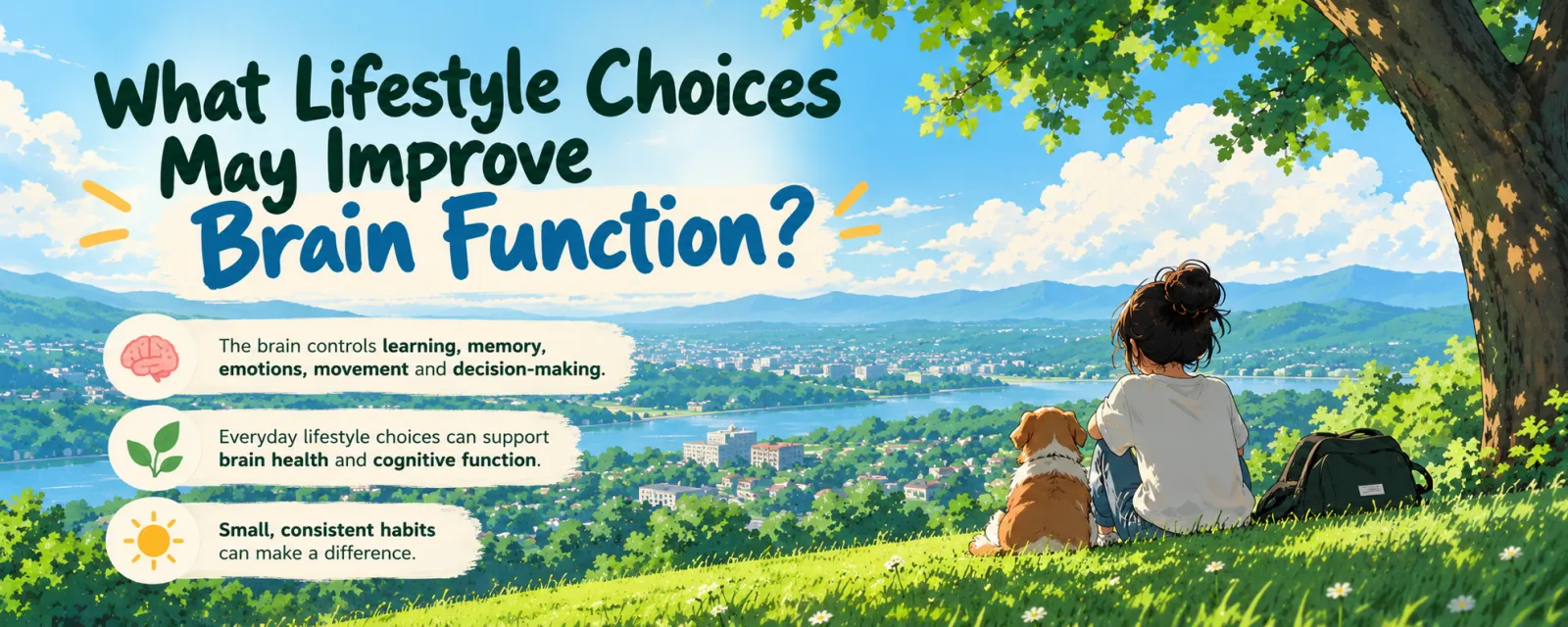
Your brain contains about 86 billion neurons, the cells that pass signals to one another. It makes up only around 2% of your body mass, yet it uses roughly 20% of the body’s energy at rest. An organ that expensive to run is clearly busy, and it depends on the same things the rest of your body does: oxygen, fuel, fluid and rest.
The brain controls learning, memory, emotions, movement and decisions. It is also not fixed. Neuroplasticity is the brain’s ability to change its connections as you learn and practise, and it carries on throughout life. Every time you revise a topic, practise a skill or learn a new word, some connections are strengthened and others are reshaped.
Age matters too. The brain keeps developing through adolescence and into the mid-20s. Adolescent maturation is often described as running from roughly ages 11 to 25, and some studies find changes continue even later. The prefrontal cortex, which handles planning and impulse control, is one of the last regions to mature. That is one reason the habits you build as a teenager are worth taking seriously, and why avoiding harmful substances matters so much while the brain is still developing.
The good news is that you do not need dramatic changes. Small, consistent habits repeated most days add up. If you are curious about how remarkable this organ is, our collection of awesome facts about the brain is a good place to start, and our guide to neuroscience and the brain explains how the different parts work together.
Think of it like training for a sport. Nobody becomes fit from one gym session, and nobody’s brain changes from one early night. What counts is the pattern across weeks and months. Students who build routines for sleep, food, movement and breaks tend to find revision feels more manageable, because they are not relying on willpower alone. That is the core idea behind every lifestyle choice that improves brain function in this guide: make the healthy option the easy, default one.
It also helps to remember that everyone starts from a different place. Some habits will be easier for you than others, and that is fine. Progress is not about perfection, and you can pick things up again after a bad week.
This article is for education only. It is not medical advice and cannot diagnose anything. If you are worried about your own memory or someone else’s, talk to a GP or call NHS 111 for guidance.
The 10 brain-healthy habits at a glance
Here is the full list. Each habit gets its own section in this guide, with the evidence and some practical ways to build it into a school or work day. Together they answer the question of how to improve brain function naturally, without gadgets or expensive extras.
- Move your body: regular physical activity increases blood flow to the brain.
- Prioritise sleep: sleep helps the brain consolidate memories.
- Eat a brain-friendly diet: plenty of fruit, vegetables, wholegrains, beans and fish.
- Stay hydrated: even mild dehydration can leave you tired and may make concentrating feel harder.
- Keep learning: new skills build new connections.
- Manage stress: long-lasting stress can affect concentration, sleep and mood.
- Limit added sugar and ultra-processed snacks: choose steadier, more nourishing fuel.
- Stay socially connected: friendships and community support mental health.
- Use technology mindfully: take screen breaks and avoid late-night scrolling.
- Avoid harmful substances: tobacco, alcohol and recreational drugs can interfere with brain function.
You do not have to start all ten at once. Pick one or two that feel easiest, such as an extra glass of water at your desk or a regular bedtime, and add another every week or two. Habits that fit into your existing routine are far more likely to last than a complete overhaul.
1. Move your body

If you want to improve brain function, movement is one of the best places to start. Your brain uses roughly 20% of your body’s energy at rest, and physical activity increases blood flow to the brain. That supports the cells doing the thinking.
The NHS recommends that children and young people aged 5–18 do an average of at least 60 minutes of activity a day. Adults should aim for at least 150 minutes of moderate activity a week, or 75 minutes of vigorous activity. Football, cycling, dancing, swimming and brisk walking all count.
There is also evidence from a proper experiment. In a 2011 randomised trial (Erickson et al., published in PNAS), older adults who did aerobic walking for a year saw their hippocampus grow by about 2%, while it shrank by about 1.4% in a stretching comparison group. The hippocampus is a region that is key for memory. One trial does not prove that exercise will sharpen everyone’s memory, but it shows the brain can respond to activity at any age.
Finding the energy is often the hard part. Our guide to how to motivate yourself to exercise has practical ways to get started and keep going.
2. Prioritise sleep

Sleep is not wasted time. While you sleep, your brain helps to consolidate memories, which means it strengthens what you learned during the day. That is why a good night’s sleep before an exam can be worth more than another late-night cramming session.
The NHS says most adults need 7–9 hours of sleep a night. Teenagers aged 13–18 need about 8–10 hours, according to the CDC and the American Academy of Sleep Medicine. The NHS does not give a teen-specific figure, but says children and teenagers usually need more sleep than adults. Many students get less than this.
Short sleep affects attention, mood, memory and decision-making. You may find it harder to focus in lessons, easier to feel irritable and more likely to make poor choices. To see these effects in more detail, read about the effects of sleep deprivation.
Work out when you need to be asleep with the bedtime calculator below. Pick the time you must wake up and count back.
Small habits help too. Keep a regular sleep and wake time, and avoid late-night screen use, because it can delay sleep. We return to this in the habit on using technology mindfully.
3. Eat a brain-friendly diet
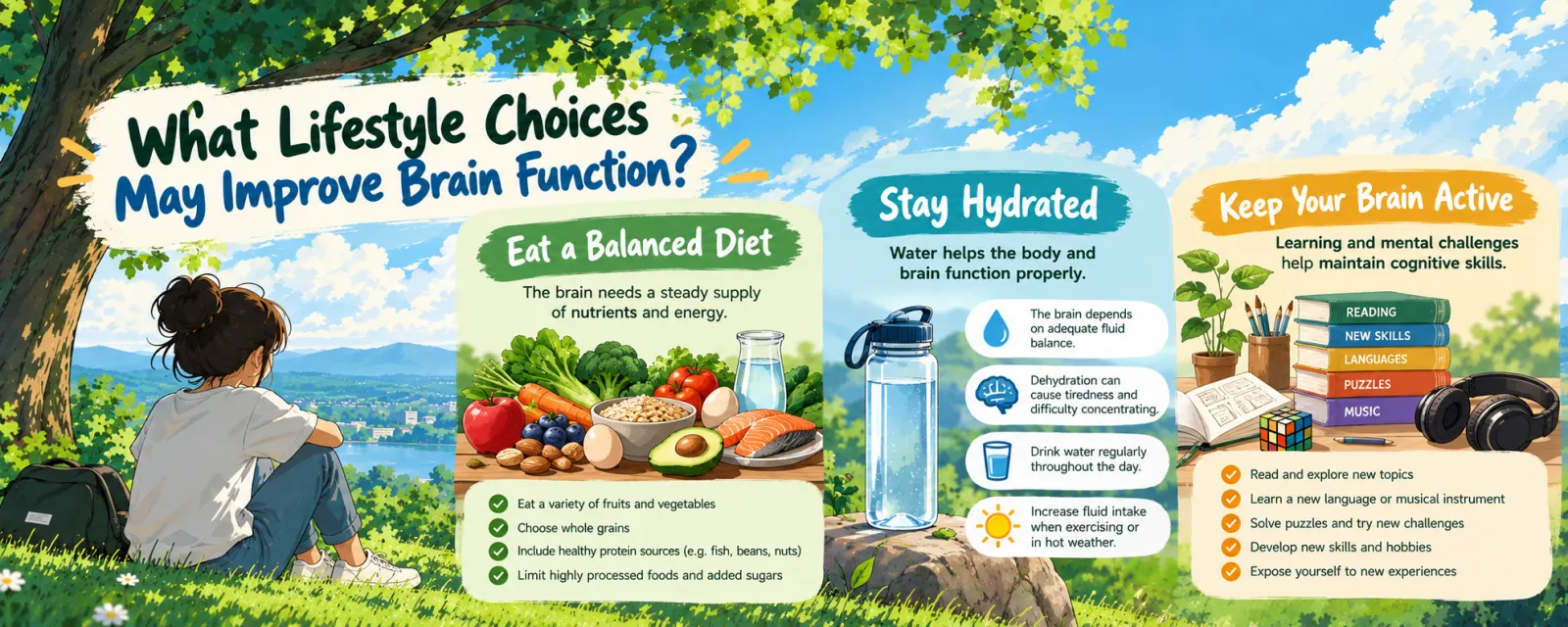
Your brain is only about 2% of your body mass, yet it needs a steady supply of energy. The NHS Eatwell guide is a good model for brain health. It recommends at least 5 portions of fruit and veg a day, plus wholegrains, beans and fish. To understand why each food group matters, see why we need a balanced diet.
The NHS advises at least 2 portions of fish a week, and one of them should be oily, such as salmon, mackerel or sardines. Oily fish is a source of omega-3 fats. It also suggests limiting highly processed foods and added sugars. Girls, and women who could become pregnant, should have no more than 2 portions of oily fish a week.

| Food group | Examples | Why it helps |
|---|---|---|
| Fruit and vegetables | Berries, carrots, spinach, peppers | Part of the 5-a-day target in the NHS Eatwell guide |
| Wholegrains | Porridge oats, wholemeal bread, brown rice | A good everyday source of energy for a hungry brain |
| Beans and pulses | Lentils, chickpeas, kidney beans | Recommended by the NHS as part of a balanced diet |
| Fish | Salmon, mackerel, sardines | Oily fish is a source of omega-3 fats; aim for 2 portions a week |
| Foods to limit | Sugary drinks, sweets, highly processed snacks | The NHS advises limiting highly processed foods and added sugars |
No single superfood makes you smarter. The pattern across your whole week matters far more than any one ingredient.
4. Stay hydrated
This is the easiest habit to fix. The NHS suggests drinking 6–8 glasses or cups of fluid a day, and more in hot weather or when you are exercising.
Even mild dehydration can affect mood and make people feel tired, and it may make concentrating feel harder. If you get a slump in the middle of a lesson, a drink of water is a simple thing to try before anything else.
- Keep a water bottle on your desk and refill it at set points in the day.
- Take a drink before you start a revision session.
- Drink more on hot days and around sport.
5. Keep learning

Your brain is not fixed. Through neuroplasticity, it changes its connections as you learn and practise, and it keeps doing so throughout life. Every time you pick up a new skill, you are asking neurons to build and strengthen links, which is one of the most direct lifestyle choices that improve brain function.
The key word is new. Re-reading the same notes can feel productive, but learning something unfamiliar makes your brain work harder to organise it. Good options include:
- A language: even 10 minutes a day of vocabulary practice adds up over a term.
- A musical instrument: it combines listening, reading, movement and memory in one activity.
- Puzzles and strategy games: crosswords, chess, sudoku or logic problems.
- Reading widely: books and articles outside your usual subjects.
- Hands-on skills: coding, drawing, cooking, a craft or a sport technique.
If you want practical methods for revision, our guide to how to improve memory for exams covers retrieval practice, spacing and more. Those techniques are a great way to improve memory and concentration when it matters most.
Do brain-training games work?
Be a little cautious here. Brain-training apps and games mostly improve performance on the trained task itself. Broad benefits, such as better memory or sharper thinking in everyday life, are not well proven. You are usually better off learning a real skill that you enjoy and can keep building on, rather than paying for a game that promises to make you smarter.
Why might learning a musical instrument be good for the brain? (2 marks)
Learning an instrument is a demanding new skill, so it makes the brain form and strengthen new connections between neurons (neuroplasticity) (1). It also combines several tasks at once, such as listening, reading notes, coordinating movement and remembering pieces, so it exercises several brain areas through regular practice (1).
6. Manage stress
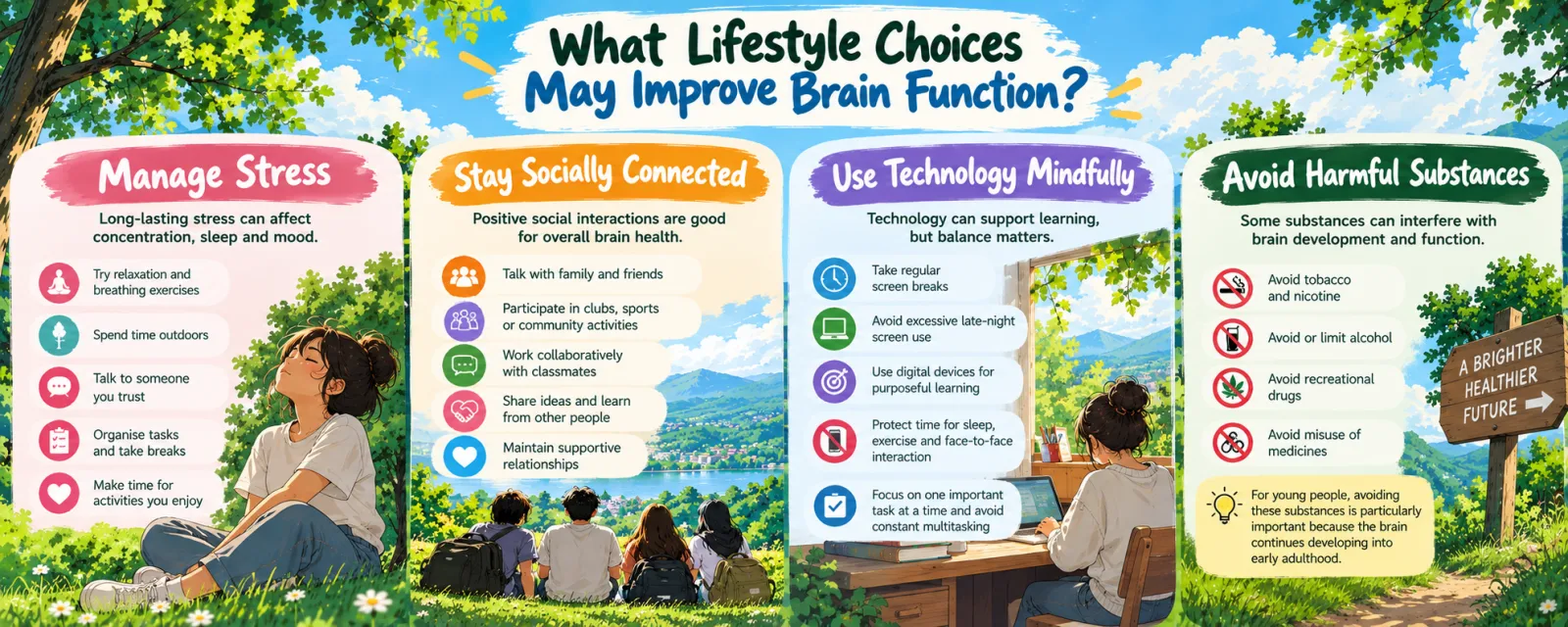
Stress is not always bad. Short-term stress before a mock exam or a match is normal, and it can help you focus. The problem is stress that goes on for weeks or months. Long-lasting stress can affect your concentration, your sleep and your mood, and poor sleep then makes stress harder to handle. That loop is why managing stress belongs on any list of brain health habits.
You cannot remove every pressure from school or work, but you can build habits that help you cope. The NHS Every Mind Matters campaign suggests several simple approaches:
- Relaxation and breathing exercises: slow, steady breathing is quick to learn and can be done anywhere.
- Being active: a walk, a run or a kickabout counts, and it links neatly with habit 1.
- Talking to someone: a friend, family member, teacher or school counsellor.
- Splitting up big tasks: break work into smaller, manageable chunks.
For a wider toolkit, including everyday ways to ease pressure, read our article on living a calmer, stress-free life.
- Choose one breathing exercise and practise it for two minutes
- Pick a 10-minute walk or stretch you can do between study blocks
- Write down one trusted person you can talk to this week
- Plan one short break away from your desk each day
- Set a regular wind-down time before bed
If stress or low mood is lasting, getting in the way of daily life or worrying you, speak to a GP, a school nurse or a trusted adult. In the UK you can also call NHS 111 for advice on where to get help. This article is for general education and cannot diagnose anything.
7. Limit added sugar and ultra-processed snacks
Your brain uses roughly 20% of your body’s energy at rest, so what you eat matters. That does not mean you need sugary snacks for a quick lift. The NHS advice is to limit highly processed foods and added sugars, and to base meals on fruit, vegetables, wholegrains, beans and fish.
Here is the practical point. Sweets, fizzy drinks and pastries can give a fast burst of energy that fades just as fast, which may leave you tired and hungry again before the lesson ends. Meals and snacks built around wholegrains, fruit, vegetables and protein tend to give steadier energy through a study session. No single food or “superfood” will make you smarter, so aim for a balanced pattern rather than a magic ingredient.
A few easy swaps can help:
- Choose fruit, nuts or plain yoghurt instead of a sweet snack.
- Swap fizzy or sugary drinks for water or milk.
- Pick wholegrain bread, pasta or cereal more often.
- Keep a healthy snack in your school bag so you are not tempted by the vending machine.
If you often crave sweet foods, understanding why can make it easier to manage. Our guide on how to reduce sugar cravings explains practical ways to cut back without feeling deprived.
8. Stay socially connected

Talking, laughing and spending time with other people is not just pleasant. Loneliness and social isolation are linked with poorer mental health, and social isolation is one of the risk factors named by the Lancet Commission on dementia. Staying connected is part of looking after your brain, not a bonus extra.
Connection does not mean being surrounded by people all day. It means having people you can talk to and things you do together. For a student, that could be a sports team, a school club, a choir, a volunteering group or a regular walk with a friend. Many of these also help you move more and learn new things, so one habit supports another.
If you feel isolated, telling someone is a good first step. NHS Every Mind Matters suggests talking to someone you trust as one way to cope with stress. A teacher, parent, friend or your GP are all sensible people to start with.
9. Use technology mindfully
Phones and laptops are useful tools for learning and keeping in touch. The brain-friendly approach is to use them on purpose rather than by default. Three simple habits make a difference.
- Take regular screen breaks. Stand up, look away from the screen and move for a few minutes.
- Avoid screens late at night. Late-night screen use can delay sleep, and sleep is when the brain consolidates memories.
- Do one thing at a time. Single-tasking beats constant multitasking for focus, so put your phone out of reach while you revise.
Social media can help you stay in touch with friends, but it can also pull your attention away from homework and bedtime. Our guide to the importance and disadvantages of social media looks at both sides.
10. Avoid harmful substances
Tobacco and nicotine, alcohol and recreational drugs can interfere with brain development and function. Avoiding them matters most for young people, because the brain is still developing. As covered earlier, the prefrontal cortex, which handles planning and impulse control, is one of the last regions to mature.
The UK Chief Medical Officers advise that an alcohol-free childhood is the healthiest option, and that if children do drink alcohol, it should not be until at least the age of 15, and there is no safe level of drinking for under-18s. For adults, the low-risk guideline is no more than 14 units a week, spread over three or more days.
If you are worried about your own use of any substance, or a friend's, speak to a GP, a school nurse or a trusted adult. For more on this topic, read our article on youth and drugs and leading a drug-free life.
Build a brain-healthy daily routine
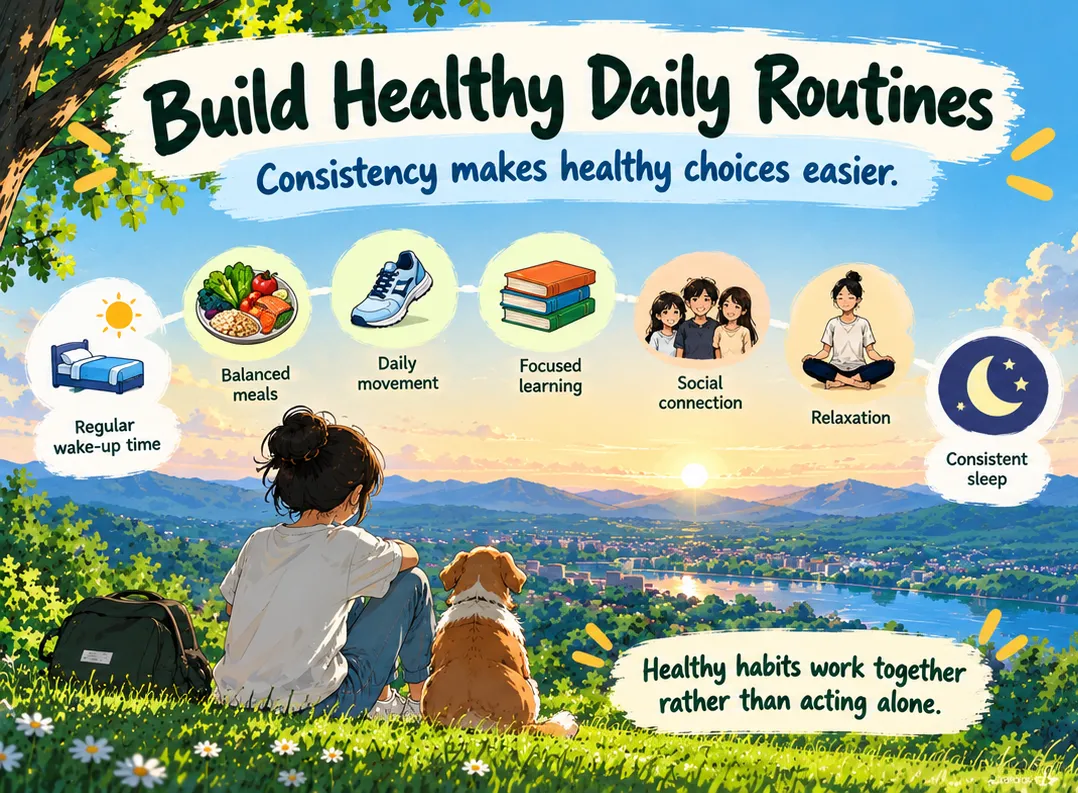
Ten habits can sound like a lot. The trick is to fit them into a day you already have. Here is one example school-day timetable. Change the times to suit you, because it is a model and not a rule.
| Time | Habit |
|---|---|
| 7:00 am | Wake up, drink a glass of water, eat a breakfast with fruit or wholegrains |
| 8:00 am | Walk or cycle to school if you can (move your body) |
| Morning and afternoon | Lessons, with a drink to hand and a stretch at breaks (hydration, screen breaks) |
| Lunch | Eat a balanced meal and talk to friends (diet, connection) |
| After school | Sport, a club or a walk, aiming for an average of at least 60 minutes of activity a day |
| Early evening | Homework in focused blocks with your phone out of reach (single-tasking, learning) |
| Evening | Relax, breathe slowly or chat with family to wind down (stress) |
| Before bed | Switch off screens and aim for 8–10 hours of sleep (teenagers) |
The habits work together. Exercise can help you sleep, good sleep helps you cope with stress, and less stress makes it easier to concentrate and to see friends. A weak spot in one area often shows up in another, which is why small steps in several places add up.
Sleep is the habit that holds the others together, so if you only improve one thing first, make it that. Our guide to sleep hygiene and mental health gives practical bedtime steps.
Can lifestyle lower dementia risk?
The 2024 Lancet Commission identified 14 modifiable risk factors for dementia. They include physical inactivity, smoking, excess alcohol, social isolation, hearing loss, high blood pressure, diabetes, depression, air pollution, vision loss, high LDL cholesterol, obesity, less education and head injury.
The Commission estimated that nearly half, about 45%, of dementia cases could in theory be prevented or delayed by addressing these factors. Notice the careful wording. Healthy habits may lower risk, but they do not guarantee anything, and dementia can affect people who do everything right.
If you are worried about memory problems, talk to a GP sooner rather than later — dementia is not a natural part of ageing. This article is for education only and cannot diagnose anything. If you are unsure what to do, NHS 111 can also advise.
Frequently asked questions about brain function
What lifestyle choices improve brain function?
Regular physical activity, enough sleep, a balanced diet, drinking enough fluid, learning new things, managing stress, staying socially connected, using screens mindfully and avoiding tobacco, alcohol and drugs all support brain health. No single habit works alone, so small, consistent changes across several areas work best.
What foods are good for the brain?
There is no single superfood. The NHS Eatwell approach suggests at least 5 portions of fruit and vegetables a day, wholegrains, beans and fish, including at least one oily portion a week such as salmon, mackerel or sardines. It also advises limiting highly processed foods and added sugars.
Does exercise improve brain function?
Exercise increases blood flow to the brain. In a 2011 randomised trial, a year of walking increased hippocampus volume by about 2% in older adults. The NHS recommends at least 150 minutes of moderate activity a week for adults and an average of 60 minutes a day for ages 5–18.
How much sleep does a teenager need?
Teenagers aged 13–18 need about 8–10 hours of sleep a night, while most adults need 7–9 hours. Sleep helps the brain consolidate memories, and short sleep affects attention, mood, memory and decisions. Avoiding screens late at night can help you fall asleep on time.
Does drinking water help you concentrate?
Even mild dehydration can affect mood and make people feel tired, and it may make concentrating feel harder. The NHS suggests 6–8 glasses or cups of fluid a day, and more in hot weather or when exercising. Keeping a water bottle at your desk is an easy way to remember.
Do brain-training games work?
Brain-training games mainly improve the specific task you practise. Broader benefits, such as better everyday memory or general intelligence, are not well proven. Learning real skills, such as a language or an instrument, builds new connections and brings other benefits too, such as enjoyment and social contact.
What habits are bad for your brain?
Tobacco and nicotine, alcohol and recreational drugs can interfere with brain development and function, which matters most for young people. Long-lasting stress, regularly short sleep, late-night screen use and constant multitasking can also affect concentration, mood and memory. Avoiding these habits supports brain health.
Can you lower your risk of dementia?
Possibly. The 2024 Lancet Commission identified 14 modifiable risk factors, including physical inactivity, smoking, excess alcohol and social isolation. It estimated about 45% of cases could in theory be prevented or delayed. Healthy habits may lower risk, but they cannot guarantee that dementia will not develop.
When should I see a GP about memory problems?
If you are worried about memory problems, talk to a GP sooner rather than later — dementia is not a natural part of ageing. A GP can assess what is going on and arrange further help. This article is educational and cannot diagnose any condition.