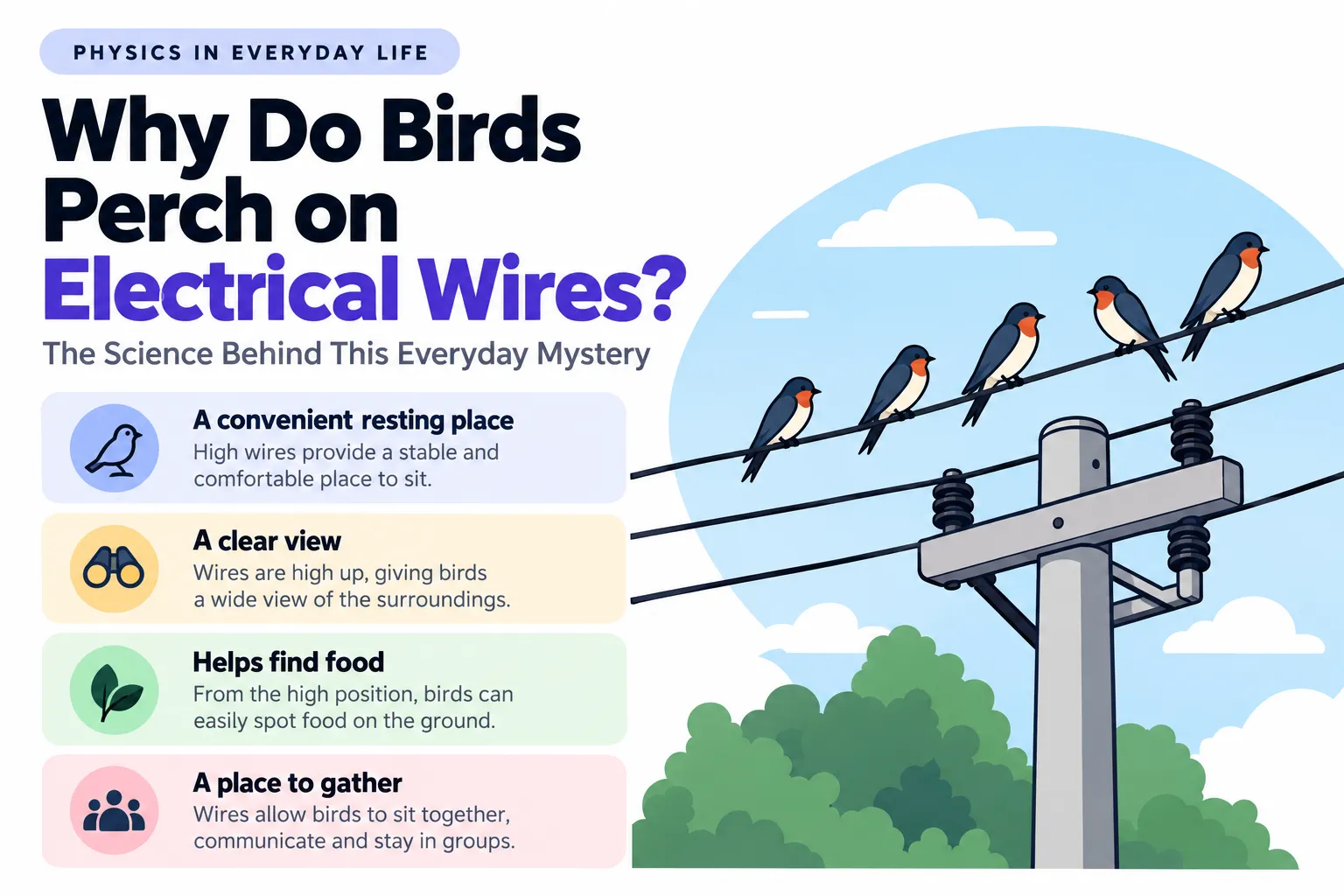
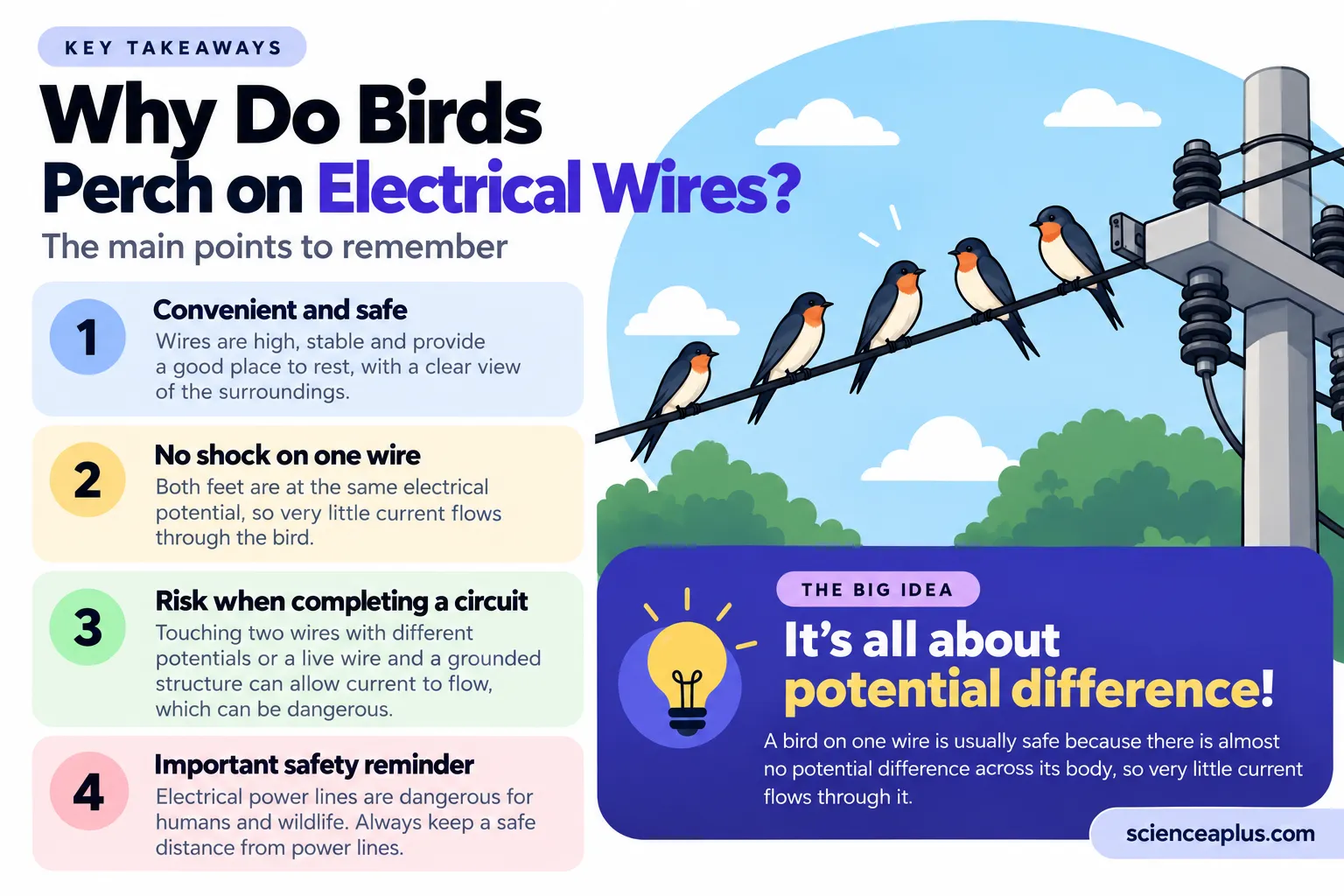
Why do birds perch on electrical wires? Because a wire is a high, open and predator-proof perch with a clear view in every direction. They do not get electrocuted because both feet touch the same wire, so there is almost no potential difference across their bodies, and almost no current flows through them.
That raises a puzzle. The wire a swallow rests on could kill you in an instant. What is different about the bird, and when does the same wire become dangerous for it too? This article answers both halves of the question, with real numbers, a calculator and exam-style practice. It is a neat piece of everyday physics hiding in plain sight.
Why do birds perch on electrical wires?
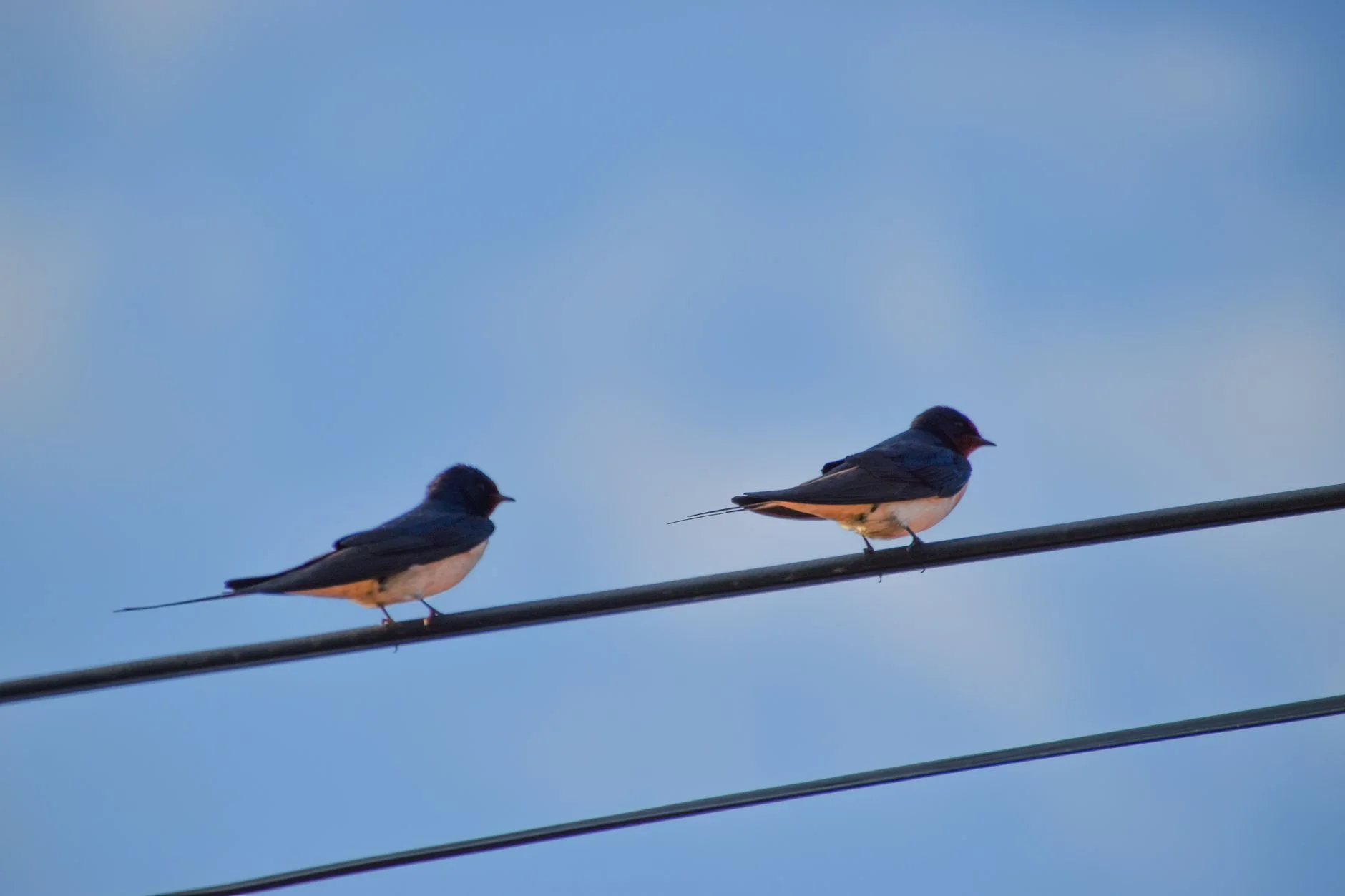
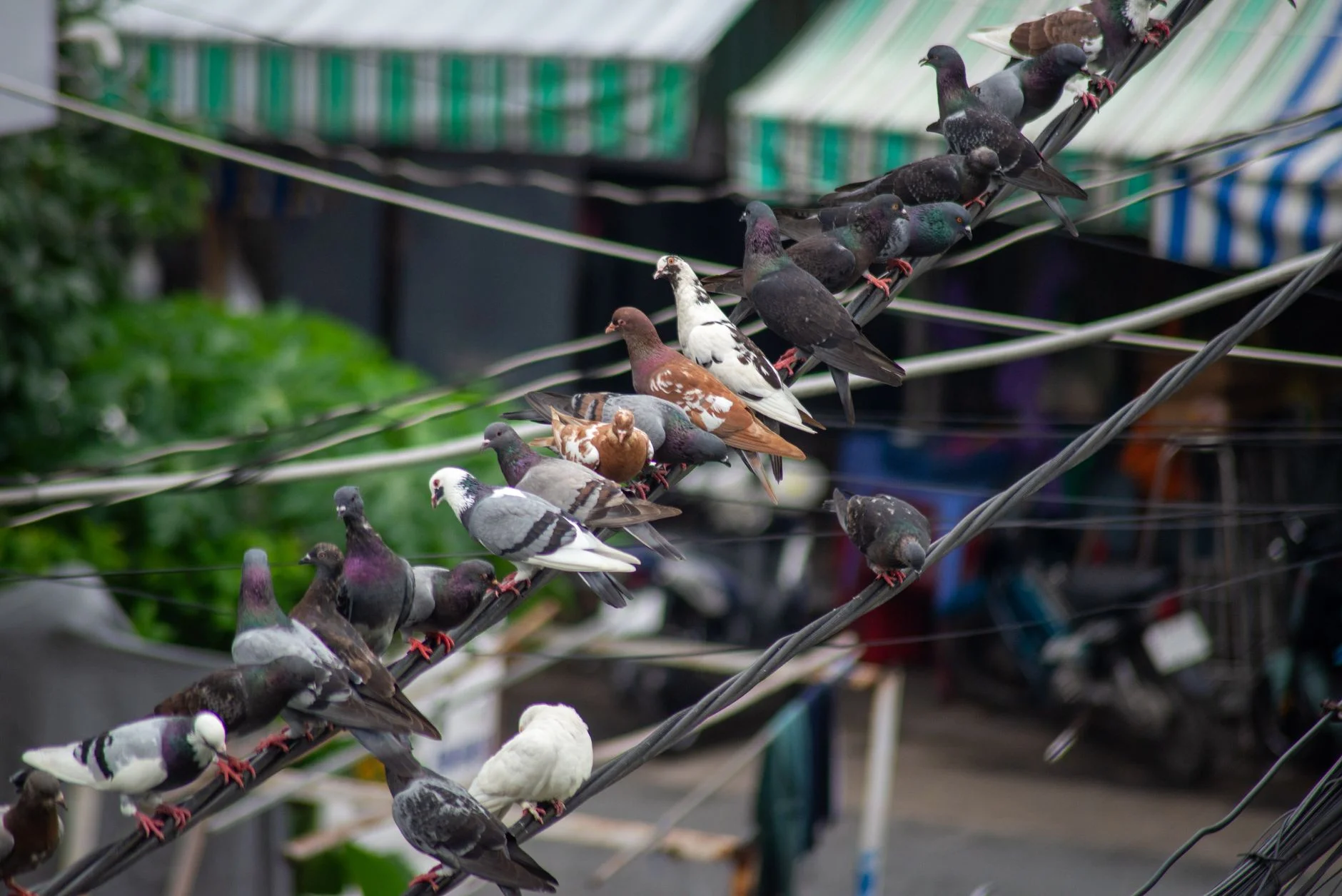
Birds do not choose wires because of the electricity. They choose them for the same reasons they pick a fence post, a rooftop or a branch: the position is useful. Wires and poles happen to be everywhere, and they are often in the very places where birds want to be, along roads, across fields and between buildings.
A lookout above the ground
A wire is high and open, so a bird sitting on it can see a long way in every direction. That matters whether the bird is hunting or hiding. Ground predators such as cats and foxes cannot reach a wire strung between two poles, which makes it a safer resting place than a fence or a lawn.
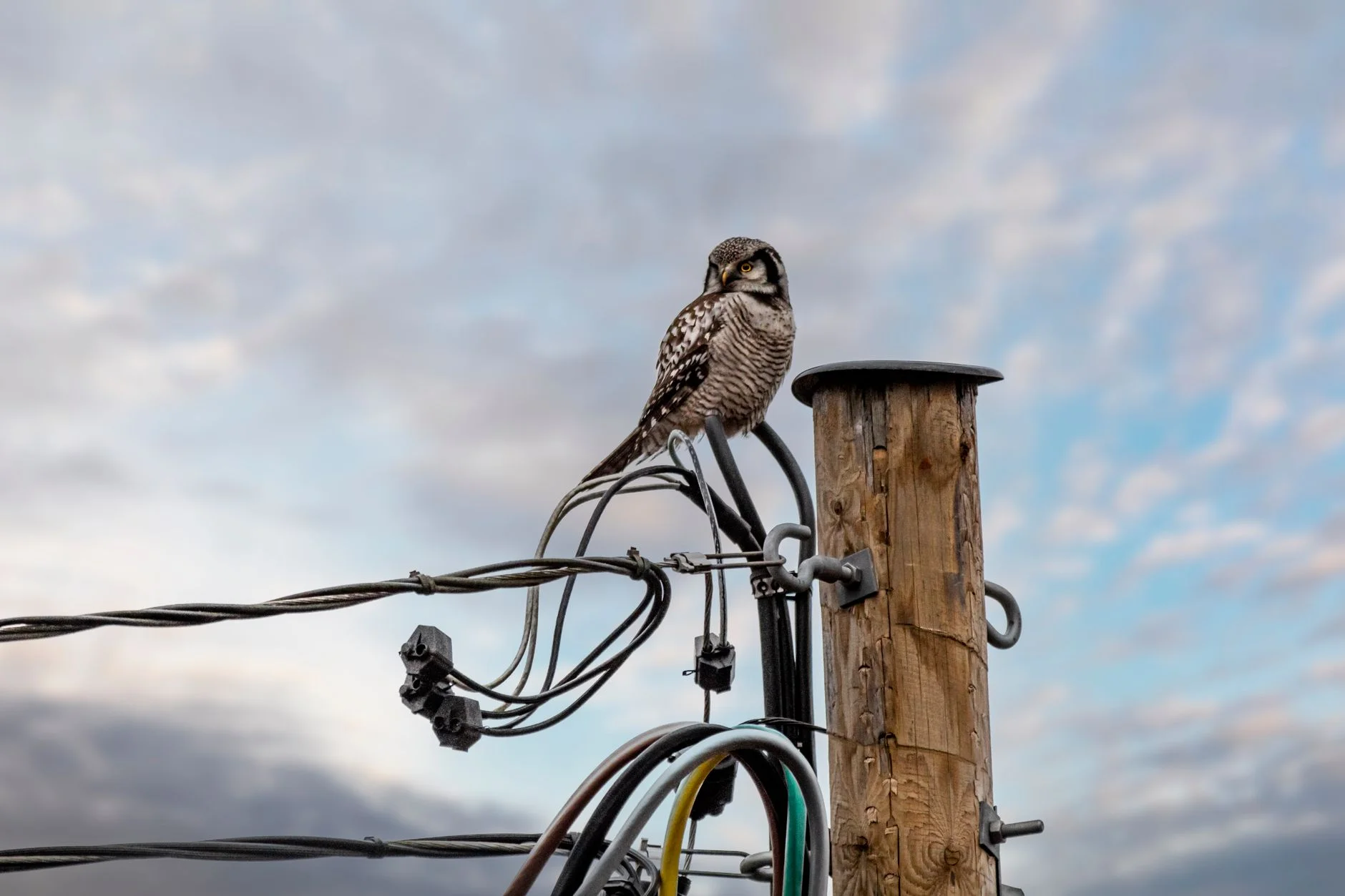
For birds of prey, the lookout is a hunting tool. Researchers studying Bonelli’s eagle describe electricity pylons as providing “safe and vantage perching points”, largely free from human disturbance, which the birds use “as hunting and roosting perches, as well as nesting platforms”. The RSPB likewise tells people to look out for buzzards perching on lampposts and fences at the side of roads. From a high perch, a hunter simply watches for movement below and drops onto its prey.
Small insect-eaters use wires in a different way. Swallows and martins sweep out from a perch to snatch flies in mid-air, then return to rest. If you are curious about what else birds catch and eat, see what birds eat.
Somewhere to rest and gather
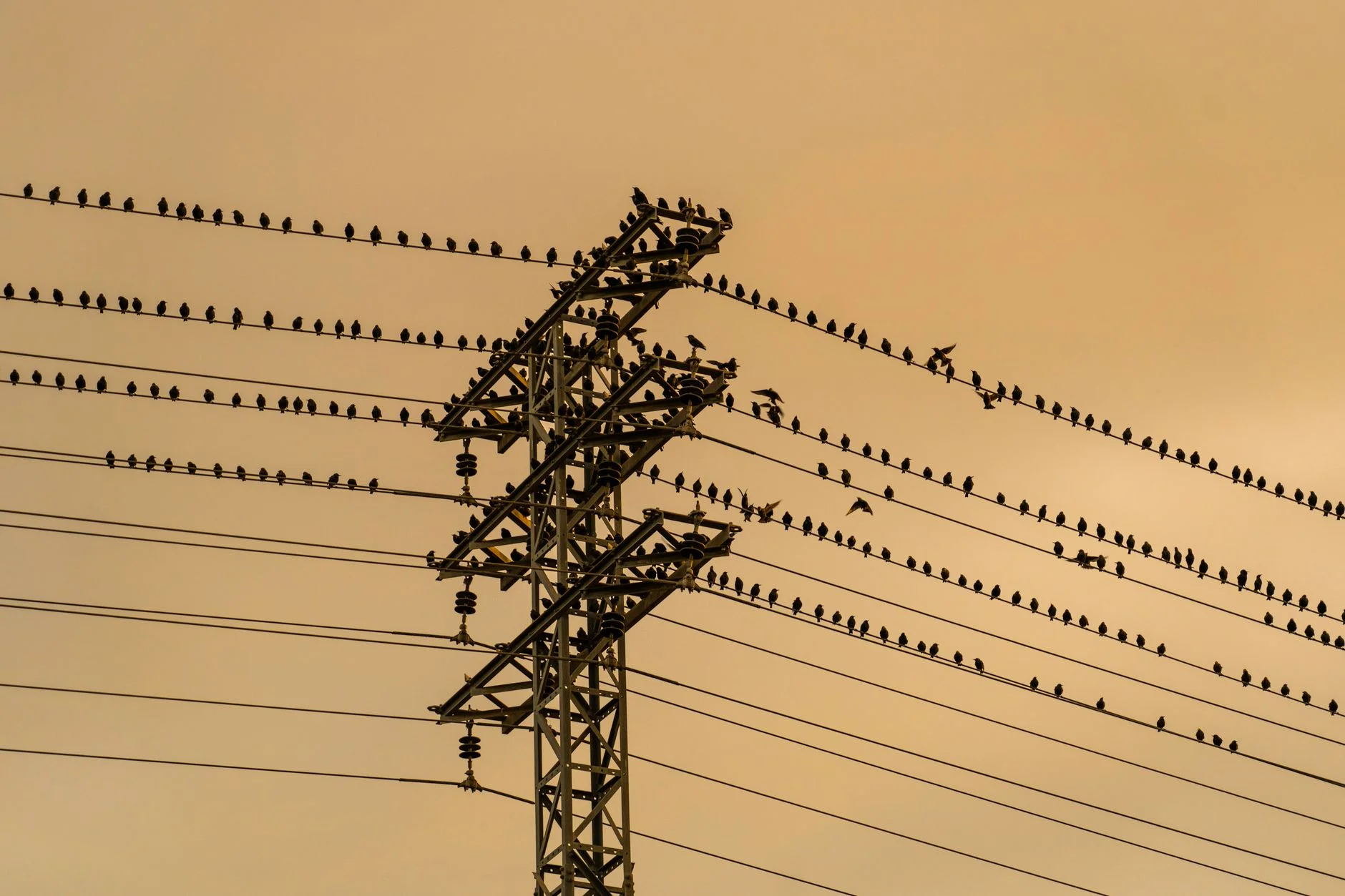
Wires are also meeting points. According to the RSPB, as autumn approaches, large groups of swallows often gather on overhead wires and in reedbeds before heading south to Africa. Migrating swallows cover more than 200 miles a day, mainly in daylight, at speeds of 17 to 22 miles per hour, so a rest on a wire before setting off is well earned.
Flocks of other birds line up on wires as well. A study of starling murmurations (the huge pre-roost gatherings) concluded that they are primarily an anti-predator adaptation. Being one of many is safer: more eyes spot danger sooner, and a predator has a harder time picking out a single target. The same idea of safety in numbers is a likely reason for the long rows of birds you see on wires, although the researchers were studying starling murmurations rather than birds on cables.

Somewhere to nest
Some birds go further and build their homes on the supports. White storks are famous for it. They pile huge stick nests on top of electricity poles and pylons, which look like tall, safe platforms. The photographs below show two real examples, one in Armenia and one above an electricity pole beside a street lamp.
The same habit appears in Scotland, where ospreys once nested on top of an electricity tower at Alyth in Perthshire. Their story, and how the power company solved the problem, appears later in this article.
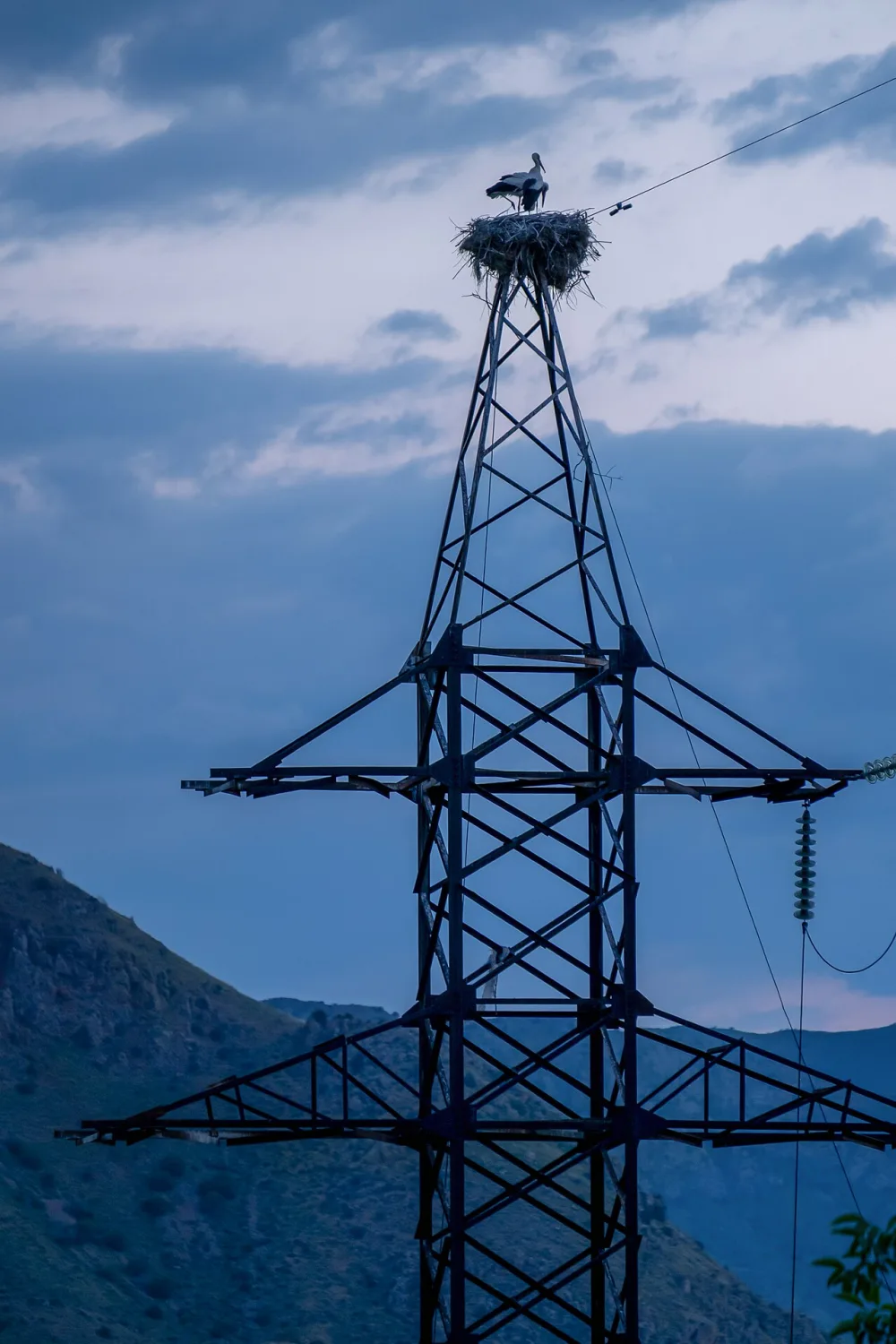
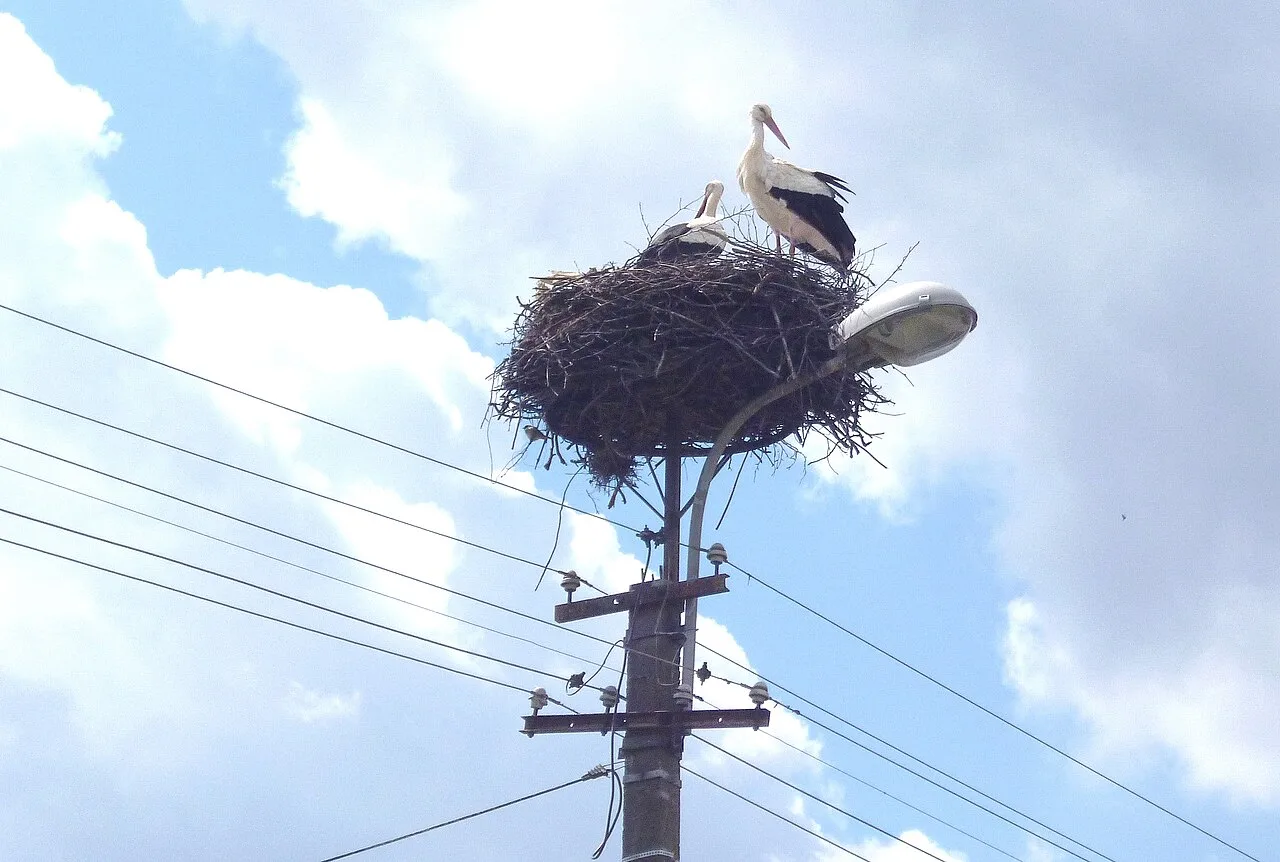
Nesting on a pole is a mixed blessing, though. The sticks can touch live parts of the equipment, which is one reason engineers pay so much attention to where nests end up. Birds are not as unusual in using human structures as you might think, and many other kinds of amazing birds have found clever ways to share our towns and fields.
The quick answer: why don’t birds get electrocuted?
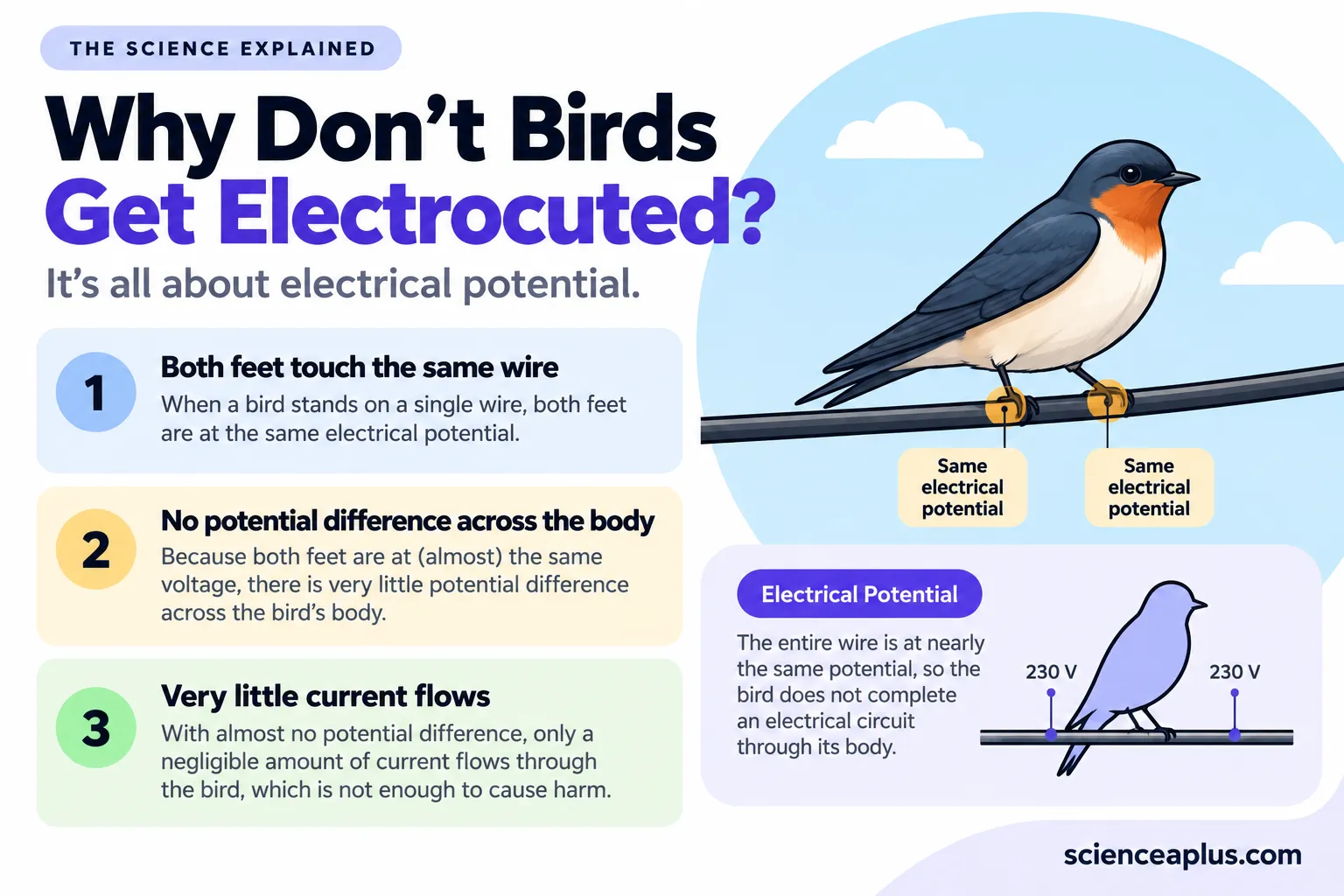
Electricity only flows through a bird if there is a voltage difference between two points on its body. When a bird stands on one wire, both feet touch the same conductor. They are at almost exactly the same electrical potential, so almost no current is pushed through the bird.
A tiny current does pass through the bird, because the bird’s body and the short piece of wire between its feet are two paths side by side. It is far too small to matter. The full physics, with real numbers, comes next.
The same wire becomes deadly the moment a bird touches something at a different potential: a second wire, or an earthed pole or crossarm. That is why the danger depends on what the bird touches, not on how high the voltage of the wire is. The sections on when birds really are electrocuted explain who is at risk and how engineers protect them.
Think of it like standing on a hillside. A ball only rolls if there is a slope between two points. Two feet on the same wire stand on flat ground, electrically speaking, so nothing is driven through the body. The next section turns that picture into proper physics, using the equation you meet at GCSE: V = IR.
Why don’t birds get shocked on power lines? The physics of potential difference
To see why a bird on one wire is safe, you need one idea: electric current needs a potential difference (p.d.), measured in volts. A p.d. is a difference in electrical “push” between two points. Charge only flows through something if there is a push across it. In a circuit, conventional current flows from the positive terminal round to the negative, and the p.d. is what drives it, as explained in our article on the direction of current.
Current needs a potential difference
BBC Science Focus puts it neatly: it is not voltages per se that kill, but voltage differences, which are needed for electricity to flow. If a bird lands on a single power line at, say, 35,000 volts, the lack of a voltage difference keeps it safe. If it extends its wings and touches another line at a different voltage, though, it will be electrocuted. That is why electricity companies put plenty of space between cables.
Notice what this means. The size of the voltage on the wire is not the deciding factor. What matters is the voltage across the bird, between the two places where it touches the equipment.
The bird is a parallel path
Now look at the circuit. Between the bird’s two feet there are two routes for current: the bird’s body, and the short length of metal wire between its feet. These two routes are side by side, which makes them a parallel circuit. The AQA GCSE Physics specification states two rules for parallel circuits that we need:
- the potential difference across each component is the same;
- the total current is the sum of the currents through the separate components.
So the p.d. across the bird equals the p.d. across the little piece of wire. And that piece of wire is a good conductor with a tiny resistance, so the p.d. across it is tiny. Now apply the GCSE equation:
V = I × R
where V is potential difference in volts, I is current in amperes and R is resistance in ohms. A tiny V across the bird’s body gives a tiny current through it.
You will sometimes hear that electricity “takes the path of least resistance”. That is only half the story, and it is worth getting right. Current takes every available path, and it divides between them according to their resistances. Most flows through the low-resistance metal, but a small share does flow through the bird. A physicist answering a question on the University of Illinois “Ask the Van” site makes the same point: the current follows all the paths, how much flows depends on their resistance, and almost none of it detours through the bird.
Putting numbers on it
Let us calculate it. A typical overhead conductor, an aluminium-and-steel type known as “Dog” conductor, has a resistance of about 0.28 ohms per kilometre. That is 0.000 28 ohms for each metre. Suppose a bird’s feet are 4.0 cm (0.040 m) apart and the wire carries a current of 200 A. These last two values are assumptions for the example; real line currents vary a great deal.
- Resistance of the wire between the feet: 0.000 28 Ω/m × 0.040 m = 0.000 011 2 Ω, which is 1.12 × 10⁻⁵ Ω.
- P.d. across that piece of wire: V = I × R = 200 A × 0.000 011 2 Ω = 0.002 24 V, about 2.2 millivolts.
- The bird is in parallel with this piece of wire, so it has the same p.d. If we assume the bird’s body has a resistance of 1,000 Ω, the current is I = V ÷ R = 0.002 24 V ÷ 1,000 Ω = 0.000 002 24 A, about 2.2 microamperes.
The 1,000 Ω figure is an assumption made for the calculation. We have no verified measurement of a bird’s body resistance, so treat the result as an illustration of the size of the effect rather than an exact value. The conclusion does not depend on it: whatever sensible resistance you pick for the bird, the p.d. across it is only a few millivolts.
| Quantity | Value |
|---|---|
| Wire resistance per metre | 0.000 28 Ω |
| Gap between the bird’s feet | 0.040 m |
| Resistance of that piece of wire | 0.000 011 2 Ω |
| P.d. across the bird (current 200 A) | 0.002 24 V |
| Current through the bird (assuming 1,000 Ω) | 0.000 002 24 A |
Compare 2.24 millivolts with the 230 V of a UK mains socket and you get a ratio of about one to a hundred thousand. Try changing the numbers yourself in the calculator below. Make the gap between the feet bigger, or the current larger, and see how far you have to go before the bird feels any real p.d.
Explain why a bird standing on one high-voltage wire is not harmed, but a person on a ladder touching the same wire would be. (4 marks)
The bird has both feet on one conductor, so there is almost no potential difference between its feet and across its body. By V = IR, a tiny p.d. gives a tiny current through the bird. The person on the ladder is connected to earth (0 V) through the ladder and the ground, so the full voltage of the wire is across their body. This causes a large current through them, which can cause an electric shock, burns or death.
Static charge versus current: a common mix-up
A bird landing on a live line may pick up the same potential as the wire, which involves a brief movement of a little charge as its body settles to that potential. That is a one-off event, not a steady flow. It is quite different from the current in a circuit, and also from the build-up of charge you get when rubbing a balloon on your hair; see static electricity for that. The important quantity for danger is a continuing current driven by a p.d.
What about the buzzing you hear near pylons?
If you have stood under a high-voltage line you may have heard a buzzing or crackling noise. At very high voltages the air around a conductor can become ionised and conduct a little, an effect called corona discharge. We explain it in corona discharges in high-voltage lines. The noise is a sign of the huge voltages involved, but it has nothing to do with a bird’s safety on a single wire.
The same idea does matter for people. High voltages can arc across small gaps in air, so you do not need to touch an overhead line to be hurt by it. We return to this in the safety section below.
When can birds get electrocuted?
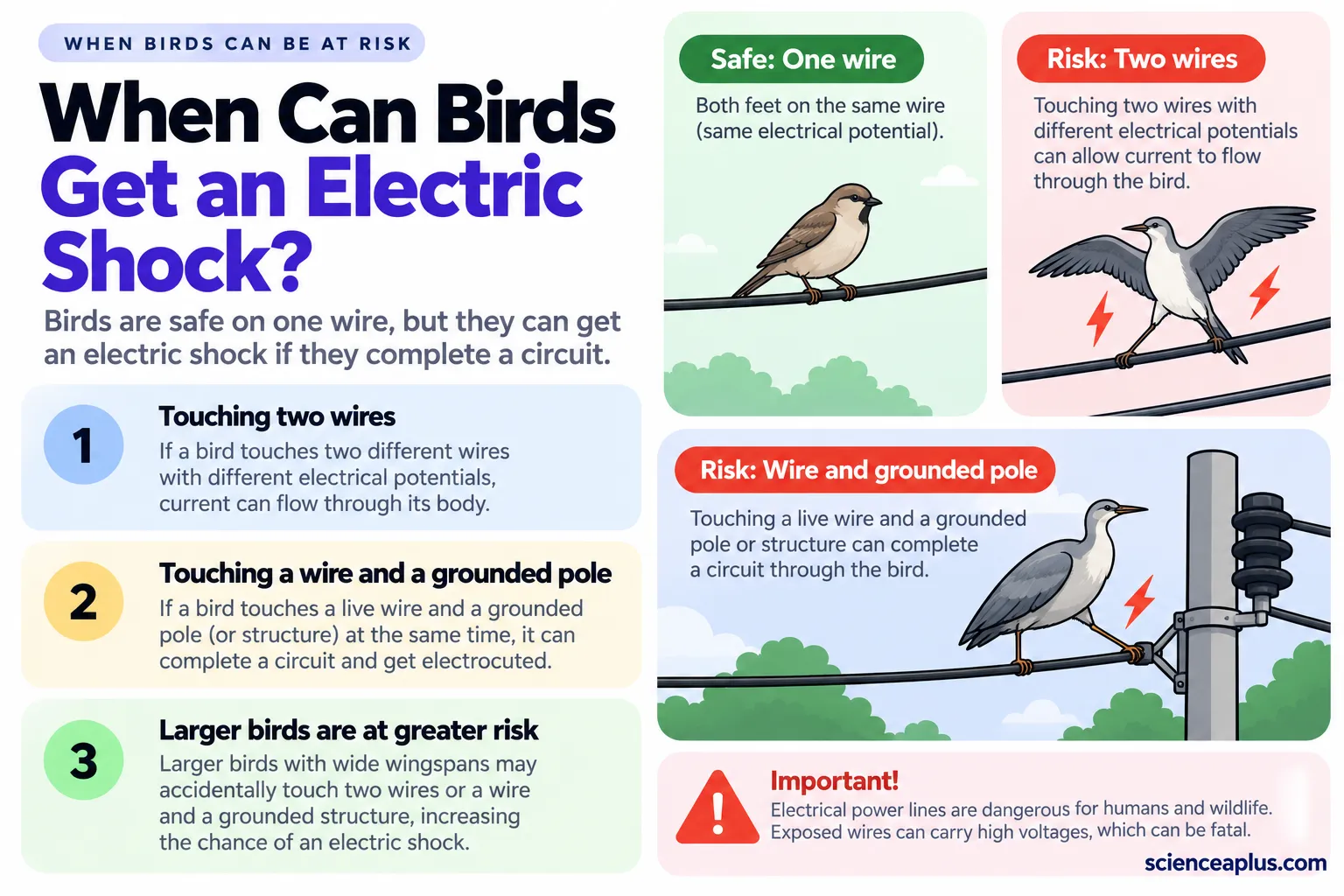
So far the news has been good for birds. But the same physics that protects a swallow on one wire explains why other birds die. Bird electrocution is a real conservation problem, and it happens when a bird completes a path between two points at different potentials.
The Avian Power Line Interaction Committee (APLIC) in North America explains that electrocutions “may occur because of a combination of biological, environmental, and electrical design factors”. The key electrical factor is the physical separation between energised parts, or between an energised part and earthed hardware. The biological factors include the bird’s body size, its behaviour, and how common it is in the area.
Bridging two wires
Different wires on the same line are at different potentials. A bird whose wings or body touch two of them has a large p.d. across it, which drives a large current through its body. This is exactly the case BBC Science Focus describes when it says that a bird extending its wings to touch another line at a different voltage will be electrocuted.
Touching a live wire and an earthed pole
The second danger is a live wire together with something earthed. The UK domestic supply is about 230 V, and the AQA specification tells us that the earth wire is at 0 V. A pole, a metal crossarm or a damp tree branch connected to earth is a path to 0 V. A bird that touches a live part and earthed hardware at the same time has the whole voltage across it. In North America the same hazard is described as touching an energised part and “grounded” hardware; in the UK we say earthed.
Why size matters
APLIC explains that electrocution happens when the gap between energised parts, or between an energised part and earthed hardware, is smaller than a bird’s head-to-foot or wrist-to-wrist span. That is why large birds are at greater risk. A golden eagle has a wingspan of about 2.2 m and weighs 3.7 to 5.3 kg, according to The Wildlife Trusts. A barn swallow weighs about 20 g, with a wing length of about 12.6 cm, according to the British Trust for Ornithology (BTO). Swallows can sit between wires with room to spare. An eagle can reach across a gap that a swallow could never span.
There is one more twist. APLIC notes that, because feathers provide insulation when dry, contact must typically be made with fleshy parts such as the skin, feet or bill. So the danger is not about feather tips touching a wire. It is about bare skin making the connection.
Raptor electrocution: a real conservation problem
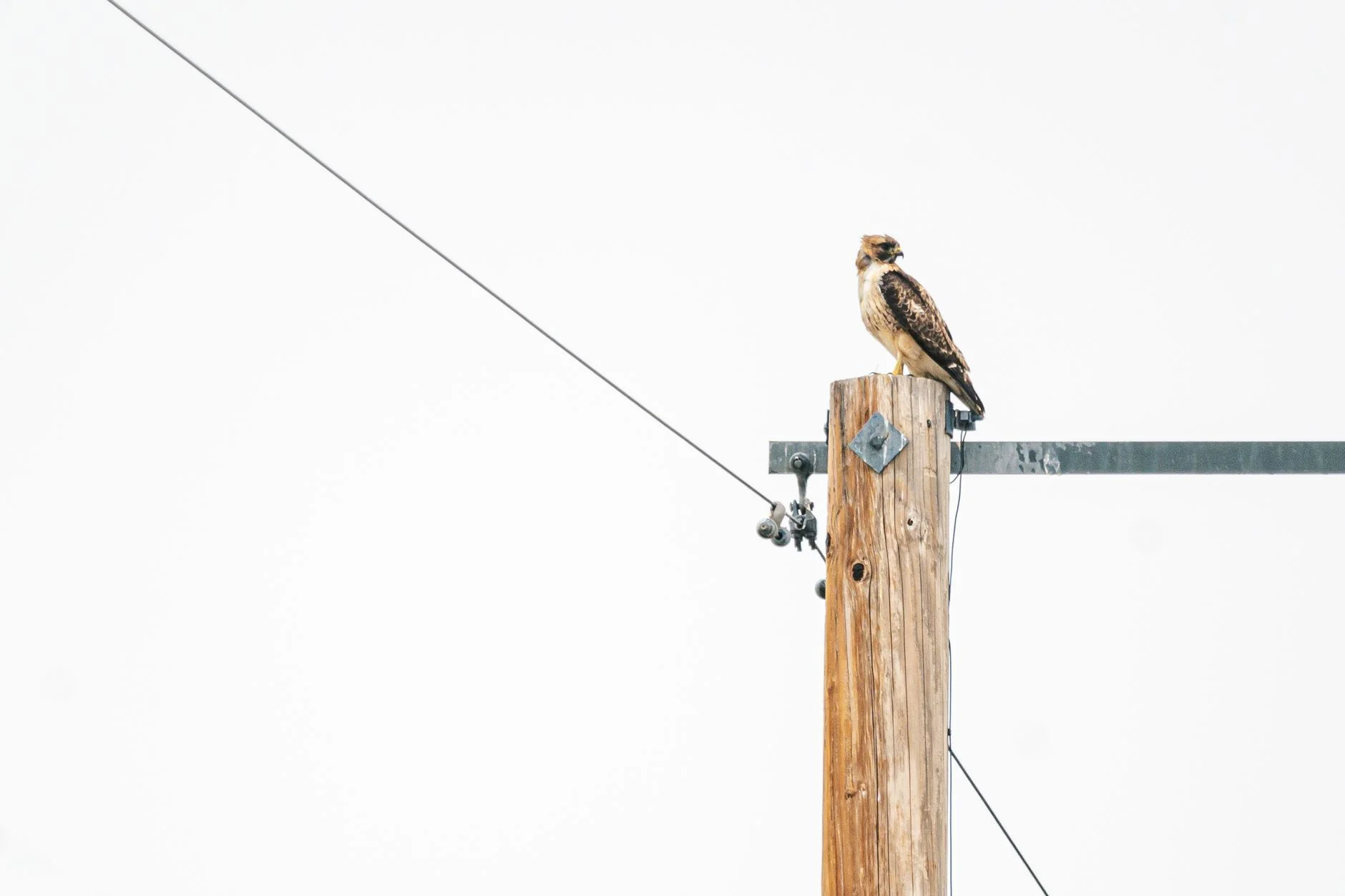
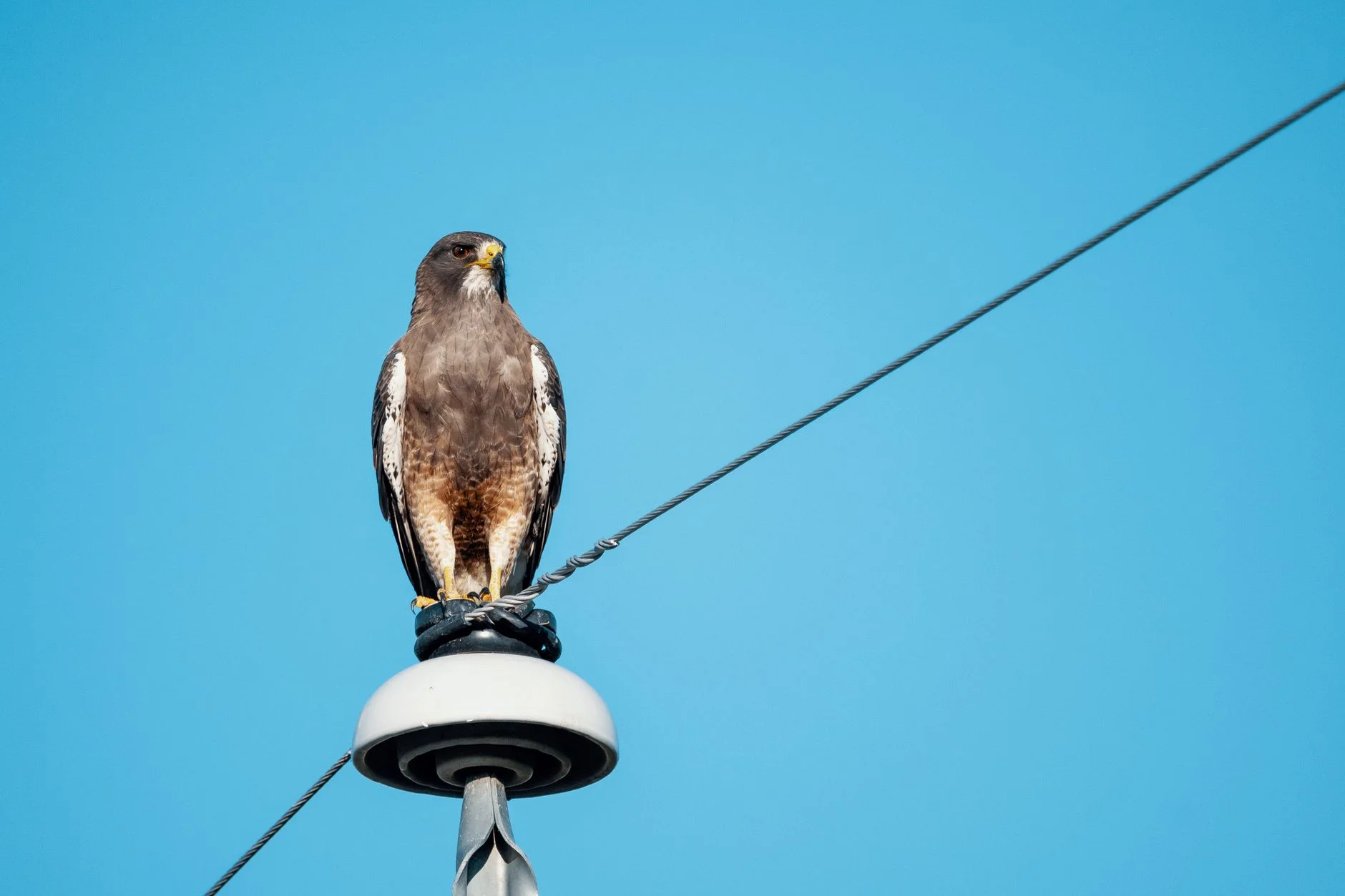
Birds of prey love poles, as the photographs above show, and the top of a wooden pole is often the best vantage point for miles. Unfortunately, it can also be the most dangerous. BirdLife Europe reports that large soaring birds, including the Eastern Imperial Eagle, Saker Falcon, White Stork and Common Buzzard, are electrocuted on specific unsecured types of masts, usually by touching two energised parts or an energised part and an earthed one.
A study published in 1999 by Bayle in the Journal of Raptor Research looked at western Europe and found that medium-voltage lines (1 to 60 kV) were responsible for most raptor deaths on electric lines. In France, 96.5% of 649 birds of prey found dead under power lines were under medium-voltage lines. Of the raptors killed on those lines, 93.5% were electrocuted and 6.5% collided. On high and very high-voltage lines, birds of prey made up only 0.1 to 0.4% of all the birds killed, and in the French study all the raptors found under those lines had died by collision, not electrocution. At least 30 of the 37 raptor species that regularly breed or winter in western Europe have been killed on power lines.
This follows from the physics. Large high-voltage pylons have wide gaps between their wires and long strings of insulators, so a bird cannot bridge them. Smaller distribution poles are different: the live parts sit closer to each other and to the earthed crossarm, within reach of a big bird.
| Line type | Example UK voltages | Main bird risk |
|---|---|---|
| Big steel pylons (high voltage) | 400 kV, 275 kV, 132 kV | Collision. The wires are far apart, so electrocution is rare. |
| Wooden or concrete distribution poles (medium voltage; 1 to 60 kV in Bayle’s study) | For example 11 kV, 33 kV | Electrocution on poorly designed poles, and collision |
| Low-voltage lines | 400 V (homes get about 230 V) | Some have insulated cables, according to HSE |
The UK’s high-voltage grid (run by National Grid in England and Wales, and by SSEN Transmission and SP Energy Networks in Scotland) operates at 400 kV and 275 kV, and its substations feed lower-voltage networks at 132 kV, 66 kV and 33 kV. That electricity starts in power stations, where generators turn movement into electrical energy.
The problem is not confined to Europe. A 2014 study by Loss, Will and Marra in PLOS ONE estimated that between 12 and 64 million birds are killed each year at power lines in the United States. Of these, between 8 and 57 million are killed by collision and between 0.9 and 11.6 million by electrocution. These are US figures only. For Bonelli’s eagle, researchers describe electrocution on pylons as a major driver of population declines. In Germany, a 2021 study commissioned by the conservation group NABU estimated that at least 1.5 million birds a year die at power poles and lines, from collisions and electrocution together.
How power companies make lines bird-safe
Because the cause is understood, the fixes are practical. They fall into two groups: those that stop electrocution and those that stop collisions.
Separation
Where eagles occur, APLIC recommends 60 inches (150 cm) of horizontal separation and 40 inches (100 cm) of vertical separation between energised parts, or between an energised part and an earthed one. APLIC’s earlier raptor guidance, from 1996, used the same 60-inch minimum, or insulation where that was not possible. APLIC first published its manual Suggested Practices for Avian Protection on Power Lines in this edition in 2006 with the Edison Electric Institute.
This also answers a question from earlier. A golden eagle’s wingspan of about 2.2 m is bigger than 150 cm, so why is that gap safe? Because the guidance is based on the reach of vulnerable body parts, such as wrist to wrist and head to foot, rather than feather tip to feather tip.
Covers and hoods
Where there is not enough space, companies can cover the live parts. APLIC lists insulator and conductor covers, bushing covers, arrester covers, cutout covers and jumper wire covers. These covers are “not intended for human protection”, and they must be approved by the company’s engineers. BirdLife Europe recommends “bird protection hoods” on branch poles, which it describes as a very valuable measure, along with crossarm shapes that discourage sitting combined with a safe perch.
Safer perches and buried lines
Another approach is to give birds a safe place to sit away from the live parts. The most thorough fix is to take the lines underground. Bayle wrote that the most efficient protection is to bury the lines, and reported that in 1999 the Netherlands had already buried its medium-voltage lines, while Belgium, Germany and the UK then intended to bury all theirs. That was the position in 1999, not a statement of current UK policy.
Bird flight diverters
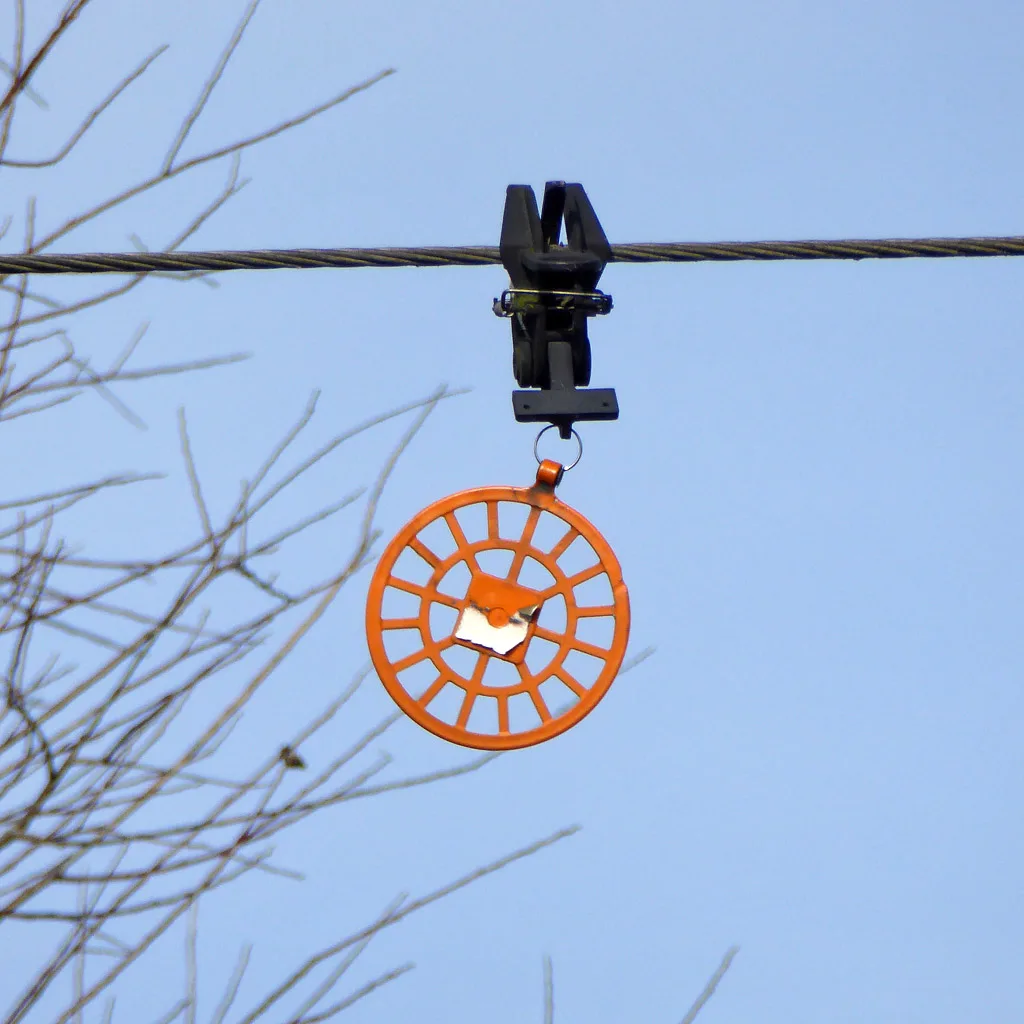
Diverters tackle a different problem. They make wires more visible so that flying birds avoid them, which cuts collisions. They do not stop electrocution. BirdLife Europe lists several types, including swan-flight diverters, flags, reflective “FireFly” diverters and aviation balls. In England, UK Power Networks fitted about 80 diverters along 500 metres of cable near Thorney Dyke, close to Peterborough, after swans collided with the line. The diverters help steer the swans away from the power lines.
Nest platforms
Sometimes the best answer is to give a bird its own tower. At Alyth in Perthshire, ospreys were nesting on top of one of SSEN Transmission’s electricity towers. In March 2014, guided by osprey expert Roy Dennis, the company put up a 25-metre-tall platform with two 8.5-metre perching posts so that work on the substation and line could go ahead. The ospreys moved to the new platform, and in 2024 the pair returned for the tenth year.
Engineers handle the big structures, but there is plenty you can do for birds closer to home. Our guide to creating a bird-friendly home is a good place to start.
Could a person sit on a power line like a bird?
No, and it is important to understand why. A bird gets away with it because it touches nothing but the one wire. You cannot reach an overhead line without a link to the ground: a ladder, a tree, a kite line, a drone, a fishing rod or your own feet. Any of these connects the live wire to earth at 0 V, so the full voltage of the wire is across your body. With V = IR, a large voltage across a body means a large, dangerous current.
It gets worse. The Health and Safety Executive (HSE) warns in its guidance on overhead power lines that an overhead wire does not need to be touched to cause serious injury or death, as electricity can jump, or arc, across small gaps. If a machine, a scaffold tube, a ladder or even a jet of water touches or gets too close to an overhead wire, electricity will be conducted to earth. The bird trick only works for something that touches nothing else. Never test it.
Power line safety: what to do in the UK
HSE’s guidance gives clear advice for the rest of us as well. Tick off the points below to check you know them:
- Never touch an overhead line or a fallen wire, and assume every line is live.
- Keep kites, drones, fishing rods, ladders and long tools well away from overhead lines.
- If a wire has come down, move away and keep other people away. The area around a live wire on the ground may be live too.
- Do not assume a line is dead. Lines that have switched off can come back on automatically after a few seconds, or be switched back on remotely.
- If someone is in danger, call 999 and say that electricity wires are involved. To report damage that is not an immediate danger, call 105, the free number that connects you to your local network operator.
- If a vehicle you are in has touched a wire, stay inside it. If you must get out, for example because of fire, jump out as far as you can so that you are never touching the vehicle and the ground at the same time, then keep away and do not go back until the line’s owner says it is safe.
The 105 number was launched in September 2016 for England, Scotland and Wales. It is used to report power cuts and damage to power lines and substations that could put someone in danger. HSE also asks anyone planning work within 10 metres of an overhead line to take precautions, measured horizontally at ground level from below the nearest wire.
Maths practice questions: birds on a wire
Time to try the calculations yourself. Work through each question, then tap it to check your answer. You can check your numbers with the calculator earlier in this article, and for more ways of comparing physical quantities see our guide to common comparisons in physics.
Question 1. Calculate the resistance of the wire between the bird’s feet. (2 marks)
0.28 Ω/km = 0.000 28 Ω/m. 4.0 cm = 0.040 m. R = 0.000 28 × 0.040 = 1.12 × 10⁻⁵ Ω (0.000 011 2 Ω).
Question 2. Calculate the potential difference between the bird’s feet. (2 marks)
V = I R = 200 × 1.12 × 10⁻⁵ = 2.24 × 10⁻³ V ≈ 2.2 mV. That is about one-hundred-thousandth of mains 230 V (230 ÷ 0.002 24 ≈ 103 000).
Question 3. Calculate the current through the bird. (2 marks)
The bird is in parallel with that bit of wire, so it has the same p.d. I = V ÷ R = 2.24 × 10⁻³ ÷ 1,000 = 2.24 × 10⁻⁶ A ≈ 2.2 µA. (The exact parallel split, 200 × 1.12 × 10⁻⁵ ÷ (1,000 + 1.12 × 10⁻⁵) = 2.24 × 10⁻⁶ A, gives the same answer to 3 significant figures.)
Question 4. What fraction of the current in the wire goes through the bird? (2 marks)
2.24 × 10⁻⁶ ÷ 200 = 1.12 × 10⁻⁸, about 1 part in 90 million (200 ÷ 2.24 × 10⁻⁶ ≈ 8.9 × 10⁷). Almost all the current stays in the wire. It does not mean zero.
Question 5. The current in the wire doubles to 400 A. What happens to the p.d. across the bird and the current through it? (1 mark)
At 400 A: V = 400 × 1.12 × 10⁻⁵ = 4.48 × 10⁻³ V ≈ 4.5 mV. The body current is about 4.5 µA, still tiny (V is proportional to I for a fixed resistance).
Question 6. How far apart would the bird’s feet need to be to have a p.d. of just 1 V between them? (3 marks)
R = V ÷ I = 1 ÷ 200 = 0.005 Ω. Length = 0.005 ÷ 0.000 28 = approximately 17.9 m (17.857…). No bird is 18 m wide, and that is why one wire is safe.
Question 7. An eagle bridges two wires of an 11 kV line. Assume the p.d. between the wires is 11,000 V and the same 1,000 Ω body resistance. Calculate the current and the power in its body. (3 marks)
I = 11,000 ÷ 1,000 = 11 A, about 4.9 million times the 2.24 µA in Question 3 (11 ÷ 2.24 × 10⁻⁶ = 4.91 × 10⁶). Power in the body P = I² R = 11² × 1,000 = 121,000 W = 121 kW (if the current could flow steadily). Fatal.
Question 8. A golden eagle’s wingspan is about 2.2 m, but APLIC recommends 150 cm of horizontal separation. Why can a gap smaller than the wingspan still be safe? (2 marks)
Dry feathers insulate, so a deadly contact needs fleshy parts (wrists, feet, bill); 150 cm is based on wrist-to-wrist / head-to-foot reach, not feather-tip to feather-tip (APLIC).
Test yourself: birds and power lines
Frequently asked questions about why birds perch on electrical wires
Why do birds perch on electrical wires?
Wires are high, open perches with a clear view, and ground predators such as cats and foxes cannot reach them. Birds use them to watch for prey, to rest, and to gather in flocks, as swallows do before migrating. Some large birds also build nests on poles and pylons.
Why don’t birds get electrocuted on power lines?
A bird on one wire has both feet on the same conductor, so they are at almost the same potential. With almost no potential difference across its body, V = IR gives only a tiny current. Danger comes when a bird touches two wires, or a live wire and an earthed object.
Can birds get electrocuted on power lines?
Yes. A bird is electrocuted if it touches two wires at different potentials, or a live wire and earthed hardware such as a pole or crossarm. Large birds such as eagles, buzzards and storks are most at risk, especially on medium-voltage poles where the live parts are close together.
Does any electricity flow through a bird on a wire?
Yes, but only a tiny amount. The bird and the short piece of wire between its feet are in parallel, so they have the same potential difference. The wire has very low resistance, so almost all the current stays in the wire. The current through the bird is far too small to matter.
Why are eagles and other large birds electrocuted more often?
Their body parts can span the gap between energised parts, or between an energised part and earthed hardware. According to APLIC, electrocution occurs when that gap is smaller than the bird’s head-to-foot or wrist-to-wrist span. A golden eagle’s wingspan is about 2.2 m, while a swallow weighs about 20 g.
Are power lines insulated?
Mostly not. The Health and Safety Executive says most high-voltage overhead lines have bare, uninsulated wires, though some have a light plastic coating, and many low-voltage lines are bare too. It advises treating all high-voltage lines as uninsulated. A bird’s safety comes from the lack of a potential difference, not from insulation.
Could a person hang from a power line like a bird?
No. A person reaches a line from the ground, a ladder or a tree, which links the live wire to earth at 0 V and puts the full voltage across the body. Electricity can also arc across small gaps, so you do not even need to touch the wire to be badly hurt.
What should I do if I see a fallen power line?
Do not touch it, and assume it is live. Move away, keep other people away, and remember that the area around a wire on the ground may be live. If anyone is in danger, call 999 and say that electricity wires are involved. To report damage that is not an immediate danger, call 105.
Why do swallows line up on wires in autumn?
The RSPB says that as autumn approaches, large groups of swallows often gather on overhead wires and in reedbeds before heading south to Africa. Wires give them a high, open place to rest and gather before a migration that covers more than 200 miles a day.