Ask which is the most common dog breed and most common cat breed in the USA and you get two very different kinds of answer. For dogs, the American Kennel Club (AKC) publishes a yearly league table based on registrations, and the French Bulldog has topped it since 2022. For cats, the most common type is not a breed at all: it is the domestic shorthair. Behind both answers sits some surprisingly good biology, and that is what this article explains: where dogs and cats came from, how people reshaped them, and what that means for their genes and their health.
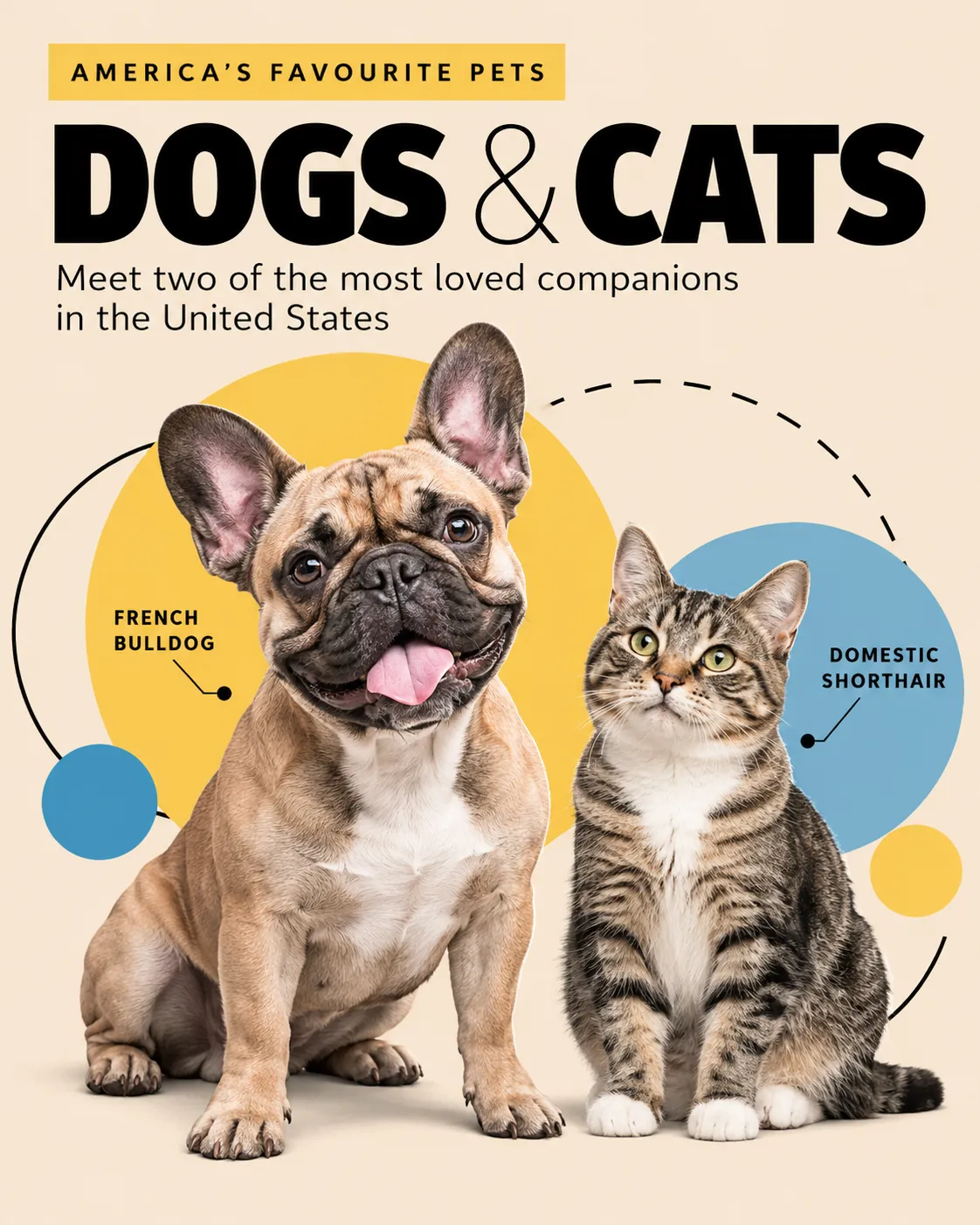
The most common dog breed in the USA: the French Bulldog
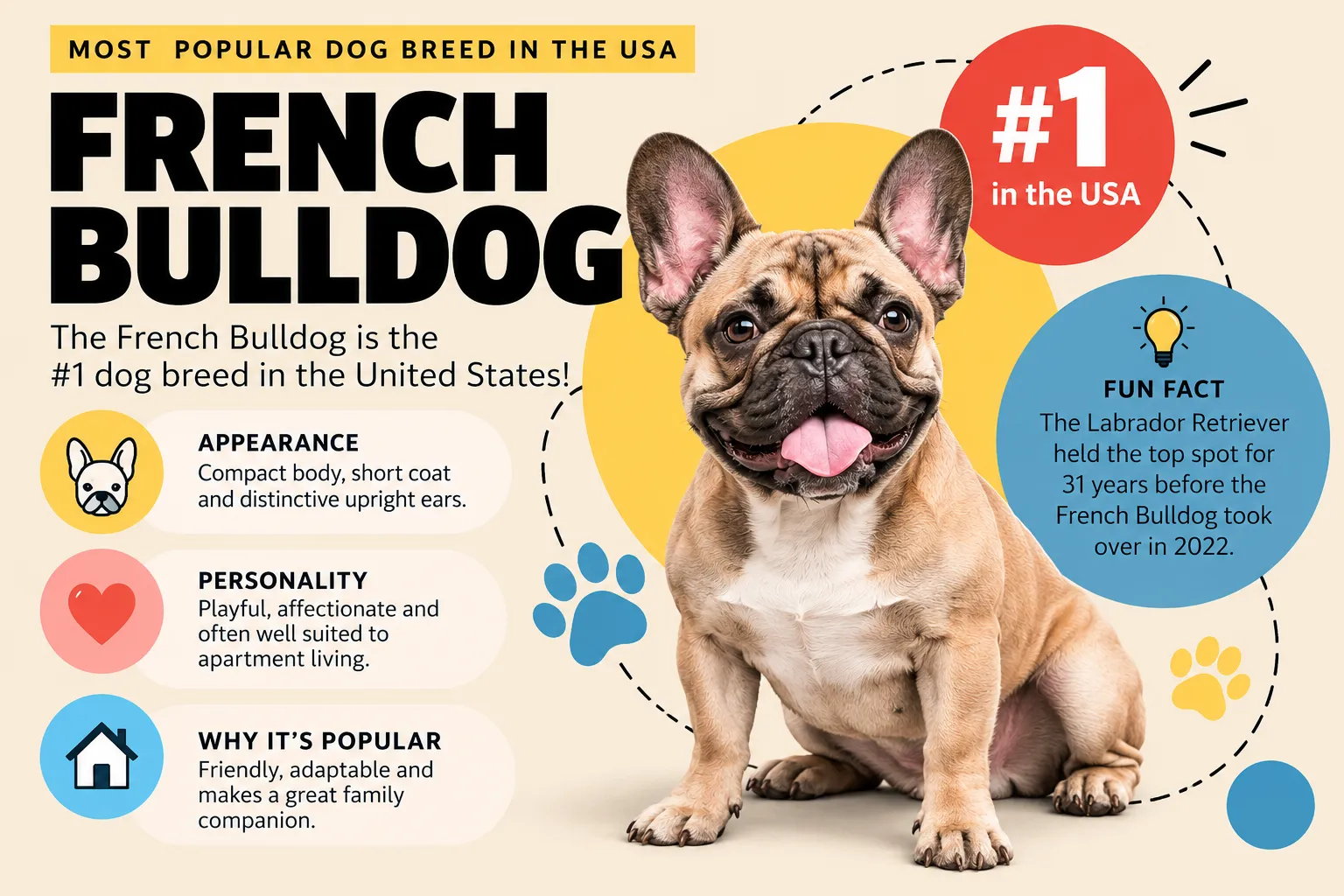
The AKC counts registrations of purebred dogs and ranks the breeds each year. Its 2025 rankings, published in 2026, put the French Bulldog first for the fourth year in a row. Before that, the Labrador Retriever held the top spot for 31 years, from 1991 to 2021, and it is still second. The AKC counted 202 breeds in the 2025 statistics, and it now recognises 205.
| Rank | Breed (AKC 2025 rankings) | Main group |
|---|---|---|
| 1 | French Bulldog | Non-sporting |
| 2 | Labrador Retriever | Sporting |
| 3 | Golden Retriever | Sporting |
| 4 | German Shepherd Dog | Herding |
| 5 | Dachshund | Hound |
| 6 | Poodle | Non-sporting / Toy / Standard |
| 7 | Beagle | Hound |
| 8 | Rottweiler | Working |
| 9 | German Shorthaired Pointer | Sporting |
| 10 | Bulldog | Non-sporting |
Read that table carefully, because it is a good lesson in how to interpret data. The rankings count registered purebred dogs. They do not count every dog in America, so mixed-breed dogs, which are common in shelters and family homes, do not appear at all. The table tells you what people who register purebreds choose, not what is on the average sofa. A scientist would say the sample is biased: it is a measurement of one group, not the whole population.
Why the French Bulldog? The AKC’s own description of the breed points to a compact body, a short coat, upright ears and a friendly, adaptable nature that suits flats and small homes. Popularity is partly about looks and lifestyle, and later in this article you will see why those same looks have a biological cost.
The most common cat breed in the USA: the domestic shorthair
Cats are different. The most common pet cat in the United States is the domestic shorthair, but this is a description, not a breed. It means a cat with a short coat and mixed ancestry, in any colour or pattern: tabby, black, white, ginger, tortoiseshell and more. The Cat Fanciers’ Association lets these cats compete in its Household Pet category, but they have no breed standard, because they are not selectively bred to a fixed template.
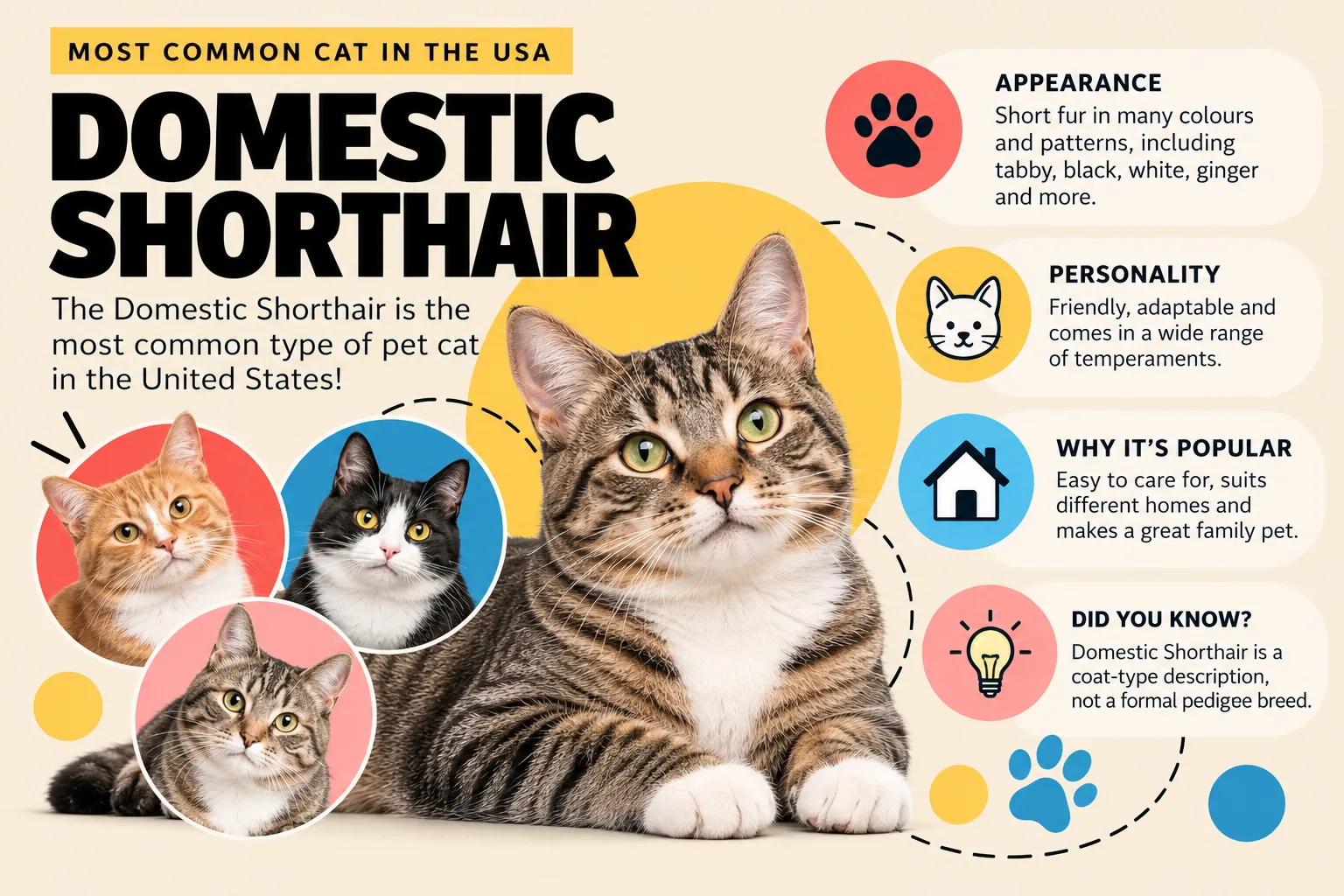
Do not confuse this with the American Shorthair, which is a genuine pedigree breed with a written standard. A cat from a shelter that looks like an American Shorthair is almost always a domestic shorthair. Looking similar is not the same as being the same breed.
Because domestic shorthairs come from many different parents, they carry a wide mix of genes. That matters later, when we look at genetic diversity and inherited health problems.
How many dogs and cats are there in the USA?
The American Veterinary Medical Association (AVMA) surveys pet ownership. Its 2024 Pet Ownership and Demographics Sourcebook estimated that about 45.5% of US households owned a dog and about 32.1% owned a cat, with roughly 89.7 million pet dogs and 73.8 million pet cats. Dogs are therefore the more common household pet, with cats second. These are survey estimates, and later editions of the sourcebook revise them.
Maths practice: 45.5% of households own a dog and 32.1% own a cat. What is the difference in percentage points, and how many times bigger is the dog figure? (3 marks)
Difference = 45.5 − 32.1 = 13.4 percentage points. Ratio = 45.5 ÷ 32.1 ≈ 1.42, so dog ownership is about 42% higher than cat ownership. Remember to say “percentage points” when you subtract two percentages, and “%” when you describe a relative change.
Maths practice: The Labrador was number one from 1991 to 2021 inclusive. How many years is that? (1 mark)
2021 − 1991 + 1 = 31 years. You add 1 because both the first and the last year are included.
What this article covers
Instead of stopping at a league table, we will answer the questions a biologist would ask. Where did dogs and cats come from? What is the difference between artificial and natural selection? How do genes control coat colour, and why are some traits simple while others are not? Why do popular breeds with extreme shapes have more health problems? Each section includes questions you can test yourself on, and a short quiz at the end.
- I can name the number one AKC breed in 2025 and say what the ranking measures
- I can explain why “domestic shorthair” is not a breed
- I can describe why registration data does not show every dog
The science behind it: from wolf to French Bulldog
Every dog breed, from the French Bulldog to the Great Dane, is the same species: Canis familiaris, descended from wolves. How did one wild animal become hundreds of breeds that look so different? The answer combines domestication, selection and genetics.
Where did dogs come from?
Dogs were the first animal people domesticated. Ancient DNA studies show that dogs descend from a population of grey wolves that was different from the wolves alive today. A 2022 study in the journal Nature, which compared 72 ancient wolf genomes, found that dogs are more closely related to ancient wolves from eastern Eurasia than to western ones, but that dogs in the Near East and Africa get up to half of their ancestry from a second wolf population. None of the ancient wolves studied is an exact match for either source, so the true ancestors have not yet been found. The exact time and place are still debated: estimates depend on the method used, and most researchers place domestication in the last Ice Age, and the oldest widely accepted dog remains, from Bonn-Oberkassel in Germany, are more than 14,000 years old. A 2020 study in Science found that several major dog lineages had already spread across Eurasia by about 11,000 years ago. Treat any single date as a research estimate, not a fact carved in stone.
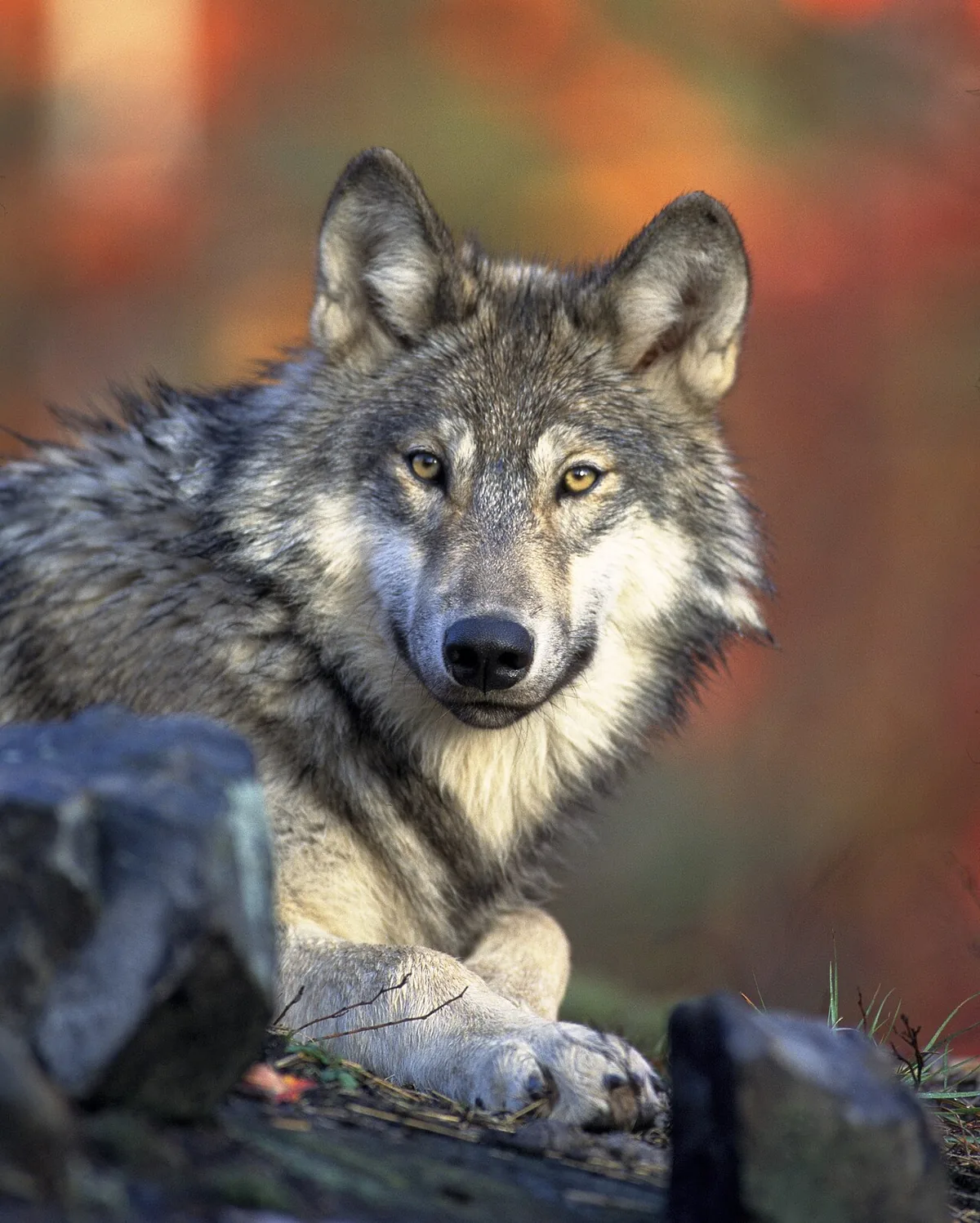
A wolf and a dog can still produce fertile puppies, which is one reason scientists treat them as closely related. You can read about the largest living wolf in the biggest wolf in the world.
Where did cats come from?
Cats followed a different path. Ancient DNA from more than 200 cat remains, studied by Claudio Ottoni and colleagues in 2017, showed that domestic cats descend from the African wildcat, Felis lybica (also written Felis silvestris lybica). Older studies suggested that the story began with the first farmers in the Near East, where stored grain attracted mice and mice attracted wildcats. A larger 2025 study in Science by Marco De Martino, Claudio Ottoni and colleagues, which analysed DNA from hundreds of ancient and modern cats, changed that picture: it found that domestic cats reached Europe only about 2,000 years ago, probably from North Africa, and not with the first farmers. Where and when cats were first domesticated is still an open question, and the team plans to study more ancient African samples, including Egyptian material.
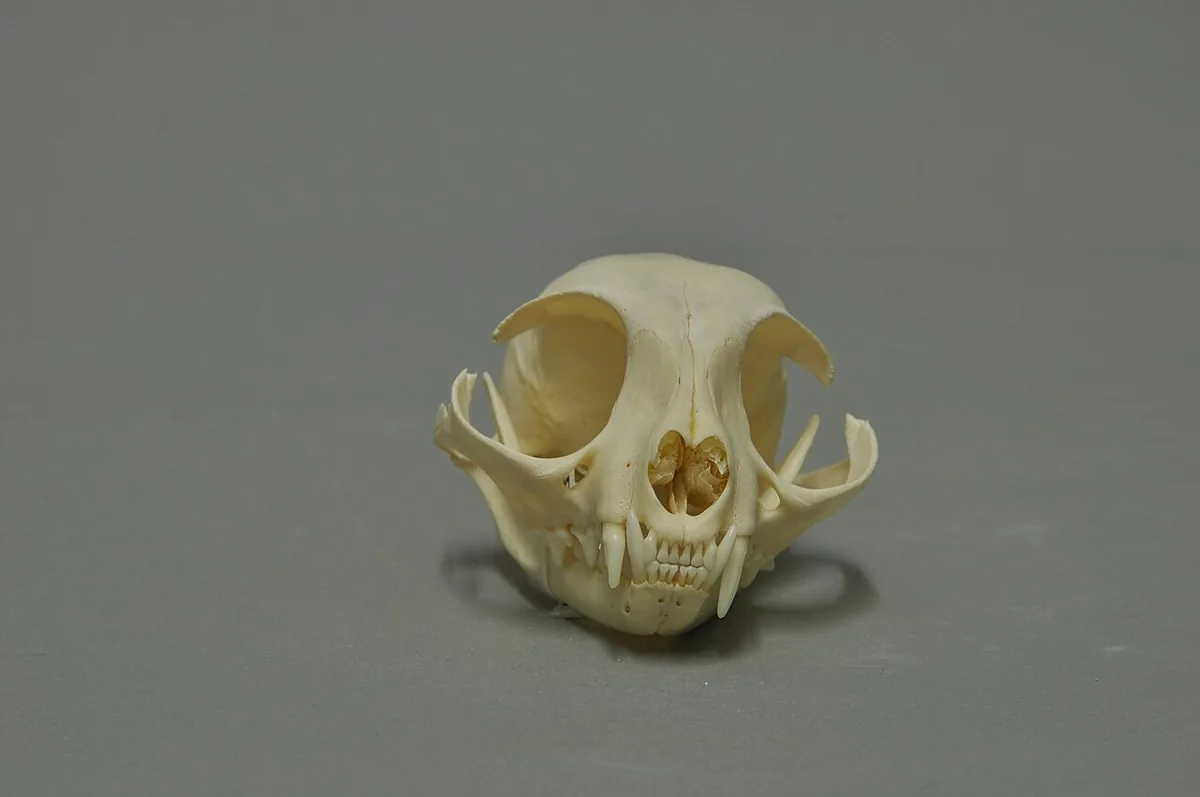
Natural selection versus artificial selection
Charles Darwin used pigeon and dog breeding to explain how species change. The two processes use the same logic with a different “chooser”.
| Feature | Natural selection | Artificial selection |
|---|---|---|
| Who chooses? | The environment | People |
| Trait favoured | Helps survival and reproduction | What the breeder wants: looks, work, temperament |
| Speed | Usually slow | Can be fast, over a few generations |
| Example | Camouflaged wildcats survive and breed | Breeding only the smallest dogs together |
Both depend on the same three ingredients. First, there is variation: individuals differ. Second, variation is inherited: parents pass genes to offspring. Third, some individuals leave more offspring than others. If you only allow the smallest dogs to breed, the next generation tends to be smaller, and after many generations you get a breed.
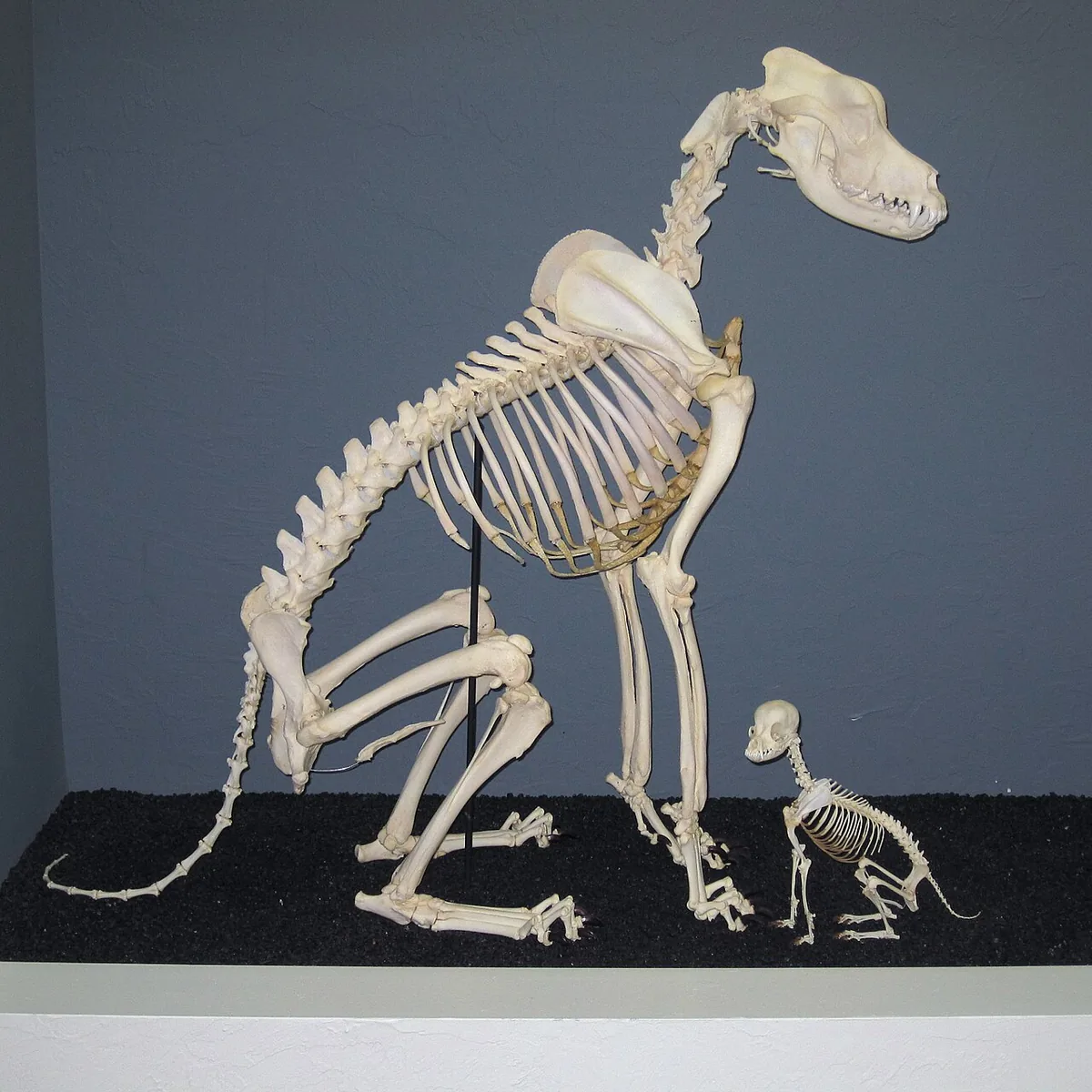
The skeletons above show how far artificial selection can go. A Great Dane and a Chihuahua are the same species, yet they differ enormously in size. Dogs show an unusually wide range of body size for a single species, and breeders have exploited that variation.
The tame fox experiment
Selection can change behaviour as well as shape. In a long-running experiment that began in Russia in 1959, scientists bred silver foxes only from the individuals that were least afraid of people. Over generations, the foxes became friendlier, and some also developed floppy ears and patchy coats, features seen in many domestic animals.
Where do breeds come from?
Most modern breeds are surprisingly young. Many were formalised in the last few hundred years, when breeders started recording pedigrees and keeping studbooks. A breed is a population with a recorded pedigree and a written standard. Closed studbooks mean that dogs of that breed only mate with each other, so the breed’s gene pool is isolated. Cats are less shaped by breeding: the domestic shorthair mates widely, so its gene pool is far more mixed. That difference is central to the health story later.
To understand the language of genes, it helps to revise the basics in genetics definitions: DNA, RNA, mitosis and meiosis.
Explain why the French Bulldog has a much shorter nose than a wolf. (3 marks)
There was variation in skull and nose length in ancestors of the breed. Breeders chose and bred dogs with shorter faces. The alleles for short faces were inherited and became more common over many generations, which is artificial selection.
Give one similarity and one difference between natural and artificial selection. (2 marks)
Similarity: both need variation that is inherited, so favoured alleles become more common. Difference: in natural selection the environment decides who breeds, whereas in artificial selection humans decide.
The genetics of coat colour and breed traits
Breed traits are written in DNA. A gene is a section of DNA that codes for a protein, and different versions of a gene are called alleles. An animal inherits two copies of most genes, one from each parent. A dominant allele shows up if at least one copy is present. A recessive allele shows up only when both copies are the recessive version. If this is new, the page on alleles and inheritance is a good place to start.
Labrador colours: two genes working together
The Labrador Retriever, the long-time champion of the AKC list, comes in black, chocolate and yellow. Two genes are mainly responsible. The B gene (TYRP1) decides whether the dark pigment is black (at least one B allele) or chocolate (two b alleles). The E gene (MC1R) decides whether that dark pigment is deposited in the hair at all. A dog with two recessive e alleles (ee) is yellow, whatever its B genotype. This is called epistasis: one gene masks the effect of another.
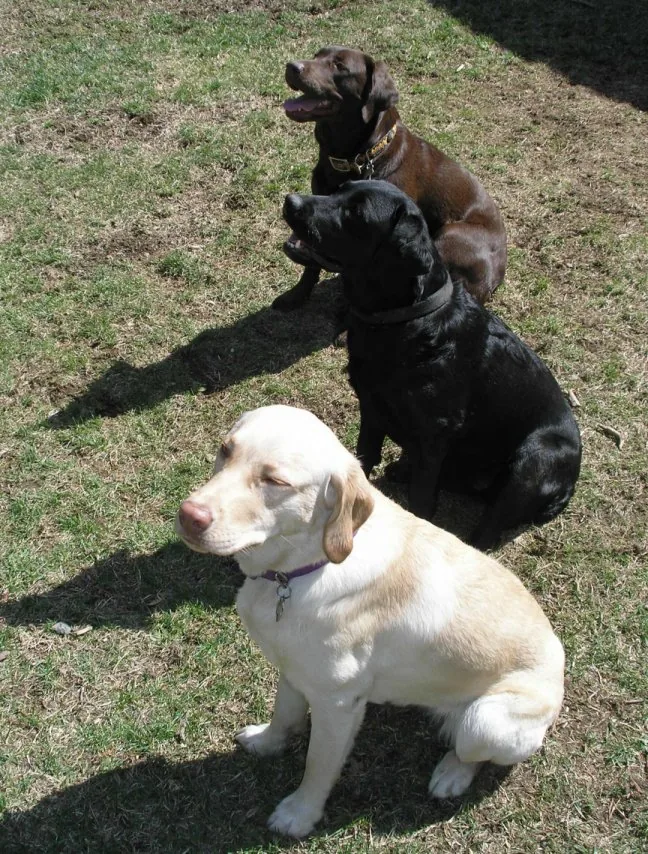
So a yellow Labrador can secretly carry the genes for black or chocolate, because they are “hidden” by ee. That is why two yellow parents can only have yellow puppies, but two black parents can sometimes have a yellow one.
Punnett square: working out the probabilities
Suppose two black Labradors are both carriers, Ee. Each parent can pass on E or e with equal probability, so there are four equally likely combinations:
| E | e | |
|---|---|---|
| E | EE | Ee |
| e | Ee | ee |
One of the four squares is ee, so each puppy has a 1 in 4 chance, or 25%, of being yellow. Half are Ee carriers and a quarter are EE. Chance decides each puppy separately, so a litter of eight is expected to contain about two yellow puppies, but it might contain none or four.
Maths practice: A yellow Labrador (ee) is mated with a carrier (Ee). What is the probability that a puppy is yellow? How many yellow puppies would you expect in a litter of 10? (3 marks)
The yellow parent can only pass on e. The carrier passes on E or e with equal chance. So half the puppies are ee: probability 1/2 = 50%. Expected number in 10 puppies = 10 × 0.5 = 5, although the real number can vary.
Maths practice: Two carriers (Ee × Ee) have a litter of 8. What is the probability that a particular puppy is a carrier? (2 marks)
Two of the four squares are Ee, so 2/4 = 50%.
Why orange cats are mostly male and tortoiseshells are almost always female
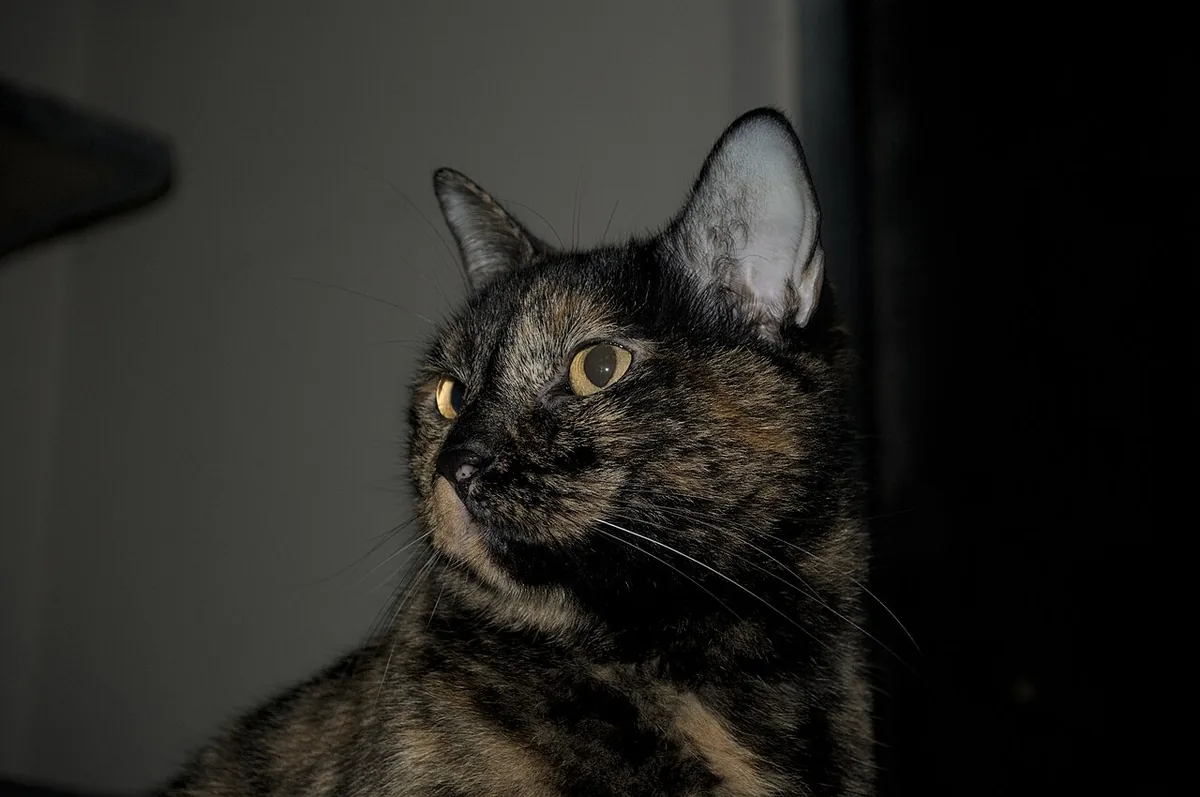
Cat coat colour gives an excellent example of sex linkage. The gene for orange fur lies on the X chromosome. In 2025, two research teams, one at Kyushu University and one at Stanford, independently reported that orange fur is linked to a deletion of about 5,000 DNA letters in the X-linked gene ARHGAP36, which makes the gene active in pigment cells. Both papers were published in Current Biology in 2025. Females have two X chromosomes (XX), males have one X and one Y (XY).
A male cat with the orange version on his single X is orange. A female needs the orange version on both X chromosomes to be orange. If she has one orange X and one non-orange X, early in development each cell randomly switches off one of its two X chromosomes (X-inactivation). Some patches of skin end up expressing the orange X and others the non-orange X, producing the patchwork of a tortoiseshell or, with white spotting, a calico. That is why tortoiseshells are almost always female.
Simple Punnett square for a tortoiseshell mother (XOXo) and a non-orange father (XoY): the four kittens are XOXo (tortoiseshell female), XoXo (non-orange female), XOY (orange male) and XoY (non-orange male), each 1 in 4.
Maths practice: In the cross above, what is the probability that a kitten is a female? What is the probability it is a tortoiseshell? (2 marks)
Two of the four kittens are female (XX), so 50%. Only XOXo is tortoiseshell: 1/4 = 25%. This is a simplified model that ignores other genes such as white spotting.
Single-gene traits and polygenic traits
Coat colour examples are neat because one or two genes explain most of the pattern. Many traits are not like that. A single-gene trait has clear categories, such as yellow or not yellow. A polygenic trait is influenced by many genes, plus the environment, and shows continuous variation, such as height, body weight or hip shape.
| Trait | Type | What it tells you |
|---|---|---|
| Yellow vs non-yellow Labrador | Mostly one gene (with a second masked) | Predictable with a Punnett square |
| Orange vs non-orange cat | One X-linked gene | Depends on sex chromosomes |
| Body size in dogs | Polygenic, with a few genes of large effect | Gradual range of sizes |
| Hip shape (hip dysplasia) | Polygenic plus environment | Cannot be predicted with one test |
Hip dysplasia in Labradors is a good example. In the UK, vets score X-rays of hips using the BVA/Kennel Club scheme, which scores nine features per hip. The total can run from 0 for no signs to 106 at worst. A study of 25,243 UK Labradors found an average score of 13, and estimated that about 35% of the variation in hip score between dogs was genetic (a heritability of about 0.35). The rest comes from environment, such as growth rate, exercise and weight. Because many genes are involved, breeders cannot simply remove one allele, but they can choose parents with lower scores.
All of these traits begin with DNA being read to make proteins. For how that works, see the central dogma in biology.
Breed and health: the cost of extreme shapes
Selective breeding gives us predictable looks and temperaments, but selecting hard for one feature can cause problems elsewhere. The French Bulldog shows this clearly. It is a brachycephalic (short-skulled) breed. The skull is short, but the soft tissues inside it, such as the soft palate and tongue, have not shrunk to match. The result can be a crowded airway.
The medical name is brachycephalic obstructive airway syndrome (BOAS). In a 2021 study of UK veterinary records by the Royal Veterinary College’s VetCompass programme, which compared 2,781 French Bulldogs with 21,850 dogs of other breeds, the Frenchies had around 31 times the odds of being diagnosed with BOAS. That is a statistical measure of association, not a prediction for every dog, but it is a very large effect.
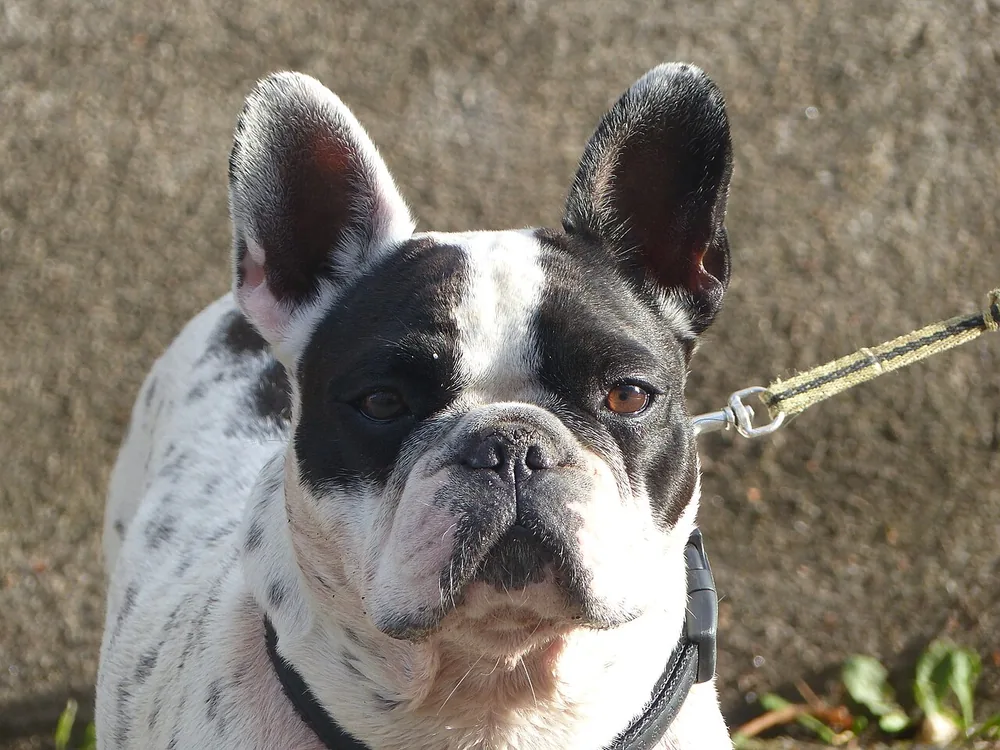
The Kennel Club and the University of Cambridge launched the Respiratory Function Grading Scheme in 2019 so vets can grade breathing from 0 (clinically unaffected) to 3 (severe signs). The advice is not to breed from Grade 3 dogs. Even then, the scheme’s creators note that the inheritance of BOAS is complex and not always entirely predictable, so healthy parents cannot guarantee a healthy puppy. Anyone thinking of getting a flat-faced dog should speak to a vet and look at the Kennel Club and RVC advice first.
Inbreeding and genetic diversity
Because purebred dogs come from closed studbooks, every dog in a breed is related to many others. Inbreeding means mating relatives. It matters because relatives share alleles, so their offspring are more likely to inherit two copies of the same recessive allele, including harmful ones. A measure called the coefficient of inbreeding gives the probability that the two copies of a gene in an animal are identical by descent.
| Parents are | Coefficient of inbreeding of offspring |
|---|---|
| Unrelated | 0 |
| First cousins | 1/16 = 6.25% |
| Parent and offspring | 1/4 = 25% |
| Full siblings | 1/4 = 25% |
Maths practice: Express 1/16 as a percentage, and say how much bigger the coefficient is for full siblings. (3 marks)
1 ÷ 16 = 0.0625 = 6.25%. Full siblings have 25%, which is 25 ÷ 6.25 = 4 times higher.
Mixed-ancestry animals, like most domestic shorthair cats and crossbred dogs, tend to have more varied genes. More variety does not guarantee good health, and plenty of pedigree and mixed-breed animals are healthy. But it does reduce the chance of inheriting two copies of the same harmful allele. You can see how such conditions run in families in inherited diseases.
The science of senses and behaviour
Breeds differ in what they were selected to do. Retrievers were bred to fetch and be gentle with game, herding dogs to respond to commands, hounds to follow scent. Behaviour is partly inherited and partly learned, so a breed label only describes a tendency, never a certainty. Cats have been selected far less for behaviour, so most cats behave like small, adaptable predators.
Senses also differ from ours. Dogs rely heavily on smell, and their noses are far more sensitive than a human nose. Cats are hunters with eyes adapted to low light and hearing that reaches higher-pitched sounds than a human can hear. Exact figures vary between studies, so scientists usually quote ranges rather than one value.
Test yourself
Frequently asked questions about the most common dog and cat breeds
What is the most popular dog breed in the USA?
According to the American Kennel Club’s 2025 rankings, published in 2026, the French Bulldog is the most popular registered breed in the USA. It has held first place since 2022. The Labrador Retriever is second. The rankings count AKC-registered purebred dogs, so mixed-breed dogs are not included.
What is the most common cat breed in the USA?
The most common pet cat in the USA is the domestic shorthair, but it is not a formal breed. It is a mixed-ancestry cat with a short coat. Among recognised pedigree breeds, the American Shorthair is a separate and different group with a written breed standard.
Why is the French Bulldog so popular?
The French Bulldog is popular because it is compact, short-coated and friendly, and suits flats and small homes. Popularity is not the same as health. The breed’s short skull is linked to a higher risk of breathing problems, so prospective owners should check veterinary advice.
Where did dogs come from?
Dogs descend from grey wolves, specifically an Ice Age population that was different from the wolves alive today. Genetic studies suggest that dogs were domesticated during the last Ice Age, though estimates vary and the exact time and place are debated. The oldest widely accepted dog remains are more than 14,000 years old.
Where did domestic cats come from?
Domestic cats descend from the African wildcat, Felis lybica. Ancient DNA shows that modern domestic cats are most closely related to North African wildcats, and a 2025 study found that domestic cats reached Europe only about 2,000 years ago. Exactly when and where domestication began is still an open question.
What is the difference between natural and artificial selection?
In natural selection, the environment determines which individuals survive and reproduce. In artificial selection, people decide which animals breed. Both rely on inherited variation, and both change how common alleles are in a population over generations.
Why are orange cats usually male?
The main orange gene is on the X chromosome. A male has one X, so a single orange allele makes him orange. A female needs orange alleles on both X chromosomes to be fully orange, so orange males are more common. A female with one orange X is usually tortoiseshell or calico.
What is BOAS in dogs?
BOAS stands for brachycephalic obstructive airway syndrome. Flat-faced dogs, such as French Bulldogs, Pugs and Bulldogs, can have narrow airways that make breathing hard. The Kennel Club’s Respiratory Function Grading Scheme grades dogs from 0 to 3, and advises against breeding from Grade 3 dogs.
Are mixed-breed dogs healthier than purebreds?
Not always. Mixed-breed dogs usually have more genetic variety, which lowers the chance of inheriting two copies of a harmful recessive allele. But health depends on the particular genes, diet, weight and care. No breed or mix is guaranteed to be free of problems.
How many households own a dog or cat in the USA?
The American Veterinary Medical Association’s 2024 survey reported that about 45.5% of US households owned a dog and about 32.1% owned a cat. These are survey estimates, so figures differ slightly between years and sources.