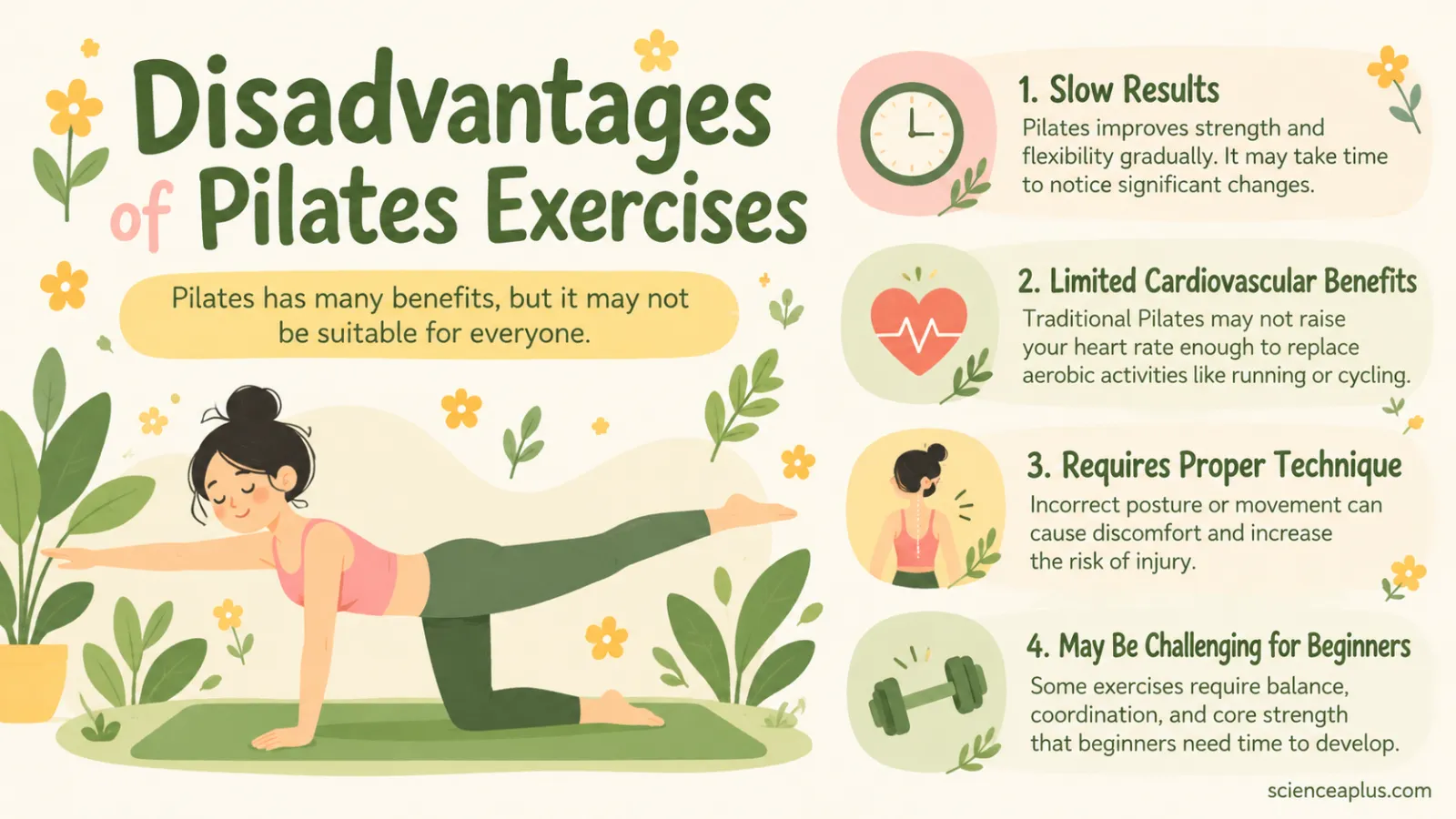
The main disadvantages of Pilates are that a typical class gives little cardiovascular exercise, burns fewer calories than brisk walking or running, puts little impact load on your bones, and brings gradual results. Classes can also cost more than other workouts, and good technique takes time to learn. It is still a useful strength-and-control workout, as long as you know its limits.
What is Pilates (and why look at its downsides)?
Pilates is a system of slow, controlled exercises that focuses on strength and control of the body. You can do it on a mat using your own body weight, or on a reformer, a sliding bed with springs and straps that add resistance. Chair-based versions also exist, and the NHS offers free beginner and chair-based Pilates videos.
The method is named after Joseph Pilates, who was born in Mönchengladbach, Germany, in 1883 and died in New York in 1967. He called his approach “Contrology” and ran a studio in New York from the 1920s. If you want the full story, our article on the history of Pilates covers it.
This article is not an attack on Pilates. The NHS lists it as an example of a muscle-strengthening activity, and NHS back pain advice says it may help ease back pain. The point here is to be honest about what a Pilates class does and does not do, so you can fit it into a balanced week. If you are comparing it with a similar practice, see how yoga and Pilates differ.
8 disadvantages of Pilates at a glance
Every drawback below comes with something you can do about it. Each one gets its own section later in this article.
| Drawback | Why it matters | What to do about it |
|---|---|---|
| 1. Light on cardio | Average energy cost is in the “light” band, so it does not build much aerobic fitness | Add brisk walking, cycling, swimming or running |
| 2. Fewer calories burned | Walking and running use far more energy per minute | Look at your whole week, not one class |
| 3. Little impact for bones | Much of a mat class is lying, sitting or kneeling | Add weight-bearing and resistance exercise |
| 4. Gradual results | Gains in control and strength build slowly | Be patient and match the exercise to your goal |
| 5. Cost and access | Reformer studios need specialist machines | Try mat classes, community classes or free NHS videos |
| 6. Technique matters | Rushing or forcing a move can cause aches | Learn with a qualified instructor and start simply |
| 7. Some people must adapt it | Pregnancy, osteoporosis, back pain and recent surgery all need thought | Speak to your GP or physiotherapist first |
| 8. Not a cure-all | Evidence does not show it beats other exercise | Choose what you will keep doing |
1. Pilates is light on cardio
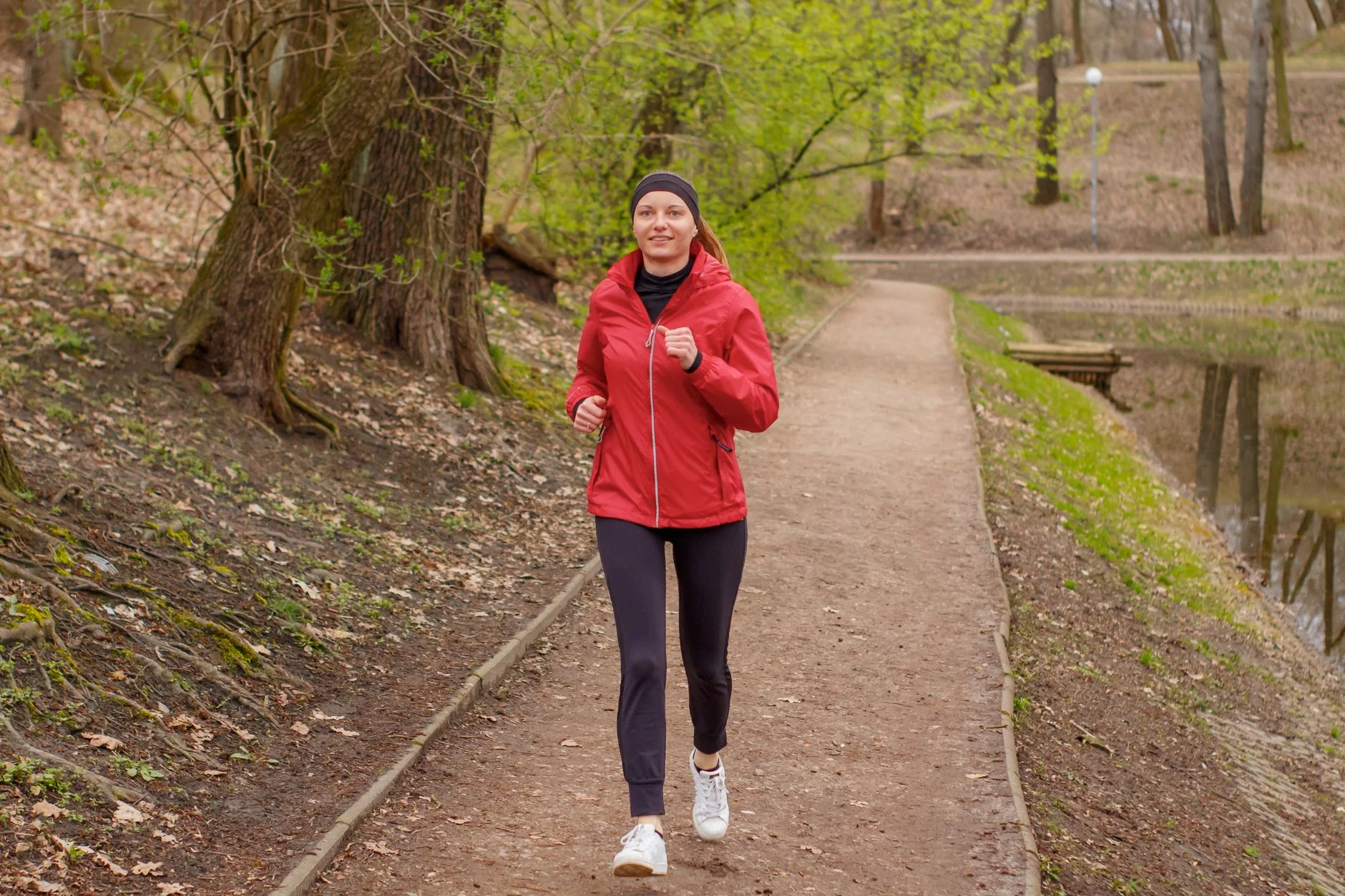
Scientists measure the effort of an activity in METs. One MET is the energy you use sitting quietly, roughly 1 kilocalorie per kilogram of body mass per hour. The 2024 Adult Compendium of Physical Activities gives average values: traditional mat Pilates is 1.8 METs, and “Pilates, general” is 2.8 METs. For comparison, brisk walking at 3.5–3.9 mph is 4.8 METs and running at 6 mph (a 10-minute mile) is 9.3 METs.
The World Health Organization’s 2020 guidelines use an intensity scale: light is 1.5 to under 3 METs, moderate is 3 to under 6, and vigorous is 6 or more. On those average figures, Pilates falls in the light band. That means a typical class does not, on its own, count towards your weekly total of moderate activity. Real classes vary, and a fast-paced one can feel harder than the average.
You can check effort without a lab. The UK Chief Medical Officers’ “talk test” says that if you can talk but not sing, you are working at moderate intensity, and if you have difficulty talking without pausing, it is vigorous. Many people can talk comfortably through much of a gentle Pilates class.
What to do about it: keep Pilates and add something that raises your heart rate. Brisk walking, cycling and running all work. If you are deciding where to run, our guide to running on a treadmill versus outside compares the options.
The UK guidelines were first published in 2019 and the web version was updated on 10 July 2026 with more recent evidence. The guidelines also say the risk of serious adverse events from physical activity is very low and the health benefits outweigh the risks. So the lesson is not to avoid exercise, but to build a mix.
2. Pilates burns fewer calories than many workouts
If you are asking how many calories does Pilates burn, the energy cost follows from the MET values above. The rule of thumb is energy (kcal) ≈ MET × body mass (kg) × time (hours). It includes the energy your body would use at rest, so treat it as a rough guide, not a precise reading.
kcal ≈ MET × kg × hours
Here is what that gives for a person with a body mass of 60 kg exercising for 45 minutes (0.75 hours), using average Compendium values.
| Activity (2024 Compendium average) | METs | Roughly, kcal in 45 min at 60 kg |
|---|---|---|
| Pilates, traditional mat | 1.8 | ≈ 81 |
| Pilates, general | 2.8 | ≈ 126 |
| Brisk walking, 3.5–3.9 mph | 4.8 | ≈ 216 |
| Running, 6 mph (10 min/mile) | 9.3 | ≈ 420 |
So on average, a 45-minute running session uses roughly three to five times the energy of the same time spent on Pilates. Real sessions differ: a fast-paced class can be harder than the average, and your own fitness changes the result. Try your own numbers below.
Is Pilates good for weight loss? It can be one part of a healthy routine, but the numbers show that a single class is not a big energy burner. Body weight depends on your whole week: what you eat, how much you move, how well you sleep and more. Our article on lifestyle changes for weight loss looks at the bigger picture.
What to do about it: if energy use matters to you, pair Pilates with a brisker activity on other days, and judge progress over weeks, not after one session.
3. Not much impact loading for your bones
Bones respond to being loaded. The NHS explains that weight-bearing exercise is exercise where your feet and legs support your weight, such as brisk walking, keep-fit classes and tennis. Swimming and cycling are not weight-bearing. High-impact weight-bearing exercise includes running, skipping, dancing, aerobics and jumping on the spot.
The NHS also describes resistance exercise, such as press-ups, weightlifting and gym equipment, where tendons pulling on bones help boost bone strength. It says weight-bearing and resistance exercise are particularly important for improving bone density.
Much of a mat Pilates class is done lying, sitting or kneeling, and it is low-impact. That means it gives little of the impact loading listed above. This does not mean Pilates is bad for your bones. It means a class alone is not the best bone-building plan, especially as the UK Chief Medical Officers note that strengthening activity helps delay the natural decline in muscle mass and bone density that happens from around 50 years of age.
Want to understand the wider health picture? Read about bone strength, obesity and heart disease risk.
What to do about it: add some standing, weight-bearing work, such as brisk walking, and some resistance exercise. These are the types of exercise the NHS names for bone density.
4. Results are gradual, and depend on your goal
One of the drawbacks in the infographic at the top of this article is slow results. Strength and movement control build up gradually with practice, and you should not expect dramatic change after one or two sessions. We have no reliable timeline to give you, because it depends on how often you practise, your starting point and what you want to achieve.
The muscles involved are mostly skeletal muscles, the ones you control voluntarily. If you want to know how they differ from the muscles in your heart and gut, see our guide to smooth, skeletal and cardiac muscle tissue.
Your goal matters. If you want to practise slow, controlled strengthening, Pilates fits well. If your goal is maximum strength, a programme that gradually increases the load you lift is the usual route, so Pilates may need to sit alongside it. None of this is a reason to avoid Pilates. It is a reason to match the exercise to what you want.
What to do about it: set a goal, practise regularly and give it time. Notice what feels different, such as how controlled a movement feels, instead of relying only on the scales.
5. Studio and reformer classes can be expensive
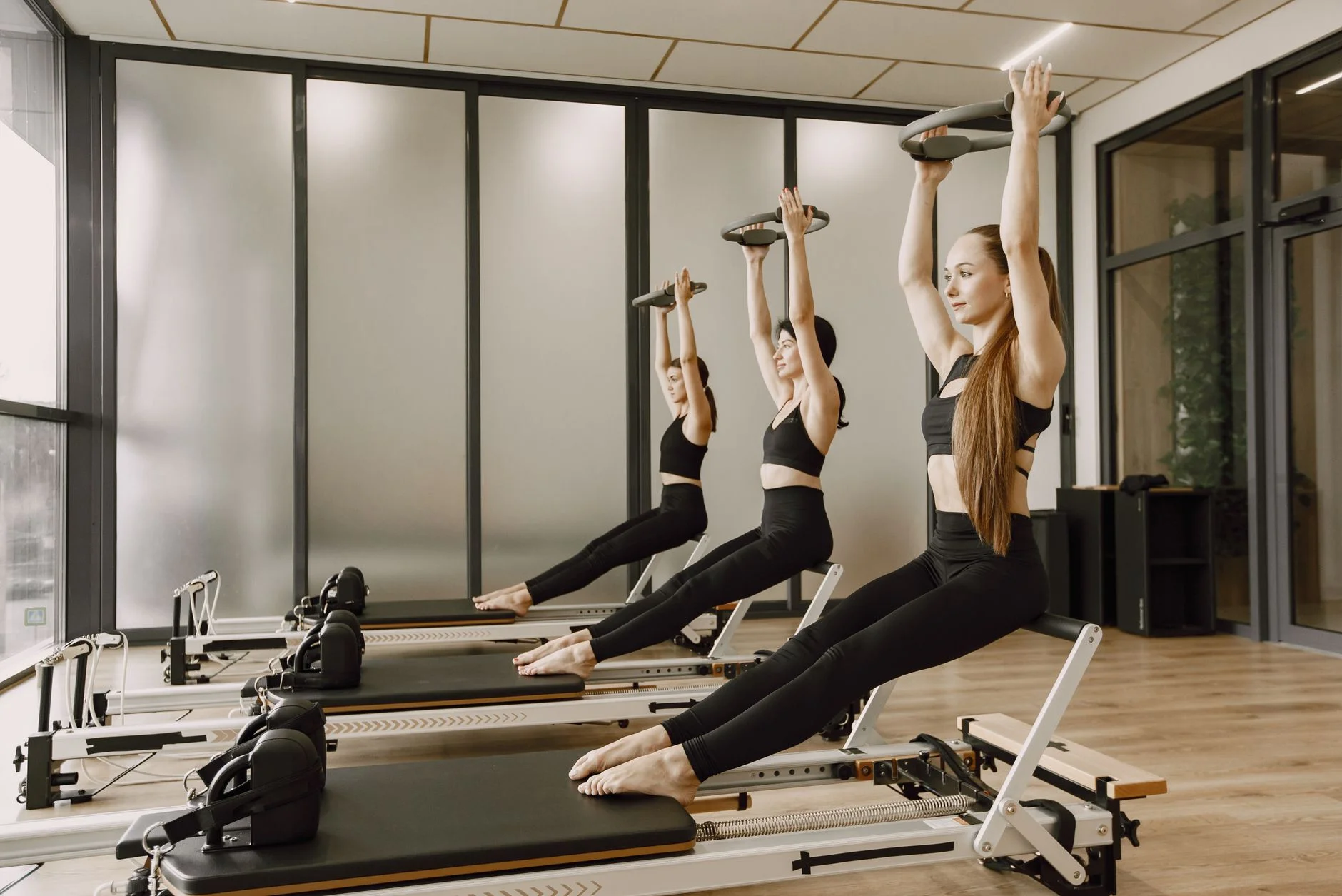
A reformer is a specialist machine with a sliding carriage, springs and straps. Classes need the machines and a trained instructor, which is one reason studio sessions often cost more than a mat class or a walk in the park. We have not quoted prices here because they vary widely by area and studio.
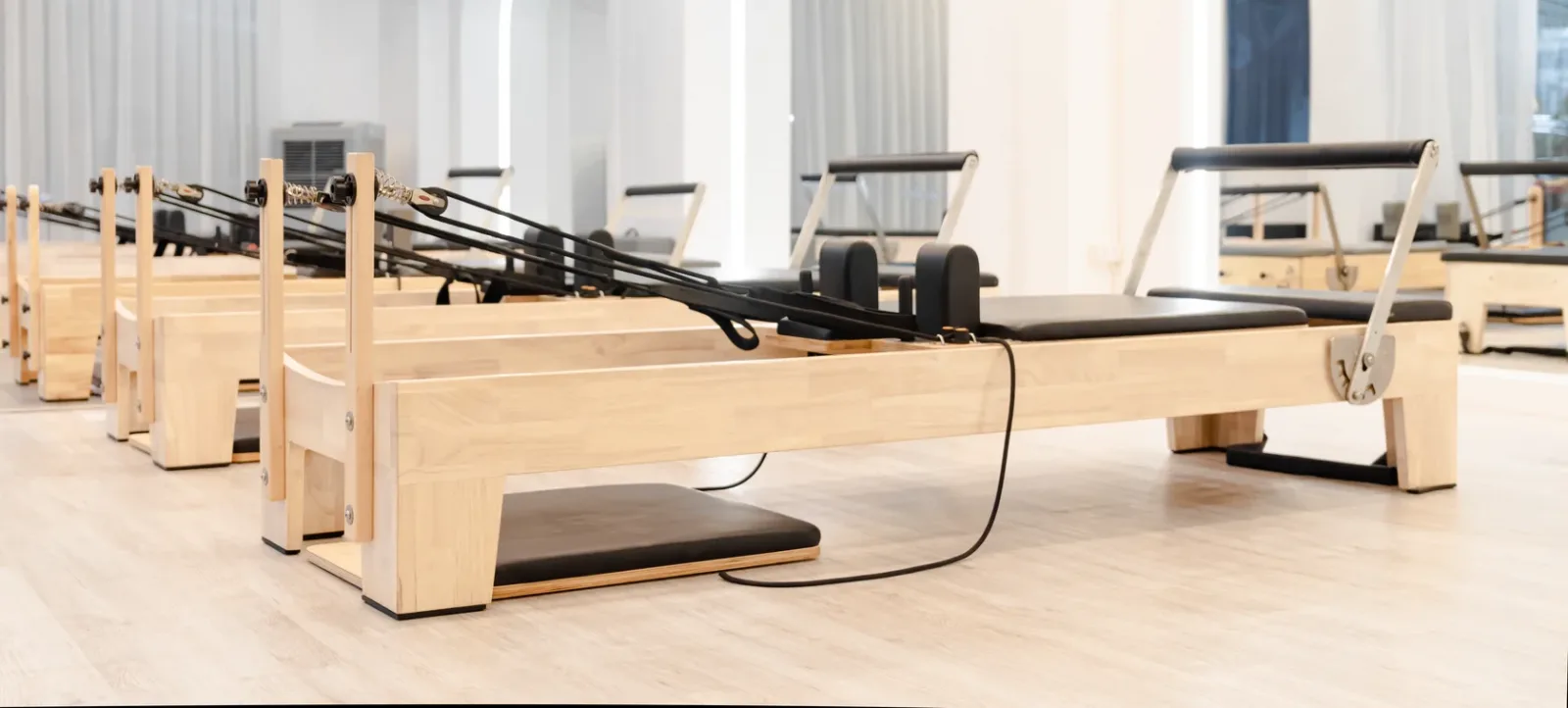
Cost and access can also mean travel, fixed class times and limited spaces. Those are practical barriers, not scientific ones, but they can stop people sticking with a routine.
What to do about it: mat classes need much less equipment, and community centres often run low-cost sessions. The NHS Pilates and yoga video hub offers free workouts, including beginner and chair-based Pilates, and sessions for back pain, knee problems, arthritis, scoliosis and osteoporosis. Check with a professional first if you have a health condition.
6. Technique matters: poor form can cause aches
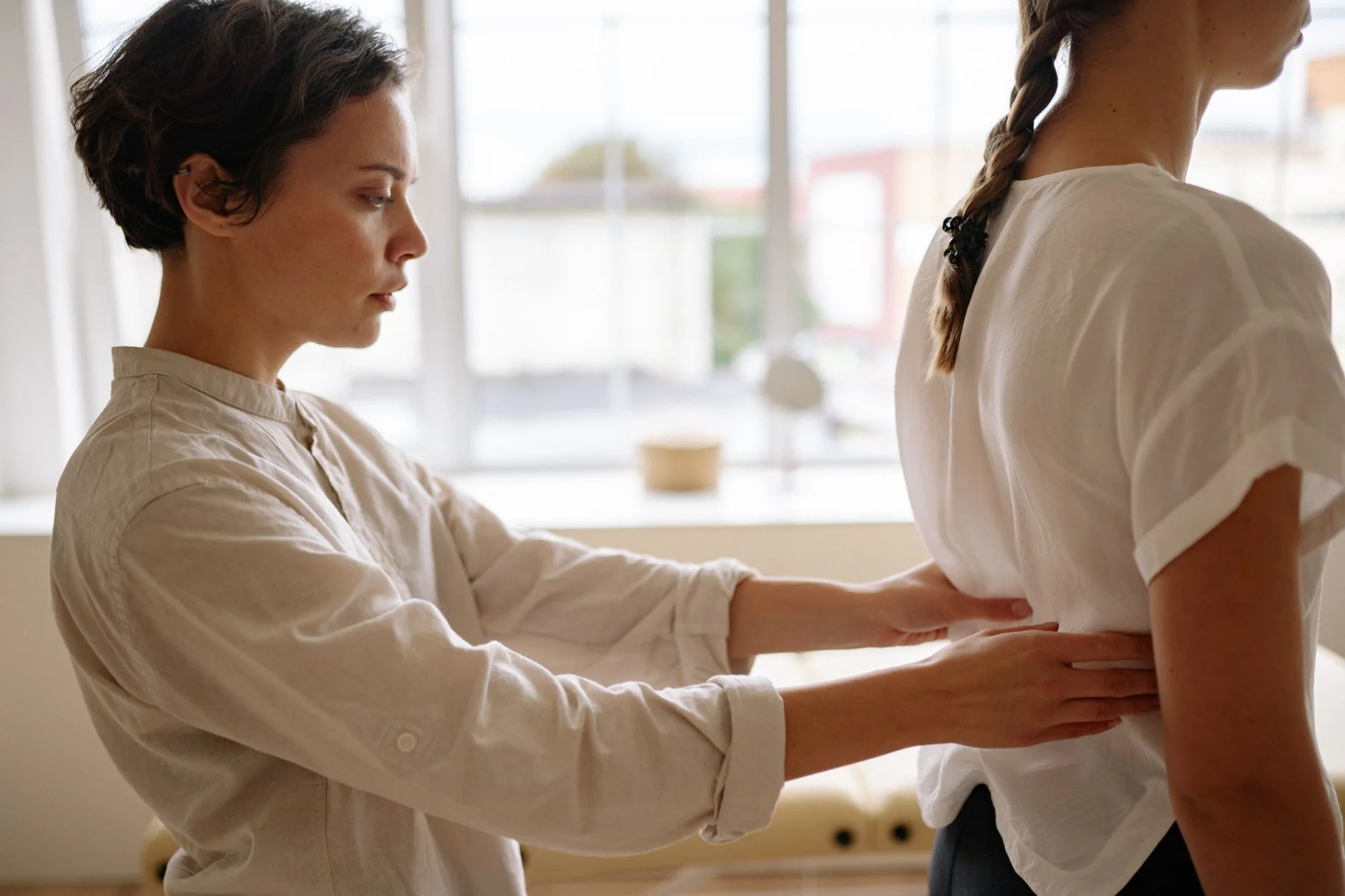
Pilates looks gentle, but the moves are precise. Good technique means moving smoothly, staying within a comfortable range and controlling your breathing. If you rush, hold your breath or force a position, you are more likely to end up with sore muscles or joints.
The research that exists is reassuring. A Cochrane review of Pilates for low back pain (Yamato and colleagues, 2015) pooled 10 trials with 510 participants. It reported that only two of the 10 trials assessed adverse events: one found none and the other reported minor events. The review also noted that the evidence was low to moderate in quality, so it is a cautious result, not a guarantee.
A learning curve is still a real disadvantage, particularly for complete beginners using a video at home with nobody to check their form. Some simple habits help:
- Start with beginner classes and learn the basic moves before progressing.
- Tell your instructor about any injury or health condition before you begin.
- Move slowly and smoothly; do not push to the very limit of your range.
- Keep breathing instead of holding your breath.
- Stop if you feel sharp pain, dizziness or anything unusual.
Why might a home video be riskier than a class for a complete beginner? (2 marks)
Nobody is watching your technique, so mistakes such as rushing or holding your breath can go unnoticed (1). An instructor can correct your form and adapt moves for you, which a video cannot do (1).
What does the talk test tell you about how hard you are working? (2 marks)
If you can talk but not sing, you are working at moderate intensity (1). If you have difficulty talking without pausing, you are working at vigorous intensity (1).
7. Some people need to adapt it first
The UK guidelines say the risk of serious adverse events from physical activity is very low. But in some situations the usual moves may need to change, and it is sensible to take advice first. This section is educational only and cannot tell you what is right for your body.
Osteoporosis
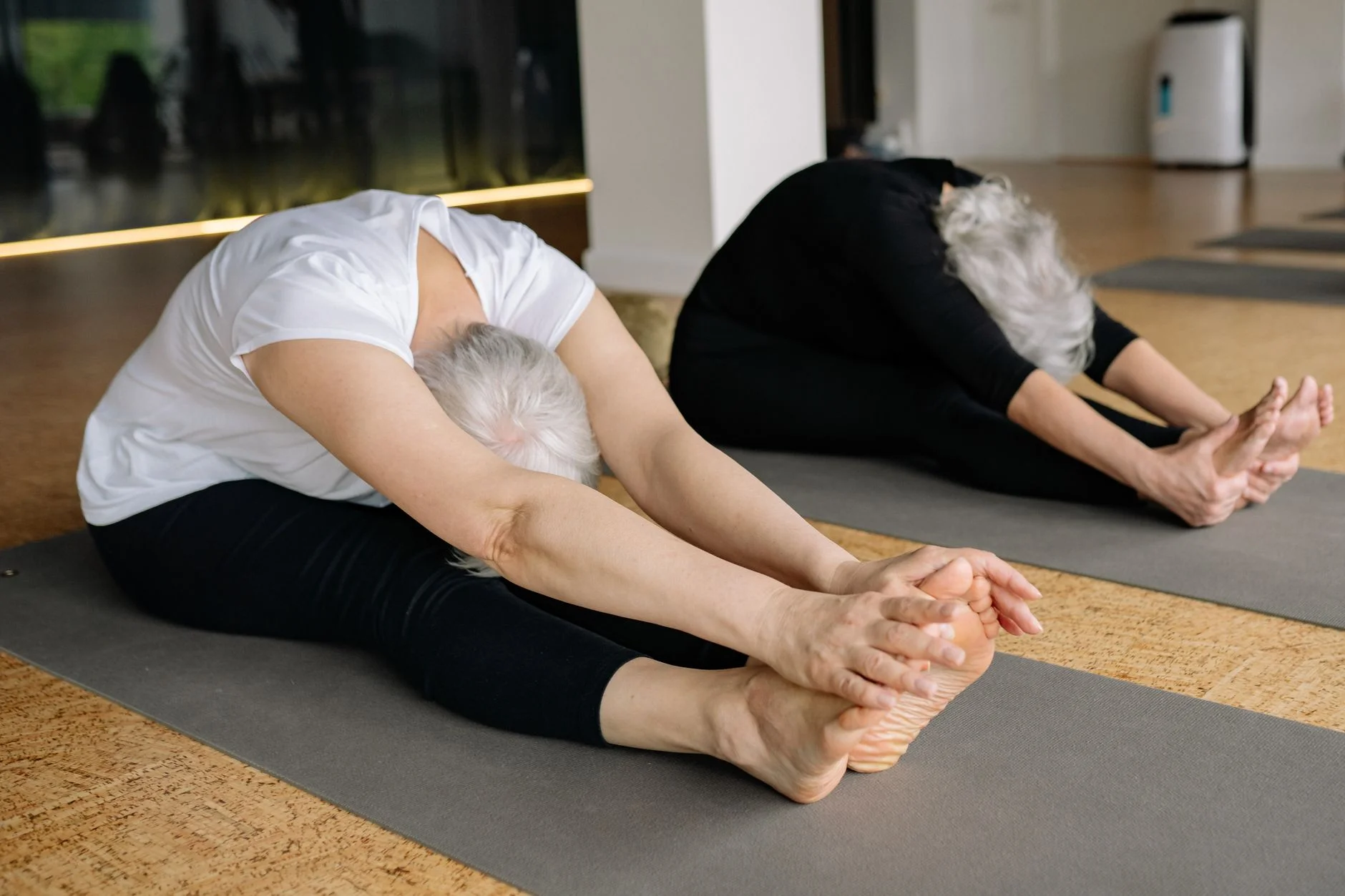
The Royal Osteoporosis Society’s UK consensus guidance, “Strong, Steady and Straight”, suggests modifying or finding alternatives to movements with sustained, end-of-range or loaded forward bending, such as sit-ups or the roll-down in Pilates. The society also says that bending forward is generally safe and will not cause a spinal fracture, but you may “over-flex” your spine if you push to the limit, especially with uncontrolled, repetitive or sudden movements. The advice is to move smoothly and within your comfort range. The society runs a helpline on 0808 800 0035.
Pregnancy
The NHS says that in later pregnancy you should try to avoid any activity that involves lying flat on your back for more than a few minutes, because it can make you dizzy and is not good for the baby. Tell your instructor that you are pregnant, and speak to your midwife about which activities are safe. If you are new to exercise, the NHS suggests starting slowly, for example with 10 minutes a day.
After giving birth
Some women have a separation of the abdominal muscles (diastasis recti) after giving birth, and in one Norwegian study about a third still had it 12 months later. If you notice a gap or bulge along the middle of your tummy, speak to your GP or a pelvic health physiotherapist before starting abdominal or Pilates exercises.
Back pain
The NHS says activities like walking, swimming, yoga and pilates may help ease back pain. NICE guidance on low back pain (NG59) suggests considering a group exercise programme within the NHS for people with a flare-up, taking account of their needs, preferences and capabilities. Cochrane found that Pilates did better than minimal intervention, but there was no conclusive evidence that it beat other types of exercise. If you wonder whether lifestyle habits matter, read can smoking cause lower back pain?
After surgery or an injury
Ask your surgeon, GP or physiotherapist when and how to restart exercise. The UK guidelines’ 2026 update says people who have been recently inactive, for example after an operation, especially need to do activities that maintain muscle strength. The right level for you is a decision for your care team.
8. Pilates is not a cure-all
Pilates is sometimes sold as a fix for almost everything. The evidence is more modest. For low back pain, the Cochrane review found Pilates was more effective than minimal intervention for pain and disability, but there was no conclusive evidence that it was better than other forms of exercise, and no high-quality evidence for any comparison.
The same caution applies to balance. A 2015 review of six studies in older adults (Barker, Bird and Talevski) found Pilates improved balance compared with non-active controls. However, the study quality was low, the effects may be overestimated, and there was limited information about falls.
That is not a reason to give up Pilates. It means the best exercise is often the one that suits you and that you will keep doing. If you are choosing between options, our comparison of Pilates, yoga, tai chi and qi gong can help. The infographic below sums up three more drawbacks and five safety habits.
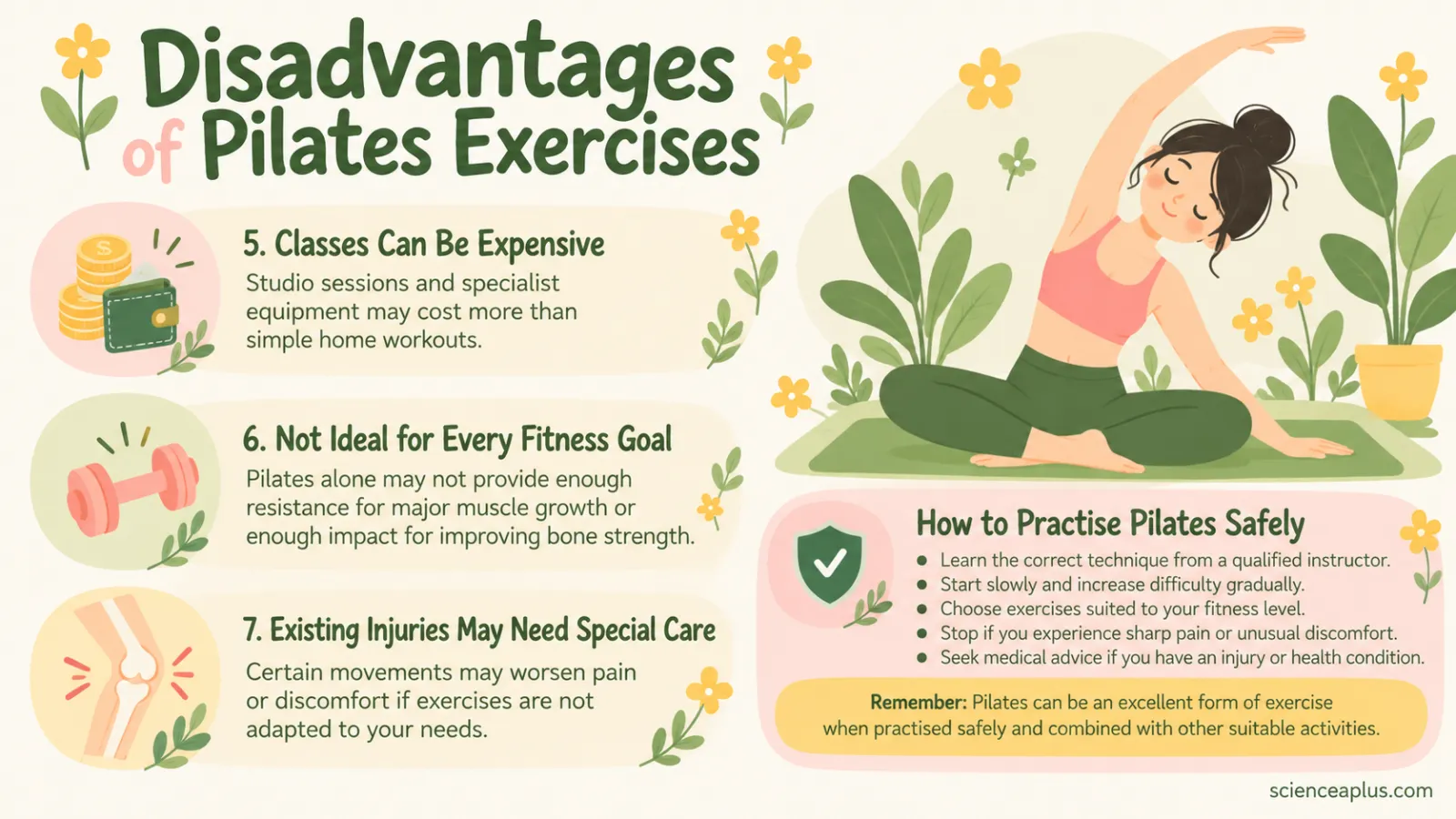
How to practise Pilates safely
Most of the disadvantages of Pilates can be reduced with a few sensible habits. Tick off the ones you already follow; your ticks are saved in your browser.
- Learn from a qualified instructor, especially when you are new.
- Tell the instructor about any health conditions, injuries or pregnancy before you start.
- Start with beginner, mat-based or chair-based sessions.
- Move smoothly and stay within your comfort range.
- Keep breathing; do not hold your breath.
- Stop if you feel sharp pain, dizziness or anything unusual.
- Build up gradually, particularly if you have been inactive.
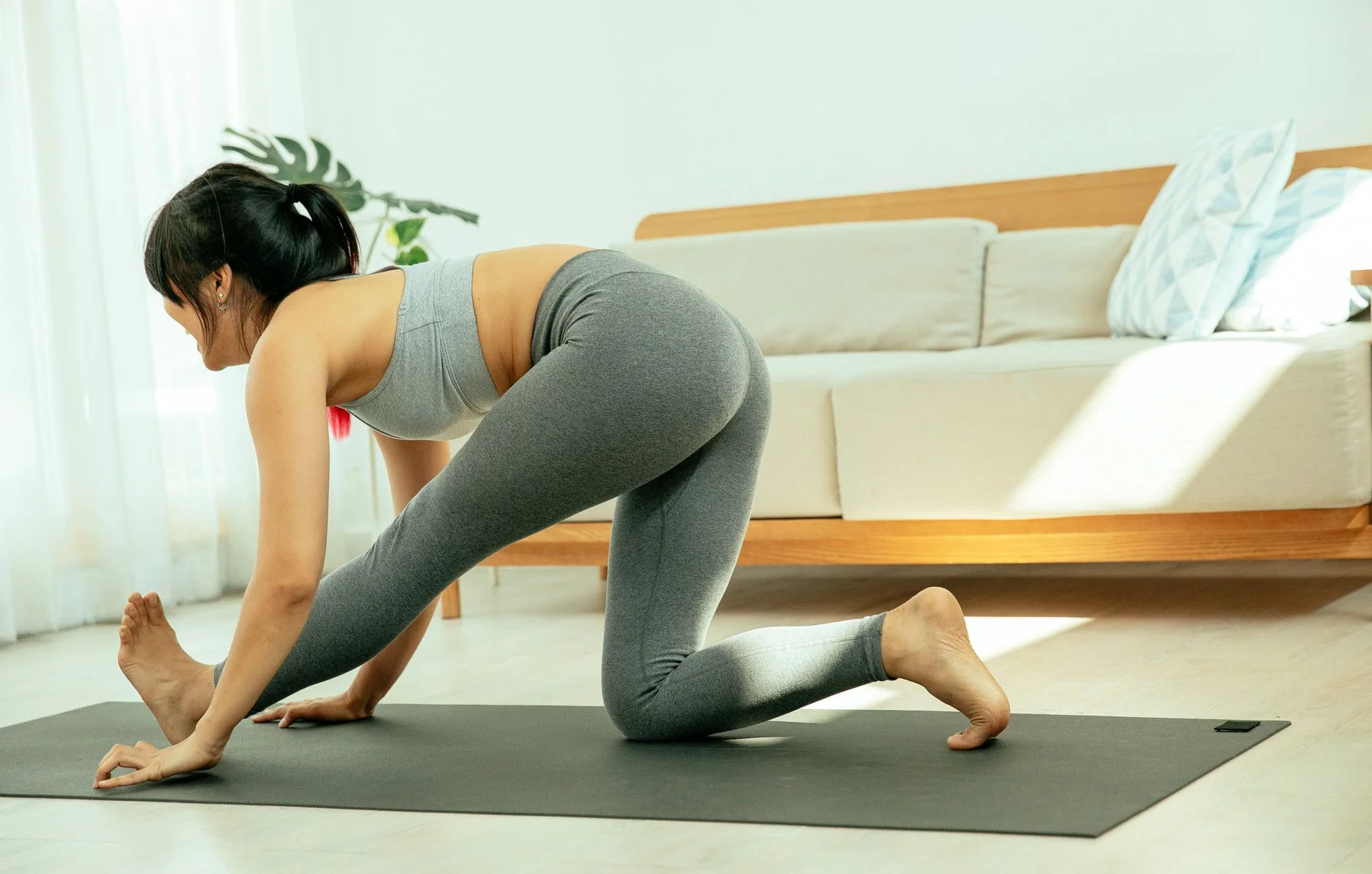
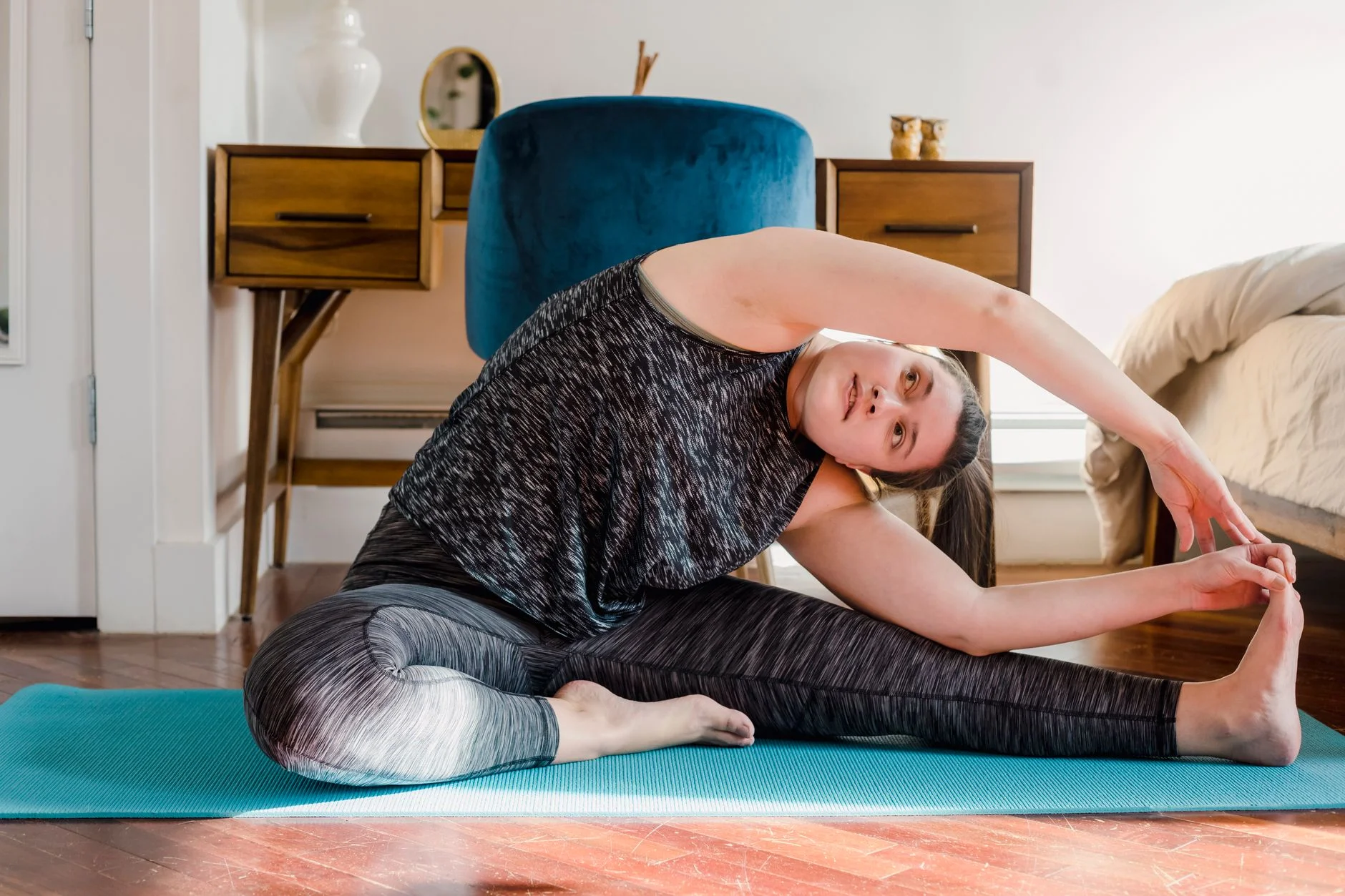
Practising at home is cheap and convenient, but you lose the instructor’s eye on your form. Free NHS videos are a good, low-cost starting point, and you can switch to a class once you are confident.
Build a balanced week around Pilates
So, is Pilates enough exercise on its own? For most adults, no. UK guidance asks for aerobic activity, muscle strengthening and, for older adults, balance and flexibility. Here is one way to cover it, using the guideline numbers as the target:
- Aerobic: at least 150 minutes of moderate activity a week, for example five 30-minute brisk walks, or 75 minutes of vigorous activity such as running.
- Strength: activities on at least 2 days a week that work all the major muscle groups. Pilates can be one or both of these days, and any strengthening activity is better than none.
- Older adults (65+): activities to improve or maintain muscle strength, balance and flexibility on at least 2 days a week, plus 150 minutes of moderate aerobic activity built up gradually.
- Sitting: reduce long periods of sitting.
If you enjoy gentle, mindful movement, our article on the benefits of yoga is a useful companion. And if the hardest part is simply getting started, read how to motivate yourself to exercise.
Pilates myth or fact? Flip the cards
Frequently asked questions about the disadvantages of Pilates
What are the disadvantages of Pilates?
The main disadvantages are that a typical class is light on cardio, burns fewer calories than brisk walking or running, and gives little impact loading for bones. Results build gradually, studio classes can cost more, and technique takes time to learn. Some people, such as those who are pregnant or have osteoporosis, need to adapt moves.
Does Pilates count as cardio?
Mostly not. The 2024 Compendium gives traditional mat Pilates about 1.8 METs and general Pilates about 2.8 METs. The WHO scale calls anything under 3 METs light. Moderate activity starts at 3 METs, so pair Pilates with brisk walking, cycling or running for your aerobic minutes.
How many calories does Pilates burn?
Roughly, energy in kcal is MET × body mass in kg × hours. For a 60 kg person in 45 minutes, that is about 81 kcal at 1.8 METs and about 126 kcal at 2.8 METs. These are averages; a faster class, or a heavier person, will use more.
Is Pilates good for weight loss?
It can be part of a healthy routine, but one class does not use much energy compared with brisk walking or running. Your weight depends on your whole week, including food, sleep and daily movement. Pilates is better thought of as strength and control work than as a main weight-loss tool.
Is Pilates enough exercise on its own?
For most adults, no. UK guidelines ask for at least 150 minutes of moderate activity or 75 minutes of vigorous activity each week, plus strengthening on at least 2 days. Pilates can cover the strengthening, but a typical class is too light to count as your aerobic exercise.
Is reformer Pilates better than mat Pilates?
The sources we checked do not show that one is better than the other. Reformer classes use springs and straps for resistance but need specialist machines and tend to cost more. Mat classes need little equipment, and the NHS offers free beginner and chair-based videos. Choose the style you will enjoy and keep doing.
Can Pilates make back pain worse?
In the Cochrane review of Pilates for low back pain, only two trials assessed adverse events: one found none and the other reported minor events. The NHS says pilates may help ease back pain. Poor technique or forcing a move can cause aches, so stop if you feel sharp pain and see a GP if pain persists.
Is Pilates safe if you have osteoporosis?
Many people with osteoporosis exercise, but some moves need changing. The Royal Osteoporosis Society consensus suggests modifying loaded or end-of-range forward bends such as the Pilates roll-down. Bending forward is generally safe, but avoid pushing to the limit. Speak to your GP or physiotherapist first.
Can you do Pilates when you are pregnant?
Many pregnant women exercise, but you should tell your instructor you are pregnant and speak to your midwife about safe activities. The NHS says to avoid lying flat on your back for more than a few minutes in later pregnancy, because it can make you dizzy and is not good for the baby.