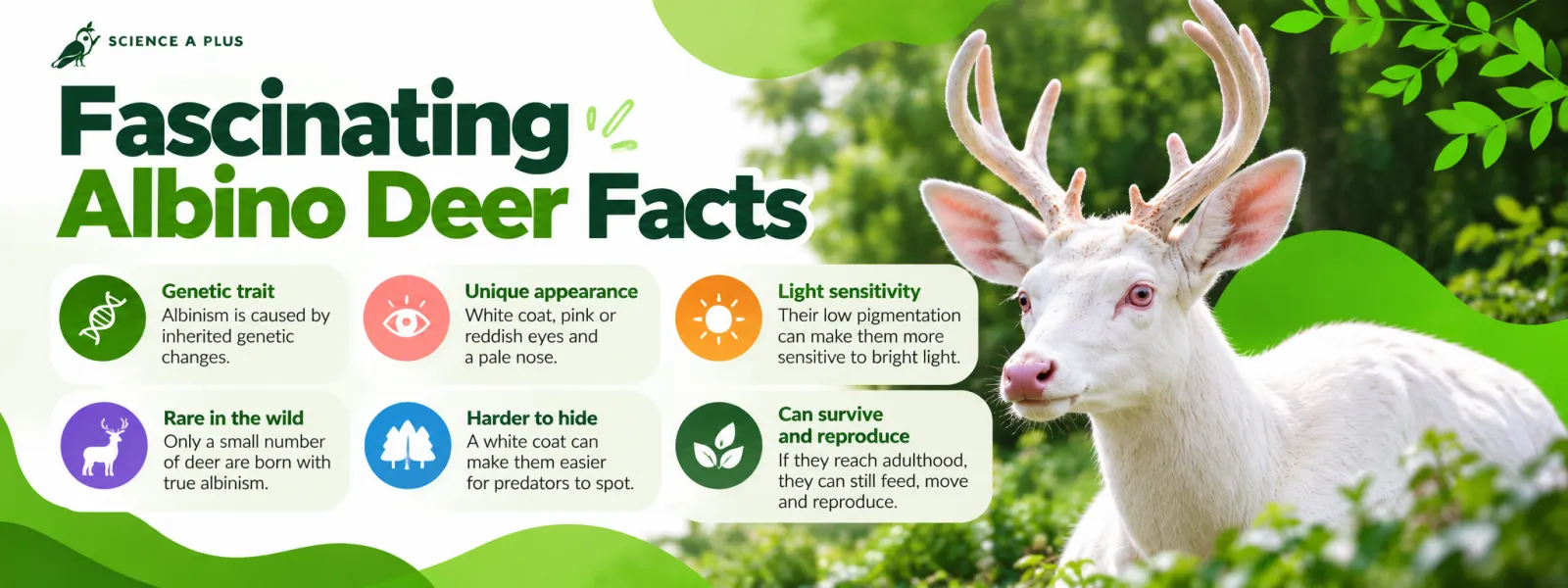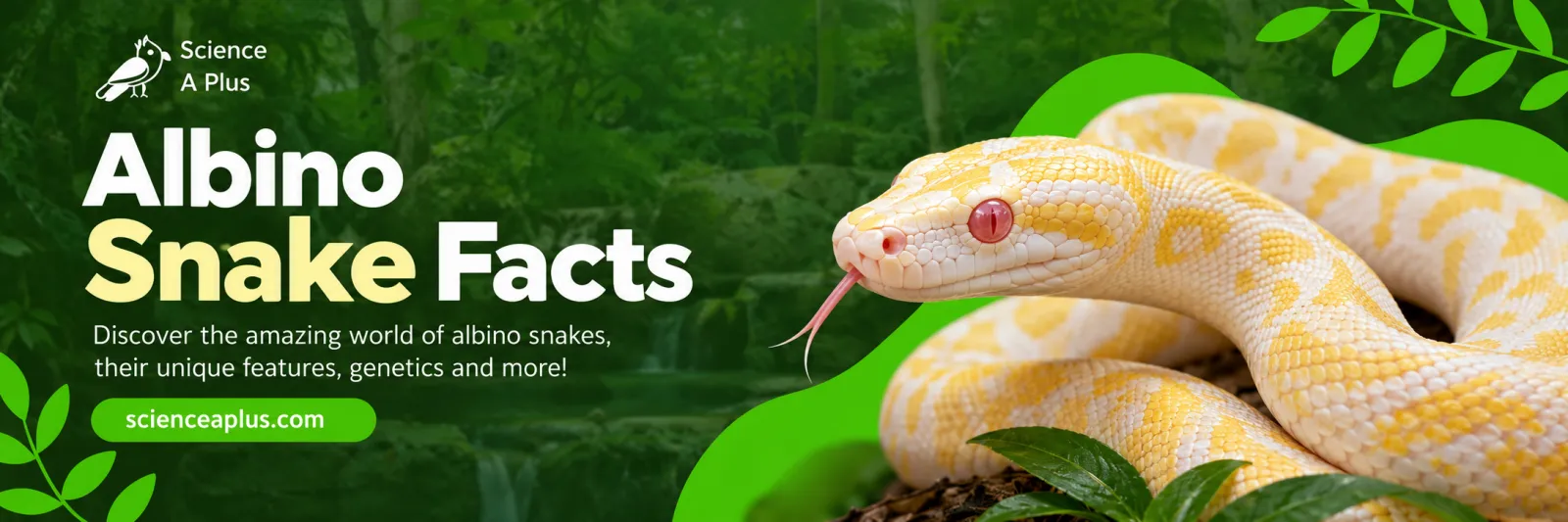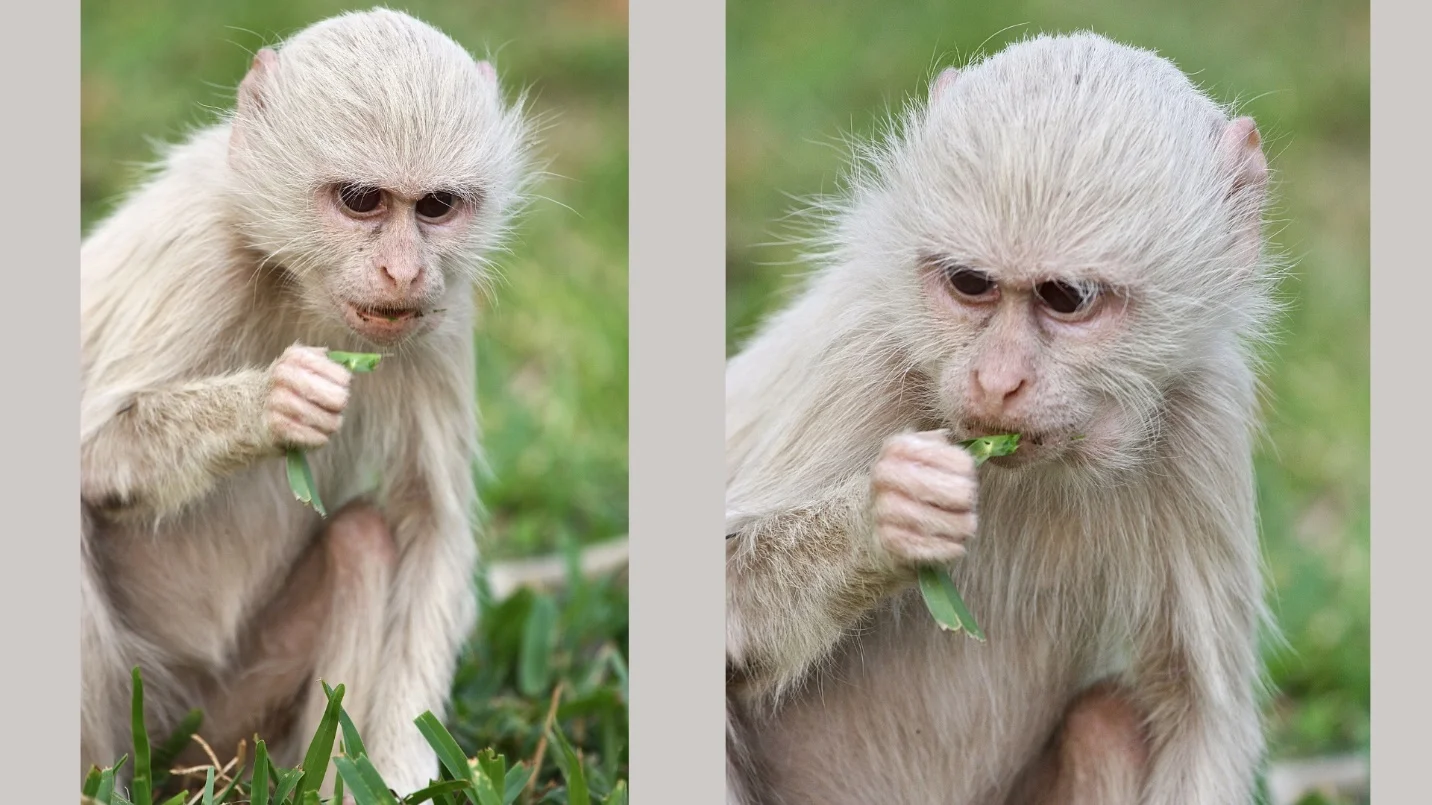
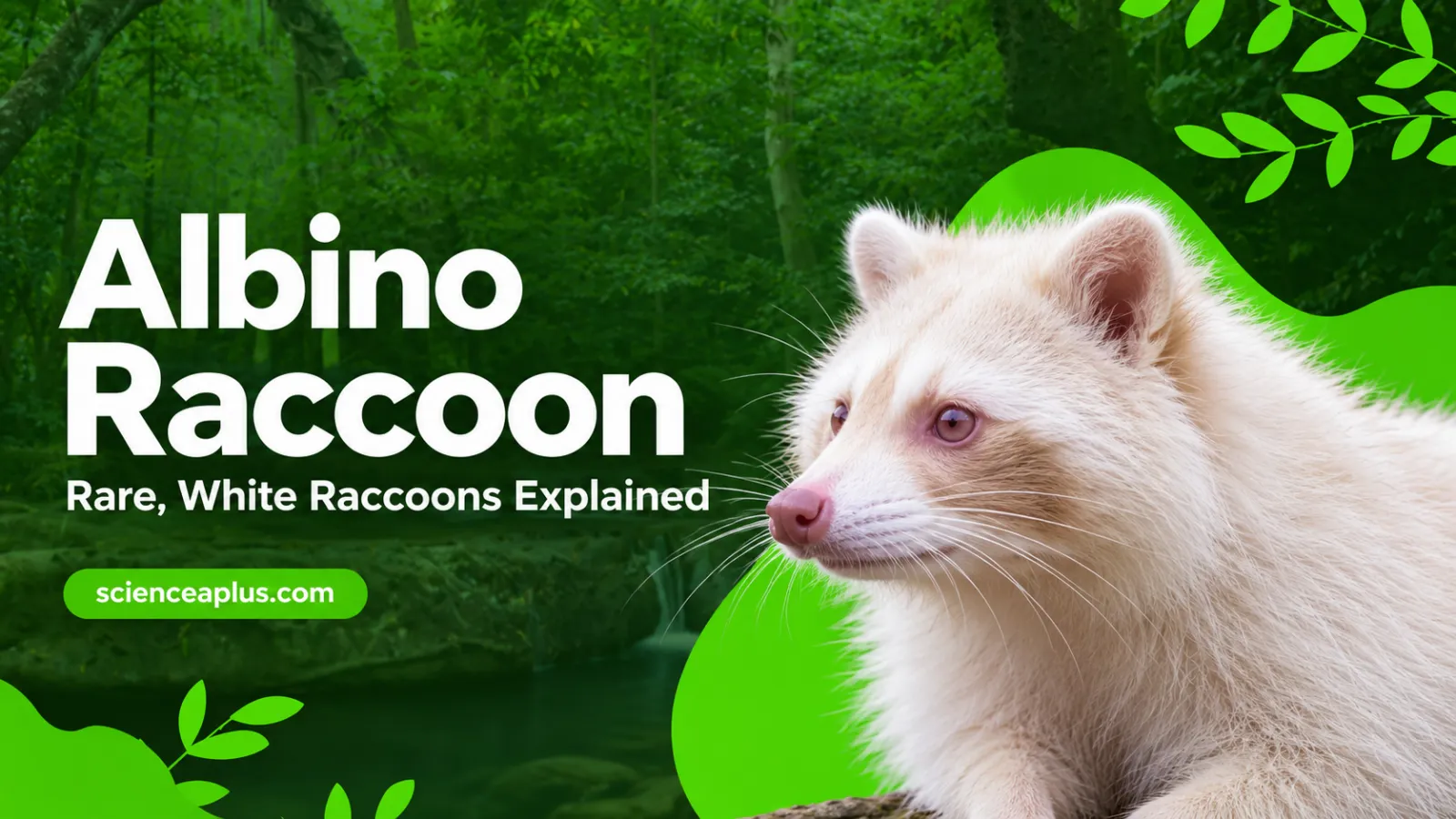
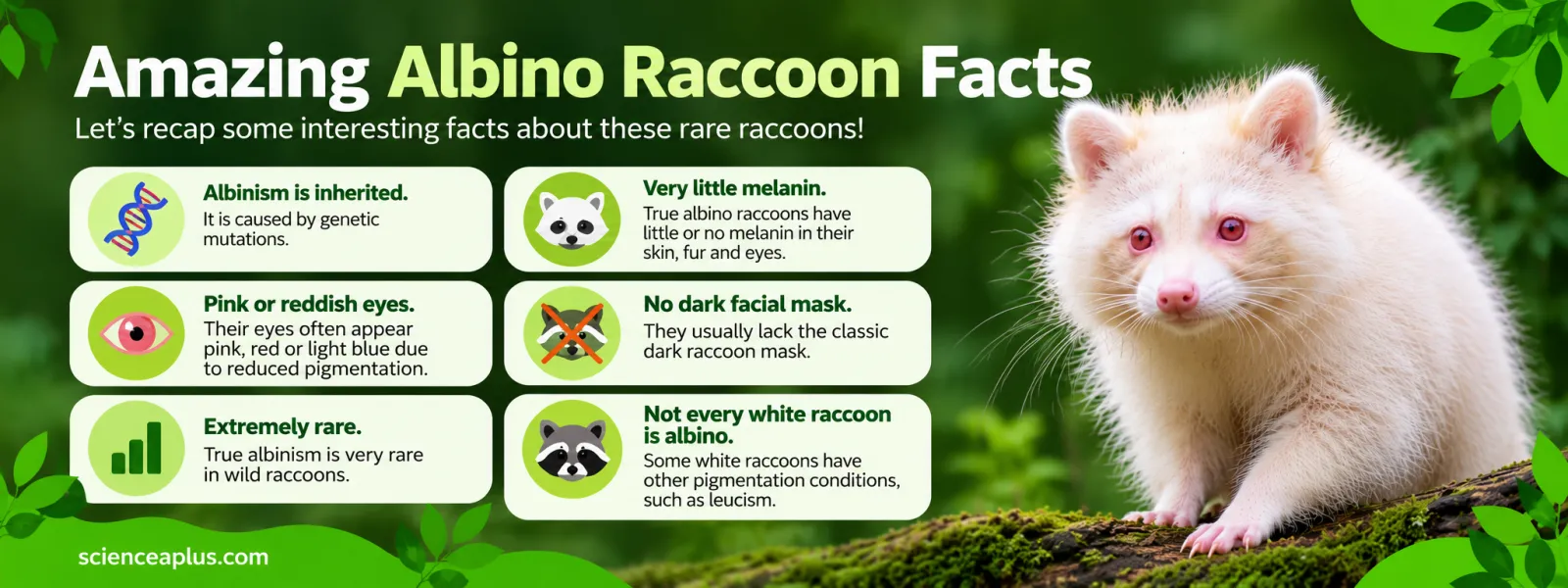
An albino raccoon is a raccoon born with little or no melanin, the pigment that colours skin, fur and eyes. Instead of the usual grey-brown coat and black "bandit" mask, it has white or very pale fur, a pink nose and pink, red or light-blue eyes. True albinism is very rare in wild raccoons, and many "white raccoons" turn out to be something else.
What is an albino raccoon?
Raccoons (Procyon lotor) are medium-sized mammals from North and Central America. A typical adult is 40–70 cm long, with a 20–40 cm tail, and most weigh between 5 and 12 kg. Their fur is a mix of grey, brown and black, with dark rings on the tail and a dark mask across the eyes.
An albino raccoon looks like a different animal. The mask disappears, the face mask and the tail rings are pale or missing, and the whole body looks pale, as the picture below shows. What has changed is not the shape of the animal but its pigment.
The same thing happens in many other species. If you want the big picture first, our guide to albino animals covers the general science. This article focuses on raccoons: how to tell a true albino from a look-alike, how likely you are to see one, and what the rest of raccoon life looks like, including the rabies and wildlife-safety facts that matter in real life.
What makes a raccoon albino?
Albinism is a genetic condition. Cells called melanocytes normally make melanin using a chain of enzymes. In albinism, an inherited change (a mutation) in one of the genes involved means that chain does not work properly, so the body makes little or no melanin.
Melanin gives skin, hair and eyes their colour. Without it, the grey-and-black raccoon pattern simply cannot be drawn. The result is white or cream fur over pale skin.
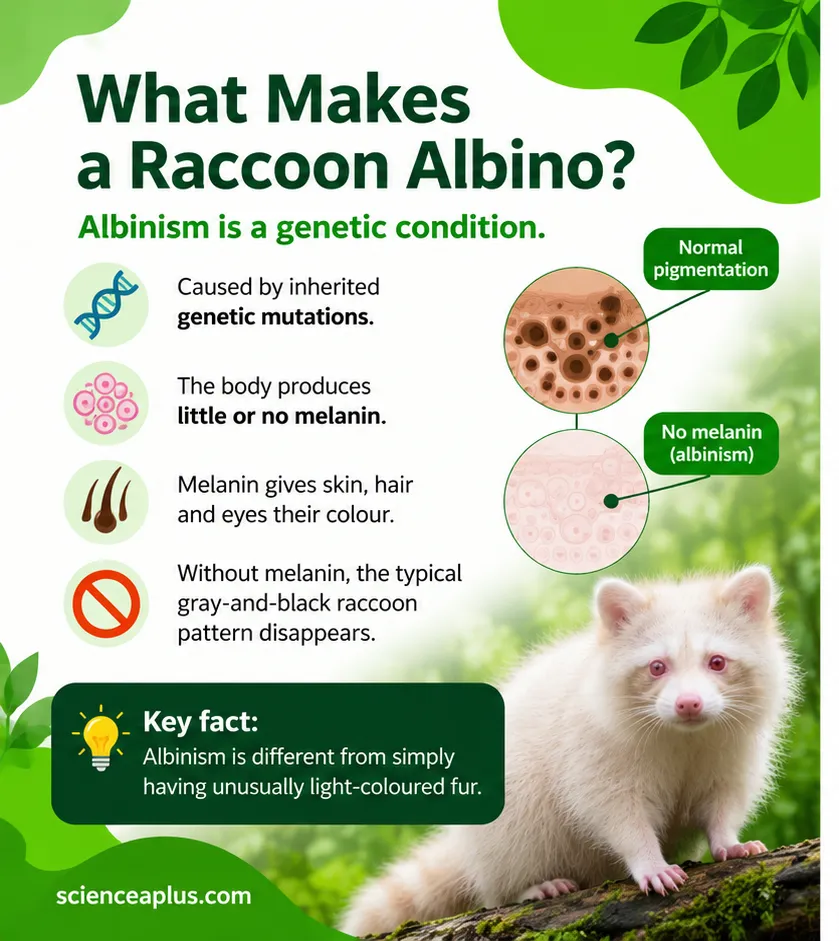
Albinism is recessive. A raccoon only shows it if it inherits a faulty copy of the gene from both parents. Parents with normal colouring can each carry one hidden copy without knowing it. The rules are the same ones you meet in GCSE genetics, and you can revise them in our guide to alleles and inheritance.
What do albino raccoons look like?
A true albino raccoon usually has these features:
- White or pale cream fur over the whole body, including the tail.
- Little or no dark facial mask. The black bandit pattern is normally made of melanin, so it fades or vanishes.
- A pink nose and pale skin on the paw pads.
- Pink, reddish or light-blue eyes.
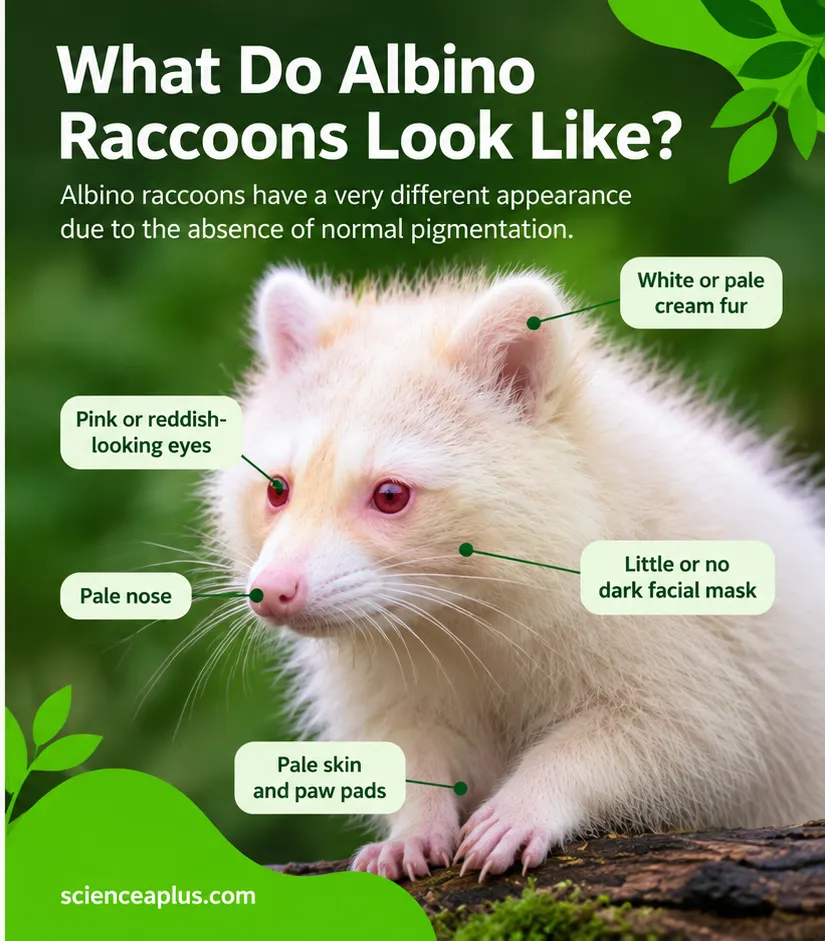
The fur is not always paper-white. It can look cream or faintly yellowish, particularly in dirty or old coats, so colour alone does not prove albinism. The eyes are the better clue, and we come back to that in the next part.
Why do albino raccoons have pink eyes?
The iris of a normal raccoon eye contains pigment that absorbs stray light and makes the eye look dark. An albino raccoon has very little or none. Without pigment, the tiny blood vessels at the back of the eye show through, and the eye looks pink or red. In some animals the iris looks pale blue instead, and the shade also changes with the lighting.
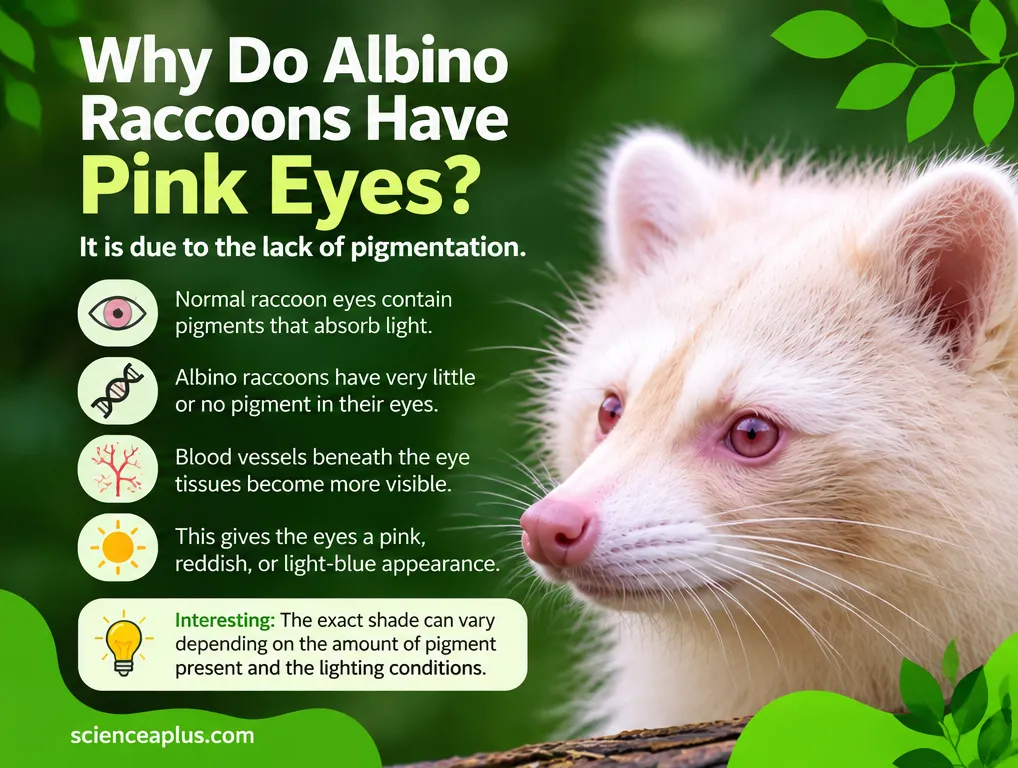
This is more than a cosmetic detail. Eye pigment and eye development are linked. In albinism generally, the eye often develops differently: the central part of the retina is underdeveloped, and the nerves that carry signals to the brain can be wired in an unusual way. People with albinism commonly have reduced sharpness of vision, involuntary eye movements called nystagmus, and strong sensitivity to bright light. Albino raccoons are likely to share some of these problems, but there is little formal research on wild raccoons, so the effect on an individual animal can only be described cautiously.
How do two normal raccoons have an albino baby?
Use the calculator to try a cross yourself. Capital A is the working copy of the gene and small a is the albino copy. Two carriers (Aa) each pass on either A or a at random, so on average one baby in four is albino. A single litter is small, though, and chance decides each kit separately, so a litter from two carriers might contain no albinos at all, or more than one.
Raccoon litters are usually two to five young, so even two carrier parents often produce no albino at all. Both parents have to be carriers, and carriers show no outward sign, which is part of why a true albino raccoon is such a rare sight.
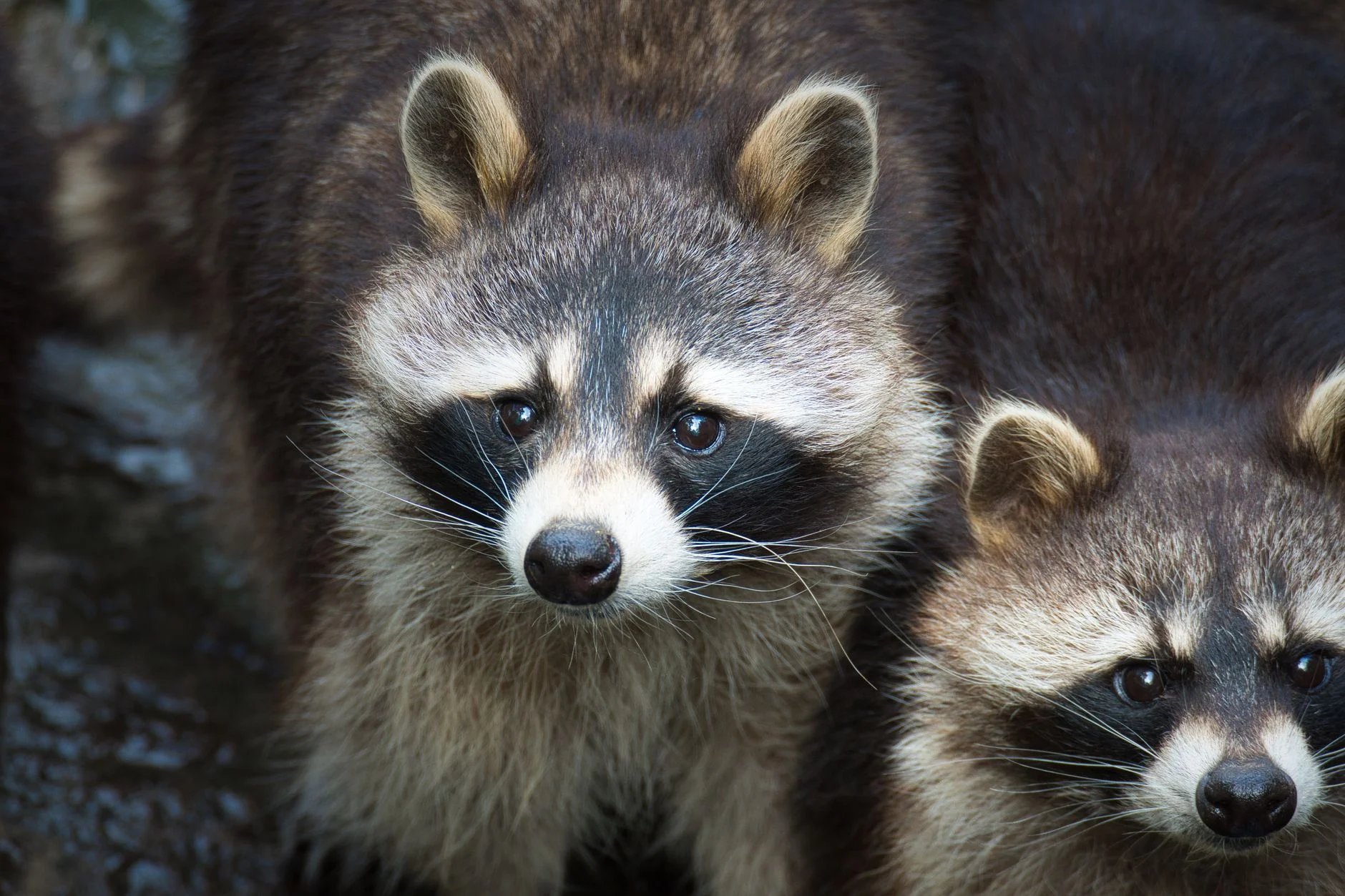
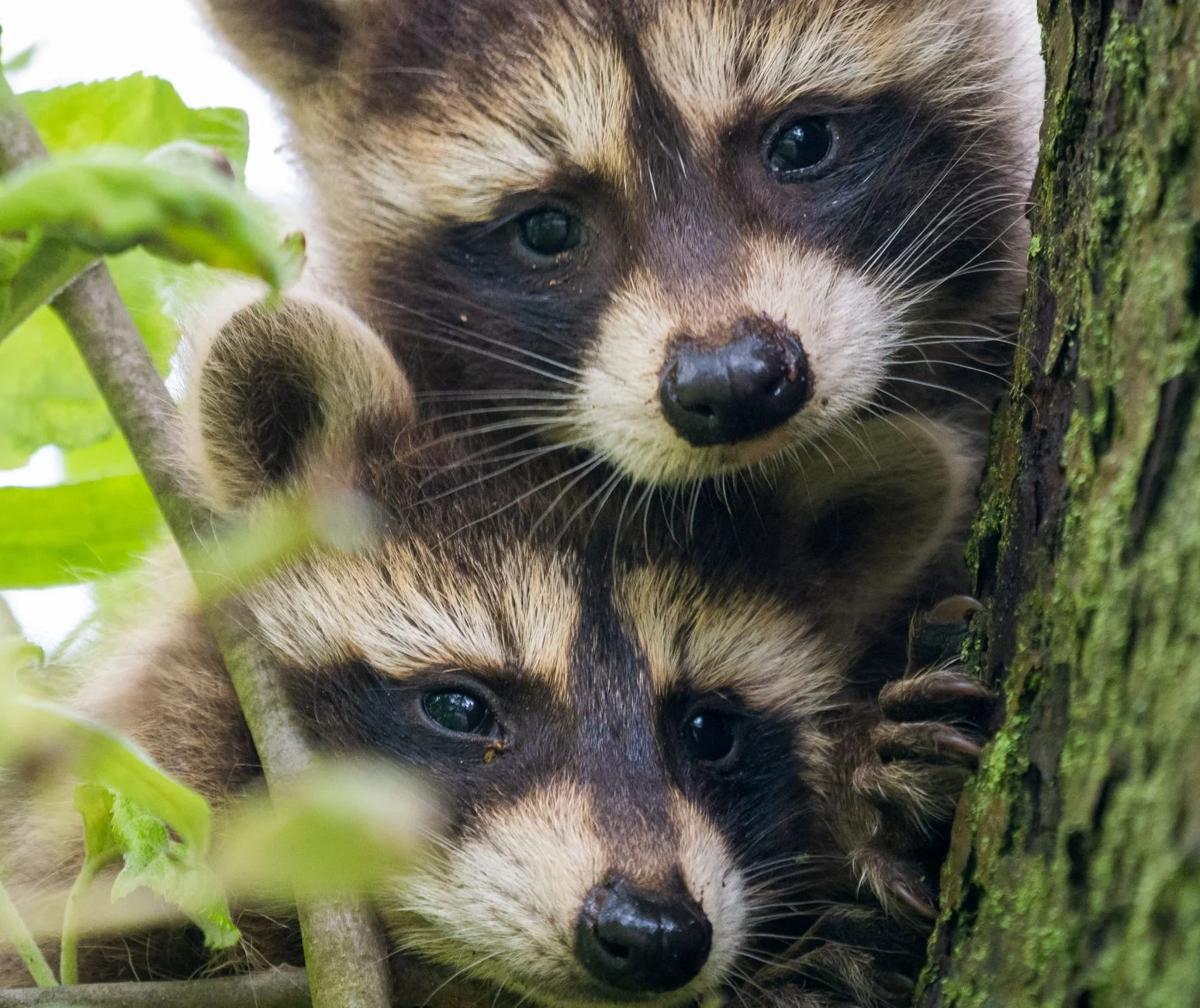
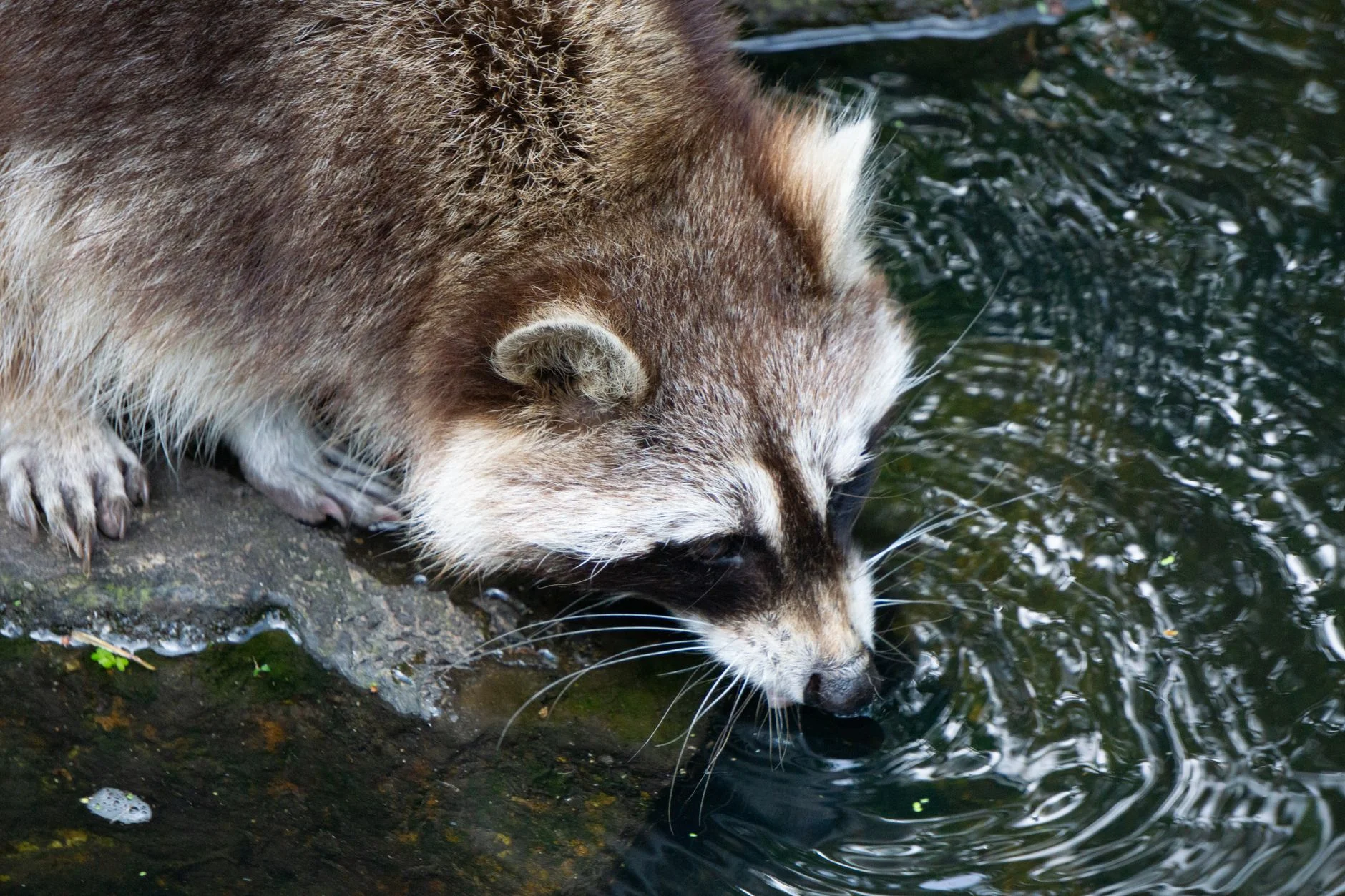
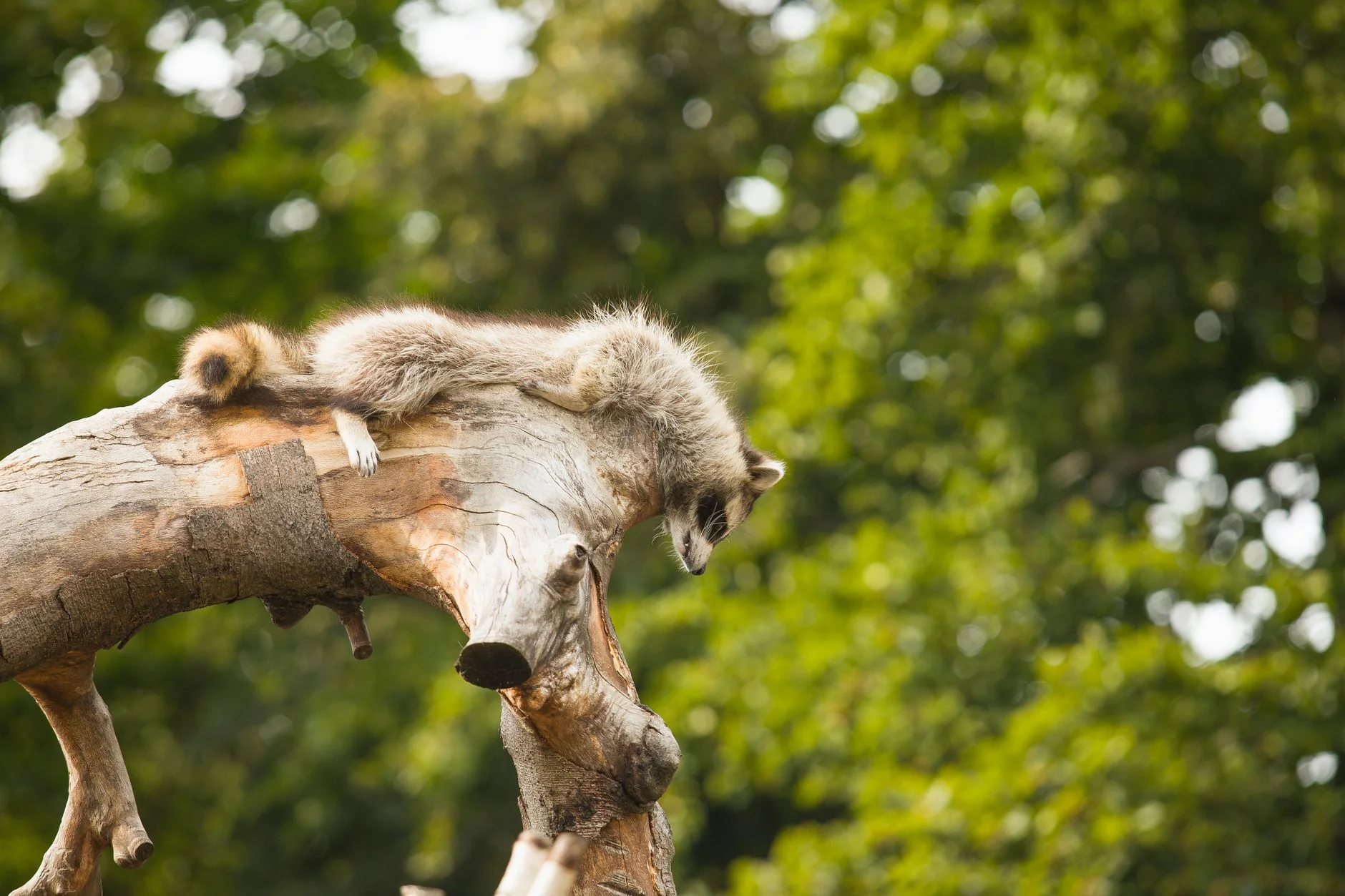
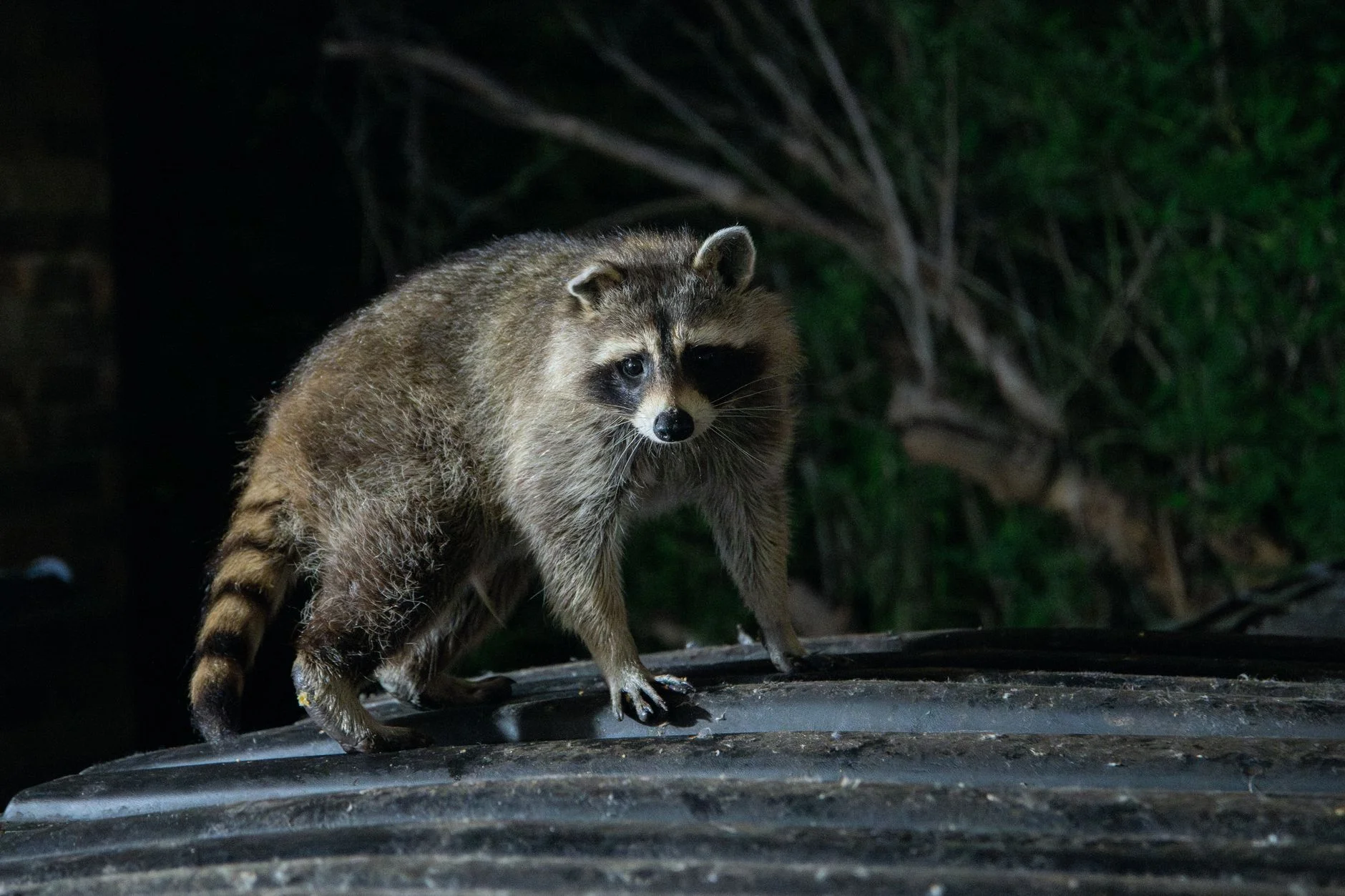
Look closely at the two photographs above. These normal raccoons show what the albino version has lost: the dark mask, the grey guard hairs and the dark eyes. Keep them in mind when you read about leucism in the next section.
Albino vs leucistic raccoons: how to tell them apart
This is the most useful skill in the whole topic. Many photos shared online as "albino raccoons" show animals that are pale for a different reason. The other condition is leucism. Both are genetic, and both can give white or light fur, but they work differently.
- Albinism: melanin production is greatly reduced or missing everywhere. Eyes are pink, red or pale blue; skin, nose and paw pads are pink.
- Leucism: pigment is reduced in some or many parts of the body, often because pigment cells fail to reach the skin and hair. The eyes usually keep their normal dark colour, and the fur can be white, cream or patchy.
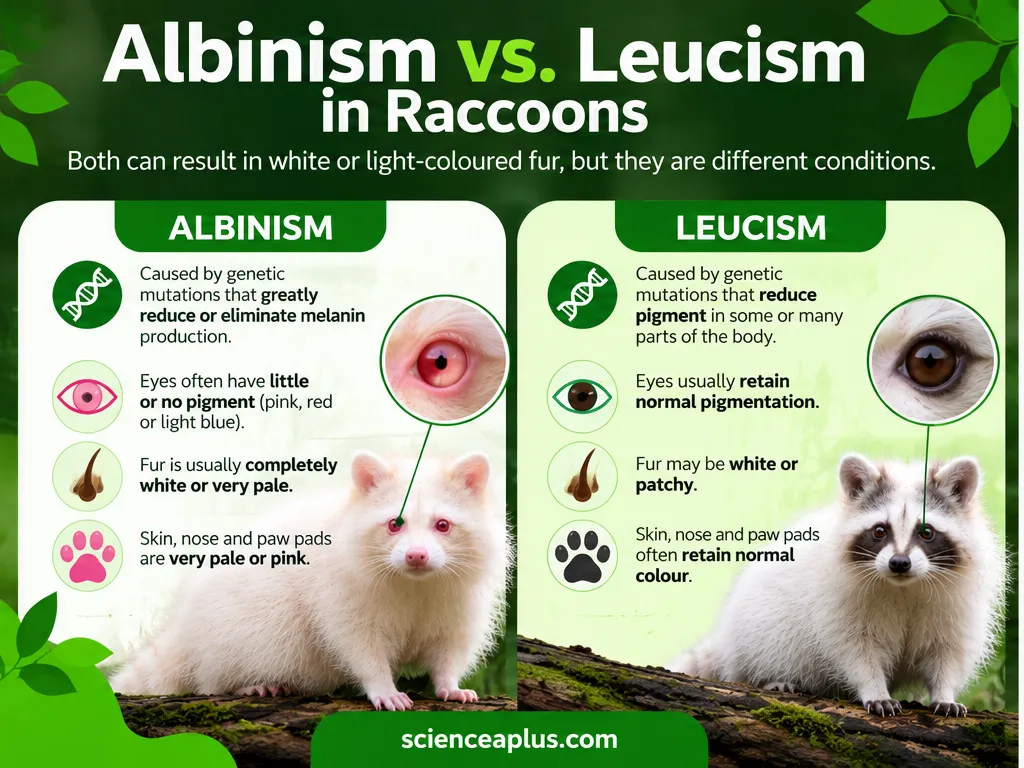
A third possibility is simple colour variation. Raccoon coats range from pale grey to nearly black, and a very light, washed-out animal is not necessarily genetically unusual. Only a veterinary or wildlife biologist who has examined the animal can say for certain.
You will see the same albino-versus-leucistic puzzle in birds and deer, so it is worth comparing: read about how colour and other adaptations help animals survive to see why pigment matters in the wild.
Are albino raccoons rare?
Yes. Albinism is uncommon in wild raccoons, and sightings are usually reported as news because they are so unusual. You will often read precise odds such as "one in 10,000" in articles. We could not trace a measured rate for raccoons to a scientific study, so this article does not repeat one. The honest answer is that albinism is rare, the true figure is unknown, and it will differ between places and populations.
Two things distort the picture. First, a bright white animal at night is easy to notice, so a few individuals get a lot of attention. Second, leucistic and pale raccoons are often reported as albino, which inflates how common "albino" raccoons seem. There is no solid count of either condition.
Can an albino raccoon survive in the wild?
Albinism creates real disadvantages, but it is not an automatic death sentence. The main problems are:
- Sensitivity to sunlight. Less pigment means less protection from bright light and ultraviolet rays. Albino mammals can burn more easily.
- Weaker camouflage. A bright white coat shows up against forest floors and city alleys, so predators and other threats may spot it sooner. See our explanation of camouflage in biology for why a matching colour is such an advantage.
- Possible vision problems. As explained in part 1, reduced pigment in the eye can affect sharpness of sight, especially in bright conditions.
- More human attention. An unusual animal attracts photographers, curious neighbours and sometimes people who want to catch it.
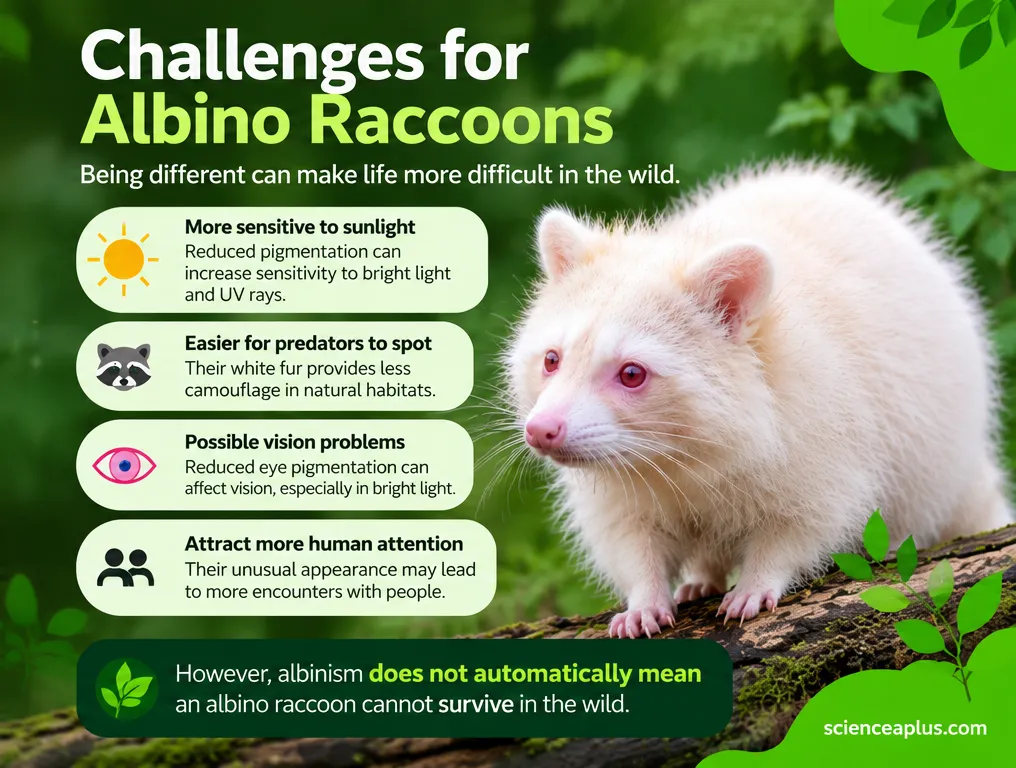
Raccoons are mostly nocturnal, which helps. Foraging in the dark removes much of the sunlight problem. Raccoons also live in cities, where roofs, culverts and sheds offer daytime shelter. Wild raccoons in general do not live long (studies give an average of roughly two to three years), so the real question is how an albino compares with a normal raccoon, and nobody has measured that.
The best summary is cautious: albino raccoons face extra risks, and some will die young, but occasional reports of pale adult raccoons suggest that albinism does not automatically make survival impossible. Nobody has measured how often it does.
Albino raccoons in other animal groups
Raccoons are one of many animals where white individuals occasionally appear. If you enjoy comparing, our other guides look at the genetics behind inherited traits and individual species such as albino snakes, deer and peacocks, which come up in the last section.
Why do albino raccoons have pink eyes? (2 marks)
They have little or no melanin in the iris, so the blood vessels behind the eye show through and make it look pink or red.
Both parents of an albino raccoon are normal-coloured. How is this possible? (2 marks)
Albinism is recessive. Both parents can be carriers (Aa) with normal colouring, and each can pass on the albino allele, so the baby inherits two copies (aa).
A white raccoon has dark brown eyes. Is it albino? (1 mark)
Probably not. Dark eyes suggest leucism or another pale colour form, because albino eyes have little or no pigment.
Raccoon biology: what makes a raccoon a raccoon?
Whether a raccoon is white or grey, it is the same clever, adaptable animal. The features below are what let raccoons live from forests to city centres.
| Feature | Raccoon fact |
|---|---|
| Body length | 40–70 cm, plus a 20–40 cm tail |
| Weight | Usually 5–12 kg |
| Native range | North and Central America, from Canada to Panama |
| Activity | Usually nocturnal |
| Diet | About 40% invertebrates, 33% plants, 27% vertebrates |
| Young | Usually two to five per litter after about 63–65 days |
| Lifespan | Wild average roughly 2–3 years; over 20 in captivity |
| Conservation status | IUCN: Least Concern |
Hands that "see"
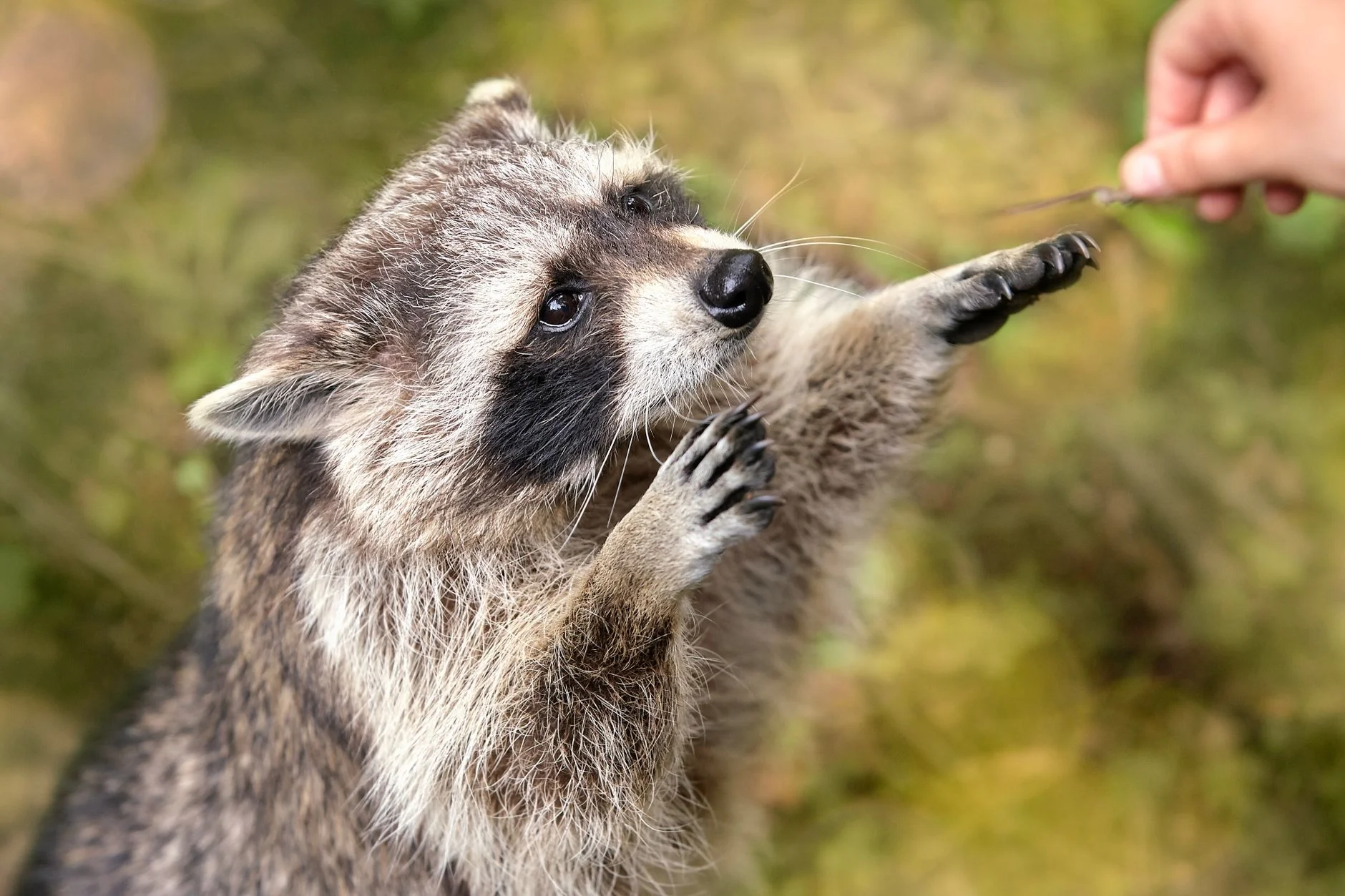
A raccoon's front paws are its most remarkable tool. Almost two-thirds of the part of its brain that handles sensation is devoted to touch. The nimble, five-fingered paws feel for food in dark water, under rocks and inside bins, and they can pick up, turn and open things in ways few other mammals manage.
An omnivore that eats almost anything
Raccoons are omnivores. In nature they eat insects, worms, crayfish, frogs, eggs, fruit and nuts, depending on the season. Understanding who eats whom is the heart of ecology, and you can explore how herbivores, carnivores and omnivores fit into food chains in another guide. Because raccoons sit in the middle of many food webs, a change in raccoon numbers can ripple through a habitat.
Intelligence and memory
Experiments have shown raccoons can remember the solution to a problem for at least three years. That helps explain why a raccoon that has worked out how to open one type of bin or latch tends to keep doing it. If you study animal behaviour, this is a good example of learned behaviour rather than instinct.
The mask
The dark mask is thought to help vision at night and to help raccoons recognise each other. Because the mask is a melanin pattern, albino raccoons usually lack it, which links this section back to the main topic.
City raccoons and wildlife safety
Raccoons are one of the best-known urban wildlife animals. Sheltered roofs, sheds and easily found food suit them. A white raccoon in a town would be quickly noticed, but the safety rules are the same for every raccoon, white or not.
Rabies
Rabies is a viral disease that attacks the nervous system. It spreads mainly through the bites or scratches of an infected animal. According to the US Centers for Disease Control and Prevention, bats, raccoons, skunks and foxes are the wild animals most often found with rabies in the United States. Raccoon rabies is therefore a real concern in North America.
The picture in Europe is different. Germany, for example, was officially declared free of terrestrial rabies (the kind carried by foxes and other land animals) in 2008, after years of vaccination campaigns.
Raccoon roundworm
A second hazard is Baylisascaris procyonis, the raccoon roundworm. Infected raccoons shed its eggs in their droppings. The eggs become infectious after about two to four weeks and can be swallowed by accident from contaminated soil, hands or objects. Human infection is rare but can be serious. In a recent German study, roughly two out of every three raccoons examined (66.4% of 146) carried the parasite, with higher rates in Hesse than elsewhere.
You do not need to be afraid of raccoons, but you do need to respect them. Raccoon droppings should never be handled with bare hands.
Safe habits around raccoons
- Never feed wild raccoons, even if one looks tame or hungry.
- Keep your distance and never try to touch, catch or "rescue" one.
- Secure bins, compost and pet food so they do not attract raccoons.
- Keep pets vaccinated and supervised, and do not let them fight or play with wildlife.
- Never keep a wild raccoon as a pet. Where wildlife law is concerned, keeping or releasing them may be a crime.
- If an animal looks sick, is out in daylight and acts oddly, stay back and call a local wildlife rescue, vet or animal-control service.
The last point needs care. Raccoons are usually nocturnal but can be active in daylight when food is available, so a daytime raccoon is not automatically ill. Stay back anyway and let a professional decide.
Understanding where raccoons fit helps with another question: what happens when they are moved into an ecosystem where they are not native? That is the story of raccoons in Europe, and it brings us to the final part.
Raccoons in Europe: an invasive species
Raccoons are native to the Americas, yet today you can find them in forests, parks and gardens in many European countries. They are an example of an invasive alien species: an animal or plant that humans have moved outside its natural range and that spreads and harms the local environment or economy.
The German story
The best-known European population began in Germany. In 1934, two breeding pairs were released near the Edersee (a reservoir in northern Hesse) to enrich the hunting fauna. A second, separate founding group arrived in 1945, when 25 raccoons escaped from a fur farm at Wolfshagen in Brandenburg. Hesse and Brandenburg, around the two founding sites, remain the strongholds.
Exact numbers are hard to pin down because raccoons are secretive and nocturnal. Estimates for Germany vary, with some going up to around 1.5 to 2 million animals. Raccoons have also been reported in many other European countries, though Germany has by far the largest population.
Why are raccoons a problem in Europe?
- Predation on wildlife. Raccoons are omnivores and can prey on native amphibians, birds and their eggs.
- Competition. They may compete with native carnivores for dens and food.
- Damage. They raid crops, bins and can damage roofs and attics.
- Disease. They can carry the raccoon roundworm, which is now found in nine European countries.
Invasive species matter because they can disturb food webs. Native animals did not evolve alongside raccoons, so they may not have defences against them. For a refresher, look at how food chains and food webs work, and why changes at one level spread through the rest.
The EU invasive species list
Raccoons are on the European Union's list of invasive alien species of Union concern, set up under Regulation (EU) 1143/2014 and including the raccoon since 2016. Under this law, member states must not allow these species to be imported, kept, bred, transported, sold or deliberately released, and must work to prevent or control their spread. That is why, in most EU countries, keeping, breeding or selling raccoons is banned, with limited exceptions. In England and Wales, raccoons are also on the GOV.UK list of invasive non-native animals of special concern, so keeping, breeding or selling one is banned unless you hold a special licence. Check the rules where you live.
A white raccoon in Europe?
You may read about white raccoons in German woods or zoo collections. Treat such claims with the same caution as any other: check the eyes, ask whether a wildlife expert identified the animal, and remember that an escaped or captive-bred animal in Europe is a legal and welfare problem, not a pet. Invasive species rules apply to white raccoons just as they do to normal ones.
Albino animals beyond raccoons
If this topic fascinates you, the same genetics and the same albino-versus-leucistic puzzle appear throughout the animal kingdom. Read about albino snakes, the white peacock question, albino deer, the albino squirrel and albino monkeys.
Test yourself: raccoon flip cards
Frequently asked questions about albino raccoons
What is an albino raccoon?
An albino raccoon is a raccoon with little or no melanin because of an inherited genetic condition. It has white or very pale fur, little or no dark facial mask, a pink nose and pink, red or light-blue eyes. True albinism is very rare in wild raccoons.
Are albino raccoons rare?
Yes, they are very rare. Both parents must carry the recessive albinism allele, and carriers look normal. However, no reliable scientific figure exists for raccoons, so be wary of exact odds quoted online. Many "albino" raccoons in photos are actually leucistic or just very pale.
What is the difference between an albino and a leucistic raccoon?
Albino raccoons make little or no melanin anywhere, so their eyes are pink or red and their skin is pink. Leucistic raccoons have reduced pigment in some or many areas, but their eyes usually stay dark. Both conditions are genetic and both can give white fur.
Why do albino raccoons have pink or red eyes?
Their eyes have little or no pigment in the iris. Without pigment, the blood vessels at the back of the eye show through, so the eye looks pink or red. In some individuals it can look pale blue. The exact shade varies with the amount of pigment and the lighting.
Can albino raccoons survive in the wild?
They face extra risks: sensitivity to bright light and UV, poor camouflage, possible vision problems and unwanted human attention. Being mostly nocturnal helps. No one has measured their survival rate, but albinism does not automatically make survival impossible.
Do raccoons really wash their food?
Captive raccoons often dunk food in water and rub it with their paws, which is the origin of the name lotor, "the washer". Researchers have not observed this behaviour in the wild. It is better described as dousing, linked to their very touch-sensitive paws.
Are raccoons dangerous or rabid?
Most raccoons are not rabid, but they are wild animals that can bite, scratch and carry diseases. In the United States they are among the animals most often found with rabies. Never touch or feed one, and wash any bite or scratch with soap and water before seeking urgent medical advice.
Why are raccoons an invasive species in Europe?
Raccoons are native to the Americas. People released or lost them in Germany in 1934 and 1945, and they have spread across many European countries. They prey on native wildlife, compete with native carnivores, damage property and can carry a roundworm that infects humans.
Are raccoons on the EU invasive species list?
Yes. The raccoon is on the EU list of invasive alien species of Union concern under Regulation (EU) 1143/2014 and has been since 2016. Member states must prevent it being imported, kept, bred, transported, sold or released, and must manage its spread.
Can you keep an albino raccoon as a pet?
No. Raccoons are wild animals and not suited to life as pets. In the EU, keeping a raccoon is generally prohibited, because it is an invasive species. If you find an injured or orphaned raccoon, contact a licensed wildlife rescue or vet rather than taking it home.