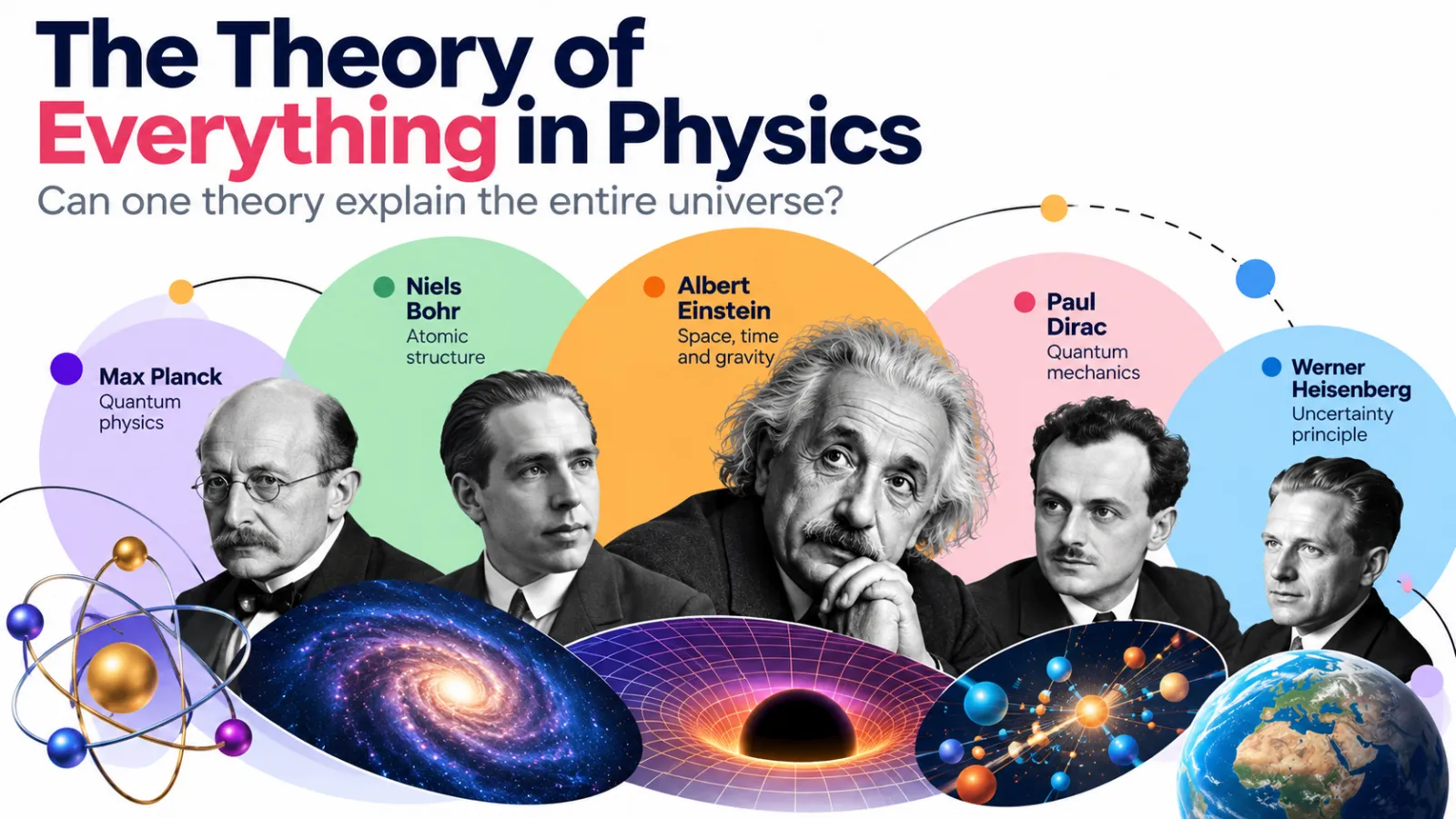
The theory of everything in physics is the hoped-for single theory that would describe every fundamental force and every particle in one framework. Three of nature's four forces already share one theory, the Standard Model, but gravity refuses to join in. No theory of everything exists yet, and that gap is one of the biggest unsolved problems in science.
This guide explains what a theory of everything would have to do, compares the four fundamental forces, follows the history of unification, and shows why gravity is the troublemaker. It then sets string theory and loop quantum gravity side by side, reviews the experiments running in 2026, and ends with worked maths questions, a quiz and a FAQ. (There is also a 2014 film called The Theory of Everything, but it is a biopic of Stephen Hawking, not a physics explainer.)
What is the theory of everything in physics?
A theory of everything would be one framework that describes all the fundamental forces and particles together. Today we need two separate theories. The Standard Model of particle physics covers electromagnetism and the weak and strong forces. General relativity, Einstein's theory, covers gravity. CERN puts it plainly: the Standard Model incorporates only three of the four fundamental forces and omits gravity, and although it describes its own domain very accurately, it is still incomplete.
The two theories work brilliantly in their own areas, but they clash in extreme places such as the inside of a black hole or the first instant of the Big Bang. Researchers at the Perimeter Institute, a theoretical physics centre in Canada, still describe a full theory of everything as unsolved.
Three similar-sounding terms are easy to mix up, so here is how they differ:
- Grand unified theory (GUT): an attempt to merge the strong force with the electroweak force (a single description of the weak and electromagnetic forces). Gravity is still left out.
- Quantum gravity: an attempt to make gravity itself obey quantum rules. It does not have to include the other three forces.
- Theory of everything: all of it, gravity and the other three forces, in one theory.
Einstein spent much of his later life trying to build a "unified field theory" that would join gravity and electromagnetism. He did not succeed, and the search has carried on ever since.
The four fundamental forces of nature
Every push, pull, spark and glow comes down to just four fundamental forces. In modern physics each force is carried between particles by a force-carrying particle called a boson. Here is what each force does in everyday terms.
The strong force holds quarks together inside protons and neutrons, and it also holds the nucleus together. Without it, the positive charges in a nucleus would push it apart. Its carrier is the gluon. If you want a refresher on what is inside an atom, see our guide to atoms, protons, neutrons and electrons.
The electromagnetic force acts between electric charges. It gives us light, chemistry, friction, magnets and the shock you get from a door handle. Its carrier is the photon. You can see its effects in static electricity, where charges build up and then attract or repel.
The weak force is responsible for some kinds of radioactive decay, including beta decay. Its carriers are the W and Z bosons.
Gravity pulls any two masses together. It has no confirmed carrier: the hypothetical "graviton" has never been detected.
| Force | Carrier particle | Range | Relative strength (rough) | Example |
|---|---|---|---|---|
| Strong | Gluon | Very short, about 10−15 m (nucleus-sized) | ≈ 1 | Holds a nucleus together |
| Electromagnetic | Photon | Infinite | ≈ 1/137 | Light, static electricity, chemistry |
| Weak | W and Z bosons | About 10−18 m | Roughly 10−6 | Beta decay |
| Gravity | Graviton? (never detected) | Infinite | ≈ 10−39 | Planets in orbit |
Gravity: the weakest force that runs the universe
Gravity feels powerful because it keeps you on the ground, but between small objects it is astonishingly feeble. Take two protons. The electric repulsion between them is about 1036 times bigger than their gravitational attraction, about 1.24 × 1036 times. Because both forces follow the inverse-square law (they weaken with the square of the distance), that ratio stays the same at any separation.
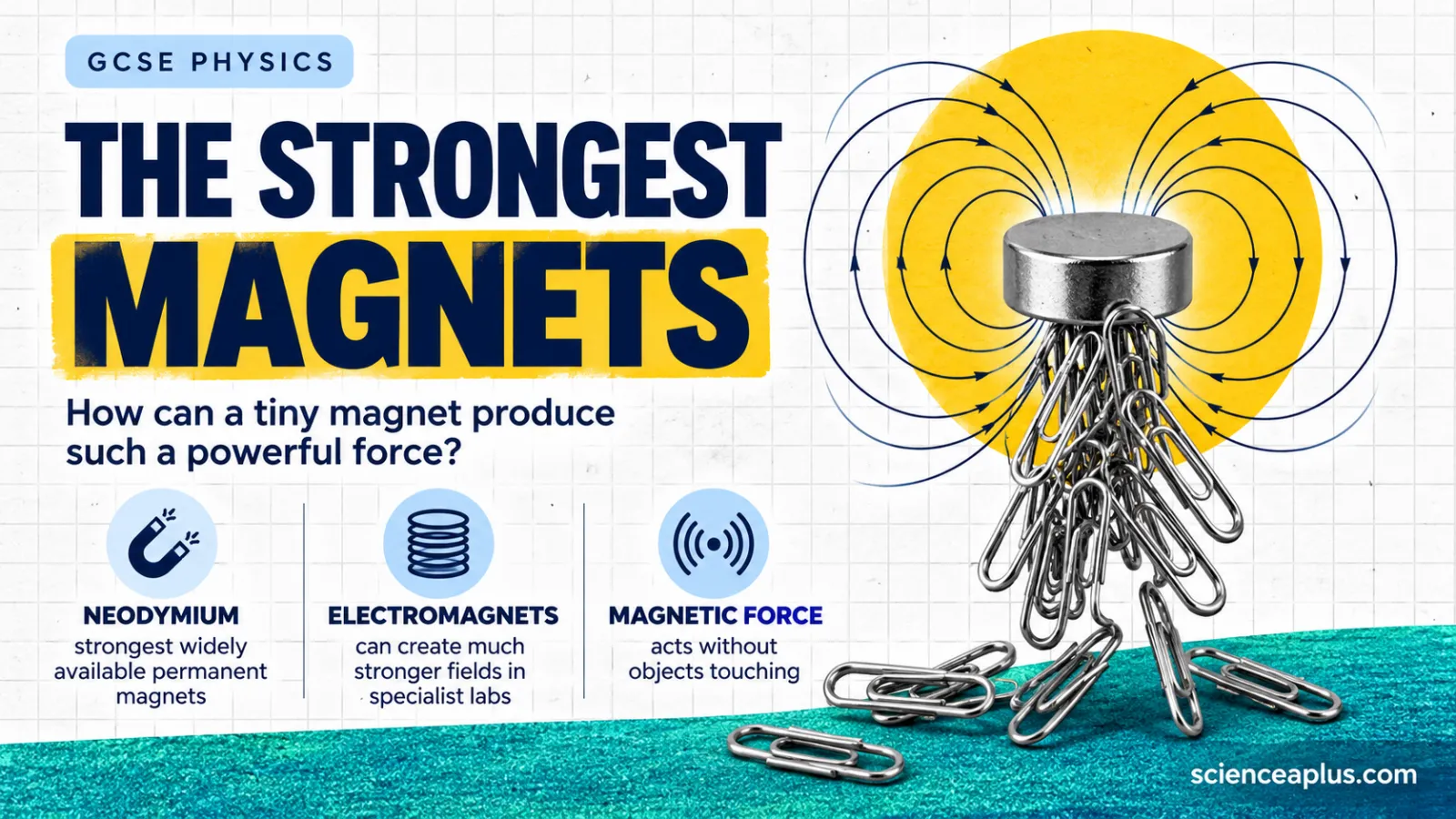
You can see this at home. A small fridge magnet can lift a paperclip even though the whole Earth is pulling the clip down. The magnet wins, and our guide to the strongest magnets in the world shows how far that comparison can go.
So why does gravity dominate the universe on large scales? Masses only ever attract, so the pull of every atom adds up. Positive and negative electric charges usually cancel out, so large objects are almost neutral. At the scale of particles, gravity's effect is negligible, but for planets, stars and galaxies it is the force that matters.
A short history of unifying the forces
The dream of a theory of everything is not new. Again and again, physics has found that two things that looked unrelated were really one. Each step made the picture simpler, and each one is a clue about what a final theory might look like. Here is the timeline, with dates only where we can pin them down:
- Newton: the falling apple and the orbiting Moon obey the same law of gravity.
- 1865: Maxwell unites electricity, magnetism and light.
- 1915: Einstein publishes general relativity, our best theory of gravity.
- 1960s: the electroweak theory joins the weak and electromagnetic forces.
- 1974: the best-known early grand unified theory, Georgi–Glashow SU(5), is proposed.
- 1979: Glashow, Salam and Weinberg share the Nobel Prize in Physics.
- 1983: the W and Z bosons are discovered at CERN.
- 2012: the Higgs boson is announced at CERN.
Newton: the apple and the Moon
The first great unification was Newton's. He showed that the force pulling an apple to the ground is the same force that keeps the Moon in orbit around the Earth. It was the first sign that physics keeps finding common causes behind different-looking events.
Maxwell: electricity, magnetism and light
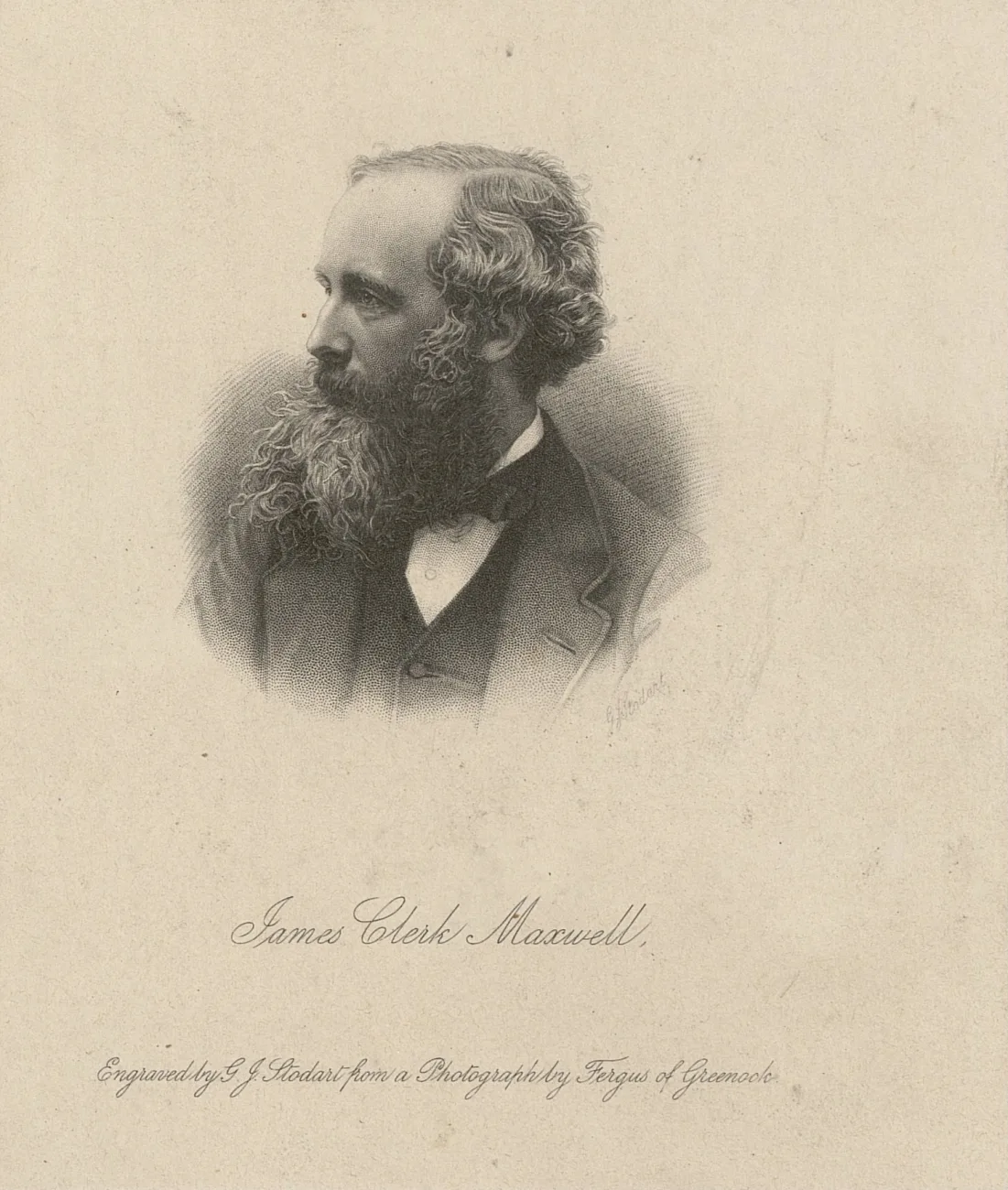
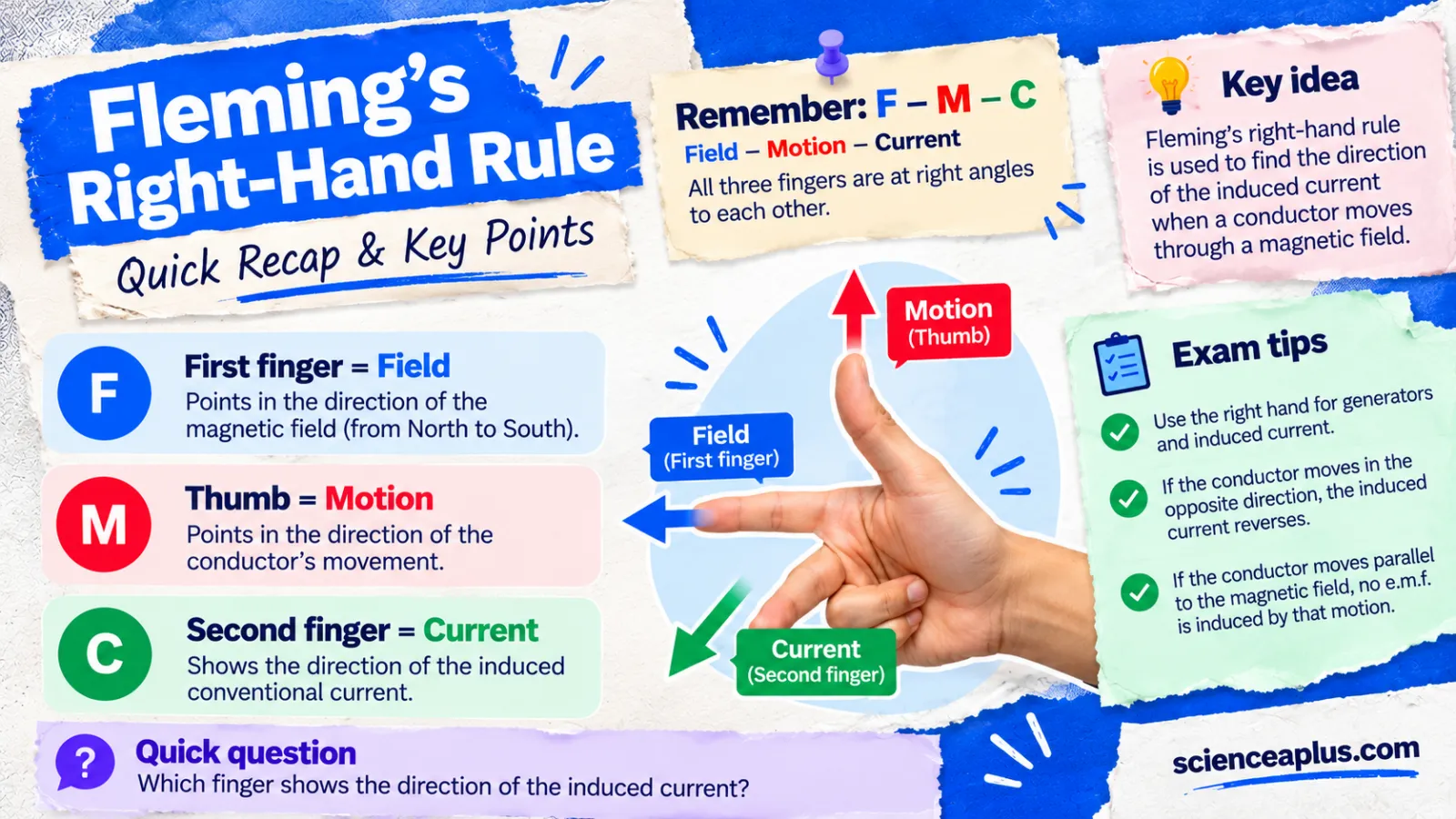
In 1865 James Clerk Maxwell published "A Dynamical Theory of the Electromagnetic Field". It united electricity and magnetism into one theory. Experiments such as the ones in our guide to electromagnetic induction, where a moving magnet makes a current flow, were already hinting that the two were linked.
Maxwell's theory predicted electromagnetic waves travelling at a speed close to the measured speed of light, so he concluded that light is an electromagnetic wave. His original paper had 20 equations. Oliver Heaviside later rewrote them as the four "Maxwell's equations" that students use today.
The electroweak theory
At everyday energies the weak and electromagnetic forces look completely different. One makes light and magnets; the other drives some radioactive decays. In the 1960s Sheldon Glashow, Abdus Salam and Steven Weinberg built a theory in which the two are really two faces of a single electroweak force. It built on the Yang–Mills gauge idea from the mid-1950s.
The key point is that at the very high energies reached in CERN's colliders, the two forces "begin to act on equal terms". At low energies they look different, but at high energies they act alike. In 1983 the UA1 and UA2 experiments at CERN found the W and Z bosons that the theory needed (the W was announced on 25 January 1983 and the Z on 1 June 1983).
The Standard Model: the theory of almost everything
The Standard Model of particle physics is the result of all that unification. It describes the electromagnetic, weak and strong forces and the particles they act on. Each fundamental force has its own boson: the photon, the W and Z bosons, and the gluon. The model has passed test after test for decades, which is why it is so widely trusted.
It also tells us that every particle of matter has an antiparticle with the opposite charge. Why the universe ended up with far more matter than antimatter is another open question, explored in our article on matter and antimatter.
The last missing piece fell into place on 4 July 2012, when the ATLAS and CMS experiments at CERN's Large Hadron Collider (LHC) announced a new particle consistent with the Higgs boson. François Englert and Peter Higgs received the Nobel Prize in 2013.
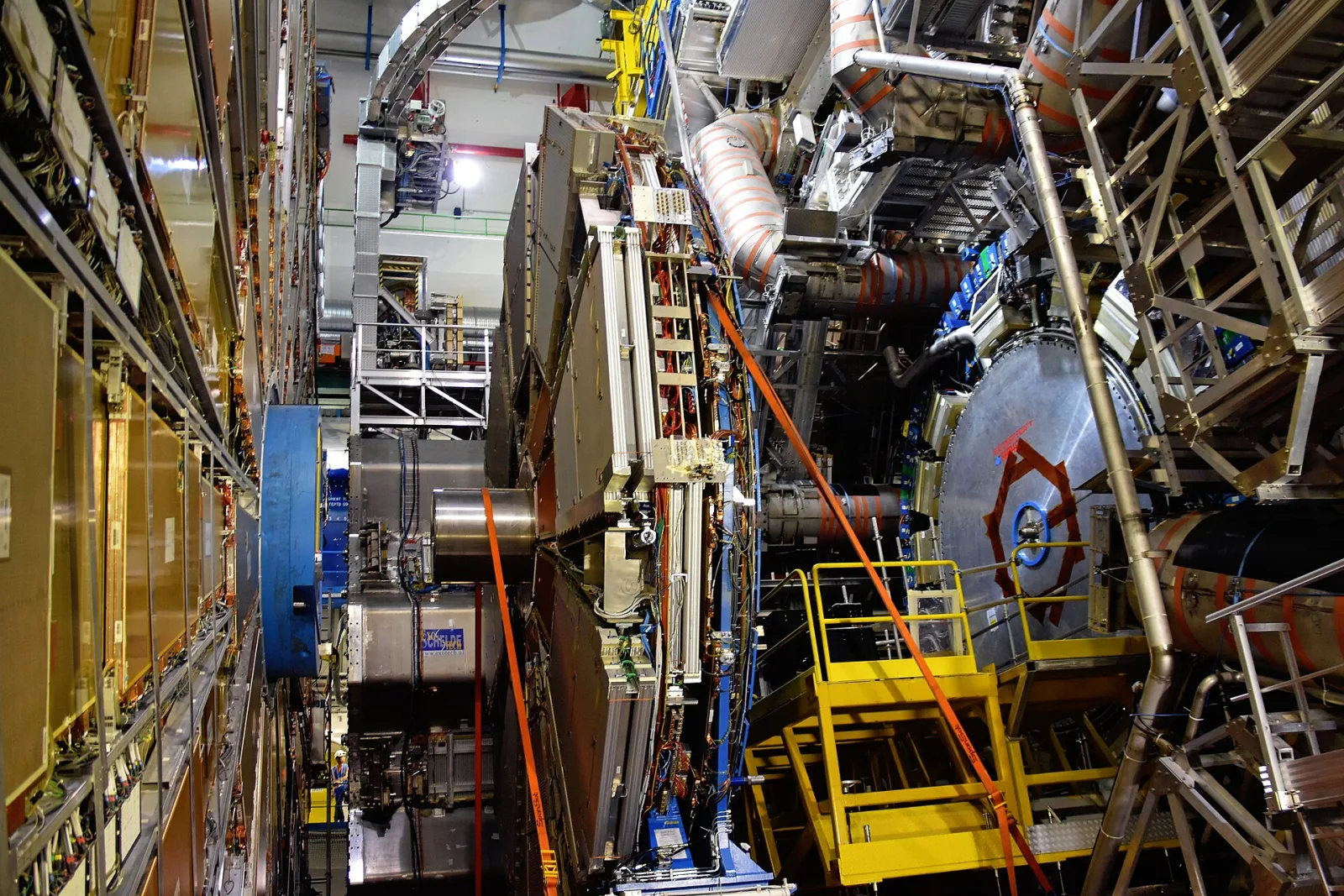
The Standard Model leaves a lot out. It does not include gravity. It also cannot explain dark matter or dark energy. According to the Planck satellite's 2013 results, ordinary matter makes up only about 4.9% of the universe, dark matter about 26.8% and dark energy about 68.3%. So roughly 95% of the universe's contents is not explained by the Standard Model.
Grand unified theories and the proton that won't decay
Once the weak and electromagnetic forces had merged, the next step was obvious: could the strong force join them too? Grand unified theories (GUTs) try to do exactly that, though gravity is still left out. One of the first, and the best known, was the Georgi–Glashow SU(5) model of 1974.
GUTs make a dramatic prediction: protons should decay, mainly through p → e⁺ + π⁰ (a proton turning into a positron and a neutral pion), but at an extremely slow rate. CERN notes that the energies at which the forces would merge are "at least a thousand million times greater than particle accelerators can reach", conditions last found about 10−34 s after the Big Bang.
So far nobody has seen a proton decay. Super-Kamiokande, a huge underground detector in Japan, analysed data from 1996 to 2018 and set the proton lifetime for this decay at more than 2.4 × 1034 years (at 90% confidence). The universe is only about 13.8 billion years old, so the limit is longer than that age by a staggering factor. These limits have ruled out the minimal SU(5) model.
The search goes on. Hyper-Kamiokande, a detector about eight times larger than Super-Kamiokande's far detector, finished excavating its cavern at the end of July 2025. It is planned to start collecting data in 2028, and proton decay is among its goals.
If GUTs are right, why haven't we seen a proton decay?
The predicted lifetime is enormously longer than the age of the universe, so any single proton will almost certainly never decay while we watch. Experiments such as Super-Kamiokande get around this by watching a huge number of protons in a giant tank at the same time. Even then, no decay has been seen, which is how the lifetime limit above was set.
Why gravity won't fit: general relativity vs quantum mechanics
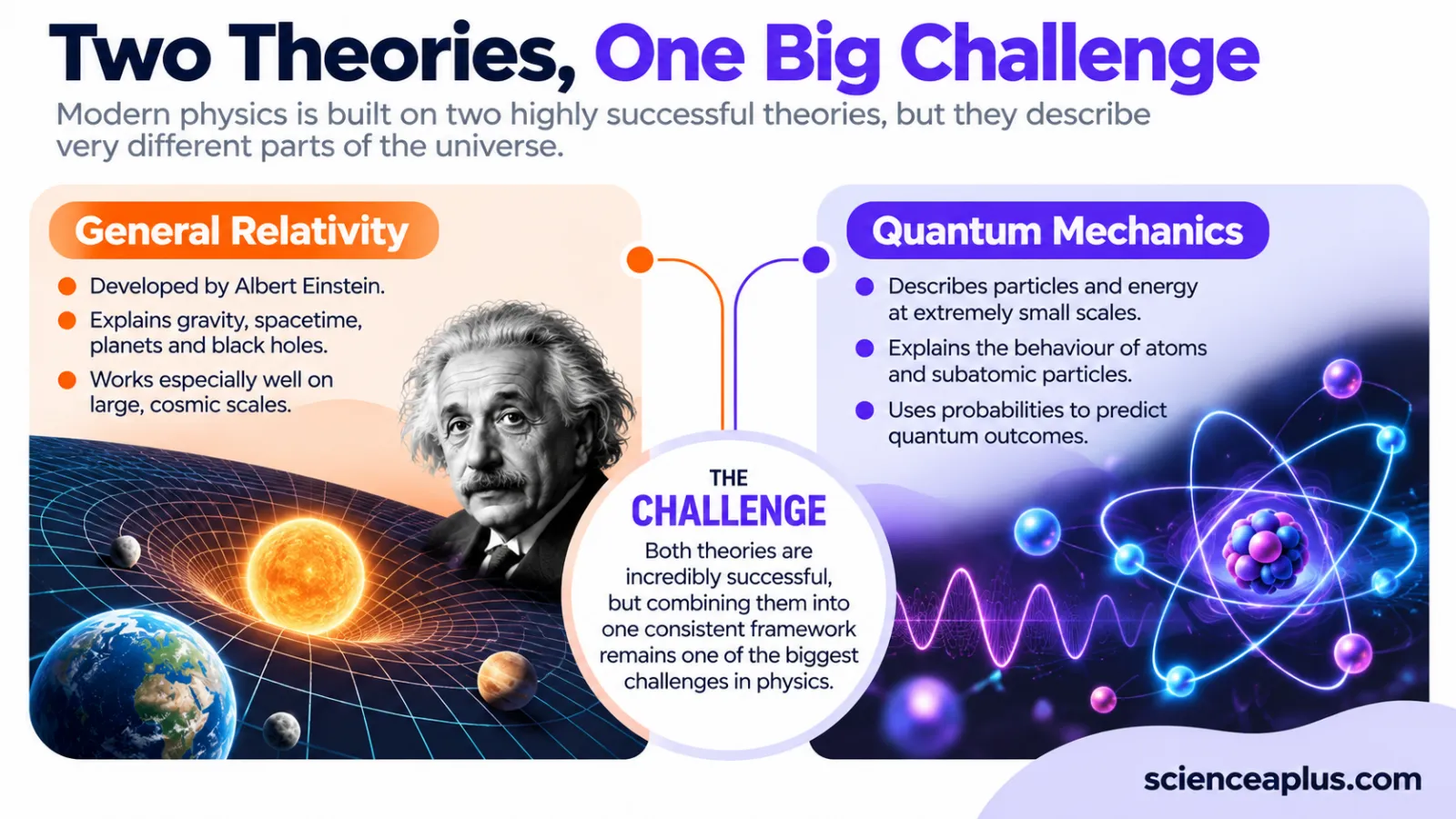
Gravity is the odd one out because it is described by a completely different kind of theory. General relativity, published by Einstein in 1915, describes gravity as the curving of spacetime by mass and energy. On 18 November 1915 Einstein presented its calculation for Mercury's orbit, which explained the extra 43 arcseconds per century in the way Mercury's closest point to the Sun shifts, something Newton's gravity could not do.
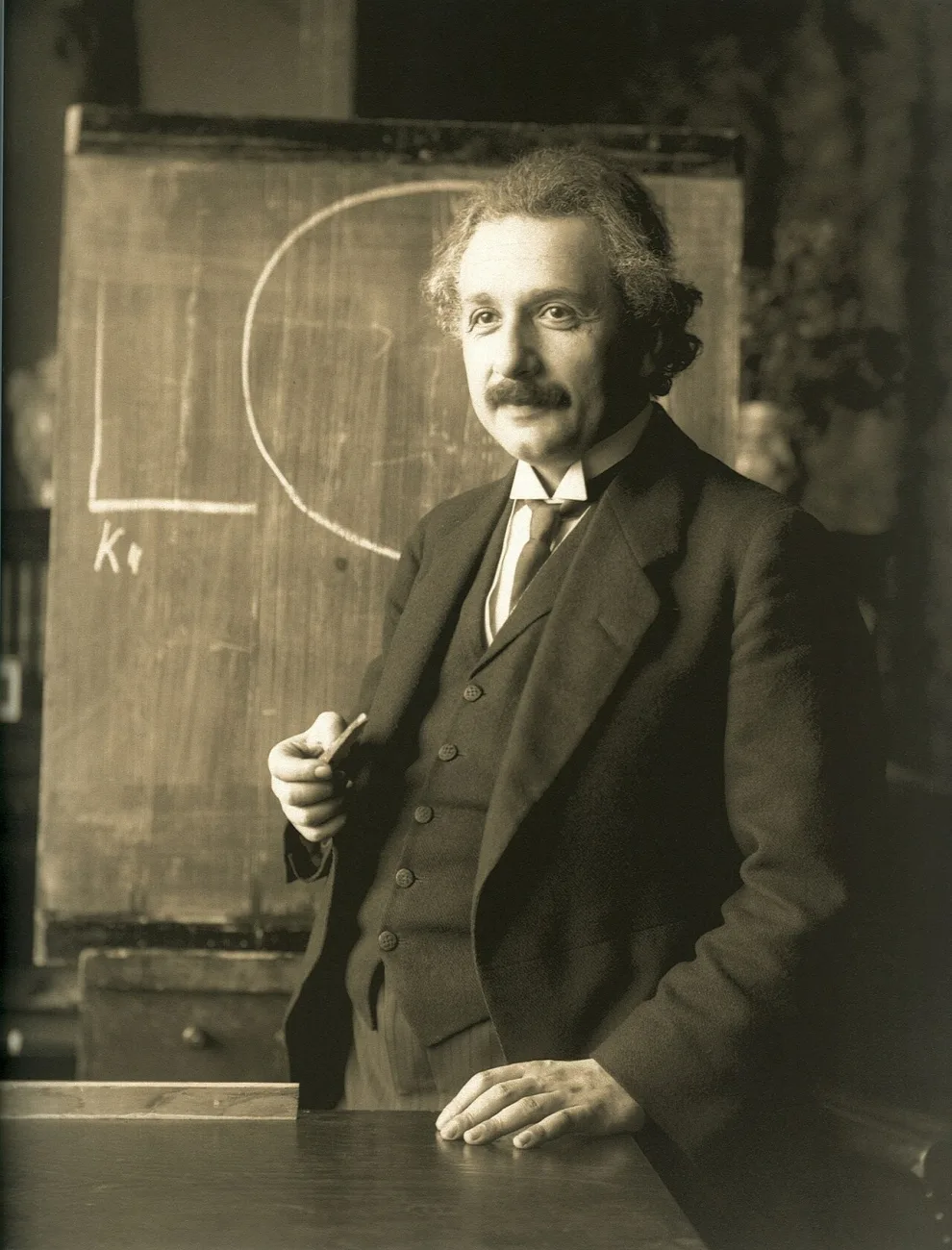
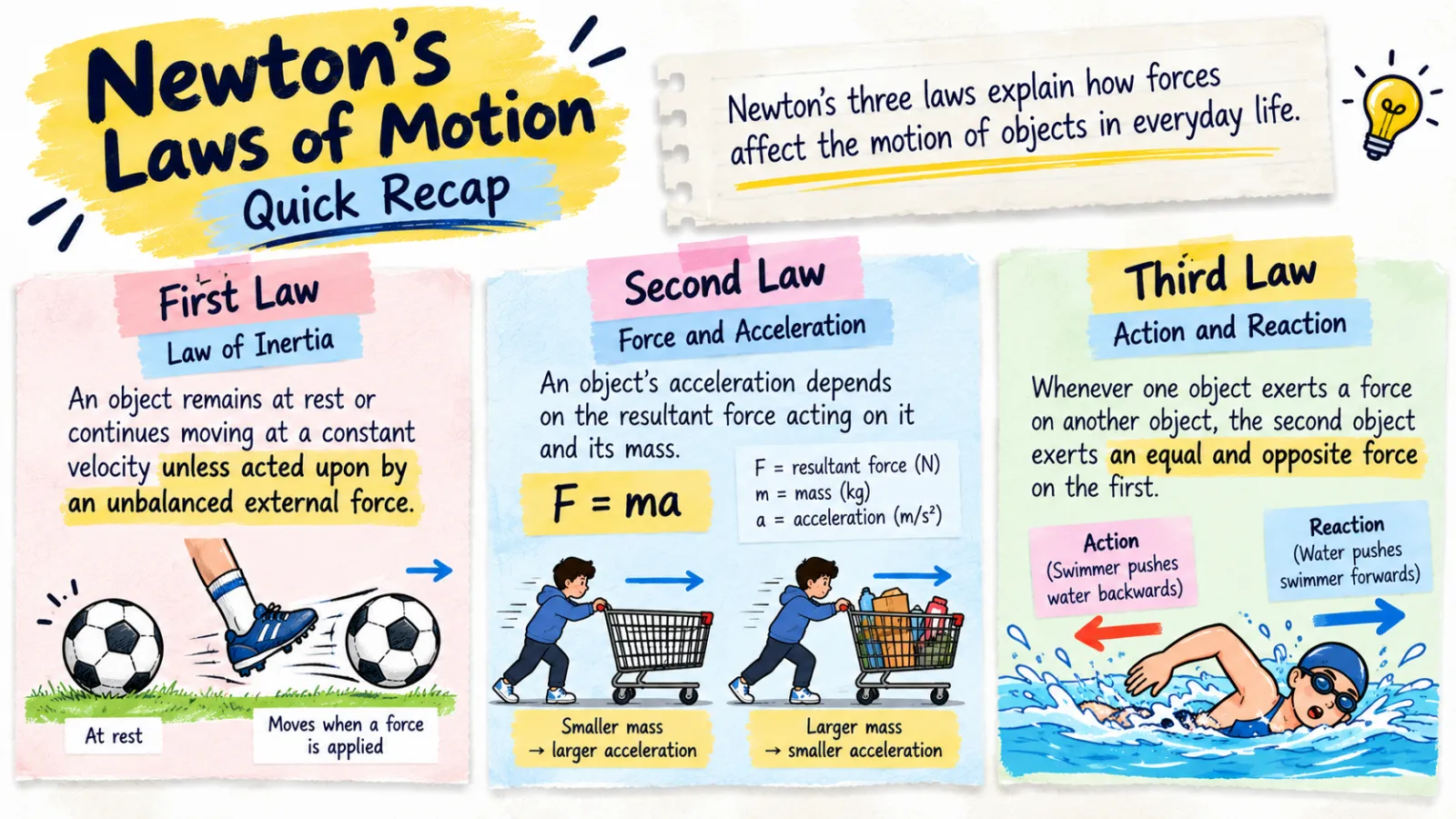
Newton's laws are not wrong; they are a very good approximation for everyday speeds and weak gravity. Our guide to Newton's laws of motion covers the mechanics that general relativity refines.
Quantum mechanics rules the world of atoms and particles. In it, outcomes are described by probabilities, and the uncertainty principle sets limits on how precisely certain pairs of properties can be known at once. The Standard Model is built on these quantum rules.
The Perimeter Institute gives three reasons why the two theories "don't get along":
- Scale. Quantum rules matter for the very small, while general relativity matters for the very large. Few situations involve both at once.
- Approach. General relativity is deterministic, while quantum theory is probabilistic. As Perimeter puts it, in general relativity there is no quantum and no uncertainty principle.
- Renormalisation. When physicists try to calculate quantum gravity the usual way, infinite answers appear that cannot be tidied away. Gravity is "non-renormalisable": attempts to cancel the infinities create new ones.
Where the clash matters: black holes and the Big Bang
The places where both theories must work at the same time are black holes and the earliest moments of the universe. In 1974 Stephen Hawking showed that black holes should give off radiation and slowly lose mass, and that the temperature of this radiation is inversely proportional to the black hole's mass. That raises the black hole information paradox: does information that falls in get lost? The question is still debated. If you are curious about what black holes are good for, read are black holes useful?
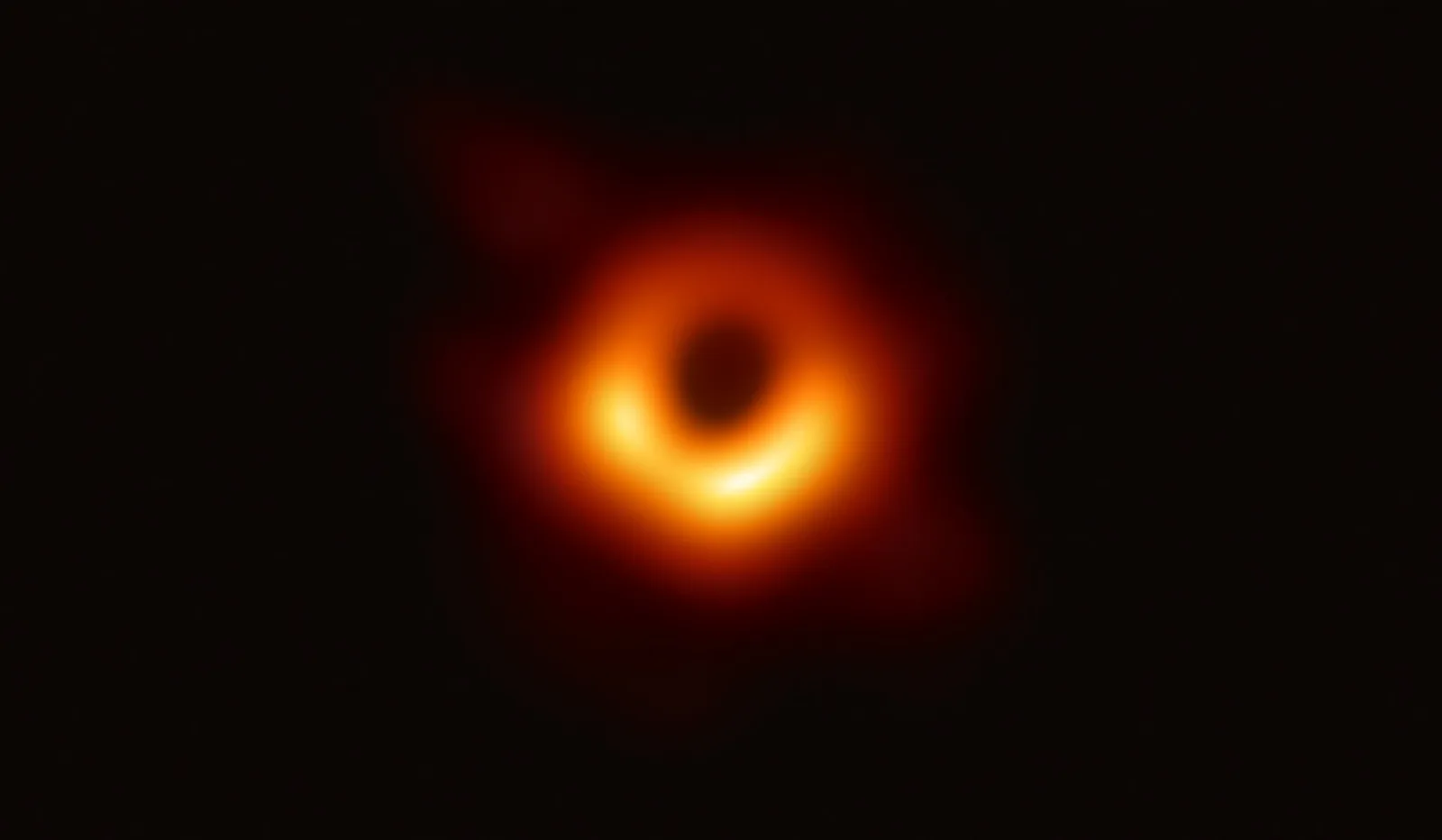
In April 2019 the Event Horizon Telescope team announced the first image of a black hole's shadow, M87*, using data taken in April 2017. M87* has a mass of about 6.5 billion Suns and lies about 55 million light years away. The bright ring is light bent by gravity, not the event horizon itself. Use the calculator below to see how large the event horizon of a black hole would be.
The Planck scale
Physicists expect quantum gravity effects to matter only near the Planck scale. Using the 2022 CODATA values, the Planck length is about 1.616 × 10⁻³⁵ m, the Planck time about 5.39 × 10−44 s, and the Planck energy about 1.22 × 10¹⁹ GeV. These are reference scales rather than measured thresholds, and theories are not expected to be reliable there.
Candidates for a theory of everything
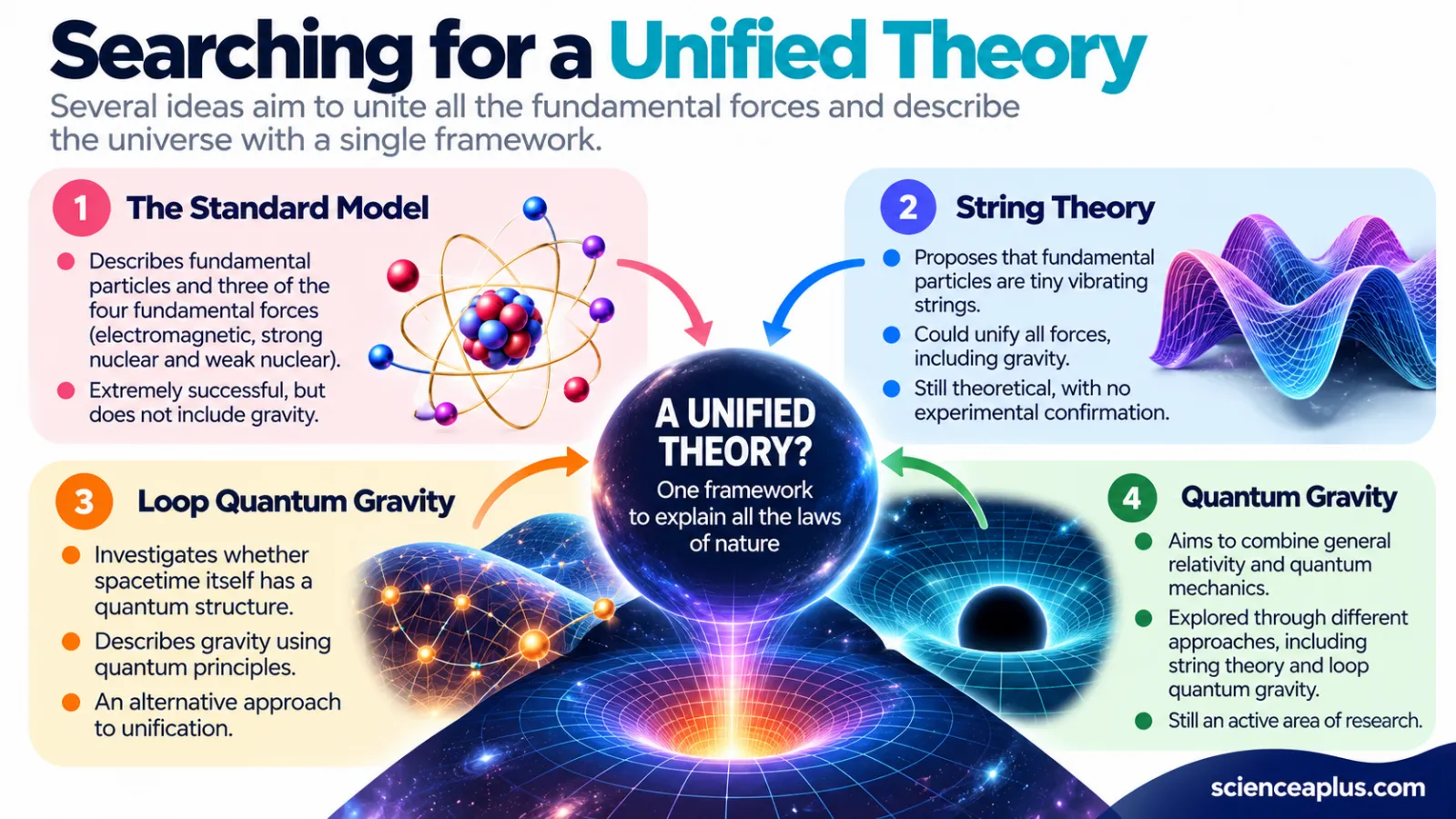
Several research programmes are trying to build a quantum theory of gravity. Two have received the most attention: string theory and loop quantum gravity. Neither has experimental confirmation yet, and each has strong supporters and critics, so we will describe both neutrally.
String theory
In string theory, particles are not points but tiny vibrating strings, and different vibration patterns appear to us as different particles. One pattern has the properties expected of a graviton, which is why string theory includes gravity automatically. That is its great attraction: it aims to cover all the forces, gravity included.
The price is extra dimensions. Superstring theories need 10 spacetime dimensions. In 1984 Michael Green and John Schwarz showed a mechanism that cancelled an inconsistency in the theory, which is often called the first superstring revolution. That left five consistent 10-dimensional superstring theories, and from 1995 onwards M-theory linked them using an 11th dimension.
No experiment has confirmed string theory. Most versions include supersymmetry, which predicts a partner particle for each known particle. The ATLAS and CMS experiments at the LHC have found no superpartners so far. Simplified-model limits reach about 2.3 TeV for gluinos and about 1.9 TeV for first- and second-generation squarks, but realistic models can evade them, and many physicists do not regard supersymmetry as ruled out.
Loop quantum gravity
Loop quantum gravity (LQG) takes a different route. Instead of adding strings, it quantises spacetime itself: space is built from tiny, discrete chunks described by networks called "spin networks", developed by Carlo Rovelli and Lee Smolin from the late 1980s to 1995. In their 1994–95 work, area and volume come in discrete steps at the Planck scale.
LQG is a theory of quantum gravity. By itself it does not unify gravity with the other three forces. An open question is whether it reproduces ordinary general relativity at large scales. As with string theory, no experiment has confirmed it.
Some quantum-gravity models predicted that high-energy photons would travel slightly slower than low-energy ones. Fermi telescope data have constrained this idea, as we explain in the next section on experiments.
String theory vs loop quantum gravity
| String theory | Loop quantum gravity | |
|---|---|---|
| Basic idea | Tiny vibrating strings | Quantised spacetime |
| Includes the other forces? | Aims to (all forces plus gravity) | No, gravity only |
| Extra dimensions? | Yes (10, or 11 in M-theory) | No |
| Spacetime | A background the strings move in (simplest versions) | Built from the network itself |
| Experimental confirmation | None yet | None yet |
Other approaches exist, including asymptotic safety and causal sets. For now, neither string theory nor loop quantum gravity has experimental support, and the theory of everything in physics remains an open problem.
Has the theory of everything been found? How physicists are testing it (2026)
The short answer is no. The Standard Model is incomplete, and the Perimeter Institute still treats a theory of everything as an unsolved problem. What physicists can do is test the edges of what we know. As of October 2026, these are the main experiments.
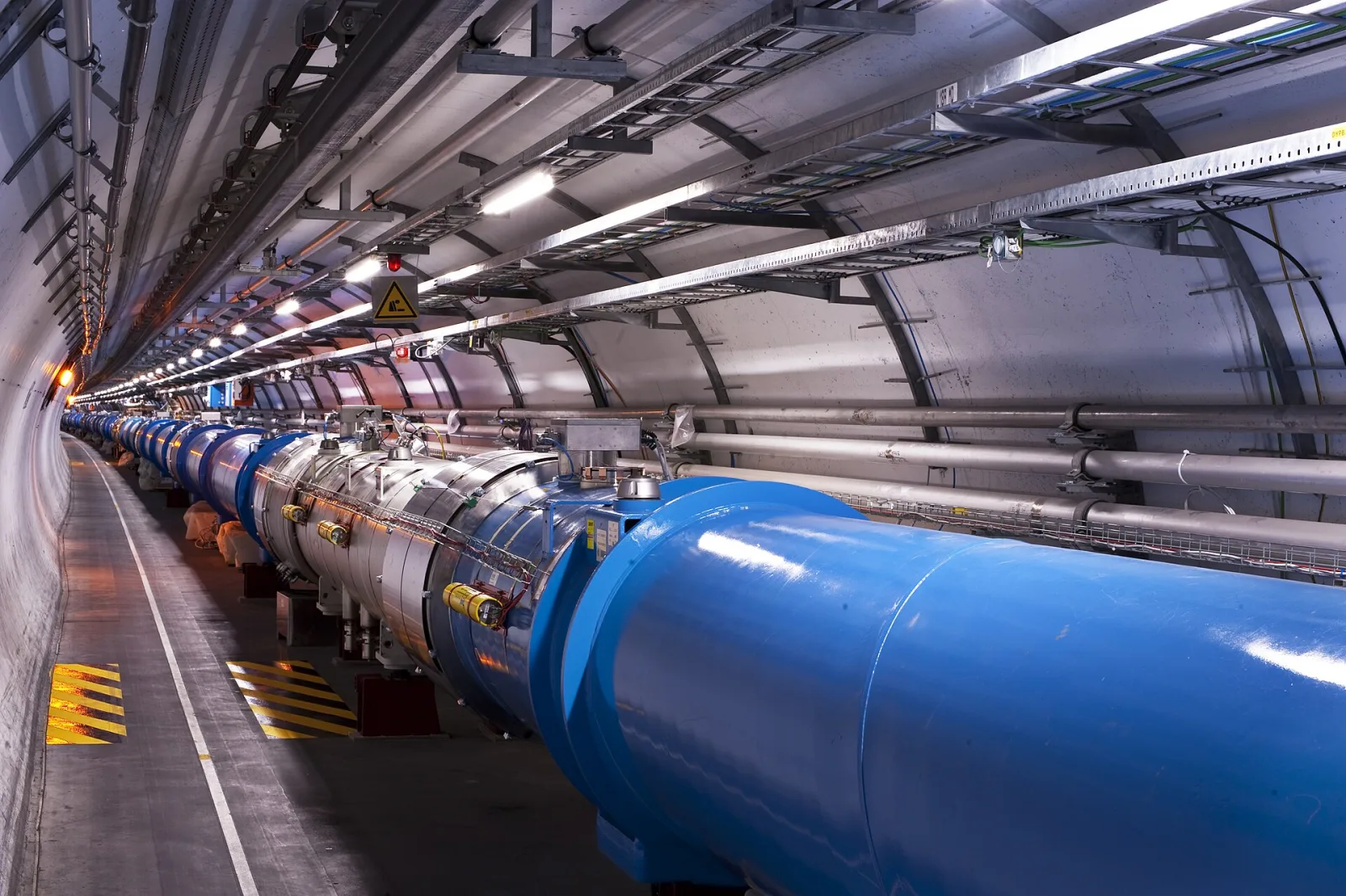
- The Large Hadron Collider (LHC): a 27 km ring at CERN. Run 3 collided protons at 13.6 TeV. The final proton–proton collisions were on 16 May 2026 and lead–lead collisions on 14 June 2026, and the last beams circulated on 27 June 2026. The machine has now entered Long Shutdown 3 to be upgraded into the High-Luminosity LHC, with Run 4 planned for June 2030. No superpartners have been found so far.
- Muon g−2: Fermilab's final result, announced on 3 June 2025 with a precision of 127 parts per billion, agrees with the latest Standard Model prediction. The earlier hint of new physics has largely gone, though some theory questions remain.
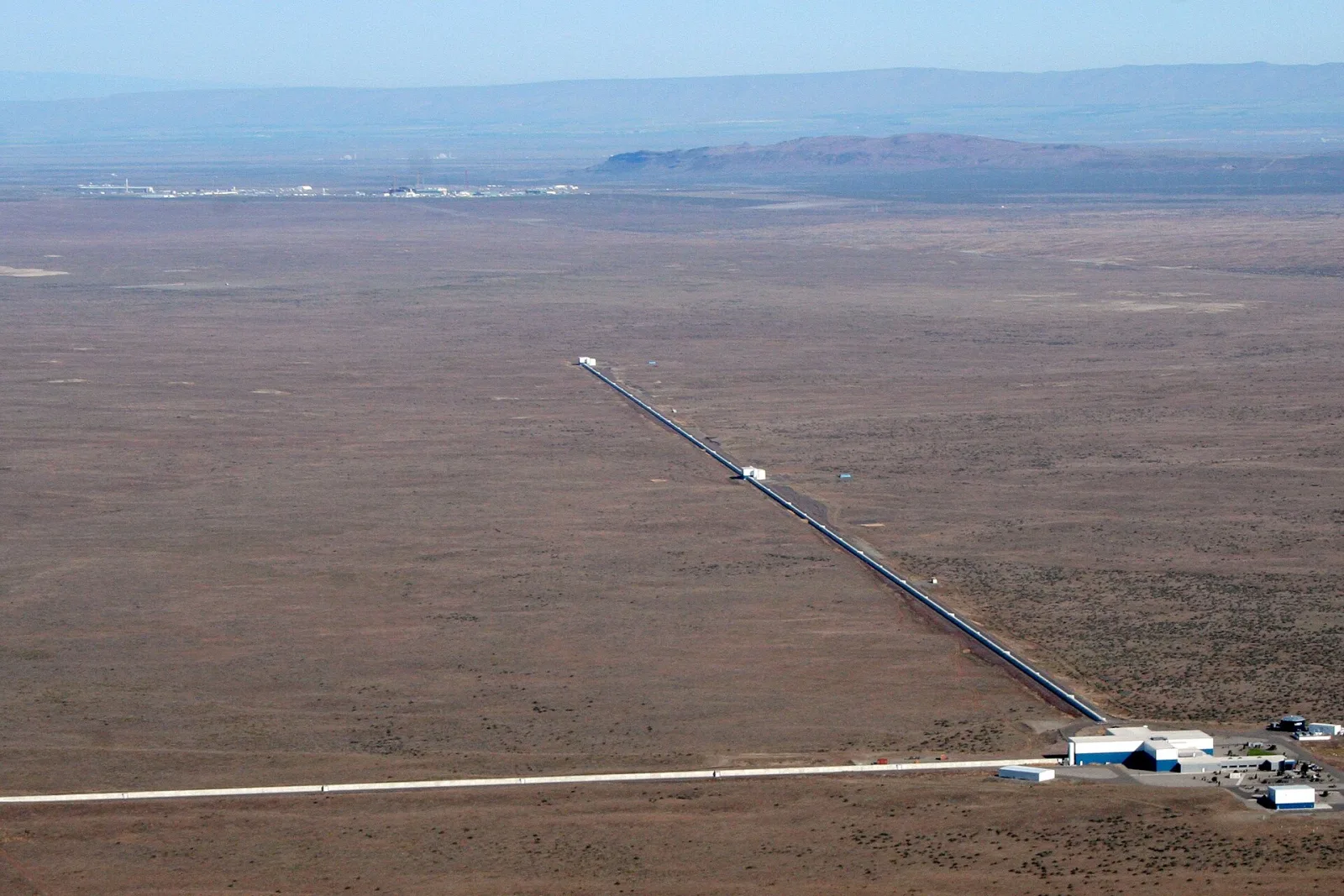
- Gravitational waves: LIGO first detected them on 14 September 2015 (GW150914), from two merging black holes about 1.3 billion light years away. The detection was announced on 11 February 2016, and Weiss, Barish and Thorne received the 2017 Nobel Prize. General relativity passed this strong-gravity test. On 17 August 2017, gravitational waves and gamma rays from merging neutron stars about 130 million light years away arrived just 1.7 seconds apart, so the speed of gravity equals the speed of light to within about −3 × 10⁻¹⁵ to +7 × 10⁻¹⁶ of c.
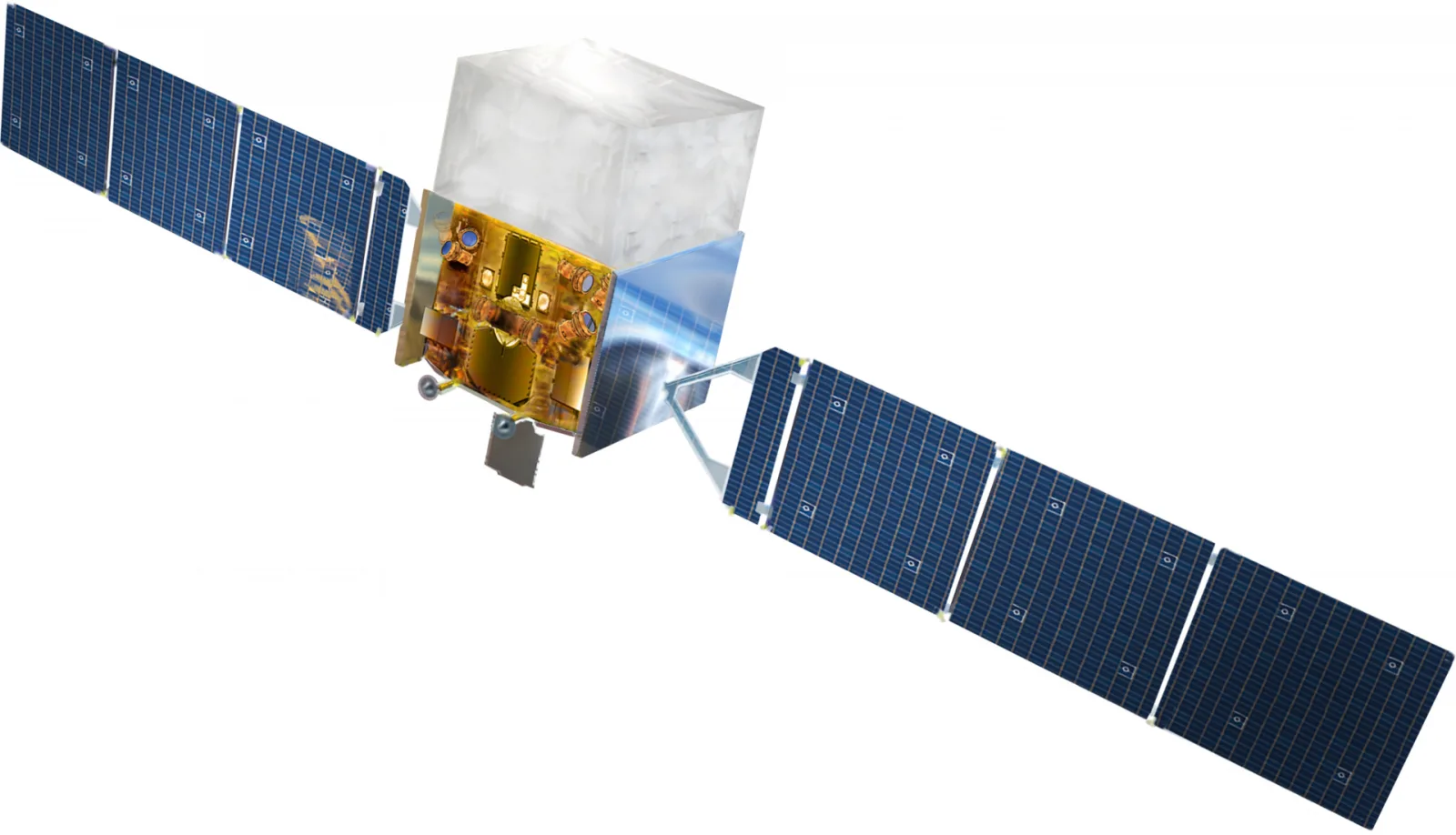
- Fermi photon timing: from gamma-ray burst GRB 090510, a 31 GeV photon arrived within about 0.8 s of the burst's start after travelling from a redshift of about 0.9. Some quantum-gravity models predicted a speed difference that grows with photon energy. This result pushed any such effect beyond the Planck scale, ruling out the simplest versions of that idea. It did not disprove loop quantum gravity.
- Short-range gravity: the Eöt-Wash torsion balance at the University of Washington tested Newton's inverse-square law down to 52 µm in 2020 and found no deviation. Some extra-dimension ideas predicted changes at short distances, so tests like this constrain them.
- Proton decay: as described earlier, Super-Kamiokande has seen none, and Hyper-Kamiokande is planned to start in 2028.
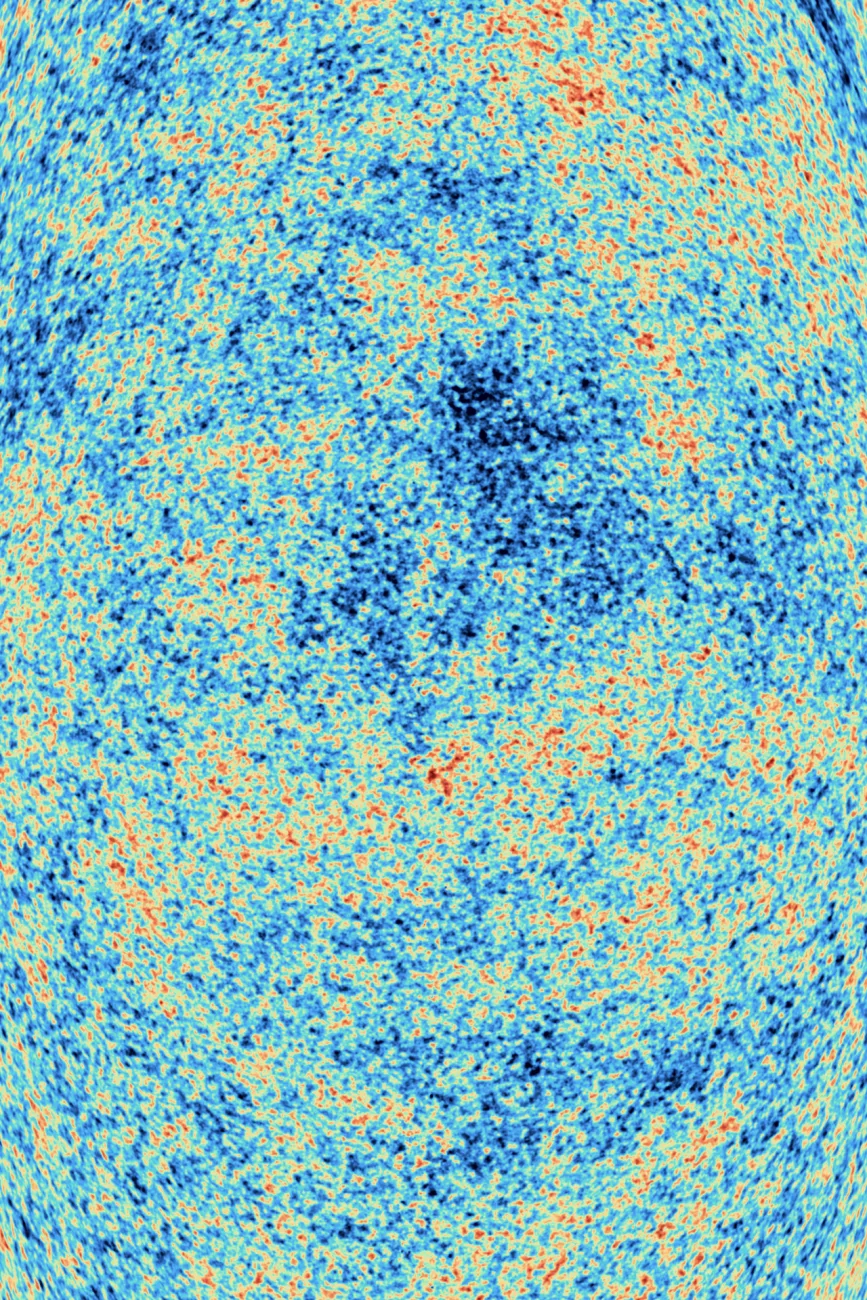
- The cosmic microwave background: ESA's Planck satellite mapped the afterglow of the Big Bang, and its results underline how much is unexplained. The numbers are in the Standard Model section earlier, and you can read more in our article on dark energy in the universe.
- Tabletop quantum gravity: in 2017, Bose and colleagues, and separately Marletto and Vedral, proposed testing whether gravity can entangle two tiny masses. If it can, gravity must be quantum. Researchers are still designing the experiment.
- Space telescopes: instruments such as the James Webb Space Telescope look back towards the early universe, where gravity and quantum physics were both strong.
Maths practice questions
Try each question first, then tap to check. The formulae and constants you need are below.
E = m c²
E = h f
c = f λ
F = k q₁ q₂ ÷ r²
F = G m₁ m₂ ÷ r²
1 eV = 1.60 × 10⁻¹⁹ J
c = 3.00 × 10⁸ m/s, h = 6.63 × 10⁻³⁴ J s, k = 8.99 × 10⁹ N m² C⁻², G = 6.67 × 10⁻¹¹ N m² kg⁻², e = 1.60 × 10⁻¹⁹ C, mₚ = 1.67 × 10⁻²⁷ kg.
1. ★ E = mc²: how much energy is 1.0 g of mass equivalent to?
m = 1.0 × 10⁻³ kg, so E = 1.0 × 10⁻³ × (3.00 × 10⁸)² = 9.0 × 10¹³ J.
2. ★★ Proton rest energy: find E = mₚc² in joules and in MeV.
E = 1.67 × 10⁻²⁷ × (3.00 × 10⁸)² = 1.50 × 10⁻¹⁰ J. Dividing by 1.60 × 10⁻¹⁹ gives 9.39 × 10⁸ eV ≈ 939 MeV. The accepted value is 938 MeV; the small difference comes from rounding c and mₚ.
3. ★★ Fermi's 31 GeV photon: find its energy in joules and its frequency.
E = 31 × 10⁹ × 1.60 × 10⁻¹⁹ ≈ 5.0 × 10⁻⁹ J. f = E ÷ h = 4.96 × 10⁻⁹ ÷ 6.63 × 10⁻³⁴ ≈ 7.5 × 10²⁴ Hz. Optional: λ = c ÷ f ≈ 4.0 × 10⁻¹⁷ m.
4. ★★★ Electric vs gravitational force between two protons 1.0 × 10⁻¹⁵ m apart: find both forces and their ratio.
Fₑ = 8.99 × 10⁹ × (1.60 × 10⁻¹⁹)² ÷ (1.0 × 10⁻¹⁵)² = 230 N.
F_g = 6.67 × 10⁻¹¹ × (1.67 × 10⁻²⁷)² ÷ (1.0 × 10⁻¹⁵)² = 1.86 × 10⁻³⁴ N.
Ratio Fₑ ÷ F_g = 1.24 × 10³⁶.
The ratio is the same at any distance because r² cancels.
5. ★ Orders of magnitude: how many Planck lengths (1.6 × 10⁻³⁵ m) fit across a proton's radius (0.84 × 10⁻¹⁵ m)?
0.84 × 10⁻¹⁵ ÷ 1.6 × 10⁻³⁵ = 5.25 × 10¹⁹, so about 5 × 10¹⁹, roughly 10²⁰.
6. ★★ LHC collision energy: convert 13.6 TeV to joules.
13.6 × 10¹² × 1.60 × 10⁻¹⁹ = 2.18 × 10⁻⁶ J. That is about 13.6 "flying mosquitoes" (1 TeV ≈ 1.6 × 10⁻⁷ J, CERN). It is tiny for an object but enormous for two protons.
7. ★★★ Speed of gravity (GW170817): the signals travelled about 130 million light years and the gamma rays arrived 1.7 s later. By what fraction could the speeds differ?
Take 1 year = 3.16 × 10⁷ s, so the travel time is 130 × 10⁶ × 3.16 × 10⁷ = 4.11 × 10¹⁵ s. The gamma rays arrived 1.7 s later. Fractional difference: 1.7 ÷ 4.11 × 10¹⁵ ≈ 4 × 10⁻¹⁶, so the two speeds match to better than one part in 10¹⁵. The official limit also allows for the gamma rays leaving a little later than the gravitational waves.
8. ★ Why can't we just build a bigger collider? Compare the Planck energy (1.22 × 10¹⁹ GeV) with the LHC's 13.6 TeV (= 1.36 × 10⁴ GeV).
1.22 × 10¹⁹ ÷ 1.36 × 10⁴ = 9.0 × 10¹⁴, about 10¹⁵ times more.
Frequently asked questions about the theory of everything
What is the theory of everything in simple terms?
It is the hoped-for single theory that would explain all the fundamental forces and particles together. Today physicists use the Standard Model for three forces and general relativity for gravity. A theory of everything would replace that pair with one framework. Nobody has found it yet.
Has a theory of everything been found?
No. The Standard Model is accurate but incomplete, because it leaves out gravity. String theory and loop quantum gravity are leading candidates, but neither has been confirmed by experiment. As of October 2026 the search is still open, and organisations such as the Perimeter Institute describe it as unsolved.
What are the four fundamental forces?
They are the strong force, the electromagnetic force, the weak force and gravity. The strong force holds nuclei together, electromagnetism acts between charges, and the weak force drives some radioactive decays. Gravity pulls masses together. Their carriers are the gluon, photon, W and Z bosons, and a hypothetical graviton.
Why doesn't gravity fit into the Standard Model?
General relativity treats gravity as smooth curved spacetime, while the Standard Model uses quantum rules. The Perimeter Institute points to three problems: scale, approach (deterministic versus probabilistic) and renormalisation, where attempts to calculate quantum gravity produce infinite answers that cannot be removed in the usual way.
What is the difference between a grand unified theory and a theory of everything?
A grand unified theory merges the strong force with the electroweak force but leaves gravity out. A theory of everything would include gravity as well, bringing all four forces into one description. An early, well-known grand unified theory was the Georgi–Glashow SU(5) model of 1974, and its simplest version has been ruled out.
Is string theory the theory of everything?
String theory is a candidate, not a proven theory. It aims to include all the forces and gravity, with one vibration pattern behaving like a graviton. However, no experiment has confirmed it, and no superpartner particles have been found so far. Supporters and critics both remain active, so it is best called an unproven idea.
What is loop quantum gravity?
Loop quantum gravity is a theory of quantum gravity that treats space itself as built from tiny discrete chunks, described by spin networks. It focuses on gravity only and does not by itself unify the other three forces. Like string theory, it has not been confirmed by any experiment.
Did Einstein try to find a theory of everything?
Yes. Einstein spent much of his later life searching for a unified field theory that would join gravity and electromagnetism. He did not succeed. His general relativity of 1915 remains our best theory of gravity, but it has not been combined with quantum theory.
Is the film The Theory of Everything about physics?
Not really. The 2014 film, directed by James Marsh, is a biopic of Stephen Hawking based on Jane Hawking's memoir Travelling to Infinity, and Eddie Redmayne won the Best Actor Oscar for it. It is mainly about Hawking's life rather than being an explanation of physics.