Are black holes useful? Not in the way a battery or a bridge is useful. Nobody has built a machine that runs on a black hole, and nobody is likely to soon. But black holes are extremely useful in another way: they are natural laboratories where gravity, space and time are pushed to their limits, so we can test our best theories against the most extreme conditions the universe can offer.
That is the short answer to "what can we do with black holes?" We can study them, test Einstein’s ideas with them, and learn how galaxies grow. In this guide we start with the basics: what a black hole is, how black holes form, the different types, and how big they really are. Later parts look at the evidence, the strange physics inside, energy, travel and safety.
What is a black hole?
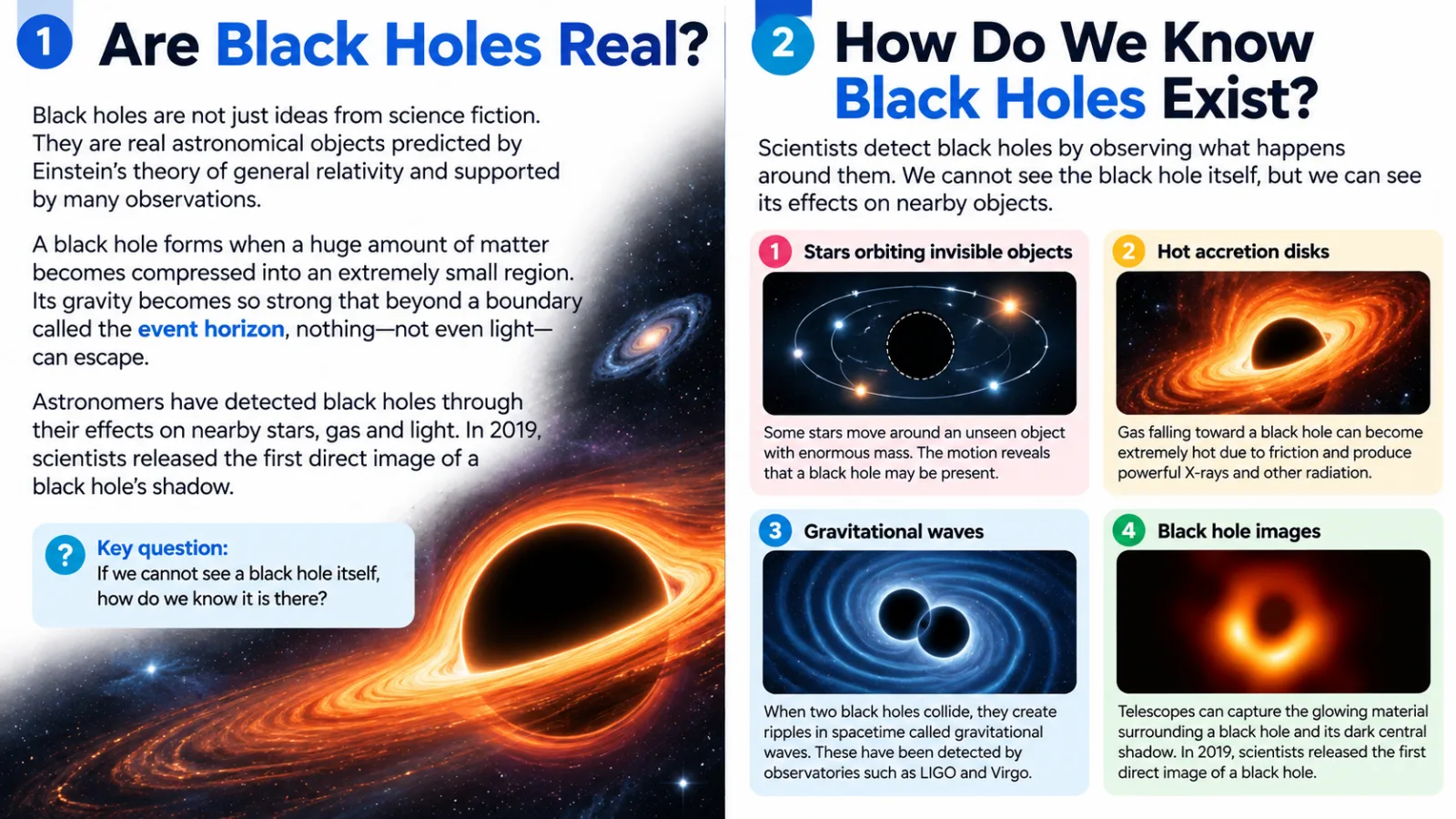
A black hole is a region of spacetime where gravity is so strong that nothing, not even light, can escape once it has crossed the boundary known as the event horizon. Because light cannot get out, the region looks black. We "see" black holes by what they do to their surroundings, not by the light they give off themselves.
So when people ask "what is a black hole?", the best picture is not a hole at all. It is a very large amount of mass squeezed into a very small space, so that the escape speed at its edge is greater than the speed of light.
Where the idea came from
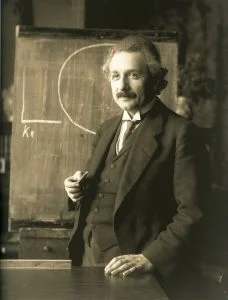
Black holes were predicted by Albert Einstein’s general theory of relativity, published in 1915. Within a year, in 1916, the German physicist Karl Schwarzschild found the first exact solution of Einstein’s equations. It described the gravity outside a single, non-spinning ball of mass, and it contained a special radius at which something strange happens.
The name came much later. The physicist John Wheeler popularised the term "black hole" in 1967, replacing clumsier descriptions such as "gravitationally completely collapsed object".
How do black holes form?
The most familiar black holes are the stellar-mass kind. They form when a very massive star, many times the mass of the Sun, reaches the end of its life. Inside the star, nuclear fusion has been producing outward pressure that balances the inward pull of gravity. When the fuel runs out, that balance fails.
The core collapses under its own gravity. Often the outer layers are blown off in a supernova explosion. If the leftover core is massive enough, nothing can stop the collapse, and a black hole is born. Less massive stars end up as white dwarfs or neutron stars instead.
Supermassive black holes are different, and how they grew so large is still an active research question. What we do know is that they sit at the centres of galaxies and have been growing alongside them.
Types of black hole
Astronomers sort black holes by mass. The table shows the three main types, with a real example of each where we have one.
| Type | Mass (in Suns) | Example |
|---|---|---|
| Stellar-mass | A few to tens of solar masses (gravitational-wave events go up to 100 or more) | Cygnus X-1 |
| Intermediate-mass | Hundreds to about 100,000 solar masses | Evidence is rarer; candidates only |
| Supermassive | Millions to billions of solar masses | Sagittarius A* (about 4 million) and M87* (about 6.5 billion) |
Sagittarius A* sits at the centre of our own Milky Way, roughly 26,000–27,000 light-years from us. M87* lies in the heart of a distant galaxy and is about 6.5 billion times the mass of the Sun, which makes it one of the heaviest black holes we have ever measured.
How big is a black hole?
Size depends on mass, and the relationship is beautifully simple. The radius of the event horizon for a non-spinning black hole is called the Schwarzschild radius:
r = 2GM ÷ c²
Here G is the gravitational constant, M is the mass and c is the speed of light. The key result is that the radius grows in direct proportion to mass: about 2.95 km for every solar mass.
That means the Sun, if it could somehow be squeezed into a black hole, would have a radius of only about 3 km, or roughly 6 km across. Earth would shrink to a radius of about 9 mm, smaller than a marble. Squeezing that much matter into so little space is exactly what makes the gravity so extreme.
Try it yourself. Enter a mass below and the calculator will give you the size of the event horizon.
How do we know black holes exist?
A black hole gives out no light of its own, so you cannot simply point a telescope at one and look. Yet astronomers are confident that black holes are real. The reason is that the evidence does not come from one clever observation. It comes from four completely different methods, each of which points to the same answer.
Each method looks for the effects a black hole has on its surroundings: hot gas, orbiting stars, ripples in spacetime and, more recently, the shadow it casts. Here is the story in roughly the order it happened.
- 1964 and the 1970s: Cygnus X-1. Cygnus X-1 was discovered in 1964 as a source of X-rays. It is an X-ray binary, a system in which a visible star is paired with an unseen partner. Through the 1970s it became the first strong black-hole candidate, because the hidden object looked too massive and too compact to be a normal star or neutron star, and gas pulled from its companion was glowing in X-rays as it fell in.
- 1990s to 2020: stars orbiting Sagittarius A*. At the centre of the Milky Way, astronomers tracked stars whipping around an invisible point. Their orbits show a mass of about 4 million Suns packed into a tiny region. This work, led by Reinhard Genzel and Andrea Ghez, earned them a share of the Nobel Prize in Physics in 2020.
- 14 September 2015: gravitational waves. The LIGO detectors recorded ripples in spacetime from two black holes merging, an event named GW150914. It was announced in February 2016, and the 2017 Nobel Prize in Physics went to Rainer Weiss, Barry Barish and Kip Thorne.
- 10 April 2019: the first image of a black hole. The Event Horizon Telescope released its picture of M87*, a supermassive black hole of about 6.5 billion solar masses.
- 12 May 2022: our own galaxy’s black hole. The same collaboration released the image of Sagittarius A*, about 26,000 to 27,000 light-years from Earth.
The Nobel Prize in 2020 was shared with Roger Penrose, who showed that the formation of black holes follows from general relativity. So theory and observation have now met in the middle.
Why four methods matter
Each method has its own weakness. X-ray binaries could in principle hide some other dense object. Orbiting stars only tell you about mass in a small space. Gravitational waves tell you about a merger, but only for a split second. Images show a ring but not the details inside it.
Put together, though, they are very hard to explain away. This is how science normally builds confidence: independent lines of evidence all agreeing. If you are asked in an exam how we know something exists when we cannot see it directly, the best answer describes its effects on things we can see.
What is inside a black hole?
If you wanted to know what is inside a black hole, the honest answer is that nobody can say for certain. Nothing that crosses the boundary can send information back out, and our best theory stops working at the centre. We can still describe what general relativity predicts, one layer at a time.
The event horizon
The event horizon is the black hole’s point of no return. It is not a solid surface. It is a boundary in spacetime: once you are inside it, gravity is so strong that nothing, not even light, can escape. The size of this boundary is set by the Schwarzschild radius, which is about 2.95 km for every solar mass.
For an observer falling in, there would be nothing special to feel at the horizon itself. It is a one-way door, not a wall.
The singularity
Classical general relativity predicts that all the mass ends up at a singularity at the centre, a point where density and gravity become unlimited. In practice, this prediction really means that the equations have failed. Current physics breaks down there, and we would need a theory that combines gravity with quantum physics to describe it properly.
So when you read that a black hole contains “infinite density”, treat it as a sign of where our knowledge ends rather than a measured fact.
Spaghettification
Gravity gets weaker with distance. Near a black hole, the pull on your feet could be far stronger than the pull on your head, which stretches you out. This tidal stretching is nicknamed spaghettification. If you want to revisit how gravity depends on distance, our guide to Newton’s laws and gravity covers the basics.
The size of the black hole matters a great deal here. Near a smaller black hole, the tides are fierce and would tear you apart before you even reached the horizon. For a supermassive black hole, the tides at the horizon are gentler, so you could cross it without being torn apart first. The danger would come later, closer to the singularity.
Do black holes suck everything in?
The idea of a hungry, sucking monster comes largely from films. In reality, most matter near a black hole is in orbit, just like planets around a star. Some of it spirals in slowly as a glowing disc of gas, and that disc is exactly what helped astronomers find black holes in the first place.
That brings us to a useful turn in the story. The same extreme conditions that make black holes so strange also make them valuable to scientists. Next, we look at what these objects can actually do for us.
Are black holes useful? Yes, as natural laboratories
So, are black holes useful? Not in the way a battery or a solar panel is useful. Nobody has built a machine that runs on a black hole. But as places to test our best theories of gravity, black holes are among the most valuable objects in the universe.
That is the honest answer to what can we do with black holes today: we observe them, measure them and learn from them. Here are the main ways they earn their keep.
Testing general relativity in extreme gravity
Einstein’s general relativity (1915) has passed many tests in weak gravity, such as the orbits of planets. Black holes let physicists push the theory to its limit, where gravity is so strong that nothing, not even light, can escape. If the theory were going to fail anywhere, this is where we would expect to see it.
So far, observations of stars orbiting Sagittarius A*, gravitational waves from merging black holes and the Event Horizon Telescope images all fit the predictions of general relativity.
Time dilation and your phone’s GPS
General relativity also says that clocks run slower in strong gravity. This sounds like a black-hole-only curiosity, but it has an everyday use. GPS satellites must correct for general relativity, or the positions they give would drift. The theory that black holes test is the same one that keeps your map app accurate.
Gravitational lensing
Massive objects, including black holes and whole galaxies, bend the light passing near them. This is called gravitational lensing. Astronomers use it as a natural magnifying glass to study distant objects. Space telescopes such as the one in our guide to NASA’s Webb telescope are ideal for spotting these bent and stretched images.
How galaxies grow
Supermassive black holes sit at the centres of galaxies, with masses of millions to billions of Suns. Our own Milky Way has Sagittarius A*, at about 4 million solar masses. Astronomers now think supermassive black holes and their galaxies grow together, so studying one helps us understand the other.
Gravitational-wave astronomy
On 14 September 2015, LIGO detected gravitational waves from two black holes merging (GW150914). The 2017 Nobel Prize in Physics went to Weiss, Barish and Thorne. Since then, the LIGO–Virgo–KAGRA network has detected hundreds of candidate events, giving us a completely new way to “hear” the universe rather than see it.
Spin-off technology and ideas
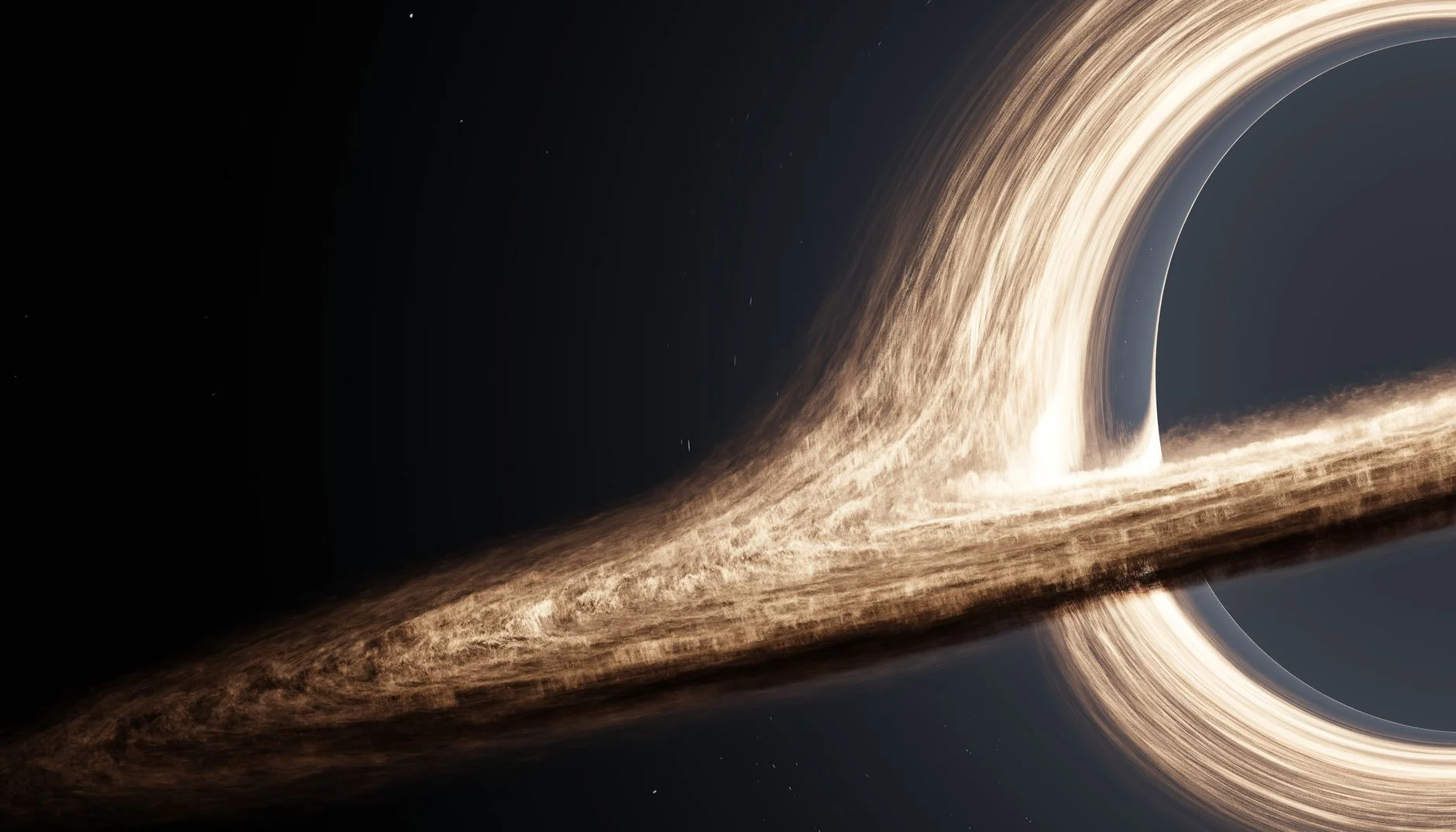
Black-hole research has pushed technology forward. The Event Horizon Telescope uses very long baseline interferometry, linking telescopes across the planet to act like one giant dish. LIGO relies on extraordinarily precise measurement. The film Interstellar (2014) even led to a scientific paper (2015) on how a spinning black hole would look to a nearby observer, written with physicist Kip Thorne.
Could we get energy from a black hole?
This is one of the most popular questions about black holes, and the answer is more interesting than a simple no. Nature already gets huge amounts of energy out of black holes. Whether humans ever could is a different matter.
Accretion discs: the most efficient engines known
Gas that spirals towards a black hole forms an accretion disc. Friction and compression heat it to millions of degrees, so it glows brightly in X-rays. Because the energy comes from matter falling deep into gravity, the process is remarkably efficient, as this table shows.
| Energy source | Share of rest-mass energy released |
|---|---|
| Nuclear fusion (in stars) | about 0.7% |
| Accretion on to a non-spinning black hole | up to about 6% |
| Accretion on to a maximally spinning black hole | up to about 40% |
That makes accretion far more efficient than fusion. It is why quasars, powered by supermassive black holes, can outshine whole galaxies. Jets of particles launched near the black hole can stretch for thousands, even millions, of light-years.
The Penrose process
In 1969, Roger Penrose proposed that energy could, in principle, be extracted from a spinning black hole. The idea involves the ergosphere, a region just outside the event horizon where space itself is dragged around by the spin. A particle entering this region could be split so that one piece falls in and the other escapes with more energy than the original had.
The extra energy comes from the black hole’s rotation, so the black hole slows down slightly. It is a clever idea, but the Penrose process is purely theoretical. It has never been observed around a real black hole.
The Blandford–Znajek process
In 1977, Roger Blandford and Roman Znajek described how magnetic fields threading a spinning black hole could draw out its spin energy. This is now a leading explanation for how black holes power their jets. It happens naturally, far out in space, so it explains jets rather than offering a way to build a power plant.
The current reality
There is no practical technology for getting energy from a black hole. The nearest known black hole, Gaia BH1, is about 1,560 light-years away, far beyond anything we can reach. Today, the useful energy lesson is scientific: accretion shows us how matter behaves under the most extreme conditions. For a wider tour of the tools astronomers use to study these objects, see exploring the universe with rockets, telescopes and satellites.
Six black-hole terms to know
Test your memory of the key words from this part. Try to answer each one before you flip the card.
Could black holes help us travel through space?
Science fiction loves the idea that a black hole is a doorway to somewhere else. It makes for a great story, but it is not what the physics says. Asking what can we do with black holes in terms of travel is a fair question, and the honest answer is: nothing practical, but the ideas behind it are worth knowing.
The doorway idea comes from wormholes. These are hypothetical solutions of general relativity, first described as Einstein–Rosen bridges in 1935. They would be tunnels connecting two distant regions of spacetime. No one has found any evidence that wormholes exist, and no observation has ever hinted at one.
Crucially, a black hole is not a wormhole. If you fell into a real black hole, you would not pop out in another galaxy. Our best theory predicts you would reach the singularity, where current physics breaks down. For more on what happens on the way in, see the section on spaghettification above.
What about time travel and time dilation?
Here the science is more solid. Clocks run slower in strong gravity, an effect called time dilation. Close to a black hole the slowing would be dramatic, which is why films such as Interstellar use it as a plot device.
You do not need a black hole to see this effect, though. GPS satellites must correct for general relativity to keep your phone’s map accurate. That is a real, everyday use of the same theory that black holes test so severely.
The wider story of how stars, galaxies and the cosmos fit together is told in our guide to beautiful cosmology.
Are black holes dangerous to Earth?
Short answer: not to us. Many people picture a black hole as a cosmic vacuum cleaner that roams around swallowing planets. That picture is wrong.
Far away, a black hole’s gravity is just like that of any other object with the same mass. The nearest known black hole, Gaia BH1, is about 1,560 light-years away. It was discovered in 2022. The supermassive black hole at the centre of our galaxy, Sagittarius A*, is roughly 26,000–27,000 light-years from us. Neither can harm Earth.
Black holes form when very massive stars collapse, a process that started long before our Sun existed. If you are curious about how our own neighbourhood formed instead, read about the origin of our solar system.
That leads to a classic thought experiment. Try the question below before revealing the answer.
If the Sun became a black hole of the same mass, what would happen to Earth’s orbit? (2 marks)
Earth’s orbit would be unchanged, because gravity depends on mass and distance, and both stay the same. However, Earth would become dark and cold, since the Sun would no longer give out light or heat.
Space is also expanding, and what drives that is another deep puzzle. Our article on dark energy in the universe explains it. And if you enjoy mapping the sky, try how many constellations there are.
Test yourself: are black holes useful?
Key points: what black holes can teach us
- A black hole is a region of spacetime where gravity is so strong that nothing, not even light, can escape once inside the event horizon.
- Black holes are useful as natural laboratories for testing general relativity, studying galaxy growth and powering gravitational-wave astronomy.
- Practical machines that use black holes, such as energy extraction by the Penrose process, remain purely theoretical.
- Wormholes are hypothetical and unobserved, and a black hole is not a wormhole.
- The nearest known black hole, Gaia BH1, is about 1,560 light-years away, so black holes pose no danger to Earth.
- Replacing the Sun with a black hole of the same mass would leave Earth’s orbit unchanged.
Frequently asked questions about black holes
Are black holes useful?
Yes, mainly to science. Black holes act as natural laboratories for testing general relativity in extreme gravity. They also help us understand how galaxies grow, and their mergers created the gravitational-wave astronomy detected by LIGO. There is no practical technology that uses them yet.
What is a black hole?
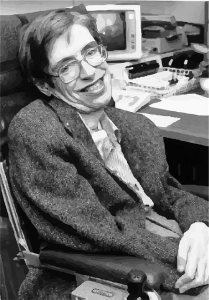
A black hole is a region of spacetime where gravity is so strong that nothing, not even light, can escape once it crosses the event horizon. Einstein’s general relativity predicted them, and John Wheeler popularised the name in 1967.
How do black holes form?
Stellar-mass black holes form when a very massive star, many times the Sun’s mass, runs out of fuel and collapses at the end of its life, often in a supernova. Supermassive black holes sit at galaxy centres, and how they grow so large is still being studied.
How do we know black holes exist?
We have several lines of evidence. X-rays from Cygnus X-1, stars orbiting Sagittarius A*, gravitational waves first detected by LIGO in 2015, and Event Horizon Telescope images of M87* in 2019 and Sagittarius A* in 2022 all point to black holes.
What is inside a black hole?
Nobody knows for certain. Classical general relativity predicts a singularity at the centre, but that is where current physics breaks down. Beyond the event horizon we cannot observe directly, so a complete theory combining gravity and quantum physics is needed.
Can we get energy from a black hole?
In theory, yes. The Penrose process, proposed by Roger Penrose in 1969, describes extracting energy from a spinning black hole’s ergosphere. Magnetic fields may do something similar in nature through the Blandford–Znajek process, a leading explanation for jets, but no one can use either process for engineering.
Could a black hole destroy Earth?
Not realistically. The nearest known black hole, Gaia BH1, is about 1,560 light-years away. Far from a black hole, its gravity is like that of any object of the same mass, so distant black holes pose no danger to Earth.
What is the nearest black hole to Earth?
The nearest known black hole is Gaia BH1, about 1,560 light-years away, discovered in 2022. There may be closer ones we have not yet found, because black holes that are not feeding on gas are very hard to detect.
What is Hawking radiation?
Hawking radiation is a prediction by Stephen Hawking in 1974 that quantum effects make black holes slowly emit radiation and eventually evaporate. For stellar-mass black holes it is far too weak to detect, and it has not yet been observed.