Space mission failures are some of the most painful and most useful stories in science. A single wrong number, a cold morning or a valve that opens at the wrong moment can end a mission costing hundreds of millions of dollars, and sometimes it costs lives. Yet almost every one of these space disasters changed how engineers design, test and communicate.
This guide walks through more than a dozen famous space failures, from a lost satellite in 1959 to a private lunar lander in 2019. For each, you will see what happened, why it happened and what changed afterwards. Where people died, we tell their stories with respect, because the lessons from space failures were paid for dearly.
Why space missions fail
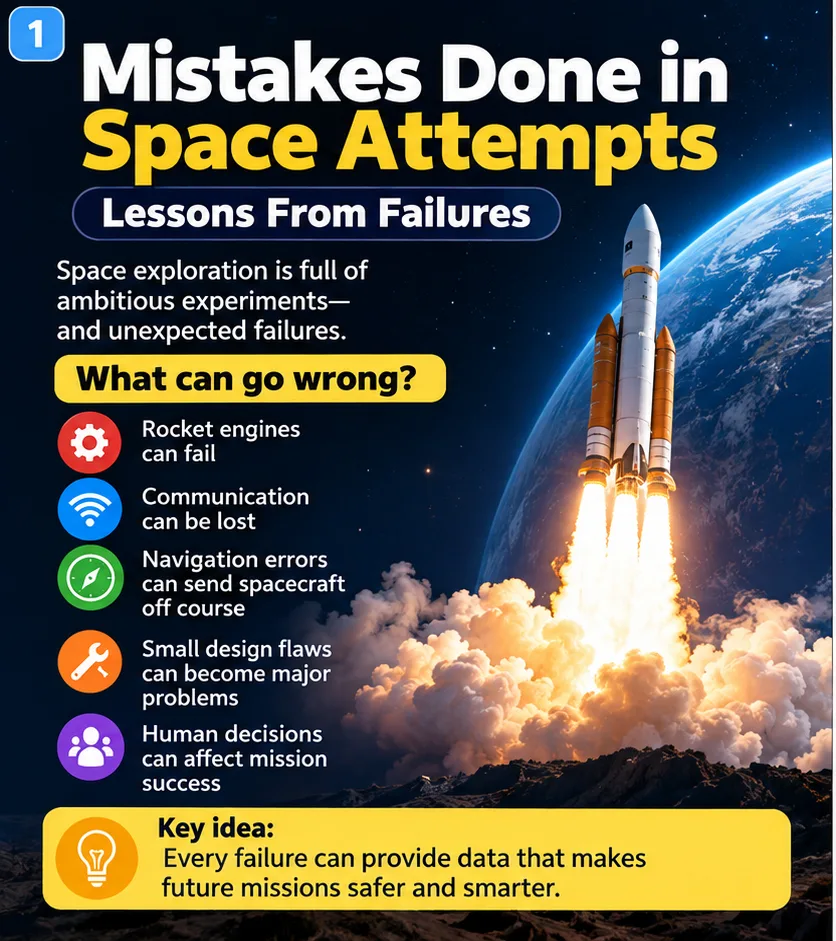
Rockets and spacecraft are among the most complicated machines humans build. A launch vehicle carries enormous amounts of fuel, burns it in seconds and must steer perfectly while it does so. There is no roadside recovery in orbit, and once a rocket leaves the pad, engineers can rarely fix it.
So why do rockets fail? Looking across the cases in this article, the causes fall into a few families: hardware that did not behave as expected, software that made a wrong decision, human mistakes in design or communication, and organisations that did not listen to warning signs. Often it is several of these at once.
When small problems become big
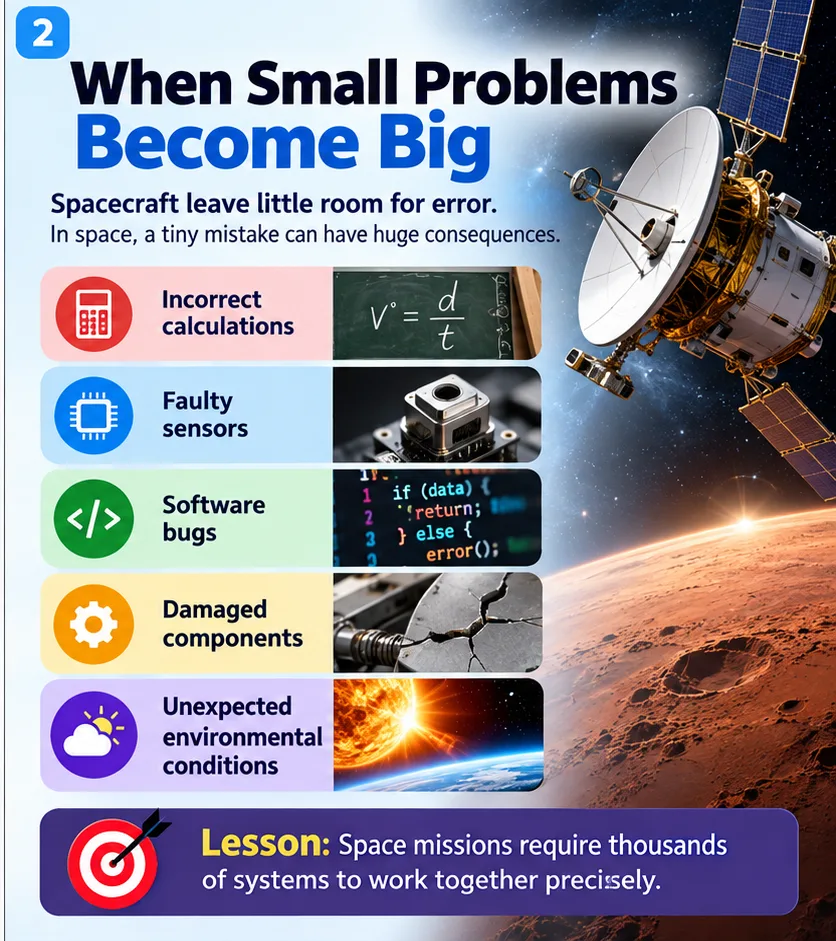
In spaceflight, a tiny flaw can have huge consequences because nothing has much margin. Rockets are built as light as possible, so there is little spare strength, and every system depends on others. A small fault in one place can spread through the whole vehicle in seconds.
The failures in this article fit into several types:
- Hardware faults: a seal, an engine or a valve does not work as designed (Challenger, Antares).
- Software errors: code makes a wrong decision or cannot cope with new conditions (Ariane 5, Schiaparelli).
- Human error and communication: a unit mix-up or a drawing mistake slips through checks (Mars Climate Orbiter, Genesis).
- Design flaws: a design hides a danger until the worst moment (Apollo 1, Soyuz 11).
- Culture and warnings: engineers raise a concern and it is not acted on (Challenger, Columbia).
Engineers build in redundancy, which means backup systems, so that one failure does not end a mission. They also use independent testing, where people who did not build a system check it. As the next sections show, failures often happen exactly where one of those safeguards was missing.
Early rocket failures: Juno II (1959)
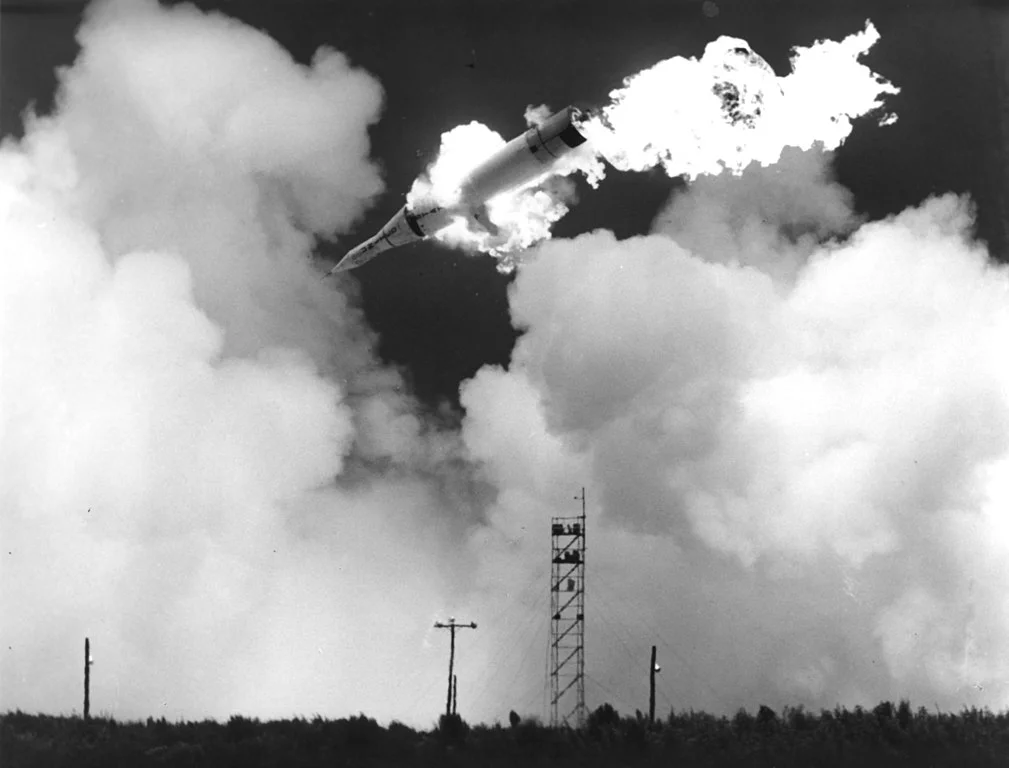
In the early years of the Space Age, failures were common because almost everything was being tried for the first time. On 16 July 1959, a Juno II rocket lifted off carrying an Explorer satellite. Just after liftoff, a short circuit cut power to the guidance system, and the rocket lost control.
The range safety officer destroyed the rocket, and the satellite was lost. No one was hurt, and the lesson was simple but lasting: a launch vehicle depends on its guidance system, so a single electrical fault there can end everything. Range safety exists so that a rocket that has gone wrong can be stopped before it endangers people on the ground.
Apollo 1 (1967): fire on the launch pad
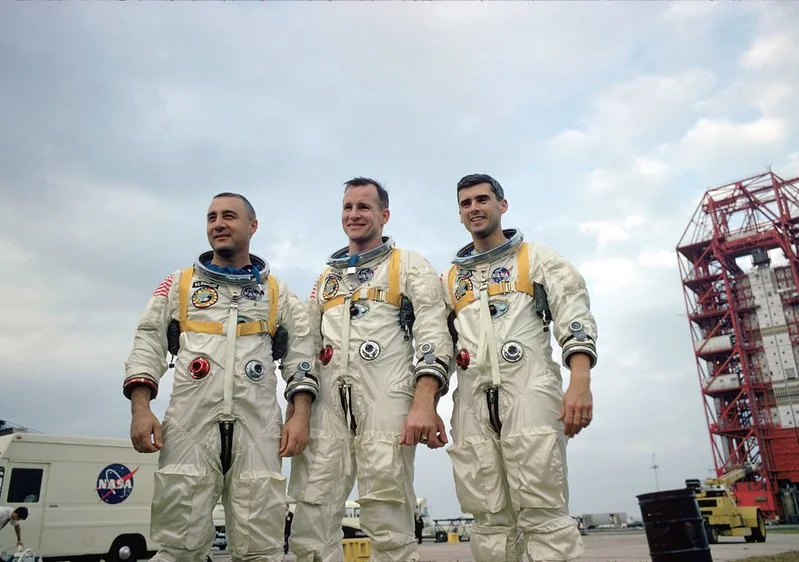
On 27 January 1967, a fire broke out in the Apollo command module during a launch rehearsal on the pad at Cape Kennedy. Astronauts Gus Grissom, Ed White and Roger Chaffee died. It was not a flight failure, but it is one of the most important of all space disasters, because it changed the way spacecraft were built.
Investigators found several causes that combined with tragic effect:
- a pure-oxygen atmosphere at high pressure, which makes materials burn far more fiercely;
- flammable materials inside the cabin;
- a likely electrical spark from wiring;
- a hatch that opened inward, which made escape extremely difficult.
After the fire, NASA redesigned the hatch, replaced flammable materials with non-flammable ones and used a nitrogen-oxygen atmosphere on the pad. The crew of Apollo 1 are remembered for what their loss made possible: safer spacecraft for every crew that followed.
X-15 and Soyuz 1 and 11: pilots and cosmonauts lost
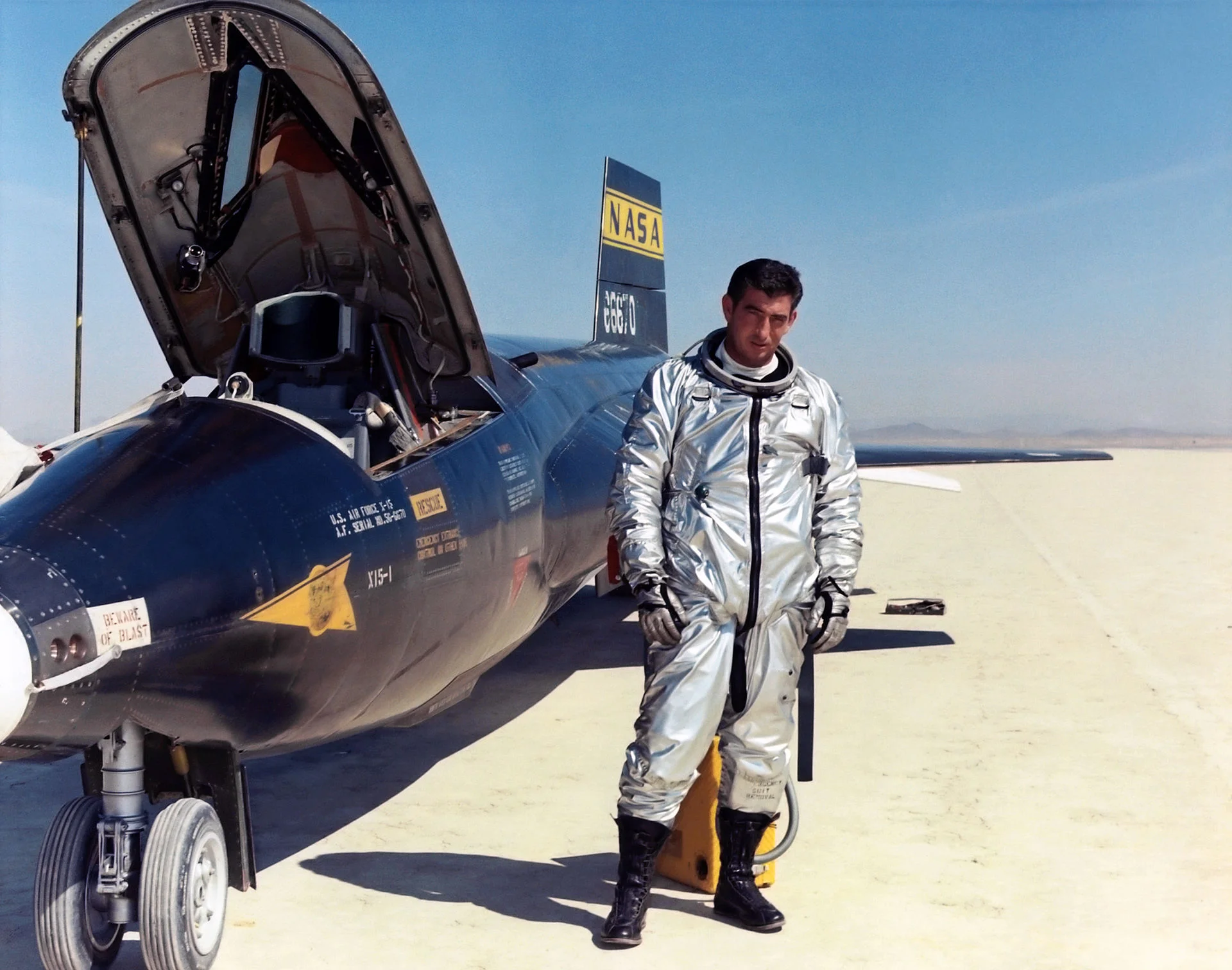
The late 1960s and early 1970s brought further losses, each of which taught engineers something hard.
On 24 April 1967, cosmonaut Vladimir Komarov died when the parachute of Soyuz 1 failed on landing. On 15 November 1967, pilot Michael J. Adams was killed during X-15 Flight 3-65-97 after the aircraft entered a hypersonic spin and broke up. He was the only X-15 fatality, and he was posthumously awarded astronaut wings.
The Soyuz 11 mission came on 30 June 1971. During separation, a pressure-equalisation valve opened and the cabin depressurised. Georgy Dobrovolsky, Vladislav Volkov and Viktor Patsayev died. They are the only people to have died in space, meaning above the Kármán line. After this, cosmonauts wore pressure suits for launch and re-entry.
Each of these accidents led to design changes that protect crews today. In the next section of this guide, we move on to Apollo 13, a mission that went badly wrong yet ended with all three astronauts coming home.
Apollo 13 (1970): the successful failure
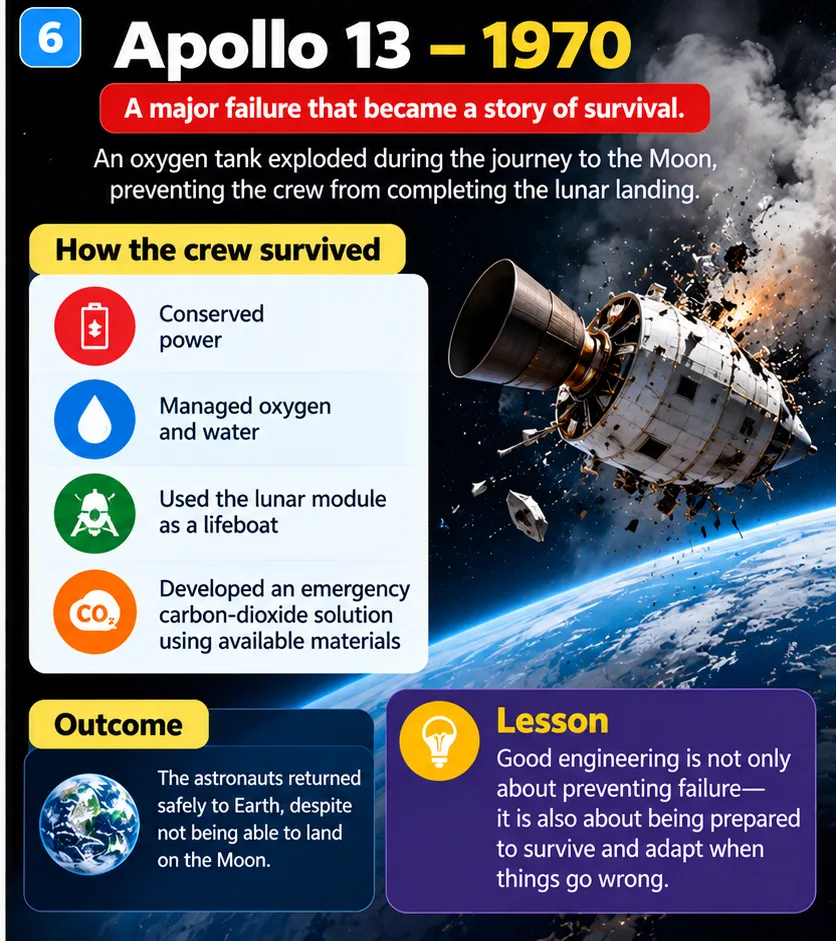
Among all the famous space failures, Apollo 13 nearly ended in disaster but finished well. On 13 April 1970, oxygen tank 2 exploded on the way to the Moon, and the landing was abandoned.
The root of the problem was small. Heater thermostat switches inside the tank had not been upgraded to cope with 65 V ground power, so they were damaged during pre-launch testing. Nobody knew until the tank failed in flight.
Crew members Jim Lovell, Jack Swigert and Fred Haise then did something remarkable. They used the lunar module, Aquarius, as a lifeboat.
Carbon dioxide was building up in the cabin. The crew and the engineers on the ground built an adapter so that the command module’s square scrubber cartridges could be used in the lunar module’s round socket. It was often described as fitting a square peg into a round hole. The crew returned safely on 17 April.
This is why Apollo 13 is often called a successful failure. The mission goal was missed, but the crew survived because of teamwork, improvisation and careful problem-solving.
One of the lessons from space failures like this one is that equipment must be tested for the conditions it will really meet. A switch that works at one voltage may fail at another. Apollo 13 also shows the value of preparation: the crew and the flight controllers had trained for emergencies, and it paid off.
Challenger (1986): the O-ring
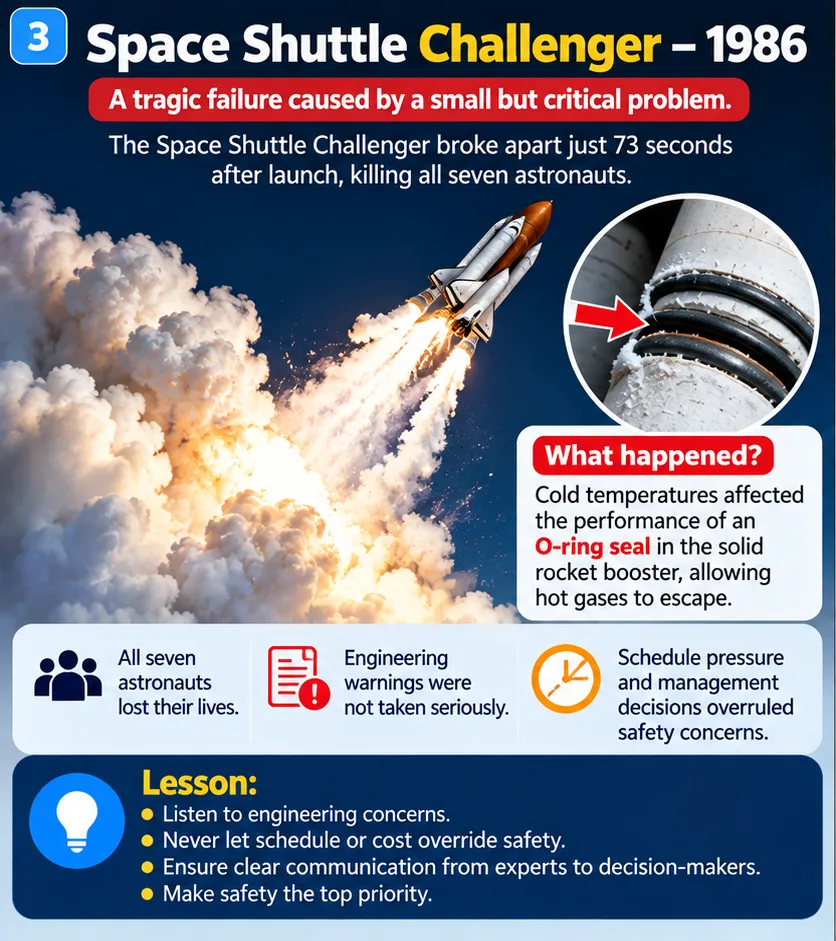
The Challenger accident is one of the most painful space disasters in history. On 28 January 1986, the Space Shuttle broke apart 73 seconds after launch. All seven crew members died, including the teacher Christa McAuliffe.
So what caused the Challenger disaster? The cause was a rubber O-ring seal in a joint of one of the solid rocket boosters. Cold rubber becomes stiffer and does not spring back to seal a gap as quickly. The launch took place after an overnight freeze, at about 2 °C, very cold for a launch.
The warning signs were there. Engineers at Morton Thiokol, the company that made the boosters, had warned about launching in the cold. Their concerns were not enough to stop the launch.
The Rogers Commission investigated. During the hearings, the physicist Richard Feynman dipped a piece of O-ring material into a glass of ice water and showed that it lost its springiness. It was a simple demonstration, and it made the problem clear to everyone watching.
The main lesson is to listen to engineers. When the people closest to the hardware raise a safety concern, the burden of proof should be on showing the flight is safe, not on proving it is unsafe. This idea shaped later changes in how NASA approached safety.
It also links neatly to GCSE physics. Materials behave differently at different temperatures, and forces act on every joint in a rocket. If you want a refresher on how forces work, our guide to Newton’s laws of motion is a good place to start.
The Hubble mirror (1990): a tiny error, a blurry telescope
Not every failure is an explosion. After the Hubble Space Telescope was launched in 1990, its first images came back blurry. The reason was that the primary mirror had been ground to the wrong shape.
The error was tiny: about 2.2 micrometres. But for a telescope that depends on perfect focusing, this caused spherical aberration, where light from the edge of the mirror focuses at a different point from light at the centre.
The cause was a testing device called a null corrector, which had been assembled incorrectly. The mirror was polished very precisely, but to the wrong specification, because the device used to check it was itself wrong.
The lesson is that tests must be independent. If a single flawed instrument is used to check the work, mistakes can pass through unnoticed. A second, separate check gives a chance to spot the error before launch.
The story has a happy ending. After the repair, Hubble was able to do the job it was built for. For a newer space telescope, see our article on NASA’s James Webb Space Telescope.
Apollo 13, Challenger and Hubble show three different sides of space mission failures: a hidden hardware fault, a warning that went unheeded, and a test that checked the wrong thing. Each case led to better engineering, and each is a reminder that the people involved were skilled, committed and working at the edge of what was possible.
Ariane 5 (1996): a software overflow
On 4 June 1996, the first Ariane 5 rocket lifted off from Kourou in French Guiana. About 37 seconds later it veered off course and destroyed itself. It carried four Cluster satellites, and the loss was valued at around US$370 million. Among all famous space failures, this one is remarkable because no engine broke and no tank leaked. The fault was a single line of software logic.
Ariane 5 reused navigation software from the older Ariane 4. That software tracked how fast the rocket was moving sideways and stored the value as a 64-bit floating-point number. At one point it tried to squeeze that number into a 16-bit integer, which can only hold a limited range of whole numbers. Ariane 5 was faster than Ariane 4, so the value was too big to fit.
64-bit number → 16-bit integer → overflow → both inertial reference systems fail
The overflow made the inertial reference system shut down. Its backup ran identical software, so it failed in exactly the same way a moment later. With no valid guidance data, the rocket turned sharply and the safety system destroyed it.
The lesson from Ariane 5 is to test reused software for the new conditions it will meet. Code that worked perfectly for years on one rocket was never tested against the faster flight path of the next.
Mars Climate Orbiter (1999): the unit mix-up
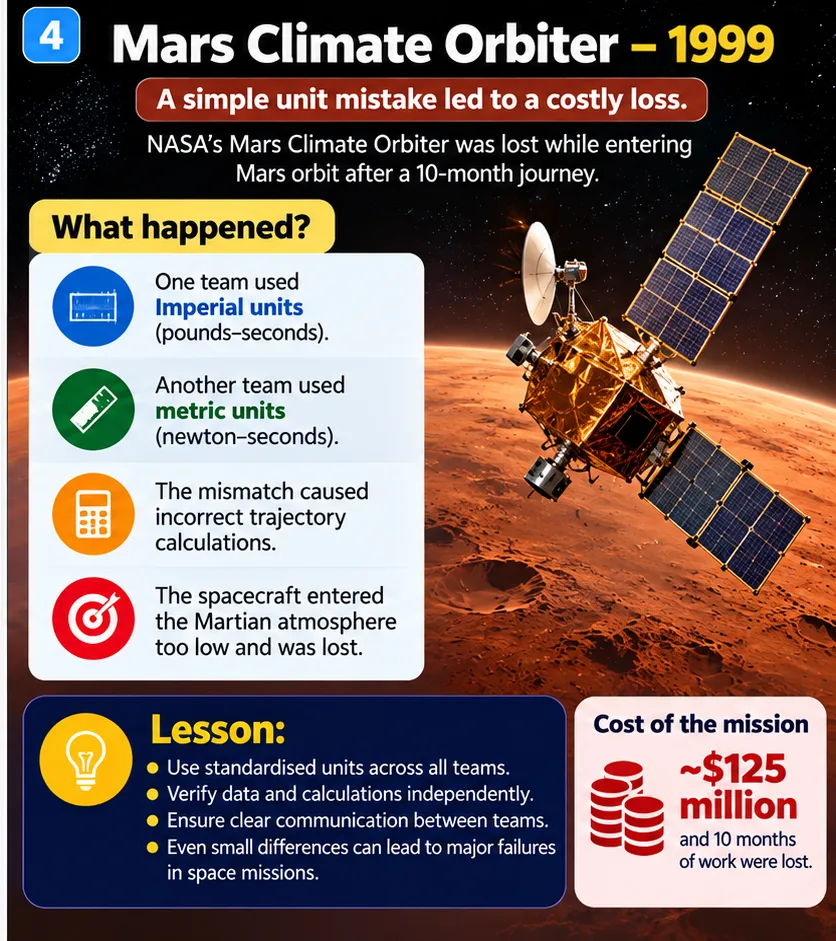
The Mars Climate Orbiter was lost on 23 September 1999, when it reached Mars. The whole mission cost about US$327.6 million, of which the spacecraft itself was around US$125 million. The cause of this Mars Climate Orbiter unit error was almost embarrassingly simple.
Software built by Lockheed Martin produced data about thruster firings in pound-force seconds, a unit of impulse in the imperial system. NASA’s Jet Propulsion Laboratory navigation software expected the same data in newton seconds, the metric unit. Nobody converted between them. One pound-force second equals 4.45 newton seconds, so every small correction was out by a factor of more than four.
1 lbf·s = 4.45 N·s
The errors added up over the months of the journey. Instead of passing Mars at a planned height of about 226 km, the orbiter came in at about 57 km, too deep into the atmosphere, and it was destroyed.
You can see how big a gap these mix-ups create by trying the converter below. Type in a value in one unit and compare it with the other. This is also a good way to practise the unit skills you need for GCSE physics, and our guide to converting between units explains the method step by step.
The lesson is about units and standards. When two teams exchange data, the unit must be written into the specification and checked at the interface between them.
Mars Polar Lander (1999): a false signal
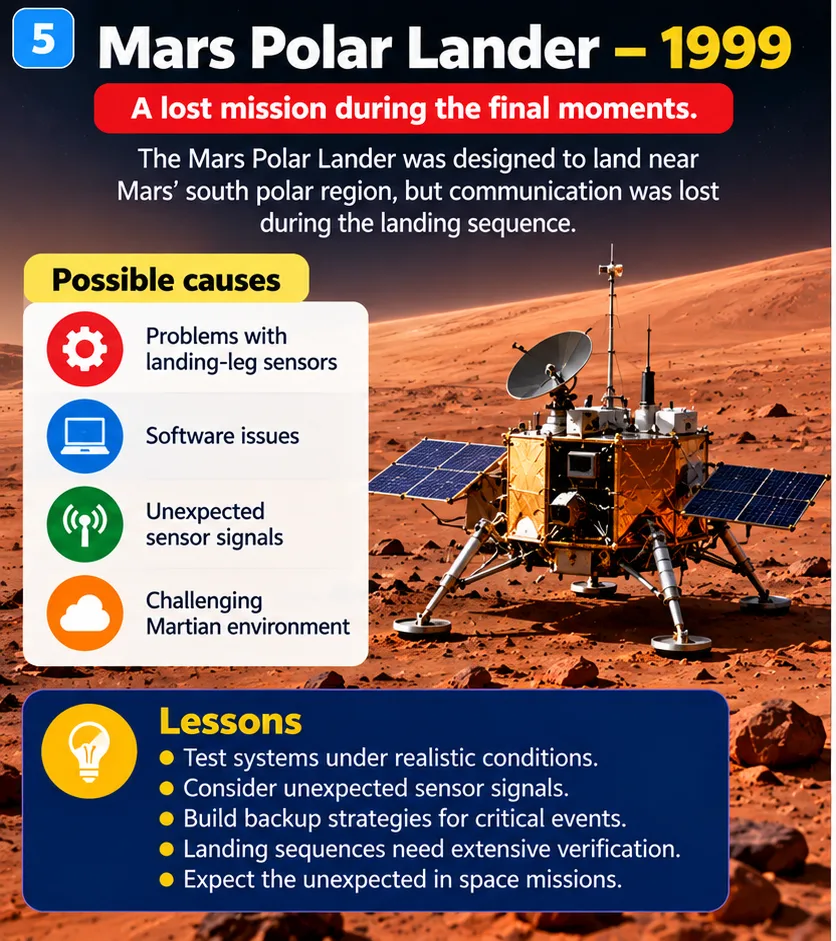
Just over two months after the orbiter was lost, NASA suffered a second Mars failure. The Mars Polar Lander was lost on 3 December 1999 as it tried to land near the planet’s south pole. No signal was heard after the descent began, so investigators had to work out the cause from the design.
The most likely explanation is a false alarm. As the lander deployed its legs for touchdown, the vibration probably gave a signal that looked like the legs touching the ground. The software had been told to switch the engine off at that moment. If that is what happened, the engine shut down about 40 m above the surface, and the lander fell the rest of the way.
Each part worked as designed: the legs, the sensors and the software. The problem appeared only when they operated together. The lesson is to test the full system end to end, in conditions as close as possible to the real mission.
Genesis (2004): upside-down sensors
Genesis was a NASA mission that collected particles of the solar wind and brought them back to Earth. On 8 September 2004 its sample capsule re-entered the atmosphere, but its parachutes did not open. The capsule hit the Utah desert at high speed.
The cause was an error in the design drawing. The accelerometers, which were meant to sense the capsule slowing down and trigger the parachutes, had been installed upside down. They never gave the signal to deploy. Even so, scientists managed to recover some of the samples, which shows how much careful work can be saved from a bad landing.
Flip the cards: failure and root cause
Use these cards to check you can link each of the space mission failures in this section to its root cause.
None of these four missions failed because of bad luck. Each failed through a small, human, checkable mistake, and that is why lessons from space failures are so valuable to engineers.
Columbia (2003): the foam strike
On 1 February 2003, the space shuttle Columbia broke apart during re-entry over the United States. All seven crew members were lost. It was the second shuttle accident, and it came 17 years after Challenger.
The story began on 16 January, at launch. A piece of foam insulation fell from the external tank and struck the leading edge of the left wing. The damage made a hole. Sixteen days later, during re-entry, hot gases entered the wing and the structure failed.
The Columbia Accident Investigation Board (CAIB) did not stop at the foam. Its report also criticised NASA’s culture, in particular how concerns about foam strikes had come to be treated as routine. Challenger had shown the same pattern, and the Board said so plainly.
The shuttle fleet was grounded until 2005. When flights resumed, crews began inspecting the outside of the orbiter while in orbit, so that damage could be found before the journey home.
Commercial-era failures: new companies, familiar lessons
In the 2010s, private companies took a larger role in spaceflight. Their failures looked different in detail, but the lessons were familiar. If you want the bigger picture, see our guides to private space flight and the future of commercial space flight.
Antares Orb-3 (28 October 2014)
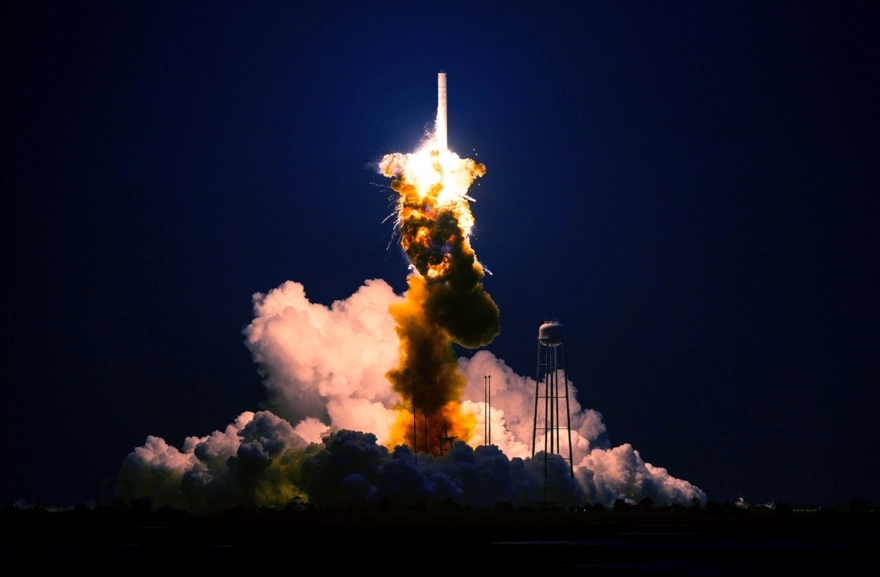
The first-stage AJ26 engine failed seconds after liftoff, and the vehicle was destroyed. Those engines were refurbished Soviet NK-33 units, built decades earlier. Orbital later switched to a new engine, the RD-181.
SpaceShipTwo VSS Enterprise (31 October 2014)
Three days later, the test flight of SpaceShipTwo ended in tragedy. Co-pilot Michael Alsbury was killed after the vehicle’s feather system unlocked early. Pilot Peter Siebold survived. The lesson here is about human factors: good design assumes that people will sometimes make mistakes, and builds in safeguards to protect them.
Schiaparelli (19 October 2016)
The ESA and Roscosmos Mars lander had a software problem. Its inertial measurement unit saturated, so the software believed the lander was below ground. It released the parachute and fired the thrusters too early, and the lander crashed.
Beresheet (11 April 2019)
Beresheet was the first privately funded attempt to land on the Moon. A glitch in an inertial measurement unit, combined with a chain of commands, led to the main engine shutting down. The lander crashed. Even so, reaching the Moon’s surface at all was a milestone for a private team.
What space failures teach us
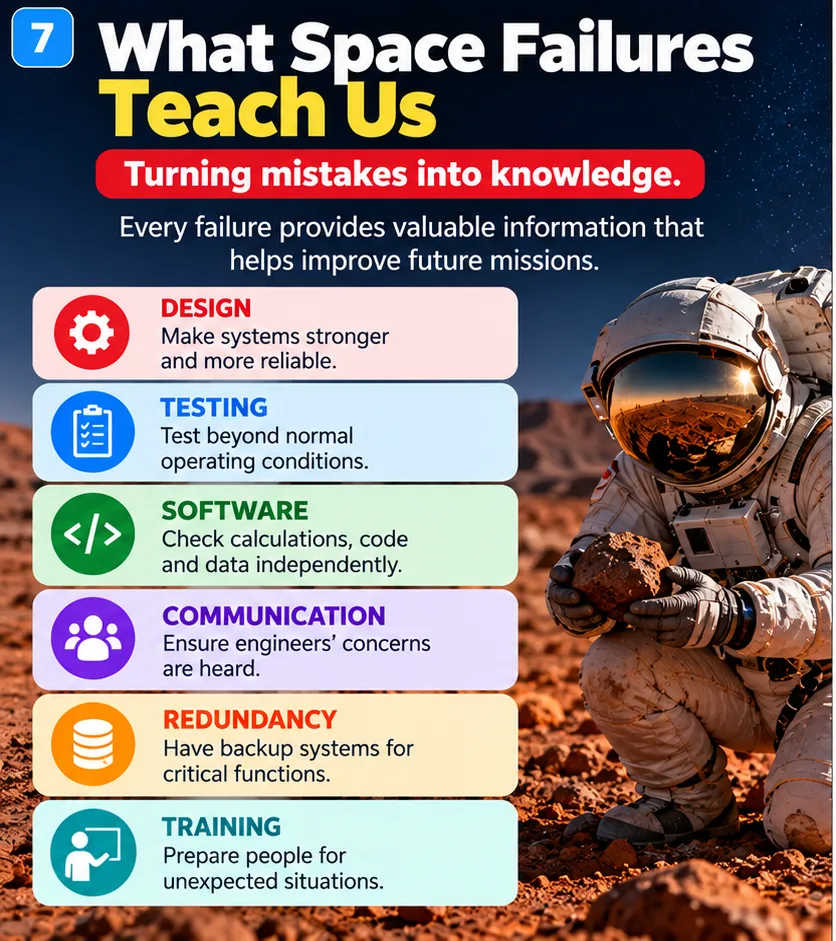
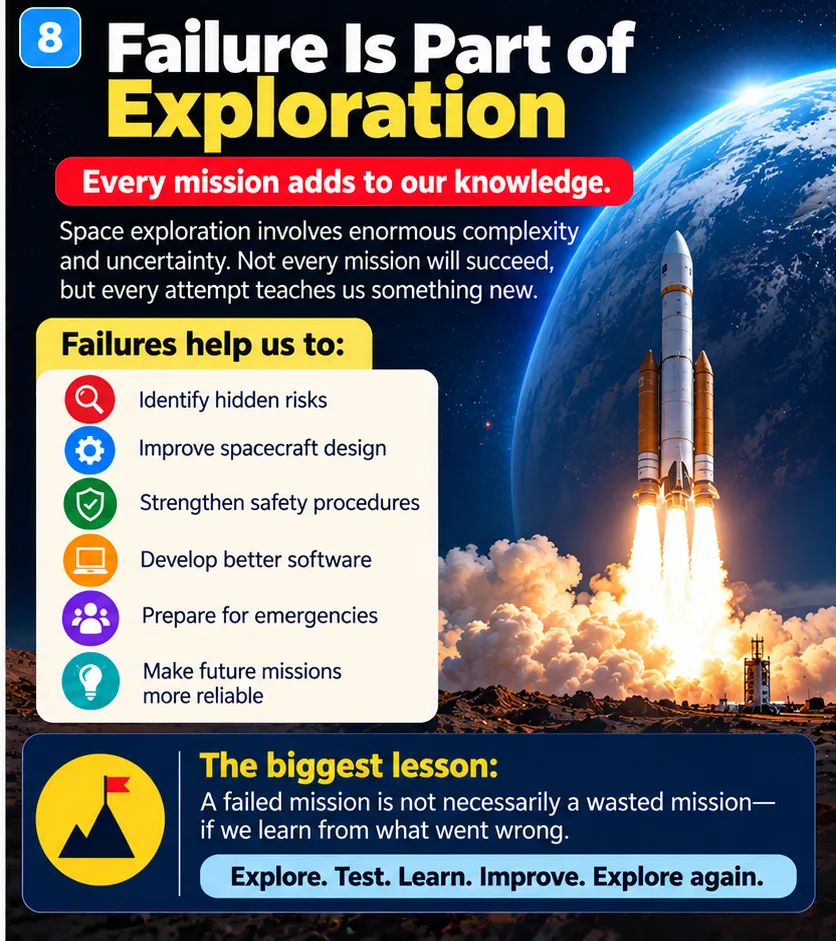
Look across these space disasters and the same themes keep returning. Engineers call them lessons from space failures, and each one now shapes how rockets and spacecraft are built.
| Lesson | Example |
|---|---|
| Build in redundancy | Ariane 5: both inertial reference systems failed in the same way |
| Test like you fly | Mars Polar Lander: a false touchdown signal was not caught by end-to-end testing |
| Verify independently | Hubble: a mis-assembled testing device led to a mirror ground to the wrong shape |
| Agree units and standards | Mars Climate Orbiter: pound-force seconds versus newton seconds |
| Communicate and listen | Challenger: engineers had warned about the O-ring in cold weather |
| Protect the crew | Apollo 1: a redesigned hatch and non-flammable materials followed |
| Learn from near-misses | Columbia: foam strikes were treated as routine until one caused a loss |
The mindset behind many of these is the same one we explore in lessons from failure to success. Failure is painful, but a team that studies it honestly becomes safer. Today’s engineers also have new problems to solve, such as how to solve the problem of space junk.
The physics matters too. Every launch is an application of Newton’s laws of motion, and the wider story of rockets, telescopes and stations is told in our guide to exploring the universe.
Try an exam-style question
Why did the Mars Climate Orbiter crash? (3 marks)
Software built by Lockheed Martin gave thruster impulse data in pound-force seconds. NASA’s navigation software expected newton seconds (1 lbf·s = 4.45 N·s). The error meant the spacecraft’s path was wrong, so it passed much too low over Mars, about 57 km instead of the planned 226 km, and was destroyed.
Test yourself
Key points
- Columbia was lost on 1 February 2003 after foam struck the left wing at launch; hot gases entered the wing on re-entry.
- The CAIB report criticised NASA’s culture as well as the technical cause.
- Antares, SpaceShipTwo, Schiaparelli and Beresheet showed that engines, human factors and sensor software all need careful checking.
- Common lessons are redundancy, testing like you fly, independent verification, agreed units, open communication and crew safety.
- Honest study of failure is how spaceflight gets safer.
Frequently asked questions about space mission failures
What caused the Challenger disaster?
An O-ring seal in a joint of a solid rocket booster failed in cold weather. The launch took place on 28 January 1986 at about 2 °C, after overnight freezing. The shuttle broke apart 73 seconds after liftoff, and all seven crew died. Engineers at Morton Thiokol had warned about the risk beforehand.
What happened to Columbia?
Columbia broke apart during re-entry on 1 February 2003, and all seven crew died. At launch, a piece of foam insulation from the external tank struck the leading edge of the left wing and made a hole. On re-entry, hot gases entered the wing and the structure failed.
What was the Mars Climate Orbiter unit error?
One team’s software gave thruster data in pound-force seconds, while NASA’s navigation software expected newton seconds. One pound-force second equals 4.45 newton seconds. The spacecraft therefore passed about 57 km above the surface of Mars instead of the planned 226 km, and it was destroyed in September 1999.
What went wrong on Apollo 13?
On 13 April 1970, oxygen tank 2 exploded. Heater thermostat switches inside had been damaged because they were not upgraded for 65 V ground power. The crew used the lunar module Aquarius as a lifeboat, built a carbon dioxide scrubber adapter, and returned safely on 17 April.
Why did Ariane 5 fail on its first flight?
Ariane 5 Flight 501 self-destructed about 37 seconds after launch on 4 June 1996. Software reused from Ariane 4 tried to convert a 64-bit floating-point number into a 16-bit integer. The number was too large, causing an overflow, and both inertial reference systems failed. Four Cluster satellites were lost.
What was wrong with the Hubble Space Telescope mirror?
Hubble’s primary mirror was ground to the wrong shape, out by about 2.2 micrometres. This caused spherical aberration and blurred images. A mis-assembled testing device, called a null corrector, was responsible. Astronauts fixed the problem in December 1993 by installing COSTAR and a new camera, WFPC2.
Why do rockets fail?
Rockets fail for many reasons: engine faults, software errors, design flaws, mistakes in units or assembly, and weaknesses in safety culture. Often it is a small problem that goes unnoticed or is accepted as normal until it combines with other conditions. Testing, redundancy and independent checks are the main defences.
How many astronauts have died?
About 20 people have died during spaceflights (the exact number depends on which test flights are counted), and others have died in training and ground accidents. The spaceflight deaths include Soyuz 1, Soyuz 11, Challenger and Columbia. Some counts also include X-15 pilot Michael Adams and SpaceShipTwo co-pilot Michael Alsbury.
Did Apollo 13 say “Houston, we have a problem”?
Not quite. The words used were “Houston, we’ve had a problem”, first said by Jack Swigert and then repeated by Jim Lovell. The present-tense version, “we have a problem”, is the one most people remember.